

1. Define the earnings-capacity question
Translate the acquisition case into cash available for mandatory debt service rather than accepting a reported EBITDA multiple.
The diligence team should reconcile reported results, debt terms, tax, capex, working capital and management evidence. Each conclusion records the accountable owner, source, period, evidence, accounting treatment, cash consequence, control and unresolved exception. The immediate output is a debt-capacity charter.
Sustainable earnings must be proved through ledger, contract, operational and bank evidence. Reviewers test recurrence, cut-off, cash conversion and downside response against native records and observed performance. Accounting policy, transaction perimeter, finance documents and applicable law control each conclusion.
Material gaps require an owner, corrective action, validation test, advice and decision date. Consequences flow through sustainable earnings, purchase price, leverage, liquidity, covenant headroom and transaction timing. Residual risk remains visible until the evidence is reconciled, protections are executable and the authorised decision-makers approve the next gate.
2. Establish the reporting perimeter
Reconcile legal entities, branches, discontinued activities, acquisitions, disposals and related parties to the transaction perimeter.
The diligence team should reconcile group structure, ledgers, consolidation, contracts and transaction perimeter. Each conclusion records the accountable owner, source, period, evidence, accounting treatment, cash consequence, control and unresolved exception. The immediate output is a perimeter reconciliation.
Sustainable earnings must be proved through ledger, contract, operational and bank evidence. Reviewers test recurrence, cut-off, cash conversion and downside response against native records and observed performance. Accounting policy, transaction perimeter, finance documents and applicable law control each conclusion.
Material gaps require an owner, corrective action, validation test, advice and decision date. Consequences flow through sustainable earnings, purchase price, leverage, liquidity, covenant headroom and transaction timing. Residual risk remains visible until the evidence is reconciled, protections are executable and the authorised decision-makers approve the next gate.
3. Rebuild reported earnings
Bridge audited or filed profit to management EBITDA with every adjustment separately identified and evidenced.
The diligence team should reconcile financial statements, trial balance, management accounts, journals and policies. Each conclusion records the accountable owner, source, period, evidence, accounting treatment, cash consequence, control and unresolved exception. The immediate output is a reported-earnings bridge.
Sustainable earnings must be proved through ledger, contract, operational and bank evidence. Reviewers test recurrence, cut-off, cash conversion and downside response against native records and observed performance. Accounting policy, transaction perimeter, finance documents and applicable law control each conclusion.
Material gaps require an owner, corrective action, validation test, advice and decision date. Consequences flow through sustainable earnings, purchase price, leverage, liquidity, covenant headroom and transaction timing. Residual risk remains visible until the evidence is reconciled, protections are executable and the authorised decision-makers approve the next gate.
4. Test revenue existence
Trace material revenue streams to contracts, delivery, acceptance, invoicing, cash and credit notes.
The diligence team should reconcile contracts, orders, delivery records, invoices, bank data and returns. Each conclusion records the accountable owner, source, period, evidence, accounting treatment, cash consequence, control and unresolved exception. The immediate output is a revenue-existence test.
Sustainable earnings must be proved through ledger, contract, operational and bank evidence. Reviewers test recurrence, cut-off, cash conversion and downside response against native records and observed performance. Accounting policy, transaction perimeter, finance documents and applicable law control each conclusion.
Material gaps require an owner, corrective action, validation test, advice and decision date. Consequences flow through sustainable earnings, purchase price, leverage, liquidity, covenant headroom and transaction timing. Residual risk remains visible until the evidence is reconciled, protections are executable and the authorised decision-makers approve the next gate.
5. Test revenue timing
Identify cut-off errors, bill-and-hold, channel loading, unbilled revenue and premature milestone recognition.
The diligence team should reconcile period-end sales, fulfilment, acceptance, credit notes and accounting policy. Each conclusion records the accountable owner, source, period, evidence, accounting treatment, cash consequence, control and unresolved exception. The immediate output is a revenue cut-off schedule.
Sustainable earnings must be proved through ledger, contract, operational and bank evidence. Reviewers test recurrence, cut-off, cash conversion and downside response against native records and observed performance. Accounting policy, transaction perimeter, finance documents and applicable law control each conclusion.
Material gaps require an owner, corrective action, validation test, advice and decision date. Consequences flow through sustainable earnings, purchase price, leverage, liquidity, covenant headroom and transaction timing. Residual risk remains visible until the evidence is reconciled, protections are executable and the authorised decision-makers approve the next gate.
6. Measure customer concentration
Quantify gross margin, retention, contract protections and cash collection by customer cohort.
The diligence team should reconcile customer ledger, contracts, invoices, churn, pricing and collections. Each conclusion records the accountable owner, source, period, evidence, accounting treatment, cash consequence, control and unresolved exception. The immediate output is a customer-quality map.
Sustainable earnings must be proved through ledger, contract, operational and bank evidence. Reviewers test recurrence, cut-off, cash conversion and downside response against native records and observed performance. Accounting policy, transaction perimeter, finance documents and applicable law control each conclusion.
Material gaps require an owner, corrective action, validation test, advice and decision date. Consequences flow through sustainable earnings, purchase price, leverage, liquidity, covenant headroom and transaction timing. Residual risk remains visible until the evidence is reconciled, protections are executable and the authorised decision-makers approve the next gate.
7. Test recurring revenue
Separate contracted, repeat, seasonal, project, transactional and one-off revenue using observable history.
The diligence team should reconcile revenue cohorts, contracts, bookings, renewals and cancellations. Each conclusion records the accountable owner, source, period, evidence, accounting treatment, cash consequence, control and unresolved exception. The immediate output is a recurrence classification.
Sustainable earnings must be proved through ledger, contract, operational and bank evidence. Reviewers test recurrence, cut-off, cash conversion and downside response against native records and observed performance. Accounting policy, transaction perimeter, finance documents and applicable law control each conclusion.
Material gaps require an owner, corrective action, validation test, advice and decision date. Consequences flow through sustainable earnings, purchase price, leverage, liquidity, covenant headroom and transaction timing. Residual risk remains visible until the evidence is reconciled, protections are executable and the authorised decision-makers approve the next gate.
8. Reconcile gross margin
Bridge price, volume, mix, input cost, labour, utilisation and foreign exchange to sustainable margin.
The diligence team should reconcile sales, cost ledger, operational drivers, inventory and payroll. Each conclusion records the accountable owner, source, period, evidence, accounting treatment, cash consequence, control and unresolved exception. The immediate output is a gross-margin bridge.
Sustainable earnings must be proved through ledger, contract, operational and bank evidence. Reviewers test recurrence, cut-off, cash conversion and downside response against native records and observed performance. Accounting policy, transaction perimeter, finance documents and applicable law control each conclusion.
Material gaps require an owner, corrective action, validation test, advice and decision date. Consequences flow through sustainable earnings, purchase price, leverage, liquidity, covenant headroom and transaction timing. Residual risk remains visible until the evidence is reconciled, protections are executable and the authorised decision-makers approve the next gate.
Table 1. Earnings-quality bridge
| Layer | Core test | Decision use |
|---|---|---|
| reported | ledger and policy | starting point |
| normalised | recurrence and evidence | valuation |
| cash | capex and working capital | debt service |
| covenant | document definitions | compliance |
Illustrative programme design; company-specific facts and authorised advice govern.
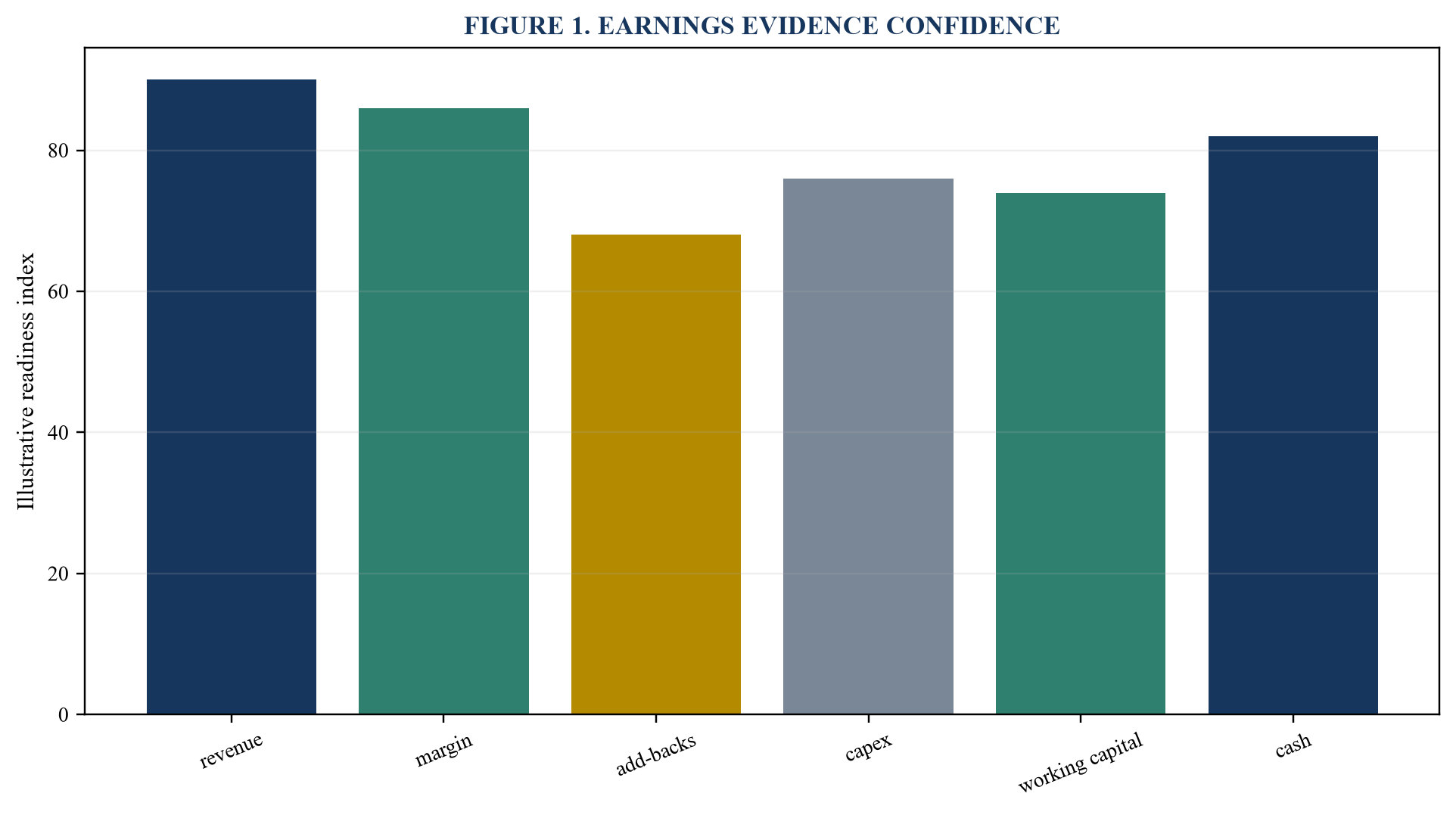
Values are illustrative readiness indices and require company-specific evidence.
9. Normalise owner and related-party items
Restate compensation, rent, services, purchases and benefits to arm's-length operating conditions.
The diligence team should reconcile payroll, leases, related-party register, benchmarks and contracts. Each conclusion records the accountable owner, source, period, evidence, accounting treatment, cash consequence, control and unresolved exception. The immediate output is a related-party normalisation.
Sustainable earnings must be proved through ledger, contract, operational and bank evidence. Reviewers test recurrence, cut-off, cash conversion and downside response against native records and observed performance. Accounting policy, transaction perimeter, finance documents and applicable law control each conclusion.
Material gaps require an owner, corrective action, validation test, advice and decision date. Consequences flow through sustainable earnings, purchase price, leverage, liquidity, covenant headroom and transaction timing. Residual risk remains visible until the evidence is reconciled, protections are executable and the authorised decision-makers approve the next gate.
10. Challenge add-backs
Classify each EBITDA adjustment by occurrence, evidence, substitutability, timing and cash consequence.
The diligence team should reconcile adjustment schedule, invoices, payroll, contracts, budgets and board records. Each conclusion records the accountable owner, source, period, evidence, accounting treatment, cash consequence, control and unresolved exception. The immediate output is an add-back evidence register.
Sustainable earnings must be proved through ledger, contract, operational and bank evidence. Reviewers test recurrence, cut-off, cash conversion and downside response against native records and observed performance. Accounting policy, transaction perimeter, finance documents and applicable law control each conclusion.
Material gaps require an owner, corrective action, validation test, advice and decision date. Consequences flow through sustainable earnings, purchase price, leverage, liquidity, covenant headroom and transaction timing. Residual risk remains visible until the evidence is reconciled, protections are executable and the authorised decision-makers approve the next gate.
11. Separate realised cost savings
Recognise savings only where action, timing, ownership and run-rate evidence support delivery.
The diligence team should reconcile headcount, contracts, notices, implementation records and monthly results. Each conclusion records the accountable owner, source, period, evidence, accounting treatment, cash consequence, control and unresolved exception. The immediate output is a realised-savings bridge.
Sustainable earnings must be proved through ledger, contract, operational and bank evidence. Reviewers test recurrence, cut-off, cash conversion and downside response against native records and observed performance. Accounting policy, transaction perimeter, finance documents and applicable law control each conclusion.
Material gaps require an owner, corrective action, validation test, advice and decision date. Consequences flow through sustainable earnings, purchase price, leverage, liquidity, covenant headroom and transaction timing. Residual risk remains visible until the evidence is reconciled, protections are executable and the authorised decision-makers approve the next gate.
12. Risk-adjust planned synergies
Keep buyer-specific revenue and cost synergies outside stand-alone earnings and probability-weight implementation cases.
The diligence team should reconcile integration plan, benchmarks, costs, timing and accountable owners. Each conclusion records the accountable owner, source, period, evidence, accounting treatment, cash consequence, control and unresolved exception. The immediate output is a synergy risk model.
Sustainable earnings must be proved through ledger, contract, operational and bank evidence. Reviewers test recurrence, cut-off, cash conversion and downside response against native records and observed performance. Accounting policy, transaction perimeter, finance documents and applicable law control each conclusion.
Material gaps require an owner, corrective action, validation test, advice and decision date. Consequences flow through sustainable earnings, purchase price, leverage, liquidity, covenant headroom and transaction timing. Residual risk remains visible until the evidence is reconciled, protections are executable and the authorised decision-makers approve the next gate.
13. Identify underinvestment
Compare maintenance, replacement and compliance spending with asset condition and operating requirements.
The diligence team should reconcile fixed assets, capex history, maintenance logs, downtime and compliance plans. Each conclusion records the accountable owner, source, period, evidence, accounting treatment, cash consequence, control and unresolved exception. The immediate output is an underinvestment assessment.
Sustainable earnings must be proved through ledger, contract, operational and bank evidence. Reviewers test recurrence, cut-off, cash conversion and downside response against native records and observed performance. Accounting policy, transaction perimeter, finance documents and applicable law control each conclusion.
Material gaps require an owner, corrective action, validation test, advice and decision date. Consequences flow through sustainable earnings, purchase price, leverage, liquidity, covenant headroom and transaction timing. Residual risk remains visible until the evidence is reconciled, protections are executable and the authorised decision-makers approve the next gate.
14. Separate maintenance and growth capex
Classify expenditure through asset purpose, replacement cycle, capacity and incremental return.
The diligence team should reconcile capex ledger, projects, approvals, asset register and business cases. Each conclusion records the accountable owner, source, period, evidence, accounting treatment, cash consequence, control and unresolved exception. The immediate output is a capex classification.
Sustainable earnings must be proved through ledger, contract, operational and bank evidence. Reviewers test recurrence, cut-off, cash conversion and downside response against native records and observed performance. Accounting policy, transaction perimeter, finance documents and applicable law control each conclusion.
Material gaps require an owner, corrective action, validation test, advice and decision date. Consequences flow through sustainable earnings, purchase price, leverage, liquidity, covenant headroom and transaction timing. Residual risk remains visible until the evidence is reconciled, protections are executable and the authorised decision-makers approve the next gate.
15. Rebuild working capital
Reconcile receivables, inventory, payables, accruals and deferred revenue to ledger and operational evidence.
The diligence team should reconcile balance sheet, ageing, cash receipts, inventory counts and supplier data. Each conclusion records the accountable owner, source, period, evidence, accounting treatment, cash consequence, control and unresolved exception. The immediate output is a working-capital bridge.
Sustainable earnings must be proved through ledger, contract, operational and bank evidence. Reviewers test recurrence, cut-off, cash conversion and downside response against native records and observed performance. Accounting policy, transaction perimeter, finance documents and applicable law control each conclusion.
Material gaps require an owner, corrective action, validation test, advice and decision date. Consequences flow through sustainable earnings, purchase price, leverage, liquidity, covenant headroom and transaction timing. Residual risk remains visible until the evidence is reconciled, protections are executable and the authorised decision-makers approve the next gate.
16. Detect working-capital extraction
Identify stretched payables, accelerated collections, inventory depletion and unpaid accruals before completion.
The diligence team should reconcile monthly trends, ageing, terms, collections, purchases and accruals. Each conclusion records the accountable owner, source, period, evidence, accounting treatment, cash consequence, control and unresolved exception. The immediate output is a pre-close extraction test.
Sustainable earnings must be proved through ledger, contract, operational and bank evidence. Reviewers test recurrence, cut-off, cash conversion and downside response against native records and observed performance. Accounting policy, transaction perimeter, finance documents and applicable law control each conclusion.
Material gaps require an owner, corrective action, validation test, advice and decision date. Consequences flow through sustainable earnings, purchase price, leverage, liquidity, covenant headroom and transaction timing. Residual risk remains visible until the evidence is reconciled, protections are executable and the authorised decision-makers approve the next gate.
Table 2. Adjustment evidence hierarchy
| Adjustment | Required evidence | Treatment |
|---|---|---|
| owner cost | arm's-length benchmark | normalise |
| one-off cost | invoice and non-recurrence | risk adjust |
| cost saving | implemented action | recognise when realised |
| synergy | buyer plan and cost | separate case |
Illustrative programme design; company-specific facts and authorised advice govern.
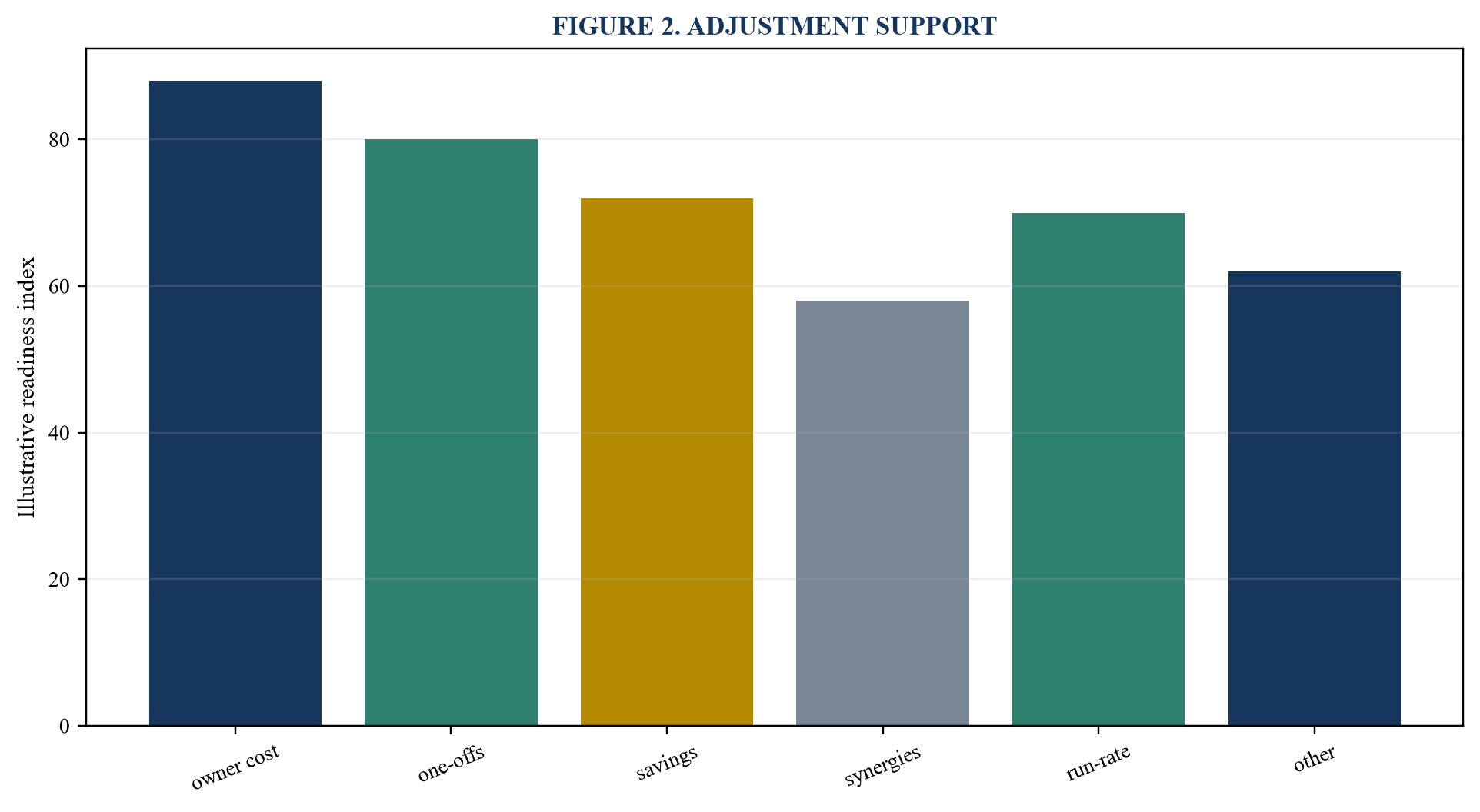
Values are illustrative readiness indices and require company-specific evidence.
17. Set the normal working-capital level
Use seasonality, growth, terms, mix and exceptional periods to derive a defensible completion target.
The diligence team should reconcile monthly balances, revenue, purchases, terms and forecasts. Each conclusion records the accountable owner, source, period, evidence, accounting treatment, cash consequence, control and unresolved exception. The immediate output is a normal-working-capital model.
Sustainable earnings must be proved through ledger, contract, operational and bank evidence. Reviewers test recurrence, cut-off, cash conversion and downside response against native records and observed performance. Accounting policy, transaction perimeter, finance documents and applicable law control each conclusion.
Material gaps require an owner, corrective action, validation test, advice and decision date. Consequences flow through sustainable earnings, purchase price, leverage, liquidity, covenant headroom and transaction timing. Residual risk remains visible until the evidence is reconciled, protections are executable and the authorised decision-makers approve the next gate.
18. Test cash conversion
Bridge EBITDA to operating cash after taxes, recurring capex and normal working-capital investment.
The diligence team should reconcile cash-flow statements, bank data, capex, tax and working-capital model. Each conclusion records the accountable owner, source, period, evidence, accounting treatment, cash consequence, control and unresolved exception. The immediate output is an EBITDA-to-cash bridge.
Sustainable earnings must be proved through ledger, contract, operational and bank evidence. Reviewers test recurrence, cut-off, cash conversion and downside response against native records and observed performance. Accounting policy, transaction perimeter, finance documents and applicable law control each conclusion.
Material gaps require an owner, corrective action, validation test, advice and decision date. Consequences flow through sustainable earnings, purchase price, leverage, liquidity, covenant headroom and transaction timing. Residual risk remains visible until the evidence is reconciled, protections are executable and the authorised decision-makers approve the next gate.
19. Map debt-like items
Capture financing, leases, deferred consideration, overdue tax, litigation, employee liabilities and unfunded commitments.
The diligence team should reconcile contracts, ledgers, tax, legal, payroll and treasury evidence. Each conclusion records the accountable owner, source, period, evidence, accounting treatment, cash consequence, control and unresolved exception. The immediate output is a debt-like-items schedule.
Sustainable earnings must be proved through ledger, contract, operational and bank evidence. Reviewers test recurrence, cut-off, cash conversion and downside response against native records and observed performance. Accounting policy, transaction perimeter, finance documents and applicable law control each conclusion.
Material gaps require an owner, corrective action, validation test, advice and decision date. Consequences flow through sustainable earnings, purchase price, leverage, liquidity, covenant headroom and transaction timing. Residual risk remains visible until the evidence is reconciled, protections are executable and the authorised decision-makers approve the next gate.
20. Map cash-like items
Test ownership, availability, restrictions, trapped balances and minimum operating cash.
The diligence team should reconcile bank confirmations, reconciliations, facilities, legal restrictions and forecasts. Each conclusion records the accountable owner, source, period, evidence, accounting treatment, cash consequence, control and unresolved exception. The immediate output is a cash-like-items schedule.
Sustainable earnings must be proved through ledger, contract, operational and bank evidence. Reviewers test recurrence, cut-off, cash conversion and downside response against native records and observed performance. Accounting policy, transaction perimeter, finance documents and applicable law control each conclusion.
Material gaps require an owner, corrective action, validation test, advice and decision date. Consequences flow through sustainable earnings, purchase price, leverage, liquidity, covenant headroom and transaction timing. Residual risk remains visible until the evidence is reconciled, protections are executable and the authorised decision-makers approve the next gate.
21. Build the debt-service waterfall
Sequence cash interest, amortisation, bullet repayment, fees, leases, hedging, taxes and required reserves.
The diligence team should reconcile term sheet, facilities, cash forecast, tax and treasury assumptions. Each conclusion records the accountable owner, source, period, evidence, accounting treatment, cash consequence, control and unresolved exception. The immediate output is a mandatory-cash waterfall.
Sustainable earnings must be proved through ledger, contract, operational and bank evidence. Reviewers test recurrence, cut-off, cash conversion and downside response against native records and observed performance. Accounting policy, transaction perimeter, finance documents and applicable law control each conclusion.
Material gaps require an owner, corrective action, validation test, advice and decision date. Consequences flow through sustainable earnings, purchase price, leverage, liquidity, covenant headroom and transaction timing. Residual risk remains visible until the evidence is reconciled, protections are executable and the authorised decision-makers approve the next gate.
22. Calculate coverage on cash earnings
Measure fixed-charge and debt-service coverage using the reconciled cash base and contractual definitions.
The diligence team should reconcile quality-of-earnings bridge, debt terms, leases, tax and capex. Each conclusion records the accountable owner, source, period, evidence, accounting treatment, cash consequence, control and unresolved exception. The immediate output is a cash coverage certificate.
Sustainable earnings must be proved through ledger, contract, operational and bank evidence. Reviewers test recurrence, cut-off, cash conversion and downside response against native records and observed performance. Accounting policy, transaction perimeter, finance documents and applicable law control each conclusion.
Material gaps require an owner, corrective action, validation test, advice and decision date. Consequences flow through sustainable earnings, purchase price, leverage, liquidity, covenant headroom and transaction timing. Residual risk remains visible until the evidence is reconciled, protections are executable and the authorised decision-makers approve the next gate.
23. Reconcile covenant EBITDA
Bridge diligence EBITDA to the exact definitions, baskets, caps, pro forma rules and cure rights in finance documents.
The diligence team should reconcile facility draft, definitions, adjustment register and legal advice. Each conclusion records the accountable owner, source, period, evidence, accounting treatment, cash consequence, control and unresolved exception. The immediate output is a covenant-EBITDA bridge.
Sustainable earnings must be proved through ledger, contract, operational and bank evidence. Reviewers test recurrence, cut-off, cash conversion and downside response against native records and observed performance. Accounting policy, transaction perimeter, finance documents and applicable law control each conclusion.
Material gaps require an owner, corrective action, validation test, advice and decision date. Consequences flow through sustainable earnings, purchase price, leverage, liquidity, covenant headroom and transaction timing. Residual risk remains visible until the evidence is reconciled, protections are executable and the authorised decision-makers approve the next gate.
24. Test leverage capacity
Calculate opening and forward leverage under documented debt, cash, earnings and permitted adjustment definitions.
The diligence team should reconcile sources and uses, debt schedule, covenants, forecast and sensitivities. Each conclusion records the accountable owner, source, period, evidence, accounting treatment, cash consequence, control and unresolved exception. The immediate output is a leverage-capacity model.
Sustainable earnings must be proved through ledger, contract, operational and bank evidence. Reviewers test recurrence, cut-off, cash conversion and downside response against native records and observed performance. Accounting policy, transaction perimeter, finance documents and applicable law control each conclusion.
Material gaps require an owner, corrective action, validation test, advice and decision date. Consequences flow through sustainable earnings, purchase price, leverage, liquidity, covenant headroom and transaction timing. Residual risk remains visible until the evidence is reconciled, protections are executable and the authorised decision-makers approve the next gate.
Table 3. EBITDA-to-cash bridge
| Cash layer | Primary deduction | Control |
|---|---|---|
| operations | cash tax | tax schedule |
| assets | maintenance capex | asset plan |
| cycle | working-capital investment | monthly model |
| financing | interest and amortisation | debt waterfall |
Illustrative programme design; company-specific facts and authorised advice govern.
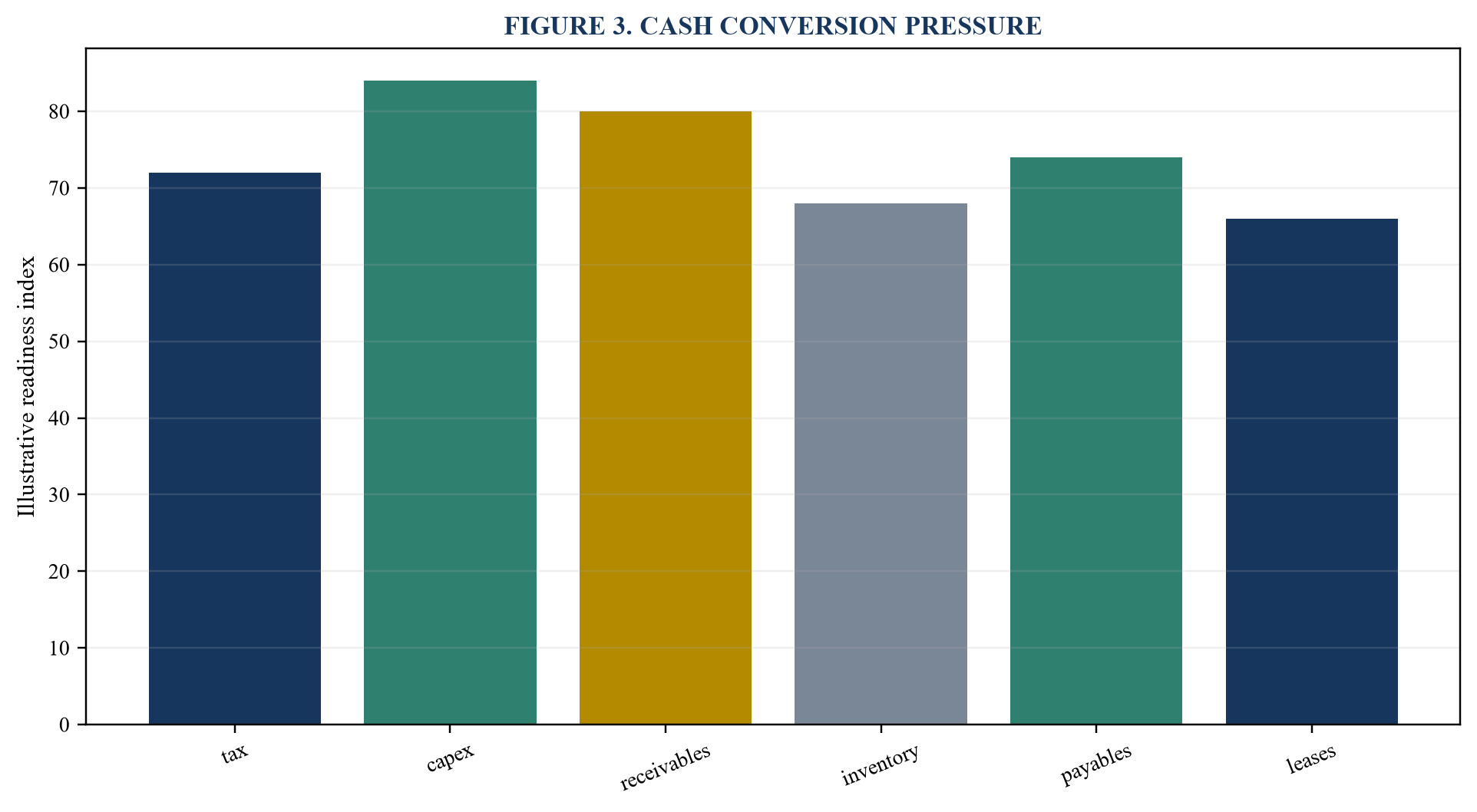
Values are illustrative readiness indices and require company-specific evidence.
25. Stress revenue downside
Apply customer loss, delayed projects, price compression, churn and volume cases to cash and covenants.
The diligence team should reconcile customer map, backlog, elasticity, forecast and debt model. Each conclusion records the accountable owner, source, period, evidence, accounting treatment, cash consequence, control and unresolved exception. The immediate output is a revenue downside test.
Sustainable earnings must be proved through ledger, contract, operational and bank evidence. Reviewers test recurrence, cut-off, cash conversion and downside response against native records and observed performance. Accounting policy, transaction perimeter, finance documents and applicable law control each conclusion.
Material gaps require an owner, corrective action, validation test, advice and decision date. Consequences flow through sustainable earnings, purchase price, leverage, liquidity, covenant headroom and transaction timing. Residual risk remains visible until the evidence is reconciled, protections are executable and the authorised decision-makers approve the next gate.
26. Stress margin downside
Model wage, input, energy, freight, utilisation and foreign-exchange shocks with realistic mitigation lags.
The diligence team should reconcile cost structure, contracts, hedges, operating plan and sensitivities. Each conclusion records the accountable owner, source, period, evidence, accounting treatment, cash consequence, control and unresolved exception. The immediate output is a margin downside test.
Sustainable earnings must be proved through ledger, contract, operational and bank evidence. Reviewers test recurrence, cut-off, cash conversion and downside response against native records and observed performance. Accounting policy, transaction perimeter, finance documents and applicable law control each conclusion.
Material gaps require an owner, corrective action, validation test, advice and decision date. Consequences flow through sustainable earnings, purchase price, leverage, liquidity, covenant headroom and transaction timing. Residual risk remains visible until the evidence is reconciled, protections are executable and the authorised decision-makers approve the next gate.
27. Stress cash timing
Model slower collections, inventory build, supplier tightening and tax timing against liquidity headroom.
The diligence team should reconcile working-capital model, terms, facilities, tax and scenario assumptions. Each conclusion records the accountable owner, source, period, evidence, accounting treatment, cash consequence, control and unresolved exception. The immediate output is a liquidity timing test.
Sustainable earnings must be proved through ledger, contract, operational and bank evidence. Reviewers test recurrence, cut-off, cash conversion and downside response against native records and observed performance. Accounting policy, transaction perimeter, finance documents and applicable law control each conclusion.
Material gaps require an owner, corrective action, validation test, advice and decision date. Consequences flow through sustainable earnings, purchase price, leverage, liquidity, covenant headroom and transaction timing. Residual risk remains visible until the evidence is reconciled, protections are executable and the authorised decision-makers approve the next gate.
28. Test interest-rate and refinancing risk
Model floating rates, hedge expiry, margin ratchets, bullet maturity and refinancing conditions.
The diligence team should reconcile facilities, hedges, yield curves, maturity profile and market evidence. Each conclusion records the accountable owner, source, period, evidence, accounting treatment, cash consequence, control and unresolved exception. The immediate output is a financing stress test.
Sustainable earnings must be proved through ledger, contract, operational and bank evidence. Reviewers test recurrence, cut-off, cash conversion and downside response against native records and observed performance. Accounting policy, transaction perimeter, finance documents and applicable law control each conclusion.
Material gaps require an owner, corrective action, validation test, advice and decision date. Consequences flow through sustainable earnings, purchase price, leverage, liquidity, covenant headroom and transaction timing. Residual risk remains visible until the evidence is reconciled, protections are executable and the authorised decision-makers approve the next gate.
29. Assess forecast achievability
Back-test management forecasting and connect each forecast line to operational drivers and capacity.
The diligence team should reconcile historic budgets, actuals, pipeline, staffing, capacity and contracts. Each conclusion records the accountable owner, source, period, evidence, accounting treatment, cash consequence, control and unresolved exception. The immediate output is a forecast reliability assessment.
Sustainable earnings must be proved through ledger, contract, operational and bank evidence. Reviewers test recurrence, cut-off, cash conversion and downside response against native records and observed performance. Accounting policy, transaction perimeter, finance documents and applicable law control each conclusion.
Material gaps require an owner, corrective action, validation test, advice and decision date. Consequences flow through sustainable earnings, purchase price, leverage, liquidity, covenant headroom and transaction timing. Residual risk remains visible until the evidence is reconciled, protections are executable and the authorised decision-makers approve the next gate.
30. Separate base, upside and remedy cases
Prevent pricing, leverage and covenant decisions from relying on the same optimistic operating assumptions.
The diligence team should reconcile reconciled earnings, scenarios, remedies and approval criteria. Each conclusion records the accountable owner, source, period, evidence, accounting treatment, cash consequence, control and unresolved exception. The immediate output is a three-case decision model.
Sustainable earnings must be proved through ledger, contract, operational and bank evidence. Reviewers test recurrence, cut-off, cash conversion and downside response against native records and observed performance. Accounting policy, transaction perimeter, finance documents and applicable law control each conclusion.
Material gaps require an owner, corrective action, validation test, advice and decision date. Consequences flow through sustainable earnings, purchase price, leverage, liquidity, covenant headroom and transaction timing. Residual risk remains visible until the evidence is reconciled, protections are executable and the authorised decision-makers approve the next gate.
31. Price the earnings gap
Translate unsupported EBITDA, cash leakage and debt-like findings into price, structure or walk-away consequences.
The diligence team should reconcile valuation, bridge, debt model, tax and negotiation strategy. Each conclusion records the accountable owner, source, period, evidence, accounting treatment, cash consequence, control and unresolved exception. The immediate output is an earnings-gap valuation.
Sustainable earnings must be proved through ledger, contract, operational and bank evidence. Reviewers test recurrence, cut-off, cash conversion and downside response against native records and observed performance. Accounting policy, transaction perimeter, finance documents and applicable law control each conclusion.
Material gaps require an owner, corrective action, validation test, advice and decision date. Consequences flow through sustainable earnings, purchase price, leverage, liquidity, covenant headroom and transaction timing. Residual risk remains visible until the evidence is reconciled, protections are executable and the authorised decision-makers approve the next gate.
32. Design purchase-price protection
Allocate known and uncertain exposures through completion accounts, locked-box protections, indemnities and escrow.
The diligence team should reconcile SPA structure, risk register, evidence, valuation and legal advice. Each conclusion records the accountable owner, source, period, evidence, accounting treatment, cash consequence, control and unresolved exception. The immediate output is a price-protection matrix.
Sustainable earnings must be proved through ledger, contract, operational and bank evidence. Reviewers test recurrence, cut-off, cash conversion and downside response against native records and observed performance. Accounting policy, transaction perimeter, finance documents and applicable law control each conclusion.
Material gaps require an owner, corrective action, validation test, advice and decision date. Consequences flow through sustainable earnings, purchase price, leverage, liquidity, covenant headroom and transaction timing. Residual risk remains visible until the evidence is reconciled, protections are executable and the authorised decision-makers approve the next gate.
Table 4. Finding-to-remedy architecture
| Finding | Value response | Execution response |
|---|---|---|
| unsupported add-back | lower earnings base | financing reset |
| working-capital deficit | price adjustment | completion mechanism |
| debt-like item | enterprise-to-equity bridge | settlement control |
| cash downside | lower leverage | liquidity reserve |
Illustrative programme design; company-specific facts and authorised advice govern.
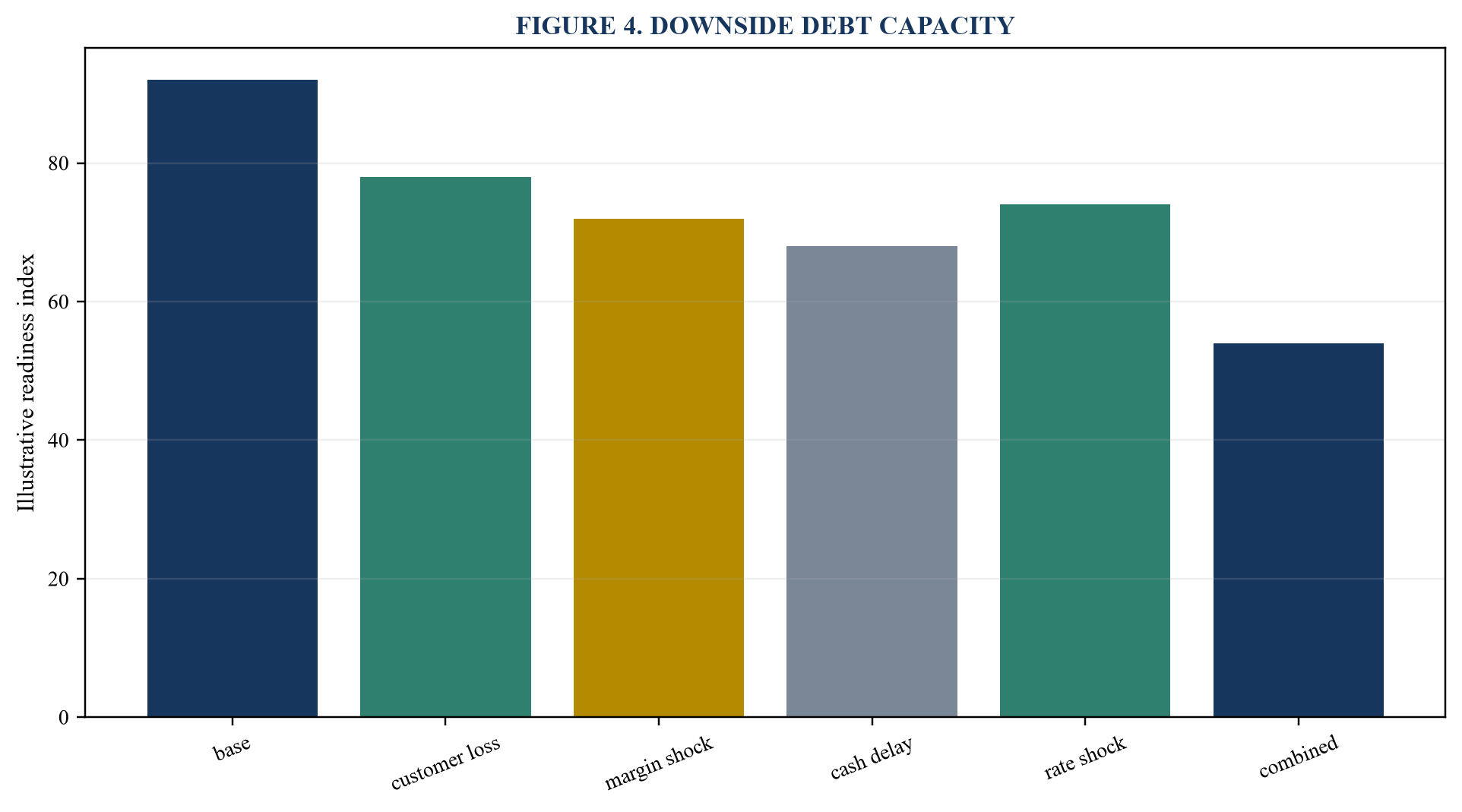
Values are illustrative readiness indices and require company-specific evidence.
33. Calibrate earn-outs
Link contingent consideration to auditable measures that resist accounting-policy, investment and control disputes.
The diligence team should reconcile operating drivers, definitions, governance, information and dispute process. Each conclusion records the accountable owner, source, period, evidence, accounting treatment, cash consequence, control and unresolved exception. The immediate output is an earn-out design.
Sustainable earnings must be proved through ledger, contract, operational and bank evidence. Reviewers test recurrence, cut-off, cash conversion and downside response against native records and observed performance. Accounting policy, transaction perimeter, finance documents and applicable law control each conclusion.
Material gaps require an owner, corrective action, validation test, advice and decision date. Consequences flow through sustainable earnings, purchase price, leverage, liquidity, covenant headroom and transaction timing. Residual risk remains visible until the evidence is reconciled, protections are executable and the authorised decision-makers approve the next gate.
34. Negotiate financing protections
Align conditions, flex, covenant headroom, equity cure, baskets, reporting and drawdown evidence with downside cases.
The diligence team should reconcile financing proposals, debt model, diligence and legal drafting. Each conclusion records the accountable owner, source, period, evidence, accounting treatment, cash consequence, control and unresolved exception. The immediate output is a financing protection schedule.
Sustainable earnings must be proved through ledger, contract, operational and bank evidence. Reviewers test recurrence, cut-off, cash conversion and downside response against native records and observed performance. Accounting policy, transaction perimeter, finance documents and applicable law control each conclusion.
Material gaps require an owner, corrective action, validation test, advice and decision date. Consequences flow through sustainable earnings, purchase price, leverage, liquidity, covenant headroom and transaction timing. Residual risk remains visible until the evidence is reconciled, protections are executable and the authorised decision-makers approve the next gate.
35. Create the closing liquidity plan
Fund fees, taxes, integration, seasonal needs, minimum cash and downside reserves on day one.
The diligence team should reconcile sources and uses, completion accounts, treasury plan and stress tests. Each conclusion records the accountable owner, source, period, evidence, accounting treatment, cash consequence, control and unresolved exception. The immediate output is a closing liquidity certificate.
Sustainable earnings must be proved through ledger, contract, operational and bank evidence. Reviewers test recurrence, cut-off, cash conversion and downside response against native records and observed performance. Accounting policy, transaction perimeter, finance documents and applicable law control each conclusion.
Material gaps require an owner, corrective action, validation test, advice and decision date. Consequences flow through sustainable earnings, purchase price, leverage, liquidity, covenant headroom and transaction timing. Residual risk remains visible until the evidence is reconciled, protections are executable and the authorised decision-makers approve the next gate.
36. Govern post-close cash
Install weekly liquidity, collections, capex, covenant and variance controls through the ownership transition.
The diligence team should reconcile cash forecast, reporting pack, authorities, banking and integration plan. Each conclusion records the accountable owner, source, period, evidence, accounting treatment, cash consequence, control and unresolved exception. The immediate output is a 100-day cash-control system.
Sustainable earnings must be proved through ledger, contract, operational and bank evidence. Reviewers test recurrence, cut-off, cash conversion and downside response against native records and observed performance. Accounting policy, transaction perimeter, finance documents and applicable law control each conclusion.
Material gaps require an owner, corrective action, validation test, advice and decision date. Consequences flow through sustainable earnings, purchase price, leverage, liquidity, covenant headroom and transaction timing. Residual risk remains visible until the evidence is reconciled, protections are executable and the authorised decision-makers approve the next gate.
37. Define escalation triggers
Set thresholds for revenue, margin, working capital, liquidity, covenant and forecast variance responses.
The diligence team should reconcile downside model, headroom, authorities and remedy plans. Each conclusion records the accountable owner, source, period, evidence, accounting treatment, cash consequence, control and unresolved exception. The immediate output is an early-warning matrix.
Sustainable earnings must be proved through ledger, contract, operational and bank evidence. Reviewers test recurrence, cut-off, cash conversion and downside response against native records and observed performance. Accounting policy, transaction perimeter, finance documents and applicable law control each conclusion.
Material gaps require an owner, corrective action, validation test, advice and decision date. Consequences flow through sustainable earnings, purchase price, leverage, liquidity, covenant headroom and transaction timing. Residual risk remains visible until the evidence is reconciled, protections are executable and the authorised decision-makers approve the next gate.
38. Build the lender evidence pack
Provide traceable reconciliations, scenario logic, definitions and controls for credit approval and syndication.
The diligence team should reconcile quality-of-earnings report, debt model, diligence, forecasts and sources. Each conclusion records the accountable owner, source, period, evidence, accounting treatment, cash consequence, control and unresolved exception. The immediate output is a lender diligence pack.
Sustainable earnings must be proved through ledger, contract, operational and bank evidence. Reviewers test recurrence, cut-off, cash conversion and downside response against native records and observed performance. Accounting policy, transaction perimeter, finance documents and applicable law control each conclusion.
Material gaps require an owner, corrective action, validation test, advice and decision date. Consequences flow through sustainable earnings, purchase price, leverage, liquidity, covenant headroom and transaction timing. Residual risk remains visible until the evidence is reconciled, protections are executable and the authorised decision-makers approve the next gate.
39. Set the investment committee gate
Require explicit conclusions on sustainable earnings, cash conversion, debt capacity, protections and residual risks.
The diligence team should reconcile all reconciliations, models, advice, financing and transaction documents. Each conclusion records the accountable owner, source, period, evidence, accounting treatment, cash consequence, control and unresolved exception. The immediate output is an acquisition debt decision paper.
Sustainable earnings must be proved through ledger, contract, operational and bank evidence. Reviewers test recurrence, cut-off, cash conversion and downside response against native records and observed performance. Accounting policy, transaction perimeter, finance documents and applicable law control each conclusion.
Material gaps require an owner, corrective action, validation test, advice and decision date. Consequences flow through sustainable earnings, purchase price, leverage, liquidity, covenant headroom and transaction timing. Residual risk remains visible until the evidence is reconciled, protections are executable and the authorised decision-makers approve the next gate.
40. Issue the quality-of-earnings conclusion
State the sustainable cash earnings range, leverage limit, price implications, conditions and monitoring plan.
The diligence team should reconcile verified evidence, models, stress tests, protections, approvals and advice. Each conclusion records the accountable owner, source, period, evidence, accounting treatment, cash consequence, control and unresolved exception. The immediate output is a quality-of-earnings certificate.
Sustainable earnings must be proved through ledger, contract, operational and bank evidence. Reviewers test recurrence, cut-off, cash conversion and downside response against native records and observed performance. Accounting policy, transaction perimeter, finance documents and applicable law control each conclusion.
Material gaps require an owner, corrective action, validation test, advice and decision date. Consequences flow through sustainable earnings, purchase price, leverage, liquidity, covenant headroom and transaction timing. Residual risk remains visible until the evidence is reconciled, protections are executable and the authorised decision-makers approve the next gate.
Table 5. Acquisition debt certificate
| Dimension | Required conclusion | Evidence |
|---|---|---|
| earnings | sustainable range | reconciled bridge |
| cash | conversion supportable | cash-flow model |
| debt | serviceable in downside | coverage tests |
| control | remedies executable | documents and monitoring |
Illustrative programme design; company-specific facts and authorised advice govern.
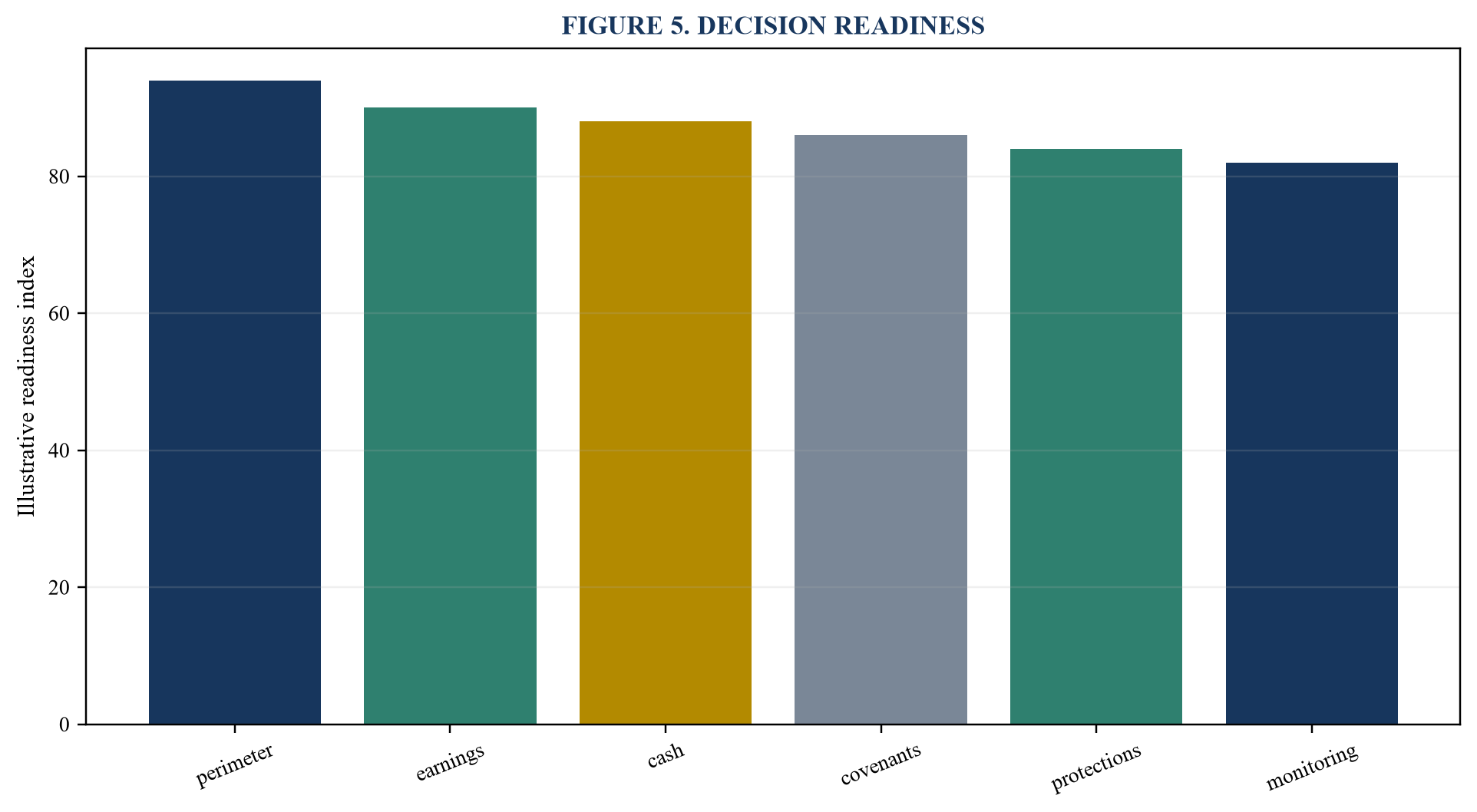
Values are illustrative readiness indices and require company-specific evidence.
References
- IFRS Foundation, IFRS 18 Presentation and Disclosure in Financial Statements, https://www.ifrs.org/issued-standards/list-of-standards/ifrs-18-presentation-and-disclosure-in-financial-statements/
- IFRS Foundation, IFRS 18 Key Terms, https://www.ifrs.org/supporting-implementation/supporting-materials-by-ifrs-standards/ifrs-18/key-terms/
- IFRS Foundation, IAS 7 Statement of Cash Flows, https://www.ifrs.org/issued-standards/list-of-standards/ias-7-statement-of-cash-flows/
- IFRS Foundation, IFRS 15 Revenue from Contracts with Customers, https://www.ifrs.org/issued-standards/list-of-standards/ifrs-15-revenue-from-contracts-with-customers/
- IFRS Foundation, IAS 2 Inventories, https://www.ifrs.org/issued-standards/list-of-standards/ias-2-inventories/
- IFRS Foundation, IAS 16 Property Plant and Equipment, https://www.ifrs.org/issued-standards/list-of-standards/ias-16-property-plant-and-equipment/
- IFRS Foundation, IFRS 16 Leases, https://www.ifrs.org/issued-standards/list-of-standards/ifrs-16-leases/
- IFRS Foundation, IFRS 9 Financial Instruments, https://www.ifrs.org/issued-standards/list-of-standards/ifrs-9-financial-instruments/
- IFRS Foundation, IAS 24 Related Party Disclosures, https://www.ifrs.org/issued-standards/list-of-standards/ias-24-related-party-disclosures/
- IFRS Foundation, IAS 36 Impairment of Assets, https://www.ifrs.org/issued-standards/list-of-standards/ias-36-impairment-of-assets/
- IFRS Foundation, IFRS 3 Business Combinations, https://www.ifrs.org/issued-standards/list-of-standards/ifrs-3-business-combinations/
- US Securities and Exchange Commission, Financial Reporting Manual Topic 8 Non-GAAP Measures, https://www.sec.gov/about/divisions-offices/division-corporation-finance/financial-reporting-manual/frm-topic-8
- US Securities and Exchange Commission, Non-GAAP Financial Measures Compliance and Disclosure Interpretations, https://www.sec.gov/corpfin/non-gaap-financial-measures.htm
- European Central Bank, Guidance on Leveraged Transactions, https://www.bankingsupervision.europa.eu/ecb/pub/pdf/ssm.leveraged_transactions_guidance_201705.en.pdf
- European Banking Authority, Guidelines on Loan Origination and Monitoring, https://www.eba.europa.eu/regulation-and-policy/credit-risk/guidelines-loan-origination-and-monitoring
- Bank for International Settlements, Principles for the Management of Credit Risk, https://www.bis.org/publ/bcbs75.htm
- Office of the Comptroller of the Currency, Comptroller's Handbook Leveraged Lending, https://www.occ.treas.gov/publications-and-resources/publications/comptrollers-handbook/files/leveraged-lending/index-leveraged-lending.html
- Federal Reserve, Commercial Bank Examination Manual, https://www.federalreserve.gov/publications/supervision_cbet.htm
- International Valuation Standards Council, International Valuation Standards, https://www.ivsc.org/standards/
- International Valuation Standards Council, IVS 200 Businesses and Business Interests, https://training.ivsc.org/valuing-businesses-ivs-200/
- International Auditing and Assurance Standards Board, ISA 540 Accounting Estimates, https://www.iaasb.org/publications/international-standard-auditing-isa-540-revised-auditing-accounting-estimates-and-related-disclosures
- International Auditing and Assurance Standards Board, ISA 570 Going Concern, https://www.iaasb.org/publications/international-standard-auditing-isa-570-revised-2015-going-concern
- OECD, G20 OECD Principles of Corporate Governance 2023, https://doi.org/10.1787/ed750b30-en
- International Organization for Standardization, ISO 31000 Risk Management Guidelines, https://www.iso.org/iso-31000-risk-management.html
- United Kingdom Financial Reporting Council, Guidance on Risk Management Internal Control and Related Financial and Business Reporting, https://www.frc.org.uk/library/standards-codes-policy/corporate-governance/guidance-on-risk-management-internal-control-and-related-financial-and-business-reporting/
- World Bank, Principles for Effective Insolvency and Creditor Debtor Regimes, https://www.worldbank.org/en/topic/financialsector/brief/the-world-bank-principles-for-effective-insolvency-and-creditor-rights
