

1. Define the pricing question
The transaction team should state the acquisition timetable, debt quantum, currency, expected hold, refinancing route and operating plan. The required output is a signed modelling perimeter. Use dated source data and link each material term to executed language [1][2].
Model the feature across the expected case and two downside paths. Reconcile benchmark dates, balances, leverage definitions, cash interest, fees, hedges and refinancing. Show the incremental cash effect separately from the total coupon.
The principal risk is that an apparently small pricing feature can compound across a large principal balance and several years. Quantify the effect on liquidity, covenant headroom, deleveraging, distributions and exit proceeds. Accept the feature only when its cash effect is reproducible, its conditions are executable and the acquisition remains resilient if the benefit fails.
Retain the model version, evidence, sensitivity and approval. Compare actual outcomes with forecast after each reset or certificate date; assign material deviations an owner and deadline.
2. Decompose the contractual coupon
The transaction team should separate benchmark, floor, cash margin, payment-in-kind margin, default margin and any minimum coupon. The required output is a component-level coupon bridge. Use dated source data and link each material term to executed language [3][4].
Model the feature across the expected case and two downside paths. Reconcile benchmark dates, balances, leverage definitions, cash interest, fees, hedges and refinancing. Show the incremental cash effect separately from the total coupon.
The principal risk is that a blended coupon can conceal which element responds to rates, leverage or documentation. Quantify the effect on liquidity, covenant headroom, deleveraging, distributions and exit proceeds. Accept the feature only when its cash effect is reproducible, its conditions are executable and the acquisition remains resilient if the benefit fails.
Retain the model version, evidence, sensitivity and approval. Compare actual outcomes with forecast after each reset or certificate date; assign material deviations an owner and deadline.
3. Translate the floor into a payoff
The transaction team should calculate the effective benchmark as the greater of the observed rate and contractual floor on every reset date. The required output is a dated floor payoff schedule. Use dated source data and link each material term to executed language [5][6].
Model the feature across the expected case and two downside paths. Reconcile benchmark dates, balances, leverage definitions, cash interest, fees, hedges and refinancing. Show the incremental cash effect separately from the total coupon.
The principal risk is that the borrower can lose the benefit of falling rates while retaining full exposure to increases. Quantify the effect on liquidity, covenant headroom, deleveraging, distributions and exit proceeds. Accept the feature only when its cash effect is reproducible, its conditions are executable and the acquisition remains resilient if the benefit fails.
Retain the model version, evidence, sensitivity and approval. Compare actual outcomes with forecast after each reset or certificate date; assign material deviations an owner and deadline.
4. Map the margin ratchet
The transaction team should record every leverage threshold, step-up, step-down, testing date, look-back period and effective date. The required output is a ratchet ladder reproduced from executed language. Use dated source data and link each material term to executed language [7][8].
Model the feature across the expected case and two downside paths. Reconcile benchmark dates, balances, leverage definitions, cash interest, fees, hedges and refinancing. Show the incremental cash effect separately from the total coupon.
The principal risk is that a marketing summary can omit gates that determine whether a quoted saving is ever realised. Quantify the effect on liquidity, covenant headroom, deleveraging, distributions and exit proceeds. Accept the feature only when its cash effect is reproducible, its conditions are executable and the acquisition remains resilient if the benefit fails.
Retain the model version, evidence, sensitivity and approval. Compare actual outcomes with forecast after each reset or certificate date; assign material deviations an owner and deadline.
5. Reconcile leverage definitions
The transaction team should bridge reported EBITDA and debt to the contractual definitions used for pricing. The required output is a ratchet leverage certificate. Use dated source data and link each material term to executed language [9][10].
Model the feature across the expected case and two downside paths. Reconcile benchmark dates, balances, leverage definitions, cash interest, fees, hedges and refinancing. Show the incremental cash effect separately from the total coupon.
The principal risk is that adjustments can move the pricing ratio without changing cash available for debt service. Quantify the effect on liquidity, covenant headroom, deleveraging, distributions and exit proceeds. Accept the feature only when its cash effect is reproducible, its conditions are executable and the acquisition remains resilient if the benefit fails.
Retain the model version, evidence, sensitivity and approval. Compare actual outcomes with forecast after each reset or certificate date; assign material deviations an owner and deadline.
6. Set the benchmark curve
The transaction team should select current spot rates, forward curves and internally approved rate cases for each currency and reset convention. The required output is a benchmark scenario set with dated sources. Use dated source data and link each material term to executed language [1][11].
Model the feature across the expected case and two downside paths. Reconcile benchmark dates, balances, leverage definitions, cash interest, fees, hedges and refinancing. Show the incremental cash effect separately from the total coupon.
The principal risk is that a single deterministic rate path can overstate the value of a floor or a hedge. Quantify the effect on liquidity, covenant headroom, deleveraging, distributions and exit proceeds. Accept the feature only when its cash effect is reproducible, its conditions are executable and the acquisition remains resilient if the benefit fails.
Retain the model version, evidence, sensitivity and approval. Compare actual outcomes with forecast after each reset or certificate date; assign material deviations an owner and deadline.
7. Build the coupon surface
The transaction team should calculate coupon outcomes across benchmark rates and leverage ratios rather than along one forecast line. The required output is a two-dimensional coupon surface. Use dated source data and link each material term to executed language [2][6].
Model the feature across the expected case and two downside paths. Reconcile benchmark dates, balances, leverage definitions, cash interest, fees, hedges and refinancing. Show the incremental cash effect separately from the total coupon.
The principal risk is that rate and operating outcomes can interact in ways that a static term-sheet comparison misses. Quantify the effect on liquidity, covenant headroom, deleveraging, distributions and exit proceeds. Accept the feature only when its cash effect is reproducible, its conditions are executable and the acquisition remains resilient if the benefit fails.
Retain the model version, evidence, sensitivity and approval. Compare actual outcomes with forecast after each reset or certificate date; assign material deviations an owner and deadline.
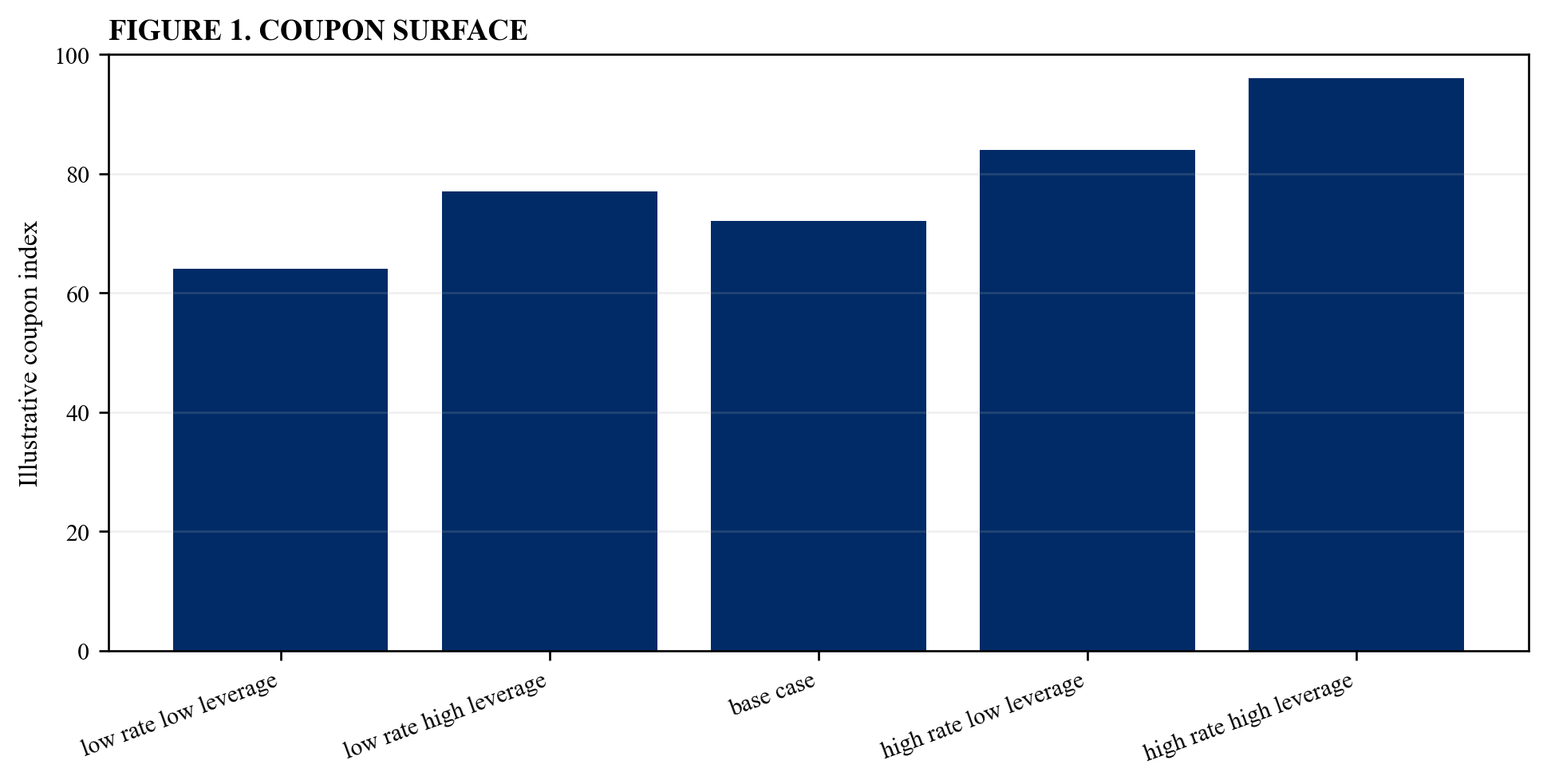
Illustrative analytical scenario; verified financing data should replace the index values.
8. Calculate the floor break-even
The transaction team should identify the rate level and duration at which expected floor cost exceeds alternative pricing or hedging choices. The required output is a floor break-even analysis. Use dated source data and link each material term to executed language [5][12].
Model the feature across the expected case and two downside paths. Reconcile benchmark dates, balances, leverage definitions, cash interest, fees, hedges and refinancing. Show the incremental cash effect separately from the total coupon.
The principal risk is that a lower margin can be offset by a higher or longer-dated floor. Quantify the effect on liquidity, covenant headroom, deleveraging, distributions and exit proceeds. Accept the feature only when its cash effect is reproducible, its conditions are executable and the acquisition remains resilient if the benefit fails.
Retain the model version, evidence, sensitivity and approval. Compare actual outcomes with forecast after each reset or certificate date; assign material deviations an owner and deadline.
Table 1. Floor break-even inputs
| Input | Required evidence | Decision use |
|---|---|---|
| benchmark floor | executed facility agreement | identify binding periods |
| forward rates | dated approved source | establish comparison path |
| principal balance | debt schedule | weight cash impact |
| alternative pricing | comparable binding proposal | test break-even |
Illustrative structure; executed documents and current market data govern.
9. Value ratchet achievability
The transaction team should connect threshold dates to operating performance, cash conversion, amortisation and permitted adjustments. The required output is a probability-weighted ratchet case. Use dated source data and link each material term to executed language [7][13].
Model the feature across the expected case and two downside paths. Reconcile benchmark dates, balances, leverage definitions, cash interest, fees, hedges and refinancing. Show the incremental cash effect separately from the total coupon.
The principal risk is that a step-down has no economic value when the business cannot reach it before refinancing. Quantify the effect on liquidity, covenant headroom, deleveraging, distributions and exit proceeds. Accept the feature only when its cash effect is reproducible, its conditions are executable and the acquisition remains resilient if the benefit fails.
Retain the model version, evidence, sensitivity and approval. Compare actual outcomes with forecast after each reset or certificate date; assign material deviations an owner and deadline.
10. Model reset timing
The transaction team should apply the contractual observation date, day count, fixing convention and payment period. The required output is a reset calendar tied to cash interest. Use dated source data and link each material term to executed language [11][14].
Model the feature across the expected case and two downside paths. Reconcile benchmark dates, balances, leverage definitions, cash interest, fees, hedges and refinancing. Show the incremental cash effect separately from the total coupon.
The principal risk is that timing differences can defer a benefit or accelerate a cost even when annual averages appear equal. Quantify the effect on liquidity, covenant headroom, deleveraging, distributions and exit proceeds. Accept the feature only when its cash effect is reproducible, its conditions are executable and the acquisition remains resilient if the benefit fails.
Retain the model version, evidence, sensitivity and approval. Compare actual outcomes with forecast after each reset or certificate date; assign material deviations an owner and deadline.
11. Capture fees and discount
The transaction team should include original issue discount, arrangement, ticking, commitment, agency, monitoring and exit fees. The required output is an all-in funding-cost ledger. Use dated source data and link each material term to executed language [3][15].
Model the feature across the expected case and two downside paths. Reconcile benchmark dates, balances, leverage definitions, cash interest, fees, hedges and refinancing. Show the incremental cash effect separately from the total coupon.
The principal risk is that upfront economics can dominate modest ratchet savings over a short holding period. Quantify the effect on liquidity, covenant headroom, deleveraging, distributions and exit proceeds. Accept the feature only when its cash effect is reproducible, its conditions are executable and the acquisition remains resilient if the benefit fails.
Retain the model version, evidence, sensitivity and approval. Compare actual outcomes with forecast after each reset or certificate date; assign material deviations an owner and deadline.
12. Integrate amortisation
The transaction team should model scheduled repayment, cash sweep and mandatory prepayment against the balance exposed to each pricing feature. The required output is a principal-and-coupon schedule. Use dated source data and link each material term to executed language [3][16].
Model the feature across the expected case and two downside paths. Reconcile benchmark dates, balances, leverage definitions, cash interest, fees, hedges and refinancing. Show the incremental cash effect separately from the total coupon.
The principal risk is that pricing sensitivity applied to the opening debt balance can overstate later-period cost. Quantify the effect on liquidity, covenant headroom, deleveraging, distributions and exit proceeds. Accept the feature only when its cash effect is reproducible, its conditions are executable and the acquisition remains resilient if the benefit fails.
Retain the model version, evidence, sensitivity and approval. Compare actual outcomes with forecast after each reset or certificate date; assign material deviations an owner and deadline.
13. Model hedge interaction
The transaction team should combine swaps, caps or collars with the loan floor, margin ratchet, reset dates, collateral and break costs. The required output is a net hedged debt-service schedule. Use dated source data and link each material term to executed language [5][17].
Model the feature across the expected case and two downside paths. Reconcile benchmark dates, balances, leverage definitions, cash interest, fees, hedges and refinancing. Show the incremental cash effect separately from the total coupon.
The principal risk is that an uncoordinated hedge can create double floors or basis exposure. Quantify the effect on liquidity, covenant headroom, deleveraging, distributions and exit proceeds. Accept the feature only when its cash effect is reproducible, its conditions are executable and the acquisition remains resilient if the benefit fails.
Retain the model version, evidence, sensitivity and approval. Compare actual outcomes with forecast after each reset or certificate date; assign material deviations an owner and deadline.
14. Test a falling-rate case
The transaction team should run benchmark paths below the contractual floor and measure foregone cash-interest relief. The required output is a floor-binding downside-to-upside case. Use dated source data and link each material term to executed language [1][6].
Model the feature across the expected case and two downside paths. Reconcile benchmark dates, balances, leverage definitions, cash interest, fees, hedges and refinancing. Show the incremental cash effect separately from the total coupon.
The principal risk is that falling policy rates may benefit operations while leaving acquisition debt service comparatively sticky. Quantify the effect on liquidity, covenant headroom, deleveraging, distributions and exit proceeds. Accept the feature only when its cash effect is reproducible, its conditions are executable and the acquisition remains resilient if the benefit fails.
Retain the model version, evidence, sensitivity and approval. Compare actual outcomes with forecast after each reset or certificate date; assign material deviations an owner and deadline.
15. Test persistent rates
The transaction team should extend elevated benchmarks through the operating plan, hedge expiry and refinancing date. The required output is a higher-for-longer interest coverage path. Use dated source data and link each material term to executed language [1][2].
Model the feature across the expected case and two downside paths. Reconcile benchmark dates, balances, leverage definitions, cash interest, fees, hedges and refinancing. Show the incremental cash effect separately from the total coupon.
The principal risk is that persistent cash interest can absorb deleveraging and delay the promised margin step-down. Quantify the effect on liquidity, covenant headroom, deleveraging, distributions and exit proceeds. Accept the feature only when its cash effect is reproducible, its conditions are executable and the acquisition remains resilient if the benefit fails.
Retain the model version, evidence, sensitivity and approval. Compare actual outcomes with forecast after each reset or certificate date; assign material deviations an owner and deadline.
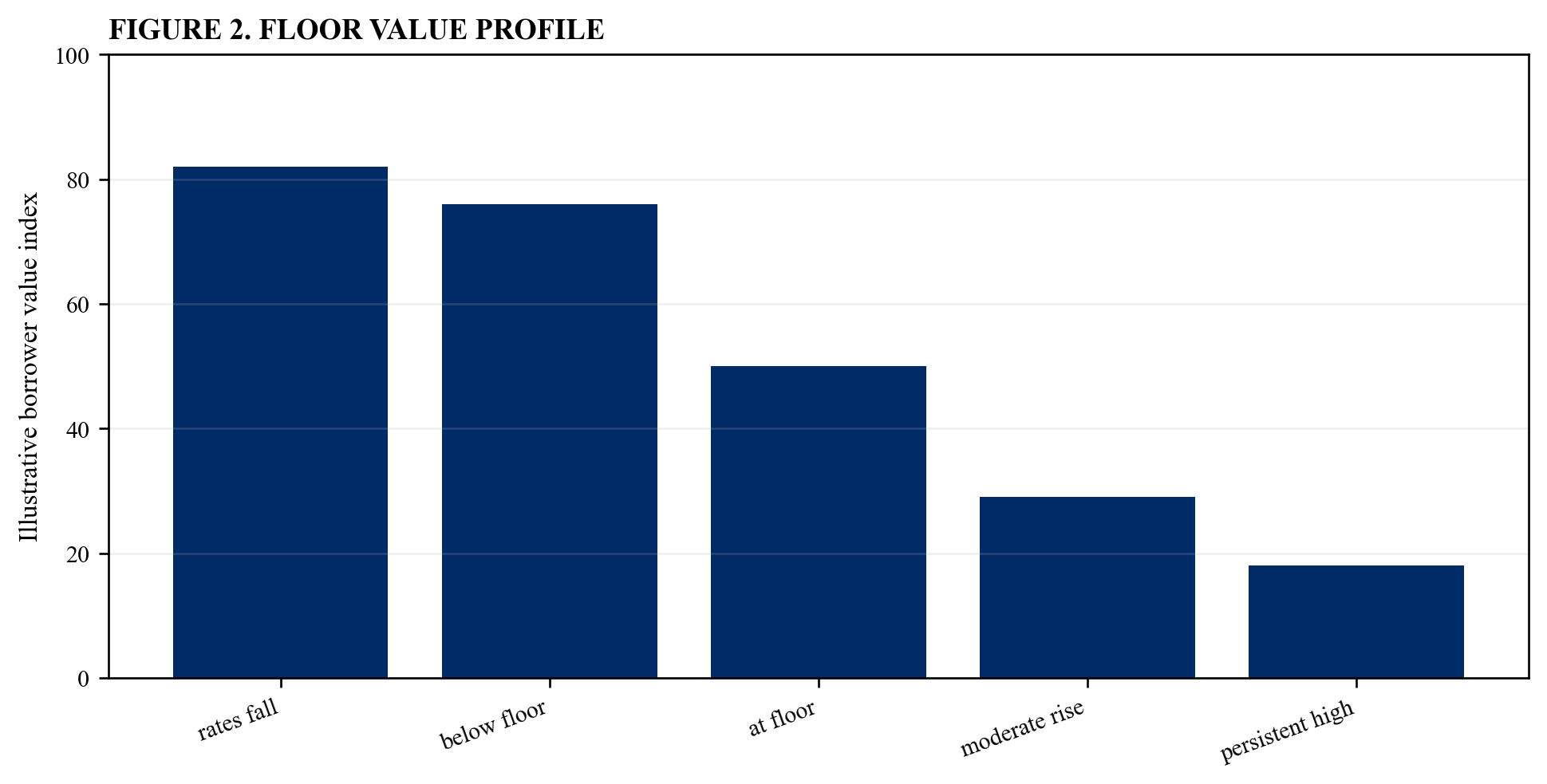
Illustrative analytical scenario; verified financing data should replace the index values.
16. Test missed ratchets
The transaction team should delay or remove forecast step-downs and recalculate interest, liquidity, covenants and equity returns. The required output is a ratchet miss case with trigger attribution. Use dated source data and link each material term to executed language [7][9].
Model the feature across the expected case and two downside paths. Reconcile benchmark dates, balances, leverage definitions, cash interest, fees, hedges and refinancing. Show the incremental cash effect separately from the total coupon.
The principal risk is that management may budget a saving before documentary conditions make it effective. Quantify the effect on liquidity, covenant headroom, deleveraging, distributions and exit proceeds. Accept the feature only when its cash effect is reproducible, its conditions are executable and the acquisition remains resilient if the benefit fails.
Retain the model version, evidence, sensitivity and approval. Compare actual outcomes with forecast after each reset or certificate date; assign material deviations an owner and deadline.
Table 2. Margin ratchet trigger map
| Trigger | Evidence | Failure mode |
|---|---|---|
| leverage threshold | covenant certificate | adjustment dispute |
| test date | reporting calendar | benefit delayed |
| no default | compliance evidence | step-down blocked |
| effective period | rate notice | saving mis-timed |
Illustrative controls; definitions and effective dates require legal review.
17. Test delayed synergies
The transaction team should defer acquisition benefits and reflect duplicate costs, restructuring cash and lower covenant EBITDA. The required output is a synergy-delay pricing case. Use dated source data and link each material term to executed language [9][18].
Model the feature across the expected case and two downside paths. Reconcile benchmark dates, balances, leverage definitions, cash interest, fees, hedges and refinancing. Show the incremental cash effect separately from the total coupon.
The principal risk is that the same delay can increase the pricing margin and weaken the capacity to pay it. Quantify the effect on liquidity, covenant headroom, deleveraging, distributions and exit proceeds. Accept the feature only when its cash effect is reproducible, its conditions are executable and the acquisition remains resilient if the benefit fails.
Retain the model version, evidence, sensitivity and approval. Compare actual outcomes with forecast after each reset or certificate date; assign material deviations an owner and deadline.
18. Test weaker cash conversion
The transaction team should stress receivables, inventory, capital expenditure, tax and restructuring cash independently of EBITDA. The required output is a cash-conversion debt-service case. Use dated source data and link each material term to executed language [10][19].
Model the feature across the expected case and two downside paths. Reconcile benchmark dates, balances, leverage definitions, cash interest, fees, hedges and refinancing. Show the incremental cash effect separately from the total coupon.
The principal risk is that a favourable leverage ratio can coexist with insufficient cash interest coverage. Quantify the effect on liquidity, covenant headroom, deleveraging, distributions and exit proceeds. Accept the feature only when its cash effect is reproducible, its conditions are executable and the acquisition remains resilient if the benefit fails.
Retain the model version, evidence, sensitivity and approval. Compare actual outcomes with forecast after each reset or certificate date; assign material deviations an owner and deadline.
19. Test EBITDA disputes
The transaction team should recalculate ratchets after removing unverified run-rate, pro forma and exceptional adjustments. The required output is an adjustment sensitivity bridge. Use dated source data and link each material term to executed language [9][20].
Model the feature across the expected case and two downside paths. Reconcile benchmark dates, balances, leverage definitions, cash interest, fees, hedges and refinancing. Show the incremental cash effect separately from the total coupon.
The principal risk is that a pricing benefit dependent on aggressive adjustments can be challenged by lenders or auditors. Quantify the effect on liquidity, covenant headroom, deleveraging, distributions and exit proceeds. Accept the feature only when its cash effect is reproducible, its conditions are executable and the acquisition remains resilient if the benefit fails.
Retain the model version, evidence, sensitivity and approval. Compare actual outcomes with forecast after each reset or certificate date; assign material deviations an owner and deadline.
20. Test add-on acquisitions
The transaction team should include incremental debt, acquired EBITDA, integration funding and pro forma adjustments. The required output is a buy-and-build ratchet model. Use dated source data and link each material term to executed language [3][9].
Model the feature across the expected case and two downside paths. Reconcile benchmark dates, balances, leverage definitions, cash interest, fees, hedges and refinancing. Show the incremental cash effect separately from the total coupon.
The principal risk is that an acquisition can improve the reported ratio while increasing near-term cash risk. Quantify the effect on liquidity, covenant headroom, deleveraging, distributions and exit proceeds. Accept the feature only when its cash effect is reproducible, its conditions are executable and the acquisition remains resilient if the benefit fails.
Retain the model version, evidence, sensitivity and approval. Compare actual outcomes with forecast after each reset or certificate date; assign material deviations an owner and deadline.
21. Assess cure treatment
The transaction team should confirm whether equity cures affect covenant compliance, deemed EBITDA and the pricing ratio. The required output is a cure-and-ratchet decision tree. Use dated source data and link each material term to executed language [7][10].
Model the feature across the expected case and two downside paths. Reconcile benchmark dates, balances, leverage definitions, cash interest, fees, hedges and refinancing. Show the incremental cash effect separately from the total coupon.
The principal risk is that a cure may protect control without delivering the expected margin reduction. Quantify the effect on liquidity, covenant headroom, deleveraging, distributions and exit proceeds. Accept the feature only when its cash effect is reproducible, its conditions are executable and the acquisition remains resilient if the benefit fails.
Retain the model version, evidence, sensitivity and approval. Compare actual outcomes with forecast after each reset or certificate date; assign material deviations an owner and deadline.
22. Map reporting conditions
The transaction team should identify certificate deadlines, accounts, calculations, auditor input and no-default conditions. The required output is a ratchet evidence calendar. Use dated source data and link each material term to executed language [7][21].
Model the feature across the expected case and two downside paths. Reconcile benchmark dates, balances, leverage definitions, cash interest, fees, hedges and refinancing. Show the incremental cash effect separately from the total coupon.
The principal risk is that a valid economic threshold may fail to change pricing when reporting evidence is late or incomplete. Quantify the effect on liquidity, covenant headroom, deleveraging, distributions and exit proceeds. Accept the feature only when its cash effect is reproducible, its conditions are executable and the acquisition remains resilient if the benefit fails.
Retain the model version, evidence, sensitivity and approval. Compare actual outcomes with forecast after each reset or certificate date; assign material deviations an owner and deadline.
23. Control calculation agents
The transaction team should specify who calculates the benchmark, leverage ratio and effective margin and how errors are corrected. The required output is a calculation governance protocol. Use dated source data and link each material term to executed language [8][21].
Model the feature across the expected case and two downside paths. Reconcile benchmark dates, balances, leverage definitions, cash interest, fees, hedges and refinancing. Show the incremental cash effect separately from the total coupon.
The principal risk is that unresolved calculation authority can turn a forecast saving into a documentation dispute. Quantify the effect on liquidity, covenant headroom, deleveraging, distributions and exit proceeds. Accept the feature only when its cash effect is reproducible, its conditions are executable and the acquisition remains resilient if the benefit fails.
Retain the model version, evidence, sensitivity and approval. Compare actual outcomes with forecast after each reset or certificate date; assign material deviations an owner and deadline.
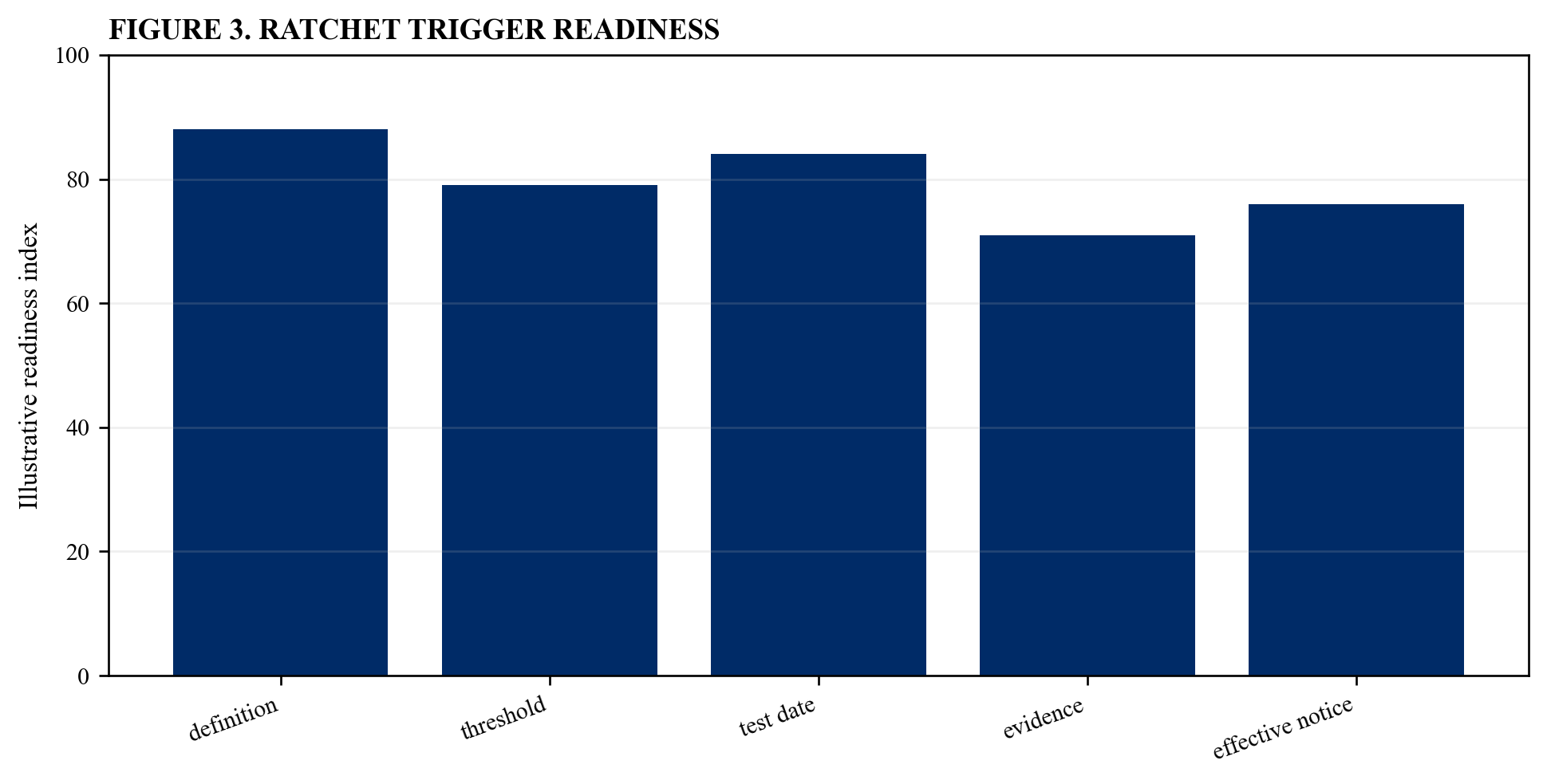
Illustrative analytical scenario; verified financing data should replace the index values.
24. Compare bank and private-credit terms
The transaction team should normalise floors, ratchets, fees, covenant definitions, hold periods and prepayment terms across providers. The required output is a lender-neutral pricing grid. Use dated source data and link each material term to executed language [2][15].
Model the feature across the expected case and two downside paths. Reconcile benchmark dates, balances, leverage definitions, cash interest, fees, hedges and refinancing. Show the incremental cash effect separately from the total coupon.
The principal risk is that provider labels can distract from more consequential feature-level differences. Quantify the effect on liquidity, covenant headroom, deleveraging, distributions and exit proceeds. Accept the feature only when its cash effect is reproducible, its conditions are executable and the acquisition remains resilient if the benefit fails.
Retain the model version, evidence, sensitivity and approval. Compare actual outcomes with forecast after each reset or certificate date; assign material deviations an owner and deadline.
Table 3. Provider pricing comparison
| Dimension | Bank-led debt | Private credit |
|---|---|---|
| benchmark economics | floor and hedge interaction | floor and bespoke reset terms |
| ratchet | documented leverage ladder | negotiated bilateral ladder |
| execution | approval and syndication path | investment committee and hold capacity |
| refinancing | market access and break costs | call protection and amendment route |
Compare complete terms on a common principal, tenor and scenario basis.
25. Compare fixed and floating debt
The transaction team should measure fixed-rate certainty against floating-rate upside, floors, hedging cost and refinancing flexibility. The required output is a fixed-versus-floating value bridge. Use dated source data and link each material term to executed language [5][17].
Model the feature across the expected case and two downside paths. Reconcile benchmark dates, balances, leverage definitions, cash interest, fees, hedges and refinancing. Show the incremental cash effect separately from the total coupon.
The principal risk is that a nominally higher fixed coupon can protect liquidity in the downside case. Quantify the effect on liquidity, covenant headroom, deleveraging, distributions and exit proceeds. Accept the feature only when its cash effect is reproducible, its conditions are executable and the acquisition remains resilient if the benefit fails.
Retain the model version, evidence, sensitivity and approval. Compare actual outcomes with forecast after each reset or certificate date; assign material deviations an owner and deadline.
26. Price prepayment optionality
The transaction team should model call protection, make-whole, repricing premium, break costs and mandatory prepayment. The required output is a refinancing option-value schedule. Use dated source data and link each material term to executed language [15][22].
Model the feature across the expected case and two downside paths. Reconcile benchmark dates, balances, leverage definitions, cash interest, fees, hedges and refinancing. Show the incremental cash effect separately from the total coupon.
The principal risk is that a successful deleveraging plan can make cheap refinancing economically inaccessible. Quantify the effect on liquidity, covenant headroom, deleveraging, distributions and exit proceeds. Accept the feature only when its cash effect is reproducible, its conditions are executable and the acquisition remains resilient if the benefit fails.
Retain the model version, evidence, sensitivity and approval. Compare actual outcomes with forecast after each reset or certificate date; assign material deviations an owner and deadline.
27. Model margin ratchet reversals
The transaction team should apply step-ups when leverage increases after a prior step-down. The required output is a reversible pricing ladder. Use dated source data and link each material term to executed language [7][13].
Model the feature across the expected case and two downside paths. Reconcile benchmark dates, balances, leverage definitions, cash interest, fees, hedges and refinancing. Show the incremental cash effect separately from the total coupon.
The principal risk is that a temporary improvement can produce a saving that disappears when performance weakens or debt rises. Quantify the effect on liquidity, covenant headroom, deleveraging, distributions and exit proceeds. Accept the feature only when its cash effect is reproducible, its conditions are executable and the acquisition remains resilient if the benefit fails.
Retain the model version, evidence, sensitivity and approval. Compare actual outcomes with forecast after each reset or certificate date; assign material deviations an owner and deadline.
28. Assess floor amendments
The transaction team should identify consent thresholds, amendment fees and lender incentives for reducing or removing the floor. The required output is an amendment route and value-sharing case. Use dated source data and link each material term to executed language [8][22].
Model the feature across the expected case and two downside paths. Reconcile benchmark dates, balances, leverage definitions, cash interest, fees, hedges and refinancing. Show the incremental cash effect separately from the total coupon.
The principal risk is that the economic benefit of a lower floor may be transferred to lenders through fees or margin changes. Quantify the effect on liquidity, covenant headroom, deleveraging, distributions and exit proceeds. Accept the feature only when its cash effect is reproducible, its conditions are executable and the acquisition remains resilient if the benefit fails.
Retain the model version, evidence, sensitivity and approval. Compare actual outcomes with forecast after each reset or certificate date; assign material deviations an owner and deadline.
29. Assess transfer and syndication
The transaction team should test whether new lenders inherit calculation rights, interpretations and amendment incentives. The required output is a lender-transition risk map. Use dated source data and link each material term to executed language [2][23].
Model the feature across the expected case and two downside paths. Reconcile benchmark dates, balances, leverage definitions, cash interest, fees, hedges and refinancing. Show the incremental cash effect separately from the total coupon.
The principal risk is that pricing administration can change when the lender group changes after closing. Quantify the effect on liquidity, covenant headroom, deleveraging, distributions and exit proceeds. Accept the feature only when its cash effect is reproducible, its conditions are executable and the acquisition remains resilient if the benefit fails.
Retain the model version, evidence, sensitivity and approval. Compare actual outcomes with forecast after each reset or certificate date; assign material deviations an owner and deadline.
30. Link pricing to covenants
The transaction team should run pricing leverage, maintenance leverage and incurrence tests from one reconciled data set. The required output is an integrated ratio architecture. Use dated source data and link each material term to executed language [9][10].
Model the feature across the expected case and two downside paths. Reconcile benchmark dates, balances, leverage definitions, cash interest, fees, hedges and refinancing. Show the incremental cash effect separately from the total coupon.
The principal risk is that different definitions can create a lower margin alongside diminishing covenant headroom. Quantify the effect on liquidity, covenant headroom, deleveraging, distributions and exit proceeds. Accept the feature only when its cash effect is reproducible, its conditions are executable and the acquisition remains resilient if the benefit fails.
Retain the model version, evidence, sensitivity and approval. Compare actual outcomes with forecast after each reset or certificate date; assign material deviations an owner and deadline.
31. Link pricing to distributions
The transaction team should calculate how debt-service changes affect restricted-payment capacity and sponsor cash flows. The required output is a pricing-to-distribution waterfall. Use dated source data and link each material term to executed language [3][16].
Model the feature across the expected case and two downside paths. Reconcile benchmark dates, balances, leverage definitions, cash interest, fees, hedges and refinancing. Show the incremental cash effect separately from the total coupon.
The principal risk is that modest coupon asymmetry can delay distributions and change the equity return profile. Quantify the effect on liquidity, covenant headroom, deleveraging, distributions and exit proceeds. Accept the feature only when its cash effect is reproducible, its conditions are executable and the acquisition remains resilient if the benefit fails.
Retain the model version, evidence, sensitivity and approval. Compare actual outcomes with forecast after each reset or certificate date; assign material deviations an owner and deadline.
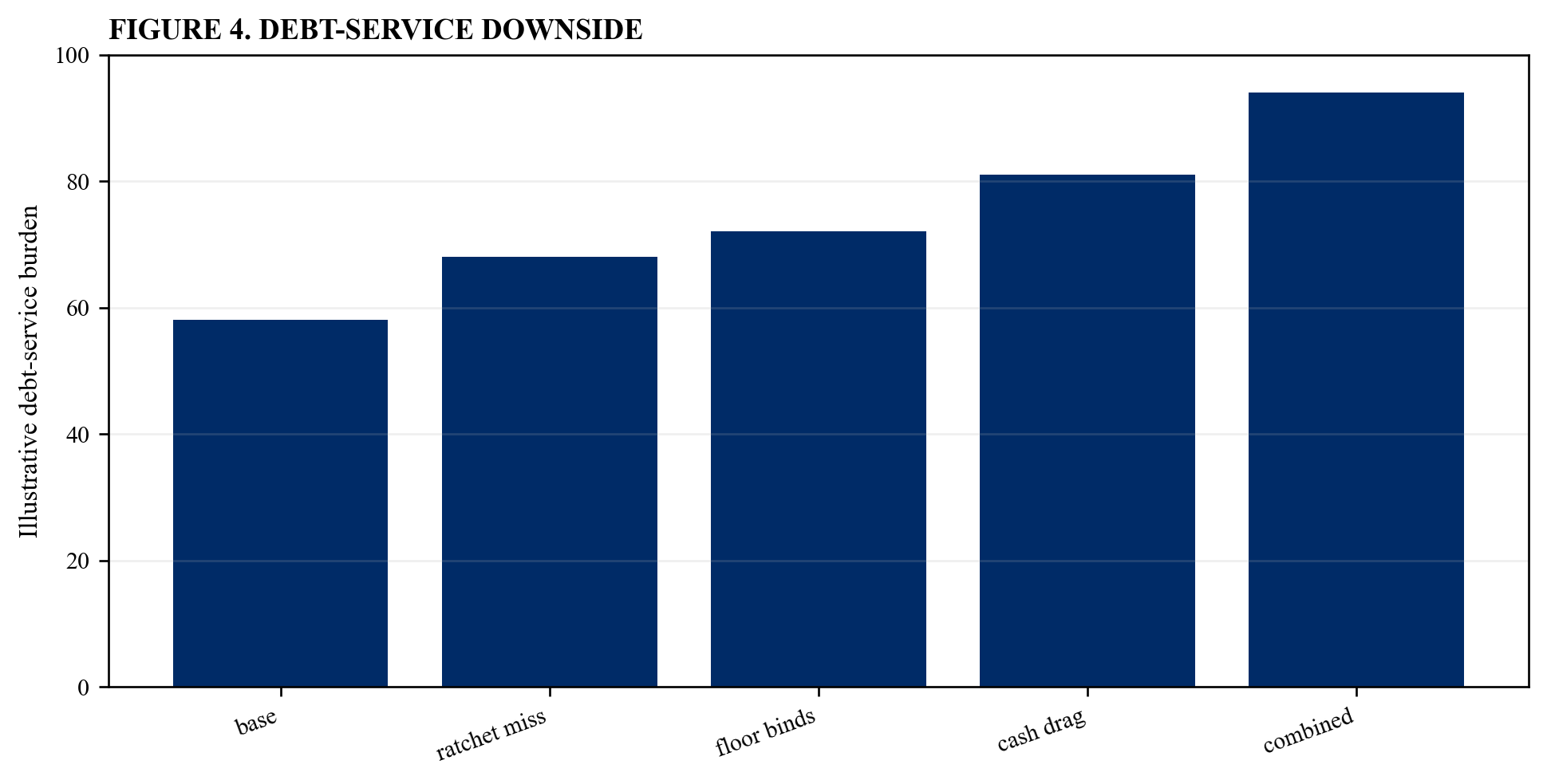
Illustrative analytical scenario; verified financing data should replace the index values.
32. Link pricing to valuation
The transaction team should discount incremental debt service and quantify its effect on equity value and exit proceeds. The required output is an equity-value attribution schedule. Use dated source data and link each material term to executed language [24][25].
Model the feature across the expected case and two downside paths. Reconcile benchmark dates, balances, leverage definitions, cash interest, fees, hedges and refinancing. Show the incremental cash effect separately from the total coupon.
The principal risk is that ignoring path-dependent debt cost can overstate acquisition returns. Quantify the effect on liquidity, covenant headroom, deleveraging, distributions and exit proceeds. Accept the feature only when its cash effect is reproducible, its conditions are executable and the acquisition remains resilient if the benefit fails.
Retain the model version, evidence, sensitivity and approval. Compare actual outcomes with forecast after each reset or certificate date; assign material deviations an owner and deadline.
Table 4. Equity-value transmission
| Pricing event | Cash effect | Equity transmission |
|---|---|---|
| floor binds | interest saving foregone | slower deleveraging |
| ratchet missed | margin remains high | lower distributions |
| rate persists | interest cover falls | greater refinancing risk |
| early refinance | fees and premium | reduced exit proceeds |
Illustrative pathways; verified operating and financing data should replace assumptions.
33. Model refinancing timing
The transaction team should compare expected and downside refinancing dates against maturity, call protection, hedge expiry and ratchet delivery. The required output is a refinancing runway map. Use dated source data and link each material term to executed language [1][22].
Model the feature across the expected case and two downside paths. Reconcile benchmark dates, balances, leverage definitions, cash interest, fees, hedges and refinancing. Show the incremental cash effect separately from the total coupon.
The principal risk is that the borrower may refinance before receiving the benefit priced into the original case. Quantify the effect on liquidity, covenant headroom, deleveraging, distributions and exit proceeds. Accept the feature only when its cash effect is reproducible, its conditions are executable and the acquisition remains resilient if the benefit fails.
Retain the model version, evidence, sensitivity and approval. Compare actual outcomes with forecast after each reset or certificate date; assign material deviations an owner and deadline.
34. Model lender stress
The transaction team should test wider spreads, reduced hold capacity, tighter amendments and delayed approvals. The required output is a financing-market stress playbook. Use dated source data and link each material term to executed language [1][2].
Model the feature across the expected case and two downside paths. Reconcile benchmark dates, balances, leverage definitions, cash interest, fees, hedges and refinancing. Show the incremental cash effect separately from the total coupon.
The principal risk is that market stress can increase the cost of escaping an unfavourable floor or ratchet structure. Quantify the effect on liquidity, covenant headroom, deleveraging, distributions and exit proceeds. Accept the feature only when its cash effect is reproducible, its conditions are executable and the acquisition remains resilient if the benefit fails.
Retain the model version, evidence, sensitivity and approval. Compare actual outcomes with forecast after each reset or certificate date; assign material deviations an owner and deadline.
35. Set model controls
The transaction team should lock formulas, retain source documents, reconcile balances and record version, reviewer and approval. The required output is a controlled acquisition-debt model. Use dated source data and link each material term to executed language [20][21].
Model the feature across the expected case and two downside paths. Reconcile benchmark dates, balances, leverage definitions, cash interest, fees, hedges and refinancing. Show the incremental cash effect separately from the total coupon.
The principal risk is that small formula or timing errors can become material when applied across every reset period. Quantify the effect on liquidity, covenant headroom, deleveraging, distributions and exit proceeds. Accept the feature only when its cash effect is reproducible, its conditions are executable and the acquisition remains resilient if the benefit fails.
Retain the model version, evidence, sensitivity and approval. Compare actual outcomes with forecast after each reset or certificate date; assign material deviations an owner and deadline.
36. Back-test pricing forecasts
The transaction team should compare forecast and realised benchmarks, ratios, ratchet dates and cash interest. The required output is a quarterly pricing variance report. Use dated source data and link each material term to executed language [12][20].
Model the feature across the expected case and two downside paths. Reconcile benchmark dates, balances, leverage definitions, cash interest, fees, hedges and refinancing. Show the incremental cash effect separately from the total coupon.
The principal risk is that forecast bias can persist when teams explain misses without recalibrating the model. Quantify the effect on liquidity, covenant headroom, deleveraging, distributions and exit proceeds. Accept the feature only when its cash effect is reproducible, its conditions are executable and the acquisition remains resilient if the benefit fails.
Retain the model version, evidence, sensitivity and approval. Compare actual outcomes with forecast after each reset or certificate date; assign material deviations an owner and deadline.
37. Run the competitive process
The transaction team should issue a consistent pricing schedule and scenario request to all financing providers. The required output is an auditable bid comparison. Use dated source data and link each material term to executed language [15][23].
Model the feature across the expected case and two downside paths. Reconcile benchmark dates, balances, leverage definitions, cash interest, fees, hedges and refinancing. Show the incremental cash effect separately from the total coupon.
The principal risk is that different assumptions can make proposals appear comparable when their downside economics diverge. Quantify the effect on liquidity, covenant headroom, deleveraging, distributions and exit proceeds. Accept the feature only when its cash effect is reproducible, its conditions are executable and the acquisition remains resilient if the benefit fails.
Retain the model version, evidence, sensitivity and approval. Compare actual outcomes with forecast after each reset or certificate date; assign material deviations an owner and deadline.
38. Negotiate the economic package
The transaction team should trade margin, floor, ratchet width, threshold timing, fees, covenant capacity and prepayment as one package. The required output is a negotiation value map. Use dated source data and link each material term to executed language [7][15].
Model the feature across the expected case and two downside paths. Reconcile benchmark dates, balances, leverage definitions, cash interest, fees, hedges and refinancing. Show the incremental cash effect separately from the total coupon.
The principal risk is that optimising one visible term can transfer more value through another. Quantify the effect on liquidity, covenant headroom, deleveraging, distributions and exit proceeds. Accept the feature only when its cash effect is reproducible, its conditions are executable and the acquisition remains resilient if the benefit fails.
Retain the model version, evidence, sensitivity and approval. Compare actual outcomes with forecast after each reset or certificate date; assign material deviations an owner and deadline.
39. Prepare the board certificate
The transaction team should summarise the coupon surface, floor cost, ratchet achievability, downside liquidity and rejected alternatives. The required output is a board-ready rate-and-ratchet certificate. Use dated source data and link each material term to executed language [24][26].
Model the feature across the expected case and two downside paths. Reconcile benchmark dates, balances, leverage definitions, cash interest, fees, hedges and refinancing. Show the incremental cash effect separately from the total coupon.
The principal risk is that a weighted score can conceal a fatal liquidity or documentation condition. Quantify the effect on liquidity, covenant headroom, deleveraging, distributions and exit proceeds. Accept the feature only when its cash effect is reproducible, its conditions are executable and the acquisition remains resilient if the benefit fails.
Retain the model version, evidence, sensitivity and approval. Compare actual outcomes with forecast after each reset or certificate date; assign material deviations an owner and deadline.
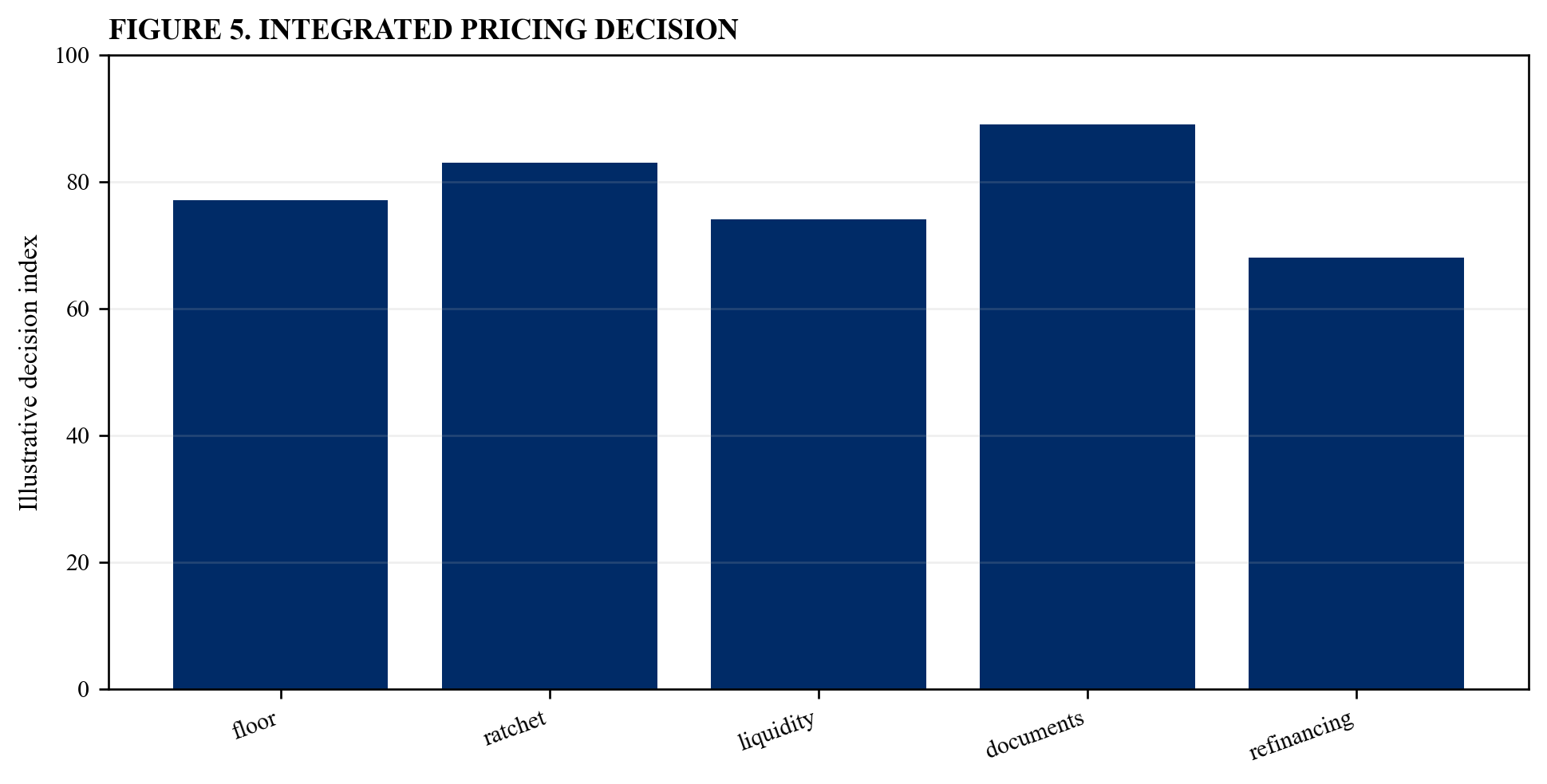
Illustrative analytical scenario; verified financing data should replace the index values.
40. Govern the first year
The transaction team should assign ownership for resets, certificates, hedges, variance reporting, covenant forecasts and lender dialogue. The required output is a twelve-month debt-pricing control calendar. Use dated source data and link each material term to executed language [21][26].
Model the feature across the expected case and two downside paths. Reconcile benchmark dates, balances, leverage definitions, cash interest, fees, hedges and refinancing. Show the incremental cash effect separately from the total coupon.
The principal risk is that value can leak after closing through missed notices, stale assumptions or avoidable pricing errors. Quantify the effect on liquidity, covenant headroom, deleveraging, distributions and exit proceeds. Accept the feature only when its cash effect is reproducible, its conditions are executable and the acquisition remains resilient if the benefit fails.
Retain the model version, evidence, sensitivity and approval. Compare actual outcomes with forecast after each reset or certificate date; assign material deviations an owner and deadline.
Table 5. Rate-and-ratchet decision certificate
| Decision dimension | Required evidence | Conclusion |
|---|---|---|
| floor economics | payoff and break-even schedule | acceptable or conditioned |
| ratchet value | achievable trigger case | acceptable or conditioned |
| downside liquidity | debt-service stress model | acceptable or conditioned |
| documentation | executed-language map | acceptable or conditioned |
The board should retain underlying calculations and documentary evidence.
References
- Bank of England, Financial Stability Report July 2026, https://www.bankofengland.co.uk/financial-stability-report/2026/july-2026
- European Central Bank, Financial Stability Review May 2026, https://www.ecb.europa.eu/press/financial-stability-publications/fsr/html/ecb.fsr202605~50566915a7.en.html
- International Monetary Fund, Global Financial Stability Report April 2024 Chapter 2, https://www.imf.org/en/publications/gfsr/issues/2024/04/16/global-financial-stability-report-april-2024
- IFRS Foundation, IFRS 9 Financial Instruments, https://www.ifrs.org/issued-standards/list-of-standards/ifrs-9-financial-instruments/
- Bank of England, Yield curves, https://www.bankofengland.co.uk/statistics/yield-curves
- European Central Bank, Key ECB interest rates, https://www.ecb.europa.eu/stats/policy_and_exchange_rates/key_ecb_interest_rates/html/index.en.html
- European Banking Authority, Guidelines on leveraged transactions, https://www.eba.europa.eu/sites/default/files/documents/10180/1696305/1dba7657-6ccb-462a-b9f8-8df8686b9807/Final%20Guidelines%20on%20Leveraged%20Transactions.pdf
- European Central Bank, Guidance on leveraged transactions, https://www.bankingsupervision.europa.eu/ecb/pub/pdf/ssm.leveraged_transactions_guidance_201705.en.pdf
- IFRS Foundation, IFRS 3 Business Combinations, https://www.ifrs.org/issued-standards/list-of-standards/ifrs-3-business-combinations/
- IFRS Foundation, IAS 7 Statement of Cash Flows, https://www.ifrs.org/issued-standards/list-of-standards/ias-7-statement-of-cash-flows/
- Bank of England, Sterling risk-free reference rates, https://www.bankofengland.co.uk/markets/transition-to-sterling-risk-free-rates-from-libor
- UK Financial Conduct Authority, Private market valuation practices, https://www.fca.org.uk/publications/multi-firm-reviews/private-market-valuation-practices
- Financial Stability Board, Vulnerabilities in private credit, https://www.fsb.org/2025/02/vulnerabilities-in-private-credit/
- Bank for International Settlements, Interest rate risk in the banking book, https://www.bis.org/bcbs/publ/d368.htm
- European Banking Authority, Guidelines on loan origination and monitoring, https://www.eba.europa.eu/regulation-and-policy/credit-risk/guidelines-loan-origination-and-monitoring
- European Banking Authority, Single Rulebook credit risk, https://www.eba.europa.eu/regulation-and-policy/single-rulebook
- International Swaps and Derivatives Association, benchmark reform and transition resources, https://www.isda.org/category/legal/benchmarks/
- International Accounting Standards Board, Business combinations project, https://www.ifrs.org/projects/work-plan/business-combinations-disclosures-goodwill-and-impairment/
- UK Finance, Business finance guidance, https://www.ukfinance.org.uk/policy-and-guidance/guidance/business-finance
- Financial Reporting Council, Standard for Investment Reporting 1000, https://www.frc.org.uk/library/standards-codes-policy/audit-assurance-and-ethics/standards-for-investment-reporting/
- OECD, G20 OECD Principles of Corporate Governance 2023, https://www.oecd.org/corporate/principles-corporate-governance/
- UK Financial Conduct Authority, Investment firms prudential regime, https://www.fca.org.uk/firms/investment-firms-prudential-regime
- European Central Bank, June 2026 survey on credit terms and conditions, https://www.ecb.europa.eu/press/pr/date/2026/html/ecb.pr260724_3~c0b45e246f.en.html
- International Valuation Standards Council, IVS 500 Financial Instruments, https://www.ivsc.org/standards/
- IFRS Foundation, IFRS 13 Fair Value Measurement, https://www.ifrs.org/issued-standards/list-of-standards/ifrs-13-fair-value-measurement/
- Bank for International Settlements, Principles for the management of credit risk, https://www.bis.org/publ/bcbs75.htm
