

1. Establish authority and the regulatory objective
The transaction team should confirm board, office-holder, lender and court powers together with specialist ownership. Evidence should come from constitutions, finance documents, appointments, orders, minutes and advice. The controlling question is who may disclose, notify, negotiate remedies and bind each entity. The answer should be dated, attributed and linked to the legal entity, asset, liability or operating dependency it describes [1][2][3][4].
The controlled output is an authority and responsibility memorandum. It should state the source, calculation method, owner, exceptions, required approvals and the next irreversible deadline. This allows a board, officeholder, creditor or buyer to reproduce the conclusion when facts change.
The principal risk is that an unauthorised filing or commitment can impair value and process integrity. The team should quantify the effect on liquidity, stand-alone earnings, creditor recoveries, operating continuity and completion probability. A material exception should update the perimeter and funding plan.
2. Put liquidity and approvals on one clock
This workstream requires the company and its advisers to date cash exhaustion, payroll, taxes, debt service, milestones, filing acceptance and review periods, using cash forecasts, bank evidence, liabilities, filing plans and regulator guidance. The practical test is which obligations and approval gates fall inside the funded runway. Analysis should use one cut-off date so that cash, claims, contracts, people and transaction documents reconcile [5][6][7][8].
Decision-makers should maintain an integrated liquidity and approval calendar. It should distinguish legal ownership from economic allocation, current evidence from forecast assumptions and committed funding from indications. Qualified advisers retain responsibility for legal, insolvency, tax, pensions, accounting and regulatory judgements.
Execution can fail when a legally viable bid may arrive after the business has run out of cash. Each dependency needs a control, evidence threshold, escalation route and decision time. The transaction remains viable only while the funded separation plan can absorb a credible delay or shortfall.
3. Map the complete approval universe
The readiness team should inventory merger, investment, subsidy, sector, sanctions, data, environment and court requirements. The evidence base includes group charts, activities, licences, revenues, assets, customers and jurisdictions. The central question is which authority may prohibit, condition, delay or invalidate completion. Conclusions should remain at entity and dependency level because the failing group may have pooled cash, shared rights and cross-guarantees [3][9][10][11].
The required deliverable is a multi-regime approval register. It should connect the proposed sale documents to the stand-alone operating model and the residual estate. Every material assumption should show its source and sensitivity.
The downside is that an omitted regime may surface after signing when options are limited. Management should test the base case and a combined downside against minimum cash, customer continuity and the completion timetable. Unsupported benefits should not be treated as available funding.
Table 1. Approval inventory
| Regime | Trigger evidence | Completion effect |
|---|---|---|
| merger control | revenue, overlap and control | standstill or call-in |
| investment screening | ownership and sensitive activity | mandatory clearance or order |
| sector approval | licence and controller status | consent before operation |
| sanctions and export | party, asset and technology | licence, restriction or block |
Values and scores are analytical scenarios; transaction evidence should replace model values.
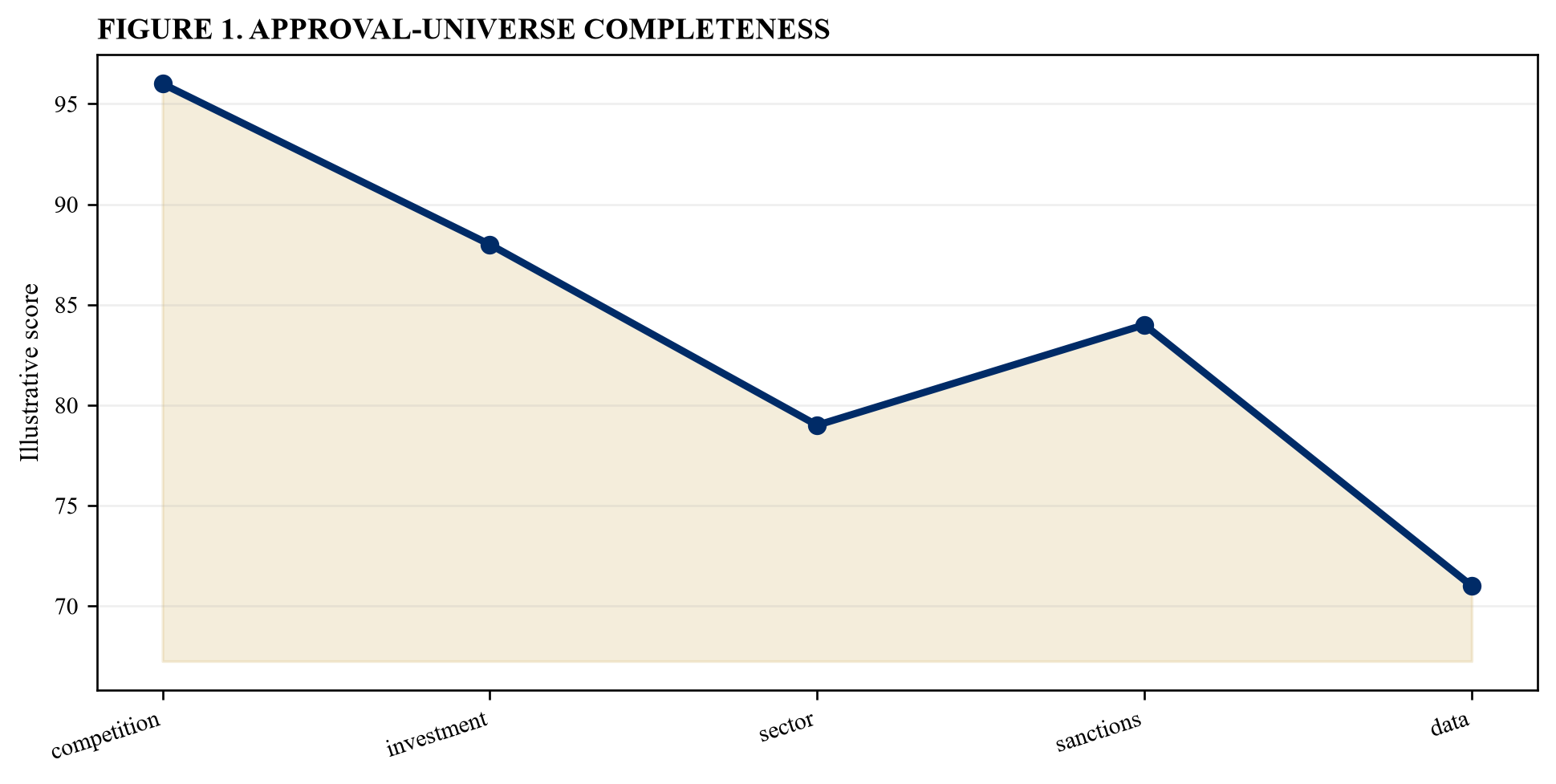
Illustrative analytical scenario; transaction evidence should replace model values.
4. Select the transaction route
The seller should compare share, asset, business, insolvency, restructuring, newco and staged routes. Relevant evidence includes structure papers, perimeter maps, legal advice and bidder proposals. The decision asks how each route changes control, thresholds, licences and timing. A reliable answer links financial analysis to title, transfer mechanics, operating capability and the applicable approval process [1][2][12][13].
The decision pack should contain a regulatory route decision memorandum. It should show calculation dates, owners, dependencies and the documents that implement the conclusion. This creates a defensible record for later scrutiny and post-completion reconciliation.
A material failure occurs when commercial labels may conceal a notifiable transfer of control. The response should identify a funded cure, alternative perimeter or fallback route. Continuing without one can reduce going-concern value and creditor recovery.
5. Define the transaction perimeter
The transaction team should reconcile legal entities, assets, rights, contracts, people, data and licences. Evidence should come from corporate records, asset registers, contracts, HR, systems and permits. The controlling question is what changes hands, what remains and what must operate at completion. The answer should be dated, attributed and linked to the legal entity, asset, liability or operating dependency it describes [9][12][14][15].
The controlled output is a perimeter and dependency map. It should state the source, calculation method, owner, exceptions, required approvals and the next irreversible deadline. This allows a board, officeholder, creditor or buyer to reproduce the conclusion when facts change.
The principal risk is that a narrow sale perimeter may still transfer decisive influence or regulated activity. The team should quantify the effect on liquidity, stand-alone earnings, creditor recoveries, operating continuity and completion probability. A material exception should update the perimeter and funding plan.
6. Identify jurisdictional nexus
This workstream requires the company and its advisers to map revenues, customers, assets, subsidiaries, activities, subsidies and sensitive capabilities, using management accounts, tax records, customer data, subsidy files and technical descriptions. The practical test is where filing, call-in or sector consent may arise. Analysis should use one cut-off date so that cash, claims, contracts, people and transaction documents reconcile [3][9][16][17].
Decision-makers should maintain a jurisdiction and nexus matrix. It should distinguish legal ownership from economic allocation, current evidence from forecast assumptions and committed funding from indications. Qualified advisers retain responsibility for legal, insolvency, tax, pensions, accounting and regulatory judgements.
Execution can fail when turnover alone may miss transaction-value, asset, influence or national-security tests. Each dependency needs a control, evidence threshold, escalation route and decision time. The transaction remains viable only while the funded separation plan can absorb a credible delay or shortfall.
7. Test merger-control thresholds
The readiness team should apply current turnover, share-of-supply, transaction-value and control tests. The evidence base includes audited accounts, segment data, market evidence and ownership rights. The central question is which filings are mandatory, voluntary or exposed to post-close review. Conclusions should remain at entity and dependency level because the failing group may have pooled cash, shared rights and cross-guarantees [9][16][18][19].
The required deliverable is a threshold memorandum with counsel sign-off. It should connect the proposed sale documents to the stand-alone operating model and the residual estate. Every material assumption should show its source and sensitivity.
The downside is that stale thresholds or incomplete group data may invalidate the analysis. Management should test the base case and a combined downside against minimum cash, customer continuity and the completion timetable. Unsupported benefits should not be treated as available funding.
8. Test foreign-investment screening
The seller should classify investors, ownership chains, target activities, assets and sensitive sectors. Relevant evidence includes beneficial ownership, governance, technology, sites and government relationships. The decision asks which mandatory, voluntary or call-in regimes apply. A reliable answer links financial analysis to title, transfer mechanics, operating capability and the applicable approval process [3][10][20][21].
The decision pack should contain an investment-screening memorandum. It should show calculation dates, owners, dependencies and the documents that implement the conclusion. This creates a defensible record for later scrutiny and post-completion reconciliation.
A material failure occurs when opaque ownership or sensitive capability can lengthen review. The response should identify a funded cure, alternative perimeter or fallback route. Continuing without one can reduce going-concern value and creditor recovery.
9. Test foreign-subsidy exposure
The transaction team should reconcile non-EU financial contributions across the relevant group and period. Evidence should come from grants, loans, guarantees, contracts, tax benefits and investor records. The controlling question is whether an EU concentration notification or disclosure is required. The answer should be dated, attributed and linked to the legal entity, asset, liability or operating dependency it describes [11][22][23][24].
The controlled output is a foreign-financial-contribution data book. It should state the source, calculation method, owner, exceptions, required approvals and the next irreversible deadline. This allows a board, officeholder, creditor or buyer to reproduce the conclusion when facts change.
The principal risk is that decentralised records can delay a complete notification. The team should quantify the effect on liquidity, stand-alone earnings, creditor recoveries, operating continuity and completion probability. A material exception should update the perimeter and funding plan.
10. Map regulated-firm change of control
This workstream requires the company and its advisers to identify authorised entities, controllers, thresholds and fitness requirements, using regulatory registers, permissions, ownership, funding and governance records. The practical test is which financial-services approvals must precede control. Analysis should use one cut-off date so that cash, claims, contracts, people and transaction documents reconcile [25][26][27][28].
Decision-makers should maintain a controller and approval schedule. It should distinguish legal ownership from economic allocation, current evidence from forecast assumptions and committed funding from indications. Qualified advisers retain responsibility for legal, insolvency, tax, pensions, accounting and regulatory judgements.
Execution can fail when an incomplete notification can postpone the start of the statutory assessment. Each dependency needs a control, evidence threshold, escalation route and decision time. The transaction remains viable only while the funded separation plan can absorb a credible delay or shortfall.
11. Map sector licences and concessions
The readiness team should inventory licences, permits, concessions, ownership caps and consent clauses. The evidence base includes licence registers, contracts, law, regulator correspondence and technical files. The central question is what transfers automatically, needs consent or must be reissued. Conclusions should remain at entity and dependency level because the failing group may have pooled cash, shared rights and cross-guarantees [29][30][31][32].
The required deliverable is a sector consent register. It should connect the proposed sale documents to the stand-alone operating model and the residual estate. Every material assumption should show its source and sensitivity.
The downside is that completion may occur without legal authority to operate. Management should test the base case and a combined downside against minimum cash, customer continuity and the completion timetable. Unsupported benefits should not be treated as available funding.
12. Assess sanctions and restricted-party exposure
The seller should screen parties, beneficial owners, lenders, vessels, goods and payment routes. Relevant evidence includes identity data, sanctions lists, financing, logistics and contracts. The decision asks whether licences, blocks or transaction redesign are required. A reliable answer links financial analysis to title, transfer mechanics, operating capability and the applicable approval process [33][34][35][36].
The decision pack should contain a sanctions control memorandum. It should show calculation dates, owners, dependencies and the documents that implement the conclusion. This creates a defensible record for later scrutiny and post-completion reconciliation.
A material failure occurs when funds or assets may be frozen at the completion point. The response should identify a funded cure, alternative perimeter or fallback route. Continuing without one can reduce going-concern value and creditor recovery.
13. Assess export-control and technology transfer
The transaction team should classify controlled items, software, technical data, end users and destinations. Evidence should come from classifications, licences, product files, access rights and customer records. The controlling question is which transfers or access changes require authorisation. The answer should be dated, attributed and linked to the legal entity, asset, liability or operating dependency it describes [37][38][39][40].
The controlled output is an export-control transfer plan. It should state the source, calculation method, owner, exceptions, required approvals and the next irreversible deadline. This allows a board, officeholder, creditor or buyer to reproduce the conclusion when facts change.
The principal risk is that diligence or integration may itself create an unlawful transfer. The team should quantify the effect on liquidity, stand-alone earnings, creditor recoveries, operating continuity and completion probability. A material exception should update the perimeter and funding plan.
14. Assess data and cyber permissions
This workstream requires the company and its advisers to map personal, sensitive, regulated and localisation-restricted data, using data maps, processing records, hosting, contracts and security architecture. The practical test is what may be disclosed, migrated, accessed or localised. Analysis should use one cut-off date so that cash, claims, contracts, people and transaction documents reconcile [41][42][43][44].
Decision-makers should maintain a controlled data transition plan. It should distinguish legal ownership from economic allocation, current evidence from forecast assumptions and committed funding from indications. Qualified advisers retain responsibility for legal, insolvency, tax, pensions, accounting and regulatory judgements.
Execution can fail when regulatory diligence may conflict with privacy or secrecy duties. Each dependency needs a control, evidence threshold, escalation route and decision time. The transaction remains viable only while the funded separation plan can absorb a credible delay or shortfall.
15. Assess environmental and site permits
The readiness team should identify permits, bonds, remediation, water, emissions and change-of-control duties. The evidence base includes permits, audits, monitoring, title and regulator correspondence. The central question is which consents and financial assurances attach to the buyer. Conclusions should remain at entity and dependency level because the failing group may have pooled cash, shared rights and cross-guarantees [45][46][47][48].
The required deliverable is an environmental consent and liability map. It should connect the proposed sale documents to the stand-alone operating model and the residual estate. Every material assumption should show its source and sensitivity.
The downside is that licence transfer may expose unfunded remediation or closure duties. Management should test the base case and a combined downside against minimum cash, customer continuity and the completion timetable. Unsupported benefits should not be treated as available funding.
16. Establish the filing responsibility matrix
The seller should assign owner, counsel, data provider, reviewer, signatory and deadline for every regime. Relevant evidence includes approval register, engagement letters, data requests and governance. The decision asks who produces, verifies, signs and submits each filing. A reliable answer links financial analysis to title, transfer mechanics, operating capability and the applicable approval process [3][9][25][33].
The decision pack should contain a filing RACI and calendar. It should show calculation dates, owners, dependencies and the documents that implement the conclusion. This creates a defensible record for later scrutiny and post-completion reconciliation.
A material failure occurs when parallel advisers may leave evidence gaps or inconsistent positions. The response should identify a funded cure, alternative perimeter or fallback route. Continuing without one can reduce going-concern value and creditor recovery.
17. Build the core evidence room
The transaction team should assemble ownership, control, market, funding, subsidy, security, licence and viability evidence. Evidence should come from verified source documents, reconciliations, interviews and specialist reports. The controlling question is what evidence supports each threshold, narrative and requested remedy. The answer should be dated, attributed and linked to the legal entity, asset, liability or operating dependency it describes [9][10][11][49].
The controlled output is a regulator-ready evidence index. It should state the source, calculation method, owner, exceptions, required approvals and the next irreversible deadline. This allows a board, officeholder, creditor or buyer to reproduce the conclusion when facts change.
The principal risk is that unsupported assertions can trigger questions and stop the clock. The team should quantify the effect on liquidity, stand-alone earnings, creditor recoveries, operating continuity and completion probability. A material exception should update the perimeter and funding plan.
18. Reconcile ownership and funding
This workstream requires the company and its advisers to trace ultimate beneficial ownership, financing sources, lenders, security and state links, using registers, cap tables, loan documents, bank letters and source-of-funds evidence. The practical test is who controls and finances the buyer before and after completion. Analysis should use one cut-off date so that cash, claims, contracts, people and transaction documents reconcile [10][20][21][50].
Decision-makers should maintain a verified ownership and funding chart. It should distinguish legal ownership from economic allocation, current evidence from forecast assumptions and committed funding from indications. Qualified advisers retain responsibility for legal, insolvency, tax, pensions, accounting and regulatory judgements.
Execution can fail when unclear control or financing can impair screening and execution certainty. Each dependency needs a control, evidence threshold, escalation route and decision time. The transaction remains viable only while the funded separation plan can absorb a credible delay or shortfall.
19. Prepare the competition evidence map
The readiness team should define markets, overlaps, shares, entry, customers, rivals, efficiencies and counterfactual. The evidence base includes internal documents, customer data, forecasts, studies and third-party evidence. The central question is what competitive theory and factual record the authorities will test. Conclusions should remain at entity and dependency level because the failing group may have pooled cash, shared rights and cross-guarantees [18][19][51][52].
The required deliverable is a competition evidence book. It should connect the proposed sale documents to the stand-alone operating model and the residual estate. Every material assumption should show its source and sensitivity.
The downside is that ordinary-course documents may contradict the filing narrative. Management should test the base case and a combined downside against minimum cash, customer continuity and the completion timetable. Unsupported benefits should not be treated as available funding.
20. Build a failing-firm submission
The seller should evidence imminent failure, absence of a less anticompetitive purchaser and asset exit. Relevant evidence includes cash forecasts, board materials, financing efforts, bids and asset-degradation evidence. The decision asks whether the relevant jurisdiction's failing-firm criteria can be met. A reliable answer links financial analysis to title, transfer mechanics, operating capability and the applicable approval process [18][19][53][54].
The decision pack should contain a counsel-owned failing-firm dossier. It should show calculation dates, owners, dependencies and the documents that implement the conclusion. This creates a defensible record for later scrutiny and post-completion reconciliation.
A material failure occurs when distress alone does not satisfy the evidential standard. The response should identify a funded cure, alternative perimeter or fallback route. Continuing without one can reduce going-concern value and creditor recovery.
Table 2. Illustrative runway and review bridge
| Milestone | Base day | Downside day |
|---|---|---|
| filing accepted | 12 | 25 |
| initial decisions | 42 | 70 |
| remedy agreement | 58 | 105 |
| legal completion | 66 | 125 |
Values and scores are analytical scenarios; transaction evidence should replace model values.
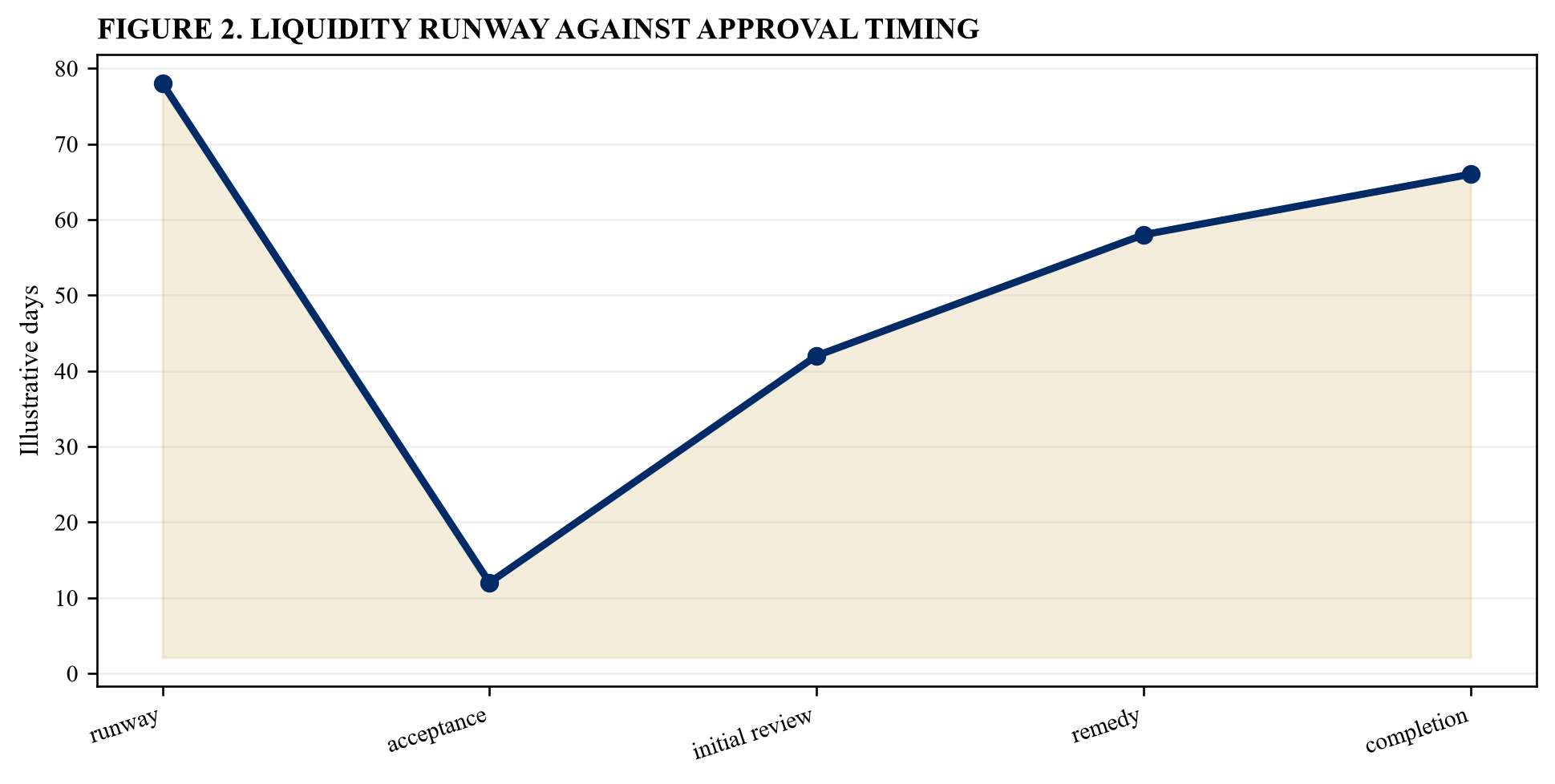
Illustrative analytical scenario; transaction evidence should replace model values.
21. Design pre-notification engagement
The transaction team should identify authorities, case-team allocation, waivers, draft filings and sequencing. Evidence should come from issue papers, draft forms, facts, timetables and specialist advice. The controlling question is what can be resolved before formal acceptance. The answer should be dated, attributed and linked to the legal entity, asset, liability or operating dependency it describes [6][9][22][55].
The controlled output is a pre-notification workplan. It should state the source, calculation method, owner, exceptions, required approvals and the next irreversible deadline. This allows a board, officeholder, creditor or buyer to reproduce the conclusion when facts change.
The principal risk is that late engagement can consume the remaining runway before review starts. The team should quantify the effect on liquidity, stand-alone earnings, creditor recoveries, operating continuity and completion probability. A material exception should update the perimeter and funding plan.
22. Control consistency across filings
This workstream requires the company and its advisers to create common definitions, ownership facts, market data, transaction values and assumptions, using master data book, filing drafts, document logs and counsel reviews. The practical test is where regimes require different answers and why. Analysis should use one cut-off date so that cash, claims, contracts, people and transaction documents reconcile [9][10][11][25].
Decision-makers should maintain a cross-filing consistency matrix. It should distinguish legal ownership from economic allocation, current evidence from forecast assumptions and committed funding from indications. Qualified advisers retain responsibility for legal, insolvency, tax, pensions, accounting and regulatory judgements.
Execution can fail when inconsistent submissions can undermine credibility across authorities. Each dependency needs a control, evidence threshold, escalation route and decision time. The transaction remains viable only while the funded separation plan can absorb a credible delay or shortfall.
23. Protect confidentiality and privilege
The readiness team should classify privileged, commercially sensitive, personal and regulator-confidential material. The evidence base includes data-room permissions, clean-team rules, redaction logs and confidentiality requests. The central question is who may see each information class and under what protocol. Conclusions should remain at entity and dependency level because the failing group may have pooled cash, shared rights and cross-guarantees [41][42][56][57].
The required deliverable is a disclosure and privilege protocol. It should connect the proposed sale documents to the stand-alone operating model and the residual estate. Every material assumption should show its source and sensitivity.
The downside is that over-disclosure can harm competition, privacy or litigation position. Management should test the base case and a combined downside against minimum cash, customer continuity and the completion timetable. Unsupported benefits should not be treated as available funding.
24. Operate clean teams before clearance
The seller should limit competitively sensitive exchange to necessary people, purposes and outputs. Relevant evidence includes protocols, access logs, aggregated reports and counsel oversight. The decision asks what information is essential for diligence and planning. A reliable answer links financial analysis to title, transfer mechanics, operating capability and the applicable approval process [9][58][59][60].
The decision pack should contain a clean-team operating manual. It should show calculation dates, owners, dependencies and the documents that implement the conclusion. This creates a defensible record for later scrutiny and post-completion reconciliation.
A material failure occurs when information exchange can create gun-jumping or coordination risk. The response should identify a funded cure, alternative perimeter or fallback route. Continuing without one can reduce going-concern value and creditor recovery.
25. Model statutory and practical timing
The transaction team should combine statutory review periods, validation, pre-notification, information stops and remedy work. Evidence should come from official guidance, case plans, filing readiness and adviser estimates. The controlling question is what is the earliest, base and downside decision date. The answer should be dated, attributed and linked to the legal entity, asset, liability or operating dependency it describes [5][6][7][25].
The controlled output is a probability-weighted approval timetable. It should state the source, calculation method, owner, exceptions, required approvals and the next irreversible deadline. This allows a board, officeholder, creditor or buyer to reproduce the conclusion when facts change.
The principal risk is that headline statutory periods may exclude preparation and clock stops. The team should quantify the effect on liquidity, stand-alone earnings, creditor recoveries, operating continuity and completion probability. A material exception should update the perimeter and funding plan.
26. Model the liquidity bridge
This workstream requires the company and its advisers to fund operations, filing fees, advisers, remedies and contingency through each timing case, using thirteen-week cash flow, milestones, financing terms and downside cases. The practical test is how much committed liquidity is required and when. Analysis should use one cut-off date so that cash, claims, contracts, people and transaction documents reconcile [61][62][63][64].
Decision-makers should maintain a dated regulatory bridge facility model. It should distinguish legal ownership from economic allocation, current evidence from forecast assumptions and committed funding from indications. Qualified advisers retain responsibility for legal, insolvency, tax, pensions, accounting and regulatory judgements.
Execution can fail when undrawn or conditional funding may fail before clearance. Each dependency needs a control, evidence threshold, escalation route and decision time. The transaction remains viable only while the funded separation plan can absorb a credible delay or shortfall.
27. Control standstill and gun-jumping
The readiness team should translate each prohibition into completion, governance, conduct and information controls. The evidence base includes statutes, guidance, transaction documents, protocols and training. The central question is which actions must wait for clearance or require consent. Conclusions should remain at entity and dependency level because the failing group may have pooled cash, shared rights and cross-guarantees [9][58][59][65].
The required deliverable is a standstill compliance register. It should connect the proposed sale documents to the stand-alone operating model and the residual estate. Every material assumption should show its source and sensitivity.
The downside is that early control can attract penalties and jeopardise approval. Management should test the base case and a combined downside against minimum cash, customer continuity and the completion timetable. Unsupported benefits should not be treated as available funding.
28. Design interim operating controls
The seller should preserve viability, rivalry, assets, staff, systems and records while review continues. Relevant evidence includes cash plan, operating KPIs, delegations, covenants and regulator orders. The decision asks what may change in the ordinary course and what needs approval. A reliable answer links financial analysis to title, transfer mechanics, operating capability and the applicable approval process [12][55][66][67].
The decision pack should contain an interim operating covenant matrix. It should show calculation dates, owners, dependencies and the documents that implement the conclusion. This creates a defensible record for later scrutiny and post-completion reconciliation.
A material failure occurs when rigid controls can accelerate failure while weak controls prejudice remedies. The response should identify a funded cure, alternative perimeter or fallback route. Continuing without one can reduce going-concern value and creditor recovery.
29. Prepare derogation and variation requests
The transaction team should define urgent acts, necessity, safeguards, timing and evidence. Evidence should come from cash data, contracts, operational facts, protocols and proposed conditions. The controlling question is which restricted action is essential to preserve value. The answer should be dated, attributed and linked to the legal entity, asset, liability or operating dependency it describes [12][55][66][68].
The controlled output is a regulator-ready derogation request. It should state the source, calculation method, owner, exceptions, required approvals and the next irreversible deadline. This allows a board, officeholder, creditor or buyer to reproduce the conclusion when facts change.
The principal risk is that retrospective permission may be unavailable after a breach. The team should quantify the effect on liquidity, stand-alone earnings, creditor recoveries, operating continuity and completion probability. A material exception should update the perimeter and funding plan.
30. Design remedy options early
This workstream requires the company and its advisers to screen divestiture, access, licensing, governance, security and behavioural remedies, using competition analysis, asset maps, buyer universe, operations and funding. The practical test is which credible remedy preserves the transaction and stakeholder value. Analysis should use one cut-off date so that cash, claims, contracts, people and transaction documents reconcile [19][52][69][70].
Decision-makers should maintain a remedy option book. It should distinguish legal ownership from economic allocation, current evidence from forecast assumptions and committed funding from indications. Qualified advisers retain responsibility for legal, insolvency, tax, pensions, accounting and regulatory judgements.
Execution can fail when late remedy design can exceed both cash runway and long-stop date. Each dependency needs a control, evidence threshold, escalation route and decision time. The transaction remains viable only while the funded separation plan can absorb a credible delay or shortfall.
31. Test remedy separability and funding
The readiness team should identify people, assets, systems, licences, contracts, transitional services and capital. The evidence base includes separation plans, cost models, buyer tests and implementation evidence. The central question is whether the remedy can operate independently and on schedule. Conclusions should remain at entity and dependency level because the failing group may have pooled cash, shared rights and cross-guarantees [69][70][71][72].
The required deliverable is a funded remedy implementation plan. It should connect the proposed sale documents to the stand-alone operating model and the residual estate. Every material assumption should show its source and sensitivity.
The downside is that an unfunded or entangled package may be rejected. Management should test the base case and a combined downside against minimum cash, customer continuity and the completion timetable. Unsupported benefits should not be treated as available funding.
Table 3. Illustrative remedy readiness
| Workstream | Readiness | Funding |
|---|---|---|
| perimeter | 88% | confirmed |
| people and systems | 72% | partial |
| licence transfer | 64% | pending |
| transitional services | 76% | confirmed |
Values and scores are analytical scenarios; transaction evidence should replace model values.
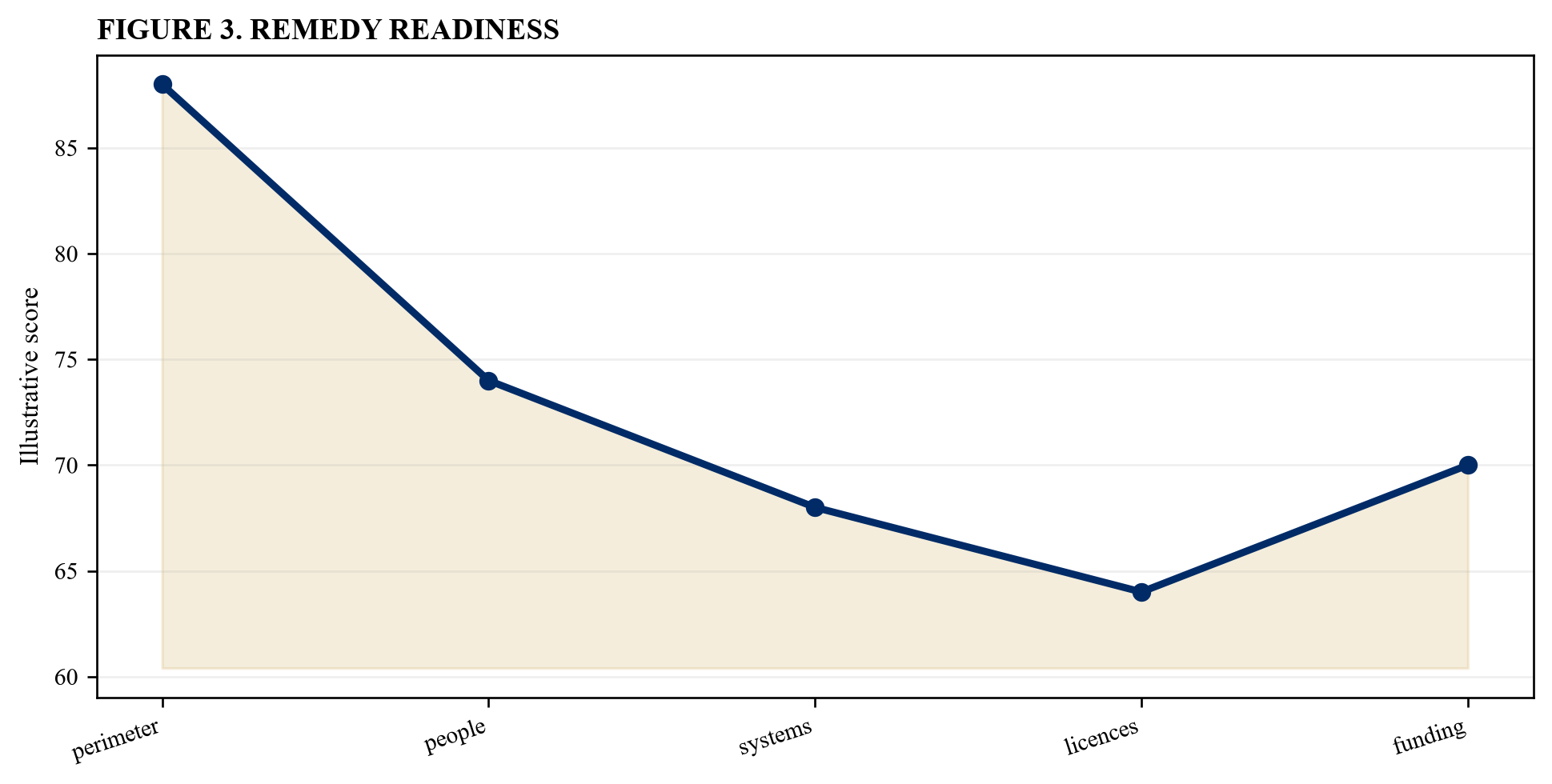
Illustrative analytical scenario; transaction evidence should replace model values.
32. Integrate approvals with transaction documents
The seller should draft conditions, efforts standards, cooperation, information, remedies and covenants. Relevant evidence includes approval map, counsel advice, financing and bidder positions. The decision asks who bears timing, conduct and remedy risk. A reliable answer links financial analysis to title, transfer mechanics, operating capability and the applicable approval process [9][10][11][25].
The decision pack should contain a regulatory risk-allocation matrix. It should show calculation dates, owners, dependencies and the documents that implement the conclusion. This creates a defensible record for later scrutiny and post-completion reconciliation.
A material failure occurs when generic conditions may omit a binding approval or create optionality. The response should identify a funded cure, alternative perimeter or fallback route. Continuing without one can reduce going-concern value and creditor recovery.
33. Set long-stop and termination mechanics
The transaction team should link long-stop dates, extensions, drop-dead events, fees and insolvency milestones. Evidence should come from critical path, cash cases, finance documents and court timetable. The controlling question is when the transaction should extend, restructure or terminate. The answer should be dated, attributed and linked to the legal entity, asset, liability or operating dependency it describes [1][5][73][74].
The controlled output is a contractual decision tree. It should state the source, calculation method, owner, exceptions, required approvals and the next irreversible deadline. This allows a board, officeholder, creditor or buyer to reproduce the conclusion when facts change.
The principal risk is that an unrealistic long-stop can convert delay into insolvency. The team should quantify the effect on liquidity, stand-alone earnings, creditor recoveries, operating continuity and completion probability. A material exception should update the perimeter and funding plan.
34. Align acquisition finance conditions
This workstream requires the company and its advisers to map funding certainty, regulatory conditions, flex, fees, security and drawstops, using commitment papers, facility documents, funds flow and approval advice. The practical test is whether financing remains available through the downside timetable. Analysis should use one cut-off date so that cash, claims, contracts, people and transaction documents reconcile [61][62][75][76].
Decision-makers should maintain a financing and approval condition matrix. It should distinguish legal ownership from economic allocation, current evidence from forecast assumptions and committed funding from indications. Qualified advisers retain responsibility for legal, insolvency, tax, pensions, accounting and regulatory judgements.
Execution can fail when approval delay may expire commitments or increase funding cost. Each dependency needs a control, evidence threshold, escalation route and decision time. The transaction remains viable only while the funded separation plan can absorb a credible delay or shortfall.
35. Compare bids on a common basis
The readiness team should normalise consideration for approval timing, remedy cost, funding certainty and operating loss. The evidence base includes binding bids, evidence rooms, models, advice and financing. The central question is which executable proposal improves stakeholder recovery. Conclusions should remain at entity and dependency level because the failing group may have pooled cash, shared rights and cross-guarantees [1][2][49][77].
The required deliverable is a regulatory risk-adjusted bid scorecard. It should connect the proposed sale documents to the stand-alone operating model and the residual estate. Every material assumption should show its source and sensitivity.
The downside is that the highest headline price may have the lowest completion value. Management should test the base case and a combined downside against minimum cash, customer continuity and the completion timetable. Unsupported benefits should not be treated as available funding.
Table 4. Illustrative regulatory bid comparison
| Measure | Bid A | Bid B | Bid C |
|---|---|---|---|
| headline value | 120 | 114 | 108 |
| liquidity consumed | -14 | -8 | -5 |
| remedy and separation | -18 | -9 | -4 |
| risk-adjusted value | 72 | 84 | 88 |
Values and scores are analytical scenarios; transaction evidence should replace model values.
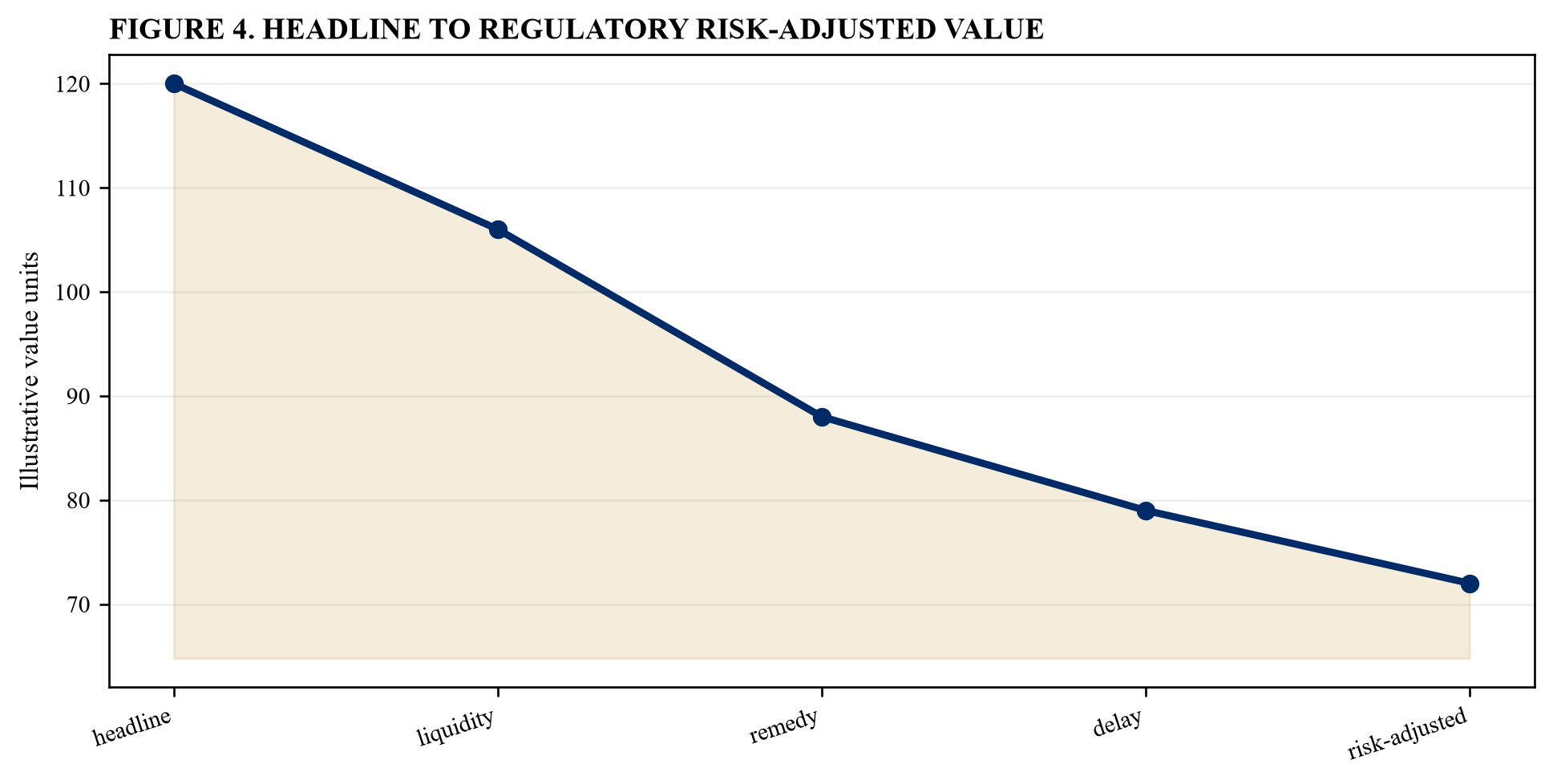
Illustrative analytical scenario; transaction evidence should replace model values.
36. Design contingency transaction structures
The seller should evaluate staged control, carve-out, warehousing, licensing, rescue finance and alternative buyers. Relevant evidence includes legal advice, approval map, tax, finance and operating dependencies. The decision asks which lawful structure preserves optionality and viability. A reliable answer links financial analysis to title, transfer mechanics, operating capability and the applicable approval process [9][10][13][78].
The decision pack should contain a contingency structure memorandum. It should show calculation dates, owners, dependencies and the documents that implement the conclusion. This creates a defensible record for later scrutiny and post-completion reconciliation.
A material failure occurs when complexity can create new filings, tax leakage or control issues. The response should identify a funded cure, alternative perimeter or fallback route. Continuing without one can reduce going-concern value and creditor recovery.
37. Define the day-one legal-operability gate
The transaction team should confirm clearances, consents, licences, funding, permissions and compliance controls. Evidence should come from decision letters, registers, funds flow, certificates and readiness testing. The controlling question is whether the buyer can lawfully own and operate the perimeter. The answer should be dated, attributed and linked to the legal entity, asset, liability or operating dependency it describes [25][29][33][45].
The controlled output is a completion legal-operability certificate. It should state the source, calculation method, owner, exceptions, required approvals and the next irreversible deadline. This allows a board, officeholder, creditor or buyer to reproduce the conclusion when facts change.
The principal risk is that legal title may transfer while regulated operations cannot commence. The team should quantify the effect on liquidity, stand-alone earnings, creditor recoveries, operating continuity and completion probability. A material exception should update the perimeter and funding plan.
38. Govern the regulatory decision log
This workstream requires the company and its advisers to record facts, assumptions, advice, submissions, commitments, decisions and changes, using version-controlled filings, minutes, correspondence and evidence. The practical test is what changed, who decided and which regulator position is current. Analysis should use one cut-off date so that cash, claims, contracts, people and transaction documents reconcile [3][49][56][79].
Decision-makers should maintain a board-ready regulatory control book. It should distinguish legal ownership from economic allocation, current evidence from forecast assumptions and committed funding from indications. Qualified advisers retain responsibility for legal, insolvency, tax, pensions, accounting and regulatory judgements.
Execution can fail when fragmented records can produce inconsistent action under pressure. Each dependency needs a control, evidence threshold, escalation route and decision time. The transaction remains viable only while the funded separation plan can absorb a credible delay or shortfall.
39. Run the first hundred days under commitments
The readiness team should translate remedies, orders, licences, reporting and separation into operating controls. The evidence base includes approval decisions, implementation plans, KPIs and assurance reports. The central question is who owns each post-close obligation and proof of compliance. Conclusions should remain at entity and dependency level because the failing group may have pooled cash, shared rights and cross-guarantees [66][69][70][80].
The required deliverable is a hundred-day regulatory assurance plan. It should connect the proposed sale documents to the stand-alone operating model and the residual estate. Every material assumption should show its source and sensitivity.
The downside is that value can be lost through missed conditions after legal completion. Management should test the base case and a combined downside against minimum cash, customer continuity and the completion timetable. Unsupported benefits should not be treated as available funding.
Table 5. Implementation sequence
| Horizon | Decision | Evidence |
|---|---|---|
| 48 hours | authority, runway and regime map | mandates and cash |
| days 3 to 10 | route and filing readiness | thresholds and data book |
| to clearance | funded controls and remedies | orders and commitments |
| day 1 to 100 | legal operability and assurance | certificates and reporting |
Values and scores are analytical scenarios; transaction evidence should replace model values.
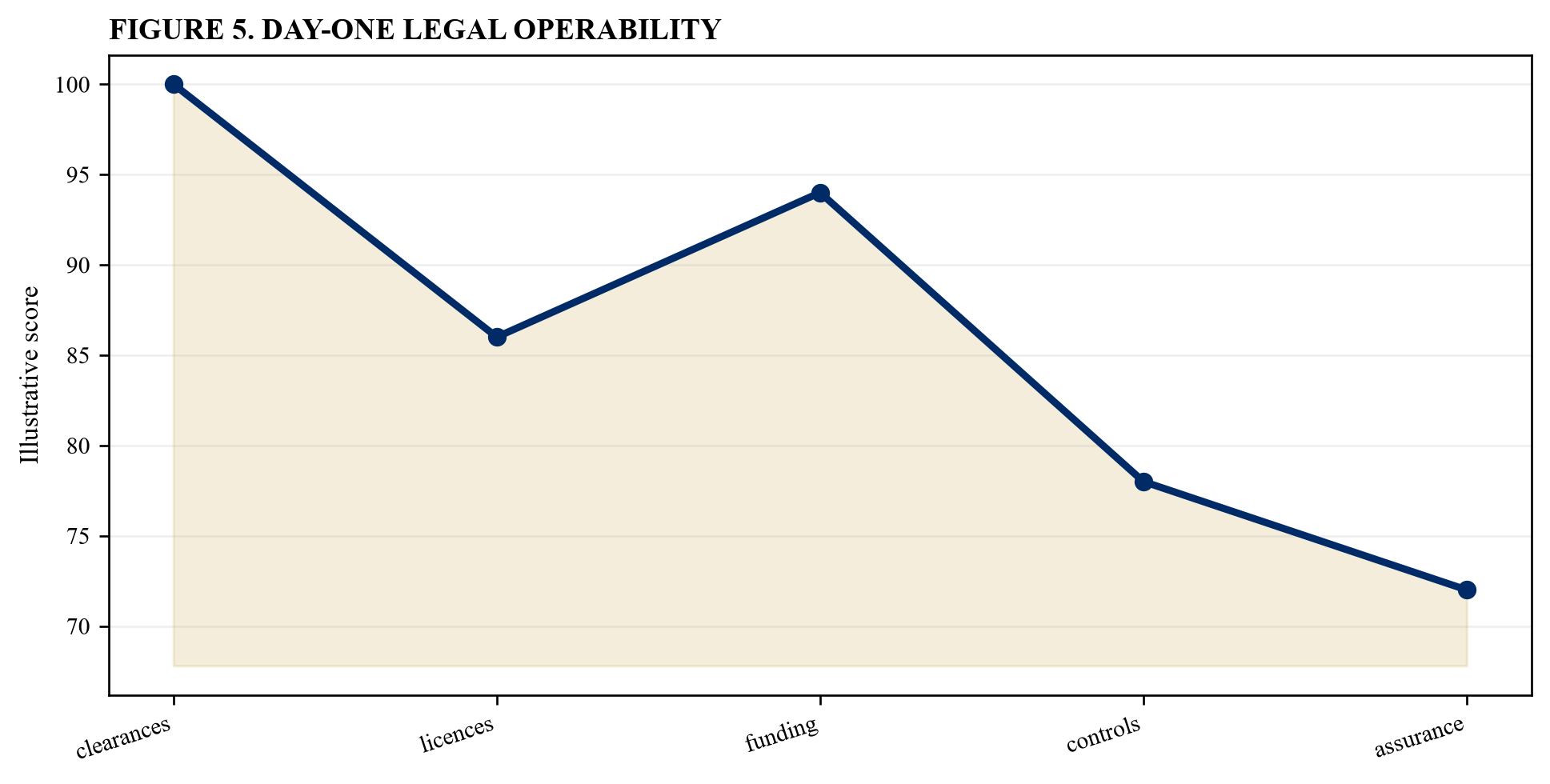
Illustrative analytical scenario; transaction evidence should replace model values.
References
- UK Parliament, Insolvency Act 1986, https://www.legislation.gov.uk/ukpga/1986/45/contents
- UK Parliament, Insolvency Rules 2016, https://www.legislation.gov.uk/uksi/2016/1024/contents
- UNCITRAL, Model Law on Cross-Border Insolvency, https://uncitral.un.org/en/texts/insolvency/modellaw/cross-border_insolvency
- World Bank, Principles for Effective Insolvency and Creditor and Debtor Regimes, https://www.worldbank.org/en/topic/financialsector/brief/the-world-bank-principles-for-effective-insolvency-and-creditor-rights
- European Commission, Merger Procedures, https://competition-policy.ec.europa.eu/mergers/procedures_en
- UK CMA, Merging Your Business, https://www.gov.uk/guidance/merging-your-business
- UK Government, National Security and Investment Act Guidance on Acquisitions, https://www.gov.uk/guidance/national-security-and-investment-act-guidance-on-acquisitions
- US Treasury, CFIUS Review Timeline, https://home.treasury.gov/faq-item/international-affairs/did-firrma-change-cfiuss-timeline-for-reviews
- European Union, Council Regulation 139/2004, https://eur-lex.europa.eu/eli/reg/2004/139/oj
- UK Parliament, National Security and Investment Act 2021, https://www.legislation.gov.uk/ukpga/2021/25/contents
- European Union, Regulation 2022/2560 on Foreign Subsidies, https://eur-lex.europa.eu/eli/reg/2022/2560/oj
- UK CMA, Interim Measures and Derogations, https://www.gov.uk/government/publications/interim-measures-and-derogations-guidance-and-templates
- US Code, Bankruptcy Code Section 363, https://uscode.house.gov/view.xhtml?req=granuleid:USC-prelim-title11-section363
- IFRS Foundation, IFRS 5, https://www.ifrs.org/issued-standards/list-of-standards/ifrs-5-non-current-assets-held-for-sale-and-discontinued-operations/
- ISO, ISO 22301 Business Continuity, https://www.iso.org/standard/75106.html
- UK Parliament, Enterprise Act 2002, https://www.legislation.gov.uk/ukpga/2002/40/contents
- European Commission, EU Investment Screening, https://policy.trade.ec.europa.eu/enforcement-and-protection/investment-screening_en
- UK CMA, Merger Assessment Guidelines, https://www.gov.uk/government/publications/merger-assessment-guidelines
- US DOJ and FTC, Merger Guidelines, https://www.justice.gov/atr/merger-guidelines
- US Treasury, CFIUS Laws and Guidance, https://home.treasury.gov/policy-issues/international/the-committee-on-foreign-investment-in-the-united-states-cfius/cfius-laws-and-guidance
- US Code, 50 USC 4565, https://uscode.house.gov/view.xhtml?req=granuleid:USC-prelim-title50-section4565
- European Commission, Foreign Subsidies Regulation, https://competition-policy.ec.europa.eu/foreign-subsidies-regulation_en
- European Commission, Foreign Subsidies Regulation in a Nutshell, https://competition-policy.ec.europa.eu/foreign-subsidies-regulation/about_en
- European Union, Implementing Regulation 2023/1441, https://eur-lex.europa.eu/eli/reg_impl/2023/1441/oj
- FCA, Submit a Change in Control Notification, https://www.fca.org.uk/firms/change-control/submit-notification
- UK Parliament, Financial Services and Markets Act 2000, https://www.legislation.gov.uk/ukpga/2000/8/contents
- PRA, Change in Control, https://www.bankofengland.co.uk/prudential-regulation/authorisations/change-in-control
- EBA, Acquisitions and Increases of Qualifying Holdings, https://www.eba.europa.eu/regulation-and-policy/other-topics/joint-guidelines-prudential-assessment-acquisitions-and-increases-qualifying-holdings-financial-sector
- Ofcom, Licensing, https://www.ofcom.org.uk/spectrum/frequencies/licensing/
- Ofgem, Licences and Licence Conditions, https://www.ofgem.gov.uk/energy-policy-and-regulation/industry-licensing
- UK CAA, Ownership and Control, https://www.caa.co.uk/commercial-industry/airlines/licensing/ownership-and-control/
- European Commission, Energy Infrastructure, https://energy.ec.europa.eu/topics/infrastructure_en
- UK Government, UK Sanctions List, https://www.gov.uk/government/publications/the-uk-sanctions-list
- OFAC, Sanctions Programs and Country Information, https://ofac.treasury.gov/sanctions-programs-and-country-information
- European Union, EU Sanctions Map, https://www.sanctionsmap.eu/
- UK Government, Licensing under Sanctions, https://www.gov.uk/guidance/licensing-under-financial-sanctions
- UK Government, Export Controls, https://www.gov.uk/guidance/export-controls-military-goods-software-and-technology
- US BIS, Export Administration Regulations, https://www.bis.gov/regulations/export-administration-regulations-ear
- European Commission, Dual-Use Export Controls, https://policy.trade.ec.europa.eu/help-exporters-and-importers/exporting-dual-use-items_en
- Wassenaar Arrangement, Control Lists, https://www.wassenaar.org/control-lists/
- European Union, General Data Protection Regulation, https://eur-lex.europa.eu/eli/reg/2016/679/oj
- ICO, Data Sharing Code of Practice, https://ico.org.uk/for-organisations/uk-gdpr-guidance-and-resources/data-sharing/data-sharing-a-code-of-practice/
- NIST, Cybersecurity Framework 2.0, https://www.nist.gov/cyberframework
- European Union, NIS2 Directive, https://eur-lex.europa.eu/eli/dir/2022/2555/oj
- UK Parliament, Environmental Protection Act 1990, https://www.legislation.gov.uk/ukpga/1990/43/contents
- UK Environment Agency, Environmental Permits, https://www.gov.uk/guidance/environmental-permits-how-to-apply
- US EPA, Environmental Permitting, https://www.epa.gov/permits
- European Commission, Industrial Emissions Directive, https://environment.ec.europa.eu/topics/industrial-emissions-and-safety/industrial-emissions-directive_en
- UK Government, Corporate Financial Distress Guidance, https://www.gov.uk/government/publications/the-sourcing-and-consultancy-playbooks/corporate-financial-distress-guidance-note-html
- FATF, Beneficial Ownership of Legal Persons, https://www.fatf-gafi.org/en/publications/Fatfrecommendations/Guidance-Beneficial-Ownership-Legal-Persons.html
- European Commission, Best Practices for Merger Proceedings, https://competition-policy.ec.europa.eu/mergers/legislation/best-practices_en
- UK CMA, Merger Remedies Guidance, https://www.gov.uk/government/publications/merger-remedies
- European Commission, Horizontal Merger Guidelines, https://eur-lex.europa.eu/legal-content/EN/TXT/?uri=CELEX:52004XC0205(02)
- FTC, Failing Firm, https://www.ftc.gov/advice-guidance/competition-guidance/guide-antitrust-laws/mergers/failing-firm
- UK CMA, Interim Measures Summary for Businesses, https://www.gov.uk/government/publications/interim-measures-and-derogations-guidance-and-templates/interim-measures-in-merger-investigations-summary-for-businesses
- European Commission, Access to File in Competition Cases, https://competition-policy.ec.europa.eu/antitrust-and-cartels/procedures/access-file_en
- ICO, Employment Information and Data Protection, https://ico.org.uk/for-organisations/uk-gdpr-guidance-and-resources/employment/
- FTC, Premerger Notification and Review Process, https://www.ftc.gov/advice-guidance/competition-guidance/guide-antitrust-laws/mergers/premerger-notification-merger-review-process
- FTC, HSR Rules, https://www.ftc.gov/legal-library/browse/rules/hsr-rules
- European Commission, EU Merger Regulation Consolidated Jurisdictional Notice, https://eur-lex.europa.eu/legal-content/EN/TXT/?uri=CELEX:52008XC0416(08)
- Bank of England, Financial Stability in Focus, https://www.bankofengland.co.uk/financial-stability-in-focus
- IMF, Corporate Sector Vulnerabilities, https://www.imf.org/en/Topics/financial-sector
- UK Government, Restructuring Plans, https://www.gov.uk/government/publications/corporate-insolvency-and-governance-act-2020
- US Code, Bankruptcy Code Section 364, https://uscode.house.gov/view.xhtml?req=granuleid:USC-prelim-title11-section364
- European Commission, Merger Implementing Regulation, https://eur-lex.europa.eu/eli/reg_impl/2023/914/oj
- UK CMA, Interim Measures in Merger Investigations, https://assets.publishing.service.gov.uk/media/67766fb8e8ca4d66bc4c9487/CMA108_Interim_measures_in_merger_investigations.pdf
- UK Government, Director Responsibilities in Insolvency, https://www.gov.uk/company-director-responsibilities/when-company-is-insolvent
- UK CMA, Derogation Request Template, https://www.gov.uk/government/publications/interim-measures-and-derogations-guidance-and-templates
- European Commission, Merger Remedies Notice, https://eur-lex.europa.eu/legal-content/EN/TXT/?uri=CELEX:52008XC1022(01)
- US DOJ, Merger Remedies Manual, https://www.justice.gov/atr/merger-remedies-manual
- UK CMA, Guidance on Divestiture Remedies, https://www.gov.uk/government/publications/merger-remedies
- OECD, Remedies in Merger Cases, https://www.oecd.org/competition/mergers/remedies-in-merger-cases.htm
- UK Parliament, Corporate Insolvency and Governance Act 2020, https://www.legislation.gov.uk/ukpga/2020/12/contents
- UNCITRAL, Legislative Guide on Insolvency Law, https://uncitral.un.org/en/texts/insolvency/legislativeguides/insolvency_law
- Loan Market Association, Documentation, https://www.lma.eu.com/documents-guidelines/documents
- Federal Reserve, Supervision and Regulation, https://www.federalreserve.gov/supervisionreg.htm
- IFRS Foundation, IFRS 13 Fair Value Measurement, https://www.ifrs.org/issued-standards/list-of-standards/ifrs-13-fair-value-measurement/
- OECD, Competition and Insolvency, https://www.oecd.org/competition/
- ISO, ISO 37301 Compliance Management Systems, https://www.iso.org/standard/75080.html
- UK CMA, Merger Investigation Guidance, https://www.gov.uk/guidance/merging-your-business
