

1. Define the governance objective
The parties should state which fundamental interests require protection and which operating outcomes require speed. The required output is a governance design memorandum. Record the purpose, decision class, threshold, evidence, authority, conflicts, response time, consequence of silence, escalation and accountable owner [1][2].
Reconcile the provision across constitutional documents, shareholder agreements, board terms, delegations, business plans, financing agreements, accounting analysis and operating procedures. Test how the right works during ordinary execution, material variance and urgency.
The principal risk is that the veto list can become a substitute for an agreed venture thesis. Compare protection gained with decision latency, information burden, operational dependency and the possibility of strategic misuse. Define a measurable boundary and a retained decision record.
Retain notices, papers, questions, advice, conflicts, consents, refusals, minutes, delegations, waivers, emergencies, disputes and amendments. Review the architecture when scale, risk, ownership, financing, regulation or the venture model changes.
2. Identify the relevant activities
The parties should determine which activities significantly affect returns under the contractual and operating model. The required output is a relevant-activities analysis. Record the purpose, decision class, threshold, evidence, authority, conflicts, response time, consequence of silence, escalation and accountable owner [1][3].
Reconcile the provision across constitutional documents, shareholder agreements, board terms, delegations, business plans, financing agreements, accounting analysis and operating procedures. Test how the right works during ordinary execution, material variance and urgency.
The principal risk is that joint-control conclusions can rest on generic labels rather than actual value drivers. Compare protection gained with decision latency, information burden, operational dependency and the possibility of strategic misuse. Define a measurable boundary and a retained decision record.
Retain notices, papers, questions, advice, conflicts, consents, refusals, minutes, delegations, waivers, emergencies, disputes and amendments. Review the architecture when scale, risk, ownership, financing, regulation or the venture model changes.
3. Separate substantive and protective rights
The parties should test whether a right directs relevant activities or protects against fundamental change. The required output is a rights-classification schedule. Record the purpose, decision class, threshold, evidence, authority, conflicts, response time, consequence of silence, escalation and accountable owner [1][4].
Reconcile the provision across constitutional documents, shareholder agreements, board terms, delegations, business plans, financing agreements, accounting analysis and operating procedures. Test how the right works during ordinary execution, material variance and urgency.
The principal risk is that protective consent can be mistaken for operational control. Compare protection gained with decision latency, information burden, operational dependency and the possibility of strategic misuse. Define a measurable boundary and a retained decision record.
Retain notices, papers, questions, advice, conflicts, consents, refusals, minutes, delegations, waivers, emergencies, disputes and amendments. Review the architecture when scale, risk, ownership, financing, regulation or the venture model changes.
4. Map decisions across governance levels
The parties should allocate shareholder, board, committee, chief executive and functional authority. The required output is a decision-rights map. Record the purpose, decision class, threshold, evidence, authority, conflicts, response time, consequence of silence, escalation and accountable owner [2][5].
Reconcile the provision across constitutional documents, shareholder agreements, board terms, delegations, business plans, financing agreements, accounting analysis and operating procedures. Test how the right works during ordinary execution, material variance and urgency.
The principal risk is that the same matter can be reserved in one document and delegated in another. Compare protection gained with decision latency, information burden, operational dependency and the possibility of strategic misuse. Define a measurable boundary and a retained decision record.
Retain notices, papers, questions, advice, conflicts, consents, refusals, minutes, delegations, waivers, emergencies, disputes and amendments. Review the architecture when scale, risk, ownership, financing, regulation or the venture model changes.
Table 1. Decision-rights map
| Level | Decision class | Evidence |
|---|---|---|
| shareholders | fundamental change | reserved paper |
| board | strategy and risk | board pack |
| committee | specialist oversight | committee record |
| management | approved-plan execution | authority log |
Illustrative analytical structure; verified transaction evidence and specialist review govern.
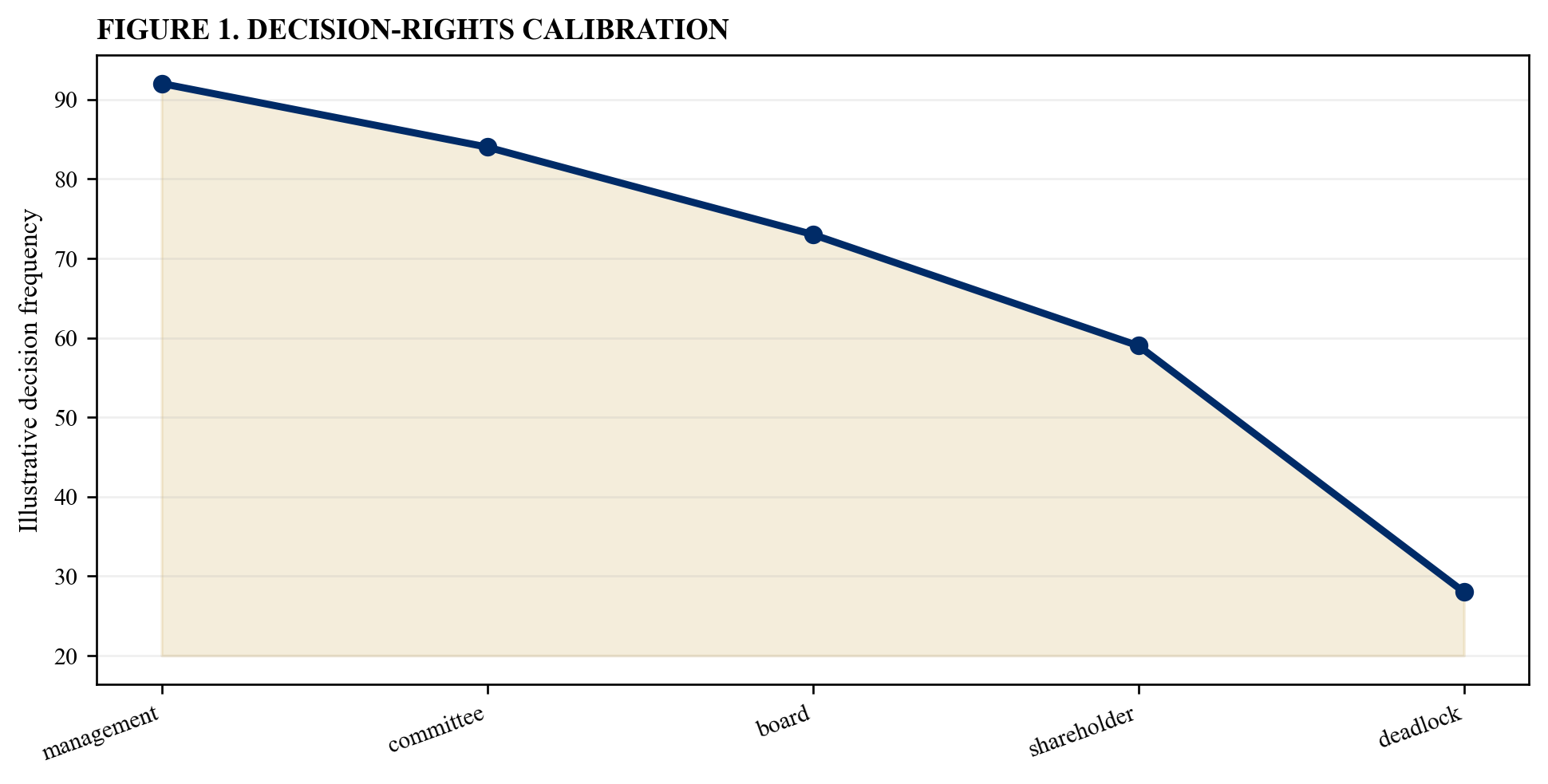
Illustrative analytical scenario; verified transaction evidence should replace index values.
5. Inventory the complete decision universe
The parties should capture strategy, capital, operations, people, customers, suppliers, technology, risk and exit. The required output is a decision inventory. Record the purpose, decision class, threshold, evidence, authority, conflicts, response time, consequence of silence, escalation and accountable owner [2][6].
Reconcile the provision across constitutional documents, shareholder agreements, board terms, delegations, business plans, financing agreements, accounting analysis and operating procedures. Test how the right works during ordinary execution, material variance and urgency.
The principal risk is that unlisted decisions can fall into an authority gap. Compare protection gained with decision latency, information burden, operational dependency and the possibility of strategic misuse. Define a measurable boundary and a retained decision record.
Retain notices, papers, questions, advice, conflicts, consents, refusals, minutes, delegations, waivers, emergencies, disputes and amendments. Review the architecture when scale, risk, ownership, financing, regulation or the venture model changes.
6. Score materiality and irreversibility
The parties should assess value, duration, reversibility, contagion, precedent and strategic effect. The required output is a decision-risk score. Record the purpose, decision class, threshold, evidence, authority, conflicts, response time, consequence of silence, escalation and accountable owner [7][8].
Reconcile the provision across constitutional documents, shareholder agreements, board terms, delegations, business plans, financing agreements, accounting analysis and operating procedures. Test how the right works during ordinary execution, material variance and urgency.
The principal risk is that small cash amounts can create large legal or strategic exposure. Compare protection gained with decision latency, information burden, operational dependency and the possibility of strategic misuse. Define a measurable boundary and a retained decision record.
Retain notices, papers, questions, advice, conflicts, consents, refusals, minutes, delegations, waivers, emergencies, disputes and amendments. Review the architecture when scale, risk, ownership, financing, regulation or the venture model changes.
7. Set measurable thresholds
The parties should use amount, percentage, duration, variance, concentration and risk triggers. The required output is a threshold matrix. Record the purpose, decision class, threshold, evidence, authority, conflicts, response time, consequence of silence, escalation and accountable owner [8][9].
Reconcile the provision across constitutional documents, shareholder agreements, board terms, delegations, business plans, financing agreements, accounting analysis and operating procedures. Test how the right works during ordinary execution, material variance and urgency.
The principal risk is that subjective terms can make every decision contestable. Compare protection gained with decision latency, information burden, operational dependency and the possibility of strategic misuse. Define a measurable boundary and a retained decision record.
Retain notices, papers, questions, advice, conflicts, consents, refusals, minutes, delegations, waivers, emergencies, disputes and amendments. Review the architecture when scale, risk, ownership, financing, regulation or the venture model changes.
Table 2. Threshold architecture
| Dimension | Illustrative trigger | Control |
|---|---|---|
| value | amount or percent | aggregation |
| duration | term | renewal included |
| risk | exposure score | specialist review |
| irreversibility | exit cost | board escalation |
Illustrative analytical structure; verified transaction evidence and specialist review govern.
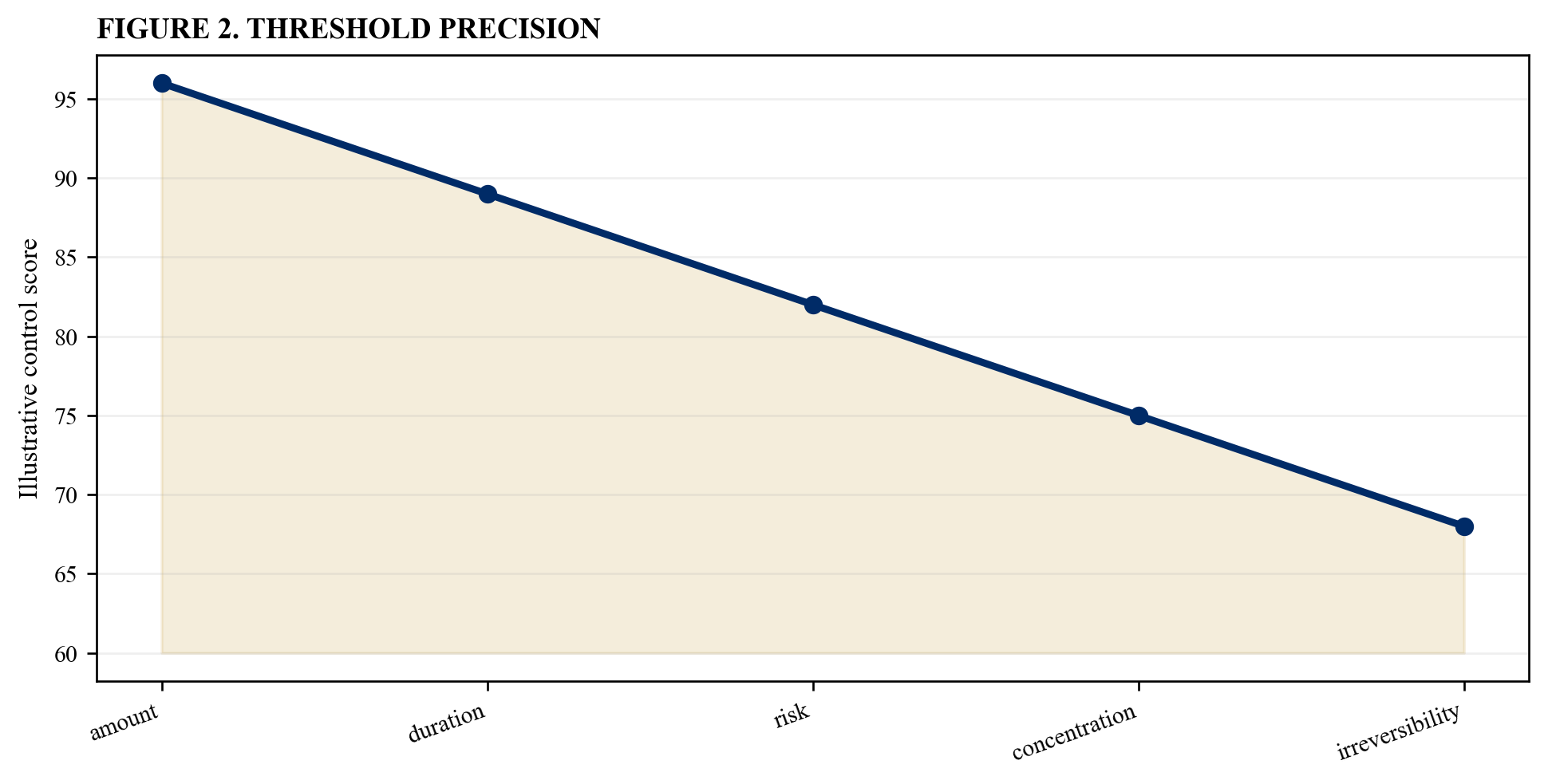
Illustrative analytical scenario; verified transaction evidence should replace index values.
8. Control aggregation and avoidance
The parties should combine related transactions, rolling periods and connected counterparties. The required output is an anti-circumvention rule. Record the purpose, decision class, threshold, evidence, authority, conflicts, response time, consequence of silence, escalation and accountable owner [8][10].
Reconcile the provision across constitutional documents, shareholder agreements, board terms, delegations, business plans, financing agreements, accounting analysis and operating procedures. Test how the right works during ordinary execution, material variance and urgency.
The principal risk is that decisions can be split to remain below a threshold. Compare protection gained with decision latency, information burden, operational dependency and the possibility of strategic misuse. Define a measurable boundary and a retained decision record.
Retain notices, papers, questions, advice, conflicts, consents, refusals, minutes, delegations, waivers, emergencies, disputes and amendments. Review the architecture when scale, risk, ownership, financing, regulation or the venture model changes.
9. Reserve business-plan approval
The parties should define plan horizon, assumptions, initiatives, funding and performance measures. The required output is an approved-plan certificate. Record the purpose, decision class, threshold, evidence, authority, conflicts, response time, consequence of silence, escalation and accountable owner [5][11].
Reconcile the provision across constitutional documents, shareholder agreements, board terms, delegations, business plans, financing agreements, accounting analysis and operating procedures. Test how the right works during ordinary execution, material variance and urgency.
The principal risk is that a plan can be approved without executable resources or bounds. Compare protection gained with decision latency, information burden, operational dependency and the possibility of strategic misuse. Define a measurable boundary and a retained decision record.
Retain notices, papers, questions, advice, conflicts, consents, refusals, minutes, delegations, waivers, emergencies, disputes and amendments. Review the architecture when scale, risk, ownership, financing, regulation or the venture model changes.
10. Manage budget variance
The parties should permit operating movement within quantified line, category and total tolerances. The required output is a variance authority schedule. Record the purpose, decision class, threshold, evidence, authority, conflicts, response time, consequence of silence, escalation and accountable owner [11][12].
Reconcile the provision across constitutional documents, shareholder agreements, board terms, delegations, business plans, financing agreements, accounting analysis and operating procedures. Test how the right works during ordinary execution, material variance and urgency.
The principal risk is that minor variances can trigger repeated shareholder approval. Compare protection gained with decision latency, information burden, operational dependency and the possibility of strategic misuse. Define a measurable boundary and a retained decision record.
Retain notices, papers, questions, advice, conflicts, consents, refusals, minutes, delegations, waivers, emergencies, disputes and amendments. Review the architecture when scale, risk, ownership, financing, regulation or the venture model changes.
11. Calibrate capital-expenditure consent
The parties should distinguish maintenance, committed, growth and emergency expenditure. The required output is a capex threshold map. Record the purpose, decision class, threshold, evidence, authority, conflicts, response time, consequence of silence, escalation and accountable owner [13][14].
Reconcile the provision across constitutional documents, shareholder agreements, board terms, delegations, business plans, financing agreements, accounting analysis and operating procedures. Test how the right works during ordinary execution, material variance and urgency.
The principal risk is that asset integrity can wait behind a strategic-spend veto. Compare protection gained with decision latency, information burden, operational dependency and the possibility of strategic misuse. Define a measurable boundary and a retained decision record.
Retain notices, papers, questions, advice, conflicts, consents, refusals, minutes, delegations, waivers, emergencies, disputes and amendments. Review the architecture when scale, risk, ownership, financing, regulation or the venture model changes.
12. Govern financing decisions
The parties should reserve new debt, security, guarantees, refinancing and material covenant changes. The required output is a financing authority schedule. Record the purpose, decision class, threshold, evidence, authority, conflicts, response time, consequence of silence, escalation and accountable owner [15][16].
Reconcile the provision across constitutional documents, shareholder agreements, board terms, delegations, business plans, financing agreements, accounting analysis and operating procedures. Test how the right works during ordinary execution, material variance and urgency.
The principal risk is that treasury action can alter risk and distribution capacity without clear consent. Compare protection gained with decision latency, information burden, operational dependency and the possibility of strategic misuse. Define a measurable boundary and a retained decision record.
Retain notices, papers, questions, advice, conflicts, consents, refusals, minutes, delegations, waivers, emergencies, disputes and amendments. Review the architecture when scale, risk, ownership, financing, regulation or the venture model changes.
13. Set acquisition and disposal gates
The parties should define asset, business, interest, value and strategic-perimeter thresholds. The required output is a transaction consent map. Record the purpose, decision class, threshold, evidence, authority, conflicts, response time, consequence of silence, escalation and accountable owner [17][18].
Reconcile the provision across constitutional documents, shareholder agreements, board terms, delegations, business plans, financing agreements, accounting analysis and operating procedures. Test how the right works during ordinary execution, material variance and urgency.
The principal risk is that ordinary asset replacement can be treated like a change of control. Compare protection gained with decision latency, information burden, operational dependency and the possibility of strategic misuse. Define a measurable boundary and a retained decision record.
Retain notices, papers, questions, advice, conflicts, consents, refusals, minutes, delegations, waivers, emergencies, disputes and amendments. Review the architecture when scale, risk, ownership, financing, regulation or the venture model changes.
14. Control material contracts
The parties should use value, term, exclusivity, termination, liability and dependency tests. The required output is a contract-risk matrix. Record the purpose, decision class, threshold, evidence, authority, conflicts, response time, consequence of silence, escalation and accountable owner [19][20].
Reconcile the provision across constitutional documents, shareholder agreements, board terms, delegations, business plans, financing agreements, accounting analysis and operating procedures. Test how the right works during ordinary execution, material variance and urgency.
The principal risk is that low-value exclusivity can constrain the venture for years. Compare protection gained with decision latency, information burden, operational dependency and the possibility of strategic misuse. Define a measurable boundary and a retained decision record.
Retain notices, papers, questions, advice, conflicts, consents, refusals, minutes, delegations, waivers, emergencies, disputes and amendments. Review the architecture when scale, risk, ownership, financing, regulation or the venture model changes.
15. Protect customer and supplier concentration
The parties should trigger review for dependency, related parties, sanctions and continuity risk. The required output is a concentration approval rule. Record the purpose, decision class, threshold, evidence, authority, conflicts, response time, consequence of silence, escalation and accountable owner [19][21].
Reconcile the provision across constitutional documents, shareholder agreements, board terms, delegations, business plans, financing agreements, accounting analysis and operating procedures. Test how the right works during ordinary execution, material variance and urgency.
The principal risk is that a routine contract can create strategic reliance on one counterparty. Compare protection gained with decision latency, information burden, operational dependency and the possibility of strategic misuse. Define a measurable boundary and a retained decision record.
Retain notices, papers, questions, advice, conflicts, consents, refusals, minutes, delegations, waivers, emergencies, disputes and amendments. Review the architecture when scale, risk, ownership, financing, regulation or the venture model changes.
16. Allocate pricing authority
The parties should define ordinary-course bands, regulated prices, strategic discounts and exceptions. The required output is a pricing delegation. Record the purpose, decision class, threshold, evidence, authority, conflicts, response time, consequence of silence, escalation and accountable owner [22][23].
Reconcile the provision across constitutional documents, shareholder agreements, board terms, delegations, business plans, financing agreements, accounting analysis and operating procedures. Test how the right works during ordinary execution, material variance and urgency.
The principal risk is that parent access to live pricing can create competition risk. Compare protection gained with decision latency, information burden, operational dependency and the possibility of strategic misuse. Define a measurable boundary and a retained decision record.
Retain notices, papers, questions, advice, conflicts, consents, refusals, minutes, delegations, waivers, emergencies, disputes and amendments. Review the architecture when scale, risk, ownership, financing, regulation or the venture model changes.
17. Reserve senior appointments
The parties should identify roles, compensation bands, succession and removal standards. The required output is a people authority matrix. Record the purpose, decision class, threshold, evidence, authority, conflicts, response time, consequence of silence, escalation and accountable owner [2][24].
Reconcile the provision across constitutional documents, shareholder agreements, board terms, delegations, business plans, financing agreements, accounting analysis and operating procedures. Test how the right works during ordinary execution, material variance and urgency.
The principal risk is that vetoes over routine hiring can impair delivery. Compare protection gained with decision latency, information burden, operational dependency and the possibility of strategic misuse. Define a measurable boundary and a retained decision record.
Retain notices, papers, questions, advice, conflicts, consents, refusals, minutes, delegations, waivers, emergencies, disputes and amendments. Review the architecture when scale, risk, ownership, financing, regulation or the venture model changes.
18. Govern remuneration and incentives
The parties should align approval with materiality, related-party risk and performance design. The required output is an incentive approval policy. Record the purpose, decision class, threshold, evidence, authority, conflicts, response time, consequence of silence, escalation and accountable owner [2][24].
Reconcile the provision across constitutional documents, shareholder agreements, board terms, delegations, business plans, financing agreements, accounting analysis and operating procedures. Test how the right works during ordinary execution, material variance and urgency.
The principal risk is that incentives can change risk appetite without formal strategy approval. Compare protection gained with decision latency, information burden, operational dependency and the possibility of strategic misuse. Define a measurable boundary and a retained decision record.
Retain notices, papers, questions, advice, conflicts, consents, refusals, minutes, delegations, waivers, emergencies, disputes and amendments. Review the architecture when scale, risk, ownership, financing, regulation or the venture model changes.
19. Set litigation and settlement thresholds
The parties should combine monetary, precedent, reputation and admission tests. The required output is a disputes authority matrix. Record the purpose, decision class, threshold, evidence, authority, conflicts, response time, consequence of silence, escalation and accountable owner [25][26].
Reconcile the provision across constitutional documents, shareholder agreements, board terms, delegations, business plans, financing agreements, accounting analysis and operating procedures. Test how the right works during ordinary execution, material variance and urgency.
The principal risk is that a small settlement can establish a damaging precedent. Compare protection gained with decision latency, information burden, operational dependency and the possibility of strategic misuse. Define a measurable boundary and a retained decision record.
Retain notices, papers, questions, advice, conflicts, consents, refusals, minutes, delegations, waivers, emergencies, disputes and amendments. Review the architecture when scale, risk, ownership, financing, regulation or the venture model changes.
20. Control distributions and reserves
The parties should link consent to law, covenants, liquidity, capital plans and policy. The required output is a distribution decision rule. Record the purpose, decision class, threshold, evidence, authority, conflicts, response time, consequence of silence, escalation and accountable owner [27][28].
Reconcile the provision across constitutional documents, shareholder agreements, board terms, delegations, business plans, financing agreements, accounting analysis and operating procedures. Test how the right works during ordinary execution, material variance and urgency.
The principal risk is that a dividend veto can become an indefinite cash-trapping right. Compare protection gained with decision latency, information burden, operational dependency and the possibility of strategic misuse. Define a measurable boundary and a retained decision record.
Retain notices, papers, questions, advice, conflicts, consents, refusals, minutes, delegations, waivers, emergencies, disputes and amendments. Review the architecture when scale, risk, ownership, financing, regulation or the venture model changes.
21. Govern related-party transactions
The parties should require scope, pricing evidence, conflict handling and independent approval. The required output is a related-party protocol. Record the purpose, decision class, threshold, evidence, authority, conflicts, response time, consequence of silence, escalation and accountable owner [29][30].
Reconcile the provision across constitutional documents, shareholder agreements, board terms, delegations, business plans, financing agreements, accounting analysis and operating procedures. Test how the right works during ordinary execution, material variance and urgency.
The principal risk is that a shareholder can extract value through ordinary-course labels. Compare protection gained with decision latency, information burden, operational dependency and the possibility of strategic misuse. Define a measurable boundary and a retained decision record.
Retain notices, papers, questions, advice, conflicts, consents, refusals, minutes, delegations, waivers, emergencies, disputes and amendments. Review the architecture when scale, risk, ownership, financing, regulation or the venture model changes.
22. Reserve data and technology decisions
The parties should identify material platforms, cyber risk, AI use, licensing, portability and exit dependency. The required output is a technology authority map. Record the purpose, decision class, threshold, evidence, authority, conflicts, response time, consequence of silence, escalation and accountable owner [31][32].
Reconcile the provision across constitutional documents, shareholder agreements, board terms, delegations, business plans, financing agreements, accounting analysis and operating procedures. Test how the right works during ordinary execution, material variance and urgency.
The principal risk is that technical choices can transfer strategic control or lock in a parent. Compare protection gained with decision latency, information burden, operational dependency and the possibility of strategic misuse. Define a measurable boundary and a retained decision record.
Retain notices, papers, questions, advice, conflicts, consents, refusals, minutes, delegations, waivers, emergencies, disputes and amendments. Review the architecture when scale, risk, ownership, financing, regulation or the venture model changes.
23. Define compliance and risk appetite
The parties should approve legal, safety, cyber, sanctions, privacy and financial-risk boundaries. The required output is a risk appetite statement. Record the purpose, decision class, threshold, evidence, authority, conflicts, response time, consequence of silence, escalation and accountable owner [33][34].
Reconcile the provision across constitutional documents, shareholder agreements, board terms, delegations, business plans, financing agreements, accounting analysis and operating procedures. Test how the right works during ordinary execution, material variance and urgency.
The principal risk is that management can lack authority to stop unsafe activity. Compare protection gained with decision latency, information burden, operational dependency and the possibility of strategic misuse. Define a measurable boundary and a retained decision record.
Retain notices, papers, questions, advice, conflicts, consents, refusals, minutes, delegations, waivers, emergencies, disputes and amendments. Review the architecture when scale, risk, ownership, financing, regulation or the venture model changes.
24. Create emergency authority
The parties should permit time-limited action to protect life, assets, law, liquidity and continuity. The required output is an emergency delegation. Record the purpose, decision class, threshold, evidence, authority, conflicts, response time, consequence of silence, escalation and accountable owner [33][35].
Reconcile the provision across constitutional documents, shareholder agreements, board terms, delegations, business plans, financing agreements, accounting analysis and operating procedures. Test how the right works during ordinary execution, material variance and urgency.
The principal risk is that urgent decisions can wait for unavailable shareholder consent. Compare protection gained with decision latency, information burden, operational dependency and the possibility of strategic misuse. Define a measurable boundary and a retained decision record.
Retain notices, papers, questions, advice, conflicts, consents, refusals, minutes, delegations, waivers, emergencies, disputes and amendments. Review the architecture when scale, risk, ownership, financing, regulation or the venture model changes.
25. Design the board composition
The parties should align skills, independence, appointment rights, chair role and observer access. The required output is a board capability map. Record the purpose, decision class, threshold, evidence, authority, conflicts, response time, consequence of silence, escalation and accountable owner [2][36].
Reconcile the provision across constitutional documents, shareholder agreements, board terms, delegations, business plans, financing agreements, accounting analysis and operating procedures. Test how the right works during ordinary execution, material variance and urgency.
The principal risk is that equal seats can still produce unequal information or influence. Compare protection gained with decision latency, information burden, operational dependency and the possibility of strategic misuse. Define a measurable boundary and a retained decision record.
Retain notices, papers, questions, advice, conflicts, consents, refusals, minutes, delegations, waivers, emergencies, disputes and amendments. Review the architecture when scale, risk, ownership, financing, regulation or the venture model changes.
26. Set workable quorum
The parties should define first and reconvened meetings, conflicted members and remote attendance. The required output is a quorum ladder. Record the purpose, decision class, threshold, evidence, authority, conflicts, response time, consequence of silence, escalation and accountable owner [36][37].
Reconcile the provision across constitutional documents, shareholder agreements, board terms, delegations, business plans, financing agreements, accounting analysis and operating procedures. Test how the right works during ordinary execution, material variance and urgency.
The principal risk is that absence can become an informal veto over every agenda item. Compare protection gained with decision latency, information burden, operational dependency and the possibility of strategic misuse. Define a measurable boundary and a retained decision record.
Retain notices, papers, questions, advice, conflicts, consents, refusals, minutes, delegations, waivers, emergencies, disputes and amendments. Review the architecture when scale, risk, ownership, financing, regulation or the venture model changes.
27. Standardise decision packs
The parties should require facts, alternatives, economics, risks, legal analysis and recommendation. The required output is a board decision template. Record the purpose, decision class, threshold, evidence, authority, conflicts, response time, consequence of silence, escalation and accountable owner [2][5].
Reconcile the provision across constitutional documents, shareholder agreements, board terms, delegations, business plans, financing agreements, accounting analysis and operating procedures. Test how the right works during ordinary execution, material variance and urgency.
The principal risk is that consent can be delayed by incomplete or incomparable evidence. Compare protection gained with decision latency, information burden, operational dependency and the possibility of strategic misuse. Define a measurable boundary and a retained decision record.
Retain notices, papers, questions, advice, conflicts, consents, refusals, minutes, delegations, waivers, emergencies, disputes and amendments. Review the architecture when scale, risk, ownership, financing, regulation or the venture model changes.
28. Create an approval clock
The parties should set notice, questions, response, escalation and expiry by decision class. The required output is a consent service-level schedule. Record the purpose, decision class, threshold, evidence, authority, conflicts, response time, consequence of silence, escalation and accountable owner [5][37].
Reconcile the provision across constitutional documents, shareholder agreements, board terms, delegations, business plans, financing agreements, accounting analysis and operating procedures. Test how the right works during ordinary execution, material variance and urgency.
The principal risk is that silence can suspend ordinary operations indefinitely. Compare protection gained with decision latency, information burden, operational dependency and the possibility of strategic misuse. Define a measurable boundary and a retained decision record.
Retain notices, papers, questions, advice, conflicts, consents, refusals, minutes, delegations, waivers, emergencies, disputes and amendments. Review the architecture when scale, risk, ownership, financing, regulation or the venture model changes.
Table 3. Approval clock
| Class | Illustrative response | Silence route |
|---|---|---|
| routine | three days | escalate |
| material | seven days | board |
| fundamental | fourteen days | shareholders |
| emergency | same day | ratify |
Illustrative analytical structure; verified transaction evidence and specialist review govern.
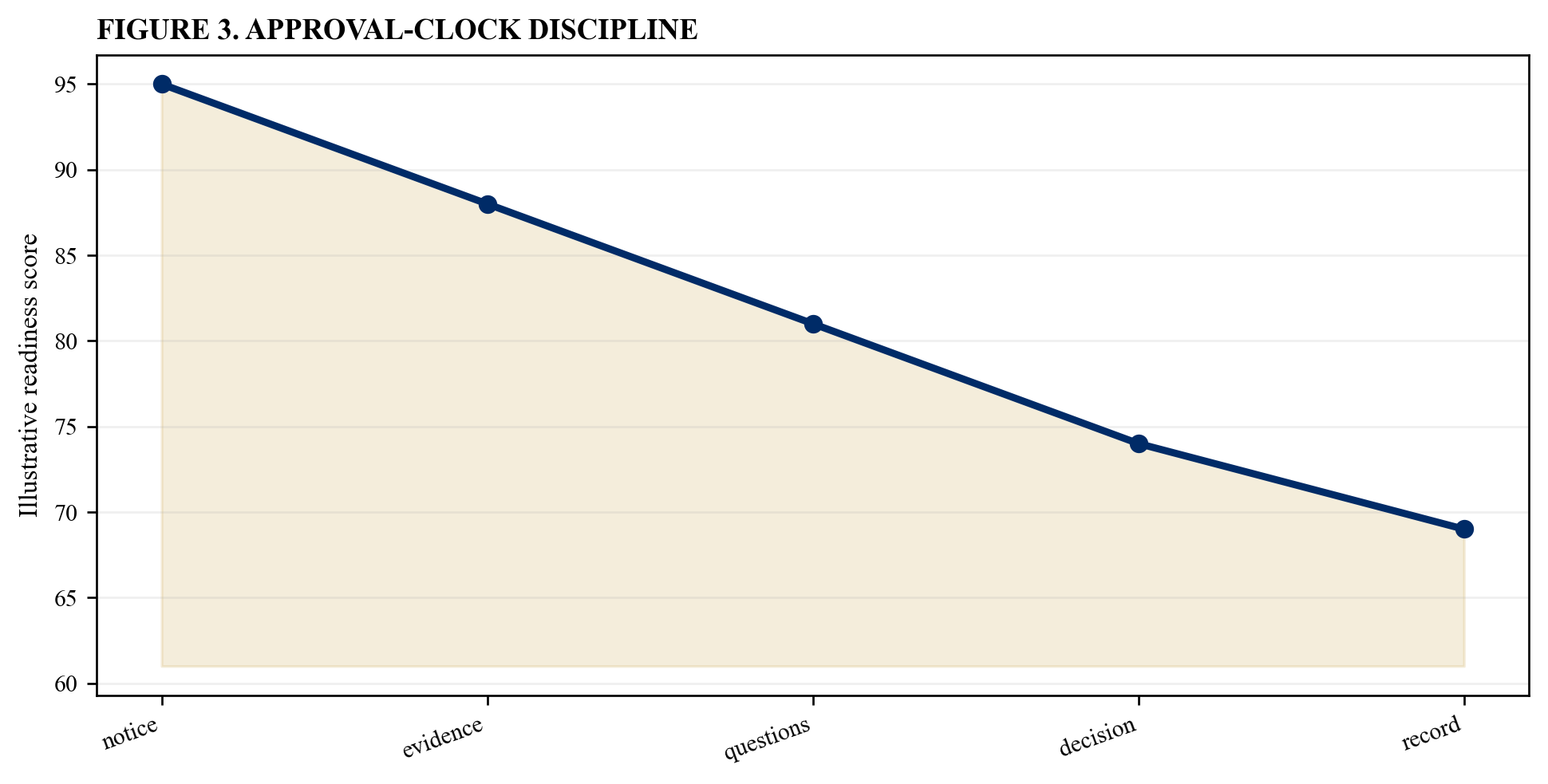
Illustrative analytical scenario; verified transaction evidence should replace index values.
29. Use deemed process carefully
The parties should define when silence advances, rejects or escalates a matter. The required output is a deemed-decision rule. Record the purpose, decision class, threshold, evidence, authority, conflicts, response time, consequence of silence, escalation and accountable owner [37][38].
Reconcile the provision across constitutional documents, shareholder agreements, board terms, delegations, business plans, financing agreements, accounting analysis and operating procedures. Test how the right works during ordinary execution, material variance and urgency.
The principal risk is that automatic consent can operate without genuine evidence review. Compare protection gained with decision latency, information burden, operational dependency and the possibility of strategic misuse. Define a measurable boundary and a retained decision record.
Retain notices, papers, questions, advice, conflicts, consents, refusals, minutes, delegations, waivers, emergencies, disputes and amendments. Review the architecture when scale, risk, ownership, financing, regulation or the venture model changes.
30. Maintain a consent calendar
The parties should forecast recurring budgets, renewals, financing, appointments and compliance approvals. The required output is an annual governance calendar. Record the purpose, decision class, threshold, evidence, authority, conflicts, response time, consequence of silence, escalation and accountable owner [5][11].
Reconcile the provision across constitutional documents, shareholder agreements, board terms, delegations, business plans, financing agreements, accounting analysis and operating procedures. Test how the right works during ordinary execution, material variance and urgency.
The principal risk is that predictable decisions can become last-minute crises. Compare protection gained with decision latency, information burden, operational dependency and the possibility of strategic misuse. Define a measurable boundary and a retained decision record.
Retain notices, papers, questions, advice, conflicts, consents, refusals, minutes, delegations, waivers, emergencies, disputes and amendments. Review the architecture when scale, risk, ownership, financing, regulation or the venture model changes.
31. Manage conflicts and director duties
The parties should record interests, abstention, independent advice, duties and information boundaries. The required output is a conflict protocol. Record the purpose, decision class, threshold, evidence, authority, conflicts, response time, consequence of silence, escalation and accountable owner [23][29].
Reconcile the provision across constitutional documents, shareholder agreements, board terms, delegations, business plans, financing agreements, accounting analysis and operating procedures. Test how the right works during ordinary execution, material variance and urgency.
The principal risk is that nominee expectations can displace duties owed to the venture. Compare protection gained with decision latency, information burden, operational dependency and the possibility of strategic misuse. Define a measurable boundary and a retained decision record.
Retain notices, papers, questions, advice, conflicts, consents, refusals, minutes, delegations, waivers, emergencies, disputes and amendments. Review the architecture when scale, risk, ownership, financing, regulation or the venture model changes.
32. Protect competition-sensitive information
The parties should limit prices, customers, wages, capacity and strategy to necessary recipients. The required output is a clean-team protocol. Record the purpose, decision class, threshold, evidence, authority, conflicts, response time, consequence of silence, escalation and accountable owner [22][39].
Reconcile the provision across constitutional documents, shareholder agreements, board terms, delegations, business plans, financing agreements, accounting analysis and operating procedures. Test how the right works during ordinary execution, material variance and urgency.
The principal risk is that governance reporting can facilitate coordination between competitors. Compare protection gained with decision latency, information burden, operational dependency and the possibility of strategic misuse. Define a measurable boundary and a retained decision record.
Retain notices, papers, questions, advice, conflicts, consents, refusals, minutes, delegations, waivers, emergencies, disputes and amendments. Review the architecture when scale, risk, ownership, financing, regulation or the venture model changes.
33. Define the operating default
The parties should state which approved plan and authority remain effective during disagreement. The required output is a continuity rule. Record the purpose, decision class, threshold, evidence, authority, conflicts, response time, consequence of silence, escalation and accountable owner [11][37].
Reconcile the provision across constitutional documents, shareholder agreements, board terms, delegations, business plans, financing agreements, accounting analysis and operating procedures. Test how the right works during ordinary execution, material variance and urgency.
The principal risk is that a dispute can freeze payroll, procurement or customer delivery. Compare protection gained with decision latency, information burden, operational dependency and the possibility of strategic misuse. Define a measurable boundary and a retained decision record.
Retain notices, papers, questions, advice, conflicts, consents, refusals, minutes, delegations, waivers, emergencies, disputes and amendments. Review the architecture when scale, risk, ownership, financing, regulation or the venture model changes.
34. Escalate by decision type
The parties should route commercial, technical, accounting and legal questions to suitable levels. The required output is an escalation matrix. Record the purpose, decision class, threshold, evidence, authority, conflicts, response time, consequence of silence, escalation and accountable owner [25][38].
Reconcile the provision across constitutional documents, shareholder agreements, board terms, delegations, business plans, financing agreements, accounting analysis and operating procedures. Test how the right works during ordinary execution, material variance and urgency.
The principal risk is that every disagreement can be pushed immediately to parent chief executives. Compare protection gained with decision latency, information burden, operational dependency and the possibility of strategic misuse. Define a measurable boundary and a retained decision record.
Retain notices, papers, questions, advice, conflicts, consents, refusals, minutes, delegations, waivers, emergencies, disputes and amendments. Review the architecture when scale, risk, ownership, financing, regulation or the venture model changes.
Table 4. Escalation ladder
| Stage | Question | Output |
|---|---|---|
| management | facts and options | decision memo |
| board | commercial judgment | resolution |
| expert | narrow technical issue | determination |
| parents | material impasse | settlement path |
Illustrative analytical structure; verified transaction evidence and specialist review govern.
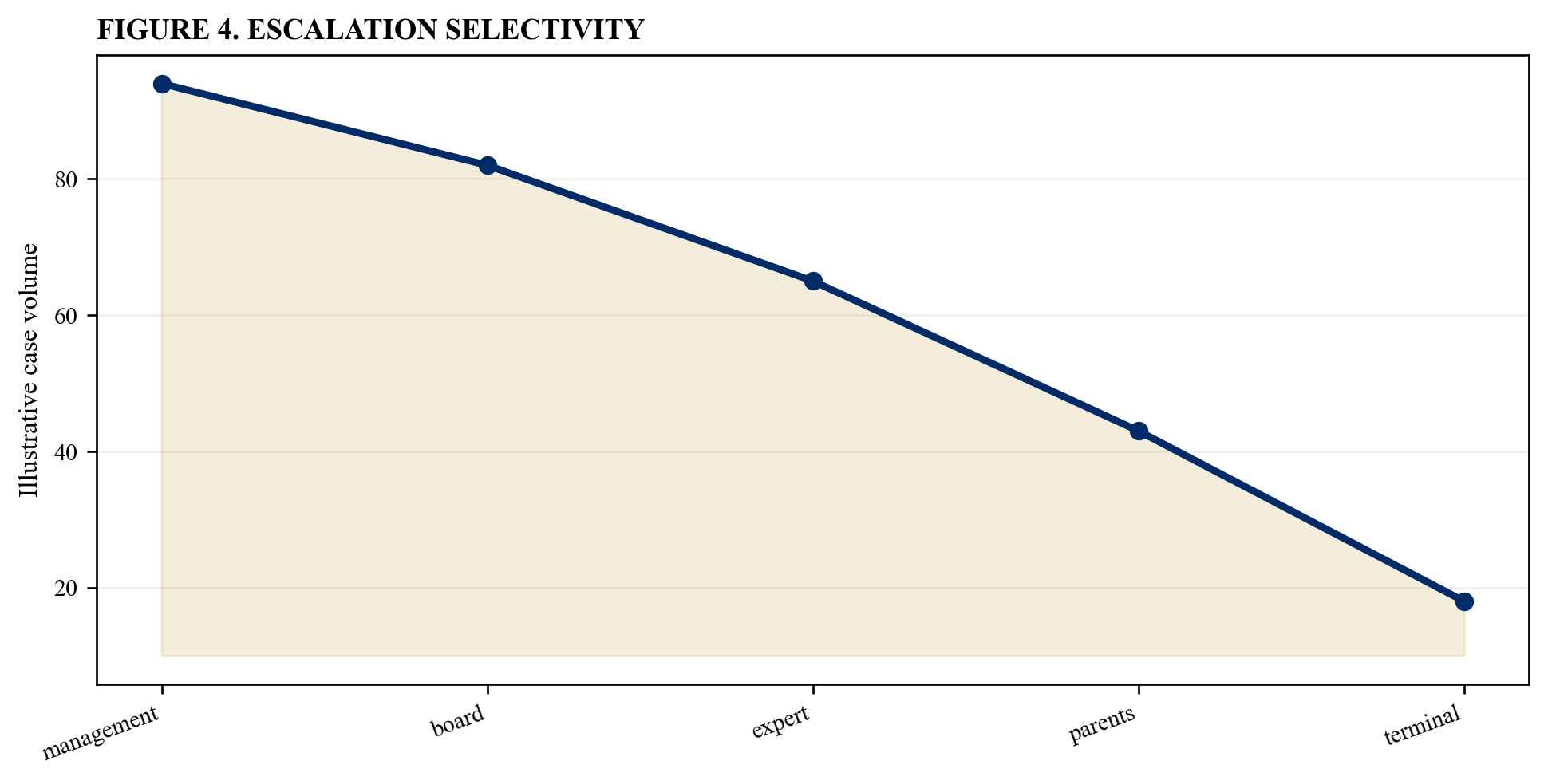
Illustrative analytical scenario; verified transaction evidence should replace index values.
35. Use expert determination selectively
The parties should specify the narrow question, evidence, assumptions, timetable and effect. The required output is an expert route. Record the purpose, decision class, threshold, evidence, authority, conflicts, response time, consequence of silence, escalation and accountable owner [25][38].
Reconcile the provision across constitutional documents, shareholder agreements, board terms, delegations, business plans, financing agreements, accounting analysis and operating procedures. Test how the right works during ordinary execution, material variance and urgency.
The principal risk is that an expert can be asked to decide strategy or legal rights beyond expertise. Compare protection gained with decision latency, information burden, operational dependency and the possibility of strategic misuse. Define a measurable boundary and a retained decision record.
Retain notices, papers, questions, advice, conflicts, consents, refusals, minutes, delegations, waivers, emergencies, disputes and amendments. Review the architecture when scale, risk, ownership, financing, regulation or the venture model changes.
36. Provide a mediation window
The parties should set a short confidential process while preserving urgent relief and operations. The required output is a mediation protocol. Record the purpose, decision class, threshold, evidence, authority, conflicts, response time, consequence of silence, escalation and accountable owner [25][38].
Reconcile the provision across constitutional documents, shareholder agreements, board terms, delegations, business plans, financing agreements, accounting analysis and operating procedures. Test how the right works during ordinary execution, material variance and urgency.
The principal risk is that mediation can become another delay layer. Compare protection gained with decision latency, information burden, operational dependency and the possibility of strategic misuse. Define a measurable boundary and a retained decision record.
Retain notices, papers, questions, advice, conflicts, consents, refusals, minutes, delegations, waivers, emergencies, disputes and amendments. Review the architecture when scale, risk, ownership, financing, regulation or the venture model changes.
37. Link deadlock to materiality
The parties should reserve terminal mechanisms for defined, persistent and value-relevant impasse. The required output is a deadlock classification. Record the purpose, decision class, threshold, evidence, authority, conflicts, response time, consequence of silence, escalation and accountable owner [17][37].
Reconcile the provision across constitutional documents, shareholder agreements, board terms, delegations, business plans, financing agreements, accounting analysis and operating procedures. Test how the right works during ordinary execution, material variance and urgency.
The principal risk is that routine disagreement can trigger coercive buy-sell rights. Compare protection gained with decision latency, information burden, operational dependency and the possibility of strategic misuse. Define a measurable boundary and a retained decision record.
Retain notices, papers, questions, advice, conflicts, consents, refusals, minutes, delegations, waivers, emergencies, disputes and amendments. Review the architecture when scale, risk, ownership, financing, regulation or the venture model changes.
38. Review accounting and legal consistency
The parties should reconcile unanimous-consent rights with joint-control and reporting conclusions. The required output is an accounting-governance bridge. Record the purpose, decision class, threshold, evidence, authority, conflicts, response time, consequence of silence, escalation and accountable owner [1][3].
Reconcile the provision across constitutional documents, shareholder agreements, board terms, delegations, business plans, financing agreements, accounting analysis and operating procedures. Test how the right works during ordinary execution, material variance and urgency.
The principal risk is that an amendment can change control without an updated accounting assessment. Compare protection gained with decision latency, information burden, operational dependency and the possibility of strategic misuse. Define a measurable boundary and a retained decision record.
Retain notices, papers, questions, advice, conflicts, consents, refusals, minutes, delegations, waivers, emergencies, disputes and amendments. Review the architecture when scale, risk, ownership, financing, regulation or the venture model changes.
39. Recalibrate thresholds periodically
The parties should adjust for scale, inflation, risk, business model, financing and ownership. The required output is a threshold review certificate. Record the purpose, decision class, threshold, evidence, authority, conflicts, response time, consequence of silence, escalation and accountable owner [7][8].
Reconcile the provision across constitutional documents, shareholder agreements, board terms, delegations, business plans, financing agreements, accounting analysis and operating procedures. Test how the right works during ordinary execution, material variance and urgency.
The principal risk is that static thresholds can reserve trivial matters as the venture grows. Compare protection gained with decision latency, information burden, operational dependency and the possibility of strategic misuse. Define a measurable boundary and a retained decision record.
Retain notices, papers, questions, advice, conflicts, consents, refusals, minutes, delegations, waivers, emergencies, disputes and amendments. Review the architecture when scale, risk, ownership, financing, regulation or the venture model changes.
40. Issue the governance certificate
The parties should confirm rights, thresholds, delegation, decisions, exceptions, disputes and changes. The required output is an auditable reserved-matters certificate. Record the purpose, decision class, threshold, evidence, authority, conflicts, response time, consequence of silence, escalation and accountable owner [1][2].
Reconcile the provision across constitutional documents, shareholder agreements, board terms, delegations, business plans, financing agreements, accounting analysis and operating procedures. Test how the right works during ordinary execution, material variance and urgency.
The principal risk is that the operating system can diverge from executed documents. Compare protection gained with decision latency, information burden, operational dependency and the possibility of strategic misuse. Define a measurable boundary and a retained decision record.
Retain notices, papers, questions, advice, conflicts, consents, refusals, minutes, delegations, waivers, emergencies, disputes and amendments. Review the architecture when scale, risk, ownership, financing, regulation or the venture model changes.
Table 5. Governance certificate
| Conclusion | Evidence | Owner |
|---|---|---|
| control | rights analysis | legal and finance |
| delegation | authority matrix | board |
| execution | decision log | secretariat |
| exceptions | waivers and disputes | audit committee |
Illustrative analytical structure; verified transaction evidence and specialist review govern.
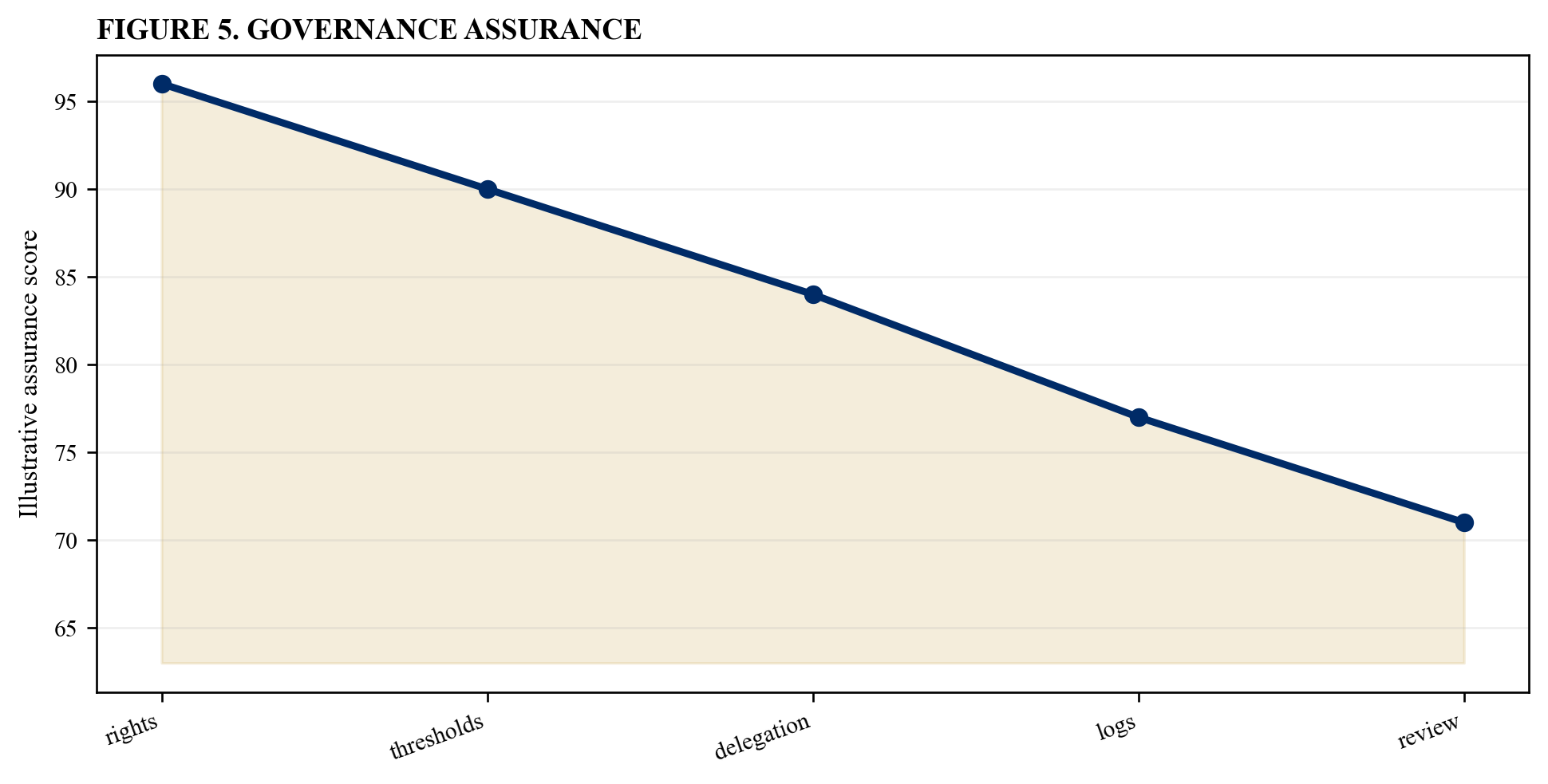
Illustrative analytical scenario; verified transaction evidence should replace index values.
References
- IFRS Foundation, IFRS 11 Joint Arrangements, https://www.ifrs.org/issued-standards/list-of-standards/ifrs-11-joint-arrangements/
- OECD, G20/OECD Principles of Corporate Governance 2023, https://www.oecd.org/en/publications/g20-oecd-principles-of-corporate-governance-2023_ed750b30-en.html
- IFRS Foundation, IAS 28 Investments in Associates and Joint Ventures, https://www.ifrs.org/issued-standards/list-of-standards/ias-28-investments-in-associates-and-joint-ventures/
- World Bank, Financial Modelling of PPP Projects, https://ppp.worldbank.org/public-private-partnership/financial-modelling
- World Bank, PPP Reference Guide, https://ppp.worldbank.org/public-private-partnership/library/ppp-reference-guide-3-0
- IFRS Foundation, IAS 32 Financial Instruments Presentation, https://www.ifrs.org/issued-standards/list-of-standards/ias-32-financial-instruments-presentation/
- IFRS Foundation, IFRS 9 Financial Instruments, https://www.ifrs.org/issued-standards/list-of-standards/ifrs-9-financial-instruments/
- UNCITRAL, Legislative Guide on Public-Private Partnerships, https://uncitral.un.org/en/texts/procurement/publicprivatepartnerships/legislativeguide
- OECD, Recommendation on the Governance of Infrastructure, https://legalinstruments.oecd.org/en/instruments/OECD-LEGAL-0460
- World Bank, PPP Risk Allocation Tool, https://ppp.worldbank.org/public-private-partnership/ppp-risk-allocation-tool
- International Monetary Fund, Annual Report on Exchange Arrangements and Exchange Restrictions, https://www.imf.org/en/Publications/Annual-Report-on-Exchange-Arrangements-and-Exchange-Restrictions
- OECD, Model Tax Convention, https://www.oecd.org/en/topics/sub-issues/tax-treaties/oecd-model-tax-convention-on-income-and-on-capital.html
- UNCITRAL, Model Law on International Commercial Arbitration, https://uncitral.un.org/en/texts/arbitration/modellaw/commercial_arbitration
- IFRS Foundation, IFRS 7 Financial Instruments Disclosures, https://www.ifrs.org/issued-standards/list-of-standards/ifrs-7-financial-instruments-disclosures/
- Basel Committee, Principles for the Management of Credit Risk, https://www.bis.org/bcbs/publ/d591.htm
- Loan Market Association, Sustainability Linked Loan Principles, https://www.lma.eu.com/sustainable-lending/resources
- International Valuation Standards Council, IVS Standards, https://ivsc.org/standards/
- World Intellectual Property Organization, Valuing Intellectual Property Assets, https://www.wipo.int/en/web/business/ip-valuation
- IFRS Foundation, IAS 24 Related Party Disclosures, https://www.ifrs.org/issued-standards/list-of-standards/ias-24-related-party-disclosures/
- OECD, Transfer Pricing Guidelines 2022, https://www.oecd.org/en/publications/oecd-transfer-pricing-guidelines-for-multinational-enterprises-and-tax-administrations-2022_0e655865-en.html
- OECD, Transfer Pricing Country Profiles, https://www.oecd.org/en/topics/sub-issues/transfer-pricing/transfer-pricing-country-profiles.html
- OECD, Base Erosion and Profit Shifting Actions, https://www.oecd.org/en/topics/policy-issues/base-erosion-and-profit-shifting-beps.html
- UK Government, Companies Act 2006, https://www.legislation.gov.uk/ukpga/2006/46/contents
- IFRS Foundation, IAS 7 Statement of Cash Flows, https://www.ifrs.org/issued-standards/list-of-standards/ias-7-statement-of-cash-flows/
- IFRS Foundation, IAS 36 Impairment of Assets, https://www.ifrs.org/issued-standards/list-of-standards/ias-36-impairment-of-assets/
- IFRS Foundation, IFRS 15 Revenue from Contracts with Customers, https://www.ifrs.org/issued-standards/list-of-standards/ifrs-15-revenue-from-contracts-with-customers/
- IFRS Foundation, IAS 12 Income Taxes, https://www.ifrs.org/issued-standards/list-of-standards/ias-12-income-taxes/
- IFRS Foundation, IAS 37 Provisions Contingent Liabilities and Contingent Assets, https://www.ifrs.org/issued-standards/list-of-standards/ias-37-provisions-contingent-liabilities-and-contingent-assets/
- IFRS Foundation, IAS 16 Property Plant and Equipment, https://www.ifrs.org/issued-standards/list-of-standards/ias-16-property-plant-and-equipment/
- UK Government, Companies Act 2006 Part 23 Distributions, https://www.legislation.gov.uk/ukpga/2006/46/part/23
- ADGM, Companies Regulations 2020, https://en.adgm.thomsonreuters.com/rulebook/companies-regulations-2020
- International Private Equity and Venture Capital Valuation Guidelines, https://www.privateequityvaluation.com/valuation-guidelines
- IFRS Foundation, IFRS 12 Disclosure of Interests in Other Entities, https://www.ifrs.org/issued-standards/list-of-standards/ifrs-12-disclosure-of-interests-in-other-entities/
- UK Competition and Markets Authority, Collaborating with Other Businesses, https://www.gov.uk/government/publications/collaborating-with-other-businesses
- US Department of Justice and Federal Trade Commission, 2026 Business Collaboration Guidance Inquiry, https://www.justice.gov/opa/pr/justice-department-and-federal-trade-commission-seek-public-comment-guidance-business
- NIST, Cybersecurity Framework 2.0, https://www.nist.gov/cyberframework
- NIST, Secure Software Development Framework, https://csrc.nist.gov/Projects/ssdf
- International Chamber of Commerce, Arbitration Rules, https://iccwbo.org/dispute-resolution/dispute-resolution-services/arbitration/rules-procedure/2021-arbitration-rules/
- OECD, Guidelines for Multinational Enterprises on Responsible Business Conduct, https://www.oecd.org/en/publications/oecd-guidelines-for-multinational-enterprises-on-responsible-business-conduct_81f92357-en.html
- IFRS Foundation, IFRS for SMEs Module 15 Joint Arrangements, https://www.ifrs.org/content/dam/ifrs/supporting-implementation/smes/2025-modules/module-15.pdf
