

1. Define the acquisition objective
The acquisition team should state the desired leadership role, target scale, sector, geography, ownership horizon and personal outcome. The immediate output is a acquisition-objective memorandum with named owners, dates, source evidence, approval status and open exceptions.
The analytical objective is to determine whether the proposed route serves a defined ownership and operating ambition. Reviewers should reconcile personal objectives, investor terms, target evidence, transaction models, financing correspondence, legal documents, diligence findings and independent advice. Each claimed advantage should be tested against the costs, constraints and failure modes created by the same vehicle.
The framework should assign responsibility across the prospective leader, co-searchers, investors, sponsors, lenders, sellers, boards and advisers. Definitions, calculation rules, decision thresholds, conflicts, information rights and time limits should be explicit.
At each gate, decision makers should test funding certainty, ownership economics, operating autonomy, seller credibility, execution capacity and downside resilience together. Material gaps remain visible until evidence is complete, advice is current, exceptions are resolved or accepted by the authorised body, and the selected route remains credible under realistic delay and underperformance scenarios.
2. Profile the prospective leader
The acquisition team should verify operating record, sector advantage, transaction experience, network, reputation and time commitment. The immediate output is a leader evidence file with named owners, dates, source evidence, approval status and open exceptions.
The analytical objective is to determine whether the individual or team can source, win and operate the intended business. Reviewers should reconcile personal objectives, investor terms, target evidence, transaction models, financing correspondence, legal documents, diligence findings and independent advice. Each claimed advantage should be tested against the costs, constraints and failure modes created by the same vehicle.
The framework should assign responsibility across the prospective leader, co-searchers, investors, sponsors, lenders, sellers, boards and advisers. Definitions, calculation rules, decision thresholds, conflicts, information rights and time limits should be explicit.
At each gate, decision makers should test funding certainty, ownership economics, operating autonomy, seller credibility, execution capacity and downside resilience together. Material gaps remain visible until evidence is complete, advice is current, exceptions are resolved or accepted by the authorised body, and the selected route remains credible under realistic delay and underperformance scenarios.
3. Measure personal financial resilience
The acquisition team should quantify liquid resources, living costs, debt, dependants, tax, opportunity cost and acceptable loss. The immediate output is a personal-resilience envelope with named owners, dates, source evidence, approval status and open exceptions.
The analytical objective is to determine how long the search can continue and how much capital can responsibly be committed. Reviewers should reconcile personal objectives, investor terms, target evidence, transaction models, financing correspondence, legal documents, diligence findings and independent advice. Each claimed advantage should be tested against the costs, constraints and failure modes created by the same vehicle.
The framework should assign responsibility across the prospective leader, co-searchers, investors, sponsors, lenders, sellers, boards and advisers. Definitions, calculation rules, decision thresholds, conflicts, information rights and time limits should be explicit.
At each gate, decision makers should test funding certainty, ownership economics, operating autonomy, seller credibility, execution capacity and downside resilience together. Material gaps remain visible until evidence is complete, advice is current, exceptions are resolved or accepted by the authorised body, and the selected route remains credible under realistic delay and underperformance scenarios.
4. Define the target universe
The acquisition team should screen enterprise value, earnings, recurrence, concentration, capex, regulation, cyclicality and succession context. The immediate output is a target-universe map with named owners, dates, source evidence, approval status and open exceptions.
The analytical objective is to determine whether enough suitable companies exist for the selected vehicle. Reviewers should reconcile personal objectives, investor terms, target evidence, transaction models, financing correspondence, legal documents, diligence findings and independent advice. Each claimed advantage should be tested against the costs, constraints and failure modes created by the same vehicle.
The framework should assign responsibility across the prospective leader, co-searchers, investors, sponsors, lenders, sellers, boards and advisers. Definitions, calculation rules, decision thresholds, conflicts, information rights and time limits should be explicit.
At each gate, decision makers should test funding certainty, ownership economics, operating autonomy, seller credibility, execution capacity and downside resilience together. Material gaps remain visible until evidence is complete, advice is current, exceptions are resolved or accepted by the authorised body, and the selected route remains credible under realistic delay and underperformance scenarios.
5. Compare the three vehicle archetypes
The acquisition team should map a traditional search fund, self-funded MBI and sponsor-backed team by capital, governance and economics. The immediate output is a vehicle comparison matrix with named owners, dates, source evidence, approval status and open exceptions.
The analytical objective is to determine which architecture best fits the leader, target and market. Reviewers should reconcile personal objectives, investor terms, target evidence, transaction models, financing correspondence, legal documents, diligence findings and independent advice. Each claimed advantage should be tested against the costs, constraints and failure modes created by the same vehicle.
The framework should assign responsibility across the prospective leader, co-searchers, investors, sponsors, lenders, sellers, boards and advisers. Definitions, calculation rules, decision thresholds, conflicts, information rights and time limits should be explicit.
At each gate, decision makers should test funding certainty, ownership economics, operating autonomy, seller credibility, execution capacity and downside resilience together. Material gaps remain visible until evidence is complete, advice is current, exceptions are resolved or accepted by the authorised body, and the selected route remains credible under realistic delay and underperformance scenarios.
6. Choose the search-funding model
The acquisition team should compare funded search, personal funding, deal-by-deal backing and salaried sponsor affiliation. The immediate output is a search-capital decision with named owners, dates, source evidence, approval status and open exceptions.
The analytical objective is to determine who bears pre-acquisition cost, risk and control. Reviewers should reconcile personal objectives, investor terms, target evidence, transaction models, financing correspondence, legal documents, diligence findings and independent advice. Each claimed advantage should be tested against the costs, constraints and failure modes created by the same vehicle.
The framework should assign responsibility across the prospective leader, co-searchers, investors, sponsors, lenders, sellers, boards and advisers. Definitions, calculation rules, decision thresholds, conflicts, information rights and time limits should be explicit.
At each gate, decision makers should test funding certainty, ownership economics, operating autonomy, seller credibility, execution capacity and downside resilience together. Material gaps remain visible until evidence is complete, advice is current, exceptions are resolved or accepted by the authorised body, and the selected route remains credible under realistic delay and underperformance scenarios.
7. Set the search budget and runway
The acquisition team should forecast compensation, travel, sourcing, advisers, diligence, technology and aborted-deal costs. The immediate output is a monthly runway model with named owners, dates, source evidence, approval status and open exceptions.
The analytical objective is to determine whether the search remains credible through a realistic duration. Reviewers should reconcile personal objectives, investor terms, target evidence, transaction models, financing correspondence, legal documents, diligence findings and independent advice. Each claimed advantage should be tested against the costs, constraints and failure modes created by the same vehicle.
The framework should assign responsibility across the prospective leader, co-searchers, investors, sponsors, lenders, sellers, boards and advisers. Definitions, calculation rules, decision thresholds, conflicts, information rights and time limits should be explicit.
At each gate, decision makers should test funding certainty, ownership economics, operating autonomy, seller credibility, execution capacity and downside resilience together. Material gaps remain visible until evidence is complete, advice is current, exceptions are resolved or accepted by the authorised body, and the selected route remains credible under realistic delay and underperformance scenarios.
8. Design investor selection
The acquisition team should assess capital capacity, sector knowledge, follow-on ability, decision speed, conflicts and working style. The immediate output is a investor selection scorecard with named owners, dates, source evidence, approval status and open exceptions.
The analytical objective is to determine whether capital providers strengthen execution without creating an unworkable governance group. Reviewers should reconcile personal objectives, investor terms, target evidence, transaction models, financing correspondence, legal documents, diligence findings and independent advice. Each claimed advantage should be tested against the costs, constraints and failure modes created by the same vehicle.
The framework should assign responsibility across the prospective leader, co-searchers, investors, sponsors, lenders, sellers, boards and advisers. Definitions, calculation rules, decision thresholds, conflicts, information rights and time limits should be explicit.
At each gate, decision makers should test funding certainty, ownership economics, operating autonomy, seller credibility, execution capacity and downside resilience together. Material gaps remain visible until evidence is complete, advice is current, exceptions are resolved or accepted by the authorised body, and the selected route remains credible under realistic delay and underperformance scenarios.
Table 1. Acquisition-vehicle architecture
| Vehicle | Search capital | Acquisition capital | Core trade-off |
|---|---|---|---|
| traditional search fund | investor funded | search-investor syndicate | support versus shared control |
| self-funded MBI | leader funded | deal-by-deal | autonomy versus funding uncertainty |
| sponsor-backed team | sponsor supported | institutional sponsor | capacity versus sponsor governance |
Illustrative comparison; negotiated terms and applicable law govern.
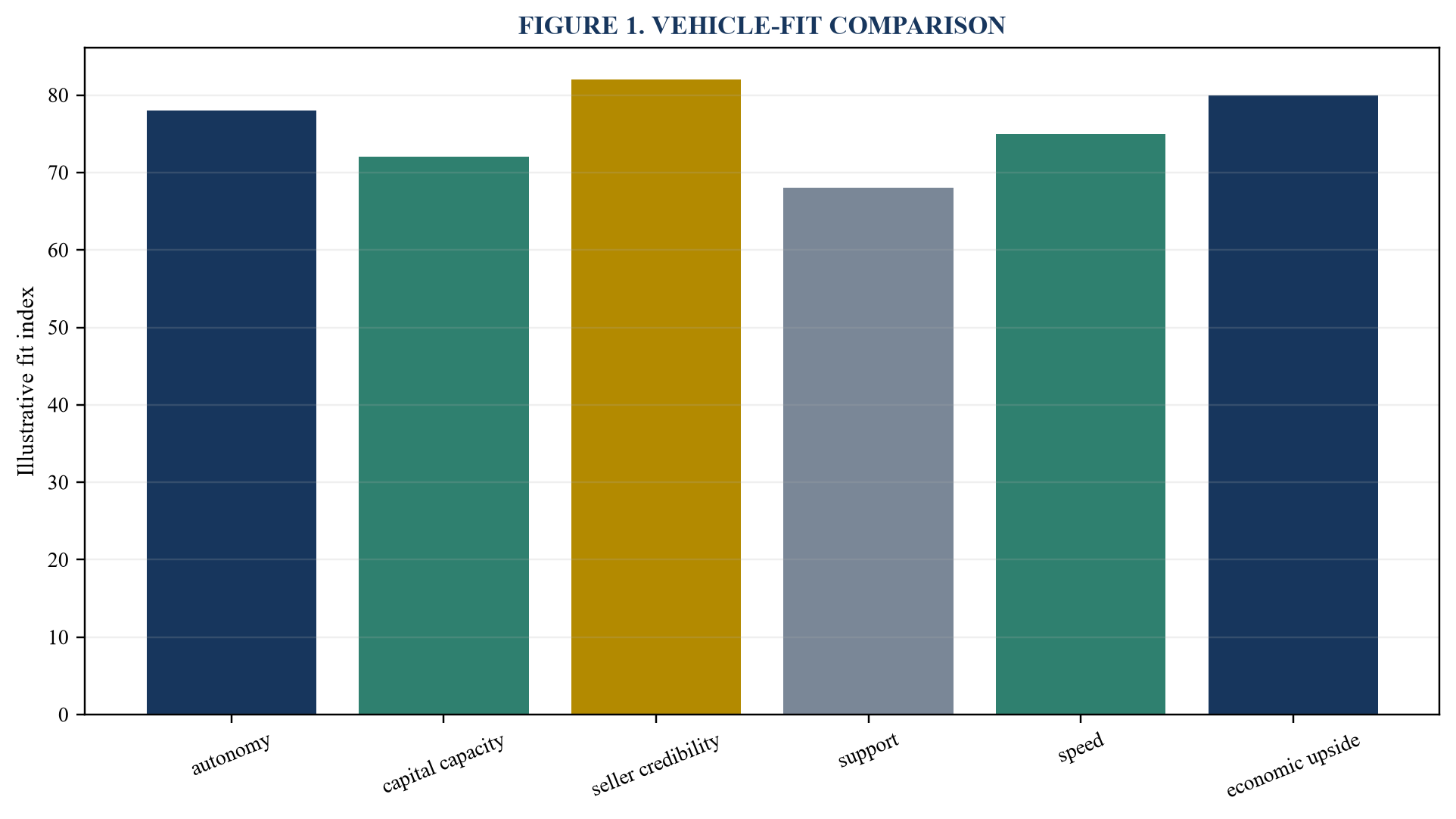
Values are illustrative readiness indices and require company-specific evidence.
9. Govern target allocation
The acquisition team should define which opportunities belong to the vehicle and how overlapping mandates, prior relationships and conflicts are handled. The immediate output is a opportunity-allocation policy with named owners, dates, source evidence, approval status and open exceptions.
The analytical objective is to determine whether the team can present targets consistently and fairly. Reviewers should reconcile personal objectives, investor terms, target evidence, transaction models, financing correspondence, legal documents, diligence findings and independent advice. Each claimed advantage should be tested against the costs, constraints and failure modes created by the same vehicle.
The framework should assign responsibility across the prospective leader, co-searchers, investors, sponsors, lenders, sellers, boards and advisers. Definitions, calculation rules, decision thresholds, conflicts, information rights and time limits should be explicit.
At each gate, decision makers should test funding certainty, ownership economics, operating autonomy, seller credibility, execution capacity and downside resilience together. Material gaps remain visible until evidence is complete, advice is current, exceptions are resolved or accepted by the authorised body, and the selected route remains credible under realistic delay and underperformance scenarios.
10. Set sourcing and coverage discipline
The acquisition team should allocate proprietary outreach, intermediaries, sector channels, geography and CRM evidence. The immediate output is a origination operating plan with named owners, dates, source evidence, approval status and open exceptions.
The analytical objective is to determine whether search activity can produce a qualified and repeatable funnel. Reviewers should reconcile personal objectives, investor terms, target evidence, transaction models, financing correspondence, legal documents, diligence findings and independent advice. Each claimed advantage should be tested against the costs, constraints and failure modes created by the same vehicle.
The framework should assign responsibility across the prospective leader, co-searchers, investors, sponsors, lenders, sellers, boards and advisers. Definitions, calculation rules, decision thresholds, conflicts, information rights and time limits should be explicit.
At each gate, decision makers should test funding certainty, ownership economics, operating autonomy, seller credibility, execution capacity and downside resilience together. Material gaps remain visible until evidence is complete, advice is current, exceptions are resolved or accepted by the authorised body, and the selected route remains credible under realistic delay and underperformance scenarios.
11. Build seller credibility
The acquisition team should assemble biography, acquisition criteria, capital evidence, references, governance and post-close plan. The immediate output is a seller-credibility pack with named owners, dates, source evidence, approval status and open exceptions.
The analytical objective is to determine whether an owner will treat the buyer as executable and responsible. Reviewers should reconcile personal objectives, investor terms, target evidence, transaction models, financing correspondence, legal documents, diligence findings and independent advice. Each claimed advantage should be tested against the costs, constraints and failure modes created by the same vehicle.
The framework should assign responsibility across the prospective leader, co-searchers, investors, sponsors, lenders, sellers, boards and advisers. Definitions, calculation rules, decision thresholds, conflicts, information rights and time limits should be explicit.
At each gate, decision makers should test funding certainty, ownership economics, operating autonomy, seller credibility, execution capacity and downside resilience together. Material gaps remain visible until evidence is complete, advice is current, exceptions are resolved or accepted by the authorised body, and the selected route remains credible under realistic delay and underperformance scenarios.
12. Evidence funding certainty
The acquisition team should distinguish indicative appetite, soft circles, committed search capital, acquisition equity and lender approval. The immediate output is a funding-evidence ladder with named owners, dates, source evidence, approval status and open exceptions.
The analytical objective is to determine what capital is genuinely available at each transaction stage. Reviewers should reconcile personal objectives, investor terms, target evidence, transaction models, financing correspondence, legal documents, diligence findings and independent advice. Each claimed advantage should be tested against the costs, constraints and failure modes created by the same vehicle.
The framework should assign responsibility across the prospective leader, co-searchers, investors, sponsors, lenders, sellers, boards and advisers. Definitions, calculation rules, decision thresholds, conflicts, information rights and time limits should be explicit.
At each gate, decision makers should test funding certainty, ownership economics, operating autonomy, seller credibility, execution capacity and downside resilience together. Material gaps remain visible until evidence is complete, advice is current, exceptions are resolved or accepted by the authorised body, and the selected route remains credible under realistic delay and underperformance scenarios.
13. Map the approval process
The acquisition team should document investor votes, sponsor investment committee, lender credit, regulatory and board approvals. The immediate output is a decision-path map with named owners, dates, source evidence, approval status and open exceptions.
The analytical objective is to determine how quickly and predictably the vehicle can reach binding commitment. Reviewers should reconcile personal objectives, investor terms, target evidence, transaction models, financing correspondence, legal documents, diligence findings and independent advice. Each claimed advantage should be tested against the costs, constraints and failure modes created by the same vehicle.
The framework should assign responsibility across the prospective leader, co-searchers, investors, sponsors, lenders, sellers, boards and advisers. Definitions, calculation rules, decision thresholds, conflicts, information rights and time limits should be explicit.
At each gate, decision makers should test funding certainty, ownership economics, operating autonomy, seller credibility, execution capacity and downside resilience together. Material gaps remain visible until evidence is complete, advice is current, exceptions are resolved or accepted by the authorised body, and the selected route remains credible under realistic delay and underperformance scenarios.
14. Assess target-size capacity
The acquisition team should connect equity cheques, leverage, seller rollover, vendor finance and co-investment to enterprise value. The immediate output is a capacity envelope with named owners, dates, source evidence, approval status and open exceptions.
The analytical objective is to determine which deal sizes can be funded without unsupported capital assumptions. Reviewers should reconcile personal objectives, investor terms, target evidence, transaction models, financing correspondence, legal documents, diligence findings and independent advice. Each claimed advantage should be tested against the costs, constraints and failure modes created by the same vehicle.
The framework should assign responsibility across the prospective leader, co-searchers, investors, sponsors, lenders, sellers, boards and advisers. Definitions, calculation rules, decision thresholds, conflicts, information rights and time limits should be explicit.
At each gate, decision makers should test funding certainty, ownership economics, operating autonomy, seller credibility, execution capacity and downside resilience together. Material gaps remain visible until evidence is complete, advice is current, exceptions are resolved or accepted by the authorised body, and the selected route remains credible under realistic delay and underperformance scenarios.
15. Model acquisition debt
The acquisition team should test leverage, debt service, covenants, security, amortisation, liquidity and downside headroom. The immediate output is a debt-capacity model with named owners, dates, source evidence, approval status and open exceptions.
The analytical objective is to determine whether financing capacity supports the intended target profile. Reviewers should reconcile personal objectives, investor terms, target evidence, transaction models, financing correspondence, legal documents, diligence findings and independent advice. Each claimed advantage should be tested against the costs, constraints and failure modes created by the same vehicle.
The framework should assign responsibility across the prospective leader, co-searchers, investors, sponsors, lenders, sellers, boards and advisers. Definitions, calculation rules, decision thresholds, conflicts, information rights and time limits should be explicit.
At each gate, decision makers should test funding certainty, ownership economics, operating autonomy, seller credibility, execution capacity and downside resilience together. Material gaps remain visible until evidence is complete, advice is current, exceptions are resolved or accepted by the authorised body, and the selected route remains credible under realistic delay and underperformance scenarios.
16. Compare entry economics
The acquisition team should reconcile price, fees, expenses, management investment, sponsor capital, investor capital and rollover. The immediate output is a sources-and-uses comparison with named owners, dates, source evidence, approval status and open exceptions.
The analytical objective is to determine how vehicle choice changes entry value and ownership. Reviewers should reconcile personal objectives, investor terms, target evidence, transaction models, financing correspondence, legal documents, diligence findings and independent advice. Each claimed advantage should be tested against the costs, constraints and failure modes created by the same vehicle.
The framework should assign responsibility across the prospective leader, co-searchers, investors, sponsors, lenders, sellers, boards and advisers. Definitions, calculation rules, decision thresholds, conflicts, information rights and time limits should be explicit.
At each gate, decision makers should test funding certainty, ownership economics, operating autonomy, seller credibility, execution capacity and downside resilience together. Material gaps remain visible until evidence is complete, advice is current, exceptions are resolved or accepted by the authorised body, and the selected route remains credible under realistic delay and underperformance scenarios.
Table 2. Economic comparison
| Economic layer | Evidence | Decision use |
|---|---|---|
| search cost | budget and runway | personal risk |
| acquisition equity | commitment evidence | ownership |
| promote and vesting | term sheet | incentive value |
| exit waterfall | scenario model | realised proceeds |
Illustrative fields; model fully diluted contractual terms.
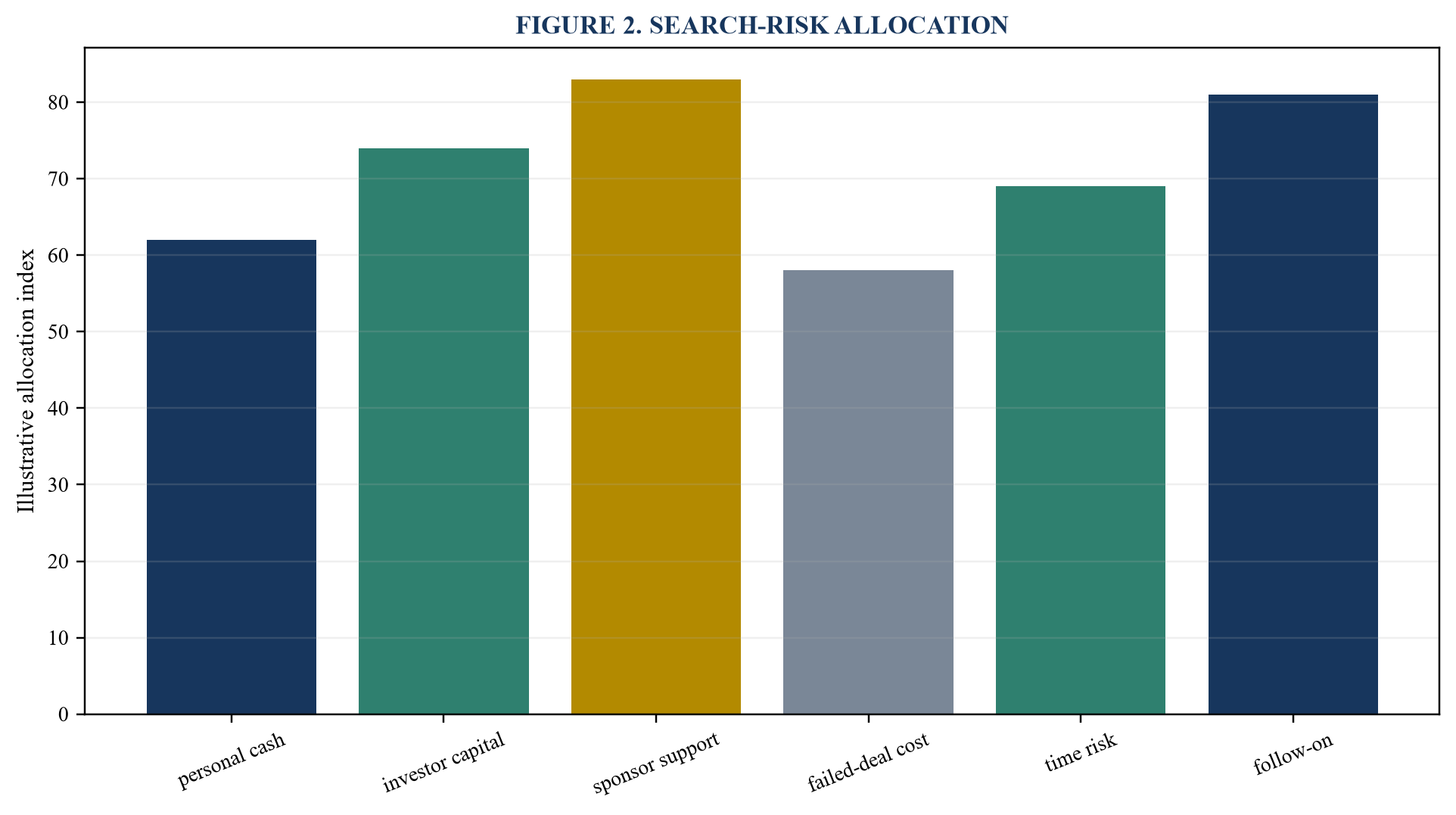
Values are illustrative readiness indices and require company-specific evidence.
17. Compare search-stage economics
The acquisition team should quantify salary or draw, search units, step-up, expense caps and failed-search outcomes. The immediate output is a search-economics schedule with named owners, dates, source evidence, approval status and open exceptions.
The analytical objective is to determine what the leader and investors gain or lose before acquisition. Reviewers should reconcile personal objectives, investor terms, target evidence, transaction models, financing correspondence, legal documents, diligence findings and independent advice. Each claimed advantage should be tested against the costs, constraints and failure modes created by the same vehicle.
The framework should assign responsibility across the prospective leader, co-searchers, investors, sponsors, lenders, sellers, boards and advisers. Definitions, calculation rules, decision thresholds, conflicts, information rights and time limits should be explicit.
At each gate, decision makers should test funding certainty, ownership economics, operating autonomy, seller credibility, execution capacity and downside resilience together. Material gaps remain visible until evidence is complete, advice is current, exceptions are resolved or accepted by the authorised body, and the selected route remains credible under realistic delay and underperformance scenarios.
18. Compare acquisition-stage economics
The acquisition team should map ordinary equity, preferred capital, promote, sweet equity, options and ratchets. The immediate output is a acquisition-economics schedule with named owners, dates, source evidence, approval status and open exceptions.
The analytical objective is to determine how value is divided at completion and through performance. Reviewers should reconcile personal objectives, investor terms, target evidence, transaction models, financing correspondence, legal documents, diligence findings and independent advice. Each claimed advantage should be tested against the costs, constraints and failure modes created by the same vehicle.
The framework should assign responsibility across the prospective leader, co-searchers, investors, sponsors, lenders, sellers, boards and advisers. Definitions, calculation rules, decision thresholds, conflicts, information rights and time limits should be explicit.
At each gate, decision makers should test funding certainty, ownership economics, operating autonomy, seller credibility, execution capacity and downside resilience together. Material gaps remain visible until evidence is complete, advice is current, exceptions are resolved or accepted by the authorised body, and the selected route remains credible under realistic delay and underperformance scenarios.
19. Build the fully diluted cap table
The acquisition team should include search conversion, management equity, sponsor promote, options, convertibles and future pools. The immediate output is a fully diluted ownership model with named owners, dates, source evidence, approval status and open exceptions.
The analytical objective is to determine whether headline ownership survives all contractual dilution. Reviewers should reconcile personal objectives, investor terms, target evidence, transaction models, financing correspondence, legal documents, diligence findings and independent advice. Each claimed advantage should be tested against the costs, constraints and failure modes created by the same vehicle.
The framework should assign responsibility across the prospective leader, co-searchers, investors, sponsors, lenders, sellers, boards and advisers. Definitions, calculation rules, decision thresholds, conflicts, information rights and time limits should be explicit.
At each gate, decision makers should test funding certainty, ownership economics, operating autonomy, seller credibility, execution capacity and downside resilience together. Material gaps remain visible until evidence is complete, advice is current, exceptions are resolved or accepted by the authorised body, and the selected route remains credible under realistic delay and underperformance scenarios.
20. Build the exit waterfall
The acquisition team should sequence debt, preferences, hurdles, catch-ups, carried economics, costs and taxes. The immediate output is a exit-proceeds waterfall with named owners, dates, source evidence, approval status and open exceptions.
The analytical objective is to determine what each participant receives across realistic outcomes. Reviewers should reconcile personal objectives, investor terms, target evidence, transaction models, financing correspondence, legal documents, diligence findings and independent advice. Each claimed advantage should be tested against the costs, constraints and failure modes created by the same vehicle.
The framework should assign responsibility across the prospective leader, co-searchers, investors, sponsors, lenders, sellers, boards and advisers. Definitions, calculation rules, decision thresholds, conflicts, information rights and time limits should be explicit.
At each gate, decision makers should test funding certainty, ownership economics, operating autonomy, seller credibility, execution capacity and downside resilience together. Material gaps remain visible until evidence is complete, advice is current, exceptions are resolved or accepted by the authorised body, and the selected route remains credible under realistic delay and underperformance scenarios.
21. Test autonomy and control
The acquisition team should compare board composition, vetoes, operating authority, budget control, hiring, acquisitions and exit rights. The immediate output is a control-rights matrix with named owners, dates, source evidence, approval status and open exceptions.
The analytical objective is to determine whether the leader retains sufficient authority to execute the plan. Reviewers should reconcile personal objectives, investor terms, target evidence, transaction models, financing correspondence, legal documents, diligence findings and independent advice. Each claimed advantage should be tested against the costs, constraints and failure modes created by the same vehicle.
The framework should assign responsibility across the prospective leader, co-searchers, investors, sponsors, lenders, sellers, boards and advisers. Definitions, calculation rules, decision thresholds, conflicts, information rights and time limits should be explicit.
At each gate, decision makers should test funding certainty, ownership economics, operating autonomy, seller credibility, execution capacity and downside resilience together. Material gaps remain visible until evidence is complete, advice is current, exceptions are resolved or accepted by the authorised body, and the selected route remains credible under realistic delay and underperformance scenarios.
22. Design vesting and leaver terms
The acquisition team should set time and performance vesting, good-leaver and bad-leaver treatment, valuation and repurchase mechanics. The immediate output is a management-equity protocol with named owners, dates, source evidence, approval status and open exceptions.
The analytical objective is to determine whether incentives endure through transition and adversity. Reviewers should reconcile personal objectives, investor terms, target evidence, transaction models, financing correspondence, legal documents, diligence findings and independent advice. Each claimed advantage should be tested against the costs, constraints and failure modes created by the same vehicle.
The framework should assign responsibility across the prospective leader, co-searchers, investors, sponsors, lenders, sellers, boards and advisers. Definitions, calculation rules, decision thresholds, conflicts, information rights and time limits should be explicit.
At each gate, decision makers should test funding certainty, ownership economics, operating autonomy, seller credibility, execution capacity and downside resilience together. Material gaps remain visible until evidence is complete, advice is current, exceptions are resolved or accepted by the authorised body, and the selected route remains credible under realistic delay and underperformance scenarios.
23. Set information and reporting rights
The acquisition team should define budgets, monthly accounts, forecasts, KPIs, covenants and event notices. The immediate output is a reporting calendar with named owners, dates, source evidence, approval status and open exceptions.
The analytical objective is to determine whether capital providers receive decision-grade evidence without burdening operations. Reviewers should reconcile personal objectives, investor terms, target evidence, transaction models, financing correspondence, legal documents, diligence findings and independent advice. Each claimed advantage should be tested against the costs, constraints and failure modes created by the same vehicle.
The framework should assign responsibility across the prospective leader, co-searchers, investors, sponsors, lenders, sellers, boards and advisers. Definitions, calculation rules, decision thresholds, conflicts, information rights and time limits should be explicit.
At each gate, decision makers should test funding certainty, ownership economics, operating autonomy, seller credibility, execution capacity and downside resilience together. Material gaps remain visible until evidence is complete, advice is current, exceptions are resolved or accepted by the authorised body, and the selected route remains credible under realistic delay and underperformance scenarios.
24. Control fees and expenses
The acquisition team should identify search costs, acquisition fees, monitoring fees, broken-deal expenses and related-party charges. The immediate output is a fee-transparency schedule with named owners, dates, source evidence, approval status and open exceptions.
The analytical objective is to determine whether total economics are visible and aligned. Reviewers should reconcile personal objectives, investor terms, target evidence, transaction models, financing correspondence, legal documents, diligence findings and independent advice. Each claimed advantage should be tested against the costs, constraints and failure modes created by the same vehicle.
The framework should assign responsibility across the prospective leader, co-searchers, investors, sponsors, lenders, sellers, boards and advisers. Definitions, calculation rules, decision thresholds, conflicts, information rights and time limits should be explicit.
At each gate, decision makers should test funding certainty, ownership economics, operating autonomy, seller credibility, execution capacity and downside resilience together. Material gaps remain visible until evidence is complete, advice is current, exceptions are resolved or accepted by the authorised body, and the selected route remains credible under realistic delay and underperformance scenarios.
Table 3. Seller-credibility scorecard
| Dimension | Required evidence | Failure signal |
|---|---|---|
| capital | proof and approval path | soft appetite only |
| sector | operating record | generic thesis |
| speed | critical path | layered vetoes |
| transition | hundred-day plan | unsupported promises |
Illustrative gate; target-specific evidence controls.
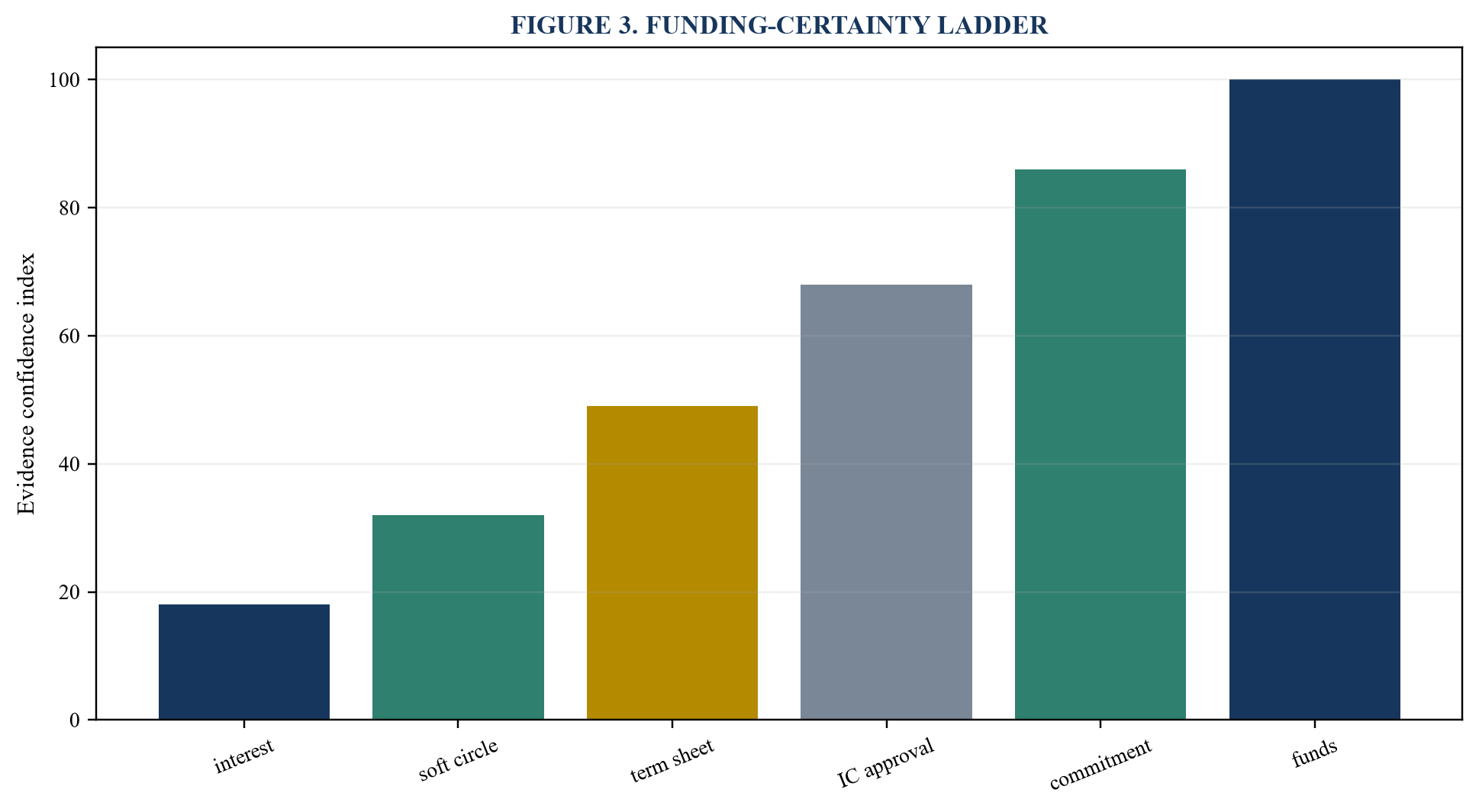
Values are illustrative readiness indices and require company-specific evidence.
25. Govern confidentiality and data access
The acquisition team should sequence teasers, NDAs, clean teams, data rooms, references and management access. The immediate output is a information-access protocol with named owners, dates, source evidence, approval status and open exceptions.
The analytical objective is to determine whether sensitive target information is protected throughout the search. Reviewers should reconcile personal objectives, investor terms, target evidence, transaction models, financing correspondence, legal documents, diligence findings and independent advice. Each claimed advantage should be tested against the costs, constraints and failure modes created by the same vehicle.
The framework should assign responsibility across the prospective leader, co-searchers, investors, sponsors, lenders, sellers, boards and advisers. Definitions, calculation rules, decision thresholds, conflicts, information rights and time limits should be explicit.
At each gate, decision makers should test funding certainty, ownership economics, operating autonomy, seller credibility, execution capacity and downside resilience together. Material gaps remain visible until evidence is complete, advice is current, exceptions are resolved or accepted by the authorised body, and the selected route remains credible under realistic delay and underperformance scenarios.
26. Allocate broken-deal risk
The acquisition team should define diligence spend, approval failures, financing withdrawal and reimbursement priorities. The immediate output is a broken-deal waterfall with named owners, dates, source evidence, approval status and open exceptions.
The analytical objective is to determine who bears cost when a signed opportunity does not complete. Reviewers should reconcile personal objectives, investor terms, target evidence, transaction models, financing correspondence, legal documents, diligence findings and independent advice. Each claimed advantage should be tested against the costs, constraints and failure modes created by the same vehicle.
The framework should assign responsibility across the prospective leader, co-searchers, investors, sponsors, lenders, sellers, boards and advisers. Definitions, calculation rules, decision thresholds, conflicts, information rights and time limits should be explicit.
At each gate, decision makers should test funding certainty, ownership economics, operating autonomy, seller credibility, execution capacity and downside resilience together. Material gaps remain visible until evidence is complete, advice is current, exceptions are resolved or accepted by the authorised body, and the selected route remains credible under realistic delay and underperformance scenarios.
27. Test diligence capability
The acquisition team should map commercial, financial, legal, tax, technology, cyber, operations, people and ESG workstreams. The immediate output is a diligence-readiness matrix with named owners, dates, source evidence, approval status and open exceptions.
The analytical objective is to determine whether the vehicle can identify and price material risk. Reviewers should reconcile personal objectives, investor terms, target evidence, transaction models, financing correspondence, legal documents, diligence findings and independent advice. Each claimed advantage should be tested against the costs, constraints and failure modes created by the same vehicle.
The framework should assign responsibility across the prospective leader, co-searchers, investors, sponsors, lenders, sellers, boards and advisers. Definitions, calculation rules, decision thresholds, conflicts, information rights and time limits should be explicit.
At each gate, decision makers should test funding certainty, ownership economics, operating autonomy, seller credibility, execution capacity and downside resilience together. Material gaps remain visible until evidence is complete, advice is current, exceptions are resolved or accepted by the authorised body, and the selected route remains credible under realistic delay and underperformance scenarios.
28. Test execution speed
The acquisition team should measure NDA, indication, financing, exclusivity, diligence, documentation and approval timelines. The immediate output is a critical-path schedule with named owners, dates, source evidence, approval status and open exceptions.
The analytical objective is to determine whether governance complexity undermines competitiveness. Reviewers should reconcile personal objectives, investor terms, target evidence, transaction models, financing correspondence, legal documents, diligence findings and independent advice. Each claimed advantage should be tested against the costs, constraints and failure modes created by the same vehicle.
The framework should assign responsibility across the prospective leader, co-searchers, investors, sponsors, lenders, sellers, boards and advisers. Definitions, calculation rules, decision thresholds, conflicts, information rights and time limits should be explicit.
At each gate, decision makers should test funding certainty, ownership economics, operating autonomy, seller credibility, execution capacity and downside resilience together. Material gaps remain visible until evidence is complete, advice is current, exceptions are resolved or accepted by the authorised body, and the selected route remains credible under realistic delay and underperformance scenarios.
29. Plan the first hundred days
The acquisition team should define leadership transition, cash control, customer retention, talent, systems and value-creation priorities. The immediate output is a Day-One and hundred-day plan with named owners, dates, source evidence, approval status and open exceptions.
The analytical objective is to determine whether the acquisition thesis can move into controlled execution. Reviewers should reconcile personal objectives, investor terms, target evidence, transaction models, financing correspondence, legal documents, diligence findings and independent advice. Each claimed advantage should be tested against the costs, constraints and failure modes created by the same vehicle.
The framework should assign responsibility across the prospective leader, co-searchers, investors, sponsors, lenders, sellers, boards and advisers. Definitions, calculation rules, decision thresholds, conflicts, information rights and time limits should be explicit.
At each gate, decision makers should test funding certainty, ownership economics, operating autonomy, seller credibility, execution capacity and downside resilience together. Material gaps remain visible until evidence is complete, advice is current, exceptions are resolved or accepted by the authorised body, and the selected route remains credible under realistic delay and underperformance scenarios.
30. Assess follow-on capital
The acquisition team should test working capital, capex, restructuring, acquisitions and covenant cures. The immediate output is a follow-on funding map with named owners, dates, source evidence, approval status and open exceptions.
The analytical objective is to determine whether the vehicle can support the company after completion. Reviewers should reconcile personal objectives, investor terms, target evidence, transaction models, financing correspondence, legal documents, diligence findings and independent advice. Each claimed advantage should be tested against the costs, constraints and failure modes created by the same vehicle.
The framework should assign responsibility across the prospective leader, co-searchers, investors, sponsors, lenders, sellers, boards and advisers. Definitions, calculation rules, decision thresholds, conflicts, information rights and time limits should be explicit.
At each gate, decision makers should test funding certainty, ownership economics, operating autonomy, seller credibility, execution capacity and downside resilience together. Material gaps remain visible until evidence is complete, advice is current, exceptions are resolved or accepted by the authorised body, and the selected route remains credible under realistic delay and underperformance scenarios.
31. Model downside resilience
The acquisition team should stress search duration, failed bids, revenue, margin, working capital, leverage, multiple and exit timing. The immediate output is a integrated downside matrix with named owners, dates, source evidence, approval status and open exceptions.
The analytical objective is to determine how personal and investor outcomes behave when the plan underperforms. Reviewers should reconcile personal objectives, investor terms, target evidence, transaction models, financing correspondence, legal documents, diligence findings and independent advice. Each claimed advantage should be tested against the costs, constraints and failure modes created by the same vehicle.
The framework should assign responsibility across the prospective leader, co-searchers, investors, sponsors, lenders, sellers, boards and advisers. Definitions, calculation rules, decision thresholds, conflicts, information rights and time limits should be explicit.
At each gate, decision makers should test funding certainty, ownership economics, operating autonomy, seller credibility, execution capacity and downside resilience together. Material gaps remain visible until evidence is complete, advice is current, exceptions are resolved or accepted by the authorised body, and the selected route remains credible under realistic delay and underperformance scenarios.
32. Address regulatory perimeter
The acquisition team should map fund, adviser, marketing, financial-promotion, merger-control and sector approval requirements. The immediate output is a regulatory-perimeter memorandum with named owners, dates, source evidence, approval status and open exceptions.
The analytical objective is to determine whether the structure and fundraising process are lawfully executable. Reviewers should reconcile personal objectives, investor terms, target evidence, transaction models, financing correspondence, legal documents, diligence findings and independent advice. Each claimed advantage should be tested against the costs, constraints and failure modes created by the same vehicle.
The framework should assign responsibility across the prospective leader, co-searchers, investors, sponsors, lenders, sellers, boards and advisers. Definitions, calculation rules, decision thresholds, conflicts, information rights and time limits should be explicit.
At each gate, decision makers should test funding certainty, ownership economics, operating autonomy, seller credibility, execution capacity and downside resilience together. Material gaps remain visible until evidence is complete, advice is current, exceptions are resolved or accepted by the authorised body, and the selected route remains credible under realistic delay and underperformance scenarios.
Table 4. Governance calibration
| Decision | Leader authority | Capital-provider protection |
|---|---|---|
| ordinary operations | delegated | periodic reporting |
| annual budget | proposes | board approval |
| new acquisition | sources and leads | investment approval |
| exit | consultation rights | negotiated consent rights |
Illustrative controls; legal documents govern.
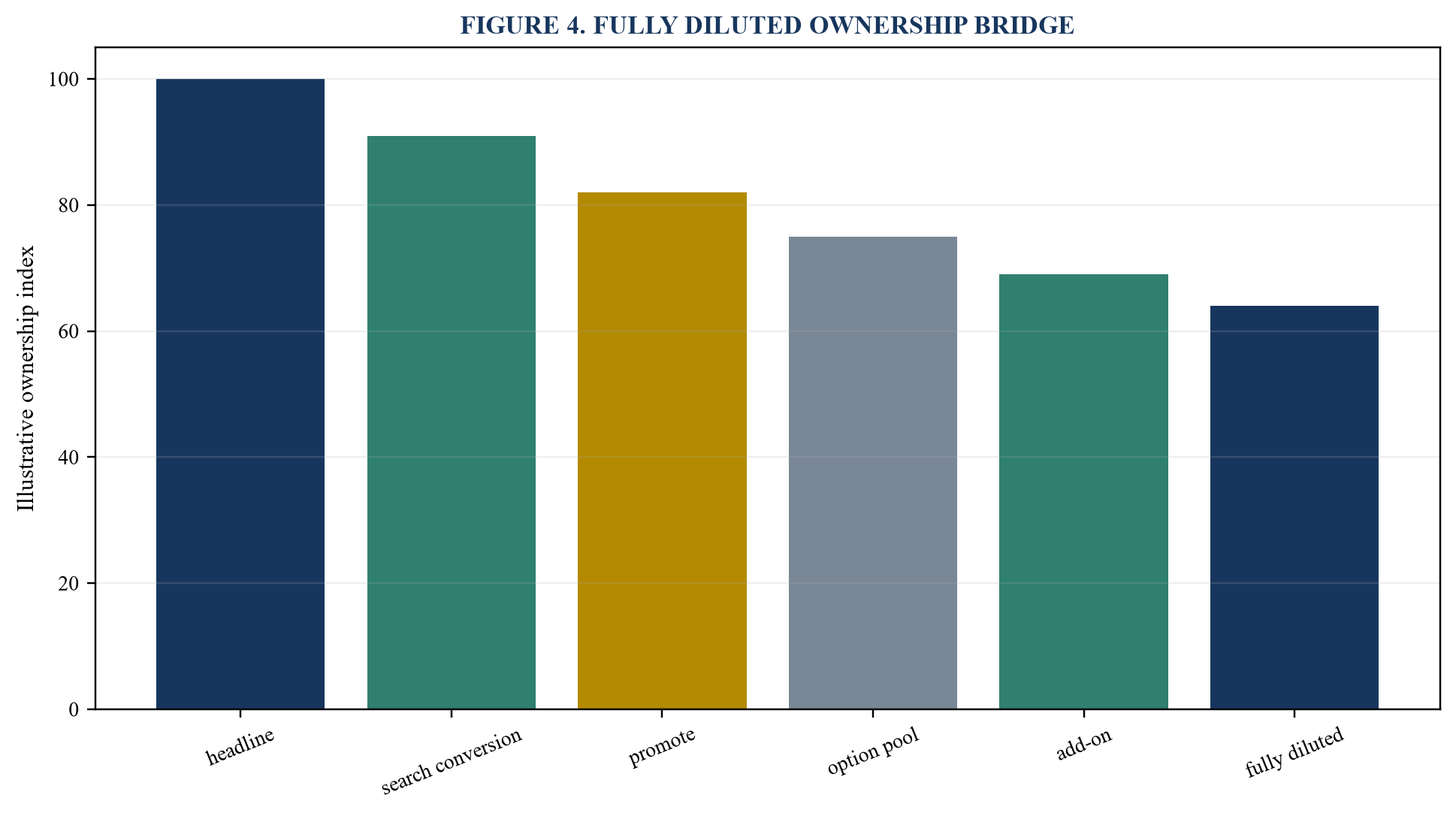
Values are illustrative readiness indices and require company-specific evidence.
33. Address company-law duties
The acquisition team should review authority, conflicts, disclosure, corporate benefit, financial assistance and shareholder approvals. The immediate output is a corporate-authority checklist with named owners, dates, source evidence, approval status and open exceptions.
The analytical objective is to determine whether decisions and financing withstand legal scrutiny. Reviewers should reconcile personal objectives, investor terms, target evidence, transaction models, financing correspondence, legal documents, diligence findings and independent advice. Each claimed advantage should be tested against the costs, constraints and failure modes created by the same vehicle.
The framework should assign responsibility across the prospective leader, co-searchers, investors, sponsors, lenders, sellers, boards and advisers. Definitions, calculation rules, decision thresholds, conflicts, information rights and time limits should be explicit.
At each gate, decision makers should test funding certainty, ownership economics, operating autonomy, seller credibility, execution capacity and downside resilience together. Material gaps remain visible until evidence is complete, advice is current, exceptions are resolved or accepted by the authorised body, and the selected route remains credible under realistic delay and underperformance scenarios.
34. Address accounting treatment
The acquisition team should map acquisition accounting, control, consolidation, financial instruments and share-based payments. The immediate output is a accounting-treatment map with named owners, dates, source evidence, approval status and open exceptions.
The analytical objective is to determine whether transaction and incentive economics are reported consistently. Reviewers should reconcile personal objectives, investor terms, target evidence, transaction models, financing correspondence, legal documents, diligence findings and independent advice. Each claimed advantage should be tested against the costs, constraints and failure modes created by the same vehicle.
The framework should assign responsibility across the prospective leader, co-searchers, investors, sponsors, lenders, sellers, boards and advisers. Definitions, calculation rules, decision thresholds, conflicts, information rights and time limits should be explicit.
At each gate, decision makers should test funding certainty, ownership economics, operating autonomy, seller credibility, execution capacity and downside resilience together. Material gaps remain visible until evidence is complete, advice is current, exceptions are resolved or accepted by the authorised body, and the selected route remains credible under realistic delay and underperformance scenarios.
35. Address tax structure
The acquisition team should analyse acquisition vehicle, interest, management equity, rollover, carried economics, withholding and exit. The immediate output is a tax-structure issues list with named owners, dates, source evidence, approval status and open exceptions.
The analytical objective is to determine whether after-tax outcomes match the commercial model. Reviewers should reconcile personal objectives, investor terms, target evidence, transaction models, financing correspondence, legal documents, diligence findings and independent advice. Each claimed advantage should be tested against the costs, constraints and failure modes created by the same vehicle.
The framework should assign responsibility across the prospective leader, co-searchers, investors, sponsors, lenders, sellers, boards and advisers. Definitions, calculation rules, decision thresholds, conflicts, information rights and time limits should be explicit.
At each gate, decision makers should test funding certainty, ownership economics, operating autonomy, seller credibility, execution capacity and downside resilience together. Material gaps remain visible until evidence is complete, advice is current, exceptions are resolved or accepted by the authorised body, and the selected route remains credible under realistic delay and underperformance scenarios.
36. Prepare the investment memorandum
The acquisition team should integrate thesis, target evidence, valuation, diligence, financing, governance and value creation. The immediate output is a decision-grade investment memorandum with named owners, dates, source evidence, approval status and open exceptions.
The analytical objective is to determine whether the capital case is complete, balanced and traceable. Reviewers should reconcile personal objectives, investor terms, target evidence, transaction models, financing correspondence, legal documents, diligence findings and independent advice. Each claimed advantage should be tested against the costs, constraints and failure modes created by the same vehicle.
The framework should assign responsibility across the prospective leader, co-searchers, investors, sponsors, lenders, sellers, boards and advisers. Definitions, calculation rules, decision thresholds, conflicts, information rights and time limits should be explicit.
At each gate, decision makers should test funding certainty, ownership economics, operating autonomy, seller credibility, execution capacity and downside resilience together. Material gaps remain visible until evidence is complete, advice is current, exceptions are resolved or accepted by the authorised body, and the selected route remains credible under realistic delay and underperformance scenarios.
37. Negotiate the capital compact
The acquisition team should document economics, governance, future funding, removal, transfer, exit and dispute arrangements. The immediate output is a capital-provider term sheet with named owners, dates, source evidence, approval status and open exceptions.
The analytical objective is to determine whether expectations remain workable after completion. Reviewers should reconcile personal objectives, investor terms, target evidence, transaction models, financing correspondence, legal documents, diligence findings and independent advice. Each claimed advantage should be tested against the costs, constraints and failure modes created by the same vehicle.
The framework should assign responsibility across the prospective leader, co-searchers, investors, sponsors, lenders, sellers, boards and advisers. Definitions, calculation rules, decision thresholds, conflicts, information rights and time limits should be explicit.
At each gate, decision makers should test funding certainty, ownership economics, operating autonomy, seller credibility, execution capacity and downside resilience together. Material gaps remain visible until evidence is complete, advice is current, exceptions are resolved or accepted by the authorised body, and the selected route remains credible under realistic delay and underperformance scenarios.
38. Build the closing evidence pack
The acquisition team should assemble approvals, funds, debt, equity, disclosures, contracts, insurance and regulatory evidence. The immediate output is a completion certificate with named owners, dates, source evidence, approval status and open exceptions.
The analytical objective is to determine whether the chosen vehicle can close exactly as modelled. Reviewers should reconcile personal objectives, investor terms, target evidence, transaction models, financing correspondence, legal documents, diligence findings and independent advice. Each claimed advantage should be tested against the costs, constraints and failure modes created by the same vehicle.
The framework should assign responsibility across the prospective leader, co-searchers, investors, sponsors, lenders, sellers, boards and advisers. Definitions, calculation rules, decision thresholds, conflicts, information rights and time limits should be explicit.
At each gate, decision makers should test funding certainty, ownership economics, operating autonomy, seller credibility, execution capacity and downside resilience together. Material gaps remain visible until evidence is complete, advice is current, exceptions are resolved or accepted by the authorised body, and the selected route remains credible under realistic delay and underperformance scenarios.
39. Monitor vehicle performance
The acquisition team should track sourcing conversion, spend, time, approval speed, ownership, operating results and value creation. The immediate output is a vehicle performance dashboard with named owners, dates, source evidence, approval status and open exceptions.
The analytical objective is to determine whether early evidence supports continuation or a change of route. Reviewers should reconcile personal objectives, investor terms, target evidence, transaction models, financing correspondence, legal documents, diligence findings and independent advice. Each claimed advantage should be tested against the costs, constraints and failure modes created by the same vehicle.
The framework should assign responsibility across the prospective leader, co-searchers, investors, sponsors, lenders, sellers, boards and advisers. Definitions, calculation rules, decision thresholds, conflicts, information rights and time limits should be explicit.
At each gate, decision makers should test funding certainty, ownership economics, operating autonomy, seller credibility, execution capacity and downside resilience together. Material gaps remain visible until evidence is complete, advice is current, exceptions are resolved or accepted by the authorised body, and the selected route remains credible under realistic delay and underperformance scenarios.
40. Issue the vehicle-choice conclusion
The acquisition team should integrate leader fit, capital, economics, autonomy, credibility, execution and downside evidence. The immediate output is a board-ready vehicle certificate with named owners, dates, source evidence, approval status and open exceptions.
The analytical objective is to determine which route offers the strongest risk-adjusted path to ownership. Reviewers should reconcile personal objectives, investor terms, target evidence, transaction models, financing correspondence, legal documents, diligence findings and independent advice. Each claimed advantage should be tested against the costs, constraints and failure modes created by the same vehicle.
The framework should assign responsibility across the prospective leader, co-searchers, investors, sponsors, lenders, sellers, boards and advisers. Definitions, calculation rules, decision thresholds, conflicts, information rights and time limits should be explicit.
At each gate, decision makers should test funding certainty, ownership economics, operating autonomy, seller credibility, execution capacity and downside resilience together. Material gaps remain visible until evidence is complete, advice is current, exceptions are resolved or accepted by the authorised body, and the selected route remains credible under realistic delay and underperformance scenarios.
Table 5. Vehicle-choice certificate
| Certification | Evidence owner | Status |
|---|---|---|
| leader and target fit | acquisition lead | tested |
| capital and close certainty | finance lead | tested |
| economics and control | legal adviser | tested |
| downside resilience | board sponsor | tested |
Illustrative decision gate; authorised advisers determine sufficiency.
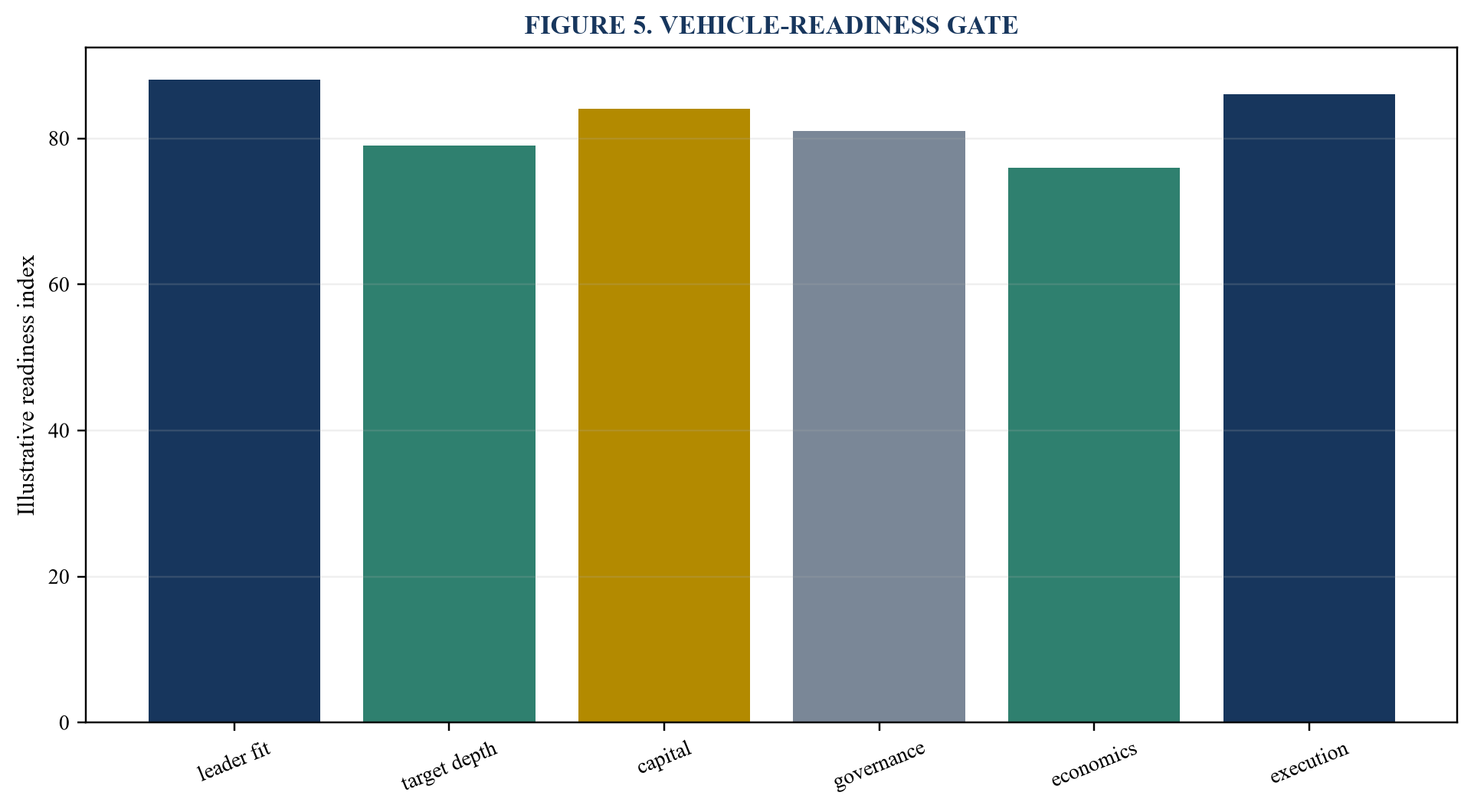
Values are illustrative readiness indices and require company-specific evidence.
References
- Stanford Graduate School of Business, 2026 Search Fund Study overview, https://www.gsb.stanford.edu/insights/search-funds-keep-offering-proven-path-ownership
- Stanford Graduate School of Business, 2024 Search Fund Study, https://www.gsb.stanford.edu/faculty-research/case-studies/2024-search-fund-study
- IESE Business School, International Search Funds 2024, https://www.iese.edu/media/research/pdfs/ST-0658-E
- IESE Business School, Search funds maintain global growth, https://www.iese.edu/insight/articles/search-funds-global-growth/
- UK Government, HMRC Corporate Finance Manual CFM11190: buy-outs and private equity, https://www.gov.uk/hmrc-internal-manuals/corporate-finance-manual/cfm11190
- UK Legislation, Companies Act 2006 section 172, https://www.legislation.gov.uk/ukpga/2006/46/section/172
- UK Legislation, Companies Act 2006 section 175, https://www.legislation.gov.uk/ukpga/2006/46/section/175
- UK Legislation, Companies Act 2006 section 177, https://www.legislation.gov.uk/ukpga/2006/46/section/177
- UK Legislation, Companies Act 2006 section 190, https://www.legislation.gov.uk/ukpga/2006/46/section/190
- UK Legislation, Companies Act 2006 section 678, https://www.legislation.gov.uk/ukpga/2006/46/section/678
- UK Government, Being a company director, https://www.gov.uk/guidance/being-a-company-director
- UK Takeover Panel, Rule 3: independent advice, https://code.thetakeoverpanel.org.uk/tp/rules/rule-3.html
- UK Competition and Markets Authority, mergers guidance, https://www.gov.uk/topic/competition/mergers
- Financial Conduct Authority, Alternative Investment Fund Managers regime, https://www.fca.org.uk/firms/aifmd
- US Small Business Administration, 7(a) loans, https://www.sba.gov/funding-programs/loans/7a-loans
- US Securities and Exchange Commission, Private Fund Adviser Overview, https://www.sec.gov/divisions/investment/private-funds
- US Securities and Exchange Commission, investment adviser regulation, https://www.sec.gov/investment/investment-adviser-regulation
- European Banking Authority, Guidelines on loan origination and monitoring, https://www.eba.europa.eu/regulation-and-policy/credit-risk/guidelines-on-loan-origination-and-monitoring
- European Central Bank, Guidance on leveraged transactions, https://www.bankingsupervision.europa.eu/ecb/pub/pdf/ssm.leveraged_transactions_guidance_201705.en.pdf
- OECD, G20/OECD Principles of Corporate Governance 2023, https://www.oecd.org/corporate/principles-corporate-governance/
- IFRS Foundation, IFRS 3 Business Combinations, https://www.ifrs.org/issued-standards/list-of-standards/ifrs-3-business-combinations/
- IFRS Foundation, IFRS 10 Consolidated Financial Statements, https://www.ifrs.org/issued-standards/list-of-standards/ifrs-10-consolidated-financial-statements/
- IFRS Foundation, IFRS 9 Financial Instruments, https://www.ifrs.org/issued-standards/list-of-standards/ifrs-9-financial-instruments/
- IFRS Foundation, IFRS 2 Share-based Payment, https://www.ifrs.org/issued-standards/list-of-standards/ifrs-2-share-based-payment/
- IFRS Foundation, IAS 12 Income Taxes, https://www.ifrs.org/issued-standards/list-of-standards/ias-12-income-taxes/
- Bank for International Settlements, Private credit and financial stability, https://www.bis.org/publ/qtrpdf/r_qt2403b.htm
