

1. Define the transaction and approval perimeter
State whether the deal is a share acquisition, vessel or fleet purchase, technology acquisition, joint venture, carve-out or merger. Freeze jurisdictions, flags, classes, vessels, shore entities, systems, contracts, people and closing conditions.
Controlled evidence includes transaction structure; perimeter; jurisdictions; flags; classes; asset list; closing condition. The immediate decision is to freeze what the buyer expects to own, operate and approve at completion. Definitions should remain stable across transaction, technical, regulatory, operational and financial records.
Evidence should remain vessel-, system-, configuration-, jurisdiction-, contract- and period-specific. The review should preserve failed tests, overrides, incidents, open conditions and adverse operating outcomes.
The operating team and finance team should use the same definitions. Native records should support aggregate dashboards, and sample testing should follow representative cases from input through outcome and cash. Exceptions, failed cases and client concessions remain part of the population. Reconciliation should cover opening and closing balances, acquisitions, disposals, foreign exchange, allocation changes and manual adjustments that could otherwise mimic operating improvement.
2. Build the AI asset register
Record each model, dataset, application, sensor, edge device, communications link, control interface, remote-operations component, documentation set and responsible team.
Controlled evidence includes asset identifier; purpose; owner; location; version; dependency; criticality; evidence. The immediate decision is to make the acquired AI operating system visible before value is assigned. Definitions should remain stable across transaction, technical, regulatory, operational and financial records.
Finance should distinguish current operation, required remediation, funded integration, forecast improvement and buyer-specific synergy. Every benefit needs timing, full cost, responsibility and a route to cash.
Decision makers need both upside and downside. The analysis should state which party controls conversion, what investment remains, when cash appears, which risks survive and whether the result continues after a change of ownership. Unsupported precision should be replaced with bounded scenarios. The committee should record the decision consequence of each range, including price, structure, funding, covenant, integration and monitoring implications.
3. Map ownership, possession and control
Legal ownership, physical possession, administrative access, operational authority and economic benefit may sit with different parties.
Controlled evidence includes legal title; licence; custody; access right; decision authority; beneficiary; restriction. The immediate decision is to separate control of an asset from permission to use or transfer it. Definitions should remain stable across transaction, technical, regulatory, operational and financial records.
Technical, legal, safety, cyber, operational and finance teams should use stable identifiers and cut-offs. Representative evidence should be traced from source record through decision and outcome.
The analytical unit should remain stable from source record to valuation conclusion. Reviewers should see the population, exclusions, period, owner and reconciliation to finance. Where evidence is incomplete, the model should retain a range and identify the action needed to narrow it. Comparisons should preserve product, customer, site, complexity and market conditions; aggregation should not conceal adverse cohorts or delayed consequences.
4. Apply the regulatory baseline and roadmap
The 2026 non-mandatory MASS Code supports experience building while existing mandatory instruments continue to apply. The expected pathway towards mandatory rules affects design and integration choices.
Controlled evidence includes applicable convention; code; flag instruction; class rule; approval; effective date; roadmap. The immediate decision is to price current compliance and credible future adaptation separately. Definitions should remain stable across transaction, technical, regulatory, operational and financial records.
Decision makers need bounded downside for missing rights, unsupported software, model error, unsafe integration, cyber incident, approval delay, supplier failure and weak adoption.
Evidence should distinguish observation, estimate, management plan and transaction judgement. A supported claim includes timing, full cost, dependency, transferability and a cash consequence. Sensitivity should show how the conclusion changes when adoption, demand, quality or persistence underperforms. Material assumptions need validation dates, accountable owners and explicit expiry conditions so that stale expectations do not survive into pricing or financing decisions.
5. Map safety-critical functions
Navigation, propulsion, steering, power, communications, fire protection, watertight integrity, cargo, connectivity and remote-operation functions require clear safety boundaries.
Controlled evidence includes function; hazard; system; human role; fallback; verification; approval. The immediate decision is to connect every AI dependency to the ship function and failure consequence. Definitions should remain stable across transaction, technical, regulatory, operational and financial records.
Evidence should remain vessel-, system-, configuration-, jurisdiction-, contract- and period-specific. The review should preserve failed tests, overrides, incidents, open conditions and adverse operating outcomes.
The operating team and finance team should use the same definitions. Native records should support aggregate dashboards, and sample testing should follow representative cases from input through outcome and cash. Exceptions, failed cases and client concessions remain part of the population. Reconciliation should cover opening and closing balances, acquisitions, disposals, foreign exchange, allocation changes and manual adjustments that could otherwise mimic operating improvement.
Table 1. AI safety-function map
| Function | Required evidence | Failure consequence |
|---|---|---|
| navigation | approved sensors, model and fallback | collision or grounding |
| propulsion and steering | control boundary and local recovery | loss of manoeuvrability |
| connectivity | coverage, priority and degraded mode | loss of remote capability |
| remote operations | authority, competence and handover | unsafe or ambiguous control |
Replace illustrative classifications with company-specific evidence and approved transaction treatment.
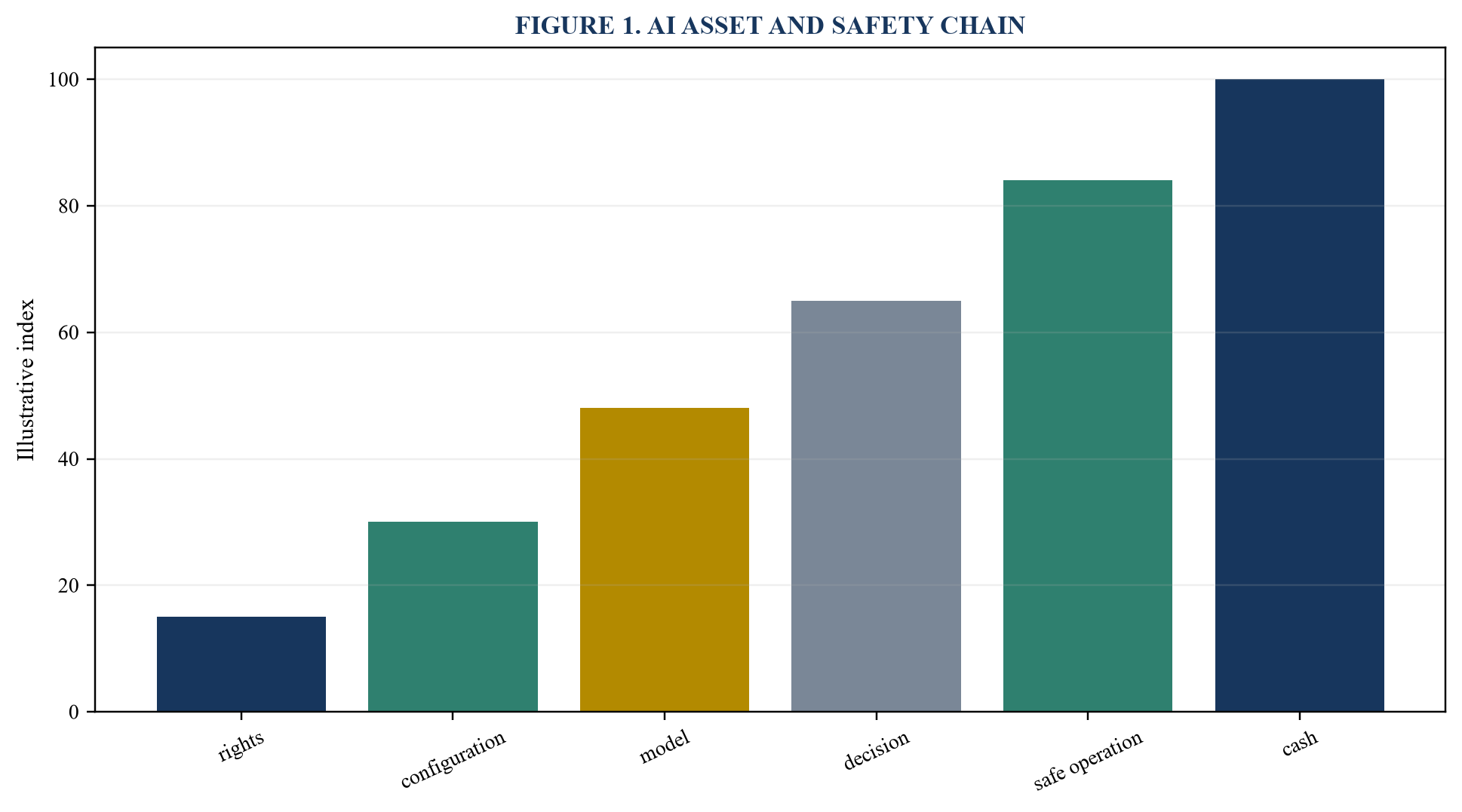
The acquired asset extends from rights and configuration to human authority, operation and cash.
6. Trace operational-data provenance
Vessel data can originate from owner systems, yards, equipment makers, crew, charterers, ports, weather services and public authorities.
Controlled evidence includes source; collection authority; timestamp; transformation; quality; lineage; retention. The immediate decision is to show which evidence can support operations, training, diligence and claims. Definitions should remain stable across transaction, technical, regulatory, operational and financial records.
Finance should distinguish current operation, required remediation, funded integration, forecast improvement and buyer-specific synergy. Every benefit needs timing, full cost, responsibility and a route to cash.
Decision makers need both upside and downside. The analysis should state which party controls conversion, what investment remains, when cash appears, which risks survive and whether the result continues after a change of ownership. Unsupported precision should be replaced with bounded scenarios. The committee should record the decision consequence of each range, including price, structure, funding, covenant, integration and monitoring implications.
7. Diligence data rights and permitted use
Access to data does not establish ownership or unrestricted reuse. Contract, privacy, database, confidentiality and sector rules may constrain processing and transfer.
Controlled evidence includes rightsholder; licence; purpose; territory; term; transfer; deletion; audit. The immediate decision is to prove that post-closing use matches the acquired right. Definitions should remain stable across transaction, technical, regulatory, operational and financial records.
Technical, legal, safety, cyber, operational and finance teams should use stable identifiers and cut-offs. Representative evidence should be traced from source record through decision and outcome.
The analytical unit should remain stable from source record to valuation conclusion. Reviewers should see the population, exclusions, period, owner and reconciliation to finance. Where evidence is incomplete, the model should retain a range and identify the action needed to narrow it. Comparisons should preserve product, customer, site, complexity and market conditions; aggregation should not conceal adverse cohorts or delayed consequences.
8. Protect crew and personal data
Crew, passenger, health, location, communications and performance information can carry distinct legal purposes and sensitivities.
Controlled evidence includes data category; lawful basis; notice; purpose; access; transfer; retention; deletion. The immediate decision is to preserve legitimate operations while limiting unlawful or excessive use. Definitions should remain stable across transaction, technical, regulatory, operational and financial records.
Decision makers need bounded downside for missing rights, unsupported software, model error, unsafe integration, cyber incident, approval delay, supplier failure and weak adoption.
Evidence should distinguish observation, estimate, management plan and transaction judgement. A supported claim includes timing, full cost, dependency, transferability and a cash consequence. Sensitivity should show how the conclusion changes when adoption, demand, quality or persistence underperforms. Material assumptions need validation dates, accountable owners and explicit expiry conditions so that stale expectations do not survive into pricing or financing decisions.
9. Test training-data legality and fitness
Training data should be lawfully obtained, representative of the intended operation, versioned and linked to exclusions and known limitations.
Controlled evidence includes dataset; right; population; exclusion; label; bias test; version; reviewer. The immediate decision is to avoid acquiring a model whose evidence cannot be reproduced or reused. Definitions should remain stable across transaction, technical, regulatory, operational and financial records.
Evidence should remain vessel-, system-, configuration-, jurisdiction-, contract- and period-specific. The review should preserve failed tests, overrides, incidents, open conditions and adverse operating outcomes.
The operating team and finance team should use the same definitions. Native records should support aggregate dashboards, and sample testing should follow representative cases from input through outcome and cash. Exceptions, failed cases and client concessions remain part of the population. Reconciliation should cover opening and closing balances, acquisitions, disposals, foreign exchange, allocation changes and manual adjustments that could otherwise mimic operating improvement.
10. Inventory models and decision authority
Catalogue models, rules, optimisation engines and embedded algorithms, including the decision they inform and the person or system authorised to act.
Controlled evidence includes model identifier; objective; input; output; threshold; approver; override; log. The immediate decision is to distinguish advice, automation and control within the operating model. Definitions should remain stable across transaction, technical, regulatory, operational and financial records.
Finance should distinguish current operation, required remediation, funded integration, forecast improvement and buyer-specific synergy. Every benefit needs timing, full cost, responsibility and a route to cash.
Decision makers need both upside and downside. The analysis should state which party controls conversion, what investment remains, when cash appears, which risks survive and whether the result continues after a change of ownership. Unsupported precision should be replaced with bounded scenarios. The committee should record the decision consequence of each range, including price, structure, funding, covenant, integration and monitoring implications.
11. Establish software and algorithmic IP
Source code, object code, model weights, configuration, documentation, inventions and know-how may have different owners and protection routes.
Controlled evidence includes creator; employer; assignment; repository; registration; trade-secret control; dispute. The immediate decision is to confirm ownership and practical access to maintain the acquired capability. Definitions should remain stable across transaction, technical, regulatory, operational and financial records.
Technical, legal, safety, cyber, operational and finance teams should use stable identifiers and cut-offs. Representative evidence should be traced from source record through decision and outcome.
The analytical unit should remain stable from source record to valuation conclusion. Reviewers should see the population, exclusions, period, owner and reconciliation to finance. Where evidence is incomplete, the model should retain a range and identify the action needed to narrow it. Comparisons should preserve product, customer, site, complexity and market conditions; aggregation should not conceal adverse cohorts or delayed consequences.
12. Review open-source and third-party components
Software bills of materials should reveal licences, obligations, vulnerabilities and embedded components that affect distribution, modification and support.
Controlled evidence includes component; version; licence; notice; source obligation; vulnerability; maintainer. The immediate decision is to identify legal and operational dependencies before closing. Definitions should remain stable across transaction, technical, regulatory, operational and financial records.
Decision makers need bounded downside for missing rights, unsupported software, model error, unsafe integration, cyber incident, approval delay, supplier failure and weak adoption.
Evidence should distinguish observation, estimate, management plan and transaction judgement. A supported claim includes timing, full cost, dependency, transferability and a cash consequence. Sensitivity should show how the conclusion changes when adoption, demand, quality or persistence underperforms. Material assumptions need validation dates, accountable owners and explicit expiry conditions so that stale expectations do not survive into pricing or financing decisions.
Table 2. Software dependency review
| Layer | Evidence | Transaction risk |
|---|---|---|
| proprietary code | ownership and repository access | missing maintenance capability |
| open source | SBOM, licence and notices | unmet obligations |
| vendor component | assignable licence and support | termination or hold-up |
| cloud and data service | portability and exit test | operational discontinuity |
Replace illustrative classifications with company-specific evidence and approved transaction treatment.
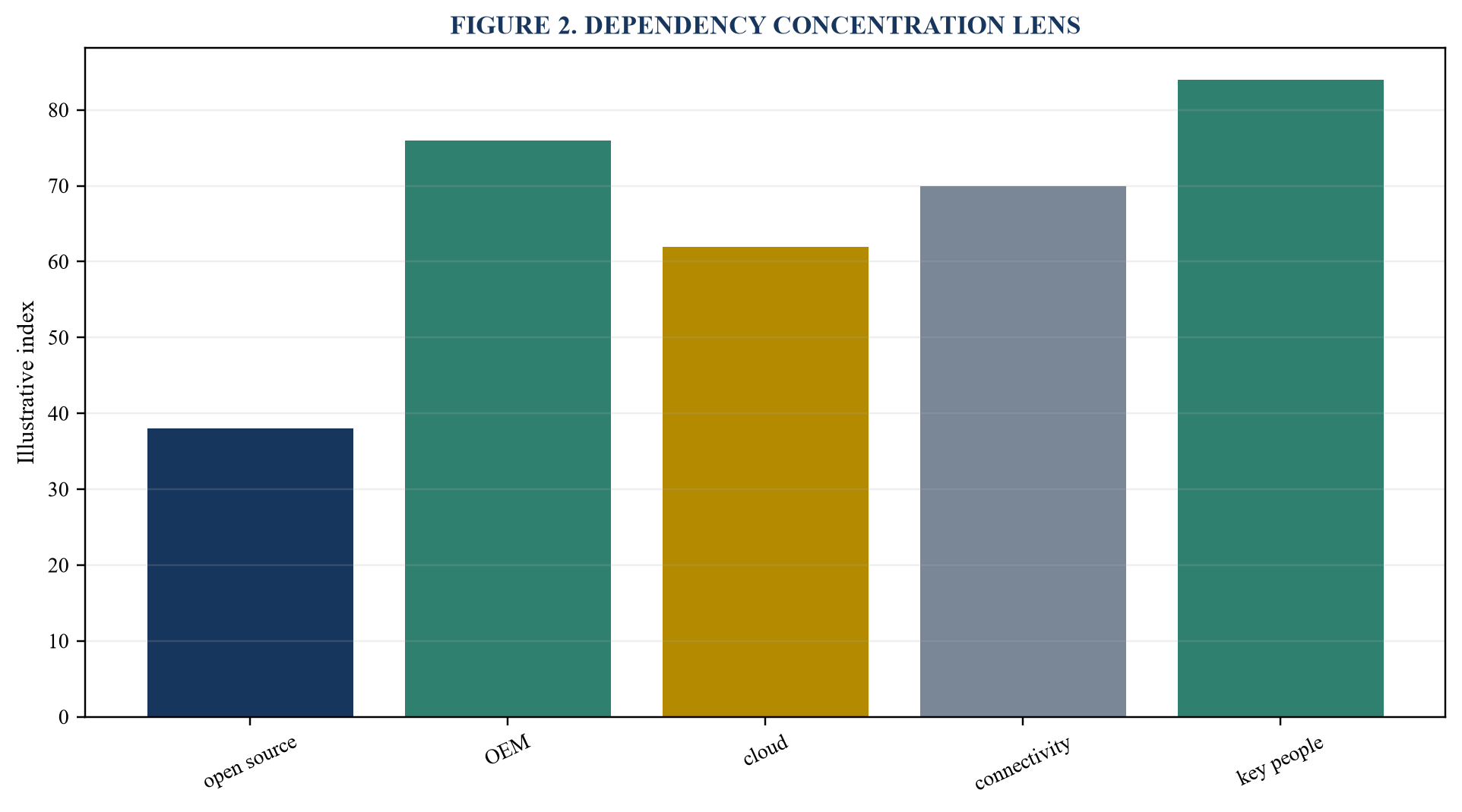
Replace illustrative indices with target-specific contractual and technical evidence.
13. Map vendor and cloud dependency
AI capability may depend on cloud services, satellite links, chart providers, equipment OEMs, application vendors and proprietary interfaces.
Controlled evidence includes supplier; service; SLA; data location; subcontractor; termination; portability; cost. The immediate decision is to test whether the operating stack survives ownership change and supplier stress. Definitions should remain stable across transaction, technical, regulatory, operational and financial records.
Evidence should remain vessel-, system-, configuration-, jurisdiction-, contract- and period-specific. The review should preserve failed tests, overrides, incidents, open conditions and adverse operating outcomes.
The operating team and finance team should use the same definitions. Native records should support aggregate dashboards, and sample testing should follow representative cases from input through outcome and cash. Exceptions, failed cases and client concessions remain part of the population. Reconciliation should cover opening and closing balances, acquisitions, disposals, foreign exchange, allocation changes and manual adjustments that could otherwise mimic operating improvement.
14. Freeze hardware, software and configuration baselines
Performance and safety evidence should identify the exact sensor, compute, network, firmware, software, model and parameter configuration tested.
Controlled evidence includes configuration item; version; installation; calibration; change log; approval; rollback. The immediate decision is to prevent assurance evidence from being applied to a different system state. Definitions should remain stable across transaction, technical, regulatory, operational and financial records.
Finance should distinguish current operation, required remediation, funded integration, forecast improvement and buyer-specific synergy. Every benefit needs timing, full cost, responsibility and a route to cash.
Decision makers need both upside and downside. The analysis should state which party controls conversion, what investment remains, when cash appears, which risks survive and whether the result continues after a change of ownership. Unsupported precision should be replaced with bounded scenarios. The committee should record the decision consequence of each range, including price, structure, funding, covenant, integration and monitoring implications.
15. Diligence remote-operations capability
Remote Operations Centres require approved functions, communications resilience, situational awareness, competence, workload control and contingency arrangements.
Controlled evidence includes ROC location; function; staffing; connection; latency; fallback; exercise; approval. The immediate decision is to establish which remote capability transfers and remains operable. Definitions should remain stable across transaction, technical, regulatory, operational and financial records.
Technical, legal, safety, cyber, operational and finance teams should use stable identifiers and cut-offs. Representative evidence should be traced from source record through decision and outcome.
The analytical unit should remain stable from source record to valuation conclusion. Reviewers should see the population, exclusions, period, owner and reconciliation to finance. Where evidence is incomplete, the model should retain a range and identify the action needed to narrow it. Comparisons should preserve product, customer, site, complexity and market conditions; aggregation should not conceal adverse cohorts or delayed consequences.
16. Test connectivity and service continuity
AI-enabled operations may depend on satellite, terrestrial, port and onboard networks with different coverage, latency, capacity and failure modes.
Controlled evidence includes link; provider; coverage; latency; redundancy; priority; outage record; fallback. The immediate decision is to model degraded and disconnected operation rather than continuous connectivity. Definitions should remain stable across transaction, technical, regulatory, operational and financial records.
Decision makers need bounded downside for missing rights, unsupported software, model error, unsafe integration, cyber incident, approval delay, supplier failure and weak adoption.
Evidence should distinguish observation, estimate, management plan and transaction judgement. A supported claim includes timing, full cost, dependency, transferability and a cash consequence. Sensitivity should show how the conclusion changes when adoption, demand, quality or persistence underperforms. Material assumptions need validation dates, accountable owners and explicit expiry conditions so that stale expectations do not survive into pricing or financing decisions.
17. Preserve accountable human roles
The master, crew, remote operators, designated person, engineers, vendor staff and management retain defined responsibilities despite automation.
Controlled evidence includes role; competence; authority; handover; escalation; override; fatigue; record. The immediate decision is to keep human responsibility explicit through closing and integration. Definitions should remain stable across transaction, technical, regulatory, operational and financial records.
Evidence should remain vessel-, system-, configuration-, jurisdiction-, contract- and period-specific. The review should preserve failed tests, overrides, incidents, open conditions and adverse operating outcomes.
The operating team and finance team should use the same definitions. Native records should support aggregate dashboards, and sample testing should follow representative cases from input through outcome and cash. Exceptions, failed cases and client concessions remain part of the population. Reconciliation should cover opening and closing balances, acquisitions, disposals, foreign exchange, allocation changes and manual adjustments that could otherwise mimic operating improvement.
18. Reconstruct the safety case
A safety case should connect intended operation, hazards, controls, verification, residual risk, competence and approval through a traceable argument.
Controlled evidence includes claim; hazard; control; evidence; assumption; owner; approval; limitation. The immediate decision is to test whether the assurance argument remains valid under buyer ownership. Definitions should remain stable across transaction, technical, regulatory, operational and financial records.
Finance should distinguish current operation, required remediation, funded integration, forecast improvement and buyer-specific synergy. Every benefit needs timing, full cost, responsibility and a route to cash.
Decision makers need both upside and downside. The analysis should state which party controls conversion, what investment remains, when cash appears, which risks survive and whether the result continues after a change of ownership. Unsupported precision should be replaced with bounded scenarios. The committee should record the decision consequence of each range, including price, structure, funding, covenant, integration and monitoring implications.
Table 3. Safety-case transfer test
| Layer | Evidence | Buyer question |
|---|---|---|
| claim | defined safe outcome | what is asserted? |
| context | operating domain and configuration | where does it apply? |
| control | technical and human barrier | what prevents harm? |
| proof | test, trial, survey and record | is it reproducible? |
| change | ownership and integration impact | what requires revalidation? |
Replace illustrative classifications with company-specific evidence and approved transaction treatment.
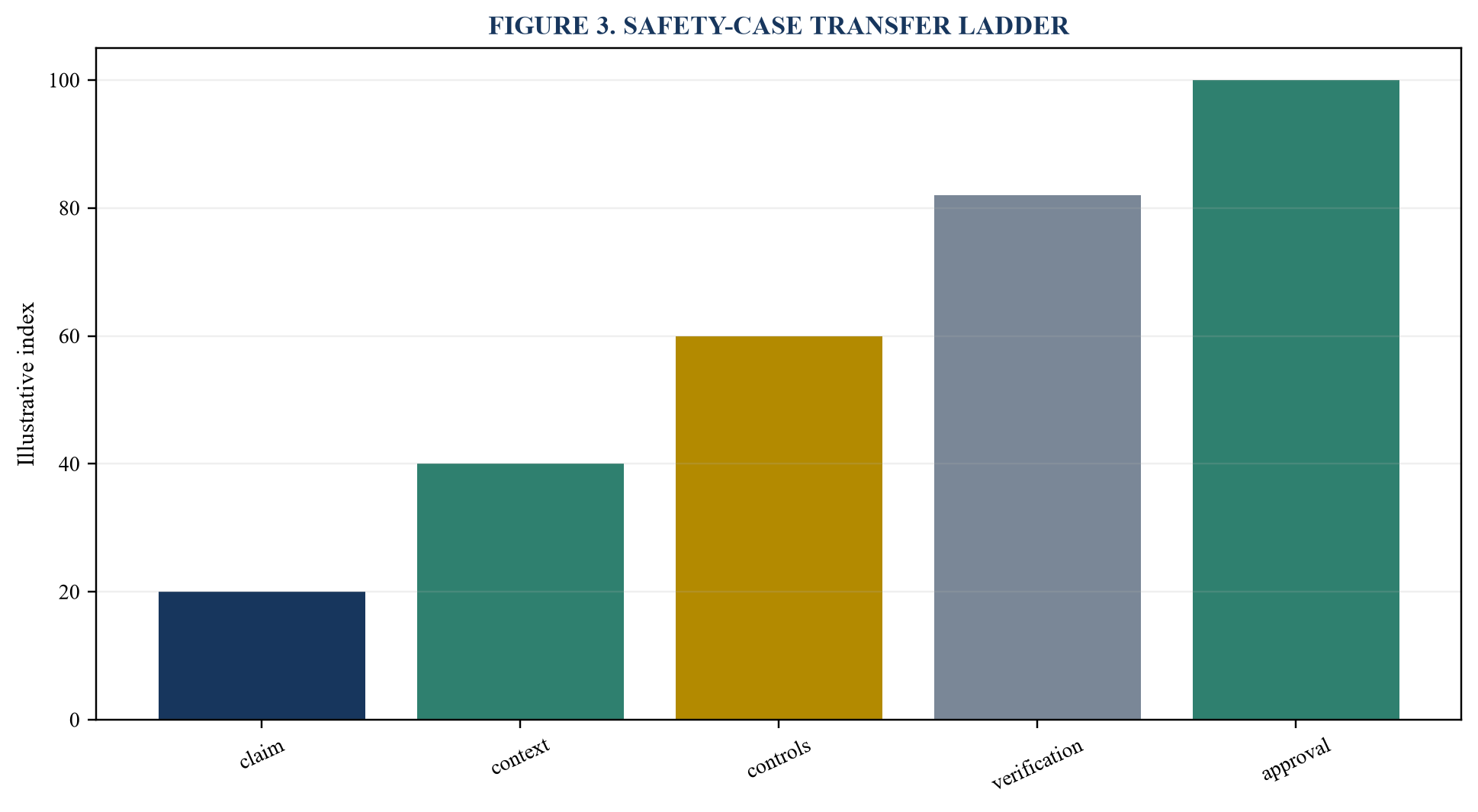
Each transaction change should be tested against the claim, context, controls and proof.
19. Validate models and integrated performance
Model metrics should match the decision horizon and consequence. System validation should include integration, edge cases, degraded modes and human interaction.
Controlled evidence includes objective; test set; horizon; error; scenario; acceptance; reviewer; limitation. The immediate decision is to approve each model only for a defined operating decision and configuration. Definitions should remain stable across transaction, technical, regulatory, operational and financial records.
Technical, legal, safety, cyber, operational and finance teams should use stable identifiers and cut-offs. Representative evidence should be traced from source record through decision and outcome.
The analytical unit should remain stable from source record to valuation conclusion. Reviewers should see the population, exclusions, period, owner and reconciliation to finance. Where evidence is incomplete, the model should retain a range and identify the action needed to narrow it. Comparisons should preserve product, customer, site, complexity and market conditions; aggregation should not conceal adverse cohorts or delayed consequences.
20. Define the operational design domain
State vessel types, routes, waters, weather, traffic, connectivity, port conditions, crew and remote support within which the capability is evidenced.
Controlled evidence includes geography; environment; traffic; vessel; equipment; connectivity; people; exclusion. The immediate decision is to avoid extrapolating trial evidence beyond the approved operating domain. Definitions should remain stable across transaction, technical, regulatory, operational and financial records.
Decision makers need bounded downside for missing rights, unsupported software, model error, unsafe integration, cyber incident, approval delay, supplier failure and weak adoption.
Evidence should distinguish observation, estimate, management plan and transaction judgement. A supported claim includes timing, full cost, dependency, transferability and a cash consequence. Sensitivity should show how the conclusion changes when adoption, demand, quality or persistence underperforms. Material assumptions need validation dates, accountable owners and explicit expiry conditions so that stale expectations do not survive into pricing or financing decisions.
21. Verify flag, class and statutory evidence
Certificates, class notations, approvals, exemptions, conditions, survey records and open recommendations should be reconciled to each vessel and system state.
Controlled evidence includes vessel; flag; class; certificate; notation; condition; survey; expiry. The immediate decision is to identify approvals that require renewal, transfer, revalidation or remediation. Definitions should remain stable across transaction, technical, regulatory, operational and financial records.
Evidence should remain vessel-, system-, configuration-, jurisdiction-, contract- and period-specific. The review should preserve failed tests, overrides, incidents, open conditions and adverse operating outcomes.
The operating team and finance team should use the same definitions. Native records should support aggregate dashboards, and sample testing should follow representative cases from input through outcome and cash. Exceptions, failed cases and client concessions remain part of the population. Reconciliation should cover opening and closing balances, acquisitions, disposals, foreign exchange, allocation changes and manual adjustments that could otherwise mimic operating improvement.
22. Build the cyber asset and trust-boundary map
Map vessel IT and OT, shore systems, remote access, suppliers, identities, data flows, safety interfaces and external connections.
Controlled evidence includes asset; zone; conduit; identity; privilege; protocol; owner; monitoring. The immediate decision is to connect cyber exposure to operational and safety consequence. Definitions should remain stable across transaction, technical, regulatory, operational and financial records.
Finance should distinguish current operation, required remediation, funded integration, forecast improvement and buyer-specific synergy. Every benefit needs timing, full cost, responsibility and a route to cash.
Decision makers need both upside and downside. The analysis should state which party controls conversion, what investment remains, when cash appears, which risks survive and whether the result continues after a change of ownership. Unsupported precision should be replaced with bounded scenarios. The committee should record the decision consequence of each range, including price, structure, funding, covenant, integration and monitoring implications.
23. Test IACS cyber-resilience applicability
IACS UR E26 addresses ship-level cyber resilience and UR E27 addresses onboard systems and equipment, subject to their applicability and class implementation.
Controlled evidence includes contract date; vessel scope; class rule; system scope; requirement; evidence; gap. The immediate decision is to separate mandatory applicability from useful diligence benchmarks. Definitions should remain stable across transaction, technical, regulatory, operational and financial records.
Technical, legal, safety, cyber, operational and finance teams should use stable identifiers and cut-offs. Representative evidence should be traced from source record through decision and outcome.
The analytical unit should remain stable from source record to valuation conclusion. Reviewers should see the population, exclusions, period, owner and reconciliation to finance. Where evidence is incomplete, the model should retain a range and identify the action needed to narrow it. Comparisons should preserve product, customer, site, complexity and market conditions; aggregation should not conceal adverse cohorts or delayed consequences.
24. Review vulnerabilities and secure development
Diligence should cover threat modelling, secure design, code review, testing, vulnerability disclosure, patching and unsupported components.
Controlled evidence includes threat; weakness; component; severity; exploitability; patch; exception; owner. The immediate decision is to quantify residual exposure and the work required to maintain security. Definitions should remain stable across transaction, technical, regulatory, operational and financial records.
Decision makers need bounded downside for missing rights, unsupported software, model error, unsafe integration, cyber incident, approval delay, supplier failure and weak adoption.
Evidence should distinguish observation, estimate, management plan and transaction judgement. A supported claim includes timing, full cost, dependency, transferability and a cash consequence. Sensitivity should show how the conclusion changes when adoption, demand, quality or persistence underperforms. Material assumptions need validation dates, accountable owners and explicit expiry conditions so that stale expectations do not survive into pricing or financing decisions.
25. Reconcile cyber incidents and operational impact
Incident records should connect detection, containment, affected systems, vessel consequence, reporting, recovery, cost and lessons learned.
Controlled evidence includes incident; timestamp; system; impact; response; notification; cost; closure. The immediate decision is to test history against logs, insurer records and corrective action. Definitions should remain stable across transaction, technical, regulatory, operational and financial records.
Evidence should remain vessel-, system-, configuration-, jurisdiction-, contract- and period-specific. The review should preserve failed tests, overrides, incidents, open conditions and adverse operating outcomes.
The operating team and finance team should use the same definitions. Native records should support aggregate dashboards, and sample testing should follow representative cases from input through outcome and cash. Exceptions, failed cases and client concessions remain part of the population. Reconciliation should cover opening and closing balances, acquisitions, disposals, foreign exchange, allocation changes and manual adjustments that could otherwise mimic operating improvement.
26. Test resilience, recovery and manual fallback
Backups, spare equipment, alternative communications, local control, exercises and recovery objectives should support safe continuity.
Controlled evidence includes failure mode; fallback; recovery objective; backup; exercise; result; dependency. The immediate decision is to prove recovery for safety-critical and cash-critical services. Definitions should remain stable across transaction, technical, regulatory, operational and financial records.
Finance should distinguish current operation, required remediation, funded integration, forecast improvement and buyer-specific synergy. Every benefit needs timing, full cost, responsibility and a route to cash.
Decision makers need both upside and downside. The analysis should state which party controls conversion, what investment remains, when cash appears, which risks survive and whether the result continues after a change of ownership. Unsupported precision should be replaced with bounded scenarios. The committee should record the decision consequence of each range, including price, structure, funding, covenant, integration and monitoring implications.
27. Assess insurance, liability and casualty evidence
AI does not displace contractual, statutory or tort responsibilities. Coverage, exclusions, disclosure and causation require transaction-specific review.
Controlled evidence includes policy; insured; limit; exclusion; notification; claim; warranty; subrogation. The immediate decision is to identify retained risk and change-of-control implications. Definitions should remain stable across transaction, technical, regulatory, operational and financial records.
Technical, legal, safety, cyber, operational and finance teams should use stable identifiers and cut-offs. Representative evidence should be traced from source record through decision and outcome.
The analytical unit should remain stable from source record to valuation conclusion. Reviewers should see the population, exclusions, period, owner and reconciliation to finance. Where evidence is incomplete, the model should retain a range and identify the action needed to narrow it. Comparisons should preserve product, customer, site, complexity and market conditions; aggregation should not conceal adverse cohorts or delayed consequences.
Table 4. Cyber-to-value bridge
| Exposure | Evidence | Financial channel |
|---|---|---|
| vessel outage | incident and recovery records | off-hire and repair |
| data compromise | scope and notification | response and liability |
| supplier access | privilege and contract | continuity and remediation |
| safety consequence | hazard and control failure | casualty and insurance |
| remediation | approved work programme | capex and downtime |
Replace illustrative classifications with company-specific evidence and approved transaction treatment.
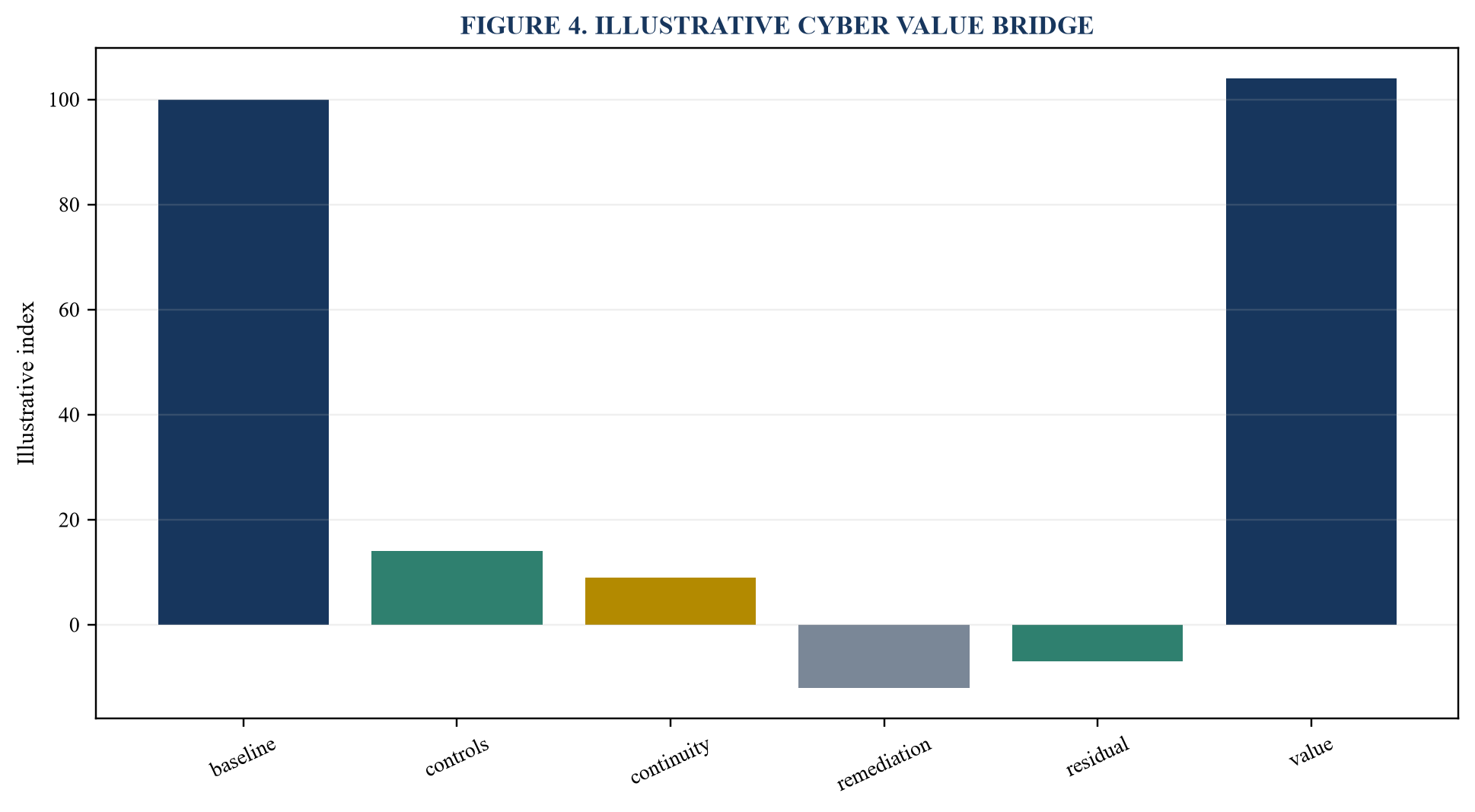
Residual cyber exposure and remediation should be reconciled after full cost.
28. Review technology contracts for change of control
Licences, support, hosting, connectivity, data, maintenance and development agreements may contain assignment, consent, termination and price-reset rights.
Controlled evidence includes contract; counterparty; service; assignment; consent; termination; remedy; transition. The immediate decision is to secure continuity and evidence through completion. Definitions should remain stable across transaction, technical, regulatory, operational and financial records.
Decision makers need bounded downside for missing rights, unsupported software, model error, unsafe integration, cyber incident, approval delay, supplier failure and weak adoption.
Evidence should distinguish observation, estimate, management plan and transaction judgement. A supported claim includes timing, full cost, dependency, transferability and a cash consequence. Sensitivity should show how the conclusion changes when adoption, demand, quality or persistence underperforms. Material assumptions need validation dates, accountable owners and explicit expiry conditions so that stale expectations do not survive into pricing or financing decisions.
29. Diligence charter and customer commitments
Performance promises, data-sharing terms, route obligations, service levels and liability allocation can determine whether AI benefits convert into cash.
Controlled evidence includes charter; customer; commitment; data right; KPI; credit; claim; renewal. The immediate decision is to reconcile the technical proposition to enforceable commercial economics. Definitions should remain stable across transaction, technical, regulatory, operational and financial records.
Evidence should remain vessel-, system-, configuration-, jurisdiction-, contract- and period-specific. The review should preserve failed tests, overrides, incidents, open conditions and adverse operating outcomes.
The operating team and finance team should use the same definitions. Native records should support aggregate dashboards, and sample testing should follow representative cases from input through outcome and cash. Exceptions, failed cases and client concessions remain part of the population. Reconciliation should cover opening and closing balances, acquisitions, disposals, foreign exchange, allocation changes and manual adjustments that could otherwise mimic operating improvement.
30. Concentrate critical supplier risk
A small supplier, key engineer or proprietary component can control fleet availability and integration timing.
Controlled evidence includes supplier; component; spend; substitutability; lead time; inventory; financial health; exit. The immediate decision is to expose single points of operational and bargaining failure. Definitions should remain stable across transaction, technical, regulatory, operational and financial records.
Finance should distinguish current operation, required remediation, funded integration, forecast improvement and buyer-specific synergy. Every benefit needs timing, full cost, responsibility and a route to cash.
Decision makers need both upside and downside. The analysis should state which party controls conversion, what investment remains, when cash appears, which risks survive and whether the result continues after a change of ownership. Unsupported precision should be replaced with bounded scenarios. The committee should record the decision consequence of each range, including price, structure, funding, covenant, integration and monitoring implications.
31. Design carve-out and transition services
A seller may host repositories, identities, connectivity, data lakes, service desks or ROC functions that the target cannot operate independently on day one.
Controlled evidence includes shared service; owner; dependency; TSA; duration; milestone; exit test; cost. The immediate decision is to fund and govern a credible path to standalone operation. Definitions should remain stable across transaction, technical, regulatory, operational and financial records.
Technical, legal, safety, cyber, operational and finance teams should use stable identifiers and cut-offs. Representative evidence should be traced from source record through decision and outcome.
The analytical unit should remain stable from source record to valuation conclusion. Reviewers should see the population, exclusions, period, owner and reconciliation to finance. Where evidence is incomplete, the model should retain a range and identify the action needed to narrow it. Comparisons should preserve product, customer, site, complexity and market conditions; aggregation should not conceal adverse cohorts or delayed consequences.
32. Plan fleet and enterprise integration
Integration should sequence safety authority, configuration, networks, identity, data, model validation, crew, ROC, suppliers and finance without creating mixed-control states.
Controlled evidence includes fleet cohort; target state; dependency; migration; test; approval; rollback; owner. The immediate decision is to integrate by evidence-gated vessel cohorts. Definitions should remain stable across transaction, technical, regulatory, operational and financial records.
Decision makers need bounded downside for missing rights, unsupported software, model error, unsafe integration, cyber incident, approval delay, supplier failure and weak adoption.
Evidence should distinguish observation, estimate, management plan and transaction judgement. A supported claim includes timing, full cost, dependency, transferability and a cash consequence. Sensitivity should show how the conclusion changes when adoption, demand, quality or persistence underperforms. Material assumptions need validation dates, accountable owners and explicit expiry conditions so that stale expectations do not survive into pricing or financing decisions.
33. Build the transaction value bridge
Separate current evidenced cash, funded improvement, required remediation, integration benefit, buyer-specific synergy and terminal-value assumption.
Controlled evidence includes baseline cash; benefit; timing; capex; opex; tax; risk; attribution. The immediate decision is to recognise recurring and transferable value once. Definitions should remain stable across transaction, technical, regulatory, operational and financial records.
Evidence should remain vessel-, system-, configuration-, jurisdiction-, contract- and period-specific. The review should preserve failed tests, overrides, incidents, open conditions and adverse operating outcomes.
The operating team and finance team should use the same definitions. Native records should support aggregate dashboards, and sample testing should follow representative cases from input through outcome and cash. Exceptions, failed cases and client concessions remain part of the population. Reconciliation should cover opening and closing balances, acquisitions, disposals, foreign exchange, allocation changes and manual adjustments that could otherwise mimic operating improvement.
34. Control synergy claims and double counting
Fuel, off-hire, crewing, insurance, maintenance, safety and commercial benefits can overlap or depend on the same intervention.
Controlled evidence includes synergy; mechanism; baseline; dependency; overlap; cost; owner; period. The immediate decision is to retain one causal route from capability to cash. Definitions should remain stable across transaction, technical, regulatory, operational and financial records.
Finance should distinguish current operation, required remediation, funded integration, forecast improvement and buyer-specific synergy. Every benefit needs timing, full cost, responsibility and a route to cash.
Decision makers need both upside and downside. The analysis should state which party controls conversion, what investment remains, when cash appears, which risks survive and whether the result continues after a change of ownership. Unsupported precision should be replaced with bounded scenarios. The committee should record the decision consequence of each range, including price, structure, funding, covenant, integration and monitoring implications.
35. Estimate compliance and integration capex
Include hardware, software, connectivity, class, flag, trials, cyber remediation, data work, people, shore facilities and contingency.
Controlled evidence includes work package; quantity; unit cost; schedule; dependency; contingency; approval. The immediate decision is to price the complete cash requirement and downtime consequence. Definitions should remain stable across transaction, technical, regulatory, operational and financial records.
Technical, legal, safety, cyber, operational and finance teams should use stable identifiers and cut-offs. Representative evidence should be traced from source record through decision and outcome.
The analytical unit should remain stable from source record to valuation conclusion. Reviewers should see the population, exclusions, period, owner and reconciliation to finance. Where evidence is incomplete, the model should retain a range and identify the action needed to narrow it. Comparisons should preserve product, customer, site, complexity and market conditions; aggregation should not conceal adverse cohorts or delayed consequences.
36. Translate findings into debt and covenant terms
Lenders may focus on asset availability, cash volatility, capex, insurance, class, cyber incidents, concentration and permitted technology change.
Controlled evidence includes facility; borrower; collateral; covenant; information right; event; cure; reserve. The immediate decision is to connect technical diligence to repayment protection. Definitions should remain stable across transaction, technical, regulatory, operational and financial records.
Decision makers need bounded downside for missing rights, unsupported software, model error, unsafe integration, cyber incident, approval delay, supplier failure and weak adoption.
Evidence should distinguish observation, estimate, management plan and transaction judgement. A supported claim includes timing, full cost, dependency, transferability and a cash consequence. Sensitivity should show how the conclusion changes when adoption, demand, quality or persistence underperforms. Material assumptions need validation dates, accountable owners and explicit expiry conditions so that stale expectations do not survive into pricing or financing decisions.
37. Allocate risk in transaction documents
Representations, warranties, covenants, conditions, indemnities, escrows, price adjustment and insurance should address evidenced risks without replacing diligence.
Controlled evidence includes risk; knowledge; disclosure; remedy; cap; survival; escrow; condition. The immediate decision is to match contractual protection to severity, control and recoverability. Definitions should remain stable across transaction, technical, regulatory, operational and financial records.
Evidence should remain vessel-, system-, configuration-, jurisdiction-, contract- and period-specific. The review should preserve failed tests, overrides, incidents, open conditions and adverse operating outcomes.
The operating team and finance team should use the same definitions. Native records should support aggregate dashboards, and sample testing should follow representative cases from input through outcome and cash. Exceptions, failed cases and client concessions remain part of the population. Reconciliation should cover opening and closing balances, acquisitions, disposals, foreign exchange, allocation changes and manual adjustments that could otherwise mimic operating improvement.
38. Execute the first one hundred days
Sequence access, authority, incident readiness, key-person retention, supplier consents, safety and cyber baselines, controlled migrations, cash tracking and board reporting.
Controlled evidence includes day-one control; milestone; owner; dependency; evidence gate; budget; escalation. The immediate decision is to stabilise acquired operations before scaling integration. Definitions should remain stable across transaction, technical, regulatory, operational and financial records.
Finance should distinguish current operation, required remediation, funded integration, forecast improvement and buyer-specific synergy. Every benefit needs timing, full cost, responsibility and a route to cash.
Decision makers need both upside and downside. The analysis should state which party controls conversion, what investment remains, when cash appears, which risks survive and whether the result continues after a change of ownership. Unsupported precision should be replaced with bounded scenarios. The committee should record the decision consequence of each range, including price, structure, funding, covenant, integration and monitoring implications.
39. Build the transaction evidence room
Index native technical, regulatory, contractual, cyber, operational and financial records with owners, periods, versions and unresolved findings.
Controlled evidence includes document; source; owner; vessel; system; period; version; finding. The immediate decision is to make every material conclusion independently traceable. Definitions should remain stable across transaction, technical, regulatory, operational and financial records.
Technical, legal, safety, cyber, operational and finance teams should use stable identifiers and cut-offs. Representative evidence should be traced from source record through decision and outcome.
The analytical unit should remain stable from source record to valuation conclusion. Reviewers should see the population, exclusions, period, owner and reconciliation to finance. Where evidence is incomplete, the model should retain a range and identify the action needed to narrow it. Comparisons should preserve product, customer, site, complexity and market conditions; aggregation should not conceal adverse cohorts or delayed consequences.
Table 5. Evidence-gated integration
| Period | Primary work | Gate |
|---|---|---|
| days 1-30 | control, access, incidents and consents | approve stabilisation |
| days 31-60 | baselines, validation and pilot cohort | approve controlled migration |
| days 61-100 | cash bridge, remediation and governance | approve scaled integration |
Replace illustrative classifications with company-specific evidence and approved transaction treatment.
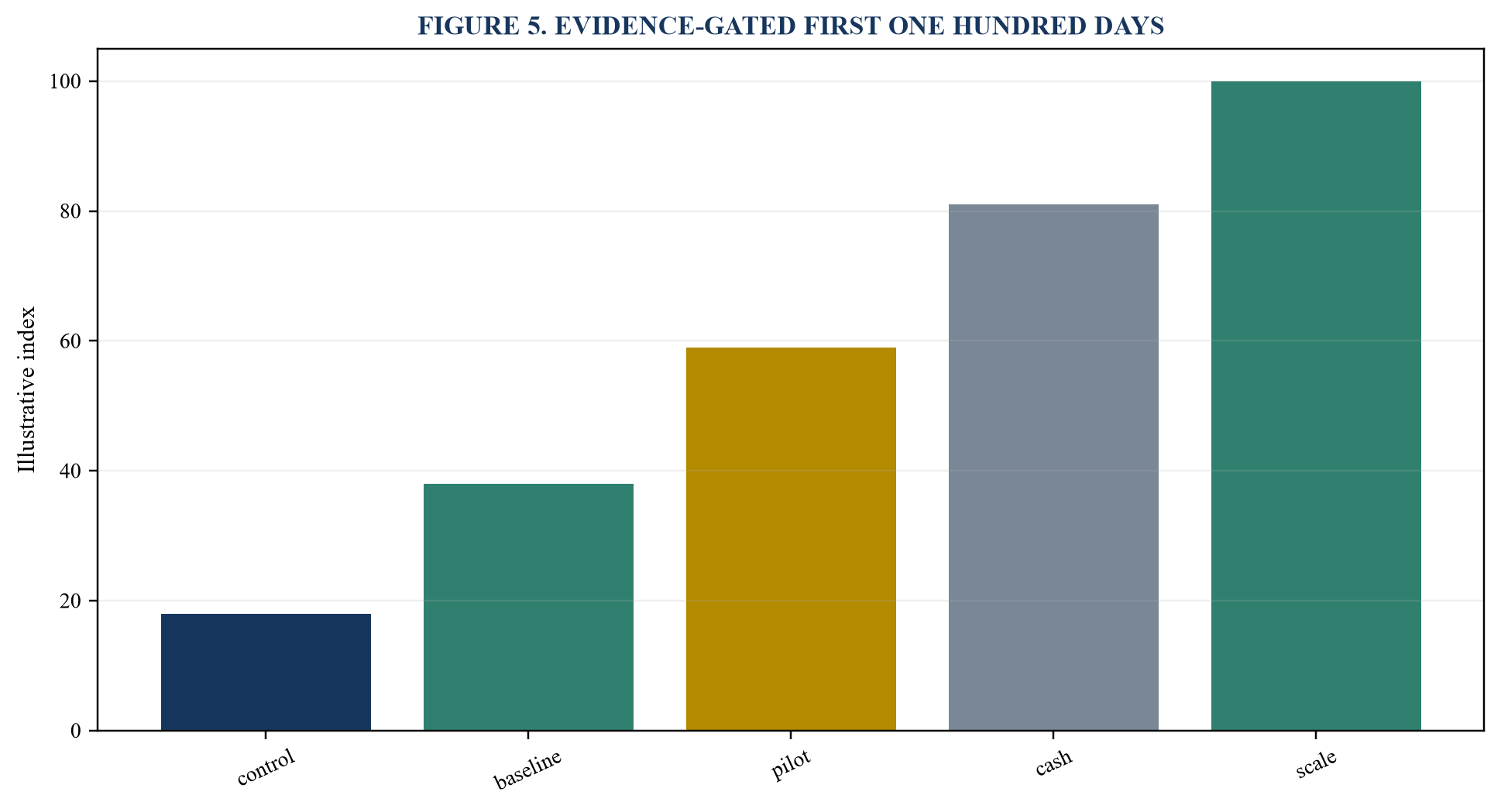
Integration should follow safety, cyber, operational and cash proof.
40. Conclusion
Shipping M&A with AI assets creates defensible value when rights, safety, cyber resilience, operating performance and cash remain valid after ownership and fleet integration.
Controlled evidence includes asset register; right; configuration; safety case; cyber control; contract; cash; owner. The immediate decision is to use one evidence chain from acquired capability to post-closing value. Definitions should remain stable across transaction, technical, regulatory, operational and financial records.
Decision makers need bounded downside for missing rights, unsupported software, model error, unsafe integration, cyber incident, approval delay, supplier failure and weak adoption.
Evidence should distinguish observation, estimate, management plan and transaction judgement. A supported claim includes timing, full cost, dependency, transferability and a cash consequence. Sensitivity should show how the conclusion changes when adoption, demand, quality or persistence underperforms. Material assumptions need validation dates, accountable owners and explicit expiry conditions so that stale expectations do not survive into pricing or financing decisions.
References
- International Maritime Organization, IMO adopts first global Code for autonomous ships, https://www.imo.org/en/mediacentre/pressbriefings/pages/imo-adopts-mass-code.aspx
- International Maritime Organization, International Code of Safety for Maritime Autonomous Surface Ships, https://www.imo.org/en/mediacentre/pressbriefings/pages/imo-adopts-mass-code.aspx
- International Maritime Organization, Interim Guidelines for MASS Trials, MSC.1/Circ.1604, https://wwwcdn.imo.org/localresources/en/MediaCentre/HotTopics/Documents/MSC.1-Circ.1604%20-%20Interim%20Guidelines%20For%20Mass%20Trials%20(Secretariat).pdf
- International Maritime Organization, International Convention for the Safety of Life at Sea, https://www.imo.org/en/about/conventions/pages/international-convention-for-the-safety-of-life-at-sea-(solas),-1974.aspx
- International Maritime Organization, International Safety Management Code, https://www.imo.org/en/ourwork/humanelement/pages/ismcode.aspx
- International Maritime Organization, Maritime Cyber Risk, https://www.imo.org/en/ourwork/security/pages/cyber-security.aspx
- International Maritime Organization, Guidelines on Maritime Cyber Risk Management, MSC-FAL.1/Circ.3/Rev.3, https://wwwcdn.imo.org/localresources/en/OurWork/Security/Documents/MSC-FAL.1-Circ.3-Rev.3.pdf
- International Maritime Organization, Maritime Cyber Risk Management in Safety Management Systems, MSC.428(98), https://wwwcdn.imo.org/localresources/en/OurWork/Security/Documents/Resolution%20MSC.428(98).pdf
- International Association of Classification Societies, UR E26 Cyber Resilience of Ships, https://iacs.org.uk/resolutions/unified-requirements/ur-e/ur-e26-new
- International Association of Classification Societies, UR E27 Cyber Resilience of On-Board Systems and Equipment, https://iacs.org.uk/resolutions/unified-requirements/ur-e/ur-e27-rev1
- International Association of Classification Societies, Recommendation 166 on Cyber Resilience, https://iacs.org.uk/resolutions/recommendations/161-180/rec-166-new
- International Organization for Standardization, ISO 23806:2022 Ships and Marine Technology Cyber Safety, https://www.iso.org/standard/77027.html
- International Organization for Standardization, ISO 19847 Shipboard Data Servers, https://www.iso.org/standard/71995.html
- International Organization for Standardization, ISO 19848 Standard Data for Shipboard Machinery and Equipment, https://www.iso.org/standard/77037.html
- National Institute of Standards and Technology, Cybersecurity Framework 2.0, https://www.nist.gov/cyberframework
- National Institute of Standards and Technology, Secure Software Development Framework, https://csrc.nist.gov/Projects/ssdf
- National Telecommunications and Information Administration, Software Bill of Materials, https://www.ntia.gov/page/software-bill-materials
- European Union, Regulation EU 2024/1689 Artificial Intelligence Act, https://eur-lex.europa.eu/eli/reg/2024/1689/oj
- European Union, Regulation EU 2023/2854 Data Act, https://eur-lex.europa.eu/eli/reg/2023/2854/oj
- European Union, Regulation EU 2016/679 General Data Protection Regulation, https://eur-lex.europa.eu/eli/reg/2016/679/oj
- Organisation for Economic Co-operation and Development, OECD AI Principles, https://oecd.ai/en/ai-principles
- World Intellectual Property Organization, Intellectual Property and Artificial Intelligence, https://www.wipo.int/about-ip/en/frontier_technologies/ai_and_ip.html
- International Chamber of Shipping, Guidelines on Cyber Security Onboard Ships, https://www.ics-shipping.org/publication/guidelines-on-cyber-security-onboard-ships/
- International Valuation Standards Council, International Valuation Standards, https://ivsc.org/standards/
- IFRS Foundation, IFRS Accounting Standards, https://www.ifrs.org/issued-standards/list-of-standards/
- International Maritime Organization, Convention on the International Regulations for Preventing Collisions at Sea, https://www.imo.org/en/about/conventions/pages/colreg.aspx
