

Introduction
Most financing serves the straightforward: a creditworthy borrower, a sound asset, a standard structure, a relaxed timeline. But not every situation is straightforward. Some are complex, with structures or assets that conventional lenders cannot easily assess; some are time-pressured, requiring capital faster than conventional processes allow; and some are distressed, with the borrower or the asset under strain. These situations, too difficult for banks and often for conventional private credit, are the domain of special situations credit, the specialist capital that prices the difficulty and accepts the risk.
This paper examines special situations credit in MENA, where the maturing capital market is developing a specialist segment to fund the situations that conventional lenders avoid. As the regional market deepens, specialist providers are emerging to serve complex, time-pressured and distressed situations, providing essential capital to viable situations that would otherwise go unfunded. Understanding this segment, how it prices, how it structures, and how it serves the difficult situations, is increasingly important for borrowers facing such situations and for investors considering the specialist capital.
The central argument is that special situations credit is priced for the difficulty it absorbs, the complexity, the time pressure, the distress, rather than for the borrower ordinary creditworthiness, and that its returns are driven above all by the recovery achieved and the time to resolution. A borrower facing a special situation pays a premium for the difficulty, but it obtains capital that conventional lenders will not provide, and a provider that prices the difficulty correctly and resolves the situation well earns an attractive return. The paper develops the pricing framework and examines the segment from both perspectives.
The figures used throughout are indicative, calibrated to observable MENA conditions in early 2026 but not drawn from any specific transaction. The paper proceeds from the definition of a special situation (Section 2), through the pricing framework (Section 3), the situation types (Section 4), the structuring (Section 5), the borrower decision (Section 6), the provider perspective (Section 7), risk (Section 8), MENA-specific considerations (Section 9), three case studies (Section 10), sensitivity analysis (Section 11), an international comparison (Section 12), common errors (Section 13), an implementation roadmap (Section 14), a strategic perspective (Section 15), a conclusion (Section 16) and limitations (Section 17).
The Pricing Framework
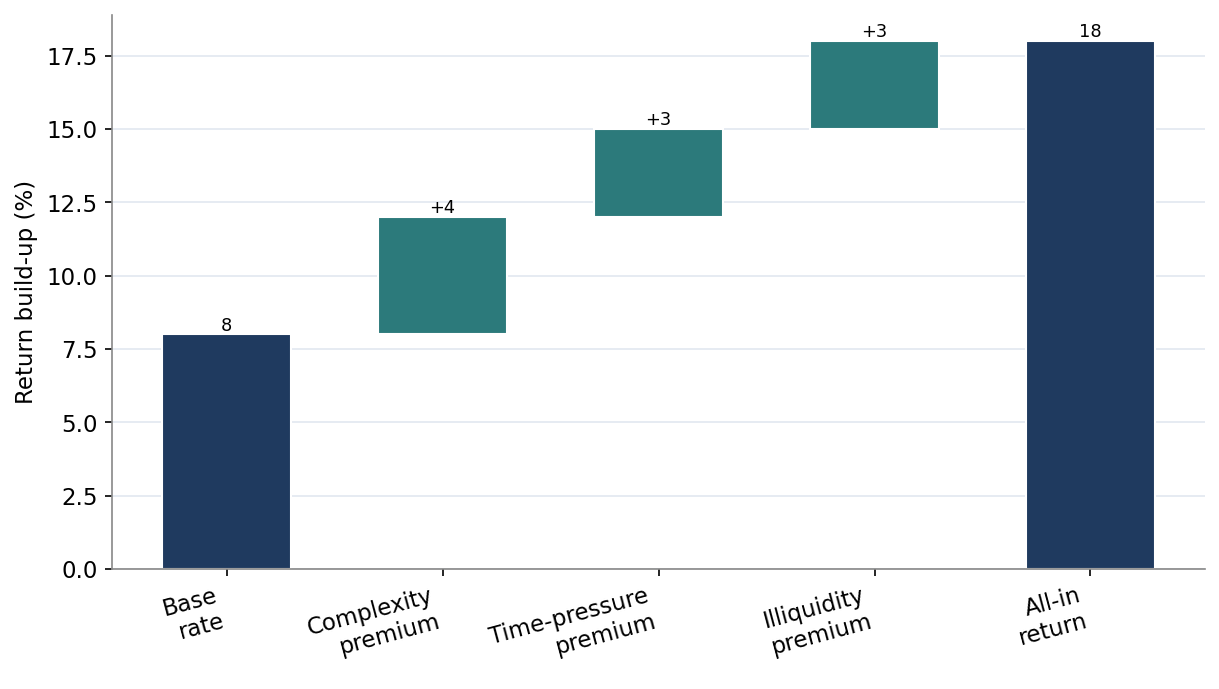
Special situations credit is priced for the difficulty it absorbs, and Figure 1 decomposes the special-situations return into its components. The return builds from a base rate, reflecting the general cost of capital, plus a complexity premium for the difficulty of assessing and structuring the situation, a time-pressure premium for the speed required, and an illiquidity premium for the bespoke, hard-to-exit nature of the position. The sum is an all-in return well above conventional lending, reflecting the difficulty rather than necessarily the borrower creditworthiness.
Figure 1. Decomposition of the Special-Situations Return
The return builds from a base rate plus premiums for complexity, time pressure and illiquidity. Not a forecast.
The pricing framework makes clear that the special-situations premium is a price for difficulty, not a penalty for bad credit. A viable situation that is merely complex or time-pressured pays a premium for the difficulty it presents, even though its underlying credit may be sound, because the difficulty imposes costs and risks on the provider that conventional lending does not. Understanding this distinction matters for the borrower, because it means a borrower with a sound but difficult situation should not regard the special-situations premium as a judgement on its creditworthiness but as the price of the difficulty, which may be worth paying to access the capital.
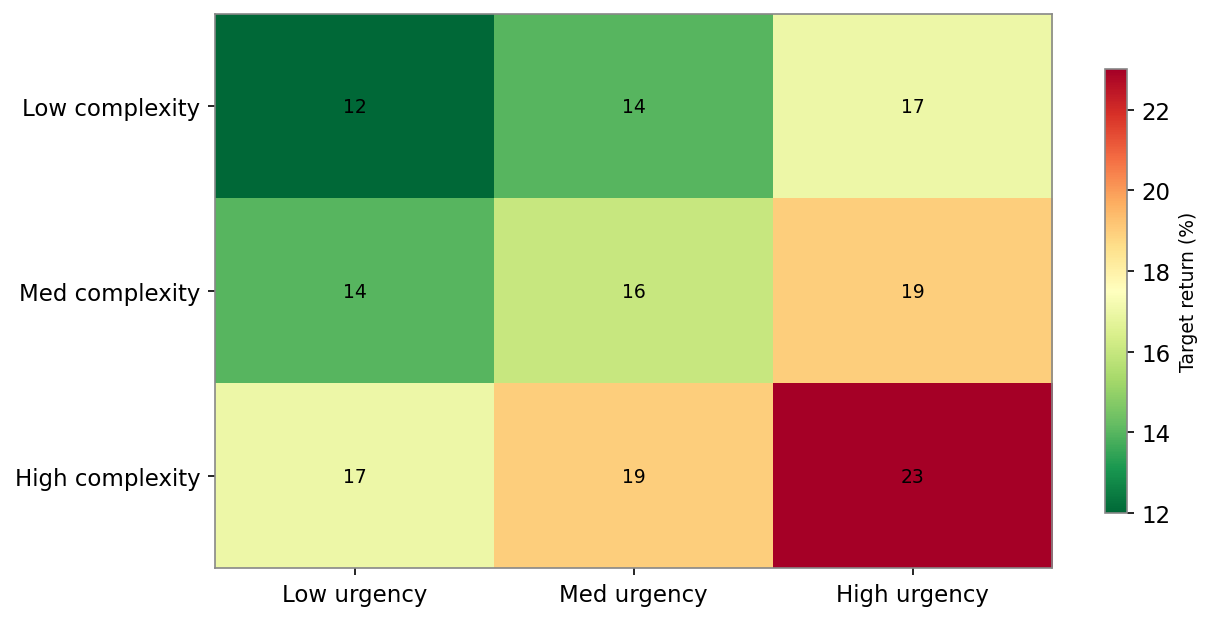
Figure 2. Target Return by Complexity and Urgency
The return rises with both complexity and urgency. Not a forecast.
Figure 2 shows how the target return rises with both complexity and urgency, the two dimensions that most drive the special-situations premium. A situation that is both highly complex and highly urgent commands the highest return, because it presents the most difficulty on both dimensions; a situation low on both would be served by conventional lending and would not be a special situation at all. The matrix helps locate a situation in the pricing space and understand the premium it will command, and it underlines that the premium is a function of the specific difficulties the situation presents rather than a single fixed rate for the segment.
The Situation Types
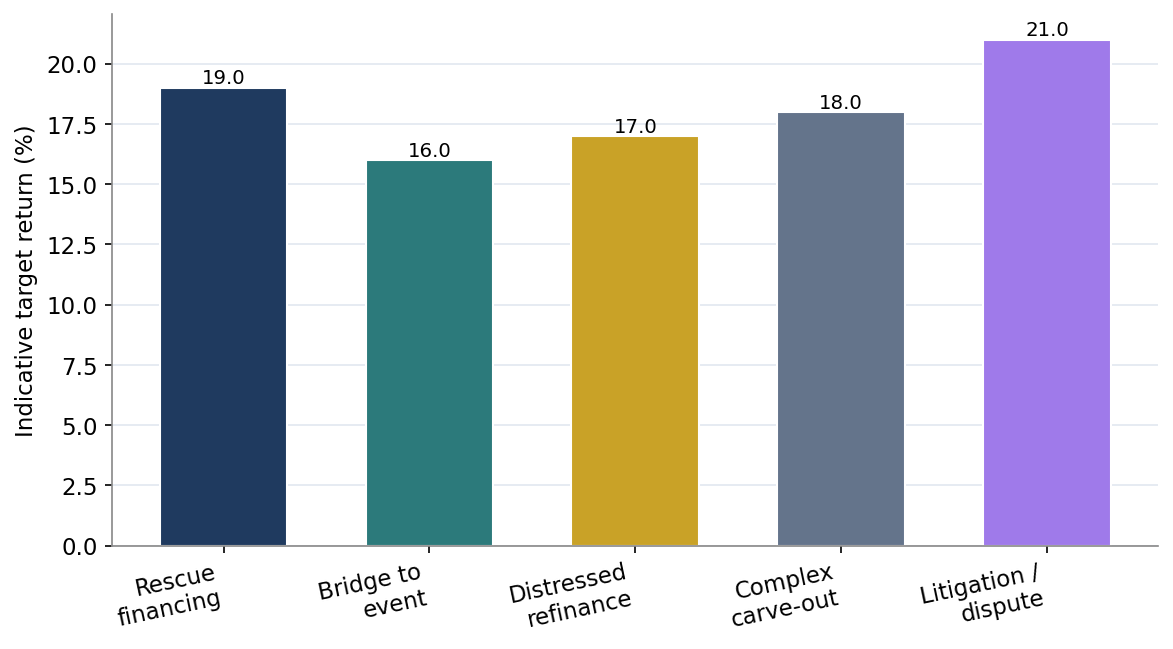
Special situations credit serves a range of situation types, illustrated in Figure 3, each with its own profile of complexity, urgency and distress. Rescue financing funds a borrower in distress that needs capital to avoid failure, the most distressed end of the segment. Bridge-to-event financing funds a borrower that needs capital quickly to reach a defined event, a refinancing, a sale, a milestone, that will repay it, the most time-pressured end. Distressed refinancing replaces the debt of a stressed borrower that conventional lenders will not refinance.
Figure 3. Special Situation Types and Target Returns
Complex carve-outs fund the separation of a business or asset from a larger group, where the complexity of the carve-out deters conventional lenders. Litigation or dispute-related financing funds situations clouded by a legal dispute, where the uncertainty deters conventional lenders and the resolution of the dispute is central to the outcome. Each type presents a different profile of difficulty, and the specialist provider that understands the type can price and structure for it, while a conventional lender, unable to assess the type, avoids it. Table 1 summarises the types and their drivers.
Table 1. Special Situation Types
Each type presents a distinct difficulty profile. Not transaction-specific.
The variety of situation types means that special situations credit is not a single product but a family of bespoke financings, each tailored to the specific difficulty. This bespoke nature is part of why the segment commands a premium and why it requires specialist providers: each situation is different, each must be assessed and structured individually, and the standardisation that allows conventional lending to be cheap is impossible. The specialist provider value is in its ability to assess and structure these bespoke situations, which is a scarce skill, and the premium it earns reflects the scarcity of that skill as well as the risk it absorbs.
The Borrower Decision
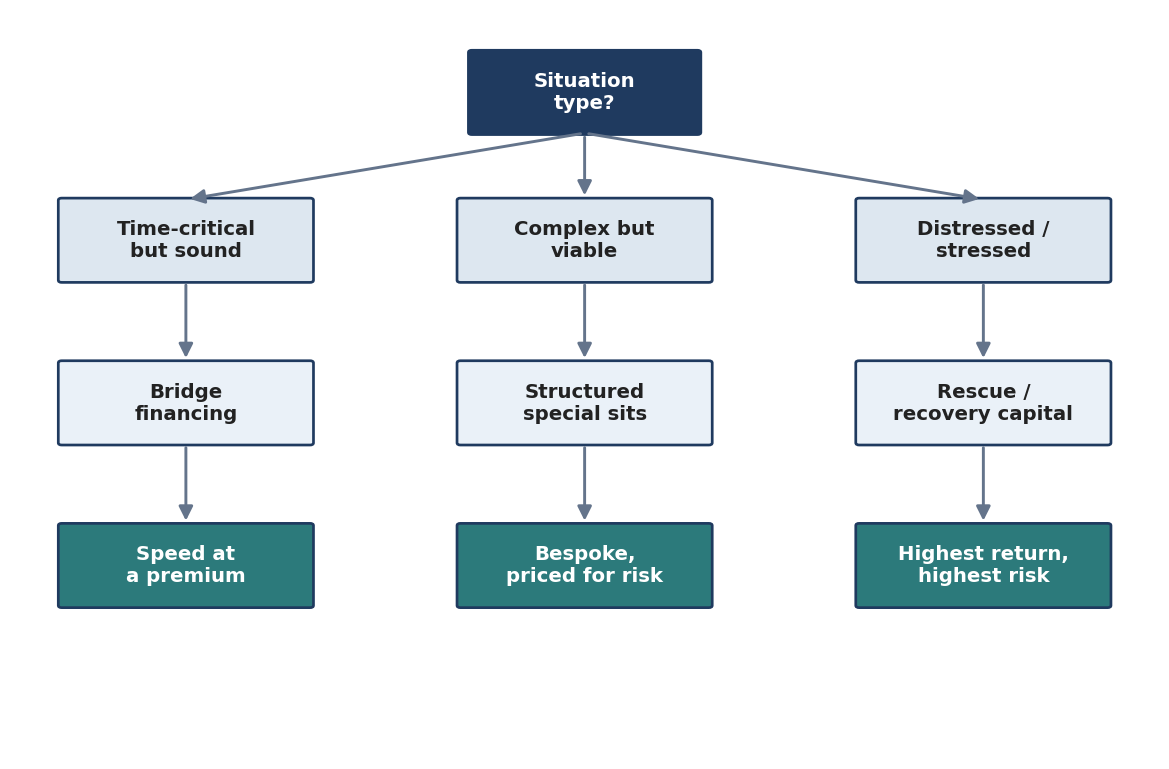
For a borrower facing a special situation, the decision is whether to pay the special-situations premium to access the capital, and Figure 4 presents a framework. A borrower with a time-critical but fundamentally sound situation may need only bridge financing, paying a premium for speed to reach an event that will repay it. A borrower with a complex but viable situation needs structured special-situations capital that can assess and fund the complexity. A borrower in genuine distress needs rescue or recovery capital, the most expensive but, where the alternative is failure, the most valuable.
Figure 4. Special Situations Financing by Situation Type
Indicative framework. The situation type determines the appropriate capital.
The borrower decision turns on the alternative. For a borrower that conventional lenders will not serve, the alternative to special situations credit is often no capital at all, and the failure or loss that would follow, so the premium, however high, may be worth paying to access the only available capital. The borrower should compare the cost of the special situations capital not against conventional lending, which is unavailable to it, but against the consequence of having no capital, which is frequently far worse than the premium. Viewed this way, the special situations premium is often clearly worth paying.
The borrower should also recognise the value the specialist provider brings beyond the capital. A specialist provider that takes an active role can bring expertise, relationships and credibility to the resolution of the situation, helping to steer it toward a good outcome in ways a passive lender could not. For a borrower in a difficult situation, this active, expert partner can be as valuable as the capital itself, and a borrower should choose a specialist provider not merely on the cost of the capital but on the expertise and the constructive engagement it brings to the resolution. The right specialist partner improves the outcome, not merely funds it.
Risk Considerations
Special situations credit carries the highest risk in the credit spectrum, and its risks deserve careful attention. The principal risk is that the situation does not resolve as expected, the recovery falls short, the event does not occur, the carve-out fails, the dispute is lost, leaving the provider with a loss. Because special situations are difficult and uncertain by definition, this risk is elevated, and the provider must price and structure for it, accepting that some situations will not resolve well.
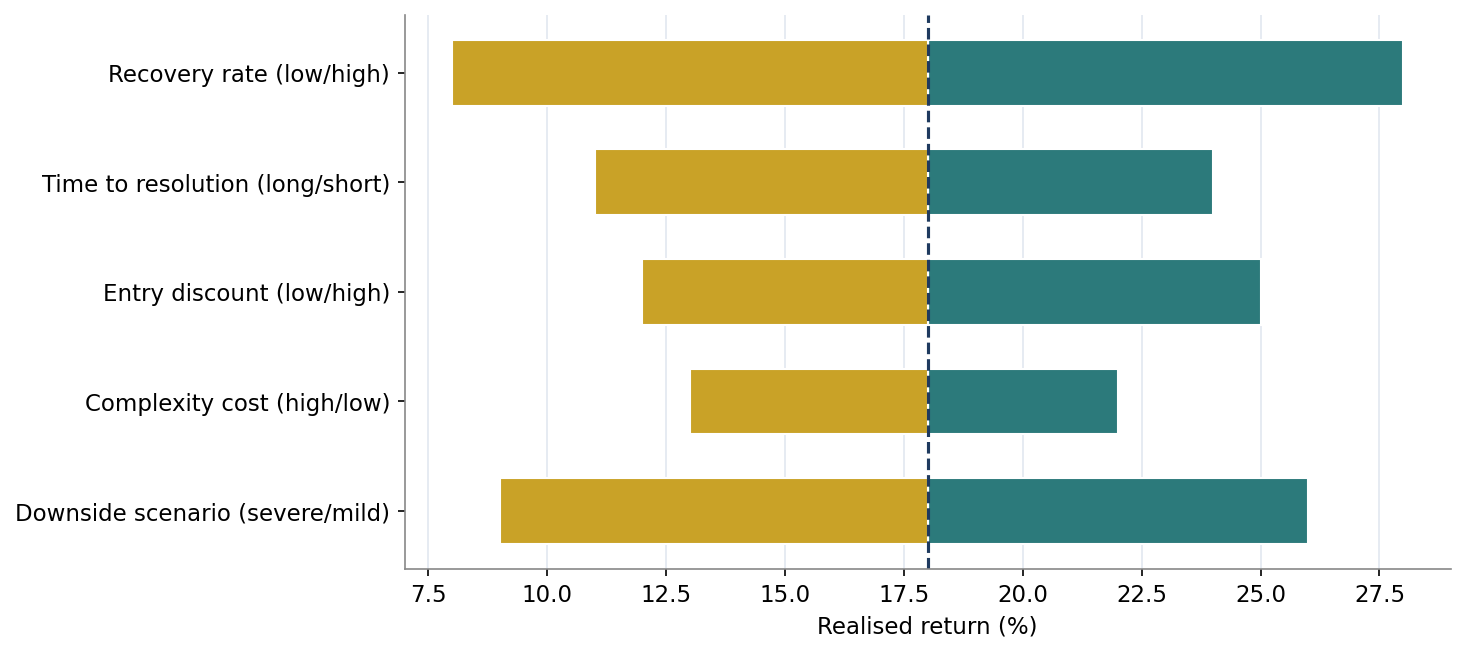
A second risk is the time risk: special situations often take longer to resolve than expected, and a delayed resolution erodes the return, as the capital is tied up longer and the costs accrue. The time to resolution is, as the sensitivity analysis shows, one of the principal drivers of the realised return, and a provider that misjudges the timeline, or a situation that drags on, can see an attractive expected return erode into a poor realised one. Managing the time to resolution, through active engagement, is part of the provider skill.
A third risk is the execution risk of the active role: because the provider often engages actively to resolve the situation, the outcome depends partly on the provider execution, and a provider that mismanages the resolution can turn a viable situation into a loss. This makes the provider capability central not only to selecting situations but to resolving them, and it means that the segment risk is partly within the provider control, rewarding skill and punishing its absence. For an investor, this underlines that backing a skilled provider is the principal risk management in the segment, because the provider skill determines whether the elevated risk translates into attractive returns or losses.
| Type | Dominant difficulty | Target return | Key driver |
|---|---|---|---|
| Rescue financing | Distress | ~19% | Recovery achieved |
| Bridge to event | Time pressure | ~16% | Event occurs on time |
| Distressed refinance | Distress + complexity | ~17% | Stabilisation |
| Complex carve-out | Complexity | ~18% | Carve-out executes |
| Litigation / dispute | Legal uncertainty | ~21% | Dispute resolves |
Considerations Specific to MENA
The MENA special situations segment is developing as the regional capital market matures, and it has distinctive features. The regional insolvency and restructuring frameworks, which are maturing, shape the resolution of distressed situations, and a special situations provider must understand them to assess the recovery it can achieve. The frameworks improvement is supporting the development of the segment by making recoveries more predictable, which allows providers to price and structure with greater confidence.
The relative scarcity of specialist providers in the region means that special situations capital faces little competition, which supports its premium but also means that viable difficult situations sometimes go unfunded for want of a provider. As the segment develops and more specialists enter, the competition will increase and the premium may compress, but for now the scarcity of providers is a feature of the regional segment, creating an opportunity for the specialists that are present and a gap for the situations that cannot find a provider. The development of the segment is, on balance, improving the regional market by funding viable situations that would otherwise fail.
The compliant dimension applies here as elsewhere: special situations capital can be structured in compliant form, and the compliant segment is part of the developing market. A provider able to offer compliant structures serves the compliant capital and borrowers that conventional structures cannot, which is an advantage in the region. The development of both conventional and compliant special situations capital is broadening the segment and serving the full range of difficult situations in the regional market, which is a sign of the market maturation.
Indicative Case Studies
Three indicative cases show special situations credit in action. The figures are synthetic and constructed for analytical clarity, not drawn from any specific transaction.
Case A: bridge to refinance
Case A is a fundamentally sound borrower facing a maturity it cannot meet on time because its refinancing is delayed, which secures bridge financing from a special situations provider to cover the gap until the refinancing completes. The bridge is priced for the time pressure rather than for distress, since the borrower is sound, and it is repaid when the refinancing completes shortly after. The case illustrates time pressure as the dominant difficulty, with the borrower paying a premium for the speed that bridges it to the event that repays the financing.
Case B: complex carve-out
Case B is the carve-out of a viable business from a larger group, where the complexity of separating the business deters conventional lenders, which secures structured special situations capital to fund the carve-out. The provider assesses and structures the complex situation, funds the carve-out, and is repaid as the carved-out business stabilises and refinances into conventional debt. The case illustrates complexity as the dominant difficulty, with the borrower paying a premium for the provider ability to assess and fund the complex situation that conventional lenders avoid.
Case C: distressed rescue
Case C is a distressed borrower with viable assets but a strained balance sheet that needs rescue capital to avoid failure, which secures rescue financing from a special situations provider that takes strong security, priority and control rights. The provider funds the rescue, engages actively to stabilise the borrower, and recovers its capital and return as the borrower recovers. The case illustrates distress as the dominant difficulty, with the borrower paying the highest premium for the rescue capital that saves it from failure, and the provider taking the highest risk for the highest return.
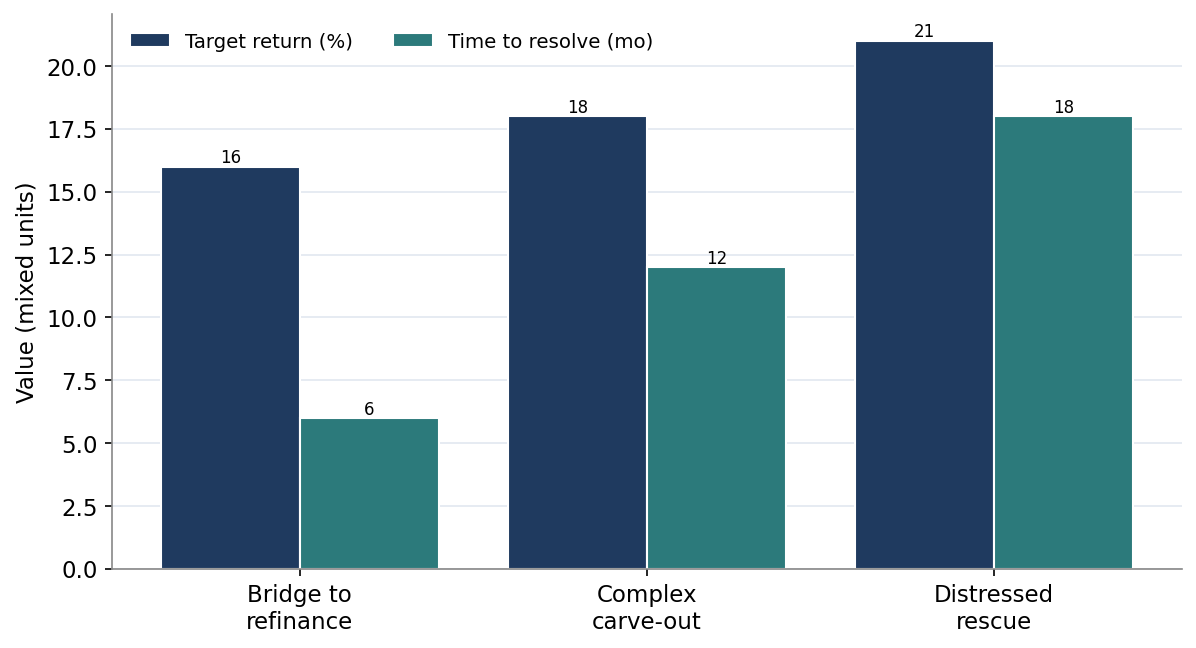
Figure 5. Target Return and Time to Resolve by Case
Synthetic figures for analytical comparison. Not a forecast.
Figure 5 compares the three cases on the target return and the time to resolve. The bridge resolves quickly at a moderate premium; the carve-out takes longer at a higher premium; and the rescue takes longest at the highest premium, reflecting the rising difficulty and risk across the cases. The comparison illustrates that the premium and the time to resolution both rise with the difficulty of the situation, and that the provider return depends on resolving the situation within the expected time, which the active engagement seeks to ensure.
International Comparison
Special situations and distressed credit is a large, mature segment in the United States and Europe, where specialist funds have built substantial businesses funding complex, time-pressured and distressed situations through cycles. The segment is well understood, with established structures, experienced providers, and a track record through multiple downturns that has demonstrated both its returns and its risks. The MENA segment is developing toward this maturity, with specialist providers emerging and the frameworks improving.
The international experience offers lessons for the developing MENA segment. It shows that special situations is a durable, skill-dependent segment that provides essential capital to viable difficult situations, that the provider discernment and resolution skill are the central determinants of success, and that the segment performs through cycles, indeed often best in downturns when difficult situations proliferate. As the MENA segment develops, it can draw on the mature-market structures and disciplines while adapting them to the regional frameworks and the compliant dimension. The countercyclical nature of the segment, thriving when difficult situations multiply, means it is likely to grow in importance through the region next downturn.
Implementation Roadmap
For a borrower, assess whether the situation is genuinely a special situation, complex, time-pressured or distressed, that conventional lenders will not serve, and whether it is fundamentally viable.
Compare the special-situations premium against the consequence of having no capital, recognising that the premium prices difficulty, not necessarily bad credit.
Choose a specialist provider on its expertise, track record and constructive engagement, not on cost alone.
For a provider, discern the viability of the situation rigorously, distinguishing the difficult-but-viable from the genuinely-bad.
Price the difficulty through the complexity, time-pressure and illiquidity premiums, and structure for strong security, priority and control.
Engage actively to resolve the situation within the expected time, since the recovery and the timeline drive the return.
Diversify across situations to manage the wide dispersion in outcomes that characterises the segment.
Conclusion
Special situations credit funds the situations that conventional lenders avoid, the complex, the time-pressured and the distressed, pricing the difficulty and accepting the risk. This paper has argued that the segment prices for difficulty rather than for ordinary creditworthiness, that its returns are driven above all by the recovery achieved and the time to resolution, and that it provides essential capital to viable difficult situations that would otherwise fail. For a borrower facing such a situation, the premium prices the difficulty and is often worth paying against the alternative of no capital; for a provider, the segment offers high returns to those with the discernment and resolution skill to capture them.
The MENA special situations segment is developing as the regional market matures, and its emergence is a positive sign, improving the market capacity to fund and resolve difficult situations. The specialists that develop the segment, building the discernment and resolution capability it requires, position themselves in a high-return, skill-dependent segment with countercyclical demand, while serving an economic function that preserves value and sustains viable enterprises through difficulty. The frameworks in this paper are intended to help borrowers facing difficult situations access the capital they need, and investors and providers understand the segment that funds them.
Limitations and Directions for Further Research
This paper is framework-oriented and relies on indicative data, and its conclusions are directional rather than precise. The returns, premiums and recovery rates are calibrated to observable conditions but are not empirical estimates, and they vary widely across situations. The MENA segment is developing, and its depth, pricing and recovery experience are evolving.
Several extensions would strengthen the analysis. An empirical study of realised returns and recoveries in MENA special situations would replace the indicative figures with data. An analysis of the regional insolvency and restructuring frameworks and how they shape recoveries would sharpen the analysis. And a study of how the segment performs through a downturn, when difficult situations proliferate, would illuminate its countercyclical character. Each is a natural subject for a later paper in this series.
| Scenario | Recovery | Time to resolve | Realised return |
|---|---|---|---|
| Strong resolution | High | Short | ~26% |
| Base | Moderate | On plan | ~18% |
| Slow resolution | Moderate | Long | ~12% |
| Poor outcome | Low | Long | ~4% or loss |
