

1. Establish the post-divestment baseline
Define the retained group's products, customers, footprint, service model and control obligations after completion.
The controlled record should identify the relevant customer, revenue stream, contract, cohort, relationship owner, commercial dependency, evidence source, baseline, trend, scenario, control, exception, accountable executive, deadline and approval. The immediate deliverable is a retained-business operating charter.
The principal failure occurs when the current budget is a valid post-sale baseline. Reviewers should connect the evidence to revenue durability, gross margin, cash conversion, renewal probability, switching behaviour, counterparty credit and transaction value; distinguish contractual protection from observed customer behaviour; and test whether the conclusion survives a downside scenario.
The decision pack for establish the post-divestment baseline should state the commercial question, measurement perimeter, historical evidence, customer-specific facts, forecast logic, sensitivity, management action, buyer implication, residual uncertainty and next gate. Material exceptions should flow into the valuation model, quality-of-earnings work, diligence room, sale-process narrative, transaction protections and board reporting.
2. Reconcile the transaction perimeter
Trace what transfers, remains, is duplicated or is temporarily shared across every cost domain.
The controlled record should identify the relevant customer, revenue stream, contract, cohort, relationship owner, commercial dependency, evidence source, baseline, trend, scenario, control, exception, accountable executive, deadline and approval. The immediate deliverable is a cost-perimeter bridge.
The principal failure occurs when the legal perimeter predicts cost behaviour. Reviewers should connect the evidence to revenue durability, gross margin, cash conversion, renewal probability, switching behaviour, counterparty credit and transaction value; distinguish contractual protection from observed customer behaviour; and test whether the conclusion survives a downside scenario.
The decision pack for reconcile the transaction perimeter should state the commercial question, measurement perimeter, historical evidence, customer-specific facts, forecast logic, sensitivity, management action, buyer implication, residual uncertainty and next gate. Material exceptions should flow into the valuation model, quality-of-earnings work, diligence room, sale-process narrative, transaction protections and board reporting.
3. Create a cost taxonomy
Classify direct, shared, allocated, committed, contingent, duplicated, transitional and stranded cost.
The controlled record should identify the relevant customer, revenue stream, contract, cohort, relationship owner, commercial dependency, evidence source, baseline, trend, scenario, control, exception, accountable executive, deadline and approval. The immediate deliverable is a stranded-cost taxonomy.
The principal failure occurs when general-ledger labels reveal removability. Reviewers should connect the evidence to revenue durability, gross margin, cash conversion, renewal probability, switching behaviour, counterparty credit and transaction value; distinguish contractual protection from observed customer behaviour; and test whether the conclusion survives a downside scenario.
The decision pack for create a cost taxonomy should state the commercial question, measurement perimeter, historical evidence, customer-specific facts, forecast logic, sensitivity, management action, buyer implication, residual uncertainty and next gate. Material exceptions should flow into the valuation model, quality-of-earnings work, diligence room, sale-process narrative, transaction protections and board reporting.
4. Build the reference P&L
Reconstruct revenue, gross margin, operating expense, central cost and cash flow before the disposal.
The controlled record should identify the relevant customer, revenue stream, contract, cohort, relationship owner, commercial dependency, evidence source, baseline, trend, scenario, control, exception, accountable executive, deadline and approval. The immediate deliverable is a reference profit bridge.
The principal failure occurs when reported segments provide decision-grade granularity. Reviewers should connect the evidence to revenue durability, gross margin, cash conversion, renewal probability, switching behaviour, counterparty credit and transaction value; distinguish contractual protection from observed customer behaviour; and test whether the conclusion survives a downside scenario.
The decision pack for build the reference p&l should state the commercial question, measurement perimeter, historical evidence, customer-specific facts, forecast logic, sensitivity, management action, buyer implication, residual uncertainty and next gate. Material exceptions should flow into the valuation model, quality-of-earnings work, diligence room, sale-process narrative, transaction protections and board reporting.
5. Separate accounting presentation
Distinguish discontinued-operation presentation from the economics of costs that remain in continuing operations.
The controlled record should identify the relevant customer, revenue stream, contract, cohort, relationship owner, commercial dependency, evidence source, baseline, trend, scenario, control, exception, accountable executive, deadline and approval. The immediate deliverable is an accounting-to-economics reconciliation.
The principal failure occurs when discontinued reporting removes the overhead. Reviewers should connect the evidence to revenue durability, gross margin, cash conversion, renewal probability, switching behaviour, counterparty credit and transaction value; distinguish contractual protection from observed customer behaviour; and test whether the conclusion survives a downside scenario.
The decision pack for separate accounting presentation should state the commercial question, measurement perimeter, historical evidence, customer-specific facts, forecast logic, sensitivity, management action, buyer implication, residual uncertainty and next gate. Material exceptions should flow into the valuation model, quality-of-earnings work, diligence room, sale-process narrative, transaction protections and board reporting.
6. Map cost objects
Link each cost to entity, function, location, contract, asset, system, employee and service.
The controlled record should identify the relevant customer, revenue stream, contract, cohort, relationship owner, commercial dependency, evidence source, baseline, trend, scenario, control, exception, accountable executive, deadline and approval. The immediate deliverable is a cost-object ledger.
The principal failure occurs when cost-centre ownership identifies the economic driver. Reviewers should connect the evidence to revenue durability, gross margin, cash conversion, renewal probability, switching behaviour, counterparty credit and transaction value; distinguish contractual protection from observed customer behaviour; and test whether the conclusion survives a downside scenario.
The decision pack for map cost objects should state the commercial question, measurement perimeter, historical evidence, customer-specific facts, forecast logic, sensitivity, management action, buyer implication, residual uncertainty and next gate. Material exceptions should flow into the valuation model, quality-of-earnings work, diligence room, sale-process narrative, transaction protections and board reporting.
7. Identify direct transfers
Confirm costs that transfer with people, assets, contracts and operations.
The controlled record should identify the relevant customer, revenue stream, contract, cohort, relationship owner, commercial dependency, evidence source, baseline, trend, scenario, control, exception, accountable executive, deadline and approval. The immediate deliverable is a transfer-cost schedule.
The principal failure occurs when all target-coded expense disappears at close. Reviewers should connect the evidence to revenue durability, gross margin, cash conversion, renewal probability, switching behaviour, counterparty credit and transaction value; distinguish contractual protection from observed customer behaviour; and test whether the conclusion survives a downside scenario.
The decision pack for identify direct transfers should state the commercial question, measurement perimeter, historical evidence, customer-specific facts, forecast logic, sensitivity, management action, buyer implication, residual uncertainty and next gate. Material exceptions should flow into the valuation model, quality-of-earnings work, diligence room, sale-process narrative, transaction protections and board reporting.
8. Identify retained service demand
Define the services the smaller retained group still needs by volume, quality, risk and location.
The controlled record should identify the relevant customer, revenue stream, contract, cohort, relationship owner, commercial dependency, evidence source, baseline, trend, scenario, control, exception, accountable executive, deadline and approval. The immediate deliverable is a retained-demand model.
The principal failure occurs when revenue reduction causes proportional service reduction. Reviewers should connect the evidence to revenue durability, gross margin, cash conversion, renewal probability, switching behaviour, counterparty credit and transaction value; distinguish contractual protection from observed customer behaviour; and test whether the conclusion survives a downside scenario.
The decision pack for identify retained service demand should state the commercial question, measurement perimeter, historical evidence, customer-specific facts, forecast logic, sensitivity, management action, buyer implication, residual uncertainty and next gate. Material exceptions should flow into the valuation model, quality-of-earnings work, diligence room, sale-process narrative, transaction protections and board reporting.
Table 1. Stranded-cost classification
| Class | Decision test | Primary evidence |
|---|---|---|
| transferred | moves with perimeter | people, asset or contract schedule |
| removable | executable exit exists | approved initiative |
| stranded | remains without demand | capacity and commitment ledger |
| dis-synergy | cost rises after separation | supplier or platform analysis |
Illustrative analytical design; company-specific evidence and professional advice govern.
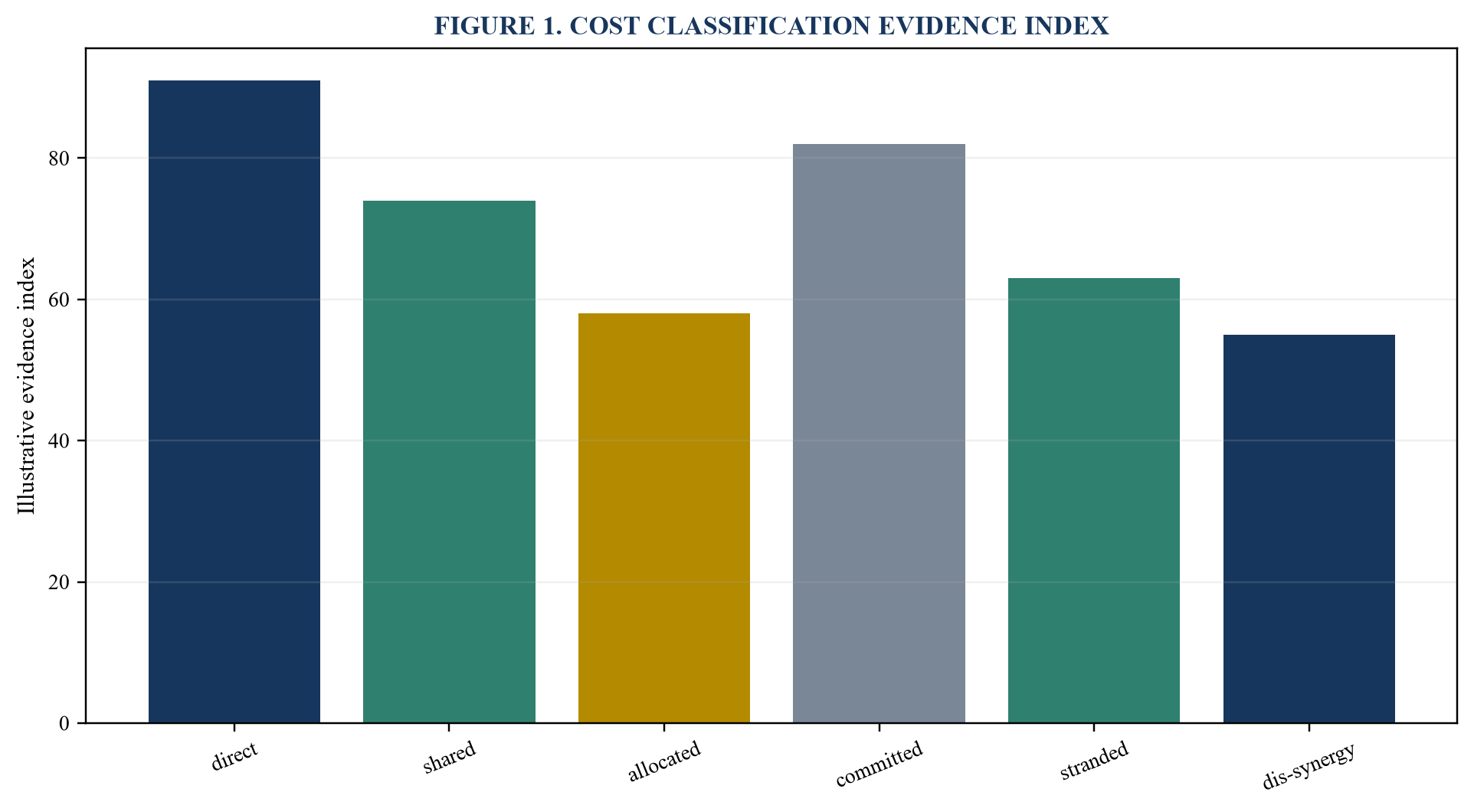
Values are illustrative evidence indices and require company-specific support.
9. Map people cost
Identify transferring, retained, shared, vacant, contractor and contingent workforce cost.
The controlled record should identify the relevant customer, revenue stream, contract, cohort, relationship owner, commercial dependency, evidence source, baseline, trend, scenario, control, exception, accountable executive, deadline and approval. The immediate deliverable is a workforce cost map.
The principal failure occurs when headcount labels establish removability. Reviewers should connect the evidence to revenue durability, gross margin, cash conversion, renewal probability, switching behaviour, counterparty credit and transaction value; distinguish contractual protection from observed customer behaviour; and test whether the conclusion survives a downside scenario.
The decision pack for map people cost should state the commercial question, measurement perimeter, historical evidence, customer-specific facts, forecast logic, sensitivity, management action, buyer implication, residual uncertainty and next gate. Material exceptions should flow into the valuation model, quality-of-earnings work, diligence room, sale-process narrative, transaction protections and board reporting.
10. Map role dependencies
Test decision rights, segregation, expertise, spans and minimum viable teams.
The controlled record should identify the relevant customer, revenue stream, contract, cohort, relationship owner, commercial dependency, evidence source, baseline, trend, scenario, control, exception, accountable executive, deadline and approval. The immediate deliverable is a role-dependency matrix.
The principal failure occurs when fractional roles can always be removed fractionally. Reviewers should connect the evidence to revenue durability, gross margin, cash conversion, renewal probability, switching behaviour, counterparty credit and transaction value; distinguish contractual protection from observed customer behaviour; and test whether the conclusion survives a downside scenario.
The decision pack for map role dependencies should state the commercial question, measurement perimeter, historical evidence, customer-specific facts, forecast logic, sensitivity, management action, buyer implication, residual uncertainty and next gate. Material exceptions should flow into the valuation model, quality-of-earnings work, diligence room, sale-process narrative, transaction protections and board reporting.
11. Map third-party contracts
Identify minimum terms, termination rights, notice, volume tiers, change clauses and assignment.
The controlled record should identify the relevant customer, revenue stream, contract, cohort, relationship owner, commercial dependency, evidence source, baseline, trend, scenario, control, exception, accountable executive, deadline and approval. The immediate deliverable is a contract-removability register.
The principal failure occurs when allocated vendor spend is immediately variable. Reviewers should connect the evidence to revenue durability, gross margin, cash conversion, renewal probability, switching behaviour, counterparty credit and transaction value; distinguish contractual protection from observed customer behaviour; and test whether the conclusion survives a downside scenario.
The decision pack for map third-party contracts should state the commercial question, measurement perimeter, historical evidence, customer-specific facts, forecast logic, sensitivity, management action, buyer implication, residual uncertainty and next gate. Material exceptions should flow into the valuation model, quality-of-earnings work, diligence room, sale-process narrative, transaction protections and board reporting.
12. Map technology cost
Trace licences, infrastructure, interfaces, data, support and cyber tooling to post-sale demand.
The controlled record should identify the relevant customer, revenue stream, contract, cohort, relationship owner, commercial dependency, evidence source, baseline, trend, scenario, control, exception, accountable executive, deadline and approval. The immediate deliverable is a technology cost stack.
The principal failure occurs when user-count reduction equals technology savings. Reviewers should connect the evidence to revenue durability, gross margin, cash conversion, renewal probability, switching behaviour, counterparty credit and transaction value; distinguish contractual protection from observed customer behaviour; and test whether the conclusion survives a downside scenario.
The decision pack for map technology cost should state the commercial question, measurement perimeter, historical evidence, customer-specific facts, forecast logic, sensitivity, management action, buyer implication, residual uncertainty and next gate. Material exceptions should flow into the valuation model, quality-of-earnings work, diligence room, sale-process narrative, transaction protections and board reporting.
13. Map property cost
Identify leases, owned sites, service charges, utilities, restoration and subletting constraints.
The controlled record should identify the relevant customer, revenue stream, contract, cohort, relationship owner, commercial dependency, evidence source, baseline, trend, scenario, control, exception, accountable executive, deadline and approval. The immediate deliverable is a property exit map.
The principal failure occurs when vacated space eliminates property cost. Reviewers should connect the evidence to revenue durability, gross margin, cash conversion, renewal probability, switching behaviour, counterparty credit and transaction value; distinguish contractual protection from observed customer behaviour; and test whether the conclusion survives a downside scenario.
The decision pack for map property cost should state the commercial question, measurement perimeter, historical evidence, customer-specific facts, forecast logic, sensitivity, management action, buyer implication, residual uncertainty and next gate. Material exceptions should flow into the valuation model, quality-of-earnings work, diligence room, sale-process narrative, transaction protections and board reporting.
14. Map insurance and guarantees
Identify policies, deductibles, guarantees, collateral and minimum premiums affected by separation.
The controlled record should identify the relevant customer, revenue stream, contract, cohort, relationship owner, commercial dependency, evidence source, baseline, trend, scenario, control, exception, accountable executive, deadline and approval. The immediate deliverable is a risk-cost schedule.
The principal failure occurs when exposure reduction produces proportional premium savings. Reviewers should connect the evidence to revenue durability, gross margin, cash conversion, renewal probability, switching behaviour, counterparty credit and transaction value; distinguish contractual protection from observed customer behaviour; and test whether the conclusion survives a downside scenario.
The decision pack for map insurance and guarantees should state the commercial question, measurement perimeter, historical evidence, customer-specific facts, forecast logic, sensitivity, management action, buyer implication, residual uncertainty and next gate. Material exceptions should flow into the valuation model, quality-of-earnings work, diligence room, sale-process narrative, transaction protections and board reporting.
15. Map finance and treasury
Test banking, tax, reporting, audit, insurance, control and liquidity requirements for the retained perimeter.
The controlled record should identify the relevant customer, revenue stream, contract, cohort, relationship owner, commercial dependency, evidence source, baseline, trend, scenario, control, exception, accountable executive, deadline and approval. The immediate deliverable is a finance minimum-viable model.
The principal failure occurs when corporate finance effort scales with revenue. Reviewers should connect the evidence to revenue durability, gross margin, cash conversion, renewal probability, switching behaviour, counterparty credit and transaction value; distinguish contractual protection from observed customer behaviour; and test whether the conclusion survives a downside scenario.
The decision pack for map finance and treasury should state the commercial question, measurement perimeter, historical evidence, customer-specific facts, forecast logic, sensitivity, management action, buyer implication, residual uncertainty and next gate. Material exceptions should flow into the valuation model, quality-of-earnings work, diligence room, sale-process narrative, transaction protections and board reporting.
16. Map HR and pensions
Test payroll, benefits, consultation, severance, pension and employee-transfer consequences.
The controlled record should identify the relevant customer, revenue stream, contract, cohort, relationship owner, commercial dependency, evidence source, baseline, trend, scenario, control, exception, accountable executive, deadline and approval. The immediate deliverable is a people-transition cost model.
The principal failure occurs when people removal cost is limited to salary. Reviewers should connect the evidence to revenue durability, gross margin, cash conversion, renewal probability, switching behaviour, counterparty credit and transaction value; distinguish contractual protection from observed customer behaviour; and test whether the conclusion survives a downside scenario.
The decision pack for map hr and pensions should state the commercial question, measurement perimeter, historical evidence, customer-specific facts, forecast logic, sensitivity, management action, buyer implication, residual uncertainty and next gate. Material exceptions should flow into the valuation model, quality-of-earnings work, diligence room, sale-process narrative, transaction protections and board reporting.
Table 2. Removability tests
| Cost domain | Typical constraint | Proof of removal |
|---|---|---|
| people | consultation and role floor | payroll exit |
| contract | term and minimum volume | termination or amendment |
| technology | shared architecture | decommissioned service |
| property | lease and restoration | exit or funded reuse |
Illustrative analytical design; company-specific evidence and professional advice govern.
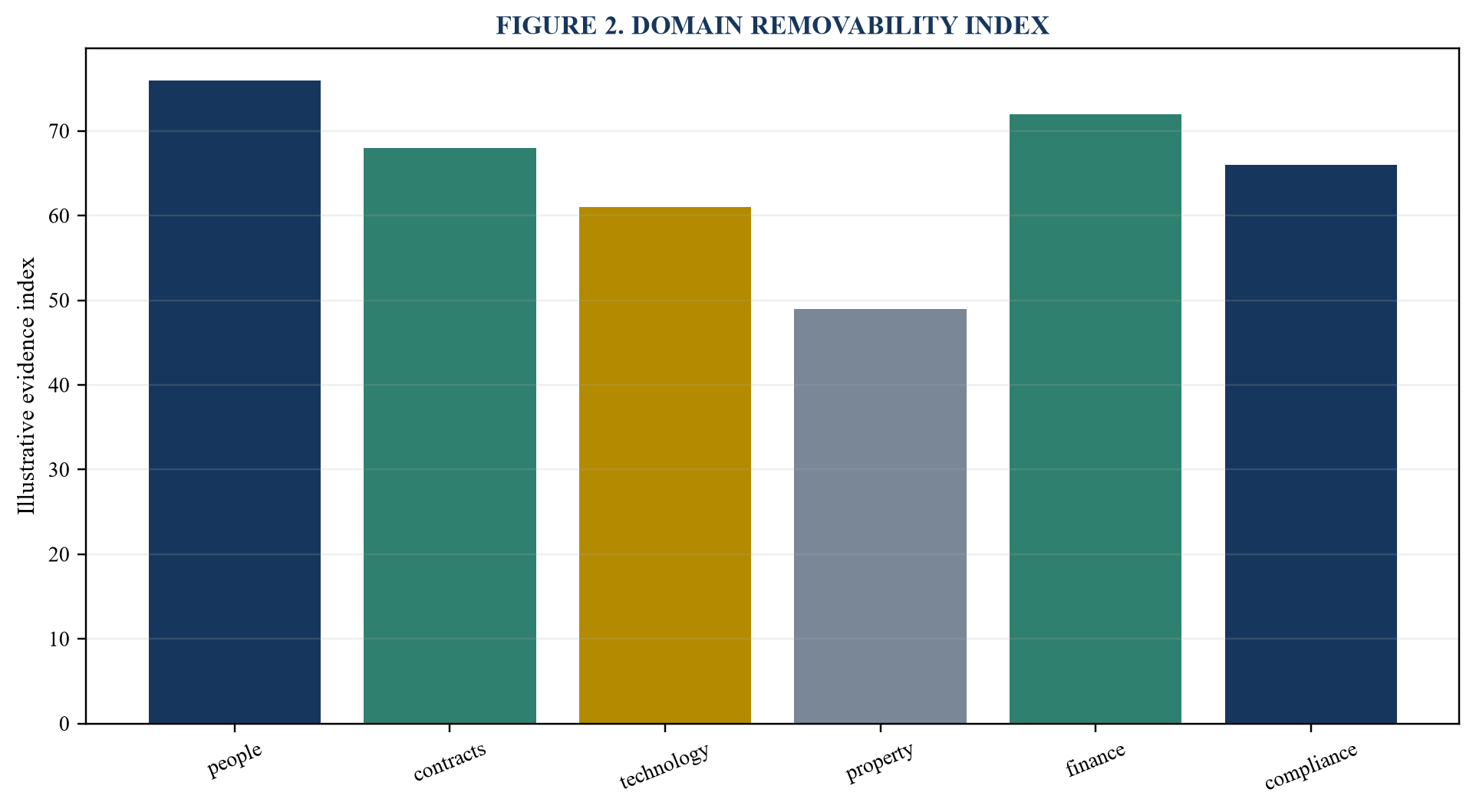
Values are illustrative evidence indices and require company-specific support.
17. Map legal and compliance
Identify entity, licence, regulatory, privacy, sanctions, governance and reporting obligations that persist.
The controlled record should identify the relevant customer, revenue stream, contract, cohort, relationship owner, commercial dependency, evidence source, baseline, trend, scenario, control, exception, accountable executive, deadline and approval. The immediate deliverable is a compliance minimum-cost model.
The principal failure occurs when a smaller business has proportionally fewer obligations. Reviewers should connect the evidence to revenue durability, gross margin, cash conversion, renewal probability, switching behaviour, counterparty credit and transaction value; distinguish contractual protection from observed customer behaviour; and test whether the conclusion survives a downside scenario.
The decision pack for map legal and compliance should state the commercial question, measurement perimeter, historical evidence, customer-specific facts, forecast logic, sensitivity, management action, buyer implication, residual uncertainty and next gate. Material exceptions should flow into the valuation model, quality-of-earnings work, diligence room, sale-process narrative, transaction protections and board reporting.
18. Map procurement and operations
Trace purchasing capacity, specifications, supplier control, logistics and quality needs.
The controlled record should identify the relevant customer, revenue stream, contract, cohort, relationship owner, commercial dependency, evidence source, baseline, trend, scenario, control, exception, accountable executive, deadline and approval. The immediate deliverable is an operating-support map.
The principal failure occurs when shared procurement cost transfers with spend. Reviewers should connect the evidence to revenue durability, gross margin, cash conversion, renewal probability, switching behaviour, counterparty credit and transaction value; distinguish contractual protection from observed customer behaviour; and test whether the conclusion survives a downside scenario.
The decision pack for map procurement and operations should state the commercial question, measurement perimeter, historical evidence, customer-specific facts, forecast logic, sensitivity, management action, buyer implication, residual uncertainty and next gate. Material exceptions should flow into the valuation model, quality-of-earnings work, diligence room, sale-process narrative, transaction protections and board reporting.
19. Map brand and corporate functions
Test investor relations, communications, strategy, board and public-company obligations.
The controlled record should identify the relevant customer, revenue stream, contract, cohort, relationship owner, commercial dependency, evidence source, baseline, trend, scenario, control, exception, accountable executive, deadline and approval. The immediate deliverable is a corporate-obligation map.
The principal failure occurs when central functions are discretionary overhead. Reviewers should connect the evidence to revenue durability, gross margin, cash conversion, renewal probability, switching behaviour, counterparty credit and transaction value; distinguish contractual protection from observed customer behaviour; and test whether the conclusion survives a downside scenario.
The decision pack for map brand and corporate functions should state the commercial question, measurement perimeter, historical evidence, customer-specific facts, forecast logic, sensitivity, management action, buyer implication, residual uncertainty and next gate. Material exceptions should flow into the valuation model, quality-of-earnings work, diligence room, sale-process narrative, transaction protections and board reporting.
20. Identify stranded capacity
Measure people, property, systems, contracts and controls whose capacity exceeds retained demand.
The controlled record should identify the relevant customer, revenue stream, contract, cohort, relationship owner, commercial dependency, evidence source, baseline, trend, scenario, control, exception, accountable executive, deadline and approval. The immediate deliverable is a capacity-stranding register.
The principal failure occurs when unused capacity is already a saving. Reviewers should connect the evidence to revenue durability, gross margin, cash conversion, renewal probability, switching behaviour, counterparty credit and transaction value; distinguish contractual protection from observed customer behaviour; and test whether the conclusion survives a downside scenario.
The decision pack for identify stranded capacity should state the commercial question, measurement perimeter, historical evidence, customer-specific facts, forecast logic, sensitivity, management action, buyer implication, residual uncertainty and next gate. Material exceptions should flow into the valuation model, quality-of-earnings work, diligence room, sale-process narrative, transaction protections and board reporting.
21. Identify fixed commitments
Separate contractual, statutory, operational and control floors from avoidable cost.
The controlled record should identify the relevant customer, revenue stream, contract, cohort, relationship owner, commercial dependency, evidence source, baseline, trend, scenario, control, exception, accountable executive, deadline and approval. The immediate deliverable is a fixed-commitment schedule.
The principal failure occurs when management intent changes committed cash outflow. Reviewers should connect the evidence to revenue durability, gross margin, cash conversion, renewal probability, switching behaviour, counterparty credit and transaction value; distinguish contractual protection from observed customer behaviour; and test whether the conclusion survives a downside scenario.
The decision pack for identify fixed commitments should state the commercial question, measurement perimeter, historical evidence, customer-specific facts, forecast logic, sensitivity, management action, buyer implication, residual uncertainty and next gate. Material exceptions should flow into the valuation model, quality-of-earnings work, diligence room, sale-process narrative, transaction protections and board reporting.
22. Identify dis-synergies
Quantify lost scale, purchasing power, tax attributes, shared platforms and risk diversification.
The controlled record should identify the relevant customer, revenue stream, contract, cohort, relationship owner, commercial dependency, evidence source, baseline, trend, scenario, control, exception, accountable executive, deadline and approval. The immediate deliverable is a dis-synergy ledger.
The principal failure occurs when only removable cost matters. Reviewers should connect the evidence to revenue durability, gross margin, cash conversion, renewal probability, switching behaviour, counterparty credit and transaction value; distinguish contractual protection from observed customer behaviour; and test whether the conclusion survives a downside scenario.
The decision pack for identify dis-synergies should state the commercial question, measurement perimeter, historical evidence, customer-specific facts, forecast logic, sensitivity, management action, buyer implication, residual uncertainty and next gate. Material exceptions should flow into the valuation model, quality-of-earnings work, diligence room, sale-process narrative, transaction protections and board reporting.
23. Identify duplicate cost
Measure temporary seller and buyer capability running in parallel during separation.
The controlled record should identify the relevant customer, revenue stream, contract, cohort, relationship owner, commercial dependency, evidence source, baseline, trend, scenario, control, exception, accountable executive, deadline and approval. The immediate deliverable is a duplication bridge.
The principal failure occurs when duplicate cost belongs entirely to the buyer. Reviewers should connect the evidence to revenue durability, gross margin, cash conversion, renewal probability, switching behaviour, counterparty credit and transaction value; distinguish contractual protection from observed customer behaviour; and test whether the conclusion survives a downside scenario.
The decision pack for identify duplicate cost should state the commercial question, measurement perimeter, historical evidence, customer-specific facts, forecast logic, sensitivity, management action, buyer implication, residual uncertainty and next gate. Material exceptions should flow into the valuation model, quality-of-earnings work, diligence room, sale-process narrative, transaction protections and board reporting.
24. Price transition services
Build service-level, volume, cost, margin, tax, security and exit economics for TSAs and reverse TSAs.
The controlled record should identify the relevant customer, revenue stream, contract, cohort, relationship owner, commercial dependency, evidence source, baseline, trend, scenario, control, exception, accountable executive, deadline and approval. The immediate deliverable is a transition-service P&L.
The principal failure occurs when TSA revenue offsets all retained delivery cost. Reviewers should connect the evidence to revenue durability, gross margin, cash conversion, renewal probability, switching behaviour, counterparty credit and transaction value; distinguish contractual protection from observed customer behaviour; and test whether the conclusion survives a downside scenario.
The decision pack for price transition services should state the commercial question, measurement perimeter, historical evidence, customer-specific facts, forecast logic, sensitivity, management action, buyer implication, residual uncertainty and next gate. Material exceptions should flow into the valuation model, quality-of-earnings work, diligence room, sale-process narrative, transaction protections and board reporting.
Table 3. Transition economics
| Element | Required measure | Control |
|---|---|---|
| service | volume and level | service schedule |
| cost | direct and capacity cost | open-book bridge |
| price | allocation and margin | approved formula |
| exit | milestone and dependency | termination gate |
Illustrative analytical design; company-specific evidence and professional advice govern.
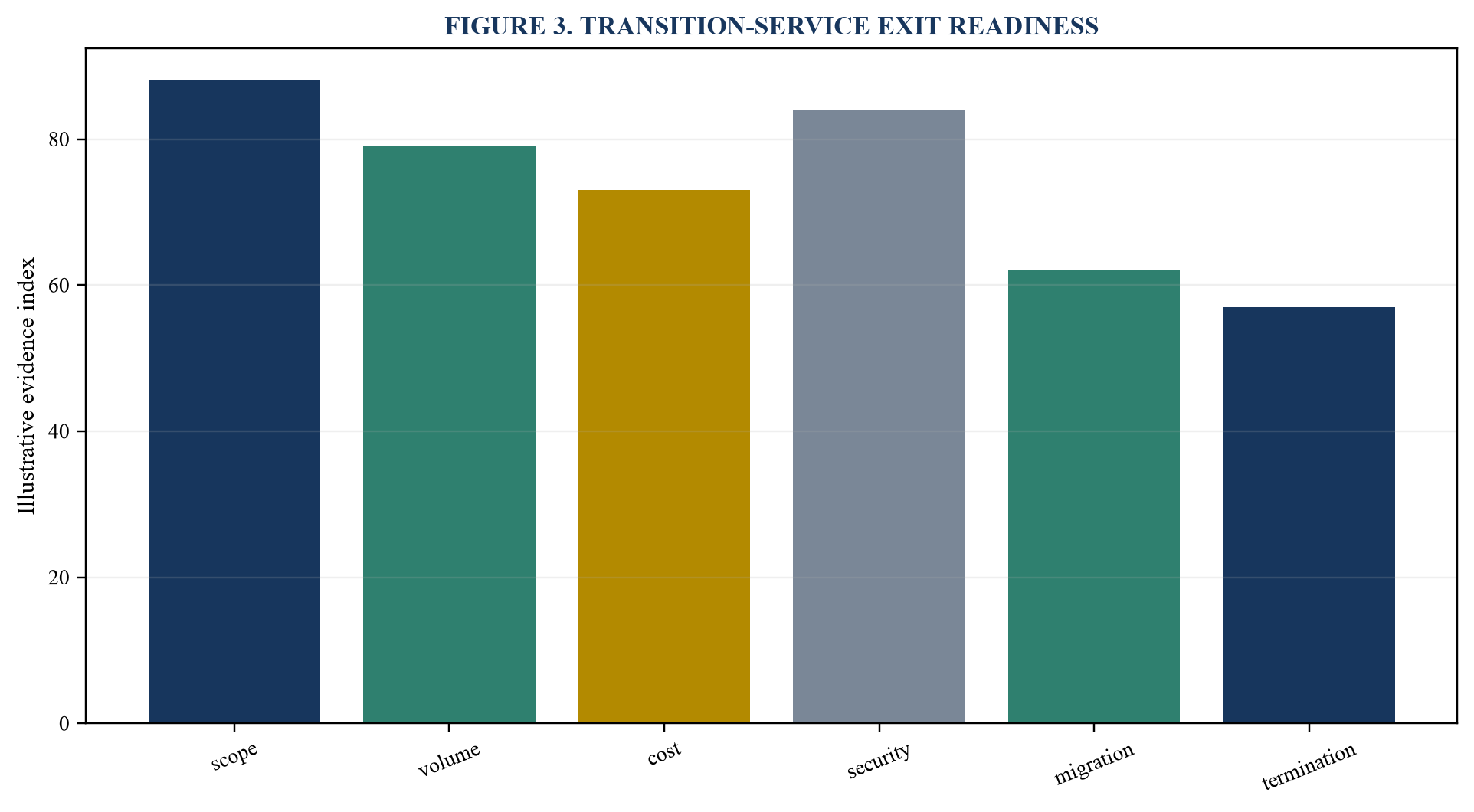
Values are illustrative evidence indices and require company-specific support.
25. Build the stranded-cost bridge
Reconcile historical allocation to transferred, retained, removable, stranded, dis-synergy and transition cost.
The controlled record should identify the relevant customer, revenue stream, contract, cohort, relationship owner, commercial dependency, evidence source, baseline, trend, scenario, control, exception, accountable executive, deadline and approval. The immediate deliverable is a cost-to-cash bridge.
The principal failure occurs when one top-down percentage is sufficient. Reviewers should connect the evidence to revenue durability, gross margin, cash conversion, renewal probability, switching behaviour, counterparty credit and transaction value; distinguish contractual protection from observed customer behaviour; and test whether the conclusion survives a downside scenario.
The decision pack for build the stranded-cost bridge should state the commercial question, measurement perimeter, historical evidence, customer-specific facts, forecast logic, sensitivity, management action, buyer implication, residual uncertainty and next gate. Material exceptions should flow into the valuation model, quality-of-earnings work, diligence room, sale-process narrative, transaction protections and board reporting.
26. Test cost removability
Require a named action, authority, timing, evidence, cash effect and dependency for every claimed saving.
The controlled record should identify the relevant customer, revenue stream, contract, cohort, relationship owner, commercial dependency, evidence source, baseline, trend, scenario, control, exception, accountable executive, deadline and approval. The immediate deliverable is a removability test.
The principal failure occurs when budget reduction proves removal. Reviewers should connect the evidence to revenue durability, gross margin, cash conversion, renewal probability, switching behaviour, counterparty credit and transaction value; distinguish contractual protection from observed customer behaviour; and test whether the conclusion survives a downside scenario.
The decision pack for test cost removability should state the commercial question, measurement perimeter, historical evidence, customer-specific facts, forecast logic, sensitivity, management action, buyer implication, residual uncertainty and next gate. Material exceptions should flow into the valuation model, quality-of-earnings work, diligence room, sale-process narrative, transaction protections and board reporting.
27. Design removal initiatives
Convert each opportunity into a bounded work package covering people, contract, technology, property or process.
The controlled record should identify the relevant customer, revenue stream, contract, cohort, relationship owner, commercial dependency, evidence source, baseline, trend, scenario, control, exception, accountable executive, deadline and approval. The immediate deliverable is a removal initiative charter.
The principal failure occurs when a finance target is an executable plan. Reviewers should connect the evidence to revenue durability, gross margin, cash conversion, renewal probability, switching behaviour, counterparty credit and transaction value; distinguish contractual protection from observed customer behaviour; and test whether the conclusion survives a downside scenario.
The decision pack for design removal initiatives should state the commercial question, measurement perimeter, historical evidence, customer-specific facts, forecast logic, sensitivity, management action, buyer implication, residual uncertainty and next gate. Material exceptions should flow into the valuation model, quality-of-earnings work, diligence room, sale-process narrative, transaction protections and board reporting.
28. Sequence the critical path
Link consultation, notice, consent, migration, control and service-exit dependencies.
The controlled record should identify the relevant customer, revenue stream, contract, cohort, relationship owner, commercial dependency, evidence source, baseline, trend, scenario, control, exception, accountable executive, deadline and approval. The immediate deliverable is a removal critical path.
The principal failure occurs when all initiatives can begin at completion. Reviewers should connect the evidence to revenue durability, gross margin, cash conversion, renewal probability, switching behaviour, counterparty credit and transaction value; distinguish contractual protection from observed customer behaviour; and test whether the conclusion survives a downside scenario.
The decision pack for sequence the critical path should state the commercial question, measurement perimeter, historical evidence, customer-specific facts, forecast logic, sensitivity, management action, buyer implication, residual uncertainty and next gate. Material exceptions should flow into the valuation model, quality-of-earnings work, diligence room, sale-process narrative, transaction protections and board reporting.
29. Model one-time cost
Estimate severance, contract exit, migration, remediation, adviser, tax and implementation cash.
The controlled record should identify the relevant customer, revenue stream, contract, cohort, relationship owner, commercial dependency, evidence source, baseline, trend, scenario, control, exception, accountable executive, deadline and approval. The immediate deliverable is a one-time-cost model.
The principal failure occurs when restructuring cost is immaterial to value. Reviewers should connect the evidence to revenue durability, gross margin, cash conversion, renewal probability, switching behaviour, counterparty credit and transaction value; distinguish contractual protection from observed customer behaviour; and test whether the conclusion survives a downside scenario.
The decision pack for model one-time cost should state the commercial question, measurement perimeter, historical evidence, customer-specific facts, forecast logic, sensitivity, management action, buyer implication, residual uncertainty and next gate. Material exceptions should flow into the valuation model, quality-of-earnings work, diligence room, sale-process narrative, transaction protections and board reporting.
30. Model timing and run rate
Separate in-period P&L, exit run rate, cash delivery and sustainable annual benefit.
The controlled record should identify the relevant customer, revenue stream, contract, cohort, relationship owner, commercial dependency, evidence source, baseline, trend, scenario, control, exception, accountable executive, deadline and approval. The immediate deliverable is a timing waterfall.
The principal failure occurs when annualised run rate equals realised cash. Reviewers should connect the evidence to revenue durability, gross margin, cash conversion, renewal probability, switching behaviour, counterparty credit and transaction value; distinguish contractual protection from observed customer behaviour; and test whether the conclusion survives a downside scenario.
The decision pack for model timing and run rate should state the commercial question, measurement perimeter, historical evidence, customer-specific facts, forecast logic, sensitivity, management action, buyer implication, residual uncertainty and next gate. Material exceptions should flow into the valuation model, quality-of-earnings work, diligence room, sale-process narrative, transaction protections and board reporting.
31. Model scenarios
Stress delay, failed exit, volume floors, attrition, TSA extension and dis-synergy.
The controlled record should identify the relevant customer, revenue stream, contract, cohort, relationship owner, commercial dependency, evidence source, baseline, trend, scenario, control, exception, accountable executive, deadline and approval. The immediate deliverable is a stranded-cost scenario model.
The principal failure occurs when removal cases are independent and certain. Reviewers should connect the evidence to revenue durability, gross margin, cash conversion, renewal probability, switching behaviour, counterparty credit and transaction value; distinguish contractual protection from observed customer behaviour; and test whether the conclusion survives a downside scenario.
The decision pack for model scenarios should state the commercial question, measurement perimeter, historical evidence, customer-specific facts, forecast logic, sensitivity, management action, buyer implication, residual uncertainty and next gate. Material exceptions should flow into the valuation model, quality-of-earnings work, diligence room, sale-process narrative, transaction protections and board reporting.
32. Value the programme
Translate cash timing, tax, implementation cost and risk into net present value and transaction economics.
The controlled record should identify the relevant customer, revenue stream, contract, cohort, relationship owner, commercial dependency, evidence source, baseline, trend, scenario, control, exception, accountable executive, deadline and approval. The immediate deliverable is a value-realisation model.
The principal failure occurs when gross annual savings equal enterprise value. Reviewers should connect the evidence to revenue durability, gross margin, cash conversion, renewal probability, switching behaviour, counterparty credit and transaction value; distinguish contractual protection from observed customer behaviour; and test whether the conclusion survives a downside scenario.
The decision pack for value the programme should state the commercial question, measurement perimeter, historical evidence, customer-specific facts, forecast logic, sensitivity, management action, buyer implication, residual uncertainty and next gate. Material exceptions should flow into the valuation model, quality-of-earnings work, diligence room, sale-process narrative, transaction protections and board reporting.
Table 4. Value bridge
| Measure | Treatment | Decision use |
|---|---|---|
| gross run rate | annualised saving | capacity target |
| realised cash | bank or ledger evidence | delivery |
| one-time cost | timed cash outflow | funding |
| residual risk | probability-weighted | valuation |
Illustrative analytical design; company-specific evidence and professional advice govern.
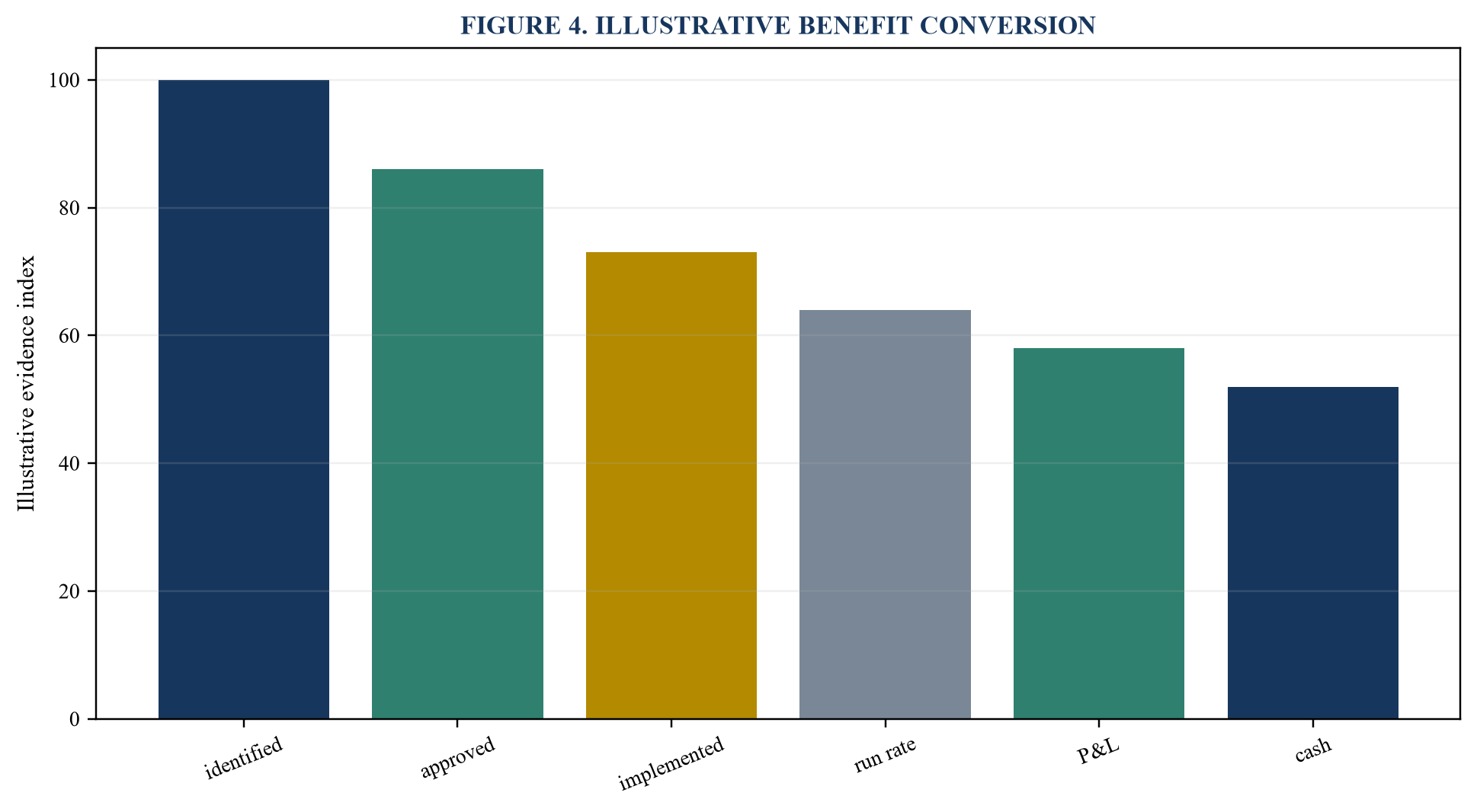
Values are illustrative evidence indices and require company-specific support.
33. Allocate deal economics
Decide how stranded cost affects valuation, purchase price, TSA pricing, separation funding and covenants.
The controlled record should identify the relevant customer, revenue stream, contract, cohort, relationship owner, commercial dependency, evidence source, baseline, trend, scenario, control, exception, accountable executive, deadline and approval. The immediate deliverable is a transaction economics bridge.
The principal failure occurs when stranded cost is solely a seller issue. Reviewers should connect the evidence to revenue durability, gross margin, cash conversion, renewal probability, switching behaviour, counterparty credit and transaction value; distinguish contractual protection from observed customer behaviour; and test whether the conclusion survives a downside scenario.
The decision pack for allocate deal economics should state the commercial question, measurement perimeter, historical evidence, customer-specific facts, forecast logic, sensitivity, management action, buyer implication, residual uncertainty and next gate. Material exceptions should flow into the valuation model, quality-of-earnings work, diligence room, sale-process narrative, transaction protections and board reporting.
34. Protect business continuity
Set minimum capability, control and resilience gates that constrain cost removal.
The controlled record should identify the relevant customer, revenue stream, contract, cohort, relationship owner, commercial dependency, evidence source, baseline, trend, scenario, control, exception, accountable executive, deadline and approval. The immediate deliverable is a continuity guardrail.
The principal failure occurs when all identified cost should be removed. Reviewers should connect the evidence to revenue durability, gross margin, cash conversion, renewal probability, switching behaviour, counterparty credit and transaction value; distinguish contractual protection from observed customer behaviour; and test whether the conclusion survives a downside scenario.
The decision pack for protect business continuity should state the commercial question, measurement perimeter, historical evidence, customer-specific facts, forecast logic, sensitivity, management action, buyer implication, residual uncertainty and next gate. Material exceptions should flow into the valuation model, quality-of-earnings work, diligence room, sale-process narrative, transaction protections and board reporting.
35. Govern workforce actions
Align consultation, selection, transfer, retention, communication and authority.
The controlled record should identify the relevant customer, revenue stream, contract, cohort, relationship owner, commercial dependency, evidence source, baseline, trend, scenario, control, exception, accountable executive, deadline and approval. The immediate deliverable is a workforce governance plan.
The principal failure occurs when an approved synergy case authorises workforce action. Reviewers should connect the evidence to revenue durability, gross margin, cash conversion, renewal probability, switching behaviour, counterparty credit and transaction value; distinguish contractual protection from observed customer behaviour; and test whether the conclusion survives a downside scenario.
The decision pack for govern workforce actions should state the commercial question, measurement perimeter, historical evidence, customer-specific facts, forecast logic, sensitivity, management action, buyer implication, residual uncertainty and next gate. Material exceptions should flow into the valuation model, quality-of-earnings work, diligence room, sale-process narrative, transaction protections and board reporting.
36. Govern data and evidence
Maintain source lineage, approvals, access controls, versioning and audit trail.
The controlled record should identify the relevant customer, revenue stream, contract, cohort, relationship owner, commercial dependency, evidence source, baseline, trend, scenario, control, exception, accountable executive, deadline and approval. The immediate deliverable is an evidence-controlled cost ledger.
The principal failure occurs when spreadsheet ownership provides sufficient control. Reviewers should connect the evidence to revenue durability, gross margin, cash conversion, renewal probability, switching behaviour, counterparty credit and transaction value; distinguish contractual protection from observed customer behaviour; and test whether the conclusion survives a downside scenario.
The decision pack for govern data and evidence should state the commercial question, measurement perimeter, historical evidence, customer-specific facts, forecast logic, sensitivity, management action, buyer implication, residual uncertainty and next gate. Material exceptions should flow into the valuation model, quality-of-earnings work, diligence room, sale-process narrative, transaction protections and board reporting.
37. Track execution
Monitor action status, cash, run rate, risk, service performance and residual capacity.
The controlled record should identify the relevant customer, revenue stream, contract, cohort, relationship owner, commercial dependency, evidence source, baseline, trend, scenario, control, exception, accountable executive, deadline and approval. The immediate deliverable is a benefits-control dashboard.
The principal failure occurs when monthly P&L proves initiative delivery. Reviewers should connect the evidence to revenue durability, gross margin, cash conversion, renewal probability, switching behaviour, counterparty credit and transaction value; distinguish contractual protection from observed customer behaviour; and test whether the conclusion survives a downside scenario.
The decision pack for track execution should state the commercial question, measurement perimeter, historical evidence, customer-specific facts, forecast logic, sensitivity, management action, buyer implication, residual uncertainty and next gate. Material exceptions should flow into the valuation model, quality-of-earnings work, diligence room, sale-process narrative, transaction protections and board reporting.
38. Escalate variance
Define tolerance, decision rights, cure windows and reforecast rules.
The controlled record should identify the relevant customer, revenue stream, contract, cohort, relationship owner, commercial dependency, evidence source, baseline, trend, scenario, control, exception, accountable executive, deadline and approval. The immediate deliverable is a variance protocol.
The principal failure occurs when missed savings can be carried forward unchanged. Reviewers should connect the evidence to revenue durability, gross margin, cash conversion, renewal probability, switching behaviour, counterparty credit and transaction value; distinguish contractual protection from observed customer behaviour; and test whether the conclusion survives a downside scenario.
The decision pack for escalate variance should state the commercial question, measurement perimeter, historical evidence, customer-specific facts, forecast logic, sensitivity, management action, buyer implication, residual uncertainty and next gate. Material exceptions should flow into the valuation model, quality-of-earnings work, diligence room, sale-process narrative, transaction protections and board reporting.
39. Certify removals
Require financial, operational, legal, people and control evidence before recognising delivery.
The controlled record should identify the relevant customer, revenue stream, contract, cohort, relationship owner, commercial dependency, evidence source, baseline, trend, scenario, control, exception, accountable executive, deadline and approval. The immediate deliverable is a removal certificate.
The principal failure occurs when management attestation alone proves completion. Reviewers should connect the evidence to revenue durability, gross margin, cash conversion, renewal probability, switching behaviour, counterparty credit and transaction value; distinguish contractual protection from observed customer behaviour; and test whether the conclusion survives a downside scenario.
The decision pack for certify removals should state the commercial question, measurement perimeter, historical evidence, customer-specific facts, forecast logic, sensitivity, management action, buyer implication, residual uncertainty and next gate. Material exceptions should flow into the valuation model, quality-of-earnings work, diligence room, sale-process narrative, transaction protections and board reporting.
40. Close the stranded-cost gap
Reconcile target, realised cash, residual commitment, dis-synergy and post-close accountability.
The controlled record should identify the relevant customer, revenue stream, contract, cohort, relationship owner, commercial dependency, evidence source, baseline, trend, scenario, control, exception, accountable executive, deadline and approval. The immediate deliverable is a post-divestment cost closure report.
The principal failure occurs when the programme ends when the transaction closes. Reviewers should connect the evidence to revenue durability, gross margin, cash conversion, renewal probability, switching behaviour, counterparty credit and transaction value; distinguish contractual protection from observed customer behaviour; and test whether the conclusion survives a downside scenario.
The decision pack for close the stranded-cost gap should state the commercial question, measurement perimeter, historical evidence, customer-specific facts, forecast logic, sensitivity, management action, buyer implication, residual uncertainty and next gate. Material exceptions should flow into the valuation model, quality-of-earnings work, diligence room, sale-process narrative, transaction protections and board reporting.
Table 5. Removal certificate
| Gate | Evidence | Accountable owner |
|---|---|---|
| financial | cash and run-rate bridge | CFO |
| operational | service continuity | COO |
| people and legal | completed obligations | CHRO and counsel |
| control | tested post-change control | risk owner |
Illustrative analytical design; company-specific evidence and professional advice govern.
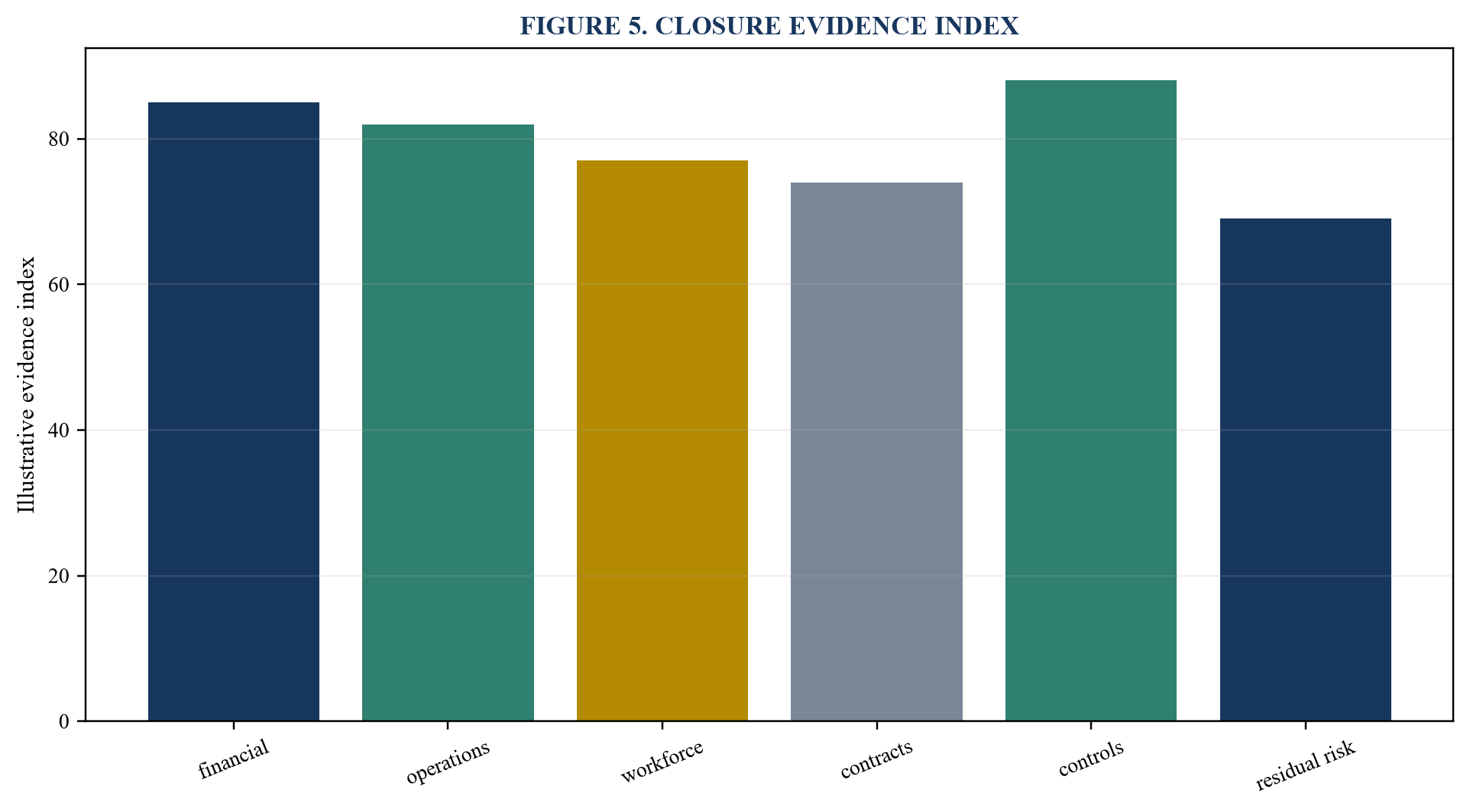
Values are illustrative evidence indices and require company-specific support.
References
- IFRS Foundation, IFRS 5 Non-current Assets Held for Sale and Discontinued Operations, https://www.ifrs.org/issued-standards/list-of-standards/ifrs-5-non-current-assets-held-for-sale-and-discontinued-operations/
- IFRS Foundation, IFRS 5 Supporting Material, https://www.ifrs.org/supporting-implementation/supporting-materials-by-ifrs-standards/ifrs-5/
- IFRS Foundation, IFRS 8 Operating Segments, https://www.ifrs.org/issued-standards/list-of-standards/ifrs-8-operating-segments/
- IFRS Foundation, IAS 1 Presentation of Financial Statements, https://www.ifrs.org/issued-standards/list-of-standards/ias-1-presentation-of-financial-statements/
- IFRS Foundation, IAS 19 Employee Benefits, https://www.ifrs.org/issued-standards/list-of-standards/ias-19-employee-benefits/
- IFRS Foundation, IAS 36 Impairment of Assets, https://www.ifrs.org/issued-standards/list-of-standards/ias-36-impairment-of-assets/
- IFRS Foundation, IFRS 16 Leases, https://www.ifrs.org/issued-standards/list-of-standards/ifrs-16-leases/
- IFRS Foundation, IAS 37 Provisions, Contingent Liabilities and Contingent Assets, https://www.ifrs.org/issued-standards/list-of-standards/ias-37-provisions-contingent-liabilities-and-contingent-assets/
- IFRS Foundation, IAS 12 Income Taxes, https://www.ifrs.org/issued-standards/list-of-standards/ias-12-income-taxes/
- US Securities and Exchange Commission, Regulation S-X Article 11 Financial Reporting Manual, https://www.sec.gov/about/divisions-offices/division-corporation-finance/financial-reporting-manual/frm-topic-3
- US Securities and Exchange Commission, Financial Disclosures about Acquired and Disposed Businesses, https://www.sec.gov/resources-small-businesses/small-business-compliance-guides/financial-disclosures-about-acquired-disposed-businesses
- OECD, Transfer Pricing Guidelines for Multinational Enterprises and Tax Administrations 2022, https://www.oecd.org/en/publications/oecd-transfer-pricing-guidelines-for-multinational-enterprises-and-tax-administrations-2022_0e655865-en.html
- OECD, G20/OECD Principles of Corporate Governance, https://www.oecd.org/corporate/principles-corporate-governance/
- UK Government, Business Transfers, Takeovers and TUPE, https://www.gov.uk/transfers-takeovers
- UK Government, TUPE Consulting and Informing, https://www.gov.uk/transfers-takeovers/consulting-and-informing
- UK Government, Making Staff Redundant: Consultation, https://www.gov.uk/staff-redundant/redundancy-consultations.html
- UK Information Commissioner's Office, Due Diligence when Sharing Data following Mergers and Acquisitions, https://ico.org.uk/for-organisations/uk-gdpr-guidance-and-resources/data-sharing/data-sharing-a-code-of-practice/due-diligence/
- US Federal Trade Commission, Premerger Notification Program, https://www.ftc.gov/enforcement/premerger-notification-program
- European Commission, EU Merger Control Overview, https://competition-policy.ec.europa.eu/mergers/overview_en
- UK Competition and Markets Authority, Merger Assessment Guidelines, https://www.gov.uk/government/publications/merger-assessment-guidelines
- National Institute of Standards and Technology, Cybersecurity Framework, https://www.nist.gov/cyberframework
- International Organization for Standardization, ISO 22301 Business Continuity, https://www.iso.org/standard/75106.html
- International Organization for Standardization, ISO 31000 Risk Management, https://www.iso.org/iso-31000-risk-management.html
- Committee of Sponsoring Organizations of the Treadway Commission, Internal Control, https://www.coso.org/internal-control
- International Valuation Standards Council, International Valuation Standards, https://ivsc.org/standards/
- International Organization for Standardization, ISO 27001 Information Security, https://www.iso.org/standard/27001
