

1. Define the cash-model perimeter
The finance team, board and transaction advisers should identify every entity, bank account, currency, facility, restricted balance, collection route, payment route and transaction workstream. The controlled deliverable is a legal and liquidity perimeter map. Record the entity, account, currency, amount, timing, counterparty, source, owner, evidence status, approval and next refresh [1][2].
Reconcile bank statements, ledgers, invoices, contracts, purchase orders, payroll, tax records, debt documents, facility notices, security, operational schedules, transaction milestones and adviser evidence. Separate observed cash, legally available cash, committed flows, forecast flows, analytical scenarios and unresolved gaps.
The principal liquidity risk is that consolidated cash can appear available while balances are trapped, pledged or owned by another entity. Quantify the effect on weekly closing cash, minimum liquidity, operational continuity, covenant headroom, funding quantum, transaction timing, stakeholder recoveries and the earliest required intervention.
Translate the result into the controlled model, assumption register, action log, payment protocol, board dashboard and transaction critical path. Reconcile forecast to actual every week, retain version history and refresh the model whenever evidence or transaction probability changes.
2. Set the thirteen-week horizon
The finance team, board and transaction advisers should anchor week zero, daily opening positions, weekly cut-offs and the rolling extension rule. The controlled deliverable is a dated forecasting calendar. Record the entity, account, currency, amount, timing, counterparty, source, owner, evidence status, approval and next refresh [3][4].
Reconcile bank statements, ledgers, invoices, contracts, purchase orders, payroll, tax records, debt documents, facility notices, security, operational schedules, transaction milestones and adviser evidence. Separate observed cash, legally available cash, committed flows, forecast flows, analytical scenarios and unresolved gaps.
The principal liquidity risk is that an undated or static model can outlive the facts on which decisions depend. Quantify the effect on weekly closing cash, minimum liquidity, operational continuity, covenant headroom, funding quantum, transaction timing, stakeholder recoveries and the earliest required intervention.
Translate the result into the controlled model, assumption register, action log, payment protocol, board dashboard and transaction critical path. Reconcile forecast to actual every week, retain version history and refresh the model whenever evidence or transaction probability changes.
3. Reconcile opening cash
The finance team, board and transaction advisers should match each ledger balance to bank evidence, outstanding items, restrictions and control ownership. The controlled deliverable is an opening-cash certificate. Record the entity, account, currency, amount, timing, counterparty, source, owner, evidence status, approval and next refresh [1][5].
Reconcile bank statements, ledgers, invoices, contracts, purchase orders, payroll, tax records, debt documents, facility notices, security, operational schedules, transaction milestones and adviser evidence. Separate observed cash, legally available cash, committed flows, forecast flows, analytical scenarios and unresolved gaps.
The principal liquidity risk is that the model can begin with cash that is stale, duplicated, encumbered or inaccessible. Quantify the effect on weekly closing cash, minimum liquidity, operational continuity, covenant headroom, funding quantum, transaction timing, stakeholder recoveries and the earliest required intervention.
Translate the result into the controlled model, assumption register, action log, payment protocol, board dashboard and transaction critical path. Reconcile forecast to actual every week, retain version history and refresh the model whenever evidence or transaction probability changes.
4. Classify cash and equivalents
The finance team, board and transaction advisers should separate demand deposits, qualifying equivalents, investments, deposits, escrow, client money and restricted balances. The controlled deliverable is a liquidity classification schedule. Record the entity, account, currency, amount, timing, counterparty, source, owner, evidence status, approval and next refresh [1][6].
Reconcile bank statements, ledgers, invoices, contracts, purchase orders, payroll, tax records, debt documents, facility notices, security, operational schedules, transaction milestones and adviser evidence. Separate observed cash, legally available cash, committed flows, forecast flows, analytical scenarios and unresolved gaps.
The principal liquidity risk is that accounting cash can be mistaken for transaction-ready liquidity. Quantify the effect on weekly closing cash, minimum liquidity, operational continuity, covenant headroom, funding quantum, transaction timing, stakeholder recoveries and the earliest required intervention.
Translate the result into the controlled model, assumption register, action log, payment protocol, board dashboard and transaction critical path. Reconcile forecast to actual every week, retain version history and refresh the model whenever evidence or transaction probability changes.
5. Build the receipts ledger
The finance team, board and transaction advisers should list customers, invoices, milestones, disputes, deductions, collection dates, confidence and accountable owners. The controlled deliverable is a receipt-level forecast. Record the entity, account, currency, amount, timing, counterparty, source, owner, evidence status, approval and next refresh [7][8].
Reconcile bank statements, ledgers, invoices, contracts, purchase orders, payroll, tax records, debt documents, facility notices, security, operational schedules, transaction milestones and adviser evidence. Separate observed cash, legally available cash, committed flows, forecast flows, analytical scenarios and unresolved gaps.
The principal liquidity risk is that revenue forecasts can enter the model without an executable collection path. Quantify the effect on weekly closing cash, minimum liquidity, operational continuity, covenant headroom, funding quantum, transaction timing, stakeholder recoveries and the earliest required intervention.
Translate the result into the controlled model, assumption register, action log, payment protocol, board dashboard and transaction critical path. Reconcile forecast to actual every week, retain version history and refresh the model whenever evidence or transaction probability changes.
6. Age receivables by behaviour
The finance team, board and transaction advisers should connect contractual due dates to actual payment history, disputes, concentration and collection actions. The controlled deliverable is a behavioural collections curve. Record the entity, account, currency, amount, timing, counterparty, source, owner, evidence status, approval and next refresh [7][9].
Reconcile bank statements, ledgers, invoices, contracts, purchase orders, payroll, tax records, debt documents, facility notices, security, operational schedules, transaction milestones and adviser evidence. Separate observed cash, legally available cash, committed flows, forecast flows, analytical scenarios and unresolved gaps.
The principal liquidity risk is that contract terms can overstate the timing and certainty of cash receipts. Quantify the effect on weekly closing cash, minimum liquidity, operational continuity, covenant headroom, funding quantum, transaction timing, stakeholder recoveries and the earliest required intervention.
Translate the result into the controlled model, assumption register, action log, payment protocol, board dashboard and transaction critical path. Reconcile forecast to actual every week, retain version history and refresh the model whenever evidence or transaction probability changes.
7. Model sales-to-cash conversion
The finance team, board and transaction advisers should translate orders, delivery, acceptance, invoicing, claims and collections into dated cash events. The controlled deliverable is a revenue-to-cash bridge. Record the entity, account, currency, amount, timing, counterparty, source, owner, evidence status, approval and next refresh [10][11].
Reconcile bank statements, ledgers, invoices, contracts, purchase orders, payroll, tax records, debt documents, facility notices, security, operational schedules, transaction milestones and adviser evidence. Separate observed cash, legally available cash, committed flows, forecast flows, analytical scenarios and unresolved gaps.
The principal liquidity risk is that pipeline and recognised revenue can be counted as liquidity before performance obligations are satisfied. Quantify the effect on weekly closing cash, minimum liquidity, operational continuity, covenant headroom, funding quantum, transaction timing, stakeholder recoveries and the earliest required intervention.
Translate the result into the controlled model, assumption register, action log, payment protocol, board dashboard and transaction critical path. Reconcile forecast to actual every week, retain version history and refresh the model whenever evidence or transaction probability changes.
8. Build the disbursements ledger
The finance team, board and transaction advisers should map each payment by supplier, category, due date, criticality, legal status, approval and operational consequence. The controlled deliverable is a payment-level forecast. Record the entity, account, currency, amount, timing, counterparty, source, owner, evidence status, approval and next refresh [12][13].
Reconcile bank statements, ledgers, invoices, contracts, purchase orders, payroll, tax records, debt documents, facility notices, security, operational schedules, transaction milestones and adviser evidence. Separate observed cash, legally available cash, committed flows, forecast flows, analytical scenarios and unresolved gaps.
The principal liquidity risk is that historic run rates can omit urgent liabilities and critical dependencies. Quantify the effect on weekly closing cash, minimum liquidity, operational continuity, covenant headroom, funding quantum, transaction timing, stakeholder recoveries and the earliest required intervention.
Translate the result into the controlled model, assumption register, action log, payment protocol, board dashboard and transaction critical path. Reconcile forecast to actual every week, retain version history and refresh the model whenever evidence or transaction probability changes.
Table 1. Cash-flow architecture
| Layer | Unit | Control |
|---|---|---|
| opening cash | account | bank reconciliation |
| receipts | invoice | evidence score |
| payments | obligation | authority |
| funding | facility | draw conditions |
Statutory periods are stated where labelled; other entries are analytical controls.
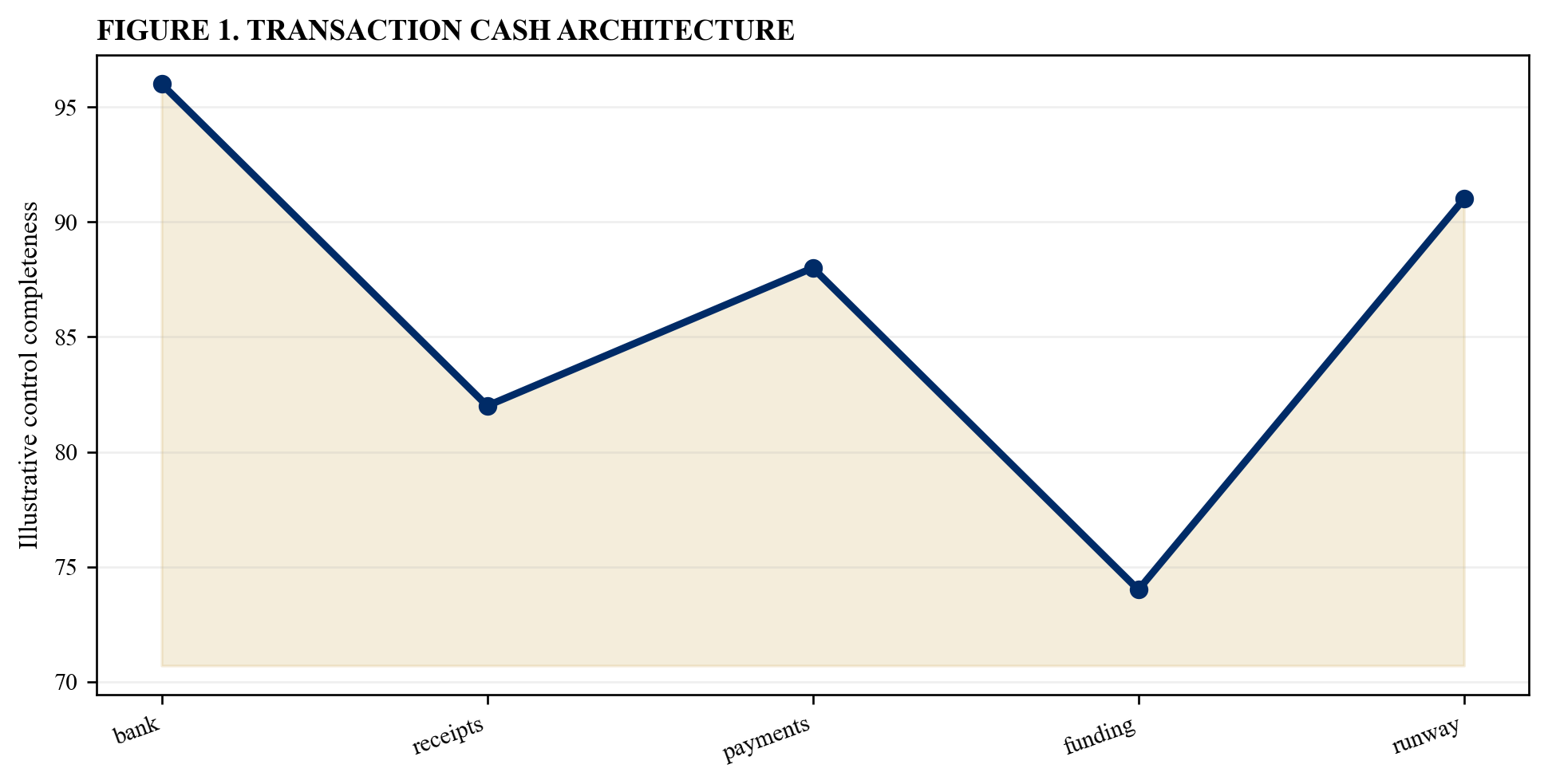
Illustrative analytical scenario; transaction evidence should replace model values.
9. Separate committed and discretionary spend
The finance team, board and transaction advisers should classify legal obligations, operational necessities, value-preserving spend and deferrable items. The controlled deliverable is a spend-control matrix. Record the entity, account, currency, amount, timing, counterparty, source, owner, evidence status, approval and next refresh [14][15].
Reconcile bank statements, ledgers, invoices, contracts, purchase orders, payroll, tax records, debt documents, facility notices, security, operational schedules, transaction milestones and adviser evidence. Separate observed cash, legally available cash, committed flows, forecast flows, analytical scenarios and unresolved gaps.
The principal liquidity risk is that blanket reductions can save cash while destroying going-concern value. Quantify the effect on weekly closing cash, minimum liquidity, operational continuity, covenant headroom, funding quantum, transaction timing, stakeholder recoveries and the earliest required intervention.
Translate the result into the controlled model, assumption register, action log, payment protocol, board dashboard and transaction critical path. Reconcile forecast to actual every week, retain version history and refresh the model whenever evidence or transaction probability changes.
10. Map payroll and people cash
The finance team, board and transaction advisers should reconcile headcount, payroll, benefits, commissions, retention, severance, leave, pensions and statutory remittances. The controlled deliverable is a workforce cash schedule. Record the entity, account, currency, amount, timing, counterparty, source, owner, evidence status, approval and next refresh [16][17].
Reconcile bank statements, ledgers, invoices, contracts, purchase orders, payroll, tax records, debt documents, facility notices, security, operational schedules, transaction milestones and adviser evidence. Separate observed cash, legally available cash, committed flows, forecast flows, analytical scenarios and unresolved gaps.
The principal liquidity risk is that payroll assumptions can omit timing, statutory priority or retention requirements. Quantify the effect on weekly closing cash, minimum liquidity, operational continuity, covenant headroom, funding quantum, transaction timing, stakeholder recoveries and the earliest required intervention.
Translate the result into the controlled model, assumption register, action log, payment protocol, board dashboard and transaction critical path. Reconcile forecast to actual every week, retain version history and refresh the model whenever evidence or transaction probability changes.
11. Map tax and statutory payments
The finance team, board and transaction advisers should schedule VAT, payroll tax, corporate tax, customs, duties, licence charges and filing consequences. The controlled deliverable is a statutory payment calendar. Record the entity, account, currency, amount, timing, counterparty, source, owner, evidence status, approval and next refresh [18][19].
Reconcile bank statements, ledgers, invoices, contracts, purchase orders, payroll, tax records, debt documents, facility notices, security, operational schedules, transaction milestones and adviser evidence. Separate observed cash, legally available cash, committed flows, forecast flows, analytical scenarios and unresolved gaps.
The principal liquidity risk is that tax and regulatory cash needs can be deferred informally without understanding penalties, priority or licence effects. Quantify the effect on weekly closing cash, minimum liquidity, operational continuity, covenant headroom, funding quantum, transaction timing, stakeholder recoveries and the earliest required intervention.
Translate the result into the controlled model, assumption register, action log, payment protocol, board dashboard and transaction critical path. Reconcile forecast to actual every week, retain version history and refresh the model whenever evidence or transaction probability changes.
12. Model supplier criticality
The finance team, board and transaction advisers should link payment timing to supply continuity, title, lien, termination, credit terms and substitute availability. The controlled deliverable is a critical-supplier map. Record the entity, account, currency, amount, timing, counterparty, source, owner, evidence status, approval and next refresh [20][21].
Reconcile bank statements, ledgers, invoices, contracts, purchase orders, payroll, tax records, debt documents, facility notices, security, operational schedules, transaction milestones and adviser evidence. Separate observed cash, legally available cash, committed flows, forecast flows, analytical scenarios and unresolved gaps.
The principal liquidity risk is that equal-looking payables can carry radically different operational consequences. Quantify the effect on weekly closing cash, minimum liquidity, operational continuity, covenant headroom, funding quantum, transaction timing, stakeholder recoveries and the earliest required intervention.
Translate the result into the controlled model, assumption register, action log, payment protocol, board dashboard and transaction critical path. Reconcile forecast to actual every week, retain version history and refresh the model whenever evidence or transaction probability changes.
13. Identify retention-of-title exposure
The finance team, board and transaction advisers should trace goods, title terms, inventory, proceeds, claims and enforcement readiness. The controlled deliverable is a title-and-inventory register. Record the entity, account, currency, amount, timing, counterparty, source, owner, evidence status, approval and next refresh [22][23].
Reconcile bank statements, ledgers, invoices, contracts, purchase orders, payroll, tax records, debt documents, facility notices, security, operational schedules, transaction milestones and adviser evidence. Separate observed cash, legally available cash, committed flows, forecast flows, analytical scenarios and unresolved gaps.
The principal liquidity risk is that forecast inventory value can disappear when suppliers retain enforceable title. Quantify the effect on weekly closing cash, minimum liquidity, operational continuity, covenant headroom, funding quantum, transaction timing, stakeholder recoveries and the earliest required intervention.
Translate the result into the controlled model, assumption register, action log, payment protocol, board dashboard and transaction critical path. Reconcile forecast to actual every week, retain version history and refresh the model whenever evidence or transaction probability changes.
14. Capture leases and property cash
The finance team, board and transaction advisers should map rent, service charges, deposits, arrears, break rights, forfeiture and site continuity. The controlled deliverable is a property cash schedule. Record the entity, account, currency, amount, timing, counterparty, source, owner, evidence status, approval and next refresh [24][25].
Reconcile bank statements, ledgers, invoices, contracts, purchase orders, payroll, tax records, debt documents, facility notices, security, operational schedules, transaction milestones and adviser evidence. Separate observed cash, legally available cash, committed flows, forecast flows, analytical scenarios and unresolved gaps.
The principal liquidity risk is that facility continuity and transaction value can depend on obligations omitted from operating forecasts. Quantify the effect on weekly closing cash, minimum liquidity, operational continuity, covenant headroom, funding quantum, transaction timing, stakeholder recoveries and the earliest required intervention.
Translate the result into the controlled model, assumption register, action log, payment protocol, board dashboard and transaction critical path. Reconcile forecast to actual every week, retain version history and refresh the model whenever evidence or transaction probability changes.
15. Map debt service and covenants
The finance team, board and transaction advisers should schedule principal, interest, fees, hedging, testing dates, cure rights, waivers and acceleration. The controlled deliverable is a debt cash and covenant calendar. Record the entity, account, currency, amount, timing, counterparty, source, owner, evidence status, approval and next refresh [26][27].
Reconcile bank statements, ledgers, invoices, contracts, purchase orders, payroll, tax records, debt documents, facility notices, security, operational schedules, transaction milestones and adviser evidence. Separate observed cash, legally available cash, committed flows, forecast flows, analytical scenarios and unresolved gaps.
The principal liquidity risk is that the cash model can ignore a funding event that changes control or availability. Quantify the effect on weekly closing cash, minimum liquidity, operational continuity, covenant headroom, funding quantum, transaction timing, stakeholder recoveries and the earliest required intervention.
Translate the result into the controlled model, assumption register, action log, payment protocol, board dashboard and transaction critical path. Reconcile forecast to actual every week, retain version history and refresh the model whenever evidence or transaction probability changes.
16. Map availability under facilities
The finance team, board and transaction advisers should test committed and uncommitted limits, borrowing bases, reserves, conditions, draw mechanics and lender discretion. The controlled deliverable is a drawable-liquidity certificate. Record the entity, account, currency, amount, timing, counterparty, source, owner, evidence status, approval and next refresh [28][29].
Reconcile bank statements, ledgers, invoices, contracts, purchase orders, payroll, tax records, debt documents, facility notices, security, operational schedules, transaction milestones and adviser evidence. Separate observed cash, legally available cash, committed flows, forecast flows, analytical scenarios and unresolved gaps.
The principal liquidity risk is that headline facility limits can exceed legally and operationally available funding. Quantify the effect on weekly closing cash, minimum liquidity, operational continuity, covenant headroom, funding quantum, transaction timing, stakeholder recoveries and the earliest required intervention.
Translate the result into the controlled model, assumption register, action log, payment protocol, board dashboard and transaction critical path. Reconcile forecast to actual every week, retain version history and refresh the model whenever evidence or transaction probability changes.
Table 2. Facility availability
| Source | Headline AED m | Drawable AED m |
|---|---|---|
| revolver | 40 | 24 |
| receivables | 28 | 18 |
| sponsor | 20 | 12 |
| asset line | 16 | 9 |
Statutory periods are stated where labelled; other entries are analytical controls.
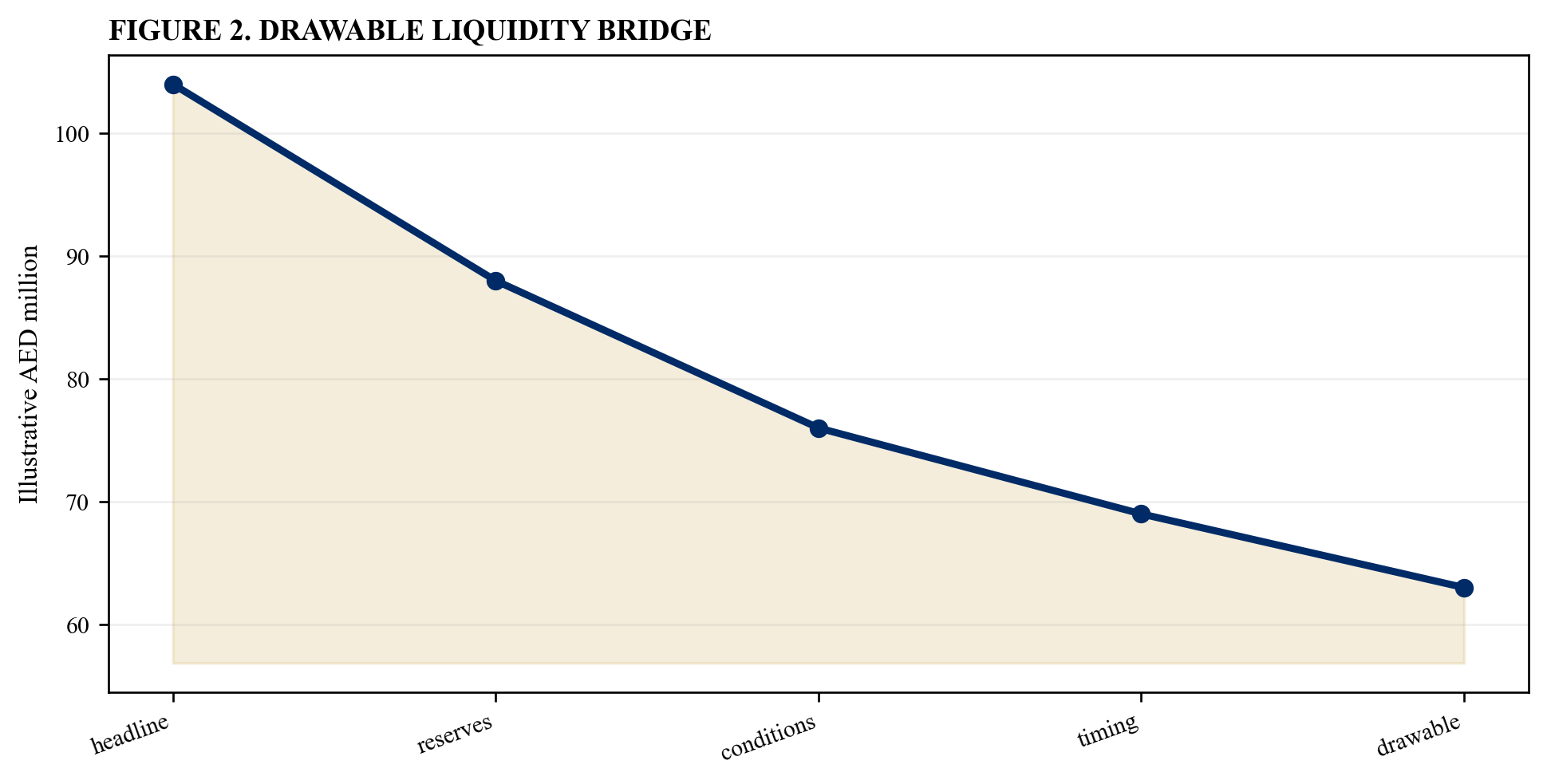
Illustrative analytical scenario; transaction evidence should replace model values.
17. Model cash collateral and blocked accounts
The finance team, board and transaction advisers should identify secured balances, dominion, sweeps, reserves, trust arrangements and release conditions. The controlled deliverable is a cash-control map. Record the entity, account, currency, amount, timing, counterparty, source, owner, evidence status, approval and next refresh [30][31].
Reconcile bank statements, ledgers, invoices, contracts, purchase orders, payroll, tax records, debt documents, facility notices, security, operational schedules, transaction milestones and adviser evidence. Separate observed cash, legally available cash, committed flows, forecast flows, analytical scenarios and unresolved gaps.
The principal liquidity risk is that cash receipts can be swept away before they support operations or transaction costs. Quantify the effect on weekly closing cash, minimum liquidity, operational continuity, covenant headroom, funding quantum, transaction timing, stakeholder recoveries and the earliest required intervention.
Translate the result into the controlled model, assumption register, action log, payment protocol, board dashboard and transaction critical path. Reconcile forecast to actual every week, retain version history and refresh the model whenever evidence or transaction probability changes.
18. Capture supplier-finance effects
The finance team, board and transaction advisers should separate ordinary payables, reverse factoring, maturity concentration, withdrawal risk and disclosure. The controlled deliverable is a supplier-finance bridge. Record the entity, account, currency, amount, timing, counterparty, source, owner, evidence status, approval and next refresh [32][33].
Reconcile bank statements, ledgers, invoices, contracts, purchase orders, payroll, tax records, debt documents, facility notices, security, operational schedules, transaction milestones and adviser evidence. Separate observed cash, legally available cash, committed flows, forecast flows, analytical scenarios and unresolved gaps.
The principal liquidity risk is that working-capital improvement can conceal financing concentration and cliff risk. Quantify the effect on weekly closing cash, minimum liquidity, operational continuity, covenant headroom, funding quantum, transaction timing, stakeholder recoveries and the earliest required intervention.
Translate the result into the controlled model, assumption register, action log, payment protocol, board dashboard and transaction critical path. Reconcile forecast to actual every week, retain version history and refresh the model whenever evidence or transaction probability changes.
19. Map intercompany liquidity
The finance team, board and transaction advisers should trace loans, cash pools, dividends, service charges, guarantees, settlement timing and transfer constraints. The controlled deliverable is an intercompany cash matrix. Record the entity, account, currency, amount, timing, counterparty, source, owner, evidence status, approval and next refresh [34][35].
Reconcile bank statements, ledgers, invoices, contracts, purchase orders, payroll, tax records, debt documents, facility notices, security, operational schedules, transaction milestones and adviser evidence. Separate observed cash, legally available cash, committed flows, forecast flows, analytical scenarios and unresolved gaps.
The principal liquidity risk is that group liquidity can be shifted without regard to entity duties, tax, security or creditor effects. Quantify the effect on weekly closing cash, minimum liquidity, operational continuity, covenant headroom, funding quantum, transaction timing, stakeholder recoveries and the earliest required intervention.
Translate the result into the controlled model, assumption register, action log, payment protocol, board dashboard and transaction critical path. Reconcile forecast to actual every week, retain version history and refresh the model whenever evidence or transaction probability changes.
20. Control foreign-exchange exposure
The finance team, board and transaction advisers should map currencies, conversion timing, settlement routes, hedges, spreads and downside rates. The controlled deliverable is an FX cash schedule. Record the entity, account, currency, amount, timing, counterparty, source, owner, evidence status, approval and next refresh [36][37].
Reconcile bank statements, ledgers, invoices, contracts, purchase orders, payroll, tax records, debt documents, facility notices, security, operational schedules, transaction milestones and adviser evidence. Separate observed cash, legally available cash, committed flows, forecast flows, analytical scenarios and unresolved gaps.
The principal liquidity risk is that currency movements can consume runway between commercial commitment and settlement. Quantify the effect on weekly closing cash, minimum liquidity, operational continuity, covenant headroom, funding quantum, transaction timing, stakeholder recoveries and the earliest required intervention.
Translate the result into the controlled model, assumption register, action log, payment protocol, board dashboard and transaction critical path. Reconcile forecast to actual every week, retain version history and refresh the model whenever evidence or transaction probability changes.
21. Model inventory cash
The finance team, board and transaction advisers should connect purchases, lead times, safety stock, work in progress, ageing, title, sale and obsolescence. The controlled deliverable is an inventory-to-cash curve. Record the entity, account, currency, amount, timing, counterparty, source, owner, evidence status, approval and next refresh [38][39].
Reconcile bank statements, ledgers, invoices, contracts, purchase orders, payroll, tax records, debt documents, facility notices, security, operational schedules, transaction milestones and adviser evidence. Separate observed cash, legally available cash, committed flows, forecast flows, analytical scenarios and unresolved gaps.
The principal liquidity risk is that inventory can absorb liquidity while its recoverable value and conversion timing deteriorate. Quantify the effect on weekly closing cash, minimum liquidity, operational continuity, covenant headroom, funding quantum, transaction timing, stakeholder recoveries and the earliest required intervention.
Translate the result into the controlled model, assumption register, action log, payment protocol, board dashboard and transaction critical path. Reconcile forecast to actual every week, retain version history and refresh the model whenever evidence or transaction probability changes.
22. Model project and contract cash
The finance team, board and transaction advisers should schedule mobilisation, bonds, retentions, milestones, variations, claims, acceptance and liquidated damages. The controlled deliverable is a contract cash waterfall. Record the entity, account, currency, amount, timing, counterparty, source, owner, evidence status, approval and next refresh [40][41].
Reconcile bank statements, ledgers, invoices, contracts, purchase orders, payroll, tax records, debt documents, facility notices, security, operational schedules, transaction milestones and adviser evidence. Separate observed cash, legally available cash, committed flows, forecast flows, analytical scenarios and unresolved gaps.
The principal liquidity risk is that reported margin can coexist with severe negative cash timing. Quantify the effect on weekly closing cash, minimum liquidity, operational continuity, covenant headroom, funding quantum, transaction timing, stakeholder recoveries and the earliest required intervention.
Translate the result into the controlled model, assumption register, action log, payment protocol, board dashboard and transaction critical path. Reconcile forecast to actual every week, retain version history and refresh the model whenever evidence or transaction probability changes.
23. Capture transaction costs
The finance team, board and transaction advisers should forecast advisers, diligence, data room, insurance, regulatory, court, employee and closing costs. The controlled deliverable is a transaction-cost schedule. Record the entity, account, currency, amount, timing, counterparty, source, owner, evidence status, approval and next refresh [42][43].
Reconcile bank statements, ledgers, invoices, contracts, purchase orders, payroll, tax records, debt documents, facility notices, security, operational schedules, transaction milestones and adviser evidence. Separate observed cash, legally available cash, committed flows, forecast flows, analytical scenarios and unresolved gaps.
The principal liquidity risk is that the process can run out of cash before value is realised. Quantify the effect on weekly closing cash, minimum liquidity, operational continuity, covenant headroom, funding quantum, transaction timing, stakeholder recoveries and the earliest required intervention.
Translate the result into the controlled model, assumption register, action log, payment protocol, board dashboard and transaction critical path. Reconcile forecast to actual every week, retain version history and refresh the model whenever evidence or transaction probability changes.
24. Create an assumption register
The finance team, board and transaction advisers should record amount, timing, source, owner, confidence, dependency, approval, version and refresh date. The controlled deliverable is a controlled assumption ledger. Record the entity, account, currency, amount, timing, counterparty, source, owner, evidence status, approval and next refresh [44][45].
Reconcile bank statements, ledgers, invoices, contracts, purchase orders, payroll, tax records, debt documents, facility notices, security, operational schedules, transaction milestones and adviser evidence. Separate observed cash, legally available cash, committed flows, forecast flows, analytical scenarios and unresolved gaps.
The principal liquidity risk is that material inputs can change without traceability or challenge. Quantify the effect on weekly closing cash, minimum liquidity, operational continuity, covenant headroom, funding quantum, transaction timing, stakeholder recoveries and the earliest required intervention.
Translate the result into the controlled model, assumption register, action log, payment protocol, board dashboard and transaction critical path. Reconcile forecast to actual every week, retain version history and refresh the model whenever evidence or transaction probability changes.
Table 3. Assumption confidence
| Class | Evidence | Treatment |
|---|---|---|
| confirmed | bank or contract | base |
| probable | history and owner | timing case |
| contingent | dependency | downside |
| unsupported | none | exclude |
Statutory periods are stated where labelled; other entries are analytical controls.
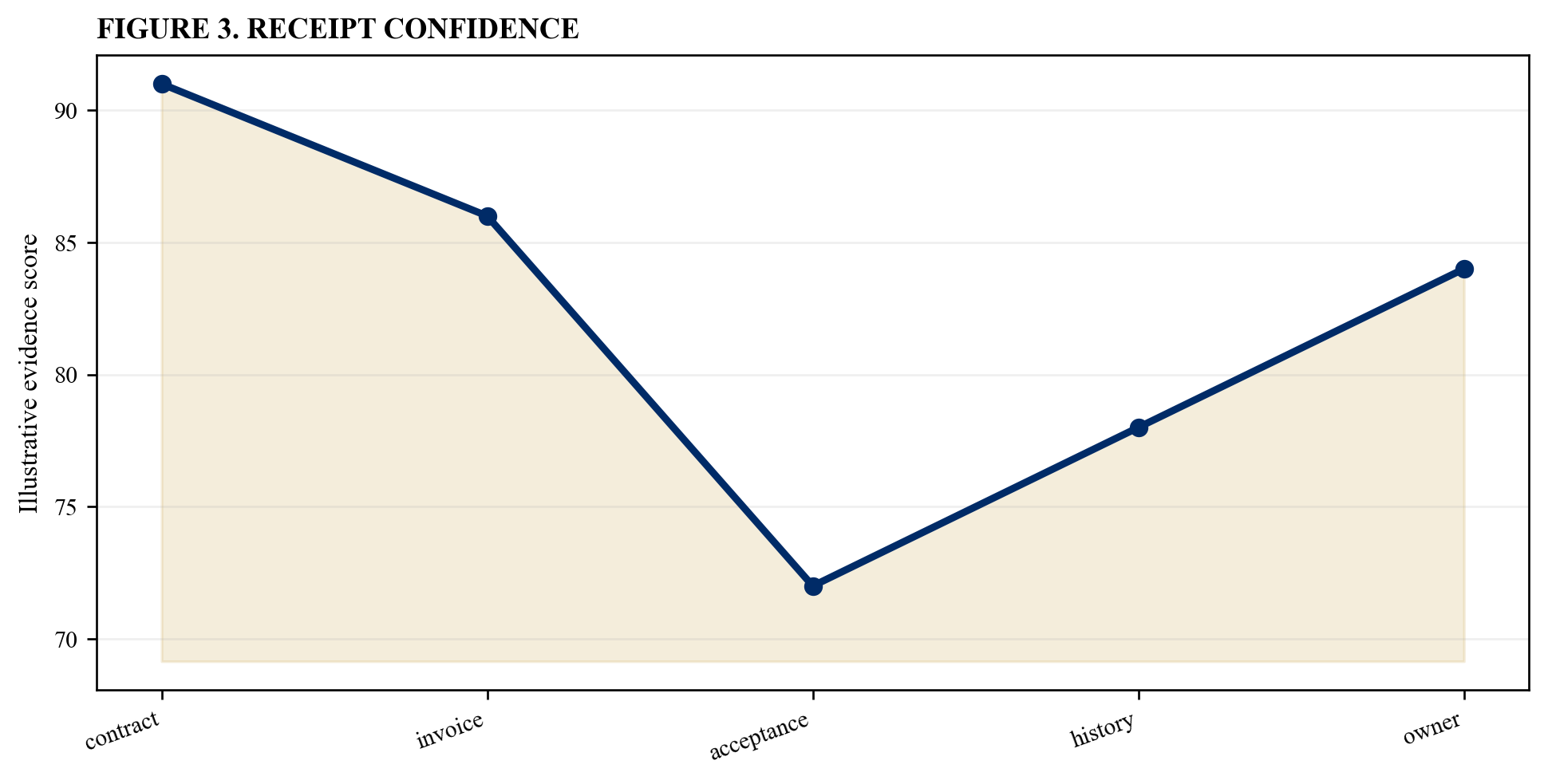
Illustrative analytical scenario; transaction evidence should replace model values.
25. Score receipt confidence
The finance team, board and transaction advisers should apply evidence-based probability and timing bands to receipts without hiding the base case. The controlled deliverable is a collections confidence map. Record the entity, account, currency, amount, timing, counterparty, source, owner, evidence status, approval and next refresh [7][44].
Reconcile bank statements, ledgers, invoices, contracts, purchase orders, payroll, tax records, debt documents, facility notices, security, operational schedules, transaction milestones and adviser evidence. Separate observed cash, legally available cash, committed flows, forecast flows, analytical scenarios and unresolved gaps.
The principal liquidity risk is that one unsupported receipt can create a false runway and delay action. Quantify the effect on weekly closing cash, minimum liquidity, operational continuity, covenant headroom, funding quantum, transaction timing, stakeholder recoveries and the earliest required intervention.
Translate the result into the controlled model, assumption register, action log, payment protocol, board dashboard and transaction critical path. Reconcile forecast to actual every week, retain version history and refresh the model whenever evidence or transaction probability changes.
26. Build downside scenarios
The finance team, board and transaction advisers should stress collections, margins, supplier terms, funding, FX, tax, transaction timing and customer loss. The controlled deliverable is a defined scenario suite. Record the entity, account, currency, amount, timing, counterparty, source, owner, evidence status, approval and next refresh [46][47].
Reconcile bank statements, ledgers, invoices, contracts, purchase orders, payroll, tax records, debt documents, facility notices, security, operational schedules, transaction milestones and adviser evidence. Separate observed cash, legally available cash, committed flows, forecast flows, analytical scenarios and unresolved gaps.
The principal liquidity risk is that isolated sensitivities can miss interacting shocks. Quantify the effect on weekly closing cash, minimum liquidity, operational continuity, covenant headroom, funding quantum, transaction timing, stakeholder recoveries and the earliest required intervention.
Translate the result into the controlled model, assumption register, action log, payment protocol, board dashboard and transaction critical path. Reconcile forecast to actual every week, retain version history and refresh the model whenever evidence or transaction probability changes.
27. Calculate minimum cash
The finance team, board and transaction advisers should identify operating buffers, restricted balances, payroll, critical suppliers, transaction needs and volatility. The controlled deliverable is a minimum-liquidity policy. Record the entity, account, currency, amount, timing, counterparty, source, owner, evidence status, approval and next refresh [48][49].
Reconcile bank statements, ledgers, invoices, contracts, purchase orders, payroll, tax records, debt documents, facility notices, security, operational schedules, transaction milestones and adviser evidence. Separate observed cash, legally available cash, committed flows, forecast flows, analytical scenarios and unresolved gaps.
The principal liquidity risk is that zero-cash runway can be treated as an acceptable operating target. Quantify the effect on weekly closing cash, minimum liquidity, operational continuity, covenant headroom, funding quantum, transaction timing, stakeholder recoveries and the earliest required intervention.
Translate the result into the controlled model, assumption register, action log, payment protocol, board dashboard and transaction critical path. Reconcile forecast to actual every week, retain version history and refresh the model whenever evidence or transaction probability changes.
28. Measure runway and pinch points
The finance team, board and transaction advisers should calculate weekly closing liquidity, headroom, breaches and the earliest intervention date by scenario. The controlled deliverable is a runway dashboard. Record the entity, account, currency, amount, timing, counterparty, source, owner, evidence status, approval and next refresh [3][50].
Reconcile bank statements, ledgers, invoices, contracts, purchase orders, payroll, tax records, debt documents, facility notices, security, operational schedules, transaction milestones and adviser evidence. Separate observed cash, legally available cash, committed flows, forecast flows, analytical scenarios and unresolved gaps.
The principal liquidity risk is that an average cash position can conceal a fatal intra-period shortfall. Quantify the effect on weekly closing cash, minimum liquidity, operational continuity, covenant headroom, funding quantum, transaction timing, stakeholder recoveries and the earliest required intervention.
Translate the result into the controlled model, assumption register, action log, payment protocol, board dashboard and transaction critical path. Reconcile forecast to actual every week, retain version history and refresh the model whenever evidence or transaction probability changes.
29. Create the funding bridge
The finance team, board and transaction advisers should reconcile opening cash, operating burn, working-capital actions, transaction costs, contingency and minimum cash to the required facility. The controlled deliverable is a rescue-finance quantum. Record the entity, account, currency, amount, timing, counterparty, source, owner, evidence status, approval and next refresh [28][51].
Reconcile bank statements, ledgers, invoices, contracts, purchase orders, payroll, tax records, debt documents, facility notices, security, operational schedules, transaction milestones and adviser evidence. Separate observed cash, legally available cash, committed flows, forecast flows, analytical scenarios and unresolved gaps.
The principal liquidity risk is that funding can be sized to an optimistic forecast rather than the executable downside need. Quantify the effect on weekly closing cash, minimum liquidity, operational continuity, covenant headroom, funding quantum, transaction timing, stakeholder recoveries and the earliest required intervention.
Translate the result into the controlled model, assumption register, action log, payment protocol, board dashboard and transaction critical path. Reconcile forecast to actual every week, retain version history and refresh the model whenever evidence or transaction probability changes.
30. Set cash-control governance
The finance team, board and transaction advisers should assign preparation, source ownership, review, challenge, approval, access, version control and distribution. The controlled deliverable is a cash-model governance charter. Record the entity, account, currency, amount, timing, counterparty, source, owner, evidence status, approval and next refresh [52][53].
Reconcile bank statements, ledgers, invoices, contracts, purchase orders, payroll, tax records, debt documents, facility notices, security, operational schedules, transaction milestones and adviser evidence. Separate observed cash, legally available cash, committed flows, forecast flows, analytical scenarios and unresolved gaps.
The principal liquidity risk is that the same person can create, approve and selectively communicate critical assumptions. Quantify the effect on weekly closing cash, minimum liquidity, operational continuity, covenant headroom, funding quantum, transaction timing, stakeholder recoveries and the earliest required intervention.
Translate the result into the controlled model, assumption register, action log, payment protocol, board dashboard and transaction critical path. Reconcile forecast to actual every week, retain version history and refresh the model whenever evidence or transaction probability changes.
31. Establish payment authority
The finance team, board and transaction advisers should set approval thresholds, critical-payment rules, related-party controls, segregation and emergency escalation. The controlled deliverable is a payment-control protocol. Record the entity, account, currency, amount, timing, counterparty, source, owner, evidence status, approval and next refresh [14][54].
Reconcile bank statements, ledgers, invoices, contracts, purchase orders, payroll, tax records, debt documents, facility notices, security, operational schedules, transaction milestones and adviser evidence. Separate observed cash, legally available cash, committed flows, forecast flows, analytical scenarios and unresolved gaps.
The principal liquidity risk is that payments can alter creditor positions or consume value without documented authority. Quantify the effect on weekly closing cash, minimum liquidity, operational continuity, covenant headroom, funding quantum, transaction timing, stakeholder recoveries and the earliest required intervention.
Translate the result into the controlled model, assumption register, action log, payment protocol, board dashboard and transaction critical path. Reconcile forecast to actual every week, retain version history and refresh the model whenever evidence or transaction probability changes.
32. Run weekly variance analysis
The finance team, board and transaction advisers should reconcile forecast to actual by amount, timing, classification and root cause, then update forecast logic. The controlled deliverable is a forecast-accuracy ledger. Record the entity, account, currency, amount, timing, counterparty, source, owner, evidence status, approval and next refresh [55][56].
Reconcile bank statements, ledgers, invoices, contracts, purchase orders, payroll, tax records, debt documents, facility notices, security, operational schedules, transaction milestones and adviser evidence. Separate observed cash, legally available cash, committed flows, forecast flows, analytical scenarios and unresolved gaps.
The principal liquidity risk is that recurring bias can remain hidden when variances are merely rolled forward. Quantify the effect on weekly closing cash, minimum liquidity, operational continuity, covenant headroom, funding quantum, transaction timing, stakeholder recoveries and the earliest required intervention.
Translate the result into the controlled model, assumption register, action log, payment protocol, board dashboard and transaction critical path. Reconcile forecast to actual every week, retain version history and refresh the model whenever evidence or transaction probability changes.
Table 4. Illustrative runway
| Scenario | Minimum AED m | Week breached |
|---|---|---|
| base | 6.2 | none |
| collections delay | -3.8 | week 9 |
| sale delay | -8.4 | week 7 |
| combined downside | -15.7 | week 5 |
Statutory periods are stated where labelled; other entries are analytical controls.
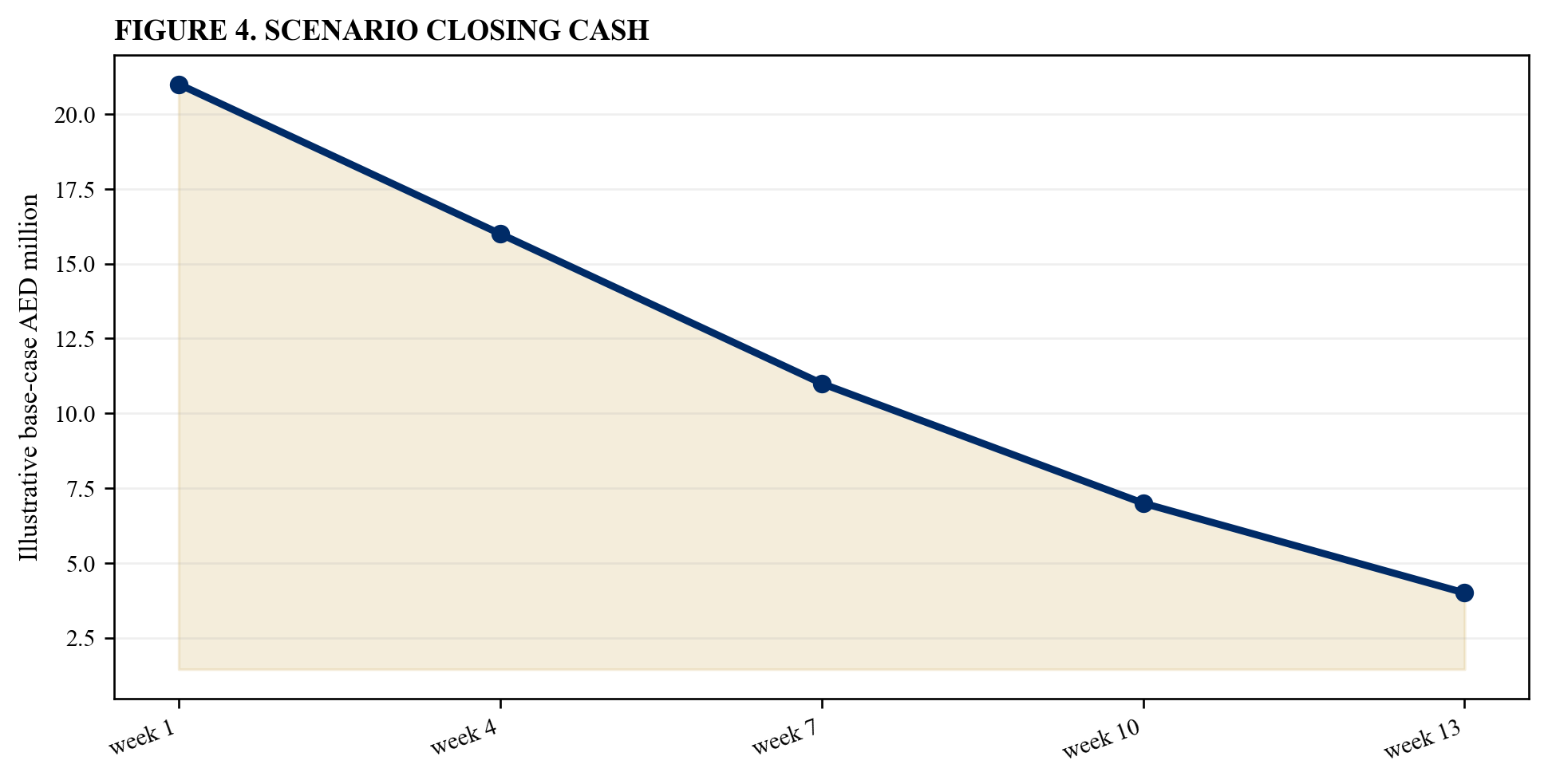
Illustrative analytical scenario; transaction evidence should replace model values.
33. Track working-capital actions
The finance team, board and transaction advisers should assign invoice release, dispute resolution, collections, inventory, purchasing and supplier-negotiation actions. The controlled deliverable is a cash-action register. Record the entity, account, currency, amount, timing, counterparty, source, owner, evidence status, approval and next refresh [8][57].
Reconcile bank statements, ledgers, invoices, contracts, purchase orders, payroll, tax records, debt documents, facility notices, security, operational schedules, transaction milestones and adviser evidence. Separate observed cash, legally available cash, committed flows, forecast flows, analytical scenarios and unresolved gaps.
The principal liquidity risk is that forecast improvements can be counted without owners, milestones or evidence. Quantify the effect on weekly closing cash, minimum liquidity, operational continuity, covenant headroom, funding quantum, transaction timing, stakeholder recoveries and the earliest required intervention.
Translate the result into the controlled model, assumption register, action log, payment protocol, board dashboard and transaction critical path. Reconcile forecast to actual every week, retain version history and refresh the model whenever evidence or transaction probability changes.
34. Connect cash to transaction milestones
The finance team, board and transaction advisers should map diligence, bids, exclusivity, approvals, financing, court dates, documentation and closing to runway. The controlled deliverable is a transaction-liquidity critical path. Record the entity, account, currency, amount, timing, counterparty, source, owner, evidence status, approval and next refresh [42][58].
Reconcile bank statements, ledgers, invoices, contracts, purchase orders, payroll, tax records, debt documents, facility notices, security, operational schedules, transaction milestones and adviser evidence. Separate observed cash, legally available cash, committed flows, forecast flows, analytical scenarios and unresolved gaps.
The principal liquidity risk is that the nominal deal timetable can exceed funded operating life. Quantify the effect on weekly closing cash, minimum liquidity, operational continuity, covenant headroom, funding quantum, transaction timing, stakeholder recoveries and the earliest required intervention.
Translate the result into the controlled model, assumption register, action log, payment protocol, board dashboard and transaction critical path. Reconcile forecast to actual every week, retain version history and refresh the model whenever evidence or transaction probability changes.
35. Compare bids on cash certainty
The finance team, board and transaction advisers should model consideration timing, deposits, assumed liabilities, working-capital terms, leakage and failure cost. The controlled deliverable is a cash-adjusted bid comparison. Record the entity, account, currency, amount, timing, counterparty, source, owner, evidence status, approval and next refresh [59][60].
Reconcile bank statements, ledgers, invoices, contracts, purchase orders, payroll, tax records, debt documents, facility notices, security, operational schedules, transaction milestones and adviser evidence. Separate observed cash, legally available cash, committed flows, forecast flows, analytical scenarios and unresolved gaps.
The principal liquidity risk is that the highest headline price can produce the weakest liquidity outcome. Quantify the effect on weekly closing cash, minimum liquidity, operational continuity, covenant headroom, funding quantum, transaction timing, stakeholder recoveries and the earliest required intervention.
Translate the result into the controlled model, assumption register, action log, payment protocol, board dashboard and transaction critical path. Reconcile forecast to actual every week, retain version history and refresh the model whenever evidence or transaction probability changes.
36. Model creditor recoveries
The finance team, board and transaction advisers should translate weekly cash, transaction proceeds, costs, security and priority into class recoveries. The controlled deliverable is a scenario recovery matrix. Record the entity, account, currency, amount, timing, counterparty, source, owner, evidence status, approval and next refresh [61][62].
Reconcile bank statements, ledgers, invoices, contracts, purchase orders, payroll, tax records, debt documents, facility notices, security, operational schedules, transaction milestones and adviser evidence. Separate observed cash, legally available cash, committed flows, forecast flows, analytical scenarios and unresolved gaps.
The principal liquidity risk is that stakeholders can negotiate from values that ignore the cash consumed before closing. Quantify the effect on weekly closing cash, minimum liquidity, operational continuity, covenant headroom, funding quantum, transaction timing, stakeholder recoveries and the earliest required intervention.
Translate the result into the controlled model, assumption register, action log, payment protocol, board dashboard and transaction critical path. Reconcile forecast to actual every week, retain version history and refresh the model whenever evidence or transaction probability changes.
37. Design stakeholder reporting
The finance team, board and transaction advisers should tailor controlled views for the board, lenders, investors, advisers, critical suppliers and office-holders. The controlled deliverable is a reporting and reliance matrix. Record the entity, account, currency, amount, timing, counterparty, source, owner, evidence status, approval and next refresh [52][63].
Reconcile bank statements, ledgers, invoices, contracts, purchase orders, payroll, tax records, debt documents, facility notices, security, operational schedules, transaction milestones and adviser evidence. Separate observed cash, legally available cash, committed flows, forecast flows, analytical scenarios and unresolved gaps.
The principal liquidity risk is that multiple audiences can receive inconsistent numbers or rely on uncontrolled versions. Quantify the effect on weekly closing cash, minimum liquidity, operational continuity, covenant headroom, funding quantum, transaction timing, stakeholder recoveries and the earliest required intervention.
Translate the result into the controlled model, assumption register, action log, payment protocol, board dashboard and transaction critical path. Reconcile forecast to actual every week, retain version history and refresh the model whenever evidence or transaction probability changes.
38. Prepare the closing funds flow
The finance team, board and transaction advisers should map sources, uses, bank details, debt payoffs, escrow, fees, taxes, adjustments, approvals and evidence. The controlled deliverable is a controlled closing statement. Record the entity, account, currency, amount, timing, counterparty, source, owner, evidence status, approval and next refresh [64][65].
Reconcile bank statements, ledgers, invoices, contracts, purchase orders, payroll, tax records, debt documents, facility notices, security, operational schedules, transaction milestones and adviser evidence. Separate observed cash, legally available cash, committed flows, forecast flows, analytical scenarios and unresolved gaps.
The principal liquidity risk is that closing can fail through arithmetic, authority, bank or sequencing errors. Quantify the effect on weekly closing cash, minimum liquidity, operational continuity, covenant headroom, funding quantum, transaction timing, stakeholder recoveries and the earliest required intervention.
Translate the result into the controlled model, assumption register, action log, payment protocol, board dashboard and transaction critical path. Reconcile forecast to actual every week, retain version history and refresh the model whenever evidence or transaction probability changes.
39. Bridge into post-close liquidity
The finance team, board and transaction advisers should transfer bank control, forecasts, payment authorities, payroll, suppliers, facilities and reporting to the new owner or structure. The controlled deliverable is a day-one cash transition plan. Record the entity, account, currency, amount, timing, counterparty, source, owner, evidence status, approval and next refresh [66][67].
Reconcile bank statements, ledgers, invoices, contracts, purchase orders, payroll, tax records, debt documents, facility notices, security, operational schedules, transaction milestones and adviser evidence. Separate observed cash, legally available cash, committed flows, forecast flows, analytical scenarios and unresolved gaps.
The principal liquidity risk is that liquidity control can break at the moment ownership changes. Quantify the effect on weekly closing cash, minimum liquidity, operational continuity, covenant headroom, funding quantum, transaction timing, stakeholder recoveries and the earliest required intervention.
Translate the result into the controlled model, assumption register, action log, payment protocol, board dashboard and transaction critical path. Reconcile forecast to actual every week, retain version history and refresh the model whenever evidence or transaction probability changes.
40. Issue the transaction-readiness certificate
The finance team, board and transaction advisers should reconcile perimeter, opening cash, receipts, payments, facilities, scenarios, controls, funding, milestones and funds flow. The controlled deliverable is an auditable cash-readiness certificate. Record the entity, account, currency, amount, timing, counterparty, source, owner, evidence status, approval and next refresh [45][68].
Reconcile bank statements, ledgers, invoices, contracts, purchase orders, payroll, tax records, debt documents, facility notices, security, operational schedules, transaction milestones and adviser evidence. Separate observed cash, legally available cash, committed flows, forecast flows, analytical scenarios and unresolved gaps.
The principal liquidity risk is that decision-makers can proceed without one agreed and evidenced liquidity position. Quantify the effect on weekly closing cash, minimum liquidity, operational continuity, covenant headroom, funding quantum, transaction timing, stakeholder recoveries and the earliest required intervention.
Translate the result into the controlled model, assumption register, action log, payment protocol, board dashboard and transaction critical path. Reconcile forecast to actual every week, retain version history and refresh the model whenever evidence or transaction probability changes.
Table 5. Cash-readiness certificate
| Domain | Evidence | Owner |
|---|---|---|
| cash | bank reconciliations | controller |
| forecast | receipt and payment ledgers | CFO |
| funding | conditions and availability | treasurer |
| transaction | milestones and funds flow | deal lead |
Statutory periods are stated where labelled; other entries are analytical controls.
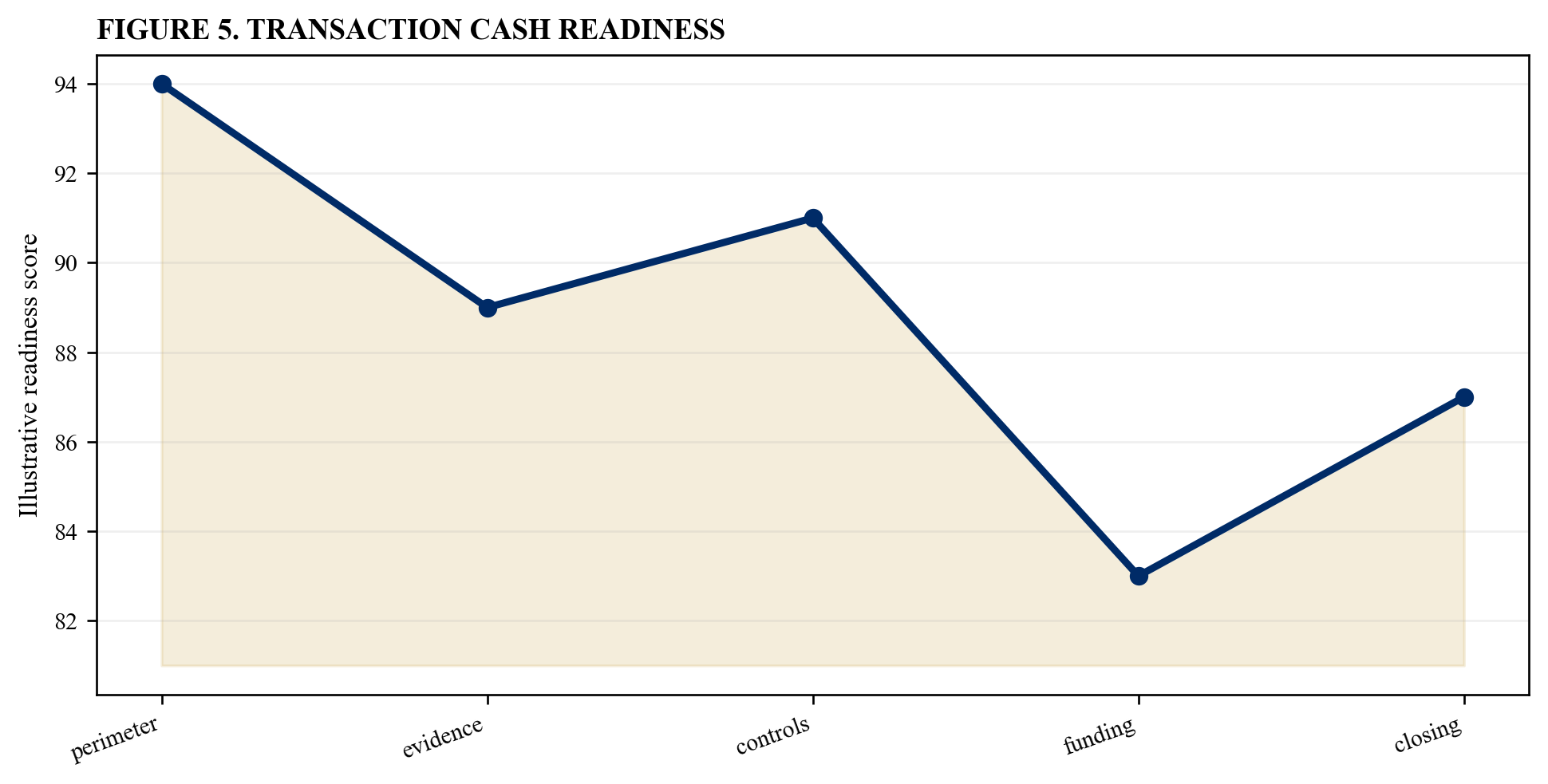
Illustrative analytical scenario; transaction evidence should replace model values.
References
- IFRS Foundation, IAS 7 Statement of Cash Flows, https://www.ifrs.org/issued-standards/list-of-standards/ias-7-statement-of-cash-flows/
- IFRS Foundation, IFRS 10 Consolidated Financial Statements, https://www.ifrs.org/issued-standards/list-of-standards/ifrs-10-consolidated-financial-statements/
- UK Government, Corporate Financial Distress Guidance Note, https://www.gov.uk/government/publications/the-sourcing-and-consultancy-playbooks/corporate-financial-distress-guidance-note-html
- UK Insolvency Service, Company health check, https://www.gov.uk/guidance/company-health-check-keeping-your-business-on-track
- ISO, ISO 9001 Quality Management Systems, https://www.iso.org/iso-9001-quality-management.html
- IFRS Foundation, IFRS 7 Financial Instruments Disclosures, https://www.ifrs.org/issued-standards/list-of-standards/ifrs-7-financial-instruments-disclosures/
- IFRS Foundation, IFRS 15 Revenue from Contracts with Customers, https://www.ifrs.org/issued-standards/list-of-standards/ifrs-15-revenue-from-contracts-with-customers/
- Association of Corporate Treasurers, Cash management resources, https://www.treasurers.org/knowledge-hub
- IFRS Foundation, IFRS 9 Financial Instruments, https://www.ifrs.org/issued-standards/list-of-standards/ifrs-9-financial-instruments/
- IFRS Foundation, IAS 1 Presentation of Financial Statements, https://www.ifrs.org/issued-standards/list-of-standards/ias-1-presentation-of-financial-statements/
- IFRS Foundation, Management Commentary, https://www.ifrs.org/projects/work-plan/management-commentary/
- Institute of Internal Auditors, Three Lines Model, https://www.theiia.org/en/content/position-papers/2020/the-iias-three-lines-model-an-update-of-the-three-lines-of-defense/
- COSO, Internal Control Integrated Framework, https://www.coso.org/internal-control
- UK Insolvency Service, Director duties upon insolvency, https://www.gov.uk/guidance/director-information-hub-director-duties-upon-insolvency
- ISO, ISO 22301 Business Continuity Management, https://www.iso.org/standard/75106.html
- IFRS Foundation, IAS 19 Employee Benefits, https://www.ifrs.org/issued-standards/list-of-standards/ias-19-employee-benefits/
- International Labour Organization, Protection of Wages Convention, https://www.ilo.org/resource/c95-protection-wages-convention-1949-no-95
- UK HMRC, Paying tax guidance, https://www.gov.uk/topic/dealing-with-hmrc/paying-hmrc
- OECD, Tax Administration guidance, https://www.oecd.org/tax/administration/
- ISO, ISO 44001 Collaborative Business Relationships, https://www.iso.org/standard/72798.html
- UNCITRAL, Legislative Guide on Insolvency Law, https://uncitral.un.org/en/texts/insolvency/legislativeguides/insolvency_law
- Sale of Goods Act 1979, https://www.legislation.gov.uk/ukpga/1979/54/contents
- UK Insolvency Service, Liquidation and insolvency, https://www.gov.uk/government/publications/liquidation-and-insolvency/liquidation-and-insolvency
- IFRS Foundation, IFRS 16 Leases, https://www.ifrs.org/issued-standards/list-of-standards/ifrs-16-leases/
- UK Government, Commercial rent code and property guidance, https://www.gov.uk/government/collections/commercial-property
- IFRS Foundation, IAS 23 Borrowing Costs, https://www.ifrs.org/issued-standards/list-of-standards/ias-23-borrowing-costs/
- Loan Market Association, Documentation resources, https://www.lma.eu.com/documents-guidelines
- US Trustee Program, Chapter 11 Information, https://www.justice.gov/ust/chapter-11-information
- US Trustee Program, Region 17 Chapter 11 Guidelines, https://www.justice.gov/ust/ust-regions-r17/file/guidelines.pdf/dl
- United States Bankruptcy Code, section 363, https://uscode.house.gov/view.xhtml?req=granuleid:USC-prelim-title11-section363
- UNCITRAL, Secured Transactions resources, https://uncitral.un.org/en/texts/securityinterests
- IFRS Foundation, Supplier Finance Arrangements, https://www.ifrs.org/projects/completed-projects/2023/supplier-finance-arrangements/
- IFRS Interpretations Committee, Supply Chain Financing Arrangements, https://www.ifrs.org/news-and-events/updates/ifric/2020/ifric-update-june-2020/
- OECD, Transfer Pricing Guidelines, https://www.oecd.org/tax/transfer-pricing/oecd-transfer-pricing-guidelines-for-multinational-enterprises-and-tax-administrations-20769717.htm
- UK Supreme Court, BTI 2014 LLC v Sequana SA, https://www.supremecourt.uk/cases/uksc-2019-0046
- IFRS Foundation, IAS 21 Effects of Changes in Foreign Exchange Rates, https://www.ifrs.org/issued-standards/list-of-standards/ias-21-the-effects-of-changes-in-foreign-exchange-rates/
- Bank for International Settlements, FX risk resources, https://www.bis.org/list/cpmi/tid_30/index.htm
- IFRS Foundation, IAS 2 Inventories, https://www.ifrs.org/issued-standards/list-of-standards/ias-2-inventories/
- IFRS Foundation, IAS 36 Impairment of Assets, https://www.ifrs.org/issued-standards/list-of-standards/ias-36-impairment-of-assets/
- IFRS Foundation, IFRS 15 Revenue from Contracts with Customers, https://www.ifrs.org/issued-standards/list-of-standards/ifrs-15-revenue-from-contracts-with-customers/
- ICC, Uniform Rules for Demand Guarantees URDG 758, https://iccwbo.org/business-solutions/rules-standards/demand-guarantees/
- UK Competition and Markets Authority, Mergers guidance, https://www.gov.uk/topic/competition/mergers
- UK Courts and Tribunals Judiciary, Restructuring plans, https://www.judiciary.uk/
- ISO, ISO 31000 Risk Management, https://www.iso.org/iso-31000-risk-management.html
- ISO, ISO 15489 Records Management, https://www.iso.org/standard/62542.html
- COSO, Enterprise Risk Management, https://www.coso.org/enterprise-risk-management
- Bank of England, Stress testing resources, https://www.bankofengland.co.uk/stress-testing
- Association of Corporate Treasurers, Liquidity resources, https://www.treasurers.org/knowledge-hub
- IFRS Foundation, Going Concern disclosures, https://www.ifrs.org/news-and-events/news/2021/01/going-concern-a-focus-on-disclosure/
- UK Insolvency Service, Director information hub, https://www.gov.uk/guidance/being-a-company-director
- Corporate Insolvency and Governance Act 2020, https://www.legislation.gov.uk/ukpga/2020/12/contents
- Financial Reporting Council, UK Corporate Governance Code 2024, https://www.frc.org.uk/library/standards-codes-policy/corporate-governance/uk-corporate-governance-code/
- ISO, ISO 37000 Governance of Organizations, https://www.iso.org/standard/65036.html
- Insolvency Act 1986, https://www.legislation.gov.uk/ukpga/1986/45/contents
- IFRS Foundation, Statement of Cash Flows and Related Matters, https://www.ifrs.org/projects/work-plan/statement-of-cash-flows-and-related-matters/
- IFRS Foundation, IAS 7 disclosure initiative, https://www.ifrs.org/projects/completed-projects/2016/disclosure-initiative-amendments-to-ias-7/
- ISO, ISO 9001 Quality Management Systems, https://www.iso.org/iso-9001-quality-management.html
- Corporate Insolvency and Governance Act 2020, Part 26A notes, https://www.legislation.gov.uk/ukpga/2020/12/notes/division/6/index.htm
- IVSC, International Valuation Standards, https://www.ivsc.org/standards/
- UNIDROIT, Principles of International Commercial Contracts, https://www.unidroit.org/instruments/commercial-contracts/unidroit-principles-2016/
- World Bank, Principles for Effective Insolvency and Creditor-Debtor Regimes, https://www.worldbank.org/en/topic/financialsector/brief/the-world-bank-principles-for-effective-insolvency-and-creditor-rights
- UNCITRAL, Model Law on Cross-Border Insolvency, https://uncitral.un.org/en/texts/insolvency/modellaw/cross-border_insolvency
- US Trustee Program, Region 21 Chapter 11 Operating Guidelines, https://www.justice.gov/ust/ust-regions-r21/file/ch11_guidelines_reporting_req.pdf/dl
- Association for Financial Professionals, Treasury resources, https://www.afponline.org/topics/treasury
- ISO, ISO 20022 Financial Services Messaging, https://www.iso20022.org/
- IFRS Foundation, IFRS 3 Business Combinations, https://www.ifrs.org/issued-standards/list-of-standards/ifrs-3-business-combinations/
- ISO, ISO 22301 Business Continuity Management, https://www.iso.org/standard/75106.html
- UK Financial Reporting Council, Guidance on Risk Management and Internal Control, https://www.frc.org.uk/library/standards-codes-policy/corporate-governance/
