

1. Define the transaction perimeter
The transaction sponsor, counsel and economist should identify every share, asset, usufruct, contractual right, joint venture and sequence that may transfer direct or indirect control. The controlled deliverable is a transaction-perimeter memorandum. Record the legal basis, factual source, calculation method, accountable owner, reviewer, uncertainty range, decision date and escalation path [1][2].
Apply the test before signing and repeat it when structure, rights, parties, financing, market evidence or timing changes. The review should show the base case, credible alternative interpretations and the evidence that would change the conclusion.
The principal execution risk is that deal teams can screen only the headline acquisition and omit linked steps that form one concentration. Measure the effect on notification, completeness, statutory timing, standstill, financing availability, remedy exposure, contractual rights, closing probability and value. Assign an early-warning indicator and a board threshold.
Convert the result into the filing plan, transaction documents, diligence request list, valuation model, financing timetable, clean-team rules, integration plan and closing checklist. Preserve an audit trail suitable for the Ministry, sector regulator, lender, investment committee and post-clearance operating team.
2. Identify the undertakings concerned
The transaction sponsor, counsel and economist should map purchaser, seller, target, jointly controlling parents, associated persons and relevant group entities. The controlled deliverable is an undertakings schedule. Record the legal basis, factual source, calculation method, accountable owner, reviewer, uncertainty range, decision date and escalation path [1][3].
Apply the test before signing and repeat it when structure, rights, parties, financing, market evidence or timing changes. The review should show the base case, credible alternative interpretations and the evidence that would change the conclusion.
The principal execution risk is that the wrong party set can distort sales, market share, documents and filing responsibility. Measure the effect on notification, completeness, statutory timing, standstill, financing availability, remedy exposure, contractual rights, closing probability and value. Assign an early-warning indicator and a board threshold.
Convert the result into the filing plan, transaction documents, diligence request list, valuation model, financing timetable, clean-team rules, integration plan and closing checklist. Preserve an audit trail suitable for the Ministry, sector regulator, lender, investment committee and post-clearance operating team.
3. Test acquisition of control
The transaction sponsor, counsel and economist should analyse decisive influence over strategy, budget, appointments, vetoes, assets, contracts and commercial conduct. The controlled deliverable is a control-rights matrix. Record the legal basis, factual source, calculation method, accountable owner, reviewer, uncertainty range, decision date and escalation path [1][4].
Apply the test before signing and repeat it when structure, rights, parties, financing, market evidence or timing changes. The review should show the base case, credible alternative interpretations and the evidence that would change the conclusion.
The principal execution risk is that minority rights or contractual arrangements can transfer influence even without majority ownership. Measure the effect on notification, completeness, statutory timing, standstill, financing availability, remedy exposure, contractual rights, closing probability and value. Assign an early-warning indicator and a board threshold.
Convert the result into the filing plan, transaction documents, diligence request list, valuation model, financing timetable, clean-team rules, integration plan and closing checklist. Preserve an audit trail suitable for the Ministry, sector regulator, lender, investment committee and post-clearance operating team.
4. Screen joint ventures
The transaction sponsor, counsel and economist should test whether a new or existing venture combines assets, functions, governance and durable market activity. The controlled deliverable is a joint-venture jurisdiction note. Record the legal basis, factual source, calculation method, accountable owner, reviewer, uncertainty range, decision date and escalation path [1][5].
Apply the test before signing and repeat it when structure, rights, parties, financing, market evidence or timing changes. The review should show the base case, credible alternative interpretations and the evidence that would change the conclusion.
The principal execution risk is that parties can treat a collaboration as ordinary contracting despite a concentration of control. Measure the effect on notification, completeness, statutory timing, standstill, financing availability, remedy exposure, contractual rights, closing probability and value. Assign an early-warning indicator and a board threshold.
Convert the result into the filing plan, transaction documents, diligence request list, valuation model, financing timetable, clean-team rules, integration plan and closing checklist. Preserve an audit trail suitable for the Ministry, sector regulator, lender, investment committee and post-clearance operating team.
5. Map the UAE nexus
The transaction sponsor, counsel and economist should trace customers, sales, digital access, assets, suppliers, licences and competitive effects within the State. The controlled deliverable is a UAE-effects map. Record the legal basis, factual source, calculation method, accountable owner, reviewer, uncertainty range, decision date and escalation path [1][6].
Apply the test before signing and repeat it when structure, rights, parties, financing, market evidence or timing changes. The review should show the base case, credible alternative interpretations and the evidence that would change the conclusion.
The principal execution risk is that a foreign-to-foreign transaction can be dismissed despite material UAE market effects. Measure the effect on notification, completeness, statutory timing, standstill, financing availability, remedy exposure, contractual rights, closing probability and value. Assign an early-warning indicator and a board threshold.
Convert the result into the filing plan, transaction documents, diligence request list, valuation model, financing timetable, clean-team rules, integration plan and closing checklist. Preserve an audit trail suitable for the Ministry, sector regulator, lender, investment committee and post-clearance operating team.
6. Check statutory and sector scope
The transaction sponsor, counsel and economist should identify exclusions, government-related treatment, sectoral regulators and concurrent approval regimes. The controlled deliverable is a scope-and-authority schedule. Record the legal basis, factual source, calculation method, accountable owner, reviewer, uncertainty range, decision date and escalation path [1][7].
Apply the test before signing and repeat it when structure, rights, parties, financing, market evidence or timing changes. The review should show the base case, credible alternative interpretations and the evidence that would change the conclusion.
The principal execution risk is that a sector filing can be assumed to replace a federal competition analysis without a verified legal basis. Measure the effect on notification, completeness, statutory timing, standstill, financing availability, remedy exposure, contractual rights, closing probability and value. Assign an early-warning indicator and a board threshold.
Convert the result into the filing plan, transaction documents, diligence request list, valuation model, financing timetable, clean-team rules, integration plan and closing checklist. Preserve an audit trail suitable for the Ministry, sector regulator, lender, investment committee and post-clearance operating team.
7. Define candidate product markets
The transaction sponsor, counsel and economist should group substitutable goods and services by characteristics, use, price, customer behaviour and supply response. The controlled deliverable is a product-market hypothesis register. Record the legal basis, factual source, calculation method, accountable owner, reviewer, uncertainty range, decision date and escalation path [8][9].
Apply the test before signing and repeat it when structure, rights, parties, financing, market evidence or timing changes. The review should show the base case, credible alternative interpretations and the evidence that would change the conclusion.
The principal execution risk is that an over-broad market can suppress share while an artificial narrow market can exaggerate it. Measure the effect on notification, completeness, statutory timing, standstill, financing availability, remedy exposure, contractual rights, closing probability and value. Assign an early-warning indicator and a board threshold.
Convert the result into the filing plan, transaction documents, diligence request list, valuation model, financing timetable, clean-team rules, integration plan and closing checklist. Preserve an audit trail suitable for the Ministry, sector regulator, lender, investment committee and post-clearance operating team.
8. Define candidate geographic markets
The transaction sponsor, counsel and economist should test where supply and demand meet under sufficiently similar competitive conditions, including digital channels. The controlled deliverable is a geographic-market evidence map. Record the legal basis, factual source, calculation method, accountable owner, reviewer, uncertainty range, decision date and escalation path [8][10].
Apply the test before signing and repeat it when structure, rights, parties, financing, market evidence or timing changes. The review should show the base case, credible alternative interpretations and the evidence that would change the conclusion.
The principal execution risk is that national, emirate, local or digital boundaries can be asserted without transaction evidence. Measure the effect on notification, completeness, statutory timing, standstill, financing availability, remedy exposure, contractual rights, closing probability and value. Assign an early-warning indicator and a board threshold.
Convert the result into the filing plan, transaction documents, diligence request list, valuation model, financing timetable, clean-team rules, integration plan and closing checklist. Preserve an audit trail suitable for the Ministry, sector regulator, lender, investment committee and post-clearance operating team.
Table 1. Relevant-market evidence map
| Dimension | Evidence | Decision use |
|---|---|---|
| demand substitution | customer switching and purpose | product boundary |
| supply response | capability, cost and timing | competitive constraint |
| geography | conditions and transport or digital reach | geographic boundary |
| time | seasonality and contract duration | measurement period |
Statutory periods are stated where labelled; other entries are analytical controls.
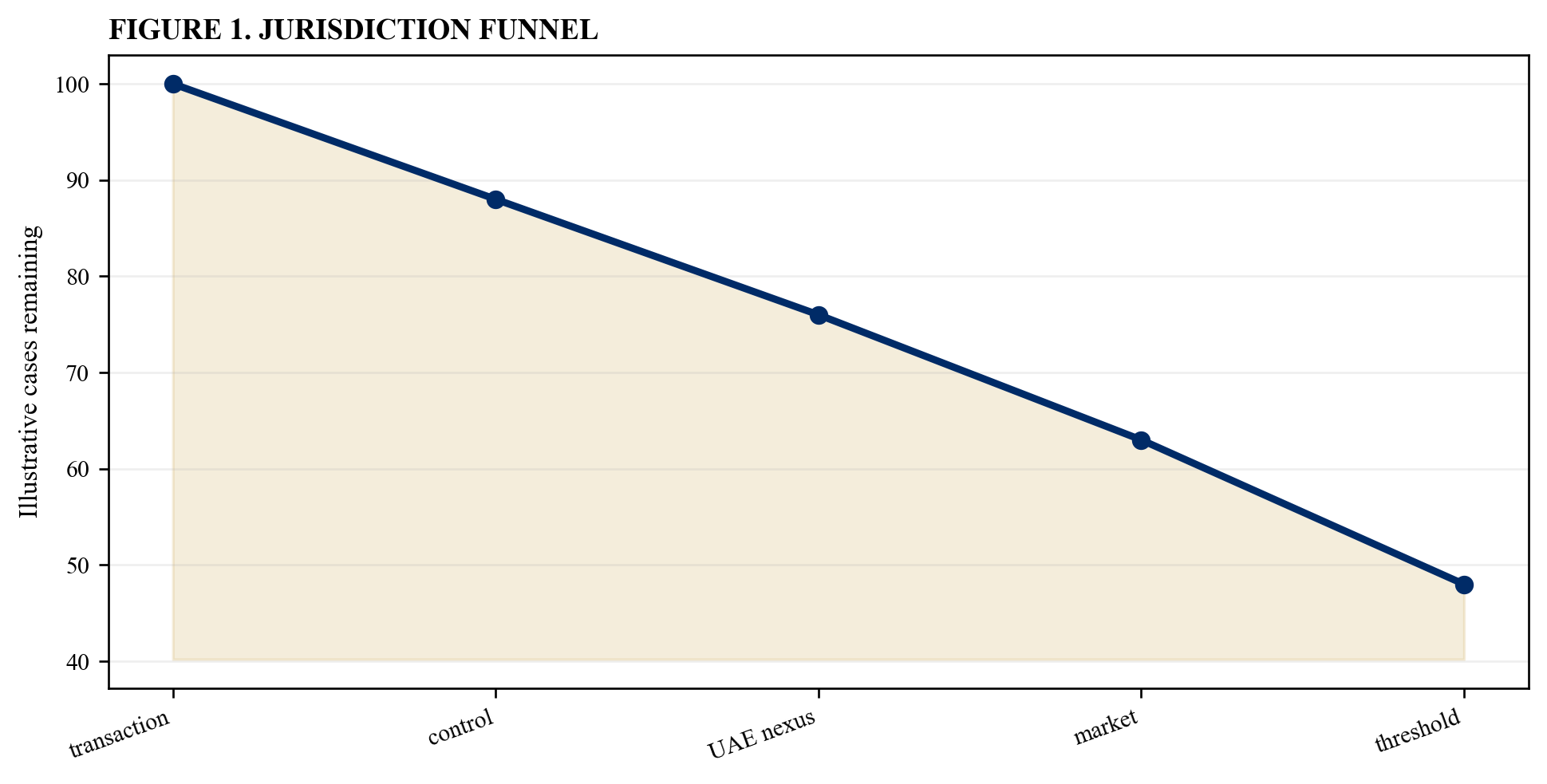
Illustrative analytical scenario; transaction evidence should replace model values.
9. Build the annual-sales bridge
The transaction sponsor, counsel and economist should reconcile audited accounts to last-fiscal-year sales in each relevant UAE market for the undertakings concerned. The controlled deliverable is a threshold sales workbook. Record the legal basis, factual source, calculation method, accountable owner, reviewer, uncertainty range, decision date and escalation path [2][11].
Apply the test before signing and repeat it when structure, rights, parties, financing, market evidence or timing changes. The review should show the base case, credible alternative interpretations and the evidence that would change the conclusion.
The principal execution risk is that global revenue or total UAE revenue can be substituted for the statutory relevant-market measure. Measure the effect on notification, completeness, statutory timing, standstill, financing availability, remedy exposure, contractual rights, closing probability and value. Assign an early-warning indicator and a board threshold.
Convert the result into the filing plan, transaction documents, diligence request list, valuation model, financing timetable, clean-team rules, integration plan and closing checklist. Preserve an audit trail suitable for the Ministry, sector regulator, lender, investment committee and post-clearance operating team.
10. Estimate combined market share
The transaction sponsor, counsel and economist should triangulate sales, volume, capacity, customers, tenders and credible third-party datasets. The controlled deliverable is a market-share range. Record the legal basis, factual source, calculation method, accountable owner, reviewer, uncertainty range, decision date and escalation path [2][8].
Apply the test before signing and repeat it when structure, rights, parties, financing, market evidence or timing changes. The review should show the base case, credible alternative interpretations and the evidence that would change the conclusion.
The principal execution risk is that false precision or missing private-market data can hide a 40 percent threshold crossing. Measure the effect on notification, completeness, statutory timing, standstill, financing availability, remedy exposure, contractual rights, closing probability and value. Assign an early-warning indicator and a board threshold.
Convert the result into the filing plan, transaction documents, diligence request list, valuation model, financing timetable, clean-team rules, integration plan and closing checklist. Preserve an audit trail suitable for the Ministry, sector regulator, lender, investment committee and post-clearance operating team.
11. Apply the alternative thresholds
The transaction sponsor, counsel and economist should test the AED 300 million sales limb and the 40 percent market-share limb independently for every plausible market. The controlled deliverable is a threshold decision tree. Record the legal basis, factual source, calculation method, accountable owner, reviewer, uncertainty range, decision date and escalation path [2][12].
Apply the test before signing and repeat it when structure, rights, parties, financing, market evidence or timing changes. The review should show the base case, credible alternative interpretations and the evidence that would change the conclusion.
The principal execution risk is that teams can incorrectly require both limbs to be met before planning a notification. Measure the effect on notification, completeness, statutory timing, standstill, financing availability, remedy exposure, contractual rights, closing probability and value. Assign an early-warning indicator and a board threshold.
Convert the result into the filing plan, transaction documents, diligence request list, valuation model, financing timetable, clean-team rules, integration plan and closing checklist. Preserve an audit trail suitable for the Ministry, sector regulator, lender, investment committee and post-clearance operating team.
12. Document uncertainty and sensitivity
The transaction sponsor, counsel and economist should show how market definitions, currency, fiscal periods, intercompany sales and data gaps change the result. The controlled deliverable is a sensitivity matrix. Record the legal basis, factual source, calculation method, accountable owner, reviewer, uncertainty range, decision date and escalation path [8][13].
Apply the test before signing and repeat it when structure, rights, parties, financing, market evidence or timing changes. The review should show the base case, credible alternative interpretations and the evidence that would change the conclusion.
The principal execution risk is that a single-point estimate can create false confidence near a threshold. Measure the effect on notification, completeness, statutory timing, standstill, financing availability, remedy exposure, contractual rights, closing probability and value. Assign an early-warning indicator and a board threshold.
Convert the result into the filing plan, transaction documents, diligence request list, valuation model, financing timetable, clean-team rules, integration plan and closing checklist. Preserve an audit trail suitable for the Ministry, sector regulator, lender, investment committee and post-clearance operating team.
13. Set the jurisdiction decision gate
The transaction sponsor, counsel and economist should require legal and economic sign-off before exclusivity, public announcement, financing lock-in or signing. The controlled deliverable is a board jurisdiction certificate. Record the legal basis, factual source, calculation method, accountable owner, reviewer, uncertainty range, decision date and escalation path [1][14].
Apply the test before signing and repeat it when structure, rights, parties, financing, market evidence or timing changes. The review should show the base case, credible alternative interpretations and the evidence that would change the conclusion.
The principal execution risk is that commercial momentum can outrun the competition screen and reduce available options. Measure the effect on notification, completeness, statutory timing, standstill, financing availability, remedy exposure, contractual rights, closing probability and value. Assign an early-warning indicator and a board threshold.
Convert the result into the filing plan, transaction documents, diligence request list, valuation model, financing timetable, clean-team rules, integration plan and closing checklist. Preserve an audit trail suitable for the Ministry, sector regulator, lender, investment committee and post-clearance operating team.
14. Engage the competent authorities
The transaction sponsor, counsel and economist should map the Ministry, concerned authorities and sectoral regulators and plan coordinated communications. The controlled deliverable is an authority-engagement protocol. Record the legal basis, factual source, calculation method, accountable owner, reviewer, uncertainty range, decision date and escalation path [3][7].
Apply the test before signing and repeat it when structure, rights, parties, financing, market evidence or timing changes. The review should show the base case, credible alternative interpretations and the evidence that would change the conclusion.
The principal execution risk is that fragmented outreach can produce inconsistent facts, duplicated requests or timetable surprises. Measure the effect on notification, completeness, statutory timing, standstill, financing availability, remedy exposure, contractual rights, closing probability and value. Assign an early-warning indicator and a board threshold.
Convert the result into the filing plan, transaction documents, diligence request list, valuation model, financing timetable, clean-team rules, integration plan and closing checklist. Preserve an audit trail suitable for the Ministry, sector regulator, lender, investment committee and post-clearance operating team.
15. Allocate filing responsibility
The transaction sponsor, counsel and economist should identify the authorised applicants, representatives, powers of attorney, translators and evidence owners. The controlled deliverable is a filing-responsibility matrix. Record the legal basis, factual source, calculation method, accountable owner, reviewer, uncertainty range, decision date and escalation path [3][15].
Apply the test before signing and repeat it when structure, rights, parties, financing, market evidence or timing changes. The review should show the base case, credible alternative interpretations and the evidence that would change the conclusion.
The principal execution risk is that unclear ownership can delay a complete application and create inconsistent submissions. Measure the effect on notification, completeness, statutory timing, standstill, financing availability, remedy exposure, contractual rights, closing probability and value. Assign an early-warning indicator and a board threshold.
Convert the result into the filing plan, transaction documents, diligence request list, valuation model, financing timetable, clean-team rules, integration plan and closing checklist. Preserve an audit trail suitable for the Ministry, sector regulator, lender, investment committee and post-clearance operating team.
16. Assemble corporate and transaction documents
The transaction sponsor, counsel and economist should collect constitutional documents, ownership records, transaction agreements, control rights and group charts. The controlled deliverable is a document completeness index. Record the legal basis, factual source, calculation method, accountable owner, reviewer, uncertainty range, decision date and escalation path [3][16].
Apply the test before signing and repeat it when structure, rights, parties, financing, market evidence or timing changes. The review should show the base case, credible alternative interpretations and the evidence that would change the conclusion.
The principal execution risk is that late authentication, translation or signature work can delay formal acceptance. Measure the effect on notification, completeness, statutory timing, standstill, financing availability, remedy exposure, contractual rights, closing probability and value. Assign an early-warning indicator and a board threshold.
Convert the result into the filing plan, transaction documents, diligence request list, valuation model, financing timetable, clean-team rules, integration plan and closing checklist. Preserve an audit trail suitable for the Ministry, sector regulator, lender, investment committee and post-clearance operating team.
Table 2. Filing completeness architecture
| Workstream | Core evidence | Accountable owner |
|---|---|---|
| corporate | ownership, control and powers | legal |
| financial | audited statements and sales bridge | finance |
| economic | markets, shares and effects | economist |
| transaction | agreements, timetable and rationale | deal lead |
Statutory periods are stated where labelled; other entries are analytical controls.
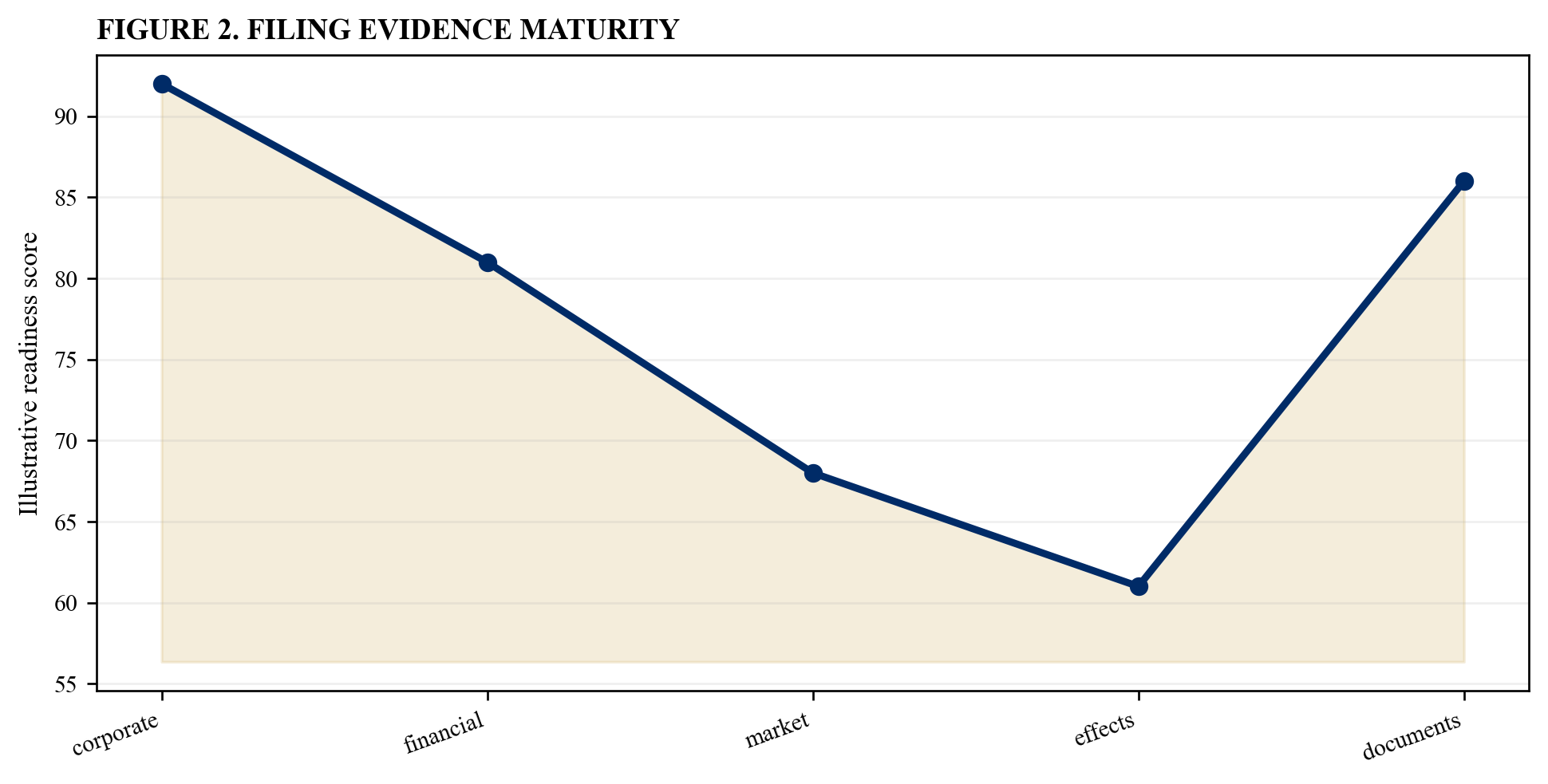
Illustrative analytical scenario; transaction evidence should replace model values.
17. Prepare financial evidence
The transaction sponsor, counsel and economist should reconcile three-year audited statements, management accounts, sales segmentation, currencies and group data. The controlled deliverable is a financial-evidence book. Record the legal basis, factual source, calculation method, accountable owner, reviewer, uncertainty range, decision date and escalation path [3][11].
Apply the test before signing and repeat it when structure, rights, parties, financing, market evidence or timing changes. The review should show the base case, credible alternative interpretations and the evidence that would change the conclusion.
The principal execution risk is that unreconciled numbers can undermine threshold analysis and filing credibility. Measure the effect on notification, completeness, statutory timing, standstill, financing availability, remedy exposure, contractual rights, closing probability and value. Assign an early-warning indicator and a board threshold.
Convert the result into the filing plan, transaction documents, diligence request list, valuation model, financing timetable, clean-team rules, integration plan and closing checklist. Preserve an audit trail suitable for the Ministry, sector regulator, lender, investment committee and post-clearance operating team.
18. Prepare the economic-dimension report
The transaction sponsor, counsel and economist should explain markets, overlaps, vertical links, competitors, customers, entry, efficiencies and competitive effects. The controlled deliverable is an evidence-led economic report. Record the legal basis, factual source, calculation method, accountable owner, reviewer, uncertainty range, decision date and escalation path [3][17].
Apply the test before signing and repeat it when structure, rights, parties, financing, market evidence or timing changes. The review should show the base case, credible alternative interpretations and the evidence that would change the conclusion.
The principal execution risk is that a descriptive filing can fail to answer the authority's economic questions. Measure the effect on notification, completeness, statutory timing, standstill, financing availability, remedy exposure, contractual rights, closing probability and value. Assign an early-warning indicator and a board threshold.
Convert the result into the filing plan, transaction documents, diligence request list, valuation model, financing timetable, clean-team rules, integration plan and closing checklist. Preserve an audit trail suitable for the Ministry, sector regulator, lender, investment committee and post-clearance operating team.
19. Control confidentiality
The transaction sponsor, counsel and economist should separate confidential data, public summaries, clean-team material, privilege and disclosure permissions. The controlled deliverable is a confidentiality and publication schedule. Record the legal basis, factual source, calculation method, accountable owner, reviewer, uncertainty range, decision date and escalation path [3][18].
Apply the test before signing and repeat it when structure, rights, parties, financing, market evidence or timing changes. The review should show the base case, credible alternative interpretations and the evidence that would change the conclusion.
The principal execution risk is that commercially sensitive evidence can be over-disclosed or withheld without an accepted basis. Measure the effect on notification, completeness, statutory timing, standstill, financing availability, remedy exposure, contractual rights, closing probability and value. Assign an early-warning indicator and a board threshold.
Convert the result into the filing plan, transaction documents, diligence request list, valuation model, financing timetable, clean-team rules, integration plan and closing checklist. Preserve an audit trail suitable for the Ministry, sector regulator, lender, investment committee and post-clearance operating team.
20. Pay and evidence the filing fee
The transaction sponsor, counsel and economist should calculate the applicable service fee, confirm the sales base and retain proof of payment. The controlled deliverable is a fee-calculation certificate. Record the legal basis, factual source, calculation method, accountable owner, reviewer, uncertainty range, decision date and escalation path [19][20].
Apply the test before signing and repeat it when structure, rights, parties, financing, market evidence or timing changes. The review should show the base case, credible alternative interpretations and the evidence that would change the conclusion.
The principal execution risk is that an incorrect or missing payment can prevent procedural completion. Measure the effect on notification, completeness, statutory timing, standstill, financing availability, remedy exposure, contractual rights, closing probability and value. Assign an early-warning indicator and a board threshold.
Convert the result into the filing plan, transaction documents, diligence request list, valuation model, financing timetable, clean-team rules, integration plan and closing checklist. Preserve an audit trail suitable for the Ministry, sector regulator, lender, investment committee and post-clearance operating team.
21. Plan the formal examination
The transaction sponsor, counsel and economist should allow for the ten-working-day completeness review, possible extension and requests for missing material. The controlled deliverable is a formal-review calendar. Record the legal basis, factual source, calculation method, accountable owner, reviewer, uncertainty range, decision date and escalation path [3][21].
Apply the test before signing and repeat it when structure, rights, parties, financing, market evidence or timing changes. The review should show the base case, credible alternative interpretations and the evidence that would change the conclusion.
The principal execution risk is that the deal timetable can start from submission even though substantive review follows completeness. Measure the effect on notification, completeness, statutory timing, standstill, financing availability, remedy exposure, contractual rights, closing probability and value. Assign an early-warning indicator and a board threshold.
Convert the result into the filing plan, transaction documents, diligence request list, valuation model, financing timetable, clean-team rules, integration plan and closing checklist. Preserve an audit trail suitable for the Ministry, sector regulator, lender, investment committee and post-clearance operating team.
22. Model the statutory review clock
The transaction sponsor, counsel and economist should separate the 90-day filing lead, the 90-day decision period, the possible 45-day extension and interruptions. The controlled deliverable is an integrated regulatory timetable. Record the legal basis, factual source, calculation method, accountable owner, reviewer, uncertainty range, decision date and escalation path [1][3].
Apply the test before signing and repeat it when structure, rights, parties, financing, market evidence or timing changes. The review should show the base case, credible alternative interpretations and the evidence that would change the conclusion.
The principal execution risk is that a contractual long-stop can expire before the statutory process can finish. Measure the effect on notification, completeness, statutory timing, standstill, financing availability, remedy exposure, contractual rights, closing probability and value. Assign an early-warning indicator and a board threshold.
Convert the result into the filing plan, transaction documents, diligence request list, valuation model, financing timetable, clean-team rules, integration plan and closing checklist. Preserve an audit trail suitable for the Ministry, sector regulator, lender, investment committee and post-clearance operating team.
23. Respond to information requests
The transaction sponsor, counsel and economist should govern collection, verification, approval, translation and timely production of supplemental evidence. The controlled deliverable is an information-request control room. Record the legal basis, factual source, calculation method, accountable owner, reviewer, uncertainty range, decision date and escalation path [1][22].
Apply the test before signing and repeat it when structure, rights, parties, financing, market evidence or timing changes. The review should show the base case, credible alternative interpretations and the evidence that would change the conclusion.
The principal execution risk is that slow or inconsistent responses can interrupt the clock and erode regulator confidence. Measure the effect on notification, completeness, statutory timing, standstill, financing availability, remedy exposure, contractual rights, closing probability and value. Assign an early-warning indicator and a board threshold.
Convert the result into the filing plan, transaction documents, diligence request list, valuation model, financing timetable, clean-team rules, integration plan and closing checklist. Preserve an audit trail suitable for the Ministry, sector regulator, lender, investment committee and post-clearance operating team.
24. Prepare for third-party participation
The transaction sponsor, counsel and economist should anticipate publication, the 15-working-day objection window and responses to accepted objections. The controlled deliverable is a stakeholder-response plan. Record the legal basis, factual source, calculation method, accountable owner, reviewer, uncertainty range, decision date and escalation path [3][23].
Apply the test before signing and repeat it when structure, rights, parties, financing, market evidence or timing changes. The review should show the base case, credible alternative interpretations and the evidence that would change the conclusion.
The principal execution risk is that customers or competitors can introduce issues after the deal documents have fixed timing assumptions. Measure the effect on notification, completeness, statutory timing, standstill, financing availability, remedy exposure, contractual rights, closing probability and value. Assign an early-warning indicator and a board threshold.
Convert the result into the filing plan, transaction documents, diligence request list, valuation model, financing timetable, clean-team rules, integration plan and closing checklist. Preserve an audit trail suitable for the Ministry, sector regulator, lender, investment committee and post-clearance operating team.
Table 3. Statutory timetable controls
| Stage | Published rule | Transaction control |
|---|---|---|
| pre-completion filing | at least 90 days | signing and long-stop plan |
| formal examination | 10 working days plus possible extension | completeness room |
| decision period | 90 days after complete application | standstill and financing |
| possible extension | 45 days | automatic long-stop extension |
Statutory periods are stated where labelled; other entries are analytical controls.
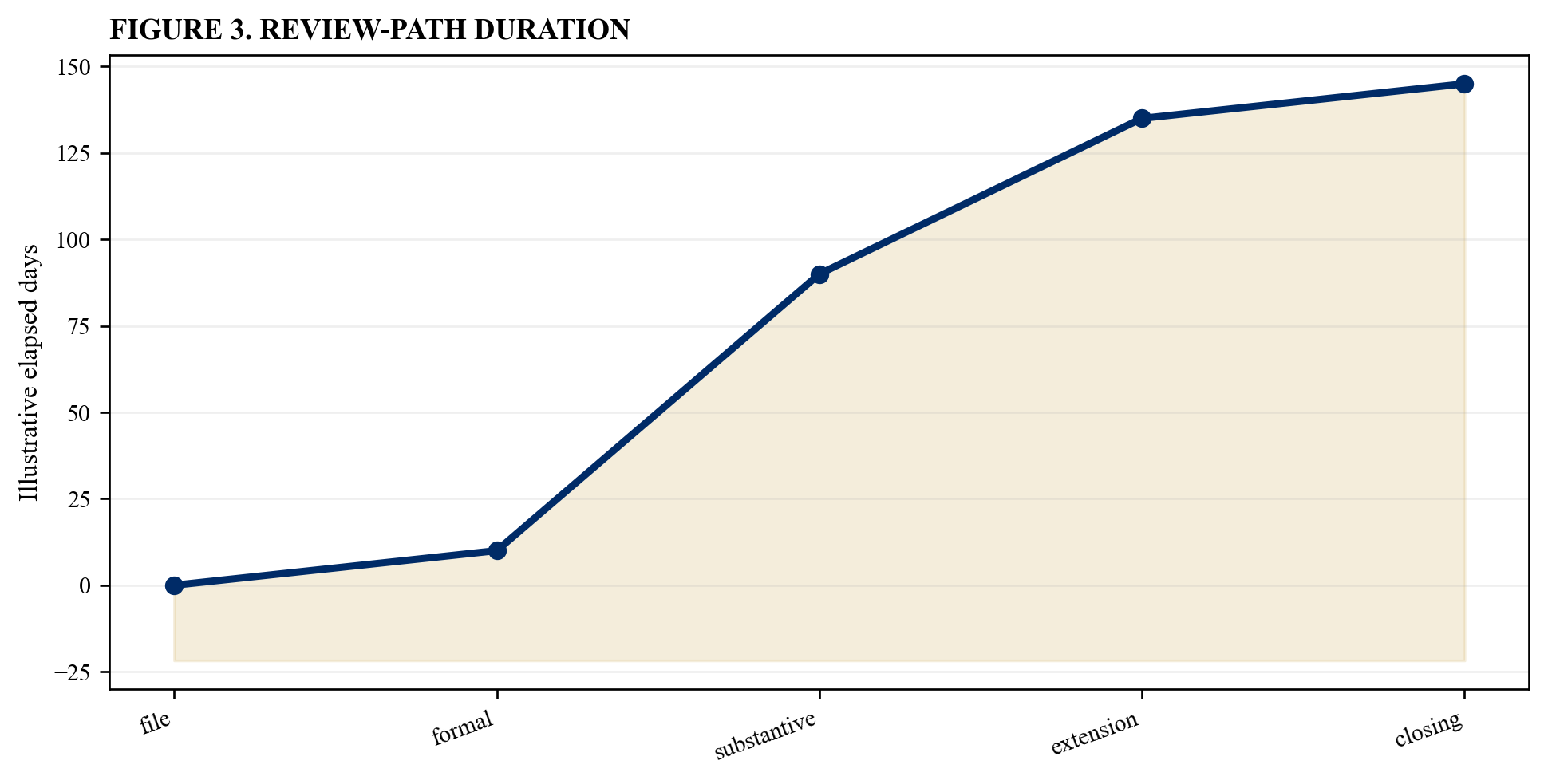
Illustrative analytical scenario; transaction evidence should replace model values.
25. Test horizontal effects
The transaction sponsor, counsel and economist should measure concentration, rivalry, closeness, capacity, switching, entry and unilateral or coordinated effects. The controlled deliverable is a horizontal-effects assessment. Record the legal basis, factual source, calculation method, accountable owner, reviewer, uncertainty range, decision date and escalation path [8][24].
Apply the test before signing and repeat it when structure, rights, parties, financing, market evidence or timing changes. The review should show the base case, credible alternative interpretations and the evidence that would change the conclusion.
The principal execution risk is that market share alone can miss the actual loss of competitive constraint. Measure the effect on notification, completeness, statutory timing, standstill, financing availability, remedy exposure, contractual rights, closing probability and value. Assign an early-warning indicator and a board threshold.
Convert the result into the filing plan, transaction documents, diligence request list, valuation model, financing timetable, clean-team rules, integration plan and closing checklist. Preserve an audit trail suitable for the Ministry, sector regulator, lender, investment committee and post-clearance operating team.
26. Test vertical and conglomerate effects
The transaction sponsor, counsel and economist should analyse foreclosure, access to inputs or customers, bundling, data, ecosystems and portfolio leverage. The controlled deliverable is a non-horizontal effects assessment. Record the legal basis, factual source, calculation method, accountable owner, reviewer, uncertainty range, decision date and escalation path [8][25].
Apply the test before signing and repeat it when structure, rights, parties, financing, market evidence or timing changes. The review should show the base case, credible alternative interpretations and the evidence that would change the conclusion.
The principal execution risk is that control of a strategic input or route to market can create concerns outside direct overlap. Measure the effect on notification, completeness, statutory timing, standstill, financing availability, remedy exposure, contractual rights, closing probability and value. Assign an early-warning indicator and a board threshold.
Convert the result into the filing plan, transaction documents, diligence request list, valuation model, financing timetable, clean-team rules, integration plan and closing checklist. Preserve an audit trail suitable for the Ministry, sector regulator, lender, investment committee and post-clearance operating team.
27. Evidence countervailing factors
The transaction sponsor, counsel and economist should test entry, expansion, buyer power, innovation, imports, regulation and failing-firm facts. The controlled deliverable is a rebuttal evidence register. Record the legal basis, factual source, calculation method, accountable owner, reviewer, uncertainty range, decision date and escalation path [8][26].
Apply the test before signing and repeat it when structure, rights, parties, financing, market evidence or timing changes. The review should show the base case, credible alternative interpretations and the evidence that would change the conclusion.
The principal execution risk is that optimistic assertions can be presented without timing, incentives, capability or documents. Measure the effect on notification, completeness, statutory timing, standstill, financing availability, remedy exposure, contractual rights, closing probability and value. Assign an early-warning indicator and a board threshold.
Convert the result into the filing plan, transaction documents, diligence request list, valuation model, financing timetable, clean-team rules, integration plan and closing checklist. Preserve an audit trail suitable for the Ministry, sector regulator, lender, investment committee and post-clearance operating team.
28. Quantify efficiencies
The transaction sponsor, counsel and economist should identify transaction-specific, verifiable benefits for cost, quality, availability, innovation and consumers. The controlled deliverable is an efficiencies proof book. Record the legal basis, factual source, calculation method, accountable owner, reviewer, uncertainty range, decision date and escalation path [1][27].
Apply the test before signing and repeat it when structure, rights, parties, financing, market evidence or timing changes. The review should show the base case, credible alternative interpretations and the evidence that would change the conclusion.
The principal execution risk is that synergies used in valuation can be unsuitable or unsupported as competition efficiencies. Measure the effect on notification, completeness, statutory timing, standstill, financing availability, remedy exposure, contractual rights, closing probability and value. Assign an early-warning indicator and a board threshold.
Convert the result into the filing plan, transaction documents, diligence request list, valuation model, financing timetable, clean-team rules, integration plan and closing checklist. Preserve an audit trail suitable for the Ministry, sector regulator, lender, investment committee and post-clearance operating team.
29. Design remedy options
The transaction sponsor, counsel and economist should develop structural and behavioural measures, monitoring, duration, trustees, access and enforcement. The controlled deliverable is a remedy option tree. Record the legal basis, factual source, calculation method, accountable owner, reviewer, uncertainty range, decision date and escalation path [1][28].
Apply the test before signing and repeat it when structure, rights, parties, financing, market evidence or timing changes. The review should show the base case, credible alternative interpretations and the evidence that would change the conclusion.
The principal execution risk is that late remedy work can sacrifice value or delay clearance under deal pressure. Measure the effect on notification, completeness, statutory timing, standstill, financing availability, remedy exposure, contractual rights, closing probability and value. Assign an early-warning indicator and a board threshold.
Convert the result into the filing plan, transaction documents, diligence request list, valuation model, financing timetable, clean-team rules, integration plan and closing checklist. Preserve an audit trail suitable for the Ministry, sector regulator, lender, investment committee and post-clearance operating team.
30. Negotiate conditional approval
The transaction sponsor, counsel and economist should translate proposed obligations into operational, financial, governance and valuation consequences. The controlled deliverable is a conditions impact model. Record the legal basis, factual source, calculation method, accountable owner, reviewer, uncertainty range, decision date and escalation path [1][29].
Apply the test before signing and repeat it when structure, rights, parties, financing, market evidence or timing changes. The review should show the base case, credible alternative interpretations and the evidence that would change the conclusion.
The principal execution risk is that clearance conditions can be accepted without pricing their lifecycle burden. Measure the effect on notification, completeness, statutory timing, standstill, financing availability, remedy exposure, contractual rights, closing probability and value. Assign an early-warning indicator and a board threshold.
Convert the result into the filing plan, transaction documents, diligence request list, valuation model, financing timetable, clean-team rules, integration plan and closing checklist. Preserve an audit trail suitable for the Ministry, sector regulator, lender, investment committee and post-clearance operating team.
31. Draft the conditions precedent
The transaction sponsor, counsel and economist should make clearance, acceptable conditions, cooperation, information rights and conduct obligations precise. The controlled deliverable is a competition-condition schedule. Record the legal basis, factual source, calculation method, accountable owner, reviewer, uncertainty range, decision date and escalation path [30][31].
Apply the test before signing and repeat it when structure, rights, parties, financing, market evidence or timing changes. The review should show the base case, credible alternative interpretations and the evidence that would change the conclusion.
The principal execution risk is that ambiguous satisfaction standards can create disputes between buyer, seller and lenders. Measure the effect on notification, completeness, statutory timing, standstill, financing availability, remedy exposure, contractual rights, closing probability and value. Assign an early-warning indicator and a board threshold.
Convert the result into the filing plan, transaction documents, diligence request list, valuation model, financing timetable, clean-team rules, integration plan and closing checklist. Preserve an audit trail suitable for the Ministry, sector regulator, lender, investment committee and post-clearance operating team.
32. Set the long-stop and extension mechanics
The transaction sponsor, counsel and economist should align termination dates, automatic extensions, regulatory delays, appeals and financing availability. The controlled deliverable is a timetable waterfall. Record the legal basis, factual source, calculation method, accountable owner, reviewer, uncertainty range, decision date and escalation path [30][32].
Apply the test before signing and repeat it when structure, rights, parties, financing, market evidence or timing changes. The review should show the base case, credible alternative interpretations and the evidence that would change the conclusion.
The principal execution risk is that one fixed long-stop can allocate delay risk accidentally. Measure the effect on notification, completeness, statutory timing, standstill, financing availability, remedy exposure, contractual rights, closing probability and value. Assign an early-warning indicator and a board threshold.
Convert the result into the filing plan, transaction documents, diligence request list, valuation model, financing timetable, clean-team rules, integration plan and closing checklist. Preserve an audit trail suitable for the Ministry, sector regulator, lender, investment committee and post-clearance operating team.
Table 4. Illustrative timetable economics
| Scenario | Elapsed days | Carry index | Value retained |
|---|---|---|---|
| clean filing | 90 | 55 | 96 |
| extended review | 135 | 77 | 91 |
| information interruption | 165 | 89 | 86 |
| conditional approval | 150 | 84 | 82 |
Statutory periods are stated where labelled; other entries are analytical controls.
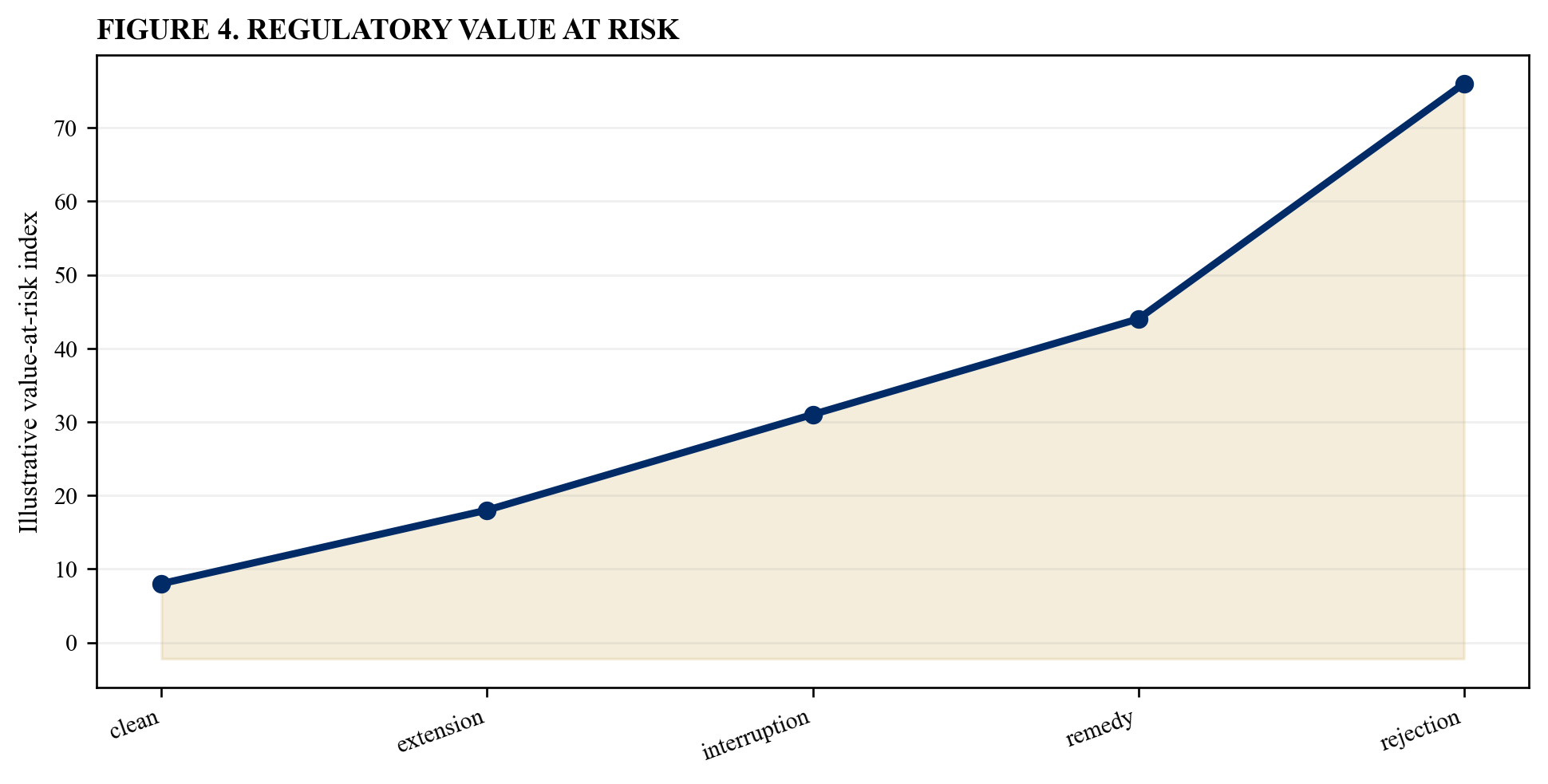
Illustrative analytical scenario; transaction evidence should replace model values.
33. Allocate regulatory effort and risk
The transaction sponsor, counsel and economist should define reasonable-best-efforts standards, remedy caps, reverse fees, cost sharing and decision rights. The controlled deliverable is a regulatory-risk allocation matrix. Record the legal basis, factual source, calculation method, accountable owner, reviewer, uncertainty range, decision date and escalation path [30][33].
Apply the test before signing and repeat it when structure, rights, parties, financing, market evidence or timing changes. The review should show the base case, credible alternative interpretations and the evidence that would change the conclusion.
The principal execution risk is that the party controlling remedies can have incentives inconsistent with transaction value. Measure the effect on notification, completeness, statutory timing, standstill, financing availability, remedy exposure, contractual rights, closing probability and value. Assign an early-warning indicator and a board threshold.
Convert the result into the filing plan, transaction documents, diligence request list, valuation model, financing timetable, clean-team rules, integration plan and closing checklist. Preserve an audit trail suitable for the Ministry, sector regulator, lender, investment committee and post-clearance operating team.
34. Protect financing commitments
The transaction sponsor, counsel and economist should align availability periods, conditions, flex, ticking fees, mandatory prepayment and outside dates. The controlled deliverable is a financing-clearance interface. Record the legal basis, factual source, calculation method, accountable owner, reviewer, uncertainty range, decision date and escalation path [34][35].
Apply the test before signing and repeat it when structure, rights, parties, financing, market evidence or timing changes. The review should show the base case, credible alternative interpretations and the evidence that would change the conclusion.
The principal execution risk is that committed debt can expire or become costly while the concentration remains under review. Measure the effect on notification, completeness, statutory timing, standstill, financing availability, remedy exposure, contractual rights, closing probability and value. Assign an early-warning indicator and a board threshold.
Convert the result into the filing plan, transaction documents, diligence request list, valuation model, financing timetable, clean-team rules, integration plan and closing checklist. Preserve an audit trail suitable for the Ministry, sector regulator, lender, investment committee and post-clearance operating team.
35. Operate the standstill protocol
The transaction sponsor, counsel and economist should restrict closing, control transfer, integration, competitively sensitive exchange and premature coordination. The controlled deliverable is a gun-jumping control manual. Record the legal basis, factual source, calculation method, accountable owner, reviewer, uncertainty range, decision date and escalation path [1][36].
Apply the test before signing and repeat it when structure, rights, parties, financing, market evidence or timing changes. The review should show the base case, credible alternative interpretations and the evidence that would change the conclusion.
The principal execution risk is that ordinary planning can cross into implementation before clearance. Measure the effect on notification, completeness, statutory timing, standstill, financing availability, remedy exposure, contractual rights, closing probability and value. Assign an early-warning indicator and a board threshold.
Convert the result into the filing plan, transaction documents, diligence request list, valuation model, financing timetable, clean-team rules, integration plan and closing checklist. Preserve an audit trail suitable for the Ministry, sector regulator, lender, investment committee and post-clearance operating team.
36. Govern clean teams and integration planning
The transaction sponsor, counsel and economist should separate permitted planning from operational control using access rules, aggregation and accountable approvals. The controlled deliverable is a clean-team protocol. Record the legal basis, factual source, calculation method, accountable owner, reviewer, uncertainty range, decision date and escalation path [36][37].
Apply the test before signing and repeat it when structure, rights, parties, financing, market evidence or timing changes. The review should show the base case, credible alternative interpretations and the evidence that would change the conclusion.
The principal execution risk is that sensitive information can influence pre-closing competition or commercial conduct. Measure the effect on notification, completeness, statutory timing, standstill, financing availability, remedy exposure, contractual rights, closing probability and value. Assign an early-warning indicator and a board threshold.
Convert the result into the filing plan, transaction documents, diligence request list, valuation model, financing timetable, clean-team rules, integration plan and closing checklist. Preserve an audit trail suitable for the Ministry, sector regulator, lender, investment committee and post-clearance operating team.
37. Model scenario economics
The transaction sponsor, counsel and economist should price timing, extension, financing carry, remedies, failure, break fees and lost strategic options. The controlled deliverable is a probability-weighted value model. Record the legal basis, factual source, calculation method, accountable owner, reviewer, uncertainty range, decision date and escalation path [34][38].
Apply the test before signing and repeat it when structure, rights, parties, financing, market evidence or timing changes. The review should show the base case, credible alternative interpretations and the evidence that would change the conclusion.
The principal execution risk is that headline valuation can ignore regulatory duration and conditional-clearance costs. Measure the effect on notification, completeness, statutory timing, standstill, financing availability, remedy exposure, contractual rights, closing probability and value. Assign an early-warning indicator and a board threshold.
Convert the result into the filing plan, transaction documents, diligence request list, valuation model, financing timetable, clean-team rules, integration plan and closing checklist. Preserve an audit trail suitable for the Ministry, sector regulator, lender, investment committee and post-clearance operating team.
38. Prepare for decisions and silence
The transaction sponsor, counsel and economist should plan unconditional approval, conditional approval, rejection, withdrawal, grievance and deemed rejection. The controlled deliverable is a decision-response playbook. Record the legal basis, factual source, calculation method, accountable owner, reviewer, uncertainty range, decision date and escalation path [1][3].
Apply the test before signing and repeat it when structure, rights, parties, financing, market evidence or timing changes. The review should show the base case, credible alternative interpretations and the evidence that would change the conclusion.
The principal execution risk is that teams can assume that expiry without a decision permits completion. Measure the effect on notification, completeness, statutory timing, standstill, financing availability, remedy exposure, contractual rights, closing probability and value. Assign an early-warning indicator and a board threshold.
Convert the result into the filing plan, transaction documents, diligence request list, valuation model, financing timetable, clean-team rules, integration plan and closing checklist. Preserve an audit trail suitable for the Ministry, sector regulator, lender, investment committee and post-clearance operating team.
39. Monitor compliance after clearance
The transaction sponsor, counsel and economist should assign conditions, reporting, recordkeeping, behavioural controls and transaction-boundary ownership. The controlled deliverable is a post-clearance compliance register. Record the legal basis, factual source, calculation method, accountable owner, reviewer, uncertainty range, decision date and escalation path [3][39].
Apply the test before signing and repeat it when structure, rights, parties, financing, market evidence or timing changes. The review should show the base case, credible alternative interpretations and the evidence that would change the conclusion.
The principal execution risk is that approval obligations can disappear between deal and operating teams. Measure the effect on notification, completeness, statutory timing, standstill, financing availability, remedy exposure, contractual rights, closing probability and value. Assign an early-warning indicator and a board threshold.
Convert the result into the filing plan, transaction documents, diligence request list, valuation model, financing timetable, clean-team rules, integration plan and closing checklist. Preserve an audit trail suitable for the Ministry, sector regulator, lender, investment committee and post-clearance operating team.
40. Issue the clearance-readiness certificate
The transaction sponsor, counsel and economist should reconcile jurisdiction, thresholds, markets, application, timetable, documents, economics and board decisions. The controlled deliverable is an auditable clearance certificate. Record the legal basis, factual source, calculation method, accountable owner, reviewer, uncertainty range, decision date and escalation path [1][40].
Apply the test before signing and repeat it when structure, rights, parties, financing, market evidence or timing changes. The review should show the base case, credible alternative interpretations and the evidence that would change the conclusion.
The principal execution risk is that closing can proceed on fragmented legal, economic, financing and integration evidence. Measure the effect on notification, completeness, statutory timing, standstill, financing availability, remedy exposure, contractual rights, closing probability and value. Assign an early-warning indicator and a board threshold.
Convert the result into the filing plan, transaction documents, diligence request list, valuation model, financing timetable, clean-team rules, integration plan and closing checklist. Preserve an audit trail suitable for the Ministry, sector regulator, lender, investment committee and post-clearance operating team.
Table 5. Clearance-readiness certificate
| Domain | Minimum evidence | Board gate |
|---|---|---|
| jurisdiction | control, nexus and scope | filing position |
| thresholds | sales and share ranges | notification decision |
| process | complete file and timetable | signing protections |
| closing | decision, conditions and standstill | completion authority |
Statutory periods are stated where labelled; other entries are analytical controls.
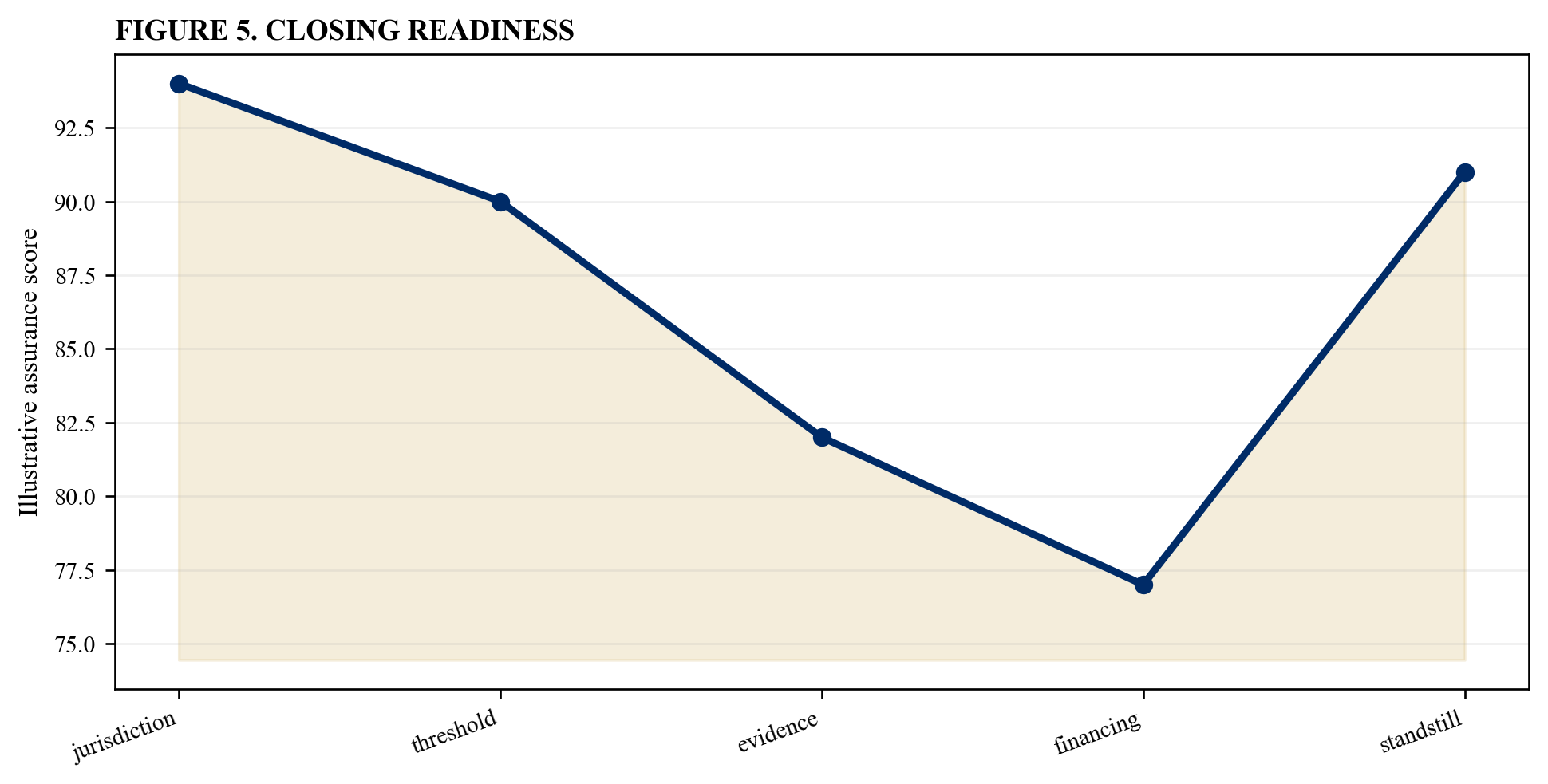
Illustrative analytical scenario; transaction evidence should replace model values.
References
- UAE Legislation, Federal Decree-Law No. 36 of 2023 Regarding Regulating Competition, https://uaelegislation.gov.ae/en/legislations/2117/download
- UAE Cabinet, Decision No. 3 of 2025 on Thresholds for Federal Decree-Law No. 36 of 2023, https://www.moet.gov.ae/documents/20121/0/Cabinet%2BDecision%2BNo.%2B%283%29%2Bof%2B2025%2BOn%2Bthe%2BThresholds%2BRelated%2Bto%2Bthe%2BImplementation%2Bof%2BFederal%2BDecree-Law%2BNo.%2B%2836%29%2Bof%2B2023%2BRegulati.pdf/0f228724-8dd5-9b9c-0ed8-0b94d5ae0873
- UAE Legislation, Cabinet Resolution No. 59 of 2026, Executive Regulations of Federal Decree-Law No. 36 of 2023, https://uaelegislation.gov.ae/en/legislations/4451/download
- OECD, Definition of Transaction for Merger Control Review, https://www.oecd.org/competition/mergers/
- International Competition Network, Recommended Practices for Merger Notification and Review Procedures, https://www.internationalcompetitionnetwork.org/portfolio/merger-wg/
- UAE Ministry of Economy and Tourism, Economic Concentration, https://www.moet.gov.ae/en/economic-concentration
- UAE Ministry of Economy and Tourism, Regulation of Competition Legislations, https://www.moet.gov.ae/en/regulation-of-competition-legislations
- UAE Ministry of Economy and Tourism, Guidelines on Relevant Market Definition, July 2026, https://www.moet.gov.ae/en/regulation-of-competition-legislations
- European Commission, Market Definition Notice, https://competition-policy.ec.europa.eu/antitrust-and-cartels/legislation/market-definition-notice_en
- US Department of Justice and Federal Trade Commission, 2023 Merger Guidelines, https://www.justice.gov/atr/merger-guidelines
- IFRS Foundation, IFRS Accounting Standards, https://www.ifrs.org/issued-standards/list-of-standards/
- UAE Ministry of Economy and Tourism, Review of Cabinet Resolution No. 3 of 2025, https://www.moet.gov.ae/en/-/ministry-of-economy-reviews-cabinet-resolution-on%C2%A0thresholds-and-controls-associated-with-competition-law-and-its-role-in-enhancing-oversight-of-economic-concentration-transactions-in-the-country
- OECD, Local Nexus and Jurisdictional Thresholds in Merger Control, https://www.oecd.org/competition/mergers/
- OECD, Recommendation on Merger Review, https://legalinstruments.oecd.org/en/instruments/OECD-LEGAL-0333
- UAE Ministry of Economy and Tourism, Economic Concentration Application Process, https://www.moet.gov.ae/en/economic-concentration
- Hague Conference on Private International Law, Apostille Section, https://www.hcch.net/en/instruments/conventions/specialised-sections/apostille
- International Competition Network, Merger Analysis Framework, https://www.internationalcompetitionnetwork.org/portfolio/merger-wg/
- UAE Legislation, Federal Decree-Law No. 45 of 2021 Regarding the Protection of Personal Data, https://uaelegislation.gov.ae/en/legislations/1972
- UAE Ministry of Economy and Tourism, Cabinet Decision No. 105 of 2026 on Competition-Law Fees, https://www.moet.gov.ae/en/regulation-of-competition-legislations
- UAE Ministry of Finance, Government Service Fees and Payment Guidance, https://mof.gov.ae/
- UAE Legislation, Cabinet Resolution No. 59 of 2026 Article 13, https://uaelegislation.gov.ae/en/legislations/4451/download
- UAE Legislation, Federal Decree-Law No. 36 of 2023 Article 14, https://uaelegislation.gov.ae/en/legislations/2117/download
- UAE Legislation, Cabinet Resolution No. 59 of 2026 Interested-Party Procedures, https://uaelegislation.gov.ae/en/legislations/4451/download
- OECD, Horizontal Merger Assessment, https://www.oecd.org/competition/mergers/
- OECD, Vertical Mergers in the Technology, Media and Telecom Sector, https://www.oecd.org/competition/vertical-mergers-in-the-technology-media-and-telecom-sector.htm
- International Competition Network, Investigative Techniques Handbook for Merger Review, https://www.internationalcompetitionnetwork.org/portfolio/merger-wg/
- OECD, Efficiencies in Merger Control, https://www.oecd.org/competition/mergers/
- International Competition Network, Merger Remedies Guide, https://www.internationalcompetitionnetwork.org/portfolio/merger-wg/
- European Commission, Merger Remedies Notice, https://competition-policy.ec.europa.eu/mergers/legislation_en
- UNCITRAL, Legislative Guide on Privately Financed Infrastructure Projects and Transaction Risk Allocation, https://uncitral.un.org/en/texts/procurement/infrastructure
- International Bar Association, Model Share Purchase Agreement, https://www.ibanet.org/
- Loan Market Association, Acquisition Finance Materials, https://www.lma.eu.com/
- OECD, Recommendation on Transparency and Procedural Fairness in Competition Law Enforcement, https://legalinstruments.oecd.org/en/instruments/OECD-LEGAL-0465
- European Central Bank, Guide on Leveraged Transactions, https://www.bankingsupervision.europa.eu/ecb/pub/pdf/ssm.leveraged_transactions_guidance_201705.en.pdf
- Bank for International Settlements, Principles for the Management of Credit Risk, https://www.bis.org/bcbs/publ/d591.htm
- International Competition Network, Guidance on Gun Jumping and Pre-Merger Coordination, https://www.internationalcompetitionnetwork.org/portfolio/merger-wg/
- UK Competition and Markets Authority, Merger Assessment Guidelines, https://www.gov.uk/government/publications/merger-assessment-guidelines
- World Bank, Competition Policy and Market Regulation, https://www.worldbank.org/en/topic/competition-policy
- ISO, ISO 37301 Compliance Management Systems, https://www.iso.org/standard/75080.html
- OECD, Competition Trends 2026, https://www.oecd.org/competition/oecd-competition-trends.htm
- UAE Central Bank, Licensing and Regulatory Framework, https://www.centralbank.ae/en/licensing/
- UAE Capital Markets Authority, Legislation and Rulebooks, https://www.sca.gov.ae/en/regulations/regulations-listing.aspx
- Dubai Financial Services Authority, Authorisation and Supervision, https://www.dfsa.ae/what-we-do/authorisation
- ADGM Financial Services Regulatory Authority, Regulatory Framework, https://www.adgm.com/operating-in-adgm/financial-services-regulatory-authority
- UNCTAD, Model Law on Competition and Merger Control, https://unctad.org/topic/competition-and-consumer-protection/model-law-competition
