

1. Define the UAE outcome
The board and UAE workstream should state the customers, products, revenues, capabilities, timetable and strategic option value sought. The required output is a board-approved entry thesis. Record the accountable owner, governing authority, source evidence, assumption, acceptance criterion, approval, exception and review date [1][2].
Test the conclusion by sector and emirate and across acquisition, greenfield and alliance routes. Assess customers, ownership, licensing, competition, tax, capital, people, technology, operating capability, time to revenue, downside exposure and exit.
The principal risk is that entity formation can proceed before the commercial objective is testable. Quantify its effect on revenue timing, required capital, enterprise value, cash conversion, compliance, control, execution certainty and strategic option value. Compare the chosen route with a phased or hybrid alternative.
Translate the conclusion into conditions precedent, licence actions, transaction terms, partner obligations, financing gates, mobilisation tasks, evidence owners and board decisions. Refresh the analysis after material regulatory, target, partner, market, financing or execution change.
2. Map the sector perimeter
The board and UAE workstream should identify every regulated activity, product, channel, customer and geographic interface. The required output is a sector-perimeter map. Record the accountable owner, governing authority, source evidence, assumption, acceptance criterion, approval, exception and review date [3][4].
Test the conclusion by sector and emirate and across acquisition, greenfield and alliance routes. Assess customers, ownership, licensing, competition, tax, capital, people, technology, operating capability, time to revenue, downside exposure and exit.
The principal risk is that one trade licence can be mistaken for permission to perform regulated services. Quantify its effect on revenue timing, required capital, enterprise value, cash conversion, compliance, control, execution certainty and strategic option value. Compare the chosen route with a phased or hybrid alternative.
Translate the conclusion into conditions precedent, licence actions, transaction terms, partner obligations, financing gates, mobilisation tasks, evidence owners and board decisions. Refresh the analysis after material regulatory, target, partner, market, financing or execution change.
3. Evidence market demand
The board and UAE workstream should validate buyer needs, procurement routes, price points, switching barriers and sales cycles. The required output is a demand evidence pack. Record the accountable owner, governing authority, source evidence, assumption, acceptance criterion, approval, exception and review date [2][5].
Test the conclusion by sector and emirate and across acquisition, greenfield and alliance routes. Assess customers, ownership, licensing, competition, tax, capital, people, technology, operating capability, time to revenue, downside exposure and exit.
The principal risk is that headline market growth can conceal inaccessible customers or uneconomic acquisition costs. Quantify its effect on revenue timing, required capital, enterprise value, cash conversion, compliance, control, execution certainty and strategic option value. Compare the chosen route with a phased or hybrid alternative.
Translate the conclusion into conditions precedent, licence actions, transaction terms, partner obligations, financing gates, mobilisation tasks, evidence owners and board decisions. Refresh the analysis after material regulatory, target, partner, market, financing or execution change.
4. Screen the three routes
The board and UAE workstream should compare acquisition, greenfield and alliance against common decision criteria. The required output is a route-screening scorecard. Record the accountable owner, governing authority, source evidence, assumption, acceptance criterion, approval, exception and review date [1][6].
Test the conclusion by sector and emirate and across acquisition, greenfield and alliance routes. Assess customers, ownership, licensing, competition, tax, capital, people, technology, operating capability, time to revenue, downside exposure and exit.
The principal risk is that a preferred route can be selected by familiarity rather than evidence. Quantify its effect on revenue timing, required capital, enterprise value, cash conversion, compliance, control, execution certainty and strategic option value. Compare the chosen route with a phased or hybrid alternative.
Translate the conclusion into conditions precedent, licence actions, transaction terms, partner obligations, financing gates, mobilisation tasks, evidence owners and board decisions. Refresh the analysis after material regulatory, target, partner, market, financing or execution change.
5. Test acquisition logic
The board and UAE workstream should identify which licences, contracts, people, sites, systems and relationships are truly transferable. The required output is an acquisition-capability bridge. Record the accountable owner, governing authority, source evidence, assumption, acceptance criterion, approval, exception and review date [7][8].
Test the conclusion by sector and emirate and across acquisition, greenfield and alliance routes. Assess customers, ownership, licensing, competition, tax, capital, people, technology, operating capability, time to revenue, downside exposure and exit.
The principal risk is that purchase price can be paid for permissions or revenue that do not survive change of control. Quantify its effect on revenue timing, required capital, enterprise value, cash conversion, compliance, control, execution certainty and strategic option value. Compare the chosen route with a phased or hybrid alternative.
Translate the conclusion into conditions precedent, licence actions, transaction terms, partner obligations, financing gates, mobilisation tasks, evidence owners and board decisions. Refresh the analysis after material regulatory, target, partner, market, financing or execution change.
6. Test greenfield logic
The board and UAE workstream should sequence incorporation, licences, premises, people, banking, technology and customer mobilisation. The required output is a greenfield critical path. Record the accountable owner, governing authority, source evidence, assumption, acceptance criterion, approval, exception and review date [1][9].
Test the conclusion by sector and emirate and across acquisition, greenfield and alliance routes. Assess customers, ownership, licensing, competition, tax, capital, people, technology, operating capability, time to revenue, downside exposure and exit.
The principal risk is that control can be preserved while time-to-revenue and execution cost are understated. Quantify its effect on revenue timing, required capital, enterprise value, cash conversion, compliance, control, execution certainty and strategic option value. Compare the chosen route with a phased or hybrid alternative.
Translate the conclusion into conditions precedent, licence actions, transaction terms, partner obligations, financing gates, mobilisation tasks, evidence owners and board decisions. Refresh the analysis after material regulatory, target, partner, market, financing or execution change.
7. Test alliance logic
The board and UAE workstream should define partner contribution, exclusivity, governance, economics, risk and exit. The required output is an alliance value blueprint. Record the accountable owner, governing authority, source evidence, assumption, acceptance criterion, approval, exception and review date [10][11].
Test the conclusion by sector and emirate and across acquisition, greenfield and alliance routes. Assess customers, ownership, licensing, competition, tax, capital, people, technology, operating capability, time to revenue, downside exposure and exit.
The principal risk is that the local partner label can substitute for a measurable capability contribution. Quantify its effect on revenue timing, required capital, enterprise value, cash conversion, compliance, control, execution certainty and strategic option value. Compare the chosen route with a phased or hybrid alternative.
Translate the conclusion into conditions precedent, licence actions, transaction terms, partner obligations, financing gates, mobilisation tasks, evidence owners and board decisions. Refresh the analysis after material regulatory, target, partner, market, financing or execution change.
8. Confirm ownership eligibility
The board and UAE workstream should verify foreign ownership, strategic-impact restrictions and sector-specific shareholder approvals. The required output is an ownership opinion and approval map. Record the accountable owner, governing authority, source evidence, assumption, acceptance criterion, approval, exception and review date [12][13].
Test the conclusion by sector and emirate and across acquisition, greenfield and alliance routes. Assess customers, ownership, licensing, competition, tax, capital, people, technology, operating capability, time to revenue, downside exposure and exit.
The principal risk is that general ownership rules can be applied to a restricted activity. Quantify its effect on revenue timing, required capital, enterprise value, cash conversion, compliance, control, execution certainty and strategic option value. Compare the chosen route with a phased or hybrid alternative.
Translate the conclusion into conditions precedent, licence actions, transaction terms, partner obligations, financing gates, mobilisation tasks, evidence owners and board decisions. Refresh the analysis after material regulatory, target, partner, market, financing or execution change.
Table 1. Route decision scorecard
| Criterion | Acquisition | Greenfield | Alliance |
|---|---|---|---|
| speed | potentially high | lower | medium |
| control | high after closing | high | shared |
| legacy risk | high | low | partner-dependent |
| capital | purchase price | staged build | negotiated |
Illustrative analytical structure; current verified evidence governs.
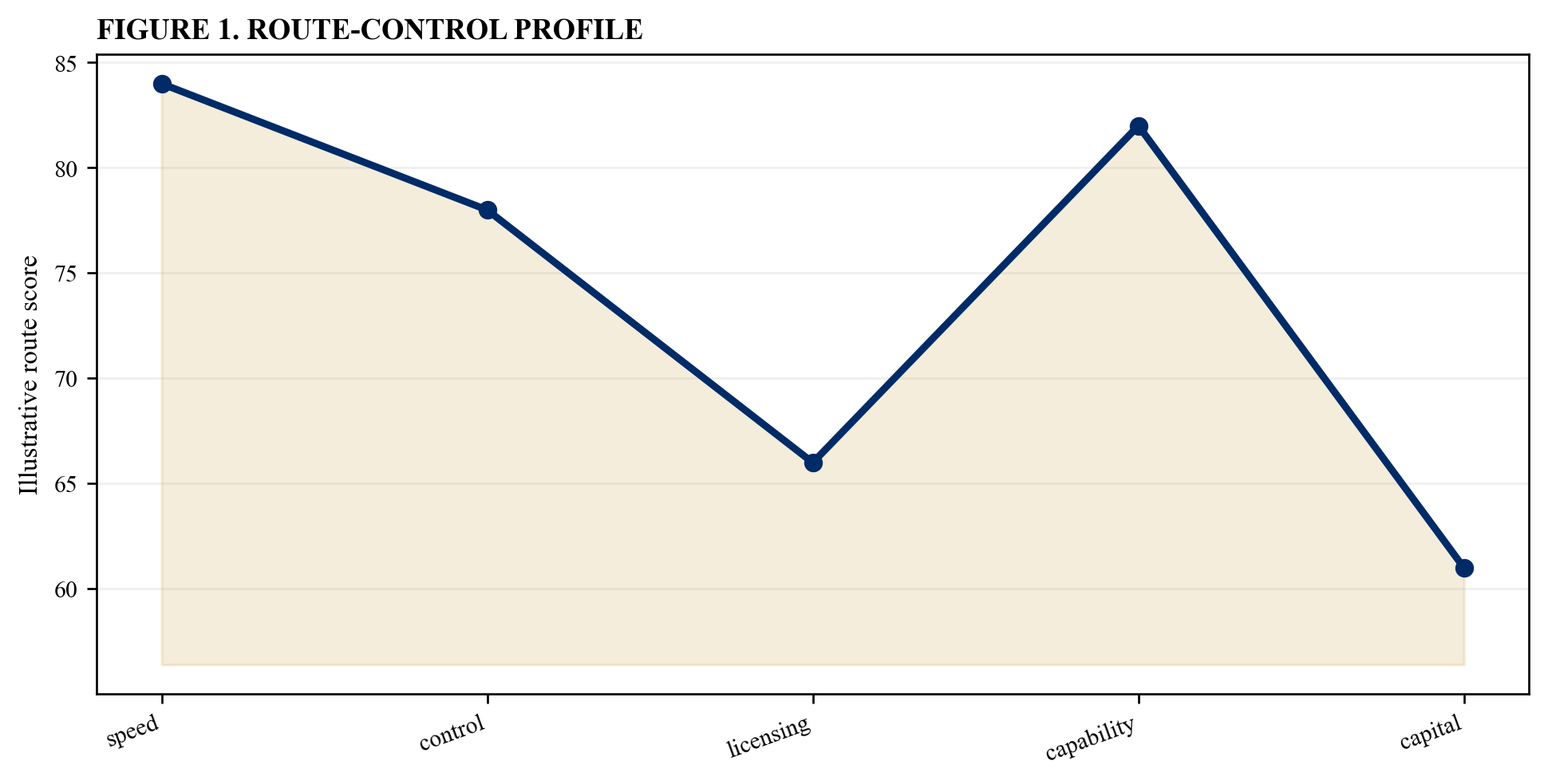
Illustrative analytical scenario; verified entry evidence should replace values.
9. Choose mainland or free-zone architecture
The board and UAE workstream should match customer location, permitted activity, premises, customs, tax and operating substance. The required output is an entity-and-branch architecture. Record the accountable owner, governing authority, source evidence, assumption, acceptance criterion, approval, exception and review date [14][15].
Test the conclusion by sector and emirate and across acquisition, greenfield and alliance routes. Assess customers, ownership, licensing, competition, tax, capital, people, technology, operating capability, time to revenue, downside exposure and exit.
The principal risk is that a free-zone incentive can be chosen without testing income, substance or mainland activity. Quantify its effect on revenue timing, required capital, enterprise value, cash conversion, compliance, control, execution certainty and strategic option value. Compare the chosen route with a phased or hybrid alternative.
Translate the conclusion into conditions precedent, licence actions, transaction terms, partner obligations, financing gates, mobilisation tasks, evidence owners and board decisions. Refresh the analysis after material regulatory, target, partner, market, financing or execution change.
10. Build the licensing dependency map
The board and UAE workstream should list federal, emirate, zone, municipality and sector permissions in executable order. The required output is a licensing critical-path schedule. Record the accountable owner, governing authority, source evidence, assumption, acceptance criterion, approval, exception and review date [3][16].
Test the conclusion by sector and emirate and across acquisition, greenfield and alliance routes. Assess customers, ownership, licensing, competition, tax, capital, people, technology, operating capability, time to revenue, downside exposure and exit.
The principal risk is that parallel applications can depend on approvals that have not yet been secured. Quantify its effect on revenue timing, required capital, enterprise value, cash conversion, compliance, control, execution certainty and strategic option value. Compare the chosen route with a phased or hybrid alternative.
Translate the conclusion into conditions precedent, licence actions, transaction terms, partner obligations, financing gates, mobilisation tasks, evidence owners and board decisions. Refresh the analysis after material regulatory, target, partner, market, financing or execution change.
11. Assess economic-concentration control
The board and UAE workstream should calculate UAE sales and market share and identify notification, standstill and information duties. The required output is a merger-control workplan. Record the accountable owner, governing authority, source evidence, assumption, acceptance criterion, approval, exception and review date [17][18].
Test the conclusion by sector and emirate and across acquisition, greenfield and alliance routes. Assess customers, ownership, licensing, competition, tax, capital, people, technology, operating capability, time to revenue, downside exposure and exit.
The principal risk is that an acquisition timetable can ignore mandatory economic-concentration review. Quantify its effect on revenue timing, required capital, enterprise value, cash conversion, compliance, control, execution certainty and strategic option value. Compare the chosen route with a phased or hybrid alternative.
Translate the conclusion into conditions precedent, licence actions, transaction terms, partner obligations, financing gates, mobilisation tasks, evidence owners and board decisions. Refresh the analysis after material regulatory, target, partner, market, financing or execution change.
12. Test strategic-sector approvals
The board and UAE workstream should identify national-security, defence, telecom, banking, insurance and other strategic controls. The required output is a strategic-impact clearance matrix. Record the accountable owner, governing authority, source evidence, assumption, acceptance criterion, approval, exception and review date [12][19].
Test the conclusion by sector and emirate and across acquisition, greenfield and alliance routes. Assess customers, ownership, licensing, competition, tax, capital, people, technology, operating capability, time to revenue, downside exposure and exit.
The principal risk is that nominal company ownership can diverge from permitted control. Quantify its effect on revenue timing, required capital, enterprise value, cash conversion, compliance, control, execution certainty and strategic option value. Compare the chosen route with a phased or hybrid alternative.
Translate the conclusion into conditions precedent, licence actions, transaction terms, partner obligations, financing gates, mobilisation tasks, evidence owners and board decisions. Refresh the analysis after material regulatory, target, partner, market, financing or execution change.
13. Model corporate tax
The board and UAE workstream should compare entity, branch, permanent-establishment, free-zone and transfer-pricing consequences. The required output is a route-specific tax model. Record the accountable owner, governing authority, source evidence, assumption, acceptance criterion, approval, exception and review date [20][21].
Test the conclusion by sector and emirate and across acquisition, greenfield and alliance routes. Assess customers, ownership, licensing, competition, tax, capital, people, technology, operating capability, time to revenue, downside exposure and exit.
The principal risk is that a headline rate can be used without testing qualifying income and operating substance. Quantify its effect on revenue timing, required capital, enterprise value, cash conversion, compliance, control, execution certainty and strategic option value. Compare the chosen route with a phased or hybrid alternative.
Translate the conclusion into conditions precedent, licence actions, transaction terms, partner obligations, financing gates, mobilisation tasks, evidence owners and board decisions. Refresh the analysis after material regulatory, target, partner, market, financing or execution change.
14. Map customs and goods flows
The board and UAE workstream should trace importer status, tariff, origin, warehousing, free-zone movement and product approvals. The required output is a landed-cost and customs map. Record the accountable owner, governing authority, source evidence, assumption, acceptance criterion, approval, exception and review date [22][23].
Test the conclusion by sector and emirate and across acquisition, greenfield and alliance routes. Assess customers, ownership, licensing, competition, tax, capital, people, technology, operating capability, time to revenue, downside exposure and exit.
The principal risk is that commercial margin can disappear through unmodelled border and compliance costs. Quantify its effect on revenue timing, required capital, enterprise value, cash conversion, compliance, control, execution certainty and strategic option value. Compare the chosen route with a phased or hybrid alternative.
Translate the conclusion into conditions precedent, licence actions, transaction terms, partner obligations, financing gates, mobilisation tasks, evidence owners and board decisions. Refresh the analysis after material regulatory, target, partner, market, financing or execution change.
15. Govern data and digital activity
The board and UAE workstream should map personal data, localisation, cybersecurity, cloud, cross-border transfer and digital permissions. The required output is a data-and-technology compliance design. Record the accountable owner, governing authority, source evidence, assumption, acceptance criterion, approval, exception and review date [24][25].
Test the conclusion by sector and emirate and across acquisition, greenfield and alliance routes. Assess customers, ownership, licensing, competition, tax, capital, people, technology, operating capability, time to revenue, downside exposure and exit.
The principal risk is that a global platform can be deployed before lawful data and operating boundaries are set. Quantify its effect on revenue timing, required capital, enterprise value, cash conversion, compliance, control, execution certainty and strategic option value. Compare the chosen route with a phased or hybrid alternative.
Translate the conclusion into conditions precedent, licence actions, transaction terms, partner obligations, financing gates, mobilisation tasks, evidence owners and board decisions. Refresh the analysis after material regulatory, target, partner, market, financing or execution change.
16. Establish AML and ownership transparency
The board and UAE workstream should identify beneficial owners, controllers, sanctions, customer due diligence and reporting duties. The required output is an integrity and onboarding pack. Record the accountable owner, governing authority, source evidence, assumption, acceptance criterion, approval, exception and review date [26][27].
Test the conclusion by sector and emirate and across acquisition, greenfield and alliance routes. Assess customers, ownership, licensing, competition, tax, capital, people, technology, operating capability, time to revenue, downside exposure and exit.
The principal risk is that banking or regulatory onboarding can stall after capital and people are committed. Quantify its effect on revenue timing, required capital, enterprise value, cash conversion, compliance, control, execution certainty and strategic option value. Compare the chosen route with a phased or hybrid alternative.
Translate the conclusion into conditions precedent, licence actions, transaction terms, partner obligations, financing gates, mobilisation tasks, evidence owners and board decisions. Refresh the analysis after material regulatory, target, partner, market, financing or execution change.
Table 2. Licensing dependency map
| Gate | Evidence | Failure response |
|---|---|---|
| activity perimeter | legal and regulator analysis | redesign scope |
| ownership | shareholder approval | change structure |
| premises | approved site | relocate or phase |
| operating licence | final approval | hold launch |
Illustrative analytical structure; current verified evidence governs.
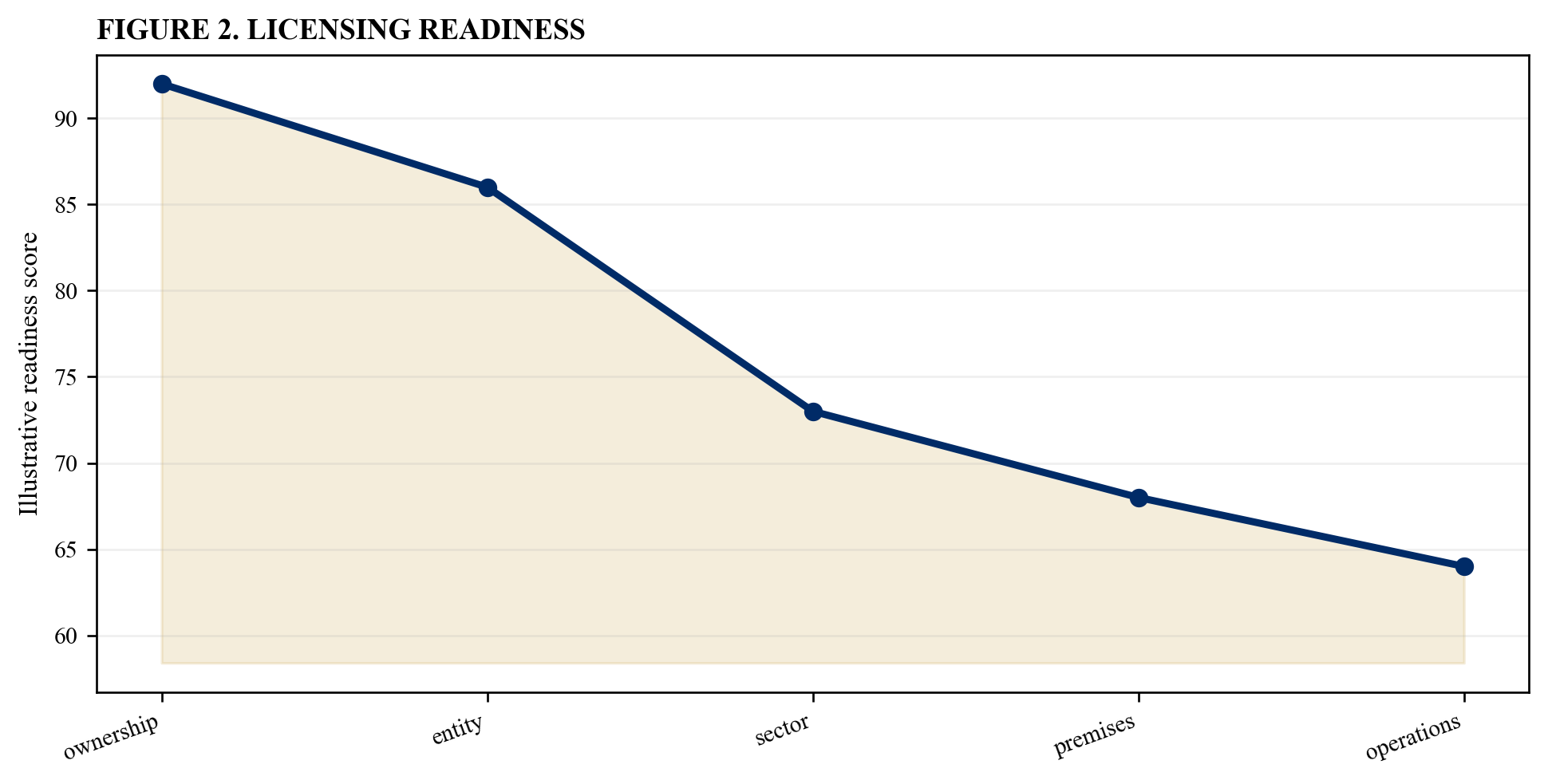
Illustrative analytical scenario; verified entry evidence should replace values.
17. Plan workforce and immigration
The board and UAE workstream should model workforce localisation, visas, professional credentials, payroll and employment obligations. The required output is a people mobilisation plan. Record the accountable owner, governing authority, source evidence, assumption, acceptance criterion, approval, exception and review date [28][29].
Test the conclusion by sector and emirate and across acquisition, greenfield and alliance routes. Assess customers, ownership, licensing, competition, tax, capital, people, technology, operating capability, time to revenue, downside exposure and exit.
The principal risk is that licensing and revenue dates can precede the availability of authorised staff. Quantify its effect on revenue timing, required capital, enterprise value, cash conversion, compliance, control, execution certainty and strategic option value. Compare the chosen route with a phased or hybrid alternative.
Translate the conclusion into conditions precedent, licence actions, transaction terms, partner obligations, financing gates, mobilisation tasks, evidence owners and board decisions. Refresh the analysis after material regulatory, target, partner, market, financing or execution change.
18. Secure banking and treasury
The board and UAE workstream should prepare ownership, source-of-funds, business-model, payment and cash-management evidence. The required output is a treasury activation plan. Record the accountable owner, governing authority, source evidence, assumption, acceptance criterion, approval, exception and review date [26][30].
Test the conclusion by sector and emirate and across acquisition, greenfield and alliance routes. Assess customers, ownership, licensing, competition, tax, capital, people, technology, operating capability, time to revenue, downside exposure and exit.
The principal risk is that an incorporated company can remain unable to receive, move or hedge cash. Quantify its effect on revenue timing, required capital, enterprise value, cash conversion, compliance, control, execution certainty and strategic option value. Compare the chosen route with a phased or hybrid alternative.
Translate the conclusion into conditions precedent, licence actions, transaction terms, partner obligations, financing gates, mobilisation tasks, evidence owners and board decisions. Refresh the analysis after material regulatory, target, partner, market, financing or execution change.
19. Apply the financial-services test
The board and UAE workstream should map CBUAE activities, legal form, capital, ownership, governance and change-of-control approvals. The required output is a financial-services licence route. Record the accountable owner, governing authority, source evidence, assumption, acceptance criterion, approval, exception and review date [31][32].
Test the conclusion by sector and emirate and across acquisition, greenfield and alliance routes. Assess customers, ownership, licensing, competition, tax, capital, people, technology, operating capability, time to revenue, downside exposure and exit.
The principal risk is that a technology or partnership wrapper can mask a regulated financial activity. Quantify its effect on revenue timing, required capital, enterprise value, cash conversion, compliance, control, execution certainty and strategic option value. Compare the chosen route with a phased or hybrid alternative.
Translate the conclusion into conditions precedent, licence actions, transaction terms, partner obligations, financing gates, mobilisation tasks, evidence owners and board decisions. Refresh the analysis after material regulatory, target, partner, market, financing or execution change.
20. Apply the telecommunications test
The board and UAE workstream should test network, spectrum, numbering, subscriber service, equipment and shareholding requirements. The required output is a telecom regulatory pathway. Record the accountable owner, governing authority, source evidence, assumption, acceptance criterion, approval, exception and review date [33][34].
Test the conclusion by sector and emirate and across acquisition, greenfield and alliance routes. Assess customers, ownership, licensing, competition, tax, capital, people, technology, operating capability, time to revenue, downside exposure and exit.
The principal risk is that commercial launch can depend on a licence or authorised licensee relationship unavailable to the entrant. Quantify its effect on revenue timing, required capital, enterprise value, cash conversion, compliance, control, execution certainty and strategic option value. Compare the chosen route with a phased or hybrid alternative.
Translate the conclusion into conditions precedent, licence actions, transaction terms, partner obligations, financing gates, mobilisation tasks, evidence owners and board decisions. Refresh the analysis after material regulatory, target, partner, market, financing or execution change.
21. Apply the healthcare test
The board and UAE workstream should sequence facility, professional, site-plan, inspection, ownership and operating approvals. The required output is a healthcare opening certificate. Record the accountable owner, governing authority, source evidence, assumption, acceptance criterion, approval, exception and review date [35][36].
Test the conclusion by sector and emirate and across acquisition, greenfield and alliance routes. Assess customers, ownership, licensing, competition, tax, capital, people, technology, operating capability, time to revenue, downside exposure and exit.
The principal risk is that an acquired site or company can lack transferable clinical permissions and qualified personnel. Quantify its effect on revenue timing, required capital, enterprise value, cash conversion, compliance, control, execution certainty and strategic option value. Compare the chosen route with a phased or hybrid alternative.
Translate the conclusion into conditions precedent, licence actions, transaction terms, partner obligations, financing gates, mobilisation tasks, evidence owners and board decisions. Refresh the analysis after material regulatory, target, partner, market, financing or execution change.
22. Apply the capital-markets test
The board and UAE workstream should identify SCA, DFSA or FSRA perimeter, licence category, capital and client restrictions. The required output is a capital-markets jurisdiction map. Record the accountable owner, governing authority, source evidence, assumption, acceptance criterion, approval, exception and review date [37][38].
Test the conclusion by sector and emirate and across acquisition, greenfield and alliance routes. Assess customers, ownership, licensing, competition, tax, capital, people, technology, operating capability, time to revenue, downside exposure and exit.
The principal risk is that similar service descriptions can fall under different regulators and conduct regimes. Quantify its effect on revenue timing, required capital, enterprise value, cash conversion, compliance, control, execution certainty and strategic option value. Compare the chosen route with a phased or hybrid alternative.
Translate the conclusion into conditions precedent, licence actions, transaction terms, partner obligations, financing gates, mobilisation tasks, evidence owners and board decisions. Refresh the analysis after material regulatory, target, partner, market, financing or execution change.
23. Apply the industrial test
The board and UAE workstream should test industrial licensing, site, utilities, environmental, customs, product and local-value economics. The required output is a manufacturing mobilisation plan. Record the accountable owner, governing authority, source evidence, assumption, acceptance criterion, approval, exception and review date [39][40].
Test the conclusion by sector and emirate and across acquisition, greenfield and alliance routes. Assess customers, ownership, licensing, competition, tax, capital, people, technology, operating capability, time to revenue, downside exposure and exit.
The principal risk is that greenfield incentives can be outweighed by power, land, logistics or ramp-up constraints. Quantify its effect on revenue timing, required capital, enterprise value, cash conversion, compliance, control, execution certainty and strategic option value. Compare the chosen route with a phased or hybrid alternative.
Translate the conclusion into conditions precedent, licence actions, transaction terms, partner obligations, financing gates, mobilisation tasks, evidence owners and board decisions. Refresh the analysis after material regulatory, target, partner, market, financing or execution change.
24. Apply the energy and utilities test
The board and UAE workstream should map offtake, grid, land, resource, tariff, environment and public-counterparty dependencies. The required output is an energy market-entry map. Record the accountable owner, governing authority, source evidence, assumption, acceptance criterion, approval, exception and review date [5][39].
Test the conclusion by sector and emirate and across acquisition, greenfield and alliance routes. Assess customers, ownership, licensing, competition, tax, capital, people, technology, operating capability, time to revenue, downside exposure and exit.
The principal risk is that project rights can be pursued before bankable offtake and connection pathways exist. Quantify its effect on revenue timing, required capital, enterprise value, cash conversion, compliance, control, execution certainty and strategic option value. Compare the chosen route with a phased or hybrid alternative.
Translate the conclusion into conditions precedent, licence actions, transaction terms, partner obligations, financing gates, mobilisation tasks, evidence owners and board decisions. Refresh the analysis after material regulatory, target, partner, market, financing or execution change.
Table 3. Sector route tendencies
| Sector condition | Route signal | Critical test |
|---|---|---|
| scarce licence | acquisition | transfer and control |
| new technology | greenfield | licence and demand |
| relationship intensity | alliance | partner contribution |
| regulated assets | case specific | approval sequence |
Illustrative analytical structure; current verified evidence governs.
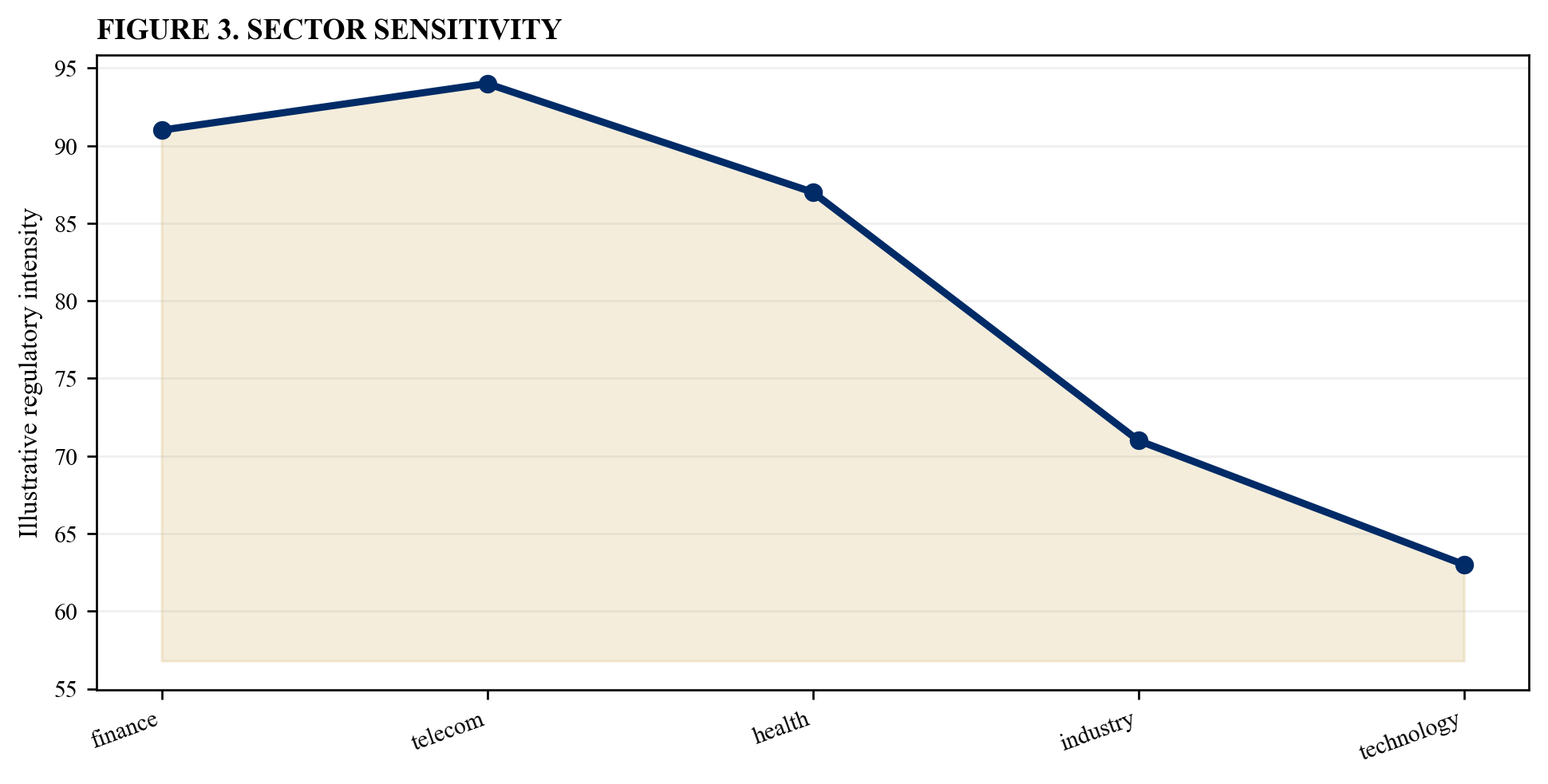
Illustrative analytical scenario; verified entry evidence should replace values.
25. Apply the real-estate test
The board and UAE workstream should verify land rights, developer permissions, escrow, sales, leasing, brokerage and emirate-specific rules. The required output is a real-estate control matrix. Record the accountable owner, governing authority, source evidence, assumption, acceptance criterion, approval, exception and review date [2][16].
Test the conclusion by sector and emirate and across acquisition, greenfield and alliance routes. Assess customers, ownership, licensing, competition, tax, capital, people, technology, operating capability, time to revenue, downside exposure and exit.
The principal risk is that an acquired platform can have projects or permissions that require separate review or consent. Quantify its effect on revenue timing, required capital, enterprise value, cash conversion, compliance, control, execution certainty and strategic option value. Compare the chosen route with a phased or hybrid alternative.
Translate the conclusion into conditions precedent, licence actions, transaction terms, partner obligations, financing gates, mobilisation tasks, evidence owners and board decisions. Refresh the analysis after material regulatory, target, partner, market, financing or execution change.
26. Apply the logistics test
The board and UAE workstream should map transport mode, port or airport access, customs, warehousing, fleet, safety and customer contracts. The required output is a logistics corridor model. Record the accountable owner, governing authority, source evidence, assumption, acceptance criterion, approval, exception and review date [22][23].
Test the conclusion by sector and emirate and across acquisition, greenfield and alliance routes. Assess customers, ownership, licensing, competition, tax, capital, people, technology, operating capability, time to revenue, downside exposure and exit.
The principal risk is that a national proposition can depend on emirate and asset permissions with different lead times. Quantify its effect on revenue timing, required capital, enterprise value, cash conversion, compliance, control, execution certainty and strategic option value. Compare the chosen route with a phased or hybrid alternative.
Translate the conclusion into conditions precedent, licence actions, transaction terms, partner obligations, financing gates, mobilisation tasks, evidence owners and board decisions. Refresh the analysis after material regulatory, target, partner, market, financing or execution change.
27. Apply the food and agriculture test
The board and UAE workstream should test product registration, food safety, import, cold chain, distribution and local-production requirements. The required output is a food-market access plan. Record the accountable owner, governing authority, source evidence, assumption, acceptance criterion, approval, exception and review date [22][40].
Test the conclusion by sector and emirate and across acquisition, greenfield and alliance routes. Assess customers, ownership, licensing, competition, tax, capital, people, technology, operating capability, time to revenue, downside exposure and exit.
The principal risk is that channel agreements can precede lawful product and supply-chain readiness. Quantify its effect on revenue timing, required capital, enterprise value, cash conversion, compliance, control, execution certainty and strategic option value. Compare the chosen route with a phased or hybrid alternative.
Translate the conclusion into conditions precedent, licence actions, transaction terms, partner obligations, financing gates, mobilisation tasks, evidence owners and board decisions. Refresh the analysis after material regulatory, target, partner, market, financing or execution change.
28. Apply the education test
The board and UAE workstream should map institution, programme, curriculum, faculty, premises and emirate approvals. The required output is an education licensing plan. Record the accountable owner, governing authority, source evidence, assumption, acceptance criterion, approval, exception and review date [3][16].
Test the conclusion by sector and emirate and across acquisition, greenfield and alliance routes. Assess customers, ownership, licensing, competition, tax, capital, people, technology, operating capability, time to revenue, downside exposure and exit.
The principal risk is that brand and content can be ready while the approved institution and programme are not. Quantify its effect on revenue timing, required capital, enterprise value, cash conversion, compliance, control, execution certainty and strategic option value. Compare the chosen route with a phased or hybrid alternative.
Translate the conclusion into conditions precedent, licence actions, transaction terms, partner obligations, financing gates, mobilisation tasks, evidence owners and board decisions. Refresh the analysis after material regulatory, target, partner, market, financing or execution change.
29. Apply the public-sector test
The board and UAE workstream should identify supplier registration, tender eligibility, local value, security, performance and payment requirements. The required output is a government-market access plan. Record the accountable owner, governing authority, source evidence, assumption, acceptance criterion, approval, exception and review date [5][39].
Test the conclusion by sector and emirate and across acquisition, greenfield and alliance routes. Assess customers, ownership, licensing, competition, tax, capital, people, technology, operating capability, time to revenue, downside exposure and exit.
The principal risk is that an alliance can win access while leaving delivery accountability and economics unclear. Quantify its effect on revenue timing, required capital, enterprise value, cash conversion, compliance, control, execution certainty and strategic option value. Compare the chosen route with a phased or hybrid alternative.
Translate the conclusion into conditions precedent, licence actions, transaction terms, partner obligations, financing gates, mobilisation tasks, evidence owners and board decisions. Refresh the analysis after material regulatory, target, partner, market, financing or execution change.
30. Protect technology and intellectual property
The board and UAE workstream should allocate background IP, localisation, data, improvements, licences, cybersecurity and termination rights. The required output is an IP and technology schedule. Record the accountable owner, governing authority, source evidence, assumption, acceptance criterion, approval, exception and review date [10][24].
Test the conclusion by sector and emirate and across acquisition, greenfield and alliance routes. Assess customers, ownership, licensing, competition, tax, capital, people, technology, operating capability, time to revenue, downside exposure and exit.
The principal risk is that an alliance can transfer know-how without durable ownership, control or exit protection. Quantify its effect on revenue timing, required capital, enterprise value, cash conversion, compliance, control, execution certainty and strategic option value. Compare the chosen route with a phased or hybrid alternative.
Translate the conclusion into conditions precedent, licence actions, transaction terms, partner obligations, financing gates, mobilisation tasks, evidence owners and board decisions. Refresh the analysis after material regulatory, target, partner, market, financing or execution change.
31. Build the acquisition target screen
The board and UAE workstream should rank targets by licence utility, customer quality, capability, compliance, ownership and integration fit. The required output is a target-screening matrix. Record the accountable owner, governing authority, source evidence, assumption, acceptance criterion, approval, exception and review date [7][17].
Test the conclusion by sector and emirate and across acquisition, greenfield and alliance routes. Assess customers, ownership, licensing, competition, tax, capital, people, technology, operating capability, time to revenue, downside exposure and exit.
The principal risk is that revenue scale can dominate the attributes that actually accelerate entry. Quantify its effect on revenue timing, required capital, enterprise value, cash conversion, compliance, control, execution certainty and strategic option value. Compare the chosen route with a phased or hybrid alternative.
Translate the conclusion into conditions precedent, licence actions, transaction terms, partner obligations, financing gates, mobilisation tasks, evidence owners and board decisions. Refresh the analysis after material regulatory, target, partner, market, financing or execution change.
32. Conduct route-specific diligence
The board and UAE workstream should verify transferability, liabilities, approvals, contracts, people, systems, tax and integrity risks. The required output is an evidence-led diligence report. Record the accountable owner, governing authority, source evidence, assumption, acceptance criterion, approval, exception and review date [7][26].
Test the conclusion by sector and emirate and across acquisition, greenfield and alliance routes. Assess customers, ownership, licensing, competition, tax, capital, people, technology, operating capability, time to revenue, downside exposure and exit.
The principal risk is that entry speed can be inferred from seller representations or partner assurances. Quantify its effect on revenue timing, required capital, enterprise value, cash conversion, compliance, control, execution certainty and strategic option value. Compare the chosen route with a phased or hybrid alternative.
Translate the conclusion into conditions precedent, licence actions, transaction terms, partner obligations, financing gates, mobilisation tasks, evidence owners and board decisions. Refresh the analysis after material regulatory, target, partner, market, financing or execution change.
Table 4. Illustrative scenario model
| Driver | Acquisition | Greenfield | Alliance |
|---|---|---|---|
| time to revenue months | 9 | 18 | 12 |
| initial capital index | 100 | 65 | 45 |
| control score | 85 | 95 | 55 |
| execution risk score | 62 | 58 | 68 |
Illustrative analytical structure; current verified evidence governs.
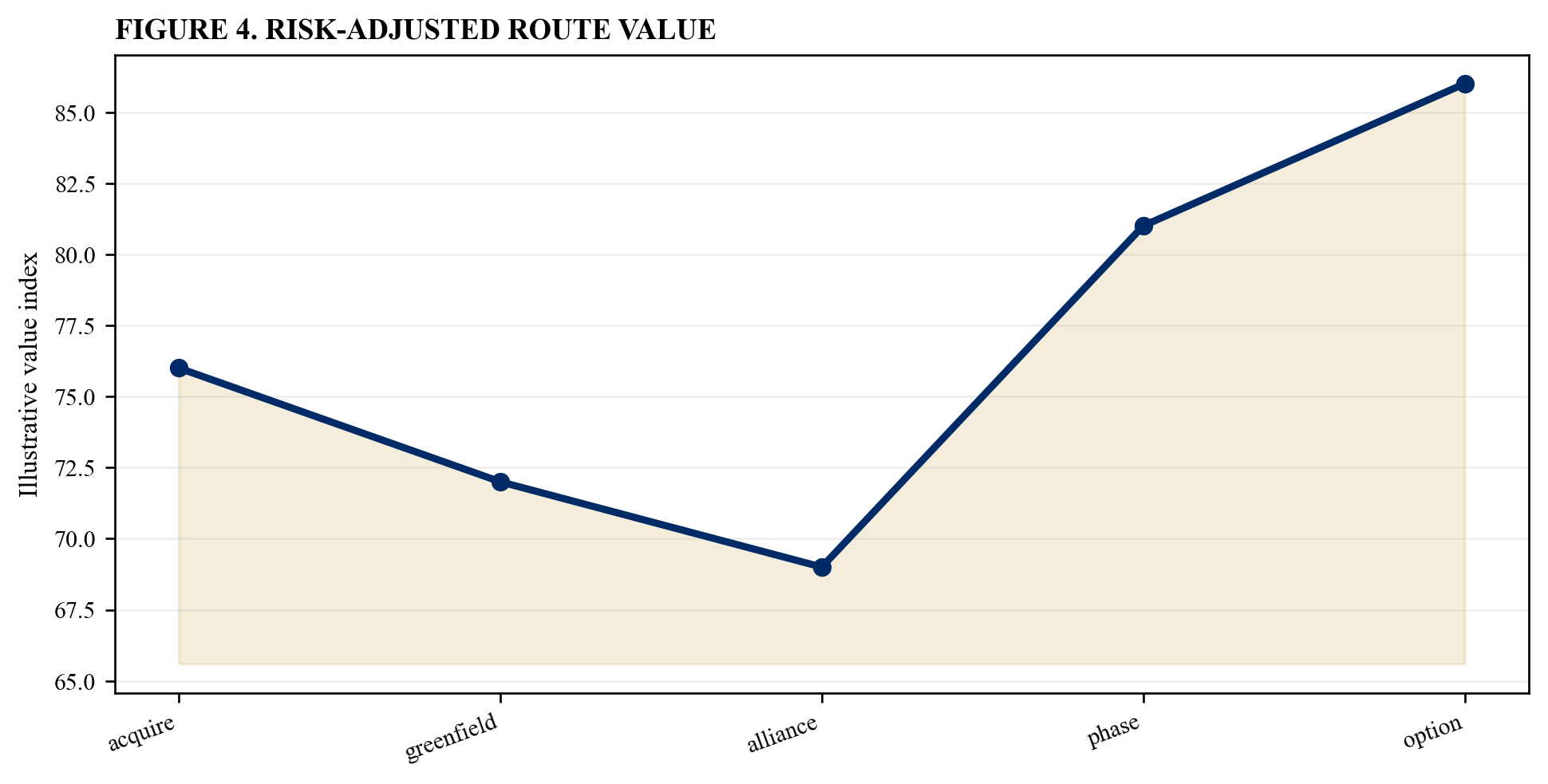
Illustrative analytical scenario; verified entry evidence should replace values.
33. Value route economics
The board and UAE workstream should compare purchase price, build cost, partner economics, working capital, delay, failure and option value. The required output is a probability-weighted scenario model. Record the accountable owner, governing authority, source evidence, assumption, acceptance criterion, approval, exception and review date [6][20].
Test the conclusion by sector and emirate and across acquisition, greenfield and alliance routes. Assess customers, ownership, licensing, competition, tax, capital, people, technology, operating capability, time to revenue, downside exposure and exit.
The principal risk is that nominal capex can be compared without timing, risk and control economics. Quantify its effect on revenue timing, required capital, enterprise value, cash conversion, compliance, control, execution certainty and strategic option value. Compare the chosen route with a phased or hybrid alternative.
Translate the conclusion into conditions precedent, licence actions, transaction terms, partner obligations, financing gates, mobilisation tasks, evidence owners and board decisions. Refresh the analysis after material regulatory, target, partner, market, financing or execution change.
34. Design alliance governance
The board and UAE workstream should set reserved matters, board rights, management, funding, information, conflicts, deadlock and exit. The required output is a joint-venture governance charter. Record the accountable owner, governing authority, source evidence, assumption, acceptance criterion, approval, exception and review date [10][11].
Test the conclusion by sector and emirate and across acquisition, greenfield and alliance routes. Assess customers, ownership, licensing, competition, tax, capital, people, technology, operating capability, time to revenue, downside exposure and exit.
The principal risk is that shared ownership can create operational paralysis or uncontrolled value leakage. Quantify its effect on revenue timing, required capital, enterprise value, cash conversion, compliance, control, execution certainty and strategic option value. Compare the chosen route with a phased or hybrid alternative.
Translate the conclusion into conditions precedent, licence actions, transaction terms, partner obligations, financing gates, mobilisation tasks, evidence owners and board decisions. Refresh the analysis after material regulatory, target, partner, market, financing or execution change.
35. Structure entry financing
The board and UAE workstream should match equity, acquisition debt, working capital, guarantees and staged capital to route risks. The required output is a financing and capital-call plan. Record the accountable owner, governing authority, source evidence, assumption, acceptance criterion, approval, exception and review date [30][31].
Test the conclusion by sector and emirate and across acquisition, greenfield and alliance routes. Assess customers, ownership, licensing, competition, tax, capital, people, technology, operating capability, time to revenue, downside exposure and exit.
The principal risk is that financing can mature before licences, revenue and cash conversion are established. Quantify its effect on revenue timing, required capital, enterprise value, cash conversion, compliance, control, execution certainty and strategic option value. Compare the chosen route with a phased or hybrid alternative.
Translate the conclusion into conditions precedent, licence actions, transaction terms, partner obligations, financing gates, mobilisation tasks, evidence owners and board decisions. Refresh the analysis after material regulatory, target, partner, market, financing or execution change.
36. Plan integration or mobilisation
The board and UAE workstream should convert the chosen route into workstreams, owners, dependencies, budgets and acceptance tests. The required output is a 100-day entry plan. Record the accountable owner, governing authority, source evidence, assumption, acceptance criterion, approval, exception and review date [6][28].
Test the conclusion by sector and emirate and across acquisition, greenfield and alliance routes. Assess customers, ownership, licensing, competition, tax, capital, people, technology, operating capability, time to revenue, downside exposure and exit.
The principal risk is that closing or incorporation can be treated as commercial launch. Quantify its effect on revenue timing, required capital, enterprise value, cash conversion, compliance, control, execution certainty and strategic option value. Compare the chosen route with a phased or hybrid alternative.
Translate the conclusion into conditions precedent, licence actions, transaction terms, partner obligations, financing gates, mobilisation tasks, evidence owners and board decisions. Refresh the analysis after material regulatory, target, partner, market, financing or execution change.
37. Create the risk-control matrix
The board and UAE workstream should assign regulatory, commercial, operational, financial, partner, data and reputation risks. The required output is an owned control register. Record the accountable owner, governing authority, source evidence, assumption, acceptance criterion, approval, exception and review date [8][27].
Test the conclusion by sector and emirate and across acquisition, greenfield and alliance routes. Assess customers, ownership, licensing, competition, tax, capital, people, technology, operating capability, time to revenue, downside exposure and exit.
The principal risk is that risks can be listed without preventive controls, evidence or escalation thresholds. Quantify its effect on revenue timing, required capital, enterprise value, cash conversion, compliance, control, execution certainty and strategic option value. Compare the chosen route with a phased or hybrid alternative.
Translate the conclusion into conditions precedent, licence actions, transaction terms, partner obligations, financing gates, mobilisation tasks, evidence owners and board decisions. Refresh the analysis after material regulatory, target, partner, market, financing or execution change.
38. Govern decision gates
The board and UAE workstream should set approve, pause, redesign and abandon gates using current evidence and downside limits. The required output is a board decision calendar. Record the accountable owner, governing authority, source evidence, assumption, acceptance criterion, approval, exception and review date [6][18].
Test the conclusion by sector and emirate and across acquisition, greenfield and alliance routes. Assess customers, ownership, licensing, competition, tax, capital, people, technology, operating capability, time to revenue, downside exposure and exit.
The principal risk is that sunk cost and timetable pressure can override failed entry assumptions. Quantify its effect on revenue timing, required capital, enterprise value, cash conversion, compliance, control, execution certainty and strategic option value. Compare the chosen route with a phased or hybrid alternative.
Translate the conclusion into conditions precedent, licence actions, transaction terms, partner obligations, financing gates, mobilisation tasks, evidence owners and board decisions. Refresh the analysis after material regulatory, target, partner, market, financing or execution change.
39. Preserve strategic options
The board and UAE workstream should design expansion, conversion, acquisition, buyout, divestment and exit rights. The required output is an option-value map. Record the accountable owner, governing authority, source evidence, assumption, acceptance criterion, approval, exception and review date [11][14].
Test the conclusion by sector and emirate and across acquisition, greenfield and alliance routes. Assess customers, ownership, licensing, competition, tax, capital, people, technology, operating capability, time to revenue, downside exposure and exit.
The principal risk is that the initial structure can lock the group into an uneconomic route. Quantify its effect on revenue timing, required capital, enterprise value, cash conversion, compliance, control, execution certainty and strategic option value. Compare the chosen route with a phased or hybrid alternative.
Translate the conclusion into conditions precedent, licence actions, transaction terms, partner obligations, financing gates, mobilisation tasks, evidence owners and board decisions. Refresh the analysis after material regulatory, target, partner, market, financing or execution change.
40. Issue the entry-readiness certificate
The board and UAE workstream should reconcile sector, demand, route, ownership, licensing, tax, capital, control and execution evidence. The required output is an auditable market-entry certificate. Record the accountable owner, governing authority, source evidence, assumption, acceptance criterion, approval, exception and review date [1][3].
Test the conclusion by sector and emirate and across acquisition, greenfield and alliance routes. Assess customers, ownership, licensing, competition, tax, capital, people, technology, operating capability, time to revenue, downside exposure and exit.
The principal risk is that board approval can rest on disconnected legal, commercial and operating workstreams. Quantify its effect on revenue timing, required capital, enterprise value, cash conversion, compliance, control, execution certainty and strategic option value. Compare the chosen route with a phased or hybrid alternative.
Translate the conclusion into conditions precedent, licence actions, transaction terms, partner obligations, financing gates, mobilisation tasks, evidence owners and board decisions. Refresh the analysis after material regulatory, target, partner, market, financing or execution change.
Table 5. Entry-readiness certificate
| Decision domain | Required evidence | Owner |
|---|---|---|
| sector and demand | validated perimeter and buyers | business sponsor |
| licensing | critical path and approvals | regulatory lead |
| economics | scenario and downside model | finance lead |
| execution | mobilisation and controls | country lead |
Illustrative analytical structure; current verified evidence governs.
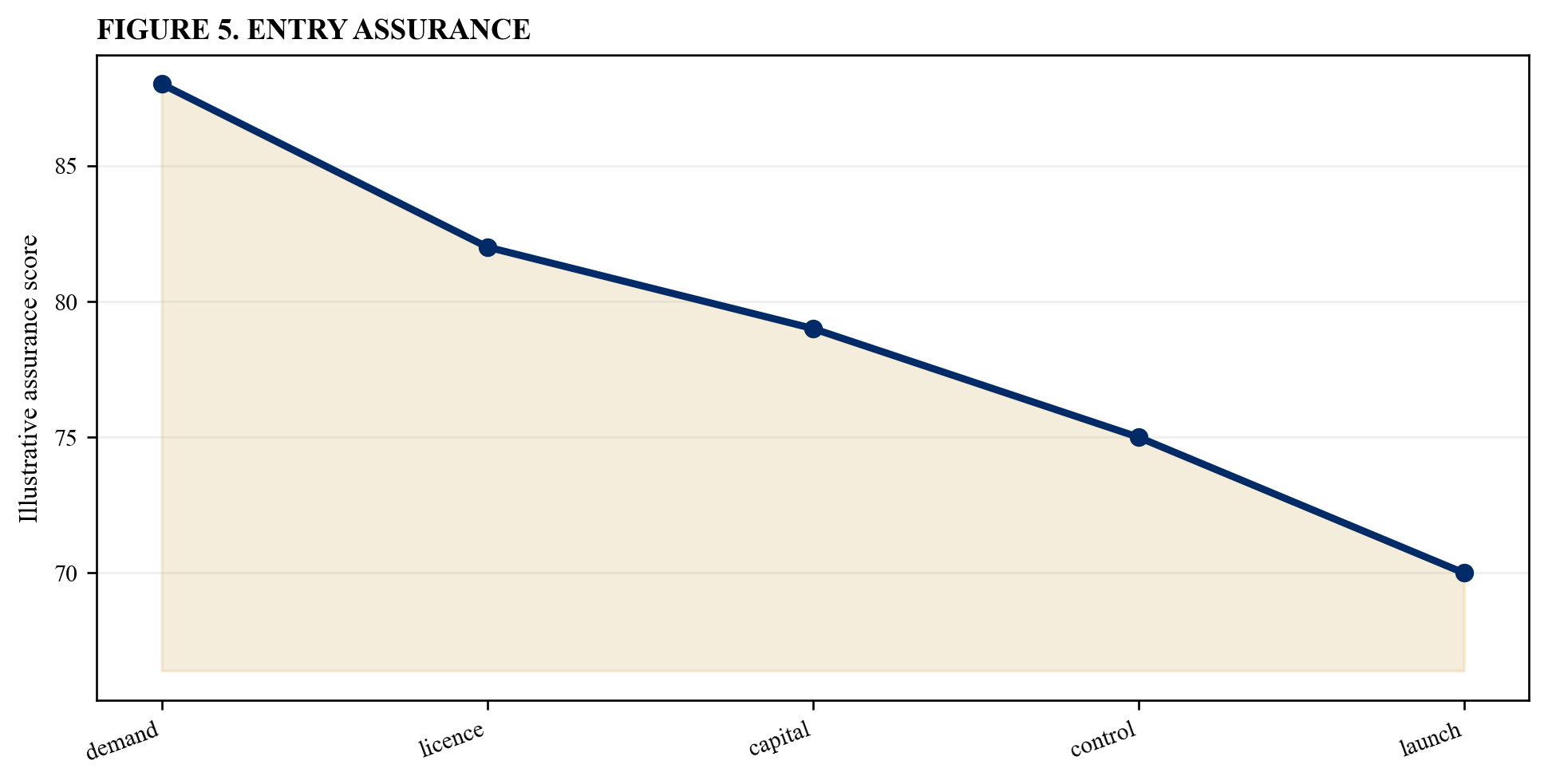
Illustrative analytical scenario; verified entry evidence should replace values.
References
- UAE Government, Foreign Direct Investment, https://u.ae/en/information-and-services/finance-and-investment/foreign-direct-investment
- Ministry of Investment, Invest in the UAE, https://www.investuae.gov.ae/
- UAE Government, Starting a Business on the Mainland, https://u.ae/en/information-and-services/business/doing-business-on-the-mainland/steps-to-start-a-business-on-the-mainland
- Ministry of Economy and Tourism, Commercial Companies and Business Legislation, https://www.moet.gov.ae/en/laws
- Abu Dhabi Investment Office, Investor Support and Opportunities, https://www.investinabudhabi.gov.ae/
- World Bank, Foreign Direct Investment and Global Value Chains, https://www.worldbank.org/en/topic/investment-climate
- OECD, Guidelines for Multinational Enterprises on Responsible Business Conduct, https://mneguidelines.oecd.org/
- UAE Government, Due Diligence and Business Regulation Resources, https://u.ae/en/information-and-services/business
- Invest in Dubai, Business Setup and Licensing, https://invest.dubai.ae/
- OECD, Strategic Alliances and Joint Ventures, https://www.oecd.org/corporate/
- IFC, Corporate Governance Methodology, https://www.ifc.org/en/what-we-do/sector-expertise/corporate-governance
- UAE Government, Full Foreign Ownership of Commercial Companies, https://u.ae/en/information-and-services/business/doing-business-on-the-mainland/full-foreign-ownership-of-commercial-companies
- Ministry of Economy and Tourism, Federal Decree-Law No. 32 of 2021 on Commercial Companies, https://www.moet.gov.ae/en/laws
- UAE Government, Doing Business in Free Zones, https://u.ae/en/information-and-services/business/doing-business-in-free-zones
- Federal Tax Authority, Free Zone Persons Corporate Tax Guide, https://tax.gov.ae/Datafolder/Files/Guides/CT/Free%20Zone%20Persons%20-%2020%2005%202024%20final%20for%20GCD.pdf
- UAE Government, Business Licensing and Economic Activities, https://u.ae/en/information-and-services/business
- Ministry of Economy and Tourism, Competition Law, https://www.moet.gov.ae/en/laws
- UAE Cabinet, Decision No. 3 of 2025 on Economic Concentration Thresholds, https://www.moet.gov.ae/documents/20121/0/Cabinet%2BDecision%2BNo.%2B%283%29%2Bof%2B2025%2BOn%2Bthe%2BThresholds%2BRelated%2Bto%2Bthe%2BImplementation%2Bof%2BFederal%2BDecree-Law%2BNo.%2B%2836%29%2Bof%2B2023%2BRegulati.pdf/0f228724-8dd5-9b9c-0ed8-0b94d5ae0873
- UAE Government, Strategic Impact Activities and Ownership, https://u.ae/en/information-and-services/business/doing-business-on-the-mainland/full-foreign-ownership-of-commercial-companies
- Federal Tax Authority, Corporate Tax FAQs, https://tax.gov.ae/en/taxes/corporate.tax/faqs.aspx
- Federal Tax Authority, Non-Resident Persons Corporate Tax Guide, https://tax.gov.ae/en/media.centre/news/federal.tax.authority.issues.guide.for.nonresident.persons.for.corporate.tax.purposes.who.derive.statesourced.income.in.the.uae.aspx
- UAE Government, UAE Imports and Exports Guide, https://u.ae/en/information-and-services/business/uae-imports-and-exports-guide
- Federal Customs Authority, Customs Services and Legislation, https://www.customs.gov.ae/
- UAE Data Office, Federal Personal Data Protection Law, https://u.ae/en/about-the-uae/digital-uae/data/data-protection-laws
- UAE Government, Cybersecurity and Digital Regulation, https://u.ae/en/about-the-uae/digital-uae
- UAE Government, Anti-Money Laundering Regulation, https://u.ae/en/information-and-services/justice-safety-and-the-law/anti-money-laundering
- Ministry of Economy and Tourism, Ultimate Beneficial Owner Procedures, https://www.moet.gov.ae/en/ultimate-beneficial-owner-procedures
- Ministry of Human Resources and Emiratisation, Labour Market Services, https://www.mohre.gov.ae/
- Federal Authority for Identity Citizenship Customs and Port Security, Work and Residency Services, https://audience.gov.ae/en/
- Central Bank of the UAE, Payment Systems and Banking Services, https://www.centralbank.ae/en/
- Central Bank of the UAE, Licensing, https://www.centralbank.ae/en/licensing/
- Central Bank of the UAE, Chapter Two Licensing Rulebook, https://rulebook.centralbank.ae/en/rulebook/chapter-two-licensing-0
- TDRA, Issue Licences to Provide Telecommunication Services, https://tdra.gov.ae/en/Services/issue-licences-to-provide-telecommunication-services
- TDRA, Telecommunications Licensing Framework, https://tdra.gov.ae/en/About/tdra-sectors/telecommunication/departments/regulatory-affairs-department/licensing
- Ministry of Health and Prevention, Initial Approval for Health Facility Licensing, https://mohap.gov.ae/en/w/initial-approval-for-licensing-re-licensing-health-facility
- Ministry of Health and Prevention, Issue a Health Facility License, https://mohap.gov.ae/en/w/issue-a-health-facility-license
- Securities and Commodities Authority, Financial Activities and Licence Categories, https://www.sca.gov.ae/assets/c0caf754/rulebook4en.aspx
- Dubai Financial Services Authority, Authorisation, https://www.dfsa.ae/what-we-do/authorisation
- Ministry of Industry and Advanced Technology, Industrial Services, https://moiat.gov.ae/en/services
- UAE Government, Make it in the Emirates, https://u.ae/en/information-and-services/business/make-it-in-the-emirates
- Financial Services Regulatory Authority, Authorisation and Regulatory Framework, https://www.adgm.com/operating-in-adgm/financial-services-regulatory-authority
- Dubai Department of Economy and Tourism, Business and Licensing Services, https://www.dubaidet.gov.ae/en/services
- Khalifa Economic Zones Abu Dhabi, Industrial and Logistics Investment, https://www.kezadgroup.com/
- Jebel Ali Free Zone, Business Setup and Operating Services, https://www.jafza.ae/
- Ministry of Education, Education Licensing and Services, https://www.moe.gov.ae/En/EServices/Pages/default.aspx
