

1. Define the economic purpose
The joint-venture sponsors should state the venture thesis, activities, customers, geography, duration and value-creation logic. The required output is a venture-purpose memorandum. Record the purpose, legal right, obligation, valuation basis, effective date, accountable owner, evidence, method, uncertainty, tax and accounting implications and approval [1][2].
Test the contribution in the venture's actual operating model. Reconcile ownership, transferability, remaining life, capacity, restrictions, counterparty dependence, supporting investment, stand-alone economics, venture-created benefits and credible alternatives. Use market-participant assumptions for fair-value analysis and keep the negotiated ownership bridge explicit.
The principal risk is that contributors can negotiate percentages before agreeing what the venture must accomplish. Compare at least one alternative method or evidence set and explain the reason for any divergence. Use probability-weighted scenarios where delivery, adoption, consent, retention, regulation or technical performance remains conditional.
Retain source contracts, title records, technical diligence, commercial evidence, forecasts, valuation workings, sensitivities, specialist conclusions, approvals, changes and exceptions. Revalue or rebalance when rights, delivery, timing, market conditions, funding, regulation or venture scope changes.
2. Set the valuation mandate
The joint-venture sponsors should name the decision, users, valuation basis, standard, date, currency, materiality and independence requirements. The required output is a contribution-valuation mandate. Record the purpose, legal right, obligation, valuation basis, effective date, accountable owner, evidence, method, uncertainty, tax and accounting implications and approval [3][4].
Test the contribution in the venture's actual operating model. Reconcile ownership, transferability, remaining life, capacity, restrictions, counterparty dependence, supporting investment, stand-alone economics, venture-created benefits and credible alternatives. Use market-participant assumptions for fair-value analysis and keep the negotiated ownership bridge explicit.
The principal risk is that different concepts of value can produce apparently precise but incomparable results. Compare at least one alternative method or evidence set and explain the reason for any divergence. Use probability-weighted scenarios where delivery, adoption, consent, retention, regulation or technical performance remains conditional.
Retain source contracts, title records, technical diligence, commercial evidence, forecasts, valuation workings, sensitivities, specialist conclusions, approvals, changes and exceptions. Revalue or rebalance when rights, delivery, timing, market conditions, funding, regulation or venture scope changes.
3. Build the contribution taxonomy
The joint-venture sponsors should separate cash, financial support, tangible assets, working capital, IP, customers, rights, services and capabilities. The required output is a complete contribution register. Record the purpose, legal right, obligation, valuation basis, effective date, accountable owner, evidence, method, uncertainty, tax and accounting implications and approval [1][5].
Test the contribution in the venture's actual operating model. Reconcile ownership, transferability, remaining life, capacity, restrictions, counterparty dependence, supporting investment, stand-alone economics, venture-created benefits and credible alternatives. Use market-participant assumptions for fair-value analysis and keep the negotiated ownership bridge explicit.
The principal risk is that a single headline value can conceal unlike rights and obligations. Compare at least one alternative method or evidence set and explain the reason for any divergence. Use probability-weighted scenarios where delivery, adoption, consent, retention, regulation or technical performance remains conditional.
Retain source contracts, title records, technical diligence, commercial evidence, forecasts, valuation workings, sensitivities, specialist conclusions, approvals, changes and exceptions. Revalue or rebalance when rights, delivery, timing, market conditions, funding, regulation or venture scope changes.
Table 1. Joint-venture contribution taxonomy
| Contribution | Primary evidence | Measurement question |
|---|---|---|
| cash | bank and escrow records | usable amount and timing |
| asset | title and condition | market-participant value |
| IP or customer | rights and cash flows | separable economic benefit |
| capability | people and processes | transfer and performance mechanism |
Illustrative analytical structure; verified transaction evidence and specialist review govern.
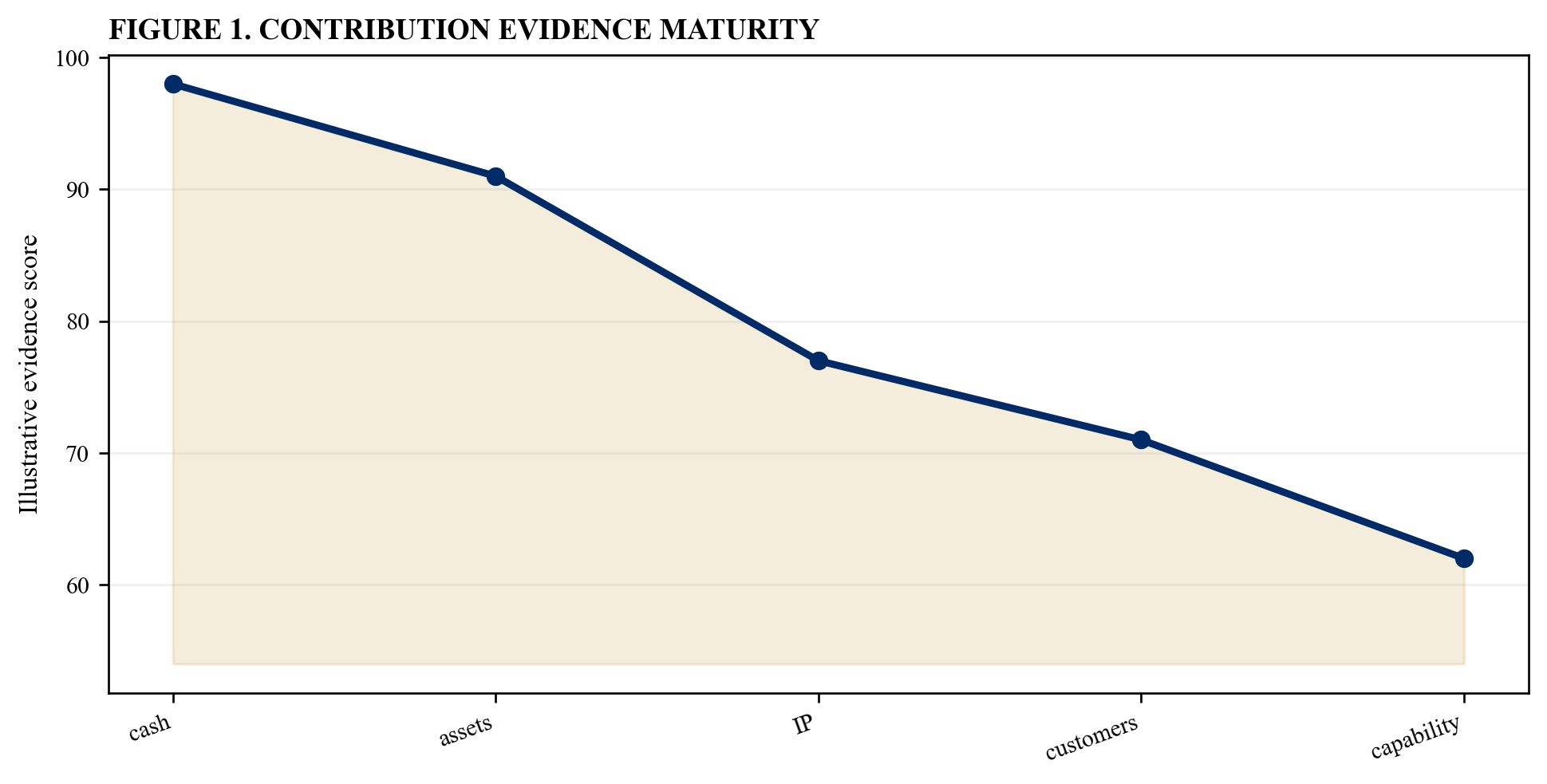
Illustrative analytical scenario; verified transaction evidence should replace index values.
4. Verify ownership and authority
The joint-venture sponsors should prove title, beneficial ownership, approvals, encumbrances and authority to transfer or license each contribution. The required output is a legal-rights evidence pack. Record the purpose, legal right, obligation, valuation basis, effective date, accountable owner, evidence, method, uncertainty, tax and accounting implications and approval [6][7].
Test the contribution in the venture's actual operating model. Reconcile ownership, transferability, remaining life, capacity, restrictions, counterparty dependence, supporting investment, stand-alone economics, venture-created benefits and credible alternatives. Use market-participant assumptions for fair-value analysis and keep the negotiated ownership bridge explicit.
The principal risk is that economic projections can attach to rights the contributor does not control. Compare at least one alternative method or evidence set and explain the reason for any divergence. Use probability-weighted scenarios where delivery, adoption, consent, retention, regulation or technical performance remains conditional.
Retain source contracts, title records, technical diligence, commercial evidence, forecasts, valuation workings, sensitivities, specialist conclusions, approvals, changes and exceptions. Revalue or rebalance when rights, delivery, timing, market conditions, funding, regulation or venture scope changes.
5. Test transferability and conditions
The joint-venture sponsors should identify consent, change-of-control, assignment, territorial, field-of-use, export, regulatory and termination constraints. The required output is a transfer-condition matrix. Record the purpose, legal right, obligation, valuation basis, effective date, accountable owner, evidence, method, uncertainty, tax and accounting implications and approval [6][8].
Test the contribution in the venture's actual operating model. Reconcile ownership, transferability, remaining life, capacity, restrictions, counterparty dependence, supporting investment, stand-alone economics, venture-created benefits and credible alternatives. Use market-participant assumptions for fair-value analysis and keep the negotiated ownership bridge explicit.
The principal risk is that a restricted right can be valued as though it were freely deployable. Compare at least one alternative method or evidence set and explain the reason for any divergence. Use probability-weighted scenarios where delivery, adoption, consent, retention, regulation or technical performance remains conditional.
Retain source contracts, title records, technical diligence, commercial evidence, forecasts, valuation workings, sensitivities, specialist conclusions, approvals, changes and exceptions. Revalue or rebalance when rights, delivery, timing, market conditions, funding, regulation or venture scope changes.
6. Separate economics from control
The joint-venture sponsors should distinguish contribution value, ownership percentage, voting rights, reserved matters, board rights and operational authority. The required output is an economics-and-governance bridge. Record the purpose, legal right, obligation, valuation basis, effective date, accountable owner, evidence, method, uncertainty, tax and accounting implications and approval [1][9].
Test the contribution in the venture's actual operating model. Reconcile ownership, transferability, remaining life, capacity, restrictions, counterparty dependence, supporting investment, stand-alone economics, venture-created benefits and credible alternatives. Use market-participant assumptions for fair-value analysis and keep the negotiated ownership bridge explicit.
The principal risk is that partners can overpay for control or underprice minority protections. Compare at least one alternative method or evidence set and explain the reason for any divergence. Use probability-weighted scenarios where delivery, adoption, consent, retention, regulation or technical performance remains conditional.
Retain source contracts, title records, technical diligence, commercial evidence, forecasts, valuation workings, sensitivities, specialist conclusions, approvals, changes and exceptions. Revalue or rebalance when rights, delivery, timing, market conditions, funding, regulation or venture scope changes.
7. Fix date, currency and market
The joint-venture sponsors should align measurement date, functional currency, exchange rates, inflation, jurisdiction and assumed market participants. The required output is a common measurement convention. Record the purpose, legal right, obligation, valuation basis, effective date, accountable owner, evidence, method, uncertainty, tax and accounting implications and approval [3][10].
Test the contribution in the venture's actual operating model. Reconcile ownership, transferability, remaining life, capacity, restrictions, counterparty dependence, supporting investment, stand-alone economics, venture-created benefits and credible alternatives. Use market-participant assumptions for fair-value analysis and keep the negotiated ownership bridge explicit.
The principal risk is that values can move materially between negotiation and formation. Compare at least one alternative method or evidence set and explain the reason for any divergence. Use probability-weighted scenarios where delivery, adoption, consent, retention, regulation or technical performance remains conditional.
Retain source contracts, title records, technical diligence, commercial evidence, forecasts, valuation workings, sensitivities, specialist conclusions, approvals, changes and exceptions. Revalue or rebalance when rights, delivery, timing, market conditions, funding, regulation or venture scope changes.
8. Measure cash contributions
The joint-venture sponsors should reconcile cleared cash, restricted cash, escrow, timing, currency, funding conditions and repayment rights. The required output is a cash-contribution certificate. Record the purpose, legal right, obligation, valuation basis, effective date, accountable owner, evidence, method, uncertainty, tax and accounting implications and approval [3][11].
Test the contribution in the venture's actual operating model. Reconcile ownership, transferability, remaining life, capacity, restrictions, counterparty dependence, supporting investment, stand-alone economics, venture-created benefits and credible alternatives. Use market-participant assumptions for fair-value analysis and keep the negotiated ownership bridge explicit.
The principal risk is that nominal cash can differ from usable venture liquidity. Compare at least one alternative method or evidence set and explain the reason for any divergence. Use probability-weighted scenarios where delivery, adoption, consent, retention, regulation or technical performance remains conditional.
Retain source contracts, title records, technical diligence, commercial evidence, forecasts, valuation workings, sensitivities, specialist conclusions, approvals, changes and exceptions. Revalue or rebalance when rights, delivery, timing, market conditions, funding, regulation or venture scope changes.
9. Value guarantees and credit support
The joint-venture sponsors should price guarantees, letters of credit, completion support, collateral and contingent funding by exposure and duration. The required output is a financial-support valuation. Record the purpose, legal right, obligation, valuation basis, effective date, accountable owner, evidence, method, uncertainty, tax and accounting implications and approval [12][13].
Test the contribution in the venture's actual operating model. Reconcile ownership, transferability, remaining life, capacity, restrictions, counterparty dependence, supporting investment, stand-alone economics, venture-created benefits and credible alternatives. Use market-participant assumptions for fair-value analysis and keep the negotiated ownership bridge explicit.
The principal risk is that off-balance-sheet risk can be ignored while benefiting the venture. Compare at least one alternative method or evidence set and explain the reason for any divergence. Use probability-weighted scenarios where delivery, adoption, consent, retention, regulation or technical performance remains conditional.
Retain source contracts, title records, technical diligence, commercial evidence, forecasts, valuation workings, sensitivities, specialist conclusions, approvals, changes and exceptions. Revalue or rebalance when rights, delivery, timing, market conditions, funding, regulation or venture scope changes.
10. Value plant and equipment
The joint-venture sponsors should inspect existence, condition, capacity, utilisation, remaining life, maintenance, relocation and alternative use. The required output is a tangible-asset valuation. Record the purpose, legal right, obligation, valuation basis, effective date, accountable owner, evidence, method, uncertainty, tax and accounting implications and approval [4][14].
Test the contribution in the venture's actual operating model. Reconcile ownership, transferability, remaining life, capacity, restrictions, counterparty dependence, supporting investment, stand-alone economics, venture-created benefits and credible alternatives. Use market-participant assumptions for fair-value analysis and keep the negotiated ownership bridge explicit.
The principal risk is that book cost can overstate obsolete assets or understate scarce productive capacity. Compare at least one alternative method or evidence set and explain the reason for any divergence. Use probability-weighted scenarios where delivery, adoption, consent, retention, regulation or technical performance remains conditional.
Retain source contracts, title records, technical diligence, commercial evidence, forecasts, valuation workings, sensitivities, specialist conclusions, approvals, changes and exceptions. Revalue or rebalance when rights, delivery, timing, market conditions, funding, regulation or venture scope changes.
11. Reconcile inventory and working capital
The joint-venture sponsors should test quality, ageing, recoverability, obsolescence, customer terms, supplier terms and normalised levels. The required output is a working-capital contribution schedule. Record the purpose, legal right, obligation, valuation basis, effective date, accountable owner, evidence, method, uncertainty, tax and accounting implications and approval [15][16].
Test the contribution in the venture's actual operating model. Reconcile ownership, transferability, remaining life, capacity, restrictions, counterparty dependence, supporting investment, stand-alone economics, venture-created benefits and credible alternatives. Use market-participant assumptions for fair-value analysis and keep the negotiated ownership bridge explicit.
The principal risk is that headline net assets can contain unavailable or impaired liquidity. Compare at least one alternative method or evidence set and explain the reason for any divergence. Use probability-weighted scenarios where delivery, adoption, consent, retention, regulation or technical performance remains conditional.
Retain source contracts, title records, technical diligence, commercial evidence, forecasts, valuation workings, sensitivities, specialist conclusions, approvals, changes and exceptions. Revalue or rebalance when rights, delivery, timing, market conditions, funding, regulation or venture scope changes.
12. Value real property and site rights
The joint-venture sponsors should verify title, tenure, zoning, environmental status, access, utilities, leases and development constraints. The required output is a property-rights valuation. Record the purpose, legal right, obligation, valuation basis, effective date, accountable owner, evidence, method, uncertainty, tax and accounting implications and approval [4][17].
Test the contribution in the venture's actual operating model. Reconcile ownership, transferability, remaining life, capacity, restrictions, counterparty dependence, supporting investment, stand-alone economics, venture-created benefits and credible alternatives. Use market-participant assumptions for fair-value analysis and keep the negotiated ownership bridge explicit.
The principal risk is that location value can depend on permits or infrastructure that are not transferable. Compare at least one alternative method or evidence set and explain the reason for any divergence. Use probability-weighted scenarios where delivery, adoption, consent, retention, regulation or technical performance remains conditional.
Retain source contracts, title records, technical diligence, commercial evidence, forecasts, valuation workings, sensitivities, specialist conclusions, approvals, changes and exceptions. Revalue or rebalance when rights, delivery, timing, market conditions, funding, regulation or venture scope changes.
13. Identify intellectual property precisely
The joint-venture sponsors should map patents, copyrights, trade secrets, designs, domains, know-how, licences, ownership chains and protection. The required output is an IP-rights evidence map. Record the purpose, legal right, obligation, valuation basis, effective date, accountable owner, evidence, method, uncertainty, tax and accounting implications and approval [6][18].
Test the contribution in the venture's actual operating model. Reconcile ownership, transferability, remaining life, capacity, restrictions, counterparty dependence, supporting investment, stand-alone economics, venture-created benefits and credible alternatives. Use market-participant assumptions for fair-value analysis and keep the negotiated ownership bridge explicit.
The principal risk is that technology can be described broadly while enforceable rights remain narrow. Compare at least one alternative method or evidence set and explain the reason for any divergence. Use probability-weighted scenarios where delivery, adoption, consent, retention, regulation or technical performance remains conditional.
Retain source contracts, title records, technical diligence, commercial evidence, forecasts, valuation workings, sensitivities, specialist conclusions, approvals, changes and exceptions. Revalue or rebalance when rights, delivery, timing, market conditions, funding, regulation or venture scope changes.
Table 2. IP and commercial-rights evidence
| Right | Evidence | Critical risk |
|---|---|---|
| patent or know-how | ownership and freedom to operate | validity and obsolescence |
| software or data | rights, consent and quality | portability and maintenance |
| brand | protection and demand effect | support investment |
| customer | contract, history and retention | attrition and concentration |
Illustrative analytical structure; verified transaction evidence and specialist review govern.
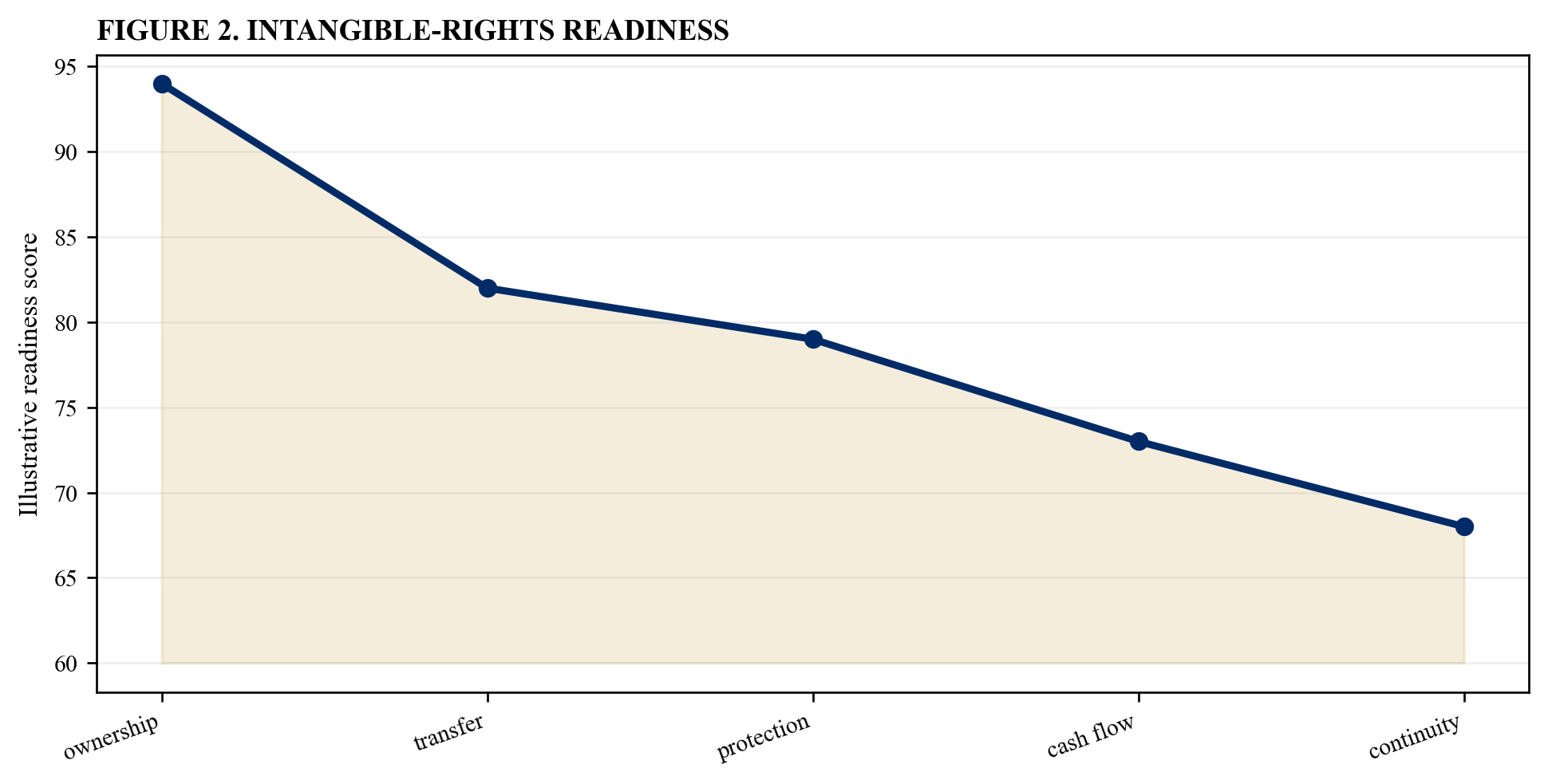
Illustrative analytical scenario; verified transaction evidence should replace index values.
14. Value patents and proprietary technology
The joint-venture sponsors should assess claims, validity, freedom to operate, remaining life, maturity, alternatives and commercial applications. The required output is a technology valuation. Record the purpose, legal right, obligation, valuation basis, effective date, accountable owner, evidence, method, uncertainty, tax and accounting implications and approval [18][19].
Test the contribution in the venture's actual operating model. Reconcile ownership, transferability, remaining life, capacity, restrictions, counterparty dependence, supporting investment, stand-alone economics, venture-created benefits and credible alternatives. Use market-participant assumptions for fair-value analysis and keep the negotiated ownership bridge explicit.
The principal risk is that technical novelty can be mistaken for economic exclusivity. Compare at least one alternative method or evidence set and explain the reason for any divergence. Use probability-weighted scenarios where delivery, adoption, consent, retention, regulation or technical performance remains conditional.
Retain source contracts, title records, technical diligence, commercial evidence, forecasts, valuation workings, sensitivities, specialist conclusions, approvals, changes and exceptions. Revalue or rebalance when rights, delivery, timing, market conditions, funding, regulation or venture scope changes.
15. Value software and data
The joint-venture sponsors should separate code, models, documentation, datasets, rights, consent, quality, portability, cyber controls and maintenance obligations. The required output is a software-and-data valuation. Record the purpose, legal right, obligation, valuation basis, effective date, accountable owner, evidence, method, uncertainty, tax and accounting implications and approval [5][20].
Test the contribution in the venture's actual operating model. Reconcile ownership, transferability, remaining life, capacity, restrictions, counterparty dependence, supporting investment, stand-alone economics, venture-created benefits and credible alternatives. Use market-participant assumptions for fair-value analysis and keep the negotiated ownership bridge explicit.
The principal risk is that data volume or development spend can be mistaken for lawful usable value. Compare at least one alternative method or evidence set and explain the reason for any divergence. Use probability-weighted scenarios where delivery, adoption, consent, retention, regulation or technical performance remains conditional.
Retain source contracts, title records, technical diligence, commercial evidence, forecasts, valuation workings, sensitivities, specialist conclusions, approvals, changes and exceptions. Revalue or rebalance when rights, delivery, timing, market conditions, funding, regulation or venture scope changes.
16. Value brands and trade names
The joint-venture sponsors should measure legal protection, awareness, preference, pricing effect, required support and geographic relevance. The required output is a brand-value analysis. Record the purpose, legal right, obligation, valuation basis, effective date, accountable owner, evidence, method, uncertainty, tax and accounting implications and approval [21][22].
Test the contribution in the venture's actual operating model. Reconcile ownership, transferability, remaining life, capacity, restrictions, counterparty dependence, supporting investment, stand-alone economics, venture-created benefits and credible alternatives. Use market-participant assumptions for fair-value analysis and keep the negotiated ownership bridge explicit.
The principal risk is that brand value can be detached from the investment needed to sustain it. Compare at least one alternative method or evidence set and explain the reason for any divergence. Use probability-weighted scenarios where delivery, adoption, consent, retention, regulation or technical performance remains conditional.
Retain source contracts, title records, technical diligence, commercial evidence, forecasts, valuation workings, sensitivities, specialist conclusions, approvals, changes and exceptions. Revalue or rebalance when rights, delivery, timing, market conditions, funding, regulation or venture scope changes.
17. Value customer contracts and relationships
The joint-venture sponsors should verify contracts, renewals, retention, concentration, margin, service obligations and separability. The required output is a customer-relationship valuation. Record the purpose, legal right, obligation, valuation basis, effective date, accountable owner, evidence, method, uncertainty, tax and accounting implications and approval [23][24].
Test the contribution in the venture's actual operating model. Reconcile ownership, transferability, remaining life, capacity, restrictions, counterparty dependence, supporting investment, stand-alone economics, venture-created benefits and credible alternatives. Use market-participant assumptions for fair-value analysis and keep the negotiated ownership bridge explicit.
The principal risk is that revenue history can be credited without testing ownership, attrition or fulfilment. Compare at least one alternative method or evidence set and explain the reason for any divergence. Use probability-weighted scenarios where delivery, adoption, consent, retention, regulation or technical performance remains conditional.
Retain source contracts, title records, technical diligence, commercial evidence, forecasts, valuation workings, sensitivities, specialist conclusions, approvals, changes and exceptions. Revalue or rebalance when rights, delivery, timing, market conditions, funding, regulation or venture scope changes.
18. Treat pipeline and channel access cautiously
The joint-venture sponsors should separate signed backlog, qualified pipeline, introductions, distribution rights and future sales effort. The required output is a probability-weighted commercial bridge. Record the purpose, legal right, obligation, valuation basis, effective date, accountable owner, evidence, method, uncertainty, tax and accounting implications and approval [23][25].
Test the contribution in the venture's actual operating model. Reconcile ownership, transferability, remaining life, capacity, restrictions, counterparty dependence, supporting investment, stand-alone economics, venture-created benefits and credible alternatives. Use market-participant assumptions for fair-value analysis and keep the negotiated ownership bridge explicit.
The principal risk is that aspirational access can be capitalised as delivered customer value. Compare at least one alternative method or evidence set and explain the reason for any divergence. Use probability-weighted scenarios where delivery, adoption, consent, retention, regulation or technical performance remains conditional.
Retain source contracts, title records, technical diligence, commercial evidence, forecasts, valuation workings, sensitivities, specialist conclusions, approvals, changes and exceptions. Revalue or rebalance when rights, delivery, timing, market conditions, funding, regulation or venture scope changes.
19. Assess workforce and organisational capability
The joint-venture sponsors should map critical roles, know-how, routines, retention, transfer mechanisms and dependency on individuals. The required output is a capability-continuity assessment. Record the purpose, legal right, obligation, valuation basis, effective date, accountable owner, evidence, method, uncertainty, tax and accounting implications and approval [26][27].
Test the contribution in the venture's actual operating model. Reconcile ownership, transferability, remaining life, capacity, restrictions, counterparty dependence, supporting investment, stand-alone economics, venture-created benefits and credible alternatives. Use market-participant assumptions for fair-value analysis and keep the negotiated ownership bridge explicit.
The principal risk is that assembled workforce value can be counted as a separately controlled asset. Compare at least one alternative method or evidence set and explain the reason for any divergence. Use probability-weighted scenarios where delivery, adoption, consent, retention, regulation or technical performance remains conditional.
Retain source contracts, title records, technical diligence, commercial evidence, forecasts, valuation workings, sensitivities, specialist conclusions, approvals, changes and exceptions. Revalue or rebalance when rights, delivery, timing, market conditions, funding, regulation or venture scope changes.
20. Price future services and secondments
The joint-venture sponsors should define scope, service level, duration, cost, market price, performance, substitution and termination. The required output is a continuing-services schedule. Record the purpose, legal right, obligation, valuation basis, effective date, accountable owner, evidence, method, uncertainty, tax and accounting implications and approval [28][29].
Test the contribution in the venture's actual operating model. Reconcile ownership, transferability, remaining life, capacity, restrictions, counterparty dependence, supporting investment, stand-alone economics, venture-created benefits and credible alternatives. Use market-participant assumptions for fair-value analysis and keep the negotiated ownership bridge explicit.
The principal risk is that future effort can receive permanent equity before it is performed. Compare at least one alternative method or evidence set and explain the reason for any divergence. Use probability-weighted scenarios where delivery, adoption, consent, retention, regulation or technical performance remains conditional.
Retain source contracts, title records, technical diligence, commercial evidence, forecasts, valuation workings, sensitivities, specialist conclusions, approvals, changes and exceptions. Revalue or rebalance when rights, delivery, timing, market conditions, funding, regulation or venture scope changes.
21. Value licences and regulatory permissions
The joint-venture sponsors should confirm holder, scope, renewal, change-of-control, compliance history, capital conditions and revocation risk. The required output is a permission-value analysis. Record the purpose, legal right, obligation, valuation basis, effective date, accountable owner, evidence, method, uncertainty, tax and accounting implications and approval [7][30].
Test the contribution in the venture's actual operating model. Reconcile ownership, transferability, remaining life, capacity, restrictions, counterparty dependence, supporting investment, stand-alone economics, venture-created benefits and credible alternatives. Use market-participant assumptions for fair-value analysis and keep the negotiated ownership bridge explicit.
The principal risk is that a licence may not transfer with the contributed operations. Compare at least one alternative method or evidence set and explain the reason for any divergence. Use probability-weighted scenarios where delivery, adoption, consent, retention, regulation or technical performance remains conditional.
Retain source contracts, title records, technical diligence, commercial evidence, forecasts, valuation workings, sensitivities, specialist conclusions, approvals, changes and exceptions. Revalue or rebalance when rights, delivery, timing, market conditions, funding, regulation or venture scope changes.
22. Value procurement and supply rights
The joint-venture sponsors should test exclusivity, capacity, price, duration, concentration, substitution and counterparty consent. The required output is a supply-access valuation. Record the purpose, legal right, obligation, valuation basis, effective date, accountable owner, evidence, method, uncertainty, tax and accounting implications and approval [25][31].
Test the contribution in the venture's actual operating model. Reconcile ownership, transferability, remaining life, capacity, restrictions, counterparty dependence, supporting investment, stand-alone economics, venture-created benefits and credible alternatives. Use market-participant assumptions for fair-value analysis and keep the negotiated ownership bridge explicit.
The principal risk is that favourable access can disappear when the contribution is separated from its owner. Compare at least one alternative method or evidence set and explain the reason for any divergence. Use probability-weighted scenarios where delivery, adoption, consent, retention, regulation or technical performance remains conditional.
Retain source contracts, title records, technical diligence, commercial evidence, forecasts, valuation workings, sensitivities, specialist conclusions, approvals, changes and exceptions. Revalue or rebalance when rights, delivery, timing, market conditions, funding, regulation or venture scope changes.
23. Value market and territorial access
The joint-venture sponsors should identify enforceable exclusivity, local relationships, registrations, routes to market and required execution. The required output is a market-access evidence pack. Record the purpose, legal right, obligation, valuation basis, effective date, accountable owner, evidence, method, uncertainty, tax and accounting implications and approval [7][25].
Test the contribution in the venture's actual operating model. Reconcile ownership, transferability, remaining life, capacity, restrictions, counterparty dependence, supporting investment, stand-alone economics, venture-created benefits and credible alternatives. Use market-participant assumptions for fair-value analysis and keep the negotiated ownership bridge explicit.
The principal risk is that geographic familiarity can be represented as an owned right. Compare at least one alternative method or evidence set and explain the reason for any divergence. Use probability-weighted scenarios where delivery, adoption, consent, retention, regulation or technical performance remains conditional.
Retain source contracts, title records, technical diligence, commercial evidence, forecasts, valuation workings, sensitivities, specialist conclusions, approvals, changes and exceptions. Revalue or rebalance when rights, delivery, timing, market conditions, funding, regulation or venture scope changes.
24. Value shared infrastructure
The joint-venture sponsors should allocate capacity, priority, service levels, expansion rights, operating cost, resilience and exit access. The required output is an infrastructure-use valuation. Record the purpose, legal right, obligation, valuation basis, effective date, accountable owner, evidence, method, uncertainty, tax and accounting implications and approval [14][32].
Test the contribution in the venture's actual operating model. Reconcile ownership, transferability, remaining life, capacity, restrictions, counterparty dependence, supporting investment, stand-alone economics, venture-created benefits and credible alternatives. Use market-participant assumptions for fair-value analysis and keep the negotiated ownership bridge explicit.
The principal risk is that shared assets can be counted at full value by more than one user. Compare at least one alternative method or evidence set and explain the reason for any divergence. Use probability-weighted scenarios where delivery, adoption, consent, retention, regulation or technical performance remains conditional.
Retain source contracts, title records, technical diligence, commercial evidence, forecasts, valuation workings, sensitivities, specialist conclusions, approvals, changes and exceptions. Revalue or rebalance when rights, delivery, timing, market conditions, funding, regulation or venture scope changes.
25. Apply the cost approach
The joint-venture sponsors should estimate reproduction or replacement cost and deduct functional, technological and economic obsolescence. The required output is a cost-approach result. Record the purpose, legal right, obligation, valuation basis, effective date, accountable owner, evidence, method, uncertainty, tax and accounting implications and approval [18][33].
Test the contribution in the venture's actual operating model. Reconcile ownership, transferability, remaining life, capacity, restrictions, counterparty dependence, supporting investment, stand-alone economics, venture-created benefits and credible alternatives. Use market-participant assumptions for fair-value analysis and keep the negotiated ownership bridge explicit.
The principal risk is that historic spend can reward inefficiency or failed development. Compare at least one alternative method or evidence set and explain the reason for any divergence. Use probability-weighted scenarios where delivery, adoption, consent, retention, regulation or technical performance remains conditional.
Retain source contracts, title records, technical diligence, commercial evidence, forecasts, valuation workings, sensitivities, specialist conclusions, approvals, changes and exceptions. Revalue or rebalance when rights, delivery, timing, market conditions, funding, regulation or venture scope changes.
26. Apply the market approach
The joint-venture sponsors should select comparable asset, licence and transaction evidence and adjust for rights, scale, maturity, geography and date. The required output is a market-approach result. Record the purpose, legal right, obligation, valuation basis, effective date, accountable owner, evidence, method, uncertainty, tax and accounting implications and approval [18][34].
Test the contribution in the venture's actual operating model. Reconcile ownership, transferability, remaining life, capacity, restrictions, counterparty dependence, supporting investment, stand-alone economics, venture-created benefits and credible alternatives. Use market-participant assumptions for fair-value analysis and keep the negotiated ownership bridge explicit.
The principal risk is that thin or opaque comparables can create false confidence. Compare at least one alternative method or evidence set and explain the reason for any divergence. Use probability-weighted scenarios where delivery, adoption, consent, retention, regulation or technical performance remains conditional.
Retain source contracts, title records, technical diligence, commercial evidence, forecasts, valuation workings, sensitivities, specialist conclusions, approvals, changes and exceptions. Revalue or rebalance when rights, delivery, timing, market conditions, funding, regulation or venture scope changes.
27. Apply the income approach
The joint-venture sponsors should forecast attributable cash flows, useful life, reinvestment, tax, contributory charges, probability and discount rates. The required output is an income-approach valuation. Record the purpose, legal right, obligation, valuation basis, effective date, accountable owner, evidence, method, uncertainty, tax and accounting implications and approval [18][35].
Test the contribution in the venture's actual operating model. Reconcile ownership, transferability, remaining life, capacity, restrictions, counterparty dependence, supporting investment, stand-alone economics, venture-created benefits and credible alternatives. Use market-participant assumptions for fair-value analysis and keep the negotiated ownership bridge explicit.
The principal risk is that venture cash flows can be assigned to one asset without charging for supporting assets. Compare at least one alternative method or evidence set and explain the reason for any divergence. Use probability-weighted scenarios where delivery, adoption, consent, retention, regulation or technical performance remains conditional.
Retain source contracts, title records, technical diligence, commercial evidence, forecasts, valuation workings, sensitivities, specialist conclusions, approvals, changes and exceptions. Revalue or rebalance when rights, delivery, timing, market conditions, funding, regulation or venture scope changes.
Table 3. Valuation-method selection
| Approach | Best fit | Principal control |
|---|---|---|
| cost | replaceable early asset | obsolescence |
| market | observable comparable rights | comparability adjustment |
| income | attributable forecast cash flow | supporting-asset charges |
| real options | staged technical uncertainty | decision and probability discipline |
Illustrative analytical structure; verified transaction evidence and specialist review govern.
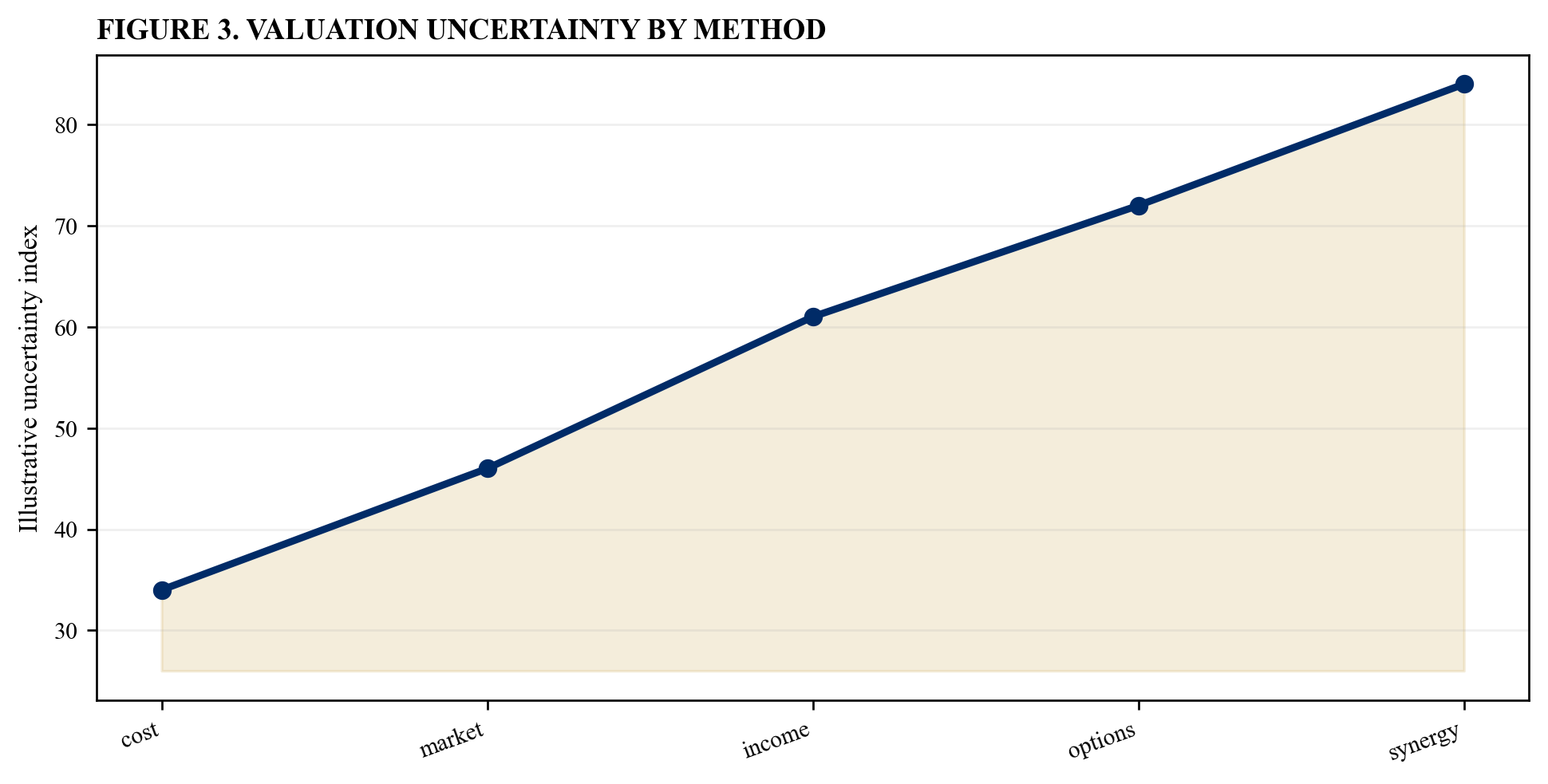
Illustrative analytical scenario; verified transaction evidence should replace index values.
28. Use asset-specific income methods
The joint-venture sponsors should choose relief-from-royalty, excess earnings, with-and-without or avoided-cost methods according to the right. The required output is an asset-method selection record. Record the purpose, legal right, obligation, valuation basis, effective date, accountable owner, evidence, method, uncertainty, tax and accounting implications and approval [18][21].
Test the contribution in the venture's actual operating model. Reconcile ownership, transferability, remaining life, capacity, restrictions, counterparty dependence, supporting investment, stand-alone economics, venture-created benefits and credible alternatives. Use market-participant assumptions for fair-value analysis and keep the negotiated ownership bridge explicit.
The principal risk is that method choice can be driven by the desired answer. Compare at least one alternative method or evidence set and explain the reason for any divergence. Use probability-weighted scenarios where delivery, adoption, consent, retention, regulation or technical performance remains conditional.
Retain source contracts, title records, technical diligence, commercial evidence, forecasts, valuation workings, sensitivities, specialist conclusions, approvals, changes and exceptions. Revalue or rebalance when rights, delivery, timing, market conditions, funding, regulation or venture scope changes.
29. Use real options for staged uncertainty
The joint-venture sponsors should value expansion, abandonment, delay, milestone and exclusivity choices as uncertainty resolves. The required output is a stage-gated option analysis. Record the purpose, legal right, obligation, valuation basis, effective date, accountable owner, evidence, method, uncertainty, tax and accounting implications and approval [19][36].
Test the contribution in the venture's actual operating model. Reconcile ownership, transferability, remaining life, capacity, restrictions, counterparty dependence, supporting investment, stand-alone economics, venture-created benefits and credible alternatives. Use market-participant assumptions for fair-value analysis and keep the negotiated ownership bridge explicit.
The principal risk is that a single deterministic forecast can hide managerial flexibility. Compare at least one alternative method or evidence set and explain the reason for any divergence. Use probability-weighted scenarios where delivery, adoption, consent, retention, regulation or technical performance remains conditional.
Retain source contracts, title records, technical diligence, commercial evidence, forecasts, valuation workings, sensitivities, specialist conclusions, approvals, changes and exceptions. Revalue or rebalance when rights, delivery, timing, market conditions, funding, regulation or venture scope changes.
30. Separate stand-alone and venture-created value
The joint-venture sponsors should bridge each contribution's market-participant value to combination benefits created jointly. The required output is a stand-alone-to-synergy bridge. Record the purpose, legal right, obligation, valuation basis, effective date, accountable owner, evidence, method, uncertainty, tax and accounting implications and approval [3][37].
Test the contribution in the venture's actual operating model. Reconcile ownership, transferability, remaining life, capacity, restrictions, counterparty dependence, supporting investment, stand-alone economics, venture-created benefits and credible alternatives. Use market-participant assumptions for fair-value analysis and keep the negotiated ownership bridge explicit.
The principal risk is that one party can claim value produced only by the other contributions. Compare at least one alternative method or evidence set and explain the reason for any divergence. Use probability-weighted scenarios where delivery, adoption, consent, retention, regulation or technical performance remains conditional.
Retain source contracts, title records, technical diligence, commercial evidence, forecasts, valuation workings, sensitivities, specialist conclusions, approvals, changes and exceptions. Revalue or rebalance when rights, delivery, timing, market conditions, funding, regulation or venture scope changes.
31. Prevent double counting
The joint-venture sponsors should map revenues, margins, costs, assets and risks once across IP, customer, brand, capability and synergy models. The required output is a value-allocation map. Record the purpose, legal right, obligation, valuation basis, effective date, accountable owner, evidence, method, uncertainty, tax and accounting implications and approval [3][5].
Test the contribution in the venture's actual operating model. Reconcile ownership, transferability, remaining life, capacity, restrictions, counterparty dependence, supporting investment, stand-alone economics, venture-created benefits and credible alternatives. Use market-participant assumptions for fair-value analysis and keep the negotiated ownership bridge explicit.
The principal risk is that the same cash flow can support several contribution values. Compare at least one alternative method or evidence set and explain the reason for any divergence. Use probability-weighted scenarios where delivery, adoption, consent, retention, regulation or technical performance remains conditional.
Retain source contracts, title records, technical diligence, commercial evidence, forecasts, valuation workings, sensitivities, specialist conclusions, approvals, changes and exceptions. Revalue or rebalance when rights, delivery, timing, market conditions, funding, regulation or venture scope changes.
32. Calibrate risk consistently
The joint-venture sponsors should align probabilities, useful lives, discount rates, country risk, currency, concentration and terminal assumptions. The required output is a cross-asset risk calibration. Record the purpose, legal right, obligation, valuation basis, effective date, accountable owner, evidence, method, uncertainty, tax and accounting implications and approval [3][4].
Test the contribution in the venture's actual operating model. Reconcile ownership, transferability, remaining life, capacity, restrictions, counterparty dependence, supporting investment, stand-alone economics, venture-created benefits and credible alternatives. Use market-participant assumptions for fair-value analysis and keep the negotiated ownership bridge explicit.
The principal risk is that contributors can use asymmetric optimism for their own assets. Compare at least one alternative method or evidence set and explain the reason for any divergence. Use probability-weighted scenarios where delivery, adoption, consent, retention, regulation or technical performance remains conditional.
Retain source contracts, title records, technical diligence, commercial evidence, forecasts, valuation workings, sensitivities, specialist conclusions, approvals, changes and exceptions. Revalue or rebalance when rights, delivery, timing, market conditions, funding, regulation or venture scope changes.
33. Address tax and transfer pricing
The joint-venture sponsors should analyse legal ownership, functions, assets, risks, development activity, arm's-length terms and hard-to-value intangibles. The required output is a tax-and-transfer-pricing bridge. Record the purpose, legal right, obligation, valuation basis, effective date, accountable owner, evidence, method, uncertainty, tax and accounting implications and approval [38][39].
Test the contribution in the venture's actual operating model. Reconcile ownership, transferability, remaining life, capacity, restrictions, counterparty dependence, supporting investment, stand-alone economics, venture-created benefits and credible alternatives. Use market-participant assumptions for fair-value analysis and keep the negotiated ownership bridge explicit.
The principal risk is that equity value can conflict with taxable transfer or licence pricing. Compare at least one alternative method or evidence set and explain the reason for any divergence. Use probability-weighted scenarios where delivery, adoption, consent, retention, regulation or technical performance remains conditional.
Retain source contracts, title records, technical diligence, commercial evidence, forecasts, valuation workings, sensitivities, specialist conclusions, approvals, changes and exceptions. Revalue or rebalance when rights, delivery, timing, market conditions, funding, regulation or venture scope changes.
34. Map formation accounting
The joint-venture sponsors should compare transaction perimeter, business definition, fair-value requirements, equity-method effects and disclosure. The required output is an accounting-treatment matrix. Record the purpose, legal right, obligation, valuation basis, effective date, accountable owner, evidence, method, uncertainty, tax and accounting implications and approval [1][2].
Test the contribution in the venture's actual operating model. Reconcile ownership, transferability, remaining life, capacity, restrictions, counterparty dependence, supporting investment, stand-alone economics, venture-created benefits and credible alternatives. Use market-participant assumptions for fair-value analysis and keep the negotiated ownership bridge explicit.
The principal risk is that negotiated value can be confused with recognised accounting amounts. Compare at least one alternative method or evidence set and explain the reason for any divergence. Use probability-weighted scenarios where delivery, adoption, consent, retention, regulation or technical performance remains conditional.
Retain source contracts, title records, technical diligence, commercial evidence, forecasts, valuation workings, sensitivities, specialist conclusions, approvals, changes and exceptions. Revalue or rebalance when rights, delivery, timing, market conditions, funding, regulation or venture scope changes.
Table 4. Formation accounting and transaction value
| Dimension | Question | Control |
|---|---|---|
| negotiated value | what ownership bargain? | term-sheet bridge |
| fair value | what market-participant amount? | valuation standard |
| recognition | what asset or liability? | accounting policy |
| tax value | what arm's-length treatment? | transfer-pricing analysis |
Illustrative analytical structure; verified transaction evidence and specialist review govern.
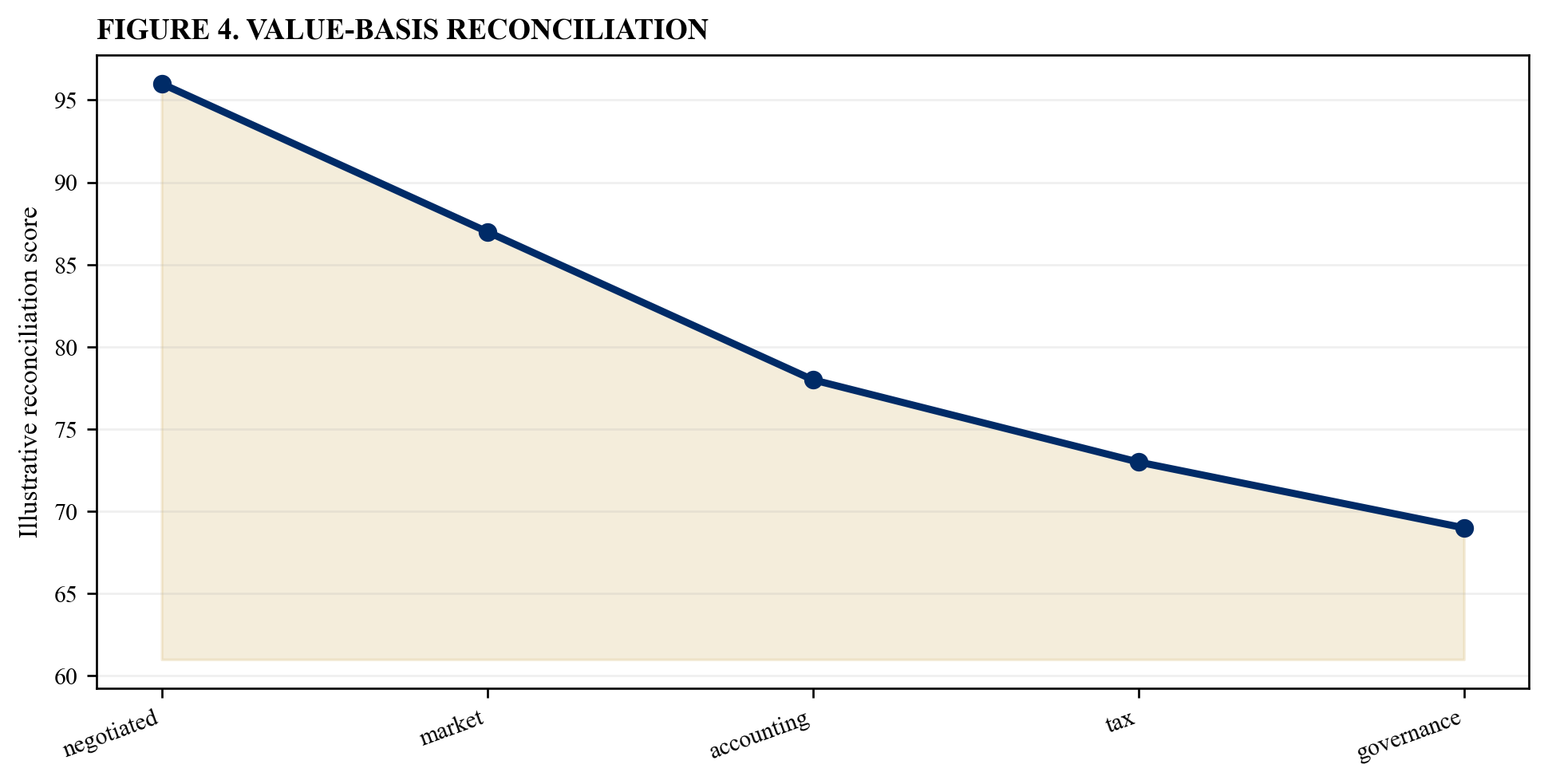
Illustrative analytical scenario; verified transaction evidence should replace index values.
35. Protect competition-sensitive information
The joint-venture sponsors should limit competitor data to necessary purposes, clean teams, aggregation, access controls and counsel-approved outputs. The required output is a lawful information protocol. Record the purpose, legal right, obligation, valuation basis, effective date, accountable owner, evidence, method, uncertainty, tax and accounting implications and approval [40][31].
Test the contribution in the venture's actual operating model. Reconcile ownership, transferability, remaining life, capacity, restrictions, counterparty dependence, supporting investment, stand-alone economics, venture-created benefits and credible alternatives. Use market-participant assumptions for fair-value analysis and keep the negotiated ownership bridge explicit.
The principal risk is that valuation diligence can become an avenue for strategic information exchange. Compare at least one alternative method or evidence set and explain the reason for any divergence. Use probability-weighted scenarios where delivery, adoption, consent, retention, regulation or technical performance remains conditional.
Retain source contracts, title records, technical diligence, commercial evidence, forecasts, valuation workings, sensitivities, specialist conclusions, approvals, changes and exceptions. Revalue or rebalance when rights, delivery, timing, market conditions, funding, regulation or venture scope changes.
36. Model scenarios and sensitivities
The joint-venture sponsors should vary adoption, attrition, price, volume, useful life, milestones, capex, currency and discount rates. The required output is a contribution-value range. Record the purpose, legal right, obligation, valuation basis, effective date, accountable owner, evidence, method, uncertainty, tax and accounting implications and approval [3][36].
Test the contribution in the venture's actual operating model. Reconcile ownership, transferability, remaining life, capacity, restrictions, counterparty dependence, supporting investment, stand-alone economics, venture-created benefits and credible alternatives. Use market-participant assumptions for fair-value analysis and keep the negotiated ownership bridge explicit.
The principal risk is that one point estimate can conceal negotiation-critical uncertainty. Compare at least one alternative method or evidence set and explain the reason for any divergence. Use probability-weighted scenarios where delivery, adoption, consent, retention, regulation or technical performance remains conditional.
Retain source contracts, title records, technical diligence, commercial evidence, forecasts, valuation workings, sensitivities, specialist conclusions, approvals, changes and exceptions. Revalue or rebalance when rights, delivery, timing, market conditions, funding, regulation or venture scope changes.
37. Design balancing mechanisms
The joint-venture sponsors should compare cash equalisation, royalties, service fees, preferred returns, earn-ins, milestones and contingent value rights. The required output is a value-balancing term sheet. Record the purpose, legal right, obligation, valuation basis, effective date, accountable owner, evidence, method, uncertainty, tax and accounting implications and approval [9][28].
Test the contribution in the venture's actual operating model. Reconcile ownership, transferability, remaining life, capacity, restrictions, counterparty dependence, supporting investment, stand-alone economics, venture-created benefits and credible alternatives. Use market-participant assumptions for fair-value analysis and keep the negotiated ownership bridge explicit.
The principal risk is that permanent equity can crystallise before uncertain contributions prove themselves. Compare at least one alternative method or evidence set and explain the reason for any divergence. Use probability-weighted scenarios where delivery, adoption, consent, retention, regulation or technical performance remains conditional.
Retain source contracts, title records, technical diligence, commercial evidence, forecasts, valuation workings, sensitivities, specialist conclusions, approvals, changes and exceptions. Revalue or rebalance when rights, delivery, timing, market conditions, funding, regulation or venture scope changes.
38. Link value to governance and future funding
The joint-venture sponsors should set capital calls, dilution, default remedies, reserved matters, deadlock, distributions and exit rules. The required output is an ownership-and-funding model. Record the purpose, legal right, obligation, valuation basis, effective date, accountable owner, evidence, method, uncertainty, tax and accounting implications and approval [9][12].
Test the contribution in the venture's actual operating model. Reconcile ownership, transferability, remaining life, capacity, restrictions, counterparty dependence, supporting investment, stand-alone economics, venture-created benefits and credible alternatives. Use market-participant assumptions for fair-value analysis and keep the negotiated ownership bridge explicit.
The principal risk is that initial percentages can become disconnected from later risk capital. Compare at least one alternative method or evidence set and explain the reason for any divergence. Use probability-weighted scenarios where delivery, adoption, consent, retention, regulation or technical performance remains conditional.
Retain source contracts, title records, technical diligence, commercial evidence, forecasts, valuation workings, sensitivities, specialist conclusions, approvals, changes and exceptions. Revalue or rebalance when rights, delivery, timing, market conditions, funding, regulation or venture scope changes.
39. Require independent evidence and challenge
The joint-venture sponsors should reconcile models to contracts, technical diligence, finance records and qualified valuation review. The required output is an evidence-and-challenge file. Record the purpose, legal right, obligation, valuation basis, effective date, accountable owner, evidence, method, uncertainty, tax and accounting implications and approval [4][33].
Test the contribution in the venture's actual operating model. Reconcile ownership, transferability, remaining life, capacity, restrictions, counterparty dependence, supporting investment, stand-alone economics, venture-created benefits and credible alternatives. Use market-participant assumptions for fair-value analysis and keep the negotiated ownership bridge explicit.
The principal risk is that negotiation models can become self-referential. Compare at least one alternative method or evidence set and explain the reason for any divergence. Use probability-weighted scenarios where delivery, adoption, consent, retention, regulation or technical performance remains conditional.
Retain source contracts, title records, technical diligence, commercial evidence, forecasts, valuation workings, sensitivities, specialist conclusions, approvals, changes and exceptions. Revalue or rebalance when rights, delivery, timing, market conditions, funding, regulation or venture scope changes.
Table 5. Contribution-value certificate
| Conclusion | Evidence | Acceptance |
|---|---|---|
| rights delivered | title and conditions | legal |
| value measured | methods and assumptions | valuation |
| balance achieved | cash and contingent terms | commercial |
| residual risk | sensitivity and exceptions | board |
Illustrative analytical structure; verified transaction evidence and specialist review govern.
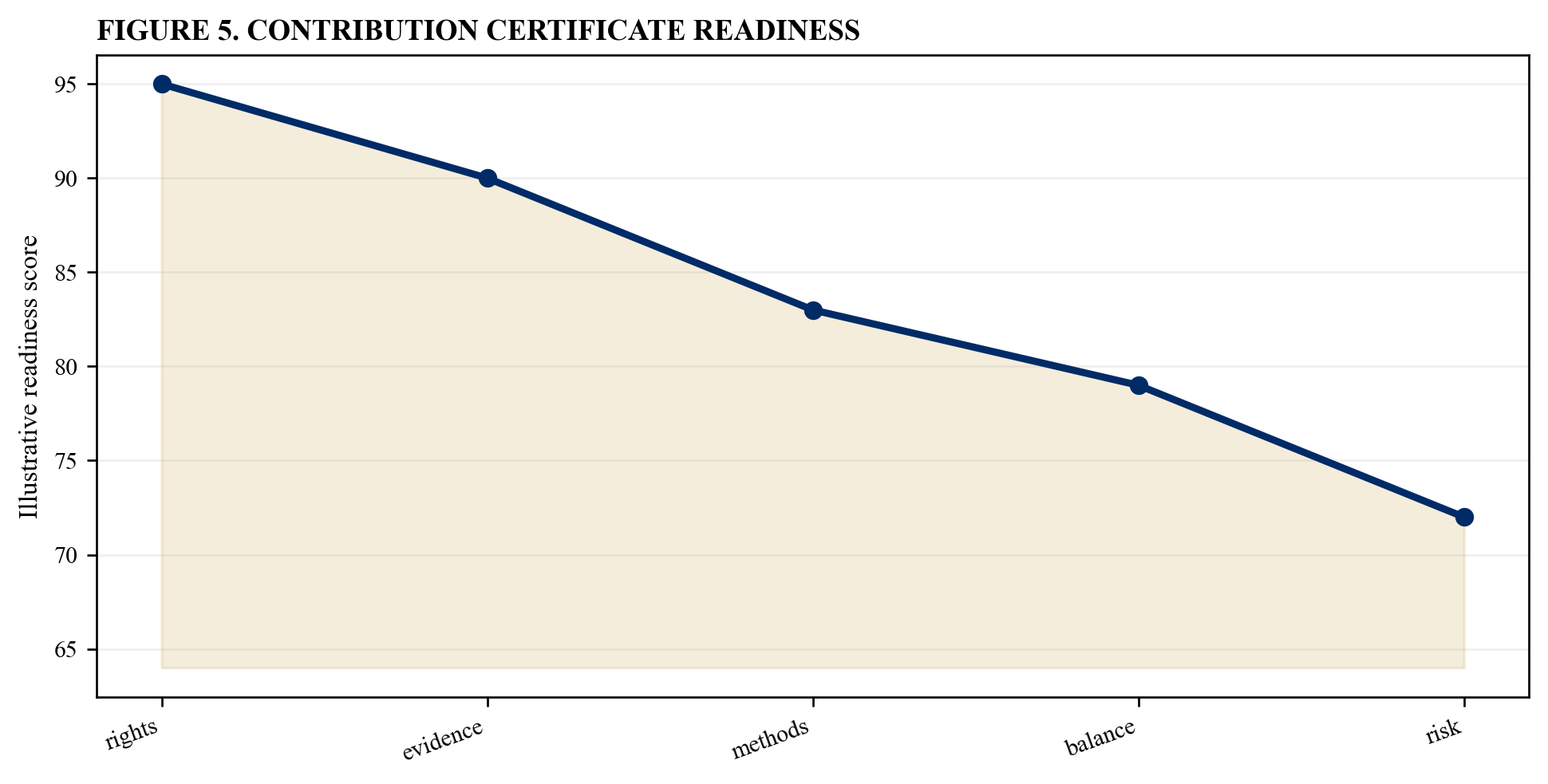
Illustrative analytical scenario; verified transaction evidence should replace index values.
40. Issue the contribution-value certificate
The joint-venture sponsors should record agreed values, rights, obligations, methods, sensitivities, accounting, tax, balancing terms and residual risks. The required output is an auditable contribution-value certificate. Record the purpose, legal right, obligation, valuation basis, effective date, accountable owner, evidence, method, uncertainty, tax and accounting implications and approval [3][4].
Test the contribution in the venture's actual operating model. Reconcile ownership, transferability, remaining life, capacity, restrictions, counterparty dependence, supporting investment, stand-alone economics, venture-created benefits and credible alternatives. Use market-participant assumptions for fair-value analysis and keep the negotiated ownership bridge explicit.
The principal risk is that the final ownership bargain can outlive its supporting evidence. Compare at least one alternative method or evidence set and explain the reason for any divergence. Use probability-weighted scenarios where delivery, adoption, consent, retention, regulation or technical performance remains conditional.
Retain source contracts, title records, technical diligence, commercial evidence, forecasts, valuation workings, sensitivities, specialist conclusions, approvals, changes and exceptions. Revalue or rebalance when rights, delivery, timing, market conditions, funding, regulation or venture scope changes.
References
- IFRS Foundation, IFRS 11 Joint Arrangements, https://www.ifrs.org/issued-standards/list-of-standards/ifrs-11-joint-arrangements/
- Financial Accounting Standards Board, ASU 2023-05 Joint Venture Formations, https://storage.fasb.org/ASU%202023-05.pdf
- IFRS Foundation, IFRS 13 Fair Value Measurement, https://www.ifrs.org/issued-standards/list-of-standards/ifrs-13-fair-value-measurement/
- International Valuation Standards Council, International Valuation Standards effective 31 January 2025, https://ivsc.org/new-edition-of-the-international-valuation-standards-ivs-published/
- IFRS Foundation, IFRS 3 Business Combinations, https://www.ifrs.org/issued-standards/list-of-standards/ifrs-3-business-combinations/
- World Intellectual Property Organization, Valuing Intellectual Property Assets, https://www.wipo.int/en/web/business/ip-valuation
- World Intellectual Property Organization, IP Due Diligence, https://www.wipo.int/en/web/business/ip-due-diligence
- World Intellectual Property Organization, IP Licensing, https://www.wipo.int/en/web/business/licensing
- OECD, Guidelines for Corporate Governance of State-Owned Enterprises 2024, https://www.oecd.org/en/publications/oecd-guidelines-on-corporate-governance-of-state-owned-enterprises-2024_18a24f43-en.html
- IFRS Foundation, IAS 21 The Effects of Changes in Foreign Exchange Rates, https://www.ifrs.org/issued-standards/list-of-standards/ias-21-the-effects-of-changes-in-foreign-exchange-rates/
- IFRS Foundation, IAS 7 Statement of Cash Flows, https://www.ifrs.org/issued-standards/list-of-standards/ias-7-statement-of-cash-flows/
- IFRS Foundation, IFRS 9 Financial Instruments, https://www.ifrs.org/issued-standards/list-of-standards/ifrs-9-financial-instruments/
- IFRS Foundation, IFRS 7 Financial Instruments Disclosures, https://www.ifrs.org/issued-standards/list-of-standards/ifrs-7-financial-instruments-disclosures/
- International Valuation Standards Council, IVS 300 Plant Equipment and Infrastructure, https://ivsc.org/standards/
- IFRS Foundation, IAS 2 Inventories, https://www.ifrs.org/issued-standards/list-of-standards/ias-2-inventories/
- IFRS Foundation, IFRS 15 Revenue from Contracts with Customers, https://www.ifrs.org/issued-standards/list-of-standards/ifrs-15-revenue-from-contracts-with-customers/
- International Valuation Standards Council, IVS 400 Real Property Interests, https://ivsc.org/standards/
- World Intellectual Property Organization, Intellectual Property Valuation Basics for Technology Transfer Professionals, https://www.wipo.int/web-publications/intellectual-property-valuation-basics-for-technology-transfer-professionals/en/index.html
- World Intellectual Property Organization, Real Options and Monte Carlo Approaches to IP Valuation, https://www.wipo.int/web-publications/intellectual-property-valuation-basics-for-technology-transfer-professionals/en/3-ip-valuation-methods.html
- OECD, Recommendation on Enhancing Access to and Sharing of Data, https://legalinstruments.oecd.org/en/instruments/OECD-LEGAL-0463
- International Organization for Standardization, ISO 10668 Brand Valuation, https://www.iso.org/standard/46032.html
- International Organization for Standardization, ISO 20671 Brand Evaluation, https://www.iso.org/news/ref2398.html
- IFRS Foundation, Customer-related Intangible Assets under IFRS 3 and IAS 38, https://www.ifrs.org/content/dam/ifrs/supporting-implementation/agenda-decisions/2009/ifrs-3-ias-38-customer-related-intangible-assets-march-2009.pdf
- IFRS Foundation, IAS 38 Intangible Assets, https://www.ifrs.org/issued-standards/list-of-standards/ias-38-intangible-assets/
- UK Competition and Markets Authority, Guidance on Horizontal Agreements, https://www.gov.uk/government/publications/guidance-on-horizontal-agreements
- IFRS Foundation, IFRS 3 Assembled Workforce and Identifiable Intangibles, https://www.ifrs.org/content/dam/ifrs/publications/pdf-standards/english/2021/issued/part-a/ifrs-3-business-combinations.pdf
- International Organization for Standardization, ISO 30414 Human Capital Reporting, https://www.iso.org/standard/69338.html
- IFRS Foundation, IAS 24 Related Party Disclosures, https://www.ifrs.org/issued-standards/list-of-standards/ias-24-related-party-disclosures/
- IFRS Foundation, IAS 37 Provisions Contingent Liabilities and Contingent Assets, https://www.ifrs.org/issued-standards/list-of-standards/ias-37-provisions-contingent-liabilities-and-contingent-assets/
- World Bank Group, Public-Private Partnerships Reference Guide, https://ppp.worldbank.org/public-private-partnership/library/ppp-reference-guide-3-0
- UK Competition and Markets Authority, Joint Ventures and Competition Law, https://www.gov.uk/government/publications/joint-ventures-and-competition-law-dos-and-donts
- International Valuation Standards Council, IVS 104 Data and Inputs, https://ivsc.org/standards/
- World Intellectual Property Organization, Cost Method for IP Valuation, https://www.wipo.int/web-publications/intellectual-property-valuation-basics-for-technology-transfer-professionals/en/4-the-cost-method.html
- World Intellectual Property Organization, Market Approach for IP Valuation, https://www.wipo.int/web-publications/intellectual-property-valuation-basics-for-technology-transfer-professionals/en/5-the-market-approach.html
- World Intellectual Property Organization, Income Approach for IP Valuation, https://www.wipo.int/web-publications/intellectual-property-valuation-basics-for-technology-transfer-professionals/en/6-the-income-approach.html
- UK Government, The Green Book Appraisal and Evaluation in Central Government, https://www.gov.uk/government/publications/the-green-book-appraisal-and-evaluation-in-central-government
- IFRS Foundation, IAS 28 Investments in Associates and Joint Ventures, https://www.ifrs.org/issued-standards/list-of-standards/ias-28-investments-in-associates-and-joint-ventures/
- OECD, Transfer Pricing Guidelines for Multinational Enterprises and Tax Administrations 2022, https://www.oecd.org/en/publications/oecd-transfer-pricing-guidelines-for-multinational-enterprises-and-tax-administrations-2022_0e655865-en.html
- OECD, Guidance for Tax Administrations on Hard-to-Value Intangibles, https://www.oecd.org/en/publications/guidance-for-tax-administrations-on-the-application-of-the-approach-to-hard-to-value-intangibles-beps-action-8_9789264304792-en.html
- United States Federal Trade Commission, Information Exchange and Competitor Collaboration, https://www.ftc.gov/enforcement/competition-matters/2014/12/information-exchange-be-reasonable
