

1. Define the valuation purpose
Specify whether the decision concerns succession, redemption, gift, sale, financing, dispute resolution or financial reporting.
The valuation team should reconcile family mandate, governing documents, transaction form, intended users and applicable requirements. Each conclusion records the source, date, owner, reliability, assumption, method, sensitivity, dependency and unresolved exception. The immediate output is an approved valuation-purpose memorandum.
The analysis must connect legal rights to economic outcomes. Reviewers trace inputs to native records, reconcile the integrated model, test alternative methods and assess whether a market participant could execute the assumed route. Company facts, the subject interest, valuation purpose, jurisdiction and market conditions govern every conclusion.
Material gaps require an accountable owner, corrective action, independent challenge and decision date. Consequences should flow through enterprise value, equity value, cash access, control, liquidity, tax, fairness and transaction terms. Residual uncertainty remains visible through ranges and sensitivities until evidence and approvals support the decision.
2. Fix the valuation date
Anchor facts, capital structure, market conditions, forecasts and available information to one defensible date.
The valuation team should reconcile board records, management accounts, market evidence, events calendar and transaction timetable. Each conclusion records the source, date, owner, reliability, assumption, method, sensitivity, dependency and unresolved exception. The immediate output is a controlled valuation-date record.
The analysis must connect legal rights to economic outcomes. Reviewers trace inputs to native records, reconcile the integrated model, test alternative methods and assess whether a market participant could execute the assumed route. Company facts, the subject interest, valuation purpose, jurisdiction and market conditions govern every conclusion.
Material gaps require an accountable owner, corrective action, independent challenge and decision date. Consequences should flow through enterprise value, equity value, cash access, control, liquidity, tax, fairness and transaction terms. Residual uncertainty remains visible through ranges and sensitivities until evidence and approvals support the decision.
3. Identify the subject interest
Describe the legal entity, class, percentage, voting power, economic rights, restrictions and associated agreements.
The valuation team should reconcile registers, articles, shareholder agreements, side letters, trusts and beneficial-ownership records. Each conclusion records the source, date, owner, reliability, assumption, method, sensitivity, dependency and unresolved exception. The immediate output is a verified subject-interest schedule.
The analysis must connect legal rights to economic outcomes. Reviewers trace inputs to native records, reconcile the integrated model, test alternative methods and assess whether a market participant could execute the assumed route. Company facts, the subject interest, valuation purpose, jurisdiction and market conditions govern every conclusion.
Material gaps require an accountable owner, corrective action, independent challenge and decision date. Consequences should flow through enterprise value, equity value, cash access, control, liquidity, tax, fairness and transaction terms. Residual uncertainty remains visible through ranges and sensitivities until evidence and approvals support the decision.
4. Reconcile ownership across generations
Map direct, indirect, nominee, trust, foundation and branch holdings and distinguish legal from beneficial interests.
The valuation team should reconcile corporate registers, declarations, family tree, estate documents, filings and confirmations. Each conclusion records the source, date, owner, reliability, assumption, method, sensitivity, dependency and unresolved exception. The immediate output is an ownership-and-generation map.
The analysis must connect legal rights to economic outcomes. Reviewers trace inputs to native records, reconcile the integrated model, test alternative methods and assess whether a market participant could execute the assumed route. Company facts, the subject interest, valuation purpose, jurisdiction and market conditions govern every conclusion.
Material gaps require an accountable owner, corrective action, independent challenge and decision date. Consequences should flow through enterprise value, equity value, cash access, control, liquidity, tax, fairness and transaction terms. Residual uncertainty remains visible through ranges and sensitivities until evidence and approvals support the decision.
5. Select the basis of value
State whether the assignment requires market value, fair value, equitable value, investment value or another defined basis.
The valuation team should reconcile law, contract, accounting standard, valuation standard and purpose analysis. Each conclusion records the source, date, owner, reliability, assumption, method, sensitivity, dependency and unresolved exception. The immediate output is a basis-of-value decision paper.
The analysis must connect legal rights to economic outcomes. Reviewers trace inputs to native records, reconcile the integrated model, test alternative methods and assess whether a market participant could execute the assumed route. Company facts, the subject interest, valuation purpose, jurisdiction and market conditions govern every conclusion.
Material gaps require an accountable owner, corrective action, independent challenge and decision date. Consequences should flow through enterprise value, equity value, cash access, control, liquidity, tax, fairness and transaction terms. Residual uncertainty remains visible through ranges and sensitivities until evidence and approvals support the decision.
6. Define the unit of account
Determine whether value attaches to the company, a controlling block, a share class, an individual holding or a transaction package.
The valuation team should reconcile purpose, accounting requirements, legal rights, transaction terms and market-participant assumptions. Each conclusion records the source, date, owner, reliability, assumption, method, sensitivity, dependency and unresolved exception. The immediate output is a unit-of-account conclusion.
The analysis must connect legal rights to economic outcomes. Reviewers trace inputs to native records, reconcile the integrated model, test alternative methods and assess whether a market participant could execute the assumed route. Company facts, the subject interest, valuation purpose, jurisdiction and market conditions govern every conclusion.
Material gaps require an accountable owner, corrective action, independent challenge and decision date. Consequences should flow through enterprise value, equity value, cash access, control, liquidity, tax, fairness and transaction terms. Residual uncertainty remains visible through ranges and sensitivities until evidence and approvals support the decision.
7. Establish the premise of value
Assess going concern, orderly sale, liquidation, highest and best use, or a specified strategic premise.
The valuation team should reconcile strategy, operating evidence, solvency, market conditions, asset use and transaction alternatives. Each conclusion records the source, date, owner, reliability, assumption, method, sensitivity, dependency and unresolved exception. The immediate output is a premise-of-value memorandum.
The analysis must connect legal rights to economic outcomes. Reviewers trace inputs to native records, reconcile the integrated model, test alternative methods and assess whether a market participant could execute the assumed route. Company facts, the subject interest, valuation purpose, jurisdiction and market conditions govern every conclusion.
Material gaps require an accountable owner, corrective action, independent challenge and decision date. Consequences should flow through enterprise value, equity value, cash access, control, liquidity, tax, fairness and transaction terms. Residual uncertainty remains visible through ranges and sensitivities until evidence and approvals support the decision.
8. Appoint an independent process
Set competence, independence, conflicts, scope, information access, review and approval requirements.
The valuation team should reconcile valuer credentials, engagement terms, conflict checks, governance rules and decision rights. Each conclusion records the source, date, owner, reliability, assumption, method, sensitivity, dependency and unresolved exception. The immediate output is an independent valuation protocol.
The analysis must connect legal rights to economic outcomes. Reviewers trace inputs to native records, reconcile the integrated model, test alternative methods and assess whether a market participant could execute the assumed route. Company facts, the subject interest, valuation purpose, jurisdiction and market conditions govern every conclusion.
Material gaps require an accountable owner, corrective action, independent challenge and decision date. Consequences should flow through enterprise value, equity value, cash access, control, liquidity, tax, fairness and transaction terms. Residual uncertainty remains visible through ranges and sensitivities until evidence and approvals support the decision.
Table 1. Valuation instruction matrix
| Decision | Required basis | Critical evidence |
|---|---|---|
| succession | defined owner purpose | rights and continuity |
| redemption | transaction-specific value | funding and fairness |
| sale | market-participant value | buyer and process evidence |
| reporting | applicable standard | unit of account |
Illustrative decision architecture; company-specific evidence and authorised advice govern.
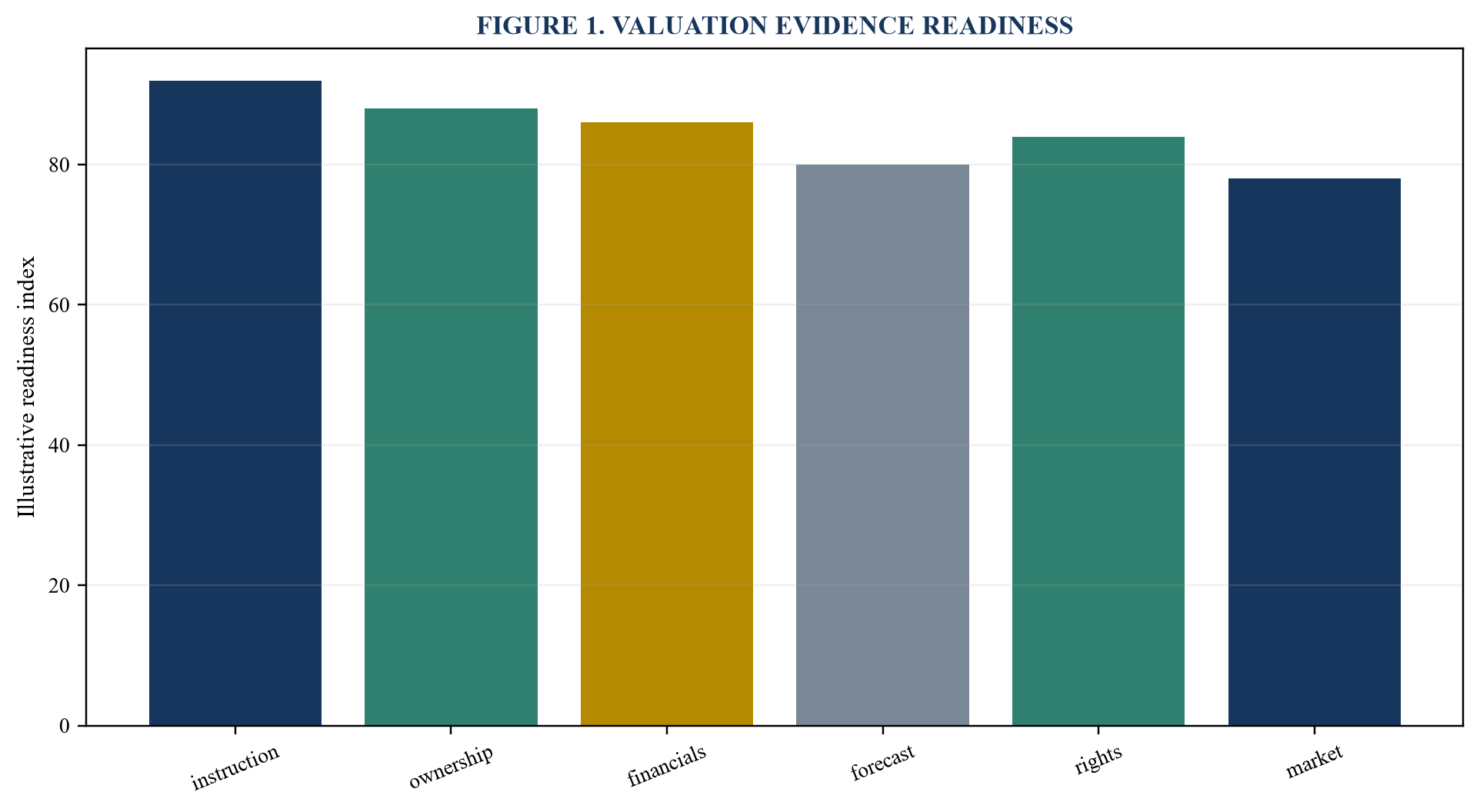
Values are illustrative readiness indices and require interest-specific evidence.
9. Normalise historical performance
Remove unsupported one-offs, related-party distortions, owner-specific costs, accounting inconsistencies and non-operating items.
The valuation team should reconcile audited accounts, ledgers, contracts, payroll, tax, bank records and management explanations. Each conclusion records the source, date, owner, reliability, assumption, method, sensitivity, dependency and unresolved exception. The immediate output is a normalised earnings and cash-flow bridge.
The analysis must connect legal rights to economic outcomes. Reviewers trace inputs to native records, reconcile the integrated model, test alternative methods and assess whether a market participant could execute the assumed route. Company facts, the subject interest, valuation purpose, jurisdiction and market conditions govern every conclusion.
Material gaps require an accountable owner, corrective action, independent challenge and decision date. Consequences should flow through enterprise value, equity value, cash access, control, liquidity, tax, fairness and transaction terms. Residual uncertainty remains visible through ranges and sensitivities until evidence and approvals support the decision.
10. Build a supportable forecast
Connect revenue, margin, working capital, capex, tax and financing assumptions to operating evidence and downside cases.
The valuation team should reconcile budgets, pipeline, contracts, capacity, pricing, cost base, historical variance and scenarios. Each conclusion records the source, date, owner, reliability, assumption, method, sensitivity, dependency and unresolved exception. The immediate output is an evidence-linked forecast model.
The analysis must connect legal rights to economic outcomes. Reviewers trace inputs to native records, reconcile the integrated model, test alternative methods and assess whether a market participant could execute the assumed route. Company facts, the subject interest, valuation purpose, jurisdiction and market conditions govern every conclusion.
Material gaps require an accountable owner, corrective action, independent challenge and decision date. Consequences should flow through enterprise value, equity value, cash access, control, liquidity, tax, fairness and transaction terms. Residual uncertainty remains visible through ranges and sensitivities until evidence and approvals support the decision.
11. Separate enterprise and equity value
Reconcile operating value to debt, cash, leases, pensions, provisions, contingent liabilities and non-operating assets.
The valuation team should reconcile balance sheets, debt agreements, cash records, claims, tax, legal and accounting analysis. Each conclusion records the source, date, owner, reliability, assumption, method, sensitivity, dependency and unresolved exception. The immediate output is an enterprise-to-equity bridge.
The analysis must connect legal rights to economic outcomes. Reviewers trace inputs to native records, reconcile the integrated model, test alternative methods and assess whether a market participant could execute the assumed route. Company facts, the subject interest, valuation purpose, jurisdiction and market conditions govern every conclusion.
Material gaps require an accountable owner, corrective action, independent challenge and decision date. Consequences should flow through enterprise value, equity value, cash access, control, liquidity, tax, fairness and transaction terms. Residual uncertainty remains visible through ranges and sensitivities until evidence and approvals support the decision.
12. Apply the income approach
Estimate value from cash flows using explicit assumptions for growth, reinvestment, risk, terminal value and capital structure.
The valuation team should reconcile forecast, discount rate evidence, market data, scenarios and sensitivity analysis. Each conclusion records the source, date, owner, reliability, assumption, method, sensitivity, dependency and unresolved exception. The immediate output is a discounted-cash-flow valuation.
The analysis must connect legal rights to economic outcomes. Reviewers trace inputs to native records, reconcile the integrated model, test alternative methods and assess whether a market participant could execute the assumed route. Company facts, the subject interest, valuation purpose, jurisdiction and market conditions govern every conclusion.
Material gaps require an accountable owner, corrective action, independent challenge and decision date. Consequences should flow through enterprise value, equity value, cash access, control, liquidity, tax, fairness and transaction terms. Residual uncertainty remains visible through ranges and sensitivities until evidence and approvals support the decision.
13. Apply the market approach
Select genuinely comparable businesses and transactions and adjust for size, growth, margin, risk, geography and rights.
The valuation team should reconcile public filings, transaction evidence, industry data, market conditions and subject-company metrics. Each conclusion records the source, date, owner, reliability, assumption, method, sensitivity, dependency and unresolved exception. The immediate output is a comparable-company and precedent analysis.
The analysis must connect legal rights to economic outcomes. Reviewers trace inputs to native records, reconcile the integrated model, test alternative methods and assess whether a market participant could execute the assumed route. Company facts, the subject interest, valuation purpose, jurisdiction and market conditions govern every conclusion.
Material gaps require an accountable owner, corrective action, independent challenge and decision date. Consequences should flow through enterprise value, equity value, cash access, control, liquidity, tax, fairness and transaction terms. Residual uncertainty remains visible through ranges and sensitivities until evidence and approvals support the decision.
14. Apply the asset approach
Revalue material assets and liabilities where asset economics or non-operating holdings drive the conclusion.
The valuation team should reconcile asset registers, appraisals, liabilities, tax bases, replacement evidence and realisable values. Each conclusion records the source, date, owner, reliability, assumption, method, sensitivity, dependency and unresolved exception. The immediate output is an adjusted-net-asset analysis.
The analysis must connect legal rights to economic outcomes. Reviewers trace inputs to native records, reconcile the integrated model, test alternative methods and assess whether a market participant could execute the assumed route. Company facts, the subject interest, valuation purpose, jurisdiction and market conditions govern every conclusion.
Material gaps require an accountable owner, corrective action, independent challenge and decision date. Consequences should flow through enterprise value, equity value, cash access, control, liquidity, tax, fairness and transaction terms. Residual uncertainty remains visible through ranges and sensitivities until evidence and approvals support the decision.
15. Reconcile valuation approaches
Explain weighting, dispersion, cross-checks, contradictory evidence and the final range without mechanical averaging.
The valuation team should reconcile income, market and asset results, source quality, purpose and market-participant behaviour. Each conclusion records the source, date, owner, reliability, assumption, method, sensitivity, dependency and unresolved exception. The immediate output is a reconciled enterprise-value range.
The analysis must connect legal rights to economic outcomes. Reviewers trace inputs to native records, reconcile the integrated model, test alternative methods and assess whether a market participant could execute the assumed route. Company facts, the subject interest, valuation purpose, jurisdiction and market conditions govern every conclusion.
Material gaps require an accountable owner, corrective action, independent challenge and decision date. Consequences should flow through enterprise value, equity value, cash access, control, liquidity, tax, fairness and transaction terms. Residual uncertainty remains visible through ranges and sensitivities until evidence and approvals support the decision.
16. Value different share classes
Model liquidation preference, conversion, participation, dividends, anti-dilution, voting and redemption rights.
The valuation team should reconcile articles, investment agreements, cap table, distribution waterfall and scenario outcomes. Each conclusion records the source, date, owner, reliability, assumption, method, sensitivity, dependency and unresolved exception. The immediate output is a rights-specific class-value allocation.
The analysis must connect legal rights to economic outcomes. Reviewers trace inputs to native records, reconcile the integrated model, test alternative methods and assess whether a market participant could execute the assumed route. Company facts, the subject interest, valuation purpose, jurisdiction and market conditions govern every conclusion.
Material gaps require an accountable owner, corrective action, independent challenge and decision date. Consequences should flow through enterprise value, equity value, cash access, control, liquidity, tax, fairness and transaction terms. Residual uncertainty remains visible through ranges and sensitivities until evidence and approvals support the decision.
Table 2. Share-rights allocation
| Right | Value channel | Evidence |
|---|---|---|
| voting | decision influence | articles and practice |
| distribution | cash access | policy and capacity |
| transfer | liquidity route | agreements and law |
| information | risk reduction | enforceable access |
Illustrative decision architecture; company-specific evidence and authorised advice govern.
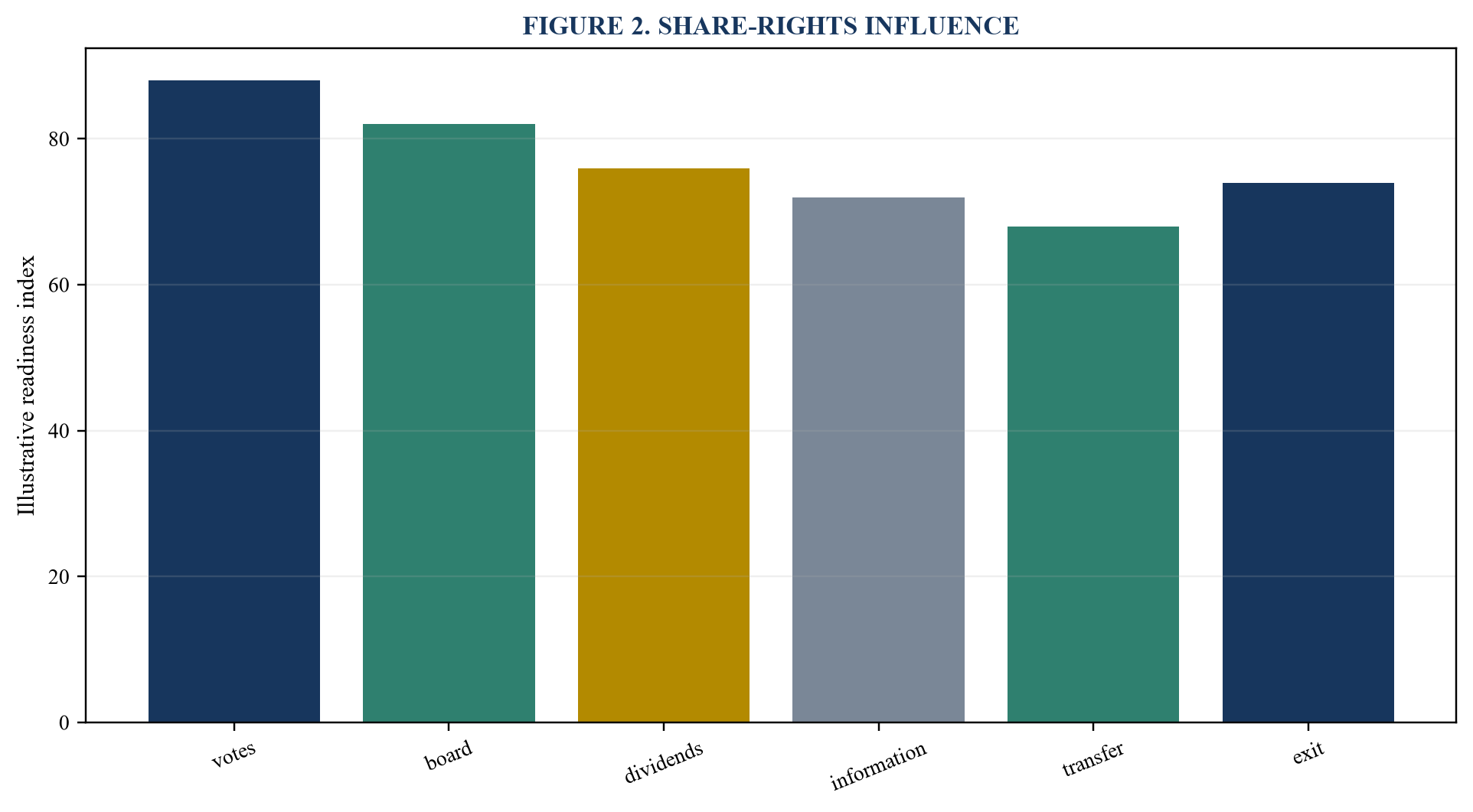
Values are illustrative readiness indices and require interest-specific evidence.
17. Measure control rights
Identify decisions, cash-flow influence, board appointment, vetoes, information, transfer and enforcement rights actually held.
The valuation team should reconcile law, articles, shareholder agreement, governance practice and ownership concentration. Each conclusion records the source, date, owner, reliability, assumption, method, sensitivity, dependency and unresolved exception. The immediate output is a control-rights matrix.
The analysis must connect legal rights to economic outcomes. Reviewers trace inputs to native records, reconcile the integrated model, test alternative methods and assess whether a market participant could execute the assumed route. Company facts, the subject interest, valuation purpose, jurisdiction and market conditions govern every conclusion.
Material gaps require an accountable owner, corrective action, independent challenge and decision date. Consequences should flow through enterprise value, equity value, cash access, control, liquidity, tax, fairness and transaction terms. Residual uncertainty remains visible through ranges and sensitivities until evidence and approvals support the decision.
18. Test any control premium
Link incremental value to market-participant cash-flow improvements, risk reductions and executable rights while avoiding double counting.
The valuation team should reconcile rights analysis, comparable deals, operating cases, synergies, costs and implementation evidence. Each conclusion records the source, date, owner, reliability, assumption, method, sensitivity, dependency and unresolved exception. The immediate output is a control-premium support schedule.
The analysis must connect legal rights to economic outcomes. Reviewers trace inputs to native records, reconcile the integrated model, test alternative methods and assess whether a market participant could execute the assumed route. Company facts, the subject interest, valuation purpose, jurisdiction and market conditions govern every conclusion.
Material gaps require an accountable owner, corrective action, independent challenge and decision date. Consequences should flow through enterprise value, equity value, cash access, control, liquidity, tax, fairness and transaction terms. Residual uncertainty remains visible through ranges and sensitivities until evidence and approvals support the decision.
19. Assess lack of control
Measure the economic consequence of absent decision rights using the selected basis, unit and valuation approach.
The valuation team should reconcile governance rights, distributions, information, exit routes, buyer universe and market evidence. Each conclusion records the source, date, owner, reliability, assumption, method, sensitivity, dependency and unresolved exception. The immediate output is a non-control adjustment analysis.
The analysis must connect legal rights to economic outcomes. Reviewers trace inputs to native records, reconcile the integrated model, test alternative methods and assess whether a market participant could execute the assumed route. Company facts, the subject interest, valuation purpose, jurisdiction and market conditions govern every conclusion.
Material gaps require an accountable owner, corrective action, independent challenge and decision date. Consequences should flow through enterprise value, equity value, cash access, control, liquidity, tax, fairness and transaction terms. Residual uncertainty remains visible through ranges and sensitivities until evidence and approvals support the decision.
20. Assess marketability constraints
Evaluate expected time, cost, uncertainty and restrictions affecting conversion of the interest into cash.
The valuation team should reconcile transfer provisions, buyer access, information, sale process, holding period, volatility and costs. Each conclusion records the source, date, owner, reliability, assumption, method, sensitivity, dependency and unresolved exception. The immediate output is a marketability-risk analysis.
The analysis must connect legal rights to economic outcomes. Reviewers trace inputs to native records, reconcile the integrated model, test alternative methods and assess whether a market participant could execute the assumed route. Company facts, the subject interest, valuation purpose, jurisdiction and market conditions govern every conclusion.
Material gaps require an accountable owner, corrective action, independent challenge and decision date. Consequences should flow through enterprise value, equity value, cash access, control, liquidity, tax, fairness and transaction terms. Residual uncertainty remains visible through ranges and sensitivities until evidence and approvals support the decision.
21. Model transfer restrictions
Price pre-emption, first refusal, lock-in, permitted-holder, consent, tag, drag and compulsory-transfer provisions.
The valuation team should reconcile articles, shareholder agreement, family constitution, law, precedent and counsel analysis. Each conclusion records the source, date, owner, reliability, assumption, method, sensitivity, dependency and unresolved exception. The immediate output is a transfer-rights valuation schedule.
The analysis must connect legal rights to economic outcomes. Reviewers trace inputs to native records, reconcile the integrated model, test alternative methods and assess whether a market participant could execute the assumed route. Company facts, the subject interest, valuation purpose, jurisdiction and market conditions govern every conclusion.
Material gaps require an accountable owner, corrective action, independent challenge and decision date. Consequences should flow through enterprise value, equity value, cash access, control, liquidity, tax, fairness and transaction terms. Residual uncertainty remains visible through ranges and sensitivities until evidence and approvals support the decision.
22. Avoid overlapping discounts
Trace each adjustment to a distinct economic characteristic and test whether cash flow, discount rate or multiple already captures it.
The valuation team should reconcile valuation model, rights analysis, adjustment logic, sensitivities and reviewer challenge. Each conclusion records the source, date, owner, reliability, assumption, method, sensitivity, dependency and unresolved exception. The immediate output is a no-double-counting bridge.
The analysis must connect legal rights to economic outcomes. Reviewers trace inputs to native records, reconcile the integrated model, test alternative methods and assess whether a market participant could execute the assumed route. Company facts, the subject interest, valuation purpose, jurisdiction and market conditions govern every conclusion.
Material gaps require an accountable owner, corrective action, independent challenge and decision date. Consequences should flow through enterprise value, equity value, cash access, control, liquidity, tax, fairness and transaction terms. Residual uncertainty remains visible through ranges and sensitivities until evidence and approvals support the decision.
23. Analyse distributions and reinvestment
Model dividend capacity, policy, leakage, retention needs and branch liquidity expectations across scenarios.
The valuation team should reconcile cash flows, capex, debt service, covenants, policy, history and owner objectives. Each conclusion records the source, date, owner, reliability, assumption, method, sensitivity, dependency and unresolved exception. The immediate output is a distribution-capacity valuation case.
The analysis must connect legal rights to economic outcomes. Reviewers trace inputs to native records, reconcile the integrated model, test alternative methods and assess whether a market participant could execute the assumed route. Company facts, the subject interest, valuation purpose, jurisdiction and market conditions govern every conclusion.
Material gaps require an accountable owner, corrective action, independent challenge and decision date. Consequences should flow through enterprise value, equity value, cash access, control, liquidity, tax, fairness and transaction terms. Residual uncertainty remains visible through ranges and sensitivities until evidence and approvals support the decision.
24. Value key-person and succession risk
Quantify dependency, transition timing, management depth, relationship transfer and funded mitigation.
The valuation team should reconcile organisation, customer ownership, succession plan, incentives, insurance and operating evidence. Each conclusion records the source, date, owner, reliability, assumption, method, sensitivity, dependency and unresolved exception. The immediate output is a succession-risk adjustment model.
The analysis must connect legal rights to economic outcomes. Reviewers trace inputs to native records, reconcile the integrated model, test alternative methods and assess whether a market participant could execute the assumed route. Company facts, the subject interest, valuation purpose, jurisdiction and market conditions govern every conclusion.
Material gaps require an accountable owner, corrective action, independent challenge and decision date. Consequences should flow through enterprise value, equity value, cash access, control, liquidity, tax, fairness and transaction terms. Residual uncertainty remains visible through ranges and sensitivities until evidence and approvals support the decision.
Table 3. Adjustment discipline
| Adjustment | Economic question | Control |
|---|---|---|
| control | incremental rights value | avoid synergy duplication |
| non-control | rights absent | use relevant basis |
| marketability | time, cost and uncertainty | model actual constraints |
| key person | cash-flow dependency | credit funded mitigation |
Illustrative decision architecture; company-specific evidence and authorised advice govern.
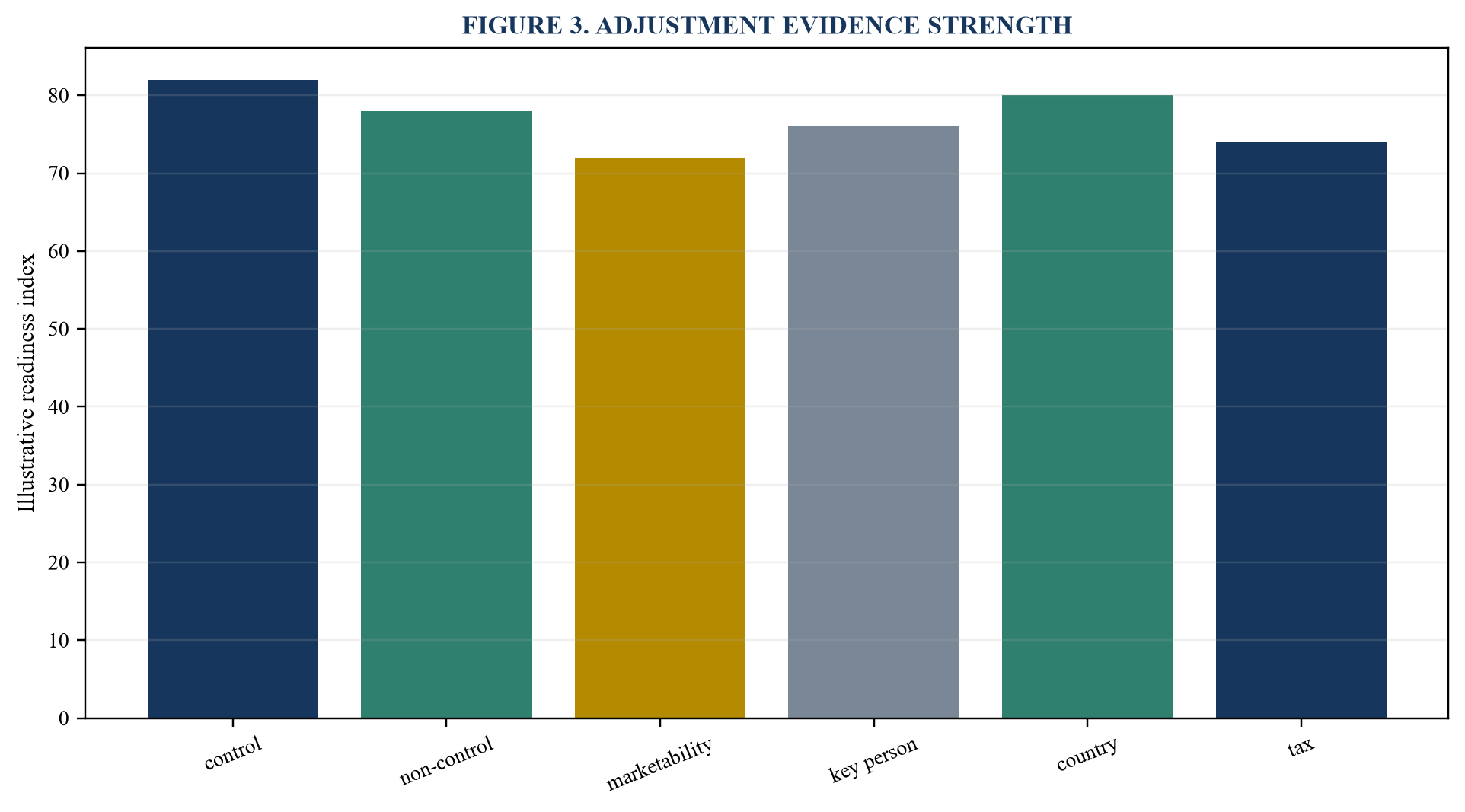
Values are illustrative readiness indices and require interest-specific evidence.
25. Value family employment and related parties
Normalise compensation, leases, loans, services and benefits and separate arm's-length economics from owner choices.
The valuation team should reconcile contracts, payroll, benchmarks, related-party register, approvals and accounting records. Each conclusion records the source, date, owner, reliability, assumption, method, sensitivity, dependency and unresolved exception. The immediate output is a related-party normalisation schedule.
The analysis must connect legal rights to economic outcomes. Reviewers trace inputs to native records, reconcile the integrated model, test alternative methods and assess whether a market participant could execute the assumed route. Company facts, the subject interest, valuation purpose, jurisdiction and market conditions govern every conclusion.
Material gaps require an accountable owner, corrective action, independent challenge and decision date. Consequences should flow through enterprise value, equity value, cash access, control, liquidity, tax, fairness and transaction terms. Residual uncertainty remains visible through ranges and sensitivities until evidence and approvals support the decision.
26. Treat non-operating assets consistently
Identify surplus cash, property, investments, loans and personal-use assets and assign value, tax and allocation explicitly.
The valuation team should reconcile asset records, title, income, appraisals, tax and ownership evidence. Each conclusion records the source, date, owner, reliability, assumption, method, sensitivity, dependency and unresolved exception. The immediate output is a non-operating-asset schedule.
The analysis must connect legal rights to economic outcomes. Reviewers trace inputs to native records, reconcile the integrated model, test alternative methods and assess whether a market participant could execute the assumed route. Company facts, the subject interest, valuation purpose, jurisdiction and market conditions govern every conclusion.
Material gaps require an accountable owner, corrective action, independent challenge and decision date. Consequences should flow through enterprise value, equity value, cash access, control, liquidity, tax, fairness and transaction terms. Residual uncertainty remains visible through ranges and sensitivities until evidence and approvals support the decision.
27. Model tax consequences
Distinguish entity value from transaction proceeds and test gains, inheritance, transfer, withholding and restructuring effects.
The valuation team should reconcile residence, basis, structure, agreements, jurisdictional advice and scenarios. Each conclusion records the source, date, owner, reliability, assumption, method, sensitivity, dependency and unresolved exception. The immediate output is a tax-aware proceeds bridge.
The analysis must connect legal rights to economic outcomes. Reviewers trace inputs to native records, reconcile the integrated model, test alternative methods and assess whether a market participant could execute the assumed route. Company facts, the subject interest, valuation purpose, jurisdiction and market conditions govern every conclusion.
Material gaps require an accountable owner, corrective action, independent challenge and decision date. Consequences should flow through enterprise value, equity value, cash access, control, liquidity, tax, fairness and transaction terms. Residual uncertainty remains visible through ranges and sensitivities until evidence and approvals support the decision.
28. Address currency and country risk
Align cash-flow currency, discount rate, inflation, convertibility, transfer and jurisdictional assumptions.
The valuation team should reconcile forecast currencies, market data, legal environment, capital controls and hedging evidence. Each conclusion records the source, date, owner, reliability, assumption, method, sensitivity, dependency and unresolved exception. The immediate output is a currency-and-country-risk schedule.
The analysis must connect legal rights to economic outcomes. Reviewers trace inputs to native records, reconcile the integrated model, test alternative methods and assess whether a market participant could execute the assumed route. Company facts, the subject interest, valuation purpose, jurisdiction and market conditions govern every conclusion.
Material gaps require an accountable owner, corrective action, independent challenge and decision date. Consequences should flow through enterprise value, equity value, cash access, control, liquidity, tax, fairness and transaction terms. Residual uncertainty remains visible through ranges and sensitivities until evidence and approvals support the decision.
29. Calibrate private-company risk
Assess scale, concentration, governance, reporting, funding, customer, supplier and execution risk without generic add-ons.
The valuation team should reconcile operating data, controls, contracts, financing, benchmarks and downside evidence. Each conclusion records the source, date, owner, reliability, assumption, method, sensitivity, dependency and unresolved exception. The immediate output is a company-specific risk matrix.
The analysis must connect legal rights to economic outcomes. Reviewers trace inputs to native records, reconcile the integrated model, test alternative methods and assess whether a market participant could execute the assumed route. Company facts, the subject interest, valuation purpose, jurisdiction and market conditions govern every conclusion.
Material gaps require an accountable owner, corrective action, independent challenge and decision date. Consequences should flow through enterprise value, equity value, cash access, control, liquidity, tax, fairness and transaction terms. Residual uncertainty remains visible through ranges and sensitivities until evidence and approvals support the decision.
30. Use transaction evidence carefully
Adjust observed prices for date, perimeter, control, synergies, financing, distress, earn-outs and information quality.
The valuation team should reconcile announcements, filings, transaction documents, market data and adviser evidence. Each conclusion records the source, date, owner, reliability, assumption, method, sensitivity, dependency and unresolved exception. The immediate output is a precedent-quality and adjustment log.
The analysis must connect legal rights to economic outcomes. Reviewers trace inputs to native records, reconcile the integrated model, test alternative methods and assess whether a market participant could execute the assumed route. Company facts, the subject interest, valuation purpose, jurisdiction and market conditions govern every conclusion.
Material gaps require an accountable owner, corrective action, independent challenge and decision date. Consequences should flow through enterprise value, equity value, cash access, control, liquidity, tax, fairness and transaction terms. Residual uncertainty remains visible through ranges and sensitivities until evidence and approvals support the decision.
31. Build generational scenarios
Compare retention, partial transfer, branch buyout, redemption, third-party minority investment and full sale outcomes.
The valuation team should reconcile family objectives, rights, funding, value range, tax, control and implementation terms. Each conclusion records the source, date, owner, reliability, assumption, method, sensitivity, dependency and unresolved exception. The immediate output is a multi-route generational value model.
The analysis must connect legal rights to economic outcomes. Reviewers trace inputs to native records, reconcile the integrated model, test alternative methods and assess whether a market participant could execute the assumed route. Company facts, the subject interest, valuation purpose, jurisdiction and market conditions govern every conclusion.
Material gaps require an accountable owner, corrective action, independent challenge and decision date. Consequences should flow through enterprise value, equity value, cash access, control, liquidity, tax, fairness and transaction terms. Residual uncertainty remains visible through ranges and sensitivities until evidence and approvals support the decision.
32. Test fairness between branches
Compare consideration, rights surrendered, timing, risk, information, funding and post-transaction control for each owner group.
The valuation team should reconcile scenario model, valuations, agreements, conflicts, approvals and independent review. Each conclusion records the source, date, owner, reliability, assumption, method, sensitivity, dependency and unresolved exception. The immediate output is a branch-fairness assessment.
The analysis must connect legal rights to economic outcomes. Reviewers trace inputs to native records, reconcile the integrated model, test alternative methods and assess whether a market participant could execute the assumed route. Company facts, the subject interest, valuation purpose, jurisdiction and market conditions govern every conclusion.
Material gaps require an accountable owner, corrective action, independent challenge and decision date. Consequences should flow through enterprise value, equity value, cash access, control, liquidity, tax, fairness and transaction terms. Residual uncertainty remains visible through ranges and sensitivities until evidence and approvals support the decision.
Table 4. Generational fairness test
| Dimension | Required comparison | Decision question |
|---|---|---|
| value | same valuation basis | are holdings treated consistently |
| rights | rights surrendered and retained | is control priced |
| liquidity | timing and funding risk | are proceeds deliverable |
| process | information and conflicts | is the decision defensible |
Illustrative decision architecture; company-specific evidence and authorised advice govern.
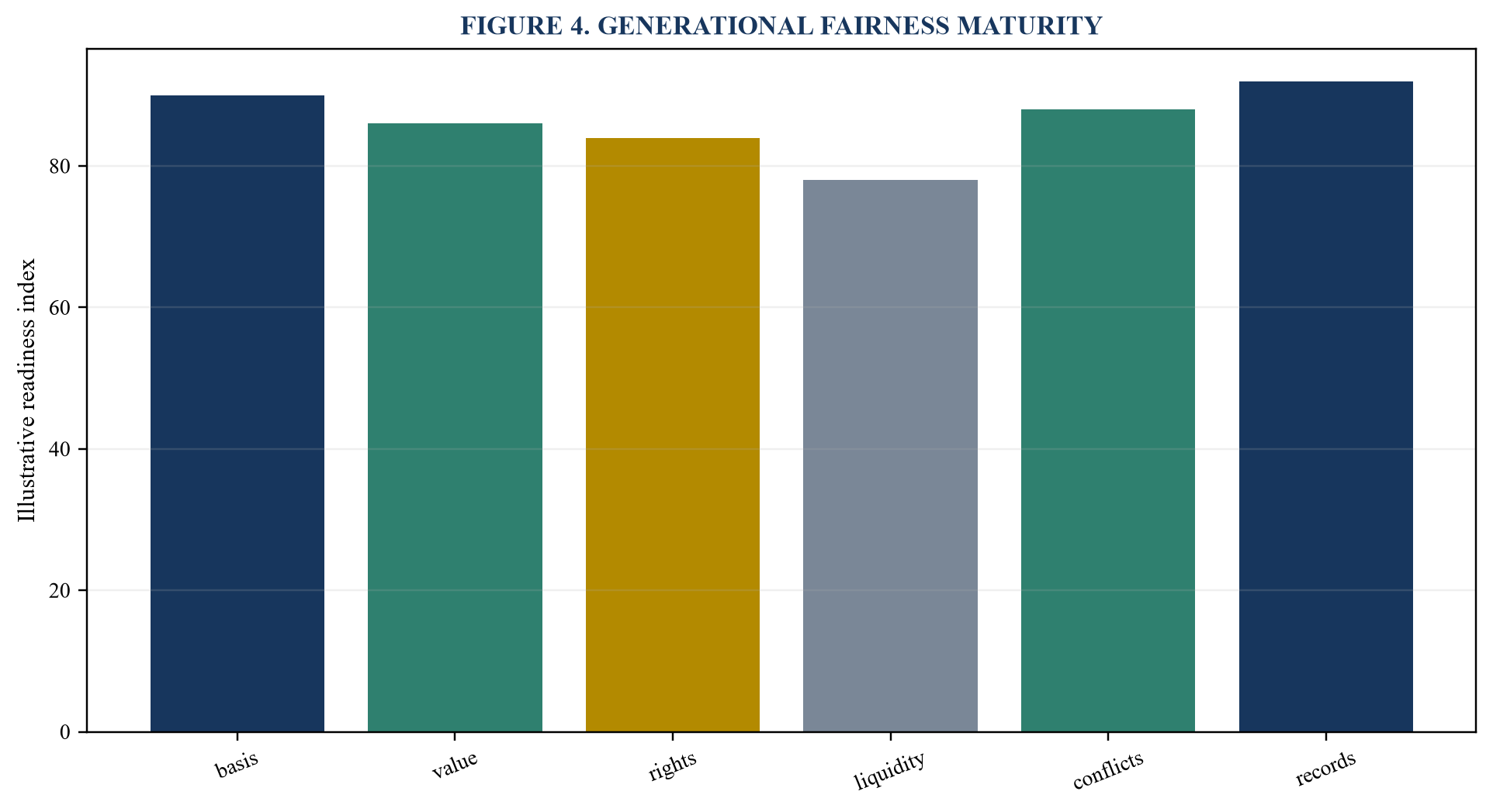
Values are illustrative readiness indices and require interest-specific evidence.
33. Govern conflicts and related-party decisions
Disclose interests, exclude conflicted influence, obtain independent input and record company and shareholder treatment.
The valuation team should reconcile interest register, committee terms, minutes, valuation evidence, advice and approvals. Each conclusion records the source, date, owner, reliability, assumption, method, sensitivity, dependency and unresolved exception. The immediate output is a conflicts-and-fairness governance pack.
The analysis must connect legal rights to economic outcomes. Reviewers trace inputs to native records, reconcile the integrated model, test alternative methods and assess whether a market participant could execute the assumed route. Company facts, the subject interest, valuation purpose, jurisdiction and market conditions govern every conclusion.
Material gaps require an accountable owner, corrective action, independent challenge and decision date. Consequences should flow through enterprise value, equity value, cash access, control, liquidity, tax, fairness and transaction terms. Residual uncertainty remains visible through ranges and sensitivities until evidence and approvals support the decision.
34. Design the valuation formula
Translate recurring valuation needs into clear definitions, methods, dates, adjustments, information and dispute mechanics.
The valuation team should reconcile historical disputes, company economics, owner objectives, legal drafting and worked scenarios. Each conclusion records the source, date, owner, reliability, assumption, method, sensitivity, dependency and unresolved exception. The immediate output is a repeatable shareholder valuation formula.
The analysis must connect legal rights to economic outcomes. Reviewers trace inputs to native records, reconcile the integrated model, test alternative methods and assess whether a market participant could execute the assumed route. Company facts, the subject interest, valuation purpose, jurisdiction and market conditions govern every conclusion.
Material gaps require an accountable owner, corrective action, independent challenge and decision date. Consequences should flow through enterprise value, equity value, cash access, control, liquidity, tax, fairness and transaction terms. Residual uncertainty remains visible through ranges and sensitivities until evidence and approvals support the decision.
35. Set review and refresh triggers
Define periodic updates and event-driven recalibration for performance, capital raises, acquisitions, rights changes and market shocks.
The valuation team should reconcile reporting calendar, governance, transactions, market indicators and materiality thresholds. Each conclusion records the source, date, owner, reliability, assumption, method, sensitivity, dependency and unresolved exception. The immediate output is a valuation-refresh protocol.
The analysis must connect legal rights to economic outcomes. Reviewers trace inputs to native records, reconcile the integrated model, test alternative methods and assess whether a market participant could execute the assumed route. Company facts, the subject interest, valuation purpose, jurisdiction and market conditions govern every conclusion.
Material gaps require an accountable owner, corrective action, independent challenge and decision date. Consequences should flow through enterprise value, equity value, cash access, control, liquidity, tax, fairness and transaction terms. Residual uncertainty remains visible through ranges and sensitivities until evidence and approvals support the decision.
36. Build the evidence room
Organise source documents, model inputs, rights analysis, adjustments, review comments and decisions with provenance.
The valuation team should reconcile data inventory, permissions, version control, source register and issue log. Each conclusion records the source, date, owner, reliability, assumption, method, sensitivity, dependency and unresolved exception. The immediate output is a valuation evidence room.
The analysis must connect legal rights to economic outcomes. Reviewers trace inputs to native records, reconcile the integrated model, test alternative methods and assess whether a market participant could execute the assumed route. Company facts, the subject interest, valuation purpose, jurisdiction and market conditions govern every conclusion.
Material gaps require an accountable owner, corrective action, independent challenge and decision date. Consequences should flow through enterprise value, equity value, cash access, control, liquidity, tax, fairness and transaction terms. Residual uncertainty remains visible through ranges and sensitivities until evidence and approvals support the decision.
37. Run independent challenge
Test assumptions, methods, calculations, rights, adjustments and sensitivity through qualified review.
The valuation team should reconcile valuation report, source evidence, model audit, legal input and reviewer findings. Each conclusion records the source, date, owner, reliability, assumption, method, sensitivity, dependency and unresolved exception. The immediate output is an independent valuation review record.
The analysis must connect legal rights to economic outcomes. Reviewers trace inputs to native records, reconcile the integrated model, test alternative methods and assess whether a market participant could execute the assumed route. Company facts, the subject interest, valuation purpose, jurisdiction and market conditions govern every conclusion.
Material gaps require an accountable owner, corrective action, independent challenge and decision date. Consequences should flow through enterprise value, equity value, cash access, control, liquidity, tax, fairness and transaction terms. Residual uncertainty remains visible through ranges and sensitivities until evidence and approvals support the decision.
38. Document uncertainty
Present ranges, sensitivities, scenario probabilities, information limitations and unresolved matters without false precision.
The valuation team should reconcile model outputs, evidence quality, volatility, rights ambiguity and downside cases. Each conclusion records the source, date, owner, reliability, assumption, method, sensitivity, dependency and unresolved exception. The immediate output is a valuation-uncertainty statement.
The analysis must connect legal rights to economic outcomes. Reviewers trace inputs to native records, reconcile the integrated model, test alternative methods and assess whether a market participant could execute the assumed route. Company facts, the subject interest, valuation purpose, jurisdiction and market conditions govern every conclusion.
Material gaps require an accountable owner, corrective action, independent challenge and decision date. Consequences should flow through enterprise value, equity value, cash access, control, liquidity, tax, fairness and transaction terms. Residual uncertainty remains visible through ranges and sensitivities until evidence and approvals support the decision.
39. Embed the result in transaction documents
Align price, formula, completion accounts, locked box, earn-out, security, dispute and payment terms with the valuation.
The valuation team should reconcile term sheet, model, legal documents, funding, tax and completion mechanics. Each conclusion records the source, date, owner, reliability, assumption, method, sensitivity, dependency and unresolved exception. The immediate output is a valuation-to-documentation bridge.
The analysis must connect legal rights to economic outcomes. Reviewers trace inputs to native records, reconcile the integrated model, test alternative methods and assess whether a market participant could execute the assumed route. Company facts, the subject interest, valuation purpose, jurisdiction and market conditions govern every conclusion.
Material gaps require an accountable owner, corrective action, independent challenge and decision date. Consequences should flow through enterprise value, equity value, cash access, control, liquidity, tax, fairness and transaction terms. Residual uncertainty remains visible through ranges and sensitivities until evidence and approvals support the decision.
40. Issue the generational valuation conclusion
Present the basis, interest, methods, rights, adjustments, range, fairness, limitations and authorised decision.
The valuation team should reconcile valuation report, independent review, legal and tax advice, approvals and scenario analysis. Each conclusion records the source, date, owner, reliability, assumption, method, sensitivity, dependency and unresolved exception. The immediate output is a board-and-owner valuation decision paper.
The analysis must connect legal rights to economic outcomes. Reviewers trace inputs to native records, reconcile the integrated model, test alternative methods and assess whether a market participant could execute the assumed route. Company facts, the subject interest, valuation purpose, jurisdiction and market conditions govern every conclusion.
Material gaps require an accountable owner, corrective action, independent challenge and decision date. Consequences should flow through enterprise value, equity value, cash access, control, liquidity, tax, fairness and transaction terms. Residual uncertainty remains visible through ranges and sensitivities until evidence and approvals support the decision.
Table 5. Valuation decision certificate
| Dimension | Required conclusion | Decision use |
|---|---|---|
| defined | purpose, basis and unit fixed | scope |
| evidenced | inputs traceable | reliability |
| rights-specific | control and liquidity analysed | allocation |
| fair | conflicts and owner treatment governed | approval |
Illustrative decision architecture; company-specific evidence and authorised advice govern.
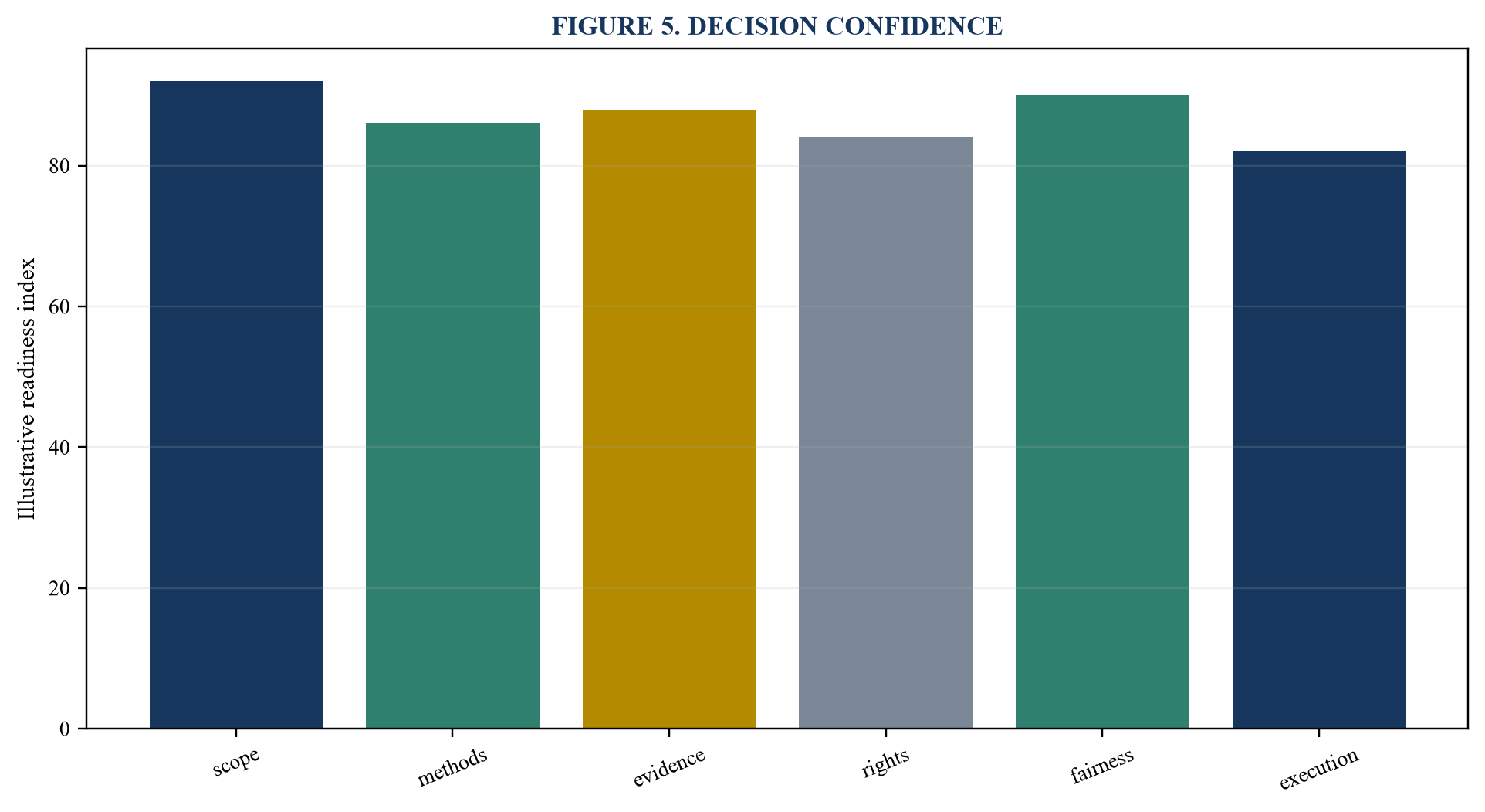
Values are illustrative readiness indices and require interest-specific evidence.
References
- International Valuation Standards Council, International Valuation Standards effective 31 January 2025, https://ivsc.org/standards/
- International Valuation Standards Council, Getting the Process Right: Exploring Valuation Risk under IVS, https://ivsc.org/valuation_risk/
- International Valuation Standards Council, New Edition of the International Valuation Standards Published, https://ivsc.org/new-edition-of-the-international-valuation-standards-ivs-published/
- IFRS Foundation, IFRS 13 Fair Value Measurement, https://www.ifrs.org/issued-standards/list-of-standards/ifrs-13-fair-value-measurement/
- IFRS Foundation, Educational Material: Fair Value Measurement of Unquoted Equity Instruments, https://www.ifrs.org/-/media/feature/supporting-implementation/ifrs-13/education-ifrs-13-eng.pdf
- IFRS Foundation, IFRS 10 Consolidated Financial Statements, https://www.ifrs.org/issued-standards/list-of-standards/ifrs-10-consolidated-financial-statements/
- IFRS Foundation, IAS 24 Related Party Disclosures, https://www.ifrs.org/issued-standards/list-of-standards/ias-24-related-party-disclosures/
- IFRS Foundation, IAS 36 Impairment of Assets, https://www.ifrs.org/issued-standards/list-of-standards/ias-36-impairment-of-assets/
- IFRS Foundation, IAS 32 Financial Instruments: Presentation, https://www.ifrs.org/issued-standards/list-of-standards/ias-32-financial-instruments-presentation/
- IFRS Foundation, IFRS 9 Financial Instruments, https://www.ifrs.org/issued-standards/list-of-standards/ifrs-9-financial-instruments/
- United Arab Emirates, Federal Decree-Law No. 37 of 2022 Concerning Family Businesses, https://uaelegislation.gov.ae/en/legislations/1608
- UAE Ministry of Economy and Tourism, Companies Legislation, https://www.moet.gov.ae/en/companies-legislations
- Dubai International Financial Centre, Family Arrangements Regulations 2023, https://assets.difc.com/v1/media/edge/images/dubaiintern0078-difcexperie96c5-production-3253/media/project/difcexperiences/difc/difcwebsite/documents/familydocs/family_arrangements_regulations_updated_april23.pdf
- International Finance Corporation, Family Business Governance Handbook, https://www.ifc.org/en/insights-reports/2011/ifc-family-business-governance-handbook
- OECD, G20/OECD Principles of Corporate Governance 2023, https://doi.org/10.1787/ed750b30-en
- OECD, Corporate Governance Factbook 2023, https://www.oecd.org/en/publications/oecd-corporate-governance-factbook-2023_6d912314-en.html
- OECD, Related Party Transactions: Flexibility and Proportionality in Corporate Governance, https://www.oecd.org/en/publications/flexibility-and-proportionality-in-corporate-governance_9789264307490-en.html
- UK Government, Companies Act 2006, Part 18 Acquisition by a Limited Company of Its Own Shares, https://www.legislation.gov.uk/ukpga/2006/46/part/18
- UK Government, Companies Act 2006, Part 23 Distributions, https://www.legislation.gov.uk/ukpga/2006/46/part/23
- UK Takeover Panel, The Takeover Code, https://www.thetakeoverpanel.org.uk/the-code/download-code
- Financial Reporting Council, UK Corporate Governance Code 2024, https://www.frc.org.uk/library/standards-codes-policy/corporate-governance/uk-corporate-governance-code/
- International Organization for Standardization, ISO 31000 Risk Management Guidelines, https://www.iso.org/iso-31000-risk-management.html
- International Auditing and Assurance Standards Board, ISA 500 Audit Evidence, https://www.iaasb.org/publications/international-standard-auditing-isa-500-audit-evidence
- US Securities and Exchange Commission, Regulation S-K, https://www.sec.gov/rules-regulations/staff-guidance/corporation-finance-interpretations/regulation-s-k
- National Institute of Standards and Technology, Cybersecurity Framework 2.0, https://doi.org/10.6028/NIST.CSWP.29
- World Bank, Corporate Governance, https://www.worldbank.org/en/topic/financialsector/brief/corporate-governance
