

1. Define the sale perimeter
Identify businesses, entities, assets, liabilities, people, contracts and services offered for sale.
The controlled record should identify the relevant customer, revenue stream, contract, cohort, relationship owner, commercial dependency, evidence source, baseline, trend, scenario, control, exception, accountable executive, deadline and approval. The immediate deliverable is a perimeter charter.
The principal failure occurs when management reporting defines the sale perimeter. Reviewers should connect the evidence to revenue durability, gross margin, cash conversion, renewal probability, switching behaviour, counterparty credit and transaction value; distinguish contractual protection from observed customer behaviour; and test whether the conclusion survives a downside scenario.
The decision pack for define the sale perimeter should state the commercial question, measurement perimeter, historical evidence, customer-specific facts, forecast logic, sensitivity, management action, buyer implication, residual uncertainty and next gate. Material exceptions should flow into the valuation model, quality-of-earnings work, diligence room, sale-process narrative, transaction protections and board reporting.
2. Define the buyer decision
State why the asset should exist independently, who can own it and how value will be created.
The controlled record should identify the relevant customer, revenue stream, contract, cohort, relationship owner, commercial dependency, evidence source, baseline, trend, scenario, control, exception, accountable executive, deadline and approval. The immediate deliverable is a buyer decision thesis.
The principal failure occurs when a disposal rationale is an equity story. Reviewers should connect the evidence to revenue durability, gross margin, cash conversion, renewal probability, switching behaviour, counterparty credit and transaction value; distinguish contractual protection from observed customer behaviour; and test whether the conclusion survives a downside scenario.
The decision pack for define the buyer decision should state the commercial question, measurement perimeter, historical evidence, customer-specific facts, forecast logic, sensitivity, management action, buyer implication, residual uncertainty and next gate. Material exceptions should flow into the valuation model, quality-of-earnings work, diligence room, sale-process narrative, transaction protections and board reporting.
3. Build the evidence spine
Connect every material claim to controlled financial, commercial and operational evidence.
The controlled record should identify the relevant customer, revenue stream, contract, cohort, relationship owner, commercial dependency, evidence source, baseline, trend, scenario, control, exception, accountable executive, deadline and approval. The immediate deliverable is a claim-to-evidence map.
The principal failure occurs when a data room is an evidence spine. Reviewers should connect the evidence to revenue durability, gross margin, cash conversion, renewal probability, switching behaviour, counterparty credit and transaction value; distinguish contractual protection from observed customer behaviour; and test whether the conclusion survives a downside scenario.
The decision pack for build the evidence spine should state the commercial question, measurement perimeter, historical evidence, customer-specific facts, forecast logic, sensitivity, management action, buyer implication, residual uncertainty and next gate. Material exceptions should flow into the valuation model, quality-of-earnings work, diligence room, sale-process narrative, transaction protections and board reporting.
4. Reconstruct historical financials
Create consistent income, balance-sheet and cash-flow histories for the carved-out business.
The controlled record should identify the relevant customer, revenue stream, contract, cohort, relationship owner, commercial dependency, evidence source, baseline, trend, scenario, control, exception, accountable executive, deadline and approval. The immediate deliverable is a carve-out financial history.
The principal failure occurs when allocated segment accounts are standalone financials. Reviewers should connect the evidence to revenue durability, gross margin, cash conversion, renewal probability, switching behaviour, counterparty credit and transaction value; distinguish contractual protection from observed customer behaviour; and test whether the conclusion survives a downside scenario.
The decision pack for reconstruct historical financials should state the commercial question, measurement perimeter, historical evidence, customer-specific facts, forecast logic, sensitivity, management action, buyer implication, residual uncertainty and next gate. Material exceptions should flow into the valuation model, quality-of-earnings work, diligence room, sale-process narrative, transaction protections and board reporting.
5. Define allocation policies
Document direct attribution, shared cost, assets, liabilities, tax and financing allocations.
The controlled record should identify the relevant customer, revenue stream, contract, cohort, relationship owner, commercial dependency, evidence source, baseline, trend, scenario, control, exception, accountable executive, deadline and approval. The immediate deliverable is an allocation policy register.
The principal failure occurs when management allocations are self-evident. Reviewers should connect the evidence to revenue durability, gross margin, cash conversion, renewal probability, switching behaviour, counterparty credit and transaction value; distinguish contractual protection from observed customer behaviour; and test whether the conclusion survives a downside scenario.
The decision pack for define allocation policies should state the commercial question, measurement perimeter, historical evidence, customer-specific facts, forecast logic, sensitivity, management action, buyer implication, residual uncertainty and next gate. Material exceptions should flow into the valuation model, quality-of-earnings work, diligence room, sale-process narrative, transaction protections and board reporting.
6. Reconcile to the parent
Bridge carve-out statements to audited group records and explain residuals.
The controlled record should identify the relevant customer, revenue stream, contract, cohort, relationship owner, commercial dependency, evidence source, baseline, trend, scenario, control, exception, accountable executive, deadline and approval. The immediate deliverable is a parent reconciliation.
The principal failure occurs when matching revenue proves full reconciliation. Reviewers should connect the evidence to revenue durability, gross margin, cash conversion, renewal probability, switching behaviour, counterparty credit and transaction value; distinguish contractual protection from observed customer behaviour; and test whether the conclusion survives a downside scenario.
The decision pack for reconcile to the parent should state the commercial question, measurement perimeter, historical evidence, customer-specific facts, forecast logic, sensitivity, management action, buyer implication, residual uncertainty and next gate. Material exceptions should flow into the valuation model, quality-of-earnings work, diligence room, sale-process narrative, transaction protections and board reporting.
7. Separate reported and pro forma views
Distinguish historical results, transaction adjustments and forward assumptions.
The controlled record should identify the relevant customer, revenue stream, contract, cohort, relationship owner, commercial dependency, evidence source, baseline, trend, scenario, control, exception, accountable executive, deadline and approval. The immediate deliverable is a reporting-basis map.
The principal failure occurs when pro forma earnings are historical fact. Reviewers should connect the evidence to revenue durability, gross margin, cash conversion, renewal probability, switching behaviour, counterparty credit and transaction value; distinguish contractual protection from observed customer behaviour; and test whether the conclusion survives a downside scenario.
The decision pack for separate reported and pro forma views should state the commercial question, measurement perimeter, historical evidence, customer-specific facts, forecast logic, sensitivity, management action, buyer implication, residual uncertainty and next gate. Material exceptions should flow into the valuation model, quality-of-earnings work, diligence room, sale-process narrative, transaction protections and board reporting.
8. Build the standalone baseline
Add missing functions, contracts, systems, facilities, insurance and governance.
The controlled record should identify the relevant customer, revenue stream, contract, cohort, relationship owner, commercial dependency, evidence source, baseline, trend, scenario, control, exception, accountable executive, deadline and approval. The immediate deliverable is a standalone cost bridge.
The principal failure occurs when reported EBITDA is standalone EBITDA. Reviewers should connect the evidence to revenue durability, gross margin, cash conversion, renewal probability, switching behaviour, counterparty credit and transaction value; distinguish contractual protection from observed customer behaviour; and test whether the conclusion survives a downside scenario.
The decision pack for build the standalone baseline should state the commercial question, measurement perimeter, historical evidence, customer-specific facts, forecast logic, sensitivity, management action, buyer implication, residual uncertainty and next gate. Material exceptions should flow into the valuation model, quality-of-earnings work, diligence room, sale-process narrative, transaction protections and board reporting.
Table 1. Carve-out reporting basis
| View | Purpose | Control |
|---|---|---|
| historical | reported performance | parent reconciliation |
| allocation | shared items | documented policy |
| pro forma | transaction effects | separate column |
| standalone | future run rate | evidence and scenario |
Illustrative analytical design; company-specific evidence and professional advice govern.
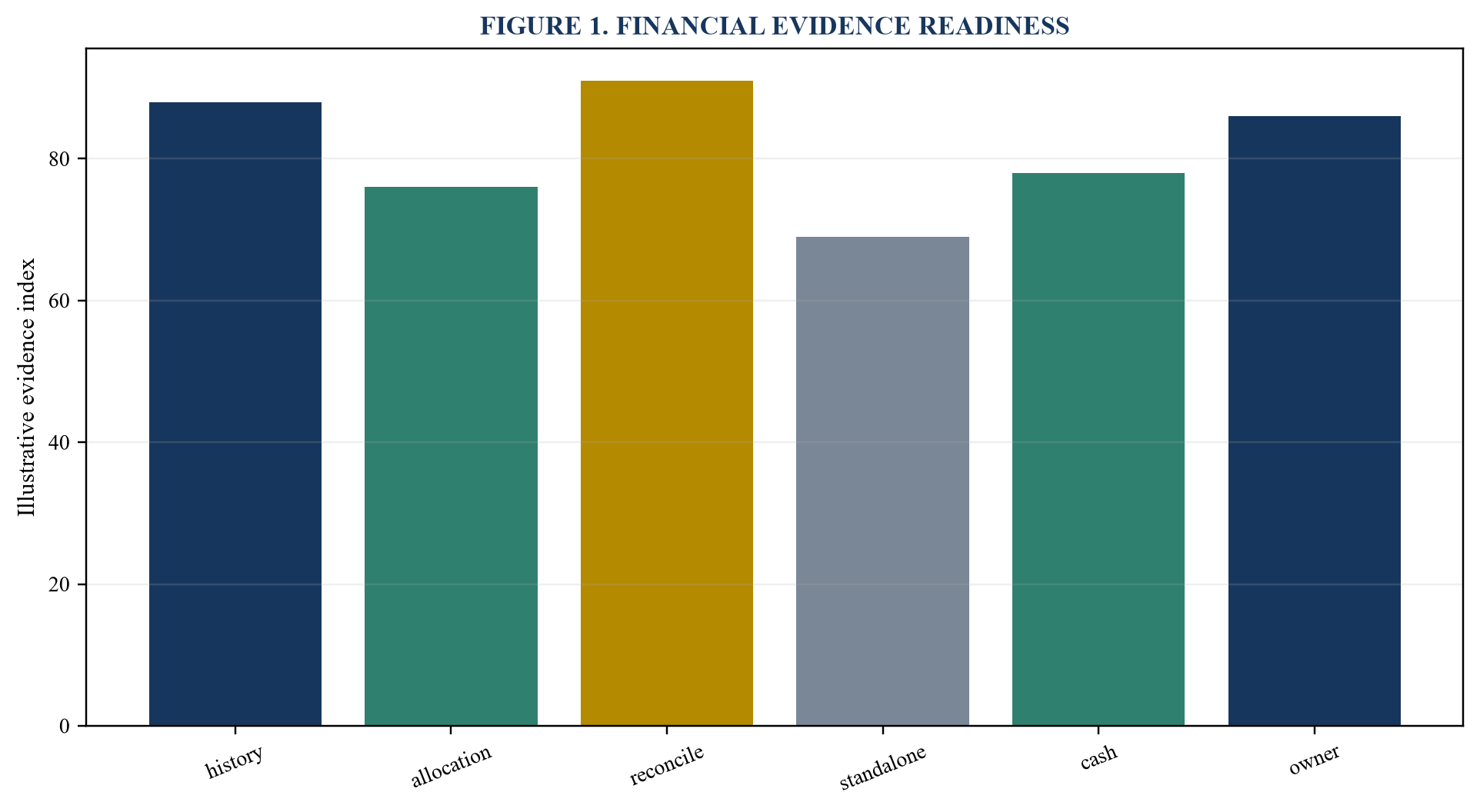
Values are illustrative evidence indices and require company-specific support.
9. Identify stranded cost
Quantify seller costs that remain, disappear or require action after disposal.
The controlled record should identify the relevant customer, revenue stream, contract, cohort, relationship owner, commercial dependency, evidence source, baseline, trend, scenario, control, exception, accountable executive, deadline and approval. The immediate deliverable is a stranded-cost register.
The principal failure occurs when all allocated corporate cost transfers. Reviewers should connect the evidence to revenue durability, gross margin, cash conversion, renewal probability, switching behaviour, counterparty credit and transaction value; distinguish contractual protection from observed customer behaviour; and test whether the conclusion survives a downside scenario.
The decision pack for identify stranded cost should state the commercial question, measurement perimeter, historical evidence, customer-specific facts, forecast logic, sensitivity, management action, buyer implication, residual uncertainty and next gate. Material exceptions should flow into the valuation model, quality-of-earnings work, diligence room, sale-process narrative, transaction protections and board reporting.
10. Normalise earnings
Test non-recurring, non-operating, related-party, run-rate and accounting adjustments.
The controlled record should identify the relevant customer, revenue stream, contract, cohort, relationship owner, commercial dependency, evidence source, baseline, trend, scenario, control, exception, accountable executive, deadline and approval. The immediate deliverable is an evidence-led quality-of-earnings bridge.
The principal failure occurs when adjusted EBITDA is a negotiated headline. Reviewers should connect the evidence to revenue durability, gross margin, cash conversion, renewal probability, switching behaviour, counterparty credit and transaction value; distinguish contractual protection from observed customer behaviour; and test whether the conclusion survives a downside scenario.
The decision pack for normalise earnings should state the commercial question, measurement perimeter, historical evidence, customer-specific facts, forecast logic, sensitivity, management action, buyer implication, residual uncertainty and next gate. Material exceptions should flow into the valuation model, quality-of-earnings work, diligence room, sale-process narrative, transaction protections and board reporting.
11. Validate revenue
Reconcile customers, contracts, invoices, cohorts, backlog, churn and cash.
The controlled record should identify the relevant customer, revenue stream, contract, cohort, relationship owner, commercial dependency, evidence source, baseline, trend, scenario, control, exception, accountable executive, deadline and approval. The immediate deliverable is a revenue evidence pack.
The principal failure occurs when booked revenue proves durability. Reviewers should connect the evidence to revenue durability, gross margin, cash conversion, renewal probability, switching behaviour, counterparty credit and transaction value; distinguish contractual protection from observed customer behaviour; and test whether the conclusion survives a downside scenario.
The decision pack for validate revenue should state the commercial question, measurement perimeter, historical evidence, customer-specific facts, forecast logic, sensitivity, management action, buyer implication, residual uncertainty and next gate. Material exceptions should flow into the valuation model, quality-of-earnings work, diligence room, sale-process narrative, transaction protections and board reporting.
12. Validate gross margin
Decompose price, volume, mix, input, freight, labour, utilisation and allocation.
The controlled record should identify the relevant customer, revenue stream, contract, cohort, relationship owner, commercial dependency, evidence source, baseline, trend, scenario, control, exception, accountable executive, deadline and approval. The immediate deliverable is a margin bridge.
The principal failure occurs when historical gross margin is portable. Reviewers should connect the evidence to revenue durability, gross margin, cash conversion, renewal probability, switching behaviour, counterparty credit and transaction value; distinguish contractual protection from observed customer behaviour; and test whether the conclusion survives a downside scenario.
The decision pack for validate gross margin should state the commercial question, measurement perimeter, historical evidence, customer-specific facts, forecast logic, sensitivity, management action, buyer implication, residual uncertainty and next gate. Material exceptions should flow into the valuation model, quality-of-earnings work, diligence room, sale-process narrative, transaction protections and board reporting.
13. Validate working capital
Reconstruct receivables, inventory, payables, seasonality and separation effects.
The controlled record should identify the relevant customer, revenue stream, contract, cohort, relationship owner, commercial dependency, evidence source, baseline, trend, scenario, control, exception, accountable executive, deadline and approval. The immediate deliverable is a standalone working-capital model.
The principal failure occurs when group working capital is a neutral peg. Reviewers should connect the evidence to revenue durability, gross margin, cash conversion, renewal probability, switching behaviour, counterparty credit and transaction value; distinguish contractual protection from observed customer behaviour; and test whether the conclusion survives a downside scenario.
The decision pack for validate working capital should state the commercial question, measurement perimeter, historical evidence, customer-specific facts, forecast logic, sensitivity, management action, buyer implication, residual uncertainty and next gate. Material exceptions should flow into the valuation model, quality-of-earnings work, diligence room, sale-process narrative, transaction protections and board reporting.
14. Validate capital expenditure
Separate maintenance, growth, compliance, capacity and shared-asset needs.
The controlled record should identify the relevant customer, revenue stream, contract, cohort, relationship owner, commercial dependency, evidence source, baseline, trend, scenario, control, exception, accountable executive, deadline and approval. The immediate deliverable is a capital-intensity map.
The principal failure occurs when historic capital expenditure sustains the standalone plan. Reviewers should connect the evidence to revenue durability, gross margin, cash conversion, renewal probability, switching behaviour, counterparty credit and transaction value; distinguish contractual protection from observed customer behaviour; and test whether the conclusion survives a downside scenario.
The decision pack for validate capital expenditure should state the commercial question, measurement perimeter, historical evidence, customer-specific facts, forecast logic, sensitivity, management action, buyer implication, residual uncertainty and next gate. Material exceptions should flow into the valuation model, quality-of-earnings work, diligence room, sale-process narrative, transaction protections and board reporting.
15. Validate cash conversion
Bridge EBITDA through working capital, capital expenditure, tax and exceptional cash.
The controlled record should identify the relevant customer, revenue stream, contract, cohort, relationship owner, commercial dependency, evidence source, baseline, trend, scenario, control, exception, accountable executive, deadline and approval. The immediate deliverable is a cash-conversion model.
The principal failure occurs when EBITDA growth creates cash automatically. Reviewers should connect the evidence to revenue durability, gross margin, cash conversion, renewal probability, switching behaviour, counterparty credit and transaction value; distinguish contractual protection from observed customer behaviour; and test whether the conclusion survives a downside scenario.
The decision pack for validate cash conversion should state the commercial question, measurement perimeter, historical evidence, customer-specific facts, forecast logic, sensitivity, management action, buyer implication, residual uncertainty and next gate. Material exceptions should flow into the valuation model, quality-of-earnings work, diligence room, sale-process narrative, transaction protections and board reporting.
16. Map customers and markets
Segment demand, concentration, retention, share, regulation and geographic exposure.
The controlled record should identify the relevant customer, revenue stream, contract, cohort, relationship owner, commercial dependency, evidence source, baseline, trend, scenario, control, exception, accountable executive, deadline and approval. The immediate deliverable is a market evidence map.
The principal failure occurs when market growth proves company growth. Reviewers should connect the evidence to revenue durability, gross margin, cash conversion, renewal probability, switching behaviour, counterparty credit and transaction value; distinguish contractual protection from observed customer behaviour; and test whether the conclusion survives a downside scenario.
The decision pack for map customers and markets should state the commercial question, measurement perimeter, historical evidence, customer-specific facts, forecast logic, sensitivity, management action, buyer implication, residual uncertainty and next gate. Material exceptions should flow into the valuation model, quality-of-earnings work, diligence room, sale-process narrative, transaction protections and board reporting.
Table 2. Commercial evidence map
| Claim | Evidence | Buyer test |
|---|---|---|
| growth | cohort and market | durability |
| margin | price-volume-cost bridge | portability |
| moat | switching and advantage | defensibility |
| cash | working capital and capex | conversion |
Illustrative analytical design; company-specific evidence and professional advice govern.
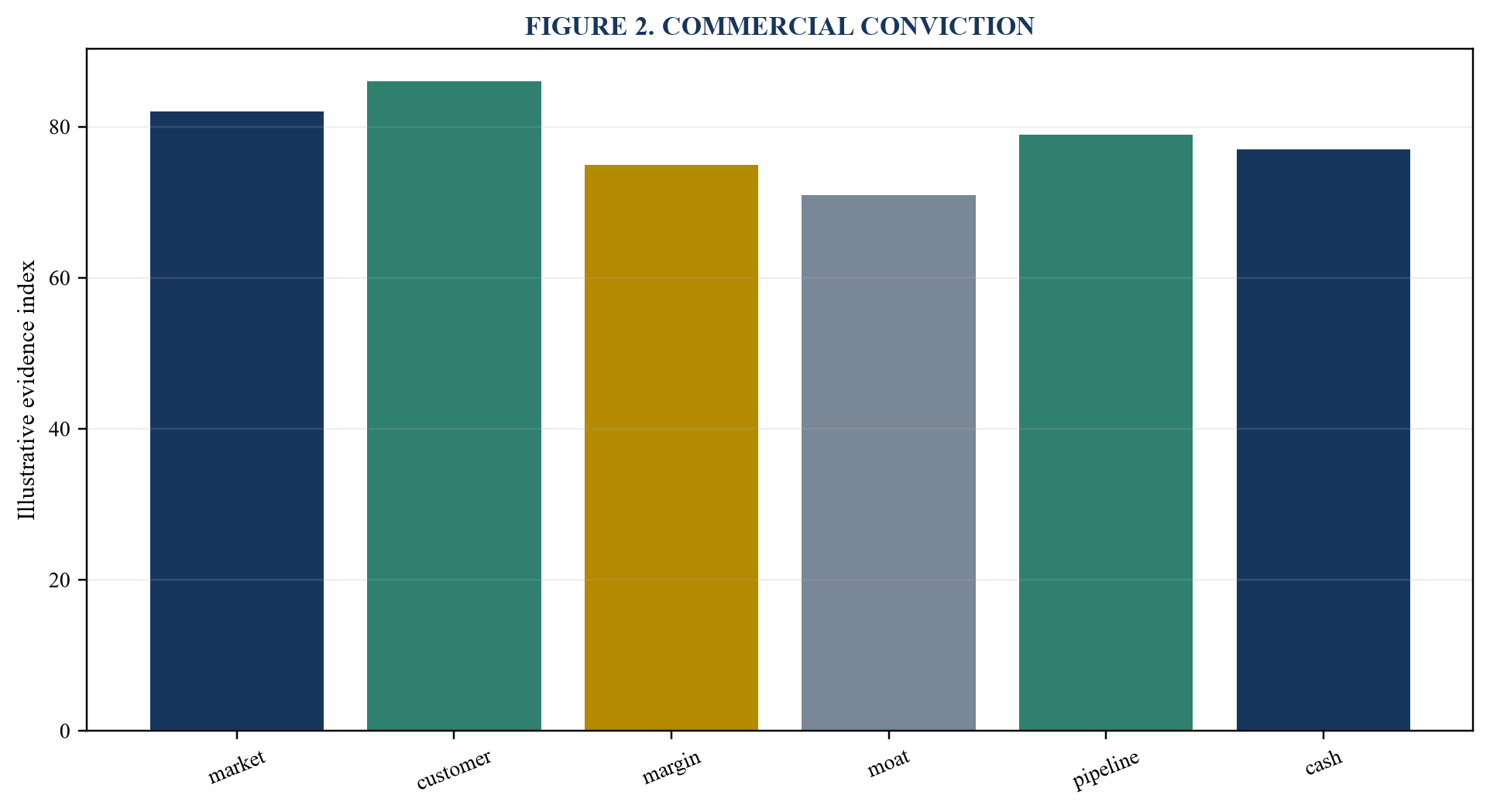
Values are illustrative evidence indices and require company-specific support.
17. Map competitive advantage
Test switching, differentiation, cost position, data, technology, licences and relationships.
The controlled record should identify the relevant customer, revenue stream, contract, cohort, relationship owner, commercial dependency, evidence source, baseline, trend, scenario, control, exception, accountable executive, deadline and approval. The immediate deliverable is a defensibility scorecard.
The principal failure occurs when management labels establish a moat. Reviewers should connect the evidence to revenue durability, gross margin, cash conversion, renewal probability, switching behaviour, counterparty credit and transaction value; distinguish contractual protection from observed customer behaviour; and test whether the conclusion survives a downside scenario.
The decision pack for map competitive advantage should state the commercial question, measurement perimeter, historical evidence, customer-specific facts, forecast logic, sensitivity, management action, buyer implication, residual uncertainty and next gate. Material exceptions should flow into the valuation model, quality-of-earnings work, diligence room, sale-process narrative, transaction protections and board reporting.
18. Map dependencies
Identify parent brand, procurement, credit, data, technology, property, people and guarantees.
The controlled record should identify the relevant customer, revenue stream, contract, cohort, relationship owner, commercial dependency, evidence source, baseline, trend, scenario, control, exception, accountable executive, deadline and approval. The immediate deliverable is a dependency register.
The principal failure occurs when disclosed dependencies are transition matters only. Reviewers should connect the evidence to revenue durability, gross margin, cash conversion, renewal probability, switching behaviour, counterparty credit and transaction value; distinguish contractual protection from observed customer behaviour; and test whether the conclusion survives a downside scenario.
The decision pack for map dependencies should state the commercial question, measurement perimeter, historical evidence, customer-specific facts, forecast logic, sensitivity, management action, buyer implication, residual uncertainty and next gate. Material exceptions should flow into the valuation model, quality-of-earnings work, diligence room, sale-process narrative, transaction protections and board reporting.
19. Design the target operating model
Set functions, controls, decision rights, systems and service levels after separation.
The controlled record should identify the relevant customer, revenue stream, contract, cohort, relationship owner, commercial dependency, evidence source, baseline, trend, scenario, control, exception, accountable executive, deadline and approval. The immediate deliverable is a standalone operating blueprint.
The principal failure occurs when an organisation chart is an operating model. Reviewers should connect the evidence to revenue durability, gross margin, cash conversion, renewal probability, switching behaviour, counterparty credit and transaction value; distinguish contractual protection from observed customer behaviour; and test whether the conclusion survives a downside scenario.
The decision pack for design the target operating model should state the commercial question, measurement perimeter, historical evidence, customer-specific facts, forecast logic, sensitivity, management action, buyer implication, residual uncertainty and next gate. Material exceptions should flow into the valuation model, quality-of-earnings work, diligence room, sale-process narrative, transaction protections and board reporting.
20. Design the management case
Define strategy, initiatives, investment, owners, milestones and leading indicators.
The controlled record should identify the relevant customer, revenue stream, contract, cohort, relationship owner, commercial dependency, evidence source, baseline, trend, scenario, control, exception, accountable executive, deadline and approval. The immediate deliverable is an executable value-creation plan.
The principal failure occurs when a budget is a management case. Reviewers should connect the evidence to revenue durability, gross margin, cash conversion, renewal probability, switching behaviour, counterparty credit and transaction value; distinguish contractual protection from observed customer behaviour; and test whether the conclusion survives a downside scenario.
The decision pack for design the management case should state the commercial question, measurement perimeter, historical evidence, customer-specific facts, forecast logic, sensitivity, management action, buyer implication, residual uncertainty and next gate. Material exceptions should flow into the valuation model, quality-of-earnings work, diligence room, sale-process narrative, transaction protections and board reporting.
21. Build the forecast
Connect operational drivers to revenue, margin, cash, capital and balance sheet.
The controlled record should identify the relevant customer, revenue stream, contract, cohort, relationship owner, commercial dependency, evidence source, baseline, trend, scenario, control, exception, accountable executive, deadline and approval. The immediate deliverable is a driver-based forecast.
The principal failure occurs when top-down growth assumptions are sufficient. Reviewers should connect the evidence to revenue durability, gross margin, cash conversion, renewal probability, switching behaviour, counterparty credit and transaction value; distinguish contractual protection from observed customer behaviour; and test whether the conclusion survives a downside scenario.
The decision pack for build the forecast should state the commercial question, measurement perimeter, historical evidence, customer-specific facts, forecast logic, sensitivity, management action, buyer implication, residual uncertainty and next gate. Material exceptions should flow into the valuation model, quality-of-earnings work, diligence room, sale-process narrative, transaction protections and board reporting.
22. Build scenario architecture
Create base, downside and upside cases with explicit dependencies and management actions.
The controlled record should identify the relevant customer, revenue stream, contract, cohort, relationship owner, commercial dependency, evidence source, baseline, trend, scenario, control, exception, accountable executive, deadline and approval. The immediate deliverable is a scenario model.
The principal failure occurs when one approved plan represents buyer outcomes. Reviewers should connect the evidence to revenue durability, gross margin, cash conversion, renewal probability, switching behaviour, counterparty credit and transaction value; distinguish contractual protection from observed customer behaviour; and test whether the conclusion survives a downside scenario.
The decision pack for build scenario architecture should state the commercial question, measurement perimeter, historical evidence, customer-specific facts, forecast logic, sensitivity, management action, buyer implication, residual uncertainty and next gate. Material exceptions should flow into the valuation model, quality-of-earnings work, diligence room, sale-process narrative, transaction protections and board reporting.
23. Map value-creation levers
Quantify pricing, mix, retention, productivity, procurement, footprint, capital and M&A.
The controlled record should identify the relevant customer, revenue stream, contract, cohort, relationship owner, commercial dependency, evidence source, baseline, trend, scenario, control, exception, accountable executive, deadline and approval. The immediate deliverable is a lever-to-value bridge.
The principal failure occurs when initiative lists equal value creation. Reviewers should connect the evidence to revenue durability, gross margin, cash conversion, renewal probability, switching behaviour, counterparty credit and transaction value; distinguish contractual protection from observed customer behaviour; and test whether the conclusion survives a downside scenario.
The decision pack for map value-creation levers should state the commercial question, measurement perimeter, historical evidence, customer-specific facts, forecast logic, sensitivity, management action, buyer implication, residual uncertainty and next gate. Material exceptions should flow into the valuation model, quality-of-earnings work, diligence room, sale-process narrative, transaction protections and board reporting.
24. Test execution capacity
Match initiatives to leadership, capability, funding, systems and time.
The controlled record should identify the relevant customer, revenue stream, contract, cohort, relationship owner, commercial dependency, evidence source, baseline, trend, scenario, control, exception, accountable executive, deadline and approval. The immediate deliverable is an execution capacity test.
The principal failure occurs when a credible idea is executable. Reviewers should connect the evidence to revenue durability, gross margin, cash conversion, renewal probability, switching behaviour, counterparty credit and transaction value; distinguish contractual protection from observed customer behaviour; and test whether the conclusion survives a downside scenario.
The decision pack for test execution capacity should state the commercial question, measurement perimeter, historical evidence, customer-specific facts, forecast logic, sensitivity, management action, buyer implication, residual uncertainty and next gate. Material exceptions should flow into the valuation model, quality-of-earnings work, diligence room, sale-process narrative, transaction protections and board reporting.
Table 3. Value-creation plan
| Lever | Measurement | Execution gate |
|---|---|---|
| pricing | realisation and churn | customer evidence |
| productivity | unit cost and capacity | systems and people |
| procurement | addressable spend | contract route |
| growth | pipeline conversion | funding and owner |
Illustrative analytical design; company-specific evidence and professional advice govern.
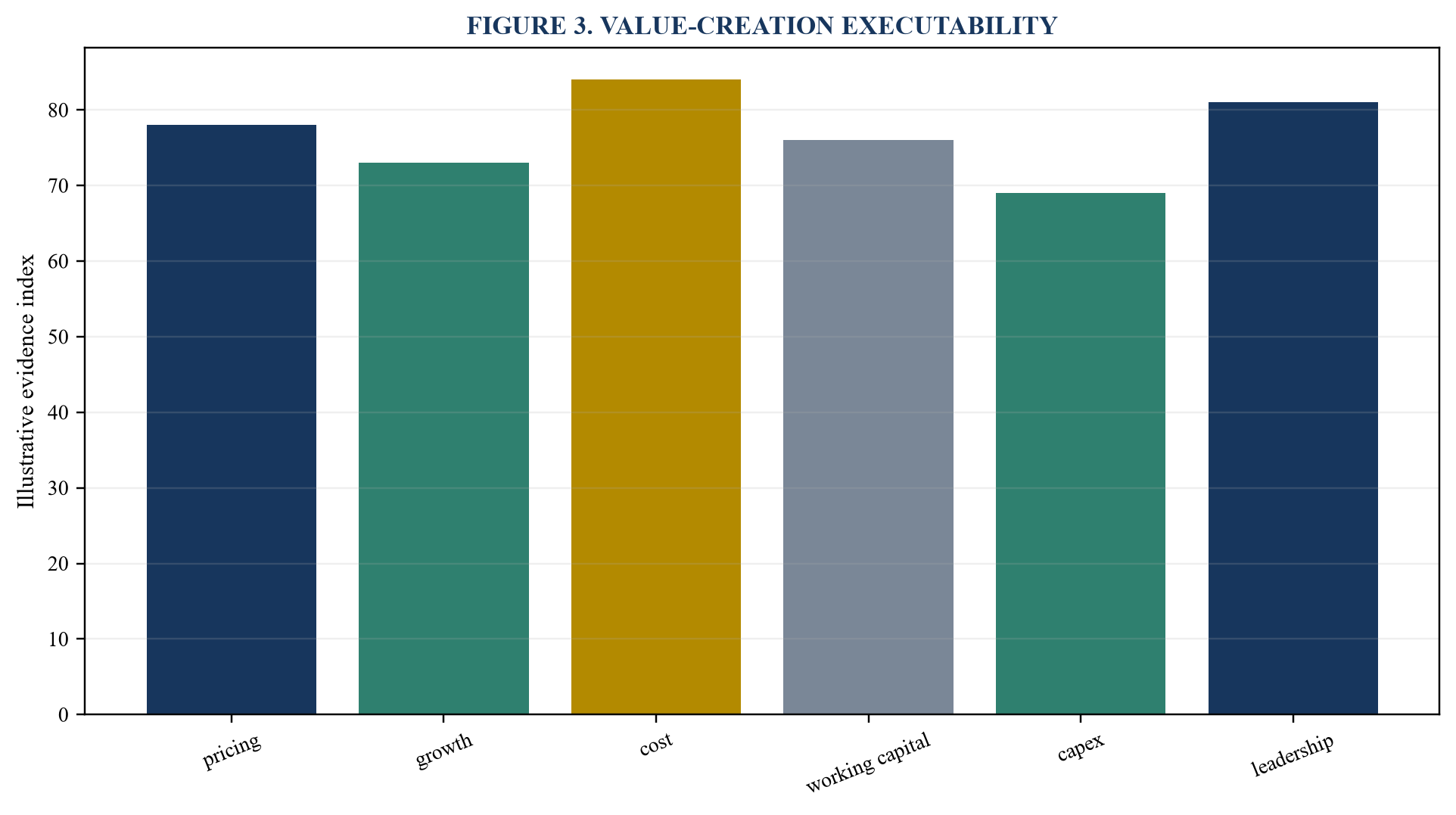
Values are illustrative evidence indices and require company-specific support.
25. Build the standalone equity story
Connect market, advantage, earnings quality, independence, plan and exit optionality.
The controlled record should identify the relevant customer, revenue stream, contract, cohort, relationship owner, commercial dependency, evidence source, baseline, trend, scenario, control, exception, accountable executive, deadline and approval. The immediate deliverable is an evidence-led equity narrative.
The principal failure occurs when presentation polish creates conviction. Reviewers should connect the evidence to revenue durability, gross margin, cash conversion, renewal probability, switching behaviour, counterparty credit and transaction value; distinguish contractual protection from observed customer behaviour; and test whether the conclusion survives a downside scenario.
The decision pack for build the standalone equity story should state the commercial question, measurement perimeter, historical evidence, customer-specific facts, forecast logic, sensitivity, management action, buyer implication, residual uncertainty and next gate. Material exceptions should flow into the valuation model, quality-of-earnings work, diligence room, sale-process narrative, transaction protections and board reporting.
26. Segment the buyer universe
Map strategic, private-equity, infrastructure, family-office and specialist buyer theses.
The controlled record should identify the relevant customer, revenue stream, contract, cohort, relationship owner, commercial dependency, evidence source, baseline, trend, scenario, control, exception, accountable executive, deadline and approval. The immediate deliverable is a buyer thesis matrix.
The principal failure occurs when the highest headline multiple identifies the best buyer. Reviewers should connect the evidence to revenue durability, gross margin, cash conversion, renewal probability, switching behaviour, counterparty credit and transaction value; distinguish contractual protection from observed customer behaviour; and test whether the conclusion survives a downside scenario.
The decision pack for segment the buyer universe should state the commercial question, measurement perimeter, historical evidence, customer-specific facts, forecast logic, sensitivity, management action, buyer implication, residual uncertainty and next gate. Material exceptions should flow into the valuation model, quality-of-earnings work, diligence room, sale-process narrative, transaction protections and board reporting.
27. Calibrate valuation
Use market, income and transaction methods with standalone and scenario adjustments.
The controlled record should identify the relevant customer, revenue stream, contract, cohort, relationship owner, commercial dependency, evidence source, baseline, trend, scenario, control, exception, accountable executive, deadline and approval. The immediate deliverable is a valuation range.
The principal failure occurs when parent trading multiples transfer directly. Reviewers should connect the evidence to revenue durability, gross margin, cash conversion, renewal probability, switching behaviour, counterparty credit and transaction value; distinguish contractual protection from observed customer behaviour; and test whether the conclusion survives a downside scenario.
The decision pack for calibrate valuation should state the commercial question, measurement perimeter, historical evidence, customer-specific facts, forecast logic, sensitivity, management action, buyer implication, residual uncertainty and next gate. Material exceptions should flow into the valuation model, quality-of-earnings work, diligence room, sale-process narrative, transaction protections and board reporting.
28. Frame transaction structure
Compare share, asset, perimeter, rollover, earn-out and transitional alternatives.
The controlled record should identify the relevant customer, revenue stream, contract, cohort, relationship owner, commercial dependency, evidence source, baseline, trend, scenario, control, exception, accountable executive, deadline and approval. The immediate deliverable is a structure-value matrix.
The principal failure occurs when price is independent of structure. Reviewers should connect the evidence to revenue durability, gross margin, cash conversion, renewal probability, switching behaviour, counterparty credit and transaction value; distinguish contractual protection from observed customer behaviour; and test whether the conclusion survives a downside scenario.
The decision pack for frame transaction structure should state the commercial question, measurement perimeter, historical evidence, customer-specific facts, forecast logic, sensitivity, management action, buyer implication, residual uncertainty and next gate. Material exceptions should flow into the valuation model, quality-of-earnings work, diligence room, sale-process narrative, transaction protections and board reporting.
29. Prepare vendor due diligence
Commission focused financial, tax, commercial, operational, technology and legal work.
The controlled record should identify the relevant customer, revenue stream, contract, cohort, relationship owner, commercial dependency, evidence source, baseline, trend, scenario, control, exception, accountable executive, deadline and approval. The immediate deliverable is a VDD scope and findings log.
The principal failure occurs when vendor diligence replaces buyer diligence. Reviewers should connect the evidence to revenue durability, gross margin, cash conversion, renewal probability, switching behaviour, counterparty credit and transaction value; distinguish contractual protection from observed customer behaviour; and test whether the conclusion survives a downside scenario.
The decision pack for prepare vendor due diligence should state the commercial question, measurement perimeter, historical evidence, customer-specific facts, forecast logic, sensitivity, management action, buyer implication, residual uncertainty and next gate. Material exceptions should flow into the valuation model, quality-of-earnings work, diligence room, sale-process narrative, transaction protections and board reporting.
30. Prepare the data room
Organise indexed, permissioned, reconciled and current evidence around buyer questions.
The controlled record should identify the relevant customer, revenue stream, contract, cohort, relationship owner, commercial dependency, evidence source, baseline, trend, scenario, control, exception, accountable executive, deadline and approval. The immediate deliverable is a decision-led data room.
The principal failure occurs when document volume signals readiness. Reviewers should connect the evidence to revenue durability, gross margin, cash conversion, renewal probability, switching behaviour, counterparty credit and transaction value; distinguish contractual protection from observed customer behaviour; and test whether the conclusion survives a downside scenario.
The decision pack for prepare the data room should state the commercial question, measurement perimeter, historical evidence, customer-specific facts, forecast logic, sensitivity, management action, buyer implication, residual uncertainty and next gate. Material exceptions should flow into the valuation model, quality-of-earnings work, diligence room, sale-process narrative, transaction protections and board reporting.
31. Create the separation blueprint
Define workstreams, milestones, costs, risks, owners and Day-One gates.
The controlled record should identify the relevant customer, revenue stream, contract, cohort, relationship owner, commercial dependency, evidence source, baseline, trend, scenario, control, exception, accountable executive, deadline and approval. The immediate deliverable is a separation plan.
The principal failure occurs when separation planning can wait for exclusivity. Reviewers should connect the evidence to revenue durability, gross margin, cash conversion, renewal probability, switching behaviour, counterparty credit and transaction value; distinguish contractual protection from observed customer behaviour; and test whether the conclusion survives a downside scenario.
The decision pack for create the separation blueprint should state the commercial question, measurement perimeter, historical evidence, customer-specific facts, forecast logic, sensitivity, management action, buyer implication, residual uncertainty and next gate. Material exceptions should flow into the valuation model, quality-of-earnings work, diligence room, sale-process narrative, transaction protections and board reporting.
32. Design transitional services
Specify scope, volume, price, controls, exit and failure consequences.
The controlled record should identify the relevant customer, revenue stream, contract, cohort, relationship owner, commercial dependency, evidence source, baseline, trend, scenario, control, exception, accountable executive, deadline and approval. The immediate deliverable is an executable TSA schedule.
The principal failure occurs when a broad TSA removes standalone risk. Reviewers should connect the evidence to revenue durability, gross margin, cash conversion, renewal probability, switching behaviour, counterparty credit and transaction value; distinguish contractual protection from observed customer behaviour; and test whether the conclusion survives a downside scenario.
The decision pack for design transitional services should state the commercial question, measurement perimeter, historical evidence, customer-specific facts, forecast logic, sensitivity, management action, buyer implication, residual uncertainty and next gate. Material exceptions should flow into the valuation model, quality-of-earnings work, diligence room, sale-process narrative, transaction protections and board reporting.
Table 4. Vendor readiness gate
| Domain | Required proof | Owner |
|---|---|---|
| financial | reconciled history | CFO |
| commercial | customer and market | commercial |
| separation | cost and Day One | programme lead |
| management | plan and capacity | CEO |
Illustrative analytical design; company-specific evidence and professional advice govern.
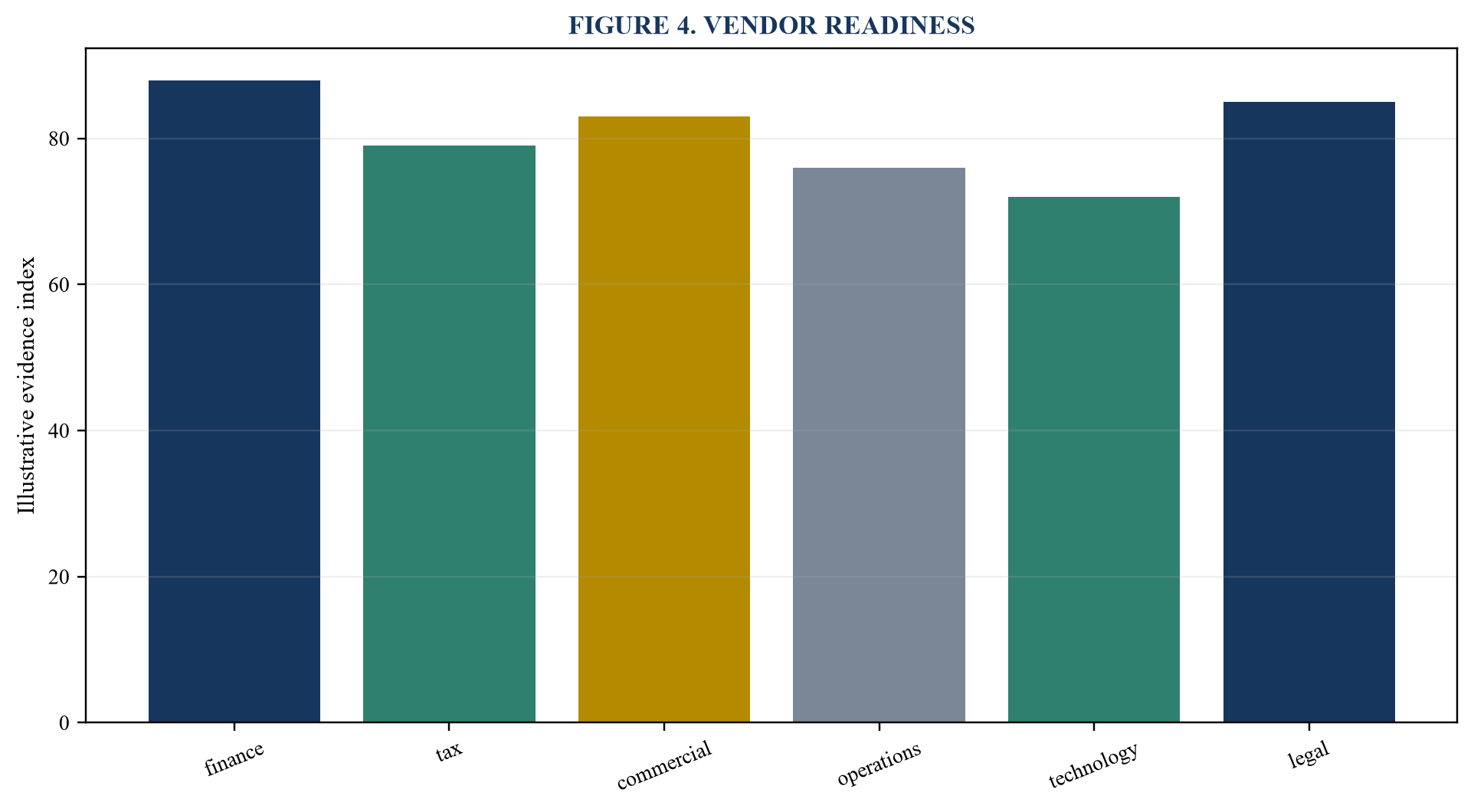
Values are illustrative evidence indices and require company-specific support.
33. Prepare management
Assign narrative ownership, rehearse evidence, anticipate challenge and govern updates.
The controlled record should identify the relevant customer, revenue stream, contract, cohort, relationship owner, commercial dependency, evidence source, baseline, trend, scenario, control, exception, accountable executive, deadline and approval. The immediate deliverable is a management presentation protocol.
The principal failure occurs when presentation coaching can cure weak evidence. Reviewers should connect the evidence to revenue durability, gross margin, cash conversion, renewal probability, switching behaviour, counterparty credit and transaction value; distinguish contractual protection from observed customer behaviour; and test whether the conclusion survives a downside scenario.
The decision pack for prepare management should state the commercial question, measurement perimeter, historical evidence, customer-specific facts, forecast logic, sensitivity, management action, buyer implication, residual uncertainty and next gate. Material exceptions should flow into the valuation model, quality-of-earnings work, diligence room, sale-process narrative, transaction protections and board reporting.
34. Control claims and disclosures
Maintain version, source, approval, materiality and consistency across outputs.
The controlled record should identify the relevant customer, revenue stream, contract, cohort, relationship owner, commercial dependency, evidence source, baseline, trend, scenario, control, exception, accountable executive, deadline and approval. The immediate deliverable is a disclosure control register.
The principal failure occurs when disclaimers cure inconsistent claims. Reviewers should connect the evidence to revenue durability, gross margin, cash conversion, renewal probability, switching behaviour, counterparty credit and transaction value; distinguish contractual protection from observed customer behaviour; and test whether the conclusion survives a downside scenario.
The decision pack for control claims and disclosures should state the commercial question, measurement perimeter, historical evidence, customer-specific facts, forecast logic, sensitivity, management action, buyer implication, residual uncertainty and next gate. Material exceptions should flow into the valuation model, quality-of-earnings work, diligence room, sale-process narrative, transaction protections and board reporting.
35. Run confirmatory readiness
Test financial ties, legal documents, contracts, systems, people and separation assumptions.
The controlled record should identify the relevant customer, revenue stream, contract, cohort, relationship owner, commercial dependency, evidence source, baseline, trend, scenario, control, exception, accountable executive, deadline and approval. The immediate deliverable is a confirmatory diligence pack.
The principal failure occurs when vendor reports eliminate confirmation risk. Reviewers should connect the evidence to revenue durability, gross margin, cash conversion, renewal probability, switching behaviour, counterparty credit and transaction value; distinguish contractual protection from observed customer behaviour; and test whether the conclusion survives a downside scenario.
The decision pack for run confirmatory readiness should state the commercial question, measurement perimeter, historical evidence, customer-specific facts, forecast logic, sensitivity, management action, buyer implication, residual uncertainty and next gate. Material exceptions should flow into the valuation model, quality-of-earnings work, diligence room, sale-process narrative, transaction protections and board reporting.
36. Link issues to protections
Translate residual uncertainty into price, structure, conditions, covenants and remedies.
The controlled record should identify the relevant customer, revenue stream, contract, cohort, relationship owner, commercial dependency, evidence source, baseline, trend, scenario, control, exception, accountable executive, deadline and approval. The immediate deliverable is an issue-to-protection matrix.
The principal failure occurs when every diligence issue requires an indemnity. Reviewers should connect the evidence to revenue durability, gross margin, cash conversion, renewal probability, switching behaviour, counterparty credit and transaction value; distinguish contractual protection from observed customer behaviour; and test whether the conclusion survives a downside scenario.
The decision pack for link issues to protections should state the commercial question, measurement perimeter, historical evidence, customer-specific facts, forecast logic, sensitivity, management action, buyer implication, residual uncertainty and next gate. Material exceptions should flow into the valuation model, quality-of-earnings work, diligence room, sale-process narrative, transaction protections and board reporting.
37. Govern interim performance
Track trading, cash, customers, people, capex, contracts and plan delivery during the process.
The controlled record should identify the relevant customer, revenue stream, contract, cohort, relationship owner, commercial dependency, evidence source, baseline, trend, scenario, control, exception, accountable executive, deadline and approval. The immediate deliverable is an interim performance dashboard.
The principal failure occurs when monthly accounts capture sale-period change. Reviewers should connect the evidence to revenue durability, gross margin, cash conversion, renewal probability, switching behaviour, counterparty credit and transaction value; distinguish contractual protection from observed customer behaviour; and test whether the conclusion survives a downside scenario.
The decision pack for govern interim performance should state the commercial question, measurement perimeter, historical evidence, customer-specific facts, forecast logic, sensitivity, management action, buyer implication, residual uncertainty and next gate. Material exceptions should flow into the valuation model, quality-of-earnings work, diligence room, sale-process narrative, transaction protections and board reporting.
38. Maintain competitive tension
Sequence access, questions, management and bids against comparable evidence.
The controlled record should identify the relevant customer, revenue stream, contract, cohort, relationship owner, commercial dependency, evidence source, baseline, trend, scenario, control, exception, accountable executive, deadline and approval. The immediate deliverable is a controlled auction architecture.
The principal failure occurs when more bidders always improve outcomes. Reviewers should connect the evidence to revenue durability, gross margin, cash conversion, renewal probability, switching behaviour, counterparty credit and transaction value; distinguish contractual protection from observed customer behaviour; and test whether the conclusion survives a downside scenario.
The decision pack for maintain competitive tension should state the commercial question, measurement perimeter, historical evidence, customer-specific facts, forecast logic, sensitivity, management action, buyer implication, residual uncertainty and next gate. Material exceptions should flow into the valuation model, quality-of-earnings work, diligence room, sale-process narrative, transaction protections and board reporting.
39. Prepare signing and closing
Coordinate approvals, financing, consents, separation, funds flow and readiness certificates.
The controlled record should identify the relevant customer, revenue stream, contract, cohort, relationship owner, commercial dependency, evidence source, baseline, trend, scenario, control, exception, accountable executive, deadline and approval. The immediate deliverable is a closing evidence pack.
The principal failure occurs when signing proves operational readiness. Reviewers should connect the evidence to revenue durability, gross margin, cash conversion, renewal probability, switching behaviour, counterparty credit and transaction value; distinguish contractual protection from observed customer behaviour; and test whether the conclusion survives a downside scenario.
The decision pack for prepare signing and closing should state the commercial question, measurement perimeter, historical evidence, customer-specific facts, forecast logic, sensitivity, management action, buyer implication, residual uncertainty and next gate. Material exceptions should flow into the valuation model, quality-of-earnings work, diligence room, sale-process narrative, transaction protections and board reporting.
40. Track post-close thesis delivery
Measure standalone cost, leakage, revenue, cash and value-creation milestones.
The controlled record should identify the relevant customer, revenue stream, contract, cohort, relationship owner, commercial dependency, evidence source, baseline, trend, scenario, control, exception, accountable executive, deadline and approval. The immediate deliverable is a thesis-realisation dashboard.
The principal failure occurs when transaction completion validates the equity story. Reviewers should connect the evidence to revenue durability, gross margin, cash conversion, renewal probability, switching behaviour, counterparty credit and transaction value; distinguish contractual protection from observed customer behaviour; and test whether the conclusion survives a downside scenario.
The decision pack for track post-close thesis delivery should state the commercial question, measurement perimeter, historical evidence, customer-specific facts, forecast logic, sensitivity, management action, buyer implication, residual uncertainty and next gate. Material exceptions should flow into the valuation model, quality-of-earnings work, diligence room, sale-process narrative, transaction protections and board reporting.
Table 5. Equity-story certificate
| Element | Proof | Decision |
|---|---|---|
| quality | auditable earnings | value range |
| independence | standalone plan | execution risk |
| growth | driver-based case | capital need |
| optionality | buyer and exit routes | process design |
Illustrative analytical design; company-specific evidence and professional advice govern.
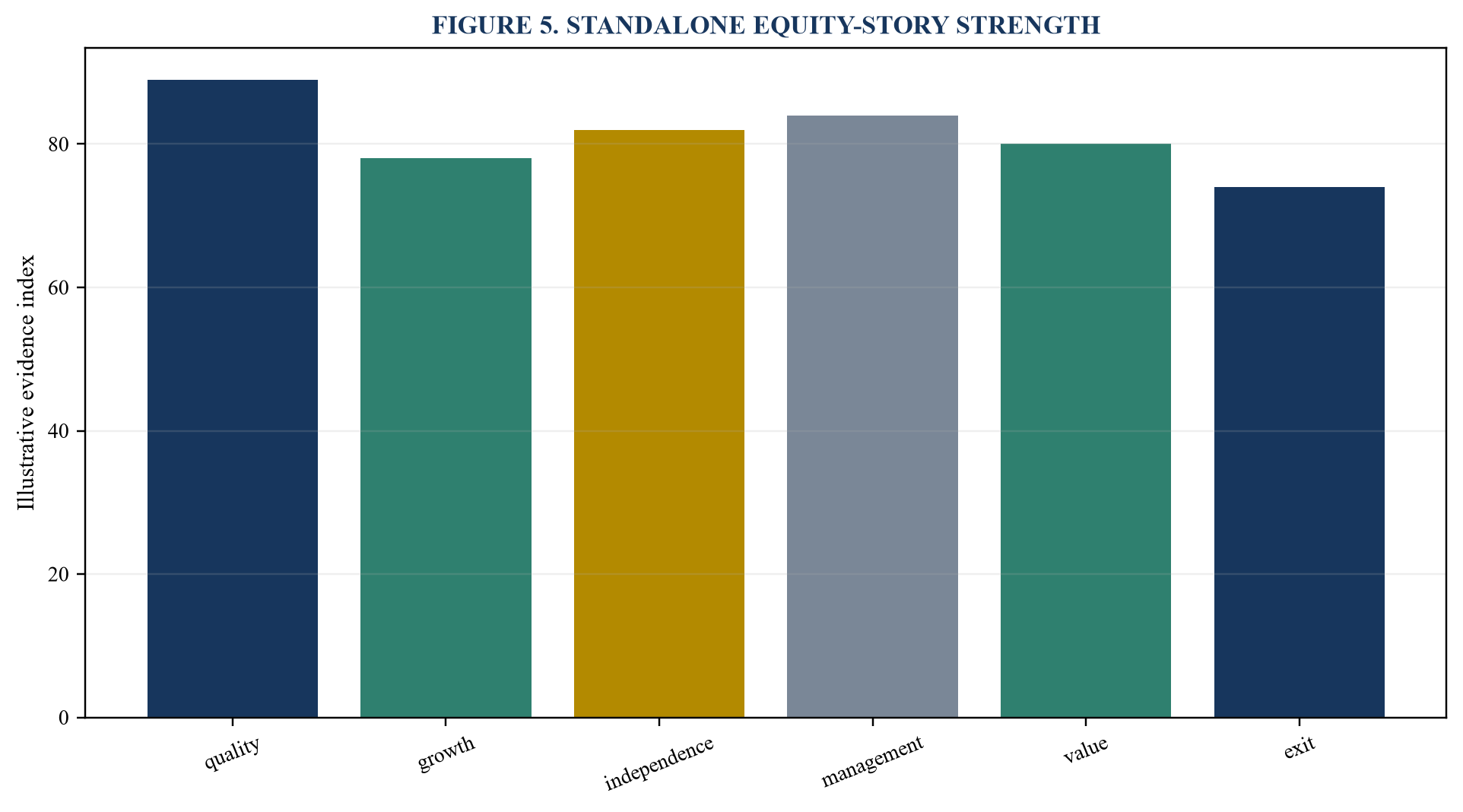
Values are illustrative evidence indices and require company-specific support.
References
- US Securities and Exchange Commission, Financial Reporting Manual Topic 2, https://www.sec.gov/corpfin/cf-manual/topic-2
- US Securities and Exchange Commission, Financial Reporting Manual Topic 3, https://www.sec.gov/about/divisions-offices/division-corporation-finance/financial-reporting-manual/frm-topic-3
- US Securities and Exchange Commission, Regulation S-X, https://www.ecfr.gov/current/title-17/chapter-II/part-210
- IFRS Foundation, IFRS 5 Non-current Assets Held for Sale and Discontinued Operations, https://www.ifrs.org/issued-standards/list-of-standards/ifrs-5-non-current-assets-held-for-sale-and-discontinued-operations/
- IFRS Foundation, IFRS 8 Operating Segments, https://www.ifrs.org/issued-standards/list-of-standards/ifrs-8-operating-segments/
- IFRS Foundation, IFRS 10 Consolidated Financial Statements, https://www.ifrs.org/issued-standards/list-of-standards/ifrs-10-consolidated-financial-statements/
- IFRS Foundation, IAS 27 Separate Financial Statements, https://www.ifrs.org/issued-standards/list-of-standards/ias-27-separate-financial-statements/
- IFRS Foundation, IFRS 18 Presentation and Disclosure in Financial Statements, https://www.ifrs.org/issued-standards/list-of-standards/ifrs-18-presentation-and-disclosure-in-financial-statements/
- IFRS Foundation, IFRS 3 Business Combinations, https://www.ifrs.org/issued-standards/list-of-standards/ifrs-3-business-combinations/
- IFRS Foundation, IFRS 15 Revenue from Contracts with Customers, https://www.ifrs.org/issued-standards/list-of-standards/ifrs-15-revenue-from-contracts-with-customers/
- IFRS Foundation, IAS 7 Statement of Cash Flows, https://www.ifrs.org/issued-standards/list-of-standards/ias-7-statement-of-cash-flows/
- IFRS Foundation, IAS 36 Impairment of Assets, https://www.ifrs.org/issued-standards/list-of-standards/ias-36-impairment-of-assets/
- International Valuation Standards Council, International Valuation Standards, https://ivsc.org/standards/
- International Valuation Standards Council, IVS 200 Businesses and Business Interests, https://ivsc.org/standards/
- International Auditing and Assurance Standards Board, International Standards on Auditing, https://www.iaasb.org/publications/2023-2024-handbook-international-quality-management-auditing-review-other-assurance-and-related-services
- PCAOB, Auditing Standards, https://pcaobus.org/oversight/standards/auditing-standards
- AICPA, Quality of Earnings, https://www.aicpa-cima.com/resources/landing/valuation-services
- OECD, Guidelines for Multinational Enterprises on Responsible Business Conduct, https://mneguidelines.oecd.org/mneguidelines/
- UK Competition and Markets Authority, Merger Assessment Guidelines, https://www.gov.uk/government/publications/merger-assessment-guidelines
- European Commission, EU Merger Regulation, https://competition-policy.ec.europa.eu/mergers/legislation_en
- COSO, Internal Control Integrated Framework, https://www.coso.org/internal-control
- International Organization for Standardization, ISO 31000 Risk Management, https://www.iso.org/iso-31000-risk-management.html
- International Organization for Standardization, ISO 22301 Business Continuity, https://www.iso.org/standard/75106.html
- International Organization for Standardization, ISO 9001 Quality Management, https://www.iso.org/iso-9001-quality-management.html
- Project Management Institute, The Standard for Program Management, https://www.pmi.org/standards/program-management
- Global Reporting Initiative, Standards, https://www.globalreporting.org/standards/
