

1. Define the protocol perimeter
The board and its advisers should identify every entity, director, shadow or de facto decision-maker, secured asset, guarantee, cash pool, material contract and proposed transaction. The controlled deliverable is a legal and economic perimeter map. Record the entity, decision, stakeholder, cash effect, valuation assumption, source, owner, evidence status and next review [1][2].
Reconcile accounts, bank statements, cash forecasts, debt documents, security records, guarantees, board materials, contracts, claims, operational data, valuation evidence and applicable law. Separate observed facts, binding rights, professional advice, forecasts, analytical scenarios and evidence gaps.
The principal governance risk is that a group-level discussion can obscure the duties, assets and creditors of the specific entity taking the decision. Quantify the effect on liquidity, value, creditor recoveries, transaction certainty, continuity, legal exposure and available time.
Translate the result into the board pack, conflicts register, alternatives analysis, transaction timetable, recovery model, authority record and execution dashboard. Refresh the evidence whenever cash, value, creditor conduct, financing terms or transaction probability changes, and obtain jurisdiction-specific professional advice.
2. Set objective escalation triggers
The board and its advisers should define liquidity, covenant, arrears, enforcement, going-concern, forecast, audit and stakeholder events that activate enhanced governance. The controlled deliverable is a board-approved trigger schedule. Record the entity, decision, stakeholder, cash effect, valuation assumption, source, owner, evidence status and next review [3][4].
Reconcile accounts, bank statements, cash forecasts, debt documents, security records, guarantees, board materials, contracts, claims, operational data, valuation evidence and applicable law. Separate observed facts, binding rights, professional advice, forecasts, analytical scenarios and evidence gaps.
The principal governance risk is that management can escalate too late because distress is treated as a label rather than a changing evidence state. Quantify the effect on liquidity, value, creditor recoveries, transaction certainty, continuity, legal exposure and available time.
Translate the result into the board pack, conflicts register, alternatives analysis, transaction timetable, recovery model, authority record and execution dashboard. Refresh the evidence whenever cash, value, creditor conduct, financing terms or transaction probability changes, and obtain jurisdiction-specific professional advice.
3. Establish the decision clock
The board and its advisers should map payroll, tax, debt service, supplier, licence, insurance, covenant, filing and court deadlines. The controlled deliverable is a critical-date register. Record the entity, decision, stakeholder, cash effect, valuation assumption, source, owner, evidence status and next review [5][6].
Reconcile accounts, bank statements, cash forecasts, debt documents, security records, guarantees, board materials, contracts, claims, operational data, valuation evidence and applicable law. Separate observed facts, binding rights, professional advice, forecasts, analytical scenarios and evidence gaps.
The principal governance risk is that the apparent option set can include transactions that cannot close before cash or legal deadlines. Quantify the effect on liquidity, value, creditor recoveries, transaction certainty, continuity, legal exposure and available time.
Translate the result into the board pack, conflicts register, alternatives analysis, transaction timetable, recovery model, authority record and execution dashboard. Refresh the evidence whenever cash, value, creditor conduct, financing terms or transaction probability changes, and obtain jurisdiction-specific professional advice.
4. Build the thirteen-week cash view
The board and its advisers should reconcile opening cash, restricted cash, receipts, disbursements, facility availability and downside sensitivities. The controlled deliverable is a controlled rolling liquidity forecast. Record the entity, decision, stakeholder, cash effect, valuation assumption, source, owner, evidence status and next review [7][8].
Reconcile accounts, bank statements, cash forecasts, debt documents, security records, guarantees, board materials, contracts, claims, operational data, valuation evidence and applicable law. Separate observed facts, binding rights, professional advice, forecasts, analytical scenarios and evidence gaps.
The principal governance risk is that unreconciled forecasts can conceal timing gaps, trapped cash and unsupported receipts. Quantify the effect on liquidity, value, creditor recoveries, transaction certainty, continuity, legal exposure and available time.
Translate the result into the board pack, conflicts register, alternatives analysis, transaction timetable, recovery model, authority record and execution dashboard. Refresh the evidence whenever cash, value, creditor conduct, financing terms or transaction probability changes, and obtain jurisdiction-specific professional advice.
5. Test cash-flow and balance-sheet conditions
The board and its advisers should assess due debts, contingent liabilities, asset values, funding access and forecast resilience under applicable law. The controlled deliverable is a dated solvency evidence memorandum. Record the entity, decision, stakeholder, cash effect, valuation assumption, source, owner, evidence status and next review [1][9].
Reconcile accounts, bank statements, cash forecasts, debt documents, security records, guarantees, board materials, contracts, claims, operational data, valuation evidence and applicable law. Separate observed facts, binding rights, professional advice, forecasts, analytical scenarios and evidence gaps.
The principal governance risk is that one accounting balance sheet can be mistaken for a complete legal and commercial solvency assessment. Quantify the effect on liquidity, value, creditor recoveries, transaction certainty, continuity, legal exposure and available time.
Translate the result into the board pack, conflicts register, alternatives analysis, transaction timetable, recovery model, authority record and execution dashboard. Refresh the evidence whenever cash, value, creditor conduct, financing terms or transaction probability changes, and obtain jurisdiction-specific professional advice.
6. Map the capital and security structure
The board and its advisers should record claims, ranking, security, guarantees, intercreditor terms, set-off, retention of title and structural priority. The controlled deliverable is a creditor waterfall map. Record the entity, decision, stakeholder, cash effect, valuation assumption, source, owner, evidence status and next review [10][11].
Reconcile accounts, bank statements, cash forecasts, debt documents, security records, guarantees, board materials, contracts, claims, operational data, valuation evidence and applicable law. Separate observed facts, binding rights, professional advice, forecasts, analytical scenarios and evidence gaps.
The principal governance risk is that stakeholder negotiations can proceed on an incorrect understanding of control and recoveries. Quantify the effect on liquidity, value, creditor recoveries, transaction certainty, continuity, legal exposure and available time.
Translate the result into the board pack, conflicts register, alternatives analysis, transaction timetable, recovery model, authority record and execution dashboard. Refresh the evidence whenever cash, value, creditor conduct, financing terms or transaction probability changes, and obtain jurisdiction-specific professional advice.
7. Identify the fulcrum security
The board and its advisers should estimate which creditor class controls economic value across credible enterprise-value cases. The controlled deliverable is a fulcrum sensitivity analysis. Record the entity, decision, stakeholder, cash effect, valuation assumption, source, owner, evidence status and next review [12][13].
Reconcile accounts, bank statements, cash forecasts, debt documents, security records, guarantees, board materials, contracts, claims, operational data, valuation evidence and applicable law. Separate observed facts, binding rights, professional advice, forecasts, analytical scenarios and evidence gaps.
The principal governance risk is that equity or junior creditors can drive strategy despite lacking economic value in realistic outcomes. Quantify the effect on liquidity, value, creditor recoveries, transaction certainty, continuity, legal exposure and available time.
Translate the result into the board pack, conflicts register, alternatives analysis, transaction timetable, recovery model, authority record and execution dashboard. Refresh the evidence whenever cash, value, creditor conduct, financing terms or transaction probability changes, and obtain jurisdiction-specific professional advice.
8. Define creditor-interest governance
The board and its advisers should state how creditor interests enter the board process as distress deepens and preserve jurisdiction-specific legal advice. The controlled deliverable is a creditor-interest protocol. Record the entity, decision, stakeholder, cash effect, valuation assumption, source, owner, evidence status and next review [2][14].
Reconcile accounts, bank statements, cash forecasts, debt documents, security records, guarantees, board materials, contracts, claims, operational data, valuation evidence and applicable law. Separate observed facts, binding rights, professional advice, forecasts, analytical scenarios and evidence gaps.
The principal governance risk is that directors can continue applying a shareholder-only decision lens after the relevant legal and economic conditions change. Quantify the effect on liquidity, value, creditor recoveries, transaction certainty, continuity, legal exposure and available time.
Translate the result into the board pack, conflicts register, alternatives analysis, transaction timetable, recovery model, authority record and execution dashboard. Refresh the evidence whenever cash, value, creditor conduct, financing terms or transaction probability changes, and obtain jurisdiction-specific professional advice.
Table 1. Escalation and governance states
| State | Evidence | Board response |
|---|---|---|
| watch | forecast pressure | monthly review |
| heightened | covenant or cash trigger | weekly protocol |
| critical | short runway | independent forum |
| formal | process commenced | office-holder interface |
Statutory periods are stated where labelled; other entries are analytical controls.
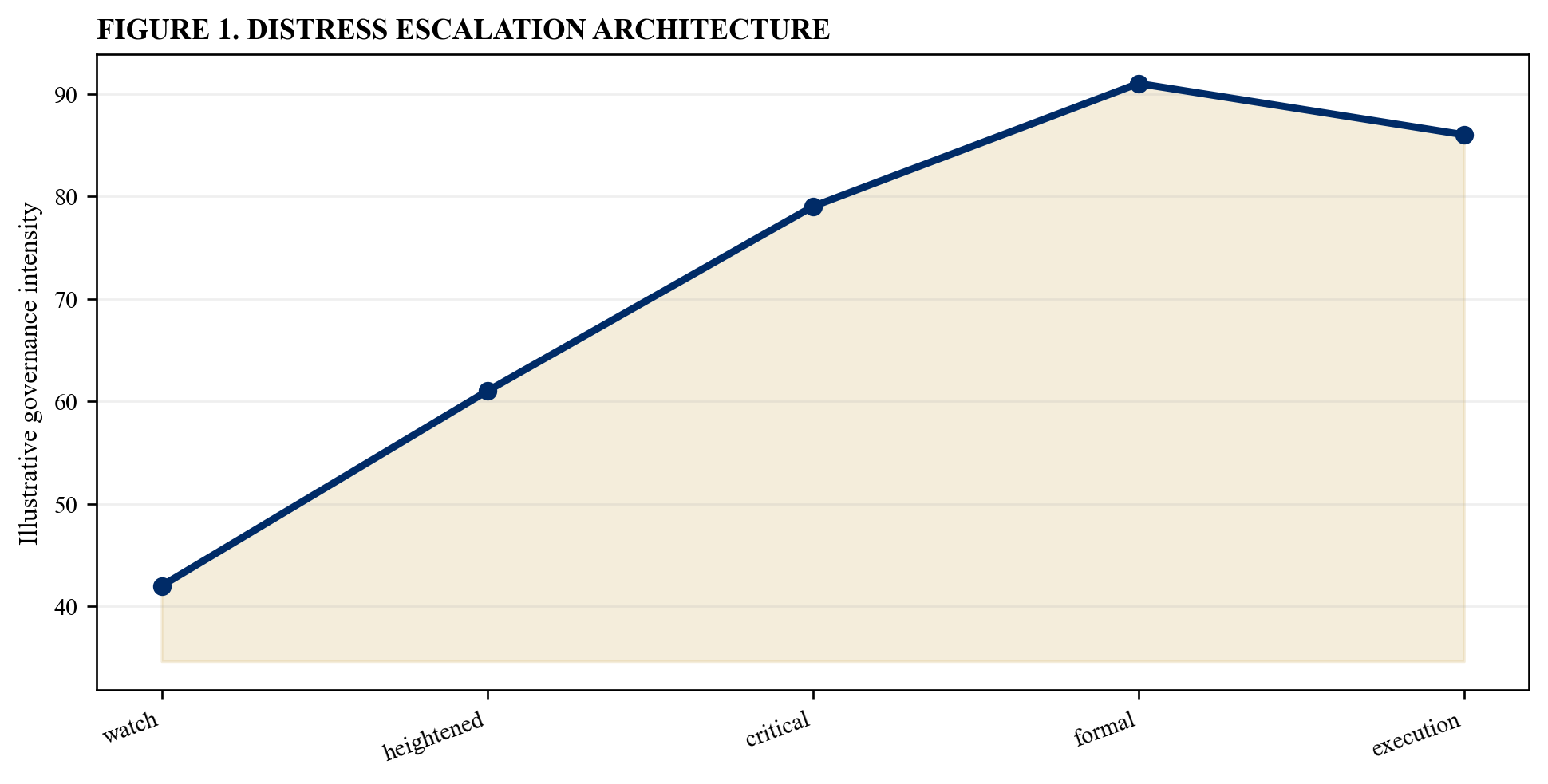
Illustrative analytical scenario; transaction evidence should replace model values.
9. Create the board information pack
The board and its advisers should standardise liquidity, trading, covenant, creditor, value, options, conflicts, execution and risk evidence for each decision. The controlled deliverable is a recurring distress board pack. Record the entity, decision, stakeholder, cash effect, valuation assumption, source, owner, evidence status and next review [3][15].
Reconcile accounts, bank statements, cash forecasts, debt documents, security records, guarantees, board materials, contracts, claims, operational data, valuation evidence and applicable law. Separate observed facts, binding rights, professional advice, forecasts, analytical scenarios and evidence gaps.
The principal governance risk is that directors can receive narrative reassurance without the information needed for independent judgment. Quantify the effect on liquidity, value, creditor recoveries, transaction certainty, continuity, legal exposure and available time.
Translate the result into the board pack, conflicts register, alternatives analysis, transaction timetable, recovery model, authority record and execution dashboard. Refresh the evidence whenever cash, value, creditor conduct, financing terms or transaction probability changes, and obtain jurisdiction-specific professional advice.
10. Set meeting and minute discipline
The board and its advisers should schedule meetings around triggers, circulate controlled papers, record attendance, advice, challenges, recusals, decisions and reasons. The controlled deliverable is a contemporaneous minute standard. Record the entity, decision, stakeholder, cash effect, valuation assumption, source, owner, evidence status and next review [16][17].
Reconcile accounts, bank statements, cash forecasts, debt documents, security records, guarantees, board materials, contracts, claims, operational data, valuation evidence and applicable law. Separate observed facts, binding rights, professional advice, forecasts, analytical scenarios and evidence gaps.
The principal governance risk is that retrospective notes can fail to demonstrate what evidence the board actually considered. Quantify the effect on liquidity, value, creditor recoveries, transaction certainty, continuity, legal exposure and available time.
Translate the result into the board pack, conflicts register, alternatives analysis, transaction timetable, recovery model, authority record and execution dashboard. Refresh the evidence whenever cash, value, creditor conduct, financing terms or transaction probability changes, and obtain jurisdiction-specific professional advice.
11. Map actual and perceived conflicts
The board and its advisers should capture shareholder, lender, guarantee, employment, incentive, related-party, buyer, adviser and information conflicts. The controlled deliverable is a conflicts register. Record the entity, decision, stakeholder, cash effect, valuation assumption, source, owner, evidence status and next review [18][19].
Reconcile accounts, bank statements, cash forecasts, debt documents, security records, guarantees, board materials, contracts, claims, operational data, valuation evidence and applicable law. Separate observed facts, binding rights, professional advice, forecasts, analytical scenarios and evidence gaps.
The principal governance risk is that economic exposure can shape recommendations without transparent board scrutiny. Quantify the effect on liquidity, value, creditor recoveries, transaction certainty, continuity, legal exposure and available time.
Translate the result into the board pack, conflicts register, alternatives analysis, transaction timetable, recovery model, authority record and execution dashboard. Refresh the evidence whenever cash, value, creditor conduct, financing terms or transaction probability changes, and obtain jurisdiction-specific professional advice.
12. Classify conflict responses
The board and its advisers should choose disclosure, monitoring, independent verification, recusal, committee delegation, information barrier or external approval. The controlled deliverable is a conflict-treatment matrix. Record the entity, decision, stakeholder, cash effect, valuation assumption, source, owner, evidence status and next review [18][20].
Reconcile accounts, bank statements, cash forecasts, debt documents, security records, guarantees, board materials, contracts, claims, operational data, valuation evidence and applicable law. Separate observed facts, binding rights, professional advice, forecasts, analytical scenarios and evidence gaps.
The principal governance risk is that every conflict can be treated alike even though severity and available safeguards differ. Quantify the effect on liquidity, value, creditor recoveries, transaction certainty, continuity, legal exposure and available time.
Translate the result into the board pack, conflicts register, alternatives analysis, transaction timetable, recovery model, authority record and execution dashboard. Refresh the evidence whenever cash, value, creditor conduct, financing terms or transaction probability changes, and obtain jurisdiction-specific professional advice.
13. Constitute an independent decision forum
The board and its advisers should define membership, mandate, information rights, adviser access, quorum, authority and reporting. The controlled deliverable is an independent committee charter. Record the entity, decision, stakeholder, cash effect, valuation assumption, source, owner, evidence status and next review [21][22].
Reconcile accounts, bank statements, cash forecasts, debt documents, security records, guarantees, board materials, contracts, claims, operational data, valuation evidence and applicable law. Separate observed facts, binding rights, professional advice, forecasts, analytical scenarios and evidence gaps.
The principal governance risk is that a committee can exist in name while conflicted parties still control its evidence, advisers or timetable. Quantify the effect on liquidity, value, creditor recoveries, transaction certainty, continuity, legal exposure and available time.
Translate the result into the board pack, conflicts register, alternatives analysis, transaction timetable, recovery model, authority record and execution dashboard. Refresh the evidence whenever cash, value, creditor conduct, financing terms or transaction probability changes, and obtain jurisdiction-specific professional advice.
14. Control adviser mandates
The board and its advisers should document client identity, scope, reliance, privilege, conflicts, fee structure, success economics and termination rights. The controlled deliverable is an adviser engagement map. Record the entity, decision, stakeholder, cash effect, valuation assumption, source, owner, evidence status and next review [23][24].
Reconcile accounts, bank statements, cash forecasts, debt documents, security records, guarantees, board materials, contracts, claims, operational data, valuation evidence and applicable law. Separate observed facts, binding rights, professional advice, forecasts, analytical scenarios and evidence gaps.
The principal governance risk is that advisers can appear independent while incentives or instructions narrow the option set. Quantify the effect on liquidity, value, creditor recoveries, transaction certainty, continuity, legal exposure and available time.
Translate the result into the board pack, conflicts register, alternatives analysis, transaction timetable, recovery model, authority record and execution dashboard. Refresh the evidence whenever cash, value, creditor conduct, financing terms or transaction probability changes, and obtain jurisdiction-specific professional advice.
15. Protect legal privilege and record integrity
The board and its advisers should classify legal advice, commercial work product, board records and disclosure channels under applicable law. The controlled deliverable is an information-handling protocol. Record the entity, decision, stakeholder, cash effect, valuation assumption, source, owner, evidence status and next review [25][26].
Reconcile accounts, bank statements, cash forecasts, debt documents, security records, guarantees, board materials, contracts, claims, operational data, valuation evidence and applicable law. Separate observed facts, binding rights, professional advice, forecasts, analytical scenarios and evidence gaps.
The principal governance risk is that sensitive analysis can be distributed casually or key commercial evidence can be withheld under an overbroad privilege claim. Quantify the effect on liquidity, value, creditor recoveries, transaction certainty, continuity, legal exposure and available time.
Translate the result into the board pack, conflicts register, alternatives analysis, transaction timetable, recovery model, authority record and execution dashboard. Refresh the evidence whenever cash, value, creditor conduct, financing terms or transaction probability changes, and obtain jurisdiction-specific professional advice.
16. Preserve books, data and communications
The board and its advisers should issue proportionate retention instructions and secure financial, operational, transaction and messaging records. The controlled deliverable is an evidence-preservation plan. Record the entity, decision, stakeholder, cash effect, valuation assumption, source, owner, evidence status and next review [27][28].
Reconcile accounts, bank statements, cash forecasts, debt documents, security records, guarantees, board materials, contracts, claims, operational data, valuation evidence and applicable law. Separate observed facts, binding rights, professional advice, forecasts, analytical scenarios and evidence gaps.
The principal governance risk is that records needed to explain decisions, value movements or related-party dealings can be lost. Quantify the effect on liquidity, value, creditor recoveries, transaction certainty, continuity, legal exposure and available time.
Translate the result into the board pack, conflicts register, alternatives analysis, transaction timetable, recovery model, authority record and execution dashboard. Refresh the evidence whenever cash, value, creditor conduct, financing terms or transaction probability changes, and obtain jurisdiction-specific professional advice.
Table 2. Conflict treatment
| Conflict | Control | Evidence |
|---|---|---|
| shareholder | recusal | minutes |
| guarantee | independent advice | opinion |
| buyer link | information barrier | access log |
| fee incentive | scope review | engagement letter |
Statutory periods are stated where labelled; other entries are analytical controls.
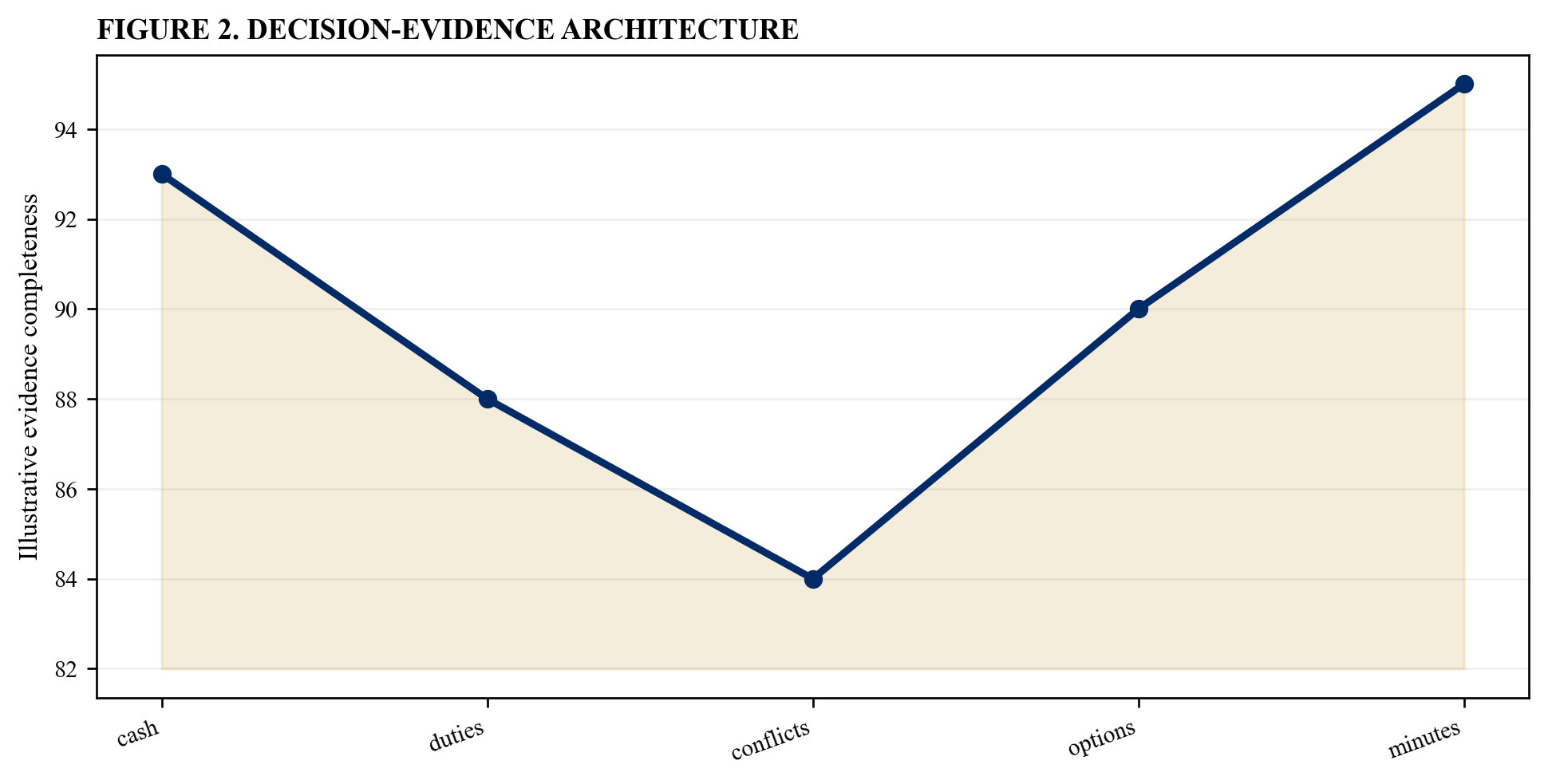
Illustrative analytical scenario; transaction evidence should replace model values.
17. Define the baseline counterfactual
The board and its advisers should model the most likely outcome without the proposed transaction, including administration, liquidation, enforcement or continued trading. The controlled deliverable is a documented relevant-alternative case. Record the entity, decision, stakeholder, cash effect, valuation assumption, source, owner, evidence status and next review [29][30].
Reconcile accounts, bank statements, cash forecasts, debt documents, security records, guarantees, board materials, contracts, claims, operational data, valuation evidence and applicable law. Separate observed facts, binding rights, professional advice, forecasts, analytical scenarios and evidence gaps.
The principal governance risk is that a proposal can be called value-maximising without a credible comparator. Quantify the effect on liquidity, value, creditor recoveries, transaction certainty, continuity, legal exposure and available time.
Translate the result into the board pack, conflicts register, alternatives analysis, transaction timetable, recovery model, authority record and execution dashboard. Refresh the evidence whenever cash, value, creditor conduct, financing terms or transaction probability changes, and obtain jurisdiction-specific professional advice.
18. Build the complete option set
The board and its advisers should evaluate consensual amendment, waiver, new money, equity, asset sale, business sale, plan, administration and orderly wind-down. The controlled deliverable is an alternatives register. Record the entity, decision, stakeholder, cash effect, valuation assumption, source, owner, evidence status and next review [31][32].
Reconcile accounts, bank statements, cash forecasts, debt documents, security records, guarantees, board materials, contracts, claims, operational data, valuation evidence and applicable law. Separate observed facts, binding rights, professional advice, forecasts, analytical scenarios and evidence gaps.
The principal governance risk is that favoured solutions can crowd out feasible paths that preserve more value or optionality. Quantify the effect on liquidity, value, creditor recoveries, transaction certainty, continuity, legal exposure and available time.
Translate the result into the board pack, conflicts register, alternatives analysis, transaction timetable, recovery model, authority record and execution dashboard. Refresh the evidence whenever cash, value, creditor conduct, financing terms or transaction probability changes, and obtain jurisdiction-specific professional advice.
19. Set option-screening criteria
The board and its advisers should score liquidity runway, recoveries, certainty, timing, cost, control, operations, employees, customers and challenge risk. The controlled deliverable is a weighted option screen. Record the entity, decision, stakeholder, cash effect, valuation assumption, source, owner, evidence status and next review [33][34].
Reconcile accounts, bank statements, cash forecasts, debt documents, security records, guarantees, board materials, contracts, claims, operational data, valuation evidence and applicable law. Separate observed facts, binding rights, professional advice, forecasts, analytical scenarios and evidence gaps.
The principal governance risk is that speed can dominate recovery, or theoretical value can dominate executable timing. Quantify the effect on liquidity, value, creditor recoveries, transaction certainty, continuity, legal exposure and available time.
Translate the result into the board pack, conflicts register, alternatives analysis, transaction timetable, recovery model, authority record and execution dashboard. Refresh the evidence whenever cash, value, creditor conduct, financing terms or transaction probability changes, and obtain jurisdiction-specific professional advice.
20. Commission independent valuation
The board and its advisers should define valuation date, premise, scenarios, methods, information limits, sensitivities and standards. The controlled deliverable is an independent value range. Record the entity, decision, stakeholder, cash effect, valuation assumption, source, owner, evidence status and next review [35][36].
Reconcile accounts, bank statements, cash forecasts, debt documents, security records, guarantees, board materials, contracts, claims, operational data, valuation evidence and applicable law. Separate observed facts, binding rights, professional advice, forecasts, analytical scenarios and evidence gaps.
The principal governance risk is that a single-point valuation can disguise uncertainty and determine stakeholder outcomes without adequate challenge. Quantify the effect on liquidity, value, creditor recoveries, transaction certainty, continuity, legal exposure and available time.
Translate the result into the board pack, conflicts register, alternatives analysis, transaction timetable, recovery model, authority record and execution dashboard. Refresh the evidence whenever cash, value, creditor conduct, financing terms or transaction probability changes, and obtain jurisdiction-specific professional advice.
21. Reconcile enterprise and liquidation value
The board and its advisers should bridge going-concern, orderly-sale and forced-sale assumptions to cash, debt and stakeholder recoveries. The controlled deliverable is a valuation-to-waterfall bridge. Record the entity, decision, stakeholder, cash effect, valuation assumption, source, owner, evidence status and next review [35][37].
Reconcile accounts, bank statements, cash forecasts, debt documents, security records, guarantees, board materials, contracts, claims, operational data, valuation evidence and applicable law. Separate observed facts, binding rights, professional advice, forecasts, analytical scenarios and evidence gaps.
The principal governance risk is that headline enterprise value can be confused with distributable proceeds. Quantify the effect on liquidity, value, creditor recoveries, transaction certainty, continuity, legal exposure and available time.
Translate the result into the board pack, conflicts register, alternatives analysis, transaction timetable, recovery model, authority record and execution dashboard. Refresh the evidence whenever cash, value, creditor conduct, financing terms or transaction probability changes, and obtain jurisdiction-specific professional advice.
22. Test new-money necessity
The board and its advisers should verify use of funds, quantum, priority, milestones, pricing, security, control rights and alternative sources. The controlled deliverable is a rescue-finance necessity paper. Record the entity, decision, stakeholder, cash effect, valuation assumption, source, owner, evidence status and next review [38][39].
Reconcile accounts, bank statements, cash forecasts, debt documents, security records, guarantees, board materials, contracts, claims, operational data, valuation evidence and applicable law. Separate observed facts, binding rights, professional advice, forecasts, analytical scenarios and evidence gaps.
The principal governance risk is that emergency funding can transfer value or control beyond what the liquidity need supports. Quantify the effect on liquidity, value, creditor recoveries, transaction certainty, continuity, legal exposure and available time.
Translate the result into the board pack, conflicts register, alternatives analysis, transaction timetable, recovery model, authority record and execution dashboard. Refresh the evidence whenever cash, value, creditor conduct, financing terms or transaction probability changes, and obtain jurisdiction-specific professional advice.
23. Assess transaction-at-undervalue risk
The board and its advisers should compare consideration, market evidence, transaction benefits, liabilities assumed and available alternatives. The controlled deliverable is an undervalue assessment. Record the entity, decision, stakeholder, cash effect, valuation assumption, source, owner, evidence status and next review [40][41].
Reconcile accounts, bank statements, cash forecasts, debt documents, security records, guarantees, board materials, contracts, claims, operational data, valuation evidence and applicable law. Separate observed facts, binding rights, professional advice, forecasts, analytical scenarios and evidence gaps.
The principal governance risk is that non-cash benefits or assumed liabilities can be asserted without reliable measurement. Quantify the effect on liquidity, value, creditor recoveries, transaction certainty, continuity, legal exposure and available time.
Translate the result into the board pack, conflicts register, alternatives analysis, transaction timetable, recovery model, authority record and execution dashboard. Refresh the evidence whenever cash, value, creditor conduct, financing terms or transaction probability changes, and obtain jurisdiction-specific professional advice.
24. Assess preference and priority effects
The board and its advisers should trace how payments, security, guarantees, set-off and releases change each creditor position. The controlled deliverable is a preference-effects schedule. Record the entity, decision, stakeholder, cash effect, valuation assumption, source, owner, evidence status and next review [41][42].
Reconcile accounts, bank statements, cash forecasts, debt documents, security records, guarantees, board materials, contracts, claims, operational data, valuation evidence and applicable law. Separate observed facts, binding rights, professional advice, forecasts, analytical scenarios and evidence gaps.
The principal governance risk is that selective actions can improve one stakeholder at the expense of the creditor body. Quantify the effect on liquidity, value, creditor recoveries, transaction certainty, continuity, legal exposure and available time.
Translate the result into the board pack, conflicts register, alternatives analysis, transaction timetable, recovery model, authority record and execution dashboard. Refresh the evidence whenever cash, value, creditor conduct, financing terms or transaction probability changes, and obtain jurisdiction-specific professional advice.
Table 3. Illustrative creditor effects
| Action | Senior | Junior |
|---|---|---|
| new priority money | protected | diluted |
| secured sale | repaid | residual |
| selective payment | favoured | worse |
| standstill | time gained | option preserved |
Statutory periods are stated where labelled; other entries are analytical controls.
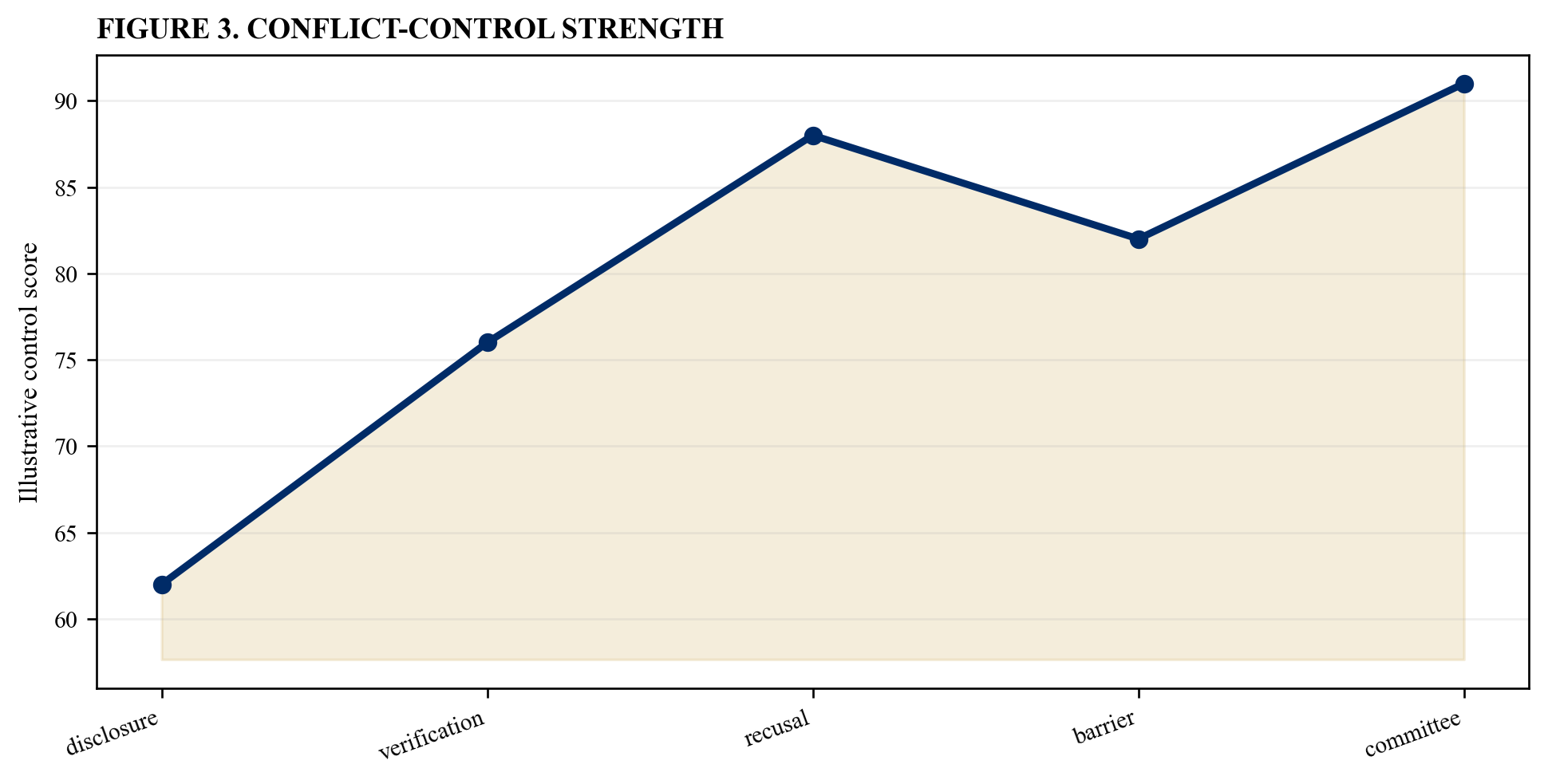
Illustrative analytical scenario; transaction evidence should replace model values.
25. Govern related-party transactions
The board and its advisers should identify connections, require independent evidence, exclude conflicted influence and test market terms. The controlled deliverable is a related-party approval protocol. Record the entity, decision, stakeholder, cash effect, valuation assumption, source, owner, evidence status and next review [43][44].
Reconcile accounts, bank statements, cash forecasts, debt documents, security records, guarantees, board materials, contracts, claims, operational data, valuation evidence and applicable law. Separate observed facts, binding rights, professional advice, forecasts, analytical scenarios and evidence gaps.
The principal governance risk is that insiders can obtain assets, releases or control through a compressed process. Quantify the effect on liquidity, value, creditor recoveries, transaction certainty, continuity, legal exposure and available time.
Translate the result into the board pack, conflicts register, alternatives analysis, transaction timetable, recovery model, authority record and execution dashboard. Refresh the evidence whenever cash, value, creditor conduct, financing terms or transaction probability changes, and obtain jurisdiction-specific professional advice.
26. Design the market test
The board and its advisers should choose auction, targeted process, pre-pack preparation, stalking-horse or bilateral route against runway and confidentiality. The controlled deliverable is a market-testing memorandum. Record the entity, decision, stakeholder, cash effect, valuation assumption, source, owner, evidence status and next review [45][46].
Reconcile accounts, bank statements, cash forecasts, debt documents, security records, guarantees, board materials, contracts, claims, operational data, valuation evidence and applicable law. Separate observed facts, binding rights, professional advice, forecasts, analytical scenarios and evidence gaps.
The principal governance risk is that a narrow process can reduce value while a broad process can exhaust liquidity or damage operations. Quantify the effect on liquidity, value, creditor recoveries, transaction certainty, continuity, legal exposure and available time.
Translate the result into the board pack, conflicts register, alternatives analysis, transaction timetable, recovery model, authority record and execution dashboard. Refresh the evidence whenever cash, value, creditor conduct, financing terms or transaction probability changes, and obtain jurisdiction-specific professional advice.
27. Set bidder access rules
The board and its advisers should define qualification, deposits, data access, clean teams, management contact, financing proof and deadlines. The controlled deliverable is a bidder protocol. Record the entity, decision, stakeholder, cash effect, valuation assumption, source, owner, evidence status and next review [47][48].
Reconcile accounts, bank statements, cash forecasts, debt documents, security records, guarantees, board materials, contracts, claims, operational data, valuation evidence and applicable law. Separate observed facts, binding rights, professional advice, forecasts, analytical scenarios and evidence gaps.
The principal governance risk is that favoured bidders can receive information or process advantages that weaken comparability. Quantify the effect on liquidity, value, creditor recoveries, transaction certainty, continuity, legal exposure and available time.
Translate the result into the board pack, conflicts register, alternatives analysis, transaction timetable, recovery model, authority record and execution dashboard. Refresh the evidence whenever cash, value, creditor conduct, financing terms or transaction probability changes, and obtain jurisdiction-specific professional advice.
28. Build the transaction data room
The board and its advisers should organise financial, legal, operational, tax, employee, regulatory, technology and asset evidence with change control. The controlled deliverable is a distress-ready data room. Record the entity, decision, stakeholder, cash effect, valuation assumption, source, owner, evidence status and next review [49][50].
Reconcile accounts, bank statements, cash forecasts, debt documents, security records, guarantees, board materials, contracts, claims, operational data, valuation evidence and applicable law. Separate observed facts, binding rights, professional advice, forecasts, analytical scenarios and evidence gaps.
The principal governance risk is that buyers can price uncertainty aggressively when evidence is incomplete or inconsistent. Quantify the effect on liquidity, value, creditor recoveries, transaction certainty, continuity, legal exposure and available time.
Translate the result into the board pack, conflicts register, alternatives analysis, transaction timetable, recovery model, authority record and execution dashboard. Refresh the evidence whenever cash, value, creditor conduct, financing terms or transaction probability changes, and obtain jurisdiction-specific professional advice.
29. Control cash leakage during the process
The board and its advisers should approve payments, inventory, capex, bonuses, intercompany transfers, asset movements and unusual commitments. The controlled deliverable is a cash-and-value protection schedule. Record the entity, decision, stakeholder, cash effect, valuation assumption, source, owner, evidence status and next review [7][51].
Reconcile accounts, bank statements, cash forecasts, debt documents, security records, guarantees, board materials, contracts, claims, operational data, valuation evidence and applicable law. Separate observed facts, binding rights, professional advice, forecasts, analytical scenarios and evidence gaps.
The principal governance risk is that value can leave the estate while advisers focus on the headline transaction. Quantify the effect on liquidity, value, creditor recoveries, transaction certainty, continuity, legal exposure and available time.
Translate the result into the board pack, conflicts register, alternatives analysis, transaction timetable, recovery model, authority record and execution dashboard. Refresh the evidence whenever cash, value, creditor conduct, financing terms or transaction probability changes, and obtain jurisdiction-specific professional advice.
30. Protect business continuity
The board and its advisers should identify critical people, suppliers, licences, systems, utilities, insurance, customers and working-capital dependencies. The controlled deliverable is a continuity plan. Record the entity, decision, stakeholder, cash effect, valuation assumption, source, owner, evidence status and next review [52][53].
Reconcile accounts, bank statements, cash forecasts, debt documents, security records, guarantees, board materials, contracts, claims, operational data, valuation evidence and applicable law. Separate observed facts, binding rights, professional advice, forecasts, analytical scenarios and evidence gaps.
The principal governance risk is that the business can lose going-concern value before a transaction closes. Quantify the effect on liquidity, value, creditor recoveries, transaction certainty, continuity, legal exposure and available time.
Translate the result into the board pack, conflicts register, alternatives analysis, transaction timetable, recovery model, authority record and execution dashboard. Refresh the evidence whenever cash, value, creditor conduct, financing terms or transaction probability changes, and obtain jurisdiction-specific professional advice.
31. Model stakeholder recoveries
The board and its advisers should calculate distributions by class under each option, valuation case, cost estimate and timing assumption. The controlled deliverable is a comparative recovery matrix. Record the entity, decision, stakeholder, cash effect, valuation assumption, source, owner, evidence status and next review [12][37].
Reconcile accounts, bank statements, cash forecasts, debt documents, security records, guarantees, board materials, contracts, claims, operational data, valuation evidence and applicable law. Separate observed facts, binding rights, professional advice, forecasts, analytical scenarios and evidence gaps.
The principal governance risk is that stakeholders can negotiate using inconsistent recovery assumptions. Quantify the effect on liquidity, value, creditor recoveries, transaction certainty, continuity, legal exposure and available time.
Translate the result into the board pack, conflicts register, alternatives analysis, transaction timetable, recovery model, authority record and execution dashboard. Refresh the evidence whenever cash, value, creditor conduct, financing terms or transaction probability changes, and obtain jurisdiction-specific professional advice.
32. Test class formation and voting
The board and its advisers should map rights, interests, treatment, thresholds and dissent scenarios for the selected restructuring route. The controlled deliverable is a class-and-vote analysis. Record the entity, decision, stakeholder, cash effect, valuation assumption, source, owner, evidence status and next review [29][54].
Reconcile accounts, bank statements, cash forecasts, debt documents, security records, guarantees, board materials, contracts, claims, operational data, valuation evidence and applicable law. Separate observed facts, binding rights, professional advice, forecasts, analytical scenarios and evidence gaps.
The principal governance risk is that a plan can fail because legal rights or economic interests were grouped incorrectly. Quantify the effect on liquidity, value, creditor recoveries, transaction certainty, continuity, legal exposure and available time.
Translate the result into the board pack, conflicts register, alternatives analysis, transaction timetable, recovery model, authority record and execution dashboard. Refresh the evidence whenever cash, value, creditor conduct, financing terms or transaction probability changes, and obtain jurisdiction-specific professional advice.
Table 4. Illustrative recovery comparison
| Option | Recovery AED m | Certainty |
|---|---|---|
| consensual rescue | 132 | medium |
| going-concern sale | 124 | high |
| restructuring plan | 141 | medium |
| liquidation | 78 | high |
Statutory periods are stated where labelled; other entries are analytical controls.
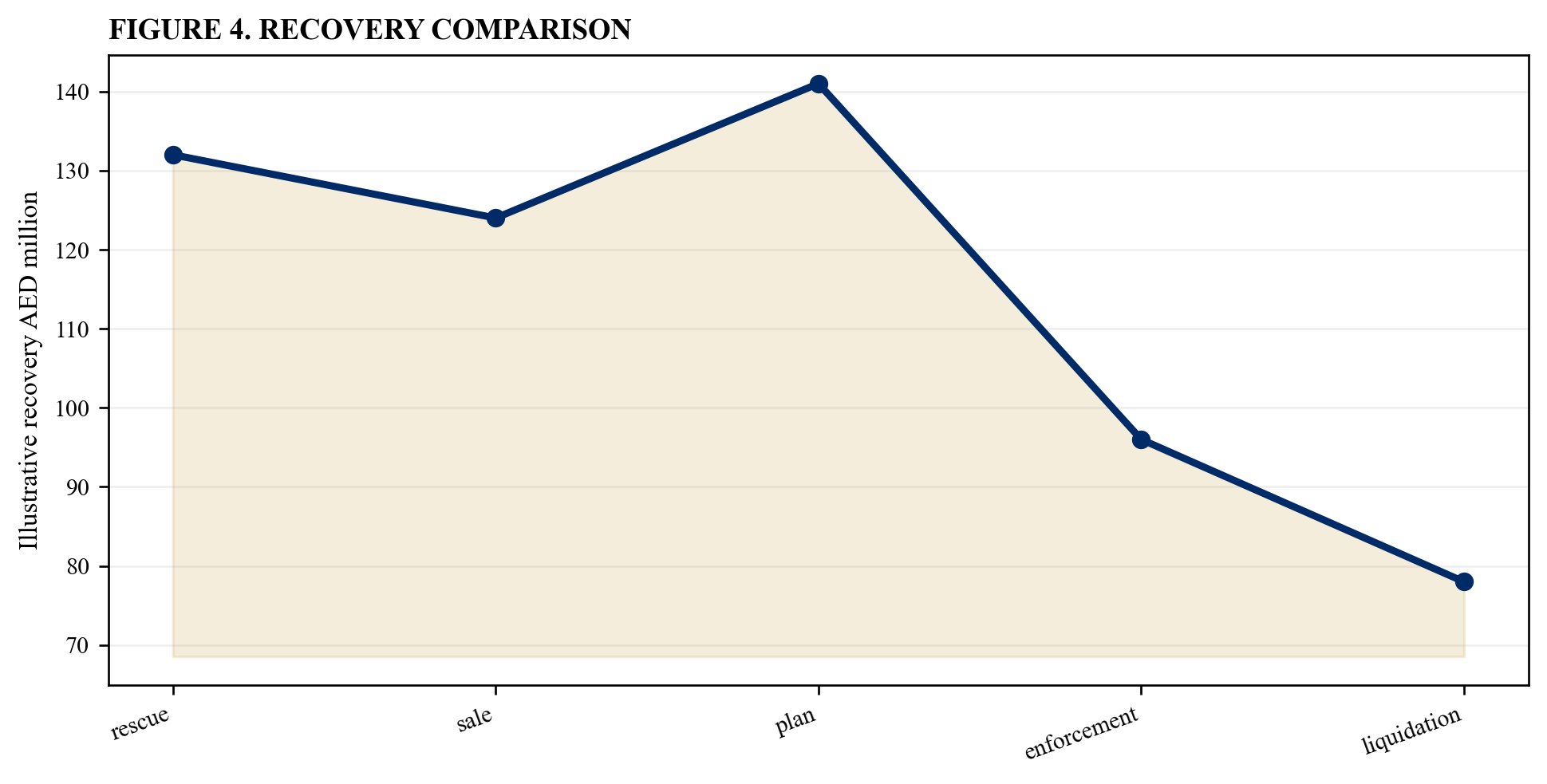
Illustrative analytical scenario; transaction evidence should replace model values.
33. Plan cross-border recognition
The board and its advisers should identify proceedings, establishments, assets, creditors, governing laws, recognition routes and cooperation needs. The controlled deliverable is a cross-border execution map. Record the entity, decision, stakeholder, cash effect, valuation assumption, source, owner, evidence status and next review [55][56].
Reconcile accounts, bank statements, cash forecasts, debt documents, security records, guarantees, board materials, contracts, claims, operational data, valuation evidence and applicable law. Separate observed facts, binding rights, professional advice, forecasts, analytical scenarios and evidence gaps.
The principal governance risk is that a domestic order can be assumed to control foreign assets or claims without recognition. Quantify the effect on liquidity, value, creditor recoveries, transaction certainty, continuity, legal exposure and available time.
Translate the result into the board pack, conflicts register, alternatives analysis, transaction timetable, recovery model, authority record and execution dashboard. Refresh the evidence whenever cash, value, creditor conduct, financing terms or transaction probability changes, and obtain jurisdiction-specific professional advice.
34. Manage regulatory and competition approvals
The board and its advisers should map merger control, foreign investment, sector, listing, sanctions and change-of-control requirements. The controlled deliverable is an approvals critical path. Record the entity, decision, stakeholder, cash effect, valuation assumption, source, owner, evidence status and next review [57][58].
Reconcile accounts, bank statements, cash forecasts, debt documents, security records, guarantees, board materials, contracts, claims, operational data, valuation evidence and applicable law. Separate observed facts, binding rights, professional advice, forecasts, analytical scenarios and evidence gaps.
The principal governance risk is that distress urgency can be assumed to displace mandatory approvals. Quantify the effect on liquidity, value, creditor recoveries, transaction certainty, continuity, legal exposure and available time.
Translate the result into the board pack, conflicts register, alternatives analysis, transaction timetable, recovery model, authority record and execution dashboard. Refresh the evidence whenever cash, value, creditor conduct, financing terms or transaction probability changes, and obtain jurisdiction-specific professional advice.
35. Design employee and pension treatment
The board and its advisers should map claims, consultation, transfer rules, retention, pensions, benefits and communication obligations. The controlled deliverable is a workforce treatment plan. Record the entity, decision, stakeholder, cash effect, valuation assumption, source, owner, evidence status and next review [59][60].
Reconcile accounts, bank statements, cash forecasts, debt documents, security records, guarantees, board materials, contracts, claims, operational data, valuation evidence and applicable law. Separate observed facts, binding rights, professional advice, forecasts, analytical scenarios and evidence gaps.
The principal governance risk is that employees can bear operational and value consequences that were absent from the transaction model. Quantify the effect on liquidity, value, creditor recoveries, transaction certainty, continuity, legal exposure and available time.
Translate the result into the board pack, conflicts register, alternatives analysis, transaction timetable, recovery model, authority record and execution dashboard. Refresh the evidence whenever cash, value, creditor conduct, financing terms or transaction probability changes, and obtain jurisdiction-specific professional advice.
36. Set communications governance
The board and its advisers should define factual messages, speakers, audiences, sequencing, confidentiality, market disclosure and rumour response. The controlled deliverable is a stakeholder communications protocol. Record the entity, decision, stakeholder, cash effect, valuation assumption, source, owner, evidence status and next review [61][62].
Reconcile accounts, bank statements, cash forecasts, debt documents, security records, guarantees, board materials, contracts, claims, operational data, valuation evidence and applicable law. Separate observed facts, binding rights, professional advice, forecasts, analytical scenarios and evidence gaps.
The principal governance risk is that inconsistent messages can trigger withdrawals, enforcement, attrition or disclosure breaches. Quantify the effect on liquidity, value, creditor recoveries, transaction certainty, continuity, legal exposure and available time.
Translate the result into the board pack, conflicts register, alternatives analysis, transaction timetable, recovery model, authority record and execution dashboard. Refresh the evidence whenever cash, value, creditor conduct, financing terms or transaction probability changes, and obtain jurisdiction-specific professional advice.
37. Negotiate conditionality and execution protections
The board and its advisers should calibrate certainty, financing, approvals, adverse-change terms, deposits, termination, exclusivity and long-stop dates. The controlled deliverable is an execution-risk schedule. Record the entity, decision, stakeholder, cash effect, valuation assumption, source, owner, evidence status and next review [45][63].
Reconcile accounts, bank statements, cash forecasts, debt documents, security records, guarantees, board materials, contracts, claims, operational data, valuation evidence and applicable law. Separate observed facts, binding rights, professional advice, forecasts, analytical scenarios and evidence gaps.
The principal governance risk is that the highest nominal bid can deliver the weakest risk-adjusted recovery. Quantify the effect on liquidity, value, creditor recoveries, transaction certainty, continuity, legal exposure and available time.
Translate the result into the board pack, conflicts register, alternatives analysis, transaction timetable, recovery model, authority record and execution dashboard. Refresh the evidence whenever cash, value, creditor conduct, financing terms or transaction probability changes, and obtain jurisdiction-specific professional advice.
38. Run a final decision hearing
The board and its advisers should present the evidence pack, conflicts, alternatives, value, recoveries, risks, advice and dissent to the authorised forum. The controlled deliverable is a formal decision record. Record the entity, decision, stakeholder, cash effect, valuation assumption, source, owner, evidence status and next review [16][64].
Reconcile accounts, bank statements, cash forecasts, debt documents, security records, guarantees, board materials, contracts, claims, operational data, valuation evidence and applicable law. Separate observed facts, binding rights, professional advice, forecasts, analytical scenarios and evidence gaps.
The principal governance risk is that approval can become a procedural endpoint without explicit comparison of stakeholder outcomes. Quantify the effect on liquidity, value, creditor recoveries, transaction certainty, continuity, legal exposure and available time.
Translate the result into the board pack, conflicts register, alternatives analysis, transaction timetable, recovery model, authority record and execution dashboard. Refresh the evidence whenever cash, value, creditor conduct, financing terms or transaction probability changes, and obtain jurisdiction-specific professional advice.
39. Issue the decision-evidence certificate
The board and its advisers should reconcile triggers, liquidity, duties, authority, conflicts, alternatives, valuation, market test, recoveries and execution. The controlled deliverable is an auditable decision certificate. Record the entity, decision, stakeholder, cash effect, valuation assumption, source, owner, evidence status and next review [17][28].
Reconcile accounts, bank statements, cash forecasts, debt documents, security records, guarantees, board materials, contracts, claims, operational data, valuation evidence and applicable law. Separate observed facts, binding rights, professional advice, forecasts, analytical scenarios and evidence gaps.
The principal governance risk is that critical assumptions can remain scattered across advisers and workstreams. Quantify the effect on liquidity, value, creditor recoveries, transaction certainty, continuity, legal exposure and available time.
Translate the result into the board pack, conflicts register, alternatives analysis, transaction timetable, recovery model, authority record and execution dashboard. Refresh the evidence whenever cash, value, creditor conduct, financing terms or transaction probability changes, and obtain jurisdiction-specific professional advice.
40. Maintain post-decision surveillance
The board and its advisers should track cash, milestones, conditions, value leakage, stakeholder behaviour, forecast variance and reopening triggers. The controlled deliverable is a monitored execution dashboard. Record the entity, decision, stakeholder, cash effect, valuation assumption, source, owner, evidence status and next review [5][52].
Reconcile accounts, bank statements, cash forecasts, debt documents, security records, guarantees, board materials, contracts, claims, operational data, valuation evidence and applicable law. Separate observed facts, binding rights, professional advice, forecasts, analytical scenarios and evidence gaps.
The principal governance risk is that a once-defensible decision can become obsolete as facts change. Quantify the effect on liquidity, value, creditor recoveries, transaction certainty, continuity, legal exposure and available time.
Translate the result into the board pack, conflicts register, alternatives analysis, transaction timetable, recovery model, authority record and execution dashboard. Refresh the evidence whenever cash, value, creditor conduct, financing terms or transaction probability changes, and obtain jurisdiction-specific professional advice.
Table 5. Decision-evidence certificate
| Domain | Required evidence | Owner |
|---|---|---|
| liquidity | reconciled forecast | CFO |
| value | range and waterfall | valuer |
| process | market-test log | adviser |
| governance | minutes and conflicts | chair |
Statutory periods are stated where labelled; other entries are analytical controls.
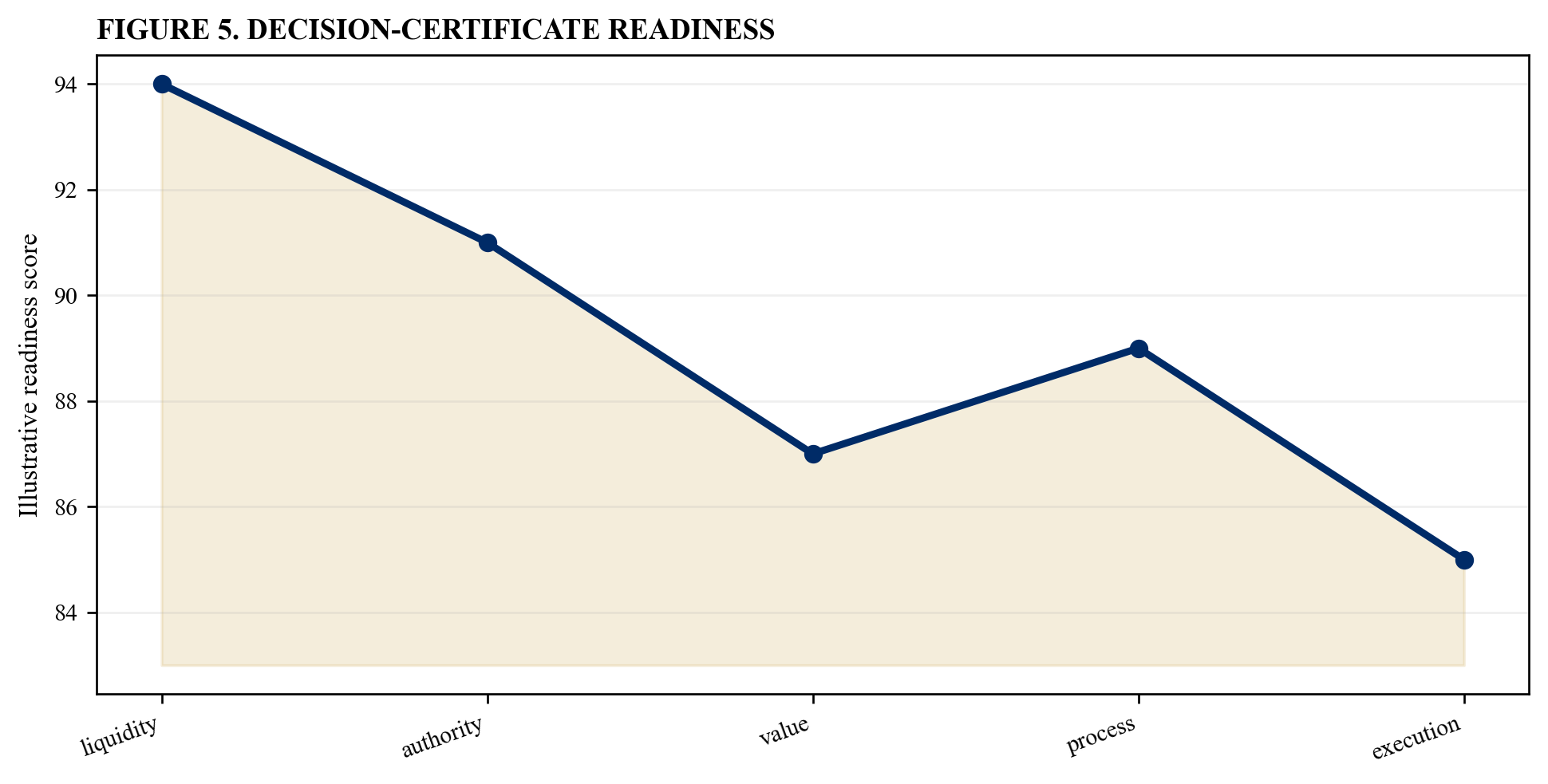
Illustrative analytical scenario; transaction evidence should replace model values.
References
- UK Supreme Court, BTI 2014 LLC v Sequana SA, [2022] UKSC 25, https://www.supremecourt.uk/cases/uksc-2019-0046
- Companies Act 2006, section 172, https://www.legislation.gov.uk/ukpga/2006/46/section/172
- UK Insolvency Service, Director duties upon insolvency, https://www.gov.uk/guidance/director-information-hub-director-duties-upon-insolvency
- UK Insolvency Service, Company health check, https://www.gov.uk/guidance/company-health-check-keeping-your-business-on-track
- UK Government, Corporate Financial Distress Guidance Note, https://www.gov.uk/government/publications/the-sourcing-and-consultancy-playbooks/corporate-financial-distress-guidance-note-html
- Insolvency Act 1986, https://www.legislation.gov.uk/ukpga/1986/45/contents
- Association of Corporate Treasurers, Liquidity resources, https://www.treasurers.org/knowledge-hub
- IFRS Foundation, IAS 7 Statement of Cash Flows, https://www.ifrs.org/issued-standards/list-of-standards/ias-7-statement-of-cash-flows/
- IFRS Foundation, IAS 1 Going Concern, https://www.ifrs.org/issued-standards/list-of-standards/ias-1-presentation-of-financial-statements/
- UNCITRAL, Legislative Guide on Insolvency Law, https://uncitral.un.org/en/texts/insolvency/legislativeguides/insolvency_law
- World Bank, Principles for Effective Insolvency and Creditor-Debtor Regimes, https://www.worldbank.org/en/topic/financialsector/brief/the-world-bank-principles-for-effective-insolvency-and-creditor-rights
- IVSC, International Valuation Standards, https://www.ivsc.org/standards/
- IFRS Foundation, IFRS 13 Fair Value Measurement, https://www.ifrs.org/issued-standards/list-of-standards/ifrs-13-fair-value-measurement/
- UNCITRAL, Directors' obligations in the period approaching insolvency, https://uncitral.un.org/en/texts/insolvency/legislativeguides/insolvency_law
- Financial Reporting Council, UK Corporate Governance Code 2024, https://www.frc.org.uk/library/standards-codes-policy/corporate-governance/uk-corporate-governance-code/
- Financial Reporting Council, Guidance on Board Effectiveness, https://www.frc.org.uk/library/standards-codes-policy/corporate-governance/guidance-on-board-effectiveness/
- ISO, ISO 37000 Governance of Organizations, https://www.iso.org/standard/65036.html
- Companies Act 2006, section 175, https://www.legislation.gov.uk/ukpga/2006/46/section/175
- Companies Act 2006, section 177, https://www.legislation.gov.uk/ukpga/2006/46/section/177
- OECD, G20/OECD Principles of Corporate Governance, https://www.oecd.org/corporate/principles-corporate-governance/
- Institute of Directors, Board resources, https://www.iod.com/resources/factsheets/
- Financial Reporting Council, Audit Committees and the External Audit, https://www.frc.org.uk/library/standards-codes-policy/corporate-governance/
- International Bar Association, Principles on Conduct for the Legal Profession, https://www.ibanet.org/MediaHandler?id=1732A570-D7BB-4F5D-9D97-EB515BA87F9D
- International Ethics Standards Board for Accountants, Code of Ethics, https://www.ethicsboard.org/iesba-code
- UK Civil Procedure Rules, Disclosure and Inspection of Documents, https://www.justice.gov.uk/courts/procedure-rules/civil/rules/part31
- The National Archives, Practice Direction 57AD, https://www.justice.gov.uk/courts/procedure-rules/civil/rules/part57ad
- Companies Act 2006, company records, https://www.legislation.gov.uk/ukpga/2006/46/contents
- ISO, ISO 15489 Records Management, https://www.iso.org/standard/62542.html
- Corporate Insolvency and Governance Act 2020, Part 26A explanatory notes, https://www.legislation.gov.uk/ukpga/2020/12/notes/division/6/index.htm
- Companies Act 2006, Part 26A, https://www.legislation.gov.uk/ukpga/2006/46/part/26A
- UK Insolvency Service, Liquidation and insolvency, https://www.gov.uk/government/publications/liquidation-and-insolvency/liquidation-and-insolvency
- UK Government, Options when a company is insolvent, https://www.gov.uk/company-in-administration
- ISO, ISO 31000 Risk Management, https://www.iso.org/iso-31000-risk-management.html
- COSO, Enterprise Risk Management, https://www.coso.org/enterprise-risk-management
- IVSC, International Valuation Standards, https://www.ivsc.org/standards/
- RICS, Valuation Global Standards, https://www.rics.org/profession-standards/rics-standards-and-guidance/sector-standards/valuation-standards/red-book
- Insolvency Act 1986, creditor distribution provisions, https://www.legislation.gov.uk/ukpga/1986/45/contents
- Corporate Insolvency and Governance Act 2020, moratorium and priority provisions, https://www.legislation.gov.uk/ukpga/2020/12/contents
- United States Trustee Program, Chapter 11 Information, https://www.justice.gov/ust/chapter-11-information
- Insolvency Act 1986, section 238, https://www.legislation.gov.uk/ukpga/1986/45/section/238
- UK Government, Compensation awards and antecedent transactions policy, https://assets.publishing.service.gov.uk/media/5a7e458040f0b62305b81ea2/bis_14_932_giving_the_court_and_SoS_a_power_to_make_a_compensatory_award_against_a_director.pdf
- Insolvency Act 1986, section 239, https://www.legislation.gov.uk/ukpga/1986/45/section/239
- Administration (Restrictions on Disposal etc. to Connected Persons) Regulations 2021, https://www.legislation.gov.uk/uksi/2021/427/contents
- UK Insolvency Service, Pre-pack sales report, https://www.gov.uk/government/publications/pre-pack-sales-in-administration-report
- Statement of Insolvency Practice 16, https://www.r3.org.uk/technical-library/england-wales/sips/more/29114/page/1/sip-16-pre-packaged-sales-in-administrations/
- Insolvency Service, Pre-pack pool and connected-person scrutiny, https://www.gov.uk/government/publications/pre-pack-sales-in-administration
- UK Competition and Markets Authority, Merger Assessment Guidelines, https://www.gov.uk/government/publications/merger-assessment-guidelines
- US Department of Justice, Merger Guidelines, https://www.justice.gov/atr/merger-guidelines
- ISO, ISO 27001 Information Security Management, https://www.iso.org/isoiec-27001-information-security.html
- NIST, Cybersecurity Framework 2.0, https://www.nist.gov/cyberframework
- UK Insolvency Service, Reporting misconduct, https://www.gov.uk/government/publications/reporting-misconduct-by-companies-directors-and-bankrupts-to-the-insolvency-service/reporting-misconduct-by-companies-directors-and-bankrupts-to-the-insolvency-service
- ISO, ISO 22301 Business Continuity Management, https://www.iso.org/standard/75106.html
- IFRS Foundation, IFRS Practice Statement 1 Management Commentary, https://www.ifrs.org/projects/work-plan/management-commentary/
- Corporate Insolvency and Governance Act 2020, restructuring plan voting, https://www.legislation.gov.uk/ukpga/2020/12/notes/division/3/index.htm
- UNCITRAL, Model Law on Cross-Border Insolvency, https://uncitral.un.org/en/texts/insolvency/modellaw/cross-border_insolvency
- UNCITRAL, Model Law on Enterprise Group Insolvency, https://uncitral.un.org/en/MLEGI
- UK National Security and Investment Act 2021, https://www.legislation.gov.uk/ukpga/2021/25/contents
- UK Competition and Markets Authority, Mergers guidance, https://www.gov.uk/topic/competition/mergers
- UK Government, TUPE guidance, https://www.gov.uk/transfers-takeovers
- Pension Protection Fund, Employer insolvency, https://www.ppf.co.uk/employers/employer-insolvency
- Financial Conduct Authority, Disclosure Guidance and Transparency Rules, https://www.handbook.fca.org.uk/handbook/DTR/
- London Stock Exchange, Disclosure obligations, https://www.londonstockexchange.com/resources/trade-resources
- UNIDROIT, Principles of International Commercial Contracts, https://www.unidroit.org/instruments/commercial-contracts/unidroit-principles-2016/
- UAE Legislation, Federal Decree-Law No. 51 of 2023 Financial Restructuring and Bankruptcy Law, https://uaelegislation.gov.ae/en/legislations/2190
