Introduction
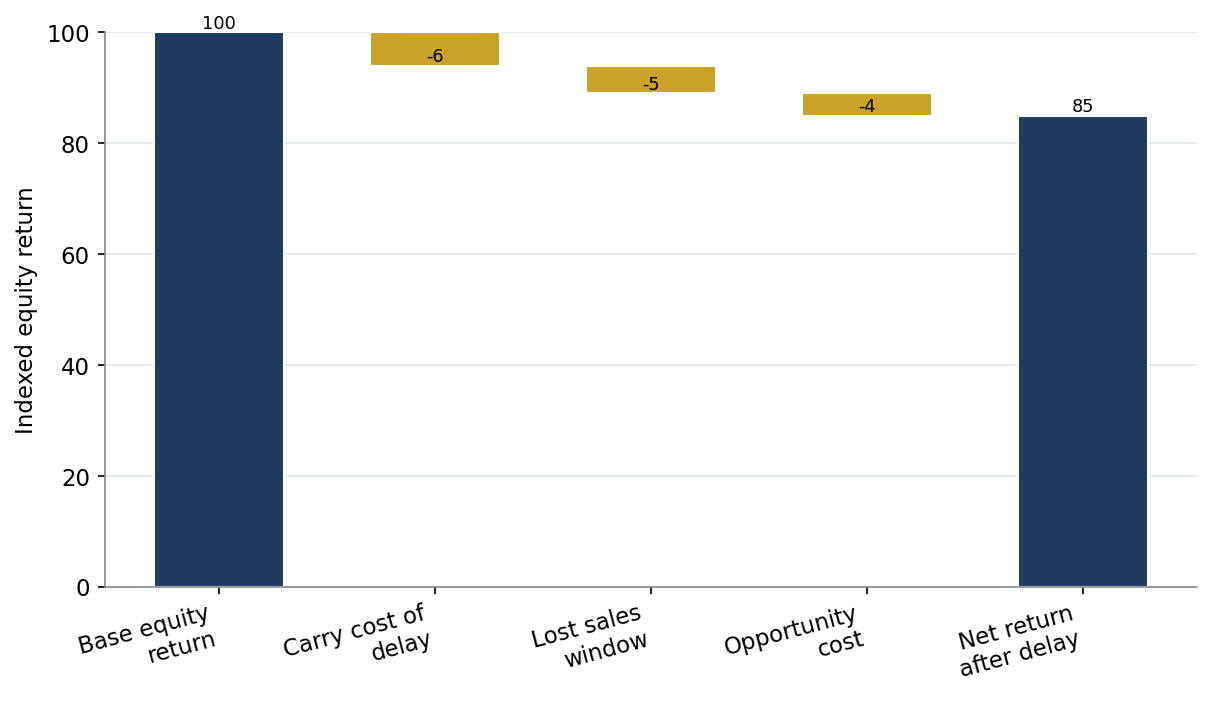
When developers discuss capital, they discuss its price and its structure, the margin on the senior debt, the coupon on the mezzanine, the share of equity conceded to a partner. They discuss its speed far less often, and yet the speed at which capital can be secured is frequently the difference between capturing an opportunity and losing it. A developer that can present a signed term sheet within ninety days can move on an acquisition that a developer requiring six months cannot, and in a competitive market that speed advantage is worth more than a marginal saving on the cost of the capital itself.
This paper treats time-to-capital as a variable to be managed deliberately rather than a residual to be endured. It asks how long it should take a UAE developer to move from launching a capital raise to a signed term sheet, what determines that time, and how it can be compressed. The central claim is that the ninety to one hundred and twenty day term sheet is achievable for a prepared developer, that the gap between that benchmark and the many months an unprepared developer takes is largely self-inflicted, and that closing it is one of the highest-return process improvements a developer can make.
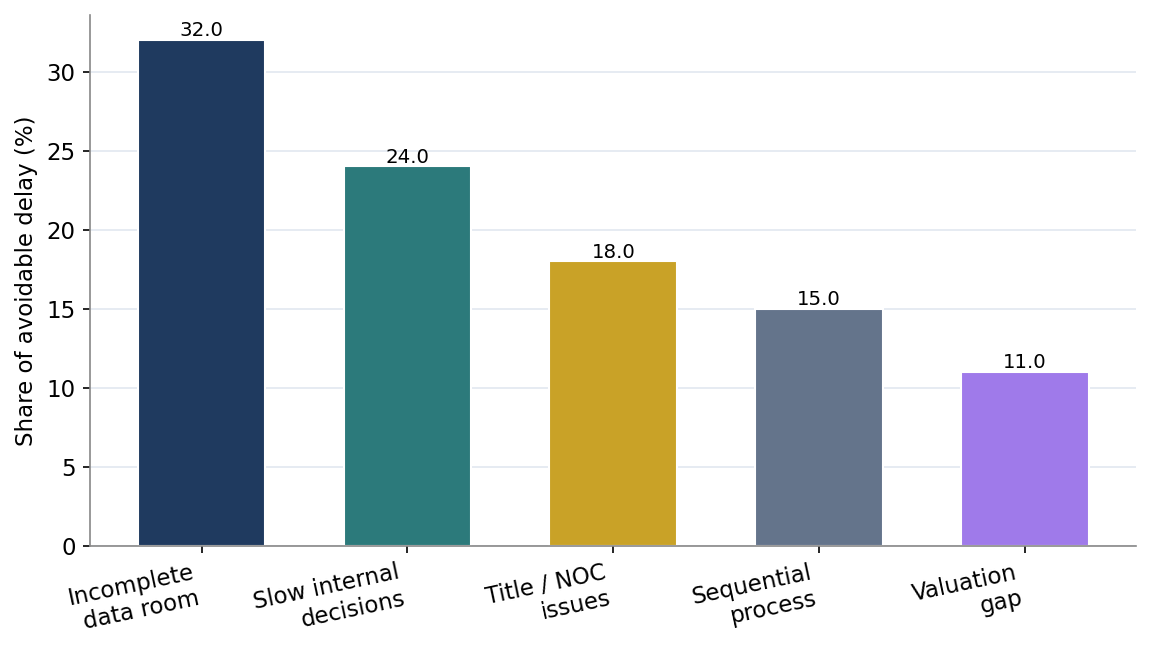
The argument rests on a simple observation: most of the delay in a capital raise is not caused by the capital providers but by the developer. Incomplete data rooms, models that do not reconcile, missing approvals, sequential processes that could have run in parallel, and slow internal decision-making account for the majority of the elapsed time, and all of these are within the developer control. The capital provider response time, the part the developer cannot control, is a minority of the total. The opportunity, therefore, is to attack the self-inflicted delay, and the framework in this paper is a structured approach to doing so.
The 90 to 120 Day Benchmark
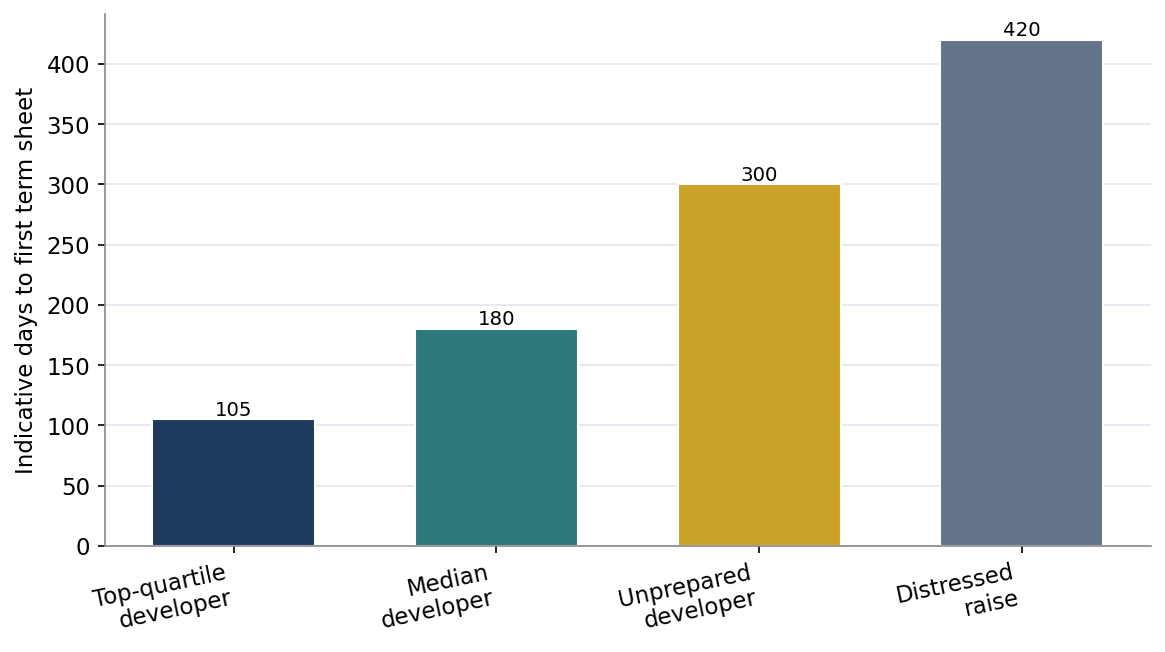
The central benchmark of this paper is that a prepared developer should reach a signed term sheet within ninety to one hundred and twenty days of launching a raise. Figure 3 places this benchmark in context, comparing the time to first term sheet across developers of different levels of preparation.
Figure 3. Indicative Days to First Term Sheet by Developer Preparedness
The figure shows a wide dispersion. A top-quartile, well-prepared developer reaches a term sheet in around one hundred days; a median developer takes closer to one hundred and eighty; an unprepared developer takes three hundred or more; and a developer raising under distress, with a weak position and incomplete materials, can take well over a year, by which time the opportunity that prompted the raise has often passed. The gap between the top quartile and the median is the prize: it represents roughly eighty days of elapsed time, and the carrying cost and opportunity cost of those eighty days, that a developer can capture purely by improving its preparation and process.
The benchmark is achievable because the binding constraint on speed is usually the developer own readiness, not the capital provider response time. A provider presented with a complete, well-organised data room, a model that reconciles, clear title and approvals, and a credible sponsor can move to a term sheet quickly, because it has everything it needs to form a view. A provider presented with gaps, inconsistencies and missing documents must wait while the developer fills them, and each gap adds days or weeks. The ninety to one hundred and twenty day benchmark is therefore a statement about developer readiness as much as about market conditions: it is the time a raise takes when the developer has removed the self-inflicted delays.
The benchmark should be understood as a target for the term sheet, not for funding. The diligence and documentation that follow the term sheet add further time, typically a further sixty to ninety days, so that a raise reaching a term sheet in one hundred days might fund in around one hundred and eighty. But the term sheet is the critical milestone, because it represents committed interest and allows the developer to act on the opportunity with confidence, and it is the milestone most within the developer power to accelerate. The remainder of this paper focuses on compressing the time to the term sheet, while noting where the subsequent stages can also be accelerated.
The Data-Room and Readiness Framework
The single largest determinant of time-to-capital is the developer readiness at the moment it launches the raise, and readiness is embodied above all in the data room. Figure 4 shows the strong relationship between a developer readiness, scored against a structured checklist, and the days it takes to reach a first term sheet.
Figure 4. Days to First Term Sheet Against Readiness Score
Higher readiness sharply reduces time to term sheet. Not a forecast.
The relationship is steep and consistent: a developer scoring highly on readiness reaches a term sheet in around one hundred days, while a poorly prepared developer takes three times as long. The readiness score aggregates the completeness and quality of the materials a provider needs: the appraisal and model, the title and registration documents, the approvals and no-objection certificates, the construction and cost information, the sales and market evidence, and the corporate and governance documents. Each gap in these materials is a question the provider must raise and the developer must answer, and each such exchange adds days. A complete data room pre-empts the questions and removes the delay.
A readiness framework therefore consists of a structured checklist of the materials a provider will require, assembled and quality-checked before the raise is launched. The discipline is to treat the data room as a product to be completed before going to market, rather than as something assembled reactively in response to provider questions. A developer that completes the data room first launches from a position of readiness and moves quickly; a developer that launches with an incomplete data room spends the subsequent weeks assembling materials under pressure, which is both slower and more error-prone. Appendix A sets out an indicative readiness checklist.
Crucially, readiness is not merely about completeness but about consistency and credibility. A model that does not reconcile to the appraisal, a title document that does not match the description, or a cost plan that is inconsistent with the programme will raise questions and erode the provider confidence, slowing the raise even if every document is present. The readiness framework therefore includes a quality-control pass that checks the materials for internal consistency and credibility before launch, because a provider that finds one inconsistency begins to doubt the rest, and the resulting scrutiny slows everything. Readiness is the combination of completeness, consistency and credibility, and all three must be achieved before launch.
The Term Sheet: Anatomy and Negotiation
The term sheet is the milestone the developer is racing toward, and understanding its anatomy is essential to negotiating it quickly. A term sheet sets out the principal commercial terms of the proposed financing: the amount, the structure, the pricing, the security, the key conditions, the exclusivity and the indicative timetable. It is not the final binding agreement, which comes with the long-form documentation, but it represents genuine commitment subject to diligence, and it allows the developer to act on its opportunity with confidence. Table 1 sets out the principal components.
Table 1. Anatomy of a Financing Term Sheet
A prepared developer can negotiate these quickly from a clear prior position. Not transaction-specific.
The speed of the term-sheet negotiation depends heavily on how clearly the developer has thought through its own position in advance. A developer that knows the structure it wants, the pricing range it will accept, the security it is willing to grant and the conditions it can satisfy can negotiate quickly and decisively, because it is not working out its position as it goes. A developer that comes to the negotiation without a clear prior position must deliberate over each term, which slows the negotiation and signals uncertainty to the provider. Preparation, again, is the key: the developer that has done the thinking in advance negotiates fast, while the developer that improvises negotiates slowly.
A common cause of delay at the term-sheet stage is the valuation or pricing gap, where the developer and the provider hold materially different views of the value or the appropriate pricing. This gap is best surfaced and addressed early, during outreach, rather than allowed to emerge late in the term-sheet negotiation, because a gap discovered late wastes the time invested in reaching that point. A developer that presents credible, well-evidenced valuation and pricing expectations during outreach filters out providers whose views are too far apart and focuses on those with whom a deal is possible, compressing the term-sheet stage by avoiding negotiations that were never going to converge.
| Component | What it covers | Why it matters for speed |
|---|---|---|
| Amount and structure | Quantum, tranches, ranking | Defines the deal; must match the appraisal |
| Pricing | Margin, fees, coupon | Often the most negotiated; prepare a range |
| Security | Charges, pledges, escrow | Clarify early to avoid diligence surprises |
| Conditions | Conditions precedent, approvals | Identify and pre-clear where possible |
| Exclusivity | Period and scope | Balances commitment against competition |
| Timetable | Indicative path to close | Sets expectations and discipline |
Considerations Specific to the UAE
Escrow set-up and the regulatory path
A UAE development raise involves regulatory steps that bear on the timetable, most notably the establishment of the escrow account and the associated regulatory registrations for an off-plan project. These steps take time and must be planned into the timetable rather than discovered late, and a developer that initiates them early, in parallel with the capital raise, avoids the delay of completing them sequentially after the financing is agreed. The escrow and regulatory path is largely predictable, which means it can be planned and parallelised, and a developer that treats it as a known workstream to be run alongside the raise rather than a surprise to be handled afterward keeps it off the critical path.
Title, registration and no-objection certificates
The clarity and completeness of the title, the registration of the land and the development, and the necessary no-objection certificates from master developers and authorities are frequently the documents that, if incomplete, cause the most delay. A developer that ensures these are in order before launching the raise removes a major source of diligence delay, while a developer that launches with unresolved title or approval questions invites the provider to wait while they are resolved. Because these documents depend on third parties, the master developer, the authorities, the land department, they cannot be produced quickly under pressure, which is precisely why they must be secured in advance.
The depth and speed of the UAE capital market
The UAE benefits from a deep and increasingly competitive capital market, with banks, private credit funds, family offices and institutional investors all active, and from the dirham peg that allows international dollar capital to participate without currency friction. This depth is an advantage for speed, because a developer running a parallel process has many credible providers to approach and can generate genuine competition. The developer that understands and maintains relationships across this market can launch a parallel process quickly, drawing on established relationships rather than building them from scratch, which is itself a form of readiness that compresses the outreach stage.
Indicative Case Studies
Three indicative cases show the framework in action. The figures are synthetic and constructed for analytical clarity, not drawn from any specific transaction.
Case A: the fast raise
Case A is a developer that prepares thoroughly before launch, with a complete data room, a reconciled model, clear title and pre-cleared approvals, and that runs a focused parallel process of well-targeted providers. It reaches a signed term sheet in ninety-five days and funds in around one hundred and fifty, capturing the acquisition opportunity that prompted the raise. The case illustrates the benchmark achieved: readiness and parallelism combine to deliver a term sheet within the target window, and the developer moves on its opportunity while slower competitors are still preparing.
Table 6. Case A Timeline, the Fast Raise
Readiness and parallelism deliver a term sheet in 95 days. Not transaction-specific.
Case B: the delayed raise
Case B is a developer that launches with an incomplete data room, unresolved title questions and a sequential process, approaching one provider at a time. It reaches a term sheet only after two hundred and sixty days, by which time the acquisition it had hoped to fund has been lost to a faster competitor, and it funds after three hundred and sixty days into a less attractive alternative. The case illustrates the cost of unreadiness: the self-inflicted delays compound, the opportunity slips, and the developer ends up worse off despite, in the end, raising the capital. The contrast with Case A is entirely a matter of preparation and process, not of market conditions.
Table 7. Case B Timeline, the Delayed Raise
Self-inflicted delays compound to 260 days. Not transaction-specific.
Case C: the portfolio process
Case C is a developer that institutionalises its capital raising, maintaining a standing data room, established provider relationships and a repeatable process across a portfolio of projects. It reaches term sheets in around one hundred and forty days even on complex portfolio raises, because the standing readiness and relationships mean each raise begins from a position of preparation rather than from scratch. The case illustrates the strategic endpoint of the framework: a developer that treats speed as an institutional capability, embedded in standing processes and relationships, rather than as something improvised for each raise.
Figure 8. Days to Term Sheet and to Close by Case
Synthetic figures for analytical comparison. Not a forecast.
| Stage | Days | Cumulative | Note |
|---|---|---|---|
| Preparation | Pre-launch | 0 | Completed before launch |
| Outreach | 30 | 30 | Parallel, well-targeted |
| Term sheet | 35 | 65 | Competitive tension |
| Diligence (overlapped) | 30 | 95 | Vendor diligence provided |
| Signed term sheet | 95 | Within benchmark |
International Comparison
The discipline of fast capital raising is well developed in the mature markets, where competitive processes, professional advisers and standardised diligence have compressed timelines and where developers and sponsors routinely run tightly managed parallel processes. In the United Kingdom and the United States, a well-advised sponsor with a prepared data room can reach a term sheet in a comparable ninety to one hundred and twenty day window, and the practices that achieve this, thorough preparation, vendor diligence, competitive parallel processes and disciplined timetables, are the same practices this paper recommends for the UAE.
The lesson from the mature markets is that speed is a function of professionalism and standardisation, and that as a market matures its timelines compress. The UAE market is on this trajectory, with deepening capital, more professional advisers and increasingly standardised processes, and the developers that adopt the disciplines of the mature markets ahead of their peers gain a speed advantage while the market as a whole catches up. The international comparison also highlights the role of professional advisers, who bring established provider relationships, standardised processes and diligence experience that compress timelines, and a UAE developer that engages capable advisers can import this speed rather than building it from scratch.
The comparison with mature markets also cautions against importing their practices uncritically. The UAE has its own regulatory steps, its own escrow and registration requirements, and its own provider landscape, and a process designed for the United Kingdom or the United States must be adapted to these local realities rather than transplanted wholesale. The principles, readiness, parallelism, vendor diligence, disciplined timetables, travel intact, but their implementation must reflect the local regulatory path and the local provider expectations. The most effective approach combines the disciplines of the mature markets with a sophisticated understanding of the local process, which is precisely the combination that an experienced local adviser with international standards brings.
| Stage | Days | Cumulative | Cause of delay |
|---|---|---|---|
| Preparation (reactive) | 60 | 60 | Data room assembled after launch |
| Outreach (sequential) | 70 | 130 | One provider at a time |
| Term sheet | 60 | 190 | Valuation gap surfaced late |
| Diligence | 70 | 260 | Title questions unresolved |
| Signed term sheet | 260 | Opportunity lost by now |
Implementation Roadmap
Build and quality-check the complete data room before launching, against a structured readiness checklist covering appraisal, model, title, approvals, cost, sales and governance materials.
Resolve title, registration and approval questions in advance, since these depend on third parties and cannot be fixed quickly under pressure.
Map and maintain relationships across the provider universe, so that a parallel process can be launched quickly from established relationships rather than built from scratch.
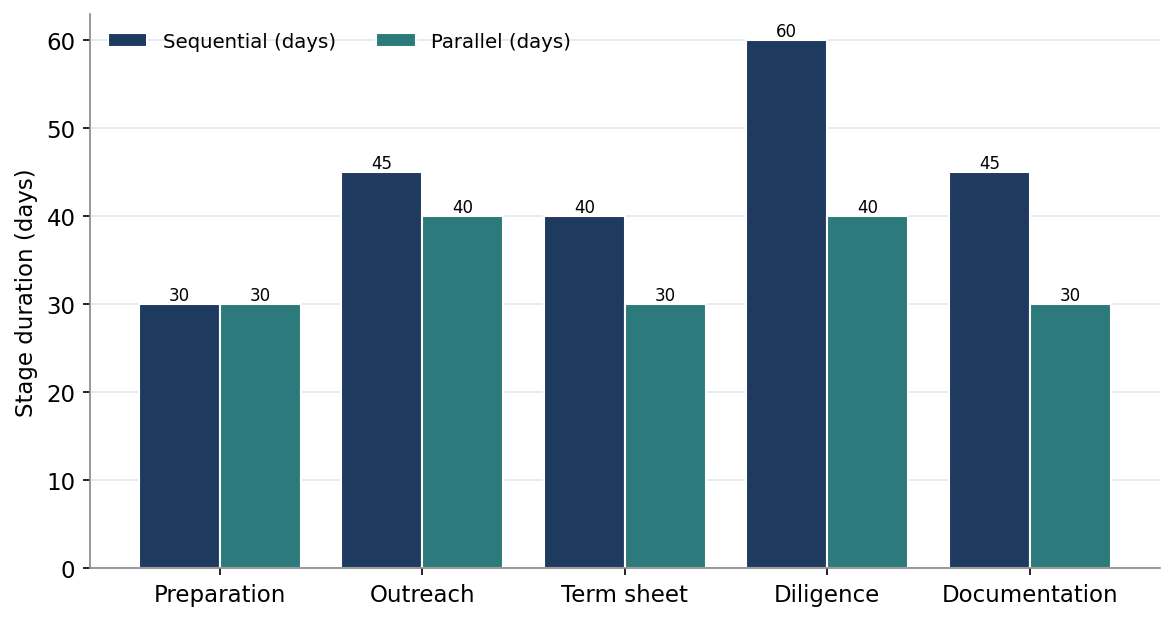
Design the process to run providers and stages in parallel, with a focused set of well-targeted providers, to create competitive tension and overlap the stages.
Establish clear internal decision-making authority and a small empowered team, so the developer can respond and decide at the speed the process demands.
Commission vendor diligence and use technology, including AI-assisted document review, to compress both preparation and provider diligence.
Manage the term sheet and exclusivity deliberately, coming to the negotiation with a clear prior position and keeping exclusivity short and conditional on the timetable.
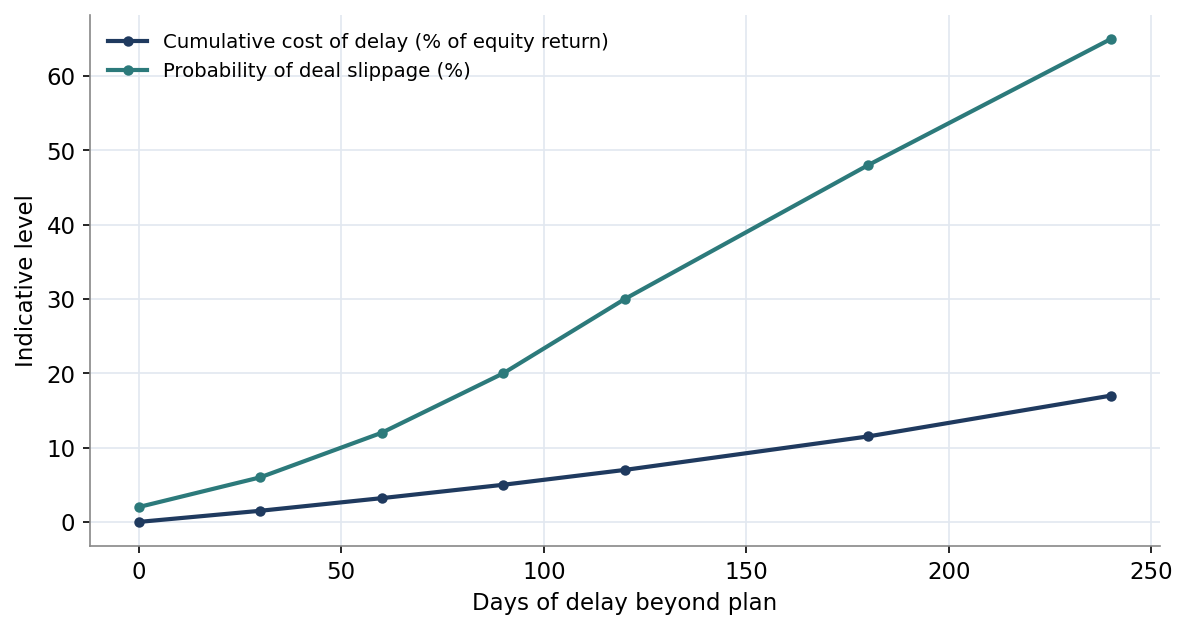
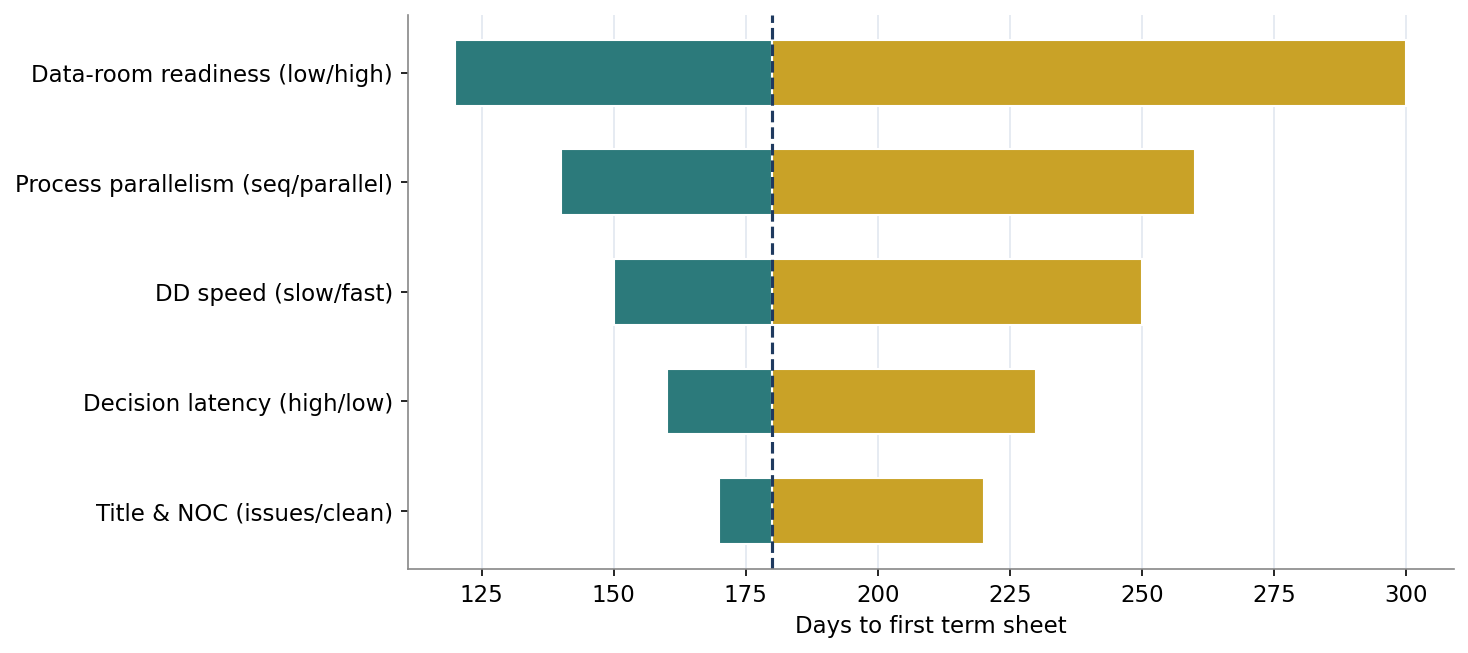
The cost-of-delay analysis can be turned into a simple internal policy: a developer can set a target time-to-term-sheet, measure its performance against it, and treat any shortfall as a problem to be diagnosed and fixed, much as a manufacturer treats a production delay. This converts speed from an aspiration into a managed metric, with an owner, a target and a feedback loop. Developers that manage time-to-capital in this way improve it systematically over time, because what is measured and owned tends to improve, while developers that leave it unmeasured improve only by accident. The discipline of measurement is the bridge between recognising that speed matters and actually achieving it.
Conclusion
Time-to-capital is a competitive variable that UAE developers can and should manage deliberately. This paper has argued that a prepared developer can reach a signed term sheet within ninety to one hundred and twenty days, that the gap between this benchmark and the many months an unprepared developer takes is largely self-inflicted, and that closing it is one of the highest-return process improvements a developer can make. The dominant levers are data-room readiness and parallel process design, both entirely within the developer control, and the cost of delay they avoid, in carrying cost, lost opportunities and reputational damage, is real and quantifiable.
The developer that internalises these lessons, completing its data room before launch, resolving its approvals in advance, running a focused parallel process, deciding quickly internally, and using technology to compress preparation and diligence, will consistently reach term sheets within the benchmark window and capture the opportunities that slower competitors lose. The developer that goes further and institutionalises speed as a standing capability, embedded in maintained data rooms, provider relationships, technology and an experienced team, converts the advantage from occasional to systematic. In a competitive UAE market where opportunities are time-limited and capital is plentiful but selective, the ability to move fast is a durable source of advantage, and the frameworks and tools in this paper are intended to help developers build it.
| Scenario | Readiness | Process | Days to term sheet |
|---|---|---|---|
| Best practice | High | Parallel | 95 |
| Typical | Moderate | Mixed | 180 |
| Poor | Low | Sequential | 300 |
| Distressed | Low | Sequential, weak position | 420 |
Limitations and Directions for Further Research
This paper is framework-oriented and relies on indicative data, and its conclusions are directional rather than precise. The benchmark timelines, readiness relationships and cost-of-delay figures are calibrated to observable conditions but are not empirical estimates drawn from a dataset of completed raises, and they vary with deal size, complexity and market conditions. The technology and artificial intelligence capabilities described are evolving rapidly, and the specific tools available will change.
Several extensions would strengthen the analysis. An empirical study of time-to-term-sheet across a sample of UAE development raises, correlated with measures of readiness and process design, would replace the indicative relationships with data. A study of the realised cost of delay across completed and lost transactions would quantify the business case more precisely. And an examination of how artificial intelligence tools are changing diligence timelines in practice would sharpen the technology dimension. Each is a natural subject for a later paper in this series.