Introduction
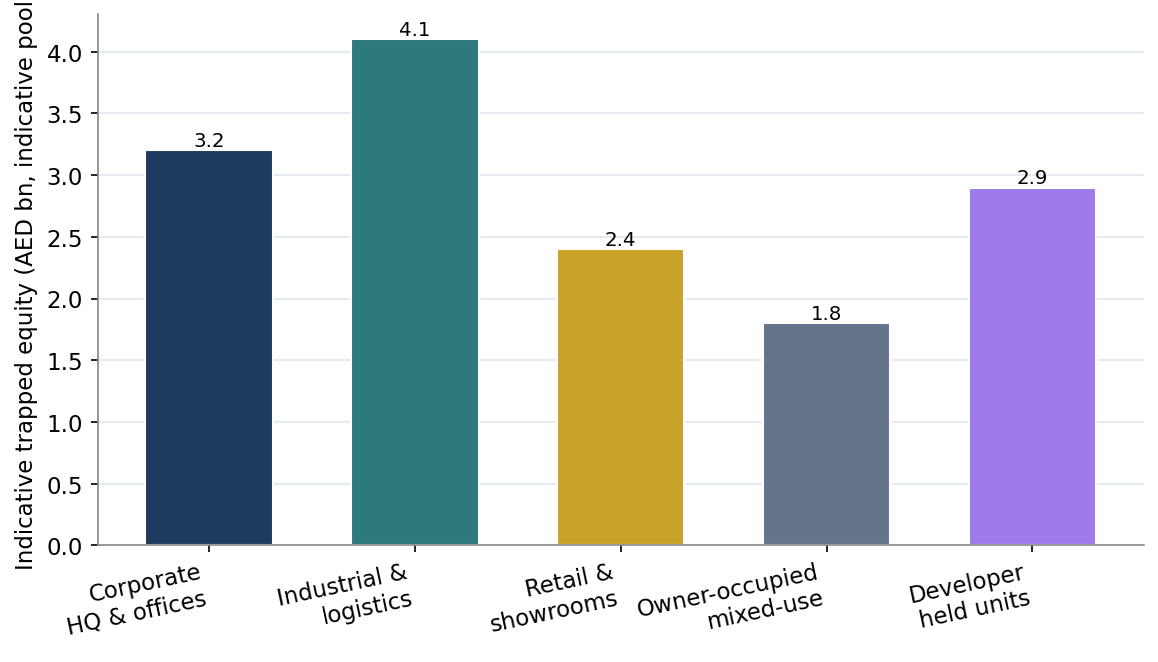
Many businesses own the buildings they operate from, and many treat that ownership as an unquestioned good. Owning the headquarters, the factory or the showroom feels prudent, permanent and prestigious, and the rent that ownership avoids feels like money saved. Yet from a corporate finance perspective, a business that owns its operating real estate is making a substantial, low-return, illiquid investment in property, often without ever having decided to do so, and that investment ties up capital that could earn a far higher return elsewhere in the business.
Sale-and-leaseback is the transaction that surfaces and reverses this implicit decision. The business sells the property to an investor and simultaneously leases it back under a long lease, so that it continues to occupy and operate the asset exactly as before, but the capital that was trapped in the property is released and can be redeployed. The business exchanges an owned asset for a leased one, and a lump of illiquid equity for a stream of rent, and in doing so it frees capital to invest where it earns more.
The phrase that captures the appeal, and the anxiety, of SLB is unlocking trapped capital without losing operational control. The unlocking is straightforward: the sale releases the capital. The without-losing-control part is the subtler achievement, and it is where the structuring skill lies. Through a long lease term, a renewal option, a repurchase right and carefully negotiated lease terms, a seller can retain effective operational control of the asset it no longer owns, capturing the capital release while preserving the security of tenure and the strategic optionality that ownership provided. This paper is, in large part, about how that is done.
The central argument is that SLB creates value whenever the return a business can earn on the released capital exceeds the capitalisation rate at which the asset is sold, and that the introduction of corporate tax in the GCC has strengthened this case by making lease rentals a deductible expense. The paper develops this arbitrage, sets out the structures and lease terms that determine how much control the seller retains, analyses the accounting and tax effects, and applies the framework to three indicative cases. The figures used throughout are indicative, calibrated to observable GCC conditions in early 2026 but not drawn from any specific transaction.
Anatomy of Sale-and-Leaseback Structures
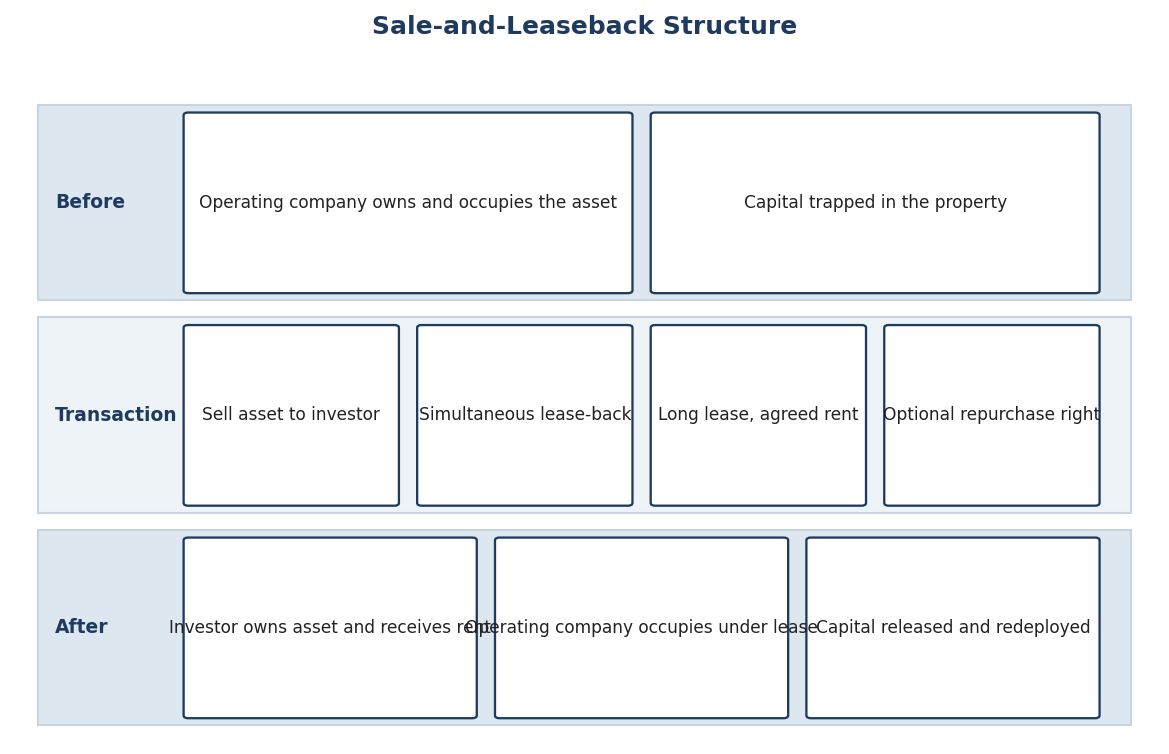
SLB is a family of structures rather than a single transaction, and the choice among them determines how much capital is released, how much control is retained and how the risk is shared. Table 1 compares the principal structures, and the subsections describe each. Figure 3 sets out the basic mechanics common to all of them.
Figure 3. The Mechanics of a Sale-and-Leaseback
Indicative schematic of the before, transaction and after states. Not transaction-specific.
Full sale-and-leaseback
In a full SLB, the business sells the entire asset and leases back the entire asset under a single long lease. This structure releases the maximum capital and is the most common form. It suits assets that the business wishes to continue occupying in full and indefinitely, and its economics are governed directly by the capitalisation rate and the lease terms.
Partial sale-and-leaseback
A partial SLB sells and leases back only part of an asset, or sells a partial interest in the asset, releasing some of the trapped capital while retaining some ownership. This structure suits a business that wishes to release capital but retain a stake in the property upside, or that occupies only part of a larger asset and can sell the remainder outright.
Ground lease structures
A ground lease structure separates the land from the building, selling one and retaining the other. A business might sell the land and lease it back while retaining ownership of the building it operates, releasing the capital tied up in the land while keeping the building. This structure suits situations where the land carries most of the value and the building is specialised to the business.
Build-to-suit sale-and-leaseback
In a build-to-suit SLB, an investor funds the construction of a purpose-built asset to the business specification and leases it to the business on completion, so that the business never ties up capital in the asset at all. This is SLB applied at the outset rather than after the fact, and it suits a business that needs a new facility but prefers to lease it than to fund its construction.
Synthetic and hybrid structures
A range of synthetic and hybrid structures blend features of SLB with debt or joint-venture elements, releasing capital while sharing the property upside or retaining a repurchase right. These structures can be tailored to a business specific objectives, but they are more complex and should be used only where a simpler structure cannot achieve the objective.
Table 1. Comparison of Sale-and-Leaseback Structures
Indicative comparison. Control retained depends primarily on lease terms. Not transaction-specific.
Capital Released and Use of Proceeds
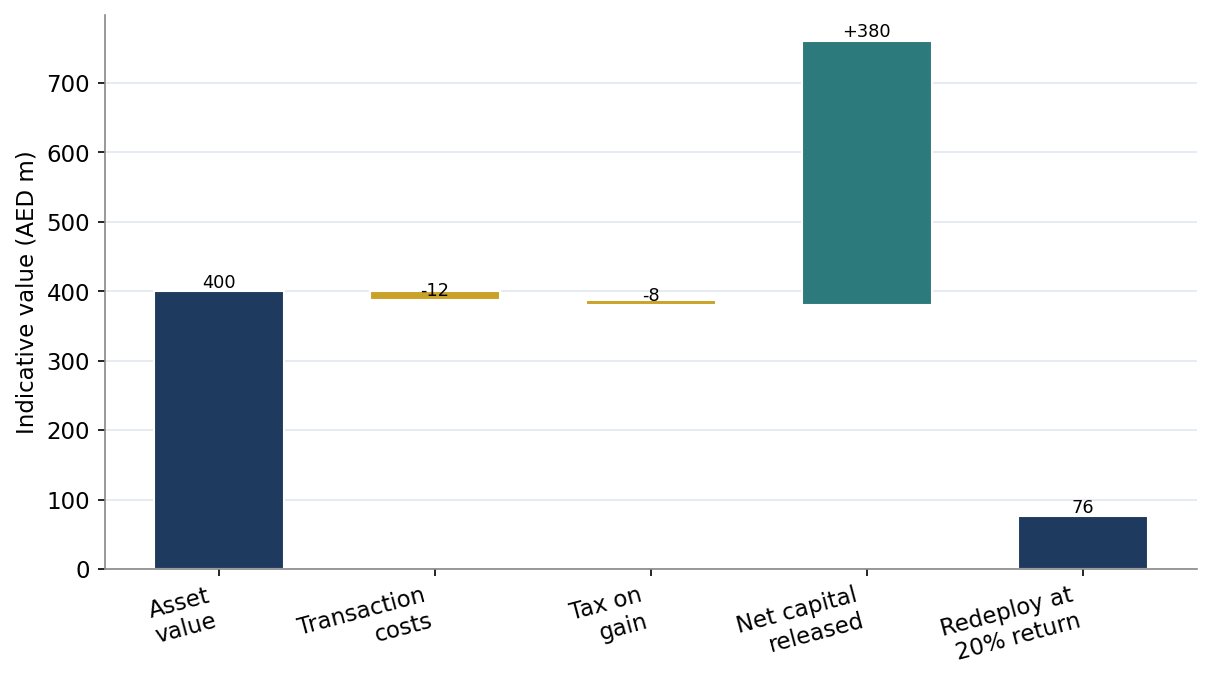
The capital released by an SLB is the sale price net of transaction costs and any tax on the gain, and Figure 4 sets out this calculation. The headline asset value is reduced by the costs of the transaction and any tax, to arrive at the net capital released, which is then available for redeployment at the business return on capital.
Figure 4. Net Capital Released and Its Redeployment
Asset value net of costs and tax, redeployed at the business return on capital. Not a forecast.
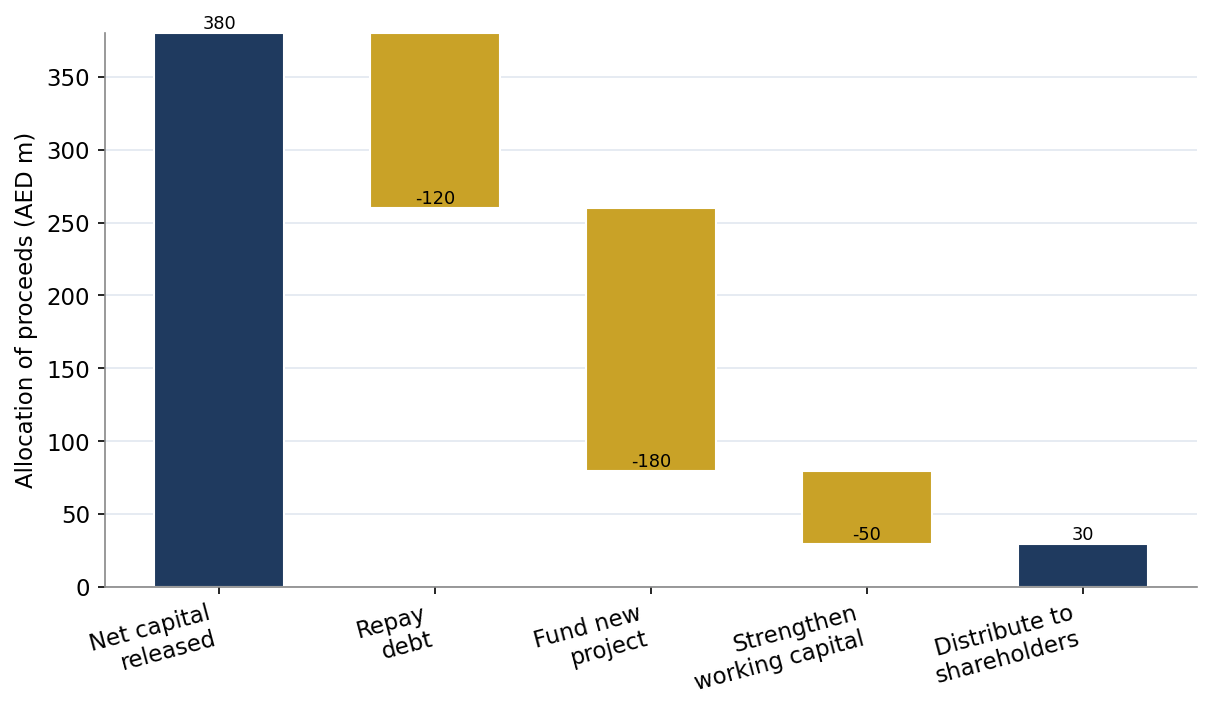
The use of the proceeds is the decision that determines whether the SLB creates value, because the redeployment return is half of the arbitrage. The most value-creating uses are investments in the core business that earn the business full return on capital: expanding capacity, entering new markets, acquiring a competitor, or funding a high-return project. Less value-creating uses include repaying debt, which earns only the avoided interest cost, and distributing to shareholders, which creates value only if the shareholders can redeploy at a higher return than the business. The least value-creating use is to hold the proceeds as cash, which earns less than the capitalisation rate and destroys value.
A business contemplating an SLB should therefore have a clear and committed plan for the proceeds before it transacts, because the SLB is only as good as the use to which the released capital is put. An SLB executed without a redeployment plan, leaving the proceeds idle while the rent accrues, is value-destructive, and it is one of the most common errors in the use of the tool. The discipline of identifying and committing to a high-return redeployment before transacting is what separates a value-creating SLB from a value-destructive one.
The redeployment decision can be framed as a simple hurdle test. Each candidate use of the proceeds is assessed against the capitalisation rate the business is paying in rent, and only uses that clear this hurdle create value. Investment in the core business that earns the full return on capital clears it comfortably; debt repayment clears it only if the interest saved exceeds the rent yield; and holding cash fails it outright. Ranking the candidate uses against this hurdle, and applying the proceeds to the highest-ranked uses first, ensures that the released capital is deployed where it earns most, and it converts the vague intention to put the money to good use into a concrete and disciplined allocation.
| Structure | Capital released | Control retained | Complexity | Best for |
|---|---|---|---|---|
| Full SLB | Maximum | High (via lease) | Low | Core occupied assets |
| Partial SLB | Partial | High | Moderate | Retaining upside |
| Ground lease | Land value | Very high | Moderate | Land-heavy assets |
| Build-to-suit | Avoids outlay | High | Moderate | New facilities |
| Synthetic / hybrid | Variable | Variable | High | Bespoke objectives |
Risk Considerations
SLB transfers the property risk to the investor but creates new obligations and risks for the seller. The most important is the rent obligation: the business commits to a long stream of rent payments that it must meet regardless of its trading performance, converting a flexible owned asset into a fixed liability. A business whose trading is volatile must consider whether it can meet the rent through a downturn, because a failure to do so would breach the lease and jeopardise its occupancy. The fixed nature of the rent obligation is the principal risk SLB creates, and it should be sized against the business stressed cash flow rather than its base case.
A second risk concerns the rent escalation. A lease with uncapped escalations, perhaps linked to an index, exposes the business to rising occupancy costs over the long lease term, and in a high-inflation environment these escalations can become onerous. A business will prefer fixed or capped escalations that give it certainty, and the negotiation of the escalation mechanism is one of the most important and most overlooked aspects of the lease. A third risk is the residual position at lease end: a business that has not secured a renewal or repurchase right faces the prospect of losing the asset, or renewing at an open-market rent that may be far higher, when the lease expires, and it should address this through renewal and repurchase provisions negotiated at the outset.
The rent and escalation risks interact with the business operating leverage in a way that deserves attention. A business with high fixed operating costs and volatile revenues adds, through an SLB, another large fixed cost in the form of rent, increasing its operating leverage and its vulnerability to a downturn. A business with low fixed costs and stable revenues can absorb the rent obligation comfortably. The suitability of an SLB therefore depends partly on the business existing cost structure and revenue stability, and a business with already high operating leverage should approach the additional fixed rent obligation with caution, sizing it against a genuine downside rather than its base case.
Considerations Specific to the GCC
Corporate tax and the deductibility of rent
The introduction of corporate tax in parts of the GCC is the single most important recent development for SLB economics. By making rent a deductible expense, corporate tax improves the after-tax cost of leasing relative to owning, strengthening the case for SLB. A business operating in a taxable environment should incorporate the rent deduction into its analysis, as it can materially improve the after-tax arbitrage and tip a marginal transaction into clearly value-creating territory. The interaction of the rent deduction with the tax on the sale gain, and with any depreciation the business would otherwise have claimed, should be assessed with professional advice for each specific transaction.
Ownership rules and structuring
Real estate ownership in parts of the GCC is subject to rules on foreign ownership and on the location of freehold and leasehold interests, and these rules shape both the pool of investors that can buy an SLB asset and the structures through which a transaction can be effected. A business contemplating an SLB should understand the ownership framework applicable to its asset, as it determines which investors can participate and therefore the depth of the buyer pool and the capitalisation rate achievable. In some cases, structuring through a free zone or a particular ownership vehicle can widen the investor pool and improve the terms.
Shariah-compliant sale-and-leaseback through Ijara
The Ijara structure, central to Islamic finance, is in essence a Shariah-compliant lease, and it provides a natural route to a compliant SLB. A business that sells its asset to an investor and leases it back through an Ijara achieves the economic effect of an SLB within a compliant framework, accessing the deep pool of compliant capital in the region. For a business whose own mandate or whose investor base favours compliant structures, the Ijara-based SLB is not a constraint but an opportunity, widening the pool of potential buyers and, in the right conditions, improving the terms. The prevalence and acceptance of Ijara in the region make Shariah-compliant SLB straightforward to execute.
| Line | AED m | Note |
|---|---|---|
| Asset value (sale price) | 400.0 | 7% cap rate on market rent |
| Transaction costs and tax | (20.0) | Costs and tax on gain |
| Net capital released | 380.0 | Available for redeployment |
| Annual rent paid | 28.0 | 7% of value, capped escalation |
| Annual value created | ~49.4 | 13% spread on 380m released |
Indicative Case Studies
Three indicative cases show the framework applied across different situations. The figures are synthetic and constructed for analytical clarity, not drawn from any specific transaction.
Case A: corporate headquarters
Case A is a profitable services business that owns its headquarters, an asset worth four hundred million dirhams that ties up capital earning only the avoided rent. The business has attractive growth opportunities earning a twenty percent return on capital. It executes a full SLB at a seven percent capitalisation rate on a twenty-five year lease with renewal and repurchase options, releasing the capital net of costs and tax and redeploying it into its growth. The arbitrage is wide, a twenty percent redeployment return against a seven percent rent yield, and the SLB creates substantial value while the long lease and options preserve the business control of its headquarters.
Table 2. Case A Economics, Corporate Headquarters SLB
Value created is the spread between redeployment return and rent yield on the released capital. Not transaction-specific.
Case B: developer-held completed units
Case B is a developer holding a block of completed units that it operates as a leasing portfolio. Rather than sell the units in bulk and exit entirely, as in the previous paper, the developer executes a partial SLB, selling the units to an investor and leasing them back to continue operating them, releasing the capital while retaining the operating relationship and some upside. This structure suits a developer that values the operating income and the customer relationships but needs the capital, and it blends the capital release of an SLB with the retention of an operating role.
Table 3. Case B Economics, Developer Units Partial SLB
Partial SLB releases capital while retaining an operating role and upside. Not transaction-specific.
Case C: family business industrial facility
Case C is a family manufacturing business that owns its industrial facility, an asset accumulated over decades that ties up capital the business needs to fund expansion and a generational transition. The business executes a full SLB through a Shariah-compliant Ijara structure, releasing the capital to fund new equipment and to provide liquidity for the succession, while a long lease secures the facility for the operating business. The case illustrates SLB as a tool for family businesses, releasing capital trapped in legacy real estate to fund growth and succession without selling the operating business or losing the facility.
Table 4. Case C Economics, Family Business Industrial SLB
SLB funds growth and succession from legacy real estate while a long lease secures the facility. Not transaction-specific.
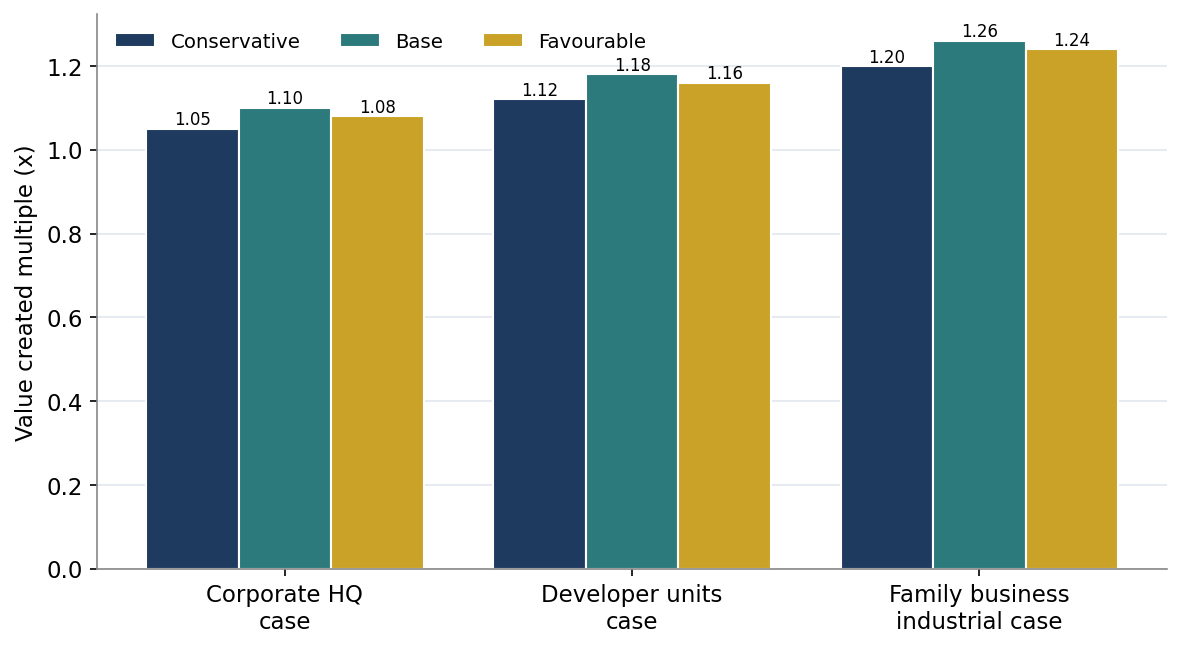
Figure 6. Value Created Multiple by Case and Scenario
| Line | AED m | Note |
|---|---|---|
| Industrial facility value | 320.0 | Legacy owned asset, Ijara SLB |
| Net capital released | 305.0 | After costs |
| Fund new equipment | 150.0 | Core expansion |
| Liquidity for succession | 100.0 | Buy out non-active members |
| Lease secures facility | 25-yr | Operating business retains use |
Sensitivity and Scenario Analysis
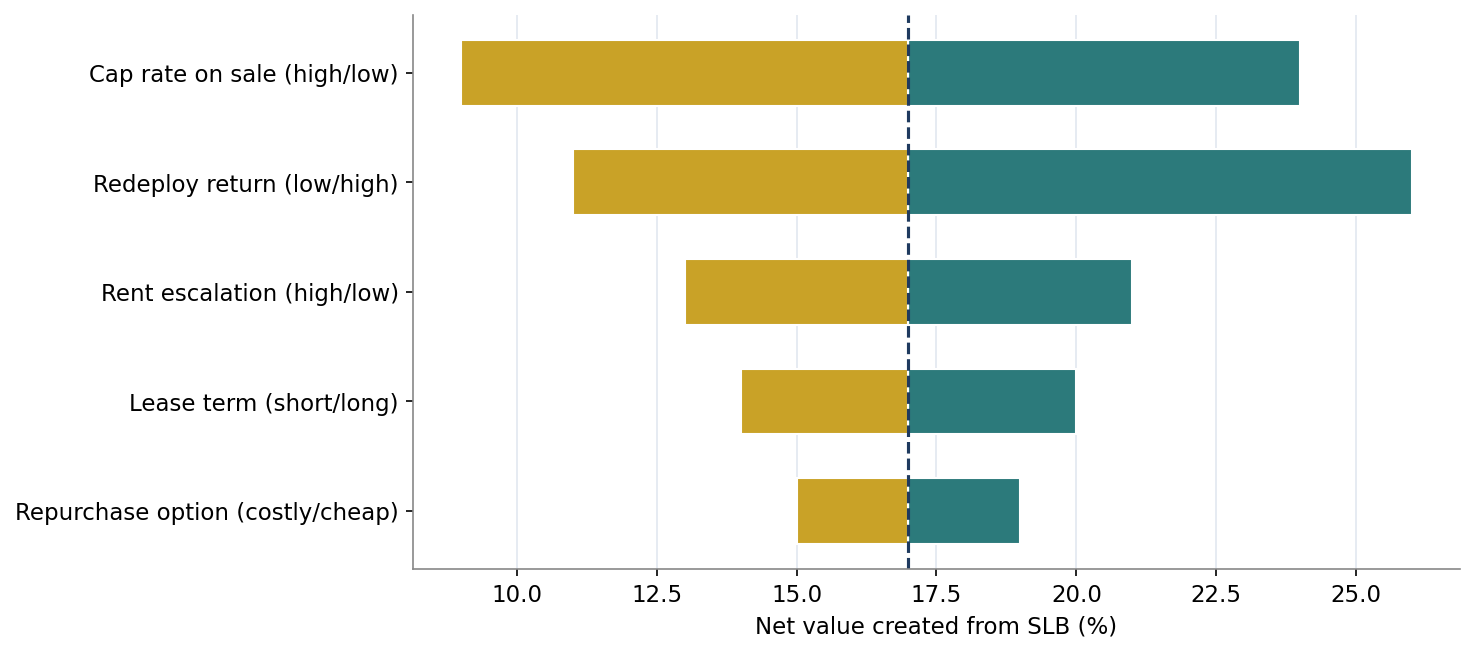
A tornado analysis identifies the variables that most influence the value created by an SLB. Figure 7 presents the result.
Figure 7. Sensitivity of Value Created to Key Variables
Each bar shows the value created when the labelled variable moves to its low or high case. Dashed line is the base case. Indicative.
The analysis confirms that the capitalisation rate and the redeployment return dominate the value created, while the lease terms, the escalation and the repurchase option, though important for control and risk, are second-order for the headline value. This is intuitive, since the capitalisation rate and the redeployment return are the two sides of the central arbitrage. The implication for the business is that effort should be concentrated on minimising the capitalisation rate, by strengthening the covenant and the lease and selling to the right investor, and on maximising the redeployment return, by committing the proceeds to the highest-return use available. The lease terms should be negotiated to retain the control that matters and to contain the rent and residual risks, but they are not the principal driver of the value created.
Table 5. Scenario Matrix for SLB Value Created
SLB creates value while the redeployment return exceeds the cap rate. Not a forecast.
The scenario matrix makes the decision rule explicit. SLB creates value while the redeployment return exceeds the capitalisation rate, and the margin of value depends on the width of that spread. The unfavourable scenario, in which a weak covenant attracts a high capitalisation rate and the business has only low-return uses for the capital, is the one in which SLB should be avoided, because the business would be paying more in rent than it earns on the proceeds. The business task is to identify which scenario it is in, by honestly assessing both the capitalisation rate its asset and covenant will attract and the return it can earn on the released capital, and to proceed only where the arbitrage is genuinely favourable.
Common Errors and How to Avoid Them
A recognisable set of errors recurs in SLB, each flowing from a failure to analyse the transaction as the capital-allocation decision it is.
No redeployment plan. Executing an SLB without a committed, high-return use for the proceeds leaves the released capital idle while the rent accrues, destroying value. The remedy is to identify and commit to the redeployment before transacting.
Sacrificing control for price. Accepting a short lease to secure a lower rent or higher price sacrifices the security of tenure that is the point of retaining control. The remedy is to secure a long lease with renewal and repurchase options.
Uncapped escalations. Agreeing uncapped rent escalations exposes the business to rising occupancy costs over the long lease term. The remedy is to negotiate fixed or capped escalations.
Under-protecting strategic assets. Selling a strategic asset on terms that do not guarantee long-term occupancy risks the business access to an asset it cannot do without. The remedy is to secure strategic assets with the strongest tenure protections.
Selling to the wrong investor. Selling to the first available investor rather than the one that values the asset most concedes a higher capitalisation rate than necessary. The remedy is to run a competitive process targeting the investors that value the asset most.
Each of these errors is avoidable with the discipline the framework encourages: begin with the high-return use of the proceeds, secure the control that matters through the lease, contain the rent and residual risks, and sell to the investor that values the asset most.
Implementation Roadmap
Begin with the high-return use of capital that the SLB would fund, and confirm that its return exceeds the capitalisation rate the asset will attract, since this arbitrage is the source of value.
Assess the strategic importance of the asset and determine the tenure protections, lease length, renewal and repurchase rights, required to preserve the control that matters.
Estimate the capitalisation rate the asset and covenant will attract, and identify the lease terms and covenant enhancements that would lower it.
Analyse the accounting, tax and balance-sheet effects, including the rent deduction under corporate tax and the tax on the sale gain, with professional advice.
Select the structure, full, partial, ground lease, build-to-suit or Shariah-compliant Ijara, that best matches the business objectives for capital release and control.
Run a competitive process targeting the investors that value the asset most highly, to achieve the lowest capitalisation rate and the best terms.
Commit the released capital to the identified high-return use promptly, so that the redeployment arbitrage that justifies the SLB is actually realised.
The roadmap deliberately begins with the use of capital rather than with the asset, because this ordering prevents the most common strategic error. A business that begins by deciding to sell an asset and then searches for a use for the proceeds has reversed the logic, and it risks executing an SLB whose proceeds end up in a low-return use that does not justify the rent. A business that begins with a high-return opportunity it cannot otherwise fund, and then identifies SLB as the means of funding it, ensures from the outset that the released capital has a destination that justifies the transaction. The opportunity should drive the financing, not the other way around.
| Scenario | Cap rate on sale | Redeployment return | Value created |
|---|---|---|---|
| Favourable | Low (6.5%) | High (20%) | Strongly positive |
| Base | Moderate (7.0%) | Moderate (15%) | Positive |
| Marginal | High (8.0%) | Low (10%) | Marginally positive |
| Unfavourable | High (8.5%) | Very low (7%) | Neutral to negative |
Limitations and Directions for Further Research
This paper is framework-oriented and relies on indicative data, and its conclusions are directional rather than precise. The capitalisation rates, redeployment returns and lease terms are calibrated to observable conditions but are not empirical estimates, and they vary materially across asset types, locations and covenants. The accounting and tax effects are described in general terms and require professional advice for any specific transaction, particularly given the evolving corporate tax framework in the region.
Several extensions would strengthen the analysis. An empirical study of realised SLB capitalisation rates across GCC asset types and covenants would replace the indicative ranges with data. A detailed analysis of the after-tax economics under the specific corporate tax rules now applying would sharpen the tax dimension that this paper treats in general terms. And a study of how SLB structures have performed for sellers through a downturn, when the fixed rent obligation is most onerous, would test the resilience of the technique in the conditions where its risks are greatest. Each is a natural subject for a later paper in this series.