

1. Define the portfolio perimeter
The decision question is which companies, sites, land rights, power systems, fibre links, customer contracts, guarantees, accounts and cash flows support the facility. The evidence file should begin with entity charts, ownership records, site schedules, contracts, permits, account mandates, security documents and intercompany agreements. Each item should record source, date, legal owner, responsible reviewer, expiry or refresh date and the affected site, country and customer. Regional digital growth provides context. It does not establish a specific project's repayment source or remedy. [1][2]
The principal failure is that a branded regional platform is treated as one borrower even though value and remedies sit in separate entities and countries. Portfolio finance converts multiple construction and operating exposures into one lender claim. The lender needs a traceable chain from site rights and verified capacity to accepted service, invoiced revenue, collected cash, support claims and executable recovery.
The recommended response is to map every asset, obligation, cash flow and enforcement right to its legal owner and financing vehicle. Management estimates may support scenarios when identified and reconciled to observed evidence. The central case should retain current contracts, verified availability and cash that can reach the debt accounts. Downside analysis should combine related power, fibre, customer, currency, country, liquidity and enforcement effects.
2. Identify the edge-demand case
The decision question is which latency, localisation, resilience, content, enterprise and public-service needs support each site. The evidence file should begin with traffic studies, customer workloads, internet-exchange data, mobile demand, enterprise pipeline and signed commitments. Each item should record source, date, legal owner, responsible reviewer, expiry or refresh date and the affected site, country and customer. Regional digital growth provides context. It does not establish a specific project's repayment source or remedy. [3][4]
The principal failure is that continent-wide digital growth substitutes for a city-level demand and customer case. Portfolio finance converts multiple construction and operating exposures into one lender claim. The lender needs a traceable chain from site rights and verified capacity to accepted service, invoiced revenue, collected cash, support claims and executable recovery.
The recommended response is to underwrite demand by catchment, workload, customer and executable contract rather than regional headline growth. Management estimates may support scenarios when identified and reconciled to observed evidence. The central case should retain current contracts, verified availability and cash that can reach the debt accounts. Downside analysis should combine related power, fibre, customer, currency, country, liquidity and enforcement effects.
3. Standardise site archetypes
The decision question is which modular design, capacity, redundancy, cooling, security and service scope can repeat across markets. The evidence file should begin with design basis, equipment schedule, operating standards, site surveys, climate data and customer specifications. Each item should record source, date, legal owner, responsible reviewer, expiry or refresh date and the affected site, country and customer. Regional digital growth provides context. It does not establish a specific project's repayment source or remedy. [5][6]
The principal failure is that facilities described as standard contain material differences in capacity, equipment, resilience and operating cost. Portfolio finance converts multiple construction and operating exposures into one lender claim. The lender needs a traceable chain from site rights and verified capacity to accepted service, invoiced revenue, collected cash, support claims and executable recovery.
The recommended response is to define approved archetypes and quantify every permitted deviation before funding. Management estimates may support scenarios when identified and reconciled to observed evidence. The central case should retain current contracts, verified availability and cash that can reach the debt accounts. Downside analysis should combine related power, fibre, customer, currency, country, liquidity and enforcement effects.
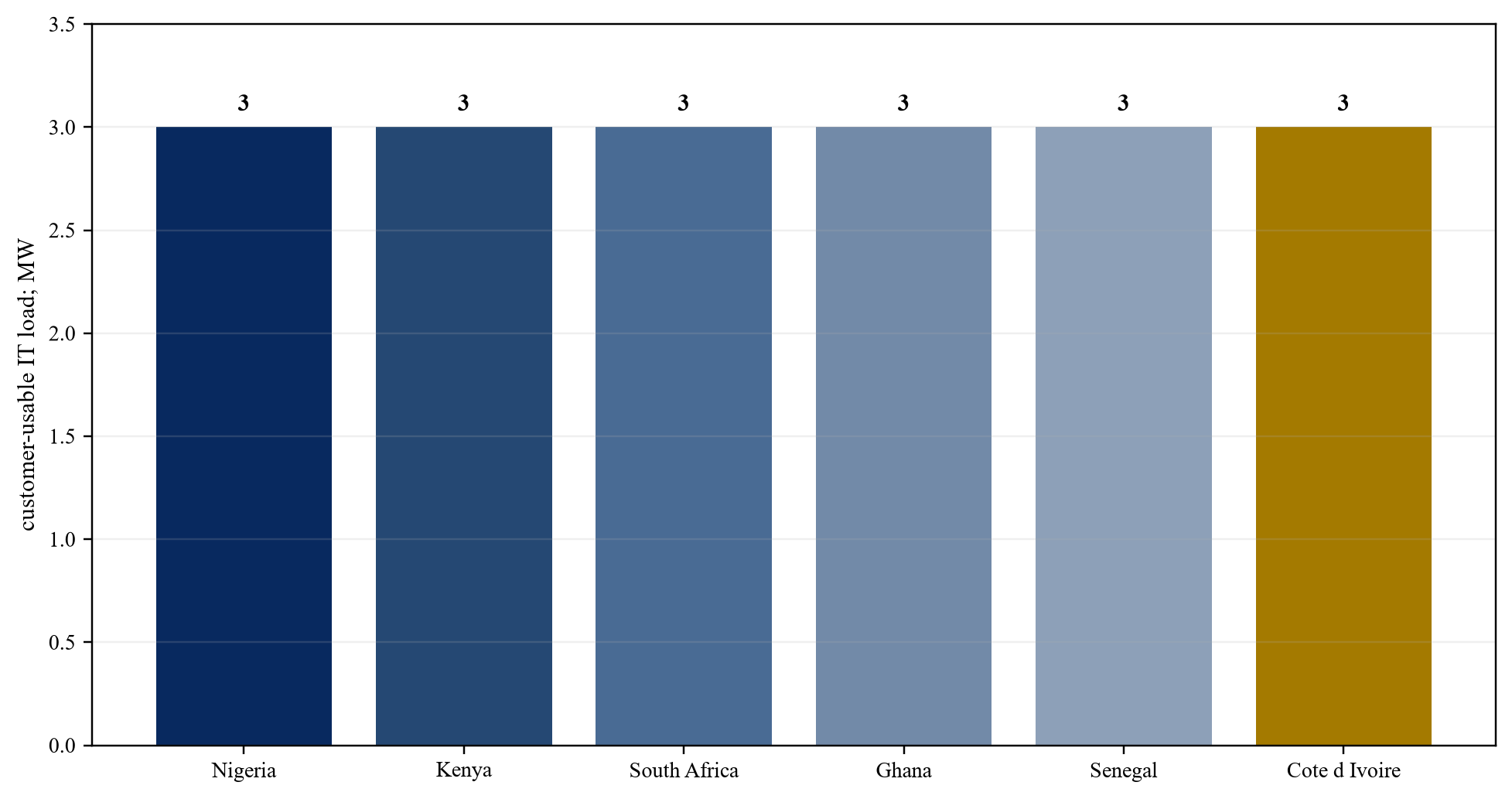
Wholly hypothetical; customer-usable IT load in MW.
4. Build the anchor-commitment ladder
The decision question is which tenant documents create demand evidence, prepayment, minimum revenue and enforceable payment. The evidence file should begin with letters of interest, reservations, prepayments, service agreements, acceptance schedules and guarantees. Each item should record source, date, legal owner, responsible reviewer, expiry or refresh date and the affected site, country and customer. Regional digital growth provides context. It does not establish a specific project's repayment source or remedy. [7][8]
The principal failure is that anchor status is inferred from brand or expected traffic rather than an enforceable obligation. Portfolio finance converts multiple construction and operating exposures into one lender claim. The lender needs a traceable chain from site rights and verified capacity to accepted service, invoiced revenue, collected cash, support claims and executable recovery.
The recommended response is to classify every commitment by capacity, price, term, conditions, remedy, obligor and support. Management estimates may support scenarios when identified and reconciled to observed evidence. The central case should retain current contracts, verified availability and cash that can reach the debt accounts. Downside analysis should combine related power, fibre, customer, currency, country, liquidity and enforcement effects.
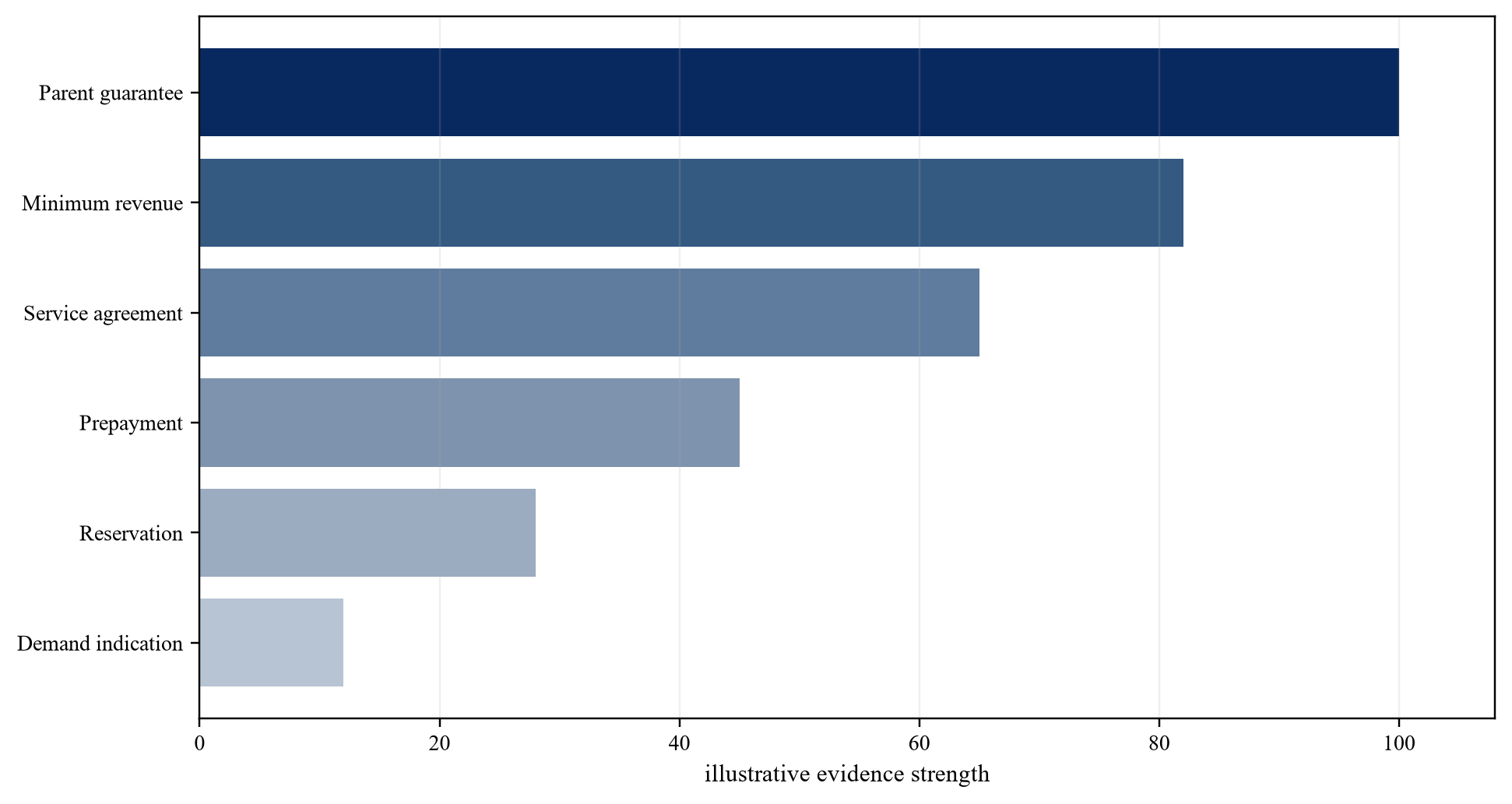
Proposed hierarchy; executed terms and applicable law determine enforceability.
| Commitment | Core evidence | Financing treatment |
|---|---|---|
| demand indication | non-binding interest | market context only |
| reservation | capacity, fee and expiry | conditional evidence |
| prepayment | funded cash and refund rights | liability-adjusted source |
| service agreement | scope, price, term and acceptance | contracted cash subject to conditions |
| minimum revenue | enforceable floor and remedies | stressed contracted cash |
| parent guarantee | valid support and obligor capacity | limited credit enhancement |
Proposed classification; documents and applicable law determine treatment.
5. Underwrite the guarantee
The decision question is what amount, period, trigger, defence, cap, currency and enforcement route apply to parent support. The evidence file should begin with executed guarantee, board authority, legal opinions, governing law, financial statements and claims mechanics. Each item should record source, date, legal owner, responsible reviewer, expiry or refresh date and the affected site, country and customer. Regional digital growth provides context. It does not establish a specific project's repayment source or remedy. [8][9]
The principal failure is that guaranteed revenue is modelled without the limits and conditions that determine collection. Portfolio finance converts multiple construction and operating exposures into one lender claim. The lender needs a traceable chain from site rights and verified capacity to accepted service, invoiced revenue, collected cash, support claims and executable recovery.
The recommended response is to value the guarantee only after contractual, credit, jurisdictional and timing haircuts. Management estimates may support scenarios when identified and reconciled to observed evidence. The central case should retain current contracts, verified availability and cash that can reach the debt accounts. Downside analysis should combine related power, fibre, customer, currency, country, liquidity and enforcement effects.
6. Verify anchor credit quality
The decision question is which entity owes service payments and which entity provides support. The evidence file should begin with group structure, audited accounts, ratings, covenant data, guarantee and intercreditor documents. Each item should record source, date, legal owner, responsible reviewer, expiry or refresh date and the affected site, country and customer. Regional digital growth provides context. It does not establish a specific project's repayment source or remedy. [7][10]
The principal failure is that a regional telecom or cloud brand is treated as equivalent to the credit of the actual obligor. Portfolio finance converts multiple construction and operating exposures into one lender claim. The lender needs a traceable chain from site rights and verified capacity to accepted service, invoiced revenue, collected cash, support claims and executable recovery.
The recommended response is to underwrite each obligor and guarantor and monitor changes in ownership, leverage, liquidity and legal capacity. Management estimates may support scenarios when identified and reconciled to observed evidence. The central case should retain current contracts, verified availability and cash that can reach the debt accounts. Downside analysis should combine related power, fibre, customer, currency, country, liquidity and enforcement effects.
7. Create the standard contract suite
The decision question is which provisions remain consistent across service, power, fibre, maintenance, site and finance documents. The evidence file should begin with approved forms, deviation schedules, legal opinions, customer amendments and country annexes. Each item should record source, date, legal owner, responsible reviewer, expiry or refresh date and the affected site, country and customer. Regional digital growth provides context. It does not establish a specific project's repayment source or remedy. [8][11]
The principal failure is that portfolio modelling assumes common economics while termination, credits, acceptance and indexation differ by site. Portfolio finance converts multiple construction and operating exposures into one lender claim. The lender needs a traceable chain from site rights and verified capacity to accepted service, invoiced revenue, collected cash, support claims and executable recovery.
The recommended response is to use controlled templates with a quantified deviation register and lender consent thresholds. Management estimates may support scenarios when identified and reconciled to observed evidence. The central case should retain current contracts, verified availability and cash that can reach the debt accounts. Downside analysis should combine related power, fibre, customer, currency, country, liquidity and enforcement effects.
| Provision | Standard position | Escalation trigger |
|---|---|---|
| acceptance | witnessed site test | subjective customer discretion |
| minimum revenue | stated amount and dates | usage-only payment |
| service credits | capped and measurable | uncapped remedy |
| termination | defined default and cure | convenience termination |
| indexation | documented currency formula | unilateral reset |
| assignment | lender and successor rights | prohibited transfer |
Proposed control; each country requires legal review.
8. Gate site readiness
The decision question is which land, permits, construction, power, network, security and customer conditions permit a site draw. The evidence file should begin with title or lease, permits, designs, contracts, engineer reports, utility evidence, fibre orders and acceptance plan. Each item should record source, date, legal owner, responsible reviewer, expiry or refresh date and the affected site, country and customer. Regional digital growth provides context. It does not establish a specific project's repayment source or remedy. [12][13]
The principal failure is that capital is advanced because a site is in the rollout plan before it is legally and technically financeable. Portfolio finance converts multiple construction and operating exposures into one lender claim. The lender needs a traceable chain from site rights and verified capacity to accepted service, invoiced revenue, collected cash, support claims and executable recovery.
The recommended response is to require a site-specific readiness certificate and sufficient remaining funds before every construction draw. Management estimates may support scenarios when identified and reconciled to observed evidence. The central case should retain current contracts, verified availability and cash that can reach the debt accounts. Downside analysis should combine related power, fibre, customer, currency, country, liquidity and enforcement effects.
| Gate | Evidence | Stop-draw event |
|---|---|---|
| site rights | title or lease and consents | defect or expiry |
| permits | construction and operation approvals | missing approval |
| power | rights, works and tests | delay or capacity loss |
| fibre | contracts and physical diversity | shared route or expiry |
| customer | aligned scope and acceptance | downsizing or termination |
| funding | balanced sources and remaining cost | shortfall |
Proposed lender gate; finance documents determine conditions.
9. Prove power availability
The decision question is which grid, generation, storage, backup, fuel and curtailment arrangements support contracted service. The evidence file should begin with connection rights, supply agreements, load studies, generator tests, fuel contracts, telemetry and outage history. Each item should record source, date, legal owner, responsible reviewer, expiry or refresh date and the affected site, country and customer. Regional digital growth provides context. It does not establish a specific project's repayment source or remedy. [14][15]
The principal failure is that installed equipment capacity is equated with reliable customer-usable IT load. Portfolio finance converts multiple construction and operating exposures into one lender claim. The lender needs a traceable chain from site rights and verified capacity to accepted service, invoiced revenue, collected cash, support claims and executable recovery.
The recommended response is to derive eligible load from tested concurrent power and cooling under the applicable resilience standard. Management estimates may support scenarios when identified and reconciled to observed evidence. The central case should retain current contracts, verified availability and cash that can reach the debt accounts. Downside analysis should combine related power, fibre, customer, currency, country, liquidity and enforcement effects.
10. Prove fibre and route diversity
The decision question is which carriers, paths, exchange points and cross-border links sustain service and recovery. The evidence file should begin with route maps, carrier contracts, diversity evidence, latency tests, outage history and step-in rights. Each item should record source, date, legal owner, responsible reviewer, expiry or refresh date and the affected site, country and customer. Regional digital growth provides context. It does not establish a specific project's repayment source or remedy. [2][16]
The principal failure is that two commercial contracts are treated as diversity despite shared ducts, landing stations or upstream networks. Portfolio finance converts multiple construction and operating exposures into one lender claim. The lender needs a traceable chain from site rights and verified capacity to accepted service, invoiced revenue, collected cash, support claims and executable recovery.
The recommended response is to verify physical route separation and define alternative capacity and cure rights. Management estimates may support scenarios when identified and reconciled to observed evidence. The central case should retain current contracts, verified availability and cash that can reach the debt accounts. Downside analysis should combine related power, fibre, customer, currency, country, liquidity and enforcement effects.
11. Rebuild sources and uses
The decision question is how land, civil work, power, cooling, network, security, financing, reserves and working capital are funded. The evidence file should begin with contracts, invoices, cost plans, tax treatment, procurement records and sponsor evidence. Each item should record source, date, legal owner, responsible reviewer, expiry or refresh date and the affected site, country and customer. Regional digital growth provides context. It does not establish a specific project's repayment source or remedy. [12][17]
The principal failure is that portfolio totals conceal underfunded sites, refundable taxes and unallocated central costs. Portfolio finance converts multiple construction and operating exposures into one lender claim. The lender needs a traceable chain from site rights and verified capacity to accepted service, invoiced revenue, collected cash, support claims and executable recovery.
The recommended response is to reconcile each use to a site, beneficiary, committed source and eligibility rule. Management estimates may support scenarios when identified and reconciled to observed evidence. The central case should retain current contracts, verified availability and cash that can reach the debt accounts. Downside analysis should combine related power, fibre, customer, currency, country, liquidity and enforcement effects.
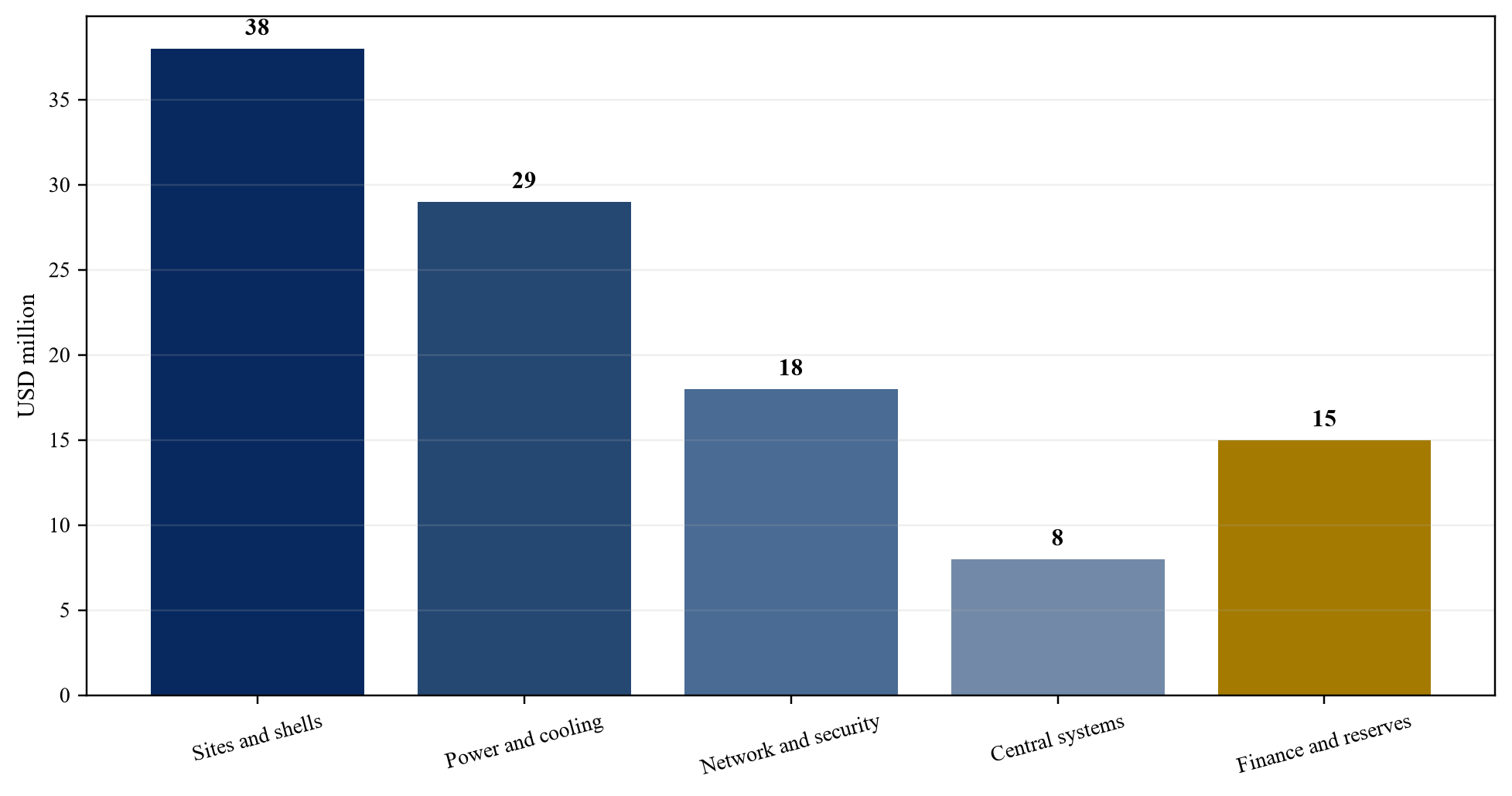
Wholly hypothetical; USD million.
12. Allocate shared and central cost
The decision question is how network operations, monitoring, software, spares, staff and development cost are allocated. The evidence file should begin with cost centres, service agreements, headcount, licences, spares policy and site utilisation. Each item should record source, date, legal owner, responsible reviewer, expiry or refresh date and the affected site, country and customer. Regional digital growth provides context. It does not establish a specific project's repayment source or remedy. [17][18]
The principal failure is that central cost is omitted from site economics or allocated by an arbitrary revenue percentage. Portfolio finance converts multiple construction and operating exposures into one lender claim. The lender needs a traceable chain from site rights and verified capacity to accepted service, invoiced revenue, collected cash, support claims and executable recovery.
The recommended response is to use an auditable driver and test both site contribution and portfolio cash after shared cost. Management estimates may support scenarios when identified and reconciled to observed evidence. The central case should retain current contracts, verified availability and cash that can reach the debt accounts. Downside analysis should combine related power, fibre, customer, currency, country, liquidity and enforcement effects.
13. Design construction draw gates
The decision question is which progress, budget, power, fibre, customer and security evidence permits each advance. The evidence file should begin with draw request, invoices, engineer certificate, customer schedule, account statement and remaining-cost test. Each item should record source, date, legal owner, responsible reviewer, expiry or refresh date and the affected site, country and customer. Regional digital growth provides context. It does not establish a specific project's repayment source or remedy. [12][13]
The principal failure is that portfolio debt grows while specific sites lose readiness or customer alignment. Portfolio finance converts multiple construction and operating exposures into one lender claim. The lender needs a traceable chain from site rights and verified capacity to accepted service, invoiced revenue, collected cash, support claims and executable recovery.
The recommended response is to gate each draw by site and suspend the portfolio when common or concentration failures arise. Management estimates may support scenarios when identified and reconciled to observed evidence. The central case should retain current contracts, verified availability and cash that can reach the debt accounts. Downside analysis should combine related power, fibre, customer, currency, country, liquidity and enforcement effects.
14. Create the telemetry evidence chain
The decision question is how physical capacity, availability, consumption, incidents and customer service become lender evidence. The evidence file should begin with meter data, building systems, network monitoring, tickets, logs, invoices and immutable audit trails. Each item should record source, date, legal owner, responsible reviewer, expiry or refresh date and the affected site, country and customer. Regional digital growth provides context. It does not establish a specific project's repayment source or remedy. [19][20]
The principal failure is that management reports aggregate availability without reconciling sensors, incidents, credits and billing. Portfolio finance converts multiple construction and operating exposures into one lender claim. The lender needs a traceable chain from site rights and verified capacity to accepted service, invoiced revenue, collected cash, support claims and executable recovery.
The recommended response is to preserve site-level source data, exception ownership and independent access for the finance parties. Management estimates may support scenarios when identified and reconciled to observed evidence. The central case should retain current contracts, verified availability and cash that can reach the debt accounts. Downside analysis should combine related power, fibre, customer, currency, country, liquidity and enforcement effects.
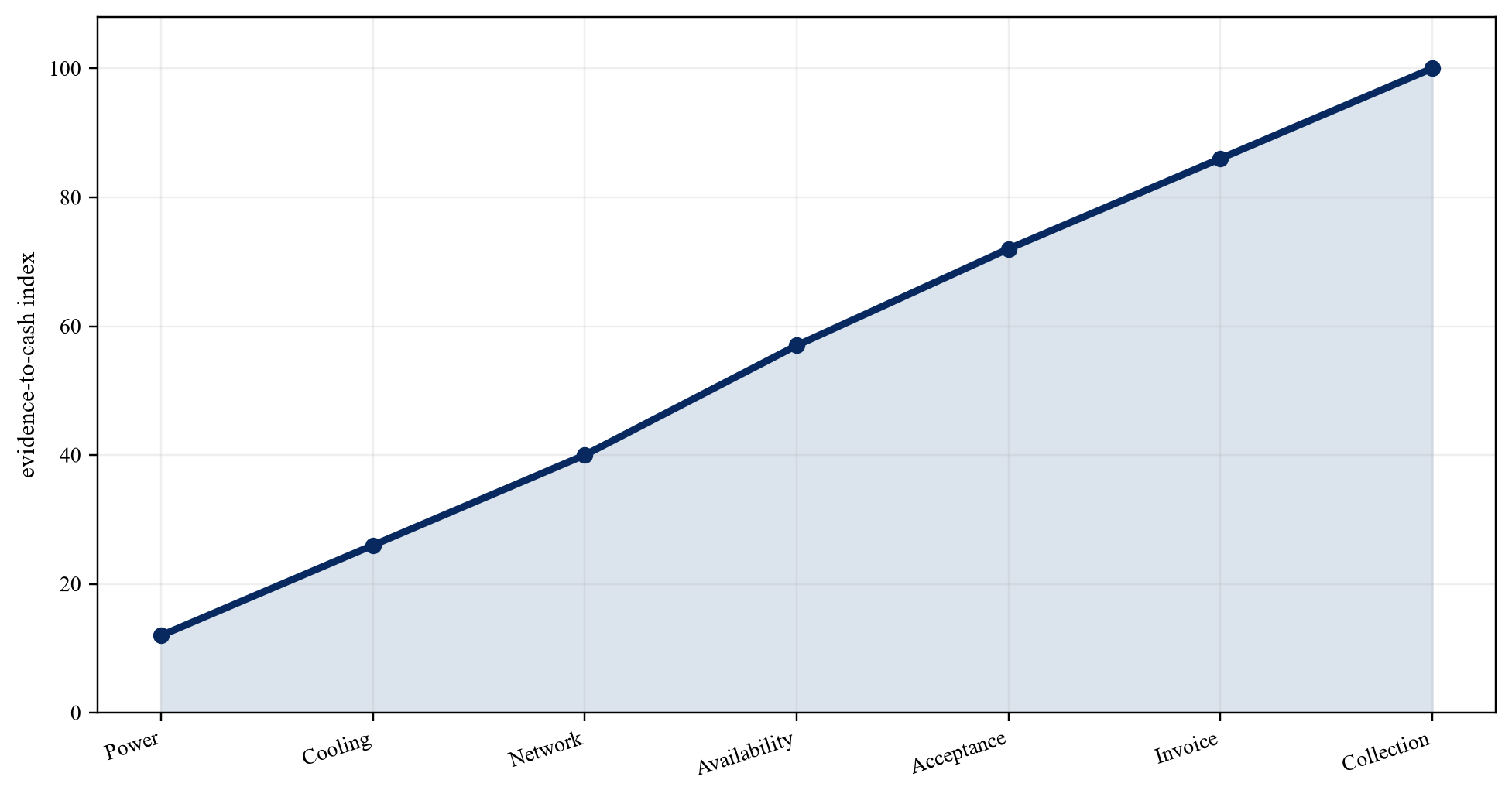
Proposed control sequence; contracts determine actual billing rights.
| Evidence point | Source | Financial use |
|---|---|---|
| available power | meter and switchgear | eligible capacity |
| cooling performance | building system | service availability |
| network uptime | carrier and network monitor | contract compliance |
| accepted capacity | customer certificate | billing right |
| invoice | finance system | receivable |
| bank receipt | controlled account | debt-service cash |
Proposed control chain; source systems require independent assurance.
15. Translate service into collected cash
The decision question is when tested capacity and availability create enforceable invoices and bank receipts. The evidence file should begin with acceptance records, minimum-revenue terms, metering, invoices, credits, disputes and bank statements. Each item should record source, date, legal owner, responsible reviewer, expiry or refresh date and the affected site, country and customer. Regional digital growth provides context. It does not establish a specific project's repayment source or remedy. [8][18]
The principal failure is that contracted megawatts and reported availability are treated as cash before acceptance, credit and collection. Portfolio finance converts multiple construction and operating exposures into one lender claim. The lender needs a traceable chain from site rights and verified capacity to accepted service, invoiced revenue, collected cash, support claims and executable recovery.
The recommended response is to model revenue from enforceable billing events and reconcile it monthly to collected cash. Management estimates may support scenarios when identified and reconciled to observed evidence. The central case should retain current contracts, verified availability and cash that can reach the debt accounts. Downside analysis should combine related power, fibre, customer, currency, country, liquidity and enforcement effects.
16. Control currency and cash movement
The decision question is how local-currency revenue, dollar-linked obligations, taxes, convertibility and distributions affect debt service. The evidence file should begin with contracts, account statements, hedge terms, tax advice, exchange controls and distribution approvals. Each item should record source, date, legal owner, responsible reviewer, expiry or refresh date and the affected site, country and customer. Regional digital growth provides context. It does not establish a specific project's repayment source or remedy. [21][22]
The principal failure is that portfolio cash is summed in one currency without conversion cost, timing, restriction or trapped-cash risk. Portfolio finance converts multiple construction and operating exposures into one lender claim. The lender needs a traceable chain from site rights and verified capacity to accepted service, invoiced revenue, collected cash, support claims and executable recovery.
The recommended response is to apply country-level cash waterfalls, liquidity buffers and permitted hedge or indexation rules. Management estimates may support scenarios when identified and reconciled to observed evidence. The central case should retain current contracts, verified availability and cash that can reach the debt accounts. Downside analysis should combine related power, fibre, customer, currency, country, liquidity and enforcement effects.
17. Map country and regulatory risk
The decision question is which licences, data rules, telecom approvals, foreign ownership and enforcement requirements apply. The evidence file should begin with licences, data-protection rules, permits, legal opinions, policy registers and compliance evidence. Each item should record source, date, legal owner, responsible reviewer, expiry or refresh date and the affected site, country and customer. Regional digital growth provides context. It does not establish a specific project's repayment source or remedy. [11][23]
The principal failure is that one operating model assumes rights and remedies transfer consistently across countries. Portfolio finance converts multiple construction and operating exposures into one lender claim. The lender needs a traceable chain from site rights and verified capacity to accepted service, invoiced revenue, collected cash, support claims and executable recovery.
The recommended response is to maintain a country annex and stop eligibility when a required approval or lawful operating basis changes. Management estimates may support scenarios when identified and reconciled to observed evidence. The central case should retain current contracts, verified availability and cash that can reach the debt accounts. Downside analysis should combine related power, fibre, customer, currency, country, liquidity and enforcement effects.
18. Integrate environmental and social controls
The decision question is how land, energy, fuel, water, noise, labour, security and community effects are managed. The evidence file should begin with impact studies, permits, plans, monitoring, incident records and stakeholder evidence. Each item should record source, date, legal owner, responsible reviewer, expiry or refresh date and the affected site, country and customer. Regional digital growth provides context. It does not establish a specific project's repayment source or remedy. [24][25]
The principal failure is that small modular sites are assumed immaterial despite cumulative fuel, battery and community effects. Portfolio finance converts multiple construction and operating exposures into one lender claim. The lender needs a traceable chain from site rights and verified capacity to accepted service, invoiced revenue, collected cash, support claims and executable recovery.
The recommended response is to apply portfolio standards with site-specific risk controls and lender reporting. Management estimates may support scenarios when identified and reconciled to observed evidence. The central case should retain current contracts, verified availability and cash that can reach the debt accounts. Downside analysis should combine related power, fibre, customer, currency, country, liquidity and enforcement effects.
19. Fund construction and operating liquidity
The decision question is how interest, commissioning, delay, fuel, repairs, customer ramp and trapped cash are financed. The evidence file should begin with monthly model, reserve accounts, sponsor commitments, insurance and downside actions. Each item should record source, date, legal owner, responsible reviewer, expiry or refresh date and the affected site, country and customer. Regional digital growth provides context. It does not establish a specific project's repayment source or remedy. [13][21]
The principal failure is that a fully funded construction plan excludes cash required between technical completion and stable collection. Portfolio finance converts multiple construction and operating exposures into one lender claim. The lender needs a traceable chain from site rights and verified capacity to accepted service, invoiced revenue, collected cash, support claims and executable recovery.
The recommended response is to size portfolio and country liquidity for combined delay, outage, ramp and currency scenarios. Management estimates may support scenarios when identified and reconciled to observed evidence. The central case should retain current contracts, verified availability and cash that can reach the debt accounts. Downside analysis should combine related power, fibre, customer, currency, country, liquidity and enforcement effects.
20. Set eligibility and portfolio covenants
The decision question is which site, customer, cash, performance and concentration tests protect lenders before payment default. The evidence file should begin with borrowing base, telemetry, contracts, accounts, valuations and compliance certificates. Each item should record source, date, legal owner, responsible reviewer, expiry or refresh date and the affected site, country and customer. Regional digital growth provides context. It does not establish a specific project's repayment source or remedy. [9][19]
The principal failure is that average coverage conceals a site cluster that is unbillable, unsupported or cash trapped. Portfolio finance converts multiple construction and operating exposures into one lender claim. The lender needs a traceable chain from site rights and verified capacity to accepted service, invoiced revenue, collected cash, support claims and executable recovery.
The recommended response is to combine site eligibility with portfolio DSCR, liquidity, concentration and stop-draw tests. Management estimates may support scenarios when identified and reconciled to observed evidence. The central case should retain current contracts, verified availability and cash that can reach the debt accounts. Downside analysis should combine related power, fibre, customer, currency, country, liquidity and enforcement effects.
| Test | Measurement | Possible response |
|---|---|---|
| eligible sites | fully gated site count | stop draws |
| billable capacity | accepted customer load | resize availability |
| availability | site and portfolio telemetry | cure or reserve |
| concentration | customer and country share | restrict expansion |
| liquidity | controlled unrestricted cash | cash trap |
| forward DSCR | collected cash after stress | prepay or cure |
Proposed framework; negotiated documents determine thresholds.
21. Apply the hypothetical twelve-site case
The decision question is how USD 108 million of uses and USD 58 million of debt behave across six countries. The evidence file should begin with the stated hypothetical site, cost, funding, contract, guarantee, reserve and conversion assumptions. Each item should record source, date, legal owner, responsible reviewer, expiry or refresh date and the affected site, country and customer. Regional digital growth provides context. It does not establish a specific project's repayment source or remedy. [1][12]
The principal failure is that one aggregate model hides which sites produce accepted and transferable cash. Portfolio finance converts multiple construction and operating exposures into one lender claim. The lender needs a traceable chain from site rights and verified capacity to accepted service, invoiced revenue, collected cash, support claims and executable recovery.
The recommended response is to show site-by-site cost, draw, acceptance, billable load, revenue, guarantee support and cash availability. Management estimates may support scenarios when identified and reconciled to observed evidence. The central case should retain current contracts, verified availability and cash that can reach the debt accounts. Downside analysis should combine related power, fibre, customer, currency, country, liquidity and enforcement effects.
| Metric | Central assumption | Conversion or downside |
|---|---|---|
| sites | 12 | minimum 10 accepted |
| planned customer-usable IT load | 18.0 MW | minimum 13.5 MW |
| total cost | USD 108m | USD 108m-120m |
| senior debt | USD 58m | capped at USD 58m |
| sponsor equity | USD 32m | plus cures |
| tenant prepayments and subordinated payments | USD 18m | USD 10m-18m |
| annualised contracted revenue | USD 30m | minimum USD 25m |
| forward DSCR | 1.62x | minimum 1.45x at conversion |
Wholly hypothetical; figures do not describe an identified transaction.
22. Convert site evidence into debt capacity
The decision question is how eligible sites, customer-usable load, contracted revenue and collection support availability. The evidence file should begin with site certificates, borrowing-base schedule, contracts, telemetry, accounts and downside model. Each item should record source, date, legal owner, responsible reviewer, expiry or refresh date and the affected site, country and customer. Regional digital growth provides context. It does not establish a specific project's repayment source or remedy. [9][13]
The principal failure is that full facility availability is reached before enough sites and cash flows satisfy conversion tests. Portfolio finance converts multiple construction and operating exposures into one lender claim. The lender needs a traceable chain from site rights and verified capacity to accepted service, invoiced revenue, collected cash, support claims and executable recovery.
The recommended response is to cap debt at the lower of eligible cost, stressed cash-flow capacity and net recovery support. Management estimates may support scenarios when identified and reconciled to observed evidence. The central case should retain current contracts, verified availability and cash that can reach the debt accounts. Downside analysis should combine related power, fibre, customer, currency, country, liquidity and enforcement effects.
23. Stress power, fibre and availability
The decision question is which correlated outages, fuel constraints, route failures and repair delays impair service. The evidence file should begin with utility history, fuel logistics, route maps, incident data, spares, response plans and customer credits. Each item should record source, date, legal owner, responsible reviewer, expiry or refresh date and the affected site, country and customer. Regional digital growth provides context. It does not establish a specific project's repayment source or remedy. [14][16]
The principal failure is that independent site sensitivities miss shared grid, carrier, supplier and operating dependencies. Portfolio finance converts multiple construction and operating exposures into one lender claim. The lender needs a traceable chain from site rights and verified capacity to accepted service, invoiced revenue, collected cash, support claims and executable recovery.
The recommended response is to run country-cluster and portfolio events with customer credits, costs, cures and cash effects. Management estimates may support scenarios when identified and reconciled to observed evidence. The central case should retain current contracts, verified availability and cash that can reach the debt accounts. Downside analysis should combine related power, fibre, customer, currency, country, liquidity and enforcement effects.
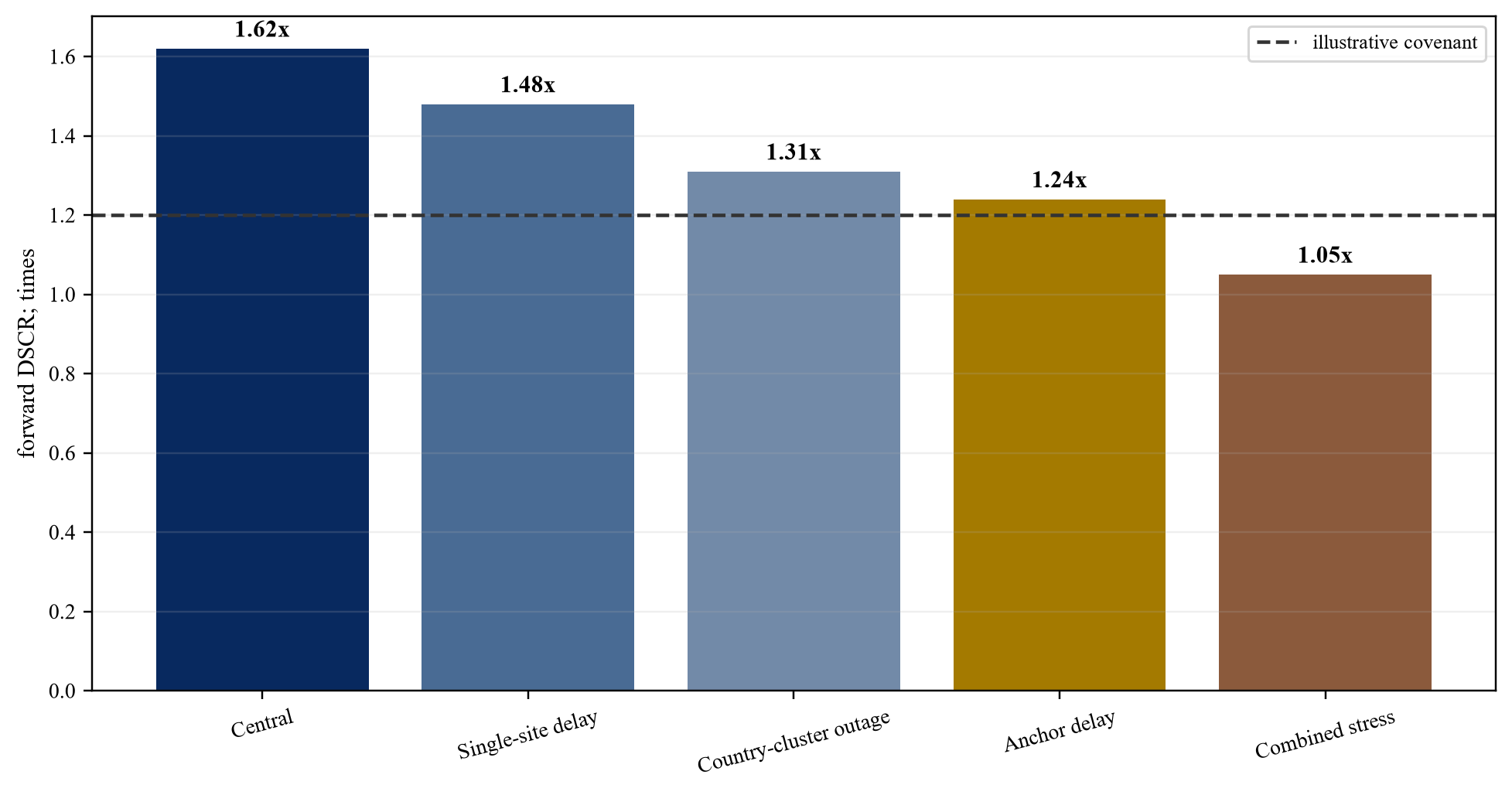
Wholly hypothetical; times debt service.
24. Stress anchor support
The decision question is how tenant failure, guarantee expiry, cap exhaustion, dispute and collection delay affect repayment. The evidence file should begin with contracts, guarantees, obligor credit, claims history, jurisdiction and replacement demand. Each item should record source, date, legal owner, responsible reviewer, expiry or refresh date and the affected site, country and customer. Regional digital growth provides context. It does not establish a specific project's repayment source or remedy. [8][9]
The principal failure is that a guarantee is treated as immediate cash throughout the loan term. Portfolio finance converts multiple construction and operating exposures into one lender claim. The lender needs a traceable chain from site rights and verified capacity to accepted service, invoiced revenue, collected cash, support claims and executable recovery.
The recommended response is to model the precise protected amount and collection path and retain liquidity through the claim period. Management estimates may support scenarios when identified and reconciled to observed evidence. The central case should retain current contracts, verified availability and cash that can reach the debt accounts. Downside analysis should combine related power, fibre, customer, currency, country, liquidity and enforcement effects.
25. Control concentration and substitution
The decision question is whether the portfolio can withstand loss of one country, customer, carrier or operating partner. The evidence file should begin with concentration schedules, replacement pipeline, reconfiguration cost, approvals and transition time. Each item should record source, date, legal owner, responsible reviewer, expiry or refresh date and the affected site, country and customer. Regional digital growth provides context. It does not establish a specific project's repayment source or remedy. [7][20]
The principal failure is that site count is treated as diversification despite common anchors and infrastructure dependencies. Portfolio finance converts multiple construction and operating exposures into one lender claim. The lender needs a traceable chain from site rights and verified capacity to accepted service, invoiced revenue, collected cash, support claims and executable recovery.
The recommended response is to set exposure limits and cost credible customer, carrier and operator substitution plans. Management estimates may support scenarios when identified and reconciled to observed evidence. The central case should retain current contracts, verified availability and cash that can reach the debt accounts. Downside analysis should combine related power, fibre, customer, currency, country, liquidity and enforcement effects.
26. Build the security and recovery plan
The decision question is which shares, assets, contracts, accounts, insurance and step-in rights can be enforced. The evidence file should begin with security documents, registrations, consents, site rights, customer terms, valuations and sale plans. Each item should record source, date, legal owner, responsible reviewer, expiry or refresh date and the affected site, country and customer. Regional digital growth provides context. It does not establish a specific project's repayment source or remedy. [9][12]
The principal failure is that cross-border security is described globally while local perfection and operating continuity remain incomplete. Portfolio finance converts multiple construction and operating exposures into one lender claim. The lender needs a traceable chain from site rights and verified capacity to accepted service, invoiced revenue, collected cash, support claims and executable recovery.
The recommended response is to map enforceability and compare portfolio, country-cluster and individual-site recovery after all costs. Management estimates may support scenarios when identified and reconciled to observed evidence. The central case should retain current contracts, verified availability and cash that can reach the debt accounts. Downside analysis should combine related power, fibre, customer, currency, country, liquidity and enforcement effects.
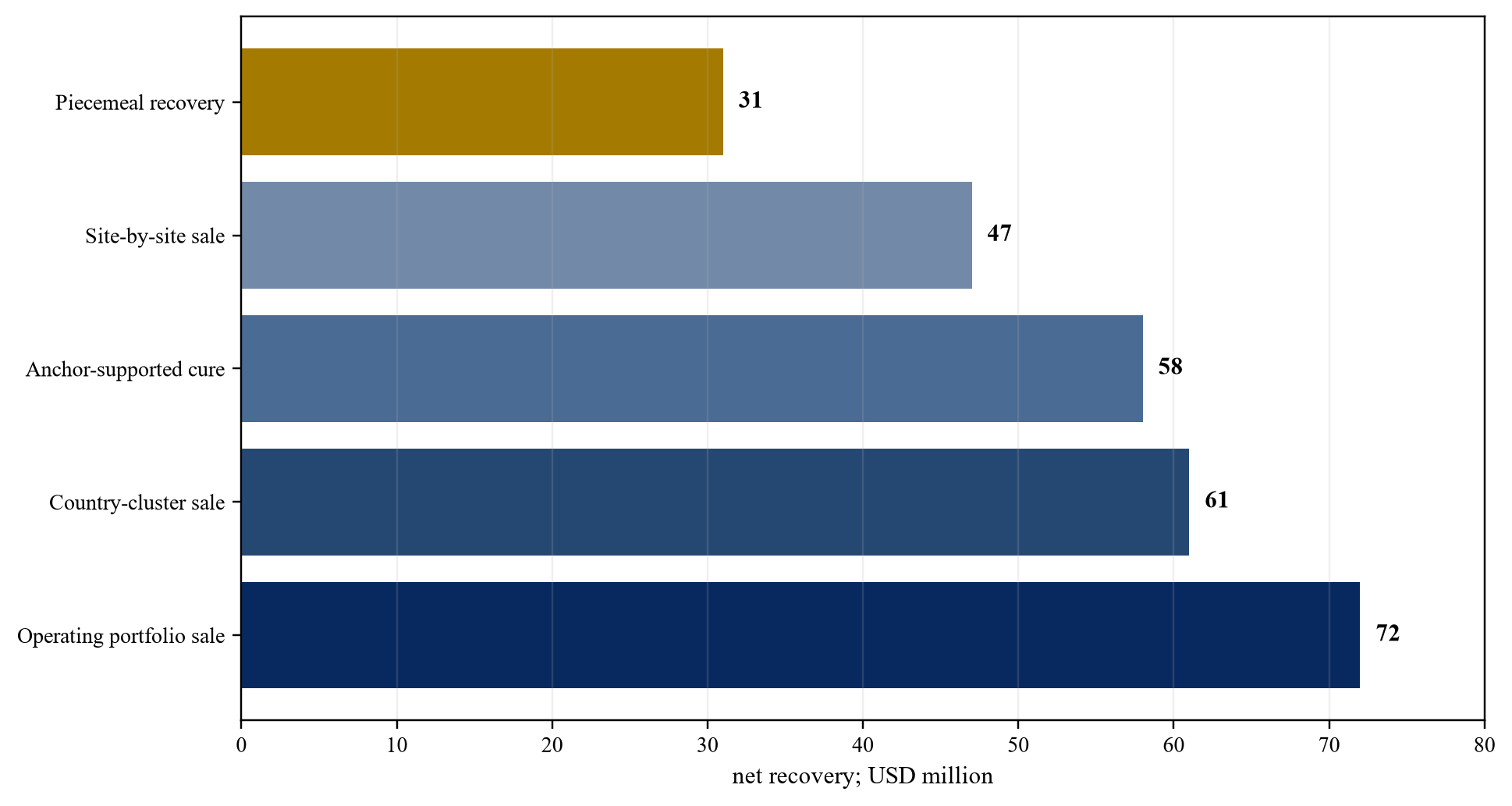
Wholly hypothetical; USD million after completion, sale and enforcement costs.
27. Gate portfolio expansion
The decision question is when additional sites or countries improve rather than dilute lender protection. The evidence file should begin with pipeline, archetype compliance, customer evidence, funding, concentration and operations capacity. Each item should record source, date, legal owner, responsible reviewer, expiry or refresh date and the affected site, country and customer. Regional digital growth provides context. It does not establish a specific project's repayment source or remedy. [13][20]
The principal failure is that new sites enter because growth is strategic while they consume liquidity and increase complexity. Portfolio finance converts multiple construction and operating exposures into one lender claim. The lender needs a traceable chain from site rights and verified capacity to accepted service, invoiced revenue, collected cash, support claims and executable recovery.
The recommended response is to require pro forma covenant compliance, funded cost and evidence parity before inclusion. Management estimates may support scenarios when identified and reconciled to observed evidence. The central case should retain current contracts, verified availability and cash that can reach the debt accounts. Downside analysis should combine related power, fibre, customer, currency, country, liquidity and enforcement effects.
28. Reach the financing decision
The decision question is whether standard assets, enforceable anchors, transparent telemetry, liquidity and recovery support the facility. The evidence file should begin with portfolio perimeter, site gates, contract suite, telemetry, cash model, covenants, security and recovery dossier. Each item should record source, date, legal owner, responsible reviewer, expiry or refresh date and the affected site, country and customer. Regional digital growth provides context. It does not establish a specific project's repayment source or remedy. [1][9]
The principal failure is that the importance of African digital infrastructure displaces transaction-specific repayment evidence. Portfolio finance converts multiple construction and operating exposures into one lender claim. The lender needs a traceable chain from site rights and verified capacity to accepted service, invoiced revenue, collected cash, support claims and executable recovery.
The recommended response is to approve only exposure supported by eligible sites, collected cash, limited recognised guarantees and funded downside actions. Management estimates may support scenarios when identified and reconciled to observed evidence. The central case should retain current contracts, verified availability and cash that can reach the debt accounts. Downside analysis should combine related power, fibre, customer, currency, country, liquidity and enforcement effects.
| Decision | Minimum evidence | Possible action |
|---|---|---|
| commitment | perimeter, contracts and balanced funding | approve or resize |
| each site draw | readiness and remaining funds | fund or stop |
| site eligibility | tested service and cash controls | include or exclude |
| portfolio conversion | sites, load, revenue and DSCR | convert or extend |
| deterioration | liquidity, support and recovery impact | cure or restructure |
| enforcement | operating and break-up proceeds | sell, transfer or enforce |
Proposed governance; transaction-specific approval remains necessary.
Sources
- World Bank Group, *Building Data Infrastructure for AI Readiness*. Read the primary source
- International Finance Corporation, *Connecting Africa to the World*. Read the primary source
- GSMA, *The Mobile Economy Africa 2025*. Read the primary source
- World Bank, *Digital Progress and Trends Report 2023*. Read the primary source
- Uptime Institute, *Tier Standard: Topology*. Read the primary source
- ASHRAE, *Thermal Guidelines for Data Processing Environments*. Read the primary source
- MTN Group, *Integrated Reports*. Read the primary source
- IFRS Foundation, *IFRS 15 Revenue from Contracts with Customers*. Read the primary source
- Office of the Comptroller of the Currency, *Project Finance*. Read the primary source
- Airtel Africa, *Annual Reports*. Read the primary source
- African Union, *Data Policy Framework*. Read the primary source
- International Finance Corporation, *WIOCC SLF Loan Project Disclosure*. Read the primary source
- Basel Committee on Banking Supervision, *Principles for the Management of Credit Risk*. Read the primary source
- International Energy Agency, *Africa Energy Outlook 2022*. Read the primary source
- GSMA, *Mobile Net Zero 2025*. Read the primary source
- Internet Society, *Internet Exchange Point Resources*. Read the primary source
- IFRS Foundation, *IAS 16 Property, Plant and Equipment*. Read the primary source
- IFRS Foundation, *IFRS 9 Financial Instruments*. Read the primary source
- National Institute of Standards and Technology, *Cybersecurity Framework 2.0*. Read the primary source
- International Organization for Standardization, *ISO/IEC 30134 Data Centres Key Performance Indicators*. Read the primary source
- International Monetary Fund, *Annual Report on Exchange Arrangements and Exchange Restrictions*. Read the primary source
- World Bank, *International Debt Statistics*. Read the primary source
- African Union, *Convention on Cyber Security and Personal Data Protection*. Read the primary source
- International Finance Corporation, *Performance Standards on Environmental and Social Sustainability*. Read the primary source
- World Bank Group, *Environmental, Health and Safety Guidelines for Telecommunications*. Read the primary source
- World Bank Group, *Public-Private Partnership Reference Guide*. Read the primary source
