Introduction
Every ground-up development begins with land, and yet land is the part of the development that the financial system is least willing to fund. A completed, income-producing building can be financed at a low cost against its rental cash flow; a building under construction can be financed against its cost and its pre-sales; but a parcel of land, particularly one that is not yet zoned or serviced, generates no cash flow, carries entitlement and planning risk, and offers a lender only the land itself as security. The result is that the land stage, which often requires the largest single outlay in the entire development, is the stage at which capital is scarcest and most expensive.
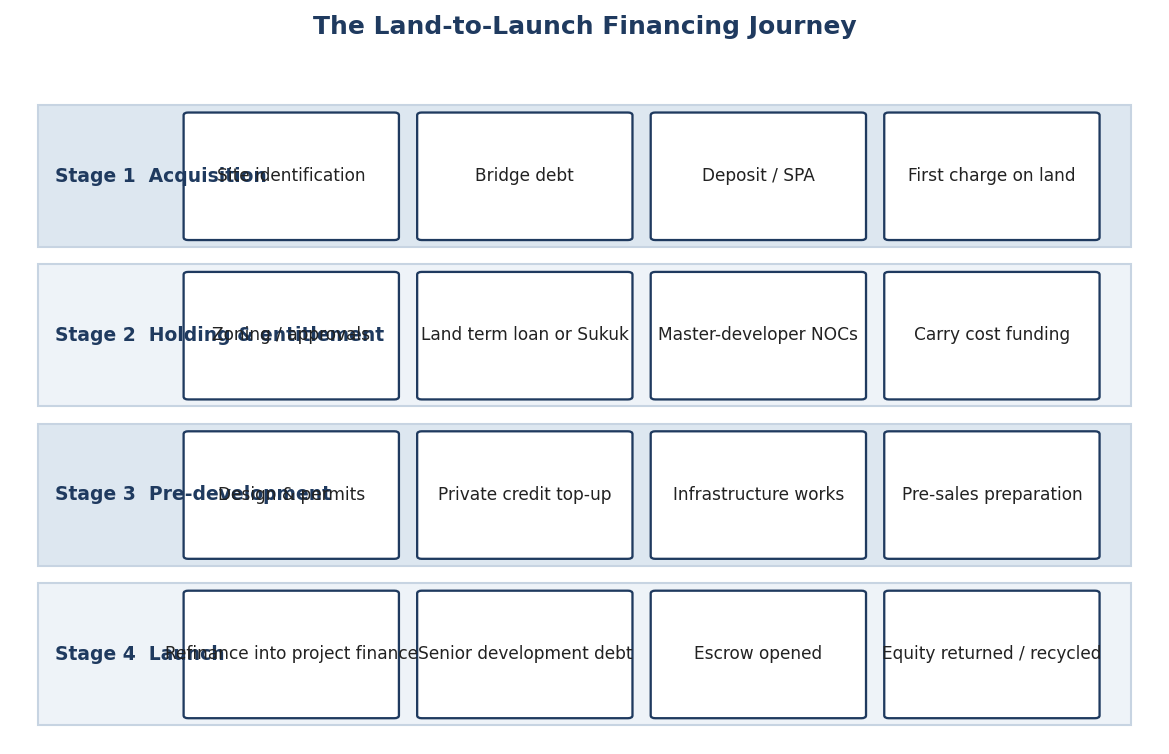
This paper addresses the financing of that stage directly. It asks how a UAE developer can fund the journey from the acquisition of land to the point at which the land is launch-ready and can be refinanced into conventional development finance. That journey has a characteristic shape: an acquisition that must be funded quickly, a holding period during which entitlement is pursued and carry costs accrue, a pre-development phase in which design and infrastructure work begins, and a launch at which the development proper, and its cheaper financing, can commence. Each stage has a different risk profile and therefore a different appropriate source of capital.
The central argument is that the right financing instrument for the land stage depends primarily on two variables: the type of land being acquired, which determines the entitlement work required and the value uplift available, and the expected hold period to launch, which determines how long expensive capital must be carried. Raw land, zoned land and serviced plots sit at different points on this spectrum and call for different instruments. A sponsor who matches the instrument to the land, rather than defaulting to whatever bridge facility is most readily available, can materially reduce the cost of carrying the land and improve the return on the eventual development.
Anatomy of Land-Stage Capital
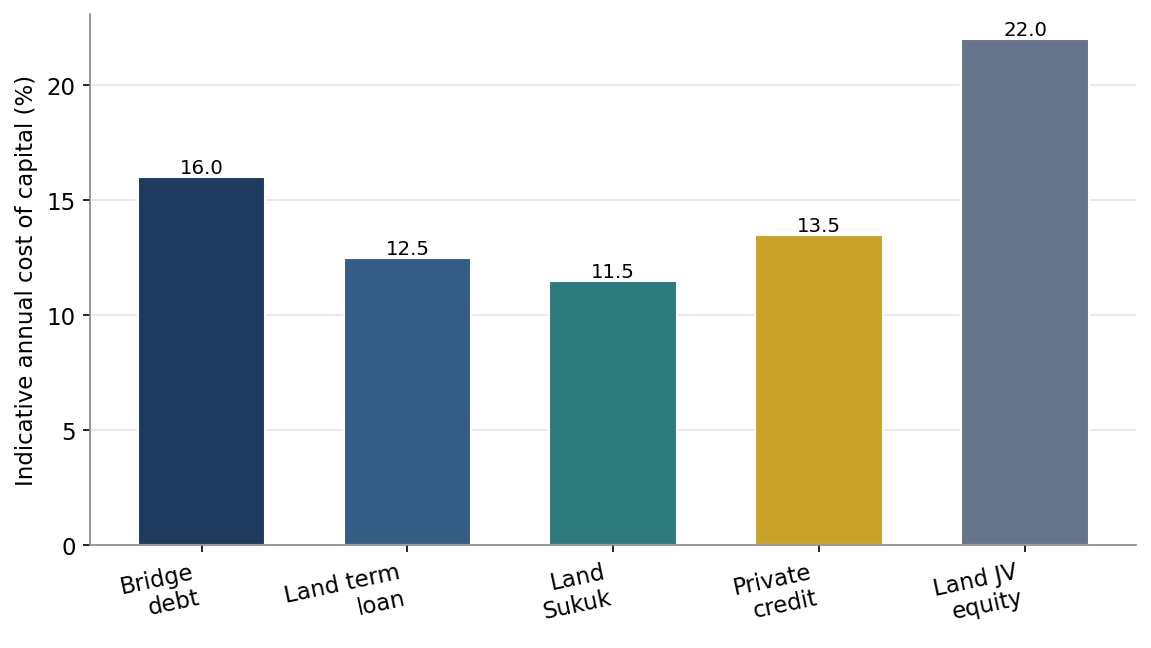
Five instruments dominate the financing of the land stage, and each occupies a distinct position on the spectrum of cost, tenor and risk tolerance. Table 1 compares them across the attributes that matter for selection.
Bridge debt
Bridge debt is short-term capital, typically of six to eighteen months, provided quickly to fund an acquisition that cannot wait for a slower facility to be arranged. It is the most expensive of the debt instruments because of its speed and short tenor, and it is repaid from a subsequent refinancing or sale rather than from project cash flow. Bridge debt is the right tool when an acquisition opportunity is time-critical and a longer facility cannot be arranged in time, but a sponsor who relies on bridge debt without a clear and credible refinancing path exposes itself to the risk that the bridge cannot be repaid when it matures.
Land term loans
A land term loan is a medium-term facility, typically provided by a private credit fund or a specialist lender, that funds the land and its carry over the entitlement period. It is cheaper than bridge debt because of its longer tenor and more considered underwriting, but it still carries the entitlement risk and is therefore more expensive than development finance. Land term loans suit zoned or partly entitled land where the entitlement path is reasonably clear but the timeline extends beyond what a bridge can cover.
Land Sukuk and Shariah-compliant facilities
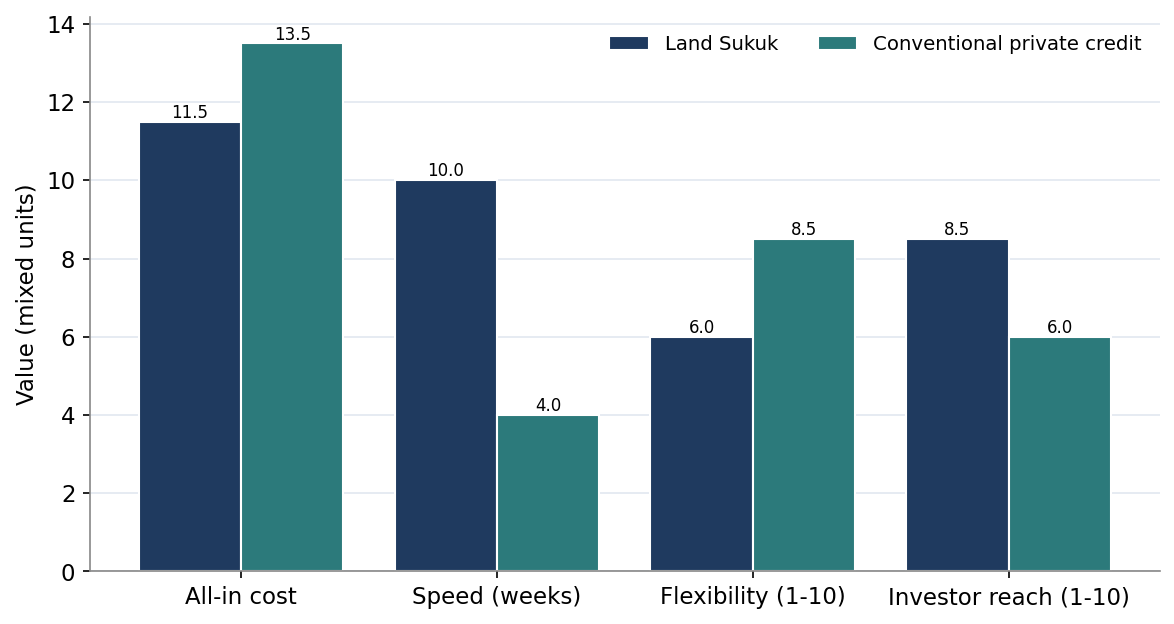
A land Sukuk replicates the economic function of a land term loan within a Shariah-compliant structure, commonly using an Ijara or Murabaha arrangement over the land asset. Its appeal is twofold: it accesses a pool of compliant capital that conventional debt cannot reach, and in the right market conditions it can price competitively with, or even below, conventional private credit. The structuring cost is higher and the documentation more specialised, which is why land Sukuk tends to appear where the quantum is large enough to justify the effort and where the investor base favours compliant instruments.
Private credit
| Attribute | Bridge debt | Land term loan | Land Sukuk | Private credit | Land JV equity |
|---|---|---|---|---|---|
| Typical tenor | 6-18 mo | 2-4 yr | 2-4 yr | 1-3 yr | To launch |
| Indicative cost | ~16% | ~12.5% | ~11.5% | ~13.5% | ~22%+ |
| Speed to fund | Fastest | Moderate | Slow | Fast | Slow |
| Entitlement risk borne | Low | Moderate | Moderate | Moderate | Full |
| Security | 1st charge | 1st charge | Asset-based | Charge / pledge | Residual |
| Best for | Quick close | Zoned land | Compliant base | Fast refinance | Raw land |
Instrument Selection Framework
The selection framework segments the decision by land type, because land type determines both the entitlement work required and the value uplift available, and these in turn determine the appropriate balance of debt and equity. Figure 4 presents the framework as a decision tree.
Figure 4. Land-Stage Instrument Selection by Land Type
Indicative framework. Hold period and entitlement certainty modify the indicated default.
Raw or agricultural land
Raw or agricultural land carries the greatest entitlement risk and offers the largest value uplift if the entitlement is obtained. Because the risk is option-like, the appropriate funding is weighted toward equity, with only a short bridge to fund the acquisition itself. Debt is poorly suited to this land because the entitlement risk is exactly the risk that a fixed-return lender will not bear at an acceptable price. The objective is to fund the acquisition cheaply and quickly and to let patient equity carry the entitlement risk in exchange for the large uplift.
Zoned or entitled land
Zoned or entitled land has resolved much of the entitlement uncertainty and can therefore support more debt. A land Sukuk or term loan that funds a longer carry at a moderate cost is the natural instrument, with equity funding the residual. The objective is a balanced carry cost: enough debt to limit the equity outlay, but not so much that the carry overwhelms the project if the launch is delayed.
Serviced plots
A serviced plot, with infrastructure in place and entitlement complete, is close to launch and carries little residual entitlement risk. It can therefore support a higher proportion of debt, and the appropriate instrument is private credit that funds the short period to launch and then refinances quickly into development finance. The objective is speed: to reach launch and the cheaper development capital as quickly as possible, minimising the time over which the land-stage cost is paid.
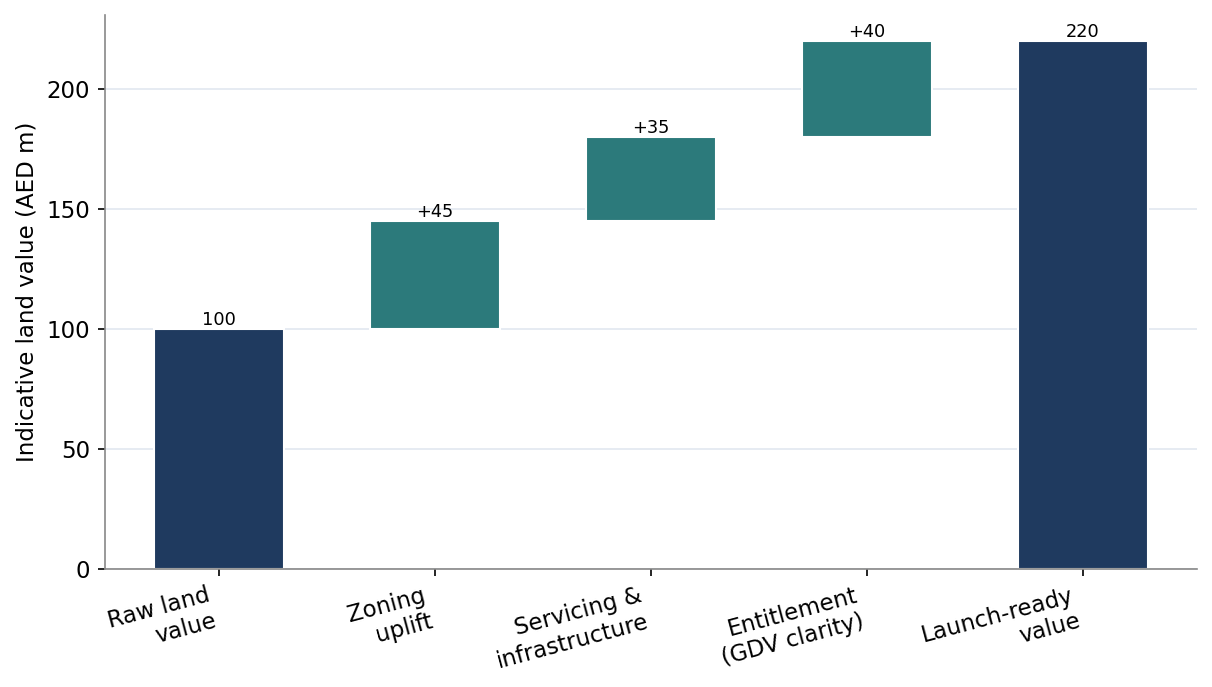
Figure 5. Indicative Land Value Uplift Through Entitlement (AED m)
Indicative value build-up from raw land to launch-ready. Not a valuation.
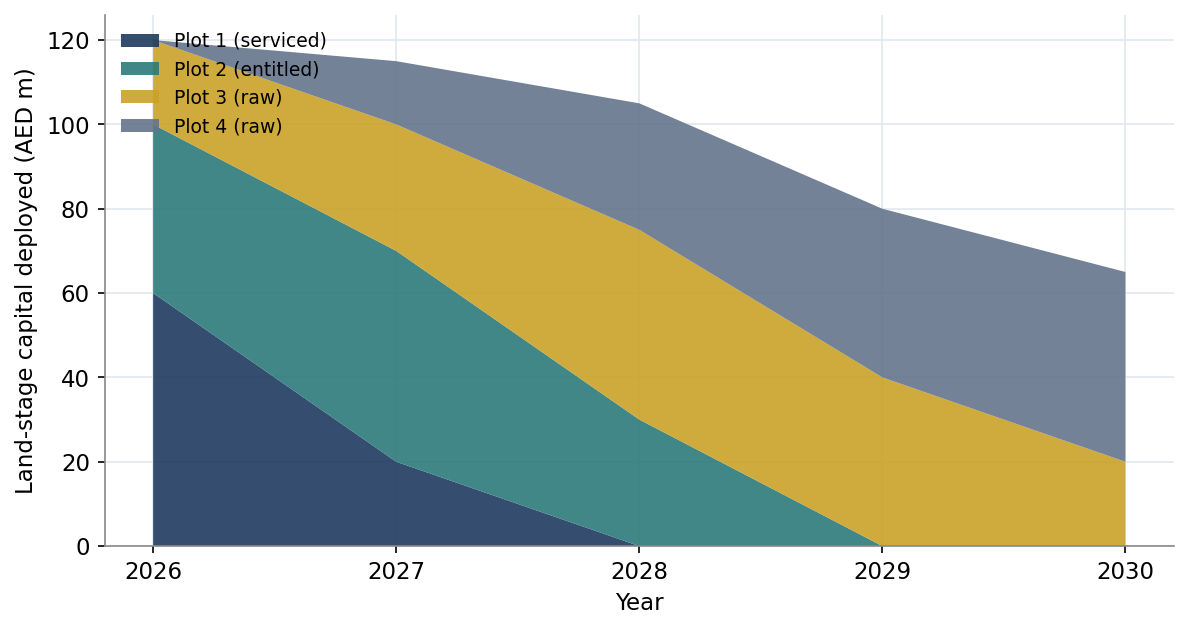
Figure 5 makes visible why land type drives the framework. The value uplift from raw land to launch-ready land is created in stages, with zoning, servicing and entitlement each contributing. The rawest land offers the largest cumulative uplift but requires the most work and the most risk-bearing capital to realise it; the serviced plot offers the smallest remaining uplift but the least risk. The framework simply matches the risk-bearing capacity of each instrument to the risk that remains at each point on this value build-up.
Cost of Capital Across the Journey
Because the appropriate instrument changes as the project advances, the blended cost of capital for the land stage is not a single number but a path that should decline over time. A well-managed land financing begins with expensive, fast capital at acquisition, transitions to moderate-cost term capital during the holding period, and ends with a refinancing into cheap development finance at launch. The art is to make each transition as early as the falling risk allows, so that the project spends as little time as possible paying for risk it no longer carries.
Figure 6. Developer Equity IRR Against Land Hold Period
Indicative relationship under fast and slow entitlement scenarios. Not a forecast.
Figure 6 shows the powerful effect of the hold period on the equity return. The longer the land is held before launch, the lower the equity IRR, because the carry cost compounds and the eventual profit is earned over a longer period. The two curves, for fast and slow entitlement, diverge sharply as the hold period extends, which underlines the central role of entitlement timing in the economics of land financing. A sponsor who can compress the entitlement timeline by six months can lift the equity IRR by several percentage points, an effect that dwarfs any plausible saving on the cost of the land finance itself.
This observation reframes the financing problem. The sponsor should think of land-stage finance not as a cost to be minimised in isolation, but as the price of an option whose value depends overwhelmingly on how quickly the entitlement can be resolved and the project launched. Capital that is slightly more expensive but that enables a faster launch, by funding entitlement work or infrastructure sooner, may be cheaper in net terms than nominally cheaper capital that comes with conditions that slow the project down.
Figure 7. The Declining Blended Cost of Land-Stage Capital
Indicative cost path as the project de-risks and refinances toward launch. Not a forecast.
Risk, Security and the Entitlement Catalyst
The security available at the land stage is thinner than at any other point in the development. The principal security is a first charge over the land itself, supported by a pledge of the shares in the holding vehicle and, where relevant, an assignment of the development rights. Crucially, there is no project cash flow to assign and no buyer receivables to capture, because no sales have occurred. The lender is therefore reliant on the value of the land in a downside, and that value is itself a function of the entitlement that may or may not be obtained.
This is why the entitlement milestone is the central catalyst of the land financing. Before entitlement, the land is worth its raw value and the lender is poorly secured; after entitlement, the land is worth its entitled value and the lender is well secured. A lender that funds across the entitlement milestone is, in effect, taking entitlement risk, and will price for it; a lender that funds only after entitlement, or that structures its facility to step up only once entitlement is secured, takes much less risk and can price accordingly. The structuring opportunity is to align the cost of capital with the risk on either side of this catalyst, paying the higher pre-entitlement rate only for as long as necessary and refinancing into a lower post-entitlement rate the moment the milestone is reached.
For the sponsor, the implication is that entitlement is not merely a planning task but a financing event. Achieving entitlement does not just permit development; it transforms the financeability of the land, unlocking cheaper capital and returning a portion of the equity. Managing the entitlement process actively, resourcing it properly and pursuing it urgently, is therefore one of the highest-return activities available to a land-stage sponsor, with a payoff measured in the cost of capital saved and the equity released.
The Capital Provider Perspective
A land financing closes only if each provider finds its position attractive. The bridge lender underwrites the refinancing: it is comfortable with a short, well-secured position provided it can see a credible path to repayment within months, and it prices the speed and the short tenor rather than the entitlement risk, which it largely avoids by lending only briefly. The term lender and the Sukuk provider underwrite the entitlement: they accept that they will be exposed across the entitlement milestone, and they scrutinise the credibility of the entitlement path, the track record of the sponsor in securing approvals, and the headroom between the land cost and the raw-land value that protects them in a downside.
The private credit provider underwrites flexibility and speed, and is willing to structure around the specific entitlement path in exchange for a higher coupon and bespoke security. It cares most about the clarity of the refinancing or launch event that will repay it. The equity partner underwrites the full upside and the full risk, and is the only provider genuinely comfortable with raw, unentitled land; it cares about the size of the uplift, the alignment of the sponsor, and the governance that protects its capital through the uncertain holding period. Designing a fundable land structure means giving each of these providers a position it can underwrite, which in practice means sequencing the capital so that each provider is exposed only to the risk it is equipped to bear.
The landowner deserves particular attention as a capital provider, because in many UAE and South Asian land transactions the landowner is willing to contribute the land into a joint venture rather than sell it outright. A landowner who takes equity in the development, rather than cash for the land, becomes a provider of land-stage equity in kind, reducing the cash the sponsor must raise and aligning the landowner with the success of the project. This alignment can be valuable beyond the capital it saves, because a landowner with an ongoing stake is more likely to cooperate with the entitlement process and less likely to become an obstacle. Structuring the landowner relationship as a partnership rather than a one-off purchase is, in the right circumstances, one of the most efficient forms of land-stage finance available.
Indicative Case Studies
Three indicative cases, one for each land type, make the framework concrete. The figures are synthetic and constructed for analytical clarity, not drawn from any specific transaction.
Case A: raw land acquisition with entitlement upside
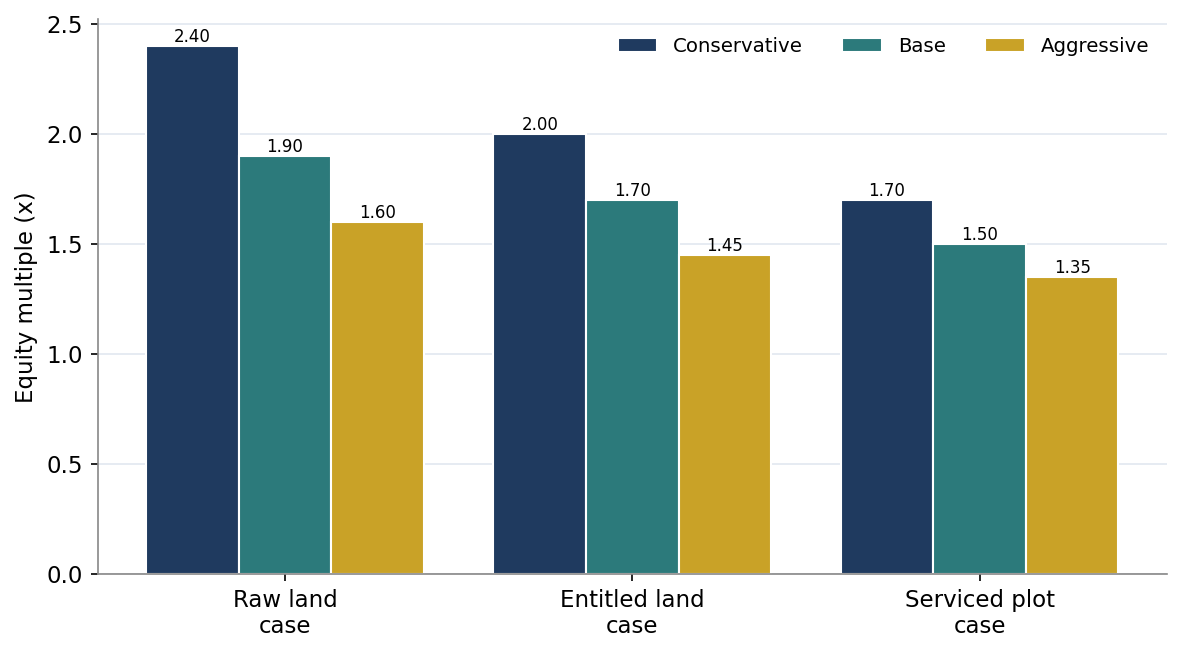
Case A is the acquisition of a raw parcel with significant entitlement upside. The sponsor funds the acquisition with a short bridge facility covering 40 percent of the land cost and equity for the balance, and carries the entitlement risk on equity. On securing entitlement, the land value rises substantially, the bridge is refinanced into a cheaper term facility, and a portion of the equity is returned. The structure is equity-heavy, reflecting the option-like risk of raw land, and it produces the highest potential equity multiple of the three cases, but only if the entitlement is obtained on a reasonable timeline.
Table 2. Case A Sources and Uses, Raw Land
Raw land acquisition funded largely with equity to bear entitlement risk. Figures rounded.
Case B: entitled land with a defined development plan
Case B is the acquisition of zoned, entitled land with a defined development plan, illustrated by the sources and uses in Figure 9. The sponsor funds the acquisition and the carry with a land Sukuk covering 55 percent of total land-stage cost, with equity for the balance. The Sukuk funds a moderate carry to launch at a competitive cost, and the structure balances cost against the risk of a delayed launch. The equity multiple is lower than Case A but the risk is materially lower and the outcome more predictable.
Figure 9. Indicative Uses of Funds, Entitled Land Case (AED 200m)
Table 3. Case B Sources and Uses, Entitled Land
Uses total AED 200.0m. Figures rounded.
Case C: serviced plot bridging to launch
Case C is the acquisition of a serviced plot, entitlement complete and infrastructure in place, that is close to launch. The sponsor funds it with a private credit facility covering 65 percent of cost, drawn quickly, with the intention of refinancing into senior development debt within twelve months. The structure is debt-heavy because the residual risk is low, and it produces the lowest equity multiple but the fastest and most certain return, as the land-stage capital is carried for the shortest period.
Table 4. Case C Capital Structure, Serviced Plot
Serviced plot close to launch supports higher debt at lower residual risk. Not transaction-specific.
Figure 10. Equity Multiple by Case and Scenario
Synthetic figures for analytical comparison. Not a forecast.
| Sources | AED m | Share | Uses | AED m |
|---|---|---|---|---|
| Bridge debt | 40.0 | 40% | Land price | 88.0 |
| Sponsor equity | 45.0 | 45% | Stamp and fees | 4.0 |
| JV entitlement equity | 15.0 | 15% | Entitlement and carry | 8.0 |
| Total sources | 100.0 | 100% | Total uses | 100.0 |
International Comparison
The land financing challenge is not unique to the UAE, and a comparison with the United Kingdom is instructive. In the United Kingdom, land with planning permission trades at a substantial premium to land without it, and a specialist market exists for funding both the acquisition of land and the pursuit of planning, including promotion agreements under which a promoter funds and manages the planning process in exchange for a share of the uplift. The economic logic is identical to the UAE entitlement dynamic: value is created by resolving the development-rights uncertainty, and capital is structured around that catalyst.
The principal differences are institutional. The United Kingdom planning system is adversarial and uncertain in its timing, which makes the entitlement risk harder to underwrite and pushes more of the land-stage funding toward equity and promotion structures. The UAE entitlement process, governed by master developers and authorities within a master-planned framework, is in many cases more predictable in its requirements, even if its timing can extend, which allows more debt to be deployed against entitled and partly entitled land. The UAE also benefits from the deferred-payment plans and the compliant capital base discussed earlier, neither of which has a direct United Kingdom equivalent. The framework travels between the two markets, but the balance between debt and equity shifts toward equity in the United Kingdom, reflecting the greater entitlement uncertainty.
| Tranche | AED m | Share | Indicative cost | Tenor to launch |
|---|---|---|---|---|
| Private credit | 97.5 | 65% | 13.5% | ~12 months |
| Sponsor equity | 37.5 | 25% | 22.0% | To launch |
| JV equity | 15.0 | 10% | 22.0% | To launch |
| Total | 150.0 | 100% | 16.3% blended |
Implementation Roadmap
Classify the land by type, raw, zoned or serviced, and read the default financing balance from the framework in Section 6, treating it as a starting point to be refined for the specific entitlement path.
Underwrite the entitlement timeline conservatively, building in a realistic allowance for delay, and stress the structure against a slower-than-planned launch.
Match the instrument to the duration: bridge or equity for the acquisition, term loan or Sukuk for the holding period, private credit for the bridge to launch.
Evaluate any available deferred-payment plan on the land as a financing instrument in its own right, and weigh its implicit cost against bridge and term debt.
Where the land suits a Sukuk, run a Sukuk process and a conventional private credit process in parallel to discipline pricing and access the widest pool of capital.
Resource the entitlement process urgently, recognising that compressing the timeline lifts the equity return more than any plausible saving on the cost of finance.
Arrange the development finance in parallel with the final stages of entitlement, so that the refinancing into cheaper capital can occur the moment entitlement is secured.
A short worked illustration draws the analysis together. Consider a sponsor weighing two routes for the same entitled parcel: a land Sukuk at a competitive cost over a longer arrangement period, or a private credit facility that funds more quickly but at a higher coupon. The single-asset cost comparison might favour the Sukuk, but if the faster private credit facility allows the sponsor to begin entitlement and infrastructure work three months sooner, and thereby to launch three months earlier, the sensitivity analysis suggests the earlier launch is worth more than the cost saving. The right answer therefore depends not on the headline cost alone but on how each instrument affects the launch timeline, which is the variable that dominates the return. This is the central practical insight of the paper, and it is one that a cost comparison conducted in isolation would miss entirely.
Conclusion
Land is the stage of development at which capital is scarcest, most expensive and most poorly secured, and it is therefore the stage at which financing discipline yields the greatest reward. This paper has argued that the right land-stage instrument depends primarily on the type of land and the expected hold period, and that the financing should be structured as a declining path of cost that tracks the falling risk of the project as entitlement is resolved. Raw land, with its option-like risk and large uplift, calls for equity and a short bridge; entitled land calls for a term loan or Sukuk that funds a moderate carry; and serviced plots call for private credit that bridges quickly to development finance.
The analysis has shown that the variables which most influence the return are entitlement timing and the eventual gross development value, not the cost of the land finance itself, and that the characteristic failure mode of land financing is the slow erosion of return through a delayed entitlement that compounds the carry cost. The sponsor who internalises these lessons, matching the instrument to the land, underwriting the timeline conservatively, and refinancing in step with the de-risking of the project, will carry land more cheaply and launch more profitably than the sponsor who funds every parcel with the same facility. In a market as deep and as well-supplied with capital as the UAE in 2026, that discipline is a genuine and durable advantage.
| Scenario | Entitlement timing | GDV on launch | Equity IRR |
|---|---|---|---|
| Upside | Fast (12 mo) | +10% | 30.0% |
| Base | On plan (18 mo) | Base | 21.0% |
| Mild stress | Slow (24 mo) | -5% | 14.5% |
| Severe stress | Very slow (36 mo) | -10% | 7.0% |
Limitations and Directions for Further Research
This paper is framework-oriented and relies on indicative data, and its conclusions are directional rather than precise. The cost figures, value uplifts and timelines are calibrated to observable conditions but are not empirical estimates drawn from a transaction dataset, and the entitlement dynamics differ materially across emirates and across the master-developer frameworks that govern individual communities. The analysis also abstracts from the detailed mechanics of any particular Sukuk structure, which would need specialist legal and Shariah input for a live transaction.
Several extensions would strengthen the analysis. An empirical study of entitlement timelines across UAE jurisdictions would allow the conservative timeline assumptions to be replaced with data, sharpening the sensitivity analysis that drives the central conclusions. A comparative pricing study of land Sukuk against conventional private credit across a range of market conditions would clarify when the compliant route is genuinely cost-competitive. And an examination of how land-stage structures have performed through a genuine downturn, when entitlement stalls and values fall together, would test the resilience of the equity-weighted approach this paper recommends for the rawest land. Each is a natural subject for a later paper in this series.