

1. Define the investment thesis
The decision question is which corridor service, customer problem and value-creation plan justify acquiring or funding a platform. The diligence team should begin with board mandates, commodity strategy, customer needs, corridor plans, concession scope and return objectives. Evidence should be attributable, time-stamped and reconciled across operational, engineering, commercial, legal, regulatory and financial workstreams. [1][2]
The principal failure mode is that a strategic-corridor narrative can conceal weak contracted demand or incompatible public and investor objectives. Management estimates can support planning when they are identified as estimates and kept separate from observed movements, executed contracts, regulatory rights and collected cash. The model should show how each unresolved item changes volume, capacity, schedule, tariff, operating cost, capital expenditure, liquidity, safety or control.
The recommended response is to state the service, customer, control rights, evidence gate, capital commitment and value driver for each component. A named executive should own delivery, an independent reviewer should challenge material assumptions, and the investment committee should see the evidence required to release capital. Central, downside and stop cases should identify the cash effect and earliest practical intervention. In the hypothetical platform, unsupported value remains outside the base case or is carried through probability, contingency, delayed funding or a closing condition.
| Item | Evidence | Failure risk | Deal treatment |
|---|---|---|---|
| concessions | executed instruments and maps | operating right is conditional | closing condition |
| rail and rolling stock | registers, leases and maintenance | unavailable or encumbered assets | title and condition remedy |
| road and border access | permits and agency agreements | interrupted first mile or transit | dependency covenant |
| terminals and port | lease, capacity and berth agreements | corridor cannot ship | contracted interface |
| customer contracts | executed terms and collections | unsupported revenue | valuation exclusion |
| data and systems | licences, interfaces and rights | loss of dispatch or billing | durable licence and TSA |
Proposed diligence map; jurisdiction-specific advisers should confirm rights.
2. Fix the transaction perimeter
The decision question is which operating companies, concessions, assets, contracts, people, licences and data enter the transaction. The diligence team should begin with corporate records, asset registers, concessions, leases, access agreements, systems and liabilities. Evidence should be attributable, time-stamped and reconciled across operational, engineering, commercial, legal, regulatory and financial workstreams. [3][4]
The principal failure mode is that a platform can appear integrated while critical rail, terminal, land or operating rights remain outside control. Management estimates can support planning when they are identified as estimates and kept separate from observed movements, executed contracts, regulatory rights and collected cash. The model should show how each unresolved item changes volume, capacity, schedule, tariff, operating cost, capital expenditure, liquidity, safety or control.
The recommended response is to map every asset and obligation to ownership, transfer consent, closing treatment and post-close dependency. A named executive should own delivery, an independent reviewer should challenge material assumptions, and the investment committee should see the evidence required to release capital. Central, downside and stop cases should identify the cash effect and earliest practical intervention. In the hypothetical platform, unsupported value remains outside the base case or is carried through probability, contingency, delayed funding or a closing condition.
3. Reconstruct the commodity-flow baseline
The decision question is what moved by commodity, origin, destination, route, mode and customer. The diligence team should begin with weighbridge, wagon, truck, border, terminal, port, invoice and receipt records. Evidence should be attributable, time-stamped and reconciled across operational, engineering, commercial, legal, regulatory and financial workstreams. [5][6]
The principal failure mode is that headline tonnes can double count transfers, include non-revenue movements or omit losses and rejected loads. Management estimates can support planning when they are identified as estimates and kept separate from observed movements, executed contracts, regulatory rights and collected cash. The model should show how each unresolved item changes volume, capacity, schedule, tariff, operating cost, capital expenditure, liquidity, safety or control.
The recommended response is to reconcile physical events to billed and collected tonnes through a controlled movement ledger. A named executive should own delivery, an independent reviewer should challenge material assumptions, and the investment committee should see the evidence required to release capital. Central, downside and stop cases should identify the cash effect and earliest practical intervention. In the hypothetical platform, unsupported value remains outside the base case or is carried through probability, contingency, delayed funding or a closing condition.
4. Verify mine and customer demand
The decision question is which mines, processors and buyers can supply durable volume over the investment horizon. The diligence team should begin with resource and production evidence, mine plans, permits, customer contracts and shipment history. Evidence should be attributable, time-stamped and reconciled across operational, engineering, commercial, legal, regulatory and financial workstreams. [7][8]
The principal failure mode is that forecast volume can depend on unfinanced mines, optimistic ramp-up or non-binding customer interest. Management estimates can support planning when they are identified as estimates and kept separate from observed movements, executed contracts, regulatory rights and collected cash. The model should show how each unresolved item changes volume, capacity, schedule, tariff, operating cost, capital expenditure, liquidity, safety or control.
The recommended response is to separate operating, financed, permitted, prospective and speculative demand and assign evidence-based scenarios. A named executive should own delivery, an independent reviewer should challenge material assumptions, and the investment committee should see the evidence required to release capital. Central, downside and stop cases should identify the cash effect and earliest practical intervention. In the hypothetical platform, unsupported value remains outside the base case or is carried through probability, contingency, delayed funding or a closing condition.
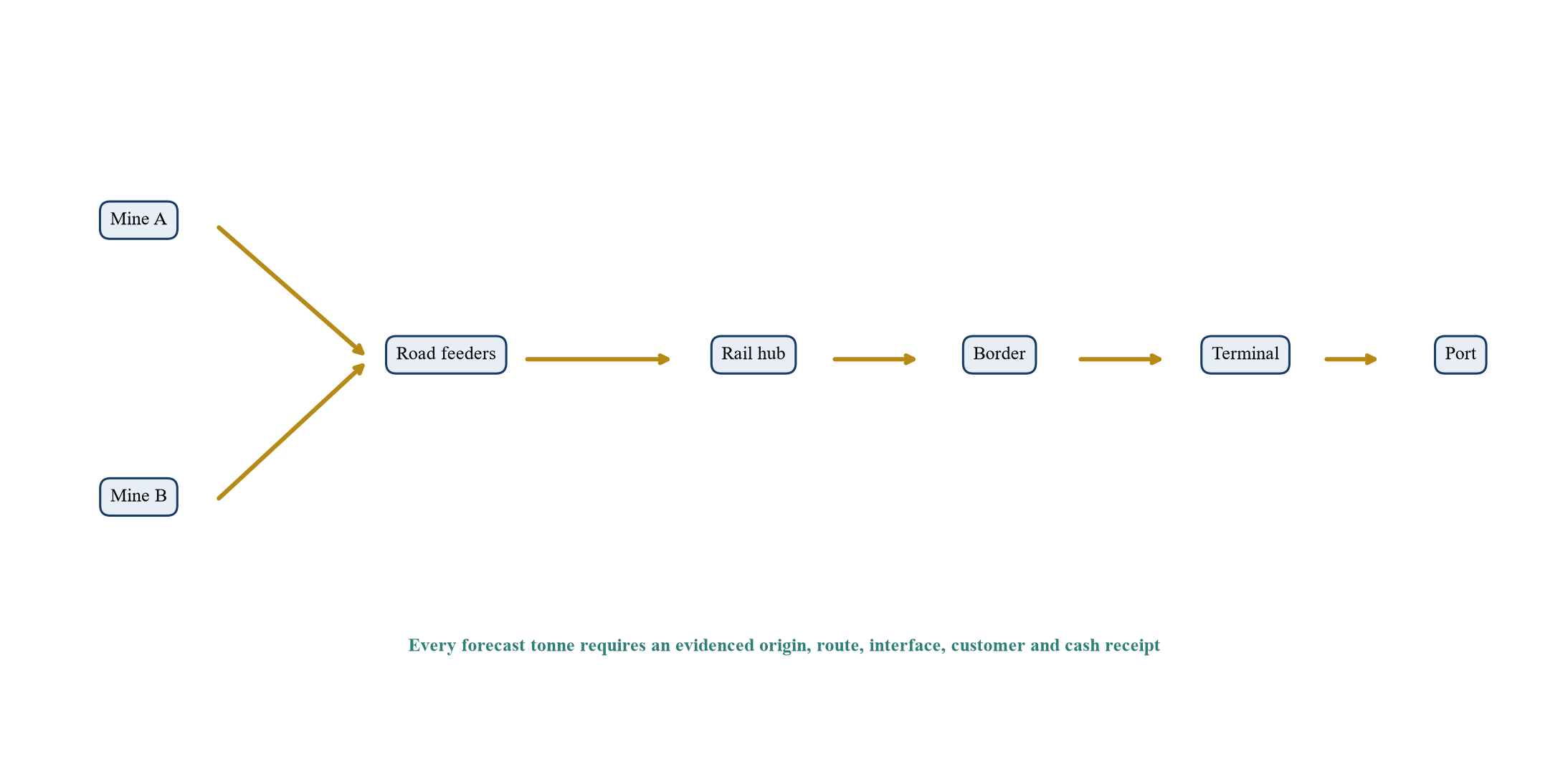
Analytical framework; actual routes and rights require project-specific verification.
5. Build the corridor network model
The decision question is how nodes, routes, modes, interfaces and constraints determine feasible flow. The diligence team should begin with GIS layers, rail and road networks, gradients, borders, terminals, ports, calendars and operating rules. Evidence should be attributable, time-stamped and reconciled across operational, engineering, commercial, legal, regulatory and financial workstreams. [5][9]
The principal failure mode is that shortest-distance routing can ignore axle load, gauge, border, safety, berth and operating constraints. Management estimates can support planning when they are identified as estimates and kept separate from observed movements, executed contracts, regulatory rights and collected cash. The model should show how each unresolved item changes volume, capacity, schedule, tariff, operating cost, capital expenditure, liquidity, safety or control.
The recommended response is to construct a time-expanded network with explicit capacity, dwell, cost and service constraints. A named executive should own delivery, an independent reviewer should challenge material assumptions, and the investment committee should see the evidence required to release capital. Central, downside and stop cases should identify the cash effect and earliest practical intervention. In the hypothetical platform, unsupported value remains outside the base case or is carried through probability, contingency, delayed funding or a closing condition.
| Event | Source evidence | Control | Financial link |
|---|---|---|---|
| mine release | production and dispatch record | product and origin identity | customer nomination |
| loading | weighbridge and wagon or truck ID | duplicate and tolerance check | billable quantity |
| border passage | customs and transit record | document and time match | delay and fee |
| terminal receipt | acceptance and quality record | loss and rejection bridge | accepted tonnes |
| vessel loading | bill of lading and berth data | batch reconciliation | shipment invoice |
| collection | bank and receivable record | invoice-to-cash match | realised revenue |
Proposed reconciliation; collected cash governs realised economics.
6. Establish data lineage and control
The decision question is whether each operational and commercial measure traces to source, transformation, owner and period. The diligence team should begin with system extracts, identifiers, time stamps, sensor records, master data, versions and reconciliations. Evidence should be attributable, time-stamped and reconciled across operational, engineering, commercial, legal, regulatory and financial workstreams. [5][10]
The principal failure mode is that fragmented systems can produce incompatible locations, units, customers, products and event times. Management estimates can support planning when they are identified as estimates and kept separate from observed movements, executed contracts, regulatory rights and collected cash. The model should show how each unresolved item changes volume, capacity, schedule, tariff, operating cost, capital expenditure, liquidity, safety or control.
The recommended response is to create a governed data model and exception register before training or valuing forecasts. A named executive should own delivery, an independent reviewer should challenge material assumptions, and the investment committee should see the evidence required to release capital. Central, downside and stop cases should identify the cash effect and earliest practical intervention. In the hypothetical platform, unsupported value remains outside the base case or is carried through probability, contingency, delayed funding or a closing condition.
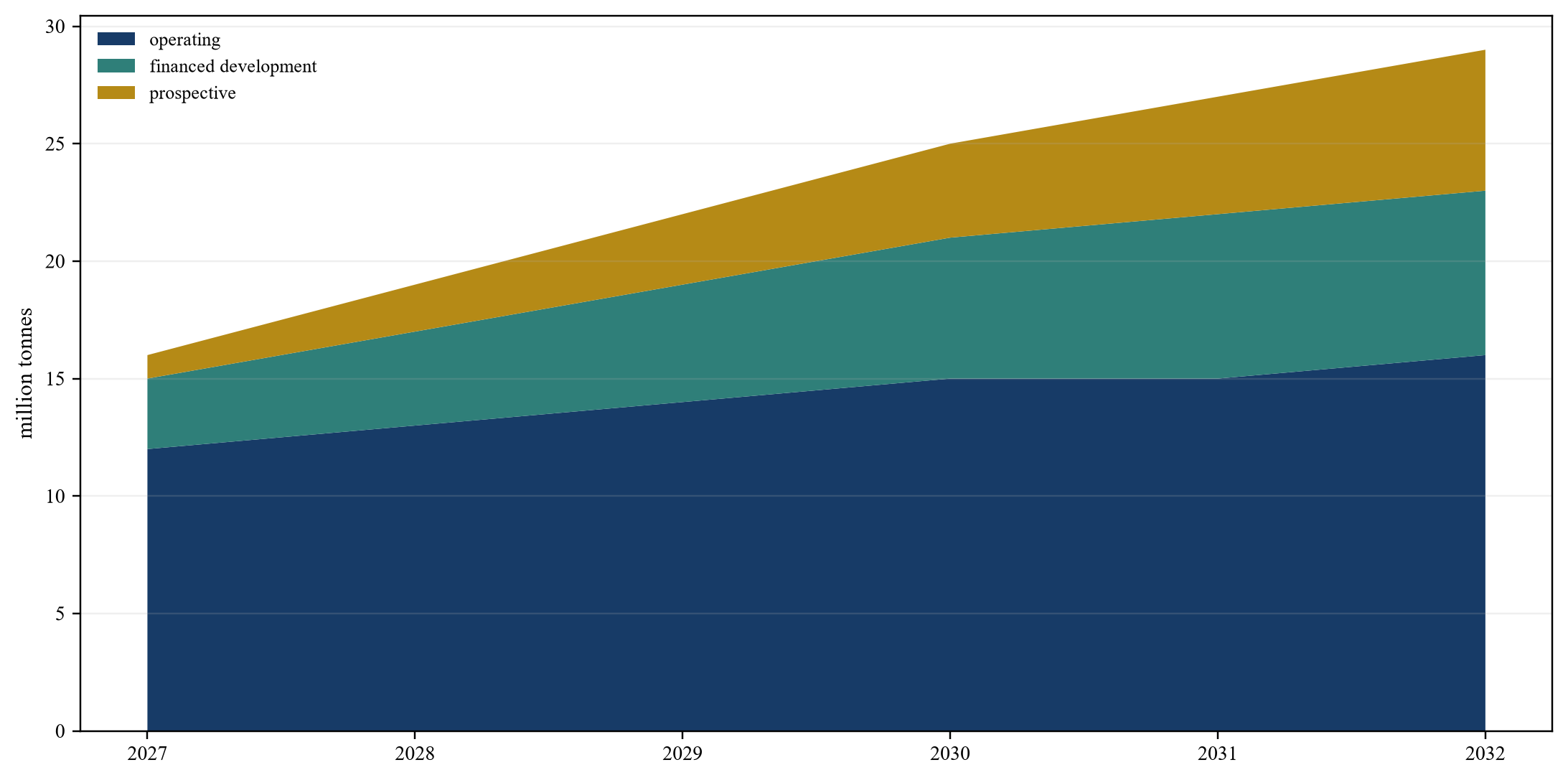
Wholly hypothetical million tonnes; values do not represent an identified corridor.
7. Validate AI route and flow analytics
The decision question is whether models improve scheduling, demand and bottleneck decisions under prospective operation. The diligence team should begin with training periods, features, constraints, holdouts, error measures, overrides and realised outcomes. Evidence should be attributable, time-stamped and reconciled across operational, engineering, commercial, legal, regulatory and financial workstreams. [11][12]
The principal failure mode is that historical optimisation can learn disrupted schedules or use future information unavailable at the decision time. Management estimates can support planning when they are identified as estimates and kept separate from observed movements, executed contracts, regulatory rights and collected cash. The model should show how each unresolved item changes volume, capacity, schedule, tariff, operating cost, capital expenditure, liquidity, safety or control.
The recommended response is to use temporal and corridor holdouts, simulation back-tests and prospective operating trials. A named executive should own delivery, an independent reviewer should challenge material assumptions, and the investment committee should see the evidence required to release capital. Central, downside and stop cases should identify the cash effect and earliest practical intervention. In the hypothetical platform, unsupported value remains outside the base case or is carried through probability, contingency, delayed funding or a closing condition.
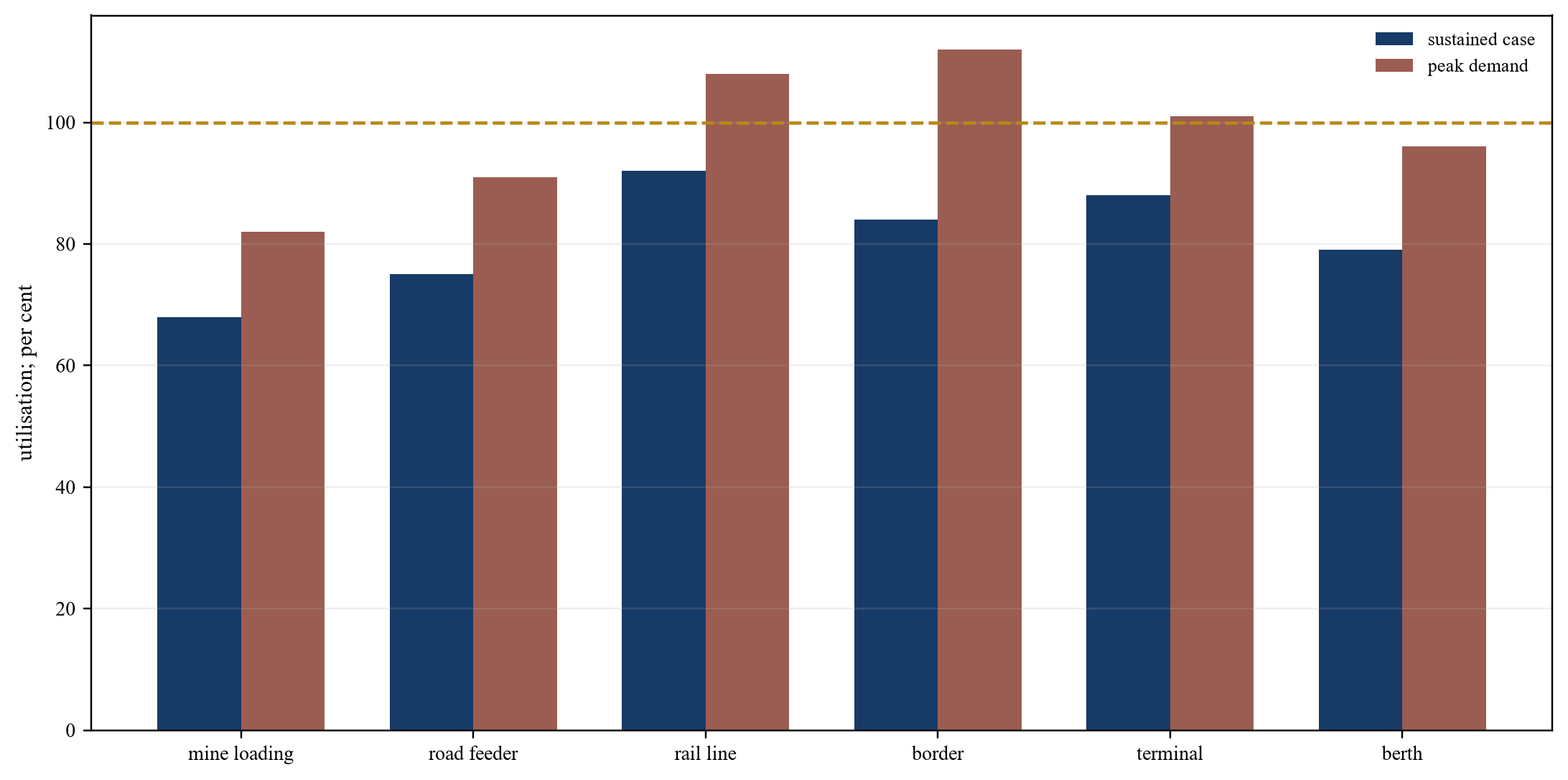
Wholly hypothetical utilisation; capacity requires engineering and operating verification.
| Interface | Capacity evidence | Principal constraint | Remedy gate |
|---|---|---|---|
| track | condition, axle load and paths | speed or path restriction | accepted engineering works |
| fleet | serviceable units and cycles | availability and workshop | fleet and maintenance plan |
| border | dwell distribution and process | documents and inspections | agency operating agreement |
| terminal | handling and stockpile records | equipment or storage | commissioned upgrade |
| port | berth windows and vessel history | congestion and draft | binding access allocation |
| feeder roads | condition and seasonal data | first-mile reliability | funded route works |
Proposed operating review; engineering evidence governs capacity.
8. Measure usable infrastructure capacity
The decision question is which physical and operating conditions convert nominal assets into dependable throughput. The diligence team should begin with track condition, axle load, siding length, signalling, fleet, crews, terminals, maintenance and outages. Evidence should be attributable, time-stamped and reconciled across operational, engineering, commercial, legal, regulatory and financial workstreams. [9][13]
The principal failure mode is that nameplate capacity can exceed throughput when one interface, maintenance window or operating rule binds. Management estimates can support planning when they are identified as estimates and kept separate from observed movements, executed contracts, regulatory rights and collected cash. The model should show how each unresolved item changes volume, capacity, schedule, tariff, operating cost, capital expenditure, liquidity, safety or control.
The recommended response is to build an interface capacity waterfall and test peak, sustained and resilient capacity. A named executive should own delivery, an independent reviewer should challenge material assumptions, and the investment committee should see the evidence required to release capital. Central, downside and stop cases should identify the cash effect and earliest practical intervention. In the hypothetical platform, unsupported value remains outside the base case or is carried through probability, contingency, delayed funding or a closing condition.
9. Test rail operations and rolling stock
The decision question is how locomotives, wagons, paths, yards, crews and maintenance support planned tonnage. The diligence team should begin with fleet registers, availability, cycle times, consist rules, train paths, failures and workshop capacity. Evidence should be attributable, time-stamped and reconciled across operational, engineering, commercial, legal, regulatory and financial workstreams. [13][14]
The principal failure mode is that fleet counts can overstate serviceable units and schedules can omit empty returns, dwell or maintenance. Management estimates can support planning when they are identified as estimates and kept separate from observed movements, executed contracts, regulatory rights and collected cash. The model should show how each unresolved item changes volume, capacity, schedule, tariff, operating cost, capital expenditure, liquidity, safety or control.
The recommended response is to model complete cycles with availability, recovery, spares and failure contingencies. A named executive should own delivery, an independent reviewer should challenge material assumptions, and the investment committee should see the evidence required to release capital. Central, downside and stop cases should identify the cash effect and earliest practical intervention. In the hypothetical platform, unsupported value remains outside the base case or is carried through probability, contingency, delayed funding or a closing condition.
10. Test road feeders and first-mile access
The decision question is whether mine roads, public roads, trucks, permits and seasons support reliable collection. The diligence team should begin with road condition, axle limits, permits, fleet, safety, weather and haulage contracts. Evidence should be attributable, time-stamped and reconciled across operational, engineering, commercial, legal, regulatory and financial workstreams. [4][15]
The principal failure mode is that rail or port investment can remain underused because the first mile is congested, seasonal or unsafe. Management estimates can support planning when they are identified as estimates and kept separate from observed movements, executed contracts, regulatory rights and collected cash. The model should show how each unresolved item changes volume, capacity, schedule, tariff, operating cost, capital expenditure, liquidity, safety or control.
The recommended response is to separate public and dedicated routes and fund the feeder constraints required by each mine. A named executive should own delivery, an independent reviewer should challenge material assumptions, and the investment committee should see the evidence required to release capital. Central, downside and stop cases should identify the cash effect and earliest practical intervention. In the hypothetical platform, unsupported value remains outside the base case or is carried through probability, contingency, delayed funding or a closing condition.
11. Model borders, customs and transit
The decision question is how documents, inspections, guarantees, standards and agency coordination affect dwell and variability. The diligence team should begin with customs records, one-stop border procedures, transit rules, queues, fees and exception logs. Evidence should be attributable, time-stamped and reconciled across operational, engineering, commercial, legal, regulatory and financial workstreams. [6][16]
The principal failure mode is that average border time can hide long tails that consume rolling stock and miss vessel windows. Management estimates can support planning when they are identified as estimates and kept separate from observed movements, executed contracts, regulatory rights and collected cash. The model should show how each unresolved item changes volume, capacity, schedule, tariff, operating cost, capital expenditure, liquidity, safety or control.
The recommended response is to model dwell distributions, document failure and coordinated reform rather than one deterministic delay. A named executive should own delivery, an independent reviewer should challenge material assumptions, and the investment committee should see the evidence required to release capital. Central, downside and stop cases should identify the cash effect and earliest practical intervention. In the hypothetical platform, unsupported value remains outside the base case or is carried through probability, contingency, delayed funding or a closing condition.
12. Reconcile terminal, port and vessel interfaces
The decision question is whether stockpiles, handling, storage, berth windows and vessel requirements match corridor flow. The diligence team should begin with terminal design, equipment rates, storage, quality segregation, berth and shipping records. Evidence should be attributable, time-stamped and reconciled across operational, engineering, commercial, legal, regulatory and financial workstreams. [17][18]
The principal failure mode is that upstream capacity can create no cash when terminal or berth constraints delay acceptance and shipment. Management estimates can support planning when they are identified as estimates and kept separate from observed movements, executed contracts, regulatory rights and collected cash. The model should show how each unresolved item changes volume, capacity, schedule, tariff, operating cost, capital expenditure, liquidity, safety or control.
The recommended response is to model end-to-end batches, inventory, blending, vessel windows and demurrage. A named executive should own delivery, an independent reviewer should challenge material assumptions, and the investment committee should see the evidence required to release capital. Central, downside and stop cases should identify the cash effect and earliest practical intervention. In the hypothetical platform, unsupported value remains outside the base case or is carried through probability, contingency, delayed funding or a closing condition.
13. Design multi-user and third-party access
The decision question is how anchor customers, smaller mines and public users share capacity, priority, tariffs and expansion. The diligence team should begin with access codes, contracts, dispatch rules, capacity allocation, conflicts and regulator decisions. Evidence should be attributable, time-stamped and reconciled across operational, engineering, commercial, legal, regulatory and financial workstreams. [3][19]
The principal failure mode is that anchor rights can crowd out new users while open-access promises remain operationally undefined. Management estimates can support planning when they are identified as estimates and kept separate from observed movements, executed contracts, regulatory rights and collected cash. The model should show how each unresolved item changes volume, capacity, schedule, tariff, operating cost, capital expenditure, liquidity, safety or control.
The recommended response is to translate access policy into measurable slots, service standards, priority and dispute rules. A named executive should own delivery, an independent reviewer should challenge material assumptions, and the investment committee should see the evidence required to release capital. Central, downside and stop cases should identify the cash effect and earliest practical intervention. In the hypothetical platform, unsupported value remains outside the base case or is carried through probability, contingency, delayed funding or a closing condition.
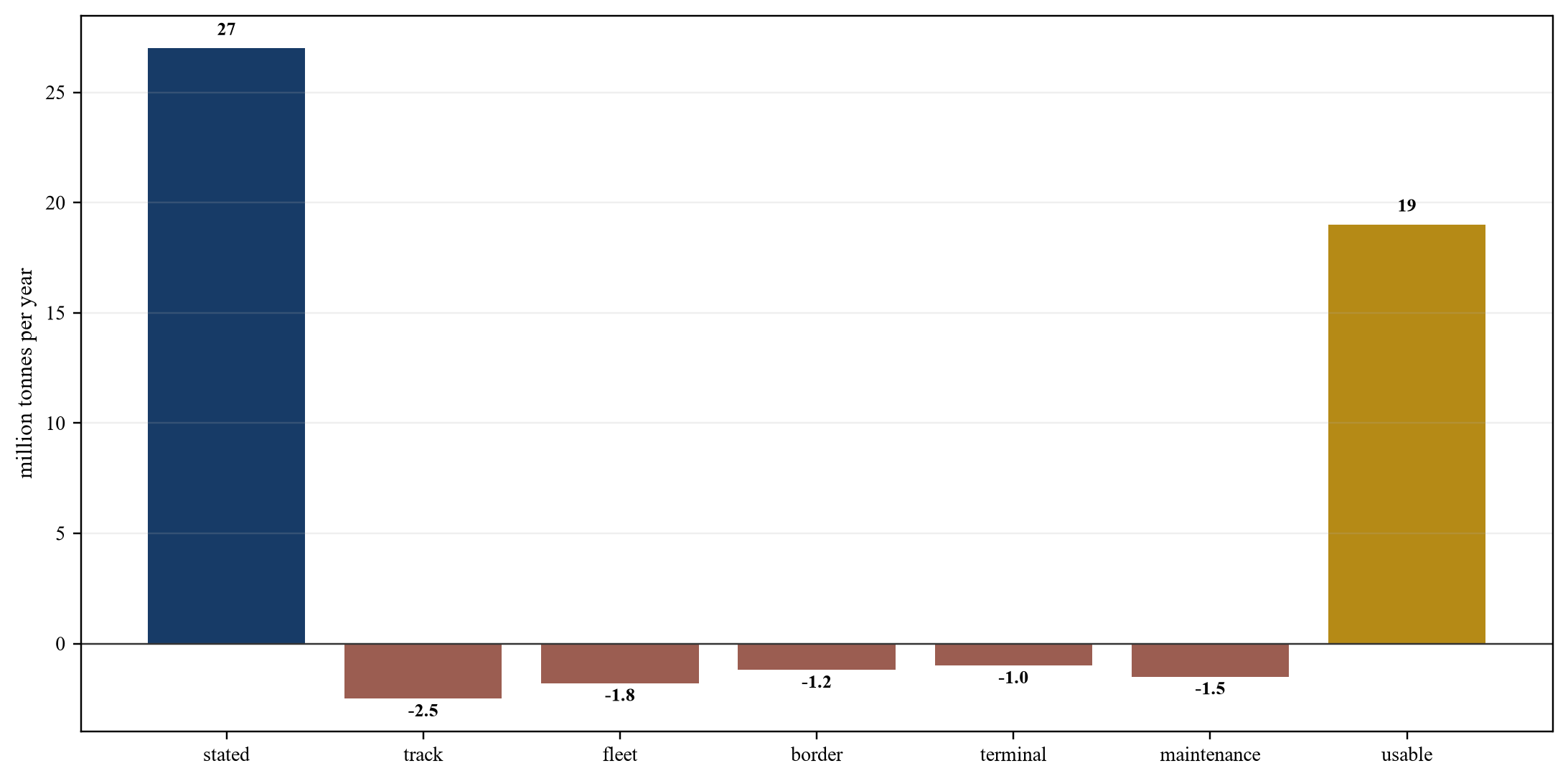
Wholly hypothetical million tonnes per year; it is not an engineering opinion.
14. Reconcile maintenance and expansion capital
The decision question is what expenditure sustains current service and creates incremental usable capacity. The diligence team should begin with asset condition, maintenance backlog, engineering quantities, interfaces, procurement and schedule. Evidence should be attributable, time-stamped and reconciled across operational, engineering, commercial, legal, regulatory and financial workstreams. [13][20]
The principal failure mode is that growth capital can be valued before maintenance deficits, permits and complementary works are funded. Management estimates can support planning when they are identified as estimates and kept separate from observed movements, executed contracts, regulatory rights and collected cash. The model should show how each unresolved item changes volume, capacity, schedule, tariff, operating cost, capital expenditure, liquidity, safety or control.
The recommended response is to separate sustaining, compliance, resilience and expansion expenditure with dependency gates. A named executive should own delivery, an independent reviewer should challenge material assumptions, and the investment committee should see the evidence required to release capital. Central, downside and stop cases should identify the cash effect and earliest practical intervention. In the hypothetical platform, unsupported value remains outside the base case or is carried through probability, contingency, delayed funding or a closing condition.
| Term | Evidence | Cash effect | Protection |
|---|---|---|---|
| committed volume | take-or-pay and nominations | base throughput | shortfall payment and security |
| tariff | formula, currency and escalation | unit revenue | objective index and review rule |
| service standard | transit and availability terms | bonus or penalty | measurable exceptions |
| quality and loss | acceptance and tolerance | billable tonnes | custody and survey process |
| credit | payment history and support | collection timing and loss | guarantee, reserve or prepayment |
| termination | causes and compensation | duration and recovery | step-in and termination payment |
Proposed contract review; executed agreements govern cash.
15. Underwrite tariffs and customer contracts
The decision question is how quantity, service, escalation, currency, take-or-pay, penalties and credit determine revenue. The diligence team should begin with executed contracts, invoices, collections, amendments, disputes, security and termination rights. Evidence should be attributable, time-stamped and reconciled across operational, engineering, commercial, legal, regulatory and financial workstreams. [3][21]
The principal failure mode is that headline tariff and volume can overstate cash when rebates, service failures, FX or credit losses apply. Management estimates can support planning when they are identified as estimates and kept separate from observed movements, executed contracts, regulatory rights and collected cash. The model should show how each unresolved item changes volume, capacity, schedule, tariff, operating cost, capital expenditure, liquidity, safety or control.
The recommended response is to build a customer-level revenue bridge and test renewal, concentration and enforceability. A named executive should own delivery, an independent reviewer should challenge material assumptions, and the investment committee should see the evidence required to release capital. Central, downside and stop cases should identify the cash effect and earliest practical intervention. In the hypothetical platform, unsupported value remains outside the base case or is carried through probability, contingency, delayed funding or a closing condition.
16. Model operating cost and working capital
The decision question is which fuel, power, labour, access, maintenance, handling and timing assumptions create cash. The diligence team should begin with general ledger, fleet usage, energy, headcount, supplier contracts, inventories and receivables. Evidence should be attributable, time-stamped and reconciled across operational, engineering, commercial, legal, regulatory and financial workstreams. [14][22]
The principal failure mode is that unit cost can hide low utilisation, empty movements, breakdowns, border inventory and delayed collection. Management estimates can support planning when they are identified as estimates and kept separate from observed movements, executed contracts, regulatory rights and collected cash. The model should show how each unresolved item changes volume, capacity, schedule, tariff, operating cost, capital expenditure, liquidity, safety or control.
The recommended response is to model monthly route economics, cash conversion and cost by customer and commodity. A named executive should own delivery, an independent reviewer should challenge material assumptions, and the investment committee should see the evidence required to release capital. Central, downside and stop cases should identify the cash effect and earliest practical intervention. In the hypothetical platform, unsupported value remains outside the base case or is carried through probability, contingency, delayed funding or a closing condition.
| Event | Leading evidence | Cash consequence | Intervention |
|---|---|---|---|
| mine delay | project and production milestones | lower volume | flex service and capex |
| border closure | queue and agency notices | dwell and fleet lock-up | alternate crossing and priority |
| rail outage | condition and failure alerts | lost paths and diversion cost | repair, road bridge and reserve |
| port congestion | berth and yard status | inventory and demurrage | slot protection and rerouting |
| weather event | forecast and asset exposure | damage and service interruption | closure rule and recovery plan |
| customer default | ageing and credit signals | collection loss | security and capacity resale |
Proposed control framework; actual responses require operating evidence.
17. Stress resilience and route substitution
The decision question is how weather, conflict, outage, border closure, port congestion and customer change affect service. The diligence team should begin with hazard records, security plans, alternate routes, mutual aid, insurance and recovery performance. Evidence should be attributable, time-stamped and reconciled across operational, engineering, commercial, legal, regulatory and financial workstreams. [2][23]
The principal failure mode is that a corridor can appear diversified while alternatives depend on the same bridge, border, fleet or port system. Management estimates can support planning when they are identified as estimates and kept separate from observed movements, executed contracts, regulatory rights and collected cash. The model should show how each unresolved item changes volume, capacity, schedule, tariff, operating cost, capital expenditure, liquidity, safety or control.
The recommended response is to map common-cause failures and price realistic diversion capacity and recovery time. A named executive should own delivery, an independent reviewer should challenge material assumptions, and the investment committee should see the evidence required to release capital. Central, downside and stop cases should identify the cash effect and earliest practical intervention. In the hypothetical platform, unsupported value remains outside the base case or is carried through probability, contingency, delayed funding or a closing condition.
| Use | Equity | DFI or guarantee-supported debt | Senior debt | Evidence gate |
|---|---|---|---|---|
| acquisition | 420 | 180 | 350 | perimeter and contracted cash |
| sustaining works | 80 | 40 | 60 | condition and maintenance plan |
| expansion stage one | 120 | 110 | 140 | demand, permits and EPC |
| liquidity and reserves | 35 | 15 | 0 | closing and covenant package |
| total | 655 | 345 | 550 | investment-committee conditions |
Wholly hypothetical USD millions; the table is not a financing recommendation.
18. Build the financing plan
The decision question is which equity, project debt, development-finance, guarantees and customer support fund acquisition and expansion. The diligence team should begin with sources and uses, security, covenants, reserves, conditions, guarantees and intercreditor terms. Evidence should be attributable, time-stamped and reconciled across operational, engineering, commercial, legal, regulatory and financial workstreams. [20][24]
The principal failure mode is that debt capacity can rely on uncontracted growth, sovereign expectations or unverified capacity. Management estimates can support planning when they are identified as estimates and kept separate from observed movements, executed contracts, regulatory rights and collected cash. The model should show how each unresolved item changes volume, capacity, schedule, tariff, operating cost, capital expenditure, liquidity, safety or control.
The recommended response is to size debt to contracted cash and release expansion funding against engineering and demand evidence. A named executive should own delivery, an independent reviewer should challenge material assumptions, and the investment committee should see the evidence required to release capital. Central, downside and stop cases should identify the cash effect and earliest practical intervention. In the hypothetical platform, unsupported value remains outside the base case or is carried through probability, contingency, delayed funding or a closing condition.
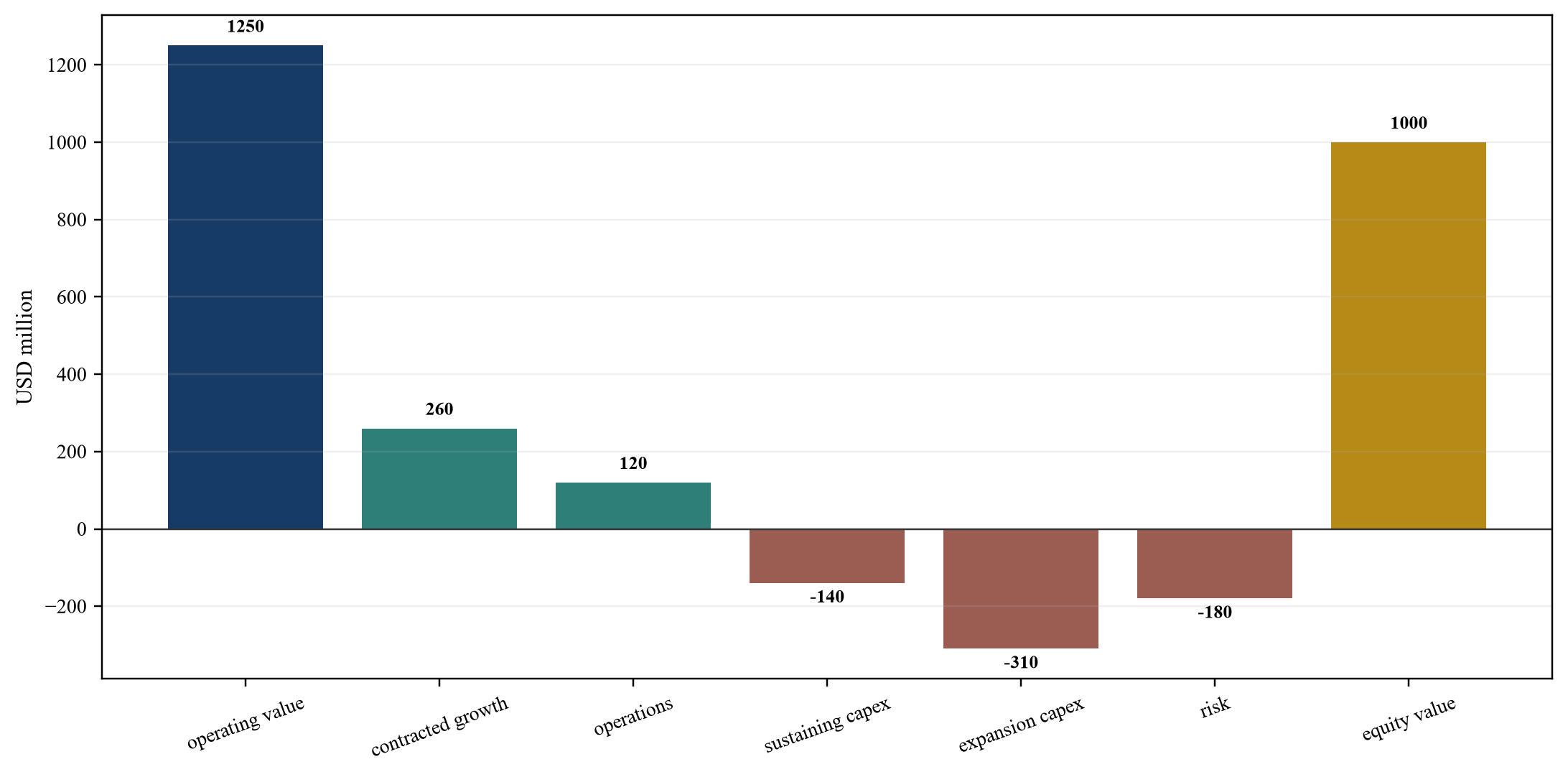
Wholly hypothetical USD millions; this is not a valuation opinion.
19. Value the platform and expansion options
The decision question is how current cash, operating improvement, contracted growth and future capacity contribute to value. The diligence team should begin with audited cash, customer cohorts, comparable evidence, replacement cost, capex and scenario forecasts. Evidence should be attributable, time-stamped and reconciled across operational, engineering, commercial, legal, regulatory and financial workstreams. [21][25]
The principal failure mode is that one multiple can capitalise speculative mines, public benefits and unbuilt capacity as current earnings. Management estimates can support planning when they are identified as estimates and kept separate from observed movements, executed contracts, regulatory rights and collected cash. The model should show how each unresolved item changes volume, capacity, schedule, tariff, operating cost, capital expenditure, liquidity, safety or control.
The recommended response is to value current operations, committed improvements and contingent options separately. A named executive should own delivery, an independent reviewer should challenge material assumptions, and the investment committee should see the evidence required to release capital. Central, downside and stop cases should identify the cash effect and earliest practical intervention. In the hypothetical platform, unsupported value remains outside the base case or is carried through probability, contingency, delayed funding or a closing condition.
20. Embed safety, environment and community obligations
The decision question is how operating safety, land, emissions, livelihoods and local benefits affect continuity and legitimacy. The diligence team should begin with safety records, environmental permits, land agreements, engagement, grievances and benefit commitments. Evidence should be attributable, time-stamped and reconciled across operational, engineering, commercial, legal, regulatory and financial workstreams. [26]
The principal failure mode is that logistics expansion can transfer cost to communities through crossings, dust, noise, displacement or unsafe traffic. Management estimates can support planning when they are identified as estimates and kept separate from observed movements, executed contracts, regulatory rights and collected cash. The model should show how each unresolved item changes volume, capacity, schedule, tariff, operating cost, capital expenditure, liquidity, safety or control.
The recommended response is to make safety, mitigation, participation and benefit delivery part of capex and governance. A named executive should own delivery, an independent reviewer should challenge material assumptions, and the investment committee should see the evidence required to release capital. Central, downside and stop cases should identify the cash effect and earliest practical intervention. In the hypothetical platform, unsupported value remains outside the base case or is carried through probability, contingency, delayed funding or a closing condition.
21. Confirm concession, competition and regulatory rights
The decision question is which tariffs, access, exclusivity, foreign investment and public obligations govern control and returns. The diligence team should begin with laws, concessions, licences, regulator decisions, public-service terms and change mechanisms. Evidence should be attributable, time-stamped and reconciled across operational, engineering, commercial, legal, regulatory and financial workstreams. [3][19]
The principal failure mode is that contract economics can be altered by access duties, tariff review, licence limits or approval conditions. Management estimates can support planning when they are identified as estimates and kept separate from observed movements, executed contracts, regulatory rights and collected cash. The model should show how each unresolved item changes volume, capacity, schedule, tariff, operating cost, capital expenditure, liquidity, safety or control.
The recommended response is to obtain jurisdiction-specific advice and model the negotiated rights rather than assumed policy support. A named executive should own delivery, an independent reviewer should challenge material assumptions, and the investment committee should see the evidence required to release capital. Central, downside and stop cases should identify the cash effect and earliest practical intervention. In the hypothetical platform, unsupported value remains outside the base case or is carried through probability, contingency, delayed funding or a closing condition.
22. Protect operational data and cyber resilience
The decision question is who owns movement, customer, equipment, model and platform data and how systems continue after failure. The diligence team should begin with licences, interfaces, logs, architecture, cybersecurity, backup, source code and exit rights. Evidence should be attributable, time-stamped and reconciled across operational, engineering, commercial, legal, regulatory and financial workstreams. [10][11]
The principal failure mode is that a buyer can acquire physical assets without durable access to dispatch, billing or optimisation systems. Management estimates can support planning when they are identified as estimates and kept separate from observed movements, executed contracts, regulatory rights and collected cash. The model should show how each unresolved item changes volume, capacity, schedule, tariff, operating cost, capital expenditure, liquidity, safety or control.
The recommended response is to secure auditable data rights, continuity, access control, model documentation and tested recovery. A named executive should own delivery, an independent reviewer should challenge material assumptions, and the investment committee should see the evidence required to release capital. Central, downside and stop cases should identify the cash effect and earliest practical intervention. In the hypothetical platform, unsupported value remains outside the base case or is carried through probability, contingency, delayed funding or a closing condition.
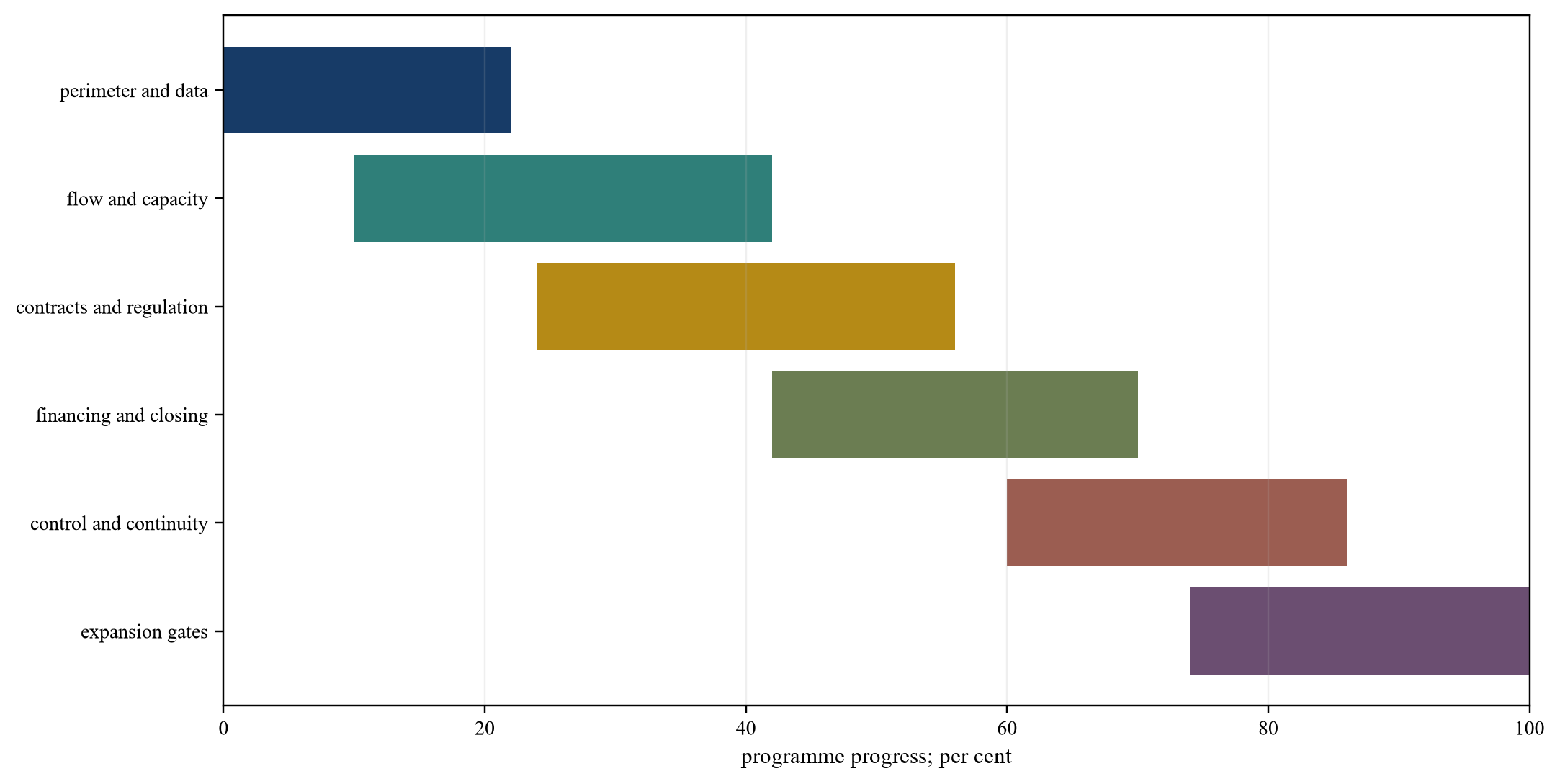
Illustrative sequence; actual timing depends on approvals, operations and financing.
23. Execute a controlled integration and expansion
The decision question is which actions preserve service while systems, contracts, people and projects move to the target model. The diligence team should begin with day-one plan, customer communications, control owners, interfaces, works and decision gates. Evidence should be attributable, time-stamped and reconciled across operational, engineering, commercial, legal, regulatory and financial workstreams. [1][20]
The principal failure mode is that aggressive integration can interrupt safety, billing, dispatch or customer service before replacements work. Management estimates can support planning when they are identified as estimates and kept separate from observed movements, executed contracts, regulatory rights and collected cash. The model should show how each unresolved item changes volume, capacity, schedule, tariff, operating cost, capital expenditure, liquidity, safety or control.
The recommended response is to sequence control, continuity, improvement and expansion through evidence-based milestones. A named executive should own delivery, an independent reviewer should challenge material assumptions, and the investment committee should see the evidence required to release capital. Central, downside and stop cases should identify the cash effect and earliest practical intervention. In the hypothetical platform, unsupported value remains outside the base case or is carried through probability, contingency, delayed funding or a closing condition.
Implementation detail: turning corridor flows into an investable operating case
The transaction team should establish one movement and cash ledger. Each record carries a mine, product, customer, contract, route, mode, vehicle or wagon, border event, terminal receipt, vessel batch, invoice and collection reference. The ledger should retain original identifiers and exceptions. Aggregated management reports are useful only after they reconcile to physical and financial source evidence.
The corridor graph should distinguish physical and contractual connectivity. A railway may reach a terminal while the operator lacks access rights, a compatible gauge, a path allocation or acceptable axle load. A port may have theoretical capacity while the platform lacks stockpile space or berth windows. Each edge should therefore contain ownership, access, capacity, operating calendar, cost, time, reliability and approval attributes.
Commodity forecasts require evidence classes. Operating mines can be supported by shipment and production history. Development mines need financing, construction, permits and ramp-up evidence. Prospective projects can inform options while remaining outside base debt sizing. The model should bridge from mine plan to saleable product, customer demand, corridor share and collected cash. A named owner should approve every movement between evidence classes.
Route optimisation should respect time and interfaces. The model can minimise cost, time, emissions or disruption while meeting product, border, rolling-stock, stockpile and vessel constraints. A route proposed by an algorithm should be explainable through these inputs. Overrides should state the operational reason and be retained for later performance review.
Validation should use temporal and corridor holdouts. A historical model can appear accurate because it knows later congestion, mine output or vessel timing. Back-tests should reconstruct the information available before dispatch. Prospective pilots can compare planned and actual cycle time, cost and service. Error measures should include rare but material disruption and long-tail delay.
Usable capacity should be reconciled as a system. Track paths, fleet, crews, workshops, yards, borders, terminals and ports form a series of constraints. Peak capacity differs from sustained capacity. Resilient capacity allows maintenance, failure and recovery. The investment model should use the lowest evidenced interface after operational allowances rather than add isolated nameplate claims.
Rail cycles require full accounting. Loaded movement, border dwell, terminal unloading, empty return, yard time, refuelling, crew change and maintenance all consume capacity. Locomotive and wagon registers should distinguish owned, leased, serviceable, restricted and under-repair units. Workshop slots, spare parts and recovery locomotives can be binding assets.
Road feeders should be treated as part of the service. Mine gates, bridges, seasonal roads, axle limits, parking, customs and urban crossings can constrain the corridor. The platform should distinguish owned haulage, contracted fleets and open-market trucking. Safety, driver hours, maintenance and community impact belong in the cost and operating plan.
Border performance needs distribution, not an average. Routine shipments may clear quickly while document errors or inspections create multi-day delays. The model should preserve commodity, customer, agency, direction and exception causes. Reforms such as pre-clearance, single windows or one-stop posts should be valued after operating evidence, systems readiness and agency agreements.
Terminal and port planning should model batches. Stockpiles may need segregation by mine, grade, moisture or customer. Handling equipment creates rates and downtime. Vessel acceptance depends on draft, berth, loading sequence, documentation and weather. Demurrage, quality loss and provisional settlement can turn apparent throughput into working-capital stress.
Multi-user access should be operational. Policy language needs allocation rules, nominations, minimum lots, priority, service standards, congestion processes and dispute resolution. An anchor customer can provide financeable demand while constraining capacity for smaller users. Expansion economics should state which customer pays, which rights change and how new capacity is allocated.
Sustaining capital and expansion capital should remain separate. Deferred track, rolling-stock, signalling, terminal and safety work can inflate near-term cash. Expansion requires permits, engineering, procurement, interfaces, commissioning and customer readiness. Every forecast capacity increment should map to a complete dependency chain and a release gate.
Customer contracts should be converted to cash formulas. Volume, tariff, currency, escalation, take-or-pay, service penalties, quality, loss, taxes, credit, termination and force majeure shape revenue. Invoices and collections should validate the formula. Affiliate arrangements and discretionary rebates require governance and arm's-length review.
Operating cost should be built by route and activity. Fuel, power, access charges, labour, maintenance, tyres, spares, handling, customs, security, insurance and overhead respond differently to utilisation. Empty movements and congestion reduce productivity. Working capital includes customer terms, inventories, border guarantees, demurrage and provisional amounts.
The financing plan should use enforceable cash. Commercial debt can be sized to contracted customers, usable capacity and tested operating cost. Development-finance or guarantee instruments may support regional integration, resilience or expansion subject to eligibility and approval. Public value does not become debt service until an enforceable payer and mechanism exist.
Valuation should use layers. Current operations reflect collected cash and sustaining needs. Contracted growth reflects customers, capacity and funded execution. Operational improvement should include cost and timing. Expansion options remain contingent on mines, permits, access and capital. Public benefits and industrial policy can support stakeholder decisions while remaining separate from equity value unless monetised.
Concession and regulatory diligence should cover term, exclusivity, access, tariff, investment, service, safety, environmental, reporting, change and termination. Foreign investment and competition review may affect control. Cross-border operations can require several agencies and legal systems. Conditions should enter the closing plan and downside model.
Safety and community evidence should shape design. Railway crossings, roads, dust, noise, land access, informal activity and emergency response affect continuity. Engagement commitments need budgets and owners. Grievances and incidents should be visible to the board. Expansion should include mitigation and benefit delivery rather than treat them as external costs.
Data and system continuity need a day-one plan. Dispatch, fleet maintenance, customer nomination, border documents, terminal operations, billing and reporting may depend on vendor systems or seller licences. The buyer should secure access, interfaces, credentials, backup, cybersecurity and retention. A tested manual or alternate process should support critical operations during migration.
Integration should preserve service first. Day one confirms control, safety, customer interfaces, cash, licences and incident response. The first phase reconciles data and stabilises systems. The second captures operating improvement. Expansion capital follows verified demand and interface capacity. Each phase should have measurable entry, exit and stop conditions.
Red-team scenarios should combine failures. A mine delay can coincide with border dwell and FX pressure. A rail outage can fill terminals and trigger vessel demurrage. A customer default can leave dedicated rolling stock and debt service. The model should locate the first liquidity or covenant failure and the intervention available before value becomes trapped.
Final approval should identify conditions. The committee should receive the perimeter, flow ledger, demand classes, network and capacity model, asset condition, customer contracts, regulation, sustaining and expansion capital, financing, valuation, safety, community plan, systems, downside cases and integration roadmap. Each unresolved item should have an owner, deadline, cash consequence and stop rule.
24. Red-team the acquisition case
The decision question is how correlated mine delay, border dwell, fleet failure, port congestion, FX and capex overrun affect solvency. The diligence team should begin with combined scenarios, network simulation, contract challenge, liquidity and covenant tests. Evidence should be attributable, time-stamped and reconciled across operational, engineering, commercial, legal, regulatory and financial workstreams. [2][23]
The principal failure mode is that individual sensitivities can miss compounding operational and financing failures. Management estimates can support planning when they are identified as estimates and kept separate from observed movements, executed contracts, regulatory rights and collected cash. The model should show how each unresolved item changes volume, capacity, schedule, tariff, operating cost, capital expenditure, liquidity, safety or control.
The recommended response is to test compound routes to failure and pre-agree stop, cure, funding and intervention rights. A named executive should own delivery, an independent reviewer should challenge material assumptions, and the investment committee should see the evidence required to release capital. Central, downside and stop cases should identify the cash effect and earliest practical intervention. In the hypothetical platform, unsupported value remains outside the base case or is carried through probability, contingency, delayed funding or a closing condition.
| Finding | Cash consequence | Deal response | Accountable owner |
|---|---|---|---|
| volume is prospective | overstated revenue | exclude or probability weight | commercial lead |
| usable capacity is below plan | constrained throughput | reprice and stage expansion | engineering lead |
| access right is conditional | service interruption | closing condition and remedy | legal and regulatory leads |
| sustaining capex is understated | lower cash and availability | funded maintenance programme | operations lead |
| downside breaches liquidity | covenant or funding failure | reserve and lower debt | finance lead |
| platform remains resilient and governed | stronger execution capacity | approve subject to evidence gates | investment committee |
Proposed decision framework; it is not an investment recommendation.
25. Use an investment-committee decision matrix
The decision question is whether demand, capacity, contracts, capital, resilience and control support commitment. The diligence team should begin with commercial, engineering, regulatory, financial and integration evidence. Evidence should be attributable, time-stamped and reconciled across operational, engineering, commercial, legal, regulatory and financial workstreams. [1][25]
The principal failure mode is that a large diligence archive can leave decision makers without explicit cash effects, owners or conditions. Management estimates can support planning when they are identified as estimates and kept separate from observed movements, executed contracts, regulatory rights and collected cash. The model should show how each unresolved item changes volume, capacity, schedule, tariff, operating cost, capital expenditure, liquidity, safety or control.
The recommended response is to convert every material finding into cash effect, protection, owner, deadline and approval condition. A named executive should own delivery, an independent reviewer should challenge material assumptions, and the investment committee should see the evidence required to release capital. Central, downside and stop cases should identify the cash effect and earliest practical intervention. In the hypothetical platform, unsupported value remains outside the base case or is carried through probability, contingency, delayed funding or a closing condition.
Sources
- African Development Bank, Lobito Integrated Economic Corridor Development Project Appraisal Report, Read the primary source
- World Bank, Integrating Africa: From Threads to Hubs, Read the primary source
- World Bank and PPIAF, Fostering the Development of Greenfield Mining-Related Transport Infrastructure Through Project Financing, Read the primary source
- World Bank, Trade and Transport Corridor Management Toolkit, Read the primary source
- U.S. Geological Survey, Compilation of Geospatial Data for Mineral Industries and Related Infrastructure of Africa, Read the primary source
- UN Trade and Development, Transport and Transit Facilitation Systems: Lessons from Regional Systems in Africa, Read the primary source
- U.S. Geological Survey, Minerals Yearbook: Africa and the Middle East, Read the primary source
- U.S. Geological Survey, Global Maps of Critical Mineral Production in 2023, Read the primary source
- World Bank, Overcoming Barriers to Green, Resilient, Inclusive and Efficient Regional Trade Corridors in Southern Africa, Read the primary source
- ISO, ISO 8000 Data Quality, Read the primary source
- National Institute of Standards and Technology, Artificial Intelligence Risk Management Framework, Read the primary source
- OECD, Recommendation on Artificial Intelligence, Read the primary source
- International Union of Railways, Railway System Resources, Read the primary source
- World Bank, Railway Reform Toolkit, Read the primary source
- World Bank, Road Safety, Read the primary source
- World Customs Organization, Revised Kyoto Convention, Read the primary source
- UN Trade and Development, Review of Maritime Transport 2025, Read the primary source
- World Bank and S&P Global, Container Port Performance Index, Read the primary source
- OECD, Guidelines for the Governance of State-Owned Enterprises, Read the primary source
- Association for the Advancement of Cost Engineering, Cost Estimate Classification System, Read the primary source
- IFRS Foundation, IFRS 15 Revenue from Contracts with Customers, Read the primary source
- IFRS Foundation, IAS 7 Statement of Cash Flows, Read the primary source
- ISO, ISO 22301 Business Continuity Management Systems, Read the primary source
- Multilateral Investment Guarantee Agency, Products, Read the primary source
- IFRS Foundation, IFRS 13 Fair Value Measurement, Read the primary source
- International Finance Corporation, Performance Standards on Environmental and Social Sustainability, Read the primary source
