

1. Define the financing decision
Set the borrower, facility purpose, amount, currency, tenor, amortisation, security, decision date and completion evidence.
The controlled record includes borrower; purpose; amount; currency; tenor; repayment; security; approval. The immediate deliverable is an approved debt-capacity charter. The record should preserve sources, periods, entities, currencies, adjustments, reviewers and unresolved exceptions.
The principal failure occurs when analysis begins before the instrument, use of proceeds and repayment question are fixed. Reviewers should reconstruct the underlying records, test cash consequences under downside conditions and identify who has authority to approve the conclusion and any lender representation.
Debt capacity should be anchored in cash that the legal borrower can generate, retain and apply after unavoidable operating, statutory and maintenance needs. Reported EBITDA remains an input requiring reconciliation.
The decision pack for define the financing decision should show the prior view, correction, cash or risk at stake, alternatives, owner, due date, next evidence gate and observed result. Exceptions require closure evidence and an explicit effect on capacity, structure, covenant or monitoring.
2. Map the borrowing perimeter
Reconcile operating companies, branches, holding vehicles, owners, related parties, guarantors and the entities that generate or consume cash.
The controlled record includes entity; owner; activity; jurisdiction; cash role; guarantee; restriction; source. The immediate deliverable is a source-linked obligor map. The record should preserve sources, periods, entities, currencies, adjustments, reviewers and unresolved exceptions.
The principal failure occurs when the reporting group differs from the legal borrowers and obligors. Reviewers should reconstruct the underlying records, test cash consequences under downside conditions and identify who has authority to approve the conclusion and any lender representation.
AI can accelerate transaction classification, entity resolution, anomaly detection and forecasting over approved records. Accountable finance and credit professionals retain authority for assumptions, overrides, representations and lending decisions.
The decision pack for map the borrowing perimeter should show the prior view, correction, cash or risk at stake, alternatives, owner, due date, next evidence gate and observed result. Exceptions require closure evidence and an explicit effect on capacity, structure, covenant or monitoring.
3. Establish accountable governance
Assign sponsor, finance, treasury, operations, tax, legal, data, model, credit and release responsibilities.
The controlled record includes role; person; authority; evidence; review; release; escalation; outcome. The immediate deliverable is a debt-process governance matrix. The record should preserve sources, periods, entities, currencies, adjustments, reviewers and unresolved exceptions.
The principal failure occurs when automated analysis fragments accountability for assumptions and lender representations. Reviewers should reconstruct the underlying records, test cash consequences under downside conditions and identify who has authority to approve the conclusion and any lender representation.
A useful signal must retain source, period, entity, currency, classification confidence, reviewer, limitation and later outcome. Material changes should trigger targeted revalidation.
The decision pack for establish accountable governance should show the prior view, correction, cash or risk at stake, alternatives, owner, due date, next evidence gate and observed result. Exceptions require closure evidence and an explicit effect on capacity, structure, covenant or monitoring.
4. Build the source-data inventory
Catalogue ledgers, bank feeds, invoices, orders, receipts, payroll, inventory, tax, contracts, facilities and management adjustments.
The controlled record includes source; owner; entity; period; field; quality; restriction; status. The immediate deliverable is a controlled financing evidence index. The record should preserve sources, periods, entities, currencies, adjustments, reviewers and unresolved exceptions.
The principal failure occurs when data volume substitutes for completeness, authority and relevance. Reviewers should reconstruct the underlying records, test cash consequences under downside conditions and identify who has authority to approve the conclusion and any lender representation.
Credit analysis should distinguish repayment capacity, liquidity timing, collateral recovery and sponsor support. These are separate protections with different evidence and failure modes.
The decision pack for build the source-data inventory should show the prior view, correction, cash or risk at stake, alternatives, owner, due date, next evidence gate and observed result. Exceptions require closure evidence and an explicit effect on capacity, structure, covenant or monitoring.
5. Reconcile bank accounts and authority
Map every account, holder, bank, currency, signatory, mandate, restriction, sweep, pledge and period of available statements.
The controlled record includes account; entity; bank; currency; signatory; restriction; period; evidence. The immediate deliverable is a verified bank-account register. The record should preserve sources, periods, entities, currencies, adjustments, reviewers and unresolved exceptions.
The principal failure occurs when unmapped accounts create missing cash, duplicate cash or hidden obligations. Reviewers should reconstruct the underlying records, test cash consequences under downside conditions and identify who has authority to approve the conclusion and any lender representation.
Debt capacity should be anchored in cash that the legal borrower can generate, retain and apply after unavoidable operating, statutory and maintenance needs. Reported EBITDA remains an input requiring reconciliation.
The decision pack for reconcile bank accounts and authority should show the prior view, correction, cash or risk at stake, alternatives, owner, due date, next evidence gate and observed result. Exceptions require closure evidence and an explicit effect on capacity, structure, covenant or monitoring.
6. Normalise transaction data
Standardise dates, currencies, counterparties, references, reversals, transfers, fees and duplicate entries while retaining source provenance.
The controlled record includes transaction; source; date; value date; currency; party; category; confidence. The immediate deliverable is a validated transaction ledger. The record should preserve sources, periods, entities, currencies, adjustments, reviewers and unresolved exceptions.
The principal failure occurs when cleaning removes exceptions or changes cash meaning without an audit trail. Reviewers should reconstruct the underlying records, test cash consequences under downside conditions and identify who has authority to approve the conclusion and any lender representation.
AI can accelerate transaction classification, entity resolution, anomaly detection and forecasting over approved records. Accountable finance and credit professionals retain authority for assumptions, overrides, representations and lending decisions.
The decision pack for normalise transaction data should show the prior view, correction, cash or risk at stake, alternatives, owner, due date, next evidence gate and observed result. Exceptions require closure evidence and an explicit effect on capacity, structure, covenant or monitoring.
7. Resolve counterparties and relationships
Connect customer, supplier, payroll, lender, owner and related-party identities across bank, ledger and contract records.
The controlled record includes party; identifier; account; relationship; source; confidence; reviewer; decision. The immediate deliverable is a reviewed counterparty graph. The record should preserve sources, periods, entities, currencies, adjustments, reviewers and unresolved exceptions.
The principal failure occurs when name variations split one counterparty or combine unrelated parties. Reviewers should reconstruct the underlying records, test cash consequences under downside conditions and identify who has authority to approve the conclusion and any lender representation.
A useful signal must retain source, period, entity, currency, classification confidence, reviewer, limitation and later outcome. Material changes should trigger targeted revalidation.
The decision pack for resolve counterparties and relationships should show the prior view, correction, cash or risk at stake, alternatives, owner, due date, next evidence gate and observed result. Exceptions require closure evidence and an explicit effect on capacity, structure, covenant or monitoring.
8. Separate operating, investing and financing cash
Classify receipts and payments by economic purpose, legal entity, recurrence, discretion, restriction and one-off status.
The controlled record includes flow; entity; category; recurrence; discretion; restriction; source; review. The immediate deliverable is a cash-flow classification bridge. The record should preserve sources, periods, entities, currencies, adjustments, reviewers and unresolved exceptions.
The principal failure occurs when financing inflows, owner support or asset sales are mistaken for operating capacity. Reviewers should reconstruct the underlying records, test cash consequences under downside conditions and identify who has authority to approve the conclusion and any lender representation.
Credit analysis should distinguish repayment capacity, liquidity timing, collateral recovery and sponsor support. These are separate protections with different evidence and failure modes.
The decision pack for separate operating, investing and financing cash should show the prior view, correction, cash or risk at stake, alternatives, owner, due date, next evidence gate and observed result. Exceptions require closure evidence and an explicit effect on capacity, structure, covenant or monitoring.
Table 1. Cash-signal evidence layers
| Layer | Required record | Decision |
|---|---|---|
| identity | entity, account and counterparty | perimeter |
| operations | orders, invoices and receipts | cash generation |
| liquidity | balances, restrictions and obligations | timing |
| credit | debt, security and downside | capacity |
Illustrative classifications require borrower-, lender-, jurisdiction-, facility- and period-specific approval.
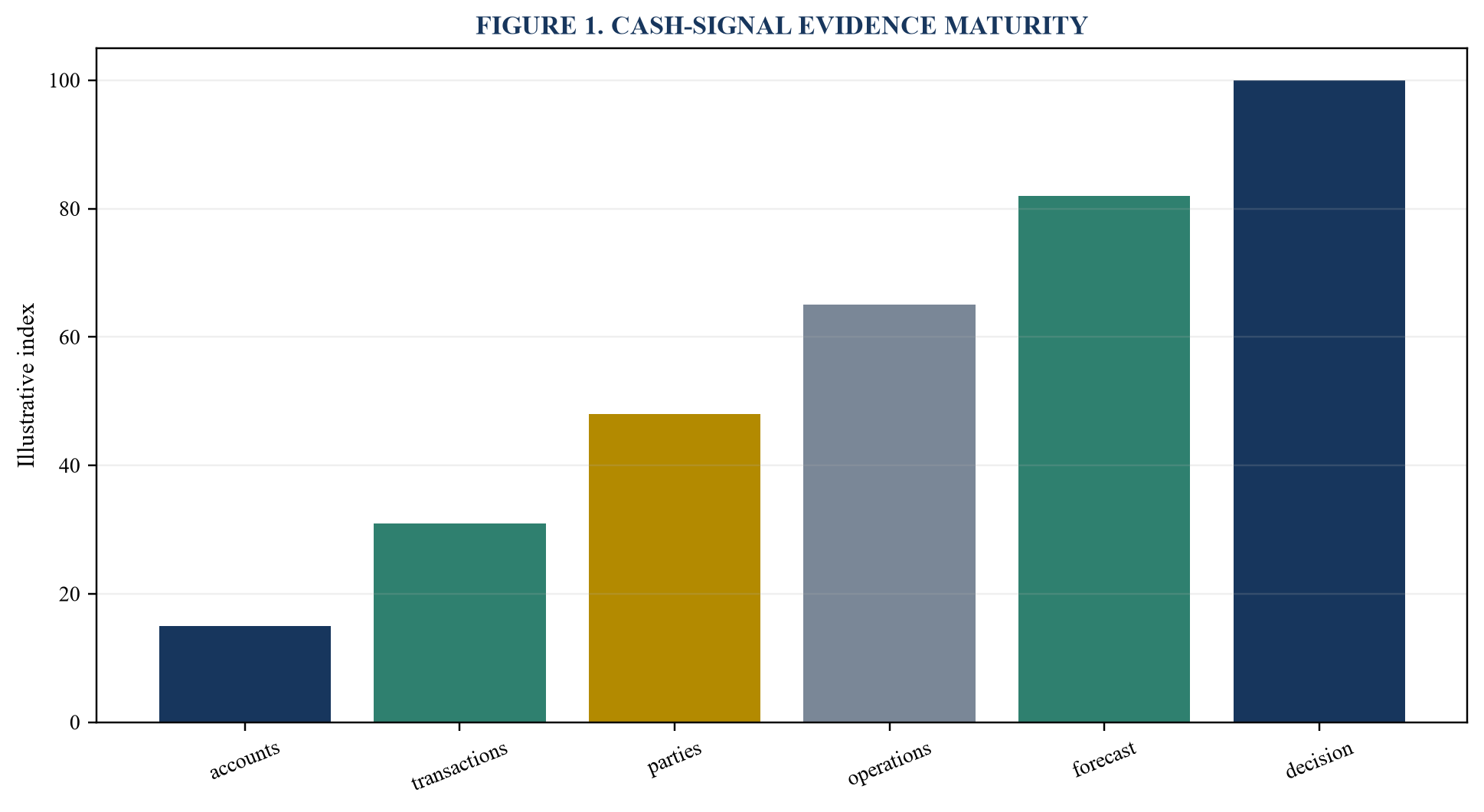
Values are illustrative indices and require replacement with approved borrower and lender evidence.
9. Reconstruct collections
Link order, delivery, acceptance, invoice, credit note, receivable, dispute, receipt and allocation at customer level.
The controlled record includes customer; order; invoice; due date; receipt; allocation; dispute; evidence. The immediate deliverable is a collection evidence bridge. The record should preserve sources, periods, entities, currencies, adjustments, reviewers and unresolved exceptions.
The principal failure occurs when bank credits are treated as sales without contractual and ledger reconciliation. Reviewers should reconstruct the underlying records, test cash consequences under downside conditions and identify who has authority to approve the conclusion and any lender representation.
Debt capacity should be anchored in cash that the legal borrower can generate, retain and apply after unavoidable operating, statutory and maintenance needs. Reported EBITDA remains an input requiring reconciliation.
The decision pack for reconstruct collections should show the prior view, correction, cash or risk at stake, alternatives, owner, due date, next evidence gate and observed result. Exceptions require closure evidence and an explicit effect on capacity, structure, covenant or monitoring.
10. Measure collection behaviour
Calculate timeliness, ageing, partial payment, dispute, concentration, seasonality, volatility and deterioration by cohort.
The controlled record includes cohort; invoice; due; paid; days; dispute; trend; exception. The immediate deliverable is a customer payment-behaviour model. The record should preserve sources, periods, entities, currencies, adjustments, reviewers and unresolved exceptions.
The principal failure occurs when recent receipts conceal weakening payment behaviour or stretched terms. Reviewers should reconstruct the underlying records, test cash consequences under downside conditions and identify who has authority to approve the conclusion and any lender representation.
AI can accelerate transaction classification, entity resolution, anomaly detection and forecasting over approved records. Accountable finance and credit professionals retain authority for assumptions, overrides, representations and lending decisions.
The decision pack for measure collection behaviour should show the prior view, correction, cash or risk at stake, alternatives, owner, due date, next evidence gate and observed result. Exceptions require closure evidence and an explicit effect on capacity, structure, covenant or monitoring.
11. Test revenue quality
Separate proposal, order, delivery, acceptance, billed revenue, recognised revenue, receivable and collected cash.
The controlled record includes customer; stage; amount; date; condition; source; owner; result. The immediate deliverable is a revenue-to-cash state bridge. The record should preserve sources, periods, entities, currencies, adjustments, reviewers and unresolved exceptions.
The principal failure occurs when pipeline and invoicing are converted into debt-service cash before performance and collection. Reviewers should reconstruct the underlying records, test cash consequences under downside conditions and identify who has authority to approve the conclusion and any lender representation.
A useful signal must retain source, period, entity, currency, classification confidence, reviewer, limitation and later outcome. Material changes should trigger targeted revalidation.
The decision pack for test revenue quality should show the prior view, correction, cash or risk at stake, alternatives, owner, due date, next evidence gate and observed result. Exceptions require closure evidence and an explicit effect on capacity, structure, covenant or monitoring.
12. Reconcile EBITDA
Bridge statutory and management profit to lender EBITDA with documented recurring, non-recurring, owner, related-party and prospective adjustments.
The controlled record includes period; account; amount; adjustment; recurrence; source; reviewer; treatment. The immediate deliverable is an EBITDA reconciliation schedule. The record should preserve sources, periods, entities, currencies, adjustments, reviewers and unresolved exceptions.
The principal failure occurs when reported EBITDA includes unsupported add-backs or excludes recurring cash costs. Reviewers should reconstruct the underlying records, test cash consequences under downside conditions and identify who has authority to approve the conclusion and any lender representation.
Credit analysis should distinguish repayment capacity, liquidity timing, collateral recovery and sponsor support. These are separate protections with different evidence and failure modes.
The decision pack for reconcile ebitda should show the prior view, correction, cash or risk at stake, alternatives, owner, due date, next evidence gate and observed result. Exceptions require closure evidence and an explicit effect on capacity, structure, covenant or monitoring.
13. Convert EBITDA to operating cash
Model tax, working capital, maintenance capital expenditure, leases, interest, owner flows and other required cash uses.
The controlled record includes period; EBITDA; tax; working capital; capex; lease; interest; cash. The immediate deliverable is an EBITDA-to-cash conversion bridge. The record should preserve sources, periods, entities, currencies, adjustments, reviewers and unresolved exceptions.
The principal failure occurs when EBITDA is treated as freely available debt service. Reviewers should reconstruct the underlying records, test cash consequences under downside conditions and identify who has authority to approve the conclusion and any lender representation.
Debt capacity should be anchored in cash that the legal borrower can generate, retain and apply after unavoidable operating, statutory and maintenance needs. Reported EBITDA remains an input requiring reconciliation.
The decision pack for convert ebitda to operating cash should show the prior view, correction, cash or risk at stake, alternatives, owner, due date, next evidence gate and observed result. Exceptions require closure evidence and an explicit effect on capacity, structure, covenant or monitoring.
14. Map working-capital mechanics
Connect sales, purchasing, inventory, billing, receivables, payables, advances, retentions and tax by operating cycle.
The controlled record includes business; driver; days; amount; term; restriction; season; evidence. The immediate deliverable is a driver-based working-capital model. The record should preserve sources, periods, entities, currencies, adjustments, reviewers and unresolved exceptions.
The principal failure occurs when one working-capital ratio obscures operational timing and funding gaps. Reviewers should reconstruct the underlying records, test cash consequences under downside conditions and identify who has authority to approve the conclusion and any lender representation.
AI can accelerate transaction classification, entity resolution, anomaly detection and forecasting over approved records. Accountable finance and credit professionals retain authority for assumptions, overrides, representations and lending decisions.
The decision pack for map working-capital mechanics should show the prior view, correction, cash or risk at stake, alternatives, owner, due date, next evidence gate and observed result. Exceptions require closure evidence and an explicit effect on capacity, structure, covenant or monitoring.
15. Test inventory quality
Reconcile quantity, ownership, location, age, cost, selling price, turnover, obsolescence, liens, insurance and realisation time.
The controlled record includes item; owner; location; quantity; value; age; lien; evidence. The immediate deliverable is an inventory quality and eligibility register. The record should preserve sources, periods, entities, currencies, adjustments, reviewers and unresolved exceptions.
The principal failure occurs when book inventory is treated as liquid collateral without eligibility and realisation tests. Reviewers should reconstruct the underlying records, test cash consequences under downside conditions and identify who has authority to approve the conclusion and any lender representation.
A useful signal must retain source, period, entity, currency, classification confidence, reviewer, limitation and later outcome. Material changes should trigger targeted revalidation.
The decision pack for test inventory quality should show the prior view, correction, cash or risk at stake, alternatives, owner, due date, next evidence gate and observed result. Exceptions require closure evidence and an explicit effect on capacity, structure, covenant or monitoring.
16. Map payroll and critical operating costs
Separate permanent, variable, contractor, owner, related-party and deferred labour costs with payment timing and operational necessity.
The controlled record includes employee; entity; role; amount; timing; recurrence; dependency; source. The immediate deliverable is a payroll and critical-cost schedule. The record should preserve sources, periods, entities, currencies, adjustments, reviewers and unresolved exceptions.
The principal failure occurs when late or irregular payroll temporarily inflates cash availability. Reviewers should reconstruct the underlying records, test cash consequences under downside conditions and identify who has authority to approve the conclusion and any lender representation.
Credit analysis should distinguish repayment capacity, liquidity timing, collateral recovery and sponsor support. These are separate protections with different evidence and failure modes.
The decision pack for map payroll and critical operating costs should show the prior view, correction, cash or risk at stake, alternatives, owner, due date, next evidence gate and observed result. Exceptions require closure evidence and an explicit effect on capacity, structure, covenant or monitoring.
Table 2. EBITDA-to-cash controls
| Dimension | Evidence | Gate |
|---|---|---|
| earnings | accounts and adjustments | normalised |
| working capital | receipts, inventory and payables | cash conversion |
| required cash | tax, maintenance and leases | available cash |
| debt service | contract and payment calendar | coverage |
Illustrative classifications require borrower-, lender-, jurisdiction-, facility- and period-specific approval.
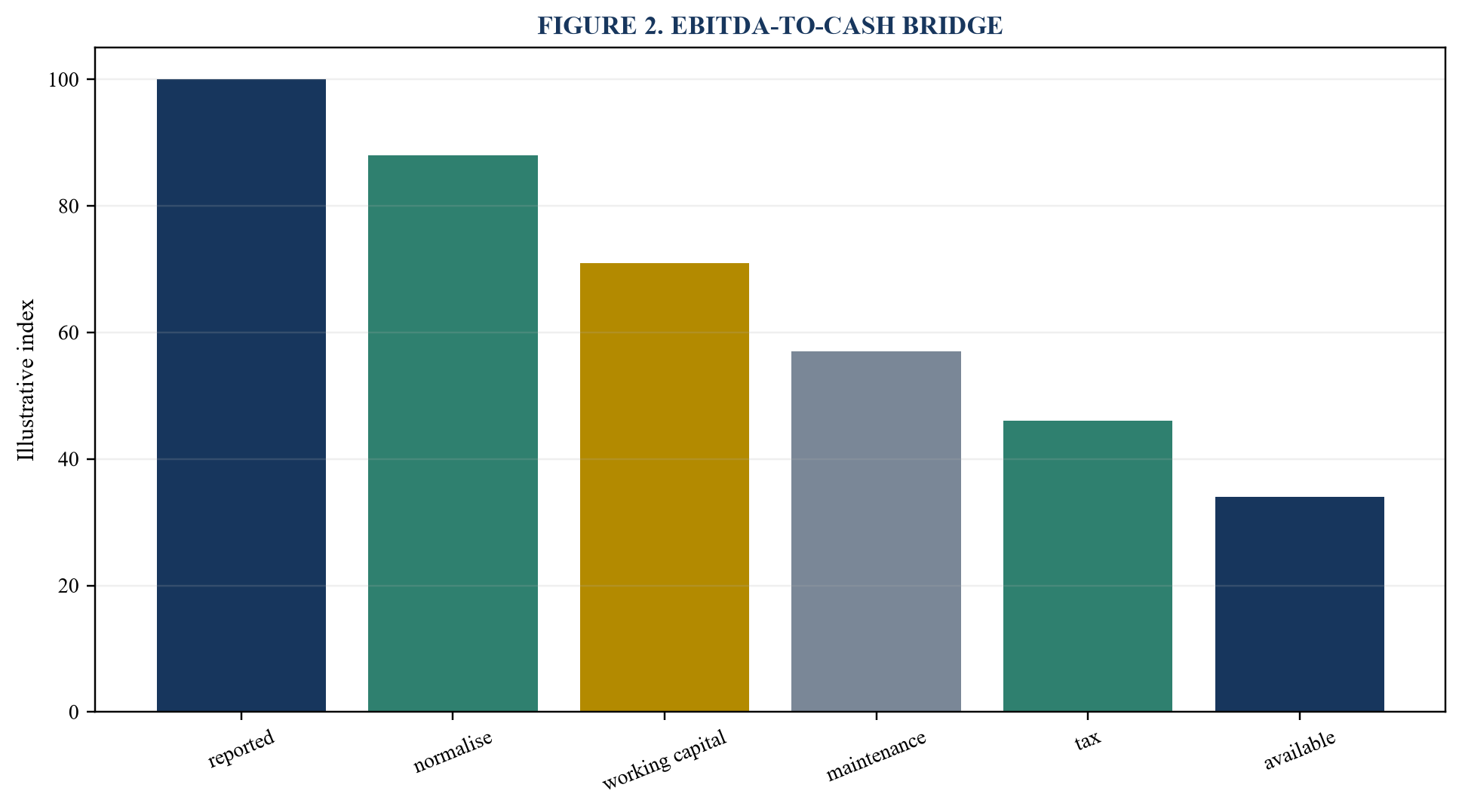
Values are illustrative indices and require replacement with approved borrower and lender evidence.
17. Identify owner and related-party flows
Trace loans, drawings, dividends, reimbursements, intercompany transfers, rent, services, guarantees and settlement behaviour.
The controlled record includes party; relationship; flow; amount; term; approval; balance; evidence. The immediate deliverable is a related-party cash and obligation map. The record should preserve sources, periods, entities, currencies, adjustments, reviewers and unresolved exceptions.
The principal failure occurs when owner support is assumed permanent or withdrawals are omitted from capacity. Reviewers should reconstruct the underlying records, test cash consequences under downside conditions and identify who has authority to approve the conclusion and any lender representation.
Debt capacity should be anchored in cash that the legal borrower can generate, retain and apply after unavoidable operating, statutory and maintenance needs. Reported EBITDA remains an input requiring reconciliation.
The decision pack for identify owner and related-party flows should show the prior view, correction, cash or risk at stake, alternatives, owner, due date, next evidence gate and observed result. Exceptions require closure evidence and an explicit effect on capacity, structure, covenant or monitoring.
18. Test tax and statutory cash
Map VAT, corporate tax, customs, payroll, social, licence, penalty, filing and payment obligations by entity and period.
The controlled record includes entity; tax; period; filing; amount; due date; status; evidence. The immediate deliverable is a statutory cash-obligation register. The record should preserve sources, periods, entities, currencies, adjustments, reviewers and unresolved exceptions.
The principal failure occurs when unpaid statutory liabilities masquerade as operating liquidity. Reviewers should reconstruct the underlying records, test cash consequences under downside conditions and identify who has authority to approve the conclusion and any lender representation.
AI can accelerate transaction classification, entity resolution, anomaly detection and forecasting over approved records. Accountable finance and credit professionals retain authority for assumptions, overrides, representations and lending decisions.
The decision pack for test tax and statutory cash should show the prior view, correction, cash or risk at stake, alternatives, owner, due date, next evidence gate and observed result. Exceptions require closure evidence and an explicit effect on capacity, structure, covenant or monitoring.
19. Map existing debt
Record lender, borrower, amount, use, maturity, pricing, amortisation, covenant, security, guarantee, waiver and default status.
The controlled record includes facility; borrower; balance; maturity; payment; covenant; security; status. The immediate deliverable is a debt and security register. The record should preserve sources, periods, entities, currencies, adjustments, reviewers and unresolved exceptions.
The principal failure occurs when the new facility is sized without the full debt and recourse perimeter. Reviewers should reconstruct the underlying records, test cash consequences under downside conditions and identify who has authority to approve the conclusion and any lender representation.
A useful signal must retain source, period, entity, currency, classification confidence, reviewer, limitation and later outcome. Material changes should trigger targeted revalidation.
The decision pack for map existing debt should show the prior view, correction, cash or risk at stake, alternatives, owner, due date, next evidence gate and observed result. Exceptions require closure evidence and an explicit effect on capacity, structure, covenant or monitoring.
20. Reconstruct debt service
Tie principal, interest, fees, leases, hedging, guarantees and contingent payments to contracts, statements and bank evidence.
The controlled record includes instrument; period; principal; interest; fee; payment; source; exception. The immediate deliverable is a contractual debt-service calendar. The record should preserve sources, periods, entities, currencies, adjustments, reviewers and unresolved exceptions.
The principal failure occurs when contractual debt service differs from management schedules. Reviewers should reconstruct the underlying records, test cash consequences under downside conditions and identify who has authority to approve the conclusion and any lender representation.
Credit analysis should distinguish repayment capacity, liquidity timing, collateral recovery and sponsor support. These are separate protections with different evidence and failure modes.
The decision pack for reconstruct debt service should show the prior view, correction, cash or risk at stake, alternatives, owner, due date, next evidence gate and observed result. Exceptions require closure evidence and an explicit effect on capacity, structure, covenant or monitoring.
21. Measure liquidity
Calculate unrestricted cash, operating buffers, committed facilities, availability, borrowing-base limits, trapped cash and near-term obligations.
The controlled record includes entity; cash; restriction; facility; availability; obligation; date; owner. The immediate deliverable is a legal-entity liquidity bridge. The record should preserve sources, periods, entities, currencies, adjustments, reviewers and unresolved exceptions.
The principal failure occurs when gross cash and undrawn limits overstate accessible liquidity. Reviewers should reconstruct the underlying records, test cash consequences under downside conditions and identify who has authority to approve the conclusion and any lender representation.
Debt capacity should be anchored in cash that the legal borrower can generate, retain and apply after unavoidable operating, statutory and maintenance needs. Reported EBITDA remains an input requiring reconciliation.
The decision pack for measure liquidity should show the prior view, correction, cash or risk at stake, alternatives, owner, due date, next evidence gate and observed result. Exceptions require closure evidence and an explicit effect on capacity, structure, covenant or monitoring.
22. Build the base cash forecast
Forecast weekly receipts and payments from operating drivers, contracts, due dates, inventory, payroll, tax, capex and financing.
The controlled record includes week; driver; source; case; receipt; payment; balance; owner. The immediate deliverable is a thirteen-week integrated cash forecast. The record should preserve sources, periods, entities, currencies, adjustments, reviewers and unresolved exceptions.
The principal failure occurs when monthly top-down forecasts miss timing gaps that trigger default. Reviewers should reconstruct the underlying records, test cash consequences under downside conditions and identify who has authority to approve the conclusion and any lender representation.
AI can accelerate transaction classification, entity resolution, anomaly detection and forecasting over approved records. Accountable finance and credit professionals retain authority for assumptions, overrides, representations and lending decisions.
The decision pack for build the base cash forecast should show the prior view, correction, cash or risk at stake, alternatives, owner, due date, next evidence gate and observed result. Exceptions require closure evidence and an explicit effect on capacity, structure, covenant or monitoring.
23. Build downside and delay cases
Stress sales, collection timing, margin, inventory, payroll, rates, currency, customer loss, supplier terms and refinancing.
The controlled record includes scenario; driver; range; dependency; result; threshold; action; owner. The immediate deliverable is a debt-capacity scenario set. The record should preserve sources, periods, entities, currencies, adjustments, reviewers and unresolved exceptions.
The principal failure occurs when one central case disguises nonlinear liquidity failure. Reviewers should reconstruct the underlying records, test cash consequences under downside conditions and identify who has authority to approve the conclusion and any lender representation.
A useful signal must retain source, period, entity, currency, classification confidence, reviewer, limitation and later outcome. Material changes should trigger targeted revalidation.
The decision pack for build downside and delay cases should show the prior view, correction, cash or risk at stake, alternatives, owner, due date, next evidence gate and observed result. Exceptions require closure evidence and an explicit effect on capacity, structure, covenant or monitoring.
24. Test concentration
Measure customer, supplier, product, geography, bank, currency and owner dependence on revenue, margin, receivables and cash.
The controlled record includes dimension; party; exposure; cash; term; replacement; trend; action. The immediate deliverable is a look-through concentration matrix. The record should preserve sources, periods, entities, currencies, adjustments, reviewers and unresolved exceptions.
The principal failure occurs when diversified invoice counts conceal concentrated cash dependence. Reviewers should reconstruct the underlying records, test cash consequences under downside conditions and identify who has authority to approve the conclusion and any lender representation.
Credit analysis should distinguish repayment capacity, liquidity timing, collateral recovery and sponsor support. These are separate protections with different evidence and failure modes.
The decision pack for test concentration should show the prior view, correction, cash or risk at stake, alternatives, owner, due date, next evidence gate and observed result. Exceptions require closure evidence and an explicit effect on capacity, structure, covenant or monitoring.
Table 3. Debt-capacity stress matrix
| Case | Primary shock | Required response |
|---|---|---|
| collection delay | cash arrives later | liquidity buffer |
| margin pressure | contribution declines | cost and pricing action |
| customer loss | concentration crystallises | capacity reduction |
| rate and FX | debt service rises | hedge or restructure |
Illustrative classifications require borrower-, lender-, jurisdiction-, facility- and period-specific approval.
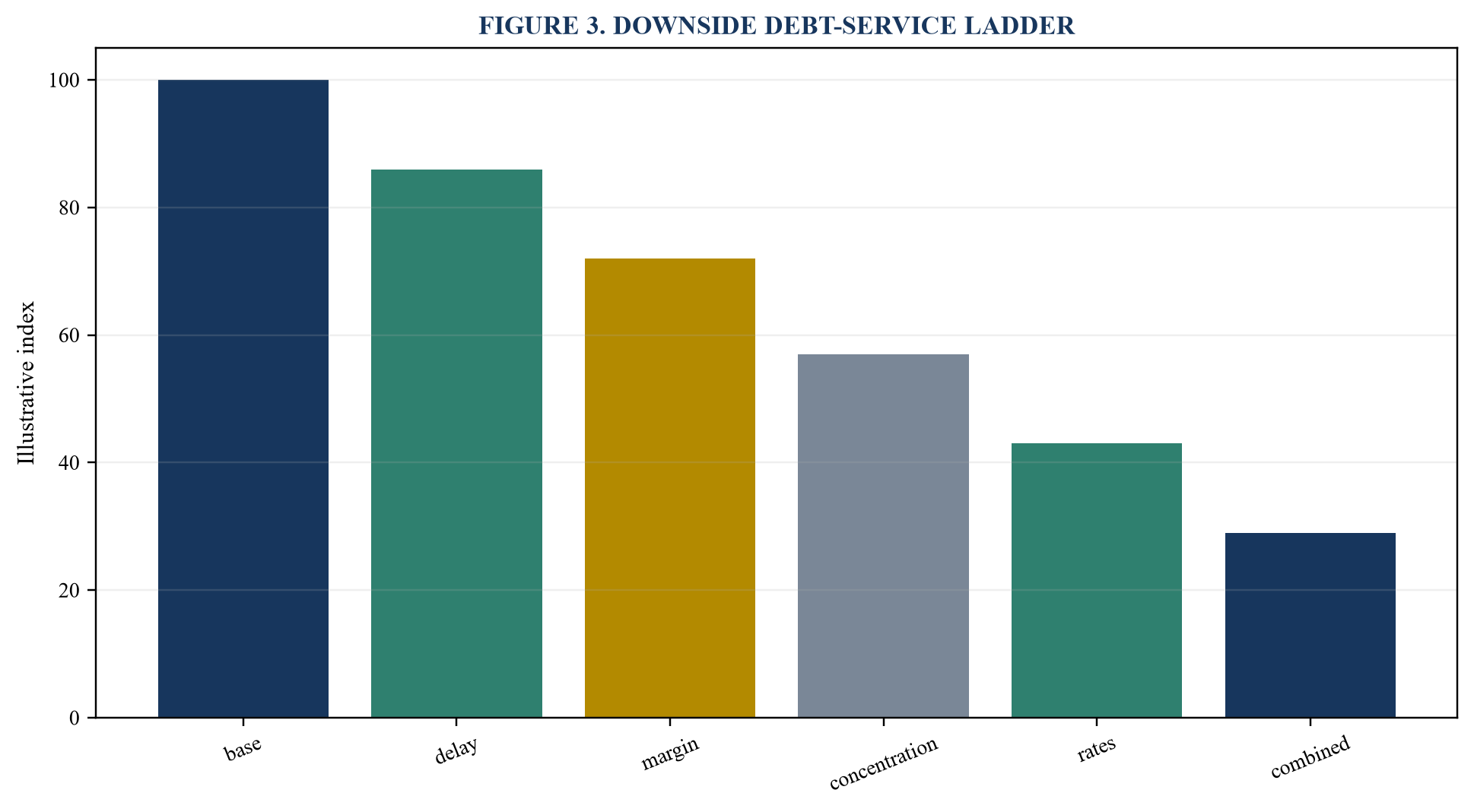
Values are illustrative indices and require replacement with approved borrower and lender evidence.
25. Test seasonality and volatility
Separate recurring seasonal patterns, growth effects, one-offs, timing noise and structural deterioration across several cycles.
The controlled record includes metric; period; season; baseline; variance; explanation; evidence; result. The immediate deliverable is a seasonal cash-capacity model. The record should preserve sources, periods, entities, currencies, adjustments, reviewers and unresolved exceptions.
The principal failure occurs when annual averages suppress peak borrowing needs and weak months. Reviewers should reconstruct the underlying records, test cash consequences under downside conditions and identify who has authority to approve the conclusion and any lender representation.
Debt capacity should be anchored in cash that the legal borrower can generate, retain and apply after unavoidable operating, statutory and maintenance needs. Reported EBITDA remains an input requiring reconciliation.
The decision pack for test seasonality and volatility should show the prior view, correction, cash or risk at stake, alternatives, owner, due date, next evidence gate and observed result. Exceptions require closure evidence and an explicit effect on capacity, structure, covenant or monitoring.
26. Assess customer contract durability
Review term, volume, price, acceptance, cancellation, renewal, set-off, dispute, concentration and change-of-control rights.
The controlled record includes customer; contract; term; right; condition; value; risk; evidence. The immediate deliverable is a contract durability schedule. The record should preserve sources, periods, entities, currencies, adjustments, reviewers and unresolved exceptions.
The principal failure occurs when historical collections are projected beyond contractual support. Reviewers should reconstruct the underlying records, test cash consequences under downside conditions and identify who has authority to approve the conclusion and any lender representation.
AI can accelerate transaction classification, entity resolution, anomaly detection and forecasting over approved records. Accountable finance and credit professionals retain authority for assumptions, overrides, representations and lending decisions.
The decision pack for assess customer contract durability should show the prior view, correction, cash or risk at stake, alternatives, owner, due date, next evidence gate and observed result. Exceptions require closure evidence and an explicit effect on capacity, structure, covenant or monitoring.
27. Assess supplier and trade-credit resilience
Map critical inputs, terms, arrears, concentration, retention of title, limits, insurance, alternatives and disruption consequences.
The controlled record includes supplier; input; term; balance; security; dependency; alternative; evidence. The immediate deliverable is a supplier-credit resilience map. The record should preserve sources, periods, entities, currencies, adjustments, reviewers and unresolved exceptions.
The principal failure occurs when stretched payables create hidden liquidity and supply risk. Reviewers should reconstruct the underlying records, test cash consequences under downside conditions and identify who has authority to approve the conclusion and any lender representation.
A useful signal must retain source, period, entity, currency, classification confidence, reviewer, limitation and later outcome. Material changes should trigger targeted revalidation.
The decision pack for assess supplier and trade-credit resilience should show the prior view, correction, cash or risk at stake, alternatives, owner, due date, next evidence gate and observed result. Exceptions require closure evidence and an explicit effect on capacity, structure, covenant or monitoring.
28. Test capital expenditure
Separate maintenance, compliance, growth and discretionary investment with timing, commitments, completion, benefits and deferral consequences.
The controlled record includes project; category; amount; timing; commitment; benefit; deferral; owner. The immediate deliverable is a capital-expenditure and commitment schedule. The record should preserve sources, periods, entities, currencies, adjustments, reviewers and unresolved exceptions.
The principal failure occurs when maintenance cash is classified as optional to inflate capacity. Reviewers should reconstruct the underlying records, test cash consequences under downside conditions and identify who has authority to approve the conclusion and any lender representation.
Credit analysis should distinguish repayment capacity, liquidity timing, collateral recovery and sponsor support. These are separate protections with different evidence and failure modes.
The decision pack for test capital expenditure should show the prior view, correction, cash or risk at stake, alternatives, owner, due date, next evidence gate and observed result. Exceptions require closure evidence and an explicit effect on capacity, structure, covenant or monitoring.
29. Assess collateral and security
Verify ownership, title, location, value, priority, liens, insurance, transferability, enforcement route and realisation costs.
The controlled record includes asset; owner; value; lien; priority; insurance; restriction; evidence. The immediate deliverable is a security and recovery evidence pack. The record should preserve sources, periods, entities, currencies, adjustments, reviewers and unresolved exceptions.
The principal failure occurs when headline asset value is treated as lender recovery. Reviewers should reconstruct the underlying records, test cash consequences under downside conditions and identify who has authority to approve the conclusion and any lender representation.
Debt capacity should be anchored in cash that the legal borrower can generate, retain and apply after unavoidable operating, statutory and maintenance needs. Reported EBITDA remains an input requiring reconciliation.
The decision pack for assess collateral and security should show the prior view, correction, cash or risk at stake, alternatives, owner, due date, next evidence gate and observed result. Exceptions require closure evidence and an explicit effect on capacity, structure, covenant or monitoring.
30. Select the debt-capacity metrics
Use debt service coverage, fixed-charge coverage, interest cover, leverage, cash conversion, liquidity and borrowing-base measures with stable definitions.
The controlled record includes metric; numerator; denominator; period; threshold; source; limitation; owner. The immediate deliverable is a controlled metric dictionary. The record should preserve sources, periods, entities, currencies, adjustments, reviewers and unresolved exceptions.
The principal failure occurs when a single ratio becomes the credit decision. Reviewers should reconstruct the underlying records, test cash consequences under downside conditions and identify who has authority to approve the conclusion and any lender representation.
AI can accelerate transaction classification, entity resolution, anomaly detection and forecasting over approved records. Accountable finance and credit professionals retain authority for assumptions, overrides, representations and lending decisions.
The decision pack for select the debt-capacity metrics should show the prior view, correction, cash or risk at stake, alternatives, owner, due date, next evidence gate and observed result. Exceptions require closure evidence and an explicit effect on capacity, structure, covenant or monitoring.
31. Calibrate sustainable debt service
Size payments to downside operating cash, working-capital peaks, maintenance, tax, liquidity buffers and covenant headroom.
The controlled record includes case; cash; buffer; debt service; headroom; tenor; amortisation; result. The immediate deliverable is a sustainable debt-service envelope. The record should preserve sources, periods, entities, currencies, adjustments, reviewers and unresolved exceptions.
The principal failure occurs when the maximum base-case payment becomes the facility structure. Reviewers should reconstruct the underlying records, test cash consequences under downside conditions and identify who has authority to approve the conclusion and any lender representation.
A useful signal must retain source, period, entity, currency, classification confidence, reviewer, limitation and later outcome. Material changes should trigger targeted revalidation.
The decision pack for calibrate sustainable debt service should show the prior view, correction, cash or risk at stake, alternatives, owner, due date, next evidence gate and observed result. Exceptions require closure evidence and an explicit effect on capacity, structure, covenant or monitoring.
32. Design covenants and information rights
Align financial, liquidity, borrowing-base, reporting, negative, event and cure provisions to observable risk and intervention time.
The controlled record includes risk; covenant; threshold; test; source; frequency; cure; consequence. The immediate deliverable is an early-warning covenant architecture. The record should preserve sources, periods, entities, currencies, adjustments, reviewers and unresolved exceptions.
The principal failure occurs when covenants arrive after liquidity has already failed. Reviewers should reconstruct the underlying records, test cash consequences under downside conditions and identify who has authority to approve the conclusion and any lender representation.
Credit analysis should distinguish repayment capacity, liquidity timing, collateral recovery and sponsor support. These are separate protections with different evidence and failure modes.
The decision pack for design covenants and information rights should show the prior view, correction, cash or risk at stake, alternatives, owner, due date, next evidence gate and observed result. Exceptions require closure evidence and an explicit effect on capacity, structure, covenant or monitoring.
Table 4. Facility design choices
| Element | Capacity basis | Control |
|---|---|---|
| amount | downside cash need | limit |
| tenor | cash conversion and asset life | maturity |
| amortisation | sustainable debt service | schedule |
| covenant | early risk signal | intervention |
Illustrative classifications require borrower-, lender-, jurisdiction-, facility- and period-specific approval.
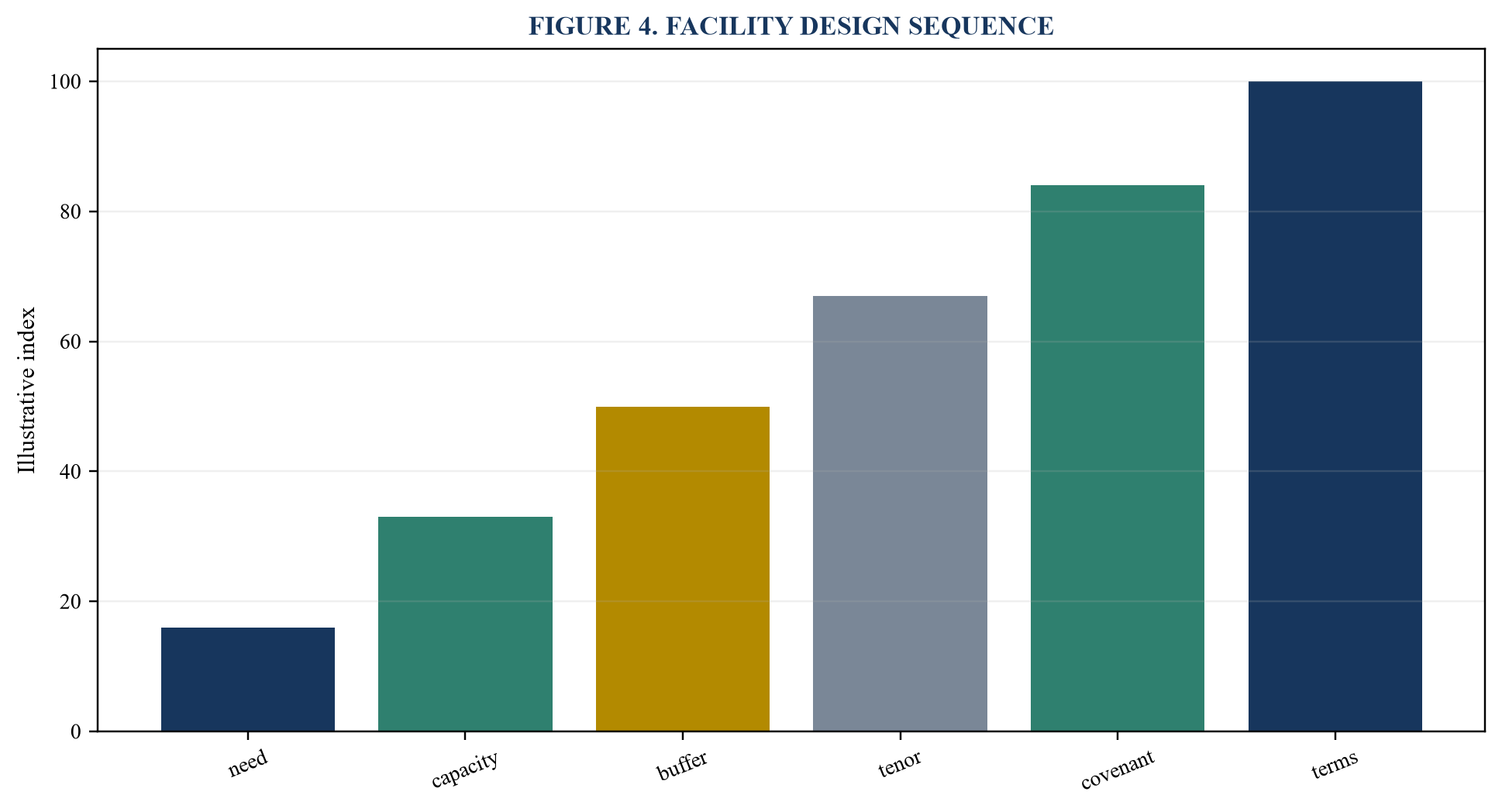
Values are illustrative indices and require replacement with approved borrower and lender evidence.
33. Govern AI-supported credit analysis
Inventory models, data, purposes, versions, validation, bias, explainability, monitoring, incidents, overrides and accountable decision makers.
The controlled record includes model; task; data; version; metric; limitation; owner; approval. The immediate deliverable is an AI model-governance register. The record should preserve sources, periods, entities, currencies, adjustments, reviewers and unresolved exceptions.
The principal failure occurs when machine scores replace traceable credit judgement. Reviewers should reconstruct the underlying records, test cash consequences under downside conditions and identify who has authority to approve the conclusion and any lender representation.
Debt capacity should be anchored in cash that the legal borrower can generate, retain and apply after unavoidable operating, statutory and maintenance needs. Reported EBITDA remains an input requiring reconciliation.
The decision pack for govern ai-supported credit analysis should show the prior view, correction, cash or risk at stake, alternatives, owner, due date, next evidence gate and observed result. Exceptions require closure evidence and an explicit effect on capacity, structure, covenant or monitoring.
34. Validate cash-signal models
Back-test classification, entity matching, anomaly detection, cash forecasting and default indicators by sector, size and cycle.
The controlled record includes model; population; period; metric; threshold; result; drift; action. The immediate deliverable is a cash-signal validation pack. The record should preserve sources, periods, entities, currencies, adjustments, reviewers and unresolved exceptions.
The principal failure occurs when aggregate accuracy conceals harmful errors for specific borrowers. Reviewers should reconstruct the underlying records, test cash consequences under downside conditions and identify who has authority to approve the conclusion and any lender representation.
AI can accelerate transaction classification, entity resolution, anomaly detection and forecasting over approved records. Accountable finance and credit professionals retain authority for assumptions, overrides, representations and lending decisions.
The decision pack for validate cash-signal models should show the prior view, correction, cash or risk at stake, alternatives, owner, due date, next evidence gate and observed result. Exceptions require closure evidence and an explicit effect on capacity, structure, covenant or monitoring.
35. Protect data and confidentiality
Control consent, purpose, minimisation, access, retention, cross-border transfer, security, vendor use and deletion.
The controlled record includes data; subject; purpose; basis; user; location; retention; control. The immediate deliverable is a financing data-control map. The record should preserve sources, periods, entities, currencies, adjustments, reviewers and unresolved exceptions.
The principal failure occurs when open-banking or accounting access expands beyond the financing purpose. Reviewers should reconstruct the underlying records, test cash consequences under downside conditions and identify who has authority to approve the conclusion and any lender representation.
A useful signal must retain source, period, entity, currency, classification confidence, reviewer, limitation and later outcome. Material changes should trigger targeted revalidation.
The decision pack for protect data and confidentiality should show the prior view, correction, cash or risk at stake, alternatives, owner, due date, next evidence gate and observed result. Exceptions require closure evidence and an explicit effect on capacity, structure, covenant or monitoring.
36. Build the lender evidence pack
Align the model, accounts, bank flows, contracts, tax, debt, collateral, assumptions, exceptions and management explanations.
The controlled record includes claim; source; period; owner; adjustment; reviewer; approval; recipient. The immediate deliverable is a controlled lender evidence index. The record should preserve sources, periods, entities, currencies, adjustments, reviewers and unresolved exceptions.
The principal failure occurs when different lender materials communicate incompatible cash and risk claims. Reviewers should reconstruct the underlying records, test cash consequences under downside conditions and identify who has authority to approve the conclusion and any lender representation.
Credit analysis should distinguish repayment capacity, liquidity timing, collateral recovery and sponsor support. These are separate protections with different evidence and failure modes.
The decision pack for build the lender evidence pack should show the prior view, correction, cash or risk at stake, alternatives, owner, due date, next evidence gate and observed result. Exceptions require closure evidence and an explicit effect on capacity, structure, covenant or monitoring.
37. Run lender comparison
Compare amount, tenor, amortisation, pricing, fees, security, guarantees, covenants, conditions, flexibility and downside consequence.
The controlled record includes lender; term; amount; cost; security; covenant; condition; decision. The immediate deliverable is a comparable term-sheet model. The record should preserve sources, periods, entities, currencies, adjustments, reviewers and unresolved exceptions.
The principal failure occurs when headline pricing dominates structural fit and execution certainty. Reviewers should reconstruct the underlying records, test cash consequences under downside conditions and identify who has authority to approve the conclusion and any lender representation.
Debt capacity should be anchored in cash that the legal borrower can generate, retain and apply after unavoidable operating, statutory and maintenance needs. Reported EBITDA remains an input requiring reconciliation.
The decision pack for run lender comparison should show the prior view, correction, cash or risk at stake, alternatives, owner, due date, next evidence gate and observed result. Exceptions require closure evidence and an explicit effect on capacity, structure, covenant or monitoring.
38. Gate conditions and funding
Track approvals, KYC, diligence, valuations, documents, security, insurance, consents, equity, account control and cash release.
The controlled record includes condition; party; owner; due; evidence; status; consequence; closure. The immediate deliverable is a conditions and funding tracker. The record should preserve sources, periods, entities, currencies, adjustments, reviewers and unresolved exceptions.
The principal failure occurs when a term sheet or signed facility is treated as funded completion. Reviewers should reconstruct the underlying records, test cash consequences under downside conditions and identify who has authority to approve the conclusion and any lender representation.
AI can accelerate transaction classification, entity resolution, anomaly detection and forecasting over approved records. Accountable finance and credit professionals retain authority for assumptions, overrides, representations and lending decisions.
The decision pack for gate conditions and funding should show the prior view, correction, cash or risk at stake, alternatives, owner, due date, next evidence gate and observed result. Exceptions require closure evidence and an explicit effect on capacity, structure, covenant or monitoring.
39. Monitor after funding
Refresh collections, bank flows, inventory, payroll, liquidity, forecasts, covenants, exceptions and remedial actions on a risk-based cadence.
The controlled record includes signal; baseline; threshold; result; owner; action; due; outcome. The immediate deliverable is an early-warning lender dashboard. The record should preserve sources, periods, entities, currencies, adjustments, reviewers and unresolved exceptions.
The principal failure occurs when monitoring repeats backward-looking accounts after risk has changed. Reviewers should reconstruct the underlying records, test cash consequences under downside conditions and identify who has authority to approve the conclusion and any lender representation.
A useful signal must retain source, period, entity, currency, classification confidence, reviewer, limitation and later outcome. Material changes should trigger targeted revalidation.
The decision pack for monitor after funding should show the prior view, correction, cash or risk at stake, alternatives, owner, due date, next evidence gate and observed result. Exceptions require closure evidence and an explicit effect on capacity, structure, covenant or monitoring.
40. Close through accountable gates
Use perimeter, evidence, cash, downside, structure, covenant, condition, funded-cash and monitoring gates.
The controlled record includes phase; scope; threshold; result; exception; approver; decision; outcome. The immediate deliverable is an evidence-gated debt execution plan. The record should preserve sources, periods, entities, currencies, adjustments, reviewers and unresolved exceptions.
The principal failure occurs when model completion is confused with credit approval and funding. Reviewers should reconstruct the underlying records, test cash consequences under downside conditions and identify who has authority to approve the conclusion and any lender representation.
Credit analysis should distinguish repayment capacity, liquidity timing, collateral recovery and sponsor support. These are separate protections with different evidence and failure modes.
The decision pack for close through accountable gates should show the prior view, correction, cash or risk at stake, alternatives, owner, due date, next evidence gate and observed result. Exceptions require closure evidence and an explicit effect on capacity, structure, covenant or monitoring.
Table 5. Debt execution gates
| Phase | Primary work | Gate |
|---|---|---|
| perimeter | entities, accounts and debt | approved scope |
| capacity | cash, downside and security | credit decision |
| structure | terms, covenants and conditions | approved facility |
| funding | documents, security and cash | verified completion |
Illustrative classifications require borrower-, lender-, jurisdiction-, facility- and period-specific approval.
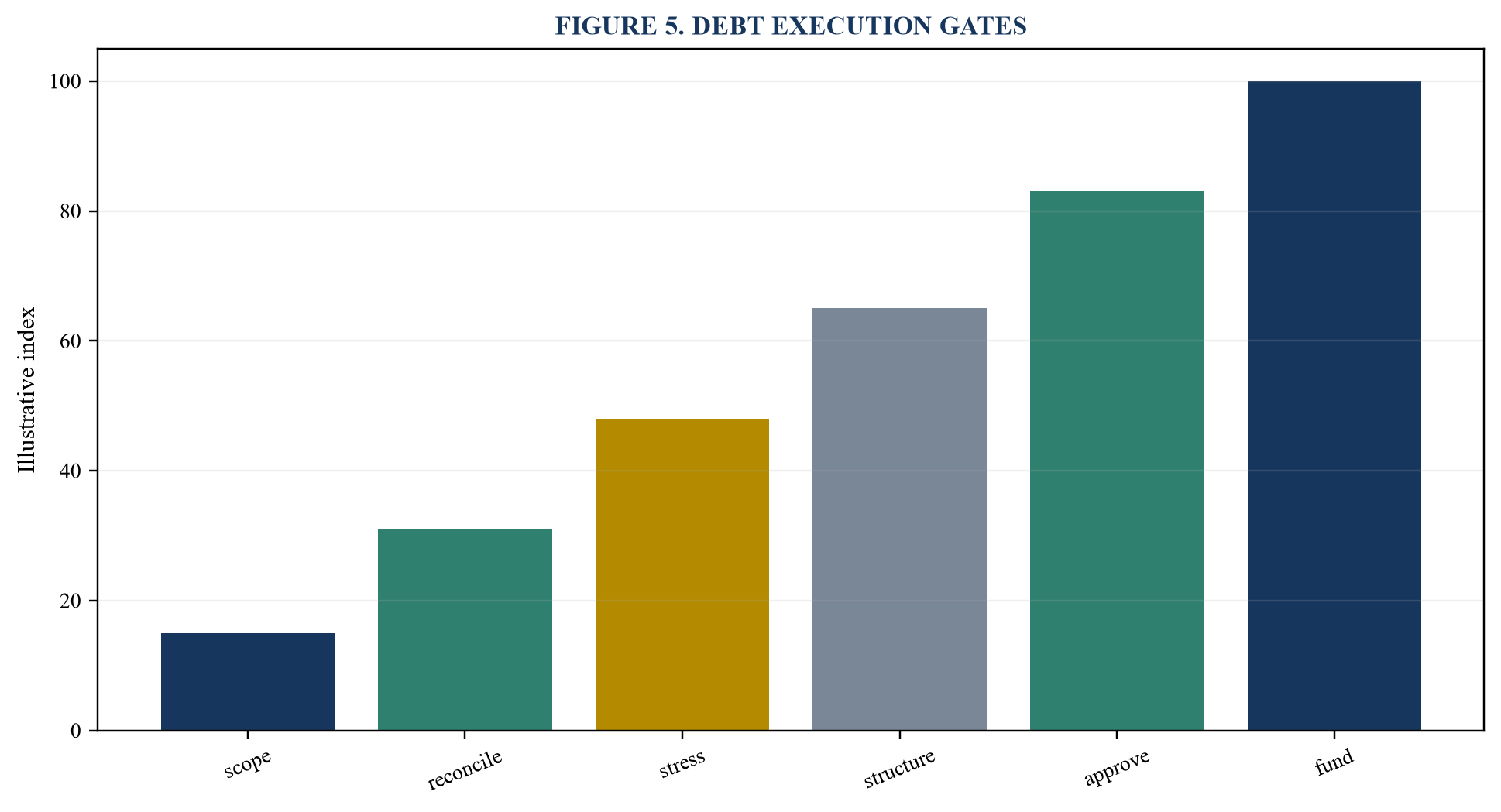
Values are illustrative indices and require replacement with approved borrower and lender evidence.
References
- Central Bank of the UAE, Guidance Note on Consumer Protection and Responsible Adoption and Use of Artificial Intelligence and Machine Learning, https://rulebook.centralbank.ae/en/rulebook/guidance-note-consumer-protection-and-responsible-adoption-and-use-artificial-intelligence
- Central Bank of the UAE, Guidelines for Financial Institutions Adopting Enabling Technologies, https://rulebook.centralbank.ae/en/rulebook/guidelines-financial-institutions-adopting-enabling-technologies
- Central Bank of the UAE, Model Management Standards, https://rulebook.centralbank.ae/en/rulebook/model-management-standards
- Central Bank of the UAE, Financial Stability Report 2024, https://centralbank.ae/media/p2rpafum/cbuae-fsr-report_2025_en.pdf
- Central Bank of the UAE, Annual Report 2025, https://centralbank.ae/media/4qbn11cl/annual-report-2025-en.pdf
- Organisation for Economic Co-operation and Development, Financing SMEs and Entrepreneurs 2026, https://www.oecd.org/en/publications/financing-smes-and-entrepreneurs-2026_075d8058-en/full-report.html
- Organisation for Economic Co-operation and Development, Financing SMEs and Entrepreneurs Scoreboard 2025 Highlights, https://www.oecd.org/en/publications/oecd-financing-smes-and-entrepreneurs-scoreboard-2025-highlights_64c9063c-en.html
- Organisation for Economic Co-operation and Development, G20/OECD High-Level Principles on SME Financing, https://www.oecd.org/en/about/programmes/sme-and-entrepreneurship-financing.html
- Bank for International Settlements, Big Data and Machine Learning in Central Banking, https://www.bis.org/publ/work930.htm
- Bank for International Settlements, The Use of Big Data Analytics and Artificial Intelligence in Central Banking, https://www.bis.org/publ/othp33.htm
- International Finance Corporation, SME Finance, https://www.ifc.org/en/what-we-do/sector-expertise/financial-institutions/msme-finance
- International Finance Corporation, Alternative Data Transforming SME Finance, https://www.ifc.org/en/insights-reports/2017/alternative-data-transforming-sme-finance
- IFRS Foundation, IFRS for SMEs Accounting Standard, https://www.ifrs.org/issued-standards/ifrs-for-smes/
- IFRS Foundation, IFRS 7 Financial Instruments Disclosures, https://www.ifrs.org/issued-standards/list-of-standards/ifrs-7-financial-instruments-disclosures/
- IFRS Foundation, IFRS 9 Financial Instruments, https://www.ifrs.org/issued-standards/list-of-standards/ifrs-9-financial-instruments/
- IFRS Foundation, IAS 7 Statement of Cash Flows, https://www.ifrs.org/issued-standards/list-of-standards/ias-7-statement-of-cash-flows/
- IFRS Foundation, IAS 24 Related Party Disclosures, https://www.ifrs.org/issued-standards/list-of-standards/ias-24-related-party-disclosures/
- UAE Government, Federal Decree-Law No. 32 of 2021 on Commercial Companies, https://uaelegislation.gov.ae/en/legislations/1542
- UAE Government, Federal Decree-Law No. 45 of 2021 on Personal Data Protection, https://uaelegislation.gov.ae/en/legislations/1972
- UAE Government, Federal Decree-Law No. 47 of 2022 on the Taxation of Corporations and Businesses, https://uaelegislation.gov.ae/en/legislations/1582
- UAE Federal Tax Authority, Corporate Tax General Guide, https://tax.gov.ae/Datafolder/Files/Guides/CT/CT%20General%20Guide%20-%20EN%20-%2010%2009%202023.pdf
- Dubai Financial Services Authority, Artificial Intelligence Survey 2025, https://www.dfsa.ae/news/new-dfsa-ai-survey-generative-ai-adoption-has-nearly-tripled-within-difc-last-12-months-governance-continues-develop
- National Institute of Standards and Technology, AI Risk Management Framework, https://www.nist.gov/itl/ai-risk-management-framework
- National Institute of Standards and Technology, Generative AI Profile, https://www.nist.gov/publications/artificial-intelligence-risk-management-framework-generative-artificial-intelligence
- International Organization for Standardization, ISO/IEC 42001 Artificial Intelligence Management Systems, https://www.iso.org/standard/81230.html
- Financial Action Task Force, Recommendations, https://www.fatf-gafi.org/en/publications/Fatfrecommendations/Fatf-recommendations.html
