

Introduction
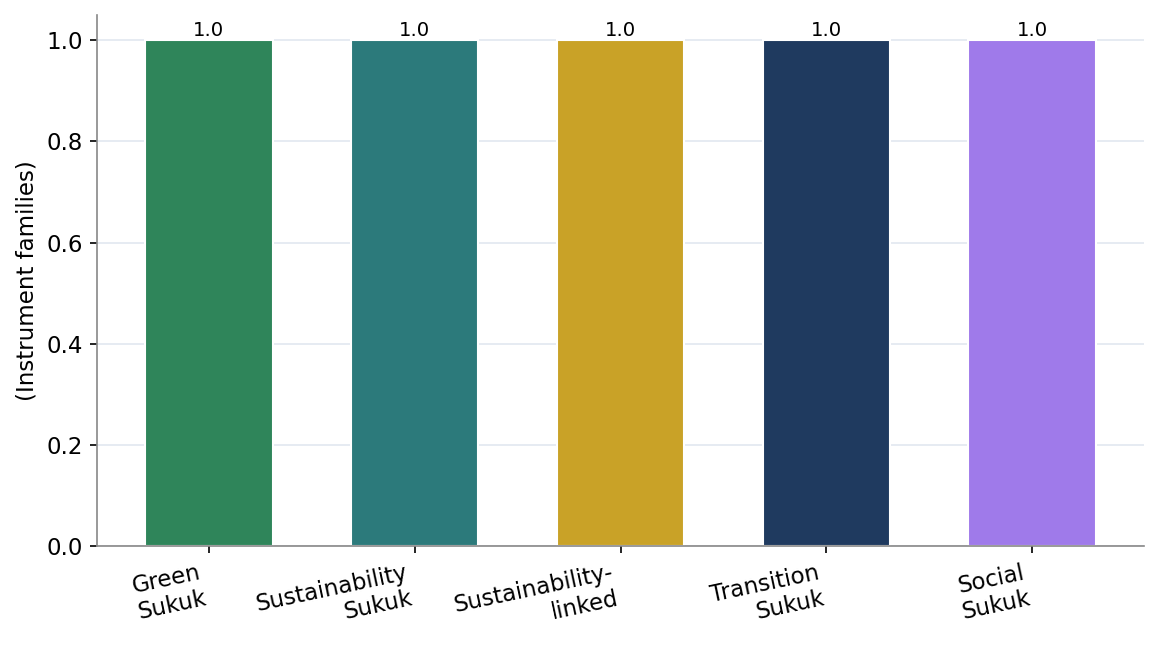
Sustainability and Shariah compliance share a natural affinity, both concerned with the ethical and responsible deployment of capital, and the GCC has become a centre for the issuance of green and sustainability-linked Sukuk that combine the two. For a GCC issuer, these instruments offer a way to structure sustainability into the capital stack, financing eligible projects or linking the financing to sustainability targets, and in doing so to access a growing pool of sustainability-focused capital, to benefit from a sustainability pricing premium, and to align the financing with strategic and regulatory priorities. This paper examines these instruments as a financing tool for GCC issuers.
The growth of sustainable finance globally, and the region strategic embrace of sustainability through its national strategies and its hosting of major climate events, has made sustainable Sukuk a significant and growing segment of the regional capital market. An issuer in the region increasingly has the option to issue a green or sustainability-linked instrument alongside, or instead of, a conventional one, and understanding when and how to do so, and what benefits and requirements it entails, is increasingly important for issuers and their advisers.
The central argument is that sustainable Sukuk can widen the investor base and deliver a modest pricing benefit while aligning the financing with strategic priorities, but that these benefits require genuine sustainability substance and rigorous reporting to be realised and to avoid the reputational risk of greenwashing. An issuer with genuine eligible projects or credible sustainability targets, willing to commit to the reporting and verification the instruments require, can capture the benefits; an issuer that lacks the substance or the commitment risks the reputational damage of greenwashing, which can outweigh the benefits. The paper develops the framework for using these instruments well.
The figures used throughout are indicative, calibrated to observable GCC conditions in early 2026 but not drawn from any specific transaction. The paper proceeds from the families of sustainable instruments (Section 2), through their structure (Section 3), their benefits (Section 4), the greenium (Section 5), the requirements and the greenwashing risk (Section 6), the issuer framework (Section 7), the investor perspective (Section 8), GCC-specific considerations (Section 9), three case studies (Section 10), sensitivity analysis (Section 11), an international comparison (Section 12), common errors (Section 13), an implementation roadmap (Section 14), a strategic perspective (Section 15), a conclusion (Section 16) and limitations (Section 17).
The Structure of ESG-Linked Sukuk
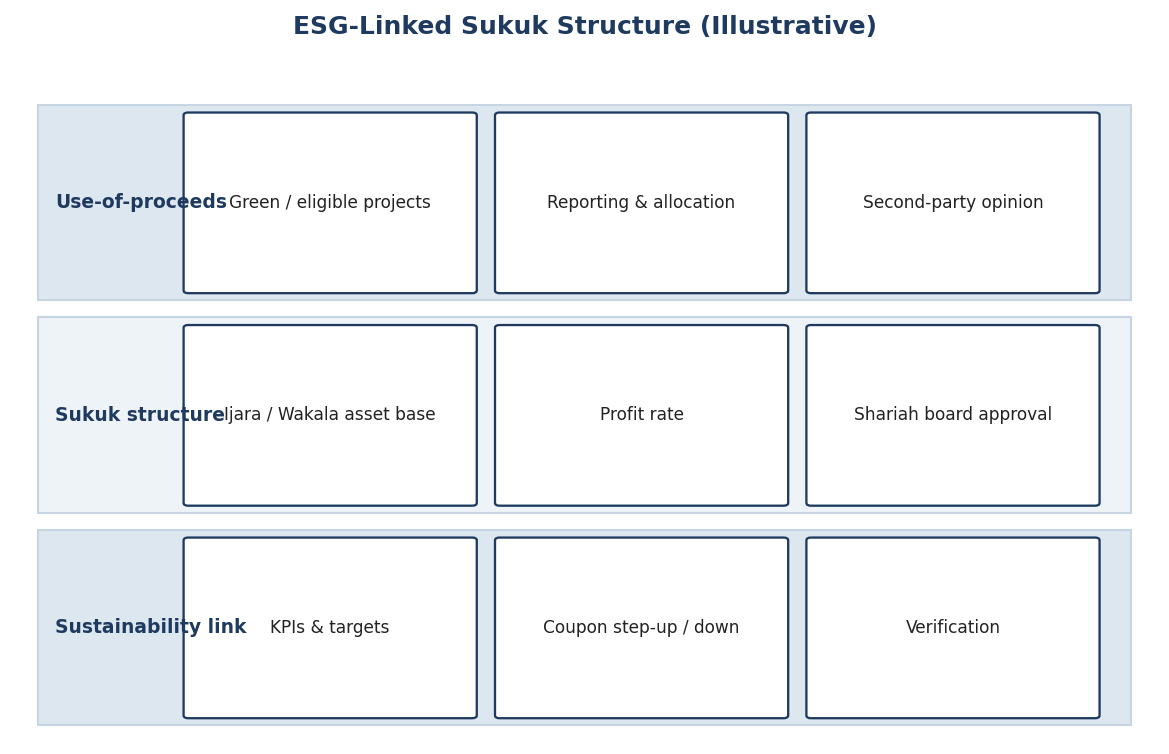
An ESG-linked Sukuk combines the Sukuk structure with the sustainability features, illustrated in Figure 2. The Sukuk structure, based on an Ijara, Wakala or similar arrangement, provides the Shariah-compliant foundation, with its asset base, its profit rate, and its Shariah board approval. The sustainability features are layered on top: for a use-of-proceeds instrument, the allocation of the proceeds to eligible projects, the reporting on that allocation, and a second-party opinion confirming the green credentials; for a sustainability-linked instrument, the key performance indicators and targets, the coupon step-up or step-down linked to them, and the verification of the performance.
Figure 2. ESG-Linked Sukuk Structure
Indicative structure combining the Sukuk and the sustainability features. Not transaction-specific.
The combination of the Sukuk and the sustainability features is the distinctive structure of the ESG-linked Sukuk, and it requires both the Shariah structuring and the sustainability structuring. The Shariah structuring ensures the instrument is compliant, with the asset base and the structure satisfying the Shariah requirements; the sustainability structuring ensures the instrument is credibly sustainable, with the eligible projects, the targets, the reporting and the verification satisfying the sustainability requirements. The two structurings together create the ESG-linked Sukuk, and both must be done well for the instrument to satisfy both the compliant and the sustainability-focused investors.
The structuring imposes requirements that a conventional Sukuk does not, principally the sustainability framework, the second-party opinion or verification, and the ongoing reporting. These add cost and effort to the issuance, but they are what make the instrument credibly sustainable and what allow it to access the sustainability-focused capital and the greenium. An issuer must be willing to commit to these requirements, the framework, the verification, the reporting, to issue a credible sustainable instrument, and the commitment is part of the structuring. The structure, combining the compliant and the sustainable, with the requirements it imposes, is more involved than a conventional Sukuk, which is the price of the benefits it offers.
The Benefits
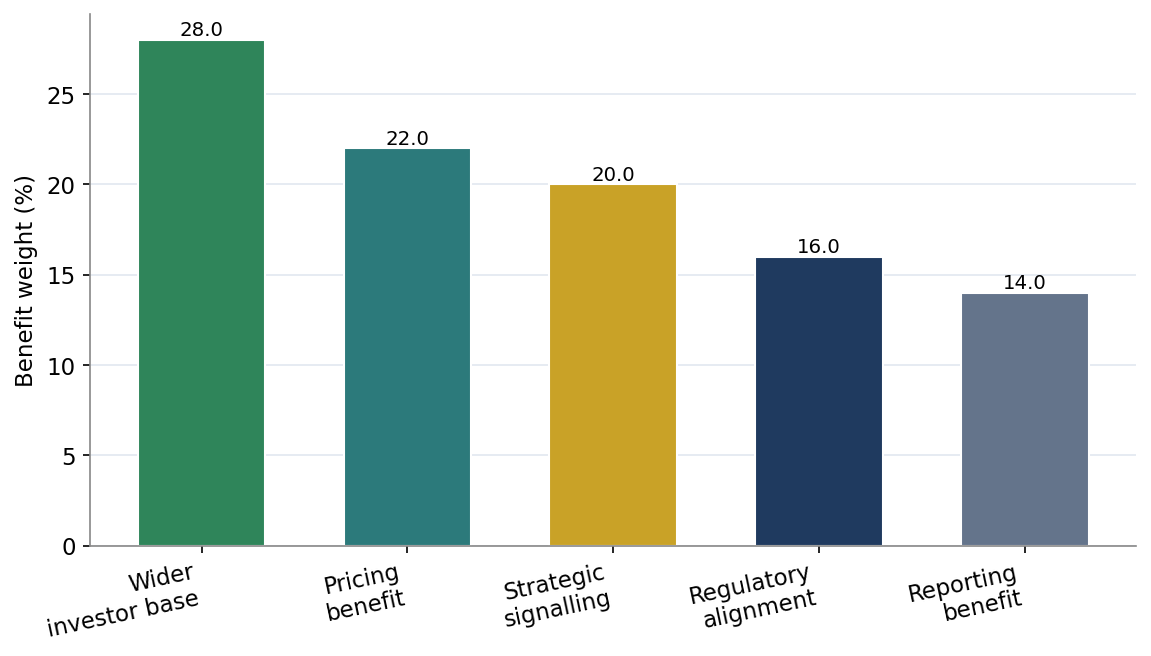
Sustainable Sukuk offer several benefits to an issuer, illustrated in Figure 3. The foremost is a wider investor base: the instruments access the large and growing pool of sustainability-focused investors, including dedicated ESG funds and investors with sustainability mandates, that a conventional instrument cannot reach. This wider investor base can support a larger or more easily-placed issuance, and it is a principal benefit, particularly as the pool of sustainability-focused capital grows. The instruments reach both the sustainability-focused and the conventional investors, giving them the widest reach.
Figure 3. Benefits of Sustainable Sukuk (Indicative Weights)
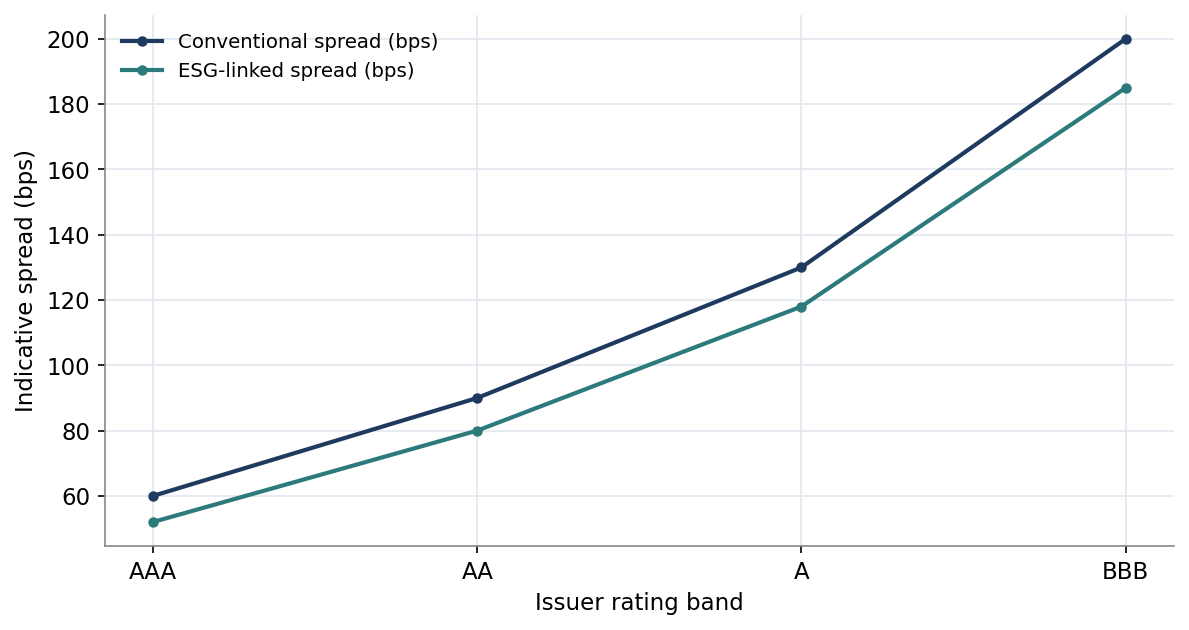
The second benefit is a pricing benefit, the greenium, the modest reduction in the cost of capital that sustainable instruments can achieve relative to conventional ones, examined in the next section. The third is strategic signalling: issuing a sustainable instrument signals the issuer commitment to sustainability, which can enhance its reputation, its relationships, and its standing with stakeholders increasingly focused on sustainability. The fourth is regulatory alignment, as the instruments align the financing with the increasing regulatory and policy focus on sustainability. The fifth is the reporting benefit, as the instruments require the issuer to measure and report its sustainability, which can drive genuine improvement.
The benefits combine to make sustainable instruments attractive for an issuer with genuine sustainability substance. The wider investor base and the greenium improve the financing; the strategic signalling and the regulatory alignment enhance the issuer standing; and the reporting drives genuine improvement. For an issuer with eligible projects or credible targets, willing to commit to the requirements, these benefits can outweigh the additional cost and effort of the sustainable structure, making the sustainable instrument the better choice. The benefits are real, but, as the next sections explore, they require genuine substance and rigorous reporting to be realised and to avoid the greenwashing risk.
Requirements and the Greenwashing Risk
The benefits of sustainable instruments come with requirements that the issuer must meet, and a central risk, greenwashing, that it must avoid. The requirements include a credible sustainability framework, defining the eligible projects or the targets; a second-party opinion or verification, confirming the green credentials or the target ambition; and ongoing reporting, on the allocation of the proceeds or the achievement of the targets. These requirements impose cost and effort, and they require genuine substance, eligible projects or credible targets, to be met credibly.
The central risk is greenwashing, the risk that an instrument is presented as sustainable without genuine substance, which can cause serious reputational damage if exposed. An issuer that labels an instrument green without genuine eligible projects, or sets sustainability targets that are unambitious or already met, risks being accused of greenwashing, which can damage its reputation, its relationships with sustainability-focused investors, and its standing more broadly. The greenwashing risk is significant, and it can outweigh the benefits of the instrument if the issuer lacks genuine substance, which is why the substance and the rigorous reporting are essential.
Avoiding greenwashing requires genuine substance and rigorous, transparent reporting. The issuer must have genuine eligible projects or credible, ambitious targets, must obtain credible verification, and must report transparently on its performance, so that the instrument sustainability claims are substantiated and verifiable. An issuer that does this credibly captures the benefits and avoids the greenwashing risk; an issuer that cuts corners on the substance or the reporting risks the reputational damage of greenwashing, which can be severe. The requirements and the greenwashing risk mean that sustainable instruments are for issuers with genuine substance and a commitment to rigorous reporting, not for those seeking a sustainability label without the substance.
The Issuer Framework
The framework for an issuer considering a sustainable instrument is to assess whether it has the genuine substance, eligible projects or credible targets, and the commitment to the requirements, and to choose the family of instrument that fits its activities. An issuer with specific eligible green projects to finance uses a green or sustainability Sukuk; an issuer that wishes to commit to sustainability targets across its business uses a sustainability-linked instrument; an issuer transitioning a carbon-intensive activity uses a transition Sukuk. The framework matches the instrument to the issuer substance and objectives.
The framework requires the issuer to assess its genuine substance honestly, because the substance is what makes the instrument credible and avoids the greenwashing risk. An issuer with genuine eligible projects or credible, ambitious targets has the substance to issue a credible instrument; an issuer without it does not, and should not issue a sustainable instrument that it cannot credibly support. The honest assessment of the substance is the foundation of the framework, and an issuer that lacks the substance should either develop it before issuing a sustainable instrument or issue a conventional one, rather than risk greenwashing.
The framework also weighs the benefits against the costs and the requirements. The benefits, the wider investor base, the greenium, the strategic and regulatory alignment, must be weighed against the additional cost and effort of the sustainable structure, the framework, the verification, the reporting, and the commitment they require. For an issuer with genuine substance and a strategic interest in sustainability, the benefits typically outweigh the costs, making the sustainable instrument the better choice; for an issuer without the substance or the strategic interest, the costs may outweigh the benefits. The framework guides the issuer to the right choice based on its substance, its objectives, and the balance of benefits and costs.
Considerations Specific to the GCC
The GCC is well-positioned in sustainable Sukuk, combining its leadership in Sukuk with the growing regional and global focus on sustainability. The region has the deep Sukuk market and the compliant capital base, and it has embraced sustainability through its national strategies, its renewable energy investments, and its hosting of major climate events, creating both the demand for and the supply of sustainable Sukuk. The combination of the region Sukuk leadership and its sustainability focus makes it a natural centre for sustainable Sukuk, and a regional issuer can access a developing market for these instruments.
The natural affinity between Shariah compliance and sustainability strengthens the regional position. Both are concerned with the ethical and responsible deployment of capital, avoiding harm and promoting benefit, and a sustainable Sukuk combines the two, appealing to both the compliant and the sustainability-focused investors. This affinity means that the sustainable Sukuk is a particularly natural instrument in the region, combining two ethical frameworks that align, and it broadens the appeal of the instrument to investors who value either or both. The affinity between compliance and sustainability is a distinctive strength of the regional sustainable Sukuk market.
The region renewable energy and sustainability investments provide the eligible projects that green and sustainability Sukuk finance. The region substantial investments in solar and other renewable energy, in green buildings, and in sustainability initiatives create the eligible projects that use-of-proceeds instruments can finance, giving regional issuers genuine substance for their sustainable Sukuk. A regional issuer financing a renewable energy project or a green building has genuine eligible projects, and it can issue a credible green Sukuk to finance them, accessing the sustainability-focused capital and the greenium. The region sustainability investments provide the substance that underpins its sustainable Sukuk.
Indicative Case Studies
Three indicative cases show sustainable Sukuk in action. The figures are synthetic and constructed for analytical clarity, not drawn from any specific transaction.
Case A: green real estate Sukuk
Case A is a developer financing a portfolio of green-certified buildings, which issues a green Sukuk with the proceeds ring-fenced for the green buildings, a second-party opinion confirming the green credentials, and reporting on the allocation. The instrument accesses the sustainability-focused investors and achieves a modest greenium, financing the green buildings at a slightly lower cost than a conventional Sukuk while signalling the developer sustainability commitment. The case illustrates a use-of-proceeds green Sukuk financing genuine eligible projects.
Case B: sustainability-linked corporate Sukuk
Case B is a corporate that commits to sustainability targets across its business, which issues a sustainability-linked Sukuk with the profit rate linked to its achievement of the targets, stepping up if they are missed. The instrument does not ring-fence the proceeds but commits the corporate to the targets, accessing the sustainability-focused investors and aligning the financing with the corporate sustainability strategy. The case illustrates a sustainability-linked instrument committing the issuer to targets across its business.
Case C: transition Sukuk
Case C is an issuer in a carbon-intensive sector that is credibly transitioning toward lower-carbon operations, which issues a transition Sukuk to finance its transition, with the credibility of the transition plan central to the instrument. The instrument finances the issuer transition, accessing investors that support credible transition, while the rigorous transition plan and reporting avoid the greenwashing risk that a less credible transition claim would carry. The case illustrates a transition Sukuk financing a credible transition in a carbon-intensive sector.
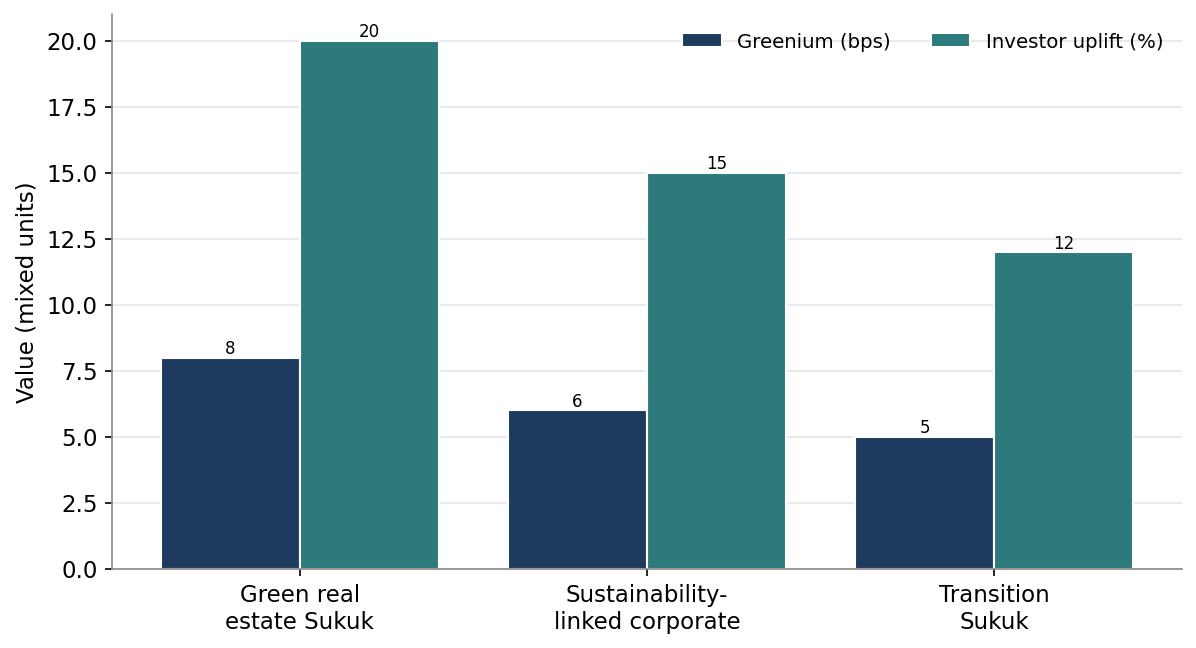
Figure 5. Greenium and Investor Uplift by Case
Synthetic figures for analytical comparison. Not a forecast.
Figure 5 compares the three cases on the greenium and the investor uplift. Each achieves a modest greenium and a meaningful uplift in the investor base, with the green real estate Sukuk achieving the most, reflecting its clear, certified green credentials, and the transition Sukuk the least, reflecting the greater scrutiny of transition claims. The comparison illustrates that the benefits are real but modest and vary with the credibility and clarity of the sustainability substance, with the clearest, most credible instruments achieving the most.
International Comparison
Sustainable finance is a large, mature and rapidly growing global market, with green bonds, sustainability-linked bonds and other sustainable instruments issued in vast quantities and well-established standards, principles and verification frameworks. The sustainable Sukuk market is a growing part of this global market, combining the global sustainable-finance frameworks with the Sukuk structure, and the GCC is a leading centre for it. The global market provides the standards and the investor base that the regional sustainable Sukuk market draws on.
The international experience offers lessons for the regional market. It shows that the greenium is real but modest, that the broader strategic and reputational benefits are significant, and that the greenwashing risk is serious and growing, as investors, regulators and the public scrutinise sustainability claims more rigorously. It also shows that the standards and the scrutiny are tightening, raising the bar for genuine substance and rigorous reporting, which means that an issuer must increasingly demonstrate genuine sustainability to capture the benefits and avoid the greenwashing risk. The regional market, drawing on the global standards and investor base, must meet this rising bar, which favours issuers with genuine substance and rigorous reporting.
Implementation Roadmap
Assess the issuer genuine sustainability substance, its eligible projects or credible targets, honestly, as the foundation of a credible instrument.
Choose the family of instrument, green, sustainability, sustainability-linked, transition or social, that fits the issuer activities and objectives.
Develop a credible sustainability framework, obtain a second-party opinion or verification, and commit to rigorous, transparent reporting.
Set genuinely ambitious targets for a sustainability-linked instrument, or ring-fence the proceeds for genuine eligible projects for a use-of-proceeds instrument.
Structure the Sukuk and the sustainability features together, ensuring both the Shariah compliance and the sustainability credibility.
Value the instrument for the combination of its modest greenium and its broader strategic, regulatory and sustainability benefits.
Report transparently and rigorously throughout the instrument life, to maintain its credibility and avoid the greenwashing risk.
Conclusion
Sustainable Sukuk combine Shariah compliance and sustainability, two frameworks with a natural affinity, and they offer GCC issuers a way to structure sustainability into the capital stack. This paper has argued that the instruments can widen the investor base and deliver a modest pricing benefit, the greenium, while aligning the financing with strategic and regulatory priorities, but that these benefits require genuine sustainability substance and rigorous reporting to be realised and to avoid the reputational risk of greenwashing. An issuer with genuine eligible projects or credible targets, committed to the requirements, can capture the benefits; one without the substance risks greenwashing.
The deeper value of the instruments is in aligning the issuer capital with its sustainability strategy and the region strategic priorities, channelling capital toward sustainability and signalling and reinforcing the issuer commitment. The region, combining its Sukuk leadership with its sustainability focus, is well-positioned to lead the sustainable Sukuk market, and the affinity between compliance and sustainability strengthens its position. For an issuer with genuine substance, the sustainable Sukuk offers a modest financial benefit and a significant strategic one, and the frameworks in this paper are intended to help issuers use the instruments well, capturing the benefits while avoiding the greenwashing risk.
Limitations and Directions for Further Research
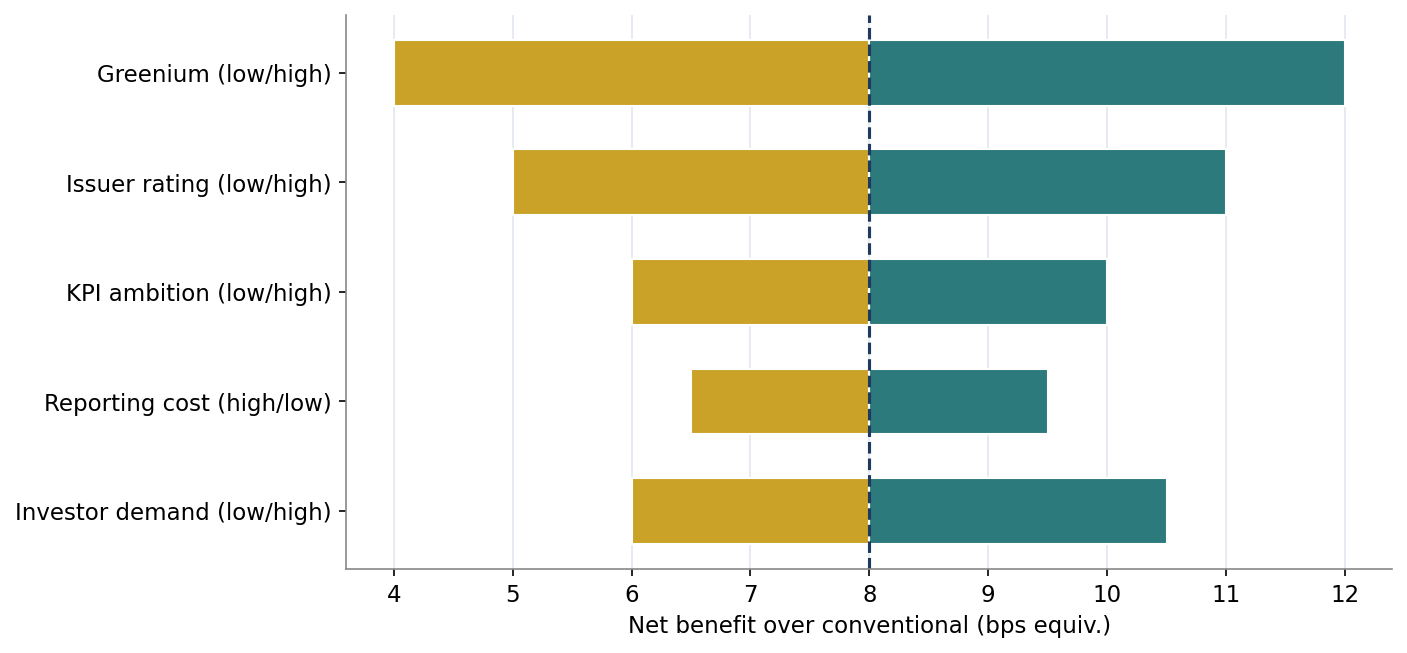
This paper is framework-oriented and relies on indicative data, and its conclusions are directional rather than precise. The greenium and benefit figures are calibrated to observable conditions but are not empirical estimates, and the greenium in particular is modest and variable. The sustainability standards and the scrutiny are evolving rapidly.
Several extensions would strengthen the analysis. An empirical study of the greenium in GCC sustainable Sukuk would replace the indicative figures with data. An analysis of the evolving sustainability standards and their application to Sukuk would sharpen the requirements discussion. And a study of greenwashing incidents and their consequences would illuminate the central risk. Each is a natural subject for a later paper in this series.
| Scenario | Greenium | Investor demand | Net benefit |
|---|---|---|---|
| Strong | High | Strong | Clearly positive |
| Base | Moderate | Solid | Positive |
| Weak | Low | Weak | Marginal |
| Costly | Low | Weak, high reporting cost | Neutral |
