
Introduction
A promoter who has built a successful business, or a family principal who has inherited one, frequently finds that the bulk of their wealth is locked in a single concentrated stake, whether listed shares in a public company or a private holding in the family business. This stake may be worth a great deal, but it is illiquid: the principal cannot spend it, diversify it, or deploy it without selling, and selling carries consequences, the loss of control, the crystallisation of tax, the signal to the market, and the forfeiture of the future upside. The principal is, in a familiar paradox, wealthy on paper but short of liquid capital.
Promoter and holding-company financing resolves this paradox. By lending against the stake, secured by a pledge of the shares, it releases liquidity to the principal without requiring a sale, allowing the principal to diversify, to invest, or to meet a need while retaining ownership of the stake and its future upside. The principal exchanges some of the illiquidity of the stake for liquidity, at the cost of the financing and the obligations it carries, and in doing so accesses the capital locked in the stake without the consequences of a sale.
The central argument is that promoter financing is a valuable liquidity tool that releases capital without crystallising a sale, but that its central risk, the margin call if the stake value falls, must be managed through conservative loan-to-value and cushions. A principal that uses promoter financing prudently, borrowing conservatively against a quality stake and maintaining a cushion against a decline, can release liquidity safely; a principal that borrows aggressively against a volatile stake risks a margin call that could force the sale the financing was meant to avoid. The paper develops the framework for using the tool prudently.
The figures used throughout are indicative, calibrated to observable GCC conditions in early 2026 but not drawn from any specific transaction. The paper proceeds from the structure of promoter financing (Section 2), through the loan-to-value by stake type (Section 3), the uses of proceeds (Section 4), the framework for matching the facility to the stake (Section 5), the protections and margin-call mechanics (Section 6), the lender perspective (Section 7), risk (Section 8), GCC-specific considerations (Section 9), three case studies (Section 10), sensitivity analysis (Section 11), an international comparison (Section 12), common errors (Section 13), an implementation roadmap (Section 14), a strategic perspective (Section 15), a conclusion (Section 16) and limitations (Section 17).
The Structure of Promoter Financing
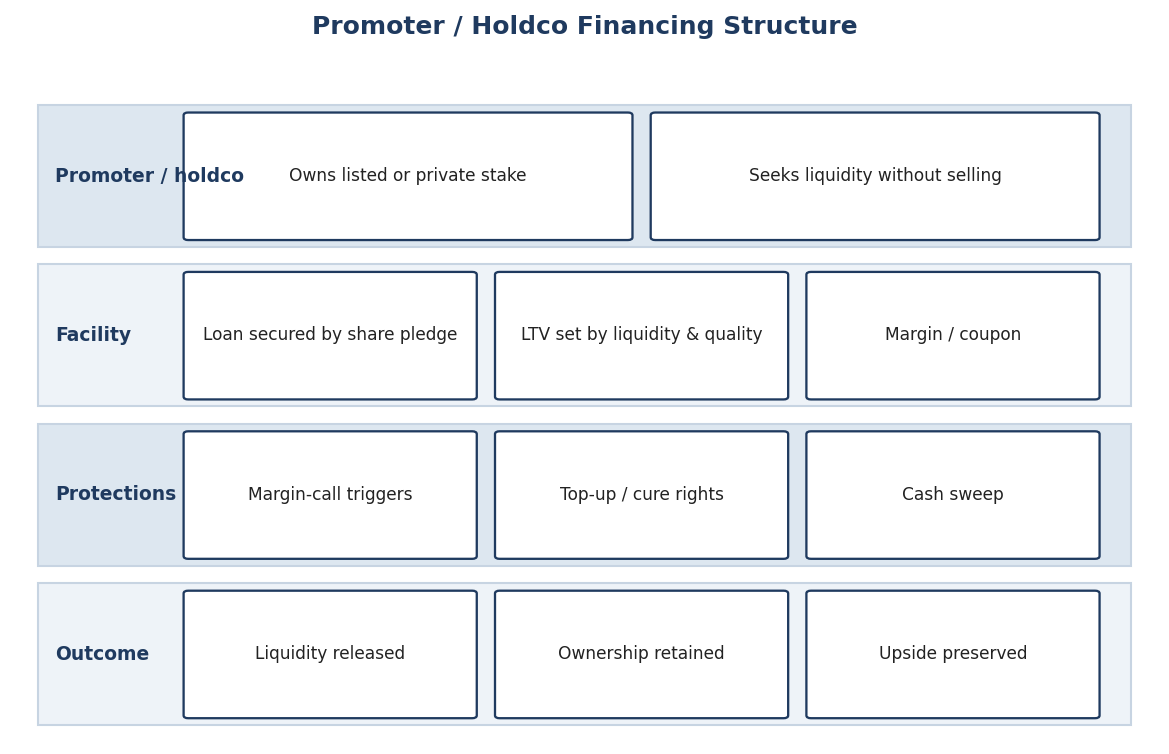
Promoter and holdco financing is, in its basic structure, a loan secured by a pledge of the shares in the stake, whether listed or private, illustrated in Figure 1. The promoter or the holding company that owns the stake borrows against it, pledging the shares as security, and receives the loan proceeds to use as it wishes, repaying the loan from other resources, from distributions on the stake, or ultimately from a sale or refinancing. The lender holds the share pledge as its security, and it sets the loan-to-value, the margin or coupon, and the protections according to the quality and liquidity of the stake.
Figure 1. Promoter / Holdco Financing Structure
Indicative schematic. The loan is secured by a pledge of the stake. Not transaction-specific.
The defining feature of the structure is that it releases liquidity without a sale, preserving the principal ownership and the future upside of the stake. The principal continues to own the stake, to vote it, to receive its distributions, and to benefit from its appreciation, while accessing the liquidity the loan provides. This is the principal attraction of the structure: it separates the liquidity from the ownership, allowing the principal to have both the liquidity it needs and the ownership and upside it values, which a sale would not permit.
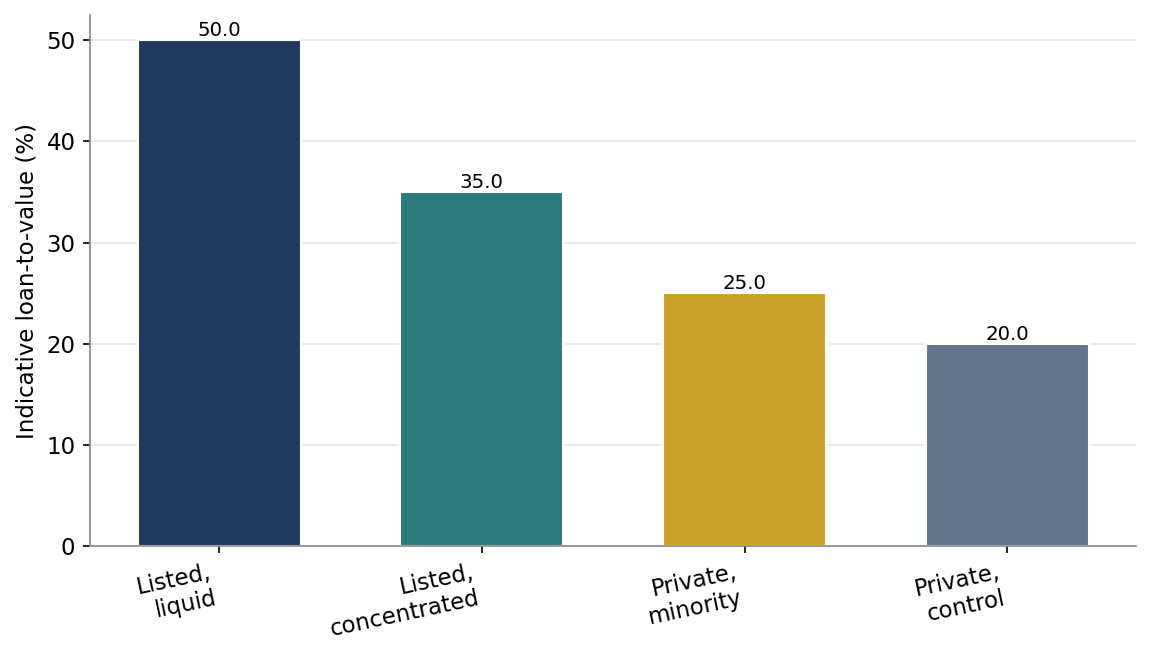
The structure varies with the nature of the stake. A listed, liquid stake supports a margin loan structure, where the loan is secured by the liquid shares and marked to their market value, with margin-call protections if the value falls. A private stake supports a net-asset-value or holdco financing structure, where the loan is secured by the private holding and set against its assessed value, with bespoke protections reflecting the illiquidity. The structure is adapted to the stake, and the loan-to-value, the cost and the protections reflect the stake liquidity and quality, as the following sections explore.
The Uses of Proceeds
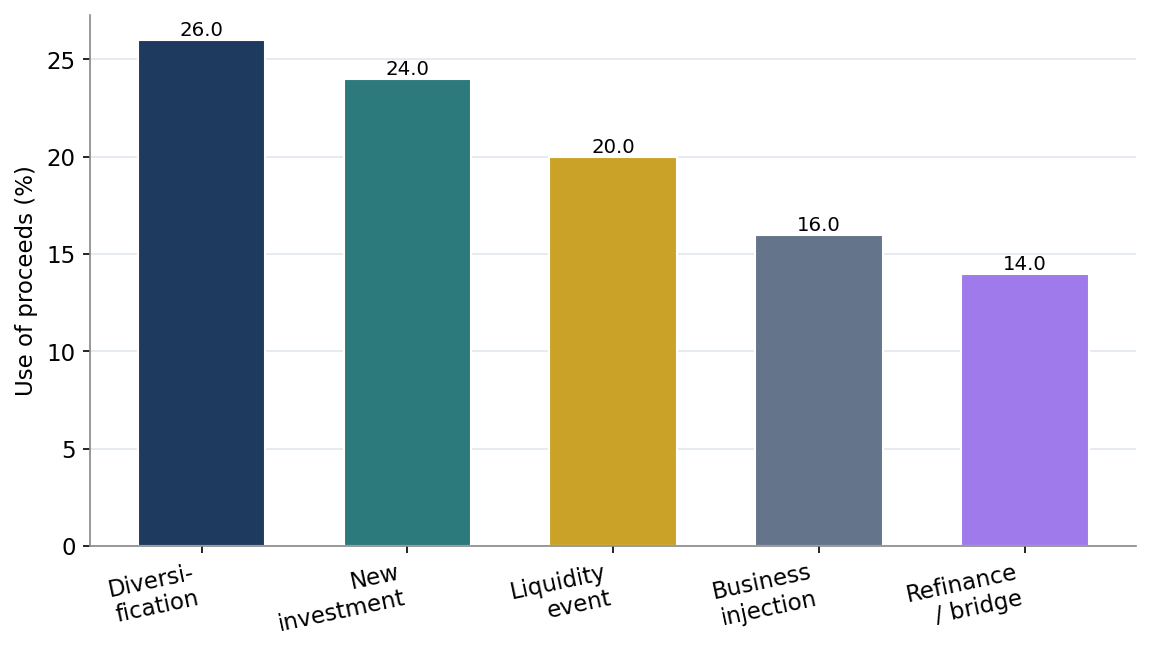
The liquidity released by promoter financing is put to a range of uses, illustrated in Figure 3, and the use shapes whether the financing creates value. The most common use is diversification: a principal whose wealth is concentrated in a single stake borrows against it to invest in other assets, reducing the concentration risk of having all its wealth in one holding. This diversification is a prudent use, reducing the principal risk without requiring it to sell the stake it values, and it is a principal rationale for the financing.
Figure 3. Uses of Promoter Financing Proceeds
Other uses include new investment, where the principal deploys the released liquidity into a new opportunity, whether another business, a real estate investment, or a fund; meeting a liquidity event or need, such as a family requirement, a tax payment, or a personal need; injecting capital into the business behind the stake, supporting its growth; and refinancing or bridging an existing obligation. Each use deploys the released liquidity, and the value of the financing depends on whether the use earns or provides more than the financing costs. A use that earns above the financing cost, such as a good investment, creates value; a use that merely meets a need provides liquidity at the financing cost.
The diversification use deserves emphasis because it addresses a genuine risk that concentrated principals face. A principal with all its wealth in a single stake bears the full idiosyncratic risk of that stake, and a decline in the stake could materially impair the principal wealth. Borrowing against the stake to diversify reduces this concentration risk, spreading the principal wealth across other assets while retaining the stake, and it is a prudent risk-management use that the financing enables. A principal that recognises its concentration risk and uses promoter financing to diversify is managing its wealth prudently, which is one of the most valuable uses of the tool.
Protections and Margin-Call Mechanics
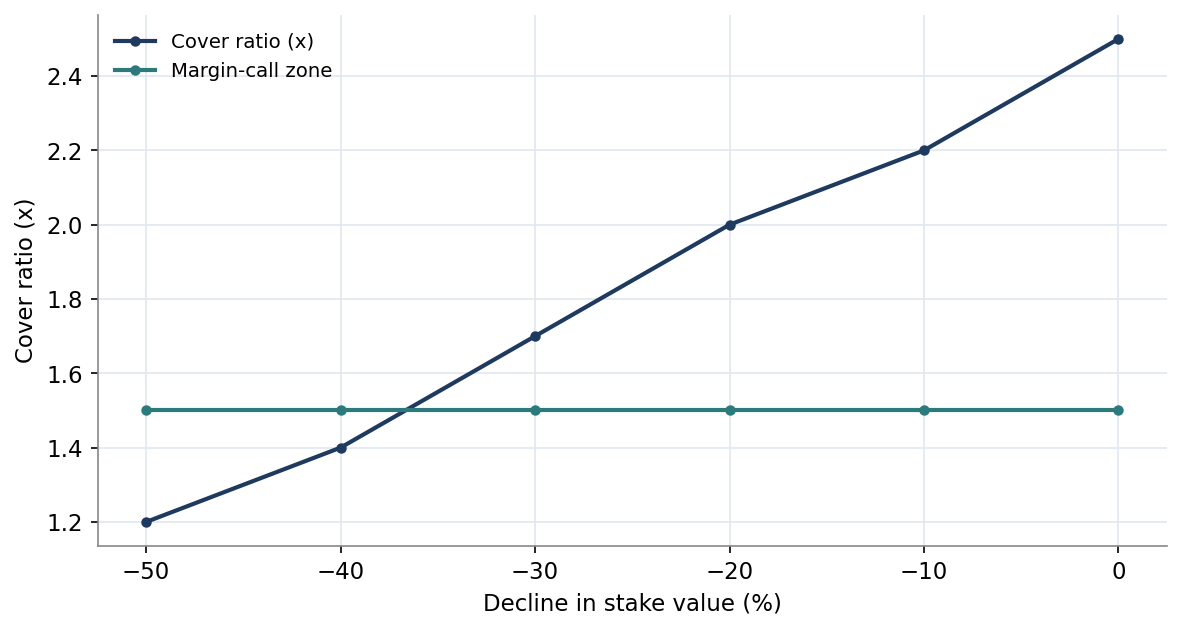
The central protection that a promoter financing lender requires is the margin-call mechanism, which protects the lender if the stake value falls, illustrated in Figure 5. The facility specifies a cover ratio, the ratio of the stake value to the loan, and if the stake value falls so that the cover ratio drops below a trigger level, the lender can make a margin call, requiring the principal to top up the security with additional collateral or cash, or to repay part of the loan, to restore the cover ratio. The margin call is the lender protection against a decline in its security.
Figure 5. Cover Ratio and the Margin-Call Zone as the Stake Value Falls
A decline in the stake value reduces the cover ratio toward the margin-call zone. Not a forecast.
The margin call is the central risk of promoter financing for the principal, because it can force the principal to find additional collateral or cash, or to repay the loan, at a difficult moment, when the stake value has fallen. If the principal cannot meet the margin call, the lender can enforce its security, selling the pledged stake, which is the very outcome, the forced sale of the stake, that the financing was meant to avoid. The margin-call risk is therefore the principal danger of the tool, and managing it is the central discipline of using promoter financing prudently.
The principal manages the margin-call risk through conservative loan-to-value, leaving a cushion that absorbs a decline before a margin call is triggered, and through maintaining liquid resources to meet a margin call if one occurs. A principal that borrows conservatively against a stable stake, with a comfortable cushion and liquid resources to meet a call, faces little margin-call risk; a principal that borrows aggressively against a volatile stake, with a thin cushion and no resources to meet a call, faces serious risk. The protections the lender requires, the cover ratio, the margin call, the top-up rights, are there to protect the lender, and the principal protects itself by borrowing conservatively and maintaining the resources to meet a call, so that a decline in the stake does not force the sale the financing was meant to avoid.
Risk Considerations
The principal risk of promoter financing, as emphasised, is the margin call on a falling stake, which can force the sale the financing was meant to avoid. This risk is greatest for a volatile stake borrowed against aggressively, and least for a stable stake borrowed against conservatively with a comfortable cushion. The principal manages it through conservative loan-to-value and maintained resources, and a principal that does so faces little margin-call risk, while one that borrows aggressively faces serious risk. The margin-call risk is the defining danger of the tool, and managing it is the central discipline.
A second risk is the concentration risk that the financing may inadvertently increase rather than reduce. A principal that borrows against its stake to invest in a single other asset has merely shifted its concentration, not reduced it, and if the new asset and the stake both decline, the principal is doubly exposed. The financing reduces concentration risk only if the proceeds are genuinely diversified, spread across many assets uncorrelated with the stake, rather than concentrated in another single holding. A principal using the financing to diversify should genuinely diversify the proceeds, not merely shift the concentration.
A third risk is the over-leverage risk, where a principal borrows against its stake to invest, and borrows again against the new investment, building a tower of leverage that is vulnerable to a decline at any level. This cascading leverage, where each asset is borrowed against to fund the next, amplifies both the upside and the downside, and a decline can trigger margin calls across the whole structure, forcing sales that crystallise losses. A principal should be wary of building such a tower of leverage, and should maintain an overall level of leverage across its wealth that is prudent, not merely prudent at each individual facility. The risk is at the level of the whole structure, not the individual facility.
Considerations Specific to the GCC
The GCC has a developed private banking and wealth management market that provides promoter and holdco financing to the region many wealthy promoters and family principals. The region concentration of wealth in family businesses and concentrated stakes creates substantial demand for the tool, and the developed private banking market supplies it. A principal in the region can access a competitive market for promoter financing, both from regional private banks and from international wealth managers active in the region.
The prevalence of private, family-owned businesses in the region means that much promoter financing is against private rather than listed stakes, which carry the lower loan-to-value and the bespoke structuring that private stakes require. A principal with a private family business stake can borrow against it through a holdco financing or net-asset-value facility, releasing liquidity from the private holding, though at a lower loan-to-value than a listed stake would support. The development of this private-stake financing is an important part of the regional market, serving the many principals whose wealth is in private rather than listed form.
The compliant dimension applies here too, and Shariah-compliant promoter financing, structured to comply with the prohibition on interest and the requirements on the underlying assets, is available in the region, serving the compliant principals and capital. A principal seeking compliant financing can access compliant structures, and a lender able to offer them serves the compliant demand. The availability of both conventional and compliant promoter financing is a feature of the developed regional private banking market, ensuring that the full range of principals can access liquidity from their stakes.
Indicative Case Studies
Three indicative cases show promoter financing in action. The figures are synthetic and constructed for analytical clarity, not drawn from any specific transaction.
Case A: listed stake diversification
Case A is a promoter whose wealth is concentrated in a listed stake in the company it founded, which borrows conservatively against the liquid listed stake to diversify its wealth into other assets, reducing its concentration risk while retaining the stake and its upside. The facility is a margin loan at a moderate loan-to-value with a comfortable cushion, and the proceeds are genuinely diversified across many uncorrelated assets. The case illustrates the prudent diversification use, reducing concentration risk through conservative borrowing against a liquid stake.
Case B: private stake investment
Case B is a family principal whose wealth is in a private family business stake, which borrows against the private stake through a net-asset-value facility to invest in a new opportunity, accessing liquidity from the illiquid private holding without selling it. The facility is at a lower loan-to-value reflecting the private stake illiquidity, with bespoke protections, and the proceeds fund an investment expected to earn above the financing cost. The case illustrates accessing liquidity from a private stake to fund a value-creating investment.
Case C: bridge to liquidity
Case C is a principal facing a liquidity need ahead of an expected liquidity event, such as a planned sale or distribution, which borrows against its stake as a bridge to the event, meeting the need now and repaying the bridge from the event proceeds. The facility is a bridge secured by the stake, repaid from the anticipated liquidity event, and it allows the principal to meet its need without selling the stake prematurely. The case illustrates promoter financing as a bridge to an expected liquidity event, meeting a need while awaiting the event.
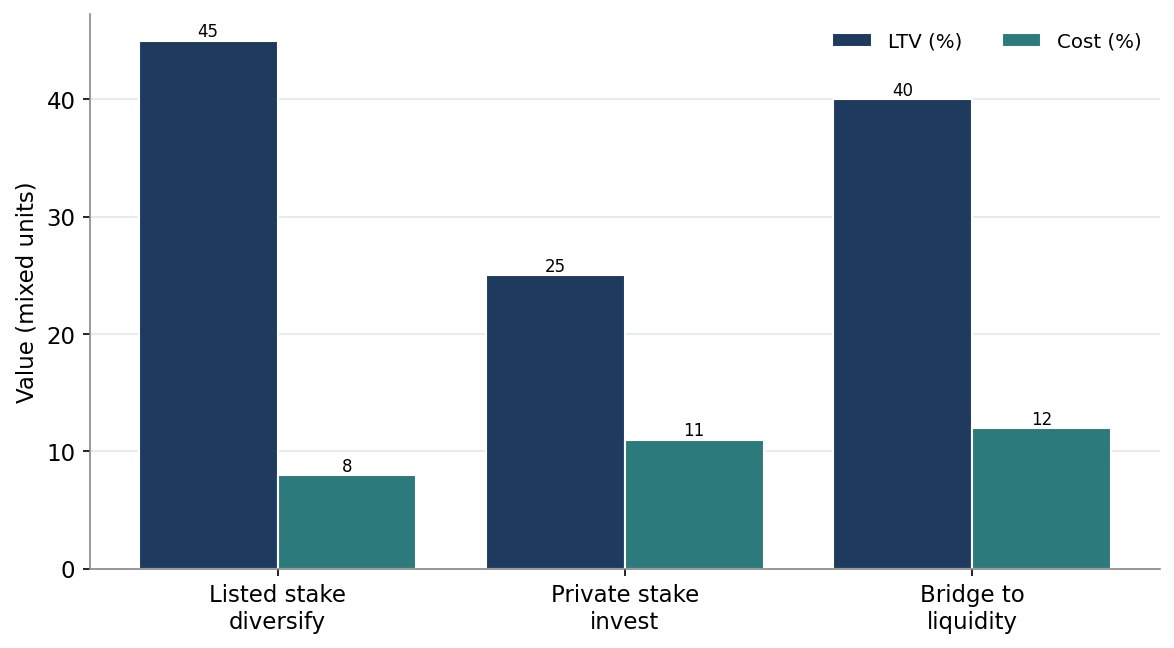
Figure 6. Loan-to-Value and Cost by Case
Synthetic figures for analytical comparison. Not a forecast.
Figure 6 compares the three cases on the loan-to-value and the cost. The listed stake supports a higher loan-to-value at a lower cost, reflecting its liquidity; the private stake a lower loan-to-value at a higher cost, reflecting its illiquidity; and the bridge a moderate loan-to-value at a cost reflecting its short-term nature. The cases illustrate the framework matching the facility to the stake, and the consistent value of releasing liquidity without a sale, while reminding that the loan-to-value and the cost reflect the stake liquidity and quality.
International Comparison
Promoter and holding-company financing, in the form of margin loans against listed stakes and net-asset-value financing against private holdings, is a well-established part of private banking and wealth management globally, used by wealthy principals to access liquidity from their concentrated holdings. The structures, the loan-to-value norms and the margin-call mechanics are well developed, and the tool is a standard part of the wealth-management toolkit in the mature private banking markets. The GCC market, with its developed private banking sector, offers the tool to the region wealthy principals along similar lines.
The international experience offers a cautionary lesson alongside the opportunity. The mature markets have seen cases where principals borrowed aggressively against concentrated stakes, faced margin calls when the stakes fell, and were forced into sales that crystallised large losses, sometimes destroying much of their wealth. These cases underline the central risk the tool carries and the importance of the prudent discipline this paper emphasises, conservative loan-to-value, stable stakes, maintained resources, and prudent overall leverage. The tool is valuable when used prudently, but the international experience shows it can be dangerous when used aggressively, and the regional principals using it should heed the lesson of the mature markets cautionary cases.
Implementation Roadmap
Assess the stake, its value, liquidity, volatility, and the quality of the company behind it, to determine the loan-to-value and facility structure it supports.
Determine the use of the proceeds and confirm it justifies the financing cost, whether through a return above the cost or by meeting a genuine need.
Set the loan-to-value conservatively, well below the maximum, to leave a comfortable cushion against a decline in the stake value.
Maintain liquid resources sufficient to meet a margin call, so that a decline does not force the sale of the stake.
If diversifying, genuinely diversify the proceeds across uncorrelated assets rather than shifting the concentration to another single holding.
Maintain prudent overall leverage across the whole wealth, not merely at each individual facility, to avoid a tower of cascading leverage.
Present a quality stake, a conservative request and evidence of other resources to the lender, to access the financing on good terms.
Conclusion
Promoter and holdco financing releases liquidity against concentrated listed and private stakes without requiring a sale, allowing a principal to diversify, to invest, or to meet a need while retaining ownership and the future upside. This paper has argued that the tool is valuable, separating liquidity from ownership, but that its central risk, the margin call on a falling stake, must be managed through conservative loan-to-value and maintained resources. The loan-to-value a stake supports depends on its liquidity and quality, and a principal that borrows conservatively against a quality stake, with a cushion and resources to meet a call, can release liquidity safely.
The tool is part of a sophisticated approach to managing concentrated wealth, valuable for the region many principals whose wealth is locked in family businesses and concentrated stakes, but it carries a genuine danger, illustrated by the mature markets cautionary cases, when used aggressively. The principal that uses it prudently, borrowing conservatively, genuinely diversifying, maintaining prudent overall leverage, and keeping resources to meet a call, captures the benefit while avoiding the danger; the one that uses it aggressively risks the forced sale it was meant to avoid. The frameworks in this paper are intended to help principals use the tool prudently to manage their concentrated wealth.
Limitations and Directions for Further Research
This paper is framework-oriented and relies on indicative data, and its conclusions are directional rather than precise. The loan-to-value, cost and volatility figures are calibrated to observable conditions but are not empirical estimates, and they vary with the stake and the lender. The margin-call mechanics and the protections vary by facility and require careful review for any specific financing.
Several extensions would strengthen the analysis. An empirical study of loan-to-value norms and margin-call experience in GCC promoter financing would replace the indicative figures with data. An analysis of how concentrated principals manage their wealth and use promoter financing would sharpen the strategic discussion. And a study of margin-call experience through market declines, when the central risk is realised, would illuminate the danger the framework emphasises. Each is a natural subject for a later paper in this series.
| Scenario | Stake volatility | Loan-to-value | Outcome |
|---|---|---|---|
| Prudent | Low | Conservative | Liquidity released safely |
| Base | Moderate | Moderate | Liquidity released, managed risk |
| Risky | High | Aggressive | Margin-call risk elevated |
| Adverse | High | Aggressive | Margin call forces sale |
