

1. Define the allocation decision
State whether the decision is strategic policy, tactical tilt, commitment pacing, liquidity reserve, rebalancing, hedging or manager selection.
Controlled evidence includes mandate; decision date; horizon; accountable body; permissible action; review cycle. The immediate decision is to freeze the decision before generating scenarios. Definitions should remain stable across investment, risk, committee, operational and financial records.
Allocation evidence should remain mandate-, fund-, asset-, jurisdiction-, decision- and period-specific. The review should preserve missing data, failed scenarios, contradictory evidence, overrides, dissent and adverse outcomes.
The analytical unit should remain stable from source record to valuation conclusion. Reviewers should see the population, exclusions, period, owner and reconciliation to finance. Where evidence is incomplete, the model should retain a range and identify the action needed to narrow it. Comparisons should preserve product, customer, site, complexity and market conditions; aggregation should not conceal adverse cohorts or delayed consequences.
2. Translate objectives into measurable outcomes
Return, income, capital preservation, liability coverage, drawdown, sustainability and real-value objectives need explicit priority and horizon.
Controlled evidence includes objective; metric; horizon; priority; threshold; beneficiary; owner. The immediate decision is to prevent the engine from optimising an unstated objective. Definitions should remain stable across investment, risk, committee, operational and financial records.
Finance should distinguish current positions, funded implementation, management or market forecasts and model-generated estimates. Every projected benefit needs timing, full cost, accountable ownership and a route to cash.
Evidence should distinguish observation, estimate, management plan and transaction judgement. A supported claim includes timing, full cost, dependency, transferability and a cash consequence. Sensitivity should show how the conclusion changes when adoption, demand, quality or persistence underperforms. Material assumptions need validation dates, accountable owners and explicit expiry conditions so that stale expectations do not survive into pricing or financing decisions.
3. Map liabilities and cash obligations
Capital calls, distributions, benefits, debt service, operating cash needs and contingent obligations shape feasible allocations.
Controlled evidence includes obligation; currency; timing; amount; uncertainty; funding source; priority. The immediate decision is to connect portfolio choice to funded cash requirements. Definitions should remain stable across investment, risk, committee, operational and financial records.
Investment, risk, legal, compliance, operations, technology and finance teams should use stable identifiers and cut-offs. Material conclusions should be traced from native evidence through scenario, model, committee decision and outcome.
The operating team and finance team should use the same definitions. Native records should support aggregate dashboards, and sample testing should follow representative cases from input through outcome and cash. Exceptions, failed cases and client concessions remain part of the population. Reconciliation should cover opening and closing balances, acquisitions, disposals, foreign exchange, allocation changes and manual adjustments that could otherwise mimic operating improvement.
4. Control the investable universe
Asset classes, instruments, managers, geographies, currencies and exclusions should follow the approved mandate.
Controlled evidence includes asset; instrument; geography; currency; eligibility; exclusion; benchmark; owner. The immediate decision is to stop automated discovery from silently changing the opportunity set. Definitions should remain stable across investment, risk, committee, operational and financial records.
Decision makers need bounded downside for stale data, hidden assumptions, model error, missing regimes, optimiser instability, correlated recommendations, confidentiality breach, provider failure and weak adoption.
Decision makers need both upside and downside. The analysis should state which party controls conversion, what investment remains, when cash appears, which risks survive and whether the result continues after a change of ownership. Unsupported precision should be replaced with bounded scenarios. The committee should record the decision consequence of each range, including price, structure, funding, covenant, integration and monitoring implications.
5. Encode legal and operating constraints
Concentration, leverage, liquidity, rating, duration, currency, sustainability, tax and operational constraints need versioned definitions.
Controlled evidence includes constraint; definition; threshold; calculation; source; exception; approver. The immediate decision is to make every feasible portfolio reproducible. Definitions should remain stable across investment, risk, committee, operational and financial records.
Allocation evidence should remain mandate-, fund-, asset-, jurisdiction-, decision- and period-specific. The review should preserve missing data, failed scenarios, contradictory evidence, overrides, dissent and adverse outcomes.
The analytical unit should remain stable from source record to valuation conclusion. Reviewers should see the population, exclusions, period, owner and reconciliation to finance. Where evidence is incomplete, the model should retain a range and identify the action needed to narrow it. Comparisons should preserve product, customer, site, complexity and market conditions; aggregation should not conceal adverse cohorts or delayed consequences.
Table 1. Allocation decision contract
| Element | Evidence | Control question |
|---|---|---|
| objective | metric, horizon and priority | what is being optimised |
| universe | eligible assets and exclusions | what may be owned |
| constraint | definition and threshold | what makes a portfolio feasible |
| authority | committee and decision right | who may approve action |
Replace illustrative classifications with company-specific evidence and approved transaction treatment.
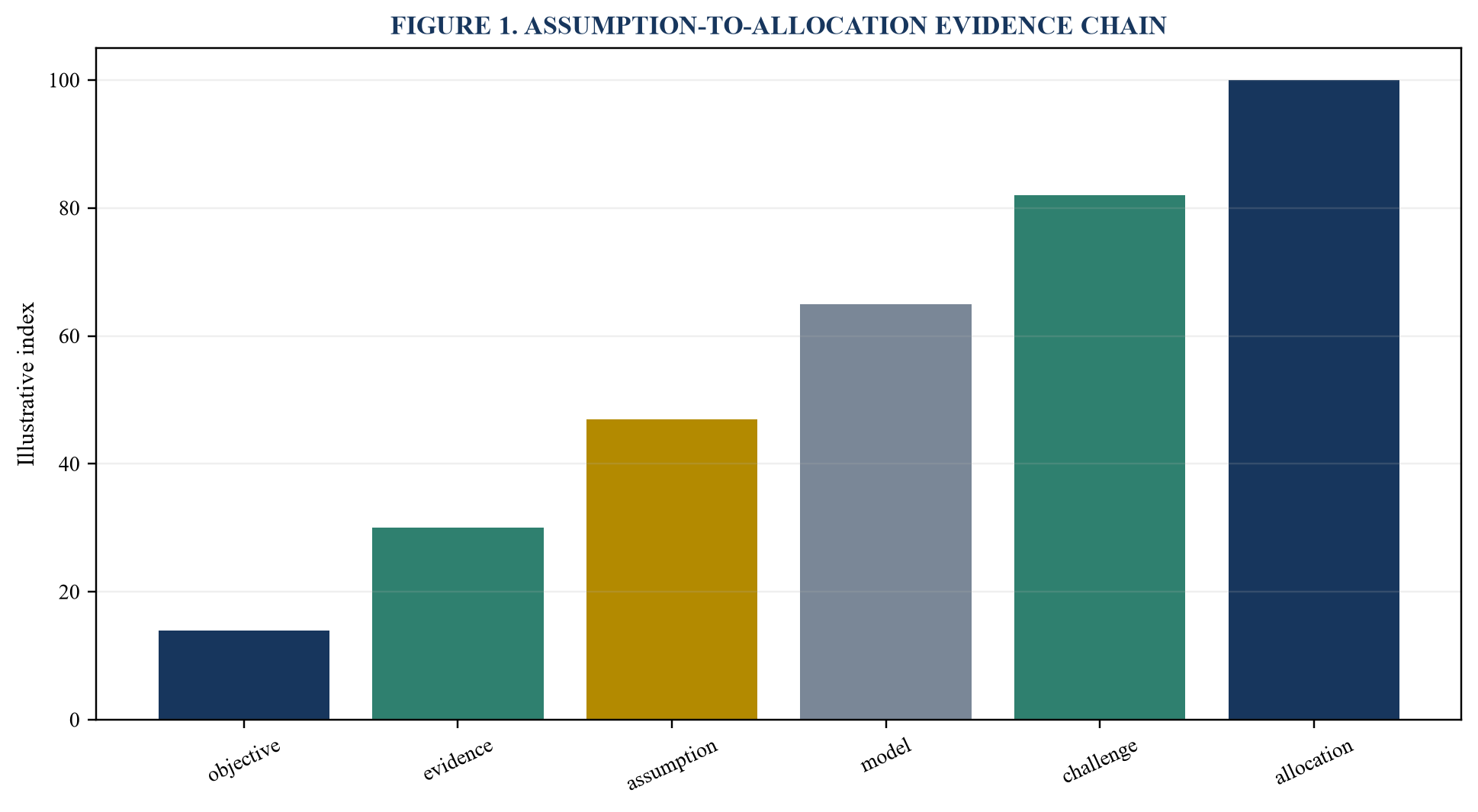
Each portfolio weight should remain connected to objective, evidence, assumptions, model and approval.
6. Govern data rights and permissions
Market, alternative, portfolio, client and model data should be used within contractual, privacy and confidentiality authority.
Controlled evidence includes dataset; provider; licence; purpose; location; access; retention; deletion. The immediate decision is to keep scenario use within evidenced rights. Definitions should remain stable across investment, risk, committee, operational and financial records.
Finance should distinguish current positions, funded implementation, management or market forecasts and model-generated estimates. Every projected benefit needs timing, full cost, accountable ownership and a route to cash.
Evidence should distinguish observation, estimate, management plan and transaction judgement. A supported claim includes timing, full cost, dependency, transferability and a cash consequence. Sensitivity should show how the conclusion changes when adoption, demand, quality or persistence underperforms. Material assumptions need validation dates, accountable owners and explicit expiry conditions so that stale expectations do not survive into pricing or financing decisions.
7. Preserve assumption and data lineage
Every return, risk, correlation, liquidity and cost input should retain source, transformation, date, owner and review.
Controlled evidence includes input; source; version; transformation; unit; date; owner; approval. The immediate decision is to trace each portfolio conclusion to native evidence. Definitions should remain stable across investment, risk, committee, operational and financial records.
Investment, risk, legal, compliance, operations, technology and finance teams should use stable identifiers and cut-offs. Material conclusions should be traced from native evidence through scenario, model, committee decision and outcome.
The operating team and finance team should use the same definitions. Native records should support aggregate dashboards, and sample testing should follow representative cases from input through outcome and cash. Exceptions, failed cases and client concessions remain part of the population. Reconciliation should cover opening and closing balances, acquisitions, disposals, foreign exchange, allocation changes and manual adjustments that could otherwise mimic operating improvement.
8. Build a regime library
Inflation, growth, policy, liquidity, volatility and market-structure regimes should be defined without hindsight leakage.
Controlled evidence includes regime; definition; period; indicator; transition; evidence; limitation. The immediate decision is to test allocations across economically distinct states. Definitions should remain stable across investment, risk, committee, operational and financial records.
Decision makers need bounded downside for stale data, hidden assumptions, model error, missing regimes, optimiser instability, correlated recommendations, confidentiality breach, provider failure and weak adoption.
Decision makers need both upside and downside. The analysis should state which party controls conversion, what investment remains, when cash appears, which risks survive and whether the result continues after a change of ownership. Unsupported precision should be replaced with bounded scenarios. The committee should record the decision consequence of each range, including price, structure, funding, covenant, integration and monitoring implications.
9. Adopt a factor and exposure taxonomy
Growth, inflation, duration, credit, liquidity, currency, commodity, volatility and thematic exposures need stable definitions.
Controlled evidence includes factor; exposure; measurement; unit; source; mapping; owner; version. The immediate decision is to compare risk across assets without relying on labels. Definitions should remain stable across investment, risk, committee, operational and financial records.
Allocation evidence should remain mandate-, fund-, asset-, jurisdiction-, decision- and period-specific. The review should preserve missing data, failed scenarios, contradictory evidence, overrides, dissent and adverse outcomes.
The analytical unit should remain stable from source record to valuation conclusion. Reviewers should see the population, exclusions, period, owner and reconciliation to finance. Where evidence is incomplete, the model should retain a range and identify the action needed to narrow it. Comparisons should preserve product, customer, site, complexity and market conditions; aggregation should not conceal adverse cohorts or delayed consequences.
10. Govern capital-market assumptions
Expected returns should separate income, growth, valuation change, defaults, dilution, fees and currency effects.
Controlled evidence includes asset; component; horizon; estimate; source; range; owner; expiry. The immediate decision is to replace point forecasts with reviewable return building blocks. Definitions should remain stable across investment, risk, committee, operational and financial records.
Finance should distinguish current positions, funded implementation, management or market forecasts and model-generated estimates. Every projected benefit needs timing, full cost, accountable ownership and a route to cash.
Evidence should distinguish observation, estimate, management plan and transaction judgement. A supported claim includes timing, full cost, dependency, transferability and a cash consequence. Sensitivity should show how the conclusion changes when adoption, demand, quality or persistence underperforms. Material assumptions need validation dates, accountable owners and explicit expiry conditions so that stale expectations do not survive into pricing or financing decisions.
11. Model correlation conditionally
Correlation changes with regime, horizon, liquidity and market stress; one historical matrix is insufficient.
Controlled evidence includes asset pair; window; regime; estimator; confidence; stress; reviewer. The immediate decision is to show diversification under relevant conditions. Definitions should remain stable across investment, risk, committee, operational and financial records.
Investment, risk, legal, compliance, operations, technology and finance teams should use stable identifiers and cut-offs. Material conclusions should be traced from native evidence through scenario, model, committee decision and outcome.
The operating team and finance team should use the same definitions. Native records should support aggregate dashboards, and sample testing should follow representative cases from input through outcome and cash. Exceptions, failed cases and client concessions remain part of the population. Reconciliation should cover opening and closing balances, acquisitions, disposals, foreign exchange, allocation changes and manual adjustments that could otherwise mimic operating improvement.
12. Represent tails and nonlinear exposures
Options, leverage, defaults, guarantees, waterfalls and convex strategies require distributions beyond variance.
Controlled evidence includes position; payoff; trigger; dependency; tail; loss; recovery; model. The immediate decision is to capture losses and gains hidden by linear approximations. Definitions should remain stable across investment, risk, committee, operational and financial records.
Decision makers need bounded downside for stale data, hidden assumptions, model error, missing regimes, optimiser instability, correlated recommendations, confidentiality breach, provider failure and weak adoption.
Decision makers need both upside and downside. The analysis should state which party controls conversion, what investment remains, when cash appears, which risks survive and whether the result continues after a change of ownership. Unsupported precision should be replaced with bounded scenarios. The committee should record the decision consequence of each range, including price, structure, funding, covenant, integration and monitoring implications.
Table 2. Scenario architecture
| Layer | Required evidence | Failure risk |
|---|---|---|
| observation | source, date and definition | stale or wrong fact |
| assumption | range, owner and expiry | hidden judgment |
| model | transformation and validation | opaque output |
| decision | challenge and approval | unaccountable allocation |
Replace illustrative classifications with company-specific evidence and approved transaction treatment.
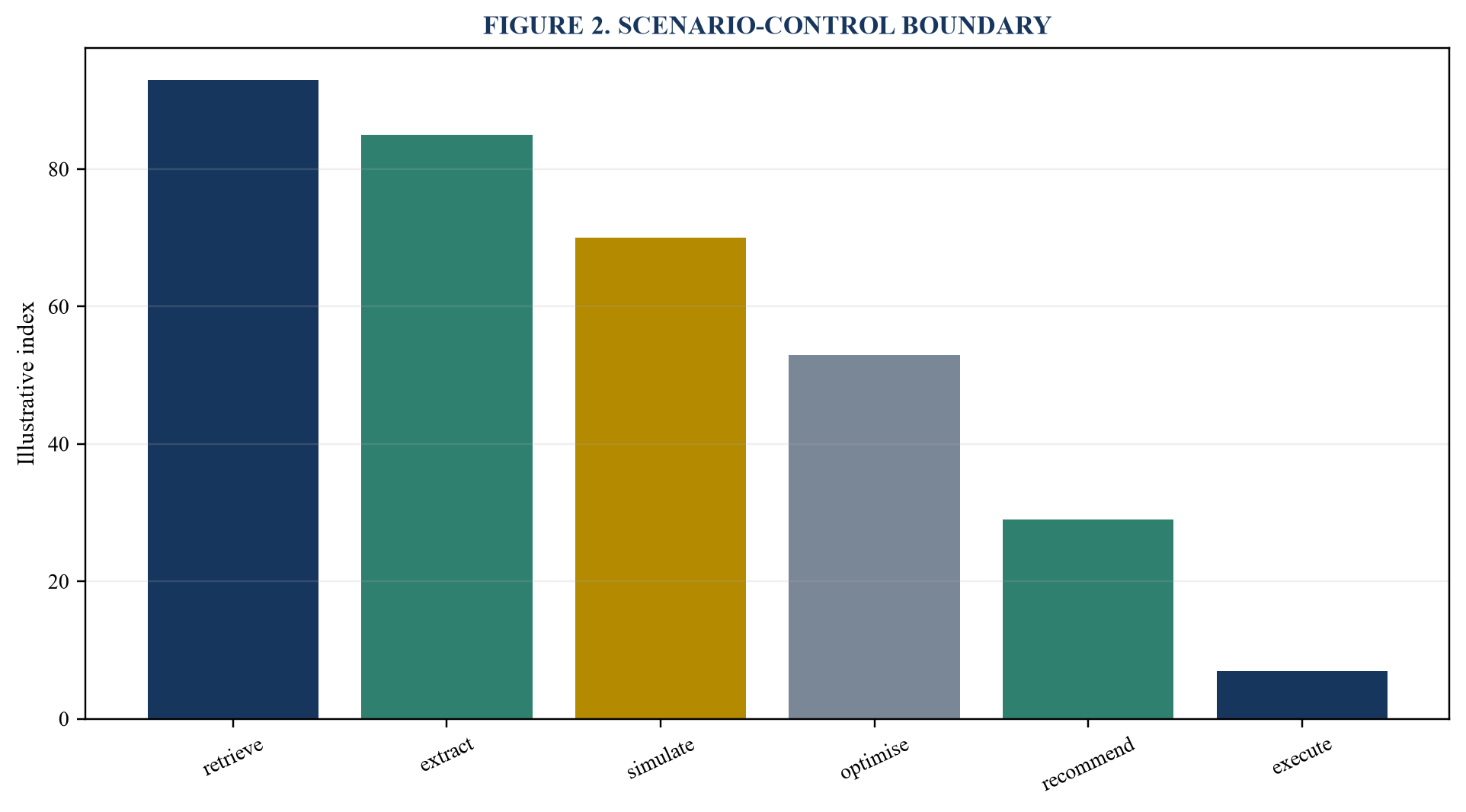
Human authority should increase with allocation and execution consequence.
13. Integrate liquidity and market capacity
Redemption terms, lock-ups, notice periods, settlement, financing and market depth constrain rebalancing.
Controlled evidence includes asset; liquidity term; volume; haircut; funding; stress; action; owner. The immediate decision is to test whether the portfolio can finance its decisions. Definitions should remain stable across investment, risk, committee, operational and financial records.
Allocation evidence should remain mandate-, fund-, asset-, jurisdiction-, decision- and period-specific. The review should preserve missing data, failed scenarios, contradictory evidence, overrides, dissent and adverse outcomes.
The analytical unit should remain stable from source record to valuation conclusion. Reviewers should see the population, exclusions, period, owner and reconciliation to finance. Where evidence is incomplete, the model should retain a range and identify the action needed to narrow it. Comparisons should preserve product, customer, site, complexity and market conditions; aggregation should not conceal adverse cohorts or delayed consequences.
14. Model private-market cash flows
Commitments, calls, distributions, NAV, exits and secondary liquidity should reflect vintage, strategy and pacing uncertainty.
Controlled evidence includes fund; vintage; commitment; call; distribution; NAV; exit; scenario. The immediate decision is to connect private allocations to liquidity and total-portfolio risk. Definitions should remain stable across investment, risk, committee, operational and financial records.
Finance should distinguish current positions, funded implementation, management or market forecasts and model-generated estimates. Every projected benefit needs timing, full cost, accountable ownership and a route to cash.
Evidence should distinguish observation, estimate, management plan and transaction judgement. A supported claim includes timing, full cost, dependency, transferability and a cash consequence. Sensitivity should show how the conclusion changes when adoption, demand, quality or persistence underperforms. Material assumptions need validation dates, accountable owners and explicit expiry conditions so that stale expectations do not survive into pricing or financing decisions.
15. Separate currency exposure and hedge design
Asset currency, functional currency, financing, hedge ratio, carry, collateral and basis should remain distinct.
Controlled evidence includes currency; exposure; hedge; tenor; carry; collateral; basis; counterparty. The immediate decision is to measure net currency risk and funding consequence. Definitions should remain stable across investment, risk, committee, operational and financial records.
Investment, risk, legal, compliance, operations, technology and finance teams should use stable identifiers and cut-offs. Material conclusions should be traced from native evidence through scenario, model, committee decision and outcome.
The operating team and finance team should use the same definitions. Native records should support aggregate dashboards, and sample testing should follow representative cases from input through outcome and cash. Exceptions, failed cases and client concessions remain part of the population. Reconciliation should cover opening and closing balances, acquisitions, disposals, foreign exchange, allocation changes and manual adjustments that could otherwise mimic operating improvement.
16. Test inflation transmission
Inflation affects revenues, costs, rates, discount factors, contracts, wages and asset values through different lags.
Controlled evidence includes inflation measure; exposure; contract; pass-through; lag; margin; valuation. The immediate decision is to avoid treating inflation sensitivity as one coefficient. Definitions should remain stable across investment, risk, committee, operational and financial records.
Decision makers need bounded downside for stale data, hidden assumptions, model error, missing regimes, optimiser instability, correlated recommendations, confidentiality breach, provider failure and weak adoption.
Decision makers need both upside and downside. The analysis should state which party controls conversion, what investment remains, when cash appears, which risks survive and whether the result continues after a change of ownership. Unsupported precision should be replaced with bounded scenarios. The committee should record the decision consequence of each range, including price, structure, funding, covenant, integration and monitoring implications.
17. Test rates and curve scenarios
Level, slope, basis, volatility, refinancing and discount-rate shocks should connect to asset cash flows and financing.
Controlled evidence includes curve; tenor; shock; debt; hedge; cash flow; valuation; liquidity. The immediate decision is to measure both economic and funding effects of rate changes. Definitions should remain stable across investment, risk, committee, operational and financial records.
Allocation evidence should remain mandate-, fund-, asset-, jurisdiction-, decision- and period-specific. The review should preserve missing data, failed scenarios, contradictory evidence, overrides, dissent and adverse outcomes.
The analytical unit should remain stable from source record to valuation conclusion. Reviewers should see the population, exclusions, period, owner and reconciliation to finance. Where evidence is incomplete, the model should retain a range and identify the action needed to narrow it. Comparisons should preserve product, customer, site, complexity and market conditions; aggregation should not conceal adverse cohorts or delayed consequences.
18. Test credit-cycle scenarios
Spreads, defaults, recoveries, downgrades, covenants, refinancing and liquidity should move jointly.
Controlled evidence includes issuer; spread; rating; default; recovery; covenant; maturity; liquidity. The immediate decision is to connect credit stress to income, valuation and cash. Definitions should remain stable across investment, risk, committee, operational and financial records.
Finance should distinguish current positions, funded implementation, management or market forecasts and model-generated estimates. Every projected benefit needs timing, full cost, accountable ownership and a route to cash.
Evidence should distinguish observation, estimate, management plan and transaction judgement. A supported claim includes timing, full cost, dependency, transferability and a cash consequence. Sensitivity should show how the conclusion changes when adoption, demand, quality or persistence underperforms. Material assumptions need validation dates, accountable owners and explicit expiry conditions so that stale expectations do not survive into pricing or financing decisions.
19. Test equity and earnings regimes
Revenue, margins, multiples, dilution, buybacks and sector concentration should be linked through scenarios.
Controlled evidence includes company; sector; earnings driver; margin; multiple; capital action; weight. The immediate decision is to distinguish operating stress from valuation compression. Definitions should remain stable across investment, risk, committee, operational and financial records.
Investment, risk, legal, compliance, operations, technology and finance teams should use stable identifiers and cut-offs. Material conclusions should be traced from native evidence through scenario, model, committee decision and outcome.
The operating team and finance team should use the same definitions. Native records should support aggregate dashboards, and sample testing should follow representative cases from input through outcome and cash. Exceptions, failed cases and client concessions remain part of the population. Reconciliation should cover opening and closing balances, acquisitions, disposals, foreign exchange, allocation changes and manual adjustments that could otherwise mimic operating improvement.
20. Test real-asset and infrastructure cases
Utilisation, tariffs, availability, capex, regulation, debt and residual value drive real-asset outcomes.
Controlled evidence includes asset; demand; price; contract; capex; debt; regulation; terminal value. The immediate decision is to capture project and financing interactions. Definitions should remain stable across investment, risk, committee, operational and financial records.
Decision makers need bounded downside for stale data, hidden assumptions, model error, missing regimes, optimiser instability, correlated recommendations, confidentiality breach, provider failure and weak adoption.
Decision makers need both upside and downside. The analysis should state which party controls conversion, what investment remains, when cash appears, which risks survive and whether the result continues after a change of ownership. Unsupported precision should be replaced with bounded scenarios. The committee should record the decision consequence of each range, including price, structure, funding, covenant, integration and monitoring implications.
Table 3. Scenario challenge register
| Challenge | Evidence | Decision use |
|---|---|---|
| regime | conditional history and mechanism | diversification |
| liquidity | cash, terms and market capacity | funding resilience |
| tail | joint shock and nonlinear payoff | loss capacity |
| implementation | cost, turnover and timing | realised value |
Replace illustrative classifications with company-specific evidence and approved transaction treatment.
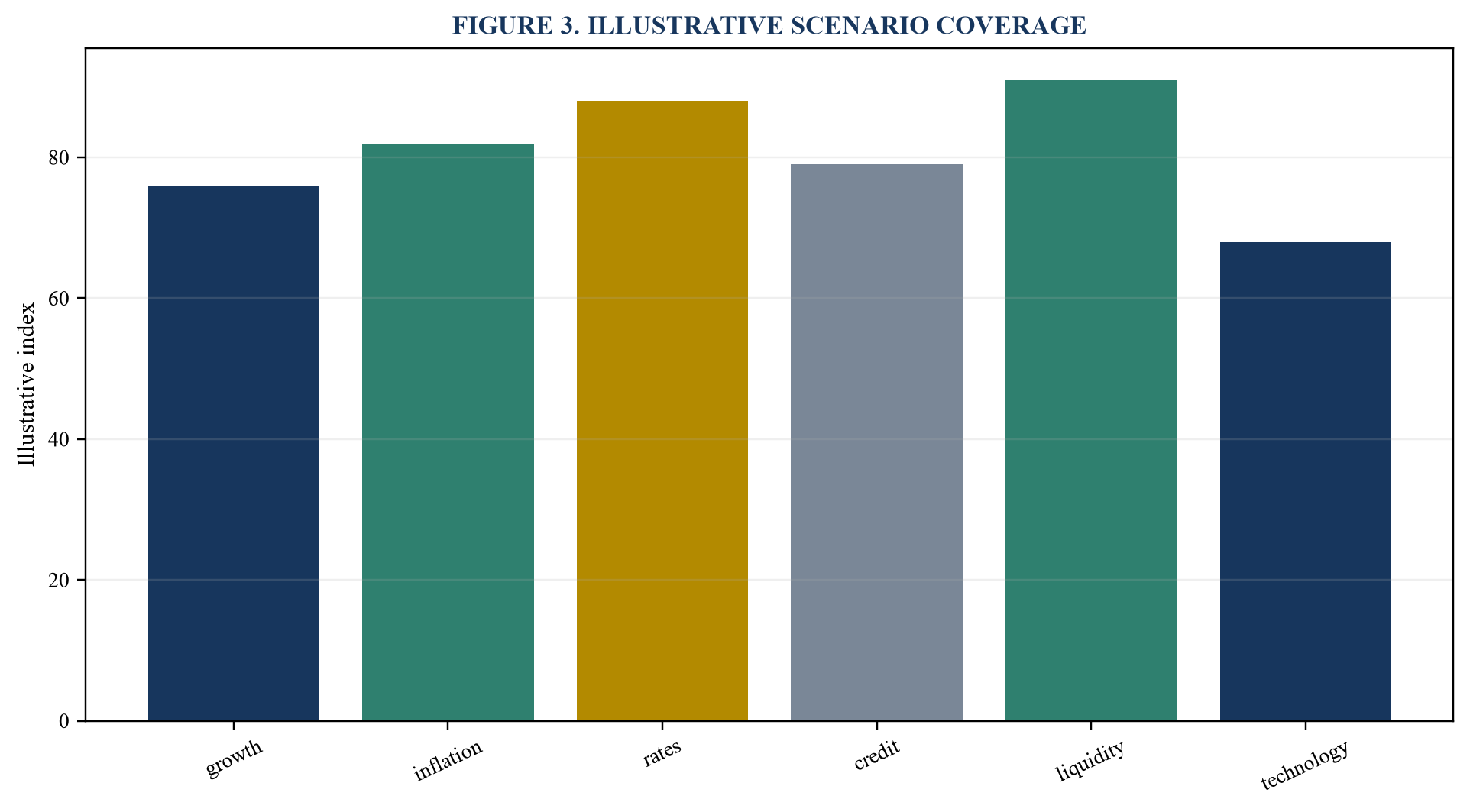
Replace indices with mandate- and portfolio-specific evidence.
21. Model climate and energy transitions
Physical hazards, policy, technology, demand, carbon costs and adaptation should be represented as scenario pathways.
Controlled evidence includes hazard; pathway; horizon; exposure; response; cost; revenue; evidence. The immediate decision is to link transition narratives to portfolio cash flows. Definitions should remain stable across investment, risk, committee, operational and financial records.
Allocation evidence should remain mandate-, fund-, asset-, jurisdiction-, decision- and period-specific. The review should preserve missing data, failed scenarios, contradictory evidence, overrides, dissent and adverse outcomes.
The analytical unit should remain stable from source record to valuation conclusion. Reviewers should see the population, exclusions, period, owner and reconciliation to finance. Where evidence is incomplete, the model should retain a range and identify the action needed to narrow it. Comparisons should preserve product, customer, site, complexity and market conditions; aggregation should not conceal adverse cohorts or delayed consequences.
22. Model technology and AI transitions
Productivity, capex, competition, energy demand, labour substitution and obsolescence can affect many assets simultaneously.
Controlled evidence includes technology; adoption; investment; productivity; displacement; exposure; timing. The immediate decision is to test cross-asset consequences without thematic extrapolation. Definitions should remain stable across investment, risk, committee, operational and financial records.
Finance should distinguish current positions, funded implementation, management or market forecasts and model-generated estimates. Every projected benefit needs timing, full cost, accountable ownership and a route to cash.
Evidence should distinguish observation, estimate, management plan and transaction judgement. A supported claim includes timing, full cost, dependency, transferability and a cash consequence. Sensitivity should show how the conclusion changes when adoption, demand, quality or persistence underperforms. Material assumptions need validation dates, accountable owners and explicit expiry conditions so that stale expectations do not survive into pricing or financing decisions.
23. Structure geopolitical event scenarios
Trade restrictions, sanctions, conflict, fragmentation and capital controls require event trees and legal review.
Controlled evidence includes event; jurisdiction; channel; exposure; timing; restriction; response; owner. The immediate decision is to convert geopolitical narratives into bounded portfolio channels. Definitions should remain stable across investment, risk, committee, operational and financial records.
Investment, risk, legal, compliance, operations, technology and finance teams should use stable identifiers and cut-offs. Material conclusions should be traced from native evidence through scenario, model, committee decision and outcome.
The operating team and finance team should use the same definitions. Native records should support aggregate dashboards, and sample testing should follow representative cases from input through outcome and cash. Exceptions, failed cases and client concessions remain part of the population. Reconciliation should cover opening and closing balances, acquisitions, disposals, foreign exchange, allocation changes and manual adjustments that could otherwise mimic operating improvement.
24. Generate scenarios with evidence boundaries
AI may propose combinations and narratives, while sources, assumptions and probability treatment should remain visible.
Controlled evidence includes prompt; source; scenario; assumption; dependency; range; reviewer; status. The immediate decision is to use generation to broaden challenge without manufacturing evidence. Definitions should remain stable across investment, risk, committee, operational and financial records.
Decision makers need bounded downside for stale data, hidden assumptions, model error, missing regimes, optimiser instability, correlated recommendations, confidentiality breach, provider failure and weak adoption.
Decision makers need both upside and downside. The analysis should state which party controls conversion, what investment remains, when cash appears, which risks survive and whether the result continues after a change of ownership. Unsupported precision should be replaced with bounded scenarios. The committee should record the decision consequence of each range, including price, structure, funding, covenant, integration and monitoring implications.
25. Preserve causal discipline
Prediction, association, mechanism and management judgment should remain distinct in scenario construction.
Controlled evidence includes claim; method; variable; mechanism; confounder; test; limitation; reviewer. The immediate decision is to stop plausible narratives from becoming unsupported causal models. Definitions should remain stable across investment, risk, committee, operational and financial records.
Allocation evidence should remain mandate-, fund-, asset-, jurisdiction-, decision- and period-specific. The review should preserve missing data, failed scenarios, contradictory evidence, overrides, dissent and adverse outcomes.
The analytical unit should remain stable from source record to valuation conclusion. Reviewers should see the population, exclusions, period, owner and reconciliation to finance. Where evidence is incomplete, the model should retain a range and identify the action needed to narrow it. Comparisons should preserve product, customer, site, complexity and market conditions; aggregation should not conceal adverse cohorts or delayed consequences.
26. Define AI roles and prohibited actions
Specify whether systems retrieve, extract, estimate, simulate, optimise, draft, recommend or execute.
Controlled evidence includes use case; role; input; output; tool; permission; reviewer; prohibited action. The immediate decision is to bound automation to approved allocation work. Definitions should remain stable across investment, risk, committee, operational and financial records.
Finance should distinguish current positions, funded implementation, management or market forecasts and model-generated estimates. Every projected benefit needs timing, full cost, accountable ownership and a route to cash.
Evidence should distinguish observation, estimate, management plan and transaction judgement. A supported claim includes timing, full cost, dependency, transferability and a cash consequence. Sensitivity should show how the conclusion changes when adoption, demand, quality or persistence underperforms. Material assumptions need validation dates, accountable owners and explicit expiry conditions so that stale expectations do not survive into pricing or financing decisions.
27. Maintain the model inventory
Forecast, risk, optimisation, liquidity, valuation and agent models need owners, versions, dependencies and approved uses.
Controlled evidence includes model; purpose; owner; version; input; dependency; validation; status. The immediate decision is to make the analytical estate visible and governable. Definitions should remain stable across investment, risk, committee, operational and financial records.
Investment, risk, legal, compliance, operations, technology and finance teams should use stable identifiers and cut-offs. Material conclusions should be traced from native evidence through scenario, model, committee decision and outcome.
The operating team and finance team should use the same definitions. Native records should support aggregate dashboards, and sample testing should follow representative cases from input through outcome and cash. Exceptions, failed cases and client concessions remain part of the population. Reconciliation should cover opening and closing balances, acquisitions, disposals, foreign exchange, allocation changes and manual adjustments that could otherwise mimic operating improvement.
28. Validate by decision consequence
Tests should reflect the mandate, data population, horizon, error cost and human-control design.
Controlled evidence includes use case; test set; metric; threshold; adverse case; limitation; reviewer. The immediate decision is to approve each configuration only for an evidenced allocation task. Definitions should remain stable across investment, risk, committee, operational and financial records.
Decision makers need bounded downside for stale data, hidden assumptions, model error, missing regimes, optimiser instability, correlated recommendations, confidentiality breach, provider failure and weak adoption.
Decision makers need both upside and downside. The analysis should state which party controls conversion, what investment remains, when cash appears, which risks survive and whether the result continues after a change of ownership. Unsupported precision should be replaced with bounded scenarios. The committee should record the decision consequence of each range, including price, structure, funding, covenant, integration and monitoring implications.
29. Calibrate ranges and distributions
Scenario ranges should reflect evidence, uncertainty, structural breaks and expert challenge rather than convenience.
Controlled evidence includes variable; range; distribution; source; period; calibration; owner; expiry. The immediate decision is to make uncertainty explicit and reviewable. Definitions should remain stable across investment, risk, committee, operational and financial records.
Allocation evidence should remain mandate-, fund-, asset-, jurisdiction-, decision- and period-specific. The review should preserve missing data, failed scenarios, contradictory evidence, overrides, dissent and adverse outcomes.
The analytical unit should remain stable from source record to valuation conclusion. Reviewers should see the population, exclusions, period, owner and reconciliation to finance. Where evidence is incomplete, the model should retain a range and identify the action needed to narrow it. Comparisons should preserve product, customer, site, complexity and market conditions; aggregation should not conceal adverse cohorts or delayed consequences.
30. Backtest without hindsight leakage
Historical tests should preserve information availability, revisions, transaction timing, costs and failed periods.
Controlled evidence includes decision date; dataset vintage; rule; trade; cost; benchmark; outcome; exception. The immediate decision is to measure implementable historical performance. Definitions should remain stable across investment, risk, committee, operational and financial records.
Finance should distinguish current positions, funded implementation, management or market forecasts and model-generated estimates. Every projected benefit needs timing, full cost, accountable ownership and a route to cash.
Evidence should distinguish observation, estimate, management plan and transaction judgement. A supported claim includes timing, full cost, dependency, transferability and a cash consequence. Sensitivity should show how the conclusion changes when adoption, demand, quality or persistence underperforms. Material assumptions need validation dates, accountable owners and explicit expiry conditions so that stale expectations do not survive into pricing or financing decisions.
Table 4. Validation evidence
| Test | Metric | Escalation |
|---|---|---|
| data | lineage and population coverage | repair or restrict |
| forecast | calibration and stability | challenge range |
| portfolio | concentration and turnover | apply constraint |
| outcome | decision and realised result | revalidate use case |
Replace illustrative classifications with company-specific evidence and approved transaction treatment.
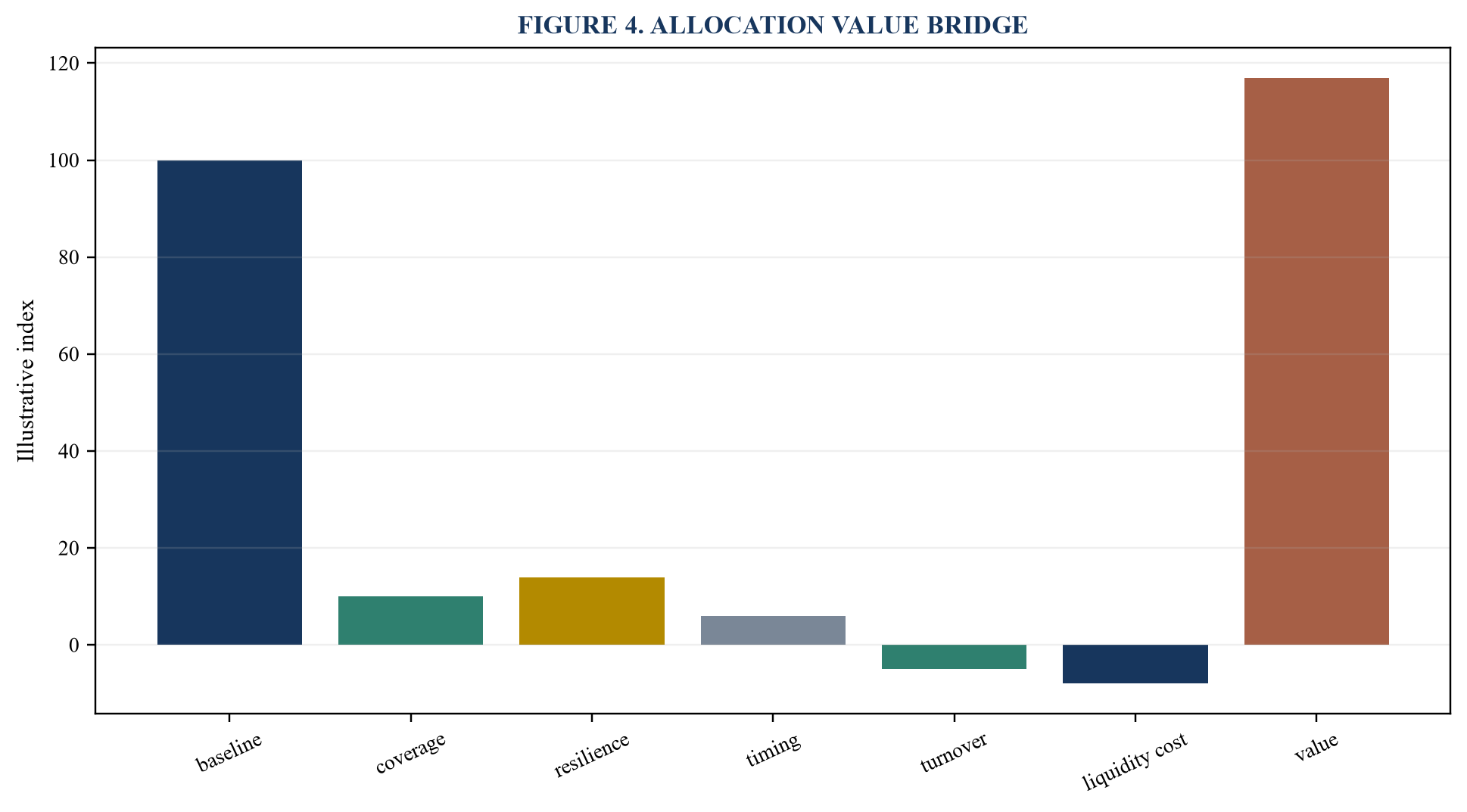
Scenario breadth creates value after turnover, liquidity, model and governance costs.
31. Use challenger models and reverse stress
Alternative specifications and failure-first scenarios expose dependence on one method or consensus assumption.
Controlled evidence includes primary model; challenger; failure threshold; reverse stress; result; action. The immediate decision is to identify the conditions that break the allocation. Definitions should remain stable across investment, risk, committee, operational and financial records.
Investment, risk, legal, compliance, operations, technology and finance teams should use stable identifiers and cut-offs. Material conclusions should be traced from native evidence through scenario, model, committee decision and outcome.
The operating team and finance team should use the same definitions. Native records should support aggregate dashboards, and sample testing should follow representative cases from input through outcome and cash. Exceptions, failed cases and client concessions remain part of the population. Reconciliation should cover opening and closing balances, acquisitions, disposals, foreign exchange, allocation changes and manual adjustments that could otherwise mimic operating improvement.
32. Test robustness and stability
Small input or constraint changes should not produce unexplained portfolio discontinuities.
Controlled evidence includes input change; portfolio change; turnover; concentration; instability. The immediate decision is to distinguish insight from optimiser sensitivity. Definitions should remain stable across investment, risk, committee, operational and financial records.
Decision makers need bounded downside for stale data, hidden assumptions, model error, missing regimes, optimiser instability, correlated recommendations, confidentiality breach, provider failure and weak adoption.
Decision makers need both upside and downside. The analysis should state which party controls conversion, what investment remains, when cash appears, which risks survive and whether the result continues after a change of ownership. Unsupported precision should be replaced with bounded scenarios. The committee should record the decision consequence of each range, including price, structure, funding, covenant, integration and monitoring implications.
33. Control optimisation and objective functions
Optimisers should expose constraints, penalties, estimation error, concentration and feasible alternatives.
Controlled evidence includes objective; constraint; penalty; solver; seed; solution; alternative; approval. The immediate decision is to retain investment judgment around mathematical output. Definitions should remain stable across investment, risk, committee, operational and financial records.
Allocation evidence should remain mandate-, fund-, asset-, jurisdiction-, decision- and period-specific. The review should preserve missing data, failed scenarios, contradictory evidence, overrides, dissent and adverse outcomes.
The analytical unit should remain stable from source record to valuation conclusion. Reviewers should see the population, exclusions, period, owner and reconciliation to finance. Where evidence is incomplete, the model should retain a range and identify the action needed to narrow it. Comparisons should preserve product, customer, site, complexity and market conditions; aggregation should not conceal adverse cohorts or delayed consequences.
34. Include implementation and governance costs
Fees, spreads, taxes, market impact, hedging, liquidity, operational work and oversight affect realised value.
Controlled evidence includes cost; basis; timing; currency; scenario; owner; reconciliation; cash. The immediate decision is to evaluate allocations after full execution and control cost. Definitions should remain stable across investment, risk, committee, operational and financial records.
Finance should distinguish current positions, funded implementation, management or market forecasts and model-generated estimates. Every projected benefit needs timing, full cost, accountable ownership and a route to cash.
Evidence should distinguish observation, estimate, management plan and transaction judgement. A supported claim includes timing, full cost, dependency, transferability and a cash consequence. Sensitivity should show how the conclusion changes when adoption, demand, quality or persistence underperforms. Material assumptions need validation dates, accountable owners and explicit expiry conditions so that stale expectations do not survive into pricing or financing decisions.
35. Design committee governance
Allocation materials should show evidence, assumptions, sensitivities, counter-evidence, unresolved issues and requested decisions.
Controlled evidence includes paper; claim; source; scenario; dissent; decision; condition; minute. The immediate decision is to make challenge and approval independently reviewable. Definitions should remain stable across investment, risk, committee, operational and financial records.
Investment, risk, legal, compliance, operations, technology and finance teams should use stable identifiers and cut-offs. Material conclusions should be traced from native evidence through scenario, model, committee decision and outcome.
The operating team and finance team should use the same definitions. Native records should support aggregate dashboards, and sample testing should follow representative cases from input through outcome and cash. Exceptions, failed cases and client concessions remain part of the population. Reconciliation should cover opening and closing balances, acquisitions, disposals, foreign exchange, allocation changes and manual adjustments that could otherwise mimic operating improvement.
36. Preserve overrides and minority views
Human overrides and dissent should retain rationale, authority, conditions and later outcomes.
Controlled evidence includes recommendation; override; evidence; approver; reason; condition; outcome. The immediate decision is to learn from judgment without erasing accountability. Definitions should remain stable across investment, risk, committee, operational and financial records.
Decision makers need bounded downside for stale data, hidden assumptions, model error, missing regimes, optimiser instability, correlated recommendations, confidentiality breach, provider failure and weak adoption.
Decision makers need both upside and downside. The analysis should state which party controls conversion, what investment remains, when cash appears, which risks survive and whether the result continues after a change of ownership. Unsupported precision should be replaced with bounded scenarios. The committee should record the decision consequence of each range, including price, structure, funding, covenant, integration and monitoring implications.
37. Monitor exposures and outcomes
Weights, factors, liquidity, funding, performance and thesis indicators should be reviewed with stable definitions.
Controlled evidence includes portfolio; exposure; metric; period; source; threshold; action; outcome. The immediate decision is to carry the scenario evidence chain into portfolio ownership. Definitions should remain stable across investment, risk, committee, operational and financial records.
Allocation evidence should remain mandate-, fund-, asset-, jurisdiction-, decision- and period-specific. The review should preserve missing data, failed scenarios, contradictory evidence, overrides, dissent and adverse outcomes.
Reviewers should be able to trace each monitored exposure from source and assumption through committee decision, funded position and realised outcome.
38. Detect model, data and regime drift
Changing markets, data, models, prompts and provider behaviour can invalidate prior tests.
Controlled evidence includes baseline; version; change; metric; threshold; alert; investigation; disposition. The immediate decision is to stop stale validation from governing changed conditions. Definitions should remain stable across investment, risk, committee, operational and financial records.
Finance should distinguish current positions, funded implementation, management or market forecasts and model-generated estimates. Every projected benefit needs timing, full cost, accountable ownership and a route to cash.
Evidence should distinguish observation, estimate, management plan and transaction judgement. A supported claim includes timing, full cost, dependency, transferability and a cash consequence. Sensitivity should show how the conclusion changes when adoption, demand, quality or persistence underperforms. Material assumptions need validation dates, accountable owners and explicit expiry conditions so that stale expectations do not survive into pricing or financing decisions.
39. Oversee providers and concentration
Model, cloud, market-data and optimisation providers require diligence, monitoring, continuity and exit plans.
Controlled evidence includes provider; service; data flow; concentration; SLA; incident; substitute; exit. The immediate decision is to bound third-party and common-model dependency. Definitions should remain stable across investment, risk, committee, operational and financial records.
Investment, risk, legal, compliance, operations, technology and finance teams should use stable identifiers and cut-offs. Material conclusions should be traced from native evidence through scenario, model, committee decision and outcome.
The operating team and finance team should use the same definitions. Native records should support aggregate dashboards, and sample testing should follow representative cases from input through outcome and cash. Exceptions, failed cases and client concessions remain part of the population. Reconciliation should cover opening and closing balances, acquisitions, disposals, foreign exchange, allocation changes and manual adjustments that could otherwise mimic operating improvement.
Table 5. Evidence-gated implementation
| Period | Primary work | Gate |
|---|---|---|
| days 1-30 | mandate, data and assumption register | approve controlled baseline |
| days 31-60 | scenarios, challengers and validation | approve analyst pilot |
| days 61-100 | committee workflow and monitoring | approve scaled use |
Replace illustrative classifications with company-specific evidence and approved transaction treatment.
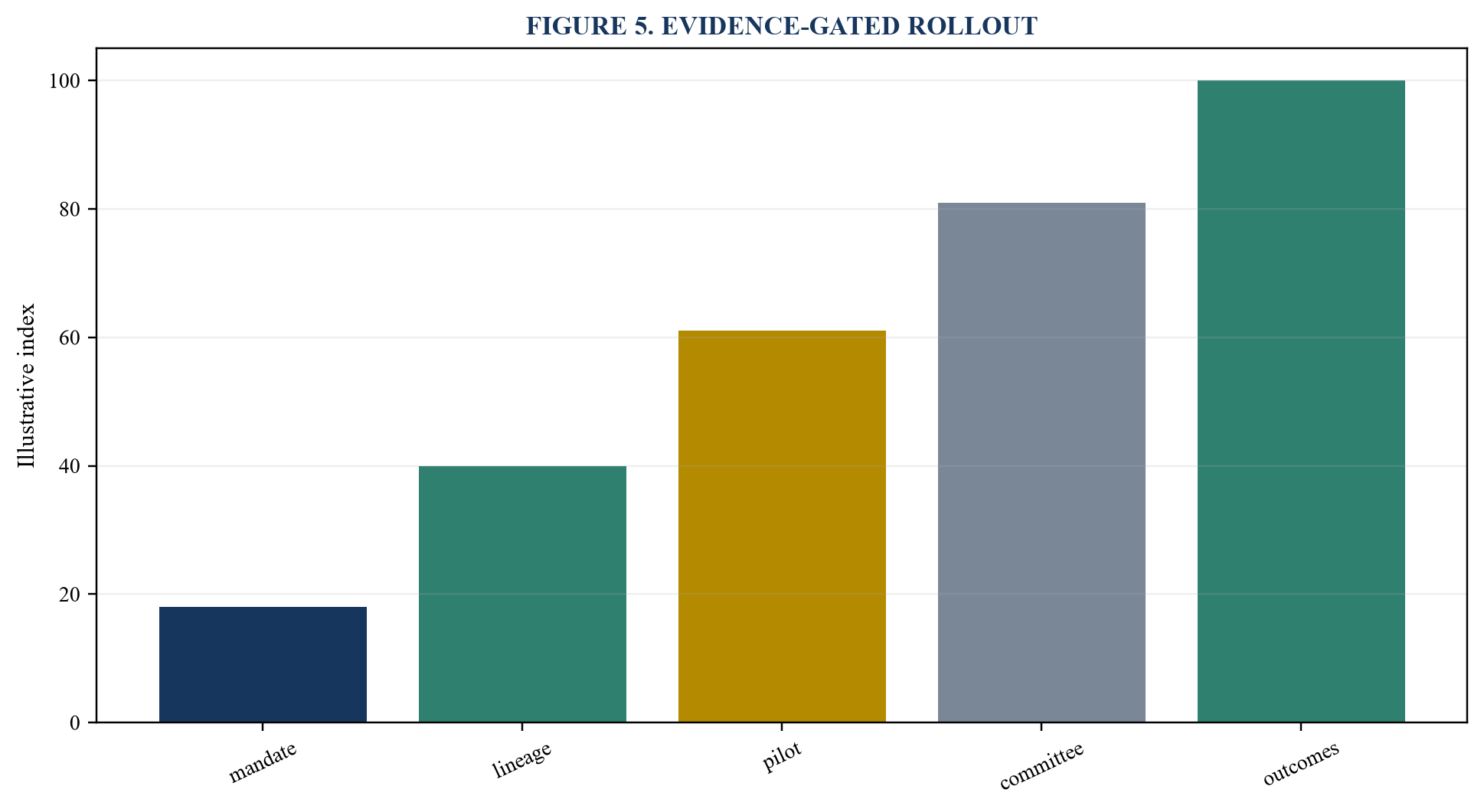
Scale should follow mandate, lineage, scenario validity, committee use and outcome evidence.
40. Implement through evidence-gated cohorts
Sequence research and scenario support before allocation recommendations, orders or automated rebalancing.
Controlled evidence includes cohort; owner; test; threshold; incident; benefit; gate; stop criterion. The immediate decision is to scale only after evidence, control, adoption and outcome gates pass. Definitions should remain stable across investment, risk, committee, operational and financial records.
Decision makers need bounded downside for stale data, hidden assumptions, model error, missing regimes, optimiser instability, correlated recommendations, confidentiality breach, provider failure and weak adoption.
Decision makers need both upside and downside. The analysis should state which party controls conversion, what investment remains, when cash appears, which risks survive and whether the result continues after a change of ownership. Unsupported precision should be replaced with bounded scenarios. The committee should record the decision consequence of each range, including price, structure, funding, covenant, integration and monitoring implications.
References
- International Organization of Securities Commissions, Artificial Intelligence in Capital Markets: Use Cases, Risks, and Challenges, https://www.iosco.org/library/pubdocs/pdf/IOSCOPD788.pdf
- Financial Stability Board, The Financial Stability Implications of Artificial Intelligence, https://www.fsb.org/uploads/P14112024.pdf
- Financial Stability Board, Monitoring Adoption of Artificial Intelligence and Related Vulnerabilities, https://www.fsb.org/2025/10/monitoring-adoption-of-artificial-intelligence-and-related-vulnerabilities-in-the-financial-sector/
- Bank for International Settlements, Artificial Intelligence and the Economy: Implications for Central Banks, https://www.bis.org/publications/aer-2024/artificial-intelligence-economy-implications-central-banks
- Bank for International Settlements, Intelligent Financial System: How AI Is Transforming Finance, https://www.bis.org/publications/working-paper-1194-intelligent-financial-system-how-ai-transforming-finance
- Bank for International Settlements, Ninth Public Investors Conference, https://www.bis.org/events/ninth_public_investors_conf_2024.htm
- U.S. Securities and Exchange Commission, 2025 Examination Priorities, https://www.sec.gov/files/2025-exam-priorities.pdf
- Financial Conduct Authority, AI and the FCA: Our Approach, https://www.fca.org.uk/firms/innovation/ai-approach
- Financial Conduct Authority, Asset Management and Alternatives Supervisory Strategy, https://www.fca.org.uk/publication/correspondence/asset-management-alternatives-portfolio-letter-2025.pdf
- European Securities and Markets Authority, Public Statement on Artificial Intelligence in Investment Services, https://www.esma.europa.eu/press-news/esma-news/esma-provides-guidance-firms-using-artificial-intelligence-investment-services
- National Institute of Standards and Technology, Artificial Intelligence Risk Management Framework, https://www.nist.gov/itl/ai-risk-management-framework
- International Organization for Standardization, ISO IEC 42001 Artificial Intelligence Management System, https://www.iso.org/standard/81230.html
- Organisation for Economic Co-operation and Development, OECD AI Principles, https://oecd.ai/en/ai-principles
- CFA Institute, Global Investment Performance Standards, https://www.cfainstitute.org/ethics-standards/codes/gips-standards
- CFA Institute, Code of Ethics and Standards of Professional Conduct, https://www.cfainstitute.org/ethics-standards/ethics/code-of-ethics-standards-of-conduct-guidance
- IFRS Foundation, IFRS 13 Fair Value Measurement, https://www.ifrs.org/issued-standards/list-of-standards/ifrs-13-fair-value-measurement/
- International Valuation Standards Council, International Valuation Standards, https://ivsc.org/standards/
- Institutional Limited Partners Association, Performance Template, https://ilpa.org/resources-tools/resource-library/ilpa-performance-template-granular-methodology-v-1-1/
- European Union, Regulation EU 2024/1689 Artificial Intelligence Act, https://eur-lex.europa.eu/eli/reg/2024/1689/oj
- European Union, Regulation EU 2016/679 General Data Protection Regulation, https://eur-lex.europa.eu/eli/reg/2016/679/oj
- International Organization of Securities Commissions, Principles on Outsourcing, https://www.iosco.org/library/pubdocs/pdf/IOSCOPD687.pdf
- Basel Committee on Banking Supervision, Stress Testing Principles, https://www.bis.org/bcbs/publ/d450.htm
- Network for Greening the Financial System, Climate Scenarios for Central Banks and Supervisors, https://www.ngfs.net/ngfs-scenarios-portal/
- U.S. Federal Reserve, Supervisory Guidance on Model Risk Management, https://www.federalreserve.gov/supervisionreg/srletters/sr1107.htm
- UK Government, Data Protection Act 2018, https://www.legislation.gov.uk/ukpga/2018/12/contents
- U.S. National Archives, Electronic Code of Federal Regulations Title 17, https://www.ecfr.gov/current/title-17
