

1. Define the allocator-intent question
Set the strategy, vehicle, geography, ticket, timing and relationship decision that the graph must support.
Controlled evidence includes fund; strategy; geography; ticket; timing; owner; decision; exclusion. The immediate decision is to freeze the decision boundary before gathering signals.
The analysis should retain the difference between eligibility, strategic fit, capacity, timing, access and willingness. A public allocation gap can coexist with a closed programme, a full commitment budget or an incumbent relationship. Each conclusion therefore needs the underlying source, date, entity, portfolio context and responsible reviewer.
Coverage teams should see the evidence that moved the score, the evidence that is missing and the action needed to narrow uncertainty. Stable identifiers should connect institutions, plans, pools, advisers, people, policies, holdings, searches, meetings and outcomes. Overrides need a reason, author, timestamp and later result.
2. Build a governed allocator universe
Create an entity-resolved population spanning pensions, sovereign investors, insurers, endowments, foundations, family offices, consultants, platforms and funds of funds.
Controlled evidence includes entity; legal name; type; jurisdiction; adviser; source; status; owner. The immediate decision is to approve the addressable universe and preserve exclusions.
Coverage teams should see the evidence that moved the score, the evidence that is missing and the action needed to narrow uncertainty. Stable identifiers should connect institutions, plans, pools, advisers, people, policies, holdings, searches, meetings and outcomes. Overrides need a reason, author, timestamp and later result.
The graph should preserve adverse evidence and failed cases. Rejections, delayed decisions, abandoned searches and stale relationships are economically important observations. Removing them would inflate apparent conversion and train the system toward optimism rather than disciplined capital formation.
3. Resolve entities and organisational relationships
Connect allocator brands to legal entities, plans, pools, subsidiaries, consultants, fiduciaries and disclosed decision makers.
Controlled evidence includes entity; alias; plan; pool; parent; adviser; person; source. The immediate decision is to prevent outreach and scoring from attaching evidence to the wrong institution.
The graph should preserve adverse evidence and failed cases. Rejections, delayed decisions, abandoned searches and stale relationships are economically important observations. Removing them would inflate apparent conversion and train the system toward optimism rather than disciplined capital formation.
Managers should apply entity-, strategy-, vehicle-, jurisdiction- and period-specific review. A signal from one plan, team or programme should not be projected across an institution without evidence. Comparisons should control for strategy, fund size, maturity, access route, market conditions and the quality of the proposition.
4. Translate the fund mandate into observable fit
Convert the proposed strategy into testable attributes including asset class, stage, sector, geography, structure, duration, liquidity, return and sustainability constraints.
Controlled evidence includes mandate; attribute; definition; threshold; evidence; reviewer; version; approval. The immediate decision is to make fit a traceable comparison rather than an impression.
Managers should apply entity-, strategy-, vehicle-, jurisdiction- and period-specific review. A signal from one plan, team or programme should not be projected across an institution without evidence. Comparisons should control for strategy, fund size, maturity, access route, market conditions and the quality of the proposition.
The analysis should retain the difference between eligibility, strategic fit, capacity, timing, access and willingness. A public allocation gap can coexist with a closed programme, a full commitment budget or an incumbent relationship. Each conclusion therefore needs the underlying source, date, entity, portfolio context and responsible reviewer.
5. Map allocator mandates and policy constraints
Capture the policies, regulations, delegations and board-approved ranges that determine whether an allocator can consider the proposition.
Controlled evidence includes policy; authority; asset class; range; restriction; effective date; source; review. The immediate decision is to separate permitted exposure from current appetite.
The analysis should retain the difference between eligibility, strategic fit, capacity, timing, access and willingness. A public allocation gap can coexist with a closed programme, a full commitment budget or an incumbent relationship. Each conclusion therefore needs the underlying source, date, entity, portfolio context and responsible reviewer.
Coverage teams should see the evidence that moved the score, the evidence that is missing and the action needed to narrow uncertainty. Stable identifiers should connect institutions, plans, pools, advisers, people, policies, holdings, searches, meetings and outcomes. Overrides need a reason, author, timestamp and later result.
Table 1. From allocator evidence to coverage decision
| Evidence layer | Question | Decision use |
|---|---|---|
| eligibility | can the institution invest? | apply hard gate |
| fit | does the mandate and portfolio align? | rank relevance |
| timing | is capacity or process active? | set engagement window |
| access | is there a credible route? | assign channel and owner |
Illustrative classifications should be replaced with institution-specific evidence and approved treatment.
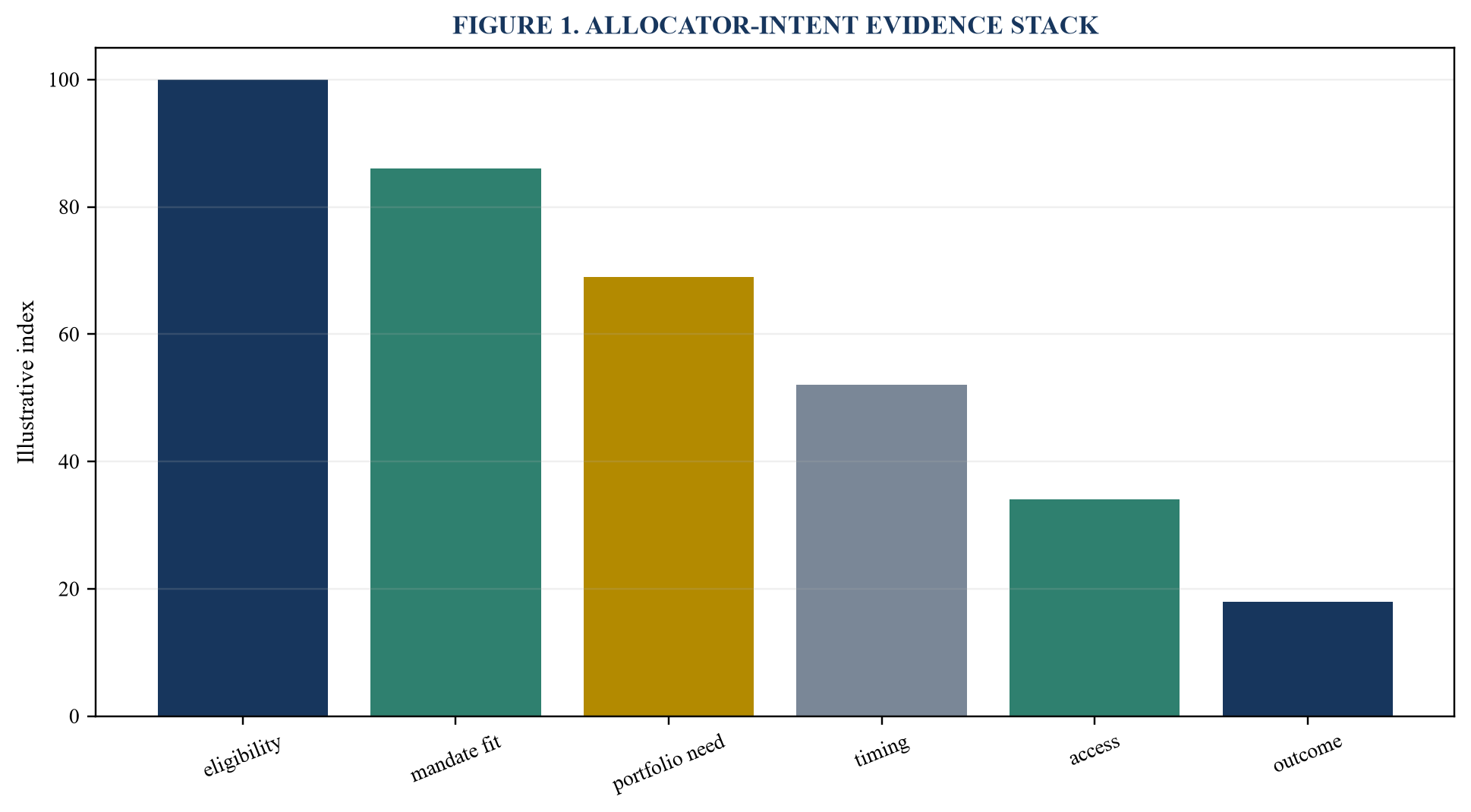
Values are illustrative indices for framework explanation and require institution-specific evidence.
6. Measure current portfolio exposure
Build a look-through view of disclosed holdings, manager relationships, strategy concentrations, geography and vintage exposure.
Controlled evidence includes portfolio; manager; fund; strategy; vintage; exposure; date; source. The immediate decision is to identify genuine gaps, concentrations and adjacent relationships.
Coverage teams should see the evidence that moved the score, the evidence that is missing and the action needed to narrow uncertainty. Stable identifiers should connect institutions, plans, pools, advisers, people, policies, holdings, searches, meetings and outcomes. Overrides need a reason, author, timestamp and later result.
The graph should preserve adverse evidence and failed cases. Rejections, delayed decisions, abandoned searches and stale relationships are economically important observations. Removing them would inflate apparent conversion and train the system toward optimism rather than disciplined capital formation.
7. Reconstruct pacing and commitment capacity
Estimate commitment cadence from targets, net cash flow, distributions, calls, liquidity and board-approved budgets.
Controlled evidence includes target; actual; calls; distributions; liquidity; budget; period; confidence. The immediate decision is to bound plausible commitment capacity by period.
The graph should preserve adverse evidence and failed cases. Rejections, delayed decisions, abandoned searches and stale relationships are economically important observations. Removing them would inflate apparent conversion and train the system toward optimism rather than disciplined capital formation.
Managers should apply entity-, strategy-, vehicle-, jurisdiction- and period-specific review. A signal from one plan, team or programme should not be projected across an institution without evidence. Comparisons should control for strategy, fund size, maturity, access route, market conditions and the quality of the proposition.
8. Detect allocation gaps and overweights
Compare policy targets, actual exposures and announced implementation plans without treating every gap as investable demand.
Controlled evidence includes target; actual; range; gap; implementation; constraint; period; source. The immediate decision is to distinguish a mathematical gap from an actionable mandate.
Managers should apply entity-, strategy-, vehicle-, jurisdiction- and period-specific review. A signal from one plan, team or programme should not be projected across an institution without evidence. Comparisons should control for strategy, fund size, maturity, access route, market conditions and the quality of the proposition.
The analysis should retain the difference between eligibility, strategic fit, capacity, timing, access and willingness. A public allocation gap can coexist with a closed programme, a full commitment budget or an incumbent relationship. Each conclusion therefore needs the underlying source, date, entity, portfolio context and responsible reviewer.
9. Model ticket-size compatibility
Test whether the vehicle size, minimum commitment, concentration limits and co-investment expectations fit the allocator's scale.
Controlled evidence includes AUM; allocation; ticket; minimum; maximum; concentration; co-invest; source. The immediate decision is to remove structurally incompatible prospects early.
The analysis should retain the difference between eligibility, strategic fit, capacity, timing, access and willingness. A public allocation gap can coexist with a closed programme, a full commitment budget or an incumbent relationship. Each conclusion therefore needs the underlying source, date, entity, portfolio context and responsible reviewer.
Coverage teams should see the evidence that moved the score, the evidence that is missing and the action needed to narrow uncertainty. Stable identifiers should connect institutions, plans, pools, advisers, people, policies, holdings, searches, meetings and outcomes. Overrides need a reason, author, timestamp and later result.
10. Assess strategy and portfolio adjacency
Identify existing managers, programmes and exposures that indicate familiarity, complementarity, crowding or duplication.
Controlled evidence includes manager; programme; strategy; adjacency; overlap; gap; evidence; date. The immediate decision is to explain why the proposed fund belongs in the portfolio.
Coverage teams should see the evidence that moved the score, the evidence that is missing and the action needed to narrow uncertainty. Stable identifiers should connect institutions, plans, pools, advisers, people, policies, holdings, searches, meetings and outcomes. Overrides need a reason, author, timestamp and later result.
The graph should preserve adverse evidence and failed cases. Rejections, delayed decisions, abandoned searches and stale relationships are economically important observations. Removing them would inflate apparent conversion and train the system toward optimism rather than disciplined capital formation.
11. Read board and committee calendars
Convert public meeting dates, agenda cycles, annual reviews, budget approvals and delegated-authority windows into timing hypotheses.
Controlled evidence includes body; meeting; agenda; decision; deadline; lead time; source; owner. The immediate decision is to align engagement with the allocator's real governance clock.
The graph should preserve adverse evidence and failed cases. Rejections, delayed decisions, abandoned searches and stale relationships are economically important observations. Removing them would inflate apparent conversion and train the system toward optimism rather than disciplined capital formation.
Managers should apply entity-, strategy-, vehicle-, jurisdiction- and period-specific review. A signal from one plan, team or programme should not be projected across an institution without evidence. Comparisons should control for strategy, fund size, maturity, access route, market conditions and the quality of the proposition.
12. Detect personnel and governance change
Track CIO, asset-class head, investment team, board and consultant changes that can reset priorities, access and decision timing.
Controlled evidence includes person; role; start; departure; committee; consultant; source; consequence. The immediate decision is to route coverage through current authority and preserve change history.
Managers should apply entity-, strategy-, vehicle-, jurisdiction- and period-specific review. A signal from one plan, team or programme should not be projected across an institution without evidence. Comparisons should control for strategy, fund size, maturity, access route, market conditions and the quality of the proposition.
The analysis should retain the difference between eligibility, strategic fit, capacity, timing, access and willingness. A public allocation gap can coexist with a closed programme, a full commitment budget or an incumbent relationship. Each conclusion therefore needs the underlying source, date, entity, portfolio context and responsible reviewer.
Table 2. Timing-signal hierarchy
| Signal | Strength | Control |
|---|---|---|
| published search | direct | verify deadline and eligibility |
| board-approved programme | strong | map governance cycle |
| allocation gap | conditional | test pacing and budget |
| public commentary | contextual | corroborate before use |
Illustrative classifications should be replaced with institution-specific evidence and approved treatment.
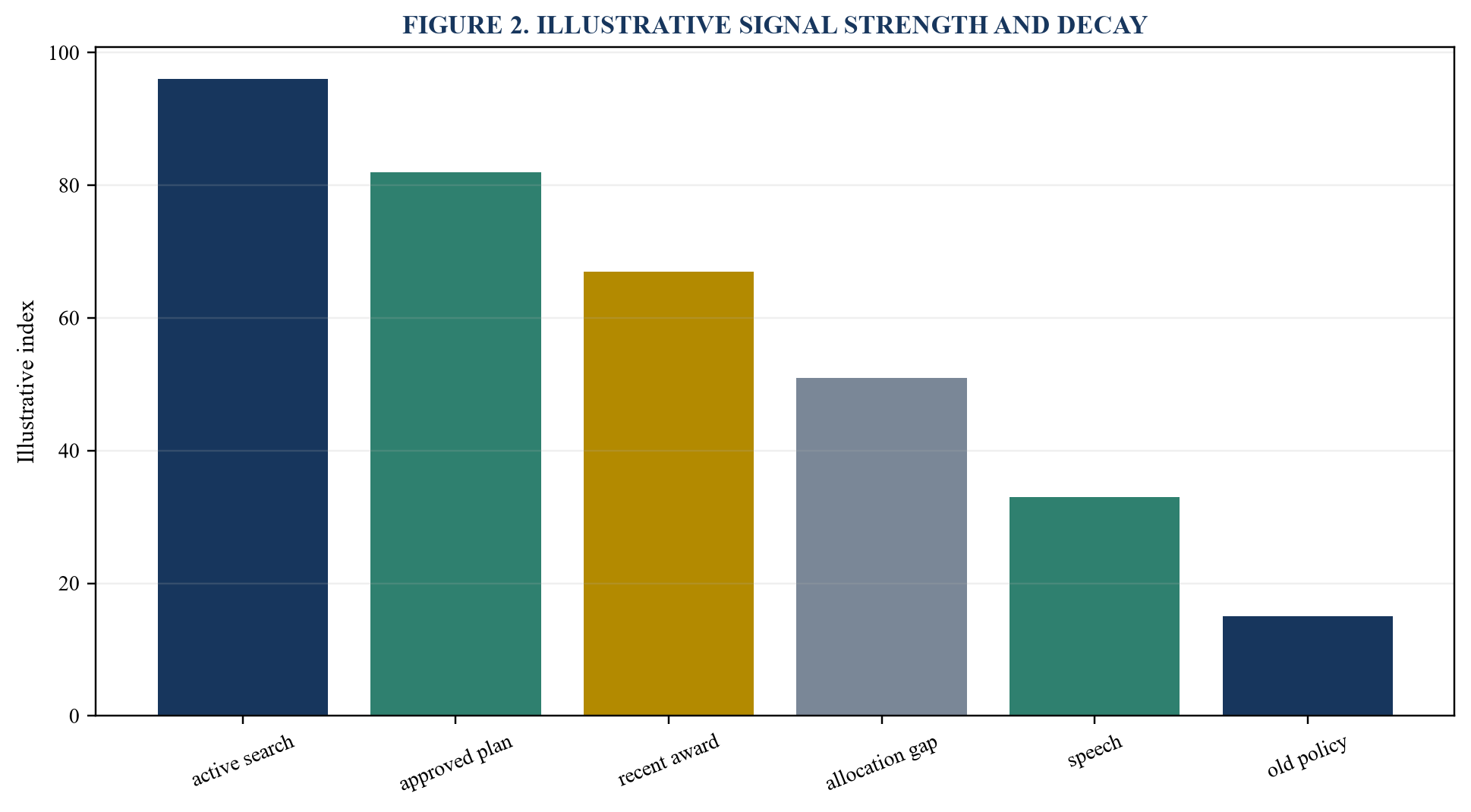
Values are illustrative indices for framework explanation and require institution-specific evidence.
13. Map consultant and gatekeeper influence
Identify consultants, outsourced CIOs, advisers, platforms and fiduciaries that screen, recommend or control access.
Controlled evidence includes allocator; gatekeeper; role; mandate; relationship; evidence; date; owner. The immediate decision is to understand the actual decision chain before contacting people.
The analysis should retain the difference between eligibility, strategic fit, capacity, timing, access and willingness. A public allocation gap can coexist with a closed programme, a full commitment budget or an incumbent relationship. Each conclusion therefore needs the underlying source, date, entity, portfolio context and responsible reviewer.
Coverage teams should see the evidence that moved the score, the evidence that is missing and the action needed to narrow uncertainty. Stable identifiers should connect institutions, plans, pools, advisers, people, policies, holdings, searches, meetings and outcomes. Overrides need a reason, author, timestamp and later result.
14. Use procurement and search evidence
Capture requests for proposals, manager searches, procurement notices and board mandates with their eligibility and deadline conditions.
Controlled evidence includes search; issuer; strategy; requirement; deadline; contact; source; status. The immediate decision is to prioritise explicit demand while respecting process rules.
Coverage teams should see the evidence that moved the score, the evidence that is missing and the action needed to narrow uncertainty. Stable identifiers should connect institutions, plans, pools, advisers, people, policies, holdings, searches, meetings and outcomes. Overrides need a reason, author, timestamp and later result.
The graph should preserve adverse evidence and failed cases. Rejections, delayed decisions, abandoned searches and stale relationships are economically important observations. Removing them would inflate apparent conversion and train the system toward optimism rather than disciplined capital formation.
15. Interpret public statements and strategic plans
Extract forward-looking priorities from annual reports, investment plans, speeches and official publications.
Controlled evidence includes statement; issuer; theme; horizon; commitment; caveat; source; date. The immediate decision is to convert narrative intent into a sourced and time-bounded signal.
The graph should preserve adverse evidence and failed cases. Rejections, delayed decisions, abandoned searches and stale relationships are economically important observations. Removing them would inflate apparent conversion and train the system toward optimism rather than disciplined capital formation.
Managers should apply entity-, strategy-, vehicle-, jurisdiction- and period-specific review. A signal from one plan, team or programme should not be projected across an institution without evidence. Comparisons should control for strategy, fund size, maturity, access route, market conditions and the quality of the proposition.
16. Read transaction and commitment activity
Use disclosed commitments, awards, manager appointments and programme launches to infer implementation direction and relationship depth.
Controlled evidence includes allocator; commitment; manager; strategy; amount; date; source; relevance. The immediate decision is to differentiate demonstrated action from general interest.
Managers should apply entity-, strategy-, vehicle-, jurisdiction- and period-specific review. A signal from one plan, team or programme should not be projected across an institution without evidence. Comparisons should control for strategy, fund size, maturity, access route, market conditions and the quality of the proposition.
The analysis should retain the difference between eligibility, strategic fit, capacity, timing, access and willingness. A public allocation gap can coexist with a closed programme, a full commitment budget or an incumbent relationship. Each conclusion therefore needs the underlying source, date, entity, portfolio context and responsible reviewer.
17. Account for regulation and legal eligibility
Map prudential limits, marketing regimes, investor qualification, placement rules, sanctions and jurisdictional constraints.
Controlled evidence includes jurisdiction; rule; investor; vehicle; activity; restriction; counsel; evidence. The immediate decision is to stop prohibited or unsupported engagement paths.
The analysis should retain the difference between eligibility, strategic fit, capacity, timing, access and willingness. A public allocation gap can coexist with a closed programme, a full commitment budget or an incumbent relationship. Each conclusion therefore needs the underlying source, date, entity, portfolio context and responsible reviewer.
Coverage teams should see the evidence that moved the score, the evidence that is missing and the action needed to narrow uncertainty. Stable identifiers should connect institutions, plans, pools, advisers, people, policies, holdings, searches, meetings and outcomes. Overrides need a reason, author, timestamp and later result.
18. Represent sustainability and stewardship requirements
Capture climate, impact, stewardship, exclusion, diversity and reporting requirements at the level actually applied by each allocator.
Controlled evidence includes policy; metric; exclusion; disclosure; threshold; period; source; owner. The immediate decision is to test proposition fit without overstating credentials.
Coverage teams should see the evidence that moved the score, the evidence that is missing and the action needed to narrow uncertainty. Stable identifiers should connect institutions, plans, pools, advisers, people, policies, holdings, searches, meetings and outcomes. Overrides need a reason, author, timestamp and later result.
The graph should preserve adverse evidence and failed cases. Rejections, delayed decisions, abandoned searches and stale relationships are economically important observations. Removing them would inflate apparent conversion and train the system toward optimism rather than disciplined capital formation.
19. Score operational and diligence readiness
Compare allocator diligence expectations with the manager's governance, team, track record, operations, valuation, cyber and reporting evidence.
Controlled evidence includes requirement; evidence; owner; freshness; gap; remediation; reviewer; status. The immediate decision is to avoid creating demand that the manager cannot yet convert.
The graph should preserve adverse evidence and failed cases. Rejections, delayed decisions, abandoned searches and stale relationships are economically important observations. Removing them would inflate apparent conversion and train the system toward optimism rather than disciplined capital formation.
Managers should apply entity-, strategy-, vehicle-, jurisdiction- and period-specific review. A signal from one plan, team or programme should not be projected across an institution without evidence. Comparisons should control for strategy, fund size, maturity, access route, market conditions and the quality of the proposition.
20. Build the evidence graph
Connect entities, people, mandates, holdings, policies, events, relationships and sources through typed and dated links.
Controlled evidence includes node; edge; type; source; effective date; confidence; owner; version. The immediate decision is to preserve the evidence path behind every score.
Managers should apply entity-, strategy-, vehicle-, jurisdiction- and period-specific review. A signal from one plan, team or programme should not be projected across an institution without evidence. Comparisons should control for strategy, fund size, maturity, access route, market conditions and the quality of the proposition.
The analysis should retain the difference between eligibility, strategic fit, capacity, timing, access and willingness. A public allocation gap can coexist with a closed programme, a full commitment budget or an incumbent relationship. Each conclusion therefore needs the underlying source, date, entity, portfolio context and responsible reviewer.
Table 3. Evidence-graph node and edge controls
| Object | Required attributes | Key failure |
|---|---|---|
| entity | legal identity and jurisdiction | wrong institution |
| mandate | scope, limits and effective date | stale fit |
| relationship | parties, permission and recency | invented access |
| signal | source, date and confidence | false intent |
Illustrative classifications should be replaced with institution-specific evidence and approved treatment.
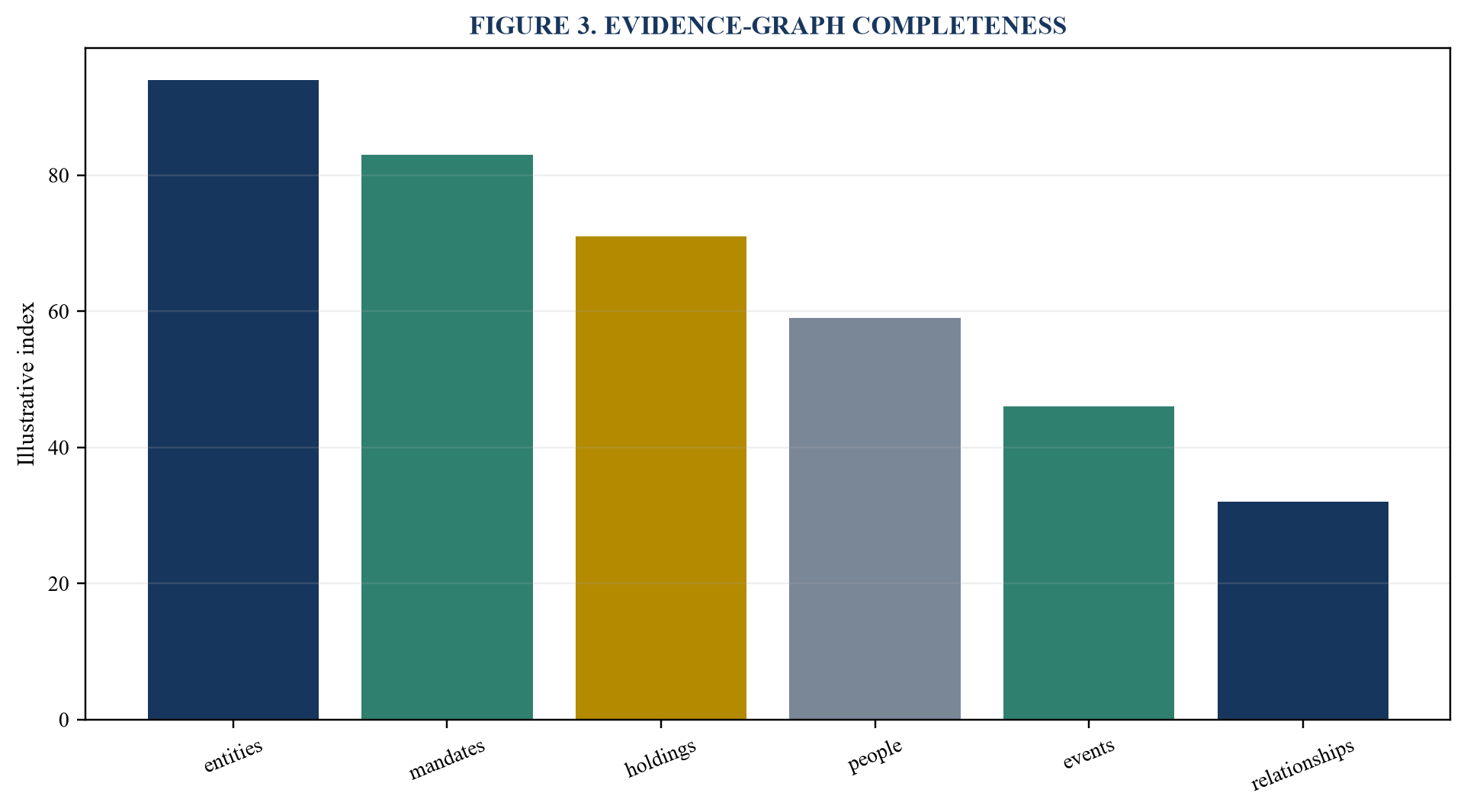
Values are illustrative indices for framework explanation and require institution-specific evidence.
21. Separate facts, estimates and hypotheses
Label official records, manager-supplied facts, calculated estimates and coverage hypotheses with distinct confidence and expiry rules.
Controlled evidence includes claim; class; source; method; confidence; expiry; reviewer; action. The immediate decision is to prevent weak signals from masquerading as verified intent.
The analysis should retain the difference between eligibility, strategic fit, capacity, timing, access and willingness. A public allocation gap can coexist with a closed programme, a full commitment budget or an incumbent relationship. Each conclusion therefore needs the underlying source, date, entity, portfolio context and responsible reviewer.
Coverage teams should see the evidence that moved the score, the evidence that is missing and the action needed to narrow uncertainty. Stable identifiers should connect institutions, plans, pools, advisers, people, policies, holdings, searches, meetings and outcomes. Overrides need a reason, author, timestamp and later result.
22. Engineer point-in-time data
Store effective dates, publication dates, retrieval dates and superseded values so historical rankings can be reproduced.
Controlled evidence includes record; effective date; publication date; retrieval date; version; superseded; source; hash. The immediate decision is to reconstruct what was knowable at the time of each decision.
Coverage teams should see the evidence that moved the score, the evidence that is missing and the action needed to narrow uncertainty. Stable identifiers should connect institutions, plans, pools, advisers, people, policies, holdings, searches, meetings and outcomes. Overrides need a reason, author, timestamp and later result.
The graph should preserve adverse evidence and failed cases. Rejections, delayed decisions, abandoned searches and stale relationships are economically important observations. Removing them would inflate apparent conversion and train the system toward optimism rather than disciplined capital formation.
23. Control source rights and personal data
Govern licensing, terms of use, confidentiality, personal data, retention and permitted downstream use.
Controlled evidence includes source; right; purpose; person; lawful basis; retention; restriction; approval. The immediate decision is to keep the coverage system inside approved data and privacy boundaries.
The graph should preserve adverse evidence and failed cases. Rejections, delayed decisions, abandoned searches and stale relationships are economically important observations. Removing them would inflate apparent conversion and train the system toward optimism rather than disciplined capital formation.
Managers should apply entity-, strategy-, vehicle-, jurisdiction- and period-specific review. A signal from one plan, team or programme should not be projected across an institution without evidence. Comparisons should control for strategy, fund size, maturity, access route, market conditions and the quality of the proposition.
24. Design a fit score
Combine eligibility, mandate alignment, portfolio need, ticket compatibility, geography, structure and diligence readiness.
Controlled evidence includes factor; definition; value; weight; evidence; sensitivity; reviewer; version. The immediate decision is to rank structural fit without hiding disqualifying conditions.
Managers should apply entity-, strategy-, vehicle-, jurisdiction- and period-specific review. A signal from one plan, team or programme should not be projected across an institution without evidence. Comparisons should control for strategy, fund size, maturity, access route, market conditions and the quality of the proposition.
The analysis should retain the difference between eligibility, strategic fit, capacity, timing, access and willingness. A public allocation gap can coexist with a closed programme, a full commitment budget or an incumbent relationship. Each conclusion therefore needs the underlying source, date, entity, portfolio context and responsible reviewer.
25. Design a timing score
Combine pacing, budget, policy review, search activity, governance calendars, liquidity and recent commitments.
Controlled evidence includes signal; date; horizon; direction; weight; decay; source; confidence. The immediate decision is to rank when an allocator may be able to act.
The analysis should retain the difference between eligibility, strategic fit, capacity, timing, access and willingness. A public allocation gap can coexist with a closed programme, a full commitment budget or an incumbent relationship. Each conclusion therefore needs the underlying source, date, entity, portfolio context and responsible reviewer.
Coverage teams should see the evidence that moved the score, the evidence that is missing and the action needed to narrow uncertainty. Stable identifiers should connect institutions, plans, pools, advisers, people, policies, holdings, searches, meetings and outcomes. Overrides need a reason, author, timestamp and later result.
26. Design a relationship-access score
Represent verified introductions, current coverage, consultant pathways, prior dialogue and permission to engage.
Controlled evidence includes relationship; parties; strength; recency; permission; owner; evidence; next step. The immediate decision is to choose a lawful and credible route to the institution.
Coverage teams should see the evidence that moved the score, the evidence that is missing and the action needed to narrow uncertainty. Stable identifiers should connect institutions, plans, pools, advisers, people, policies, holdings, searches, meetings and outcomes. Overrides need a reason, author, timestamp and later result.
The graph should preserve adverse evidence and failed cases. Rejections, delayed decisions, abandoned searches and stale relationships are economically important observations. Removing them would inflate apparent conversion and train the system toward optimism rather than disciplined capital formation.
27. Keep vetoes outside the weighted average
Treat legal ineligibility, closed searches, conflicts, minimum-size failure and explicit rejection as gates rather than small negative weights.
Controlled evidence includes veto; trigger; evidence; effective date; owner; exception; approval; expiry. The immediate decision is to prevent an attractive aggregate score from overriding a hard constraint.
The graph should preserve adverse evidence and failed cases. Rejections, delayed decisions, abandoned searches and stale relationships are economically important observations. Removing them would inflate apparent conversion and train the system toward optimism rather than disciplined capital formation.
Managers should apply entity-, strategy-, vehicle-, jurisdiction- and period-specific review. A signal from one plan, team or programme should not be projected across an institution without evidence. Comparisons should control for strategy, fund size, maturity, access route, market conditions and the quality of the proposition.
28. Calibrate confidence and signal decay
Reduce the influence of old, indirect or contradicted evidence and retain a visible range where timing is uncertain.
Controlled evidence includes signal; age; source tier; corroboration; contradiction; decay; confidence; review. The immediate decision is to make uncertainty visible in rankings and coverage decisions.
Managers should apply entity-, strategy-, vehicle-, jurisdiction- and period-specific review. A signal from one plan, team or programme should not be projected across an institution without evidence. Comparisons should control for strategy, fund size, maturity, access route, market conditions and the quality of the proposition.
The analysis should retain the difference between eligibility, strategic fit, capacity, timing, access and willingness. A public allocation gap can coexist with a closed programme, a full commitment budget or an incumbent relationship. Each conclusion therefore needs the underlying source, date, entity, portfolio context and responsible reviewer.
29. Use AI for extraction with evidence retention
Apply models to classify and extract policy, portfolio, governance and event data while preserving the source span and reviewer action.
Controlled evidence includes document; span; extraction; model; version; reviewer; correction; approval. The immediate decision is to accelerate evidence assembly without breaking traceability.
The analysis should retain the difference between eligibility, strategic fit, capacity, timing, access and willingness. A public allocation gap can coexist with a closed programme, a full commitment budget or an incumbent relationship. Each conclusion therefore needs the underlying source, date, entity, portfolio context and responsible reviewer.
Coverage teams should see the evidence that moved the score, the evidence that is missing and the action needed to narrow uncertainty. Stable identifiers should connect institutions, plans, pools, advisers, people, policies, holdings, searches, meetings and outcomes. Overrides need a reason, author, timestamp and later result.
30. Use retrieval before generation
Ground summaries and proposed rationales in approved source records selected for the specific allocator and period.
Controlled evidence includes query; corpus; retrieved record; rank; answer; citation; reviewer; approval. The immediate decision is to keep generated analysis attached to the evidence graph.
Coverage teams should see the evidence that moved the score, the evidence that is missing and the action needed to narrow uncertainty. Stable identifiers should connect institutions, plans, pools, advisers, people, policies, holdings, searches, meetings and outcomes. Overrides need a reason, author, timestamp and later result.
The graph should preserve adverse evidence and failed cases. Rejections, delayed decisions, abandoned searches and stale relationships are economically important observations. Removing them would inflate apparent conversion and train the system toward optimism rather than disciplined capital formation.
Table 4. Model validation scorecard
| Test | Evidence | Gate |
|---|---|---|
| ranking | precision and recall by segment | minimum performance |
| calibration | observed outcomes by score band | bounded confidence |
| stability | sensitivity and drift | refresh or suspend |
| conduct | claim and outreach review | human approval |
Illustrative classifications should be replaced with institution-specific evidence and approved treatment.
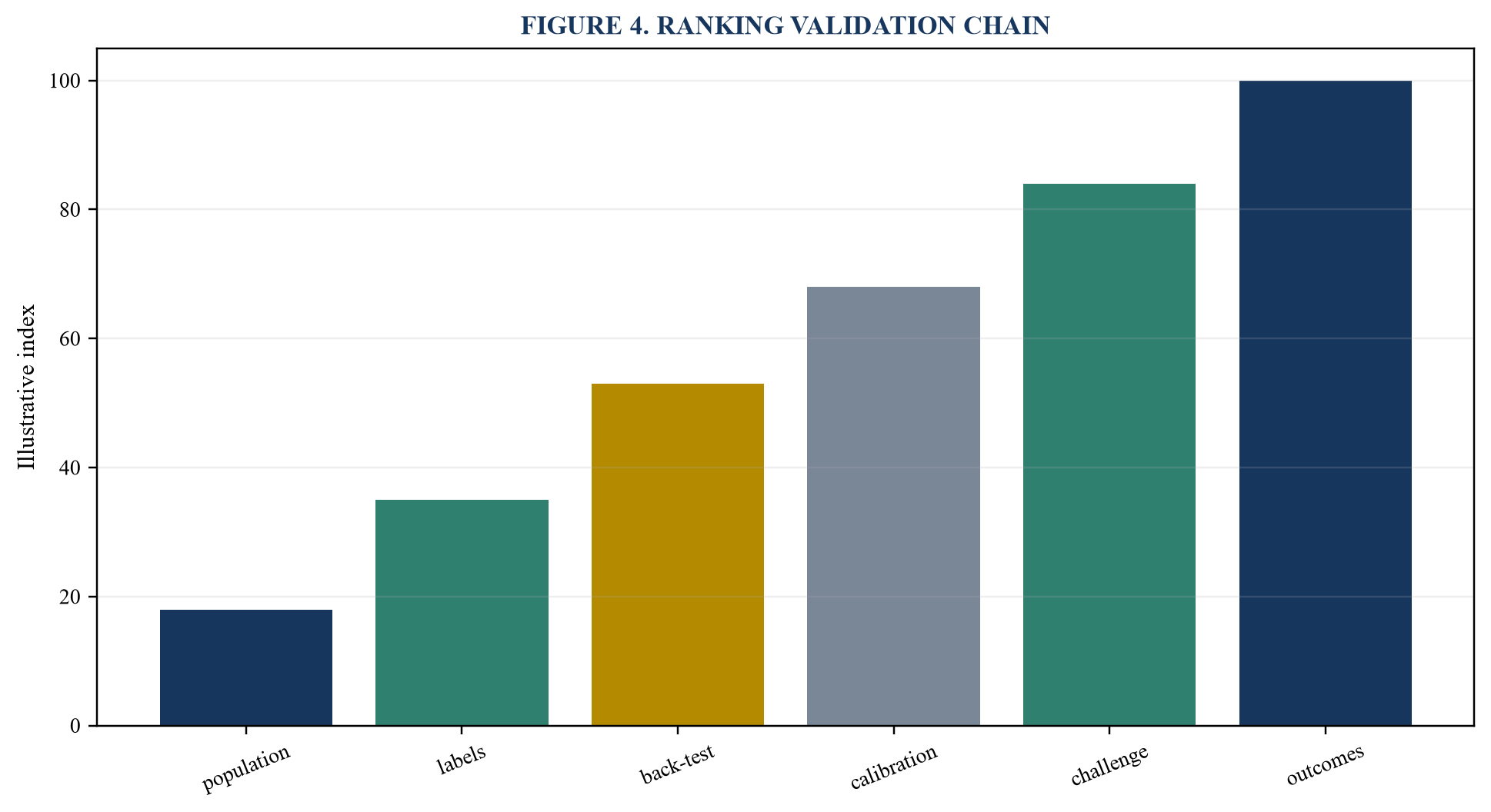
Values are illustrative indices for framework explanation and require institution-specific evidence.
31. Validate ranking quality
Back-test historical decisions, sample high and low ranks, measure calibration and compare against rules-based and human benchmarks.
Controlled evidence includes population; period; label; score; benchmark; error; segment; result. The immediate decision is to approve a model only for the decisions it has demonstrated.
The graph should preserve adverse evidence and failed cases. Rejections, delayed decisions, abandoned searches and stale relationships are economically important observations. Removing them would inflate apparent conversion and train the system toward optimism rather than disciplined capital formation.
Managers should apply entity-, strategy-, vehicle-, jurisdiction- and period-specific review. A signal from one plan, team or programme should not be projected across an institution without evidence. Comparisons should control for strategy, fund size, maturity, access route, market conditions and the quality of the proposition.
32. Control bias and popularity loops
Test whether disclosure volume, language, geography, institution size or existing relationships systematically distort opportunity ranking.
Controlled evidence includes segment; exposure; score; selection; outcome; disparity; cause; remedy. The immediate decision is to prevent well-documented institutions from crowding out suitable but quieter allocators.
Managers should apply entity-, strategy-, vehicle-, jurisdiction- and period-specific review. A signal from one plan, team or programme should not be projected across an institution without evidence. Comparisons should control for strategy, fund size, maturity, access route, market conditions and the quality of the proposition.
The analysis should retain the difference between eligibility, strategic fit, capacity, timing, access and willingness. A public allocation gap can coexist with a closed programme, a full commitment budget or an incumbent relationship. Each conclusion therefore needs the underlying source, date, entity, portfolio context and responsible reviewer.
33. Create allocator-specific value hypotheses
Translate strategy fit into a concise portfolio role, implementation case, evidence request and unresolved question for each institution.
Controlled evidence includes allocator; portfolio role; evidence; benefit; constraint; question; owner; approval. The immediate decision is to equip coverage teams with a relevant and supportable reason to engage.
The analysis should retain the difference between eligibility, strategic fit, capacity, timing, access and willingness. A public allocation gap can coexist with a closed programme, a full commitment budget or an incumbent relationship. Each conclusion therefore needs the underlying source, date, entity, portfolio context and responsible reviewer.
Coverage teams should see the evidence that moved the score, the evidence that is missing and the action needed to narrow uncertainty. Stable identifiers should connect institutions, plans, pools, advisers, people, policies, holdings, searches, meetings and outcomes. Overrides need a reason, author, timestamp and later result.
34. Govern outreach and marketing claims
Review pitch language, performance, track record, comparisons, hypothetical results and sustainability claims under applicable rules.
Controlled evidence includes communication; recipient; claim; evidence; disclosure; approval; version; retention. The immediate decision is to ensure prioritisation does not produce misleading communication.
Coverage teams should see the evidence that moved the score, the evidence that is missing and the action needed to narrow uncertainty. Stable identifiers should connect institutions, plans, pools, advisers, people, policies, holdings, searches, meetings and outcomes. Overrides need a reason, author, timestamp and later result.
The graph should preserve adverse evidence and failed cases. Rejections, delayed decisions, abandoned searches and stale relationships are economically important observations. Removing them would inflate apparent conversion and train the system toward optimism rather than disciplined capital formation.
35. Route engagement through accountable workflows
Assign owners, channels, permissions, next actions, deadlines and escalation points without allowing the model to transmit autonomously.
Controlled evidence includes allocator; owner; channel; permission; action; deadline; approval; outcome. The immediate decision is to turn rank into controlled human activity.
The graph should preserve adverse evidence and failed cases. Rejections, delayed decisions, abandoned searches and stale relationships are economically important observations. Removing them would inflate apparent conversion and train the system toward optimism rather than disciplined capital formation.
Managers should apply entity-, strategy-, vehicle-, jurisdiction- and period-specific review. A signal from one plan, team or programme should not be projected across an institution without evidence. Comparisons should control for strategy, fund size, maturity, access route, market conditions and the quality of the proposition.
36. Measure the coverage funnel
Track eligible universe, researched accounts, approved targets, meetings, diligence, investment-committee progress, commitments and collected fees.
Controlled evidence includes stage; entry; exit; period; owner; amount; reason; evidence. The immediate decision is to measure conversion and diagnose where apparent intent fails.
Managers should apply entity-, strategy-, vehicle-, jurisdiction- and period-specific review. A signal from one plan, team or programme should not be projected across an institution without evidence. Comparisons should control for strategy, fund size, maturity, access route, market conditions and the quality of the proposition.
The analysis should retain the difference between eligibility, strategic fit, capacity, timing, access and willingness. A public allocation gap can coexist with a closed programme, a full commitment budget or an incumbent relationship. Each conclusion therefore needs the underlying source, date, entity, portfolio context and responsible reviewer.
37. Attribute outcomes cautiously
Compare ranked cohorts and matched baselines while controlling for fund quality, relationship strength, market conditions and team effort.
Controlled evidence includes cohort; baseline; exposure; outcome; period; confounder; cost; reviewer. The immediate decision is to separate model contribution from selection and execution effects.
The analysis should retain the difference between eligibility, strategic fit, capacity, timing, access and willingness. A public allocation gap can coexist with a closed programme, a full commitment budget or an incumbent relationship. Each conclusion therefore needs the underlying source, date, entity, portfolio context and responsible reviewer.
Coverage teams should see the evidence that moved the score, the evidence that is missing and the action needed to narrow uncertainty. Stable identifiers should connect institutions, plans, pools, advisers, people, policies, holdings, searches, meetings and outcomes. Overrides need a reason, author, timestamp and later result.
38. Monitor drift, contradictions and stale intent
Detect policy changes, portfolio moves, personnel turnover, delayed searches, reversals and data-quality deterioration.
Controlled evidence includes record; prior state; new state; contradiction; age; consequence; owner; resolution. The immediate decision is to refresh or suspend rankings when the evidence changes.
Coverage teams should see the evidence that moved the score, the evidence that is missing and the action needed to narrow uncertainty. Stable identifiers should connect institutions, plans, pools, advisers, people, policies, holdings, searches, meetings and outcomes. Overrides need a reason, author, timestamp and later result.
The graph should preserve adverse evidence and failed cases. Rejections, delayed decisions, abandoned searches and stale relationships are economically important observations. Removing them would inflate apparent conversion and train the system toward optimism rather than disciplined capital formation.
39. Design management information and assurance
Give leadership a reconciled view of coverage, evidence quality, conversion, conduct, exceptions, costs and realised economics.
Controlled evidence includes metric; definition; population; source; reconciliation; threshold; owner; action. The immediate decision is to govern the system with decision-useful evidence.
The graph should preserve adverse evidence and failed cases. Rejections, delayed decisions, abandoned searches and stale relationships are economically important observations. Removing them would inflate apparent conversion and train the system toward optimism rather than disciplined capital formation.
Managers should apply entity-, strategy-, vehicle-, jurisdiction- and period-specific review. A signal from one plan, team or programme should not be projected across an institution without evidence. Comparisons should control for strategy, fund size, maturity, access route, market conditions and the quality of the proposition.
Table 5. Evidence-gated implementation
| Period | Primary work | Gate |
|---|---|---|
| days 1-30 | universe, mandate and source controls | approve baseline |
| days 31-60 | graph, scoring and historical validation | approve bounded pilot |
| days 61-100 | coverage workflow and outcome measurement | approve scaled use |
Illustrative classifications should be replaced with institution-specific evidence and approved treatment.
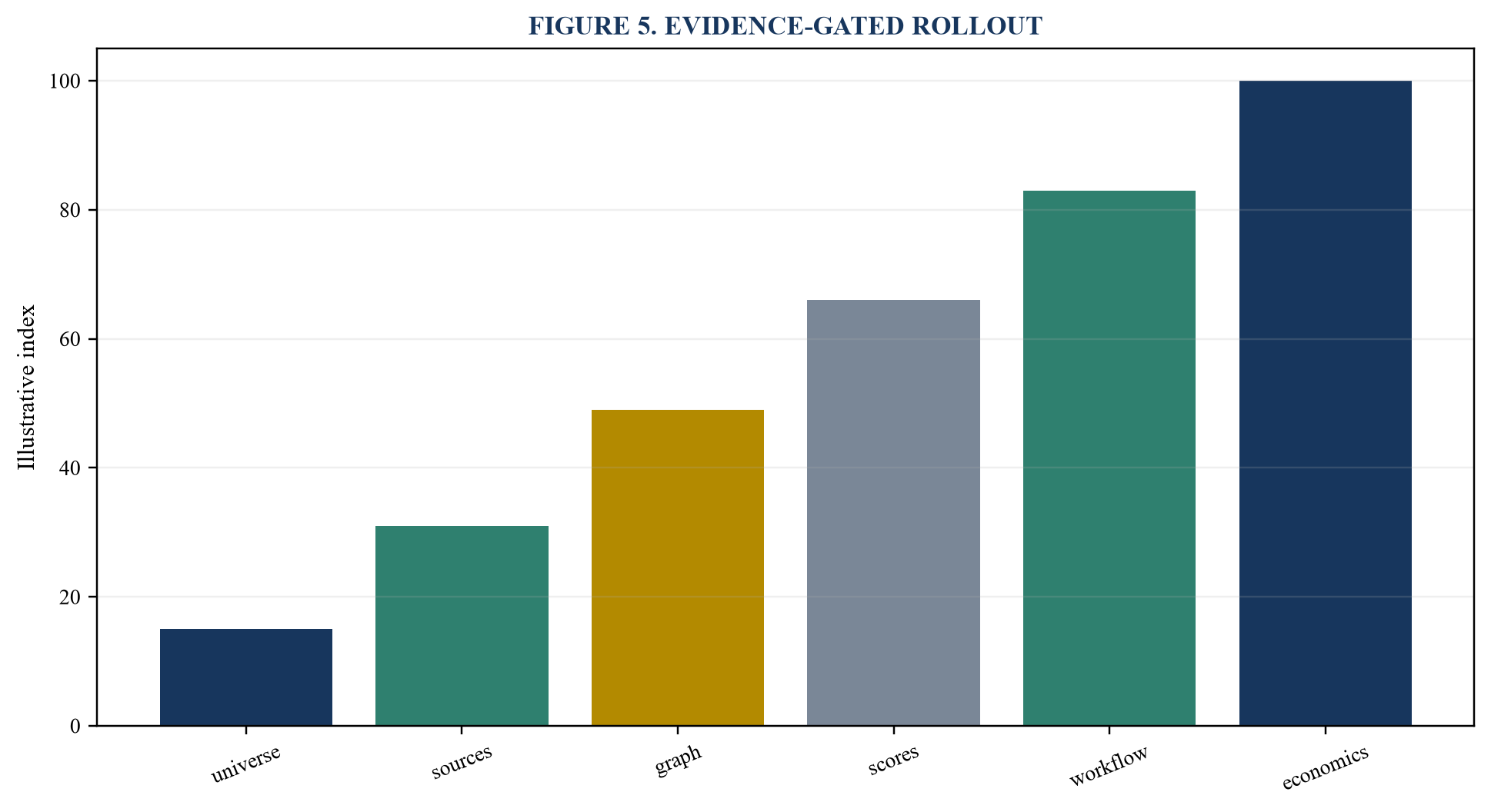
Values are illustrative indices for framework explanation and require institution-specific evidence.
40. Implement through evidence-gated cohorts
Start with bounded strategies and institutions, verify records and outcomes, then widen scope only after quality and conduct gates pass.
Controlled evidence includes cohort; scope; owner; test; threshold; exception; benefit; gate. The immediate decision is to scale the intent graph only when evidence and outcomes justify it.
Managers should apply entity-, strategy-, vehicle-, jurisdiction- and period-specific review. A signal from one plan, team or programme should not be projected across an institution without evidence. Comparisons should control for strategy, fund size, maturity, access route, market conditions and the quality of the proposition.
The analysis should retain the difference between eligibility, strategic fit, capacity, timing, access and willingness. A public allocation gap can coexist with a closed programme, a full commitment budget or an incumbent relationship. Each conclusion therefore needs the underlying source, date, entity, portfolio context and responsible reviewer.
Implementation should start with a historical snapshot that the team can reconstruct independently. The pilot population should include attractive, unattractive and ambiguous institutions, together with known rejections and delayed decisions. Reviewers should compare the graph's rank, rationale and proposed timing with the evidence available on that date, then record later progression and the reasons for divergence.
A scale decision should require acceptable entity resolution, source coverage, point-in-time reproducibility, calibration, conduct review, user adoption and unit economics. Leadership should also confirm that the system changes resource allocation in a useful way. A technically accurate ranking creates little value when the proposition is weak, diligence materials are incomplete, relationship owners do not act or communication arrives outside the allocator's decision window.
The approved operating baseline should identify data owners, refresh frequencies, model versions, manual controls, reviewer capacity, incident routes and retirement criteria. Expansion to another strategy, geography or allocator class should be treated as a new cohort with its own evidence distribution and validation, since source availability, rules, governance and investment practice can change materially.
References
- Institutional Limited Partners Association, Due Diligence Questionnaire 2.0, https://ilpa.org/resources-tools/resource-library/due-diligence-questionnaire/
- Institutional Limited Partners Association, Principles 3.0, https://ilpa.org/industry-guidance/principles-best-practices/ilpa-principles/
- International Organization of Securities Commissions, Artificial Intelligence in Capital Markets: Use Cases, Risks, and Challenges, https://www.iosco.org/library/pubdocs/pdf/IOSCOPD813.pdf
- US Securities and Exchange Commission, Investment Adviser Marketing, https://www.sec.gov/resources-small-businesses/small-business-compliance-guides/investment-adviser-marketing
- US Securities and Exchange Commission, Marketing Compliance Frequently Asked Questions, https://www.sec.gov/rules-regulations/staff-guidance/division-investment-management-frequently-asked-questions/marketing-compliance-frequently-asked-questions
- US Securities and Exchange Commission, Form ADV and Investment Advisers Act Rules, https://www.sec.gov/rules-regulations/2016/08/form-adv-investment-advisers-act-rules
- US Securities and Exchange Commission, Private Fund Adviser Overview, https://www.sec.gov/about/divisions-offices/division-investment-management/private-fund-adviser-overview
- European Securities and Markets Authority, Guidelines on Marketing Communications, https://www.esma.europa.eu/press-news/esma-news/esma-publishes-guidance-funds%E2%80%99-marketing-communications
- European Commission, Alternative Investment Fund Managers Directive, https://finance.ec.europa.eu/regulation-and-supervision/financial-services-legislation/implementing-and-delegated-acts/alternative-investment-fund-managers-directive_en
- OECD, Pension Markets in Focus 2025, https://www.oecd.org/en/publications/pension-markets-in-focus-2025_b095d0a0-en.html
- OECD, Pensions at a Glance 2025: Allocation of Assets, https://www.oecd.org/en/publications/pensions-at-a-glance-2025_e40274c1-en/full-report/allocation-of-assets_2cfd1e66.html
- OECD, Asset Allocation of Pension Funds and Other Pension Providers, https://data-explorer.oecd.org/vis?df%5Bag%5D=OECD.DAF.CM&df%5Bds%5D=dsDisseminateFinalDMZ&df%5Bid%5D=DSD_FP%40DF_WI&df%5Bvs%5D=1.0
- OECD, Long-Term Investing of Large Pension Funds and Public Pension Reserve Funds 2023, https://www.oecd.org/content/dam/oecd/en/publications/reports/2023/12/long-term-investing-of-large-pension-funds-and-public-pension-reserve-funds-2023_042fb731/c690ccc3-en.pdf
- CalPERS, Investment Committee June 2026, https://www.calpers.ca.gov/about/board/board-meetings/invest-202606
- CalPERS, Total Fund and Private Equity Allocation Reporting, https://calpers.ca.gov/docs/board-agendas/202409/invest/item06b-02_a.pdf
- California State Teachers' Retirement System, Investment Policies, https://www.calstrs.com/investment-policies
- New York State Common Retirement Fund, Annual Reports, https://www.osc.ny.gov/common-retirement-fund/reports
- Canada Pension Plan Investment Board, Annual Report, https://www.cppinvestments.com/the-fund/our-performance/annual-report/
- Australian Future Fund, Investment Mandate, https://www.futurefund.gov.au/about-us/investment-mandate
- New Zealand Superannuation Fund, Statement of Investment Policies, Standards and Procedures, https://nzsuperfund.nz/about-the-guardians/governance/statement-of-investment-policies-standards-and-procedures/
- Financial Conduct Authority, Artificial Intelligence Approach, https://www.fca.org.uk/firms/innovation/ai-approach
- Financial Stability Board, The Financial Stability Implications of Artificial Intelligence, https://www.fsb.org/2024/11/the-financial-stability-implications-of-artificial-intelligence/
- National Institute of Standards and Technology, AI Risk Management Framework, https://www.nist.gov/itl/ai-risk-management-framework
- Information Commissioner's Office, Guidance on AI and Data Protection, https://ico.org.uk/for-organisations/uk-gdpr-guidance-and-resources/artificial-intelligence/
- OECD, AI Principles, https://oecd.ai/en/ai-principles
- CFA Institute, Global Investment Performance Standards, https://www.gipsstandards.org/standards/
