

1. Define the liquidity decision
The board must decide which aircraft to monetise, how much durable liquidity the transaction creates and what future fleet flexibility it consumes. Start with aircraft-level proceeds, debt release, transaction cost, rent, maintenance, return exposure and route utility. The analysis should distinguish observed contractual or technical evidence from management assumptions and connect each material judgment to cash, timing and operational flexibility. Approval should state central and downside economic benefit, minimum liquidity retained and conditions that would stop or resize the transaction. The work should cover a central case and a severe-but-plausible downside, with correlated sensitivities for proceeds, rent, utilisation, maintenance, interest rates, currency, return conditions and fleet strategy. Exceptions require a named owner, source, due date and decision consequence. Unsupported benefits remain outside the base case until actions are implemented and evidence confirms the result. The section output should include reconciled aircraft-level evidence, decision thresholds, a named owner, review cadence and an explicit cash, fleet or contractual consequence. This creates a controlled bridge from diligence to negotiation and post-close action.
The framework requires three linked decision views. The closing view tests whether cash is received, liens are released and operations continue without interruption. The whole-life view compares retained liquidity with rent, deposits, reserves, maintenance, return obligations and lost strategic options. The resilience view asks whether the airline can still reshape capacity, absorb route volatility and manage technology transition under the downside case. Each view uses the same aircraft identifiers, contractual definitions and cash calendar. This prevents proceeds from being presented as a stand-alone financing benefit while lease burdens sit in separate operating, accounting or technical workstreams. It also gives management a repeatable basis for comparing lessor bids, secured debt and other alternatives before granting exclusivity. Transaction governance should remain aircraft-specific through signing, delivery and the lease term. A fleet average can hide an unfavourable engine position, a concentrated maturity, a restrictive sublease clause or a return obligation on a small group of aircraft. Exceptions therefore remain visible until the underlying cash, technical evidence or contract is resolved and approved.
2. Use the Proceeds-to-Obligation Framework
The framework connects six evidence blocks: sale proceeds, debt release, lease payments, maintenance, return conditions and strategic control. Each block should reconcile to aircraft serial number, buyer, lease contract, cash timing and accountable owner. The analysis should distinguish observed contractual or technical evidence from management assumptions and connect each material judgment to cash, timing and operational flexibility. The investment committee should prevent immediate proceeds from being evaluated separately from the obligations created at closing. The work should cover a central case and a severe-but-plausible downside, with correlated sensitivities for proceeds, rent, utilisation, maintenance, interest rates, currency, return conditions and fleet strategy. Exceptions require a named owner, source, due date and decision consequence. Unsupported benefits remain outside the base case until actions are implemented and evidence confirms the result. Evidence should be retained at aircraft, contract and transaction level, with control totals to the funds flow and a documented path for exceptions. The resulting decision should update price, liquidity, lease terms and fleet strategy together.
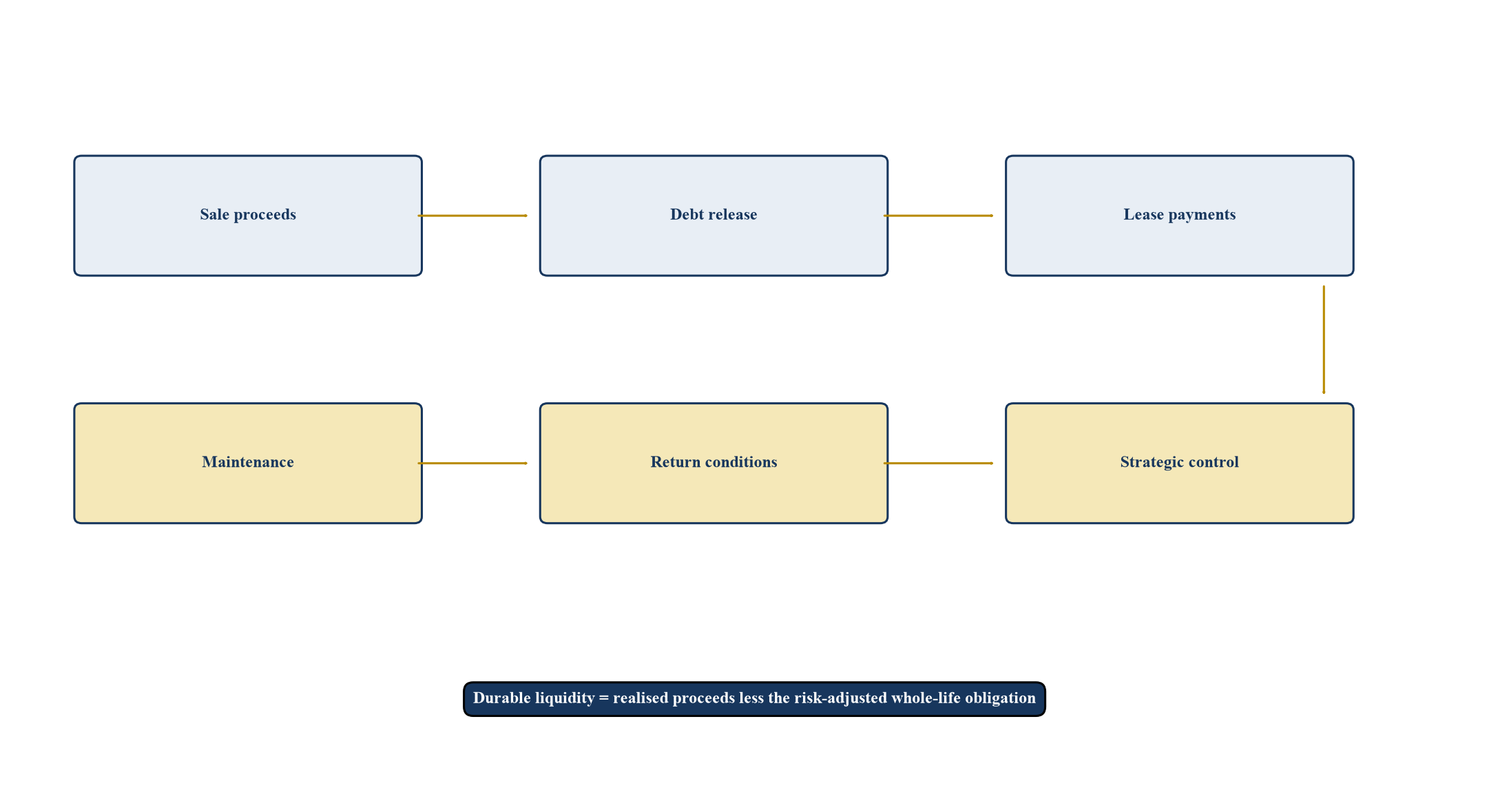
Six evidence blocks connect closing liquidity to whole-life fleet commitments.
3. Fix the aircraft and obligor perimeter
Fleet ownership may sit across operating companies, financing vehicles, trusts and secured facilities. Map title, registration, mortgages, guarantees, intercompany arrangements, liens, insurance and required consents for every aircraft. The analysis should distinguish observed contractual or technical evidence from management assumptions and connect each material judgment to cash, timing and operational flexibility. A signed perimeter schedule should align the purchase agreement, lease, debt payoff, deregistration authority and closing funds flow. The work should cover a central case and a severe-but-plausible downside, with correlated sensitivities for proceeds, rent, utilisation, maintenance, interest rates, currency, return conditions and fleet strategy. Exceptions require a named owner, source, due date and decision consequence. Unsupported benefits remain outside the base case until actions are implemented and evidence confirms the result. Management should define the earliest warning indicator, intervention trigger and funded response. Reporting should preserve the original case, approved changes and realised cash so the board can distinguish durable liquidity from timing or accounting presentation.
4. Build the minimum transaction dataset
Decision-grade analysis requires aircraft type, age, specification, utilisation, technical status, ownership, debt, value, route use, lease proposal and tax or accounting attributes. Reconcile hours, cycles, maintenance events, records, appraisals, debt release prices, lease terms, deposits and cash flows to primary documents. The analysis should distinguish observed contractual or technical evidence from management assumptions and connect each material judgment to cash, timing and operational flexibility. Preserve sources, valuation dates and exceptions so bids can be compared on a common basis. The work should cover a central case and a severe-but-plausible downside, with correlated sensitivities for proceeds, rent, utilisation, maintenance, interest rates, currency, return conditions and fleet strategy. Exceptions require a named owner, source, due date and decision consequence. Unsupported benefits remain outside the base case until actions are implemented and evidence confirms the result. The section output should include reconciled aircraft-level evidence, decision thresholds, a named owner, review cadence and an explicit cash, fleet or contractual consequence. This creates a controlled bridge from diligence to negotiation and post-close action.
| Layer | Core evidence | Primary decision | Economic consequence |
|---|---|---|---|
| Ownership | Title, registration, mortgage and SPV | Sale eligibility | Transfer and debt release |
| Value | Appraisals, bids and recent trades | Sale price | Gross proceeds |
| Lease | Rent, term, deposits and options | Whole-life affordability | Fixed and contingent cash |
| Technical | Status, records, events and directives | Maintenance allocation | Delivery and return exposure |
| Operations | Routes, utilisation and fleet role | Strategic fit | Flexibility and cover |
| Governance | Reporting, consents and remedies | Control model | Continuing execution risk |
Every layer should reconcile to aircraft serial number and closing funds flow.
5. Test whether a sale occurs
Sale-and-leaseback accounting depends on whether control transfers under the relevant reporting framework and transaction terms. Review repurchase rights, fixed-price options, substantive substitution, off-market terms, continuing involvement and buyer control with qualified advisers. The analysis should distinguish observed contractual or technical evidence from management assumptions and connect each material judgment to cash, timing and operational flexibility. Model a failed-sale financing outcome as a separate case because recognition, leverage and disclosure can differ materially. The work should cover a central case and a severe-but-plausible downside, with correlated sensitivities for proceeds, rent, utilisation, maintenance, interest rates, currency, return conditions and fleet strategy. Exceptions require a named owner, source, due date and decision consequence. Unsupported benefits remain outside the base case until actions are implemented and evidence confirms the result. Evidence should be retained at aircraft, contract and transaction level, with control totals to the funds flow and a documented path for exceptions. The resulting decision should update price, liquidity, lease terms and fleet strategy together.
6. Establish executable sale proceeds
A headline bid may include deposits, credits, deferred payments or conditions that reduce cash available at closing. Bridge gross price to debt repayment, fees, taxes, hedging, maintenance settlement, deposits and retained cash aircraft by aircraft. The analysis should distinguish observed contractual or technical evidence from management assumptions and connect each material judgment to cash, timing and operational flexibility. Count liquidity only when timing, conditions, counterparty funding and closing mechanics are evidenced. The work should cover a central case and a severe-but-plausible downside, with correlated sensitivities for proceeds, rent, utilisation, maintenance, interest rates, currency, return conditions and fleet strategy. Exceptions require a named owner, source, due date and decision consequence. Unsupported benefits remain outside the base case until actions are implemented and evidence confirms the result. Management should define the earliest warning indicator, intervention trigger and funded response. Reporting should preserve the original case, approved changes and realised cash so the board can distinguish durable liquidity from timing or accounting presentation.
7. Compare proceeds with current market value
Buyer pricing should be tested against independent appraisal definitions, recent transactions and lease-rate evidence. Adjust for specification, maintenance condition, records, delivery timing, jurisdiction and portfolio concentration. The analysis should distinguish observed contractual or technical evidence from management assumptions and connect each material judgment to cash, timing and operational flexibility. A premium price may be funded through above-market rent or restrictive terms and should not be treated as free value. The work should cover a central case and a severe-but-plausible downside, with correlated sensitivities for proceeds, rent, utilisation, maintenance, interest rates, currency, return conditions and fleet strategy. Exceptions require a named owner, source, due date and decision consequence. Unsupported benefits remain outside the base case until actions are implemented and evidence confirms the result. The section output should include reconciled aircraft-level evidence, decision thresholds, a named owner, review cadence and an explicit cash, fleet or contractual consequence. This creates a controlled bridge from diligence to negotiation and post-close action.
8. Reconcile debt release and security
Existing lenders may require make-whole, break cost, release price, mandatory prepayment or replacement collateral. Map facility allocation, hedges, accrued interest, fees, security releases, account control and permitted debt reduction. The analysis should distinguish observed contractual or technical evidence from management assumptions and connect each material judgment to cash, timing and operational flexibility. The transaction funds flow should discharge each lien and avoid residual obligations or trapped cash. The work should cover a central case and a severe-but-plausible downside, with correlated sensitivities for proceeds, rent, utilisation, maintenance, interest rates, currency, return conditions and fleet strategy. Exceptions require a named owner, source, due date and decision consequence. Unsupported benefits remain outside the base case until actions are implemented and evidence confirms the result. Evidence should be retained at aircraft, contract and transaction level, with control totals to the funds flow and a documented path for exceptions. The resulting decision should update price, liquidity, lease terms and fleet strategy together.
9. Price the lease rent correctly
Base rent is only one component of the future obligation. Model fixed and variable rent, escalation, indexation, utilisation charges, taxes, deposits, letters of credit, maintenance reserves and payment timing. The analysis should distinguish observed contractual or technical evidence from management assumptions and connect each material judgment to cash, timing and operational flexibility. Compare present value, annual cash lows and effective financing cost under central and downside cases. The work should cover a central case and a severe-but-plausible downside, with correlated sensitivities for proceeds, rent, utilisation, maintenance, interest rates, currency, return conditions and fleet strategy. Exceptions require a named owner, source, due date and decision consequence. Unsupported benefits remain outside the base case until actions are implemented and evidence confirms the result. Management should define the earliest warning indicator, intervention trigger and funded response. Reporting should preserve the original case, approved changes and realised cash so the board can distinguish durable liquidity from timing or accounting presentation.
10. Measure lease burden against route cash
Aircraft remain economically useful only if the routes or contracted operations generate sufficient cash through the lease term. Link each aircraft cohort to utilisation, yield, fuel, labour, maintenance, airport cost and disruption scenarios. The analysis should distinguish observed contractual or technical evidence from management assumptions and connect each material judgment to cash, timing and operational flexibility. Set fleet-level and aircraft-level rent-cover thresholds and protect liquidity against seasonal or network volatility. The work should cover a central case and a severe-but-plausible downside, with correlated sensitivities for proceeds, rent, utilisation, maintenance, interest rates, currency, return conditions and fleet strategy. Exceptions require a named owner, source, due date and decision consequence. Unsupported benefits remain outside the base case until actions are implemented and evidence confirms the result. The section output should include reconciled aircraft-level evidence, decision thresholds, a named owner, review cadence and an explicit cash, fleet or contractual consequence. This creates a controlled bridge from diligence to negotiation and post-close action.
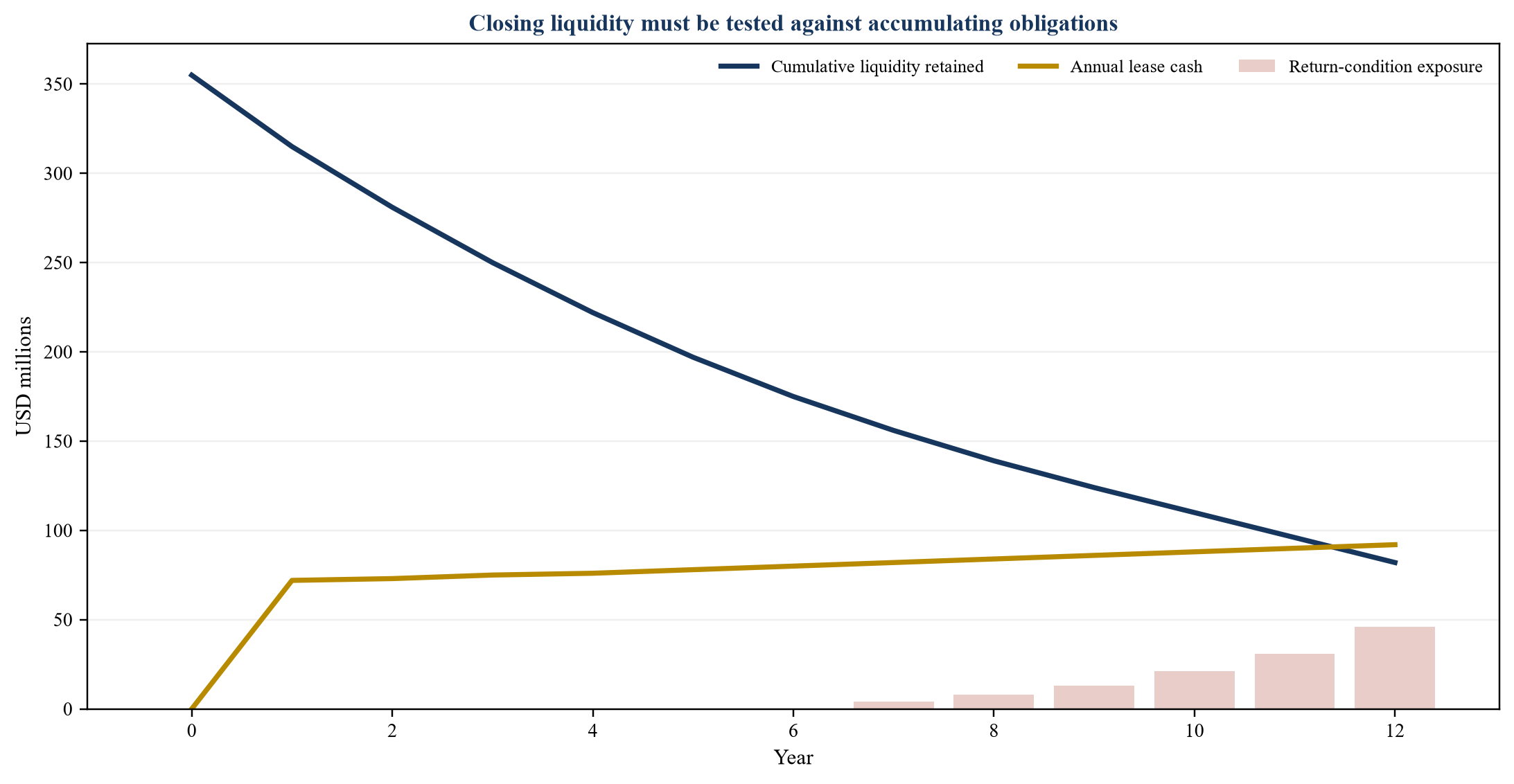
USD millions; all values are illustrative management assumptions.
11. Reconstruct technical condition
Sale pricing and lease obligations depend on engine, airframe, landing gear, auxiliary power unit and life-limited-part status. Reconcile technical records, shop-visit forecasts, directives, warranties, power-by-the-hour arrangements and delivery conditions. The analysis should distinguish observed contractual or technical evidence from management assumptions and connect each material judgment to cash, timing and operational flexibility. Separate pre-closing rectification from obligations consumed during the lease. The work should cover a central case and a severe-but-plausible downside, with correlated sensitivities for proceeds, rent, utilisation, maintenance, interest rates, currency, return conditions and fleet strategy. Exceptions require a named owner, source, due date and decision consequence. Unsupported benefits remain outside the base case until actions are implemented and evidence confirms the result. Evidence should be retained at aircraft, contract and transaction level, with control totals to the funds flow and a documented path for exceptions. The resulting decision should update price, liquidity, lease terms and fleet strategy together.
12. Test maintenance reserves
Monthly reserves can improve lessor protection while creating cash drag and recovery risk for the airline. Map rates, escalation, event eligibility, reimbursement conditions, lessor contributions, security interests and unused balances. The analysis should distinguish observed contractual or technical evidence from management assumptions and connect each material judgment to cash, timing and operational flexibility. Model collection and reimbursement timing rather than assuming reserves offset maintenance cost automatically. The work should cover a central case and a severe-but-plausible downside, with correlated sensitivities for proceeds, rent, utilisation, maintenance, interest rates, currency, return conditions and fleet strategy. Exceptions require a named owner, source, due date and decision consequence. Unsupported benefits remain outside the base case until actions are implemented and evidence confirms the result. Management should define the earliest warning indicator, intervention trigger and funded response. Reporting should preserve the original case, approved changes and realised cash so the board can distinguish durable liquidity from timing or accounting presentation.
13. Quantify return conditions
Return obligations may require minimum engine life, airframe condition, component status, records, paint, configuration and regulatory compliance. Price cash compensation, maintenance performance, lease-end timing, ferry, storage and redelivery acceptance under multiple utilisation paths. The analysis should distinguish observed contractual or technical evidence from management assumptions and connect each material judgment to cash, timing and operational flexibility. Create an aircraft-level return-condition ledger from closing and update it after every major event. The work should cover a central case and a severe-but-plausible downside, with correlated sensitivities for proceeds, rent, utilisation, maintenance, interest rates, currency, return conditions and fleet strategy. Exceptions require a named owner, source, due date and decision consequence. Unsupported benefits remain outside the base case until actions are implemented and evidence confirms the result. The section output should include reconciled aircraft-level evidence, decision thresholds, a named owner, review cadence and an explicit cash, fleet or contractual consequence. This creates a controlled bridge from diligence to negotiation and post-close action.
| Area | Evidence | Central response | Downside response |
|---|---|---|---|
| Engines | Green time, shop visits and life-limited parts | Planned event and reserve | Cash compensation and spare cover |
| Airframe | Check status, damage and modifications | Scheduled compliance | Early heavy check or settlement |
| Components | Landing gear, APU and rotables | Condition monitoring | Replacement or cash adjustment |
| Records | Trace, certificates and logbooks | Digital custody and audit | Holdback and remediation reserve |
| Configuration | Cabin, paint and operator changes | Agreed return standard | Modification budget and downtime |
Return exposure should be quantified from closing and refreshed after major events.
14. Protect records and configuration
Incomplete or inconsistent records can delay sale, lease delivery, return or future remarketing. Audit logbooks, trace, modification status, damage history, certificates, export documents and digital-record custody. The analysis should distinguish observed contractual or technical evidence from management assumptions and connect each material judgment to cash, timing and operational flexibility. Use closing conditions, holdbacks and remediation plans for missing evidence rather than accepting an unpriced future obligation. The work should cover a central case and a severe-but-plausible downside, with correlated sensitivities for proceeds, rent, utilisation, maintenance, interest rates, currency, return conditions and fleet strategy. Exceptions require a named owner, source, due date and decision consequence. Unsupported benefits remain outside the base case until actions are implemented and evidence confirms the result. Evidence should be retained at aircraft, contract and transaction level, with control totals to the funds flow and a documented path for exceptions. The resulting decision should update price, liquidity, lease terms and fleet strategy together.
15. Assess lease tenor and fleet strategy
A lease can preserve capacity while limiting retirement, gauge change, network redesign or technology transition. Compare remaining economic utility with lease term, extension rights, early termination, substitution, assignment and purchase options. The analysis should distinguish observed contractual or technical evidence from management assumptions and connect each material judgment to cash, timing and operational flexibility. Select aircraft whose strategic role is likely to persist through the committed term. The work should cover a central case and a severe-but-plausible downside, with correlated sensitivities for proceeds, rent, utilisation, maintenance, interest rates, currency, return conditions and fleet strategy. Exceptions require a named owner, source, due date and decision consequence. Unsupported benefits remain outside the base case until actions are implemented and evidence confirms the result. Management should define the earliest warning indicator, intervention trigger and funded response. Reporting should preserve the original case, approved changes and realised cash so the board can distinguish durable liquidity from timing or accounting presentation.
16. Model technology and obsolescence
New aircraft can change fuel, emissions, noise, maintenance and customer economics during the lease. Stress demand, regulation, manufacturer support, engine reliability and operator breadth for the sold cohort. The analysis should distinguish observed contractual or technical evidence from management assumptions and connect each material judgment to cash, timing and operational flexibility. Lease flexibility should allow planned fleet transition without punitive termination or stranded capacity. The work should cover a central case and a severe-but-plausible downside, with correlated sensitivities for proceeds, rent, utilisation, maintenance, interest rates, currency, return conditions and fleet strategy. Exceptions require a named owner, source, due date and decision consequence. Unsupported benefits remain outside the base case until actions are implemented and evidence confirms the result. The section output should include reconciled aircraft-level evidence, decision thresholds, a named owner, review cadence and an explicit cash, fleet or contractual consequence. This creates a controlled bridge from diligence to negotiation and post-close action.
17. Price utilisation flexibility
Monthly hours, cycles, geography, subleasing and operation restrictions can limit commercial response. Compare permitted utilisation with route scenarios, maintenance plans and seasonal capacity requirements. The analysis should distinguish observed contractual or technical evidence from management assumptions and connect each material judgment to cash, timing and operational flexibility. Negotiate bands, reporting and remedies that protect the lessor while preserving operational decisions. The work should cover a central case and a severe-but-plausible downside, with correlated sensitivities for proceeds, rent, utilisation, maintenance, interest rates, currency, return conditions and fleet strategy. Exceptions require a named owner, source, due date and decision consequence. Unsupported benefits remain outside the base case until actions are implemented and evidence confirms the result. Evidence should be retained at aircraft, contract and transaction level, with control totals to the funds flow and a documented path for exceptions. The resulting decision should update price, liquidity, lease terms and fleet strategy together.
18. Test lessor counterparty risk
The airline depends on the buyer-lessor for delivery, reserve reimbursement, consents, modifications and lease-end decisions. Review funding certainty, ownership structure, servicing capability, sanctions, reputation and dispute history. The analysis should distinguish observed contractual or technical evidence from management assumptions and connect each material judgment to cash, timing and operational flexibility. Use escrow, account control, time-bound approvals and transfer protections where counterparty performance affects operations or cash. The work should cover a central case and a severe-but-plausible downside, with correlated sensitivities for proceeds, rent, utilisation, maintenance, interest rates, currency, return conditions and fleet strategy. Exceptions require a named owner, source, due date and decision consequence. Unsupported benefits remain outside the base case until actions are implemented and evidence confirms the result. Management should define the earliest warning indicator, intervention trigger and funded response. Reporting should preserve the original case, approved changes and realised cash so the board can distinguish durable liquidity from timing or accounting presentation.
19. Analyse jurisdiction and enforcement
Title, lease rights, repossession, deregistration, insolvency and export rules shape remedies and operating continuity. Verify registrations, international interests, deregistration powers, governing law and practical enforcement with jurisdiction-specific counsel. The analysis should distinguish observed contractual or technical evidence from management assumptions and connect each material judgment to cash, timing and operational flexibility. Model disruption and transition costs under default without assuming treaty participation removes local execution risk. The work should cover a central case and a severe-but-plausible downside, with correlated sensitivities for proceeds, rent, utilisation, maintenance, interest rates, currency, return conditions and fleet strategy. Exceptions require a named owner, source, due date and decision consequence. Unsupported benefits remain outside the base case until actions are implemented and evidence confirms the result. The section output should include reconciled aircraft-level evidence, decision thresholds, a named owner, review cadence and an explicit cash, fleet or contractual consequence. This creates a controlled bridge from diligence to negotiation and post-close action.
20. Reconcile insurance and casualty
Hull, liability, war-risk and contingent cover must align buyer ownership and airline operation. Confirm agreed value, loss payee, deductibles, geographic scope, breach-of-warranty cover, proceeds waterfall and replacement rights. The analysis should distinguish observed contractual or technical evidence from management assumptions and connect each material judgment to cash, timing and operational flexibility. Address total loss, partial damage and grounded-aircraft cash consequences in both purchase and lease documents. The work should cover a central case and a severe-but-plausible downside, with correlated sensitivities for proceeds, rent, utilisation, maintenance, interest rates, currency, return conditions and fleet strategy. Exceptions require a named owner, source, due date and decision consequence. Unsupported benefits remain outside the base case until actions are implemented and evidence confirms the result. Evidence should be retained at aircraft, contract and transaction level, with control totals to the funds flow and a documented path for exceptions. The resulting decision should update price, liquidity, lease terms and fleet strategy together.
21. Separate accounting from economics
Right-of-use assets, lease liabilities, sale gains and cash-flow presentation can affect reported metrics without changing contractual burden. Build an accounting bridge under the applicable standards and a separate whole-life cash and risk model. The analysis should distinguish observed contractual or technical evidence from management assumptions and connect each material judgment to cash, timing and operational flexibility. Board decisions should use both views and explain covenant, rating and stakeholder effects transparently. The work should cover a central case and a severe-but-plausible downside, with correlated sensitivities for proceeds, rent, utilisation, maintenance, interest rates, currency, return conditions and fleet strategy. Exceptions require a named owner, source, due date and decision consequence. Unsupported benefits remain outside the base case until actions are implemented and evidence confirms the result. Management should define the earliest warning indicator, intervention trigger and funded response. Reporting should preserve the original case, approved changes and realised cash so the board can distinguish durable liquidity from timing or accounting presentation.
22. Test taxes and transaction costs
Transfer taxes, withholding, value-added taxes, customs, registration, stamp duties and permanent-establishment questions can change proceeds and rent. Obtain transaction-specific advice by aircraft location, seller, buyer, lessor, operator and payment flow. The analysis should distinguish observed contractual or technical evidence from management assumptions and connect each material judgment to cash, timing and operational flexibility. Keep unverified tax benefits outside the base case and provide reserves for disputed or timing-sensitive amounts. The work should cover a central case and a severe-but-plausible downside, with correlated sensitivities for proceeds, rent, utilisation, maintenance, interest rates, currency, return conditions and fleet strategy. Exceptions require a named owner, source, due date and decision consequence. Unsupported benefits remain outside the base case until actions are implemented and evidence confirms the result. The section output should include reconciled aircraft-level evidence, decision thresholds, a named owner, review cadence and an explicit cash, fleet or contractual consequence. This creates a controlled bridge from diligence to negotiation and post-close action.
23. Compare alternative financing
Sale-and-leaseback should be compared with secured debt, private credit, capital markets, export credit, finance lease and asset sale without leaseback. Compare net liquidity, all-in cost, tenor, amortisation, residual exposure, covenants, flexibility, disclosure and execution risk. The analysis should distinguish observed contractual or technical evidence from management assumptions and connect each material judgment to cash, timing and operational flexibility. Use a common downside horizon and avoid selecting an instrument on first-year cash alone. The work should cover a central case and a severe-but-plausible downside, with correlated sensitivities for proceeds, rent, utilisation, maintenance, interest rates, currency, return conditions and fleet strategy. Exceptions require a named owner, source, due date and decision consequence. Unsupported benefits remain outside the base case until actions are implemented and evidence confirms the result. Evidence should be retained at aircraft, contract and transaction level, with control totals to the funds flow and a documented path for exceptions. The resulting decision should update price, liquidity, lease terms and fleet strategy together.
| Instrument | Immediate liquidity | Residual exposure | Strategic flexibility |
|---|---|---|---|
| Sale-and-leaseback | High after debt release | Transferred, subject to lease terms | Medium to low by contract |
| Secured debt | High within advance rate | Retained | Medium with covenants |
| Private credit | Medium to high | Retained | Bespoke but controlled |
| Capital markets | High at scale | Retained | Medium subject to documentation |
| Finance lease | Medium | Shared economically | Medium to low |
| Outright sale | High | Transferred | Capacity relinquished |
Alternatives should be compared on a common downside and whole-life basis.
24. Stress correlated downside
A realistic case combines weaker route cash, higher rent or rates, accelerated maintenance, delayed reimbursements and costly return conditions. Run monthly cash, covenant and liquidity scenarios through the lease term with management actions and implementation lead times. The analysis should distinguish observed contractual or technical evidence from management assumptions and connect each material judgment to cash, timing and operational flexibility. Exclude mitigations that require lessor consent or asset sale when those rights are constrained. The work should cover a central case and a severe-but-plausible downside, with correlated sensitivities for proceeds, rent, utilisation, maintenance, interest rates, currency, return conditions and fleet strategy. Exceptions require a named owner, source, due date and decision consequence. Unsupported benefits remain outside the base case until actions are implemented and evidence confirms the result. Management should define the earliest warning indicator, intervention trigger and funded response. Reporting should preserve the original case, approved changes and realised cash so the board can distinguish durable liquidity from timing or accounting presentation.
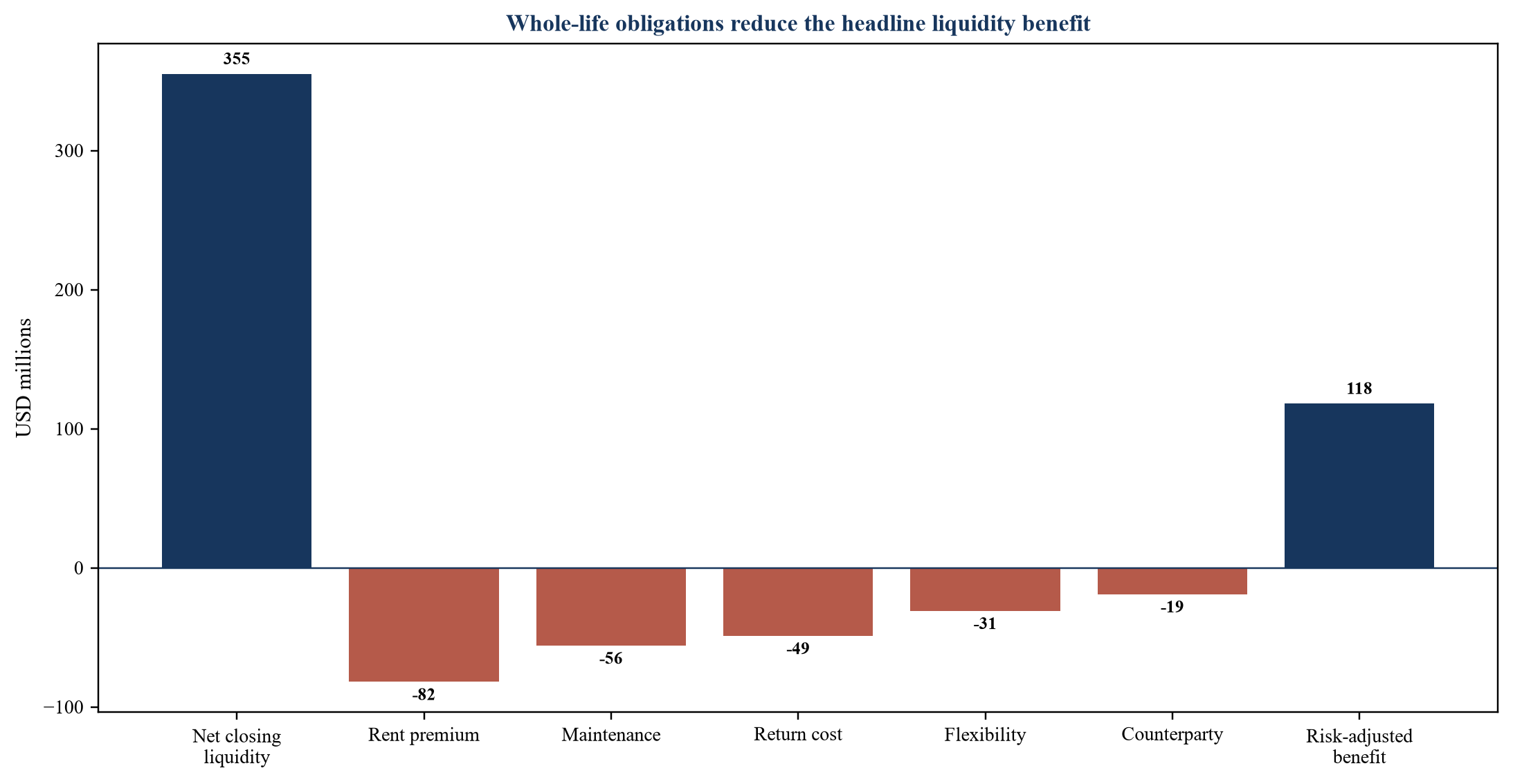
USD millions; every value is an illustrative management assumption.
25. Design the transaction package
Purchase agreement, lease, maintenance arrangements, guarantees, insurance, security and debt releases should describe the same assets and cash flows. Align definitions, dates, delivery conditions, representations, indemnities, defaults, cure rights and dispute mechanisms. The analysis should distinguish observed contractual or technical evidence from management assumptions and connect each material judgment to cash, timing and operational flexibility. Use a single issues register connecting every commercial point to legal drafting and model impact. The work should cover a central case and a severe-but-plausible downside, with correlated sensitivities for proceeds, rent, utilisation, maintenance, interest rates, currency, return conditions and fleet strategy. Exceptions require a named owner, source, due date and decision consequence. Unsupported benefits remain outside the base case until actions are implemented and evidence confirms the result. The section output should include reconciled aircraft-level evidence, decision thresholds, a named owner, review cadence and an explicit cash, fleet or contractual consequence. This creates a controlled bridge from diligence to negotiation and post-close action.
26. Model a hypothetical transaction
The hypothetical portfolio contains twenty narrowbody aircraft with assumed market value of USD 820 million, book value of USD 700 million and debt of USD 410 million. Gross proceeds are USD 780 million; transaction costs are USD 15 million; net liquidity after debt repayment is USD 355 million. The analysis should distinguish observed contractual or technical evidence from management assumptions and connect each material judgment to cash, timing and operational flexibility. The downside whole-life case reduces risk-adjusted economic benefit to USD 118 million. All figures are illustrative management assumptions. The work should cover a central case and a severe-but-plausible downside, with correlated sensitivities for proceeds, rent, utilisation, maintenance, interest rates, currency, return conditions and fleet strategy. Exceptions require a named owner, source, due date and decision consequence. Unsupported benefits remain outside the base case until actions are implemented and evidence confirms the result. Evidence should be retained at aircraft, contract and transaction level, with control totals to the funds flow and a documented path for exceptions. The resulting decision should update price, liquidity, lease terms and fleet strategy together.
| Measure | Central case | Downside case | Decision meaning |
|---|---|---|---|
| Assumed current market value | 820 | 760 | Portfolio value evidence |
| Gross sale proceeds | 780 | 735 | Closing consideration |
| Transaction costs | 15 | 18 | Fees, taxes and execution |
| Secured debt repaid | 410 | 410 | Lien release and deleveraging |
| Net closing liquidity | 355 | 307 | Cash available after closing |
| Risk-adjusted whole-life benefit | 214 | 118 | Liquidity after priced obligations |
USD millions; all values are illustrative management assumptions.
27. Convert findings into negotiation priorities
Value can be created through price, rent, deposits, reserve rates, return conditions, options, substitution and consent mechanics. Quantify each point in cash, liquidity, value and strategic flexibility before negotiations. The analysis should distinguish observed contractual or technical evidence from management assumptions and connect each material judgment to cash, timing and operational flexibility. Trade concessions only after comparing their whole-life economics and interaction with other terms. The work should cover a central case and a severe-but-plausible downside, with correlated sensitivities for proceeds, rent, utilisation, maintenance, interest rates, currency, return conditions and fleet strategy. Exceptions require a named owner, source, due date and decision consequence. Unsupported benefits remain outside the base case until actions are implemented and evidence confirms the result. Management should define the earliest warning indicator, intervention trigger and funded response. Reporting should preserve the original case, approved changes and realised cash so the board can distinguish durable liquidity from timing or accounting presentation.
28. Establish Day 1 controls
Closing transfers ownership while flight operations, maintenance, insurance, payments and records must continue without interruption. Test funds flow, title, registration, insurance, lessor notices, rent accounts, reserve reporting and delegated authorities. The analysis should distinguish observed contractual or technical evidence from management assumptions and connect each material judgment to cash, timing and operational flexibility. A control room should resolve aircraft-level exceptions and preserve evidence for post-closing adjustments. The work should cover a central case and a severe-but-plausible downside, with correlated sensitivities for proceeds, rent, utilisation, maintenance, interest rates, currency, return conditions and fleet strategy. Exceptions require a named owner, source, due date and decision consequence. Unsupported benefits remain outside the base case until actions are implemented and evidence confirms the result. The section output should include reconciled aircraft-level evidence, decision thresholds, a named owner, review cadence and an explicit cash, fleet or contractual consequence. This creates a controlled bridge from diligence to negotiation and post-close action.
29. Govern the lease portfolio
Post-close value depends on continuing control of rent, reserves, maintenance, records, consents, options and return exposure. Track cash, utilisation, technical status, reimbursements, lessor actions, covenant headroom and lease-end liability against the approved case. The analysis should distinguish observed contractual or technical evidence from management assumptions and connect each material judgment to cash, timing and operational flexibility. Escalate deviations early and update the whole-life model after every material operational or contractual change. The work should cover a central case and a severe-but-plausible downside, with correlated sensitivities for proceeds, rent, utilisation, maintenance, interest rates, currency, return conditions and fleet strategy. Exceptions require a named owner, source, due date and decision consequence. Unsupported benefits remain outside the base case until actions are implemented and evidence confirms the result. Evidence should be retained at aircraft, contract and transaction level, with control totals to the funds flow and a documented path for exceptions. The resulting decision should update price, liquidity, lease terms and fleet strategy together.
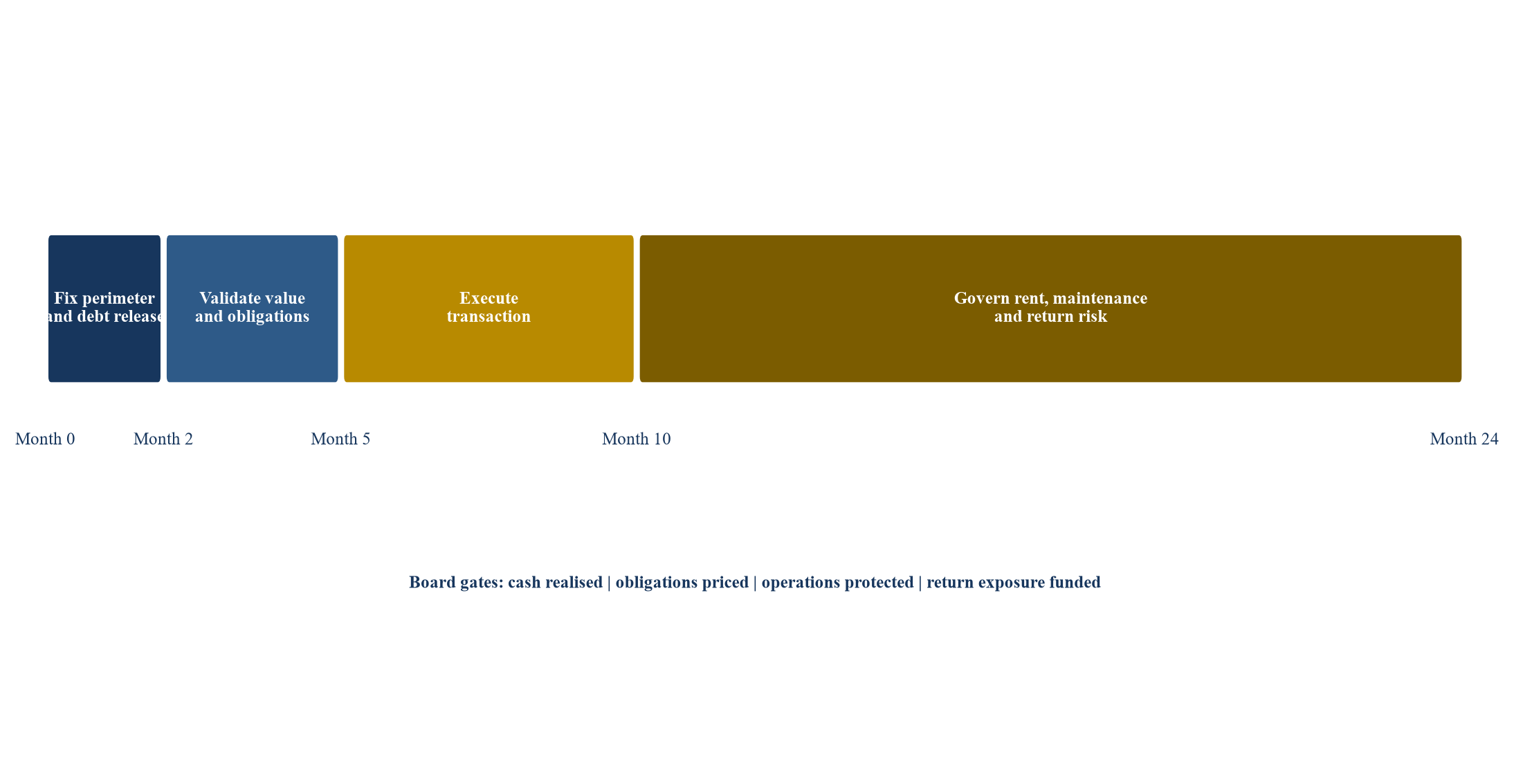
The roadmap links diligence, execution and continuing lease governance.
30. Conclude with durable liquidity
A well-structured sale-and-leaseback converts ownership into liquidity while keeping future aircraft obligations affordable, measurable and strategically compatible. The framework gives boards a sequence: fix the perimeter, verify value and debt release, price every lease obligation, stress the cycle and govern execution. The analysis should distinguish observed contractual or technical evidence from management assumptions and connect each material judgment to cash, timing and operational flexibility. The result is durable liquidity supported by operational evidence and enforceable transaction terms. The work should cover a central case and a severe-but-plausible downside, with correlated sensitivities for proceeds, rent, utilisation, maintenance, interest rates, currency, return conditions and fleet strategy. Exceptions require a named owner, source, due date and decision consequence. Unsupported benefits remain outside the base case until actions are implemented and evidence confirms the result. Management should define the earliest warning indicator, intervention trigger and funded response. Reporting should preserve the original case, approved changes and realised cash so the board can distinguish durable liquidity from timing or accounting presentation.
Sources
- IFRS Foundation. IFRS 16 Leases. Read the primary source
- IFRS Foundation. IASB issues amendments to sale-and-leaseback requirements. Read the primary source
- IFRS Foundation. IFRS 15 Revenue from Contracts with Customers. Read the primary source
- IFRS Foundation. IAS 36 Impairment of Assets. Read the primary source
- International Civil Aviation Organization. Cape Town Convention and Protocol. Read the primary source
- International Air Transport Association. Airline Profitability to Strengthen Slightly in 2025 Despite Headwinds. Read the primary source
- International Air Transport Association. Aviation Supply Chain. Read the primary source
- American Airlines Group Inc. Annual Report for the year ended 31 December 2025. Read the primary source
- Ryanair Holdings plc. Annual Report for the year ended 31 March 2025. Read the primary source
- Spirit Aviation Holdings Inc. Annual Report for the year ended 31 December 2024. Read the primary source
- Willis Lease Finance Corporation. 2025 Annual Report. Read the primary source
- Air Lease Corporation. Annual Report for the year ended 31 December 2025. Read the primary source
- AerCap Holdings N.V. Annual Report for the year ended 31 December 2025. Read the primary source
- US Securities and Exchange Commission. Financial Reporting Manual. Read the primary source
- US Financial Accounting Standards Board. ASC Topic 842, Leases. Read the primary source
- US Federal Aviation Administration. Aircraft Registration. Read the primary source
- US Federal Aviation Administration. Airworthiness Directives. Read the primary source
- Aviation Working Group. Global Aviation Industry Cape Town Convention Index. Read the primary source
- International Chamber of Commerce. Uniform Rules for Demand Guarantees, URDG 758. Read the primary source
- Bank for International Settlements. Global liquidity and credit statistics. Read the primary source
