

1. Define the commercial outcome
The board should state the customer, product, market, capability, innovation and financial result the collaboration must deliver. The required output is a collaboration thesis. Record the commercial objective, parties, contributions, dependencies, decision owner, evidence and review date [1][2].
Test proposed terms against customer requirements, operating processes, resource availability, financial scenarios, legal rights and current regulation. Identify which outcomes require coordination, dedicated assets, joint control or shared residual value. Preserve source dates, assumptions and limitations.
The principal risk is that structure can become the objective while the commercial problem remains undefined. Quantify effects on time to value, investment, control, liability, tax, accounting, intellectual property, data, competition, resilience and exit. Compare each feasible structure on the same commercial and downside assumptions.
Translate the conclusion into scope, contracts, governance, economics, milestones, information rights, compliance controls, remedies, migration gates and exit. Refresh the assessment when the opportunity, parties, contributions, regulation, performance or strategic value changes.
2. Identify the minimum integration required
The board should separate coordination, shared delivery, dedicated assets, common risk and residual-value needs. The required output is an integration-needs map. Record the commercial objective, parties, contributions, dependencies, decision owner, evidence and review date [3][4].
Test proposed terms against customer requirements, operating processes, resource availability, financial scenarios, legal rights and current regulation. Identify which outcomes require coordination, dedicated assets, joint control or shared residual value. Preserve source dates, assumptions and limitations.
The principal risk is that parties can create a company for work that only requires bounded coordination. Quantify effects on time to value, investment, control, liability, tax, accounting, intellectual property, data, competition, resilience and exit. Compare each feasible structure on the same commercial and downside assumptions.
Translate the conclusion into scope, contracts, governance, economics, milestones, information rights, compliance controls, remedies, migration gates and exit. Refresh the assessment when the opportunity, parties, contributions, regulation, performance or strategic value changes.
3. Map the structure continuum
The board should compare referral, distribution, licence, services, consortium, contractual alliance, minority stake, joint operation and equity venture. The required output is a structure-option map. Record the commercial objective, parties, contributions, dependencies, decision owner, evidence and review date [3][5].
Test proposed terms against customer requirements, operating processes, resource availability, financial scenarios, legal rights and current regulation. Identify which outcomes require coordination, dedicated assets, joint control or shared residual value. Preserve source dates, assumptions and limitations.
The principal risk is that a binary alliance-versus-JV debate can omit a better intermediate form. Quantify effects on time to value, investment, control, liability, tax, accounting, intellectual property, data, competition, resilience and exit. Compare each feasible structure on the same commercial and downside assumptions.
Translate the conclusion into scope, contracts, governance, economics, milestones, information rights, compliance controls, remedies, migration gates and exit. Refresh the assessment when the opportunity, parties, contributions, regulation, performance or strategic value changes.
Table 1. Structure continuum
| Structure | Commitment | Primary use |
|---|---|---|
| services | bounded | defined delivery |
| alliance | coordinated | market or capability |
| minority stake | strategic capital | alignment |
| equity JV | integrated | dedicated enterprise |
Illustrative analytical structure; verified transaction and jurisdiction evidence governs.
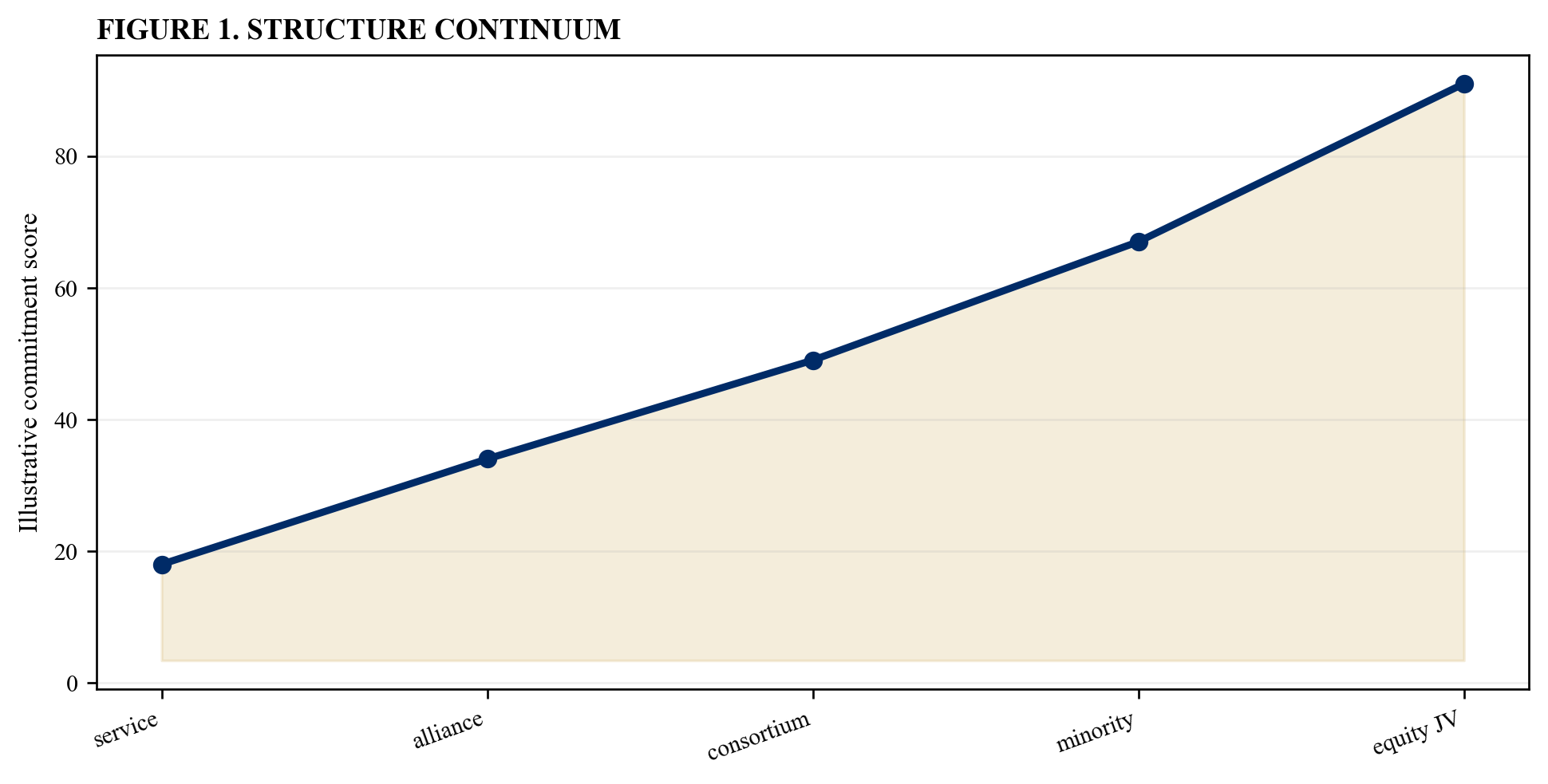
Illustrative analytical scenario; verified collaboration evidence should replace values.
4. Define the collaboration perimeter
The board should specify products, customers, territories, channels, functions, assets, duration and exclusions. The required output is a perimeter schedule. Record the commercial objective, parties, contributions, dependencies, decision owner, evidence and review date [6][7].
Test proposed terms against customer requirements, operating processes, resource availability, financial scenarios, legal rights and current regulation. Identify which outcomes require coordination, dedicated assets, joint control or shared residual value. Preserve source dates, assumptions and limitations.
The principal risk is that unclear scope can expand obligations and restrict each parent beyond the intended opportunity. Quantify effects on time to value, investment, control, liability, tax, accounting, intellectual property, data, competition, resilience and exit. Compare each feasible structure on the same commercial and downside assumptions.
Translate the conclusion into scope, contracts, governance, economics, milestones, information rights, compliance controls, remedies, migration gates and exit. Refresh the assessment when the opportunity, parties, contributions, regulation, performance or strategic value changes.
5. Test speed to first value
The board should map negotiation, incorporation, licensing, hiring, systems, procurement and customer activation. The required output is a time-to-value critical path. Record the commercial objective, parties, contributions, dependencies, decision owner, evidence and review date [8][9].
Test proposed terms against customer requirements, operating processes, resource availability, financial scenarios, legal rights and current regulation. Identify which outcomes require coordination, dedicated assets, joint control or shared residual value. Preserve source dates, assumptions and limitations.
The principal risk is that entity formation can delay market learning and revenue. Quantify effects on time to value, investment, control, liability, tax, accounting, intellectual property, data, competition, resilience and exit. Compare each feasible structure on the same commercial and downside assumptions.
Translate the conclusion into scope, contracts, governance, economics, milestones, information rights, compliance controls, remedies, migration gates and exit. Refresh the assessment when the opportunity, parties, contributions, regulation, performance or strategic value changes.
6. Measure commitment objectively
The board should score cash, people, assets, capacity, exclusivity, leadership attention and opportunity cost. The required output is a commitment evidence map. Record the commercial objective, parties, contributions, dependencies, decision owner, evidence and review date [1][10].
Test proposed terms against customer requirements, operating processes, resource availability, financial scenarios, legal rights and current regulation. Identify which outcomes require coordination, dedicated assets, joint control or shared residual value. Preserve source dates, assumptions and limitations.
The principal risk is that equity percentage can signal commitment while actual resources remain discretionary. Quantify effects on time to value, investment, control, liability, tax, accounting, intellectual property, data, competition, resilience and exit. Compare each feasible structure on the same commercial and downside assumptions.
Translate the conclusion into scope, contracts, governance, economics, milestones, information rights, compliance controls, remedies, migration gates and exit. Refresh the assessment when the opportunity, parties, contributions, regulation, performance or strategic value changes.
7. Value contributed resources
The board should identify ownership, availability, condition, cost, alternatives and acceptance for every contribution. The required output is a contribution valuation. Record the commercial objective, parties, contributions, dependencies, decision owner, evidence and review date [11][12].
Test proposed terms against customer requirements, operating processes, resource availability, financial scenarios, legal rights and current regulation. Identify which outcomes require coordination, dedicated assets, joint control or shared residual value. Preserve source dates, assumptions and limitations.
The principal risk is that headline commitments can bundle assets, services and access with different value and durability. Quantify effects on time to value, investment, control, liability, tax, accounting, intellectual property, data, competition, resilience and exit. Compare each feasible structure on the same commercial and downside assumptions.
Translate the conclusion into scope, contracts, governance, economics, milestones, information rights, compliance controls, remedies, migration gates and exit. Refresh the assessment when the opportunity, parties, contributions, regulation, performance or strategic value changes.
8. Decide who contracts with customers
The board should allocate bids, pricing, contracting, credit, collections, warranties and account ownership. The required output is a customer-contracting model. Record the commercial objective, parties, contributions, dependencies, decision owner, evidence and review date [13][14].
Test proposed terms against customer requirements, operating processes, resource availability, financial scenarios, legal rights and current regulation. Identify which outcomes require coordination, dedicated assets, joint control or shared residual value. Preserve source dates, assumptions and limitations.
The principal risk is that an alliance can confuse the customer about responsibility and recourse. Quantify effects on time to value, investment, control, liability, tax, accounting, intellectual property, data, competition, resilience and exit. Compare each feasible structure on the same commercial and downside assumptions.
Translate the conclusion into scope, contracts, governance, economics, milestones, information rights, compliance controls, remedies, migration gates and exit. Refresh the assessment when the opportunity, parties, contributions, regulation, performance or strategic value changes.
9. Decide who employs people
The board should define employer, supervision, incentives, mobility, immigration, confidentiality and post-termination rights. The required output is a workforce model. Record the commercial objective, parties, contributions, dependencies, decision owner, evidence and review date [15][16].
Test proposed terms against customer requirements, operating processes, resource availability, financial scenarios, legal rights and current regulation. Identify which outcomes require coordination, dedicated assets, joint control or shared residual value. Preserve source dates, assumptions and limitations.
The principal risk is that shared teams can create authority, employment and retention gaps. Quantify effects on time to value, investment, control, liability, tax, accounting, intellectual property, data, competition, resilience and exit. Compare each feasible structure on the same commercial and downside assumptions.
Translate the conclusion into scope, contracts, governance, economics, milestones, information rights, compliance controls, remedies, migration gates and exit. Refresh the assessment when the opportunity, parties, contributions, regulation, performance or strategic value changes.
10. Decide who owns assets
The board should allocate title, maintenance, insurance, access, depreciation, financing and residual value. The required output is an asset-ownership schedule. Record the commercial objective, parties, contributions, dependencies, decision owner, evidence and review date [17][18].
Test proposed terms against customer requirements, operating processes, resource availability, financial scenarios, legal rights and current regulation. Identify which outcomes require coordination, dedicated assets, joint control or shared residual value. Preserve source dates, assumptions and limitations.
The principal risk is that dedicated investment can sit with one parent while benefits and control are shared. Quantify effects on time to value, investment, control, liability, tax, accounting, intellectual property, data, competition, resilience and exit. Compare each feasible structure on the same commercial and downside assumptions.
Translate the conclusion into scope, contracts, governance, economics, milestones, information rights, compliance controls, remedies, migration gates and exit. Refresh the assessment when the opportunity, parties, contributions, regulation, performance or strategic value changes.
11. Map liability and recourse
The board should test contractual caps, joint liability, guarantees, product claims, regulatory exposure and third-party recourse. The required output is a liability architecture. Record the commercial objective, parties, contributions, dependencies, decision owner, evidence and review date [19][20].
Test proposed terms against customer requirements, operating processes, resource availability, financial scenarios, legal rights and current regulation. Identify which outcomes require coordination, dedicated assets, joint control or shared residual value. Preserve source dates, assumptions and limitations.
The principal risk is that a light structure can leave one party carrying disproportionate external liability. Quantify effects on time to value, investment, control, liability, tax, accounting, intellectual property, data, competition, resilience and exit. Compare each feasible structure on the same commercial and downside assumptions.
Translate the conclusion into scope, contracts, governance, economics, milestones, information rights, compliance controls, remedies, migration gates and exit. Refresh the assessment when the opportunity, parties, contributions, regulation, performance or strategic value changes.
12. Choose decision rights
The board should allocate strategic, commercial, technical, financial and operating authority at the lowest effective level. The required output is a decision-rights matrix. Record the commercial objective, parties, contributions, dependencies, decision owner, evidence and review date [3][21].
Test proposed terms against customer requirements, operating processes, resource availability, financial scenarios, legal rights and current regulation. Identify which outcomes require coordination, dedicated assets, joint control or shared residual value. Preserve source dates, assumptions and limitations.
The principal risk is that equity can add vetoes and boards that slow ordinary execution. Quantify effects on time to value, investment, control, liability, tax, accounting, intellectual property, data, competition, resilience and exit. Compare each feasible structure on the same commercial and downside assumptions.
Translate the conclusion into scope, contracts, governance, economics, milestones, information rights, compliance controls, remedies, migration gates and exit. Refresh the assessment when the opportunity, parties, contributions, regulation, performance or strategic value changes.
13. Distinguish coordination from joint control
The board should identify the relevant activities and whether unanimous consent truly governs them. The required output is a control assessment. Record the commercial objective, parties, contributions, dependencies, decision owner, evidence and review date [3][22].
Test proposed terms against customer requirements, operating processes, resource availability, financial scenarios, legal rights and current regulation. Identify which outcomes require coordination, dedicated assets, joint control or shared residual value. Preserve source dates, assumptions and limitations.
The principal risk is that protective rights can be mistaken for joint control or informal practice can create control not reflected in documents. Quantify effects on time to value, investment, control, liability, tax, accounting, intellectual property, data, competition, resilience and exit. Compare each feasible structure on the same commercial and downside assumptions.
Translate the conclusion into scope, contracts, governance, economics, milestones, information rights, compliance controls, remedies, migration gates and exit. Refresh the assessment when the opportunity, parties, contributions, regulation, performance or strategic value changes.
14. Assess accounting classification
The board should test rights to assets, obligations for liabilities and rights to net assets under actual arrangements. The required output is an IFRS classification memorandum. Record the commercial objective, parties, contributions, dependencies, decision owner, evidence and review date [3][23].
Test proposed terms against customer requirements, operating processes, resource availability, financial scenarios, legal rights and current regulation. Identify which outcomes require coordination, dedicated assets, joint control or shared residual value. Preserve source dates, assumptions and limitations.
The principal risk is that legal form can diverge from accounting treatment and balance-sheet expectations. Quantify effects on time to value, investment, control, liability, tax, accounting, intellectual property, data, competition, resilience and exit. Compare each feasible structure on the same commercial and downside assumptions.
Translate the conclusion into scope, contracts, governance, economics, milestones, information rights, compliance controls, remedies, migration gates and exit. Refresh the assessment when the opportunity, parties, contributions, regulation, performance or strategic value changes.
15. Model economic sharing
The board should compare fees, commissions, royalties, cost shares, revenue shares, dividends and residual value. The required output is an economic-waterfall model. Record the commercial objective, parties, contributions, dependencies, decision owner, evidence and review date [24][25].
Test proposed terms against customer requirements, operating processes, resource availability, financial scenarios, legal rights and current regulation. Identify which outcomes require coordination, dedicated assets, joint control or shared residual value. Preserve source dates, assumptions and limitations.
The principal risk is that an equity split can reward contributions unrelated to continuing value creation. Quantify effects on time to value, investment, control, liability, tax, accounting, intellectual property, data, competition, resilience and exit. Compare each feasible structure on the same commercial and downside assumptions.
Translate the conclusion into scope, contracts, governance, economics, milestones, information rights, compliance controls, remedies, migration gates and exit. Refresh the assessment when the opportunity, parties, contributions, regulation, performance or strategic value changes.
Table 2. Illustrative economics
| Structure | Launch cost AEDm | Reversibility score |
|---|---|---|
| contract | 1.2 | 92 |
| alliance | 2.5 | 78 |
| minority stake | 8.0 | 55 |
| equity JV | 18.0 | 32 |
Illustrative analytical structure; verified transaction and jurisdiction evidence governs.
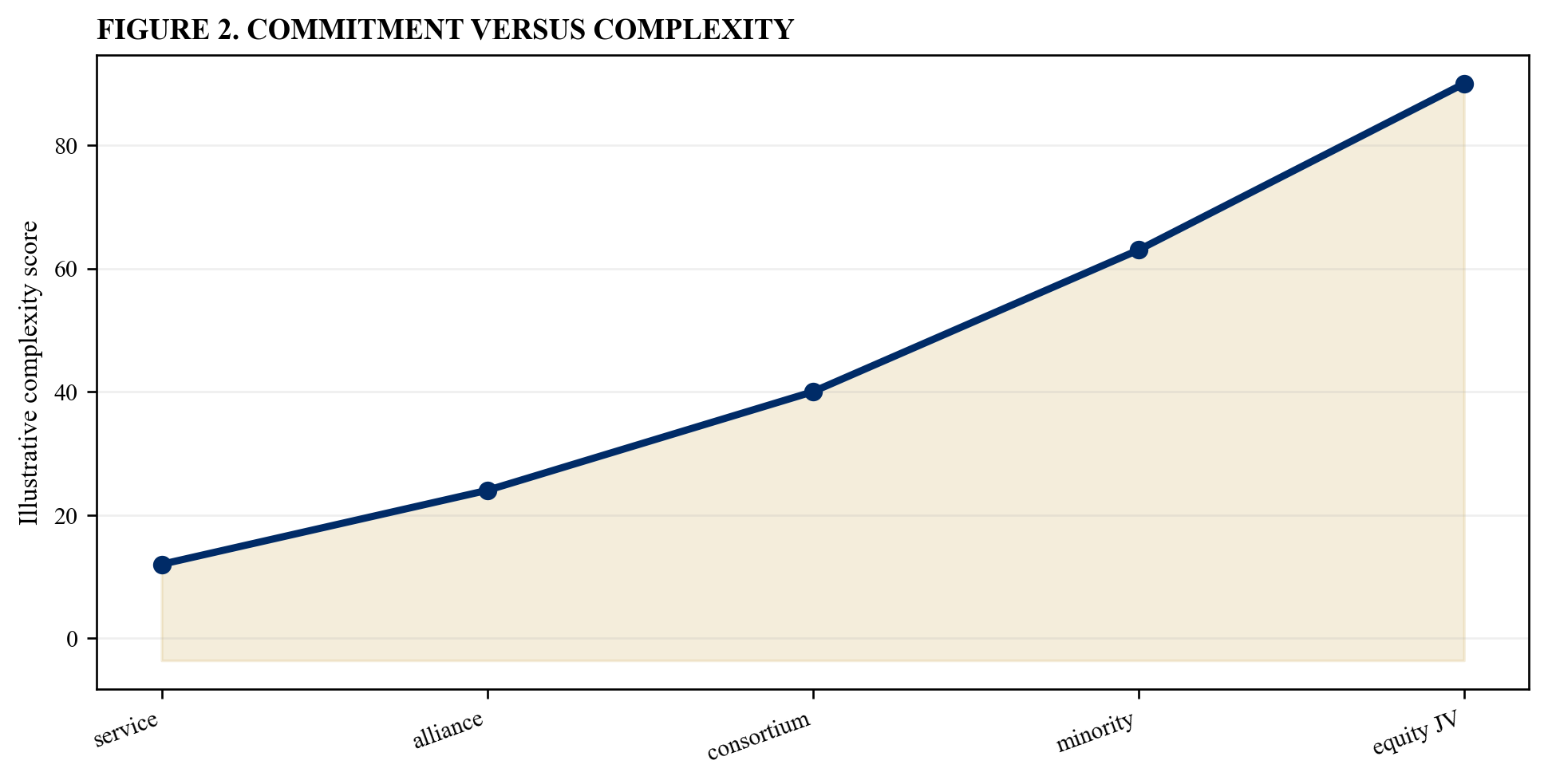
Illustrative analytical scenario; verified collaboration evidence should replace values.
16. Design funding obligations
The board should set initial capital, operating funding, growth capital, contingencies, default and dilution rules. The required output is a funding commitment schedule. Record the commercial objective, parties, contributions, dependencies, decision owner, evidence and review date [26][27].
Test proposed terms against customer requirements, operating processes, resource availability, financial scenarios, legal rights and current regulation. Identify which outcomes require coordination, dedicated assets, joint control or shared residual value. Preserve source dates, assumptions and limitations.
The principal risk is that a vehicle can be formed without a financeable path through downside and scale. Quantify effects on time to value, investment, control, liability, tax, accounting, intellectual property, data, competition, resilience and exit. Compare each feasible structure on the same commercial and downside assumptions.
Translate the conclusion into scope, contracts, governance, economics, milestones, information rights, compliance controls, remedies, migration gates and exit. Refresh the assessment when the opportunity, parties, contributions, regulation, performance or strategic value changes.
17. Test tax and cash effects
The board should model corporate tax, permanent establishment, withholding, VAT, customs, transfer pricing and repatriation. The required output is a tax-and-cash bridge. Record the commercial objective, parties, contributions, dependencies, decision owner, evidence and review date [28][29].
Test proposed terms against customer requirements, operating processes, resource availability, financial scenarios, legal rights and current regulation. Identify which outcomes require coordination, dedicated assets, joint control or shared residual value. Preserve source dates, assumptions and limitations.
The principal risk is that a simple-looking structure can create trapped tax or compliance cost. Quantify effects on time to value, investment, control, liability, tax, accounting, intellectual property, data, competition, resilience and exit. Compare each feasible structure on the same commercial and downside assumptions.
Translate the conclusion into scope, contracts, governance, economics, milestones, information rights, compliance controls, remedies, migration gates and exit. Refresh the assessment when the opportunity, parties, contributions, regulation, performance or strategic value changes.
18. Protect background intellectual property
The board should define existing technology, data, brands, methods and know-how retained by each parent. The required output is a background-IP register. Record the commercial objective, parties, contributions, dependencies, decision owner, evidence and review date [30][31].
Test proposed terms against customer requirements, operating processes, resource availability, financial scenarios, legal rights and current regulation. Identify which outcomes require coordination, dedicated assets, joint control or shared residual value. Preserve source dates, assumptions and limitations.
The principal risk is that collaboration access can be mistaken for ownership or unrestricted use. Quantify effects on time to value, investment, control, liability, tax, accounting, intellectual property, data, competition, resilience and exit. Compare each feasible structure on the same commercial and downside assumptions.
Translate the conclusion into scope, contracts, governance, economics, milestones, information rights, compliance controls, remedies, migration gates and exit. Refresh the assessment when the opportunity, parties, contributions, regulation, performance or strategic value changes.
19. Allocate foreground intellectual property
The board should define development ownership, inventorship, prosecution, exploitation, licensing and improvement rights. The required output is a foreground-IP schedule. Record the commercial objective, parties, contributions, dependencies, decision owner, evidence and review date [30][32].
Test proposed terms against customer requirements, operating processes, resource availability, financial scenarios, legal rights and current regulation. Identify which outcomes require coordination, dedicated assets, joint control or shared residual value. Preserve source dates, assumptions and limitations.
The principal risk is that joint ownership can impede licensing, enforcement, financing or exit. Quantify effects on time to value, investment, control, liability, tax, accounting, intellectual property, data, competition, resilience and exit. Compare each feasible structure on the same commercial and downside assumptions.
Translate the conclusion into scope, contracts, governance, economics, milestones, information rights, compliance controls, remedies, migration gates and exit. Refresh the assessment when the opportunity, parties, contributions, regulation, performance or strategic value changes.
20. Govern data and models
The board should allocate collection, lawful basis, access, training, outputs, security, localisation, portability and deletion. The required output is a data-and-model rights framework. Record the commercial objective, parties, contributions, dependencies, decision owner, evidence and review date [33][34].
Test proposed terms against customer requirements, operating processes, resource availability, financial scenarios, legal rights and current regulation. Identify which outcomes require coordination, dedicated assets, joint control or shared residual value. Preserve source dates, assumptions and limitations.
The principal risk is that a collaboration can transfer strategic data or model value beyond its purpose. Quantify effects on time to value, investment, control, liability, tax, accounting, intellectual property, data, competition, resilience and exit. Compare each feasible structure on the same commercial and downside assumptions.
Translate the conclusion into scope, contracts, governance, economics, milestones, information rights, compliance controls, remedies, migration gates and exit. Refresh the assessment when the opportunity, parties, contributions, regulation, performance or strategic value changes.
21. Control competition risk
The board should define legitimate purpose, necessary restraints, information boundaries and independent activity. The required output is a competition-law protocol. Record the commercial objective, parties, contributions, dependencies, decision owner, evidence and review date [6][7].
Test proposed terms against customer requirements, operating processes, resource availability, financial scenarios, legal rights and current regulation. Identify which outcomes require coordination, dedicated assets, joint control or shared residual value. Preserve source dates, assumptions and limitations.
The principal risk is that an alliance between competitors can coordinate prices, customers, output or strategy. Quantify effects on time to value, investment, control, liability, tax, accounting, intellectual property, data, competition, resilience and exit. Compare each feasible structure on the same commercial and downside assumptions.
Translate the conclusion into scope, contracts, governance, economics, milestones, information rights, compliance controls, remedies, migration gates and exit. Refresh the assessment when the opportunity, parties, contributions, regulation, performance or strategic value changes.
22. Calibrate exclusivity
The board should limit it by purpose, product, territory, customer, channel, duration and performance. The required output is an exclusivity schedule. Record the commercial objective, parties, contributions, dependencies, decision owner, evidence and review date [6][35].
Test proposed terms against customer requirements, operating processes, resource availability, financial scenarios, legal rights and current regulation. Identify which outcomes require coordination, dedicated assets, joint control or shared residual value. Preserve source dates, assumptions and limitations.
The principal risk is that broad exclusivity can destroy alternatives before the collaboration proves itself. Quantify effects on time to value, investment, control, liability, tax, accounting, intellectual property, data, competition, resilience and exit. Compare each feasible structure on the same commercial and downside assumptions.
Translate the conclusion into scope, contracts, governance, economics, milestones, information rights, compliance controls, remedies, migration gates and exit. Refresh the assessment when the opportunity, parties, contributions, regulation, performance or strategic value changes.
23. Test regulatory and licensing needs
The board should identify approvals, ownership conditions, sector licences, foreign-investment review and change-of-control triggers. The required output is a regulatory route map. Record the commercial objective, parties, contributions, dependencies, decision owner, evidence and review date [36][37].
Test proposed terms against customer requirements, operating processes, resource availability, financial scenarios, legal rights and current regulation. Identify which outcomes require coordination, dedicated assets, joint control or shared residual value. Preserve source dates, assumptions and limitations.
The principal risk is that an equity vehicle can create approvals absent from a contract-only model. Quantify effects on time to value, investment, control, liability, tax, accounting, intellectual property, data, competition, resilience and exit. Compare each feasible structure on the same commercial and downside assumptions.
Translate the conclusion into scope, contracts, governance, economics, milestones, information rights, compliance controls, remedies, migration gates and exit. Refresh the assessment when the opportunity, parties, contributions, regulation, performance or strategic value changes.
24. Design operating interfaces
The board should specify processes, service levels, systems, hand-offs, escalation, records and acceptance. The required output is an operating-interface blueprint. Record the commercial objective, parties, contributions, dependencies, decision owner, evidence and review date [13][38].
Test proposed terms against customer requirements, operating processes, resource availability, financial scenarios, legal rights and current regulation. Identify which outcomes require coordination, dedicated assets, joint control or shared residual value. Preserve source dates, assumptions and limitations.
The principal risk is that separate organisations can create gaps at every boundary. Quantify effects on time to value, investment, control, liability, tax, accounting, intellectual property, data, competition, resilience and exit. Compare each feasible structure on the same commercial and downside assumptions.
Translate the conclusion into scope, contracts, governance, economics, milestones, information rights, compliance controls, remedies, migration gates and exit. Refresh the assessment when the opportunity, parties, contributions, regulation, performance or strategic value changes.
25. Build information architecture
The board should define reporting, audit, access, confidentiality, clean teams and retention. The required output is an information-rights matrix. Record the commercial objective, parties, contributions, dependencies, decision owner, evidence and review date [7][34].
Test proposed terms against customer requirements, operating processes, resource availability, financial scenarios, legal rights and current regulation. Identify which outcomes require coordination, dedicated assets, joint control or shared residual value. Preserve source dates, assumptions and limitations.
The principal risk is that too little information impairs control while too much can create competition or confidentiality risk. Quantify effects on time to value, investment, control, liability, tax, accounting, intellectual property, data, competition, resilience and exit. Compare each feasible structure on the same commercial and downside assumptions.
Translate the conclusion into scope, contracts, governance, economics, milestones, information rights, compliance controls, remedies, migration gates and exit. Refresh the assessment when the opportunity, parties, contributions, regulation, performance or strategic value changes.
26. Assess resilience and continuity
The board should test key people, suppliers, systems, assets, funding, licences and substitution options. The required output is a continuity plan. Record the commercial objective, parties, contributions, dependencies, decision owner, evidence and review date [38][39].
Test proposed terms against customer requirements, operating processes, resource availability, financial scenarios, legal rights and current regulation. Identify which outcomes require coordination, dedicated assets, joint control or shared residual value. Preserve source dates, assumptions and limitations.
The principal risk is that a collaboration can depend on resources that either parent may withdraw. Quantify effects on time to value, investment, control, liability, tax, accounting, intellectual property, data, competition, resilience and exit. Compare each feasible structure on the same commercial and downside assumptions.
Translate the conclusion into scope, contracts, governance, economics, milestones, information rights, compliance controls, remedies, migration gates and exit. Refresh the assessment when the opportunity, parties, contributions, regulation, performance or strategic value changes.
27. Compare governance cost
The board should quantify boards, committees, filings, audit, tax, policies, systems and management time. The required output is a governance-cost budget. Record the commercial objective, parties, contributions, dependencies, decision owner, evidence and review date [21][28].
Test proposed terms against customer requirements, operating processes, resource availability, financial scenarios, legal rights and current regulation. Identify which outcomes require coordination, dedicated assets, joint control or shared residual value. Preserve source dates, assumptions and limitations.
The principal risk is that structural overhead can consume the synergy the venture was meant to create. Quantify effects on time to value, investment, control, liability, tax, accounting, intellectual property, data, competition, resilience and exit. Compare each feasible structure on the same commercial and downside assumptions.
Translate the conclusion into scope, contracts, governance, economics, milestones, information rights, compliance controls, remedies, migration gates and exit. Refresh the assessment when the opportunity, parties, contributions, regulation, performance or strategic value changes.
28. Compare execution risk
The board should assess negotiation complexity, conditions, implementation dependencies and failure points. The required output is an execution-risk register. Record the commercial objective, parties, contributions, dependencies, decision owner, evidence and review date [8][40].
Test proposed terms against customer requirements, operating processes, resource availability, financial scenarios, legal rights and current regulation. Identify which outcomes require coordination, dedicated assets, joint control or shared residual value. Preserve source dates, assumptions and limitations.
The principal risk is that a theoretically optimal form can be too slow or fragile for the opportunity window. Quantify effects on time to value, investment, control, liability, tax, accounting, intellectual property, data, competition, resilience and exit. Compare each feasible structure on the same commercial and downside assumptions.
Translate the conclusion into scope, contracts, governance, economics, milestones, information rights, compliance controls, remedies, migration gates and exit. Refresh the assessment when the opportunity, parties, contributions, regulation, performance or strategic value changes.
Table 3. Structure risk-control matrix
| Dimension | Alliance control | Equity-JV control |
|---|---|---|
| customer | lead and account rules | entity contract |
| IP | purpose licence | ownership schedule |
| funding | project budget | capital calls |
| exit | termination | transfer and buy-out |
Illustrative analytical structure; verified transaction and jurisdiction evidence governs.
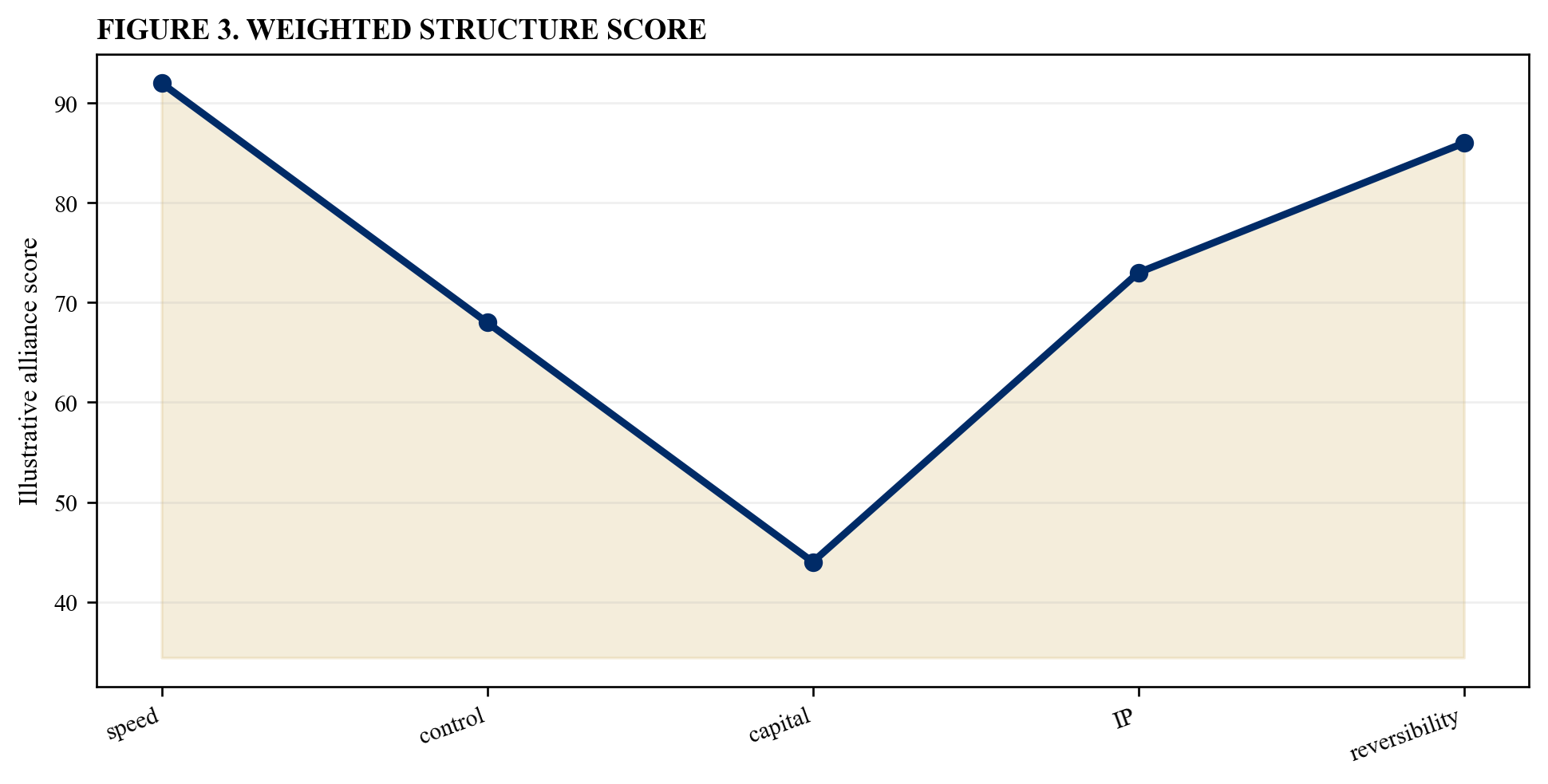
Illustrative analytical scenario; verified collaboration evidence should replace values.
29. Compare reversibility
The board should measure how quickly people, assets, customers, data, IP, licences and cash can be separated. The required output is a reversibility scorecard. Record the commercial objective, parties, contributions, dependencies, decision owner, evidence and review date [17][30].
Test proposed terms against customer requirements, operating processes, resource availability, financial scenarios, legal rights and current regulation. Identify which outcomes require coordination, dedicated assets, joint control or shared residual value. Preserve source dates, assumptions and limitations.
The principal risk is that parties can underestimate the cost of unwinding shared infrastructure. Quantify effects on time to value, investment, control, liability, tax, accounting, intellectual property, data, competition, resilience and exit. Compare each feasible structure on the same commercial and downside assumptions.
Translate the conclusion into scope, contracts, governance, economics, milestones, information rights, compliance controls, remedies, migration gates and exit. Refresh the assessment when the opportunity, parties, contributions, regulation, performance or strategic value changes.
30. Use a pilot where uncertainty is high
The board should test customer demand, operating fit, contribution quality and partner behaviour within a bounded scope. The required output is a pilot charter. Record the commercial objective, parties, contributions, dependencies, decision owner, evidence and review date [2][10].
Test proposed terms against customer requirements, operating processes, resource availability, financial scenarios, legal rights and current regulation. Identify which outcomes require coordination, dedicated assets, joint control or shared residual value. Preserve source dates, assumptions and limitations.
The principal risk is that irreversible capital can be committed before core assumptions are tested. Quantify effects on time to value, investment, control, liability, tax, accounting, intellectual property, data, competition, resilience and exit. Compare each feasible structure on the same commercial and downside assumptions.
Translate the conclusion into scope, contracts, governance, economics, milestones, information rights, compliance controls, remedies, migration gates and exit. Refresh the assessment when the opportunity, parties, contributions, regulation, performance or strategic value changes.
31. Define migration triggers
The board should set evidence thresholds for moving from contract to deeper integration or from equity to separation. The required output is a structure-migration roadmap. Record the commercial objective, parties, contributions, dependencies, decision owner, evidence and review date [1][5].
Test proposed terms against customer requirements, operating processes, resource availability, financial scenarios, legal rights and current regulation. Identify which outcomes require coordination, dedicated assets, joint control or shared residual value. Preserve source dates, assumptions and limitations.
The principal risk is that a temporary structure can persist after its limits become material. Quantify effects on time to value, investment, control, liability, tax, accounting, intellectual property, data, competition, resilience and exit. Compare each feasible structure on the same commercial and downside assumptions.
Translate the conclusion into scope, contracts, governance, economics, milestones, information rights, compliance controls, remedies, migration gates and exit. Refresh the assessment when the opportunity, parties, contributions, regulation, performance or strategic value changes.
Table 4. Migration roadmap
| Stage | Evidence gate | Structure |
|---|---|---|
| discover | problem verified | NDA |
| pilot | demand proven | alliance |
| scale | economics proven | dedicated contract |
| integrate | residual value proven | equity option |
Illustrative analytical structure; verified transaction and jurisdiction evidence governs.
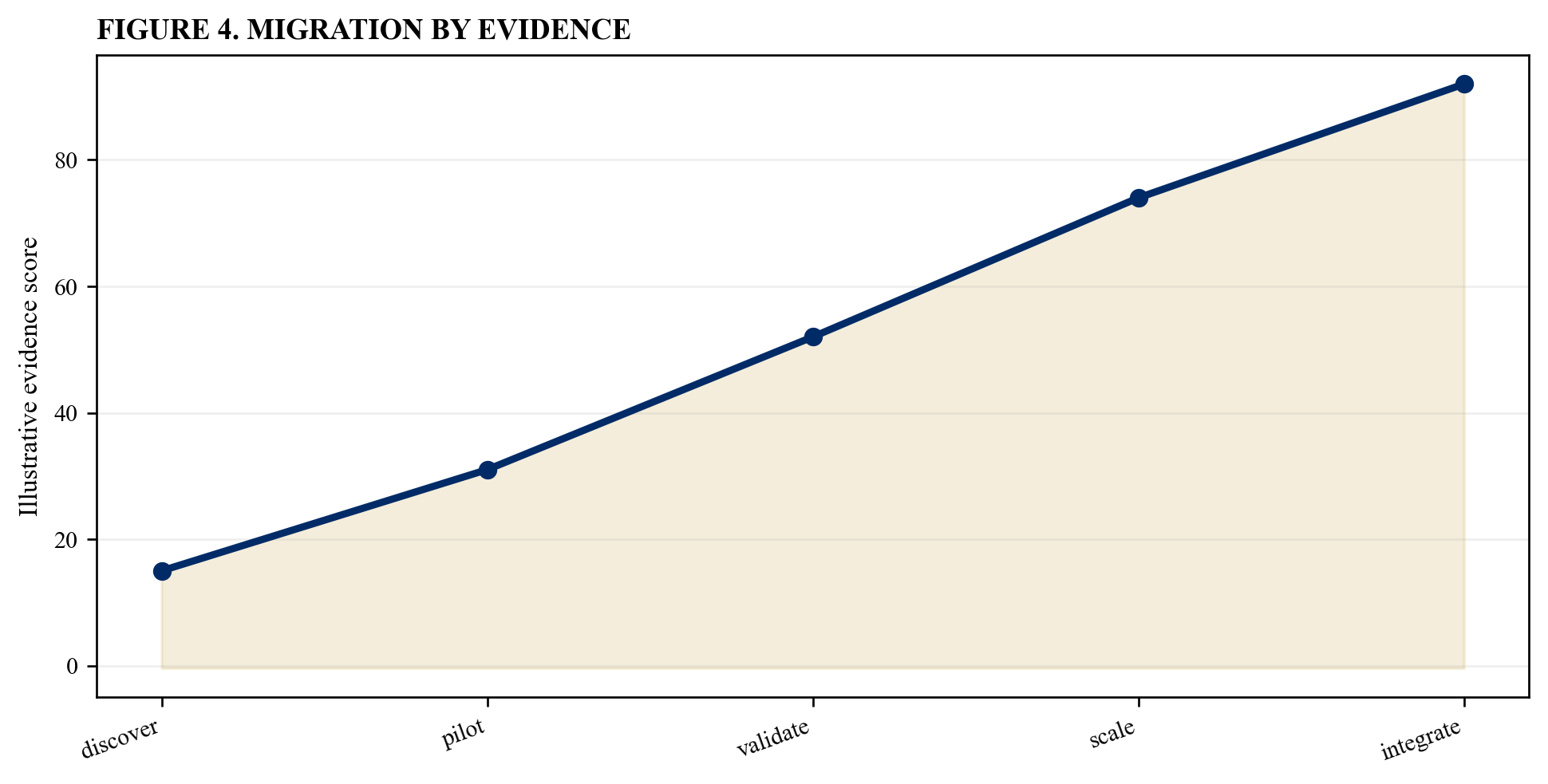
Illustrative analytical scenario; verified collaboration evidence should replace values.
32. Preserve option value
The board should retain alternative channels, suppliers, internal capability, licences and financing where proportionate. The required output is an option-preservation plan. Record the commercial objective, parties, contributions, dependencies, decision owner, evidence and review date [35][39].
Test proposed terms against customer requirements, operating processes, resource availability, financial scenarios, legal rights and current regulation. Identify which outcomes require coordination, dedicated assets, joint control or shared residual value. Preserve source dates, assumptions and limitations.
The principal risk is that premature dependency can weaken negotiation and continuity. Quantify effects on time to value, investment, control, liability, tax, accounting, intellectual property, data, competition, resilience and exit. Compare each feasible structure on the same commercial and downside assumptions.
Translate the conclusion into scope, contracts, governance, economics, milestones, information rights, compliance controls, remedies, migration gates and exit. Refresh the assessment when the opportunity, parties, contributions, regulation, performance or strategic value changes.
33. Align milestones and economics
The board should link fees, equity, exclusivity, funding and control to verified delivery. The required output is a milestone-linked model. Record the commercial objective, parties, contributions, dependencies, decision owner, evidence and review date [10][24].
Test proposed terms against customer requirements, operating processes, resource availability, financial scenarios, legal rights and current regulation. Identify which outcomes require coordination, dedicated assets, joint control or shared residual value. Preserve source dates, assumptions and limitations.
The principal risk is that upfront structural rights can outlast unperformed contributions. Quantify effects on time to value, investment, control, liability, tax, accounting, intellectual property, data, competition, resilience and exit. Compare each feasible structure on the same commercial and downside assumptions.
Translate the conclusion into scope, contracts, governance, economics, milestones, information rights, compliance controls, remedies, migration gates and exit. Refresh the assessment when the opportunity, parties, contributions, regulation, performance or strategic value changes.
34. Define breach and remedies
The board should set cure, service credits, scope reduction, suspension, step-in, buy-out and termination. The required output is a remedies ladder. Record the commercial objective, parties, contributions, dependencies, decision owner, evidence and review date [19][20].
Test proposed terms against customer requirements, operating processes, resource availability, financial scenarios, legal rights and current regulation. Identify which outcomes require coordination, dedicated assets, joint control or shared residual value. Preserve source dates, assumptions and limitations.
The principal risk is that the structure can identify failure without providing a workable response. Quantify effects on time to value, investment, control, liability, tax, accounting, intellectual property, data, competition, resilience and exit. Compare each feasible structure on the same commercial and downside assumptions.
Translate the conclusion into scope, contracts, governance, economics, milestones, information rights, compliance controls, remedies, migration gates and exit. Refresh the assessment when the opportunity, parties, contributions, regulation, performance or strategic value changes.
35. Plan exit at formation
The board should govern transfers, tag, drag, put, call, sale, wind-down and surviving obligations. The required output is an exit architecture. Record the commercial objective, parties, contributions, dependencies, decision owner, evidence and review date [4][40].
Test proposed terms against customer requirements, operating processes, resource availability, financial scenarios, legal rights and current regulation. Identify which outcomes require coordination, dedicated assets, joint control or shared residual value. Preserve source dates, assumptions and limitations.
The principal risk is that equity can convert a reversible collaboration into a stranded ownership position. Quantify effects on time to value, investment, control, liability, tax, accounting, intellectual property, data, competition, resilience and exit. Compare each feasible structure on the same commercial and downside assumptions.
Translate the conclusion into scope, contracts, governance, economics, milestones, information rights, compliance controls, remedies, migration gates and exit. Refresh the assessment when the opportunity, parties, contributions, regulation, performance or strategic value changes.
36. Test downside scenarios
The board should model failed demand, funding shortfall, regulatory delay, IP dispute, cyber event and partner default. The required output is a downside scenario model. Record the commercial objective, parties, contributions, dependencies, decision owner, evidence and review date [11][26].
Test proposed terms against customer requirements, operating processes, resource availability, financial scenarios, legal rights and current regulation. Identify which outcomes require coordination, dedicated assets, joint control or shared residual value. Preserve source dates, assumptions and limitations.
The principal risk is that base-case benefits can conceal asymmetric losses and dependencies. Quantify effects on time to value, investment, control, liability, tax, accounting, intellectual property, data, competition, resilience and exit. Compare each feasible structure on the same commercial and downside assumptions.
Translate the conclusion into scope, contracts, governance, economics, milestones, information rights, compliance controls, remedies, migration gates and exit. Refresh the assessment when the opportunity, parties, contributions, regulation, performance or strategic value changes.
37. Compare structures quantitatively
The board should score value, speed, control, capital, risk, cost, reversibility and strategic option value. The required output is a weighted structure model. Record the commercial objective, parties, contributions, dependencies, decision owner, evidence and review date [1][12].
Test proposed terms against customer requirements, operating processes, resource availability, financial scenarios, legal rights and current regulation. Identify which outcomes require coordination, dedicated assets, joint control or shared residual value. Preserve source dates, assumptions and limitations.
The principal risk is that qualitative preference can masquerade as board judgement. Quantify effects on time to value, investment, control, liability, tax, accounting, intellectual property, data, competition, resilience and exit. Compare each feasible structure on the same commercial and downside assumptions.
Translate the conclusion into scope, contracts, governance, economics, milestones, information rights, compliance controls, remedies, migration gates and exit. Refresh the assessment when the opportunity, parties, contributions, regulation, performance or strategic value changes.
38. Set review cadence
The board should reassess structure at milestones and when scope, economics, control, risk or regulation changes. The required output is a structure review calendar. Record the commercial objective, parties, contributions, dependencies, decision owner, evidence and review date [21][36].
Test proposed terms against customer requirements, operating processes, resource availability, financial scenarios, legal rights and current regulation. Identify which outcomes require coordination, dedicated assets, joint control or shared residual value. Preserve source dates, assumptions and limitations.
The principal risk is that yesterday's proportionate structure can become today's constraint. Quantify effects on time to value, investment, control, liability, tax, accounting, intellectual property, data, competition, resilience and exit. Compare each feasible structure on the same commercial and downside assumptions.
Translate the conclusion into scope, contracts, governance, economics, milestones, information rights, compliance controls, remedies, migration gates and exit. Refresh the assessment when the opportunity, parties, contributions, regulation, performance or strategic value changes.
39. Approve residual risks
The board should document rejected options, evidence limitations, conditions, owners and decision authority. The required output is a board approval memorandum. Record the commercial objective, parties, contributions, dependencies, decision owner, evidence and review date [1][2].
Test proposed terms against customer requirements, operating processes, resource availability, financial scenarios, legal rights and current regulation. Identify which outcomes require coordination, dedicated assets, joint control or shared residual value. Preserve source dates, assumptions and limitations.
The principal risk is that the rationale can disappear while complexity and exposure remain. Quantify effects on time to value, investment, control, liability, tax, accounting, intellectual property, data, competition, resilience and exit. Compare each feasible structure on the same commercial and downside assumptions.
Translate the conclusion into scope, contracts, governance, economics, milestones, information rights, compliance controls, remedies, migration gates and exit. Refresh the assessment when the opportunity, parties, contributions, regulation, performance or strategic value changes.
40. Issue the structure-choice certificate
The board should reconcile purpose, perimeter, contributions, control, economics, risk, cost, reversibility and migration triggers. The required output is an auditable structure-choice certificate. Record the commercial objective, parties, contributions, dependencies, decision owner, evidence and review date [1][3].
Test proposed terms against customer requirements, operating processes, resource availability, financial scenarios, legal rights and current regulation. Identify which outcomes require coordination, dedicated assets, joint control or shared residual value. Preserve source dates, assumptions and limitations.
The principal risk is that the chosen form can become detached from the evidence that justified it. Quantify effects on time to value, investment, control, liability, tax, accounting, intellectual property, data, competition, resilience and exit. Compare each feasible structure on the same commercial and downside assumptions.
Translate the conclusion into scope, contracts, governance, economics, milestones, information rights, compliance controls, remedies, migration gates and exit. Refresh the assessment when the opportunity, parties, contributions, regulation, performance or strategic value changes.
Table 5. Structure-choice certificate
| Conclusion | Evidence | Owner |
|---|---|---|
| purpose | approved thesis | sponsor |
| control | rights analysis | legal |
| economics | scenario model | finance |
| reversibility | separation test | operations |
Illustrative analytical structure; verified transaction and jurisdiction evidence governs.
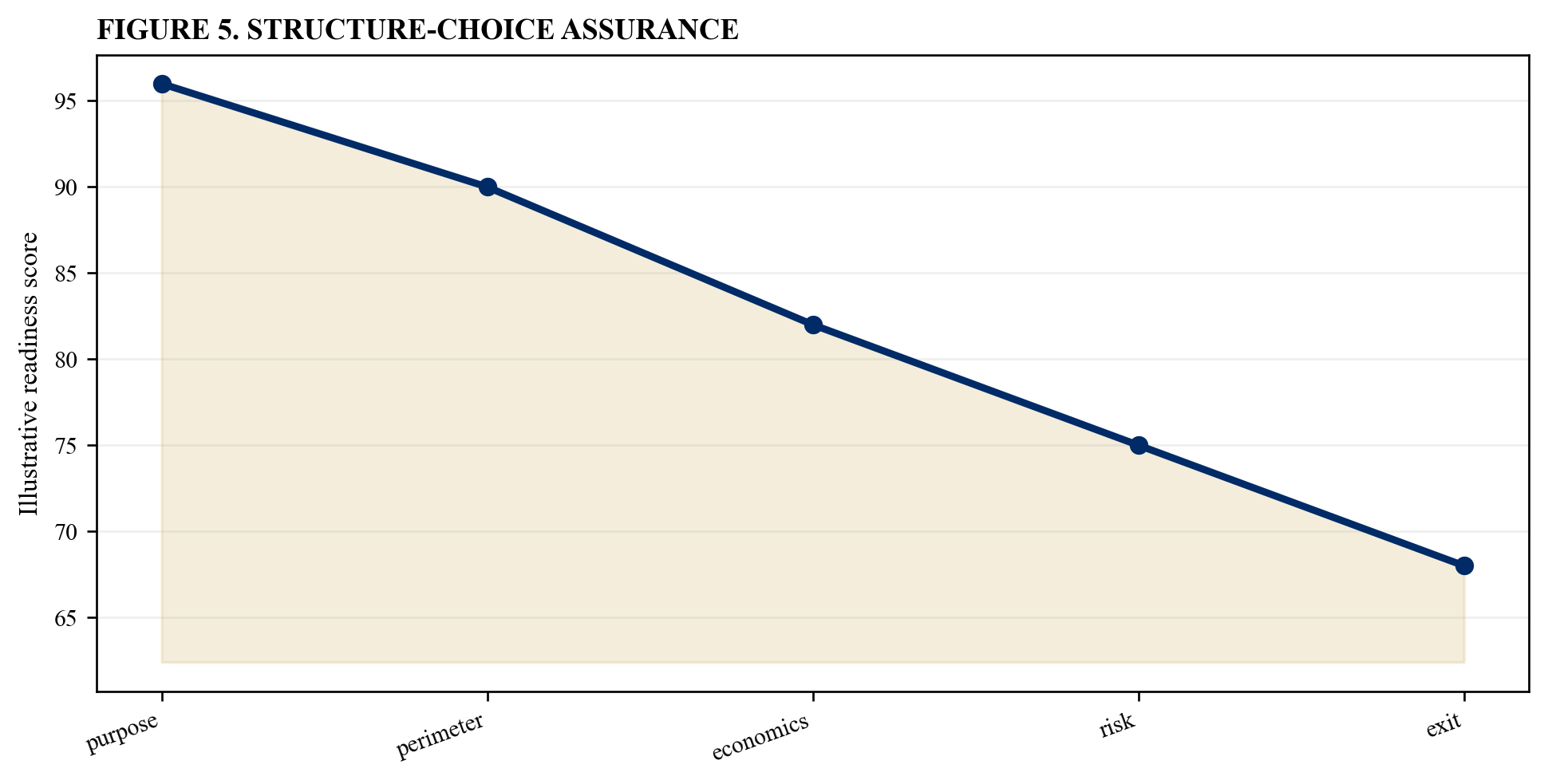
Illustrative analytical scenario; verified collaboration evidence should replace values.
References
- OECD, G20/OECD Principles of Corporate Governance 2023, https://www.oecd.org/en/publications/g20-oecd-principles-of-corporate-governance-2023_ed750b30-en.html
- International Finance Corporation, Corporate Governance Methodology, https://www.ifc.org/en/what-we-do/sector-expertise/corporate-governance/cg-methodology-tools
- IFRS Foundation, IFRS 11 Joint Arrangements, https://www.ifrs.org/issued-standards/list-of-standards/ifrs-11-joint-arrangements/
- UK Government, Joint Venture Guidance, https://assets.publishing.service.gov.uk/media/5a7b9d82ed915d1311060652/06_joint_venture_guidance.pdf
- OECD, Competition Issues in Joint Ventures, https://www.oecd.org/content/dam/oecd/en/publications/reports/2001/02/competition-issues-in-joint-ventures_eebef4fa/7952f31b-en.pdf
- UK Competition and Markets Authority, Joint Venture Business Advice, https://www.gov.uk/government/publications/joint-ventures-and-competition-law-dos-and-donts/joint-venture-business-advice
- US Federal Trade Commission, Dealings with Competitors, https://www.ftc.gov/advice-guidance/competition-guidance/guide-antitrust-laws/dealings-competitors
- World Bank, Business Ready, https://www.worldbank.org/en/businessready
- UK Department for Business and Trade, How to Set Up Joint Ventures Abroad, https://www.business.gov.uk/export-from-uk/learn/categories/prepare-sell-new-country/routes-to-market/set-joint-ventures-abroad/
- OECD, Policy Framework for Investment 2015, https://www.oecd.org/en/publications/policy-framework-for-investment-2015-edition_9789264208667-en.html
- International Valuation Standards Council, International Valuation Standards, https://ivsc.org/standards/
- IFRS Foundation, IFRS 13 Fair Value Measurement, https://www.ifrs.org/issued-standards/list-of-standards/ifrs-13-fair-value-measurement/
- International Organization for Standardization, ISO 9001 Quality Management, https://www.iso.org/iso-9001-quality-management.html
- International Chamber of Commerce, Model Contracts and Clauses, https://iccwbo.org/business-solutions/model-contracts-clauses/
- International Labour Organization, Employment Relationship Recommendation 2006, https://www.ilo.org/resource/r198-employment-relationship-recommendation-2006
- IFRS Foundation, IAS 19 Employee Benefits, https://www.ifrs.org/issued-standards/list-of-standards/ias-19-employee-benefits/
- IFRS Foundation, IAS 16 Property Plant and Equipment, https://www.ifrs.org/issued-standards/list-of-standards/ias-16-property-plant-and-equipment/
- IFRS Foundation, IFRS 16 Leases, https://www.ifrs.org/issued-standards/list-of-standards/ifrs-16-leases/
- UNIDROIT, Principles of International Commercial Contracts 2016, https://www.unidroit.org/instruments/commercial-contracts/unidroit-principles-2016/
- UNCITRAL, Model Law on International Commercial Arbitration, https://uncitral.un.org/en/texts/arbitration/modellaw/commercial_arbitration
- International Organization for Standardization, ISO 37000 Governance of Organizations, https://www.iso.org/standard/65036.html
- IFRS Foundation, IFRS 10 Consolidated Financial Statements, https://www.ifrs.org/issued-standards/list-of-standards/ifrs-10-consolidated-financial-statements/
- IFRS Foundation, IFRS 12 Disclosure of Interests in Other Entities, https://www.ifrs.org/issued-standards/list-of-standards/ifrs-12-disclosure-of-interests-in-other-entities/
- IFRS Foundation, IAS 24 Related Party Disclosures, https://www.ifrs.org/issued-standards/list-of-standards/ias-24-related-party-disclosures/
- OECD, Transfer Pricing Guidelines 2022, https://www.oecd.org/en/publications/oecd-transfer-pricing-guidelines-for-multinational-enterprises-and-tax-administrations-2022_0e655865-en.html
- Loan Market Association, Recommended Forms and Guidance, https://www.lma.eu.com/documents-guidelines/documents
- International Finance Corporation, Project Finance, https://www.ifc.org/en/what-we-do/products-and-services/how-to-apply-for-financing
- OECD, Model Tax Convention, https://www.oecd.org/en/topics/sub-issues/tax-treaties/oecd-model-tax-convention-on-income-and-on-capital.html
- OECD, Base Erosion and Profit Shifting, https://www.oecd.org/en/topics/policy-issues/base-erosion-and-profit-shifting-beps.html
- World Intellectual Property Organization, IP Due Diligence Readiness, https://www.wipo.int/en/web/ip-business-moments/ip-due-diligence
- World Intellectual Property Organization, IP Valuation, https://www.wipo.int/en/web/business/ip-valuation
- World Intellectual Property Organization, IP Licensing, https://www.wipo.int/sme/en/ip_business/licensing/licensing.htm
- OECD, Data Governance, https://www.oecd.org/en/topics/data-governance.html
- National Institute of Standards and Technology, Cybersecurity Framework 2.0, https://www.nist.gov/cyberframework
- European Commission, Guidelines on Horizontal Cooperation Agreements, https://competition-policy.ec.europa.eu/antitrust-and-cartels/legislation/horizontal-cooperation-guidelines_en
- European Commission, EU Merger Control, https://competition-policy.ec.europa.eu/mergers/overview_en
- UK Government, National Security and Investment Act Guidance, https://www.gov.uk/government/collections/national-security-and-investment-act
- International Organization for Standardization, ISO 31000 Risk Management, https://www.iso.org/iso-31000-risk-management.html
- International Organization for Standardization, ISO 22301 Business Continuity, https://www.iso.org/standard/75106.html
- International Chamber of Commerce, Arbitration Rules 2021, https://iccwbo.org/dispute-resolution/dispute-resolution-services/arbitration/rules-procedure/2021-arbitration-rules/
