

1. Treat the brand as a long-duration operating contract
A branded residence is often introduced through an image, name and launch premium. The investment lasts beyond launch. The developer enters a relationship covering intellectual property, design, approvals, marketing, sales, opening and ongoing operation. Buyers acquire units with contractual rights and obligations. A management company, hotel operator or residence team delivers services. Owners fund common and shared costs. Lenders and future purchasers assess whether the proposition remains viable.
Marriott reports that it uses or licenses trademarks for residential real estate, often with hotel development, receives one-time branding fees upon unit sales and often manages or licenses the related homeowners' association for continuing fees. Hyatt reports fees associated with branded residential sales and describes units that may participate in voluntary rental-management programmes. These disclosures illustrate the economic layers. The actual allocation depends on the project agreements.
The developer should therefore underwrite a complete brand lifecycle: selection, negotiation, design, pre-sales, construction, handover, opening, stabilisation, owner governance, resale, refinancing, renewal and potential termination. Each phase has a different decision, fee, evidence set and failure mode.
The financial model separates value created by location, product, market timing and developer execution from value reasonably attributable to the brand proposition. This prevents a headline premium from carrying costs and risks that belong elsewhere in the project.
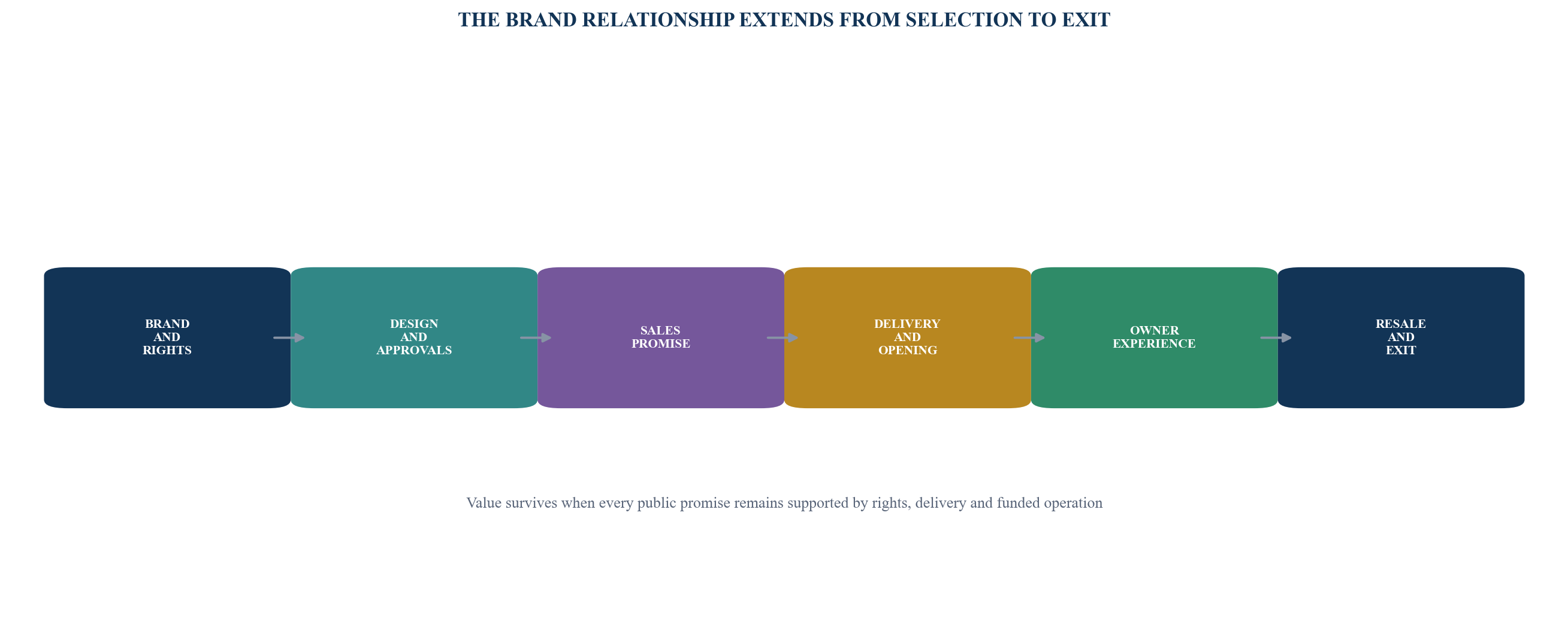
The sequence is illustrative; contractual roles and approvals vary by project.
2. Define brand leakage as a measurable value problem
Brand leakage is the loss of expected economic or experiential value between the licensed proposition and the asset delivered to owners. It can occur before sales, during design, at handover or after opening.
Rights leakage arises when marketing uses a name, benefit, channel or association outside the licensed scope. Design leakage arises when value-engineering, procurement or construction changes reduce approved quality or function. Promise leakage arises when sales material exceeds the agreement, owner documents or operating model. Cost leakage arises when recurring standards and shared services were omitted from service charges or the developer model. Experience leakage arises when staffing, maintenance, amenities or response times fail. Exit leakage arises when termination, renewal, transfer or debranding consequences were not funded or disclosed.
Each leakage category needs an indicator. Unapproved claims, late design approvals, substitutions without brand review, unfunded operating positions, service-charge variance, owner complaints, unresolved defects, failed audits and missing transfer consent can be measured. The dashboard should connect each indicator to exposure, contractual remedy, financial effect and owner.
The concept does not assume that every deviation damages value. Approved local adaptation can strengthen the product. A cost reduction can preserve the brand outcome through a different technical solution. The test is whether the change remains within rights, meets the agreed performance, is reflected in owner economics and passes the required approval.
Table 1. Brand leakage register
| Leakage type | Early indicator | Financial channel | Control owner |
|---|---|---|---|
| rights | unapproved mark, channel, geography or benefit | suspension, rework, claim and launch delay | legal and brand lead |
| design | late approval, substitution or failed inspection | capex, delay, remediation and opening risk | development director |
| promise | sales claim absent from owner documents or scope | cancellation, complaint, redress and reputation | sales and legal lead |
| cost | service or standard omitted from operating budget | service-charge pressure, subsidy and margin | finance and operations |
| experience | staffing, maintenance or service below standard | retention, resale, audit and renewal | residence manager |
| exit | unclear transfer, cure, renewal or debranding plan | refinancing, capex, owner dispute and residual value | board and legal lead |
Contract terms, responsibilities and remedies require project-specific legal review.
3. Map the complete agreement architecture
The brand relationship can span a residential licence, technical-services agreement, marketing approval process, management or services agreement, hotel agreement, shared-services agreement, homeowners' association documents, rental-management agreement and data or loyalty arrangements. A mixed-use project may have several legal entities and cost centres.
The agreement map records parties, assets, rights, territory, term, extension, exclusivity, fees, approvals, performance, defaults, cure, termination, transfer, intellectual property, data, insurance, indemnity and dispute terms. It identifies obligations that continue after the developer has sold the units.
Long contractual periods deserve scenario analysis. Marriott reports hotel franchise and licence arrangements with varying terms that are generally 10 to 25 years, while Hilton reports termination rights for specified defaults in its franchise model. Residential terms can differ. The project team should read the actual documents rather than importing a general hotel assumption.
The dependency map is equally important. The residence licence may depend on an adjacent hotel remaining branded and open. Shared amenities may depend on a hotel operator, master community or separate owner. A change of control, sale, financing enforcement or hotel termination can affect residential rights. Each dependency needs a notice, consent, cure and continuity route.
4. Underwrite the premium as a bridge, not a headline
A branded residence may sell above an unbranded comparator. The observed difference can reflect location, views, architecture, amenities, fit-out, services, hotel adjacency, developer reputation, unit mix, scarcity, market cycle, payment terms and brand. The underwriting should disaggregate these drivers.
Hilton presents a specific Waldorf Astoria Las Vegas paired-sales case study and describes a premium relative to local market growth. That case is evidence about one analysed property and period. It does not establish a transferable premium for another brand, city or development.
The project model begins with comparable unbranded product adjusted for location, size, condition, view, specification, timing and payment terms. It then adds supported value for physical product, service proposition and brand-related access. It subtracts incremental fees, design cost, longer approvals, higher operating cost, buyer incentives, brand-dependent risk and potential unsold-stock exposure.
The result is a range of net project value rather than a fixed brand percentage. The downside case assumes limited sales premium, full contracted cost and a slower launch. The upside case requires evidence from reservations, achieved sales, cancellations, collections and market comparables.
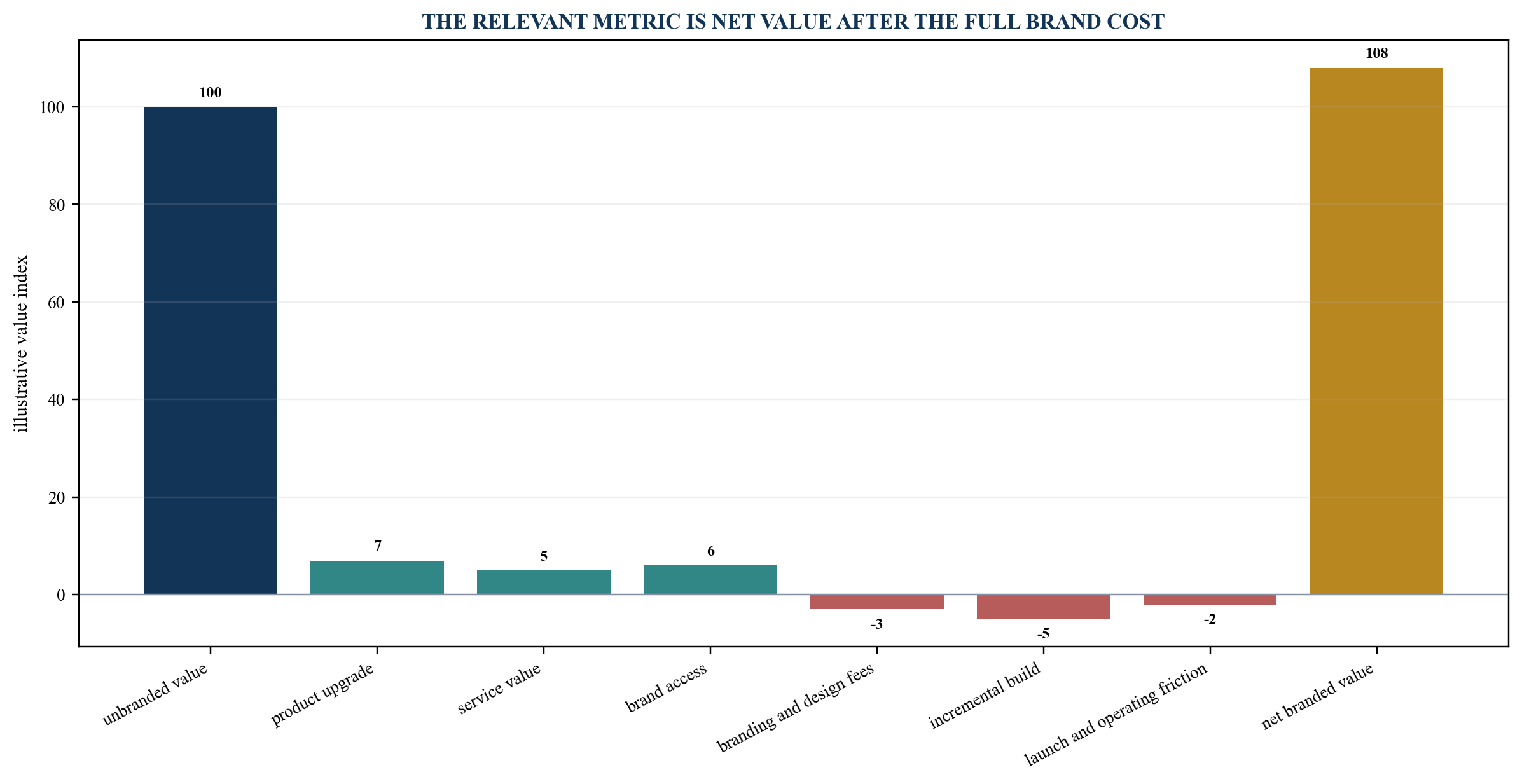
Values are management assumptions for demonstrating the method; they are not a market premium estimate.
5. Build the full brand fee and cost waterfall
The fee schedule can include application, technical services, design review, residential branding, sales-based fees, management, licence, central services, marketing, loyalty, technology, training, audit and reimbursable expenses. The base and timing can differ: fixed, per unit, percentage of sales, percentage of revenue, indexed annual amount or cost reimbursement.
The developer maps each fee to the legal payer, cash-flow stage, tax, accounting treatment, financing eligibility and recovery route. A fee charged on unit sale affects gross margin and cash timing. A continuing fee borne by the owners' entity affects service charges and long-term affordability. A hotel operating fee should not automatically migrate into residence economics.
Incremental physical cost includes brand-compliant architecture, interior design, fit-out, back of house, arrival, amenities, technology, signage, mock-ups, samples, testing and pre-opening. Programme cost includes approvals, redesign, procurement constraints and opening readiness.
The model includes developer staff and third-party advisers. Legal, technical, cost, brand, sales, owner documentation, service-charge, tax and financing work can be material. Reimbursable travel and specialist reviews should be estimated rather than left outside contingency.
Table 2. Brand fee and cost schedule
| Cost layer | Possible basis | Project treatment | Leakage test |
|---|---|---|---|
| technical and design services | fixed, milestone or reimbursable | development soft cost and draw timing | all review cycles and travel captured? |
| residential branding fee | unit sale, collection or fixed schedule | sales cost and unit margin | definition aligned with cancellations and refunds? |
| continuing licence or management | annual, revenue or budget basis | owner entity or operating cost | disclosed, approved and funded after handover? |
| central programmes | allocation or reimbursement | hotel, residence or shared cost | benefit and allocation evidenced? |
| physical standards | package and specification | capex, procurement and contingency | approved scope appears in cost plan? |
| pre-opening and training | staffing, systems and mobilisation | pre-opening use and cash need | responsibility and owner funding defined? |
Categories are illustrative; fee bases and payers depend on the signed agreements.
6. Make brand selection an investment decision
Brand selection should test strategic fit, customer recognition, residence capability, local pipeline, product standards, owner proposition, operating model, fees, approvals, data, term, transfer and exit. A famous name can still be unsuitable for the site's price point, unit use, service-charge capacity or delivery programme.
The request for proposal should use the same project facts and evaluation dimensions for each candidate. It distinguishes confirmed brand commitments from marketing descriptions and non-binding discussions. The developer should understand who signs, who operates, who approves, and which affiliates can change during the term.
Commercial negotiation needs a scenario model. A lower sales fee can be offset by higher physical standards or continuing cost. A strong launch contribution can be offset by restrictive transfer or termination rights. A flexible design approach can reduce capex while offering a different level of owner service.
The board decision records selected value drivers, rejected alternatives, cost, dependencies, residual risks and conditions before signing. The decision remains subject to legal, tax, accounting, technical and regulatory advice.
7. Control design approvals and value engineering
Design approval should operate as a state machine. Concept, schematic, detailed design, mock-up, procurement, construction, completion and opening each have submission requirements, reviewer, response time, conditions, revision and sign-off. A drawing stamp without linked conditions can create false closure.
The brand matrix maps every standard to a location, drawing, specification, cost code, procurement item and test. It identifies mandatory, alternative, waiver and locally required treatments. Approved deviations have scope, reason, duration and residual obligation.
Value engineering needs a controlled path. The proposal shows cost saving, performance, appearance, operations, maintenance, owner promise and programme. Brand approval, designer responsibility and developer decision remain separate. Procurement cannot treat an unanswered brand review as consent unless the agreement says so.
Long-lead items receive early attention. Bespoke finishes, imported equipment, technology, operating supplies and mock-ups can affect launch. The model includes alternatives and approval lead time before the purchase decision.
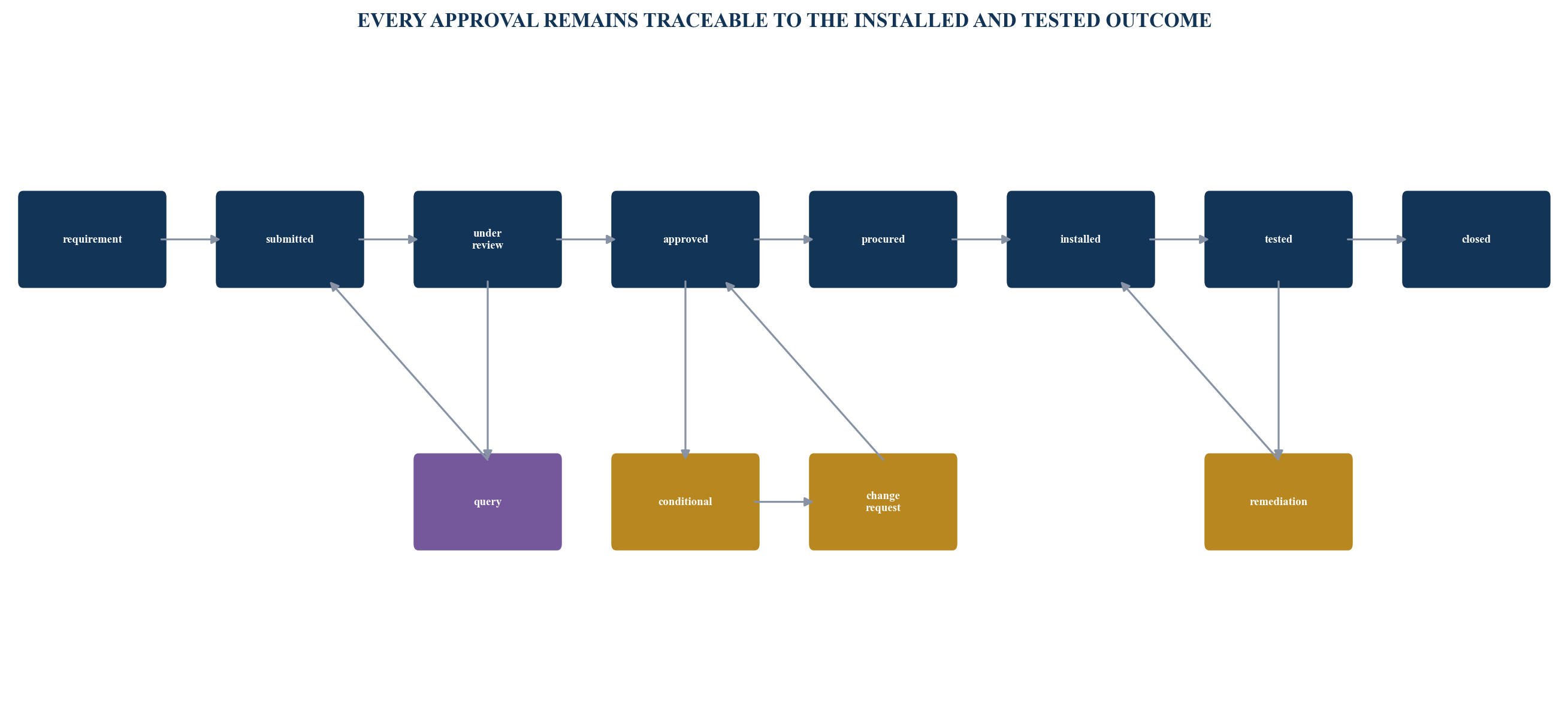
Approval rights and deemed-approval rules depend on the signed agreements.
8. Establish one controlled sales promise register
The sales promise register records every representation about brand, services, amenities, hotel access, loyalty, owner benefits, rental, return, furnishing, opening date, views, charges and management. It identifies the source right, approval, jurisdiction, audience, language, validity and corresponding purchaser-document provision.
Marketing approval covers more than logos. Renderings, brochures, websites, broker scripts, events, influencer material, reservation forms, price lists, FAQs and translations can carry the brand proposition. Each released item has a version and expiry.
Sales teams need claim boundaries and escalation routes. They should distinguish included service from optional paid service, residence amenity from hotel access, contractual right from current policy, and voluntary rental participation from a financial return. Unsupported yield or appreciation statements can create risk even when the brand material itself is approved.
Evidence from buyer interactions should feed the register. Repeated questions about charges, benefits, rental or completion identify unclear disclosures. Complaints and cancellation reasons show where the marketed proposition diverges from understanding.
9. Align purchaser documents with the brand agreement
The reservation, sale agreement, disclosure statement, jointly owned property documents, management terms, service-charge budget, house rules, rental agreement and handover materials should describe the same proposition. The buyer needs to understand which counterparty owes each obligation and what can change.
The documents should address brand licence term, operator role, service scope, charges, shared amenities, access, standards, owner obligations, rental participation, data, transfer, alterations, default, termination and debranding as applicable. Consumer-protection and real-estate requirements depend on jurisdiction.
The developer should avoid promising perpetual brand use when the licence has a term, conditions and termination rights. The debranding statement needs careful legal drafting and a practical operating plan. A theoretical termination clause can become a value problem if signage, systems, staffing, amenities and owner documents cannot transition.
Translations and sales summaries are reconciled to the controlling documents. A plain-language owner guide can improve understanding, while it should identify which document governs in a conflict.
Table 3. Promise-to-document reconciliation
| Buyer proposition | Agreement source | Owner-document location | Operating evidence |
|---|---|---|---|
| use of brand name | residential licence | sale and disclosure terms | current licence and approved marks |
| residence services | management or service schedule | service description and budget | staffing, procedures and service levels |
| hotel or club access | shared-use or access agreement | rights, conditions and charges | access controls and availability |
| owner benefit | programme terms | limitation and change disclosure | current enrolment and support route |
| rental participation | rental-management agreement | voluntary terms, fees and restrictions | licence, operations and owner reporting |
| brand termination | licence and transition terms | consequence and owner governance | debranding plan and reserve treatment |
The legal effect of each document requires jurisdiction-specific advice.
10. Build service charges from the operating promise
Service charges should start with the promised and required operating model. Staffing, front-of-house, security, housekeeping of common areas, engineering, landscape, amenities, technology, insurance, utilities, reserve, management and brand-related fees need quantities, rates, escalation and allocation.
Dubai Land Department describes service charges for jointly owned property as approved annual charges covering management, operation, maintenance and repair. Its FAQs identify management companies, audited services, utilities, insurance and reserve charges within the framework. Project-specific budgets and approvals must follow current requirements.
The developer should test year one, stabilised year and stress year. Early occupancy can produce low collections while the full experience needs to operate. Unsold units, developer subsidy, opening inefficiency and hotel ramp-up require explicit treatment. A low launch service charge can create later shock if the sustainable budget is higher.
The affordability analysis compares charge per unit and square metre with customer segment, competing projects and the value of services. It shows optional and included items separately. Reserve funding follows asset lifecycles and major replacements rather than a balancing percentage.
11. Govern hotel-residence shared costs and benefits
Mixed-use projects can share arrival, security, engineering, utilities, pools, spas, food and beverage, back of house, staff, technology, insurance and marketing. Shared use can create operating efficiency and owner value. It can also transfer hotel cost to residence owners or leave the residence dependent on another asset.
The allocation framework identifies the service, provider, beneficiary, measurement basis, capacity, fixed and variable cost, mark-up, approval, invoice evidence and dispute process. Area, headcount, consumption, usage, revenue or agreed fixed share may be relevant for different services. One allocation key for all costs can misstate causation.
Benefits are also recorded. Residence owners may have access to hotel amenities, preferred arrangements or shared staffing. The operating agreement should define availability, priority, closures, events, guests, capacity and charges. Marketing should not turn a conditional access arrangement into an unrestricted right.
The model tests hotel failure, sale, renovation, closure and debranding. Critical residence services need a continuity route independent of the adjacent hotel where appropriate.
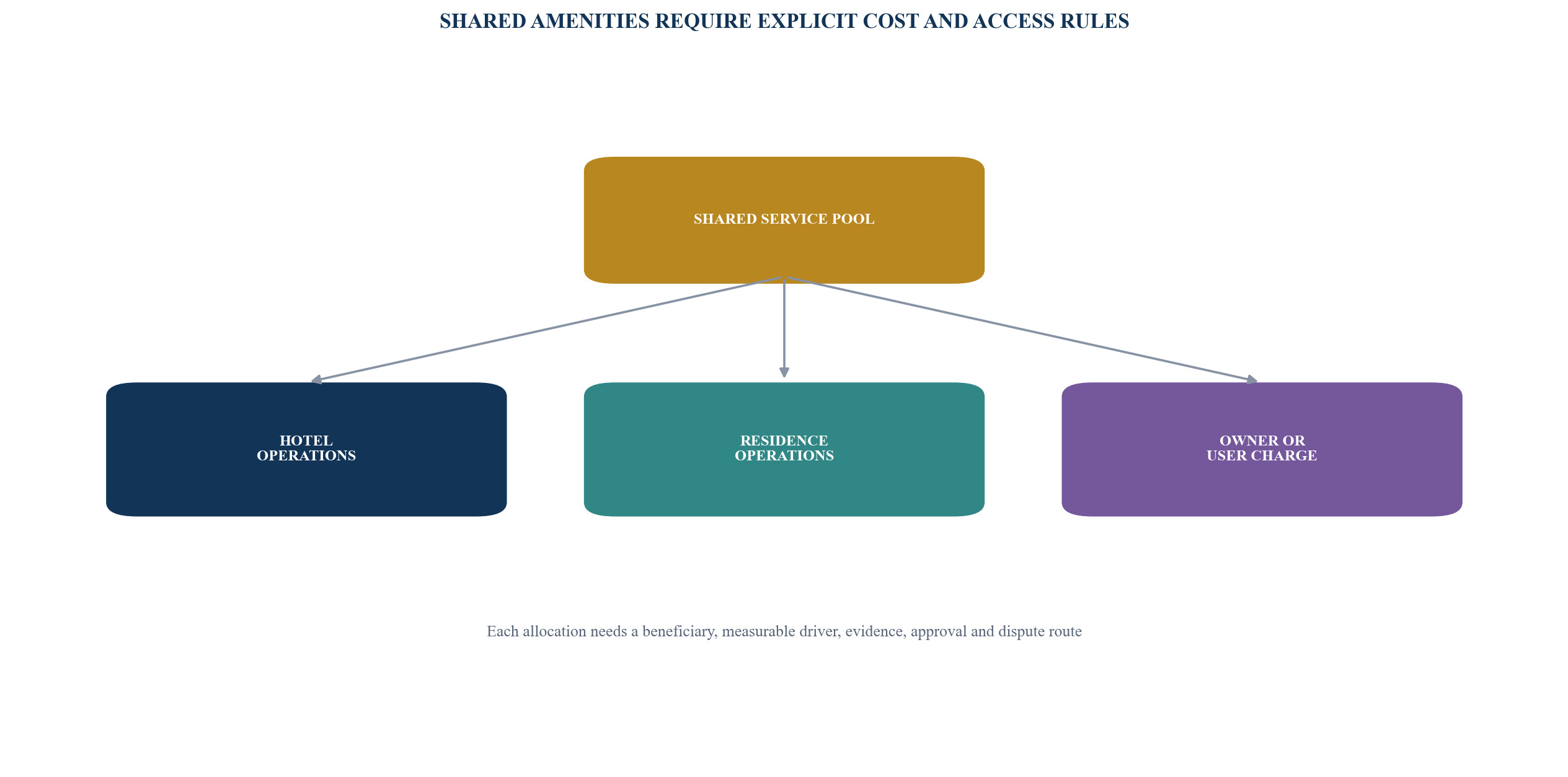
Allocation methods are illustrative and require contractual, accounting and regulatory review.
12. Underwrite the rental programme separately
A branded residence can be held for personal use, long-term occupation, resale or voluntary rental participation. Hyatt describes branded residential units that may participate in voluntary rental-management programmes. The project needs separate economics and disclosures for the rental option.
The rental model defines eligibility, furnishing, owner-use restrictions, booking channels, pricing authority, fees, operating expenses, reserve, damage, insurance, tax, reporting and termination. Gross room revenue is not owner cash. The bridge should show commissions, management, housekeeping, utilities, maintenance, replacement and other authorised deductions.
Occupancy and rate assumptions should use relevant evidence and scenarios. Hotel performance is not automatically transferable to residences because inventory, unit size, owner use, channel, service and seasonality differ. Any projected return requires jurisdiction-specific review and clear assumptions.
The residence operation should prevent conflict between transient guests, permanent residents and hotel guests. Access, security, noise, wear, housekeeping, amenity capacity and owner communications need rules and enforcement.
Table 4. Rental-programme owner cash bridge
| Layer | Evidence | Owner cash treatment | Principal control |
|---|---|---|---|
| available nights | owner elections and blackout rules | starting inventory | auditable calendar and change record |
| sold nights and rate | booking and pricing records | gross rental revenue | channel and rate authority |
| channel and sales cost | platform and programme terms | deduct authorised costs | reconciled booking-level evidence |
| management and service | signed fee schedule | deduct applicable fees | disclosed base and tax treatment |
| operating and replacement | unit costs and reserve rules | deduct or reserve | owner statement and approved budget |
| net distribution | reconciled cash and tax | pay under agreed cycle | statement, bank and exception control |
Values and fees require project-specific terms; the table shows the required structure.
13. Gate handover and opening through evidence
Brand opening should be more than a marketing date. The gate combines statutory completion, title and owner-document readiness, brand inspection, defects, life safety, systems, staffing, training, operating supplies, service-charge funding, insurance, communications and owner support.
The developer maintains one readiness register across hotel and residence dependencies. A hotel delay may affect shared services or brand positioning while residential units are physically complete. The plan defines whether partial handover is permitted and which substitute services are funded.
Unit handover includes specification, defects, warranty, controls, owner induction, service contacts, charges, access, rental choice and brand information. Sales promises are checked against the delivered unit and operating state before the owner appointment.
Opening exceptions require authorised acceptance, interim controls, owner communication and closure dates. A permanent reduction should pass contract, brand, owner, regulatory and financial review rather than remain an aged snag.
14. Operate one owner-experience control system
The residence manager should translate brand standards into measurable service levels, procedures, staffing, training, audits, maintenance, incident response and owner communications. The system records requests, complaints, response, recurrence, cause, cost and closure.
Owner expectations vary. Some value privacy and efficient core services. Others expect hotel-style service and programme access. The operating model should deliver the documented proposition consistently while permitting optional services under approved terms.
The annual plan connects brand audits, service-charge budget, maintenance, replacements, staffing, technology, insurance and owner meetings. Repeated service failures can be evidence of underfunding, unclear allocation, supplier weakness, system design or an unrealistic promise.
Data governance covers owner identity, access, preferences, payments, rental activity, loyalty, incidents and communications. Rights, purpose, consent, security, retention and cross-entity sharing require current privacy and contractual review.
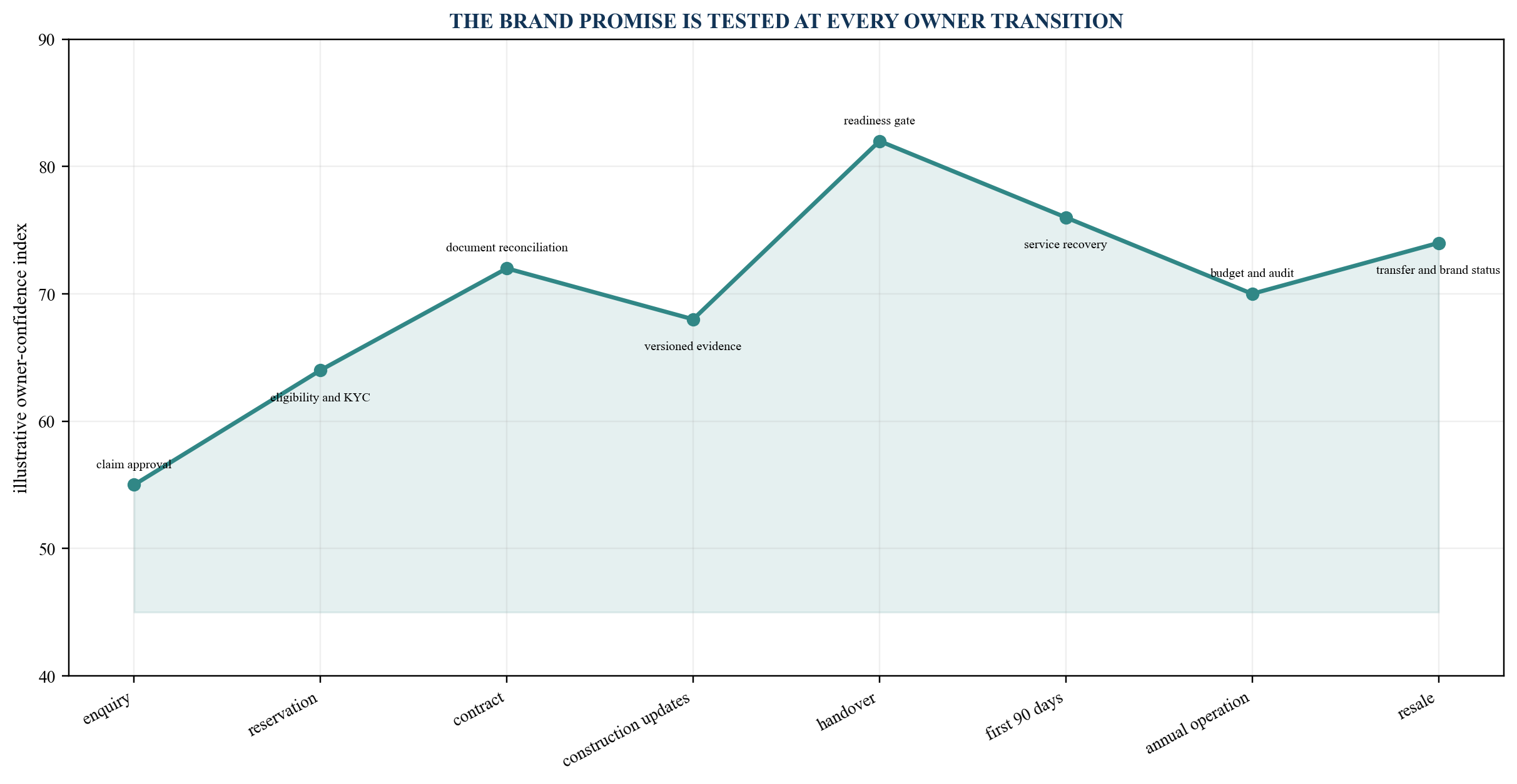
The journey varies by jurisdiction, sales process and operating model.
15. Establish decision rights and performance governance
Governance spans developer, brand, operator, hotel owner, management company, owners' entity, master developer, lenders and authorities. The responsibility matrix defines recommendation, approval, execution, evidence and escalation for each material decision.
Reserved matters can include brand use, design change, service scope, budget, shared allocation, key appointments, rental terms, owner communications, transfer, financing, default and debranding. The documents should avoid overlapping approvals that create deadlock without an escalation route.
The monthly brand-value forum reviews sales claims, design approvals, cost, programme, service-charge forecast, operating readiness, owner cases, audits, breaches and residual risk. Decision papers show facts, options, economics, contractual rights and affected owners.
The board receives a consolidated view. A project can be ahead in sales and behind in operating readiness. It can pass a visual brand review and still have an unfunded owner proposition. The dashboard needs leading and outcome measures.
Leading measures include approval conditions due, design changes awaiting review, marketing assets near expiry, unresolved promise-to-document gaps, long-lead items without alternatives, operating positions without funding, shared services without executed terms and critical opening tests outstanding. These measures show exposure before an owner complaint or brand notice occurs.
Outcome measures include achieved net price, cancellation, collection, design rework, opening delay, service-charge variance, complaint recurrence, audit findings, rental statement accuracy, transfer time and owner satisfaction. Denominators and cohort dates should remain visible. A low complaint count can reflect incomplete occupancy, and a strong achieved price can reflect a favourable market rather than brand execution.
The dashboard also reconciles the economics. It shows cumulative unit sales, brand fees paid or accrued, incremental physical cost, remaining compliance capex, developer subsidy, sustainable service charge, reserve funding and severe cure liquidity. Management can trace every total to the agreement, cost plan, owner budget or transaction population.
Thresholds need named decisions. A missed approval may block procurement. A service-charge variance may require scope, subsidy or disclosure action. A repeated audit issue may trigger cure rights. An increased cancellation rate may require review of claims, affordability or delivery evidence. Each threshold states the evidence, owner, escalation date and permitted response.
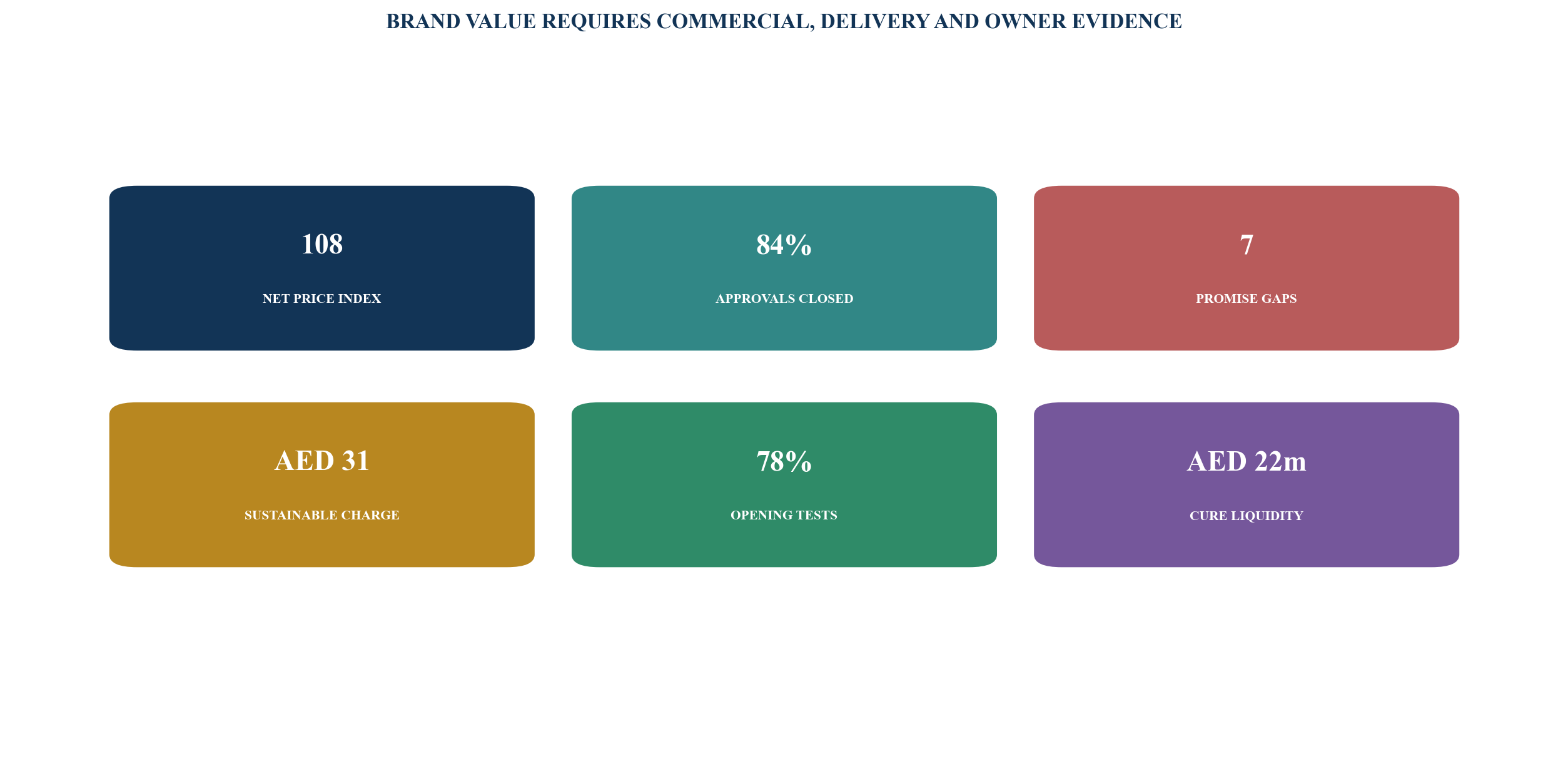
Values are management assumptions and do not represent a named project.
16. Model breach, cure, termination and debranding
Brand agreements can include defaults for non-payment, misuse of intellectual property, failure to meet standards, unauthorised transfer or other breaches. Rights and remedies vary. The project should map notice, cure, suspension, step-in, termination, damages, de-identification and continuing owner obligations.
The cure plan estimates time, access, design, procurement, capex, operating cost and communication. Critical requirements receive preventive controls before an audit or notice. A breach register separates allegations, confirmed breaches and closed remediation.
The debranding scenario addresses signage, digital channels, uniforms, design elements, amenities, systems, loyalty, owner benefits, service contracts, staffing, sales inventory, purchaser documents, rental, management and replacement identity. It also considers whether an adjacent hotel remains branded.
The financial case includes remediation, transition, legal and communication cost; sales and resale impact; service-charge changes; refinancing; owner disputes; and timing. These are scenarios, because actual rights and market effects depend on facts and agreements.
17. Protect resale, transfer and refinancing value
Future buyers and lenders need evidence that the brand is valid, standards are maintained, charges are sustainable and material disputes are controlled. The resale pack can include current licence status, management, service charges, reserve, audits, benefits, rental status, defects and transfer requirements subject to confidentiality and law.
Transfer conditions should be operational. Notices, consents, buyer eligibility, rental continuity, fees, owner-benefit changes and data transfers have owners and service levels. An opaque process can impair liquidity even where the asset performs well.
The residual-value model uses income, service charge, condition, remaining licence term, renewal assumptions, capital needs, brand status and market comparables. It separates the building's intrinsic value from brand-dependent value and the cost of transition.
Refinancing tests lender requirements and insurance at the expected date. A lender may review brand termination, management continuity, reserve, service-charge collection, hotel dependency and valuation sensitivity. The model avoids assuming automatic renewal or permanent premium.
Table 5. Exit-value scenarios
| Scenario | Brand state | Operating assumption | Value and liquidity question |
|---|---|---|---|
| stable | full compliance and funded standards | normal services and approved budget | does performance support current market pricing? |
| cost pressure | brand retained with higher sustainable charge | service scope maintained | how does affordability affect absorption and resale? |
| cure | material breach under remediation | interim controls and capex | what liquidity and time are needed to restore compliance? |
| hotel separation | residence brand continues with changed dependency | substitute shared services | can the residence operate independently? |
| debranding | licence ends and marks are removed | replacement identity and management | what capex, disputes and price adjustment arise? |
| transfer | project or operator changes with consent | continuity through handover | are approvals, data and owner obligations executable? |
Impacts are illustrative decision channels; valuation requires current market evidence.
18. Run a ten-day branded-residence diagnostic
Days one and two confirm the investment decision, project entities, agreements, brand rights, design stage, unit mix, sales status, hotel dependency, owner documents, operating model and responsible executives. The team creates one source and obligation register.
Days three and four reconcile fees, design standards, approvals, cost plan, programme and long-lead procurement. Selected design requirements are traced to drawings, estimates and approval evidence.
Days five and six sample marketing, broker scripts, reservations, sale documents, service-charge budget, access rights, owner benefits and rental terms. Gaps enter the promise register.
Days seven and eight test handover, staffing, shared services, insurance, data, audit, breach, cure, debranding and severe liquidity. The team builds base, downside and exit scenarios.
Days nine and ten present net brand economics, immediate controls, contract decisions, funded operating requirements, owner disclosures, residual risks and a ninety-day roadmap. The board receives an assumption register and decision pack.
The diagnostic should focus on evidence. A presentation describing luxury service cannot prove staffing or budget. An approved rendering cannot prove installed scope. A signed licence cannot prove that public claims are within rights. The work traces each material promise to the agreement, asset, budget and operating test.
19. Mobilise a ninety-day brand-value office
The first thirty days establish governance, close priority agreement and promise gaps, freeze standards, update the cost and service-charge models, and assign every approval and operating obligation. High-risk marketing is corrected through authorised channels.
Days thirty-one to sixty progress design approvals, mock-ups, procurement, purchaser documents, shared allocations, rental terms, staffing, technology and opening plans. The financial model is updated for evidence and change.
Days sixty-one to ninety execute readiness tests, owner journeys, budget approvals, brand inspections, data controls, severe scenarios and handover rehearsals. Residual issues receive authorised interim controls or revised decisions.
The office maintains version control across agreements, design, sales, owner documents and operations. It also creates a recurring forum for audits, complaints, budget, reserve, licence compliance, hotel dependencies and transfer requests.
Acceptance is evidenced through signed decisions, approved material, closed design conditions, reconciled budgets, tested services and owner-ready documents. The adviser does not replace the contractual or statutory responsibilities of the developer, brand, operator, designers, management company or authorities.
20. Package advisory work around funded brand decisions
A brand-selection and economics diagnostic can support a developer before term sheet or licence signature. The paid outcome is a comparable option set, net economics, negotiation issues and board decision.
A brand-agreement and development office can reconcile rights, fees, design approvals, programme, cost, sales claims and owner obligations through signed gates. It is relevant where a brand is selected and the project is approaching launch, procurement or lender diligence.
A service-charge and owner-proposition review can build the sustainable operating budget, shared-cost allocation, purchaser disclosures, rental terms and handover package. The decision is whether the marketed experience is fundable and contractually deliverable.
A recurring owner-experience and brand-control retainer can monitor approvals, changes, audits, service levels, complaints, budgets, reserve, shared services, transfers and brand status after opening. The scope needs named assets, service levels and access to operating evidence.
Commercial qualification establishes an authorised buyer, named development or portfolio, dated selection, launch, handover, renewal or financing decision, evidence access, budget route and acceptance criteria. General interest in branded residences does not establish demand for advisory work. A qualified opportunity connects the paper to a funded decision and signed scope.
The mandate record follows qualified opportunity, signed engagement, accepted deliverables, invoice and collected fee. Marketing metrics remain leading indicators. This preserves focus on work that can convert brand complexity into a board decision, controlled execution and paid outcomes.
Table 6. Paid branded-residence mandate modules
| Module | Buyer decision | Core deliverable | Acceptance criterion |
|---|---|---|---|
| brand selection | select and negotiate | option economics and term-sheet issues | documented board decision |
| agreement diagnostic | sign, amend or cure | rights, obligations, fees and risk register | approved negotiation and action plan |
| launch control | authorise sales | promise register and approved content process | reconciled claims and owner documents |
| design value office | progress design and procurement | standards, approvals, cost and change control | passed stage gates and closed conditions |
| owner proposition | approve charges and operation | budget, allocations, rental and handover model | fundable, documented service proposition |
| recurring brand control | sustain value and compliance | audit, owner, cost and decision cadence | service levels and decision record |
Scope, fees, timing and outcomes require client-specific agreement.
References
- Marriott International. 2025 Annual Report. https://marriott.gcs-web.com/static-files/90ac617a-ef5f-4438-97ec-2e7cf4f8a41e
- U.S. Securities and Exchange Commission. Marriott International Form 10-K for 2025. https://www.sec.gov/Archives/edgar/data/1048286/000104828626000007/mar-20251231.htm
- Marriott International. Mixed Use and Residential Development. https://www.hotel-development.marriott.com/hotel-development
- Hyatt Hotels Corporation. Form 10-K for 2025. https://www.sec.gov/Archives/edgar/data/1468174/000146817426000007/h-20251231.htm
- Hilton. Residential Development. https://www.hilton.com/en/corporate/residential-development/
- Hilton. Branded Residential Fact Sheet. https://stories.hilton.com/branded-residential-by-hilton-fact-sheet
- U.S. Securities and Exchange Commission. Hilton Worldwide Holdings Form 10-K for 2025. https://www.sec.gov/Archives/edgar/data/1585689/000158568926000007/hlt-20251231.htm
- Accor. Documents and Publications. https://group.accor.com/en/documents-publications
- Accor. Group at a Glance, 2025. https://assets.group.accor.com/yrj0orc8tx24/5fb92nCdGwFBM4lYRHTevc/e6df5812683aac0a64f0abf26a9d8147/Accor_at_a_Glance.pdf
- Accor. Brandbook, July 2025. https://assets.group.accor.com/yrj0orc8tx24/5LtY0I2Mr4izMLJgFhDtZd/7c88ac0917934ed12c547584ed62ed3a/Accor_Brandbook_EN_July_2025.pdf
- Dubai Land Department. Frequently Asked Questions: Jointly Owned Property. https://dubailand.gov.ae/en/frequently-asked-questions
- Dubai Land Department. Jointly Owned Property in the Emirate of Dubai. https://dubailand.gov.ae/en/about-dubai-land-department/jointly-owned-property-in-the-emirate-of-dubai/
- Dubai Land Department. Jointly Owned Property Directions. https://dubailand.gov.ae/media/hoejct3d/jointly-owned-property.pdf
- Dubai Land Department. Mollak System. https://mollak.dubailand.gov.ae/publicpages/about-us.html
- Dubai Land Department. Munaqasat Service for Jointly Owned Property. https://dubailand.gov.ae/en/news-media/dubai-land-department-launches-munaqasat-service-through-mollak-system-to-govern-submission-of-tenders-for-the-jointly-owned-property-jop-sector/
About the Author
Chennakeshav Adya, Independent Researcher
