

1. Define the valuation question
The decision question is which operating cash, contracted conversion and financeable options justify the proposed enterprise value. The diligence record should begin with board mandate, transaction perimeter, audited statements, contract register and capital plan. Each input requires a date, source, owner and reconciliation to the valuation model. Market demand, power scarcity and transaction multiples provide context. The cash earned by the subject assets must remain the controlling evidence. [1][2]
The central failure is that headline capacity and market growth can substitute for an explicit cash-flow thesis. The error can affect revenue, direct cost, capital expenditure, timing, tax, liquidity, debt capacity and terminal value simultaneously. A model should identify the physical or contractual event that changes cash, the period in which it occurs and the evidence that would confirm or reject the assumption. Management estimates can support scenarios when they are identified as estimates and kept separate from observed data.
The recommended response is to state the value layers, decision date, currency, ownership perimeter and required return. The base case should include only evidenced current operations and contracted conversion with costed dependencies. Upside should remain visible as an option or contingent case until land, power, permits, customer commitment, funding and acceptance support it. The investment committee should see the value at risk, the earliest observable indicator and the action available before capital is released.
2. Decompose the quoted megawatt multiple
The decision question is which enterprise-value and capacity components sit inside the advertised ratio. The diligence record should begin with price bridge, debt, leases, cash, minority interests, site register and capacity definitions. Each input requires a date, source, owner and reconciliation to the valuation model. Market demand, power scarcity and transaction multiples provide context. The cash earned by the subject assets must remain the controlling evidence. [3][4]
The central failure is that the numerator and denominator can combine different dates, rights and maturity. The error can affect revenue, direct cost, capital expenditure, timing, tax, liquidity, debt capacity and terminal value simultaneously. A model should identify the physical or contractual event that changes cash, the period in which it occurs and the evidence that would confirm or reject the assumption. Management estimates can support scenarios when they are identified as estimates and kept separate from observed data.
The recommended response is to rebuild the ratio across stated, commissioned, usable, contracted and billable capacity. The base case should include only evidenced current operations and contracted conversion with costed dependencies. Upside should remain visible as an option or contingent case until land, power, permits, customer commitment, funding and acceptance support it. The investment committee should see the value at risk, the earliest observable indicator and the action available before capital is released.
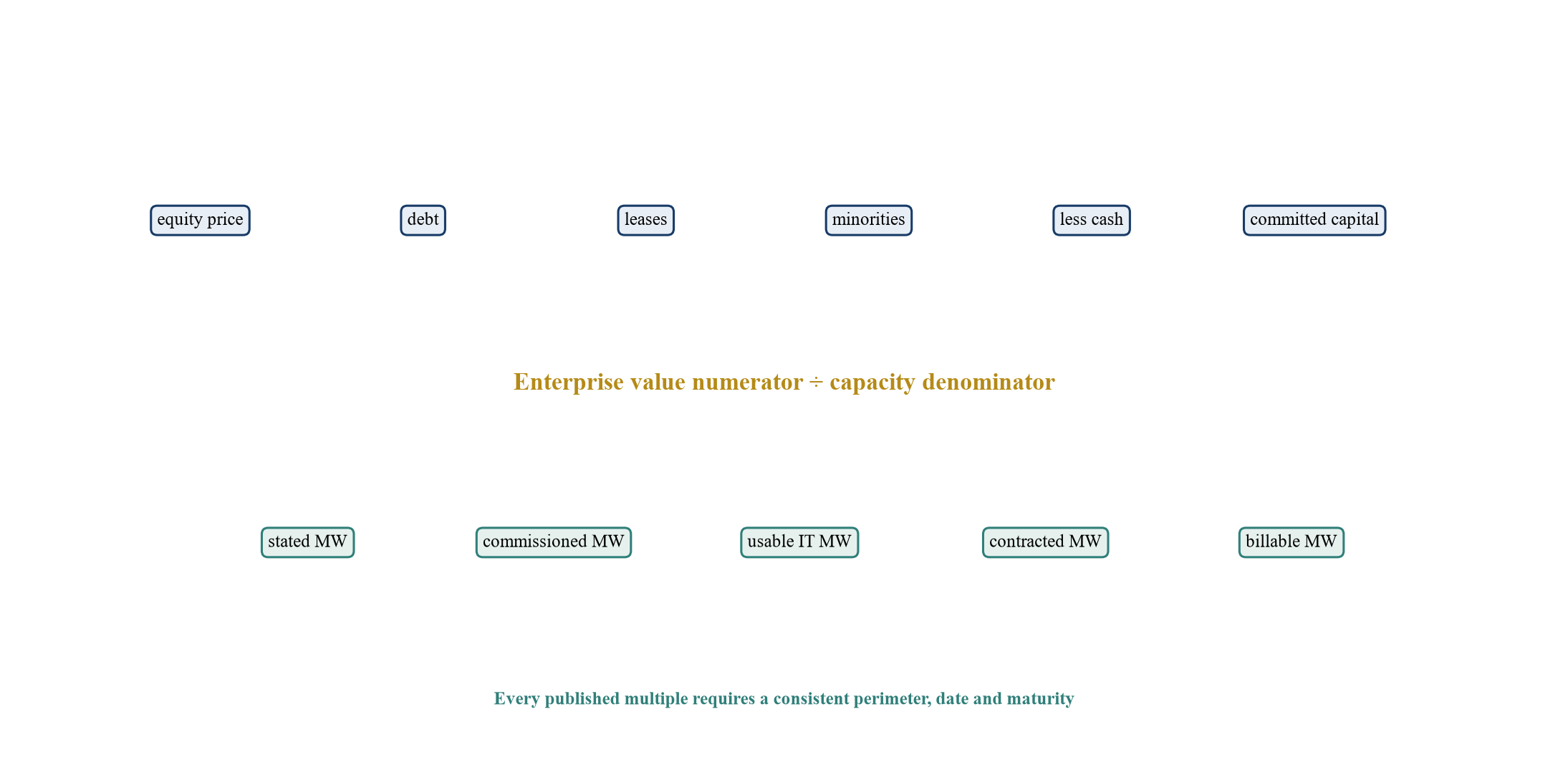
Analytical framework; transaction-specific definitions determine each ratio.
| Dimension | Required definition | Adjustment question |
|---|---|---|
| enterprise value | equity, debt, leases, minorities and cash | which obligations fund remaining capacity? |
| capacity | stated, commissioned, usable, contracted or billable | which layer supports current cash? |
| date | announcement, signing or closing | were capacity and price measured together? |
| perimeter | operating, development and corporate assets | which sites and rights transfer? |
| capital | spent, committed and unfunded | how much remains before cash? |
| maturity | operating, ramping or option | what probability and delay apply? |
Proposed framework; transaction evidence determines treatment.
3. Build the legal and asset perimeter
The decision question is which entities, sites, leases, power rights, equipment, contracts, licences and liabilities transfer. The diligence record should begin with corporate records, title, leases, service agreements, permits, asset registers and obligations. Each input requires a date, source, owner and reconciliation to the valuation model. Market demand, power scarcity and transaction multiples provide context. The cash earned by the subject assets must remain the controlling evidence. [5][6]
The central failure is that a buyer can pay for capacity or rights that remain with a seller, affiliate, utility or landlord. The error can affect revenue, direct cost, capital expenditure, timing, tax, liquidity, debt capacity and terminal value simultaneously. A model should identify the physical or contractual event that changes cash, the period in which it occurs and the evidence that would confirm or reject the assumption. Management estimates can support scenarios when they are identified as estimates and kept separate from observed data.
The recommended response is to map control, consent, dependency and closing treatment for every material component. The base case should include only evidenced current operations and contracted conversion with costed dependencies. Upside should remain visible as an option or contingent case until land, power, permits, customer commitment, funding and acceptance support it. The investment committee should see the value at risk, the earliest observable indicator and the action available before capital is released.
4. Create a capacity-to-cash ledger
The decision question is how land and power convert through engineering, customers, invoices and collections. The diligence record should begin with utility agreements, commissioning, design, contracts, meters, invoices and bank receipts. Each input requires a date, source, owner and reconciliation to the valuation model. Market demand, power scarcity and transaction multiples provide context. The cash earned by the subject assets must remain the controlling evidence. [1][7]
The central failure is that reported megawatts can mix theoretical, reserved, constructed and revenue-producing layers. The error can affect revenue, direct cost, capital expenditure, timing, tax, liquidity, debt capacity and terminal value simultaneously. A model should identify the physical or contractual event that changes cash, the period in which it occurs and the evidence that would confirm or reject the assumption. Management estimates can support scenarios when they are identified as estimates and kept separate from observed data.
The recommended response is to assign each megawatt to one evidence class and reconcile movements monthly. The base case should include only evidenced current operations and contracted conversion with costed dependencies. Upside should remain visible as an option or contingent case until land, power, permits, customer commitment, funding and acceptance support it. The investment committee should see the value at risk, the earliest observable indicator and the action available before capital is released.
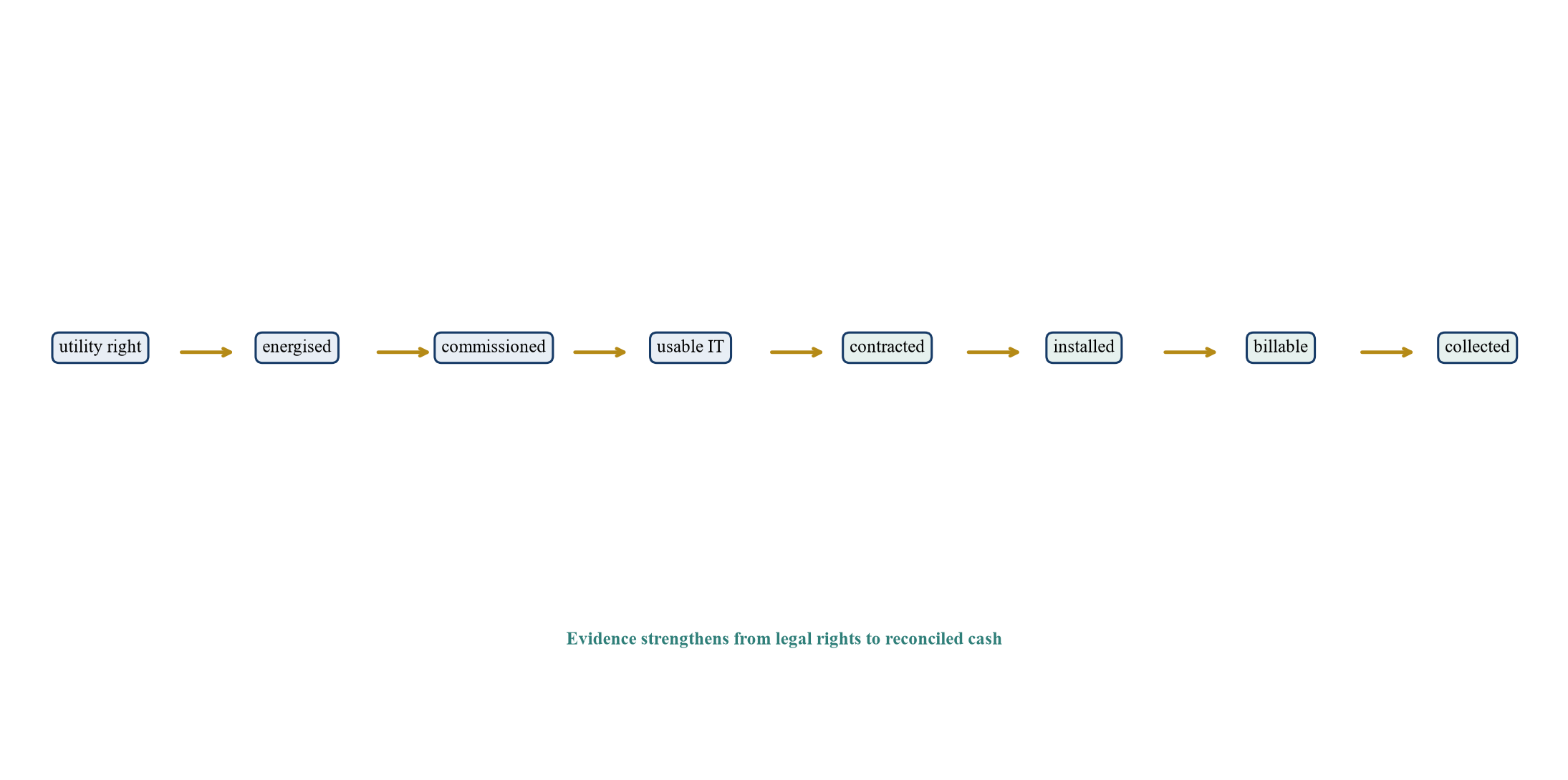
Analytical framework; engineering, contracts and customer acceptance govern conversion.
| Layer | Principal evidence | Valuation treatment |
|---|---|---|
| land-bank potential | title, zoning and concept | strategic option |
| utility right | executed service and delivery path | dependency-adjusted option |
| commissioned critical | tested electrical and cooling systems | operating capacity |
| customer-usable IT | density and resilience-adjusted systems | saleable denominator |
| contracted | executed customer commitment | conversion value |
| billable | accepted service and invoice | operating value |
| collected | reconciled receipt | cash-quality evidence |
Proposed classification; project-specific evidence controls value.
5. Normalise commissioned and usable capacity
The decision question is which tested electrical and cooling systems can support the target customer load. The diligence record should begin with single-line diagrams, redundancy, commissioning, thermal limits, floor loading and maintenance records. Each input requires a date, source, owner and reconciliation to the valuation model. Market demand, power scarcity and transaction multiples provide context. The cash earned by the subject assets must remain the controlling evidence. [8][9]
The central failure is that commissioned critical capacity can exceed commercially usable IT load after resilience and density constraints. The error can affect revenue, direct cost, capital expenditure, timing, tax, liquidity, debt capacity and terminal value simultaneously. A model should identify the physical or contractual event that changes cash, the period in which it occurs and the evidence that would confirm or reject the assumption. Management estimates can support scenarios when they are identified as estimates and kept separate from observed data.
The recommended response is to derive usable load through engineering evidence and customer configuration. The base case should include only evidenced current operations and contracted conversion with costed dependencies. Upside should remain visible as an option or contingent case until land, power, permits, customer commitment, funding and acceptance support it. The investment committee should see the value at risk, the earliest observable indicator and the action available before capital is released.
6. Reconcile contracts to physical delivery
The decision question is which executed commitments attach to deliverable capacity at a defined site and date. The diligence record should begin with customer agreements, orders, milestones, fit-out, acceptance, meters and billing. Each input requires a date, source, owner and reconciliation to the valuation model. Market demand, power scarcity and transaction multiples provide context. The cash earned by the subject assets must remain the controlling evidence. [3][10]
The central failure is that contracted load can exceed power delivery or rely on construction that remains unfunded. The error can affect revenue, direct cost, capital expenditure, timing, tax, liquidity, debt capacity and terminal value simultaneously. A model should identify the physical or contractual event that changes cash, the period in which it occurs and the evidence that would confirm or reject the assumption. Management estimates can support scenarios when they are identified as estimates and kept separate from observed data.
The recommended response is to link each contract to capacity, capital, schedule and acceptance evidence. The base case should include only evidenced current operations and contracted conversion with costed dependencies. Upside should remain visible as an option or contingent case until land, power, permits, customer commitment, funding and acceptance support it. The investment committee should see the value at risk, the earliest observable indicator and the action available before capital is released.
7. Model ramp from signature to collection
The decision question is how backlog becomes installation, service acceptance, invoice and cash. The diligence record should begin with order dates, notice to proceed, construction, commissioning, acceptance, billing and receipts. Each input requires a date, source, owner and reconciliation to the valuation model. Market demand, power scarcity and transaction multiples provide context. The cash earned by the subject assets must remain the controlling evidence. [10][11]
The central failure is that annual utilisation assumptions can ignore long conversion lags and customer dependencies. The error can affect revenue, direct cost, capital expenditure, timing, tax, liquidity, debt capacity and terminal value simultaneously. A model should identify the physical or contractual event that changes cash, the period in which it occurs and the evidence that would confirm or reject the assumption. Management estimates can support scenarios when they are identified as estimates and kept separate from observed data.
The recommended response is to use monthly cohorts with delay, cancellation and cash-collection states. The base case should include only evidenced current operations and contracted conversion with costed dependencies. Upside should remain visible as an option or contingent case until land, power, permits, customer commitment, funding and acceptance support it. The investment committee should see the value at risk, the earliest observable indicator and the action available before capital is released.
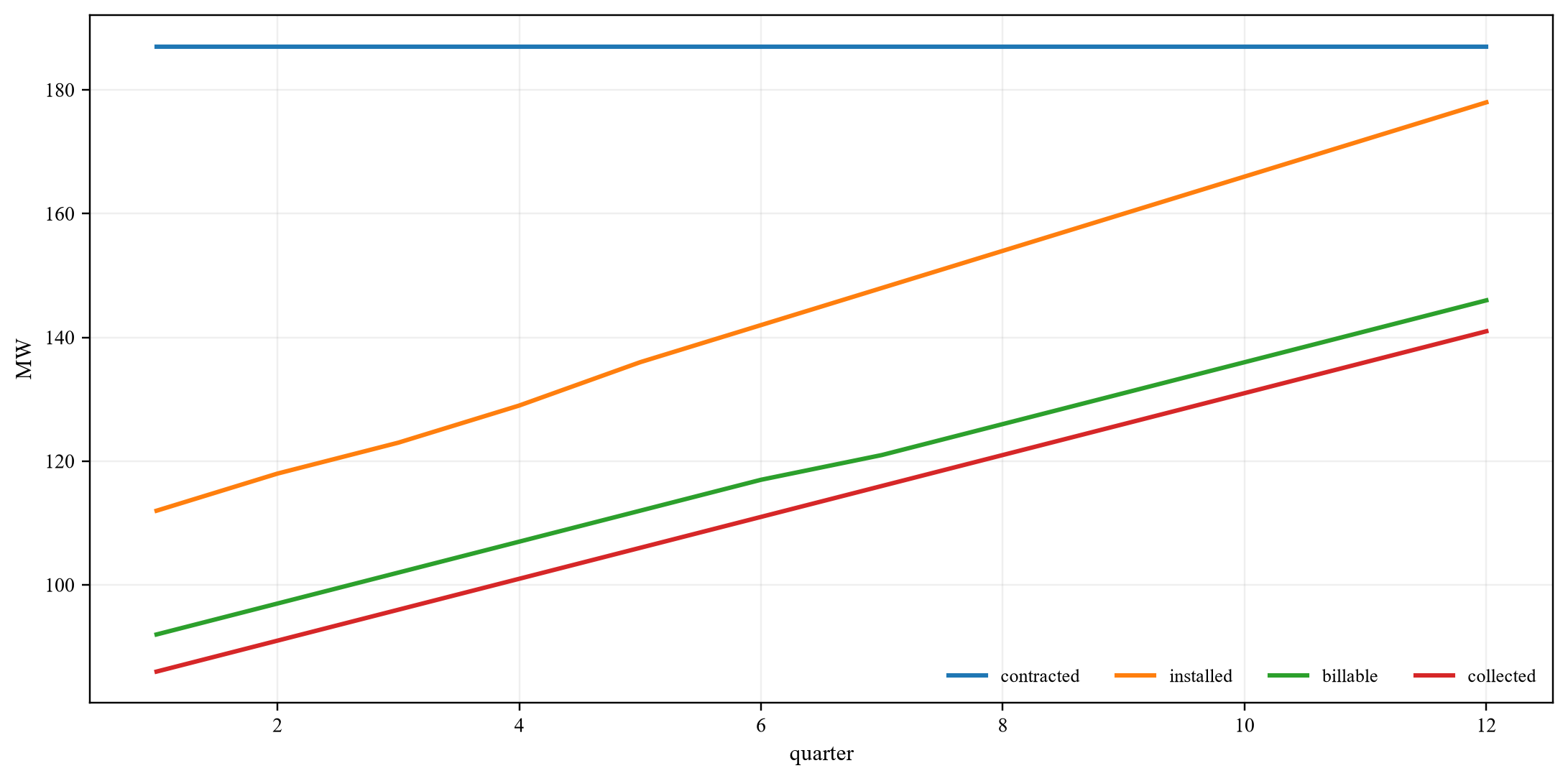
Wholly hypothetical MW; values do not represent an identified asset.
8. Classify revenue contracts
The decision question is how committed power, usage, space, interconnection and managed services create different cash profiles. The diligence record should begin with executed terms, amendments, rate cards, escalation, minimums, credits and termination rights. Each input requires a date, source, owner and reconciliation to the valuation model. Market demand, power scarcity and transaction multiples provide context. The cash earned by the subject assets must remain the controlling evidence. [3][12]
The central failure is that one average rate can conceal power pass-through, incentives and non-recurring revenue. The error can affect revenue, direct cost, capital expenditure, timing, tax, liquidity, debt capacity and terminal value simultaneously. A model should identify the physical or contractual event that changes cash, the period in which it occurs and the evidence that would confirm or reject the assumption. Management estimates can support scenarios when they are identified as estimates and kept separate from observed data.
The recommended response is to model the enforceable charging unit and renewal mechanism by contract. The base case should include only evidenced current operations and contracted conversion with costed dependencies. Upside should remain visible as an option or contingent case until land, power, permits, customer commitment, funding and acceptance support it. The investment committee should see the value at risk, the earliest observable indicator and the action available before capital is released.
| Mechanic | Cash driver | Principal risk |
|---|---|---|
| committed power | reserved kW or MW | ramp, option and renewal |
| metered power | actual consumption | volume and measurement |
| space | rack, cabinet or square foot | density and vacancy |
| interconnection | cross-connect or port | ecosystem and migration |
| managed service | service bundle | labour, hardware and churn |
| power pass-through | utility cost allocation | lag, cap and definition |
Illustrative; executed terms govern each contract.
9. Measure price and margin quality
The decision question is whether reported price compensates for power, service, capital and customer-specific requirements. The diligence record should begin with invoice detail, tariffs, metering, credits, fit-out, support and gross-margin records. Each input requires a date, source, owner and reconciliation to the valuation model. Market demand, power scarcity and transaction multiples provide context. The cash earned by the subject assets must remain the controlling evidence. [13][14]
The central failure is that high price per kilowatt can accompany weak margin when power or capital is absorbed by the owner. The error can affect revenue, direct cost, capital expenditure, timing, tax, liquidity, debt capacity and terminal value simultaneously. A model should identify the physical or contractual event that changes cash, the period in which it occurs and the evidence that would confirm or reject the assumption. Management estimates can support scenarios when they are identified as estimates and kept separate from observed data.
The recommended response is to bridge headline price to cash contribution after direct and allocated costs. The base case should include only evidenced current operations and contracted conversion with costed dependencies. Upside should remain visible as an option or contingent case until land, power, permits, customer commitment, funding and acceptance support it. The investment committee should see the value at risk, the earliest observable indicator and the action available before capital is released.
10. Underwrite power cost and pass-through
The decision question is how utility tariffs, demand charges, losses, generation and contract clauses affect margin. The diligence record should begin with utility bills, tariffs, power purchase terms, meters, efficiency and customer invoices. Each input requires a date, source, owner and reconciliation to the valuation model. Market demand, power scarcity and transaction multiples provide context. The cash earned by the subject assets must remain the controlling evidence. [1][15]
The central failure is that mismatched pass-through timing or definition can expose cash to power-cost volatility. The error can affect revenue, direct cost, capital expenditure, timing, tax, liquidity, debt capacity and terminal value simultaneously. A model should identify the physical or contractual event that changes cash, the period in which it occurs and the evidence that would confirm or reject the assumption. Management estimates can support scenarios when they are identified as estimates and kept separate from observed data.
The recommended response is to model price, volume, loss factor, lag, cap and recovery by site and customer. The base case should include only evidenced current operations and contracted conversion with costed dependencies. Upside should remain visible as an option or contingent case until land, power, permits, customer commitment, funding and acceptance support it. The investment committee should see the value at risk, the earliest observable indicator and the action available before capital is released.
11. Value network and interconnection economics
The decision question is how carrier presence, cloud connectivity, cross-connects and latency support cash and retention. The diligence record should begin with carrier agreements, cross-connect inventory, traffic, pricing and customer dependencies. Each input requires a date, source, owner and reconciliation to the valuation model. Market demand, power scarcity and transaction multiples provide context. The cash earned by the subject assets must remain the controlling evidence. [16][17]
The central failure is that a power-only multiple can omit profitable network services or duplicate necessary investment. The error can affect revenue, direct cost, capital expenditure, timing, tax, liquidity, debt capacity and terminal value simultaneously. A model should identify the physical or contractual event that changes cash, the period in which it occurs and the evidence that would confirm or reject the assumption. Management estimates can support scenarios when they are identified as estimates and kept separate from observed data.
The recommended response is to separate recurring network cash, ecosystem value and migration friction. The base case should include only evidenced current operations and contracted conversion with costed dependencies. Upside should remain visible as an option or contingent case until land, power, permits, customer commitment, funding and acceptance support it. The investment committee should see the value at risk, the earliest observable indicator and the action available before capital is released.
12. Analyse utilisation by cohort
The decision question is which billable load is durable across site, customer, density, contract vintage and service. The diligence record should begin with capacity, metering, billing, collections, customer cohorts and vacancy records. Each input requires a date, source, owner and reconciliation to the valuation model. Market demand, power scarcity and transaction multiples provide context. The cash earned by the subject assets must remain the controlling evidence. [3][18]
The central failure is that portfolio utilisation can conceal mature halls, slow ramps and concentrated vacancies. The error can affect revenue, direct cost, capital expenditure, timing, tax, liquidity, debt capacity and terminal value simultaneously. A model should identify the physical or contractual event that changes cash, the period in which it occurs and the evidence that would confirm or reject the assumption. Management estimates can support scenarios when they are identified as estimates and kept separate from observed data.
The recommended response is to publish cohort curves and denominator reconciliations. The base case should include only evidenced current operations and contracted conversion with costed dependencies. Upside should remain visible as an option or contingent case until land, power, permits, customer commitment, funding and acceptance support it. The investment committee should see the value at risk, the earliest observable indicator and the action available before capital is released.
| Cohort | Required measures | Decision use |
|---|---|---|
| site and hall | usable, contracted, installed and billable MW | asset maturity |
| customer | price, margin, term and collection | concentration and retention |
| contract vintage | ramp, credits, renewal and churn | underwriting calibration |
| density | kW per rack and retrofit need | product relevance |
| workload | training, inference, cloud or enterprise | demand and service design |
| geography | power, network and competitive supply | capital allocation |
Proposed management view; portfolio configuration determines useful cohorts.
13. Underwrite renewals and churn
The decision question is when price, term, options, migration cost and service performance change future cash. The diligence record should begin with expiry schedules, notices, renewal history, incidents, credits and customer strategy. Each input requires a date, source, owner and reconciliation to the valuation model. Market demand, power scarcity and transaction multiples provide context. The cash earned by the subject assets must remain the controlling evidence. [11][19]
The central failure is that weighted-average term can hide a near-term renewal wall or asymmetric customer options. The error can affect revenue, direct cost, capital expenditure, timing, tax, liquidity, debt capacity and terminal value simultaneously. A model should identify the physical or contractual event that changes cash, the period in which it occurs and the evidence that would confirm or reject the assumption. Management estimates can support scenarios when they are identified as estimates and kept separate from observed data.
The recommended response is to forecast contract-level retention, repricing and downtime. The base case should include only evidenced current operations and contracted conversion with costed dependencies. Upside should remain visible as an option or contingent case until land, power, permits, customer commitment, funding and acceptance support it. The investment committee should see the value at risk, the earliest observable indicator and the action available before capital is released.
14. Assess concentration and counterparty credit
The decision question is how large customers affect bargaining power, capital commitments, liquidity and financing. The diligence record should begin with revenue, margin, receivables, entity credit, parent support and remedies. Each input requires a date, source, owner and reconciliation to the valuation model. Market demand, power scarcity and transaction multiples provide context. The cash earned by the subject assets must remain the controlling evidence. [3][20]
The central failure is that strong customer brands can obscure contract-entity risk and concentrated renewal exposure. The error can affect revenue, direct cost, capital expenditure, timing, tax, liquidity, debt capacity and terminal value simultaneously. A model should identify the physical or contractual event that changes cash, the period in which it occurs and the evidence that would confirm or reject the assumption. Management estimates can support scenarios when they are identified as estimates and kept separate from observed data.
The recommended response is to connect customer credit, concentration and contractual protection to scenarios. The base case should include only evidenced current operations and contracted conversion with costed dependencies. Upside should remain visible as an option or contingent case until land, power, permits, customer commitment, funding and acceptance support it. The investment committee should see the value at risk, the earliest observable indicator and the action available before capital is released.
15. Reconstruct operating cost
The decision question is which site, portfolio and corporate costs are required to sustain customer service. The diligence record should begin with general ledger, payroll, maintenance, utilities, insurance, taxes, network and service records. Each input requires a date, source, owner and reconciliation to the valuation model. Market demand, power scarcity and transaction multiples provide context. The cash earned by the subject assets must remain the controlling evidence. [3][14]
The central failure is that reported EBITDA can exclude necessary central functions or capitalise recurring work. The error can affect revenue, direct cost, capital expenditure, timing, tax, liquidity, debt capacity and terminal value simultaneously. A model should identify the physical or contractual event that changes cash, the period in which it occurs and the evidence that would confirm or reject the assumption. Management estimates can support scenarios when they are identified as estimates and kept separate from observed data.
The recommended response is to build site contribution, platform cost and standalone cost separately. The base case should include only evidenced current operations and contracted conversion with costed dependencies. Upside should remain visible as an option or contingent case until land, power, permits, customer commitment, funding and acceptance support it. The investment committee should see the value at risk, the earliest observable indicator and the action available before capital is released.
16. Separate sustaining from growth capital
The decision question is which expenditure preserves current cash, converts contracts or creates options. The diligence record should begin with condition surveys, capex ledgers, projects, procurement, permits, schedules and commissioning. Each input requires a date, source, owner and reconciliation to the valuation model. Market demand, power scarcity and transaction multiples provide context. The cash earned by the subject assets must remain the controlling evidence. [8][21]
The central failure is that growth labels can conceal deferred maintenance, compliance or customer-specific obligations. The error can affect revenue, direct cost, capital expenditure, timing, tax, liquidity, debt capacity and terminal value simultaneously. A model should identify the physical or contractual event that changes cash, the period in which it occurs and the evidence that would confirm or reject the assumption. Management estimates can support scenarios when they are identified as estimates and kept separate from observed data.
The recommended response is to classify sustaining, compliance, reliability, conversion, density and expansion capital. The base case should include only evidenced current operations and contracted conversion with costed dependencies. Upside should remain visible as an option or contingent case until land, power, permits, customer commitment, funding and acceptance support it. The investment committee should see the value at risk, the earliest observable indicator and the action available before capital is released.
| Class | Cash purpose | Valuation treatment |
|---|---|---|
| sustaining | preserve current service | deduct from operating cash |
| compliance | meet law, code and permit | unavoidable cash requirement |
| reliability | reduce outage and failure | risk-adjusted investment |
| conversion | deliver contracted service | contracted growth cost |
| density retrofit | serve target rack loads | scenario investment |
| expansion | create new saleable capacity | contingent growth cost |
Proposed classification; engineering evidence determines amount and timing.
17. Price density retrofit and obsolescence
The decision question is how high-density AI workloads change cooling, electrical distribution and commercial relevance. The diligence record should begin with rack profiles, thermal studies, design limits, retrofit plans, downtime and customer demand. Each input requires a date, source, owner and reconciliation to the valuation model. Market demand, power scarcity and transaction multiples provide context. The cash earned by the subject assets must remain the controlling evidence. [2][9]
The central failure is that physically operating capacity can lose value when it cannot serve target density economically. The error can affect revenue, direct cost, capital expenditure, timing, tax, liquidity, debt capacity and terminal value simultaneously. A model should identify the physical or contractual event that changes cash, the period in which it occurs and the evidence that would confirm or reject the assumption. Management estimates can support scenarios when they are identified as estimates and kept separate from observed data.
The recommended response is to compare retrofit cash returns with replacement, alternative use and exit. The base case should include only evidenced current operations and contracted conversion with costed dependencies. Upside should remain visible as an option or contingent case until land, power, permits, customer commitment, funding and acceptance support it. The investment committee should see the value at risk, the earliest observable indicator and the action available before capital is released.
18. Build the primary discounted-cash-flow model
The decision question is how customer cash, power, operating cost, capital, tax and working capital create value. The diligence record should begin with contract and cohort model, cost ledger, capex schedule, tax basis and scenario assumptions. Each input requires a date, source, owner and reconciliation to the valuation model. Market demand, power scarcity and transaction multiples provide context. The cash earned by the subject assets must remain the controlling evidence. [3][22]
The central failure is that a top-down revenue forecast can detach terminal value from deliverable capacity. The error can affect revenue, direct cost, capital expenditure, timing, tax, liquidity, debt capacity and terminal value simultaneously. A model should identify the physical or contractual event that changes cash, the period in which it occurs and the evidence that would confirm or reject the assumption. Management estimates can support scenarios when they are identified as estimates and kept separate from observed data.
The recommended response is to use monthly conversion and annual long-term cash with explicit terminal constraints. The base case should include only evidenced current operations and contracted conversion with costed dependencies. Upside should remain visible as an option or contingent case until land, power, permits, customer commitment, funding and acceptance support it. The investment committee should see the value at risk, the earliest observable indicator and the action available before capital is released.
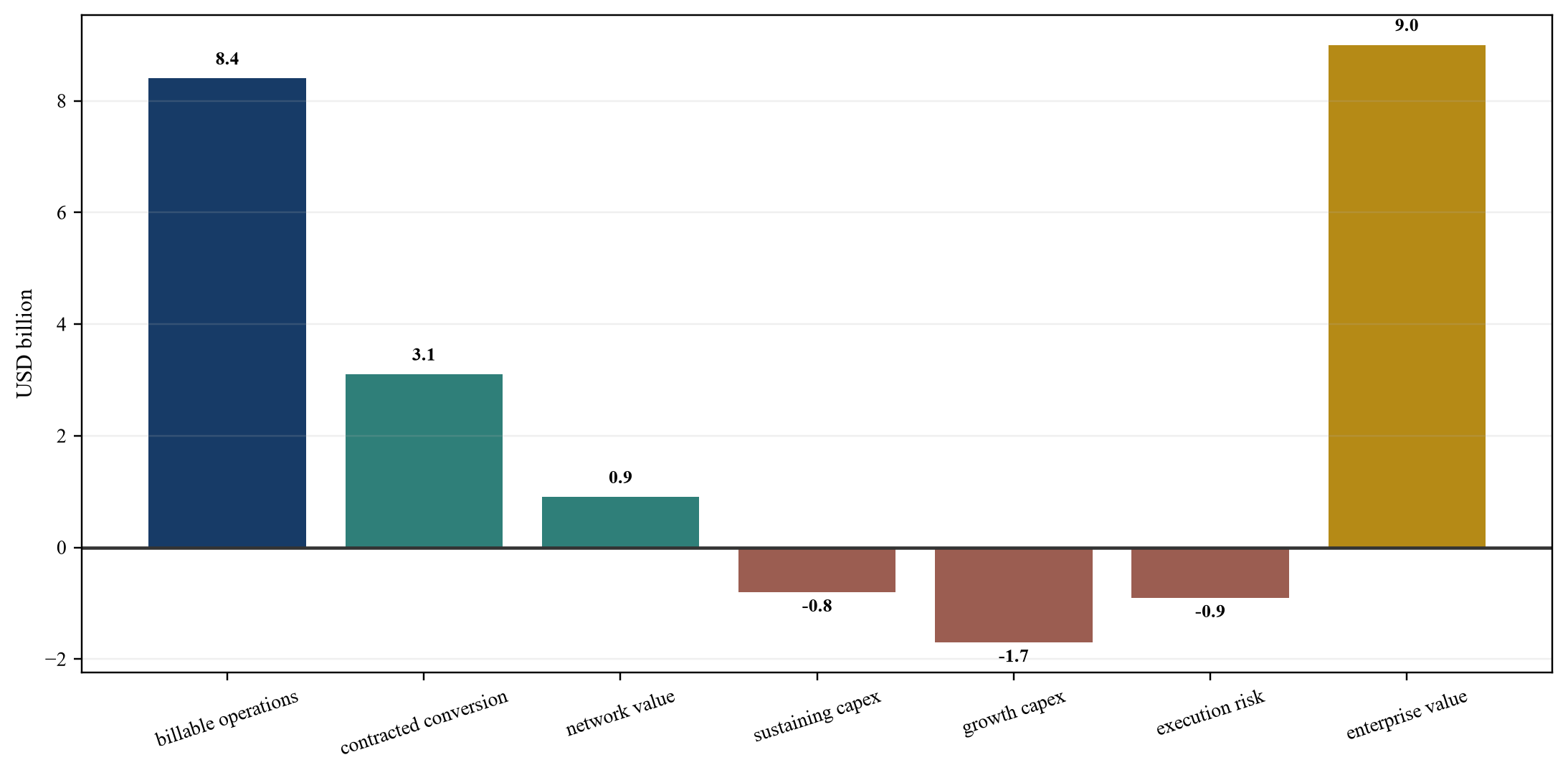
Wholly hypothetical USD billions; this is not a valuation opinion.
19. Define terminal value with discipline
The decision question is which mature utilisation, renewal, margin, capital and growth assumptions remain sustainable. The diligence record should begin with asset age, contract duration, maintenance, regional supply, power and customer evidence. Each input requires a date, source, owner and reconciliation to the valuation model. Market demand, power scarcity and transaction multiples provide context. The cash earned by the subject assets must remain the controlling evidence. [22][23]
The central failure is that terminal value can capitalise undeveloped capacity or assume perpetual growth beyond power rights. The error can affect revenue, direct cost, capital expenditure, timing, tax, liquidity, debt capacity and terminal value simultaneously. A model should identify the physical or contractual event that changes cash, the period in which it occurs and the evidence that would confirm or reject the assumption. Management estimates can support scenarios when they are identified as estimates and kept separate from observed data.
The recommended response is to cap growth at deliverable economics and disclose the cash represented by the terminal period. The base case should include only evidenced current operations and contracted conversion with costed dependencies. Upside should remain visible as an option or contingent case until land, power, permits, customer commitment, funding and acceptance support it. The investment committee should see the value at risk, the earliest observable indicator and the action available before capital is released.
20. Reconcile megawatt and EBITDA multiples
The decision question is how market ratios compare after capacity, leases, capex, geography and maturity are normalised. The diligence record should begin with public filings, transaction disclosures, enterprise values, EBITDA and capacity definitions. Each input requires a date, source, owner and reconciliation to the valuation model. Market demand, power scarcity and transaction multiples provide context. The cash earned by the subject assets must remain the controlling evidence. [3][4]
The central failure is that unadjusted comparables can transfer another asset’s power scarcity, contract quality or growth into the subject value. The error can affect revenue, direct cost, capital expenditure, timing, tax, liquidity, debt capacity and terminal value simultaneously. A model should identify the physical or contractual event that changes cash, the period in which it occurs and the evidence that would confirm or reject the assumption. Management estimates can support scenarios when they are identified as estimates and kept separate from observed data.
The recommended response is to construct a like-for-like matrix and explain every adjustment. The base case should include only evidenced current operations and contracted conversion with costed dependencies. Upside should remain visible as an option or contingent case until land, power, permits, customer commitment, funding and acceptance support it. The investment committee should see the value at risk, the earliest observable indicator and the action available before capital is released.
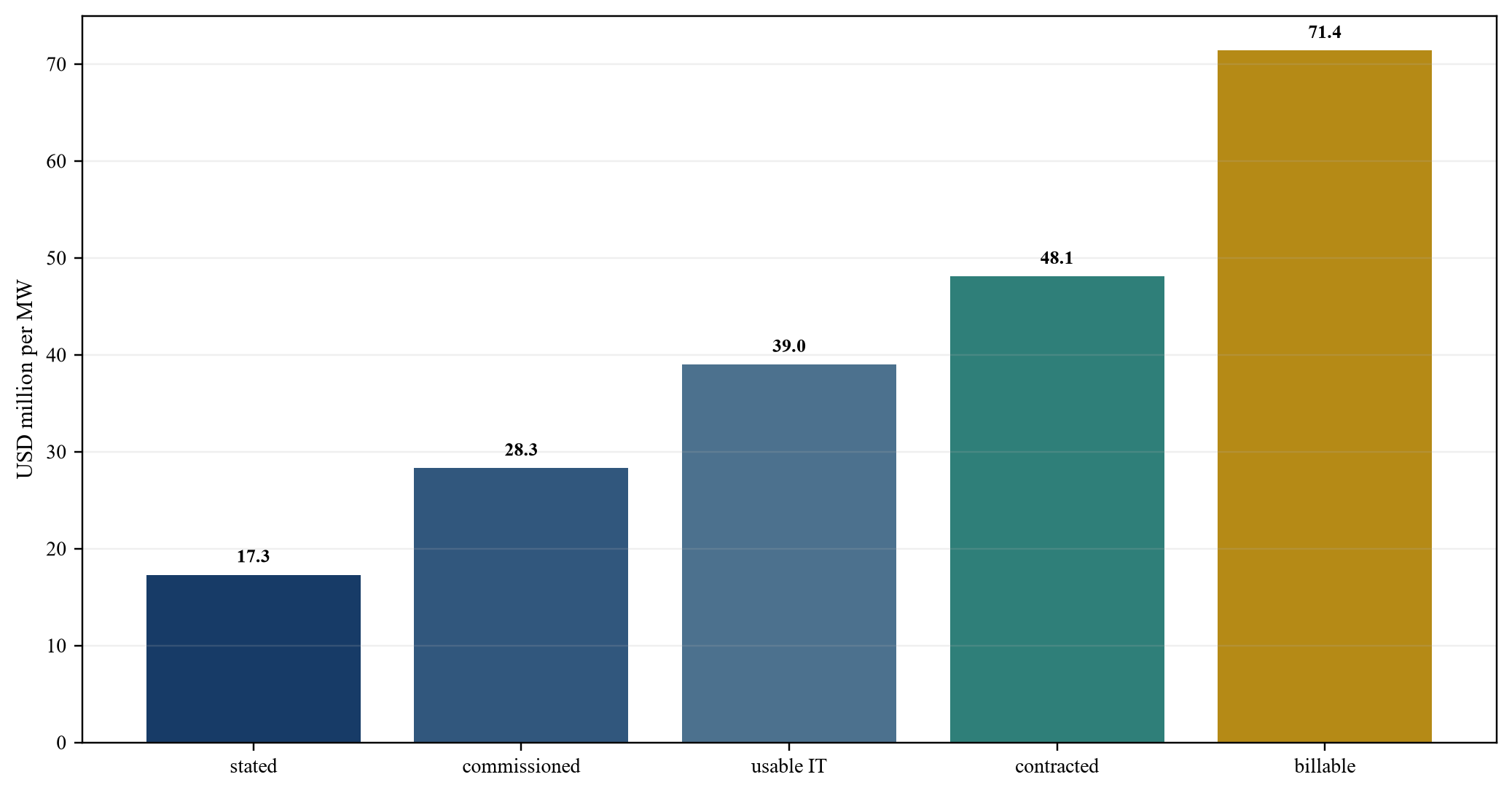
Wholly hypothetical USD millions per MW; denominator choice changes interpretation.
21. Use replacement cost as a scarcity cross-check
The decision question is what land, power, buildings, systems, network and time would cost to recreate. The diligence record should begin with land evidence, interconnection, engineering quantities, procurement, labour, permits and commissioning. Each input requires a date, source, owner and reconciliation to the valuation model. Market demand, power scarcity and transaction multiples provide context. The cash earned by the subject assets must remain the controlling evidence. [8][24]
The central failure is that replacement cost can exceed value when demand, price or return is insufficient. The error can affect revenue, direct cost, capital expenditure, timing, tax, liquidity, debt capacity and terminal value simultaneously. A model should identify the physical or contractual event that changes cash, the period in which it occurs and the evidence that would confirm or reject the assumption. Management estimates can support scenarios when they are identified as estimates and kept separate from observed data.
The recommended response is to adjust for time, feasibility, depreciation, utilisation and economic obsolescence. The base case should include only evidenced current operations and contracted conversion with costed dependencies. Upside should remain visible as an option or contingent case until land, power, permits, customer commitment, funding and acceptance support it. The investment committee should see the value at risk, the earliest observable indicator and the action available before capital is released.
22. Apply the hypothetical capacity bridge
The decision question is how the illustrative 520 MW platform converts into 126 MW of billable load. The diligence record should begin with the stated capacity register, engineering conversion, contracts, installation, billing and cash. Each input requires a date, source, owner and reconciliation to the valuation model. Market demand, power scarcity and transaction multiples provide context. The cash earned by the subject assets must remain the controlling evidence. [1][3]
The central failure is that using 520 MW as the sole denominator would value optional and operating capacity equally. The error can affect revenue, direct cost, capital expenditure, timing, tax, liquidity, debt capacity and terminal value simultaneously. A model should identify the physical or contractual event that changes cash, the period in which it occurs and the evidence that would confirm or reject the assumption. Management estimates can support scenarios when they are identified as estimates and kept separate from observed data.
The recommended response is to calculate value per capacity layer and attribute remaining capital. The base case should include only evidenced current operations and contracted conversion with costed dependencies. Upside should remain visible as an option or contingent case until land, power, permits, customer commitment, funding and acceptance support it. The investment committee should see the value at risk, the earliest observable indicator and the action available before capital is released.
| Capacity layer | MW | EV per MW at USD 9.0bn | Remaining value question |
|---|---|---|---|
| stated | 520 | USD 17.3m | land, power and delivery evidence |
| commissioned critical | 318 | USD 28.3m | resilience and cooling limits |
| customer-usable IT | 231 | USD 39.0m | saleable customer configuration |
| contracted | 187 | USD 48.1m | conversion cost and acceptance |
| installed | 151 | USD 59.6m | billing start and service quality |
| billable | 126 | USD 71.4m | margin, renewal and collection |
Wholly hypothetical; figures do not describe an identified platform.
23. Translate DCF into enterprise and equity value
The decision question is how operating assets, conversion, options, debt, leases, tax and contingencies reach shareholder value. The diligence record should begin with cash-flow results, debt, cash, leases, committed capex and transaction adjustments. Each input requires a date, source, owner and reconciliation to the valuation model. Market demand, power scarcity and transaction multiples provide context. The cash earned by the subject assets must remain the controlling evidence. [3][22]
The central failure is that a headline enterprise value can conceal funding requirements and debt-like obligations. The error can affect revenue, direct cost, capital expenditure, timing, tax, liquidity, debt capacity and terminal value simultaneously. A model should identify the physical or contractual event that changes cash, the period in which it occurs and the evidence that would confirm or reject the assumption. Management estimates can support scenarios when they are identified as estimates and kept separate from observed data.
The recommended response is to show an auditable value bridge and downside liquidity. The base case should include only evidenced current operations and contracted conversion with costed dependencies. Upside should remain visible as an option or contingent case until land, power, permits, customer commitment, funding and acceptance support it. The investment committee should see the value at risk, the earliest observable indicator and the action available before capital is released.
24. Test sensitivities and compound downside
The decision question is which utilisation, renewal, power, capital, delay and terminal assumptions drive value. The diligence record should begin with one-variable sensitivities, correlated cases, liquidity and covenant tests. Each input requires a date, source, owner and reconciliation to the valuation model. Market demand, power scarcity and transaction multiples provide context. The cash earned by the subject assets must remain the controlling evidence. [1][25]
The central failure is that isolated sensitivities can miss reinforcing failures such as delay, cost overrun and customer repricing. The error can affect revenue, direct cost, capital expenditure, timing, tax, liquidity, debt capacity and terminal value simultaneously. A model should identify the physical or contractual event that changes cash, the period in which it occurs and the evidence that would confirm or reject the assumption. Management estimates can support scenarios when they are identified as estimates and kept separate from observed data.
The recommended response is to rank exposures and test coherent compound scenarios. The base case should include only evidenced current operations and contracted conversion with costed dependencies. Upside should remain visible as an option or contingent case until land, power, permits, customer commitment, funding and acceptance support it. The investment committee should see the value at risk, the earliest observable indicator and the action available before capital is released.
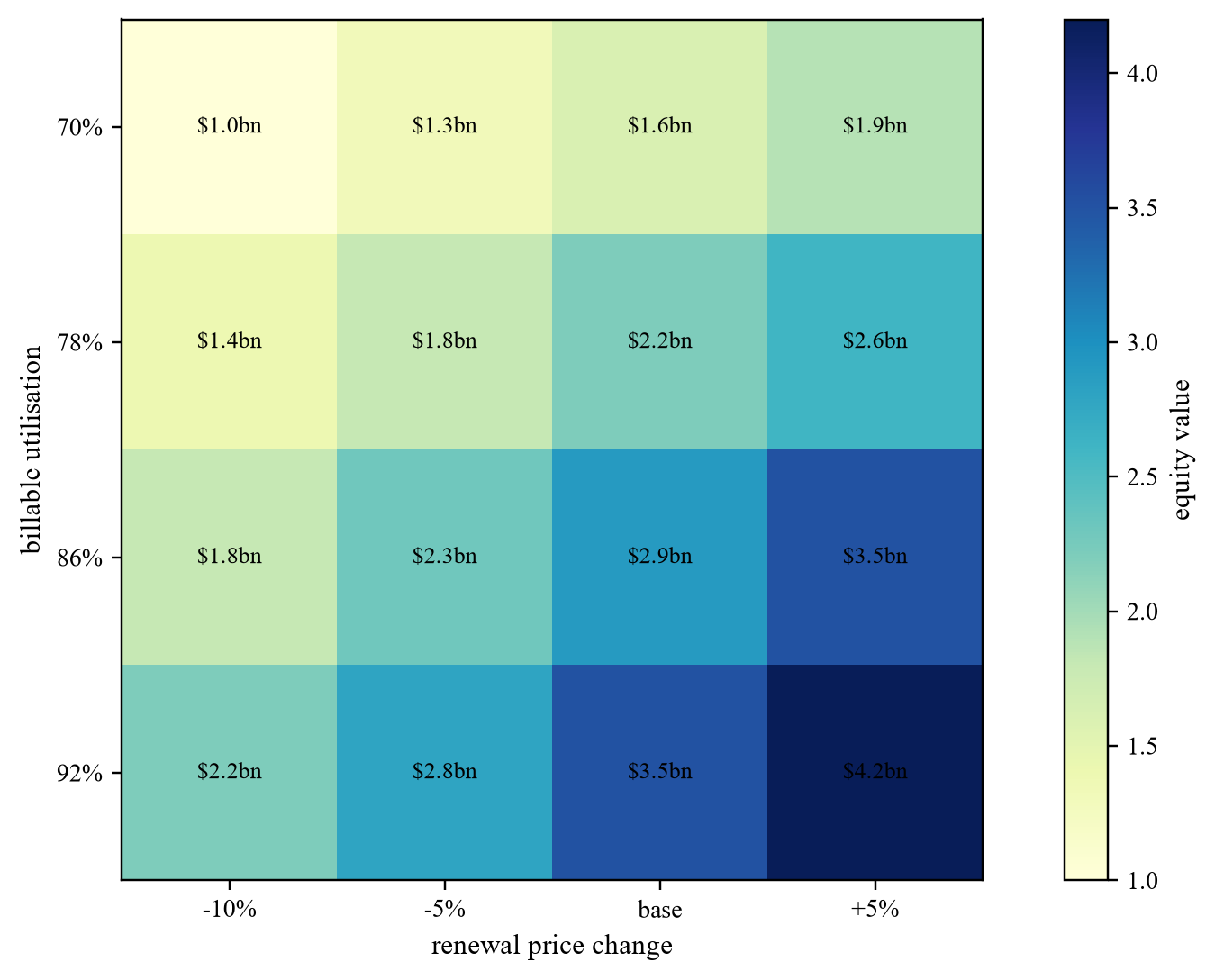
Wholly hypothetical USD billions; this is not a valuation opinion.
25. Size acquisition debt to resilient cash
The decision question is what leverage, amortisation, reserves and covenants survive downside. The diligence record should begin with contracted cash, sustaining capital, tax, working capital, interest and maturity. Each input requires a date, source, owner and reconciliation to the valuation model. Market demand, power scarcity and transaction multiples provide context. The cash earned by the subject assets must remain the controlling evidence. [20][25]
The central failure is that debt can be sized to pipeline and terminal value that produce no current cash. The error can affect revenue, direct cost, capital expenditure, timing, tax, liquidity, debt capacity and terminal value simultaneously. A model should identify the physical or contractual event that changes cash, the period in which it occurs and the evidence that would confirm or reject the assumption. Management estimates can support scenarios when they are identified as estimates and kept separate from observed data.
The recommended response is to base leverage on resilient cash and stage growth funding against milestones. The base case should include only evidenced current operations and contracted conversion with costed dependencies. Upside should remain visible as an option or contingent case until land, power, permits, customer commitment, funding and acceptance support it. The investment committee should see the value at risk, the earliest observable indicator and the action available before capital is released.
26. Convert valuation uncertainty into terms
The decision question is which adjustment, escrow, earn-out, indemnity, covenant or condition allocates each exposure. The diligence record should begin with diligence findings, legal remedies, seller evidence and financing requirements. Each input requires a date, source, owner and reconciliation to the valuation model. Market demand, power scarcity and transaction multiples provide context. The cash earned by the subject assets must remain the controlling evidence. [6][26]
The central failure is that valuation caveats can disappear between investment committee and definitive documents. The error can affect revenue, direct cost, capital expenditure, timing, tax, liquidity, debt capacity and terminal value simultaneously. A model should identify the physical or contractual event that changes cash, the period in which it occurs and the evidence that would confirm or reject the assumption. Management estimates can support scenarios when they are identified as estimates and kept separate from observed data.
The recommended response is to attach each material variance to price, protection, owner and deadline. The base case should include only evidenced current operations and contracted conversion with costed dependencies. Upside should remain visible as an option or contingent case until land, power, permits, customer commitment, funding and acceptance support it. The investment committee should see the value at risk, the earliest observable indicator and the action available before capital is released.
27. Set the post-close value dashboard
The decision question is which leading measures expose variance before cash and covenant failure. The diligence record should begin with capacity conversion, contract ramp, renewals, power, incidents, capex, collection and liquidity. Each input requires a date, source, owner and reconciliation to the valuation model. Market demand, power scarcity and transaction multiples provide context. The cash earned by the subject assets must remain the controlling evidence. [10][11]
The central failure is that quarterly financial results can arrive after corrective options narrow. The error can affect revenue, direct cost, capital expenditure, timing, tax, liquidity, debt capacity and terminal value simultaneously. A model should identify the physical or contractual event that changes cash, the period in which it occurs and the evidence that would confirm or reject the assumption. Management estimates can support scenarios when they are identified as estimates and kept separate from observed data.
The recommended response is to operate a monthly capacity-to-cash dashboard with trigger-based actions. The base case should include only evidenced current operations and contracted conversion with costed dependencies. Upside should remain visible as an option or contingent case until land, power, permits, customer commitment, funding and acceptance support it. The investment committee should see the value at risk, the earliest observable indicator and the action available before capital is released.
28. Reach the investment decision
The decision question is whether the verified cash-flow range, financing and protections justify the proposed price. The diligence record should begin with reconciled perimeter, valuation methods, scenarios, terms and accountable approvals. Each input requires a date, source, owner and reconciliation to the valuation model. Market demand, power scarcity and transaction multiples provide context. The cash earned by the subject assets must remain the controlling evidence. [22][26]
The central failure is that one memorable multiple can displace the evidence required for a fiduciary decision. The error can affect revenue, direct cost, capital expenditure, timing, tax, liquidity, debt capacity and terminal value simultaneously. A model should identify the physical or contractual event that changes cash, the period in which it occurs and the evidence that would confirm or reject the assumption. Management estimates can support scenarios when they are identified as estimates and kept separate from observed data.
The recommended response is to approve a value range, explicit conditions and a funded operating plan. The base case should include only evidenced current operations and contracted conversion with costed dependencies. Upside should remain visible as an option or contingent case until land, power, permits, customer commitment, funding and acceptance support it. The investment committee should see the value at risk, the earliest observable indicator and the action available before capital is released.
| Decision item | Evidence required | Possible action |
|---|---|---|
| operating value | billable margin and collected cash | approve or reprice |
| contracted conversion | contract, power, capex and acceptance | fund by milestone |
| development option | land, power, permit, demand and funding | retain as contingent value |
| debt capacity | resilient cash, reserves and covenants | resize or restructure |
| terminal value | mature economics and capital burden | cap or stress |
| unresolved exposure | quantified cash and legal allocation | condition, escrow or decline |
Proposed governance; transaction-specific approvals remain necessary.
Sources
- U.S. Department of Energy, *DOE Releases New Report Evaluating Increase in Electricity Demand from Data Centers*, 2024. Read the primary source
- Lawrence Berkeley National Laboratory, *2024 United States Data Center Energy Usage Report*, 2024. Read the primary source
- U.S. Securities and Exchange Commission, *Equinix, Inc. filings*. Read the primary source
- U.S. Securities and Exchange Commission, *Digital Realty Trust, Inc. filings*. Read the primary source
- U.S. Department of Justice and Federal Trade Commission, *Merger Guidelines*, 2023. Read the primary source
- Federal Trade Commission, *Premerger Notification Program*. Read the primary source
- Federal Energy Regulatory Commission, *Electric Power Markets*. Read the primary source
- U.S. Environmental Protection Agency, *ENERGY STAR for Data Centers*. Read the primary source
- National Institute of Standards and Technology, *AI Risk Management Framework*. Read the primary source
- Financial Accounting Standards Board, *Accounting Standards Codification*. Read the primary source
- IFRS Foundation, *IFRS 15 Revenue from Contracts with Customers*. Read the primary source
- IFRS Foundation, *IFRS 16 Leases*. Read the primary source
- U.S. Energy Information Administration, *Electric Power Monthly*. Read the primary source
- Bureau of Labor Statistics, *Producer Price Indexes*. Read the primary source
- Federal Energy Regulatory Commission, *Reliability Primer*. Read the primary source
- National Institute of Standards and Technology, *Cybersecurity Framework 2.0*. Read the primary source
- Cybersecurity and Infrastructure Security Agency, *Cross-Sector Cybersecurity Performance Goals*. Read the primary source
- International Energy Agency, *Energy and AI*, 2025. Read the primary source
- U.S. Securities and Exchange Commission, *Microsoft Corporation filings*. Read the primary source
- U.S. Securities and Exchange Commission, *Amazon.com, Inc. filings*. Read the primary source
- U.S. Census Bureau, *Quarterly Construction Spending*. Read the primary source
- IFRS Foundation, *IAS 36 Impairment of Assets*. Read the primary source
- Financial Accounting Standards Board, *Fair Value Measurement*. Read the primary source
- Internal Revenue Service, *Publication 946, How To Depreciate Property*. Read the primary source
- Federal Reserve Board, *Financial Accounts of the United States*. Read the primary source
- U.S. Securities and Exchange Commission, *Commission Guidance Regarding Management's Discussion and Analysis*. Read the primary source
