

1. Private-share custody is a chain of records and obligations
A public security can settle through established market infrastructure. A private share often remains an entry on the issuer's own register, supported by certificates or electronic notices and constrained by constitutional documents, investor agreements and law. Cross-border holding adds another layer because the investor may appoint a custodian or nominee whose name appears as the holder of record.
The arrangement can be legitimate and operationally useful. A nominee can aggregate holdings, simplify administration, process voting and distributions, and give an investment platform or family office a consistent operating model. The structure also creates dependency. The beneficial investor must be identifiable in the nominee's records; the nominee must be recognised on the issuer register; instructions must pass through authorised routes; and cash, tax and corporate actions must reach the correct underlying account.
Legal title, beneficial interest and control should be analysed separately. HM Revenue & Customs guidance explains that a UK share certificate bears the name of the legal owner, who can be the beneficial owner or a nominee. Delaware corporate law places formal weight on the corporation's stock ledger for record-holder rights. Singapore requires companies to maintain and file information about nominee shareholders and nominators. FATF guidance similarly treats the nominee as distinct from the beneficial owner.
The custody file therefore cannot rely on one certificate, platform statement or declaration. It should prove how the interest was acquired, where registered title sits, who benefits economically, who can instruct, which restrictions apply and how the position can be transferred or enforced.
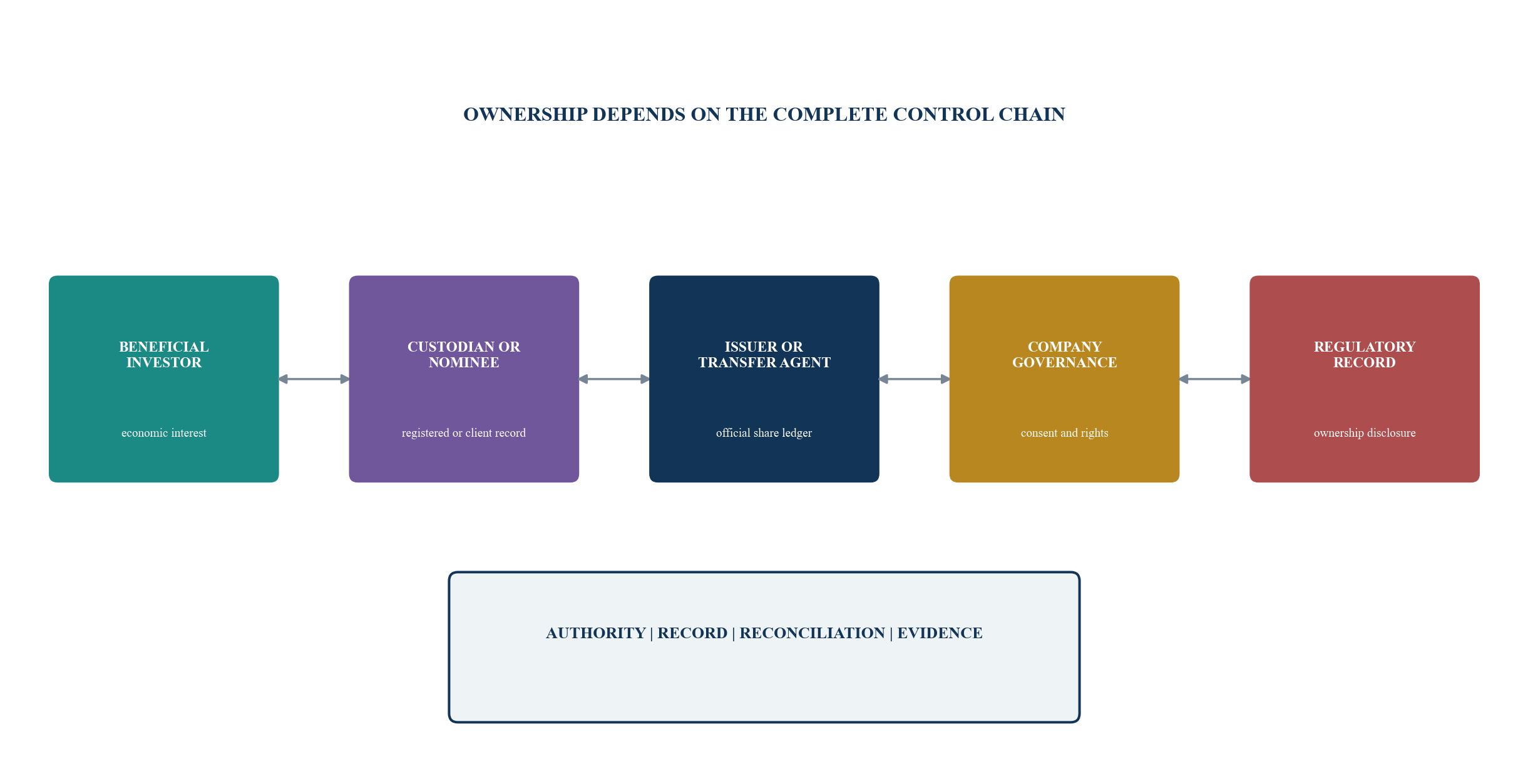
Each arrow requires documentary authority, an accountable record owner and a tested instruction route.
2. Define the exact asset and legal perimeter
The mandate begins with the issuer's legal name, place of incorporation, security class, certificate or electronic status, quantity, acquisition date, consideration, holder of record and beneficial owner. It should identify options, warrants, convertibles or contractual interests that have not become issued shares. A platform account can contain several legal forms that should not be grouped under one label.
The jurisdiction matrix should cover the issuer, registered holder, beneficial investor, custodian, administrator, bank account and proposed buyer. Each location can affect corporate law, licensing, beneficial-ownership reporting, anti-money-laundering obligations, tax, exchange controls, sanctions, data transfer, insolvency and enforcement.
Custody also needs a service-perimeter decision. A firm may safeguard or administer the asset, arrange custody with a third party, provide a nominee, maintain beneficial-owner records, transmit instructions or give investment advice. These functions can have different permissions. The contract and actual operating practice should align with the regulated role.
The investor's purpose matters. Long-term holding requires dependable voting, distribution and reporting. A financing requires proof of ownership and encumbrance. An employee sale requires grant-to-register evidence. A secondary transaction requires authority, consent, settlement and register update. A fund audit requires valuation and existence procedures. The evidence standard should be designed for the most demanding foreseeable use.
Table 1. Cross-border custody perimeter
| Dimension | Required definition | Evidence | Failure created by ambiguity |
|---|---|---|---|
| issuer | legal entity, jurisdiction and company number | constitutional and registry records | wrong governing law or entity |
| asset | class, quantity, rights and issuance status | stock ledger, certificate or electronic notice | option or contractual claim treated as issued share |
| registered holder | exact name on issuer record | certified register extract | investor statement does not match legal title |
| beneficial owner | natural person or legal entity with economic interest | nominee declaration and KYC chain | disclosure and instruction failure |
| service roles | custodian, nominee, administrator, adviser and transfer agent | licences and executed agreements | unlicensed or unaccountable function |
| jurisdictions | issuer, holder, investor, bank and buyer locations | legal and tax map | missed filing, tax, sanctions or exchange-control step |
| intended use | hold, vote, finance, value, transfer or exit | mandate and transaction plan | evidence package cannot support the decision |
Current professional advice should confirm the legal and regulatory treatment in each relevant jurisdiction.
3. Separate registered ownership from beneficial ownership
The registered holder is the person entered on the issuer's authoritative register or stock ledger. Corporate notices, votes, distributions and transfer registration commonly operate through that record. The beneficial owner receives the economic benefit and may direct the nominee under contract. The two roles can coincide or be split.
A nominee relationship should be evidenced by an executed declaration, custody or nominee agreement, underlying investor identification, asset schedule, instruction terms, voting provisions, distribution routing, fees, liability, termination and transfer mechanics. The agreement should state whether the nominee can delegate or appoint a sub-custodian and what happens on insolvency or loss of licence.
Beneficial-ownership rules serve a transparency purpose and do not automatically determine every private-law or tax question. The United Kingdom's people-with-significant-control regime focuses on ownership and control conditions, including share and voting thresholds and other influence. Singapore's register of nominee shareholders requires nominee status and nominator particulars. ADGM's July 2026 amendments introduced public indication of nominee status and expanded beneficial-ownership information requirements. Thresholds, filing times and access rules differ.
The control file should trace through intermediate companies, partnerships and trusts to relevant natural persons as required. It should preserve evidence of direct holdings, voting arrangements, appointment rights and other control. The team should also document why an entity or individual is outside a particular reporting threshold where that conclusion matters.
The investor should receive a clear statement of what the nominee arrangement does. A beneficial account record is economically important, while the issuer register can remain decisive for formal corporate rights until the transfer is registered.
4. Build a chain-of-title evidence pack
The chain begins at issuance or a prior transfer. For a primary investment, the pack can include subscription agreement, board and shareholder approvals, funds-flow evidence, allotment records, certificate or electronic notice, updated register and regulatory filing. For a secondary acquisition, it adds the seller's title, transfer instrument, purchase agreement, required consents, tax or stamp evidence and register update.
Each later event should be linked. Stock splits, consolidations, conversions, exercises, cancellations, name changes, mergers, reorganisations and replacement certificates can alter the asset description. A current balance without the event bridge can be difficult to prove during diligence.
The evidence hierarchy should favour issuer or transfer-agent records and executed transaction documents. A custodian statement should reconcile to that source. A platform screen or spreadsheet is useful operational evidence, but it should not be the sole proof where the underlying issuer record is obtainable.
Documents should carry effective dates, signatures, version control and source. Certified extracts or confirmations can be required in a transaction. Originals or controlled electronic copies should be retained according to legal and operational needs. The repository should record access, changes and exceptions.
Missing evidence should trigger a remediation route: obtain an issuer confirmation; replace a certificate; ratify an allotment; correct a register; execute a nominee declaration; update beneficial-ownership filings; or resolve inconsistent names and quantities. The remediation must be completed before the position is presented as transaction-ready.
Table 2. Chain-of-title document stack
| Stage | Core documents | Independent check | Closing risk if absent |
|---|---|---|---|
| issuance | subscription, approvals, allotment and funds flow | issuer confirmation | share may not have been validly issued |
| registered title | stock ledger or register extract and certificate or notice | transfer agent or company secretary | named holder cannot be established |
| beneficial interest | custody agreement, nominee declaration and sub-ledger | underlying investor confirmation | economic owner and instruction rights unclear |
| later events | split, conversion, exercise, merger and name-change records | cap-table reconciliation | quantity or class is stale |
| transfer restrictions | constitution, shareholder agreements and legends | legal review | consent, waiver or right of first refusal missed |
| encumbrance | lien, pledge and financing search | lender and registry confirmation | seller cannot deliver clean title |
| regulatory record | beneficial-owner and nominee filings | filing receipt or registry extract | disclosure breach or delayed onboarding |
The actual stack depends on the security, transaction history and governing law.
5. Reconcile five ledgers, not one balance
An effective custody control reconciles five records. The issuer ledger establishes the registered holder and share position. The custodian or nominee ledger records its aggregate legal holding. The beneficial-owner sub-ledger allocates that aggregate among underlying investors. The cash ledger records subscriptions, purchases, dividends, sale proceeds, fees and tax. The regulatory ownership record captures disclosures required by the applicable regime.
The ledgers should reconcile by issuer, security class, quantity, currency, holder and value date. Differences need an exception code and owner. Timing differences can be legitimate; for example, purchase consideration can settle before an issuer registers a transfer. The exception should still show the expected resolution date and documentary dependency.
An omnibus nominee can create concentration risk. The aggregate registered position may reconcile while an individual beneficial allocation is wrong. Sub-ledger controls should use unique account identifiers, transaction-level audit trails, maker-checker approval and periodic investor confirmation.
Cash reconciliation is essential because distributions and sale proceeds can be received in the nominee's name. The process should connect corporate-action entitlement to bank receipt, tax deduction, currency conversion, fees and credit to the underlying investor. Suspense items need escalation.
The regulatory record can use different definitions and thresholds from the economic sub-ledger. A change in beneficial allocation can require an update even when the registered nominee remains unchanged. The monitoring engine should therefore test both legal-title and look-through changes.
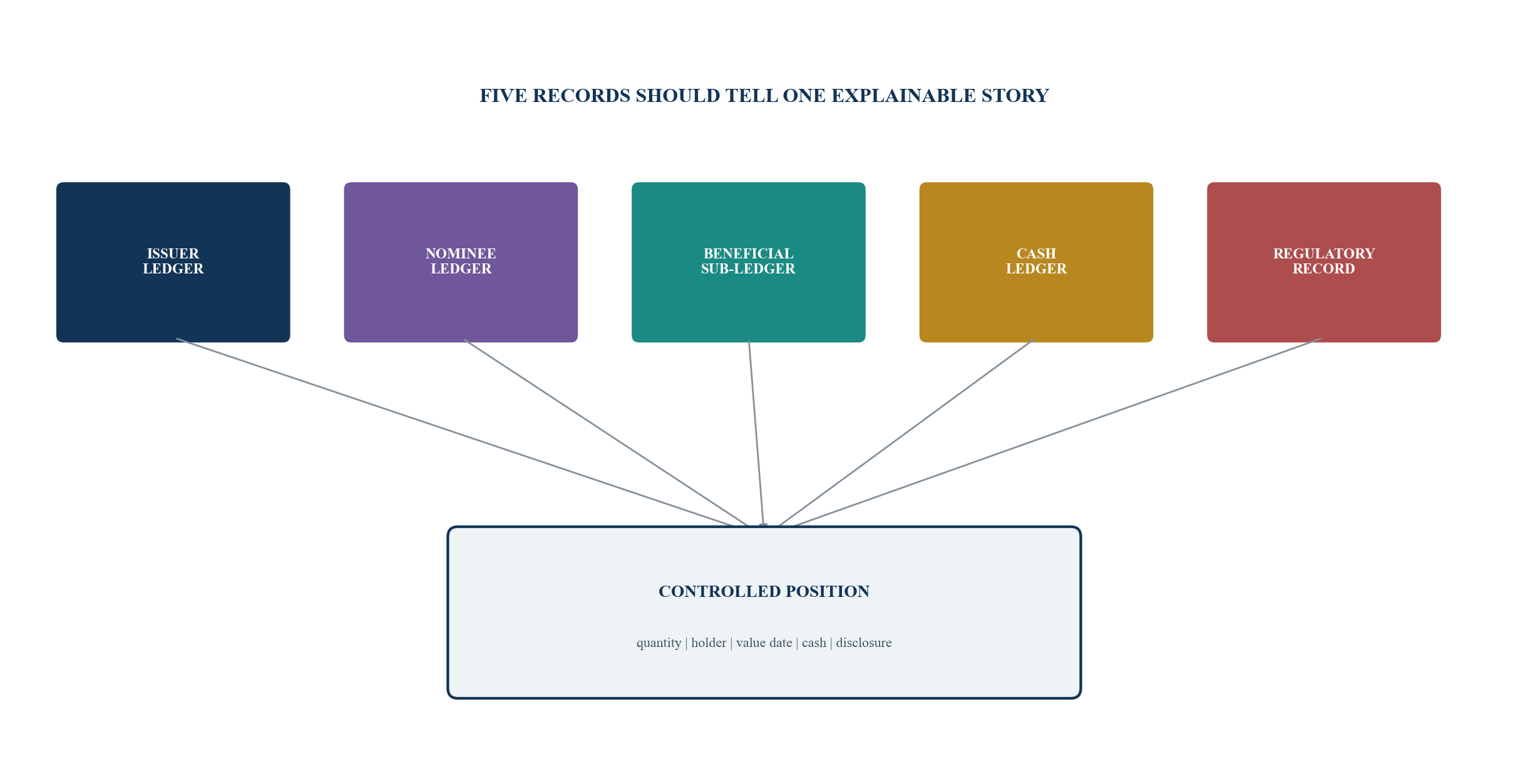
A transaction-ready position has matching balances, explained timing items and current ownership disclosures.
6. Test the custodian, nominee and transfer agent
Due diligence should confirm legal identity, ownership, regulatory permissions, financial resources, insurance, personnel, systems, recordkeeping, cyber controls, complaints, litigation, regulatory history and use of affiliates. A licence check should match the exact service and client type.
The operational review follows the asset through onboarding, acceptance, registration, safekeeping, valuation, corporate actions, instructions, transfer and termination. It identifies manual steps and external dependencies. Private shares can require issuer consent, wet-ink or witnessed documents, tax evidence and local agents, so service-level assumptions should be tested against real cases.
The DFSA states that authorised firms responsible for client assets must arrange proper protection and follow client-money and safe-custody rules. Its published material highlights supervision of auditor reports. The SEC describes transfer agents as recording ownership changes, maintaining holder records, cancelling and issuing certificates, and supporting prompt and accurate settlement. These sources address different regulatory perimeters but reinforce accountable records and safeguarding.
Third-party and sub-custodian arrangements require visibility. The contract should identify where the asset and cash are held, how records are segregated, who can instruct, how oversight occurs and whether the investor can access records after termination. Concentration by provider and jurisdiction should be monitored.
The review should include insolvency analysis. The investor needs to understand whether the shares form part of the custodian's estate, how beneficial records would be produced, who can replace the nominee, and which court or administrator controls the process.
7. Control instructions, voting and distributions
The instruction matrix names authorised persons, channels, authentication, cut-off times, evidence and escalation. High-risk changes such as bank details, beneficial owner, transfer destination or authorised signatory need enhanced verification and independent approval.
Voting has a record-date and deadline chain. The issuer sends notice to the registered nominee. The nominee identifies eligible beneficial investors, collects instructions, aggregates them and submits the registered vote. The system should preserve the notice, entitlement, investor instruction, aggregation and confirmation. Silence, conflicting instructions and split voting need predefined treatment.
Dividends and other distributions follow a similar chain. The nominee receives the gross or net amount, reconciles entitlement, records withholding, converts currency where instructed, deducts agreed fees and credits the beneficiary. Tax forms and treaty claims should be linked to the correct owner and payment date.
Information rights may belong to the registered holder under the company documents. The nominee agreement should state how reports, notices and consents reach the beneficial investor and how confidentiality is maintained. Sensitive private-company information should not be sent through uncontrolled personal channels.
Authority should survive ordinary staff changes and fail safely during disruption. Dual control, callback procedures, cryptographic approval where appropriate, immutable logs and tested emergency contacts reduce the risk of fraudulent or lost instructions.
Table 3. Instruction and entitlement control matrix
| Event | Authoritative trigger | Required instruction | Evidence retained | Escalation condition |
|---|---|---|---|---|
| vote | issuer notice and record date | beneficial-owner direction | entitlement, instruction and submitted proxy | deadline at risk or conflicting instruction |
| dividend | board declaration and holder record | standing or transaction instruction | gross receipt, tax, FX, fee and credit | unmatched cash or missing tax status |
| information | contractual reporting right | distribution authorisation | source, recipient and access log | confidentiality or insider concern |
| transfer | executed agreement and approvals | authenticated delivery instruction | instrument, consent and new register extract | restriction, lien or identity mismatch |
| bank change | verified owner request | dual-approved amendment | callback and change log | new jurisdiction or third-party account |
| termination | valid notice and successor details | transfer or direct registration | final reconciliation and archive | disputed entitlement or provider distress |
Contractual terms and applicable law determine the precise authority and deadline.
8. Map transfer restrictions before accepting the asset
Private shares can be subject to rights of first refusal, co-sale rights, drag-along provisions, lock-ups, board consent, investor consent, permitted-transferee limits, competitor restrictions, securities-law legends, employee leaver rules and pledges. The custody team should map these before onboarding and refresh them after amendments.
Delaware law recognises written restrictions on transfer or registration when the statutory conditions are met and the restriction is appropriately noted on certificates or notices for uncertificated shares. UK and other company regimes use their own corporate and contractual mechanics. The actual documents and law control.
The restrictions matrix should identify the trigger, beneficiary, notice period, response period, evidence, waiver authority and effect of non-compliance. A sale agreement should not promise a closing timetable until these dependencies are understood.
A nominee transfer can occur at two levels. The beneficial interest may move within the nominee's sub-ledger while the registered holder remains unchanged, or legal title may transfer on the issuer register. The company documents, securities law, custody contract, tax and beneficial-ownership rules determine whether an internal book entry is sufficient for the intended outcome.
The acceptance decision should consider exit feasibility. A position that cannot be transferred through the current nominee, delivered to a buyer or registered directly may have impaired liquidity. The limitation should be disclosed and priced before acquisition.
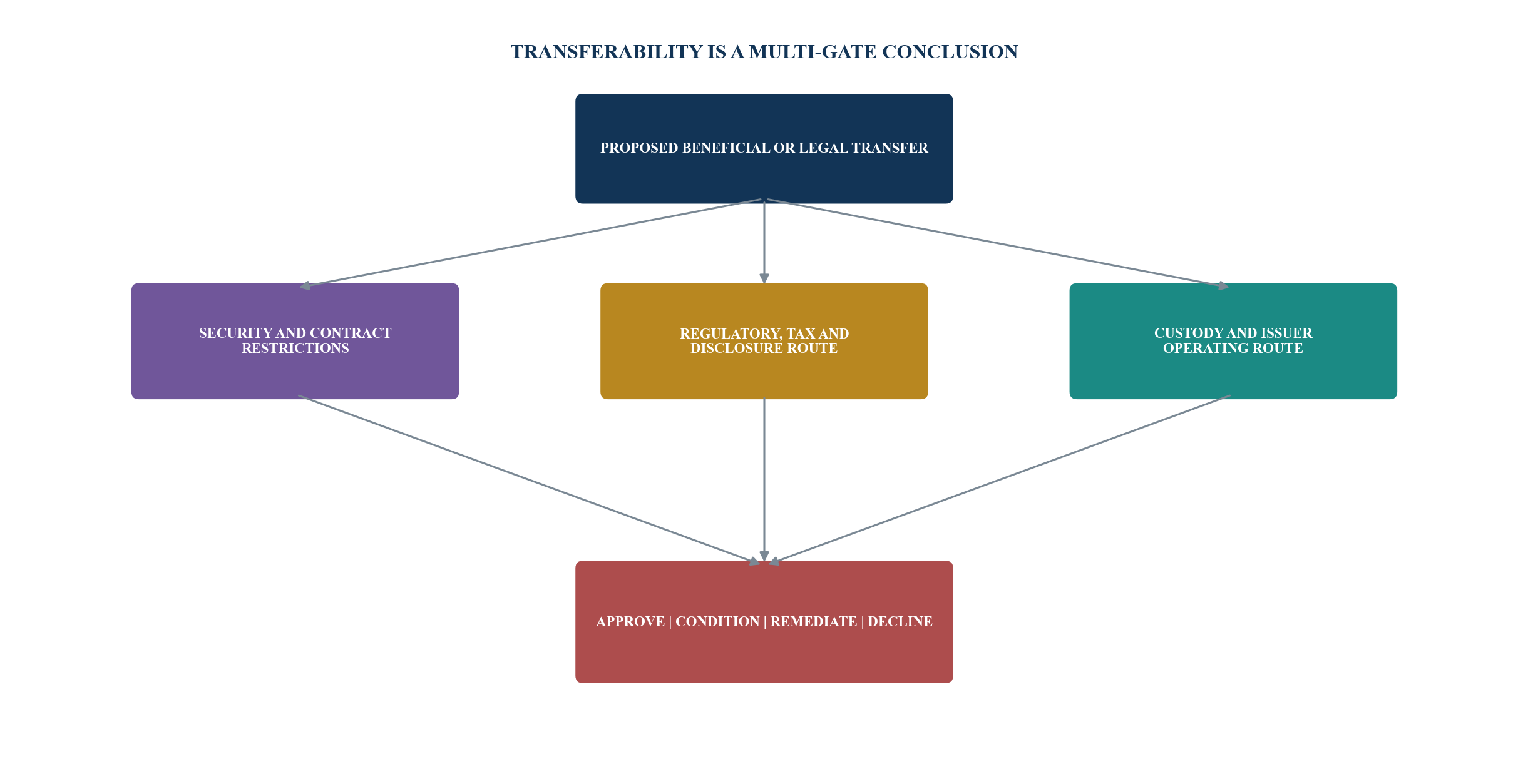
Every branch requires jurisdiction-specific legal confirmation and current transaction evidence.
9. Integrate beneficial-ownership, AML and sanctions controls
The onboarding file should identify the customer, beneficial owners, controllers, authorised persons, source of funds and source of wealth as required by the applicable framework and risk. Intermediate vehicles and trusts need a documented look-through analysis.
FATF guidance explains nominee and nominator relationships and emphasises adequate, accurate and up-to-date beneficial-ownership information. It treats a nominee shareholder as acting on another person's instructions or receiving dividends on that person's behalf, rather than becoming the beneficial owner by virtue of the nominee holding.
Screening should occur at onboarding and on relevant changes. A new beneficial owner, transfer destination, director, controlling person, bank account or jurisdiction can change risk. Sanctions, politically exposed person and adverse-information procedures should use current authoritative sources and an escalation policy.
The custody team must distinguish a transparency filing from customer due diligence. A public or central register can support verification but may not contain every economic owner or current control fact. The file should record the sources used, discrepancies and resolution.
Privacy and data-transfer requirements should be integrated. Beneficial-owner records can contain identity, address, tax and wealth information. Access should be role-based, transmission controlled, retention defined and cross-border hosting assessed under applicable law.
10. Safeguard client assets and cash
Safeguarding begins with the legal structure. The agreement and account title should distinguish client assets from the provider's own property. Records should identify each client's entitlement and aggregate positions. The operating design should restrict use, lending, pledging or transfer without authorised terms.
Private shares can be certificated or uncertificated. Physical certificates require secure storage, inventory, movement logs and replacement procedures. Electronic positions require controlled access to issuer or transfer-agent systems, authoritative extracts and change monitoring. Scanned copies alone do not prove that a certificate remains valid or unencumbered.
Cash creates separate exposure. Subscription funds, purchase consideration, dividends and sale proceeds should move through approved accounts with clear client-money treatment. The process should avoid unnecessary passage through adviser accounts. Payment details must reconcile with the verified party and transaction documents.
The SEC's custody rule includes specific treatment for certain privately offered securities whose ownership is recorded only on the issuer's or transfer agent's books and whose transfer requires consent. That US adviser rule has a defined scope and conditions. It demonstrates why book-entry ownership, transfer controls and audit evidence should be analysed together.
Periodic controls include asset confirmation, issuer or transfer-agent reconciliation, bank reconciliation, access review, exception ageing, provider due diligence and independent audit where required. Management should receive material breaches and unresolved differences promptly.
Table 4. Safeguarding control library
| Risk | Preventive control | Detective control | Recovery evidence |
|---|---|---|---|
| provider asset commingling | segregated legal and account structure | client-asset reconciliation | insolvency opinion and entitlement records |
| incorrect beneficial allocation | transaction-level sub-ledger and dual approval | investor and aggregate reconciliation | immutable audit trail and confirmations |
| certificate loss | secure inventory and movement approval | periodic physical count | indemnity and issuer replacement procedure |
| unauthorised transfer | authenticated instructions and restricted access | change alerts and exception review | reversal or legal-enforcement route |
| cash diversion | verified account and maker-checker payment | bank and entitlement reconciliation | recall, insurance and incident file |
| provider failure | financial, operational and regulatory diligence | ongoing risk indicators | successor nominee and portability plan |
Applicable regulatory rules and contracts determine the mandatory controls.
11. Process corporate actions through the complete chain
Corporate actions can change quantity, class, rights or cash. The custody calendar should capture meetings, dividends, splits, consolidations, conversions, rights issues, option exercises, repurchases, mergers, tender offers and liquidations. Each event has record dates, elections, funding and evidence.
The issuer or transfer agent is the primary source. The nominee translates the event into beneficial entitlements and instructions. The sub-ledger allocates the outcome, while the cash ledger records payments. The issuer and nominee positions should reconcile after completion.
Voluntary actions need an election protocol. The beneficial investor should receive sufficient information and time. The nominee should state default treatment if no instruction is received. Aggregated elections should not exceed the registered entitlement.
Capital changes also affect ownership disclosures, tax and transfer restrictions. A conversion or exercise can move an investor above a reporting threshold. A merger can replace the issuer and governing law. The event workflow should route these consequences rather than treating the action as a simple quantity update.
Post-event evidence includes issuer confirmation, updated register or ledger, revised certificate or electronic notice, beneficial allocation, cash, tax and filing receipts. The event remains open until all relevant records match.
12. Design a controlled cross-border transfer closing
The closing plan begins with parties, asset, quantity, price, currency, governing law, conditions and long-stop date. It identifies seller, registered nominee, beneficial owner, buyer, buyer nominee, issuer, transfer agent, bank, escrow, counsel and tax advisers.
Conditions can include title confirmation, KYC, sanctions clearance, board consent, investor consent, rights-of-first-refusal expiry, waiver, tax or stamp evidence, lien release, funding, transfer instrument and disclosure updates. Each condition needs an owner and objective evidence.
Delivery-versus-payment can be difficult when the issuer registers only after reviewing documents and cash cannot remain exposed. Escrow, conditional release instructions and a pre-agreed registration process can coordinate the steps. The final structure requires legal and operational confirmation.
The funds-flow statement should show gross price, tax, fees, currency conversion, debt or lien repayment and net proceeds. Bank details should be independently verified. The share-flow statement should show the registered and beneficial positions before and after closing.
Closing is complete when the authoritative issuer record, nominee register, beneficial sub-ledger, cash ledger and relevant ownership filings reflect the transaction. A signed purchase agreement and paid cash without the register update can leave the buyer with an incomplete corporate-rights position.
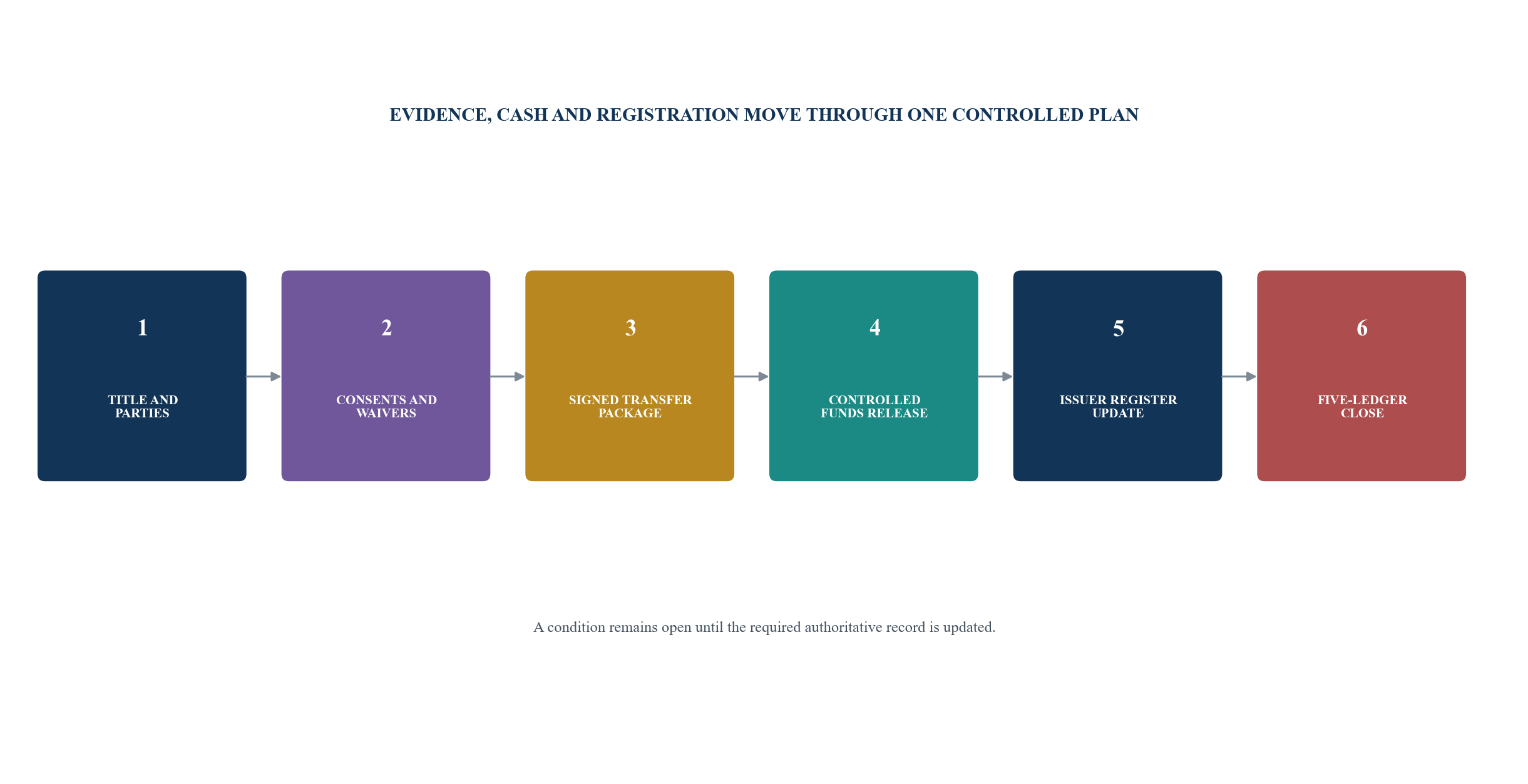
Sequence and legal effect depend on the issuer, contract and jurisdictions.
13. Prepare for tax, reporting and valuation
Tax analysis can depend on investor residence, issuer location, legal and beneficial ownership, acquisition route, instrument, employment relationship, holding period, distributions and disposal. Custody records should provide the factual history without attempting to replace professional advice.
The tax pack can include acquisition documents, cost basis, dates, currency, fees, valuations, distributions, withholding, elections, exercises, transfers and sale proceeds. A nominee should preserve look-through allocation and relevant forms. The provider should state which tax services it performs and which remain the investor's responsibility.
Financial reporting and fund audit need existence, rights and valuation evidence. The issuer or transfer-agent confirmation, nominee agreement, sub-ledger, transaction history and restrictions support the existence and rights assessment. The current valuation file should identify the precise security and restrictions.
Currency should be controlled. Acquisition cost, reporting value, dividends and proceeds can use different currencies and dates. The system should retain original currency, functional or reporting currency, rate source and translation date.
Tax or reporting values can differ from transaction prices. Each value should be labelled by purpose, date, security and standard. The custody record should link to the appropriate report and avoid circulating an unexplained number.
14. Engineer portability, insolvency and business continuity
A custody arrangement should be designed for exit from the provider. Termination can arise from investor choice, regulatory action, provider sale, insolvency, cyber incident, jurisdiction change or service withdrawal. Portability should be tested before a crisis.
The plan identifies successor eligibility, issuer consent, transfer documents, access to records, beneficial-owner data, cash, certificates, pending corporate actions and regulatory notifications. A nominee holding a single aggregate position may need to transfer legal title or appoint a replacement while preserving every underlying allocation.
The provider should maintain recoverable records and tested backups. Business-continuity exercises should include loss of the primary system, inaccessible office, compromised credentials, unavailable signatory and failure of a sub-custodian. The recovery objective should reflect transaction and corporate-action deadlines.
Insolvency analysis should establish the legal character of client assets, segregation, trust or agency terms where applicable, rights against sub-custodians and access to records. The answer varies by structure and jurisdiction. A contractual statement of segregation should be supported by actual account titles and reconciliations.
The investor should maintain an independent minimum evidence pack. It can include current issuer confirmation, agreement, beneficial statement, transaction history, key contacts and emergency instruction route. This reduces complete dependence on one platform.
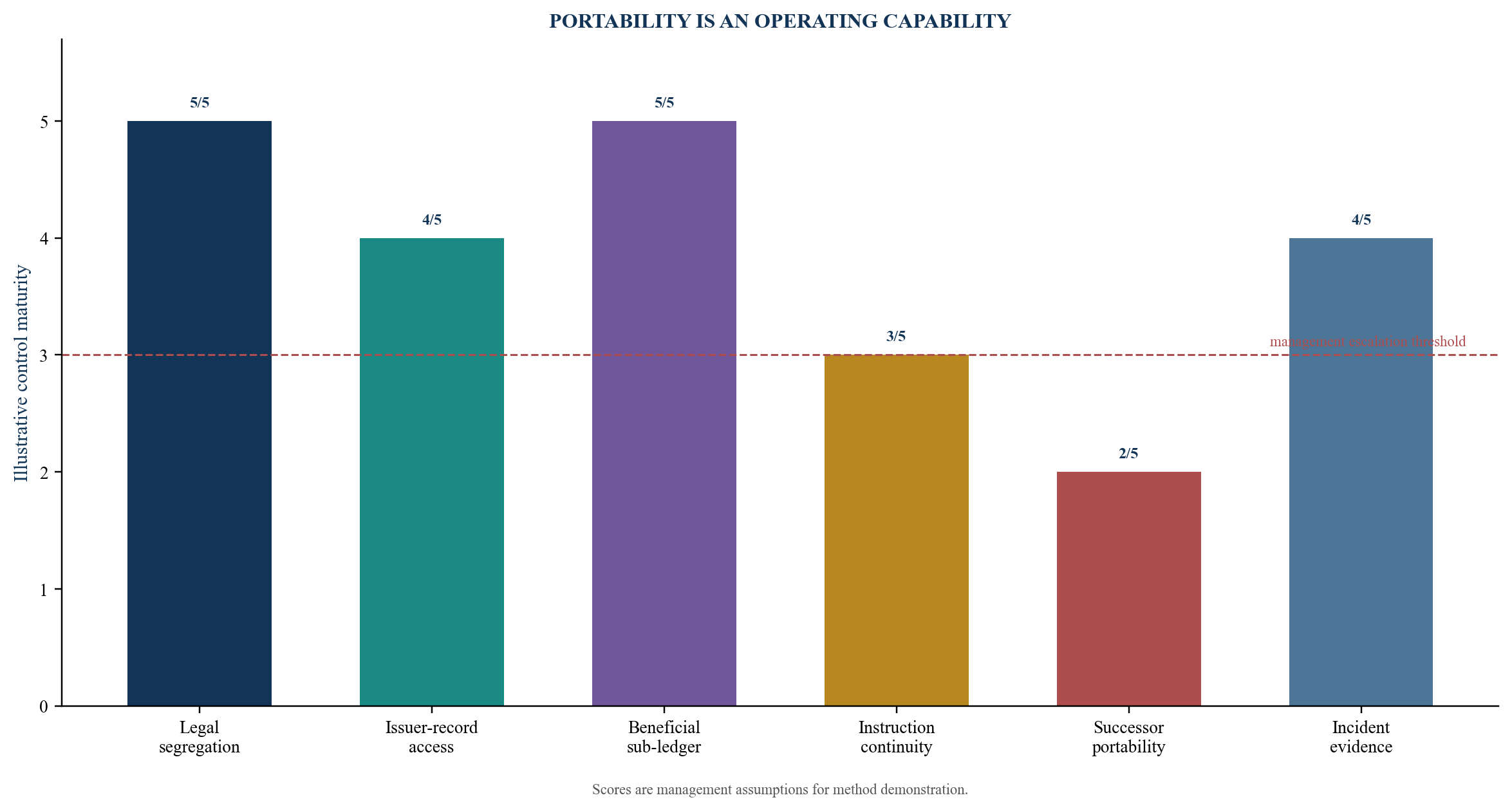
Recovery relies on legal structure, accurate records, operational access and a viable successor route.
15. Run a ten-day custody diagnostic
Days one and two define the asset, holder, beneficial owner, service roles, jurisdictions and intended transactions. The team obtains licences, agreements, issuer documents and current statements.
Days three and four reconstruct chain of title and all capital events. It compares certificates, issuer register, nominee balance and beneficial allocation. Missing documents enter a remediation log.
Days five and six complete the five-ledger reconciliation and beneficial-ownership map. The team tests cash, distributions, filings, sanctions, tax data and control persons.
Days seven and eight map transfer restrictions, corporate-action processes, instruction controls, provider dependencies, insolvency and portability. It runs a sample transfer and voting event through the workflow.
Day nine grades exceptions by legal-title, client-asset, regulatory, financial and execution severity. Day ten is the decision gate: accept; accept with conditions; remediate; migrate provider; obtain specialist advice; or decline the asset or transaction.
The ten-day period is an operating target. Complex trusts, multiple nominees, missing historic records, disputes or restricted jurisdictions can require longer. The decision record should state what remains unresolved.
Table 5. Ten-day cross-border custody diagnostic
| Period | Workstream | Decision output | Completion evidence |
|---|---|---|---|
| days 1-2 | perimeter and provider | what asset, roles and regimes apply? | mandate, role map and licence checks |
| days 3-4 | title reconstruction | can issuance and every transfer be proven? | chain-of-title file and exception log |
| days 5-6 | ownership and ledgers | do legal, beneficial, cash and regulatory records reconcile? | five-ledger control report |
| days 7-8 | transfer and resilience | can rights be exercised and the asset moved? | restriction map and simulation results |
| day 9 | risk and remediation | which gaps block custody or transaction readiness? | severity-ranked action register |
| day 10 | governance gate | accept, condition, migrate, advise or decline? | signed decision and owner timetable |
Timing is a management target and should be adapted to evidence availability and legal complexity.
16. Implement a thirty-day custody control office
The first week creates governance. The organisation approves custody scope, accountabilities, provider standards, asset acceptance, instruction authority, beneficial-ownership monitoring, escalation and record retention. It identifies external legal, tax and regulatory support.
The second week creates controlled data. Issuer records, certificates, agreements, beneficial-owner files, transaction histories, restrictions, bank details and regulatory filings enter a governed repository. The team assigns unique asset and investor identifiers.
The third week implements the five ledgers, daily or event-driven cash controls, periodic position reconciliations, corporate-action calendar and exception workflow. Dashboards show breaks, ageing, upcoming deadlines, incomplete KYC and provider risk.
The fourth week performs simulations: a vote, dividend, beneficial transfer, legal-title transfer, provider outage and nominee replacement. The team records elapsed time, manual dependencies, failed evidence and corrective actions.
Ongoing operations include monthly exception review, quarterly provider and access review, annual legal and insolvency refresh, event-driven ownership filings and periodic investor confirmations. Frequency should reflect risk and activity.
The operating office can be internal, outsourced or hybrid. Accountability, access to source evidence and independent challenge should remain explicit under each model.
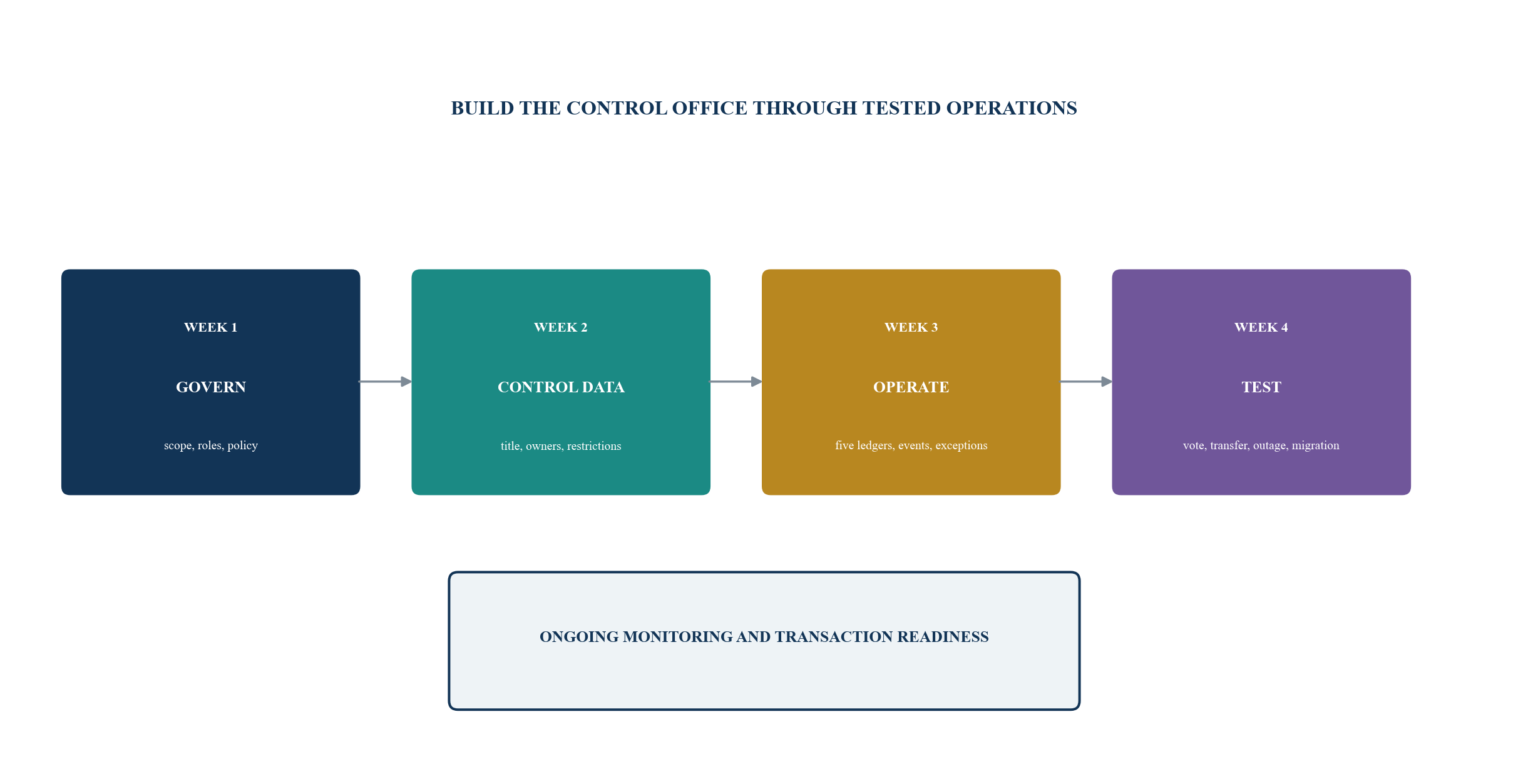
The operating sequence moves from authority and evidence to controls, simulations and accountable ongoing ownership.
17. Connect custody discipline to transactions and retained work
Cross-border custody readiness supports private secondaries, employee liquidity, fund transfers, secured financing, M&A, estate planning, family-office consolidation and portfolio reporting. It converts a claimed economic interest into a documented, transferable and governable asset position.
A transaction team can begin with a ten-day diagnostic and continue through chain-of-title remediation, beneficial-owner mapping, provider selection, nominee restructuring, transfer approvals, valuation, data-room preparation and closing management. The same control office can maintain the position after closing.
Retained work can include periodic five-ledger reconciliation, corporate-action administration, ownership-change monitoring, provider oversight, transaction-readiness updates and exception remediation. Legal, custody and advisory responsibilities should be contracted and communicated accurately.
Commercial evidence consists of signed diagnostics, retained control-office engagements, transaction mandates, success fees and collected payments. Downloads, enquiries and meetings remain leading indicators. Demand and fee conversion should remain unverified until supported by executed contracts and collected funds.
Quality measures include unresolved title breaks, reconciliation ageing, missed deadlines, instruction errors, filing exceptions, corporate-action recovery, transfer cycle time and audit findings. Transaction completion and clean migration provide stronger outcome evidence than a current platform balance alone.
Table 6. Custody control-office performance scorecard
| Measure | Illustrative target | Escalation trigger | Evidence source |
|---|---|---|---|
| unresolved legal-title breaks | zero | any open critical break | issuer and nominee exception register |
| five-ledger reconciliation | 100% by cycle deadline | unexplained quantity or cash difference | signed reconciliation pack |
| corporate-action timeliness | 100% before cut-off | missed or endangered election | event calendar and submission receipt |
| ownership filing timeliness | 100% within applicable period | overdue or inconsistent disclosure | registry and filing confirmation |
| authenticated high-risk instructions | 100% | single-control or unverified change | instruction and callback log |
| transfer-readiness evidence | current for all designated exit assets | expired consent, KYC or title evidence | readiness dashboard |
| provider portability test | completed annually | failed data, asset or authority migration | simulation report and remediation log |
Thresholds are management assumptions for method demonstration and should be set to the actual risk appetite and obligations.
18. Conclusion
Cross-border private-share custody is an evidence and control system. The investor's economic position depends on the connection between beneficial ownership, registered title, provider records, company rights, cash and regulatory disclosures.
The framework defines the asset and jurisdictions, separates legal and beneficial roles, reconstructs chain of title, reconciles five ledgers, tests providers, maps transfer restrictions, safeguards assets and cash, controls corporate actions and prepares portability. It ends with a transaction-ready record and a governed operating route.
Official UK, US, Singapore, ADGM, DIFC and FATF materials show the importance of authoritative registers, accurate beneficial-owner information, safeguarding, recordkeeping and transfer control. Their rules differ, so each structure requires current professional advice.
For investors and family offices, the framework makes the holding understandable and portable. For issuers, it strengthens shareholder records and corporate-action execution. For transaction teams, it identifies closing dependencies before money and documents are exposed. Commercial demand and fees remain unverified until evidenced by signed engagements and collected payments.
References
- HM Revenue & Customs. Evidence of Ownership: Registered Shares. Updated 20 July 2026. https://www.gov.uk/hmrc-internal-manuals/stamp-taxes-shares-manual/stsm071040
- Companies House. People with Significant Control. Updated 18 November 2025. https://www.gov.uk/guidance/people-with-significant-control-pscs
- Companies House. Summary Guidance for Companies: Register of People with Significant Control. https://www.gov.uk/government/publications/people-with-significant-control-summary-guidance/summary-guidance-for-companies-register-of-people-with-significant-control-pscs
- Delaware Code. Title 8, Chapter 1, Subchapter VI: Stock Transfers. https://delcode.delaware.gov/title8/c001/sc06/
- Delaware Code. Title 8, Chapter 1, Subchapter VII: Stockholders and Stock Ledger. https://delcode.delaware.gov/title8/c001/sc07/
- Delaware Code. Title 8, Chapter 1, Subchapter V: Stock and Dividends. https://delcode.delaware.gov/title8/c001/sc05/
- US Securities and Exchange Commission. Transfer Agents. https://www.sec.gov/about/divisions-offices/division-trading-markets/transfer-agents
- US Securities and Exchange Commission. Custody of Funds or Securities of Clients by Investment Advisers, Release IA-2176. https://www.sec.gov/files/rules/final/ia-2176.htm
- US Securities and Exchange Commission. Recordkeeping Requirements for Transfer Agents. https://www.sec.gov/rules-regulations/2001/04/recordkeeping-requirements-transfer-agents
- Accounting and Corporate Regulatory Authority Singapore. RORC, ROND and RONS Guidance. Updated 3 March 2026. https://www.acra.gov.sg/regulations/practice-directions-registrars-interpretations-guidance/rorc-rond-rons-guidance/
- Accounting and Corporate Regulatory Authority Singapore. Registers of Nominee Shareholders Guidance for Companies, version 2. https://www.acra.gov.sg/docs/default-source/default-document-library/compliance/register-of-controllers/acra-guidance-on-register-of-nominee-shareholders-for-companies-%28v2%29-17-jun.pdf
- Abu Dhabi Global Market Registration Authority. Amendments to Commercial Legislation. 9 July 2026. https://www.adgm.com/media/announcements/adgm-registration-authority-publishes-amendments-to-the-commercial-legislation-july-2026
- Dubai Financial Services Authority. Client Assets. https://www.dfsa.ae/what-we-do/client-assets
- Financial Action Task Force. Guidance on Beneficial Ownership of Legal Persons. https://www.fatf-gafi.org/content/dam/fatf-gafi/guidance/Guidance-Beneficial-Ownership-Legal-Persons.pdf.coredownload.pdf
- Financial Action Task Force. Guidance on Beneficial Ownership and Transparency of Legal Arrangements. 11 March 2024. https://www.fatf-gafi.org/content/fatf-gafi/en/publications/Fatfrecommendations/Guidance-Beneficial-Ownership-Transparency-Legal-Arrangements.html
About the Author
Chennakeshav Adya, Independent Researcher
