

1. Define the asset perimeter
Separate source data, labels, features, embeddings, model weights, prompts, retrieval stores, generated content and documentation.
The controlled record includes asset identifier; source; creator or supplier; collection basis; jurisdiction; licence; consent; transformation; permitted use; restriction; evidence; owner; review date and remedy. The immediate deliverable is a data-and-content asset schedule. Every material conclusion should distinguish legal title, contractual permission, technical possession, practical access and economic contribution.
The principal failure occurs when the deal perimeter groups assets with materially different rights and restrictions. Reviewers should reproduce the lineage from primary evidence, test the exact contemplated use and transaction step, identify contradictory clauses and quantify the operational and financial consequence of any unresolved gap. Scenario values require approved company, transaction, market and period inputs.
The decision pack for define the asset perimeter should show the management claim, governing evidence, rights holder, permitted and prohibited acts, duration, geography, transfer mechanics, synthetic or transformed forms, dependency, exposure, cure, cost, owner and approval. Material exceptions flow into product scope, integration sequencing, price, working capital, warranties, indemnities, escrow, insurance, reserves and the investment decision.
2. Map legal ownership
Identify creators, employers, contractors, customers, licensors, platforms, public bodies and successors for every material asset.
The controlled record includes asset identifier; source; creator or supplier; collection basis; jurisdiction; licence; consent; transformation; permitted use; restriction; evidence; owner; review date and remedy. The immediate deliverable is an ownership chain map. Every material conclusion should distinguish legal title, contractual permission, technical possession, practical access and economic contribution.
The principal failure occurs when possession or technical access is mistaken for transferable ownership. Reviewers should reproduce the lineage from primary evidence, test the exact contemplated use and transaction step, identify contradictory clauses and quantify the operational and financial consequence of any unresolved gap. Scenario values require approved company, transaction, market and period inputs.
The decision pack for map legal ownership should show the management claim, governing evidence, rights holder, permitted and prohibited acts, duration, geography, transfer mechanics, synthetic or transformed forms, dependency, exposure, cure, cost, owner and approval. Material exceptions flow into product scope, integration sequencing, price, working capital, warranties, indemnities, escrow, insurance, reserves and the investment decision.
3. Trace provenance
Record origin, collection method, acquisition date, jurisdiction, transformations and evidence for each dataset.
The controlled record includes asset identifier; source; creator or supplier; collection basis; jurisdiction; licence; consent; transformation; permitted use; restriction; evidence; owner; review date and remedy. The immediate deliverable is a provenance ledger. Every material conclusion should distinguish legal title, contractual permission, technical possession, practical access and economic contribution.
The principal failure occurs when buyers cannot reproduce how a valuable dataset entered the business. Reviewers should reproduce the lineage from primary evidence, test the exact contemplated use and transaction step, identify contradictory clauses and quantify the operational and financial consequence of any unresolved gap. Scenario values require approved company, transaction, market and period inputs.
The decision pack for trace provenance should show the management claim, governing evidence, rights holder, permitted and prohibited acts, duration, geography, transfer mechanics, synthetic or transformed forms, dependency, exposure, cure, cost, owner and approval. Material exceptions flow into product scope, integration sequencing, price, working capital, warranties, indemnities, escrow, insurance, reserves and the investment decision.
4. Test authority to collect
Verify notices, consent, contract, legitimate interest, statutory authority and platform terms at acquisition.
The controlled record includes asset identifier; source; creator or supplier; collection basis; jurisdiction; licence; consent; transformation; permitted use; restriction; evidence; owner; review date and remedy. The immediate deliverable is a collection-authority matrix. Every material conclusion should distinguish legal title, contractual permission, technical possession, practical access and economic contribution.
The principal failure occurs when the collection basis cannot support the claimed use. Reviewers should reproduce the lineage from primary evidence, test the exact contemplated use and transaction step, identify contradictory clauses and quantify the operational and financial consequence of any unresolved gap. Scenario values require approved company, transaction, market and period inputs.
The decision pack for test authority to collect should show the management claim, governing evidence, rights holder, permitted and prohibited acts, duration, geography, transfer mechanics, synthetic or transformed forms, dependency, exposure, cure, cost, owner and approval. Material exceptions flow into product scope, integration sequencing, price, working capital, warranties, indemnities, escrow, insurance, reserves and the investment decision.
5. Test authority to train
Distinguish original purpose, model development, fine-tuning, evaluation, retrieval and product deployment.
The controlled record includes asset identifier; source; creator or supplier; collection basis; jurisdiction; licence; consent; transformation; permitted use; restriction; evidence; owner; review date and remedy. The immediate deliverable is a training-use rights schedule. Every material conclusion should distinguish legal title, contractual permission, technical possession, practical access and economic contribution.
The principal failure occurs when permission for service delivery is treated as permission for training. Reviewers should reproduce the lineage from primary evidence, test the exact contemplated use and transaction step, identify contradictory clauses and quantify the operational and financial consequence of any unresolved gap. Scenario values require approved company, transaction, market and period inputs.
The decision pack for test authority to train should show the management claim, governing evidence, rights holder, permitted and prohibited acts, duration, geography, transfer mechanics, synthetic or transformed forms, dependency, exposure, cure, cost, owner and approval. Material exceptions flow into product scope, integration sequencing, price, working capital, warranties, indemnities, escrow, insurance, reserves and the investment decision.
6. Review copyright status
Classify protected works, databases, compilations, public-domain material and uncertain status by jurisdiction.
The controlled record includes asset identifier; source; creator or supplier; collection basis; jurisdiction; licence; consent; transformation; permitted use; restriction; evidence; owner; review date and remedy. The immediate deliverable is a copyright exposure map. Every material conclusion should distinguish legal title, contractual permission, technical possession, practical access and economic contribution.
The principal failure occurs when copyright exposure is reduced to a binary owned-or-not-owned label. Reviewers should reproduce the lineage from primary evidence, test the exact contemplated use and transaction step, identify contradictory clauses and quantify the operational and financial consequence of any unresolved gap. Scenario values require approved company, transaction, market and period inputs.
The decision pack for review copyright status should show the management claim, governing evidence, rights holder, permitted and prohibited acts, duration, geography, transfer mechanics, synthetic or transformed forms, dependency, exposure, cure, cost, owner and approval. Material exceptions flow into product scope, integration sequencing, price, working capital, warranties, indemnities, escrow, insurance, reserves and the investment decision.
7. Review database rights
Test investment, extraction, reutilisation, territorial scope and contractual allocation.
The controlled record includes asset identifier; source; creator or supplier; collection basis; jurisdiction; licence; consent; transformation; permitted use; restriction; evidence; owner; review date and remedy. The immediate deliverable is a database-rights assessment. Every material conclusion should distinguish legal title, contractual permission, technical possession, practical access and economic contribution.
The principal failure occurs when a valuable corpus carries database-right exposure independent of copyright. Reviewers should reproduce the lineage from primary evidence, test the exact contemplated use and transaction step, identify contradictory clauses and quantify the operational and financial consequence of any unresolved gap. Scenario values require approved company, transaction, market and period inputs.
The decision pack for review database rights should show the management claim, governing evidence, rights holder, permitted and prohibited acts, duration, geography, transfer mechanics, synthetic or transformed forms, dependency, exposure, cure, cost, owner and approval. Material exceptions flow into product scope, integration sequencing, price, working capital, warranties, indemnities, escrow, insurance, reserves and the investment decision.
8. Review privacy status
Identify personal data, special-category data, children, inferred attributes, pseudonymisation and claimed anonymity.
The controlled record includes asset identifier; source; creator or supplier; collection basis; jurisdiction; licence; consent; transformation; permitted use; restriction; evidence; owner; review date and remedy. The immediate deliverable is a privacy classification register. Every material conclusion should distinguish legal title, contractual permission, technical possession, practical access and economic contribution.
The principal failure occurs when synthetic or embedded forms are assumed to fall outside privacy law without testing. Reviewers should reproduce the lineage from primary evidence, test the exact contemplated use and transaction step, identify contradictory clauses and quantify the operational and financial consequence of any unresolved gap. Scenario values require approved company, transaction, market and period inputs.
The decision pack for review privacy status should show the management claim, governing evidence, rights holder, permitted and prohibited acts, duration, geography, transfer mechanics, synthetic or transformed forms, dependency, exposure, cure, cost, owner and approval. Material exceptions flow into product scope, integration sequencing, price, working capital, warranties, indemnities, escrow, insurance, reserves and the investment decision.
Table 1. Data-rights perimeter
| Asset layer | Primary question | Deal evidence |
|---|---|---|
| source data | lawful access and use | contract and collection record |
| transformation | rights preserved or changed | lineage log |
| model asset | transferable control | weights and terms |
| output | commercial exploitation | human and provider record |
Illustrative controls require asset-, contract-, jurisdiction-, transaction- and period-specific approval.
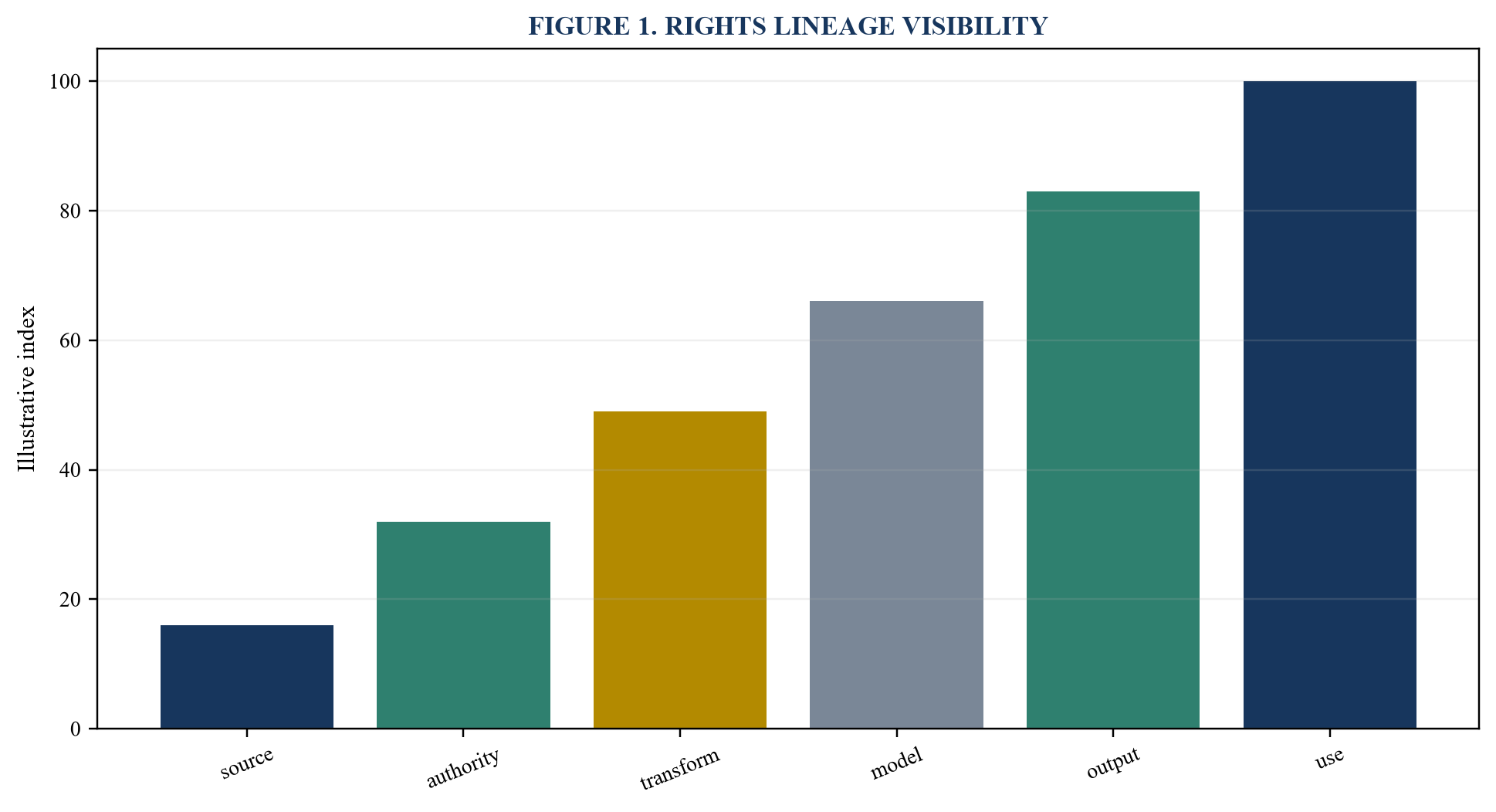
Values are illustrative indices and require replacement with approved transaction evidence.
9. Evaluate anonymity claims
Assess singling out, linkability, inference, memorisation, extraction and reasonably likely means of re-identification.
The controlled record includes asset identifier; source; creator or supplier; collection basis; jurisdiction; licence; consent; transformation; permitted use; restriction; evidence; owner; review date and remedy. The immediate deliverable is an anonymity evidence pack. Every material conclusion should distinguish legal title, contractual permission, technical possession, practical access and economic contribution.
The principal failure occurs when a model or synthetic dataset is labelled anonymous without evidence. Reviewers should reproduce the lineage from primary evidence, test the exact contemplated use and transaction step, identify contradictory clauses and quantify the operational and financial consequence of any unresolved gap. Scenario values require approved company, transaction, market and period inputs.
The decision pack for evaluate anonymity claims should show the management claim, governing evidence, rights holder, permitted and prohibited acts, duration, geography, transfer mechanics, synthetic or transformed forms, dependency, exposure, cure, cost, owner and approval. Material exceptions flow into product scope, integration sequencing, price, working capital, warranties, indemnities, escrow, insurance, reserves and the investment decision.
10. Map consent scope
Connect the exact notice and consent language to collection, reuse, sharing, training, commercialisation and transfer.
The controlled record includes asset identifier; source; creator or supplier; collection basis; jurisdiction; licence; consent; transformation; permitted use; restriction; evidence; owner; review date and remedy. The immediate deliverable is a consent-scope map. Every material conclusion should distinguish legal title, contractual permission, technical possession, practical access and economic contribution.
The principal failure occurs when broad consent labels obscure purpose and withdrawal limitations. Reviewers should reproduce the lineage from primary evidence, test the exact contemplated use and transaction step, identify contradictory clauses and quantify the operational and financial consequence of any unresolved gap. Scenario values require approved company, transaction, market and period inputs.
The decision pack for map consent scope should show the management claim, governing evidence, rights holder, permitted and prohibited acts, duration, geography, transfer mechanics, synthetic or transformed forms, dependency, exposure, cure, cost, owner and approval. Material exceptions flow into product scope, integration sequencing, price, working capital, warranties, indemnities, escrow, insurance, reserves and the investment decision.
11. Map licence scope
Capture field, territory, term, users, affiliates, subcontractors, modification, derivatives, sublicensing and change-of-control terms.
The controlled record includes asset identifier; source; creator or supplier; collection basis; jurisdiction; licence; consent; transformation; permitted use; restriction; evidence; owner; review date and remedy. The immediate deliverable is a licence-rights matrix. Every material conclusion should distinguish legal title, contractual permission, technical possession, practical access and economic contribution.
The principal failure occurs when a licence supports current operations and fails on deal completion. Reviewers should reproduce the lineage from primary evidence, test the exact contemplated use and transaction step, identify contradictory clauses and quantify the operational and financial consequence of any unresolved gap. Scenario values require approved company, transaction, market and period inputs.
The decision pack for map licence scope should show the management claim, governing evidence, rights holder, permitted and prohibited acts, duration, geography, transfer mechanics, synthetic or transformed forms, dependency, exposure, cure, cost, owner and approval. Material exceptions flow into product scope, integration sequencing, price, working capital, warranties, indemnities, escrow, insurance, reserves and the investment decision.
12. Test assignment and change of control
Review assignment consent, deemed transfers, merger clauses, termination rights and cure periods.
The controlled record includes asset identifier; source; creator or supplier; collection basis; jurisdiction; licence; consent; transformation; permitted use; restriction; evidence; owner; review date and remedy. The immediate deliverable is a transaction-trigger schedule. Every material conclusion should distinguish legal title, contractual permission, technical possession, practical access and economic contribution.
The principal failure occurs when the buyer acquires the company while losing a core data right. Reviewers should reproduce the lineage from primary evidence, test the exact contemplated use and transaction step, identify contradictory clauses and quantify the operational and financial consequence of any unresolved gap. Scenario values require approved company, transaction, market and period inputs.
The decision pack for test assignment and change of control should show the management claim, governing evidence, rights holder, permitted and prohibited acts, duration, geography, transfer mechanics, synthetic or transformed forms, dependency, exposure, cure, cost, owner and approval. Material exceptions flow into product scope, integration sequencing, price, working capital, warranties, indemnities, escrow, insurance, reserves and the investment decision.
13. Review scraping and platform terms
Trace robots signals, access controls, account terms, rate limits, contractual restrictions and source notices.
The controlled record includes asset identifier; source; creator or supplier; collection basis; jurisdiction; licence; consent; transformation; permitted use; restriction; evidence; owner; review date and remedy. The immediate deliverable is a source-access review. Every material conclusion should distinguish legal title, contractual permission, technical possession, practical access and economic contribution.
The principal failure occurs when collection methods create breach, circumvention or provenance exposure. Reviewers should reproduce the lineage from primary evidence, test the exact contemplated use and transaction step, identify contradictory clauses and quantify the operational and financial consequence of any unresolved gap. Scenario values require approved company, transaction, market and period inputs.
The decision pack for review scraping and platform terms should show the management claim, governing evidence, rights holder, permitted and prohibited acts, duration, geography, transfer mechanics, synthetic or transformed forms, dependency, exposure, cure, cost, owner and approval. Material exceptions flow into product scope, integration sequencing, price, working capital, warranties, indemnities, escrow, insurance, reserves and the investment decision.
14. Review text-and-data-mining rules
Map statutory exceptions, reservations, opt-outs, lawful access and territorial differences.
The controlled record includes asset identifier; source; creator or supplier; collection basis; jurisdiction; licence; consent; transformation; permitted use; restriction; evidence; owner; review date and remedy. The immediate deliverable is a mining-rights jurisdiction map. Every material conclusion should distinguish legal title, contractual permission, technical possession, practical access and economic contribution.
The principal failure occurs when a single jurisdictional assumption is applied to global collection and training. Reviewers should reproduce the lineage from primary evidence, test the exact contemplated use and transaction step, identify contradictory clauses and quantify the operational and financial consequence of any unresolved gap. Scenario values require approved company, transaction, market and period inputs.
The decision pack for review text-and-data-mining rules should show the management claim, governing evidence, rights holder, permitted and prohibited acts, duration, geography, transfer mechanics, synthetic or transformed forms, dependency, exposure, cure, cost, owner and approval. Material exceptions flow into product scope, integration sequencing, price, working capital, warranties, indemnities, escrow, insurance, reserves and the investment decision.
15. Review confidentiality
Identify trade secrets, confidential information, clean-room limits, residuals clauses and disclosure duties.
The controlled record includes asset identifier; source; creator or supplier; collection basis; jurisdiction; licence; consent; transformation; permitted use; restriction; evidence; owner; review date and remedy. The immediate deliverable is a confidentiality contamination map. Every material conclusion should distinguish legal title, contractual permission, technical possession, practical access and economic contribution.
The principal failure occurs when training creates an uncontrolled derivative of third-party confidential information. Reviewers should reproduce the lineage from primary evidence, test the exact contemplated use and transaction step, identify contradictory clauses and quantify the operational and financial consequence of any unresolved gap. Scenario values require approved company, transaction, market and period inputs.
The decision pack for review confidentiality should show the management claim, governing evidence, rights holder, permitted and prohibited acts, duration, geography, transfer mechanics, synthetic or transformed forms, dependency, exposure, cure, cost, owner and approval. Material exceptions flow into product scope, integration sequencing, price, working capital, warranties, indemnities, escrow, insurance, reserves and the investment decision.
16. Review regulated data
Identify banking, health, telecoms, education, defence, export-controlled and public-sector restrictions.
The controlled record includes asset identifier; source; creator or supplier; collection basis; jurisdiction; licence; consent; transformation; permitted use; restriction; evidence; owner; review date and remedy. The immediate deliverable is a regulated-data constraint register. Every material conclusion should distinguish legal title, contractual permission, technical possession, practical access and economic contribution.
The principal failure occurs when commercial rights are accepted without sector-specific authority. Reviewers should reproduce the lineage from primary evidence, test the exact contemplated use and transaction step, identify contradictory clauses and quantify the operational and financial consequence of any unresolved gap. Scenario values require approved company, transaction, market and period inputs.
The decision pack for review regulated data should show the management claim, governing evidence, rights holder, permitted and prohibited acts, duration, geography, transfer mechanics, synthetic or transformed forms, dependency, exposure, cure, cost, owner and approval. Material exceptions flow into product scope, integration sequencing, price, working capital, warranties, indemnities, escrow, insurance, reserves and the investment decision.
Table 2. Rights and restriction matrix
| Dimension | Acceptance evidence | Valuation effect |
|---|---|---|
| ownership | complete chain | control premium |
| licence | transaction use permitted | scope adjustment |
| privacy | lawful basis and safeguards | remediation cost |
| transfer | assignment survives | continuity value |
Illustrative controls require asset-, contract-, jurisdiction-, transaction- and period-specific approval.
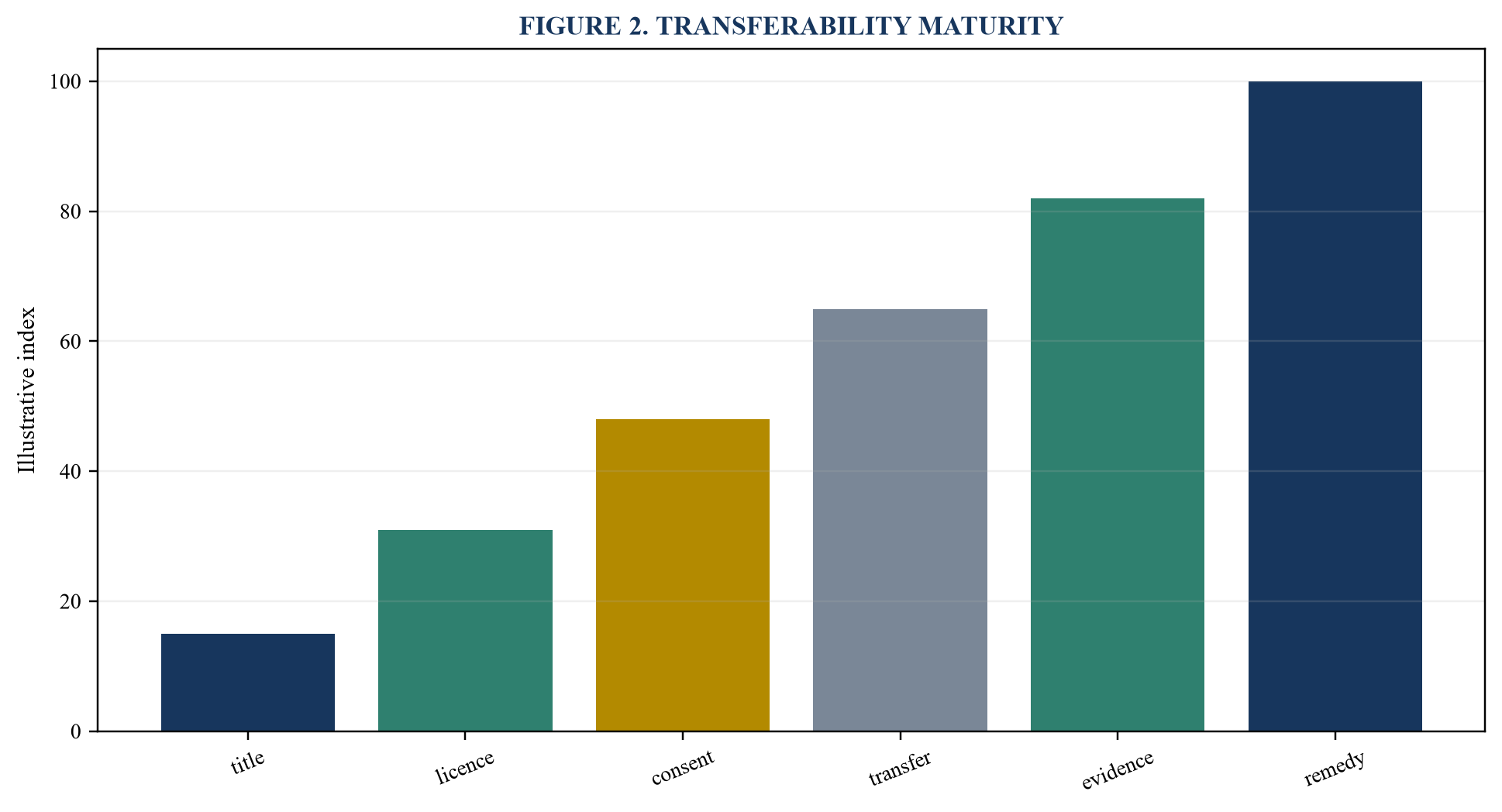
Values are illustrative indices and require replacement with approved transaction evidence.
17. Review localisation and transfer
Map storage, access, training, support and onward transfer locations and mechanisms.
The controlled record includes asset identifier; source; creator or supplier; collection basis; jurisdiction; licence; consent; transformation; permitted use; restriction; evidence; owner; review date and remedy. The immediate deliverable is a data-location and transfer map. Every material conclusion should distinguish legal title, contractual permission, technical possession, practical access and economic contribution.
The principal failure occurs when transaction integration changes the lawful geography of processing. Reviewers should reproduce the lineage from primary evidence, test the exact contemplated use and transaction step, identify contradictory clauses and quantify the operational and financial consequence of any unresolved gap. Scenario values require approved company, transaction, market and period inputs.
The decision pack for review localisation and transfer should show the management claim, governing evidence, rights holder, permitted and prohibited acts, duration, geography, transfer mechanics, synthetic or transformed forms, dependency, exposure, cure, cost, owner and approval. Material exceptions flow into product scope, integration sequencing, price, working capital, warranties, indemnities, escrow, insurance, reserves and the investment decision.
18. Trace transformation chains
Record filtering, labelling, augmentation, feature extraction, embedding, fine-tuning and generation steps.
The controlled record includes asset identifier; source; creator or supplier; collection basis; jurisdiction; licence; consent; transformation; permitted use; restriction; evidence; owner; review date and remedy. The immediate deliverable is a transformation lineage graph. Every material conclusion should distinguish legal title, contractual permission, technical possession, practical access and economic contribution.
The principal failure occurs when material transformations break the evidential chain between source and asset. Reviewers should reproduce the lineage from primary evidence, test the exact contemplated use and transaction step, identify contradictory clauses and quantify the operational and financial consequence of any unresolved gap. Scenario values require approved company, transaction, market and period inputs.
The decision pack for trace transformation chains should show the management claim, governing evidence, rights holder, permitted and prohibited acts, duration, geography, transfer mechanics, synthetic or transformed forms, dependency, exposure, cure, cost, owner and approval. Material exceptions flow into product scope, integration sequencing, price, working capital, warranties, indemnities, escrow, insurance, reserves and the investment decision.
19. Classify synthetic content
Distinguish simulated, generated, augmented, anonymised, pseudonymous and human-edited outputs.
The controlled record includes asset identifier; source; creator or supplier; collection basis; jurisdiction; licence; consent; transformation; permitted use; restriction; evidence; owner; review date and remedy. The immediate deliverable is a synthetic-content taxonomy. Every material conclusion should distinguish legal title, contractual permission, technical possession, practical access and economic contribution.
The principal failure occurs when the synthetic label is used as a blanket rights conclusion. Reviewers should reproduce the lineage from primary evidence, test the exact contemplated use and transaction step, identify contradictory clauses and quantify the operational and financial consequence of any unresolved gap. Scenario values require approved company, transaction, market and period inputs.
The decision pack for classify synthetic content should show the management claim, governing evidence, rights holder, permitted and prohibited acts, duration, geography, transfer mechanics, synthetic or transformed forms, dependency, exposure, cure, cost, owner and approval. Material exceptions flow into product scope, integration sequencing, price, working capital, warranties, indemnities, escrow, insurance, reserves and the investment decision.
20. Test synthetic-data leakage
Measure memorisation, nearest-neighbour similarity, membership inference and protected-attribute leakage.
The controlled record includes asset identifier; source; creator or supplier; collection basis; jurisdiction; licence; consent; transformation; permitted use; restriction; evidence; owner; review date and remedy. The immediate deliverable is a leakage test report. Every material conclusion should distinguish legal title, contractual permission, technical possession, practical access and economic contribution.
The principal failure occurs when synthetic output reproduces source records or protected expression. Reviewers should reproduce the lineage from primary evidence, test the exact contemplated use and transaction step, identify contradictory clauses and quantify the operational and financial consequence of any unresolved gap. Scenario values require approved company, transaction, market and period inputs.
The decision pack for test synthetic-data leakage should show the management claim, governing evidence, rights holder, permitted and prohibited acts, duration, geography, transfer mechanics, synthetic or transformed forms, dependency, exposure, cure, cost, owner and approval. Material exceptions flow into product scope, integration sequencing, price, working capital, warranties, indemnities, escrow, insurance, reserves and the investment decision.
21. Test model-output rights
Review human authorship, contractual allocation, provider terms, third-party similarity and downstream use.
The controlled record includes asset identifier; source; creator or supplier; collection basis; jurisdiction; licence; consent; transformation; permitted use; restriction; evidence; owner; review date and remedy. The immediate deliverable is an output-rights opinion matrix. Every material conclusion should distinguish legal title, contractual permission, technical possession, practical access and economic contribution.
The principal failure occurs when projected licensing revenue assumes exclusive rights that may not exist. Reviewers should reproduce the lineage from primary evidence, test the exact contemplated use and transaction step, identify contradictory clauses and quantify the operational and financial consequence of any unresolved gap. Scenario values require approved company, transaction, market and period inputs.
The decision pack for test model-output rights should show the management claim, governing evidence, rights holder, permitted and prohibited acts, duration, geography, transfer mechanics, synthetic or transformed forms, dependency, exposure, cure, cost, owner and approval. Material exceptions flow into product scope, integration sequencing, price, working capital, warranties, indemnities, escrow, insurance, reserves and the investment decision.
22. Trace human contribution
Record selection, arrangement, editing, direction, validation and final creative control.
The controlled record includes asset identifier; source; creator or supplier; collection basis; jurisdiction; licence; consent; transformation; permitted use; restriction; evidence; owner; review date and remedy. The immediate deliverable is a human-contribution record. Every material conclusion should distinguish legal title, contractual permission, technical possession, practical access and economic contribution.
The principal failure occurs when human involvement is described without evidence sufficient for the claimed rights. Reviewers should reproduce the lineage from primary evidence, test the exact contemplated use and transaction step, identify contradictory clauses and quantify the operational and financial consequence of any unresolved gap. Scenario values require approved company, transaction, market and period inputs.
The decision pack for trace human contribution should show the management claim, governing evidence, rights holder, permitted and prohibited acts, duration, geography, transfer mechanics, synthetic or transformed forms, dependency, exposure, cure, cost, owner and approval. Material exceptions flow into product scope, integration sequencing, price, working capital, warranties, indemnities, escrow, insurance, reserves and the investment decision.
23. Assess open-source inputs
Inventory code, models, weights, datasets and content under open licences and community terms.
The controlled record includes asset identifier; source; creator or supplier; collection basis; jurisdiction; licence; consent; transformation; permitted use; restriction; evidence; owner; review date and remedy. The immediate deliverable is an open-source and open-data bill of materials. Every material conclusion should distinguish legal title, contractual permission, technical possession, practical access and economic contribution.
The principal failure occurs when copyleft, attribution or use restrictions surface after integration. Reviewers should reproduce the lineage from primary evidence, test the exact contemplated use and transaction step, identify contradictory clauses and quantify the operational and financial consequence of any unresolved gap. Scenario values require approved company, transaction, market and period inputs.
The decision pack for assess open-source inputs should show the management claim, governing evidence, rights holder, permitted and prohibited acts, duration, geography, transfer mechanics, synthetic or transformed forms, dependency, exposure, cure, cost, owner and approval. Material exceptions flow into product scope, integration sequencing, price, working capital, warranties, indemnities, escrow, insurance, reserves and the investment decision.
24. Assess vendor inputs
Review model-provider, data-vendor, labelling, annotation, hosting and tooling rights.
The controlled record includes asset identifier; source; creator or supplier; collection basis; jurisdiction; licence; consent; transformation; permitted use; restriction; evidence; owner; review date and remedy. The immediate deliverable is a vendor-rights dependency schedule. Every material conclusion should distinguish legal title, contractual permission, technical possession, practical access and economic contribution.
The principal failure occurs when the target depends on vendor permissions that cannot pass to the buyer. Reviewers should reproduce the lineage from primary evidence, test the exact contemplated use and transaction step, identify contradictory clauses and quantify the operational and financial consequence of any unresolved gap. Scenario values require approved company, transaction, market and period inputs.
The decision pack for assess vendor inputs should show the management claim, governing evidence, rights holder, permitted and prohibited acts, duration, geography, transfer mechanics, synthetic or transformed forms, dependency, exposure, cure, cost, owner and approval. Material exceptions flow into product scope, integration sequencing, price, working capital, warranties, indemnities, escrow, insurance, reserves and the investment decision.
Table 3. Synthetic-content tests
| Test | Question | Decision output |
|---|---|---|
| similarity | source expression reproduced | exclusion or review |
| privacy | record can be inferred | control or retrain |
| authorship | human contribution evidenced | rights classification |
| provenance | generation chain retained | audit confidence |
Illustrative controls require asset-, contract-, jurisdiction-, transaction- and period-specific approval.
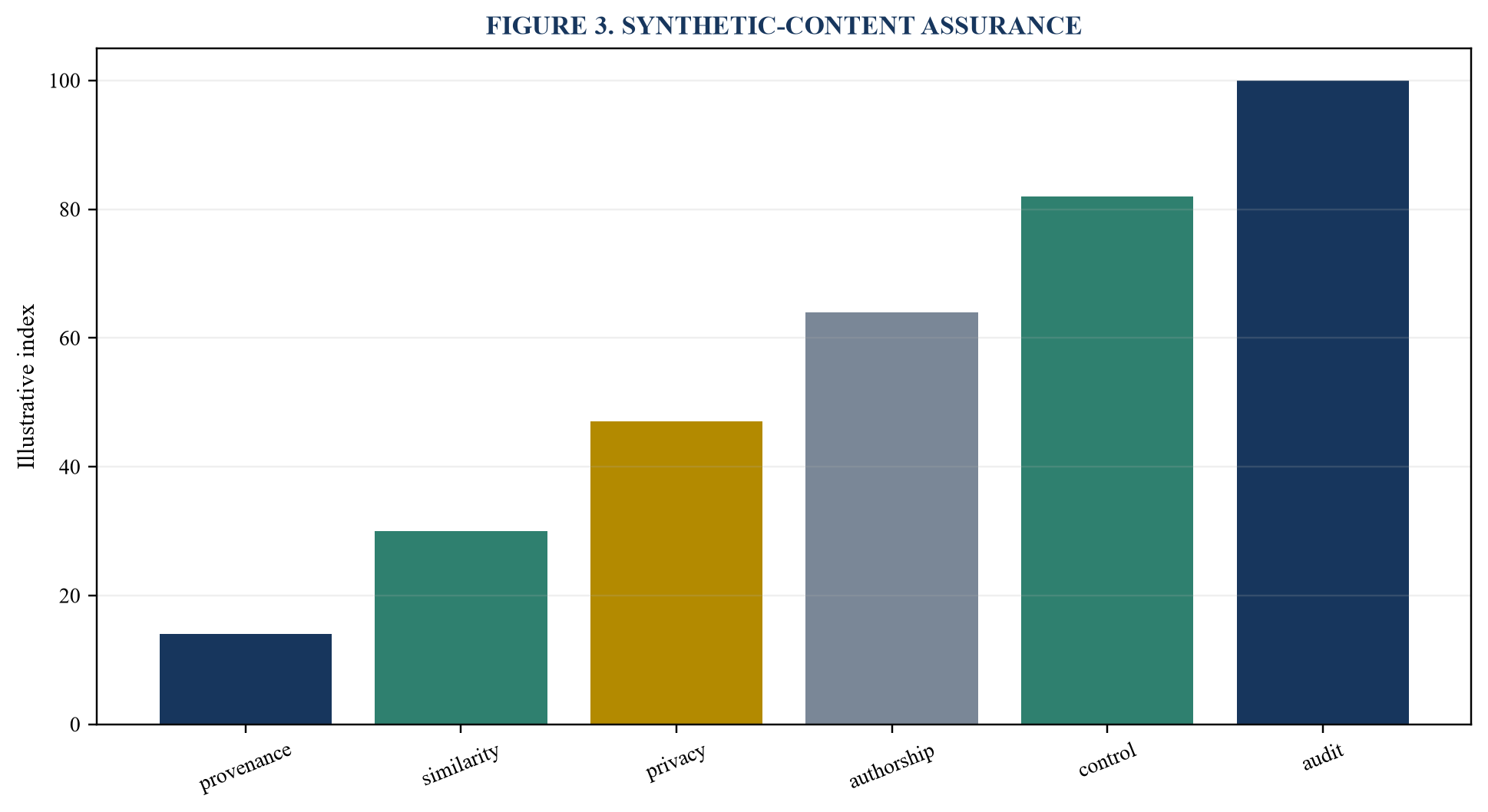
Values are illustrative indices and require replacement with approved transaction evidence.
25. Assess customer-derived data
Separate customer ownership, service rights, aggregation rights, benchmarking, training and product-improvement rights.
The controlled record includes asset identifier; source; creator or supplier; collection basis; jurisdiction; licence; consent; transformation; permitted use; restriction; evidence; owner; review date and remedy. The immediate deliverable is a customer-data entitlement map. Every material conclusion should distinguish legal title, contractual permission, technical possession, practical access and economic contribution.
The principal failure occurs when customer data is capitalised as a proprietary asset despite narrow service rights. Reviewers should reproduce the lineage from primary evidence, test the exact contemplated use and transaction step, identify contradictory clauses and quantify the operational and financial consequence of any unresolved gap. Scenario values require approved company, transaction, market and period inputs.
The decision pack for assess customer-derived data should show the management claim, governing evidence, rights holder, permitted and prohibited acts, duration, geography, transfer mechanics, synthetic or transformed forms, dependency, exposure, cure, cost, owner and approval. Material exceptions flow into product scope, integration sequencing, price, working capital, warranties, indemnities, escrow, insurance, reserves and the investment decision.
26. Assess contributor and employee rights
Verify inventions, copyright, moral rights, database rights, waivers and post-employment obligations.
The controlled record includes asset identifier; source; creator or supplier; collection basis; jurisdiction; licence; consent; transformation; permitted use; restriction; evidence; owner; review date and remedy. The immediate deliverable is a contributor-rights cure list. Every material conclusion should distinguish legal title, contractual permission, technical possession, practical access and economic contribution.
The principal failure occurs when key transformations were created outside enforceable assignment terms. Reviewers should reproduce the lineage from primary evidence, test the exact contemplated use and transaction step, identify contradictory clauses and quantify the operational and financial consequence of any unresolved gap. Scenario values require approved company, transaction, market and period inputs.
The decision pack for assess contributor and employee rights should show the management claim, governing evidence, rights holder, permitted and prohibited acts, duration, geography, transfer mechanics, synthetic or transformed forms, dependency, exposure, cure, cost, owner and approval. Material exceptions flow into product scope, integration sequencing, price, working capital, warranties, indemnities, escrow, insurance, reserves and the investment decision.
27. Build the evidence room
Link contracts, notices, consents, source logs, data cards, model cards, test reports and approvals to each claim.
The controlled record includes asset identifier; source; creator or supplier; collection basis; jurisdiction; licence; consent; transformation; permitted use; restriction; evidence; owner; review date and remedy. The immediate deliverable is a rights evidence index. Every material conclusion should distinguish legal title, contractual permission, technical possession, practical access and economic contribution.
The principal failure occurs when management narratives cannot be reconciled to primary evidence. Reviewers should reproduce the lineage from primary evidence, test the exact contemplated use and transaction step, identify contradictory clauses and quantify the operational and financial consequence of any unresolved gap. Scenario values require approved company, transaction, market and period inputs.
The decision pack for build the evidence room should show the management claim, governing evidence, rights holder, permitted and prohibited acts, duration, geography, transfer mechanics, synthetic or transformed forms, dependency, exposure, cure, cost, owner and approval. Material exceptions flow into product scope, integration sequencing, price, working capital, warranties, indemnities, escrow, insurance, reserves and the investment decision.
28. Quantify asset utility
Measure coverage, uniqueness, freshness, accuracy, representativeness, performance contribution and replaceability.
The controlled record includes asset identifier; source; creator or supplier; collection basis; jurisdiction; licence; consent; transformation; permitted use; restriction; evidence; owner; review date and remedy. The immediate deliverable is a data-utility scorecard. Every material conclusion should distinguish legal title, contractual permission, technical possession, practical access and economic contribution.
The principal failure occurs when volume is used as a proxy for commercial value. Reviewers should reproduce the lineage from primary evidence, test the exact contemplated use and transaction step, identify contradictory clauses and quantify the operational and financial consequence of any unresolved gap. Scenario values require approved company, transaction, market and period inputs.
The decision pack for quantify asset utility should show the management claim, governing evidence, rights holder, permitted and prohibited acts, duration, geography, transfer mechanics, synthetic or transformed forms, dependency, exposure, cure, cost, owner and approval. Material exceptions flow into product scope, integration sequencing, price, working capital, warranties, indemnities, escrow, insurance, reserves and the investment decision.
29. Quantify exclusivity
Test rival access, public availability, customer portability, supplier substitution, internal know-how and enforceability.
The controlled record includes asset identifier; source; creator or supplier; collection basis; jurisdiction; licence; consent; transformation; permitted use; restriction; evidence; owner; review date and remedy. The immediate deliverable is an exclusivity assessment. Every material conclusion should distinguish legal title, contractual permission, technical possession, practical access and economic contribution.
The principal failure occurs when scarcity claims ignore sources available to competitors. Reviewers should reproduce the lineage from primary evidence, test the exact contemplated use and transaction step, identify contradictory clauses and quantify the operational and financial consequence of any unresolved gap. Scenario values require approved company, transaction, market and period inputs.
The decision pack for quantify exclusivity should show the management claim, governing evidence, rights holder, permitted and prohibited acts, duration, geography, transfer mechanics, synthetic or transformed forms, dependency, exposure, cure, cost, owner and approval. Material exceptions flow into product scope, integration sequencing, price, working capital, warranties, indemnities, escrow, insurance, reserves and the investment decision.
30. Quantify reproducibility
Estimate lawful reacquisition, relabelling, engineering, compute, delay and organisational learning needed to recreate the asset.
The controlled record includes asset identifier; source; creator or supplier; collection basis; jurisdiction; licence; consent; transformation; permitted use; restriction; evidence; owner; review date and remedy. The immediate deliverable is a reproducibility cost model. Every material conclusion should distinguish legal title, contractual permission, technical possession, practical access and economic contribution.
The principal failure occurs when replacement cost excludes time and permission constraints. Reviewers should reproduce the lineage from primary evidence, test the exact contemplated use and transaction step, identify contradictory clauses and quantify the operational and financial consequence of any unresolved gap. Scenario values require approved company, transaction, market and period inputs.
The decision pack for quantify reproducibility should show the management claim, governing evidence, rights holder, permitted and prohibited acts, duration, geography, transfer mechanics, synthetic or transformed forms, dependency, exposure, cure, cost, owner and approval. Material exceptions flow into product scope, integration sequencing, price, working capital, warranties, indemnities, escrow, insurance, reserves and the investment decision.
31. Quantify revenue attribution
Connect the asset to product performance, price, conversion, retention, margin and renewal through controlled evidence.
The controlled record includes asset identifier; source; creator or supplier; collection basis; jurisdiction; licence; consent; transformation; permitted use; restriction; evidence; owner; review date and remedy. The immediate deliverable is a revenue-attribution bridge. Every material conclusion should distinguish legal title, contractual permission, technical possession, practical access and economic contribution.
The principal failure occurs when all AI revenue is attributed to data ownership without causal support. Reviewers should reproduce the lineage from primary evidence, test the exact contemplated use and transaction step, identify contradictory clauses and quantify the operational and financial consequence of any unresolved gap. Scenario values require approved company, transaction, market and period inputs.
The decision pack for quantify revenue attribution should show the management claim, governing evidence, rights holder, permitted and prohibited acts, duration, geography, transfer mechanics, synthetic or transformed forms, dependency, exposure, cure, cost, owner and approval. Material exceptions flow into product scope, integration sequencing, price, working capital, warranties, indemnities, escrow, insurance, reserves and the investment decision.
32. Quantify restriction costs
Model licence fees, royalties, consent refresh, deletion, retraining, filtering, localisation and audit obligations.
The controlled record includes asset identifier; source; creator or supplier; collection basis; jurisdiction; licence; consent; transformation; permitted use; restriction; evidence; owner; review date and remedy. The immediate deliverable is a restriction-adjusted cash flow model. Every material conclusion should distinguish legal title, contractual permission, technical possession, practical access and economic contribution.
The principal failure occurs when valuation reflects gross utility without the cost of lawful use. Reviewers should reproduce the lineage from primary evidence, test the exact contemplated use and transaction step, identify contradictory clauses and quantify the operational and financial consequence of any unresolved gap. Scenario values require approved company, transaction, market and period inputs.
The decision pack for quantify restriction costs should show the management claim, governing evidence, rights holder, permitted and prohibited acts, duration, geography, transfer mechanics, synthetic or transformed forms, dependency, exposure, cure, cost, owner and approval. Material exceptions flow into product scope, integration sequencing, price, working capital, warranties, indemnities, escrow, insurance, reserves and the investment decision.
Table 4. Restriction-adjusted valuation
| Driver | Required input | Model treatment |
|---|---|---|
| utility | performance contribution | incremental cash flow |
| exclusivity | rival access | durability case |
| replacement | cost and delay | downside floor |
| restriction | fees and cures | cash-flow deduction |
Illustrative controls require asset-, contract-, jurisdiction-, transaction- and period-specific approval.
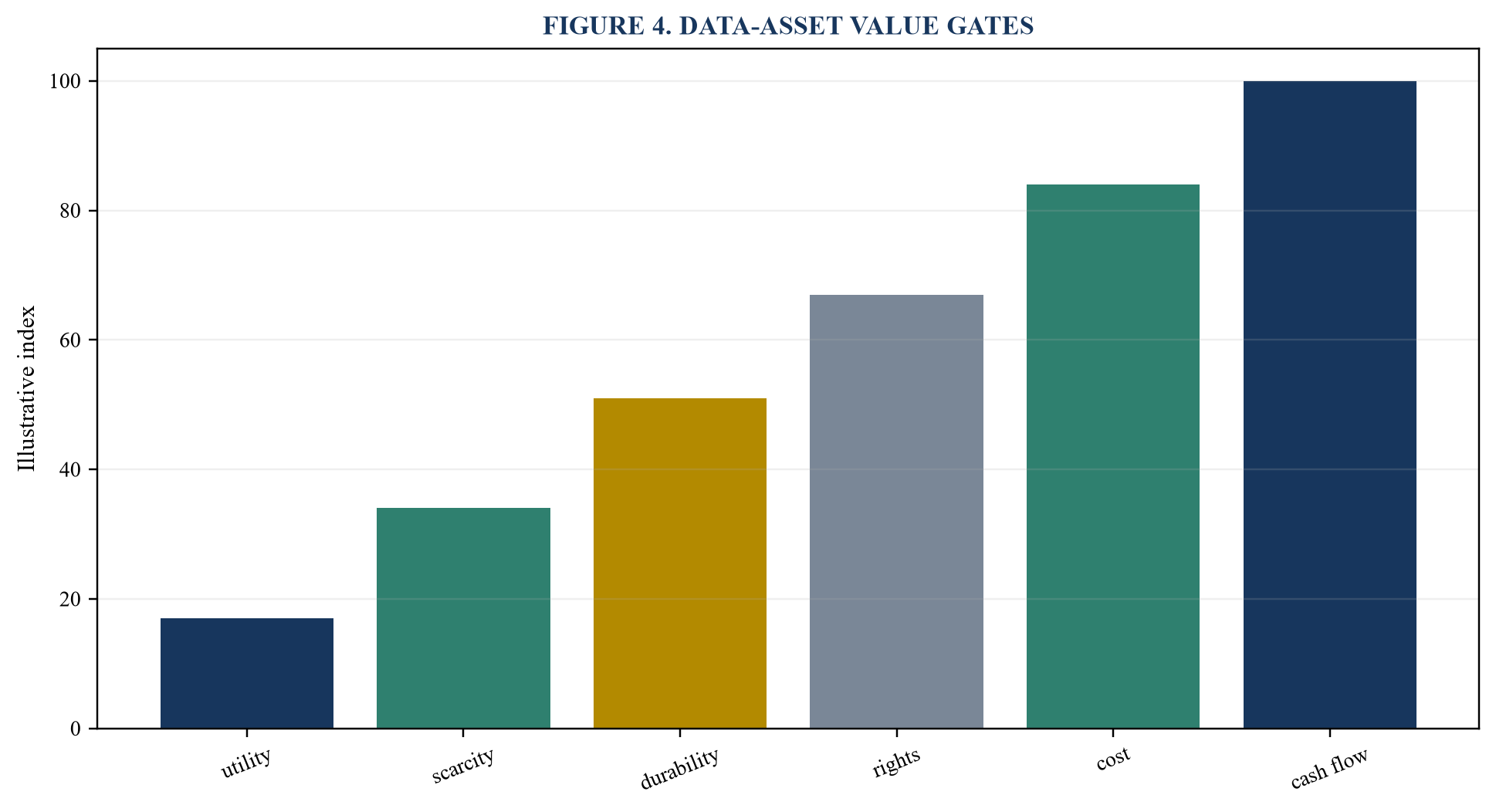
Values are illustrative indices and require replacement with approved transaction evidence.
33. Quantify remediation paths
Cost cure, replacement, exclusion, retraining, indemnity, escrow, holdback and operational separation.
The controlled record includes asset identifier; source; creator or supplier; collection basis; jurisdiction; licence; consent; transformation; permitted use; restriction; evidence; owner; review date and remedy. The immediate deliverable is a remediation decision tree. Every material conclusion should distinguish legal title, contractual permission, technical possession, practical access and economic contribution.
The principal failure occurs when identified defects are treated as equally remediable. Reviewers should reproduce the lineage from primary evidence, test the exact contemplated use and transaction step, identify contradictory clauses and quantify the operational and financial consequence of any unresolved gap. Scenario values require approved company, transaction, market and period inputs.
The decision pack for quantify remediation paths should show the management claim, governing evidence, rights holder, permitted and prohibited acts, duration, geography, transfer mechanics, synthetic or transformed forms, dependency, exposure, cure, cost, owner and approval. Material exceptions flow into product scope, integration sequencing, price, working capital, warranties, indemnities, escrow, insurance, reserves and the investment decision.
34. Build the valuation scorecard
Score authority, provenance, transferability, exclusivity, utility, durability, evidence and remedy.
The controlled record includes asset identifier; source; creator or supplier; collection basis; jurisdiction; licence; consent; transformation; permitted use; restriction; evidence; owner; review date and remedy. The immediate deliverable is a rights-adjusted valuation scorecard. Every material conclusion should distinguish legal title, contractual permission, technical possession, practical access and economic contribution.
The principal failure occurs when a single legal conclusion drives valuation without economic translation. Reviewers should reproduce the lineage from primary evidence, test the exact contemplated use and transaction step, identify contradictory clauses and quantify the operational and financial consequence of any unresolved gap. Scenario values require approved company, transaction, market and period inputs.
The decision pack for build the valuation scorecard should show the management claim, governing evidence, rights holder, permitted and prohibited acts, duration, geography, transfer mechanics, synthetic or transformed forms, dependency, exposure, cure, cost, owner and approval. Material exceptions flow into product scope, integration sequencing, price, working capital, warranties, indemnities, escrow, insurance, reserves and the investment decision.
35. Adjust enterprise value
Translate asset contribution, probability-weighted loss, remediation cost, delay and option value into valuation cases.
The controlled record includes asset identifier; source; creator or supplier; collection basis; jurisdiction; licence; consent; transformation; permitted use; restriction; evidence; owner; review date and remedy. The immediate deliverable is a data-rights value bridge. Every material conclusion should distinguish legal title, contractual permission, technical possession, practical access and economic contribution.
The principal failure occurs when data-rights risk remains outside the purchase-price model. Reviewers should reproduce the lineage from primary evidence, test the exact contemplated use and transaction step, identify contradictory clauses and quantify the operational and financial consequence of any unresolved gap. Scenario values require approved company, transaction, market and period inputs.
The decision pack for adjust enterprise value should show the management claim, governing evidence, rights holder, permitted and prohibited acts, duration, geography, transfer mechanics, synthetic or transformed forms, dependency, exposure, cure, cost, owner and approval. Material exceptions flow into product scope, integration sequencing, price, working capital, warranties, indemnities, escrow, insurance, reserves and the investment decision.
36. Structure deal protection
Align conditions, covenants, representations, warranties, indemnities, escrows, holdbacks and insurance with identified exposure.
The controlled record includes asset identifier; source; creator or supplier; collection basis; jurisdiction; licence; consent; transformation; permitted use; restriction; evidence; owner; review date and remedy. The immediate deliverable is a rights-linked protection schedule. Every material conclusion should distinguish legal title, contractual permission, technical possession, practical access and economic contribution.
The principal failure occurs when generic IP warranties substitute for asset-specific protection. Reviewers should reproduce the lineage from primary evidence, test the exact contemplated use and transaction step, identify contradictory clauses and quantify the operational and financial consequence of any unresolved gap. Scenario values require approved company, transaction, market and period inputs.
The decision pack for structure deal protection should show the management claim, governing evidence, rights holder, permitted and prohibited acts, duration, geography, transfer mechanics, synthetic or transformed forms, dependency, exposure, cure, cost, owner and approval. Material exceptions flow into product scope, integration sequencing, price, working capital, warranties, indemnities, escrow, insurance, reserves and the investment decision.
37. Design separation and integration
Control data access, model migration, consent boundaries, clean rooms, deletion and post-close retraining.
The controlled record includes asset identifier; source; creator or supplier; collection basis; jurisdiction; licence; consent; transformation; permitted use; restriction; evidence; owner; review date and remedy. The immediate deliverable is a rights-safe integration plan. Every material conclusion should distinguish legal title, contractual permission, technical possession, practical access and economic contribution.
The principal failure occurs when integration contaminates clean assets before rights defects are resolved. Reviewers should reproduce the lineage from primary evidence, test the exact contemplated use and transaction step, identify contradictory clauses and quantify the operational and financial consequence of any unresolved gap. Scenario values require approved company, transaction, market and period inputs.
The decision pack for design separation and integration should show the management claim, governing evidence, rights holder, permitted and prohibited acts, duration, geography, transfer mechanics, synthetic or transformed forms, dependency, exposure, cure, cost, owner and approval. Material exceptions flow into product scope, integration sequencing, price, working capital, warranties, indemnities, escrow, insurance, reserves and the investment decision.
38. Create post-close governance
Assign lineage, privacy, IP, product, security, procurement and finance ownership with monitoring triggers.
The controlled record includes asset identifier; source; creator or supplier; collection basis; jurisdiction; licence; consent; transformation; permitted use; restriction; evidence; owner; review date and remedy. The immediate deliverable is a data-asset governance charter. Every material conclusion should distinguish legal title, contractual permission, technical possession, practical access and economic contribution.
The principal failure occurs when the evidence base decays immediately after completion. Reviewers should reproduce the lineage from primary evidence, test the exact contemplated use and transaction step, identify contradictory clauses and quantify the operational and financial consequence of any unresolved gap. Scenario values require approved company, transaction, market and period inputs.
The decision pack for create post-close governance should show the management claim, governing evidence, rights holder, permitted and prohibited acts, duration, geography, transfer mechanics, synthetic or transformed forms, dependency, exposure, cure, cost, owner and approval. Material exceptions flow into product scope, integration sequencing, price, working capital, warranties, indemnities, escrow, insurance, reserves and the investment decision.
39. Execute the first hundred days
Sequence perimeter, evidence, high-risk cures, valuation updates, contract actions and operating controls.
The controlled record includes asset identifier; source; creator or supplier; collection basis; jurisdiction; licence; consent; transformation; permitted use; restriction; evidence; owner; review date and remedy. The immediate deliverable is a 100-day rights programme. Every material conclusion should distinguish legal title, contractual permission, technical possession, practical access and economic contribution.
The principal failure occurs when teams pursue exhaustive cataloguing while material deal risks remain unresolved. Reviewers should reproduce the lineage from primary evidence, test the exact contemplated use and transaction step, identify contradictory clauses and quantify the operational and financial consequence of any unresolved gap. Scenario values require approved company, transaction, market and period inputs.
The decision pack for execute the first hundred days should show the management claim, governing evidence, rights holder, permitted and prohibited acts, duration, geography, transfer mechanics, synthetic or transformed forms, dependency, exposure, cure, cost, owner and approval. Material exceptions flow into product scope, integration sequencing, price, working capital, warranties, indemnities, escrow, insurance, reserves and the investment decision.
40. Close through evidence gates
Require reconciled lineage, use authority, transferability, tested synthetic controls, valued restrictions and accountable residual risk.
The controlled record includes asset identifier; source; creator or supplier; collection basis; jurisdiction; licence; consent; transformation; permitted use; restriction; evidence; owner; review date and remedy. The immediate deliverable is an accountable data-rights decision. Every material conclusion should distinguish legal title, contractual permission, technical possession, practical access and economic contribution.
The principal failure occurs when the deal closes on assumptions that cannot survive audit or dispute. Reviewers should reproduce the lineage from primary evidence, test the exact contemplated use and transaction step, identify contradictory clauses and quantify the operational and financial consequence of any unresolved gap. Scenario values require approved company, transaction, market and period inputs.
The decision pack for close through evidence gates should show the management claim, governing evidence, rights holder, permitted and prohibited acts, duration, geography, transfer mechanics, synthetic or transformed forms, dependency, exposure, cure, cost, owner and approval. Material exceptions flow into product scope, integration sequencing, price, working capital, warranties, indemnities, escrow, insurance, reserves and the investment decision.
Table 5. Transaction close gates
| Gate | Required proof | Decision |
|---|---|---|
| perimeter | assets reconciled | scope accepted |
| authority | uses and transfer valid | rights accepted |
| synthetic controls | leakage tested | residual risk approved |
| economics | restrictions valued | price protected |
Illustrative controls require asset-, contract-, jurisdiction-, transaction- and period-specific approval.
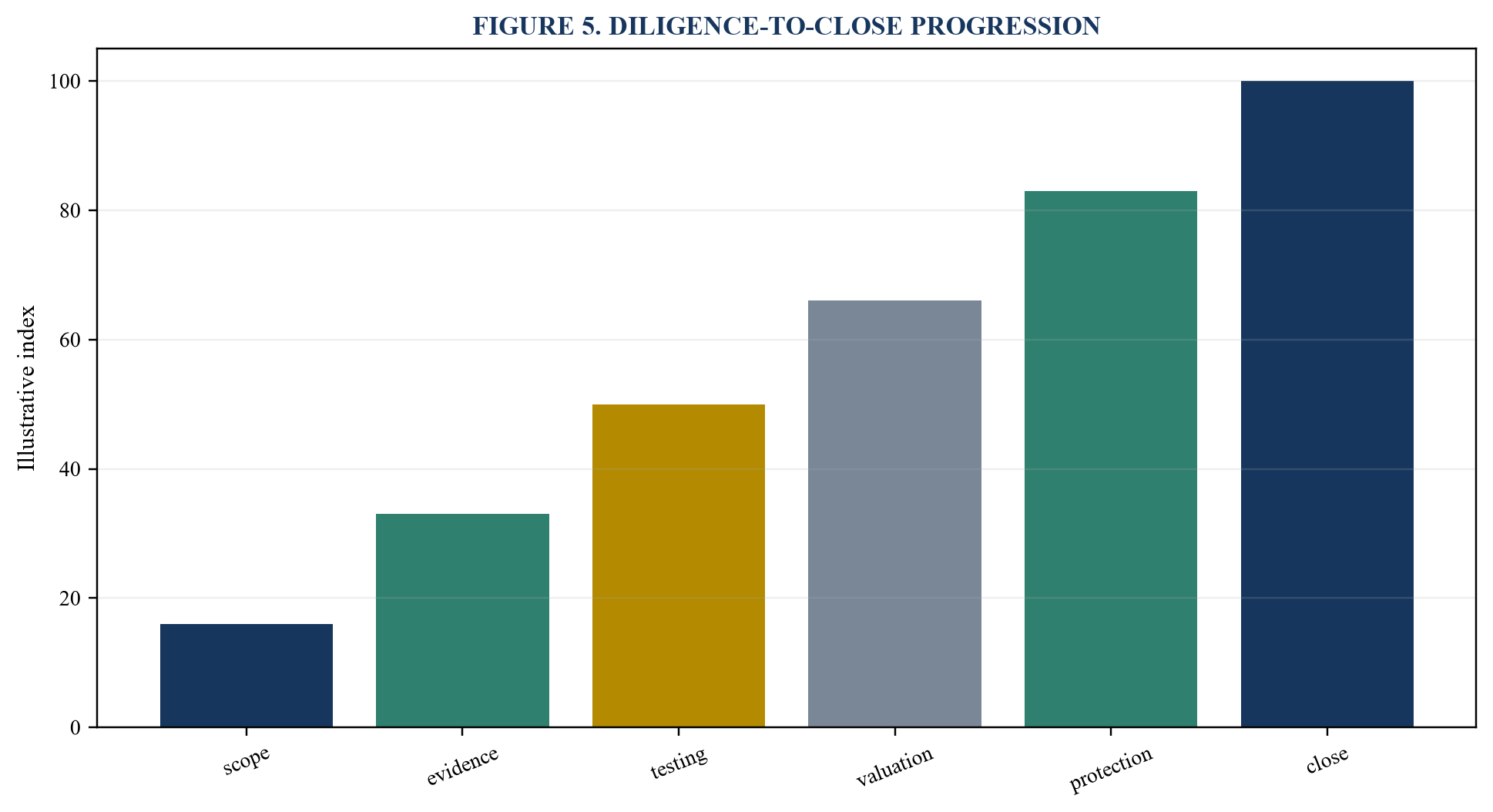
Values are illustrative indices and require replacement with approved transaction evidence.
References
- European Union, Regulation 2024/1689 Artificial Intelligence Act, https://eur-lex.europa.eu/eli/reg/2024/1689
- European Commission AI Office, General-Purpose AI Obligations, https://digital-strategy.ec.europa.eu/en/factpages/general-purpose-ai-obligations-under-ai-act
- European Commission AI Office, Template for General-Purpose AI Training Content Summary, https://digital-strategy.ec.europa.eu/en/library/explanatory-notice-and-template-public-summary-training-content-general-purpose-ai-models
- European Data Protection Board, Opinion 28/2024 on Certain Data Protection Aspects Related to AI Models, https://www.edpb.europa.eu/system/files/2024-12/edpb_opinion_202428_ai-models_en.pdf
- European Data Protection Board, GDPR Principles Support Responsible AI, https://www.edpb.europa.eu/news/edpb-opinion-on-ai-models-gdpr-principles-support-responsible-ai_en
- European Union, General Data Protection Regulation 2016/679, https://eur-lex.europa.eu/eli/reg/2016/679/oj
- European Union, Directive 2019/790 on Copyright in the Digital Single Market, https://eur-lex.europa.eu/eli/dir/2019/790/oj
- European Union, Directive 96/9/EC on the Legal Protection of Databases, https://eur-lex.europa.eu/eli/dir/1996/9/oj
- European Union Intellectual Property Office, Copyright Knowledge Centre, https://www.euipo.europa.eu/en/observatory/awareness/copyright
- United States Copyright Office, Copyright and Artificial Intelligence, https://www.copyright.gov/ai/
- United States Copyright Office, Copyright and Artificial Intelligence Part 2: Copyrightability, https://www.copyright.gov/ai/Copyright-and-Artificial-Intelligence-Part-2-Copyrightability-Report.pdf
- United States Copyright Office, Copyright and Artificial Intelligence Part 3: Generative AI Training, https://www.copyright.gov/ai/Copyright-and-Artificial-Intelligence-Part-3-Generative-AI-Training-Report-Pre-Publication-Version.pdf
- United States Copyright Office, Registration Guidance for Works Containing AI-Generated Material, https://www.copyright.gov/ai/ai_policy_guidance.pdf
- UK Information Commissioner's Office, Guidance on AI and Data Protection, https://ico.org.uk/for-organisations/uk-gdpr-guidance-and-resources/artificial-intelligence/guidance-on-ai-and-data-protection/
- UK Information Commissioner's Office, Generative AI Call for Evidence, https://ico.org.uk/about-the-ico/what-we-do/our-work-on-artificial-intelligence/generative-ai-first-call-for-evidence/
- UK Government, Copyright and Artificial Intelligence Consultation, https://www.gov.uk/government/consultations/copyright-and-artificial-intelligence
- World Intellectual Property Organization, WIPO Conversation on Intellectual Property and AI, https://www.wipo.int/about-ip/en/frontier_technologies/ai_and_ip.html
- World Intellectual Property Organization, WIPO Lex, https://www.wipo.int/wipolex/en/
- National Institute of Standards and Technology, AI Risk Management Framework, https://www.nist.gov/itl/ai-risk-management-framework
- National Institute of Standards and Technology, Generative AI Profile NIST AI 600-1, https://nvlpubs.nist.gov/nistpubs/ai/NIST.AI.600-1.pdf
- OECD, Recommendation of the Council on Artificial Intelligence, https://legalinstruments.oecd.org/en/instruments/OECD-LEGAL-0449
- OECD, Artificial Intelligence, Data and Privacy, https://www.oecd.org/digital/artificial-intelligence/
- Creative Commons, Considerations for Licensors and Licensees, https://creativecommons.org/share-your-work/cclicenses/
- Linux Foundation, Open Source Software License Compliance, https://www.linuxfoundation.org/resources/open-source-guides
- ISO, ISO/IEC 42001 Artificial Intelligence Management Systems, https://www.iso.org/standard/81230.html
- ISO, ISO/IEC 5259 Data Quality for Analytics and Machine Learning, https://www.iso.org/standard/81088.html
