

1. Define the legal-entity perimeter
The board, finance team and transaction advisers should identify every borrower, operating company, asset owner, guarantor, shareholder and contracting entity. Begin with constitutional documents, registers, organisation charts and executed agreements. The central question is which entity owes the claim and owns the relevant asset. Record the legal entity, stakeholder, claim or interest, governing law, exposure, trigger, evidence source, owner, verification status and next action [1][2].
The controlled deliverable is an entity-obligation matrix. Separate legal rights, economic interests, dependencies and rights activated by a trigger or formal procedure. Trace amounts and rights to primary evidence or qualified advice. Keep contested positions and evidence gaps visible.
The principal execution risk is that group-level summaries can hide separateness, structural subordination and trapped value. Test effects on liquidity, value, enforcement timing, structure, recoveries and continuity. Feed the result into the rights and recovery model, engagement plan and transaction critical path. Refresh after a material notice, waiver, valuation, order, payment, transfer or bid. Legal conclusions require qualified jurisdiction-specific advice.
2. Establish the stakeholder taxonomy
The board, finance team and transaction advisers should classify stakeholders by legal claim, ownership, public duty, contract right and operational dependency. Begin with claim schedules, cap tables, licences, workforce records and key contracts. The central question is the capacity in which each stakeholder acts and the rights attached to that capacity. Record the legal entity, stakeholder, claim or interest, governing law, exposure, trigger, evidence source, owner, verification status and next action [1][3].
The controlled deliverable is a controlled stakeholder register. Separate legal rights, economic interests, dependencies and rights activated by a trigger or formal procedure. Trace amounts and rights to primary evidence or qualified advice. Keep contested positions and evidence gaps visible.
The principal execution risk is that one counterparty can hold several rights that require different treatment. Test effects on liquidity, value, enforcement timing, structure, recoveries and continuity. Feed the result into the rights and recovery model, engagement plan and transaction critical path. Refresh after a material notice, waiver, valuation, order, payment, transfer or bid. Legal conclusions require qualified jurisdiction-specific advice.
3. Reconcile the claims ledger
The board, finance team and transaction advisers should match principal, accrued interest, fees, damages, contingencies and currency to books and counterparty evidence. Begin with ledgers, statements, notices, proofs, invoices and confirmations. The central question is the amount and basis of each asserted or admitted claim. Record the legal entity, stakeholder, claim or interest, governing law, exposure, trigger, evidence source, owner, verification status and next action [4][5].
The controlled deliverable is a claim-reconciliation schedule. Separate legal rights, economic interests, dependencies and rights activated by a trigger or formal procedure. Trace amounts and rights to primary evidence or qualified advice. Keep contested positions and evidence gaps visible.
The principal execution risk is that unreconciled balances can distort voting, funding need and recovery analysis. Test effects on liquidity, value, enforcement timing, structure, recoveries and continuity. Feed the result into the rights and recovery model, engagement plan and transaction critical path. Refresh after a material notice, waiver, valuation, order, payment, transfer or bid. Legal conclusions require qualified jurisdiction-specific advice.
4. Identify secured claims
The board, finance team and transaction advisers should record fixed charges, floating charges, mortgages, pledges, assignments, liens and retention arrangements. Begin with security agreements, charge registers, asset registers and legal opinions. The central question is the assets, proceeds and rights captured by each security interest. Record the legal entity, stakeholder, claim or interest, governing law, exposure, trigger, evidence source, owner, verification status and next action [6][7].
The controlled deliverable is a security-interest inventory. Separate legal rights, economic interests, dependencies and rights activated by a trigger or formal procedure. Trace amounts and rights to primary evidence or qualified advice. Keep contested positions and evidence gaps visible.
The principal execution risk is that a creditor described as secured may have incomplete or narrower collateral than assumed. Test effects on liquidity, value, enforcement timing, structure, recoveries and continuity. Feed the result into the rights and recovery model, engagement plan and transaction critical path. Refresh after a material notice, waiver, valuation, order, payment, transfer or bid. Legal conclusions require qualified jurisdiction-specific advice.
5. Test creation and perfection
The board, finance team and transaction advisers should verify execution, attachment, registration, notice, control, possession and local-law formalities. Begin with original instruments, filing receipts, registry searches and acknowledgements. The central question is whether security is effective against the debtor and third parties. Record the legal entity, stakeholder, claim or interest, governing law, exposure, trigger, evidence source, owner, verification status and next action [6][8].
The controlled deliverable is a perfection certificate. Separate legal rights, economic interests, dependencies and rights activated by a trigger or formal procedure. Trace amounts and rights to primary evidence or qualified advice. Keep contested positions and evidence gaps visible.
The principal execution risk is that late, defective or missing steps can change priority and recoverability. Test effects on liquidity, value, enforcement timing, structure, recoveries and continuity. Feed the result into the rights and recovery model, engagement plan and transaction critical path. Refresh after a material notice, waiver, valuation, order, payment, transfer or bid. Legal conclusions require qualified jurisdiction-specific advice.
6. Map collateral ownership and value
The board, finance team and transaction advisers should connect collateral to its legal owner, location, restrictions, proceeds and current valuation. Begin with title records, asset registers, valuations, insurance and account-control evidence. The central question is the value available to the correct secured party under relevant scenarios. Record the legal entity, stakeholder, claim or interest, governing law, exposure, trigger, evidence source, owner, verification status and next action [9][10].
The controlled deliverable is a collateral attribution map. Separate legal rights, economic interests, dependencies and rights activated by a trigger or formal procedure. Trace amounts and rights to primary evidence or qualified advice. Keep contested positions and evidence gaps visible.
The principal execution risk is that book value can sit in the wrong entity or include assets outside the security net. Test effects on liquidity, value, enforcement timing, structure, recoveries and continuity. Feed the result into the rights and recovery model, engagement plan and transaction critical path. Refresh after a material notice, waiver, valuation, order, payment, transfer or bid. Legal conclusions require qualified jurisdiction-specific advice.
7. Build the priority waterfall
The board, finance team and transaction advisers should rank fixed-charge, expense, preferential, prescribed-part, floating-charge, unsecured, subordinated and equity interests where relevant. Begin with applicable statutes, court orders, financing documents and claim schedules. The central question is the sequence in which value is distributed in each procedure. Record the legal entity, stakeholder, claim or interest, governing law, exposure, trigger, evidence source, owner, verification status and next action [4][11].
The controlled deliverable is a legal priority waterfall. Separate legal rights, economic interests, dependencies and rights activated by a trigger or formal procedure. Trace amounts and rights to primary evidence or qualified advice. Keep contested positions and evidence gaps visible.
The principal execution risk is that headline debt totals say little about recoveries without priority and costs. Test effects on liquidity, value, enforcement timing, structure, recoveries and continuity. Feed the result into the rights and recovery model, engagement plan and transaction critical path. Refresh after a material notice, waiver, valuation, order, payment, transfer or bid. Legal conclusions require qualified jurisdiction-specific advice.
8. Read the intercreditor architecture
The board, finance team and transaction advisers should extract payment blockage, turnover, standstill, enforcement, consultation, release and voting terms. Begin with intercreditor, subordination, security-trust and facility agreements. The central question is who may instruct the security agent and when junior creditors can act. Record the legal entity, stakeholder, claim or interest, governing law, exposure, trigger, evidence source, owner, verification status and next action [12][13].
The controlled deliverable is an intercreditor control matrix. Separate legal rights, economic interests, dependencies and rights activated by a trigger or formal procedure. Trace amounts and rights to primary evidence or qualified advice. Keep contested positions and evidence gaps visible.
The principal execution risk is that bilateral summaries can miss collective thresholds and agent protections. Test effects on liquidity, value, enforcement timing, structure, recoveries and continuity. Feed the result into the rights and recovery model, engagement plan and transaction critical path. Refresh after a material notice, waiver, valuation, order, payment, transfer or bid. Legal conclusions require qualified jurisdiction-specific advice.
Table 1. Stakeholder claim architecture
| Stakeholder | Primary right | Evidence |
|---|---|---|
| secured lender | collateral and enforcement | security file |
| employee | claim and continuity | payroll and contract |
| landlord | site and consent | lease and notices |
| regulator | licence and approval | official record |
Statutory periods are stated where labelled; other entries are analytical controls.
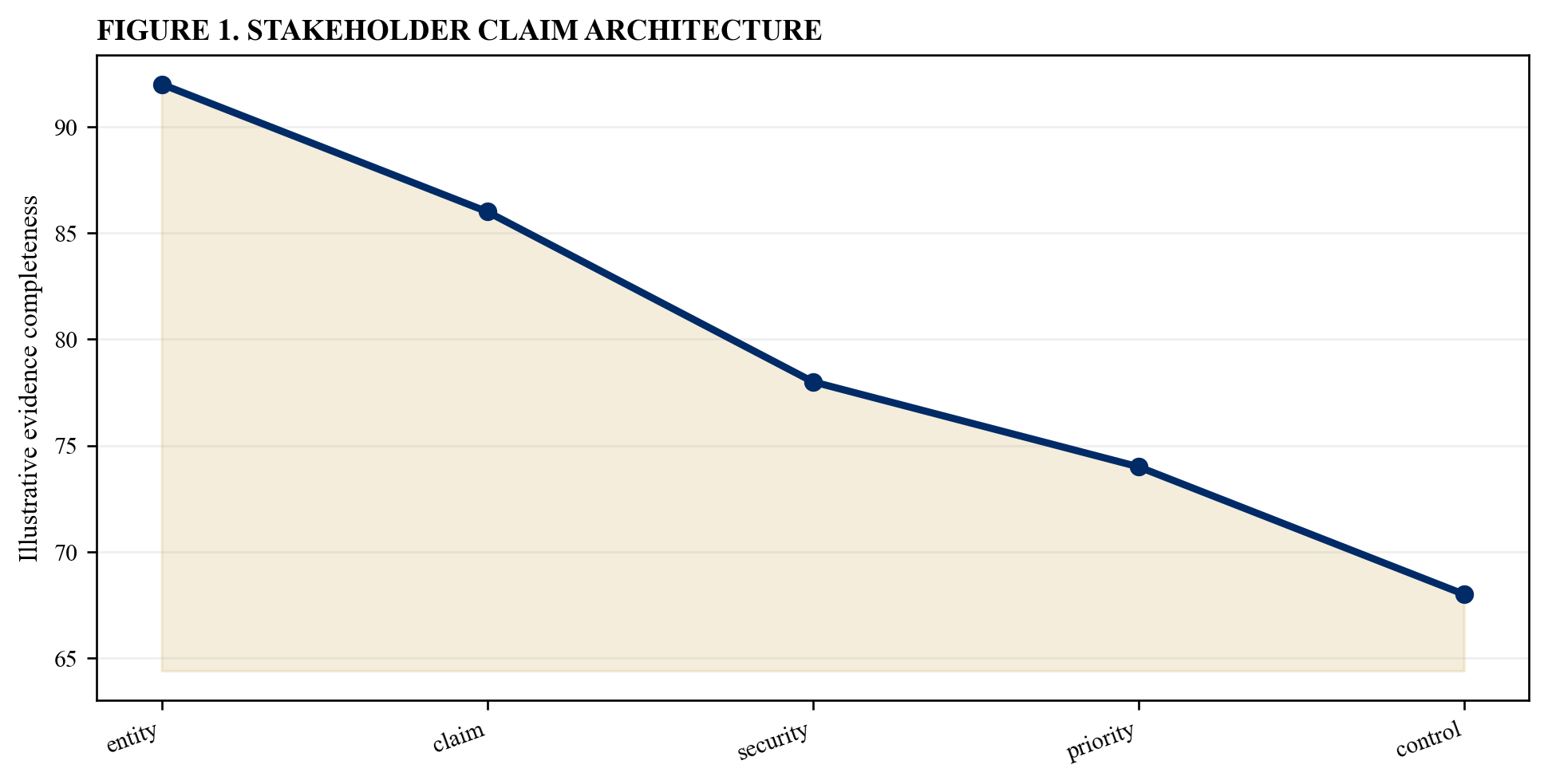
Illustrative analytical scenario; transaction evidence should replace model values.
9. Map acceleration and enforcement rights
The board, finance team and transaction advisers should record events of default, acceleration thresholds, demand mechanics, enforcement routes and cure periods. Begin with facility agreements, notices, waivers, security documents and local procedure. The central question is which stakeholder can crystallise a claim or control an asset and on what timing. Record the legal entity, stakeholder, claim or interest, governing law, exposure, trigger, evidence source, owner, verification status and next action [3][14].
The controlled deliverable is an enforcement-readiness schedule. Separate legal rights, economic interests, dependencies and rights activated by a trigger or formal procedure. Trace amounts and rights to primary evidence or qualified advice. Keep contested positions and evidence gaps visible.
The principal execution risk is that a dormant right can become decisive when a waiver expires or liquidity falls. Test effects on liquidity, value, enforcement timing, structure, recoveries and continuity. Feed the result into the rights and recovery model, engagement plan and transaction critical path. Refresh after a material notice, waiver, valuation, order, payment, transfer or bid. Legal conclusions require qualified jurisdiction-specific advice.
10. Test stays and moratoria
The board, finance team and transaction advisers should identify statutory, contractual and court-ordered restrictions on enforcement, termination and set-off. Begin with insolvency statutes, filing documents, court orders and contract terms. The central question is which actions are stayed, exempt or subject to relief. Record the legal entity, stakeholder, claim or interest, governing law, exposure, trigger, evidence source, owner, verification status and next action [15][16].
The controlled deliverable is a stay-and-relief map. Separate legal rights, economic interests, dependencies and rights activated by a trigger or formal procedure. Trace amounts and rights to primary evidence or qualified advice. Keep contested positions and evidence gaps visible.
The principal execution risk is that the team may assume either unrestricted enforcement or complete protection when neither is accurate. Test effects on liquidity, value, enforcement timing, structure, recoveries and continuity. Feed the result into the rights and recovery model, engagement plan and transaction critical path. Refresh after a material notice, waiver, valuation, order, payment, transfer or bid. Legal conclusions require qualified jurisdiction-specific advice.
11. Map cash collateral and account control
The board, finance team and transaction advisers should trace blocked accounts, sweeps, trusts, set-off, cash dominion and release conditions. Begin with bank mandates, account-control agreements, security notices and daily statements. The central question is who controls operating cash and proceeds before and after a trigger. Record the legal entity, stakeholder, claim or interest, governing law, exposure, trigger, evidence source, owner, verification status and next action [17][18].
The controlled deliverable is a cash-control matrix. Separate legal rights, economic interests, dependencies and rights activated by a trigger or formal procedure. Trace amounts and rights to primary evidence or qualified advice. Keep contested positions and evidence gaps visible.
The principal execution risk is that cash needed to trade can be unavailable even when it appears on the balance sheet. Test effects on liquidity, value, enforcement timing, structure, recoveries and continuity. Feed the result into the rights and recovery model, engagement plan and transaction critical path. Refresh after a material notice, waiver, valuation, order, payment, transfer or bid. Legal conclusions require qualified jurisdiction-specific advice.
12. Identify rescue-finance consent rights
The board, finance team and transaction advisers should test new-money capacity, permitted debt, lien priority, priming, super-priority and shareholder authorities. Begin with debt documents, constitutional authorities, insolvency law and proposed term sheets. The central question is which approvals are needed to fund continued trading. Record the legal entity, stakeholder, claim or interest, governing law, exposure, trigger, evidence source, owner, verification status and next action [19][20].
The controlled deliverable is a rescue-finance consent path. Separate legal rights, economic interests, dependencies and rights activated by a trigger or formal procedure. Trace amounts and rights to primary evidence or qualified advice. Keep contested positions and evidence gaps visible.
The principal execution risk is that new money can arrive too late if existing consent and priority conflicts are not surfaced early. Test effects on liquidity, value, enforcement timing, structure, recoveries and continuity. Feed the result into the rights and recovery model, engagement plan and transaction critical path. Refresh after a material notice, waiver, valuation, order, payment, transfer or bid. Legal conclusions require qualified jurisdiction-specific advice.
13. Map shareholder rights
The board, finance team and transaction advisers should record voting power, reserved matters, pre-emption, transfer restrictions, drag, tag and class rights. Begin with articles, shareholder agreements, cap tables and side letters. The central question is which equity holders can approve, delay or challenge a transaction. Record the legal entity, stakeholder, claim or interest, governing law, exposure, trigger, evidence source, owner, verification status and next action [21][22].
The controlled deliverable is an equity-control schedule. Separate legal rights, economic interests, dependencies and rights activated by a trigger or formal procedure. Trace amounts and rights to primary evidence or qualified advice. Keep contested positions and evidence gaps visible.
The principal execution risk is that economic dilution can diverge from formal veto or information rights. Test effects on liquidity, value, enforcement timing, structure, recoveries and continuity. Feed the result into the rights and recovery model, engagement plan and transaction critical path. Refresh after a material notice, waiver, valuation, order, payment, transfer or bid. Legal conclusions require qualified jurisdiction-specific advice.
14. Test equity value and standing
The board, finance team and transaction advisers should compare enterprise value, debt, costs and claims to residual value by scenario. Begin with independent valuation, forecasts, bids and priority analysis. The central question is whether equity is economically in or out of the money under each executable option. Record the legal entity, stakeholder, claim or interest, governing law, exposure, trigger, evidence source, owner, verification status and next action [10][23].
The controlled deliverable is an equity-standing analysis. Separate legal rights, economic interests, dependencies and rights activated by a trigger or formal procedure. Trace amounts and rights to primary evidence or qualified advice. Keep contested positions and evidence gaps visible.
The principal execution risk is that stakeholder behaviour can be driven by option value even when base-case equity value is nil. Test effects on liquidity, value, enforcement timing, structure, recoveries and continuity. Feed the result into the rights and recovery model, engagement plan and transaction critical path. Refresh after a material notice, waiver, valuation, order, payment, transfer or bid. Legal conclusions require qualified jurisdiction-specific advice.
15. Map directors and decision authority
The board, finance team and transaction advisers should record board composition, delegated authority, conflicts, duties, quorum and approval thresholds. Begin with minutes, delegations, conflict registers, advice and constitutional documents. The central question is who can validly authorise negotiations, funding, disposals and filings. Record the legal entity, stakeholder, claim or interest, governing law, exposure, trigger, evidence source, owner, verification status and next action [24][25].
The controlled deliverable is a decision-authority map. Separate legal rights, economic interests, dependencies and rights activated by a trigger or formal procedure. Trace amounts and rights to primary evidence or qualified advice. Keep contested positions and evidence gaps visible.
The principal execution risk is that unclear authority or conflicts can undermine speed and defensibility. Test effects on liquidity, value, enforcement timing, structure, recoveries and continuity. Feed the result into the rights and recovery model, engagement plan and transaction critical path. Refresh after a material notice, waiver, valuation, order, payment, transfer or bid. Legal conclusions require qualified jurisdiction-specific advice.
16. Map employee claims and continuity
The board, finance team and transaction advisers should reconcile wages, leave, commissions, benefits, severance, consultation and transfer rights. Begin with payroll, contracts, policies, workforce data and statutory guidance. The central question is employee claims, priority, consultation duties and operational criticality. Record the legal entity, stakeholder, claim or interest, governing law, exposure, trigger, evidence source, owner, verification status and next action [26][27].
The controlled deliverable is a workforce stakeholder map. Separate legal rights, economic interests, dependencies and rights activated by a trigger or formal procedure. Trace amounts and rights to primary evidence or qualified advice. Keep contested positions and evidence gaps visible.
The principal execution risk is that value can erode through departures, unpaid claims or missed consultation obligations. Test effects on liquidity, value, enforcement timing, structure, recoveries and continuity. Feed the result into the rights and recovery model, engagement plan and transaction critical path. Refresh after a material notice, waiver, valuation, order, payment, transfer or bid. Legal conclusions require qualified jurisdiction-specific advice.
Table 2. Illustrative control concentration
| Decision | Threshold | Potential blocker |
|---|---|---|
| waiver | 66.7% | lender group |
| security release | 100% | security agent instruction |
| equity approval | 75% | shareholder class |
| plan class | statutory test | dissenting class |
Statutory periods are stated where labelled; other entries are analytical controls.
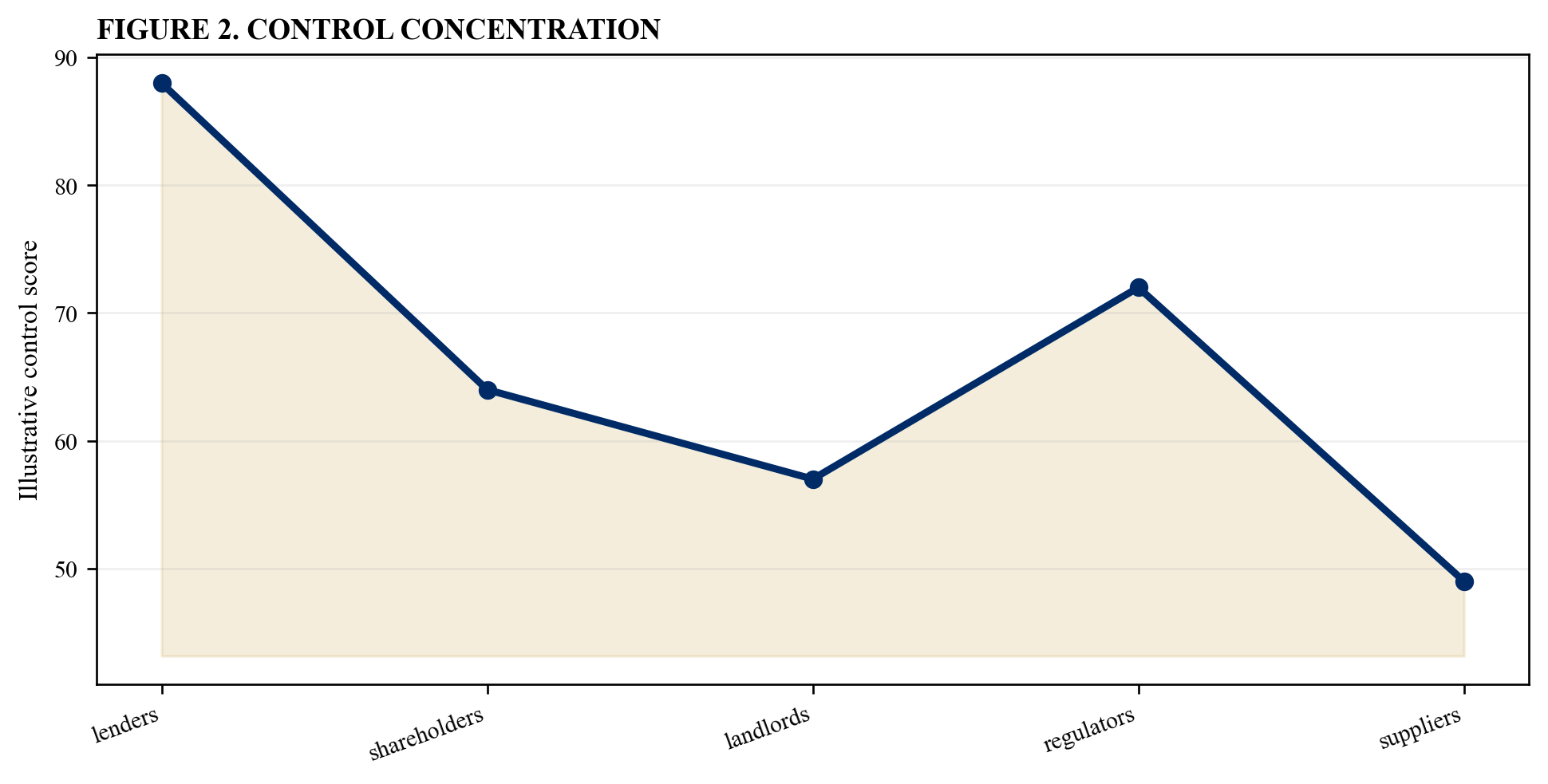
Illustrative analytical scenario; transaction evidence should replace model values.
17. Map pension exposure
The board, finance team and transaction advisers should identify scheme type, arrears, deficits, guarantees, statutory claims and regulator engagement. Begin with scheme documents, actuarial reports, contribution schedules and correspondence. The central question is the pension stakeholders, claim basis and transaction constraints. Record the legal entity, stakeholder, claim or interest, governing law, exposure, trigger, evidence source, owner, verification status and next action [28][29].
The controlled deliverable is a pension-risk schedule. Separate legal rights, economic interests, dependencies and rights activated by a trigger or formal procedure. Trace amounts and rights to primary evidence or qualified advice. Keep contested positions and evidence gaps visible.
The principal execution risk is that pension claims and regulatory powers can sit outside ordinary trade-creditor analysis. Test effects on liquidity, value, enforcement timing, structure, recoveries and continuity. Feed the result into the rights and recovery model, engagement plan and transaction critical path. Refresh after a material notice, waiver, valuation, order, payment, transfer or bid. Legal conclusions require qualified jurisdiction-specific advice.
18. Map landlords and property rights
The board, finance team and transaction advisers should record leases, arrears, deposits, guarantees, forfeiture, assignment, break and consent rights. Begin with leases, licences, rent ledgers, notices and property searches. The central question is which sites can be retained, assigned, surrendered or interrupted. Record the legal entity, stakeholder, claim or interest, governing law, exposure, trigger, evidence source, owner, verification status and next action [30][31].
The controlled deliverable is a property-continuity map. Separate legal rights, economic interests, dependencies and rights activated by a trigger or formal procedure. Trace amounts and rights to primary evidence or qualified advice. Keep contested positions and evidence gaps visible.
The principal execution risk is that a landlord with a modest claim may control a site essential to going-concern value. Test effects on liquidity, value, enforcement timing, structure, recoveries and continuity. Feed the result into the rights and recovery model, engagement plan and transaction critical path. Refresh after a material notice, waiver, valuation, order, payment, transfer or bid. Legal conclusions require qualified jurisdiction-specific advice.
19. Map suppliers and retention rights
The board, finance team and transaction advisers should classify critical supply, title retention, liens, set-off, termination, credit insurance and substitute lead time. Begin with purchase contracts, invoices, terms, inventory records and notices. The central question is which suppliers can stop supply, reclaim goods or alter credit terms. Record the legal entity, stakeholder, claim or interest, governing law, exposure, trigger, evidence source, owner, verification status and next action [32][33].
The controlled deliverable is a critical-supplier rights map. Separate legal rights, economic interests, dependencies and rights activated by a trigger or formal procedure. Trace amounts and rights to primary evidence or qualified advice. Keep contested positions and evidence gaps visible.
The principal execution risk is that treating all trade claims alike can sacrifice operations or inventory value. Test effects on liquidity, value, enforcement timing, structure, recoveries and continuity. Feed the result into the rights and recovery model, engagement plan and transaction critical path. Refresh after a material notice, waiver, valuation, order, payment, transfer or bid. Legal conclusions require qualified jurisdiction-specific advice.
20. Map customers and contract dependencies
The board, finance team and transaction advisers should identify deposits, prepaid amounts, warranties, refunds, termination, change-of-control and service obligations. Begin with customer contracts, order books, complaints, data and revenue records. The central question is which customers can withdraw cash, terminate or influence transaction value. Record the legal entity, stakeholder, claim or interest, governing law, exposure, trigger, evidence source, owner, verification status and next action [34][35].
The controlled deliverable is a customer-rights register. Separate legal rights, economic interests, dependencies and rights activated by a trigger or formal procedure. Trace amounts and rights to primary evidence or qualified advice. Keep contested positions and evidence gaps visible.
The principal execution risk is that customer claims and consent rights can reduce both liquidity and transferable revenue. Test effects on liquidity, value, enforcement timing, structure, recoveries and continuity. Feed the result into the rights and recovery model, engagement plan and transaction critical path. Refresh after a material notice, waiver, valuation, order, payment, transfer or bid. Legal conclusions require qualified jurisdiction-specific advice.
21. Map tax and public claims
The board, finance team and transaction advisers should reconcile taxes collected, payroll deductions, assessments, security, priority and personal-liability exposures. Begin with returns, assessments, tax accounts, correspondence and statutory rules. The central question is the amount, priority and enforcement position of each public claim. Record the legal entity, stakeholder, claim or interest, governing law, exposure, trigger, evidence source, owner, verification status and next action [11][36].
The controlled deliverable is a tax-claim schedule. Separate legal rights, economic interests, dependencies and rights activated by a trigger or formal procedure. Trace amounts and rights to primary evidence or qualified advice. Keep contested positions and evidence gaps visible.
The principal execution risk is that tax liabilities may carry different priority or enforcement consequences from ordinary unsecured debt. Test effects on liquidity, value, enforcement timing, structure, recoveries and continuity. Feed the result into the rights and recovery model, engagement plan and transaction critical path. Refresh after a material notice, waiver, valuation, order, payment, transfer or bid. Legal conclusions require qualified jurisdiction-specific advice.
22. Map licences and sector regulators
The board, finance team and transaction advisers should identify licences, change-of-control approvals, capital tests, conduct duties and fit-and-proper requirements. Begin with licences, regulatory returns, correspondence and transaction rules. The central question is which authority can approve, condition, suspend or prohibit the transaction or continued operation. Record the legal entity, stakeholder, claim or interest, governing law, exposure, trigger, evidence source, owner, verification status and next action [37][38].
The controlled deliverable is a regulatory-control map. Separate legal rights, economic interests, dependencies and rights activated by a trigger or formal procedure. Trace amounts and rights to primary evidence or qualified advice. Keep contested positions and evidence gaps visible.
The principal execution risk is that financial restructuring cannot preserve value if the licence or approval path is ignored. Test effects on liquidity, value, enforcement timing, structure, recoveries and continuity. Feed the result into the rights and recovery model, engagement plan and transaction critical path. Refresh after a material notice, waiver, valuation, order, payment, transfer or bid. Legal conclusions require qualified jurisdiction-specific advice.
23. Map competition and investment screening
The board, finance team and transaction advisers should test merger control, foreign-investment, national-security and sector-specific review. Begin with transaction perimeter, ownership data, market analysis and official guidance. The central question is which filing, standstill or remedy can affect closing. Record the legal entity, stakeholder, claim or interest, governing law, exposure, trigger, evidence source, owner, verification status and next action [39][40].
The controlled deliverable is an approval critical path. Separate legal rights, economic interests, dependencies and rights activated by a trigger or formal procedure. Trace amounts and rights to primary evidence or qualified advice. Keep contested positions and evidence gaps visible.
The principal execution risk is that regulatory timing can outlast liquidity runway or change bidder certainty. Test effects on liquidity, value, enforcement timing, structure, recoveries and continuity. Feed the result into the rights and recovery model, engagement plan and transaction critical path. Refresh after a material notice, waiver, valuation, order, payment, transfer or bid. Legal conclusions require qualified jurisdiction-specific advice.
24. Map litigation and contingent claims
The board, finance team and transaction advisers should record proceedings, threatened disputes, guarantees, indemnities, damages, costs and funding arrangements. Begin with pleadings, legal letters, contracts, insurance and accounting provisions. The central question is the probability, timing, priority and control of contingent exposures. Record the legal entity, stakeholder, claim or interest, governing law, exposure, trigger, evidence source, owner, verification status and next action [41][42].
The controlled deliverable is a contingent-claims register. Separate legal rights, economic interests, dependencies and rights activated by a trigger or formal procedure. Trace amounts and rights to primary evidence or qualified advice. Keep contested positions and evidence gaps visible.
The principal execution risk is that unquantified claims can change class composition, value allocation and buyer appetite. Test effects on liquidity, value, enforcement timing, structure, recoveries and continuity. Feed the result into the rights and recovery model, engagement plan and transaction critical path. Refresh after a material notice, waiver, valuation, order, payment, transfer or bid. Legal conclusions require qualified jurisdiction-specific advice.
Table 3. Rights evidence hierarchy
| Evidence class | Example | Treatment |
|---|---|---|
| executed | signed agreement | base case |
| public | registry filing | verify scope |
| asserted | counterparty claim | reconcile |
| missing | unlocated amendment | open risk |
Statutory periods are stated where labelled; other entries are analytical controls.
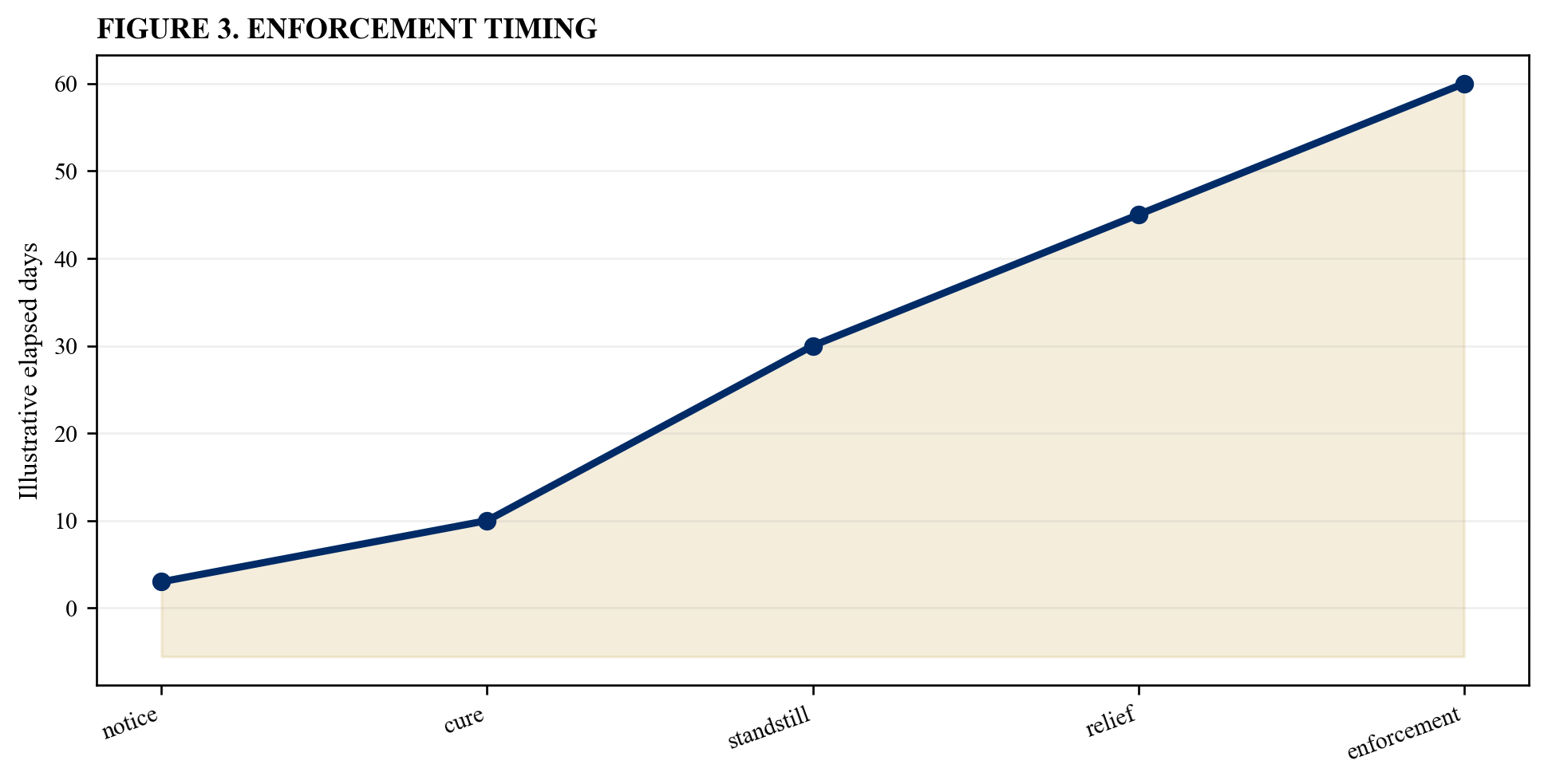
Illustrative analytical scenario; transaction evidence should replace model values.
25. Map environmental and decommissioning obligations
The board, finance team and transaction advisers should identify remediation, permitting, closure, abandonment and successor-liability exposures. Begin with permits, audits, regulator correspondence, technical reports and provisions. The central question is which obligations attach to entity, asset, operator or owner. Record the legal entity, stakeholder, claim or interest, governing law, exposure, trigger, evidence source, owner, verification status and next action [42][43].
The controlled deliverable is an environmental-obligation map. Separate legal rights, economic interests, dependencies and rights activated by a trigger or formal procedure. Trace amounts and rights to primary evidence or qualified advice. Keep contested positions and evidence gaps visible.
The principal execution risk is that asset value can be overstated when statutory or transfer liabilities are omitted. Test effects on liquidity, value, enforcement timing, structure, recoveries and continuity. Feed the result into the rights and recovery model, engagement plan and transaction critical path. Refresh after a material notice, waiver, valuation, order, payment, transfer or bid. Legal conclusions require qualified jurisdiction-specific advice.
26. Map sanctions and financial-crime constraints
The board, finance team and transaction advisers should screen stakeholders, beneficial owners, payments, assets and jurisdictions against applicable restrictions. Begin with KYC records, ownership evidence, licences, sanctions lists and payment routes. The central question is which dealings require exclusion, licence, enhanced diligence or reporting. Record the legal entity, stakeholder, claim or interest, governing law, exposure, trigger, evidence source, owner, verification status and next action [44][45].
The controlled deliverable is a restricted-party and payment map. Separate legal rights, economic interests, dependencies and rights activated by a trigger or formal procedure. Trace amounts and rights to primary evidence or qualified advice. Keep contested positions and evidence gaps visible.
The principal execution risk is that a legally senior claim may still be difficult to pay, transfer or settle. Test effects on liquidity, value, enforcement timing, structure, recoveries and continuity. Feed the result into the rights and recovery model, engagement plan and transaction critical path. Refresh after a material notice, waiver, valuation, order, payment, transfer or bid. Legal conclusions require qualified jurisdiction-specific advice.
27. Map data, privacy and cyber rights
The board, finance team and transaction advisers should identify personal data, confidential information, access controls, processor obligations and incident exposure. Begin with data inventories, contracts, privacy notices, security reports and regulator guidance. The central question is which data can be shared, transferred or used in diligence and transition. Record the legal entity, stakeholder, claim or interest, governing law, exposure, trigger, evidence source, owner, verification status and next action [46][47].
The controlled deliverable is a data-rights map. Separate legal rights, economic interests, dependencies and rights activated by a trigger or formal procedure. Trace amounts and rights to primary evidence or qualified advice. Keep contested positions and evidence gaps visible.
The principal execution risk is that an uncontrolled data room can create new liabilities while trying to solve old ones. Test effects on liquidity, value, enforcement timing, structure, recoveries and continuity. Feed the result into the rights and recovery model, engagement plan and transaction critical path. Refresh after a material notice, waiver, valuation, order, payment, transfer or bid. Legal conclusions require qualified jurisdiction-specific advice.
28. Map insurance and surety positions
The board, finance team and transaction advisers should record policies, insured interests, claims, deductibles, cancellation, assignment, bonds and subrogation. Begin with policy schedules, endorsements, claims files and broker confirmations. The central question is which losses are insured and which insurer or surety gains recovery or control rights. Record the legal entity, stakeholder, claim or interest, governing law, exposure, trigger, evidence source, owner, verification status and next action [48][49].
The controlled deliverable is an insurance-and-surety map. Separate legal rights, economic interests, dependencies and rights activated by a trigger or formal procedure. Trace amounts and rights to primary evidence or qualified advice. Keep contested positions and evidence gaps visible.
The principal execution risk is that assumed protection can lapse or sit with a different entity than the loss. Test effects on liquidity, value, enforcement timing, structure, recoveries and continuity. Feed the result into the rights and recovery model, engagement plan and transaction critical path. Refresh after a material notice, waiver, valuation, order, payment, transfer or bid. Legal conclusions require qualified jurisdiction-specific advice.
29. Map guarantees and third-party support
The board, finance team and transaction advisers should trace guarantees, keepwells, letters of support, indemnities, collateral and contribution rights. Begin with executed support documents, approvals, notices and financial capacity evidence. The central question is who owes support, what triggers it and what recourse follows. Record the legal entity, stakeholder, claim or interest, governing law, exposure, trigger, evidence source, owner, verification status and next action [50][51].
The controlled deliverable is a support-obligation matrix. Separate legal rights, economic interests, dependencies and rights activated by a trigger or formal procedure. Trace amounts and rights to primary evidence or qualified advice. Keep contested positions and evidence gaps visible.
The principal execution risk is that double counting support or ignoring recourse can misstate liquidity and recoveries. Test effects on liquidity, value, enforcement timing, structure, recoveries and continuity. Feed the result into the rights and recovery model, engagement plan and transaction critical path. Refresh after a material notice, waiver, valuation, order, payment, transfer or bid. Legal conclusions require qualified jurisdiction-specific advice.
30. Map intercompany claims and cash pools
The board, finance team and transaction advisers should reconcile loans, current accounts, cash pooling, services, dividends, guarantees and transfer restrictions. Begin with ledgers, agreements, bank records, transfer-pricing files and board approvals. The central question is the legal and economic direction of value across the group. Record the legal entity, stakeholder, claim or interest, governing law, exposure, trigger, evidence source, owner, verification status and next action [2][52].
The controlled deliverable is an intercompany exposure map. Separate legal rights, economic interests, dependencies and rights activated by a trigger or formal procedure. Trace amounts and rights to primary evidence or qualified advice. Keep contested positions and evidence gaps visible.
The principal execution risk is that net group positions can conceal entity-level claims, avoidance risk and structural subordination. Test effects on liquidity, value, enforcement timing, structure, recoveries and continuity. Feed the result into the rights and recovery model, engagement plan and transaction critical path. Refresh after a material notice, waiver, valuation, order, payment, transfer or bid. Legal conclusions require qualified jurisdiction-specific advice.
31. Map derivatives and close-out rights
The board, finance team and transaction advisers should record counterparties, netting sets, collateral, termination events, valuation and transfer constraints. Begin with master agreements, confirmations, margin records and valuation statements. The central question is the close-out amount, set-off scope and liquidity consequence under each trigger. Record the legal entity, stakeholder, claim or interest, governing law, exposure, trigger, evidence source, owner, verification status and next action [53][54].
The controlled deliverable is a close-out exposure schedule. Separate legal rights, economic interests, dependencies and rights activated by a trigger or formal procedure. Trace amounts and rights to primary evidence or qualified advice. Keep contested positions and evidence gaps visible.
The principal execution risk is that gross positions can move rapidly when termination and collateral rights activate. Test effects on liquidity, value, enforcement timing, structure, recoveries and continuity. Feed the result into the rights and recovery model, engagement plan and transaction critical path. Refresh after a material notice, waiver, valuation, order, payment, transfer or bid. Legal conclusions require qualified jurisdiction-specific advice.
32. Map trusts, client money and ring-fenced assets
The board, finance team and transaction advisers should identify beneficial ownership, safeguarding, escrow, fiduciary and statutory segregation arrangements. Begin with trust documents, account records, reconciliations, terms and regulatory rules. The central question is which assets fall outside the general estate or have restricted uses. Record the legal entity, stakeholder, claim or interest, governing law, exposure, trigger, evidence source, owner, verification status and next action [18][55].
The controlled deliverable is a ring-fenced asset register. Separate legal rights, economic interests, dependencies and rights activated by a trigger or formal procedure. Trace amounts and rights to primary evidence or qualified advice. Keep contested positions and evidence gaps visible.
The principal execution risk is that cash or assets recorded by the company may belong beneficially to customers or clients. Test effects on liquidity, value, enforcement timing, structure, recoveries and continuity. Feed the result into the rights and recovery model, engagement plan and transaction critical path. Refresh after a material notice, waiver, valuation, order, payment, transfer or bid. Legal conclusions require qualified jurisdiction-specific advice.
Table 4. Illustrative recovery matrix
| Class | Base recovery | Downside recovery |
|---|---|---|
| fixed security | 94% | 78% |
| priority claims | 100% | 86% |
| floating security | 62% | 34% |
| unsecured | 24% | 8% |
Statutory periods are stated where labelled; other entries are analytical controls.
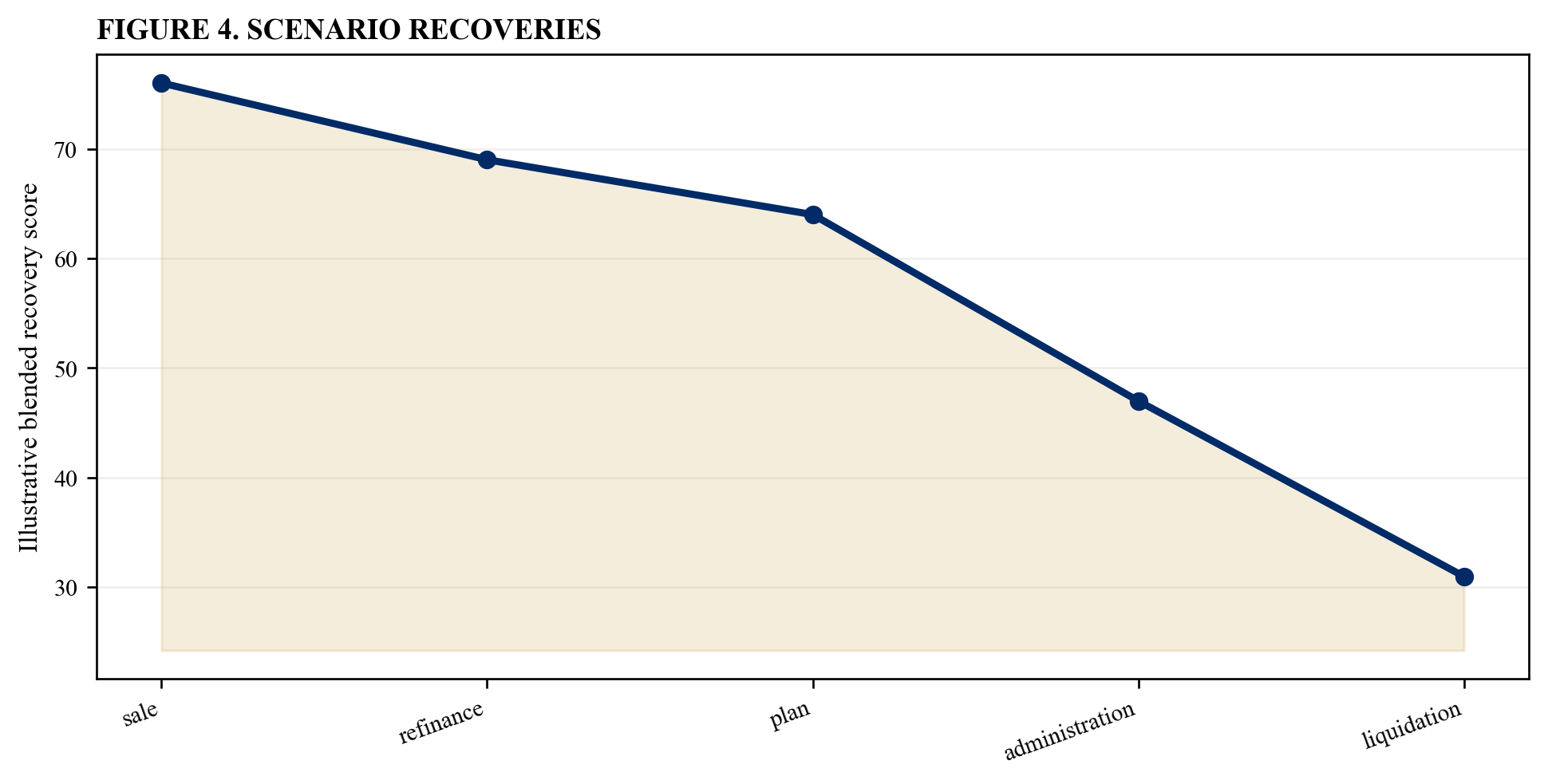
Illustrative analytical scenario; transaction evidence should replace model values.
33. Map creditor participation and voting
The board, finance team and transaction advisers should classify creditors by rights and economic similarity, record proofs, voting amounts, thresholds and challenges. Begin with claim evidence, procedural rules, court directions and proposed plan terms. The central question is who may vote, in which class and with what contested amount. Record the legal entity, stakeholder, claim or interest, governing law, exposure, trigger, evidence source, owner, verification status and next action [1][56].
The controlled deliverable is a voting and class matrix. Separate legal rights, economic interests, dependencies and rights activated by a trigger or formal procedure. Trace amounts and rights to primary evidence or qualified advice. Keep contested positions and evidence gaps visible.
The principal execution risk is that claim value, class composition and voting control may differ from accounting balances. Test effects on liquidity, value, enforcement timing, structure, recoveries and continuity. Feed the result into the rights and recovery model, engagement plan and transaction critical path. Refresh after a material notice, waiver, valuation, order, payment, transfer or bid. Legal conclusions require qualified jurisdiction-specific advice.
34. Identify blocking-right concentration
The board, finance team and transaction advisers should calculate which individual or coalition can prevent waivers, releases, new money, a plan or asset sale. Begin with thresholds, holdings, intercreditor terms and class analysis. The central question is the minimum coalition required for each critical decision. Record the legal entity, stakeholder, claim or interest, governing law, exposure, trigger, evidence source, owner, verification status and next action [12][57].
The controlled deliverable is a blocking-right heat map. Separate legal rights, economic interests, dependencies and rights activated by a trigger or formal procedure. Trace amounts and rights to primary evidence or qualified advice. Keep contested positions and evidence gaps visible.
The principal execution risk is that a small exposure can carry disproportionate process leverage. Test effects on liquidity, value, enforcement timing, structure, recoveries and continuity. Feed the result into the rights and recovery model, engagement plan and transaction critical path. Refresh after a material notice, waiver, valuation, order, payment, transfer or bid. Legal conclusions require qualified jurisdiction-specific advice.
35. Model recoveries by stakeholder class
The board, finance team and transaction advisers should translate enterprise value, collateral, costs, priorities, timing and transaction structure into recoveries. Begin with valuation, cash flow, bids, claims and legal priority. The central question is the distribution and timing for each class under each credible option. Record the legal entity, stakeholder, claim or interest, governing law, exposure, trigger, evidence source, owner, verification status and next action [10][58].
The controlled deliverable is a scenario recovery matrix. Separate legal rights, economic interests, dependencies and rights activated by a trigger or formal procedure. Trace amounts and rights to primary evidence or qualified advice. Keep contested positions and evidence gaps visible.
The principal execution risk is that negotiations can anchor on enterprise value while ignoring leakage and priority. Test effects on liquidity, value, enforcement timing, structure, recoveries and continuity. Feed the result into the rights and recovery model, engagement plan and transaction critical path. Refresh after a material notice, waiver, valuation, order, payment, transfer or bid. Legal conclusions require qualified jurisdiction-specific advice.
36. Connect rights to transaction options
The board, finance team and transaction advisers should test sale, refinancing, rescue finance, scheme, restructuring plan, administration and liquidation against stakeholder rights. Begin with option terms, consents, procedural rules, valuation and runway. The central question is which options are executable before the relevant deadline. Record the legal entity, stakeholder, claim or interest, governing law, exposure, trigger, evidence source, owner, verification status and next action [6][59].
The controlled deliverable is an option-rights matrix. Separate legal rights, economic interests, dependencies and rights activated by a trigger or formal procedure. Trace amounts and rights to primary evidence or qualified advice. Keep contested positions and evidence gaps visible.
The principal execution risk is that a theoretically superior option can be unavailable because a consent, approval or funding step cannot be met. Test effects on liquidity, value, enforcement timing, structure, recoveries and continuity. Feed the result into the rights and recovery model, engagement plan and transaction critical path. Refresh after a material notice, waiver, valuation, order, payment, transfer or bid. Legal conclusions require qualified jurisdiction-specific advice.
37. Design the stakeholder engagement sequence
The board, finance team and transaction advisers should plan who must be informed, consulted, approached, bound by confidentiality or kept behind an information barrier. Begin with stakeholder map, legal advice, communications plan and transaction timetable. The central question is the appropriate message, evidence, decision and owner for each engagement. Record the legal entity, stakeholder, claim or interest, governing law, exposure, trigger, evidence source, owner, verification status and next action [60][61].
The controlled deliverable is a controlled engagement plan. Separate legal rights, economic interests, dependencies and rights activated by a trigger or formal procedure. Trace amounts and rights to primary evidence or qualified advice. Keep contested positions and evidence gaps visible.
The principal execution risk is that premature or inconsistent communication can trigger enforcement, departures or disclosure problems. Test effects on liquidity, value, enforcement timing, structure, recoveries and continuity. Feed the result into the rights and recovery model, engagement plan and transaction critical path. Refresh after a material notice, waiver, valuation, order, payment, transfer or bid. Legal conclusions require qualified jurisdiction-specific advice.
38. Control information and privilege
The board, finance team and transaction advisers should define source ownership, access, reliance, confidentiality, legal privilege, versioning and disclosure approval. Begin with data-room logs, privilege protocols, NDAs, source registers and board directions. The central question is who may see or rely on each evidence set. Record the legal entity, stakeholder, claim or interest, governing law, exposure, trigger, evidence source, owner, verification status and next action [46][62].
The controlled deliverable is an information-reliance matrix. Separate legal rights, economic interests, dependencies and rights activated by a trigger or formal procedure. Trace amounts and rights to primary evidence or qualified advice. Keep contested positions and evidence gaps visible.
The principal execution risk is that an open stakeholder map can expose strategy, personal data or privileged analysis. Test effects on liquidity, value, enforcement timing, structure, recoveries and continuity. Feed the result into the rights and recovery model, engagement plan and transaction critical path. Refresh after a material notice, waiver, valuation, order, payment, transfer or bid. Legal conclusions require qualified jurisdiction-specific advice.
39. Link the map to liquidity and milestones
The board, finance team and transaction advisers should connect stakeholder actions, consent dates, enforcement windows, payments and approvals to the thirteen-week cash flow. Begin with cash forecast, rights map, transaction plan and scenario triggers. The central question is the earliest date on which a stakeholder action can change runway or value. Record the legal entity, stakeholder, claim or interest, governing law, exposure, trigger, evidence source, owner, verification status and next action [3][63].
The controlled deliverable is a stakeholder-liquidity critical path. Separate legal rights, economic interests, dependencies and rights activated by a trigger or formal procedure. Trace amounts and rights to primary evidence or qualified advice. Keep contested positions and evidence gaps visible.
The principal execution risk is that legal rights can be understood in isolation while their timing still defeats the transaction. Test effects on liquidity, value, enforcement timing, structure, recoveries and continuity. Feed the result into the rights and recovery model, engagement plan and transaction critical path. Refresh after a material notice, waiver, valuation, order, payment, transfer or bid. Legal conclusions require qualified jurisdiction-specific advice.
40. Issue the stakeholder-readiness certificate
The board, finance team and transaction advisers should reconcile entities, claims, security, priority, control, blocking rights, dependencies, recoveries, engagement and evidence gaps. Begin with signed-off schedules, legal opinions, reconciliations, valuations and action logs. The central question is whether the board has one current and auditable view for transaction decisions. Record the legal entity, stakeholder, claim or interest, governing law, exposure, trigger, evidence source, owner, verification status and next action [57][64].
The controlled deliverable is a stakeholder-readiness certificate. Separate legal rights, economic interests, dependencies and rights activated by a trigger or formal procedure. Trace amounts and rights to primary evidence or qualified advice. Keep contested positions and evidence gaps visible.
The principal execution risk is that decision-makers can proceed on inconsistent lists without knowing which rights remain unverified. Test effects on liquidity, value, enforcement timing, structure, recoveries and continuity. Feed the result into the rights and recovery model, engagement plan and transaction critical path. Refresh after a material notice, waiver, valuation, order, payment, transfer or bid. Legal conclusions require qualified jurisdiction-specific advice.
Table 5. Stakeholder-readiness certificate
| Domain | Required evidence | Owner |
|---|---|---|
| claims | reconciled ledger | finance |
| rights | contract and legal map | legal |
| recoveries | valuation waterfall | restructuring adviser |
| engagement | approved sequence | deal lead |
Statutory periods are stated where labelled; other entries are analytical controls.
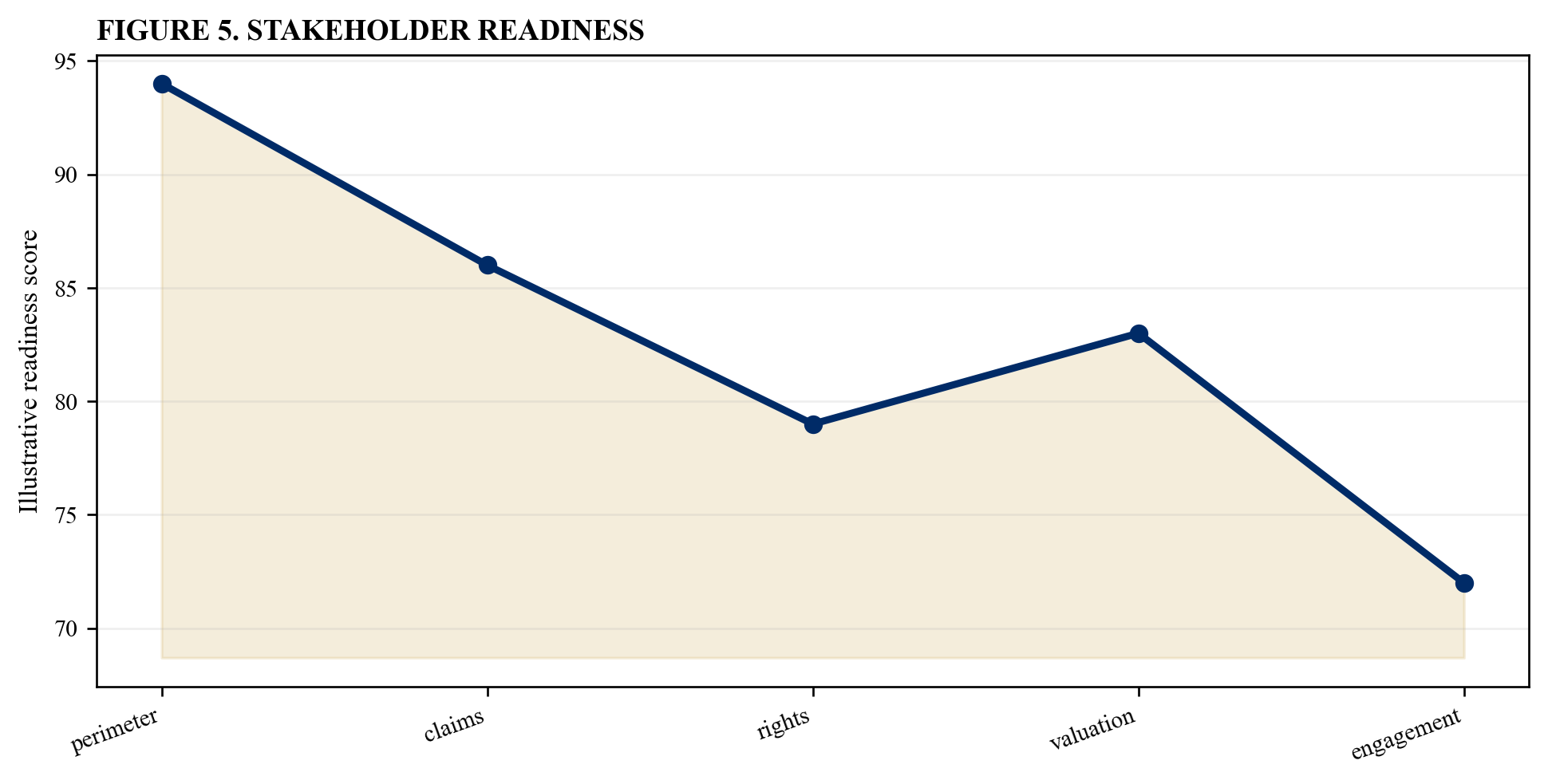
Illustrative analytical scenario; transaction evidence should replace model values.
References
- UNCITRAL, Legislative Guide on Insolvency Law, https://uncitral.un.org/en/texts/insolvency/legislativeguides/insolvency_law
- UNCITRAL, Treatment of Enterprise Groups in Insolvency, https://uncitral.un.org/en/texts/insolvency/legislativeguides/insolvency_law
- UK Government, Corporate Financial Distress Guidance Note, https://www.gov.uk/government/publications/the-sourcing-and-consultancy-playbooks/corporate-financial-distress-guidance-note-html
- Insolvency Act 1986, https://www.legislation.gov.uk/ukpga/1986/45/contents
- Insolvency Rules 2016, https://www.legislation.gov.uk/uksi/2016/1024/contents
- Companies House, Register a Charge, https://www.gov.uk/guidance/register-a-charge-mortgage-for-a-limited-company
- Companies Act 2006, Part 25, https://www.legislation.gov.uk/ukpga/2006/46/part/25
- Companies House, How to Complete Form MR01, https://www.gov.uk/government/publications/register-particulars-of-a-charge-mr01/how-to-complete-paper-form-mr01
- IFRS Foundation, IFRS 13 Fair Value Measurement, https://www.ifrs.org/issued-standards/list-of-standards/ifrs-13-fair-value-measurement/
- IVSC, International Valuation Standards, https://www.ivsc.org/standards/
- HMRC, HMRC as a Preferential Creditor, https://www.gov.uk/government/publications/hmrc-as-a-preferential-creditor/hmrc-as-a-preferential-creditor
- Loan Market Association, Documents and Guidelines, https://www.lma.eu.com/documents-guidelines
- UNCITRAL, Secured Transactions Resources, https://uncitral.un.org/en/texts/securityinterests
- World Bank, Principles for Effective Insolvency and Creditor-Debtor Regimes, https://www.worldbank.org/en/topic/financialsector/brief/the-world-bank-principles-for-effective-insolvency-and-creditor-rights
- United States Bankruptcy Code, Section 362, https://uscode.house.gov/view.xhtml?req=granuleid:USC-prelim-title11-section362
- Corporate Insolvency and Governance Act 2020, https://www.legislation.gov.uk/ukpga/2020/12/contents
- United States Bankruptcy Code, Section 363, https://uscode.house.gov/view.xhtml?req=granuleid:USC-prelim-title11-section363
- FCA, Client Assets, https://www.fca.org.uk/firms/client-assets
- United States Bankruptcy Code, Section 364, https://uscode.house.gov/view.xhtml?req=granuleid:USC-prelim-title11-section364
- US Trustee Program, Chapter 11 Case Administration, https://www.justice.gov/ust/eo/ust_org/ustp_manual/docs/Volume_3_Chapter_11_Case_Administration.pdf
- Companies Act 2006, https://www.legislation.gov.uk/ukpga/2006/46/contents
- UK Government, Shareholder Voting Rights, https://www.gov.uk/limited-company-formation/company-records
- IFRS Foundation, IAS 36 Impairment of Assets, https://www.ifrs.org/issued-standards/list-of-standards/ias-36-impairment-of-assets/
- UK Supreme Court, BTI 2014 LLC v Sequana SA, https://www.supremecourt.uk/cases/uksc-2019-0046
- Financial Reporting Council, UK Corporate Governance Code, https://www.frc.org.uk/library/standards-codes-policy/corporate-governance/uk-corporate-governance-code/
- UK Government, Employee Rights on Insolvency, https://www.gov.uk/your-rights-if-your-employer-is-insolvent
- Transfer of Undertakings Protection of Employment Regulations 2006, https://www.legislation.gov.uk/uksi/2006/246/contents
- UK Insolvency Service, Pension Claim Guidance, https://www.gov.uk/guidance/pension-claim-guidance-for-insolvency-practitioners
- Pension Protection Fund, Insolvency Practitioners Guidance, https://www.ppf.co.uk/insolvency-practitioners
- UK Government, Commercial Property Guidance, https://www.gov.uk/government/collections/commercial-property
- Law of Property Act 1925, https://www.legislation.gov.uk/ukpga/Geo5/15-16/20/contents
- Sale of Goods Act 1979, https://www.legislation.gov.uk/ukpga/1979/54/contents
- UNCITRAL, Legislative Guide on Insolvency Law, Treatment of Contracts, https://uncitral.un.org/en/texts/insolvency/legislativeguides/insolvency_law
- IFRS Foundation, IFRS 15 Revenue from Contracts with Customers, https://www.ifrs.org/issued-standards/list-of-standards/ifrs-15-revenue-from-contracts-with-customers/
- United States Bankruptcy Code, Section 365, https://uscode.house.gov/view.xhtml?req=granuleid:USC-prelim-title11-section365
- UK Insolvency Service, Creditors and Liabilities Guidance, https://www.gov.uk/guidance/technical-guidance-for-official-receivers/43-creditors-and-liabilities
- FCA, Change in Control, https://www.fca.org.uk/firms/change-control
- UK Government, Sector Regulation and Business Licences, https://www.gov.uk/licence-finder
- UK Competition and Markets Authority, Mergers Guidance, https://www.gov.uk/topic/competition/mergers
- UK Government, National Security and Investment Act Guidance, https://www.gov.uk/government/collections/national-security-and-investment-act
- IFRS Foundation, IAS 37 Provisions Contingent Liabilities and Contingent Assets, https://www.ifrs.org/issued-standards/list-of-standards/ias-37-provisions-contingent-liabilities-and-contingent-assets/
- UK Courts and Tribunals Judiciary, https://www.judiciary.uk/
- Environment Agency, Insolvency Guidance, https://www.gov.uk/government/organisations/environment-agency
- UK Government, UK Sanctions, https://www.gov.uk/government/collections/uk-sanctions
- US Treasury OFAC, Sanctions Programs and Country Information, https://ofac.treasury.gov/sanctions-programs-and-country-information
- UK Information Commissioner's Office, Data Sharing, https://ico.org.uk/for-organisations/uk-gdpr-guidance-and-resources/data-sharing/
- UK Information Commissioner's Office, Data Security, https://ico.org.uk/for-organisations/uk-gdpr-guidance-and-resources/security/
- IFRS Foundation, IFRS 17 Insurance Contracts, https://www.ifrs.org/issued-standards/list-of-standards/ifrs-17-insurance-contracts/
- ICC, Uniform Rules for Demand Guarantees, https://iccwbo.org/business-solutions/rules-standards/demand-guarantees/
- UNIDROIT, Principles of International Commercial Contracts, https://www.unidroit.org/instruments/commercial-contracts/unidroit-principles-2016/
- IFRS Foundation, IFRS 9 Financial Instruments, https://www.ifrs.org/issued-standards/list-of-standards/ifrs-9-financial-instruments/
- OECD, Transfer Pricing Guidelines, https://www.oecd.org/tax/transfer-pricing/oecd-transfer-pricing-guidelines-for-multinational-enterprises-and-tax-administrations-20769717.htm
- International Swaps and Derivatives Association, Documentation, https://www.isda.org/book/
- United States Bankruptcy Code, Section 553, https://uscode.house.gov/view.xhtml?req=granuleid:USC-prelim-title11-section553
- FCA, Safeguarding and Wind-Down Planning, https://www.fca.org.uk/firms/payment-services-regulations-e-money-regulations
- United States Bankruptcy Code, Sections 1102 and 1126, https://uscode.house.gov/view.xhtml?req=granuleid:USC-prelim-title11-chapter11
- Directive EU 2019/1023 on Restructuring and Insolvency, https://eur-lex.europa.eu/legal-content/EN/ALL/?uri=CELEX:32019L1023
- United States Bankruptcy Code, Sections 506, 507 and 510, https://uscode.house.gov/view.xhtml?req=granuleid:USC-prelim-title11-chapter5
- Corporate Insolvency and Governance Act 2020, Part 26A Notes, https://www.legislation.gov.uk/ukpga/2020/12/notes/division/6/index.htm
- US Trustee Program, Role in Chapter 11 Cases, https://www.justice.gov/ust/bankruptcy-fact-sheets/us-trustees-role-chapter-11-bankruptcy-cases
- US Trustee Program, Chapter 11 Meeting of Creditors, https://www.justice.gov/ust/ch11moc
- ISO, ISO 15489 Records Management, https://www.iso.org/standard/62542.html
- Matchpoint Partners, Thirteen-Week Cash Flow as Transaction Infrastructure, https://www.matchpoint-partners.com/our-insights/thirteen-week-cash-flow-transaction-infrastructure.html
- ISO, ISO 31000 Risk Management, https://www.iso.org/iso-31000-risk-management.html
- ISO, ISO 37000 Governance of Organizations, https://www.iso.org/standard/65036.html
- ISO, ISO 22301 Business Continuity Management, https://www.iso.org/standard/75106.html
- Institute of Internal Auditors, Three Lines Model, https://www.theiia.org/en/content/position-papers/2020/the-iias-three-lines-model-an-update-of-the-three-lines-of-defense/
- COSO, Internal Control Integrated Framework, https://www.coso.org/internal-control
