

1. Employee liquidity is a transaction-design problem
An employee share sale sits at the intersection of compensation, securities, company governance and personal finance. The seller acquired the security through employment, yet the buyer evaluates it as an investment. The company may want to reward retention and reduce concentration while protecting its shareholder base, confidential information and future financing. The board must balance these objectives within the governing documents and applicable law.
The transaction becomes vulnerable when the process starts with a seller list and a price. Employee holdings can include exercised common shares, vested options, unvested awards, restricted shares, nominee interests or rights subject to repurchase. Each has a different legal state. Employment status can change vesting, exercise windows and company rights. Tax can arise at grant, vesting, exercise, expiry of a selling restriction or disposal depending on the instrument and jurisdiction.
Adverse selection describes the risk that sellers and buyers possess different information about the value or condition of what is being sold. In an employee liquidity programme, the relevant information gap can run in several directions. A current employee can know more about operating performance than an outside buyer. Senior management can possess more sensitive information than other employees. The issuer can know more about financing plans than every seller. A departing employee can have stale information and urgent exercise or tax deadlines. A buyer can possess market or financing information that the seller lacks.
The control objective is evidence parity. Every participant should receive the information, process rules and decision time required by law, contract and programme design. The company should identify and manage conflicts. The buyer should diligence the security and transfer. The seller should understand consideration, rights surrendered, tax responsibility and closing conditions. The process should preserve a record of what each party knew and approved.
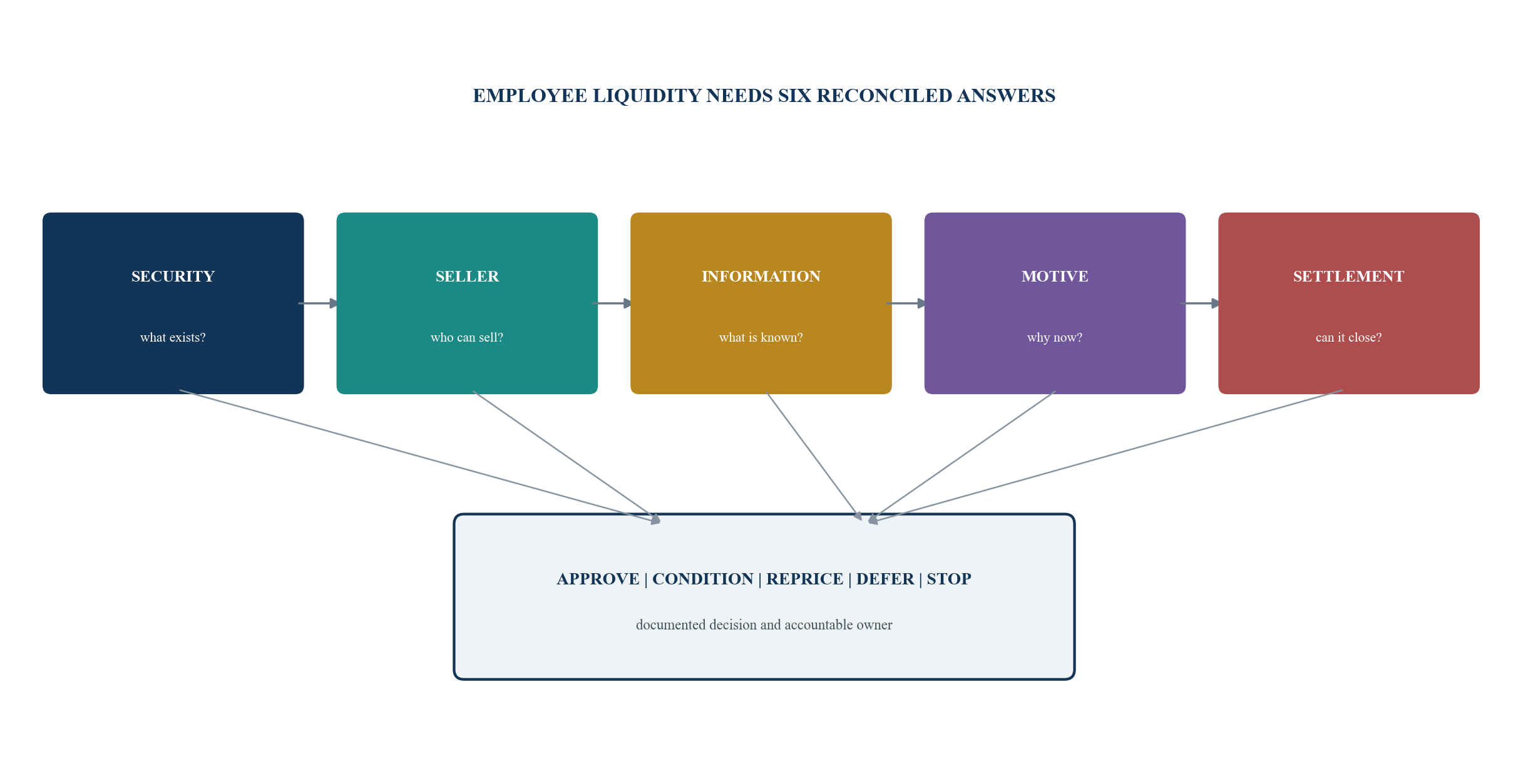
A transaction proceeds only when the security, seller, information, motive, price and settlement evidence reconcile.
2. Separate ordinary liquidity from value-signalling claims
An employee can sell for many legitimate reasons: a home purchase, education, family support, tax, portfolio diversification, debt reduction, a forthcoming exercise deadline or a planned career move. These motives do not establish that the security is attractive or unattractive. They help the team identify cash needs, timing constraints, conflicts and documents to review.
The diligence process should avoid treating every employee sale as negative information about the company. It should also avoid accepting a benign personal explanation as evidence that the seller has no company-specific concern. A motive statement is one input within a broader record.
The seller questionnaire should distinguish source of liquidity need, desired proceeds, timing, relationship to employment, knowledge of pending company matters, prior sales, other holdings, tax advice and intended continuing exposure. The seller should confirm whether another person has an economic interest, influence or lien over the shares. The programme should state that the buyer and company may rely on defined representations while preserving appropriate privacy.
Motive should be examined at programme level as well as seller level. A concentration of senior sellers, a sudden increase in requested volume, repeated departures, or an unusual preference for cash before a known milestone can require further review. The pattern can also have ordinary explanations. The team should document the evidence and avoid unsupported conclusions.
The company can reduce ambiguity through programme design. A scheduled annual or semi-annual window, consistent eligibility rules, capped participation and standard information can make personal sales less likely to be interpreted as one-off signals. A board-approved process also helps preserve fairness between employees.
Table 1. Motive categories and evidence questions
| Motive category | Evidence question | Transaction relevance | Follow-up |
|---|---|---|---|
| diversification | what percentage of total wealth and compensation remains exposed? | helps assess requested size and continuing alignment | document remaining holdings and future awards |
| tax funding | which taxable event, jurisdiction, amount and due date apply? | can set minimum proceeds and timing | obtain seller acknowledgement of independent tax advice |
| option exercise | which grant, vesting status, strike and expiry date apply? | sale may depend on exercise and share issuance | sequence exercise, withholding, registration and transfer |
| life event | what amount and date are required? | may support partial liquidity | protect privacy while confirming requested size |
| employment change | when does service end and what rights change? | can affect vesting, exercise, repurchase and information | reconcile HR, plan and separation documents |
| portfolio view | what company information informed the decision? | can raise information-parity and conflict questions | apply information and compliance review |
| third-party obligation | is there a pledge, divorce order, trust, estate or creditor claim? | can affect authority and title | obtain releases, consents and beneficial-owner evidence |
A stated motive guides diligence; it does not establish transaction quality or future company performance.
3. Establish the seller before diligencing the sale
The seller identity should reconcile across employment records, award documents, exercise notices, the legal register, tax records and payment instructions. Differences can arise from name changes, trusts, estates, family transfers, nominee structures and relocation. A company email or cap-table export is insufficient proof of identity or authority.
The diligence file should capture legal name, address, tax residence, citizenship where relevant, employment status, job level, insider or control-person status where applicable, registered holder, beneficial owner and authorised payment account. Where a trust, estate, special-purpose vehicle or nominee holds the security, the team should establish the authorised signatory and ultimate economic interest.
Employment status deserves a dated reconciliation. Current employee, notice period, garden leave, terminated, retired, contractor and former employee can produce different consequences under plan rules and agreements. The team should obtain an HR confirmation that identifies service dates and status without disclosing unrelated personal information.
Seniority and access should be treated as information attributes rather than moral judgements. A product lead, finance manager, sales executive and board observer can each have different company knowledge. The compliance review should map role, access and transaction date to material company developments. The outcome can be clearance, additional disclosure, deferral to a later window or exclusion.
The seller should make transaction-specific representations. These can cover ownership, authority, absence of undisclosed liens, compliance with plan and company policy, accuracy of supplied information, independent decision-making, tax responsibility and absence of unauthorised use or disclosure of confidential information. Qualified counsel should tailor representations to the transaction and jurisdiction.
4. Reconstruct the employee security from grant to sale
An employee equity record is a sequence of events. The sequence can include plan adoption, grant approval, acceptance, vesting, performance certification, exercise, tax withholding, issuance, registration, transfer restrictions, repurchase rights, prior transfers and amendments. The transaction should identify the current legal asset by tracing that sequence.
Options are contractual rights to acquire shares and are not themselves the same as issued shares. Restricted stock can be issued while remaining subject to vesting or repurchase. Restricted stock units can represent a promise to deliver shares or cash when conditions are met. An employee can describe all of these as “my shares,” while only some may be legally transferable.
The security-state model should distinguish granted, accepted, vested, exercisable, exercised, issued, fully paid, registered and transferable. Each transition needs a document, date and responsible owner. A sale should stop when the requested quantity exceeds the seller's registered and transferable holdings or when an upstream step remains unresolved.
US SEC Rule 701 guidance addresses compensatory grants and disclosure timing. It states, among other points, that when the relevant twelve-month sales value exceeds the disclosure threshold, specified information must be delivered within the timing required by the rule. The analysis for a particular award requires counsel. The presence of a Rule 701 grant does not by itself establish that a later resale is permitted.
Tax basis and acquisition history should follow the lot. The employee can hold several grants with different strikes, exercise dates, tax treatment and holding periods. A sale instruction should identify the specific lot or allocation method. The buyer needs the current security and transfer evidence; the seller and advisers need the acquisition data for tax and reporting.
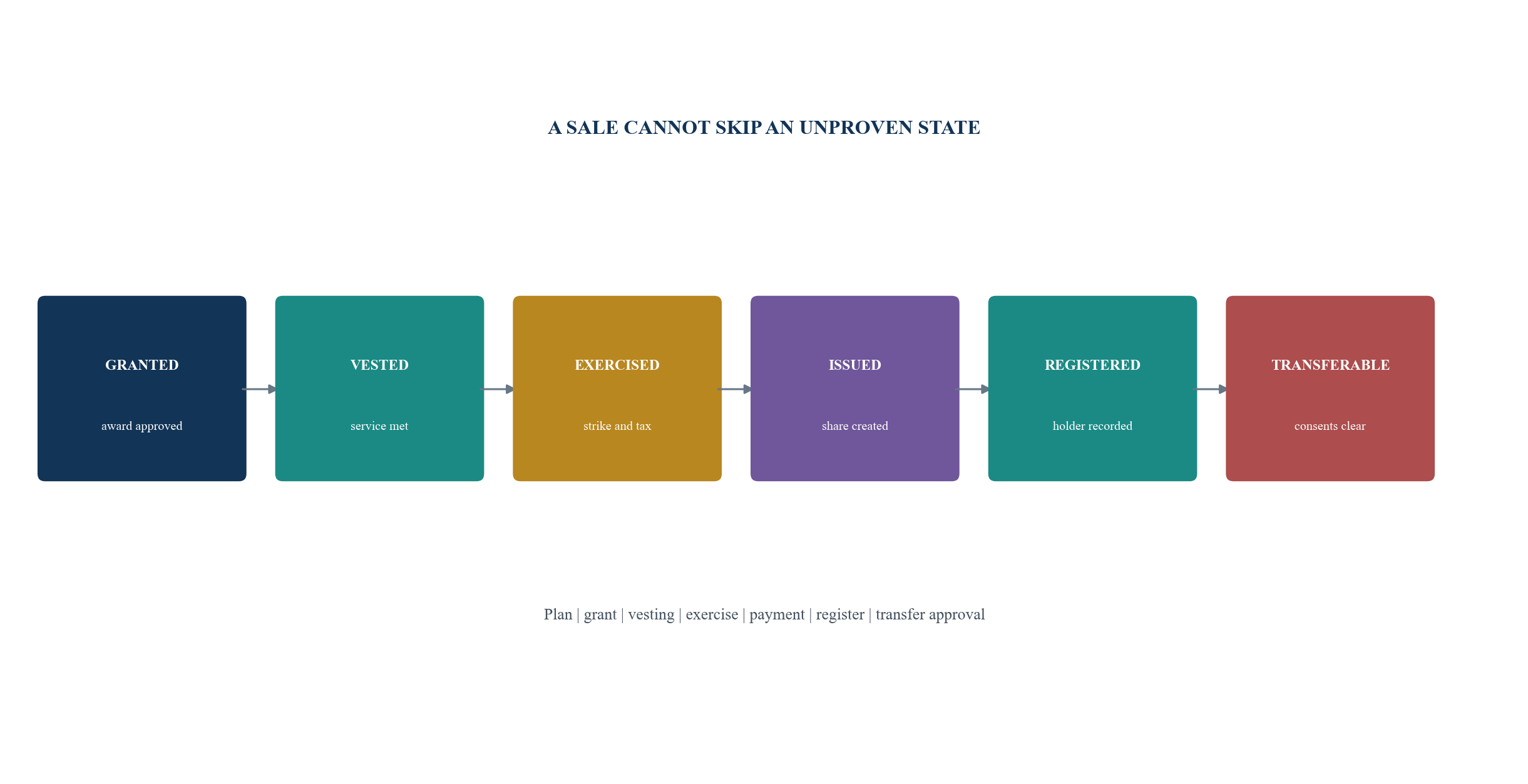
Every transition requires evidence; the sale perimeter is the legally owned and transferable quantity.
5. Test legal ownership and transferability separately
Ownership and transferability answer different questions. A seller can own valid shares that cannot be transferred without board consent, a right-of-first-refusal process, a company waiver, co-sale mechanics, a holding period, a securities-law exemption or release of a lien. The diligence file should demonstrate both status and route.
The legal register or register of members is a primary ownership record in many corporate systems. A certificate can support the record while remaining stale after a split, transfer or cancellation. A platform screenshot can support an operational view while differing from the legal register. The team should reconcile the exact class and quantity through the transaction date.
The SEC's private-secondary guidance states that private-company securities are often restricted and not freely tradeable. It outlines federal resale exemptions and explains that state requirements and antifraud authority can also apply. A buyer and seller should obtain advice on the actual exemption, purchaser conditions, information requirements, holding periods and affiliate status.
United Kingdom transfers commonly require a stock-transfer instrument and company registration, subject to the articles, shareholder agreements, tax and other requirements. Singapore ACRA states that a private-company share transfer requires fully paid shares, compliance with the constitution and a proper transfer instrument. ACRA also states that the transfer takes effect when the electronic register of members is updated.
Contractual restrictions can exceed statutory requirements. Plan rules, award agreements, shareholder agreements, investor-rights agreements, company bylaws or articles can include company repurchase, right of first refusal, board discretion, permitted-transferee limits, drag, tag and information restrictions. The route map should list notice, offer period, consent, waiver, document and registration dependencies with exact deadlines.
Table 2. Ownership and transferability evidence stack
| Layer | Evidence | Question answered | Stop condition |
|---|---|---|---|
| identity and authority | identity, beneficial-owner and signatory records | who owns and can instruct? | holder or authority does not reconcile |
| award history | plan, grant, acceptance and amendments | what right was granted? | missing or inconsistent grant terms |
| vesting and exercise | HR certification, exercise notice and payment | did the right become an issued security? | requested quantity remains unexercised or unvested |
| legal ownership | current register and security record | what class and quantity are owned? | seller absent or quantity differs |
| restrictions | constitution, agreements, legends and policy | which approvals or exemptions apply? | no lawful and contractual route identified |
| encumbrances | lien search, pledge, trust and marital or estate documents | is title available for delivery? | unresolved third-party claim |
| registration | transfer instrument and register update | when does legal ownership change? | settlement cannot produce controlling record |
The applicable law and executed documents determine the controlling evidence and sequence.
6. Build an information-parity test
The information review should define what the seller knows, what the buyer knows, what the company has disclosed and what remains restricted. The objective is a controlled transaction process with protected confidential information.
Start with a dated company-event register. It can include financial results, forecast changes, financings, acquisitions, disposals, major contracts, litigation, regulatory matters, leadership changes, cybersecurity incidents and planned public offerings. The compliance owner maps each seller's role and access to this register. Qualified counsel determines the consequences.
The buyer information pack should be consistent for similarly situated participants. It can contain company-approved financial and operating information, capitalisation, security rights, risk factors, transaction terms, conflicts, valuation method and relevant updates. Access should be logged. The company should define permitted use, confidentiality and return or destruction obligations.
The seller information statement should describe the offer, buyer, price, allocation method, fees, rights surrendered, key company information, conflicts, tax responsibility, decision deadline and withdrawal conditions. Employees should have a practical opportunity to seek independent advice. A rushed acceptance can undermine confidence even when the headline price appears attractive.
Information asymmetry can require a timing control. A company can schedule the programme after financial information is approved, after a financing closes, or within a defined compliance window. A seller with sensitive undisclosed information can be deferred. A buyer receiving confidential diligence can be subject to trading and use restrictions.
The process should retain the exact versions of information supplied, delivery timestamps, questions and answers, acknowledgements and approvals. This record supports later review of fairness and compliance.
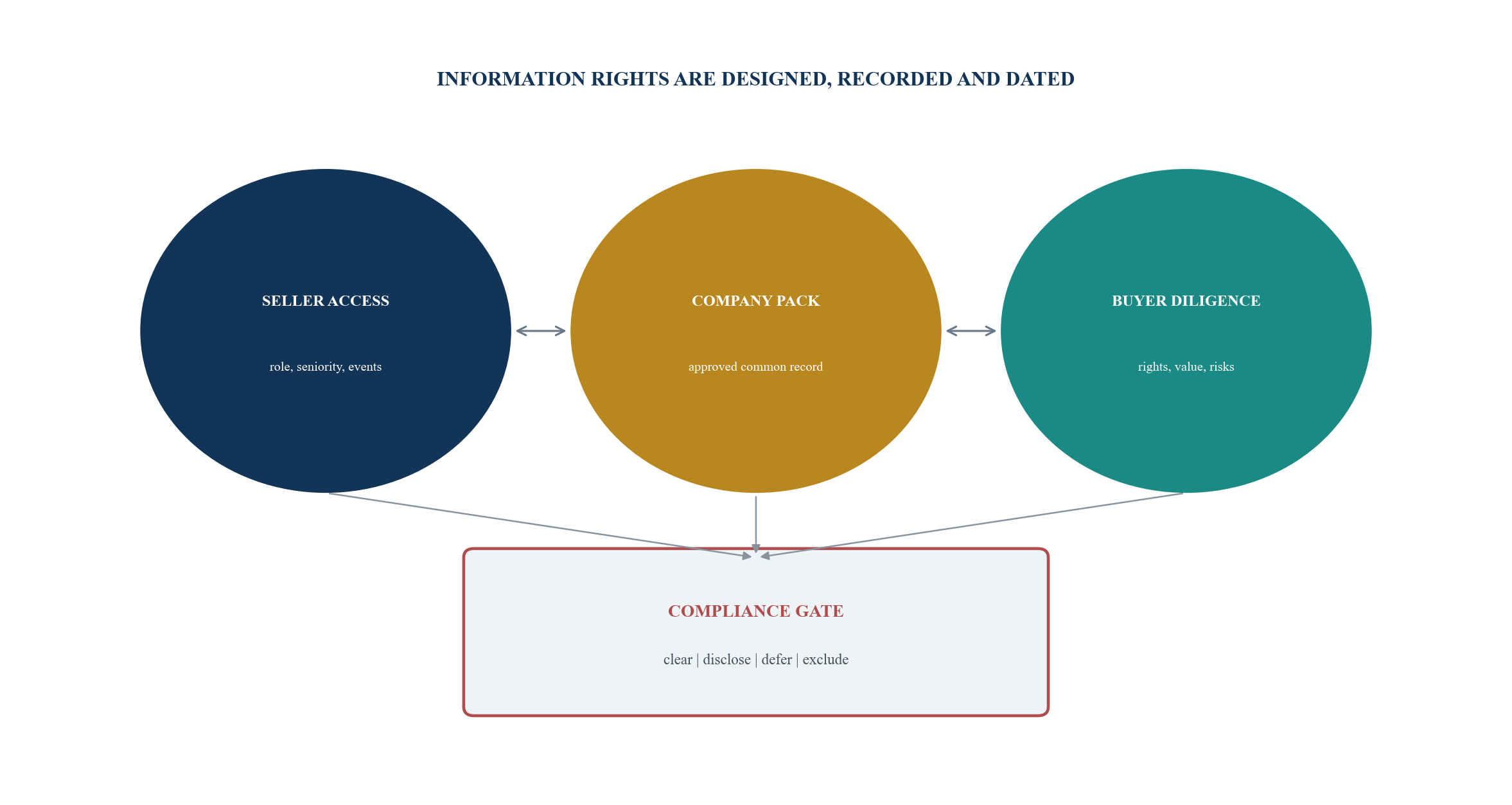
The compliance gate compares seller access, company disclosure and buyer diligence before approval.
7. Treat motive as a risk-routing input
The motive interview should route work rather than assign a character judgement. A tax-driven seller needs instrument and jurisdiction analysis. A departing employee needs a separation and exercise-window review. A senior seller seeking unusually high liquidity needs an information and governance review. A seller with a lien needs a title and release workstream.
The programme can score evidence completeness, timing pressure, information sensitivity, continuing ownership and external claims. A high score indicates additional work or a delayed decision. It does not mean misconduct or predict company performance.
Pattern analysis should use cohorts. Compare requested volume by role, tenure, function, geography and employment status. A cluster can signal programme-design weaknesses. Employees in a high-cost location may need predictable tax or exercise funding. Long-tenured employees can have concentrated holdings. Departing employees can face plan deadlines. These operational explanations should be tested with evidence.
The board should receive aggregate findings that preserve employee privacy. It can see participation, requested value, seniority mix, continuing exposure, exceptions, information clearances, tax dependencies and transfer readiness. Personal details should be restricted to people who need them.
The buyer should receive transaction-relevant conclusions and agreed representations. The buyer does not automatically need personal medical, family or financial information. A well-designed process verifies the relevant fact while minimising unnecessary disclosure.
8. Reconcile employment, vesting and leaver provisions
Employment change can alter the asset during the transaction. A vesting date can occur between offer and closing. A termination can cancel unvested awards, start a short exercise window or activate repurchase rights. A sale should use a defined cut-off and bring-down.
The team should map each lot to the plan and grant version in force. It should identify time-based and performance vesting, acceleration, leave treatment, bad-leaver or good-leaver provisions, post-termination exercise, company call rights and settlement form. Side letters and board modifications should be included.
HR should confirm service facts. The plan administrator should confirm vesting and exercise. Legal counsel should interpret rights. Finance should confirm payment and withholding. The cap-table owner should confirm issued and registered shares. No single operational system should be assumed to answer every question.
The transaction agreement should address changes between signing and closing. It can define whether additional vesting is eligible, whether an exercise funded by sale proceeds is allowed, and how cancelled or repurchased shares affect allocation. The programme should avoid creating an undocumented promise of continuing employment or future liquidity.
Post-sale ownership matters for incentives. A maximum sale percentage, minimum retained holding or participation cap can preserve exposure. These are design choices and should be applied through disclosed eligibility rules. The company should assess employment-law and discrimination implications with advisers.
Table 3. Employment-to-security reconciliation
| Employment event | Equity question | Evidence owner | Transaction response |
|---|---|---|---|
| continued service | what vests through the cut-off date? | HR and plan administrator | confirm eligible vested quantity |
| notice or garden leave | does service continue for vesting and exercise? | HR and counsel | document status and plan interpretation |
| resignation | when do vesting and exercise rights end? | separation documents and plan | sequence exercise, tax and sale |
| termination | do forfeiture, repurchase or exercise provisions apply? | counsel and plan administrator | recalculate owned and transferable quantity |
| retirement or disability | is special vesting or exercise treatment available? | plan and employment records | verify conditions and approvals |
| performance certification | has the required metric and approval occurred? | compensation committee or board | exclude uncertified awards |
| transfer after departure | does the company retain consent or repurchase rights? | shareholder and award agreements | complete required process before closing |
The actual plan, grant, employment and separation documents determine each outcome.
9. Build a jurisdiction-specific tax and reporting map
Employee equity tax can arise at several points. The transaction file should identify the instrument, grant jurisdiction, work locations, tax residence, mobility history, taxable event, withholding party, reporting form, basis and disposal treatment. The company and seller should obtain qualified advice.
The US IRS distinguishes statutory and nonstatutory options. IRS Publication 525 explains that tax consequences can arise at exercise or disposal and that the employee may need to adjust basis information. Incentive stock options can also raise alternative minimum tax considerations. The current facts and holding periods matter.
HMRC describes tax-advantaged and non-tax-advantaged share schemes. Its July 2026 employer guidance explains that employment-related securities can produce income-tax and National Insurance treatment, while later disposals can produce capital-gains consequences. HMRC's current employee-share-scheme helpsheet addresses reporting for relevant disposals.
Singapore IRAS states that gains from ESOP and other employee-share-ownership plans can be taxable when options are exercised, shares vest, restrictions end or deemed exercise applies. The rules can continue to matter after employment ends or an employee leaves Singapore. A liquidity transaction can therefore interact with an earlier employment-tax event.
The programme should not promise a net amount before tax analysis. It should provide gross consideration, known withholding, fees and a clear statement of responsibility. Where exercise and sale occur together, the settlement model should show strike funding, withholding, transfer taxes or duties where applicable, and net proceeds.
10. Price the security and the liquidity conditions
Price should be linked to the exact security, rights, information date and transfer conditions. A recent preferred financing price may not equal common-share value. Preferred securities can carry liquidation, conversion, participation, anti-dilution, voting and information rights that common shares lack. A secondary buyer can also apply discounts for illiquidity, transfer restrictions, minority position and uncertainty.
The pricing file should bridge from reference enterprise or equity value to the security price. It should reconcile net debt, fully diluted capitalisation, conversion assumptions, preference waterfall, recent transactions, company developments, secondary-market conditions and transaction-specific rights. Independent valuation can be appropriate.
Adverse selection can affect price design. A single negotiated purchase from one employee can create greater information concern than a company-sponsored programme with common disclosure and broad participation. A tender with a fixed price and pro rata allocation can reduce seller-by-seller bargaining differences. An auction can produce price discovery while increasing complexity.
The company should identify conflicts. A board member, executive, existing investor or affiliated buyer may participate. The approval record should disclose relationships and explain the process used. Independent directors, a committee or third-party adviser may be appropriate depending on facts and law.
The seller should receive enough explanation to understand how the price was determined and how it compares with relevant company transactions. The explanation should identify differences in security, date, size and rights. It should avoid implying a guaranteed future value.
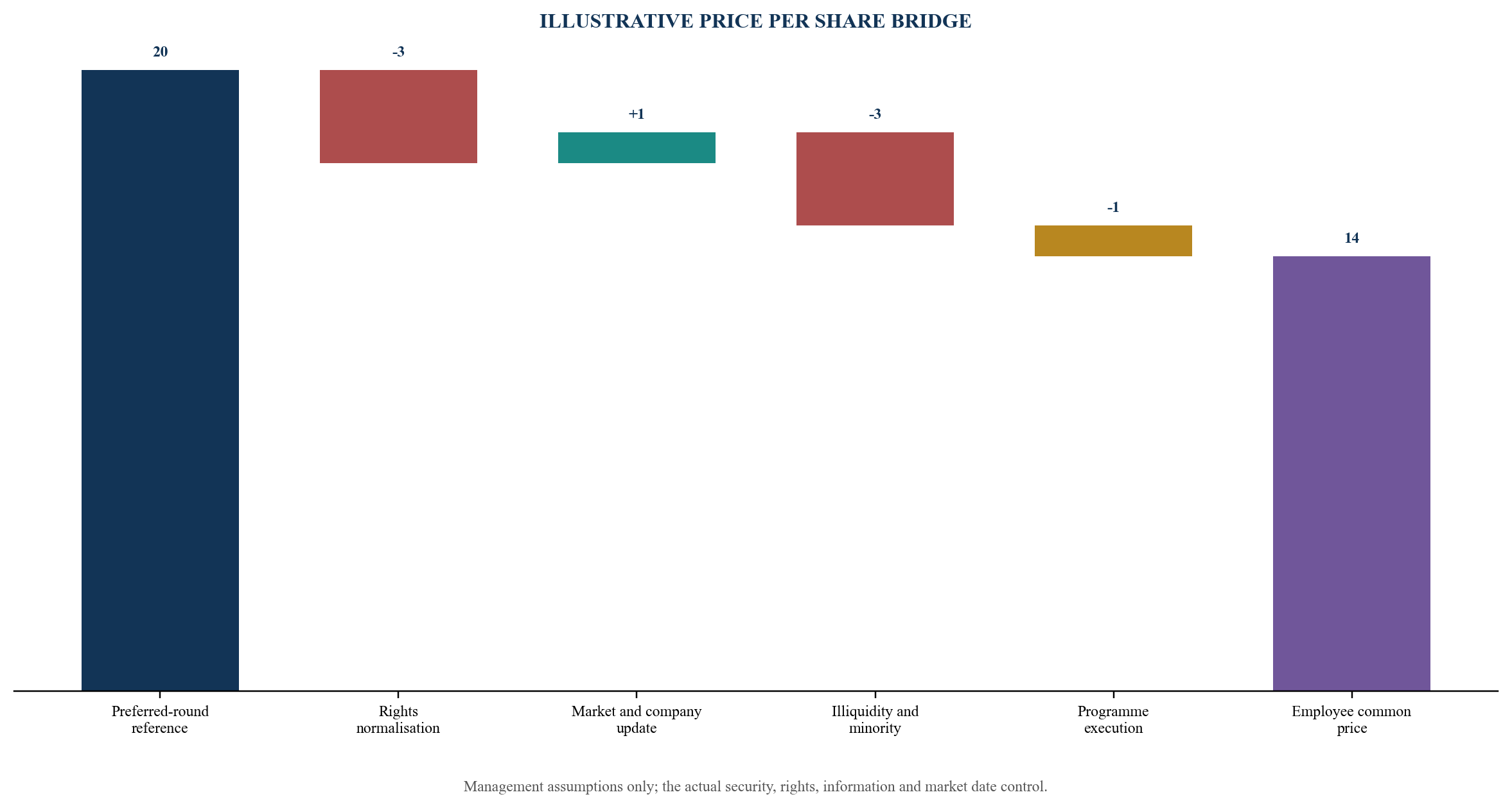
Values are management assumptions and do not represent an observed company or a valuation conclusion.
11. Design eligibility and allocation before collecting orders
Eligibility rules should be written before the company sees individual sale requests. Relevant factors can include tenure, vested or exercised status, security class, employment status, jurisdiction, minimum lot, maximum participation, continuing ownership, compliance clearance and transfer readiness.
Consistent rules support fairness and reduce discretionary pressure. Exceptions should have an identified basis, approval and disclosure where appropriate. The programme should assess whether different treatment creates legal, tax, employment, fiduciary or reputational issues.
When requests exceed buyer capacity, the allocation method matters. Pro rata allocation by eligible request is simple. Tiered allocation can provide a common minimum and then allocate remaining capacity pro rata. Priority by tax deadline or option expiry can address hardship while requiring clear rules. Seniority-based allocation can create adverse incentives and governance concerns.
The company should model participation under several demand cases. It should show gross programme size, buyer capacity, seller count, concentration by seniority and function, continuing employee ownership, and cap-table changes. It should also test whether a large executive sale could affect future investors or employees.
The invitation should explain that submitting an indication does not guarantee allocation or closing. The company should preserve rights to scale, defer or cancel under disclosed conditions. Participants should receive final allocation and settlement statements.
Table 4. Employee-lot readiness score
| Dimension | Weight | Evidence for full score | Hard-stop example |
|---|---|---|---|
| ownership and lot identity | 20% | registered class, quantity and acquisition history reconcile | seller does not legally own requested lot |
| transfer route | 20% | exemption, consent, waiver and registration sequence confirmed | no lawful or contractual transfer pathway |
| employment and award status | 15% | service, vesting, exercise and leaver terms confirmed | requested quantity is unvested or expired |
| information clearance | 20% | role/access review and common disclosure completed | unresolved sensitive-information concern |
| motive and conflicts | 10% | stated motive, related parties and liens documented | undisclosed beneficial owner or conflict |
| tax and settlement | 15% | adviser acknowledgement, funding, withholding and account verified | tax or exercise funding prevents delivery |
Scores and thresholds are illustrative management assumptions; legal and compliance hard stops override the total.
12. Control settlement from exercise through registration
Settlement can involve more than cash against shares. An employee may need to exercise options, fund the strike, satisfy withholding, receive shares, complete a transfer instrument, obtain company approval, release a lien and update the legal register. The buyer may need investment approval, compliance clearance, funds verification and a custody route.
The closing memorandum should sequence every step and identify the effective time. If buyer proceeds fund exercise, the structure should be approved and legally workable. The settlement agent should know which amounts go to the company, tax authority, employee, adviser and other parties.
Conditions precedent can include board approval, rights-of-first-refusal expiry, company waiver, seller representations, buyer funding, executed transfer, tax forms and register instructions. A failed condition should stop release. The process should avoid sending unrestricted cash before the transfer route is controlled.
The final statement should show lot, class, quantity, price, gross proceeds, deductions, net proceeds and registration confirmation. The cap table should update only when the legal transfer becomes effective under the applicable regime. The company should preserve pre- and post-closing records.
Post-close controls include buyer onboarding, information-rights administration, shareholder communications, tax reporting, accounting and monitoring of remaining employee holdings. If the programme includes multiple closings, each batch should be reconciled independently.
13. Install red flags and hard stops
Red flags should trigger an assigned review rather than an automatic accusation. Examples include a seller requesting more shares than the register shows, recent changes to employment status, a senior employee selling nearly all holdings, inconsistent explanations, a pledge, a trust without authority evidence, a last-minute payment-account change, pressure to bypass company consent or reluctance to complete information acknowledgements.
Programme-level flags include clustered executive selling, repeated exceptions for insiders, material differences in disclosure, rapidly changing company forecasts, a financing or sale process not reflected in the information review, and buyer affiliations that were not disclosed.
Hard stops include unresolved ownership, no transfer exemption or contractual route, unvested or unexercised quantity presented as issued shares, unresolved lien, insufficient company approval, uncontrolled confidential information, unverified buyer funds, sanctions or identity issues, and settlement instructions that cannot produce legal registration.
The exception register should record fact, evidence, affected lot, risk, owner, action, due date and outcome. Counsel should determine legal consequences. The team should distinguish a curable document gap from a fundamental inability to sell.
Escalation should protect confidentiality. HR, legal, compliance, finance and the board committee should receive only the information needed for their role. The employee should have a path to correct factual errors.
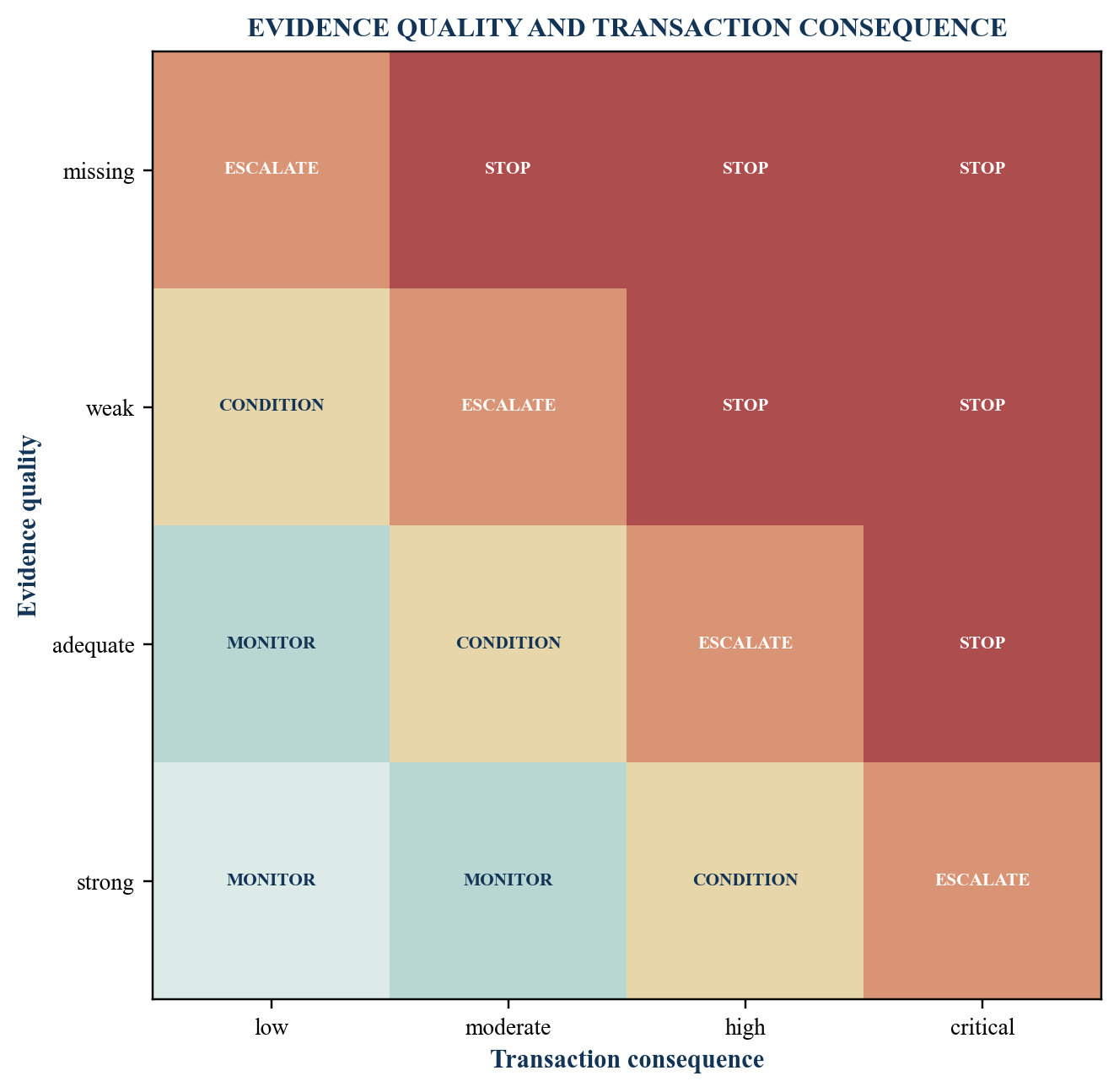
The matrix routes work; legal and compliance conclusions require qualified advisers.
14. Run a ten-day employee-liquidity diagnostic
Days one and two establish the perimeter. The team collects programme documents, cap table, plans, award templates, shareholder agreements, company policies, prior liquidity records and the proposed buyer and funding structure. It defines participating jurisdictions and security classes.
Days three and four reconstruct employee lots. The team reconciles identity, employment, grants, vesting, exercises, issuance, registration, liens and restrictions. It identifies incomplete or ineligible lots.
Days five and six run motive and information reviews. Sellers complete a proportionate questionnaire. Compliance maps role and access to company events. The company prepares the common information pack and conflict disclosures.
Days seven and eight complete tax-routing, pricing and allocation analysis. Advisers identify instrument and jurisdiction dependencies. The team builds the security price bridge, demand cases and allocation method.
Day nine completes the transfer and settlement critical path. The team identifies exemptions, consents, waivers, instruments, funding and registration. Day ten is the gate meeting: approve the programme; approve with conditions; revise eligibility, disclosure, price or capacity; defer; or stop.
The timetable is an operating target. Complex mobility, estates, trusts, historical exercises, multiple security classes and regulatory questions can require longer. Early identification makes that complexity visible before invitations are issued.
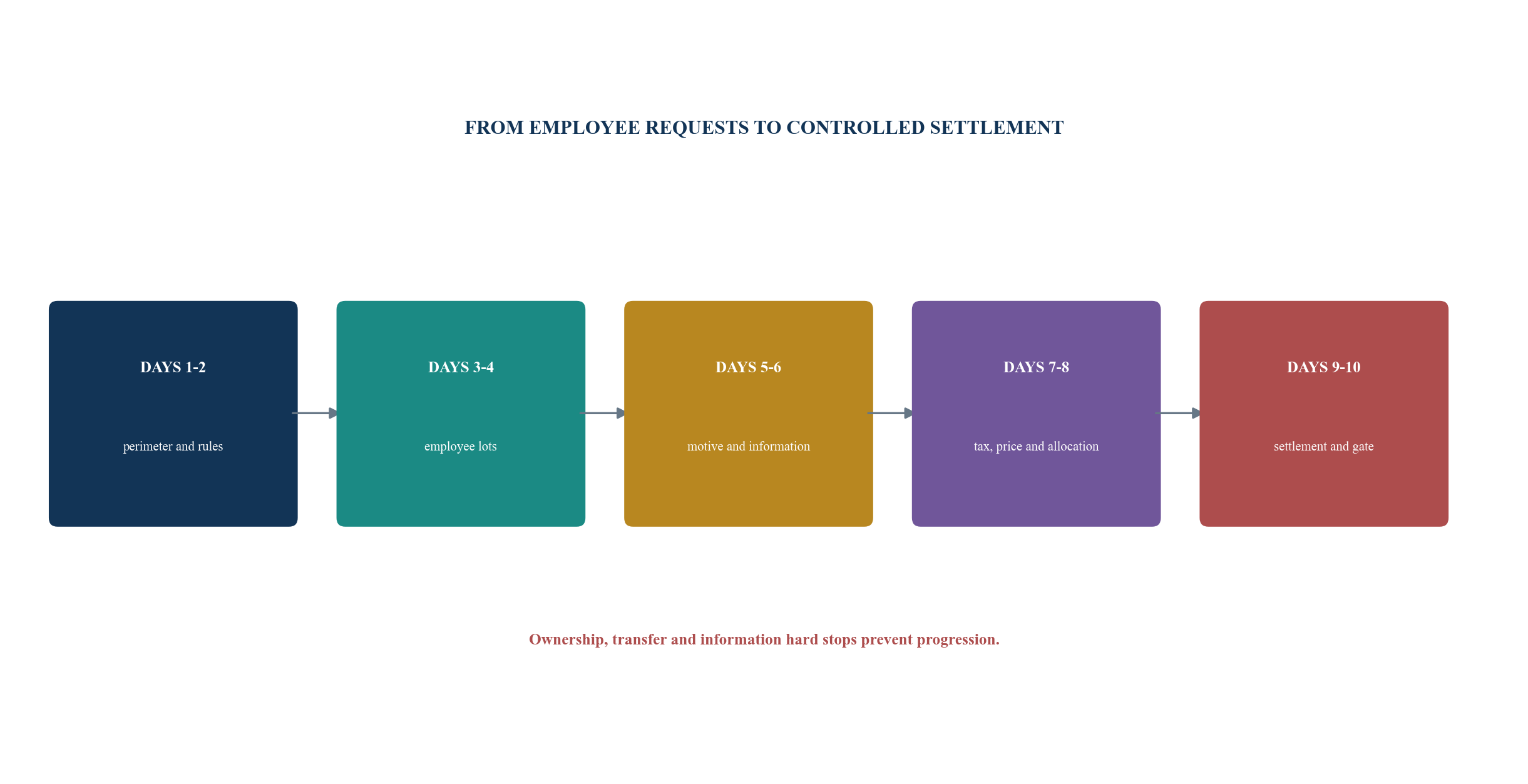
The timetable is an illustrative management target and should be adapted to transaction complexity.
15. Implement a thirty-day programme operating system
The first week defines governance. The board or committee approves objectives, eligibility, buyer perimeter, conflicts, information policy, privacy, transaction caps, exception authority and advisers. The company appoints a programme owner across legal, HR, finance, tax, compliance and cap-table operations.
The second week builds controlled data. Employee lots are mapped from plan and grant through registration. The company creates a seller questionnaire, information-access map, tax-routing form, transfer checklist, evidence index and exception register. Access rights protect personal and company data.
The third week designs the transaction. The team completes valuation and price bridge, participation scenarios, allocation rules, transfer pathway, settlement memorandum and communication pack. A dry run tests option exercise, withholding, funding, approvals and register update.
The fourth week executes a limited pilot or readiness simulation. The company tests invitations, acknowledgements, question handling, allocation, approvals and closing. The team measures elapsed time and unresolved exceptions before a broader launch.
The operating system should support repeat programmes. A scheduled calendar, maintained lot register and standard evidence can reduce reconstruction work. Each programme still requires a current information and compliance review.
Table 5. Thirty-day employee-liquidity implementation plan
| Period | Output | Decision | Evidence of completion |
|---|---|---|---|
| days 1-5 | governance and programme charter | what objective, perimeter and authority apply? | board or committee approval and responsibility map |
| days 6-10 | employee-lot and evidence register | which securities are owned and potentially transferable? | reconciled lot schedule and exception register |
| days 11-15 | information, motive and tax controls | what must each participant provide and receive? | approved forms, disclosure pack and access map |
| days 16-20 | valuation, eligibility and allocation | how are price and capacity applied consistently? | price bridge, demand cases and allocation policy |
| days 21-25 | transfer and settlement design | can each approved lot close lawfully? | counsel-reviewed critical path and dry run |
| days 26-30 | pilot and readiness gate | can the programme operate at required quality? | signed readiness report and remediation actions |
Actual owners, dates and approvals should be assigned before execution.
16. Measure employee, transaction and commercial outcomes
Employee outcomes include participation, percentage of eligible holdings sold, continuing ownership, time from invitation to payment, question resolution, declined participation and post-programme feedback. Aggregate reporting should protect personal information.
Transaction outcomes include percentage of requested lots reconciled, information clearances, exceptions by category, consent time, allocation variance, settlement failures, register-update time, tax-reporting completion and post-close corrections. Hard-stop overrides should be recorded.
Company outcomes include cap-table accuracy, retention indicators, employee understanding of equity, concentration reduction, investor feedback and readiness for future financing or exit. Causation should not be claimed without supporting analysis. A liquidity programme can coincide with retention changes without proving that it caused them.
Commercial outcomes for an adviser include diagnostic engagements, retained programme-office work, cap-table and award remediation, valuation support, buyer or capital sourcing, transaction execution mandates, signed fees and collected payments. Website traffic, downloads, enquiries and meetings remain leading indicators. Signed mandates, retainers, success fees and collected fees provide commercial evidence.
The retained service path can begin with a ten-day diagnostic and continue through a thirty-day build, tender or secondary execution, closing control and periodic programme management. Scope should define the respective roles of legal, tax, accounting, employment, valuation and regulated securities professionals.
Table 6. Employee-liquidity operating dashboard
| Dimension | Metric | Evidence source | Management use |
|---|---|---|---|
| lot quality | percentage of requested value with complete ownership chain | lot register and documents | identify remediation workload |
| information | percentage of sellers cleared before invitation | compliance log | control timing and disclosure |
| execution | median days from acceptance to legal registration | settlement and register timestamps | remove process bottlenecks |
| exceptions | open hard stops and age | exception register | escalate unresolved dependencies |
| fairness | allocation variance within disclosed rule | requests and final allocation | test consistent application |
| employee outcome | net proceeds and continuing ownership distribution | settlement statements and cap table | assess concentration and participation |
| commercial | signed mandates, retained work and collected fees | contracts and bank-verified receipts | evidence revenue conversion |
Targets should be approved for the actual programme; values below are metric definitions rather than forecasts.
17. Conclusion
Employee liquidity can serve employees, companies and investors when the programme controls the security, seller, information, motive, price and settlement route. The employee's reason for selling is relevant to diligence and design, yet it cannot substitute for ownership, transfer and information evidence.
The framework treats every employee holding as a dated lot with a legal and employment history. It tests transferability independently from ownership. It maps information access, routes motive without unsupported judgement, identifies tax dependencies, normalises price to rights and controls settlement through legal registration.
US, UK and Singapore materials illustrate the importance of security restrictions, compensatory-award disclosure, tax timing, proper transfer instruments and legal register updates. The actual transaction requires current jurisdiction-specific advice.
For boards and companies, a governed programme can provide repeatable liquidity while preserving cap-table and disclosure integrity. For investors, it creates a defensible view of the asset and seller. For advisers, it supports a retained pathway from diagnostic and remediation through valuation, buyer sourcing, execution and periodic programme management. Commercial demand and fees remain unverified until evidenced by signed engagements and collected payments.
References
- US Securities and Exchange Commission. Private Secondary Markets. Last reviewed or updated 24 April 2026. https://www.sec.gov/resources-small-businesses/capital-raising-building-blocks/private-secondary-markets
- US Securities and Exchange Commission. Securities Act Rules Compliance and Disclosure Interpretations, Rule 701. Updated 6 March 2026. https://www.sec.gov/rules-regulations/staff-guidance/corporation-finance-interpretations/securities-act-rules
- US Securities and Exchange Commission. Tender Offer Rules and Schedules Compliance and Disclosure Interpretations. Updated 9 July 2026. https://www.sec.gov/rules-regulations/staff-guidance/corporation-finance-interpretations/tender-offer-rules-schedules
- US Securities and Exchange Commission. Information for Certain Types of Transactions and Filers, including Rule 13e-4 and Schedule TO. https://www.sec.gov/about/divisions-offices/division-corporation-finance/information-certain-types-transactions-filers
- Internal Revenue Service. Publication 525, Taxable and Nontaxable Income, 2025. https://www.irs.gov/publications/p525
- Internal Revenue Service. Topic No. 427, Stock Options. Updated 2026. https://www.irs.gov/taxtopics/tc427
- HM Revenue & Customs. How Employment Related Securities Work if You're an Employer. Updated 1 July 2026. https://www.gov.uk/guidance/how-employment-related-securities-work-if-youre-an-employer
- HM Revenue & Customs. Tax and Employee Share Schemes: Overview. https://www.gov.uk/tax-employee-share-schemes/overview
- HM Revenue & Customs. Capital Gains Tax and Employee Share Schemes, Self Assessment Helpsheet HS287, 2026. https://www.gov.uk/government/publications/employee-share-and-security-schemes-and-capital-gains-tax-hs287-self-assessment-helpsheet
- Inland Revenue Authority of Singapore. Gains from the Exercise of Stock Options. Updated 2026. https://www.iras.gov.sg/taxes/individual-income-tax/basics-of-individual-income-tax/what-is-taxable-what-is-not/employment-income/gains-from-the-exercise-of-stock-options/
- Inland Revenue Authority of Singapore. Tax Treatment of Employee Stock Options and Other Forms of Employee Share Ownership Plans, 2026. https://www.iras.gov.sg/media/docs/default-source/e-tax/etaxguides_iit_esop_2026-01-30.pdf
- Accounting and Corporate Regulatory Authority Singapore. Filing a Transfer of Shares. Updated 19 March 2026. https://www.acra.gov.sg/manage/companies/shares/transfer-of-shares/
- UK Government. Stamp Duty on Shares and Stock Transfer Forms. https://www.gov.uk/guidance/stamp-duty-on-shares
- UK Government. Make Changes to Your Private Limited Company: Shares. https://www.gov.uk/make-changes-to-your-limited-company/share-structure
About the Author
Chennakeshav Adya, Independent Researcher
