

1. Define the acquisition decision
The central decision is whether the acquirer should buy the target at the proposed value, on the proposed terms, with a credible path to protect approvals and improve capacity, quality and cash conversion. The investment case should identify the legal entities, approved organisations, sites, ratings, capabilities, customer contracts, intellectual property, facilities, tooling, workforce and technology included in the perimeter. It should also identify what remains with the seller, with an affiliate, with an OEM or with a third-party service provider.
Aviation MRO transactions require several connected judgements. The buyer must determine whether reported earnings are repeatable, whether the organisation can deliver the backlog within its approved scope, whether quality performance supports customer retention, whether regulatory approvals survive the transaction and whether proposed technology can be implemented without weakening safety or traceability. These judgements need separate evidence before they are combined in valuation.
The framework supports commercial, operational, technical and technology diligence. It does not determine airworthiness, release to service, regulatory approval, competition law, legal enforceability, accounting treatment, tax or fair value. Qualified professionals and competent authorities retain their respective roles. The buyer's board and investment committee retain responsibility for the acquisition decision.
2. Start with an evidence hierarchy
The diligence file should distinguish authoritative records, independently verified records, controlled company records, analytical outputs and transaction assumptions. Authoritative records include approvals, certificates, competent-authority correspondence, maintenance records and executed contracts. Independent reports can support facility, environmental, cyber, financial, legal and technical conclusions. Controlled company records include authorised staff lists, training files, work cards, non-conformance records, calibration logs, labour bookings and invoices.
Dashboards and models can organise evidence, but they do not outrank the source. A capacity chart cannot override an approval limitation. A computer-vision score cannot override an inspector's documented finding or a certifying employee's responsibility. A sales pipeline cannot replace an executed work order. A high utilisation percentage can conceal overtime, subcontracting, rework or work-in-progress congestion.
Every material metric should have a source, owner, calculation, frequency, control and reconciliation. Conflicts should become diligence issues with assigned owners and resolution dates. Averaging inconsistent records can remove the signal that matters most. The evidence hierarchy creates a defensible path from observed operations to valuation and transaction terms.
3. Map the regulatory perimeter
The regulatory map should show each maintenance approval, competent authority, approval number, rating, limitation, site, line station and contracted activity. EASA's continuing-airworthiness framework includes Part-145 requirements and associated acceptable means of compliance and guidance material [1-3]. The target's maintenance organisation exposition should explain its approved procedures, organisational responsibilities and control system.
The buyer should reconcile the approval certificate and scope with actual work sold, performed and invoiced. A broad marketing description such as airframe maintenance or component repair may contain narrower approved ratings, aircraft types, engine types, component categories or process limitations. Revenue outside owned approval can still be legitimate when controlled through approved subcontracting, yet the economics and dependency differ.
Change of ownership, management, facilities, nominated personnel, systems or procedures may require notification, acceptance or approval. Transaction planning should identify competent-authority engagement, filings, responsible executives, accountable manager continuity and the sequence for legal completion. The acquisition agreement should avoid assuming that approvals transfer automatically. Counsel and aviation-regulatory advisers should confirm the actual path for each entity and jurisdiction.
| Evidence layer | Primary records | Diligence question | Transaction use |
|---|---|---|---|
| Regulatory scope | Certificates, exposition, ratings, limitations and authority correspondence | Can the target lawfully perform the sold work at the stated locations? | Perimeter, condition precedent and warranty |
| Production capacity | Slots, bays, shifts, tooling, staff authorisations and work packages | What throughput can be delivered without unmanaged overtime or rework? | Forecast, capex and synergy case |
| Quality | Findings, product audits, concessions, escapes, warranty and occurrence reports | Does the system detect, correct and learn from defects? | Risk allocation and retention plan |
| Commercial | Contracts, backlog, pricing, customer approvals and supplier access | Are demand, margin and programme access durable? | Revenue quality and valuation |
| Cash conversion | Work-in-progress, milestone acceptance, invoices, disputes and receipts | How quickly does completed work become collected cash? | Working capital and purchase price |
The table is a transaction framework and does not replace authority or specialist review.
4. Reconcile the transaction perimeter
The legal perimeter should identify every company, branch, site, lease, asset, employee, contract, permit, approval, data set and liability included in the deal. The operational perimeter should identify which entity actually performs each activity and which entity employs the authorised people. Shared services, central quality functions and group-level IT can create separation dependencies that are invisible in standalone accounts.
The target may use seller-owned software, OEM portals, pooled tooling, group insurance, common procurement contracts or central training. Each dependency should have a proposed replacement, transition service, licence or long-term agreement. The buyer should test whether the target can continue to schedule, execute, certify, invoice and collect work on the first day after completion.
The accounting perimeter should reconcile statutory accounts, management accounts and the deal model. Intercompany revenue, charges, leases and allocations require normalisation. The approved-organisation perimeter should then reconcile to the legal and accounting perimeter. A transaction that acquires revenue without the people, data or approvals required to perform the work will not preserve the reported economics.
5. Build the approval and capability matrix
The capability matrix should list each approval and customer authorisation against aircraft family, engine, component, inspection method, repair process and site. It should show whether the capability is performed internally, subcontracted or unavailable. It should also record the tooling, data, training, certifying authorisation and recurring investment needed to maintain the capability.
This matrix separates commercial labels from executable scope. A target can market a full service while depending on outside specialists for non-destructive testing, component repair, plating, calibration or design support. Subcontracting can be efficient; it also creates lead-time, margin, control and concentration exposures that must enter the forecast.
The buyer should map future demand to this capability base. Fleet transition, aircraft age, engine shop-visit cycles and customer sourcing decisions can change workload. The deal model should avoid attributing revenue to a capability that requires a new approval, new data licence, major tooling or scarce authorisation unless the required time, cost and execution risk are included.
6. Measure physical capacity by constraint
Hangar area is not equivalent to productive capacity. Throughput depends on bay dimensions, door access, docking, cranes, power, lighting, environmental controls, tooling, stores, inspection access, planning and the interaction of simultaneous work packages. A site can have nominal space while one scarce dock, test cell or specialist process determines output.
The capacity model should begin with the work package and identify its critical path. It should measure scheduled hours, elapsed days, labour mix, bay occupancy, tool occupancy, material availability and inspection gates. It should separate planned maintenance, unscheduled findings and customer-driven changes. Each constraint should be expressed in units relevant to management: bay-days, engine test hours, component-cell hours or authorised shifts.
Observed performance should be segmented by aircraft or component type, check type, site, customer and season. Average turnaround can conceal an unstable tail. Percentiles, variance and reasons for delay reveal the operational capacity that an acquirer can underwrite. The model should treat safety and regulatory control as fixed boundaries, not variables that can be traded for output.
7. Reconcile labour capacity and authorisations
The labour model should distinguish total headcount, productive technicians, support staff, inspectors, certifying employees, planners, engineers and contractors. It should map licences, type ratings, company authorisations, shift coverage, recency, training and supervision. A large workforce may still have a narrow authorisation bottleneck.
Productive hours should reconcile roster, attendance, time booking, work cards and payroll. The buyer should understand overtime, agency labour, travel teams, subcontracting and learning curves. Overtime can support peaks but may raise fatigue, error and retention risk. Contractor dependence can add flexibility while weakening margin or access to proprietary knowledge.
The diligence model should identify single points of failure. A process may depend on a small group who hold specific certifying authority, non-destructive-testing qualification, engine experience or customer acceptance. Retention planning should prioritise these roles before generic headcount synergies. Integration should protect reporting lines, competence management and independent quality functions.
8. Test work-package flow
Work-package flow begins before induction. Planning, customer records, task cards, material, tooling, access equipment and manpower should be ready before the asset enters the slot. Delays created upstream can consume hangar capacity without creating progress. The buyer should trace representative work packages from quotation and planning through induction, findings, rectification, inspection, release, invoice and cash.
The trace should identify queues, handoffs, approvals and rework. Work-in-progress age and blocked tasks are more informative than a headline completion percentage. The acquirer should test whether the production system captures reasons for delay consistently and whether planners use those reasons to change schedules.
Computer vision can support selected points in this flow by documenting incoming condition, comparing repeat inspections, locating damage, checking surface state or confirming task evidence. Its use should be specified at task level. Broad claims that AI will accelerate maintenance have limited transaction value without a validated workflow, measurable baseline and accountable decision point.
9. Define computer vision's bounded role
Computer vision processes images or video to detect, classify, segment, measure or compare visible features. In an MRO environment, potential applications include surface-damage triage, corrosion mapping, missing-fastener checks, foreign-object detection, tool control, part identification and repeatable photographic records. Each use case has different data, lighting, access, consequence and approval requirements.
The buyer should define the intended function precisely. A model can prioritise images for inspector review, suggest a region of interest, compare current and prior condition, or pre-populate a record. These assistance functions differ materially from automated acceptance or release. EASA's AI material describes a human-centric approach and guidance for Level 1 and Level 2 machine-learning applications [4-6]. The deployment should preserve clear human authority, competence and traceability.
The diligence case should measure time saved in capture, search, comparison and documentation, together with the added time for review, exceptions and false alerts. Technology value is the net effect on controlled throughput and quality. A demonstration image is not evidence of production performance.
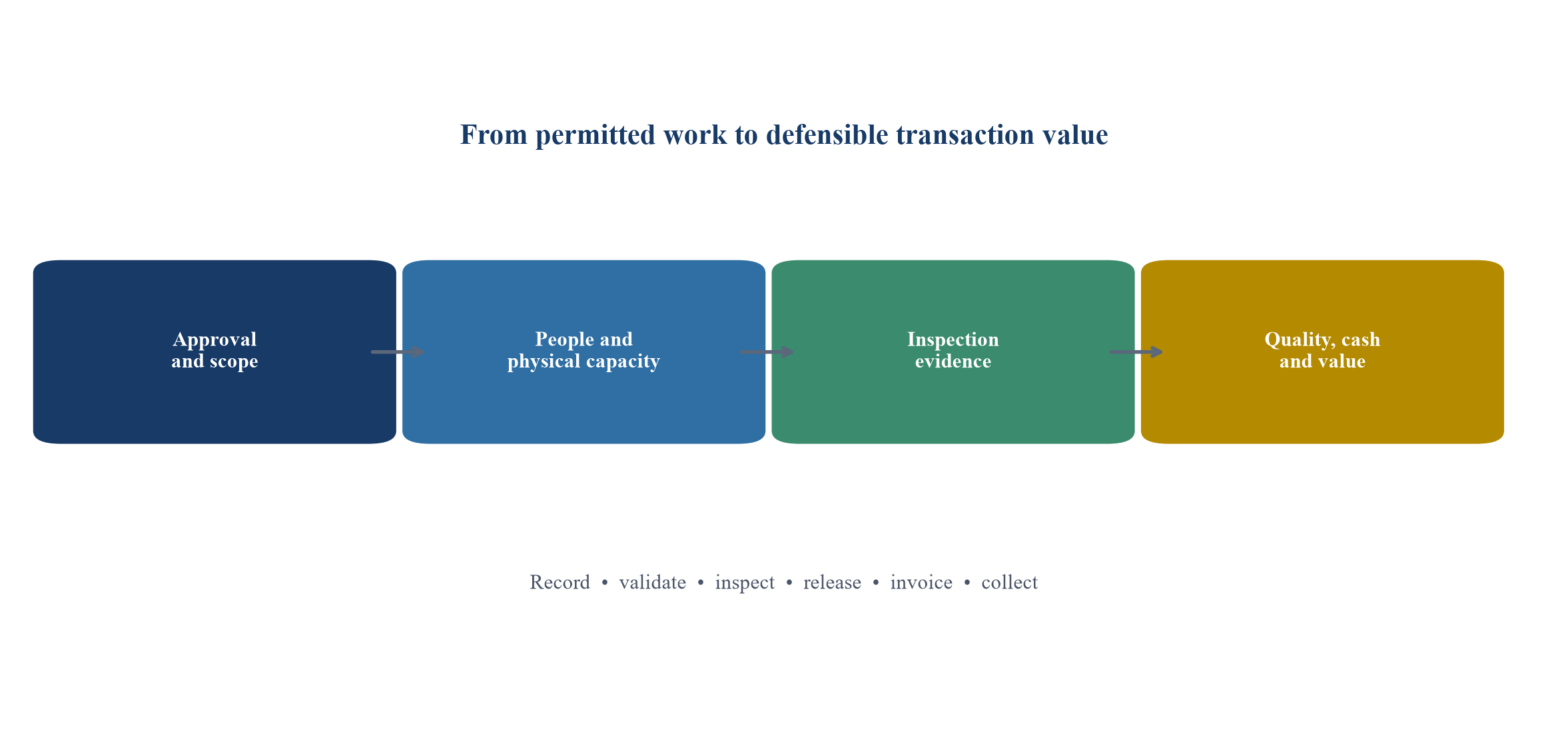
The architecture shows a decision sequence and does not represent an identified maintenance organisation.
10. Establish image-data rights and lineage
An acquirer should know who owns each image, who may use it, where it is stored and whether it contains personal, customer, export-controlled or proprietary information. Aircraft condition images can reveal configuration, damage, serial identifiers, facility details or customer operations. Customer contracts and OEM data terms may restrict secondary use or model training.
Lineage should connect image to aircraft or component, task, date, location, device, operator, lighting, calibration, software version, annotation and disposition. Cropping, enhancement or compression should be recorded when material. The original record should remain available under the approved retention process.
The buyer should examine whether the target has consent and contractual rights for the intended use. A valuable historic image archive can become unusable for machine learning if rights are unclear or labels are unreliable. The acquisition agreement can allocate rights, require delivery of metadata and address claims. Post-close governance should limit reuse to authorised purposes.
11. Validate the model against the decision
Model validation should begin with the operational consequence of error. A false positive may create unnecessary inspection and delay. A false negative may leave a relevant feature unflagged. The acceptable balance depends on whether the model is a search aid, a prioritisation tool or part of a safety-related process. Validation metrics should therefore connect to the actual decision and human review.
The test population should represent aircraft types, component conditions, lighting, cameras, angles, paint schemes, contamination and damage classes expected in production. Rare but consequential defects require specific treatment. Overall accuracy can be misleading when normal images dominate the data. Precision, recall, class-level sensitivity, false-negative review, confidence calibration and performance by site should be reported.
EASA's MLEAP work highlights data representativeness, generalisation and robustness within machine-learning assurance [7-8]. The buyer should review the development file, test set independence, annotation process, threshold rationale, change control and monitoring plan. A model acquired with the target has value only if the buyer receives the rights, knowledge and controls required to maintain it.
12. Preserve human authority and competence
The approved maintenance system should state who performs the task, who inspects, who certifies and who can override or reject a model suggestion. Computer vision should not obscure these accountabilities. The user interface should show source image, model output, confidence or limitation where relevant, and the final human disposition.
Inspectors need training in both the maintenance task and the tool's limitations. They should understand common failure modes, when to seek another method and how to record disagreement. Repeated overrides should be analysed. They can indicate a poorly calibrated model, a new operating condition, weak training or a valuable expert correction.
Human performance should be considered in system design. Automation bias, alert fatigue and loss of manual skill can undermine the intended benefit. The buyer should examine workload, supervision, interface design and recurrent competence. The transaction plan should include qualified operational ownership rather than placing the system solely within an IT team.
13. Audit inspection records and maintenance data
EASA material for Part-145 addresses maintenance records and continuing-airworthiness records [1-3]. The buyer should test whether the target can retrieve a complete record for representative work: task instruction, accomplishment, measurement, part or material, tool, inspector, certifying action, deviation and release. The record should reconcile to the customer package and billing.
Digital systems often contain attachments, free text, scanned documents and interfaces. The buyer should test record completeness after export and during outage procedures. It should examine user access, electronic signatures, time stamps, amendments, audit trails and retention. A visually polished dashboard can coexist with incomplete source evidence.
Computer-vision outputs should enter the record through a controlled method. The file should identify the software version and keep the underlying image. A bounding box alone is not a maintenance conclusion. The authorised person should record the finding and disposition using approved terminology and procedure.
14. Analyse quality-system performance
Quality diligence should examine findings from competent authorities, customers, internal audits, product audits and occurrence reporting. The objective is to understand whether the organisation detects, contains, investigates and corrects problems. A low finding count can reflect strong performance or weak detection; closure quality and recurrence provide more context.
The buyer should stratify findings by severity, process, site, programme, customer and root cause. It should examine overdue corrective actions, repeat findings, concessions, escapes, warranty claims, rejected parts and post-delivery events. Product audits should test the actual work and records, not only procedure compliance.
EASA incorporated safety-management-system requirements into Part-145 through ED Decision 2022/011/R [2]. The target's hazard identification, occurrence reporting, risk assessment and safety assurance should connect to maintenance operations. Technology changes should enter the same change-management and risk processes. An acquisition integration plan should preserve reporting and independent challenge during organisational change.
15. Separate defect detection from quality performance
Computer vision can increase the number of features presented for review. Quality performance depends on the entire response: classification, engineering disposition, rectification, reinspection, release and learning. A higher detection rate can initially increase recorded defects and turnaround time. The buyer should avoid treating that increase as evidence of deterioration without examining the underlying change.
The value case should distinguish earlier detection, lower inspection time, lower repeat inspection, reduced rework and improved documentation. These benefits should be measured separately. The baseline should use comparable tasks and conditions. A pilot run on selected clean images cannot support a site-wide synergy assumption.
The buyer should also identify defects that are not visually observable. Internal cracks, material properties, torque, software state and functional performance may require other methods. Computer vision should sit within the inspection method set, with clear boundaries and escalation to approved non-destructive-testing or engineering processes.
16. Quantify turnaround-time drivers
Turnaround time should be decomposed into planned task duration, findings, material wait, engineering response, customer approval, tooling, labour availability, inspection and release. The buyer should measure elapsed time and active work time. A work package can appear labour efficient while waiting in a bay and blocking the next induction.
The target should provide planned and actual milestones for representative checks or component jobs. Diligence should examine schedule changes, omitted tasks, customer additions and reasons for delay. Percentile outcomes and repeated bottlenecks support a more realistic forecast than the mean.
Computer vision may reduce a portion of inspection and documentation time. The benefit should be applied only to eligible tasks and should include review, exception and system time. The capacity model should then test whether the saved time releases the actual bottleneck. Saving inspector minutes has limited revenue value if the site is constrained by material or hangar access.
| Test | Evidence | Failure signal | Diligence response |
|---|---|---|---|
| Intended use | Approved process, task map and human authority | Marketing claim exceeds deployed function | Exclude unsupported benefit |
| Data fitness | Representative images, labels, rights and lineage | Missing defect classes or restricted rights | Remediate data before scale |
| Performance | Precision, recall, false-negative review and site results | Aggregate accuracy hides weak classes | Recalibrate or restrict scope |
| Workflow value | Baseline time, review time, exceptions and bottleneck | Pilot saving does not release capacity | Remove capacity synergy |
| Change control | Version, validation, monitoring and rollback | Uncontrolled update or drift | Pause use and investigate |
Thresholds require use-case-specific safety, regulatory and operational approval.
17. Test revenue quality and backlog
Revenue should be analysed by customer, programme, service, aircraft or component type, contract form, geography and approval. The buyer should reconcile backlog to executed orders, induction schedules, customer assets and available capacity. Long-term agreements can provide visibility while containing volume discretion, performance credits, benchmarking or termination rights.
Customer approval may be separate from regulatory approval. The target can hold Part-145 scope and still require airline, lessor, OEM or defence-customer qualification. Change of control, key-person changes, site changes or subcontracting can require consent or renewed audit. The transaction timetable should include these steps.
The buyer should distinguish contracted backlog, forecast call-offs, bids and management pipeline. Margin should include material pass-through, escalation, warranty, liquidated damages, overtime and subcontracting. Backlog that exceeds executable capacity may signal demand strength and also delivery risk. The model should forecast the portion that can be completed, accepted, invoiced and collected.
18. Examine OEM, licensor and supplier dependence
MRO economics can depend on access to manuals, repair schemes, software, tooling, test equipment, parts and technical support. The buyer should identify agreements with airframe, engine, component and equipment manufacturers and test whether access survives change of control. It should also identify customer-furnished data and tooling.
European Commission decisions in aerospace transactions have examined aftermarket competition, essential inputs and vertical relationships [9-11]. Transaction diligence should map where an OEM or upstream supplier can influence access, price, lead time or customer choice. Competition counsel should determine the relevant legal analysis for the actual transaction.
Supplier concentration should be measured by spend and operational criticality. A low-spend calibrated tool or proprietary part can stop a work package. The buyer should examine alternative sources, lead times, minimum orders, repair loops, obsolescence and inventory ownership. Synergy assumptions based on procurement scale should reflect contractual and technical constraints.
19. Assess competition and customer choice
The merger analysis should define candidate product and geographic markets with counsel and economists. Depending on the transaction, relevant dimensions can include aircraft type, engine platform, component, line or base maintenance, approved process, customer location and response time. Market shares alone may not capture capacity, qualification or switching barriers.
The buyer should identify head-to-head bids, customer overlaps, scarce capabilities and vertical relationships. Internal documents prepared in the ordinary course can provide evidence on competitors and alternatives. A capacity-constrained market can still produce concerns if the combined firm controls a critical input or narrows customer choice.
Remedy risk can affect transaction perimeter, timing and value. The investment case should include the cost of information production, potential hold-separate arrangements, divestment risk and delayed integration. Competition conclusions require transaction-specific legal advice and authority engagement.
20. Rebuild normalised EBITDA
Reported EBITDA should be rebuilt from revenue and cost drivers that reconcile to work packages. The buyer should separate material pass-through, labour, contractors, overtime, subcontracting, facilities, tooling, quality cost, warranty, IT and central charges. Accruals and customer claims should be tested against subsequent settlement.
Normalisation should be evidence-led. Temporary underinvestment in training, calibration, tooling, cyber security or facility maintenance should not become a permanent earnings add-back. Unfilled roles may improve current payroll while reducing capacity or control. Technology expenditure may be recurring when models, cameras, storage and validation require continued support.
The buyer should identify quality cost in both visible and hidden forms: rework, scrap, concession processing, additional inspection, warranty, customer credits, schedule delay and management time. The technology case should measure reduction in these costs only where the workflow and baseline support it. Acquisition price should not capitalise an unverified benefit twice through both EBITDA and a separate synergy value.
21. Model working capital and cash conversion
MRO working capital can build through inventory, rotable pools, unbilled work, disputed findings, milestone acceptance and customer payment terms. The buyer should reconcile physical work progress, approved findings, contractual billing and accounting recognition. Revenue recognition does not itself produce cash.
Work-in-progress ageing should be segmented by customer, site, work package and reason. Material bought for one job may have limited alternative use. Customer-supplied material should remain separately controlled. The buyer should examine deposits, progress payments, retention, warranty reserves and supplier terms.
A computer-vision record may accelerate customer approval when it makes condition and rectification evidence easier to review. The value should be measured from actual acceptance and dispute outcomes. The purchase agreement should address normal working capital, debt-like items and ageing. Completion accounts or locked-box protections need definitions that reflect the operating model.
22. Build a constraint-based capacity model
The capacity model should represent demand by work package and resources by day or week. Each job consumes bay, labour skill, certifying authority, tooling, material, inspection and engineering response. The model should include planned downtime, holidays, training, calibration and maintenance of the facility itself.
The base case should use demonstrated performance. The improvement case should apply specific initiatives with cost and timing. Additional shifts require qualified labour and supervision. New bays require approvals, tooling and demand. Computer vision requires devices, data rights, integration, validation, training and support. The model should recognise ramp-up and learning.
Reverse stress can identify the combination of delay, lower volume, higher rework and labour constraint that removes covenant or equity headroom. Management action should be linked to leading indicators. A model that assumes perfect scheduling and immediate productivity improvement will overstate value.
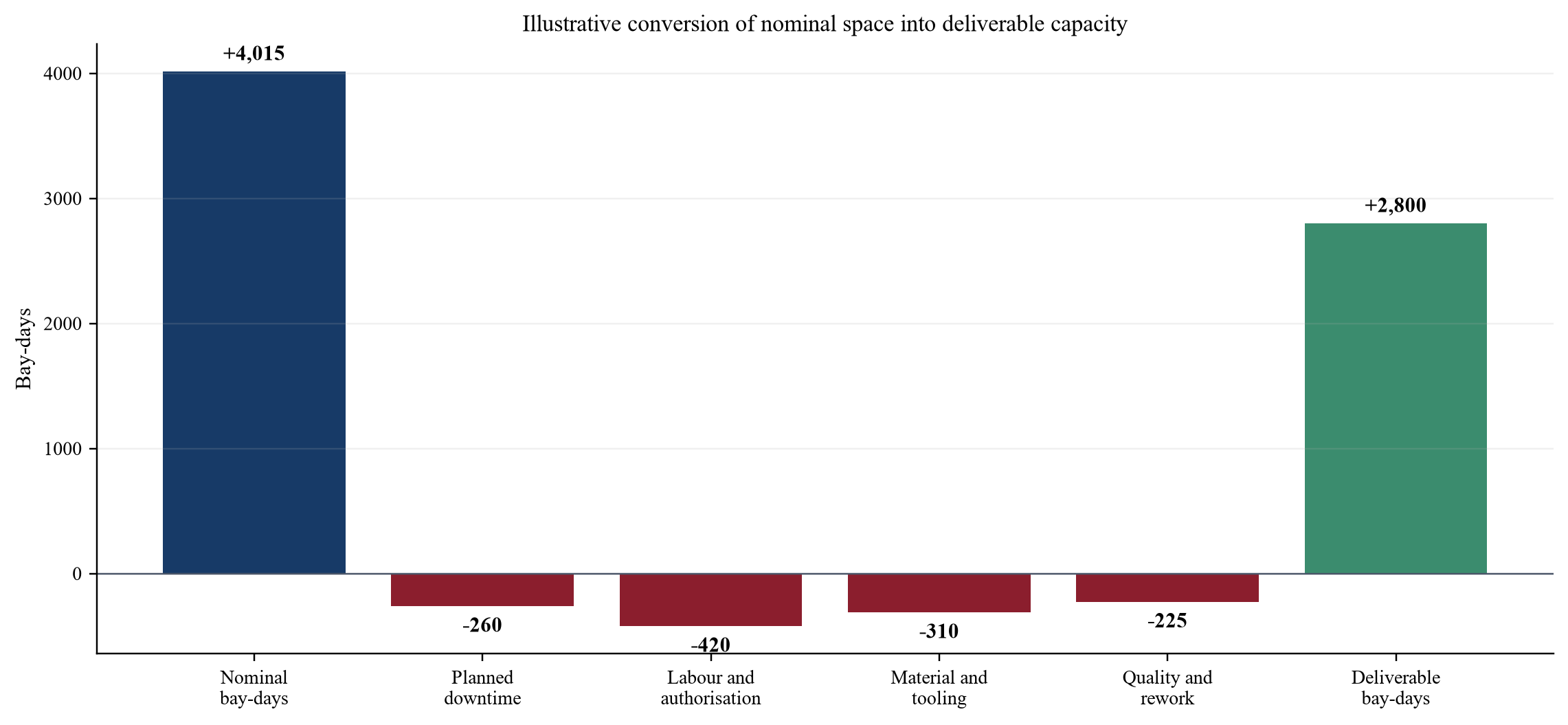
Values are hypothetical transaction assumptions and do not represent an identified target.
23. Value technology synergies conservatively
Technology synergy should be built from eligible task volume, observed baseline, validated time or quality improvement, adoption, ramp-up, recurring cost and tax. The buyer should separate cost reduction, capacity release, revenue pull-through, working-capital improvement and risk reduction. These benefits have different evidence and valuation treatment.
Capacity release produces revenue only when demand, customer acceptance, material, labour and other constraints are available. Time saved can instead improve schedule resilience or reduce overtime. Both outcomes can create value, but they should not be combined without evidence. Quality improvement can reduce rework and warranty while also increasing detection during early deployment.
The technology programme should include cameras, edge devices, storage, network, labelling, integration, model development, assurance, training, support and cyber controls. Continuing validation and change control are operating costs. The buyer should use a probability-weighted value and retain a separate downside case with no technology synergy.
24. Assess EU AI Act and data governance
Regulation (EU) 2024/1689 establishes harmonised rules for artificial intelligence and amends, among other instruments, Regulation (EU) 2018/1139 [12]. The legal classification and obligations for a specific MRO use depend on the system, provider, deployer, intended purpose and other facts. Counsel should assess the actual deployment and implementation timetable.
The diligence file should inventory AI systems, vendors, models, intended use, users, affected persons, data, interfaces and contractual responsibilities. It should identify technical documentation, logs, human oversight, performance monitoring, cyber security and incident processes. Procurement contracts should allocate access, support, audit, change notification, vulnerability response and exit.
Personal data can appear in images, access logs and workforce analytics. Data-protection counsel should assess lawful basis, transparency, minimisation, retention and cross-border processing. The buyer should preserve evidence required for maintenance and safety while limiting secondary use. A single governance register can coordinate regulatory, safety, data and cyber obligations.
25. Review cyber and operational resilience
An MRO technology stack can connect planning, maintenance records, tooling, stores, customer portals and analytical systems. The buyer should map networks, identities, privileged access, remote support, backups, recovery and third parties. The assessment should distinguish systems needed for safe maintenance and release from convenience applications.
Computer-vision deployments add cameras, devices, storage and model services. Each component creates configuration, patching and access responsibilities. Offline and degraded procedures should allow work to continue safely and preserve records. A cloud outage should not erase the source image or final disposition.
The transaction plan should include security testing, credential changes, vendor access review, backup verification and incident coordination. Integration should avoid rushed network connection before risk is understood. Cyber findings should translate into completion conditions, remediation budgets, insurance review or contractual protection where material.
26. Test accounting and purchase-price effects
The buyer should assess acquired contracts, customer relationships, technology, licences, order backlog, property, tooling, inventory and liabilities under applicable accounting standards. IFRS 3 requires recognition and measurement in a business combination according to its requirements [13]. Valuation specialists should determine actual treatment.
Technology value should reflect legal rights, expected economic benefit, obsolescence, maintenance cost and remaining useful life. Internally developed models can depend on people and data that are not separately transferable. Customer relationships may be affected by approval, platform and change-of-control conditions.
Provisions and contingent liabilities can arise from warranties, disputes, environmental matters, employment, tax and regulatory events. Purchase-price allocation does not determine transaction price. The board should keep accounting valuation, commercial valuation and negotiated risk allocation connected but distinct.
27. Design transaction protections
The acquisition agreement should convert diligence findings into precise protections. Conditions may address regulatory approvals, customer consents, financing, material licences and separation readiness. Warranties can cover approvals, records, compliance, contracts, intellectual property, data rights, employees, tooling and litigation. Specific indemnities may address identified liabilities where appropriate.
Price mechanisms can reflect uncertain earnings, working capital, capex and technology delivery. Deferred consideration or earn-outs require measures that the buyer can operate and audit without distorting safety decisions. A target based solely on throughput can create poor incentives. Balanced measures can include accepted work, quality, cash and compliance, with clear accounting and dispute rules.
Warranty and indemnity insurance may change recovery and disclosure dynamics but does not replace diligence. Counsel should tailor the agreement to the actual transaction. The integration plan should preserve evidence needed to enforce rights after completion.
28. Protect people and independent control functions
The value of an MRO platform depends heavily on licensed, authorised and experienced people. The buyer should map retention risk by role and site, examine labour agreements, pension or benefit commitments and understand local consultation requirements. Communications should protect customer confidence and safety reporting.
Synergy plans often target duplicated corporate functions. Quality, safety, compliance, engineering and training functions require careful assessment before reduction or consolidation. Independence and competent staffing may be required by the approved system. Vacancies can affect both output and oversight.
Retention arrangements should focus on transaction continuity and capability transfer. Knowledge should be documented through procedures, authorisation records, training and structured handover. The buyer should avoid dependence on one executive as a substitute for an institutional control system.
29. Plan Day One and the first hundred days
Day One should confirm legal ownership, accountable leadership, regulatory status, customer communications, banking, insurance, system access, reporting and incident escalation. The buyer should use a controlled readiness checklist for each entity and site. Unresolved items should have temporary controls and an authorised owner.
The first hundred days should stabilise approvals, people, customers and production before major system consolidation. Work-package flow, quality findings, cash and staff turnover should be monitored weekly. Technology pilots should remain within approved boundaries and should have rollback procedures.
Integration governance should separate decisions requiring authority or customer acceptance from internal management actions. A central value-capture office can track synergies while quality and safety leaders retain independent escalation. The board should receive both value and control indicators.
| Period | Operational priority | Technology priority | Board evidence |
|---|---|---|---|
| Day 1-10 | Confirm approvals, leadership, incident routes and customer continuity | Freeze uncontrolled changes and confirm access | Readiness exceptions and accountable owners |
| Day 11-30 | Protect schedule, staff and critical suppliers | Validate data rights, inventory and pilot boundaries | Capacity, quality and cash baseline |
| Day 31-60 | Resolve bottlenecks and aged work-in-progress | Run controlled validation on eligible tasks | Model results, overrides and workflow impact |
| Day 61-100 | Approve scalable productivity and quality actions | Decide scale, redesign or stop | Verified value case and residual risks |
Timing is illustrative and must reflect the actual authority, employee and customer process.
30. Build the illustrative acquisition case
The hypothetical target operates three European sites with eleven heavy-maintenance bays and selected component capability. The case assumes EUR 240 million revenue, EUR 34 million adjusted EBITDA, 1,250 employees and enterprise value of EUR 340 million. The proposed programme includes EUR 18 million for tooling, workflow integration and controlled computer-vision deployment.
Management assumptions include eighty-one percent scheduled bay utilisation, seventy-four percent delivered utilisation after constraints, average heavy-check turnaround of thirty-two days and EUR 46 million of working capital. The base case assumes stable approvals and customer retention. The downside case assumes lower induction volume, six additional turnaround days, higher agency labour, delayed material and no technology synergy. The severe case adds a major customer loss and regulatory remediation cost.
These values exist only to demonstrate the framework. A real transaction requires audited financial information, quality and occurrence evidence, authority and customer correspondence, contracts, workforce data, facility review, technology validation, environmental diligence, legal analysis and competition assessment.
31. Translate evidence into valuation
The base enterprise value of EUR 340 million represents 10.0 times illustrative adjusted EBITDA. The buyer should challenge both the earnings and the multiple. A lower maintainable EBITDA may result from normalised quality, labour, capex or central costs. A premium may be supported by scarce capability, customer durability and demonstrable capacity.
The value bridge should show operating improvement separately from technology. The illustrative case attributes EUR 3.2 million of potential annual benefit to scheduling and bottleneck removal, EUR 2.1 million to quality and rework, and EUR 1.6 million to inspection and documentation efficiency at scale. Implementation cost, adoption, delay and overlap reduce the probability-weighted value.
The buyer should also value downside protection. Earlier defect identification or better records can reduce extreme loss exposure without producing a predictable annual EBITDA figure. This benefit may justify investment while remaining outside the headline synergy commitment. Price should reflect current evidence; deferred mechanisms can share value that remains conditional.
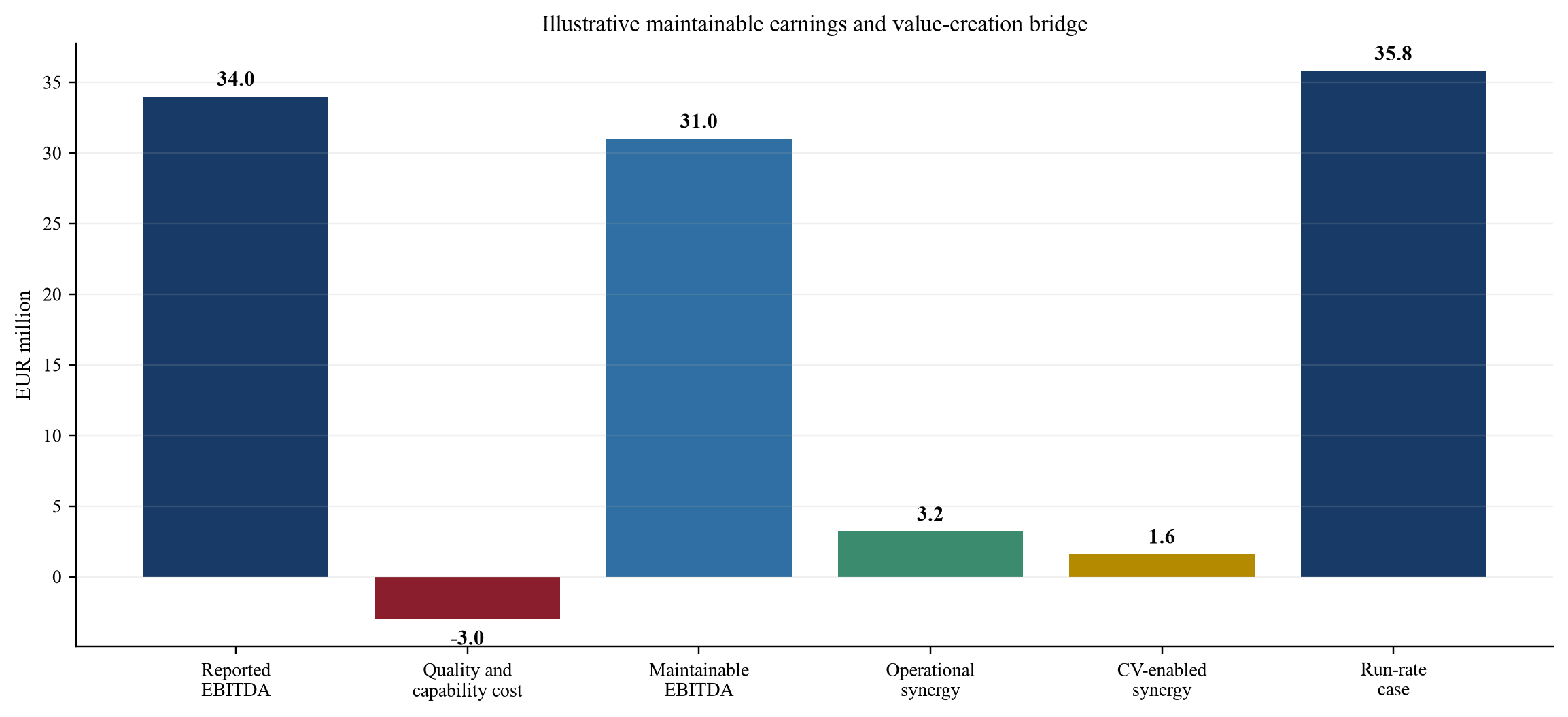
Values are hypothetical assumptions and do not represent an identified target or offer.
32. Use scenario and reverse-stress analysis
The base, downside and severe cases should vary volume, price, labour, material, turnaround, rework, customer retention, capex, integration and technology delivery. Correlations matter. A labour shortage can slow work, increase overtime and weaken quality simultaneously. Material delay can occupy bays and defer billing.
Reverse stress should identify the operational conditions that exhaust liquidity or breach financing headroom. It can express the maximum combination of lost inductions, extra days and lower margin that the capital structure supports. Management actions should have evidence, lead time and authority.
The acquisition financing should preserve liquidity for quality and approval obligations. An aggressive cash sweep can constrain the investment required to protect the asset. Debt sizing should reflect maintainable cash flow, working-capital volatility, capex and downside. Lenders should assess the operating evidence independently.
33. Establish post-close monitoring
The board dashboard should connect approvals, people, capacity, quality, customers, cash and technology. Suggested indicators include approval actions, staff authorisation gaps, delivered bay-days, turnaround percentiles, blocked work, rework, repeat findings, warranty, backlog conversion, work-in-progress ageing, cash collection and model overrides.
Thresholds should trigger investigation rather than create automatic conclusions. A rise in recorded defects after a new inspection tool may indicate improved detection. A fall in turnaround may result from a lighter work mix. The dashboard should preserve the underlying denominator and operational explanation.
Technology monitoring should include use rate, eligible-task coverage, false positives, reviewed false negatives, override reasons, performance by site and version changes. Quality and safety leaders should be able to suspend use. The value-capture office should count benefits only after the operational and financial evidence reconciles.
34. Recognise the framework's limits
No diligence framework can guarantee approval continuity, defect detection, customer retention, technology performance, transaction value or financial return. Records can be incomplete, models can fail under new conditions and integration can change behaviour. Regulatory and customer decisions remain outside the buyer's control.
Computer vision cannot inspect every defect or replace required methods, licensed judgement or approved release. Its value depends on a narrow intended use, fit data, validated performance, controlled integration and competent people. The illustrative case cannot be applied directly to an actual acquisition.
The framework's purpose is to make the acquisition thesis testable. It separates observed evidence from assumptions, links operational constraints to financial consequences and assigns unresolved issues to a transaction or integration response. Specialist advice and transaction-specific evidence remain essential.
35. Conclusion
European aviation MRO M&A should be underwritten from the chain that converts approval, people, facilities, tooling and records into accepted work and collected cash. The buyer should value deliverable capacity rather than nominal floor space, and verified quality rather than a low headline finding count. Revenue and EBITDA gain credibility when they reconcile to work packages and approvals.
Computer vision can support inspection capacity and quality by improving capture, comparison, prioritisation and traceability. Its role should remain bounded, with authorised personnel retaining inspection and release responsibilities. The strongest deployment connects representative data, validated performance, human oversight, record retention, cyber control and change management.
Transaction value follows when the buyer identifies the actual bottleneck, verifies the improvement mechanism, funds the required programme and allocates residual risk. Price, agreement protections, retention and the hundred-day plan should reflect the evidence. This discipline turns a broad technology claim into a controlled operating and M&A decision.
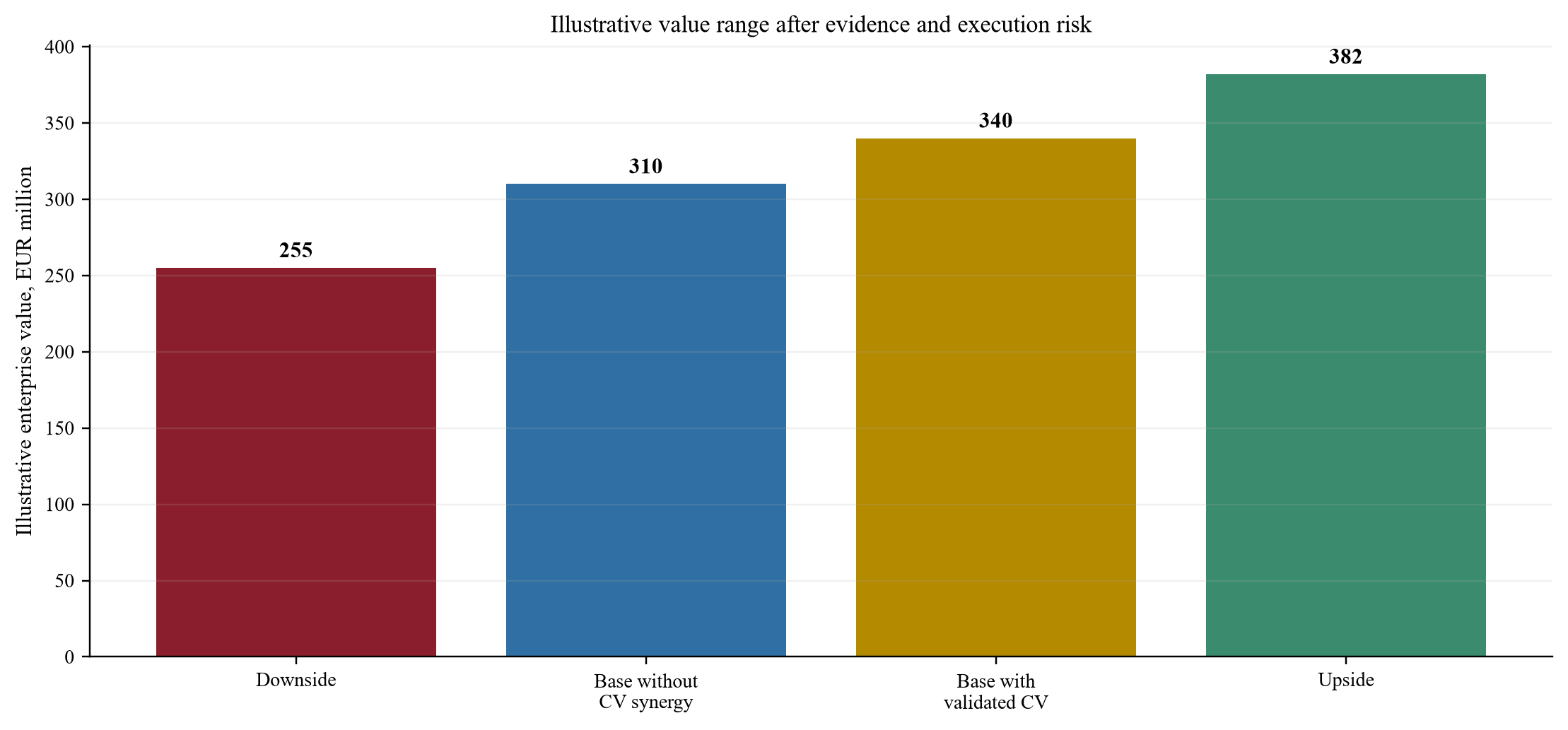
Values are hypothetical transaction assumptions and do not represent an identified target or valuation.
| Finding | Financial consequence | Transaction response | Post-close owner |
|---|---|---|---|
| Approval or customer-consent uncertainty | Revenue and completion risk | Condition, covenant or perimeter adjustment | Regulatory and commercial lead |
| Constrained certifying staff | Lower deliverable capacity and higher labour cost | Retention, price adjustment and recruitment plan | Accountable manager and HR |
| Weak image rights or model validation | Unsupported technology value | Exclude synergy and require remediation | Technology and quality leads |
| High rework and aged work-in-progress | Margin and cash conversion risk | Working-capital protection and quality programme | COO and CFO |
| OEM or critical-supplier dependence | Access, price and continuity risk | Consent, supply agreement or specific protection | Procurement and legal leads |
The matrix illustrates allocation of findings and does not constitute legal or investment advice.
Sources
- European Union Aviation Safety Agency, “Continuing Airworthiness,” consolidated rules, acceptable means of compliance and guidance material, 2026, Read the primary source
- European Union Aviation Safety Agency, “ED Decision 2022/011/R: Embodiment of safety management system requirements into Part-145 and occurrence-reporting requirements,” 10 May 2022, Read the primary source
- European Union Aviation Safety Agency, “Easy Access Rules for Continuing Airworthiness,” September 2025 revision, Read the primary source
- European Union Aviation Safety Agency, “Artificial Intelligence Roadmap 2.0: A human-centric approach to AI in aviation,” 10 May 2023, Read the primary source
- European Union Aviation Safety Agency, “Artificial Intelligence Concept Paper Issue 2: Guidance for Level 1 and 2 machine-learning applications,” 6 March 2024, Read the primary source
- European Union Aviation Safety Agency, “Artificial Intelligence Concept Paper: Proposed Issue 3,” 3 June 2026, Read the primary source
- European Union Aviation Safety Agency, “Machine Learning Application Approval research project,” 2024, Read the primary source
- European Union Aviation Safety Agency, “EASA publishes final report of the Machine Learning Application Approval Research Project,” 31 May 2024, Read the primary source
- European Commission, “Case COMP/M.6410: UTC/Goodrich,” decision of 26 July 2012, Read the primary source
- European Commission, “Case COMP/M.6844: GE/Avio,” decision of 1 July 2013, Read the primary source
- European Commission, “EU merger control,” current policy overview, 2026, Read the primary source
- European Union, “Regulation (EU) 2024/1689 laying down harmonised rules on artificial intelligence,” Official Journal of the European Union, 12 July 2024, Read the primary source
- IFRS Foundation, “IFRS 3 Business Combinations,” issued standard, 2026, Read the primary source
- IFRS Foundation, “IAS 36 Impairment of Assets,” issued standard, 2026, Read the primary source
- International Civil Aviation Organization, “Safety Management,” programme and Annex 19 resources, 2026, Read the primary source
- International Civil Aviation Organization, “Airworthiness of Aircraft: Annex 8,” current standards overview, 2026, Read the primary source
- European Union Aviation Safety Agency, “Part-145 Frequently Asked Questions,” 2026, Read the primary source
- European Union Aviation Safety Agency, “Artificial Intelligence publications,” 2026, Read the primary source
- European Commission, “Merger case database,” 2026, Read the primary source
- European Commission, “Data protection in the EU,” 2026, Read the primary source
- European Union Agency for Cybersecurity, “Cybersecurity of Artificial Intelligence and Standardisation,” March 2023, Read the primary source
- European Union Agency for Cybersecurity, “Artificial Intelligence Cybersecurity Challenges,” December 2020, Read the primary source
- European Union Aviation Safety Agency, “Research and innovation,” 2026, Read the primary source
- Organisation for Economic Co-operation and Development, “OECD AI Principles,” updated 2024, Read the primary source
