

1. Start with the liquidity promise
A fund liquidity promise is a contract, operating requirement and portfolio constraint. It determines when an investor may request cash, how the request is valued, which limitations can apply, how continuing investors are protected and what the manager must be able to execute.
The promise begins before a redemption arrives. It shapes portfolio construction, cash reserves, deployment pace, financing, valuation frequency, subscription processing, transfer rights, distribution channels, service providers and governance.
Private-asset liquidity is conditional. A contractual maturity can be extended. A property sale can take longer or clear below appraisal. A refinancing can disappear when credit conditions tighten. A portfolio-company exit can depend on buyer financing and market confidence. Several of these conditions can deteriorate together.
The manager should define the cash pathway behind every unit of promised investor liquidity. Sources can include cash holdings, contractual asset receipts, new subscriptions, realised exits, permitted borrowing, secondary transfers and controlled asset sales. Each source has timing, certainty, cost and investor-treatment consequences.
The fund design should also define what liquidity does not mean. Periodic dealing does not establish that every request will be satisfied in full. A matching mechanism does not create a buyer. A credit line does not convert an illiquid portfolio into a liquid one. A reported net asset value does not establish a current executable sale price.
The central design test is straightforward: can the fund meet its disclosed promise in normal and stressed conditions while treating redeeming and continuing investors fairly?
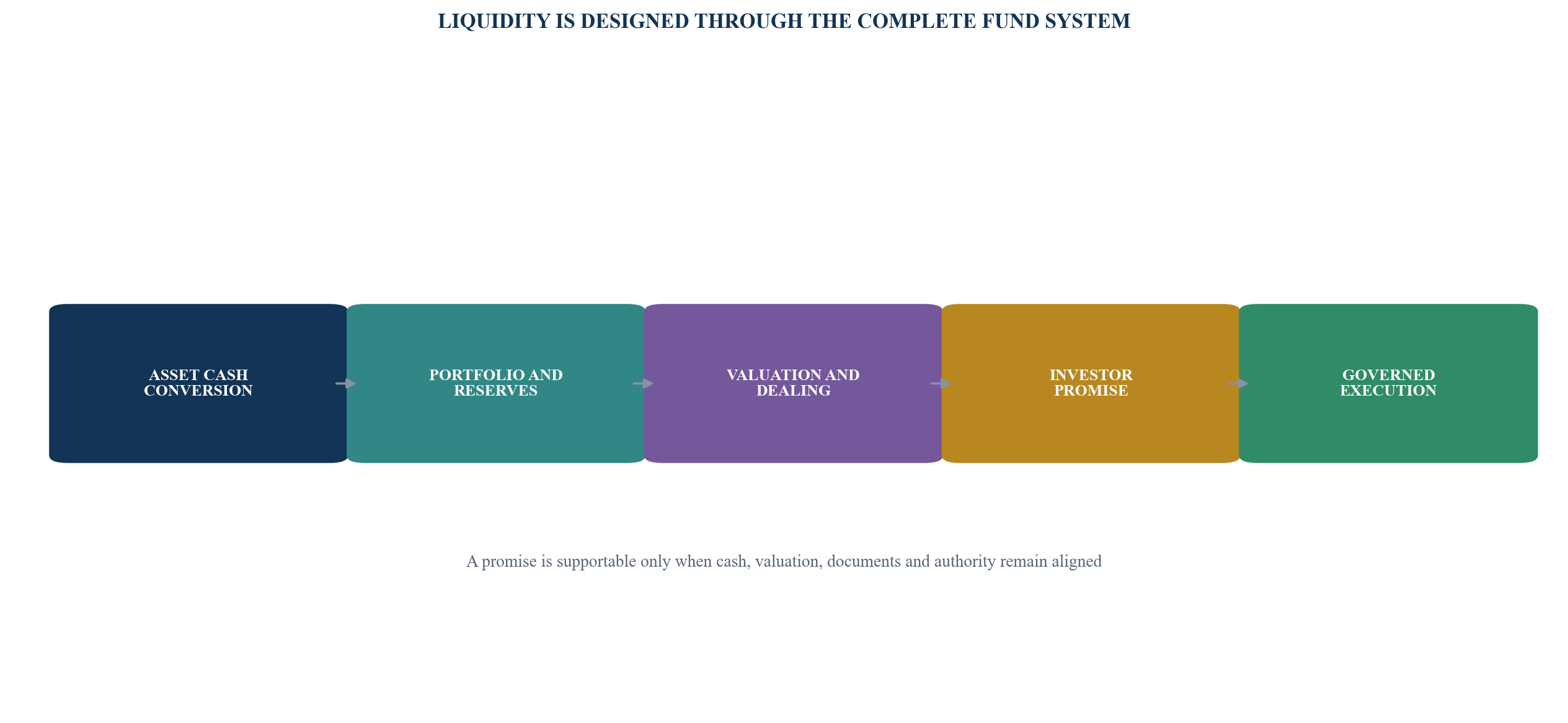
Each link requires fund-specific evidence, authority and operating capacity.
2. Map how each Gulf asset becomes cash
The asset-liquidity map records economic and legal paths from investment to distributable cash. It distinguishes expected contractual receipts, manager-controlled actions, counterparty-dependent events and market-dependent exits.
Income-producing real estate can generate rent, but property-level cash may first service operating costs, capital expenditure, taxes, debt and reserves. Sale proceeds depend on buyer diligence, financing, transfer, title and completion. Development real estate adds construction, approvals, presales, handover and defect obligations.
Private credit may generate interest and amortisation. Its liquidity can deteriorate sharply when a borrower requests amendment, enters default or disputes enforcement. A performing loan sale can require consent, data and a market discount. Recovery timing is uncertain.
Infrastructure can generate stable operating cash after commissioning, while greenfield assets consume cash during construction. Tariffs, offtake, demand, availability, maintenance, concession and refinancing conditions affect distributions.
Private equity and venture assets generally lack contractual fund-level liquidity. Dividends, recapitalisations, continuation transactions, secondary sales and exits depend on company performance, governance, buyers, capital markets and transaction execution.
The manager should model time to cash, amount uncertainty, transaction cost, control, correlation and stress behaviour. The model uses ranges rather than a single liquidation horizon. It also identifies legal or commercial restrictions on transfer.
Table 1. Gulf private-asset cash-conversion map
| Asset exposure | Recurring cash source | Discretionary cash source | Stress constraint |
|---|---|---|---|
| stabilised real estate | rent after property obligations | refinancing or sale | vacancy, cap-rate movement and buyer finance |
| development real estate | presale or milestone cash where applicable | unit, block or project sale | completion, approvals, escrow and defects |
| private credit | interest, fees and amortisation | loan sale or refinancing | default, standstill, consent and recovery |
| operating infrastructure | tariff, availability or offtake receipts | refinancing or asset sale | demand, counterparty, outage and concession |
| greenfield infrastructure | limited before operation | refinancing after completion | construction, commissioning and cost overrun |
| private equity and venture | dividends where declared | secondary, recapitalisation or exit | performance, governance and buyer market |
The entries are design considerations; actual cash pathways require asset-specific evidence and advice.
3. Separate economic design from jurisdictional label
Evergreen, drawdown and interval are useful commercial descriptions. They are not interchangeable legal categories across markets.
A conventional closed-ended drawdown fund commonly accepts commitments during a fundraising period, calls capital as investments are made, distributes realisations and terminates after a defined term subject to extensions. Investor exits before termination may depend on permitted transfers, manager consent or a secondary transaction.
An evergreen fund can accept subscriptions over an extended period and has no fixed portfolio liquidation date. It may be open-ended, closed-ended with periodic issues and transfers, or another permitted form. The exact redemption or repurchase rights come from the applicable structure and documents.
Under the United States framework, an interval fund is a registered closed-end fund that makes periodic repurchase offers under Rule 23c-3. Official SEC materials describe periodic intervals and repurchase ranges under that framework. Investors do not possess ordinary daily redemption rights.
The United Kingdom LTAF is an authorised open-ended fund category designed for long-term illiquid assets. Current FCA rules require consistency among investment strategy, liquidity profile and redemption policy and prescribe relevant dealing, notice, valuation and governance requirements.
ELTIF 2.0 permits long-term investment strategies under European Union rules, with delegated standards covering redemption policy, liquidity management tools and matching. DIFC structures follow current DIFC laws and DFSA instruments. The legal analysis must identify the actual vehicle, investor, offer and manager route.
4. Match the structure to the investor job
Investor liquidity needs vary by liability, governance, allocation model and portfolio construction. A sponsor should identify the investor's actual job before choosing a product promise.
A long-horizon institution may accept a ten-year drawdown structure for a defined vintage and return objective. It may value commitment pacing, governance and distributions more than periodic exit rights.
A family office can seek continuing exposure with selective liquidity for tax, succession, distributions or opportunity funding. An evergreen structure can support ongoing allocation if valuation and dealing are credible.
A private bank or wealth platform may prefer regular subscriptions and a known repurchase process. The end investor still needs a clear explanation of notice, capacity, proration, gates, queues, fees and the possibility that requested liquidity is unavailable.
An insurance company, pension or treasury investor may have regulatory, accounting, capital and cash-flow constraints. Product classification alone does not establish fit.
The investor-design file records target holding period, expected cash needs, ticket, commitment mechanics, governance, valuation tolerance, reporting, distribution channel and permitted investor category. It also identifies who bears the decision when liquidity is constrained.
The sponsor should avoid selecting a semi-liquid promise solely because it appears easier to distribute. A distribution advantage becomes fragile if the underlying operating model cannot honour the disclosed process.
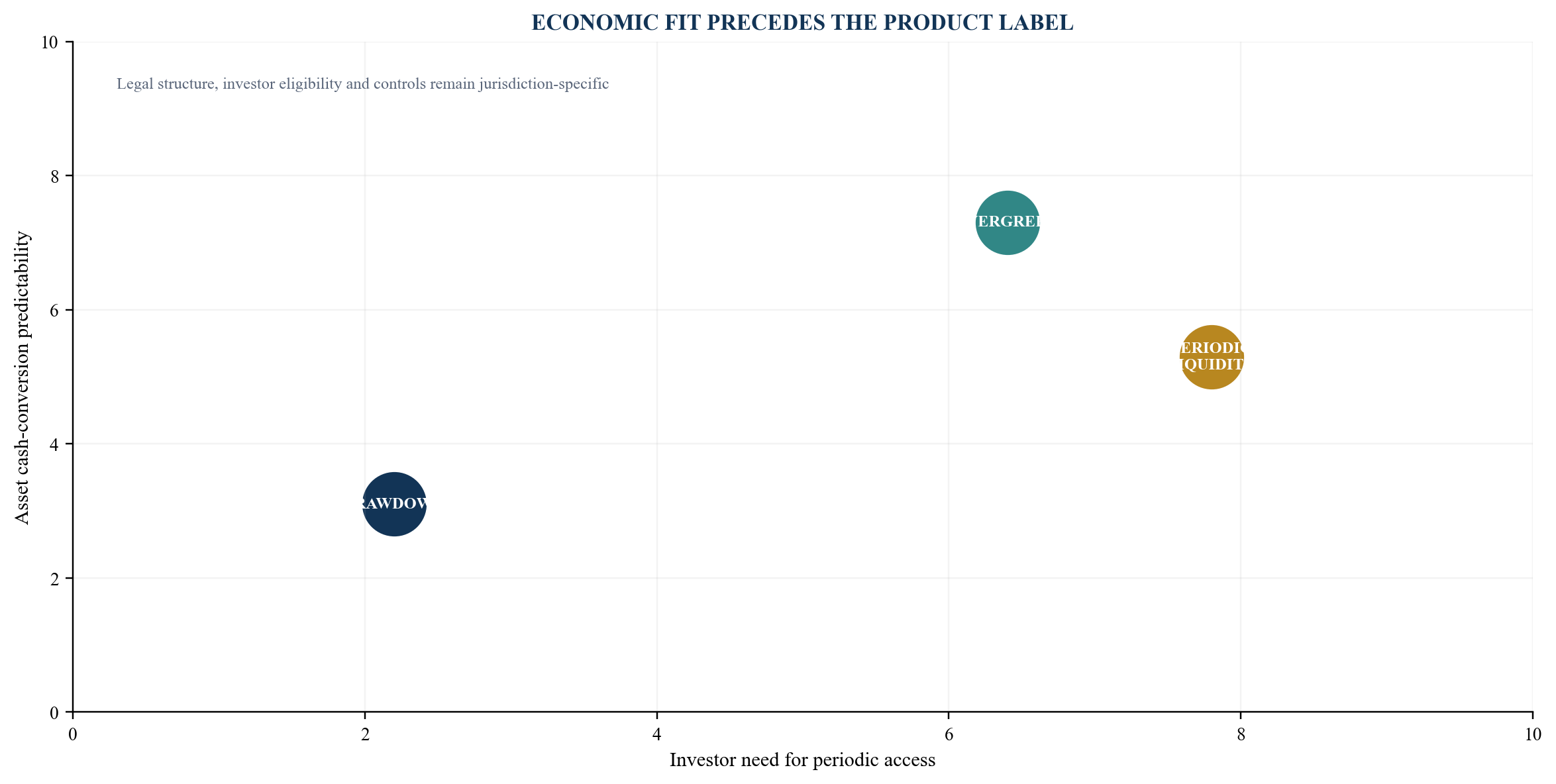
The matrix is illustrative and does not determine the permitted legal form or investor treatment.
5. Use drawdown when asset realisation should set the cash clock
A drawdown fund can align well with irregular investment deployment and uncertain exits. Commitments are called when needed, and investor distributions follow portfolio cash realisation.
The structure reduces the need to sell assets to meet ordinary investor withdrawals. It can support concentrated, greenfield, turnaround, development, venture, private-equity and complex-credit strategies where value creation requires time.
The manager still faces liquidity decisions. Capital-call notice, subscription facilities, recallable distributions, recycling, reserves, follow-on funding, fund expenses and extensions affect investor cash planning.
Transfers and secondaries can provide investor liquidity without forcing the fund to sell assets. Their feasibility depends on documents, manager consent, buyer eligibility, information, valuation, legal process and market appetite.
The drawdown model also creates vintage and fundraising questions. A manager may need a successor fund before the prior portfolio is realised. Investors evaluate pacing, overlap, team capacity and distributions.
The term should match plausible asset lives. Extension decisions need governance and an evidence-based plan. A fixed term does not make an asset liquid at the end date.
The manager model should survive slower deployment, delayed exits and a smaller close. Management fees, organisational costs, team and operating obligations should be tested at the minimum viable fund size.
6. Use evergreen when the portfolio can support continuing entry and exit
An evergreen structure can maintain a continuing portfolio and accept new capital over time. It can reduce vintage concentration, support reinvestment and allow investors to enter at different dates.
The manager must establish a credible net asset value for subscriptions, redemptions or repurchases. New and existing investors should be treated fairly when assets are hard to value or transaction costs are material.
The portfolio needs a continuing liquidity engine. Contractual receipts, mature assets, natural realisations, cash reserves, subscriptions and diversified vintages can support the design. A young portfolio with development-heavy assets may have limited natural cash.
Subscriptions can help meet redemptions in ordinary conditions. They should not become the only liquidity source. Net outflows can arrive when investment performance, fundraising conditions and exit markets are weakest.
The fund should disclose the actual dealing process, notice, valuation point, settlement, capacity, deferral, gate, suspension and pricing treatment under the applicable framework. Terms should remain executable by the administrator and providers.
An evergreen fund also needs an allocation policy between existing portfolio holdings, new opportunities and cash. The manager should avoid keeping excessive idle cash solely to support an ambitious promise if that materially changes the investment strategy.
Table 2. Drawdown and evergreen operating comparison
| Design dimension | Drawdown orientation | Evergreen orientation | Governing question |
|---|---|---|---|
| capital entry | commitments and calls | continuing or periodic subscriptions | when does capital enter portfolio risk? |
| investor access | distributions and permitted transfers | documented redemption or repurchase process | what amount and timing can be promised? |
| valuation use | reporting, transfers and transactions | also subscriptions and exits | can NAV support fair dealing? |
| portfolio age | defined vintage | mixed or continuing vintages | how are new and old investors treated? |
| liquidity reserve | investment and expense needs | also investor-liquidity capacity | what reserve protects the disclosed promise? |
| termination | stated term and extensions | no fixed portfolio liquidation date | what governance handles long-duration exposure? |
Legal and regulatory treatment depends on the fund and jurisdiction.
7. Understand periodic-liquidity structures precisely
Periodic-liquidity structures seek a controlled middle ground between daily redemption and a fully locked drawdown fund. The legal mechanism matters.
In a US interval fund, periodic repurchase offers provide limited liquidity within the Rule 23c-3 framework. SEC materials describe offers at regular intervals and prescribed repurchase amounts. Oversubscription can result in proration, so an investor may not have every tendered share repurchased.
The UK LTAF permits open-ended investment in long-term illiquid assets under a specific authorised regime. Current FCA rules include limits on dealing frequency and a minimum notice framework, along with consistency, valuation and governance requirements.
ELTIF 2.0 includes a regulated redemption architecture and can include matching between exiting and incoming investors under defined conditions. The final applicable European Union rules and competent-authority requirements govern each product.
A Gulf sponsor may use a local vehicle, feeder, parallel vehicle or distribution arrangement alongside an overseas regulated product. This creates multiple liquidity promises that must reconcile across master, feeder, platform and investor documents.
The commercial term “interval” should appear only when it accurately describes the relevant legal form or is clearly used as a generic periodic-dealing description. The paper and sales process should state the actual investor right.
8. Build a cash ladder rather than a cash target
A percentage cash reserve says little about timing. The liquidity ladder maps expected sources and uses by day, month, quarter and longer horizon.
Uses include accepted redemption or repurchase requests, fund expenses, debt service, unfunded investment obligations, follow-on reserves, tax, hedging collateral and distribution commitments. Sources include opening cash, contractual receipts, asset maturities, subscriptions, exits and permitted facilities.
Each source receives a confidence range. Cleared cash is certain. A performing loan payment may have high contractual visibility but retains credit risk. A property refinancing is conditional. An announced sale is not cash until completion.
The ladder also records currency. A fund offering dollar liquidity against assets and income in other currencies needs conversion capacity, timing and cost.
The manager should test gross and net flows. A large subscription can conceal a large redemption request in a net number. Operational capacity must process both accurately.
Liquidity capacity is the amount that can be delivered under the approved process without breaching investment, legal, financing or fair-treatment constraints. It is not simply the cash balance.
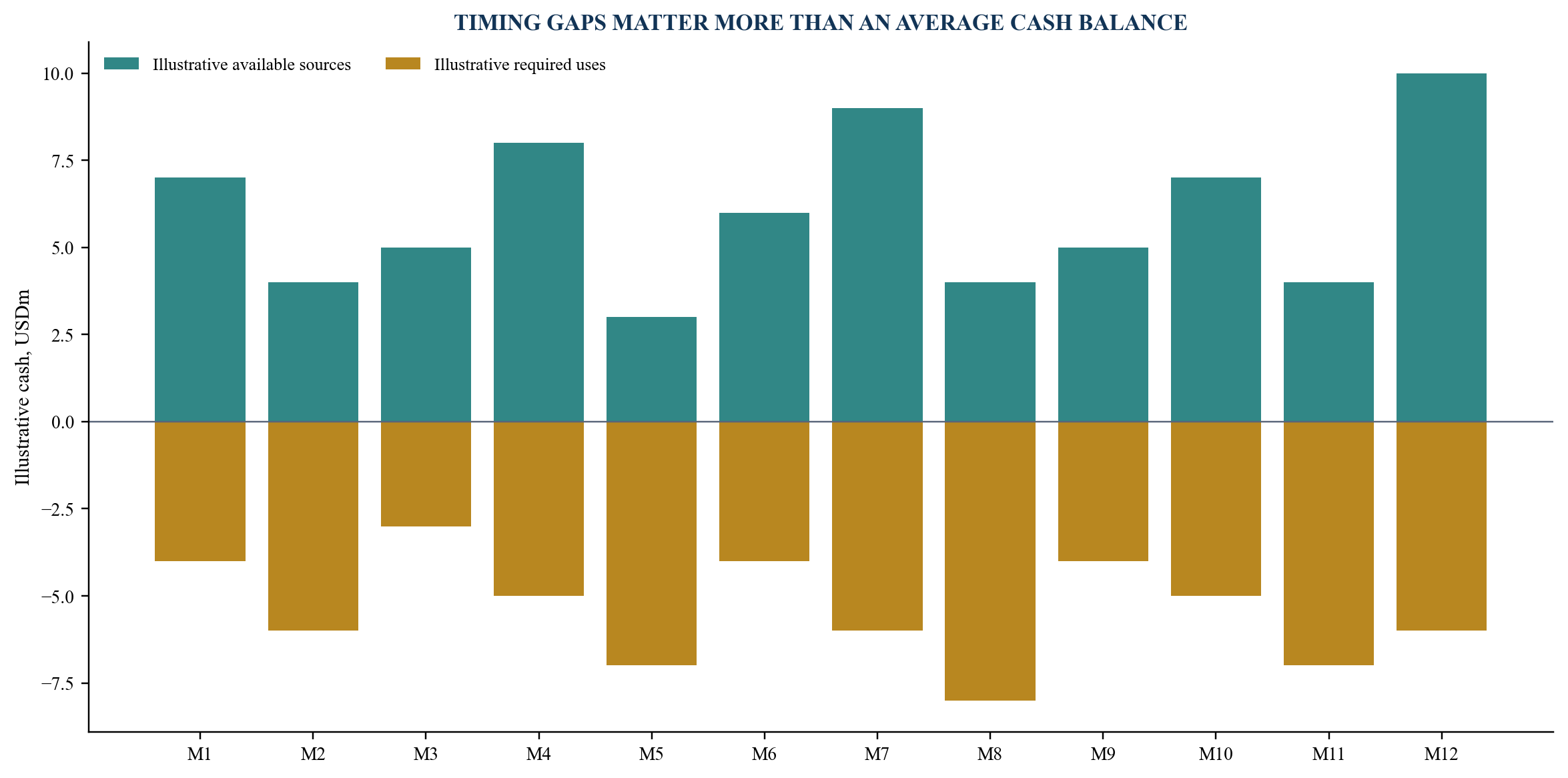
Values are management assumptions for method demonstration and do not represent a fund forecast.
9. Align dealing frequency, notice and capacity
Dealing frequency states how often requests are considered. Notice establishes how far in advance an investor must act. Settlement states when cash is paid after the relevant determination. Capacity limits how much the fund can process.
These terms should be derived from asset cash conversion, valuation availability, provider processing, governance and stress behaviour. More notice can create planning time, but it does not guarantee an asset sale or subscription.
The fund can use gates or maximum capacity under its permitted framework and documents. A gate can protect the portfolio and continuing investors from forced sales. It also delays an investor's requested exit.
Queue treatment should be explicit. Requests can be prioritised, carried forward, resubmitted or cancelled according to the governing rules. The manager needs a deterministic calculation and communication process.
Settlement timing should reflect cash availability, valuation finalisation, fraud controls, banking and currency. Ambiguous terms create investor expectations that operations cannot satisfy.
The manager should model simultaneous requests across investors and channels. Distributor platforms can concentrate behaviour around common dealing dates.
The disclosure should explain normal and stressed mechanics in plain language. An investor should understand that periodic access can be partial, deferred or suspended where the applicable framework and documents permit.
Table 3. Investor-liquidity promise register
| Promise element | Design evidence | Operating owner | Stress question |
|---|---|---|---|
| dealing frequency | asset and valuation cycle | fund operations | can the cycle run during market disruption? |
| notice | cash-conversion and governance time | administrator | does notice provide actionable preparation time? |
| capacity or gate | cash ladder and fair-treatment analysis | governing body | what happens when requests exceed capacity? |
| valuation point | data, method and review timetable | valuation function | can NAV be completed with reliable inputs? |
| settlement | cash, currency and banking process | finance | can payment occur without forced action? |
| queue or proration | governing formula and records | administrator | are investors treated consistently? |
Every term requires confirmation under the applicable legal and regulatory framework.
10. Govern subscriptions as part of liquidity risk
Subscriptions affect liquidity, portfolio construction and investor fairness. They should be governed with the same precision as exits.
The manager should know when a subscription becomes accepted, when cash earns exposure, which valuation applies and how late or rejected money is handled. Cut-offs, anti-money-laundering completion and cleared funds matter.
Large inflows can dilute portfolio exposure and create a deployment burden. The fund may need capacity limits, staged admission or temporary cash management consistent with its documents.
Subscriptions used to meet outflows create dependency on fundraising conditions. Stress testing should assume a fall in new subscriptions at the same time that redemption requests rise.
The fund should assess investor concentration. One platform or anchor can generate a large percentage of both inflow and potential outflow. Look-through information may be needed where permitted and available.
Marketing and liquidity disclosures must remain consistent. A communication that emphasises regular access while minimising gates or proration can distort the investor's understanding.
The subscription forecast should include only evidence-supported stages. Expressions of interest and target lists do not establish cash inflow.
11. Make valuation capable of supporting dealing
Valuation in a periodic-liquidity fund has transactional consequences. It sets the price at which investors enter or leave and affects fees, performance and remaining investors.
The valuation calendar must fit the dealing calendar. Asset data, administrator records, models, third-party inputs, committee review and final NAV should be available at the required time.
Private-asset estimates can be stale during rapid market changes. The policy should identify events that trigger ad hoc review, such as financing changes, covenant breach, operating underperformance, transaction evidence, market movement, construction delay or regulatory action.
Functional independence and conflict management are important when valuations affect management fees, fundraising or redemptions. The FCA's private-market valuation review provides current observations on governance, conflicts, independence, documentation and ad hoc processes within its scope.
The manager should analyse the difference between reported NAV and executable liquidity value. A forced or accelerated asset sale may produce a different outcome. That difference should inform stress tests rather than an undisclosed haircut applied arbitrarily to investors.
Price verification, model control, challenge, override, minutes and investor disclosure form one evidence chain. A third-party valuer's role should be described accurately.
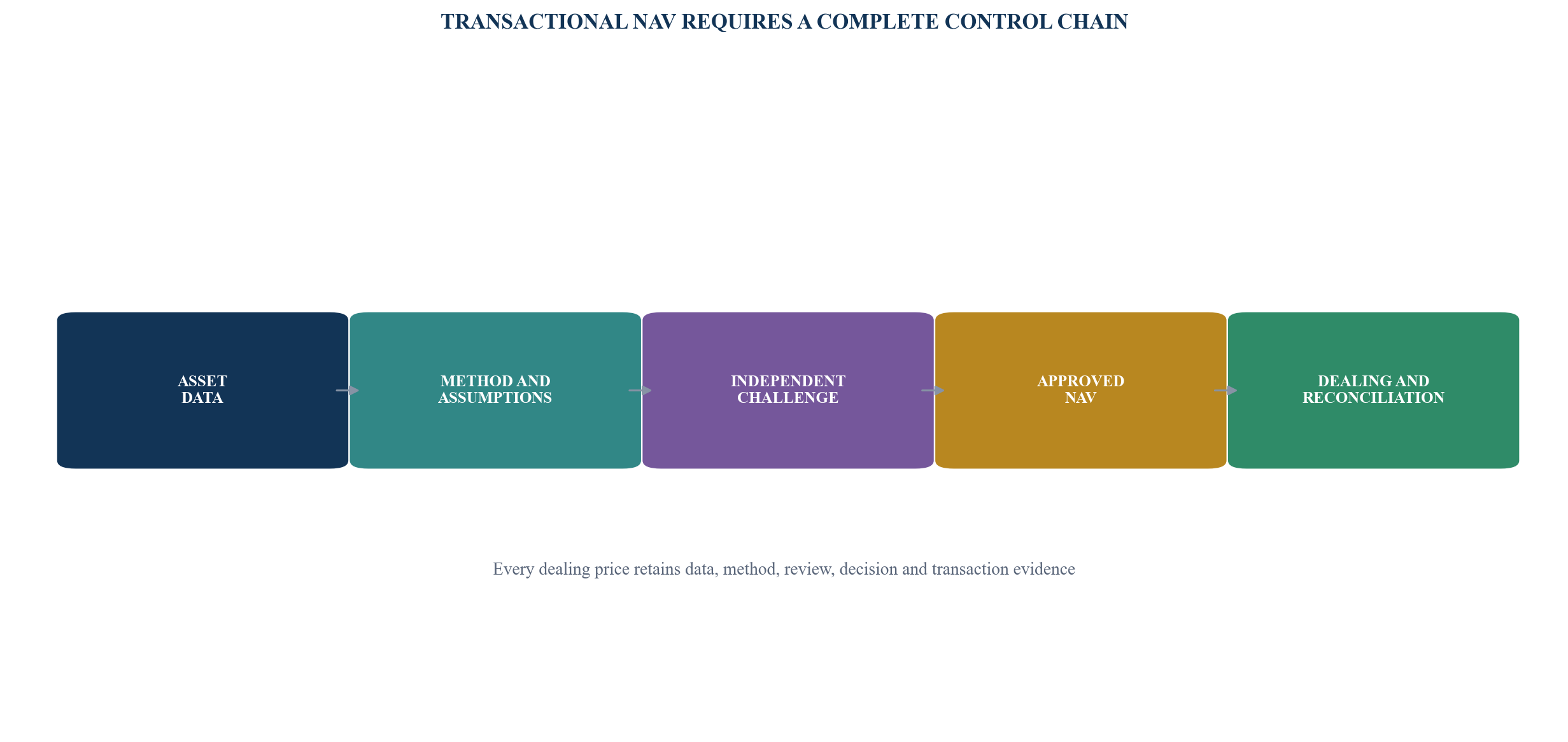
The applicable framework determines valuation authority and dealing requirements.
12. Protect continuing investors from dilution
Subscriptions and redemptions can impose trading, financing, tax, hedging and market-impact costs. If those costs remain in the fund, continuing investors can bear the effect of another investor's dealing.
Liquidity management tools can include anti-dilution levies, swing pricing, redemption fees, gates, deferrals, in-kind settlement, side pockets or suspension under applicable frameworks. The permitted tools and conditions vary.
IOSCO's 2025 revised recommendations and implementation guidance address alignment between open-ended fund asset liquidity and redemption terms, lifecycle governance, stress testing, liquidity tools and disclosure.
The manager should select tools before launch, document calibration, obtain approvals, configure providers and disclose operation. A tool that exists only in a prospectus and has never been configured may fail when needed.
The activation process needs data, authority, investor communication and records. The governing body should understand effects on redeeming, subscribing and continuing investors.
Tool use should not manufacture apparent liquidity. A gate controls the amount processed. It does not improve the liquidity of the assets. A fee can allocate cost. It does not guarantee an executable sale.
Table 4. Liquidity-management-tool control map
| Tool | Intended function | Evidence before use | Core investor issue |
|---|---|---|---|
| anti-dilution levy or fee | allocate estimated dealing cost | cost methodology and approval | accuracy and consistent application |
| swing or adjusted pricing | reflect flow-related transaction effect | pricing model, threshold and oversight | fair price for all dealing investors |
| gate or deferral | limit cash processed at a point | capacity model and governing authority | delay and equal treatment |
| in-kind settlement | transfer assets rather than cash | eligible assets, valuation and custody | usability, cost and consent |
| side pocket | isolate specified illiquid exposure | legal basis and governance | rights, valuation and duration |
| suspension | pause dealing under defined conditions | trigger, authority and communication | necessity, duration and review |
Availability and use depend on the fund's applicable framework and documents.
13. Treat matching and secondaries as distinct routes
A matching mechanism can connect an exiting investor with an incoming investor. A secondary transfer can move an existing interest to a buyer. Both may reduce cash demand on the fund, subject to the applicable framework.
Neither route guarantees liquidity. A willing eligible buyer, agreed price, information, consent, transfer documentation, tax, know-your-client and settlement are required.
Matching at NAV can raise fairness questions when private-asset values are uncertain. A negotiated secondary price can differ from NAV. The manager should define its role and conflicts.
ELTIF rules include a regulated matching concept. Other structures may permit transfers or sponsor-facilitated processes on different terms. The fund should not import one regime's description into another.
The transfer process should identify buyer eligibility, distribution restrictions, manager consent, existing obligations, side-letter treatment, default status, unfunded commitment and register updates.
Information symmetry matters. The seller, buyer and manager can hold different information. The process needs an approved disclosure perimeter and conflict handling.
The fund's liquidity dashboard should report matching and transfers separately from fund-funded redemptions. They create different cash and governance effects.
14. Use borrowing as a timing tool within limits
Borrowing can bridge timing between redemption settlement and asset cash receipts. It can also support investments, capital calls or working capital depending on the structure.
A facility introduces interest, fees, collateral, covenants, maturity, refinancing and counterparty risk. Its availability can fall when portfolio values decline or redemption pressure rises.
The liquidity model should distinguish committed and uncommitted capacity, borrowing-base availability, undrawn amount and conditions precedent. Headline facility size is not available cash.
The manager should model repayment. Using a short facility against uncertain asset sales can turn a liquidity problem into a maturity problem.
Borrowing can transfer cost between investors or periods. The documents and allocation policy should address purpose, limits, fees and treatment.
The governing body should approve facility use within risk appetite and review concentration, collateral, cross-default, valuation and lender rights. Borrowing remains one component of the ladder rather than the foundation of an unsupported redemption promise.
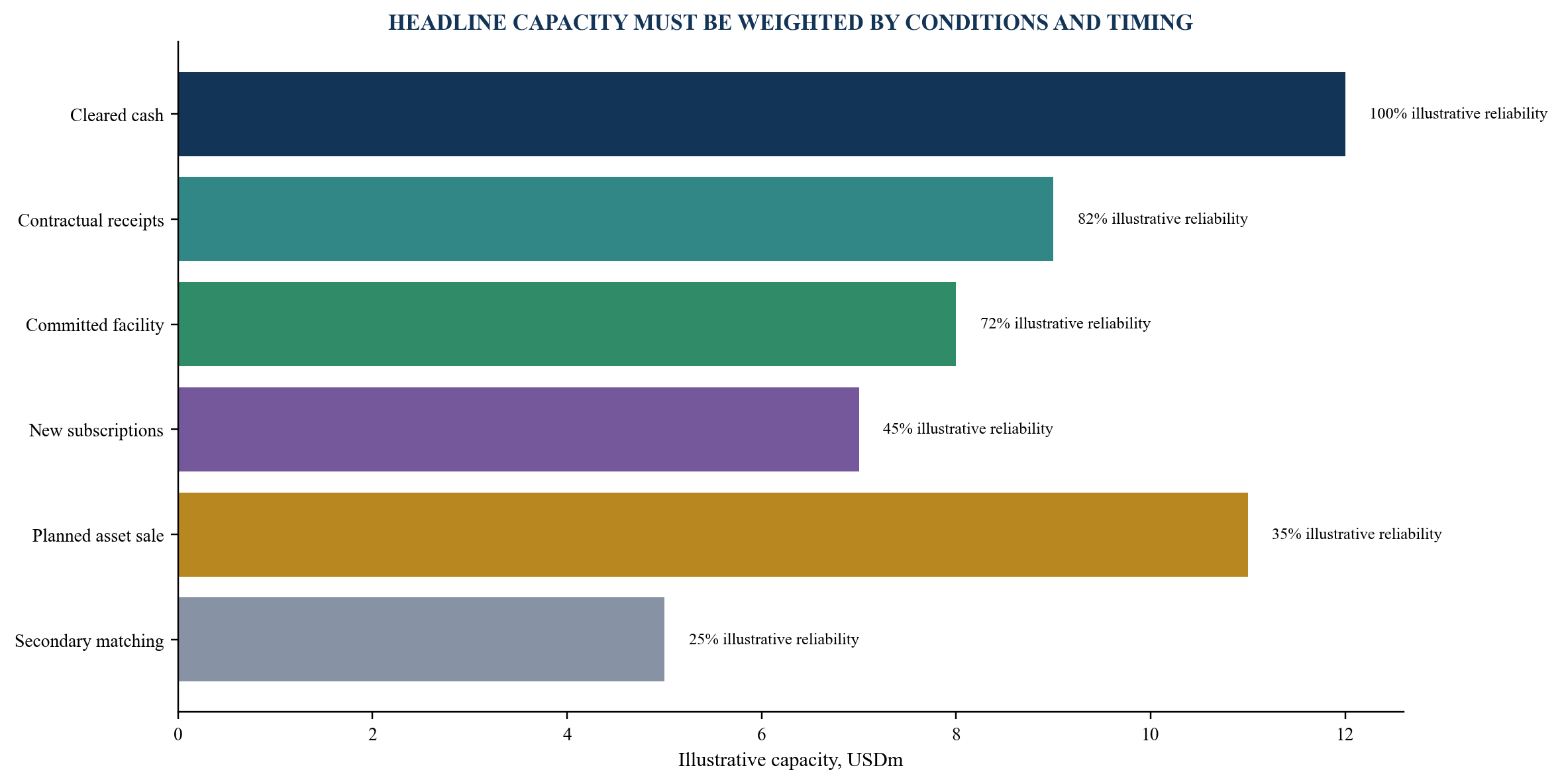
Values and reliability scores are management assumptions used to demonstrate the method.
15. Construct the portfolio for the promise
Portfolio construction should include liquidity as an explicit dimension beside return, risk and diversification.
The manager can group assets by expected cash conversion, contractual receipts, transferability, valuation confidence, financing dependence and stress correlation. A diversified sector list can still have concentrated liquidity risk if every asset depends on the same credit market.
The portfolio should identify a liquidity sleeve, maturing assets, seasoned income assets, development exposure and long-duration holdings. Limits can apply to assets whose cash conversion exceeds the fund's promise.
Deployment pacing matters. A wave of subscriptions followed by rapid investment can reduce future liquidity capacity. The manager should retain the approved balance between cash drag and promise support.
Investment approval should include the effect on fund-level liquidity. The committee should see expected cash flows, downside timing, financing and exit dependencies.
Concentration tests cover asset, borrower, tenant, developer, offtaker, bank, geography, currency, maturity and exit channel. The Gulf context can create linked exposure through government spending, banks, real estate, energy and regional liquidity.
The fund should also model distributions and reinvestment. An evergreen structure may retain or recycle proceeds, while investor expectations may depend on income distributions.
16. Stress the full system
Stress testing should combine asset, funding, investor and operating shocks. A single redemption percentage applied to a static portfolio provides limited insight.
Scenarios can include lower subscriptions, higher redemption requests, delayed exits, lower valuations, slower loan repayments, property vacancy, refinancing withdrawal, currency movement, facility reduction and operational disruption.
The test maps each scenario through cash, valuation, borrowing, gates, queues, investment obligations and investor communications. It records when a formal tool or escalation would be required.
Reverse stress testing asks which combination exhausts capacity or breaches the promise. The result identifies design changes, limits and contingency actions.
The manager should test providers and decision makers. A calculation can succeed while the notification, approval, bank process or administrator workflow fails.
The governing body approves scenarios, assumptions, thresholds and responses. Results should inform portfolio and terms rather than remain a compliance exercise.
Table 5. Integrated liquidity stress programme
| Stress | Transmission | Decision indicator | Potential governed response |
|---|---|---|---|
| subscriptions fall | lower natural cash inflow | forecast net flow and reserve | slow deployment or rebuild reserve |
| exits delay | less asset cash | ladder gap and facility dependence | revise pacing and sale plan |
| redemptions rise | higher near-term uses | capacity utilisation and queue | apply permitted tool or deferral |
| valuations fall | NAV, covenant and investor effects | leverage and price movement | ad hoc valuation and risk review |
| facility contracts | reduced bridge capacity | available borrowing and maturity | preserve cash and source alternatives |
| operations fail | delayed NAV or settlement | missed control or service level | continuity process and escalation |
Scenario values and triggers should be calibrated to the actual fund and applicable requirements.
17. Put governance before discretion
Fund documents often give the manager or governing body discretion over gates, suspensions, valuation and borrowing. Discretion should operate through an approved decision process.
The liquidity committee can review cash ladder, portfolio conversion, flows, valuation, facilities, investor concentration, limits, stress tests and provider readiness. Membership should provide investment, risk, valuation, finance, operations and compliance expertise.
Conflicts can arise when the manager is fundraising, calculating fees, valuing assets, protecting a flagship strategy or deciding which investors receive liquidity. The conflict register identifies and manages those pressures.
The decision paper should state evidence, alternatives, investor effects, legal authority and communications. Minutes preserve challenge and rationale.
The manager should define escalation thresholds before stress. They can cover flow, cash, capacity, valuation delay, covenant, market closure, provider incident or concentration.
Investor communication should be accurate, timely and consistent with governing documents. A commercial relationship should not result in undisclosed preferential liquidity where prohibited or inconsistent with the fund's terms.
Post-event review evaluates calculation, execution, fairness, communication and portfolio consequences. Lessons update the design.
18. Reconcile product, documents and distribution
The liquidity promise appears in the constitution or partnership agreement, prospectus or memorandum, subscription materials, side letters, product summaries, distributor agreements, website, presentations and verbal communications.
The manager should create one controlled term source. Each document maps dealing, notice, capacity, valuation, settlement, gates, queues, fees, transfers, borrowing and suspension to that source.
Distributor operations need accurate cut-offs, investor eligibility, communication, request transmission, confirmations and records. Platform constraints can change the effective customer experience.
Suitability and appropriateness processes should reflect the holding period, loss risk, limited access and possibility of proration or deferral under the applicable framework.
Names require care. Evergreen, semi-liquid and interval can create expectations. The product description should explain the actual legal form and rights in plain language.
Side letters can alter information, transfer or liquidity rights. The obligations register tests fairness, disclosure, most-favoured-nation and operating consequences.
Every external claim needs current review. Historical repurchase experience does not guarantee future capacity.
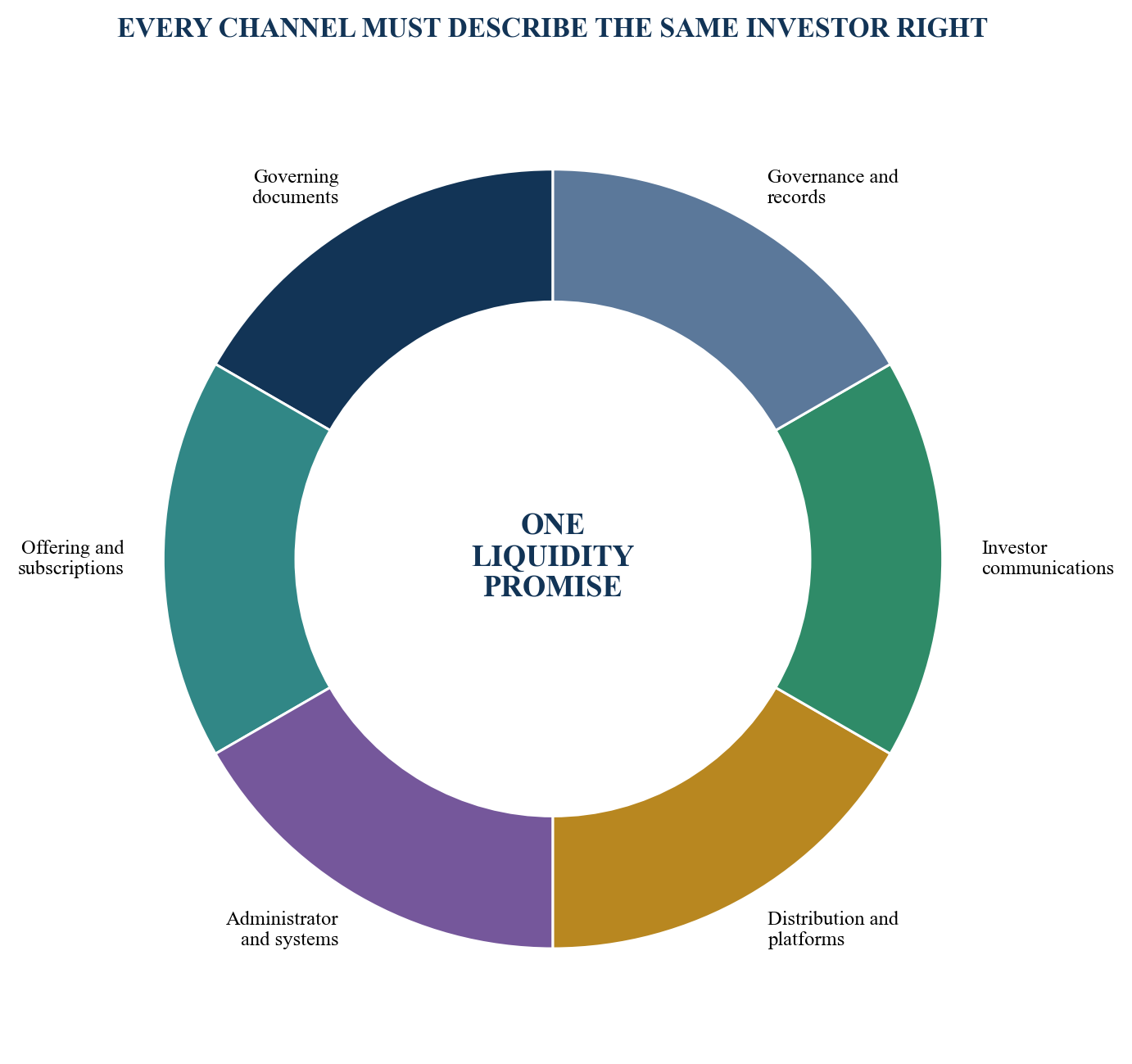
Every communication and operating process should reconcile to governing terms and current requirements.
19. Run a ten-day liquidity-design diagnostic
Days one and two define the target assets, investor segments, jurisdictions, manager, vehicles and distribution routes. The team collects current documents, models and provider processes.
Days three and four build the asset cash-conversion map, portfolio maturity profile, contractual cash schedule, transfer constraints, valuation cycle and currency exposures.
Days five and six model investor entry and exit, dealing dates, notice, settlement, gates, queues, subscriptions, facilities and secondary routes. Current advisers confirm the legal perimeter.
Days seven and eight run normal, stress and reverse-stress scenarios. The team tests fair treatment, anti-dilution, provider capacity and governance.
Days nine and ten deliver the structure comparison, liquidity ladder, promise register, risk limits, disclosure corrections, operating requirements and implementation plan.
Commercial qualification requires a live fund launch, redesign, distribution, portfolio or liquidity decision; a senior sponsor; accessible evidence; adviser access; budget; and a decision date. Interest in an evergreen product does not establish mandate demand.
The diagnostic should identify decisions that can be made and issues requiring formal legal, regulatory, tax, valuation, accounting or investor advice.
20. Operate a recurring fund-liquidity office
A recurring office can coordinate investment, risk, finance, valuation, operations, compliance, administrator, bank, lender, counsel, tax, distributor and governing body.
It maintains the cash ladder, portfolio-liquidity map, flow forecast, valuation calendar, investor concentration, facility capacity, tool configuration, stress tests, document matrix, decision log and communication plan.
The weekly forum reviews evidence and actions. The governing body receives current capacity, exceptions, scenarios and proposed decisions. Event-driven escalation handles material flow, valuation, market, provider or facility changes.
The office can support fund design, document reconciliation, provider implementation, distribution readiness, stress testing and ongoing governance within agreed responsibilities. Regulated and professional roles remain with the authorised parties.
Retainer scope should identify the paid decision, deliverables, cadence, data, dependencies, exclusions, acceptance and fee. Demand and collected fees remain unverified until a signed engagement is paid.
The appropriate structure is the one whose promise the complete system can support. Drawdown funds let asset realisation set much of the investor cash clock. Evergreen funds require a continuing entry, valuation and liquidity engine. Periodic-liquidity structures create bounded access under specific legal frameworks. The sponsor's task is to align asset cash conversion, investor need, legal form, operating capacity and fair treatment before capital is accepted.
Table 6. Recurring fund-liquidity office
| Cadence | Review | Evidence | Decision output |
|---|---|---|---|
| daily near dealing | cash, requests and exceptions | bank, administrator and workflow | processing action and escalation |
| weekly | ladder, flows, assets and facilities | portfolio and treasury data | liquidity plan and owner actions |
| monthly | valuation and investor concentration | approved NAV and register | risk and capacity decision |
| quarterly | stress, tools and portfolio limits | scenario results and test evidence | limit, reserve or term review |
| annual | complete promise and documents | audit, investor and operating evidence | redesign or reconfirmation |
| event-driven | market, valuation or provider event | incident and current authority | tool use, communication or continuity |
Cadence and authority should reflect the actual fund and its governing framework.
References
- Dubai Financial Services Authority. Collective Investment Funds. https://www.dfsa.ae/what-we-do/collective-investment-funds
- Dubai Financial Services Authority. DFSA Enhances its Funds Regime. https://www.dfsa.ae/news/dfsa-enhances-its-funds-regime
- Dubai Financial Services Authority. Collective Investment Funds: Liquidity Risk Management, Redemption Pressures and Reporting. https://www.dfsa.ae/your-resources/publications-reports/seo-letters-1/2026
- Dubai Financial Services Authority. Legislation. https://www.dfsa.ae/laws-rules/legal-resources/legislation
- Dubai Financial Services Authority. Consultation Paper No. 173. https://dfsaen.thomsonreuters.com/sites/default/files/net_file_store/CP_173_Enhance_the_DFSAs_collective_investment_fund_framework.pdf
- International Organization of Securities Commissions. Revised Recommendations for Liquidity Risk Management for Collective Investment Schemes. https://www.iosco.org/library/pubdocs/pdf/IOSCOPD798.pdf
- International Organization of Securities Commissions. Guidance for Open-ended Funds for Effective Implementation of the Recommendations for Liquidity Risk Management. https://www.iosco.org/library/pubdocs/pdf/IOSCOPD799.pdf
- United Kingdom Financial Conduct Authority. COLL 15: Long-term Asset Funds. https://handbook.fca.org.uk/handbook/coll15
- United Kingdom Financial Conduct Authority. PS21/14: A New Authorised Fund Regime for Investing in Long-term Assets. https://www.fca.org.uk/publications/policy-statements/ps21-14-new-authorised-fund-regime-investing-long-term-assets
- United Kingdom Financial Conduct Authority. LTAF Valuation and Pricing Requirements. https://www.fca.org.uk/firms/ltaf-valuation-pricing-requirements
- United Kingdom Financial Conduct Authority. Private Market Valuation Practices. https://www.fca.org.uk/publications/multi-firm-reviews/private-market-valuation-practices
- United States Securities and Exchange Commission. Investment Company Registration and Regulation Package. https://www.sec.gov/about/divisions-offices/division-investment-management/investment-company-registration-regulation-package
- United States Securities and Exchange Commission. Concept Release on Harmonization of Securities Offering Exemptions. https://www.sec.gov/rules/concept/2019/33-10649.pdf
- European Commission. European Long-Term Investment Funds Regulation: Implementing and Delegated Acts. https://finance.ec.europa.eu/regulation-and-supervision/financial-services-legislation/implementing-and-delegated-acts/european-long-term-investment-funds-regulation_en
- European Commission. Capital Markets Union: ELTIF 2.0. https://finance.ec.europa.eu/news/capital-markets-union-2024-10-30_en
- European Securities and Markets Authority. ELTIF Redemption Policy Q&A 2475. https://www.esma.europa.eu/publications-data/questions-answers/2475
About the Author
Chennakeshav Adya, Independent Researcher
