

1. Define the financing decision
The decision is whether a staged edge-AI platform can convert specific operational workloads into durable cash at a risk-adjusted return after site, network, equipment, software, integration and financing costs. [1][2][3][4] The analysis should identify the asset owner, operating authority, service provider, customer, payer, financier and party bearing remediation or interruption cost.
The evidence file should begin with asset perimeter, operating problem, accountable user, payer, baseline, technical design, delivery contract, acceptance test, capital plan and downside liquidity. Each item should state its scope, definition, effective date, expiry or refresh point, accountable owner and relationship to service acceptance and collected cash. Public policy, standards and company disclosures provide context. Project value requires site-level rights, executed contracts, measured performance, auditable financial records and reconciliation between technical output and the operating outcome claimed.
The principal failure is that a strategic label or smart-infrastructure ambition replaces the evidence needed to connect investment to accepted service and cash. The practical response is to approve capital only for defined workloads with accountable owners, measurable outcomes and enforceable payment pathways. Management estimates should be clearly identified inside the model and replaced or refreshed when evidence changes. Downside analysis should combine related site, network, customer, safety, cyber, technology, delivery, financing and liquidity risks. Approval should record the evidence accepted, conditions outstanding, responsible owner and authority to defer, resize, redeploy or stop expenditure.
2. Separate the capital layers
Land and powered space, fibre and private networks, compute and sensors, software and integration, working capital and reserves have different useful lives, security value and risk. [4][5][6][7] The analysis should identify the asset owner, operating authority, service provider, customer, payer, financier and party bearing remediation or interruption cost.
The evidence file should begin with site rights, equipment register, network design, software licence, integration scope, service contract, depreciation policy, maintenance plan and financing term. Each item should state its scope, definition, effective date, expiry or refresh point, accountable owner and relationship to service acceptance and collected cash. Public policy, standards and company disclosures provide context. Project value requires site-level rights, executed contracts, measured performance, auditable financial records and reconciliation between technical output and the operating outcome claimed.
The principal failure is that one long-dated financing structure is applied to assets that age, move, depreciate and generate cash differently. The practical response is to match each capital source to asset life, redeployability, contracted cash and residual value. Management estimates should be clearly identified inside the model and replaced or refreshed when evidence changes. Downside analysis should combine related site, network, customer, safety, cyber, technology, delivery, financing and liquidity risks. Approval should record the evidence accepted, conditions outstanding, responsible owner and authority to defer, resize, redeploy or stop expenditure.
3. Define the airport workload
Airport edge AI can support baggage exceptions, aircraft turnaround, asset maintenance, passenger flow and security triage only where an authorised operator defines the action and safety boundary. [1][8][9][10] The analysis should identify the asset owner, operating authority, service provider, customer, payer, financier and party bearing remediation or interruption cost.
The evidence file should begin with process map, operational owner, event data, response deadline, false-positive cost, escalation rule, safety case, acceptance test and benefit baseline. Each item should state its scope, definition, effective date, expiry or refresh point, accountable owner and relationship to service acceptance and collected cash. Public policy, standards and company disclosures provide context. Project value requires site-level rights, executed contracts, measured performance, auditable financial records and reconciliation between technical output and the operating outcome claimed.
The principal failure is that an algorithmic output is treated as an operational decision without human authority, process integration or performance evidence. The practical response is to finance each use case after the airport, airline, handler and security responsibilities are documented. Management estimates should be clearly identified inside the model and replaced or refreshed when evidence changes. Downside analysis should combine related site, network, customer, safety, cyber, technology, delivery, financing and liquidity risks. Approval should record the evidence accepted, conditions outstanding, responsible owner and authority to defer, resize, redeploy or stop expenditure.
4. Define the port and logistics workload
Port use cases can include berth and yard planning, gate flow, crane maintenance, inspection and cargo visibility. Their value depends on dwell time, equipment availability and coordinated action across parties. [2][11][12][13] The analysis should identify the asset owner, operating authority, service provider, customer, payer, financier and party bearing remediation or interruption cost.
The evidence file should begin with port-call data, terminal events, equipment records, customs and community-system interfaces, response owner, congestion baseline, service window and acceptance. Each item should state its scope, definition, effective date, expiry or refresh point, accountable owner and relationship to service acceptance and collected cash. Public policy, standards and company disclosures provide context. Project value requires site-level rights, executed contracts, measured performance, auditable financial records and reconciliation between technical output and the operating outcome claimed.
The principal failure is that technology is credited with broad port-efficiency gains when operational, regulatory and commercial dependencies remain unmeasured. The practical response is to use a workflow-level baseline and attribute only the outcome that survives independent review. Management estimates should be clearly identified inside the model and replaced or refreshed when evidence changes. Downside analysis should combine related site, network, customer, safety, cyber, technology, delivery, financing and liquidity risks. Approval should record the evidence accepted, conditions outstanding, responsible owner and authority to defer, resize, redeploy or stop expenditure.
5. Define the industrial-zone workload
Industrial zones contain heterogeneous tenants whose machine-vision, predictive-maintenance, energy and safety requirements vary by process, device and risk. [3][14][15][16] The analysis should identify the asset owner, operating authority, service provider, customer, payer, financier and party bearing remediation or interruption cost.
The evidence file should begin with tenant process, asset criticality, sensor coverage, failure history, quality loss, energy profile, safety rule, data rights and payer. Each item should state its scope, definition, effective date, expiry or refresh point, accountable owner and relationship to service acceptance and collected cash. Public policy, standards and company disclosures provide context. Project value requires site-level rights, executed contracts, measured performance, auditable financial records and reconciliation between technical output and the operating outcome claimed.
The principal failure is that a zone-wide demand forecast multiplies generic use cases by tenant count without testing adoption or economic ownership. The practical response is to contract tenant cohorts around common service modules while preserving site-specific acceptance. Management estimates should be clearly identified inside the model and replaced or refreshed when evidence changes. Downside analysis should combine related site, network, customer, safety, cyber, technology, delivery, financing and liquidity risks. Approval should record the evidence accepted, conditions outstanding, responsible owner and authority to defer, resize, redeploy or stop expenditure.
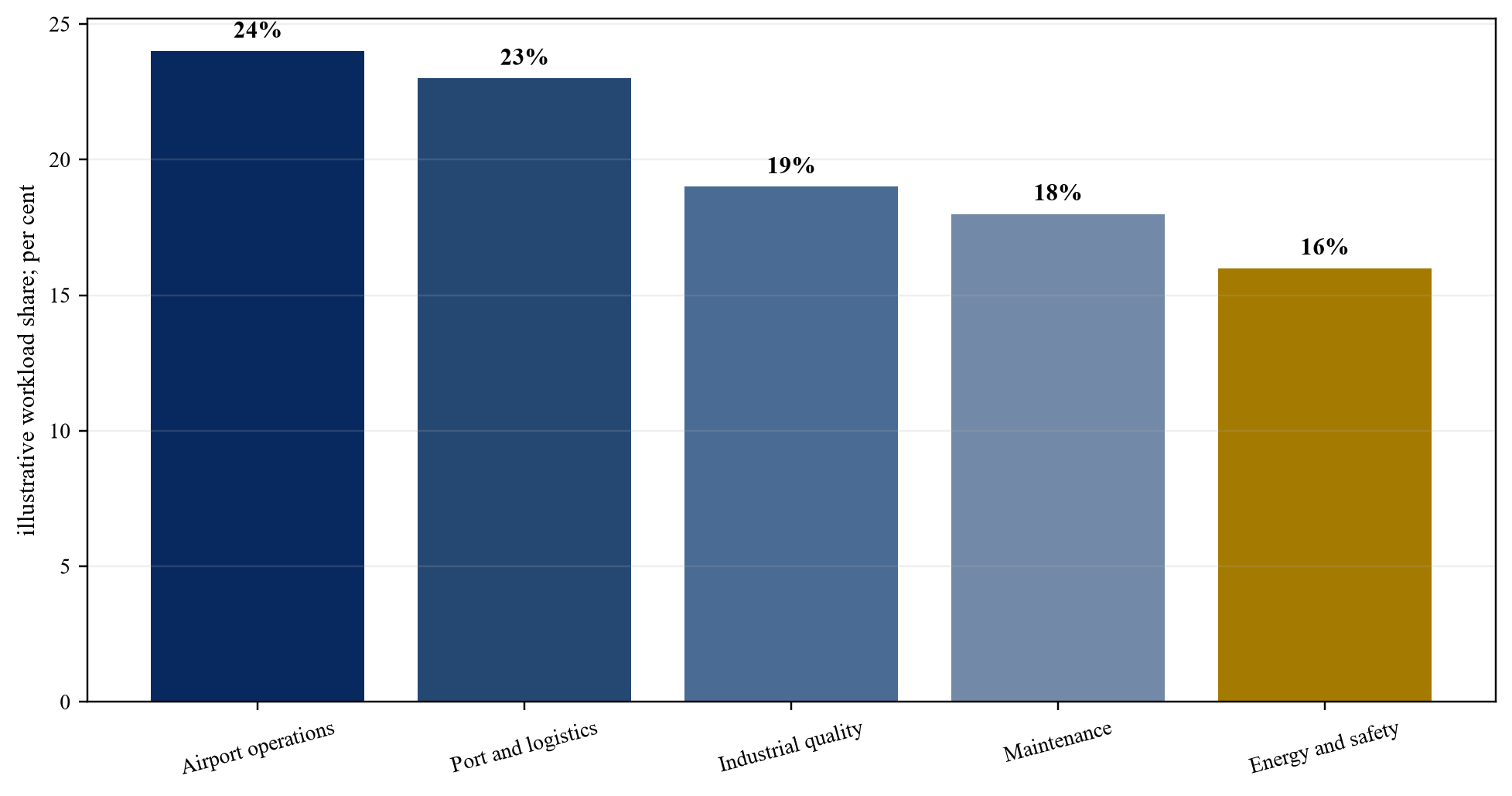
Wholly hypothetical; use cases require separate baselines and acceptance tests.
| Setting | Candidate workload | Operational measure | Acceptance owner |
|---|---|---|---|
| airport | baggage exception and turnaround | miss, delay and response time | airport, airline or handler |
| port | gate, yard and berth coordination | dwell, moves and congestion | port or terminal operator |
| industrial zone | machine vision and maintenance | defect, downtime and yield | tenant operator |
| multi-site | energy and safety monitoring | energy intensity and incident response | site authority and tenant |
Proposed framework; the operator and payer approve final criteria.
6. Map the service path
Each workload should be traced from physical event through sensor, access network, data handling, model execution, decision, intervention, operational outcome and payment. [1][2][17][18] The analysis should identify the asset owner, operating authority, service provider, customer, payer, financier and party bearing remediation or interruption cost.
The evidence file should begin with time-stamped traces, system interfaces, data lineage, model version, operator action, outcome record, invoice and bank receipt. Each item should state its scope, definition, effective date, expiry or refresh point, accountable owner and relationship to service acceptance and collected cash. Public policy, standards and company disclosures provide context. Project value requires site-level rights, executed contracts, measured performance, auditable financial records and reconciliation between technical output and the operating outcome claimed.
The principal failure is that a model benchmark or infrastructure uptime metric is presented as evidence of realised operational value. The practical response is to maintain one auditable event-to-outcome-to-cash record for each workload. Management estimates should be clearly identified inside the model and replaced or refreshed when evidence changes. Downside analysis should combine related site, network, customer, safety, cyber, technology, delivery, financing and liquidity risks. Approval should record the evidence accepted, conditions outstanding, responsible owner and authority to defer, resize, redeploy or stop expenditure.
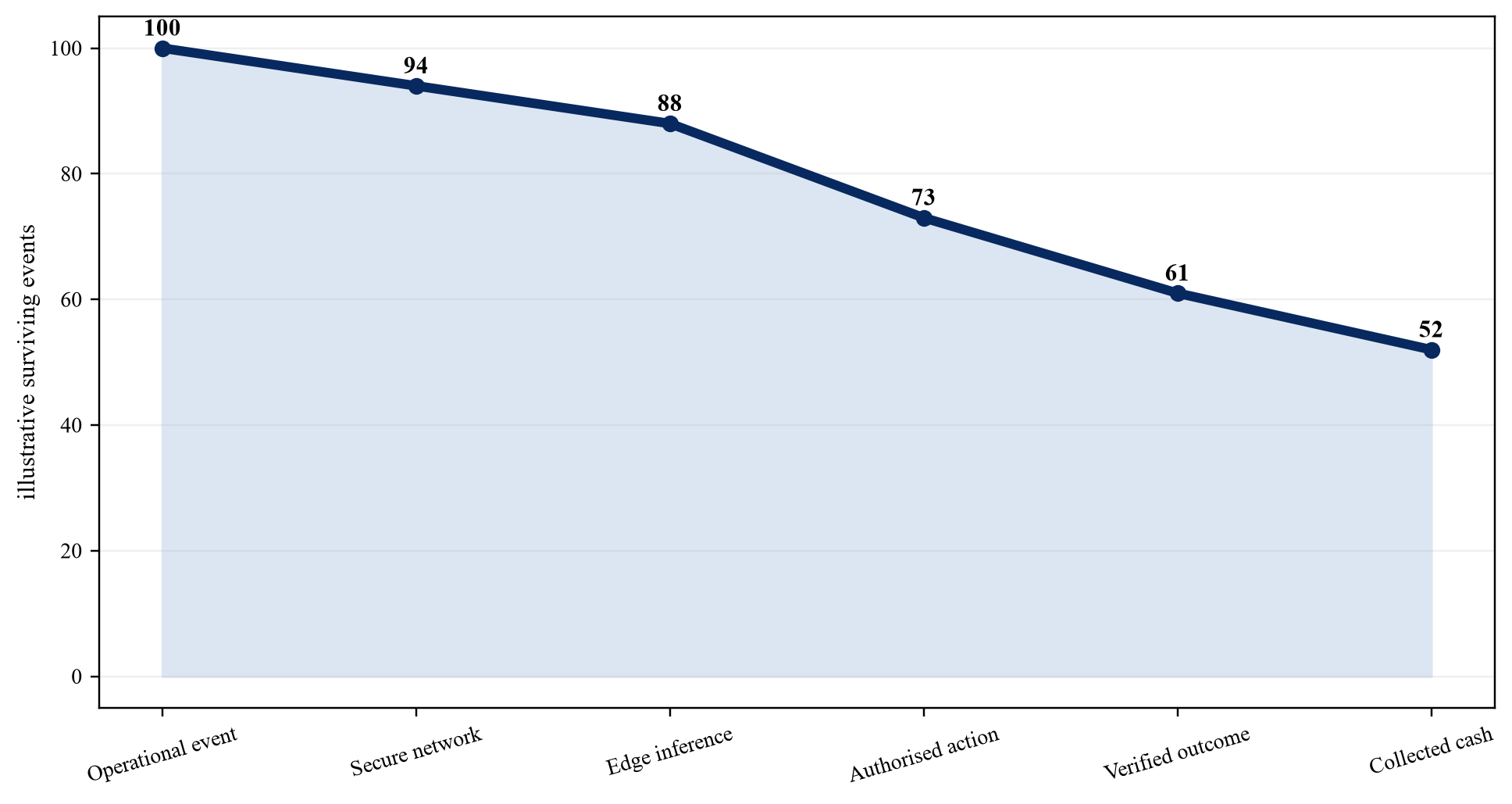
Proposed framework; every link requires evidence before cash can support financing.
7. Measure latency and availability
The relevant performance envelope includes capture, radio or wired access, routing, queue, data retrieval, inference, response delivery and operator action. [17][19][20][21] The analysis should identify the asset owner, operating authority, service provider, customer, payer, financier and party bearing remediation or interruption cost.
The evidence file should begin with application traces under representative load, failure tests, network paths, jitter, loss, retry, queue depth, compute time and restoration evidence. Each item should state its scope, definition, effective date, expiry or refresh point, accountable owner and relationship to service acceptance and collected cash. Public policy, standards and company disclosures provide context. Project value requires site-level rights, executed contracts, measured performance, auditable financial records and reconciliation between technical output and the operating outcome claimed.
The principal failure is that server inference time or geographic distance substitutes for the complete operational response path. The practical response is to contract and test end-to-end service under normal, peak and degraded conditions. Management estimates should be clearly identified inside the model and replaced or refreshed when evidence changes. Downside analysis should combine related site, network, customer, safety, cyber, technology, delivery, financing and liquidity risks. Approval should record the evidence accepted, conditions outstanding, responsible owner and authority to defer, resize, redeploy or stop expenditure.
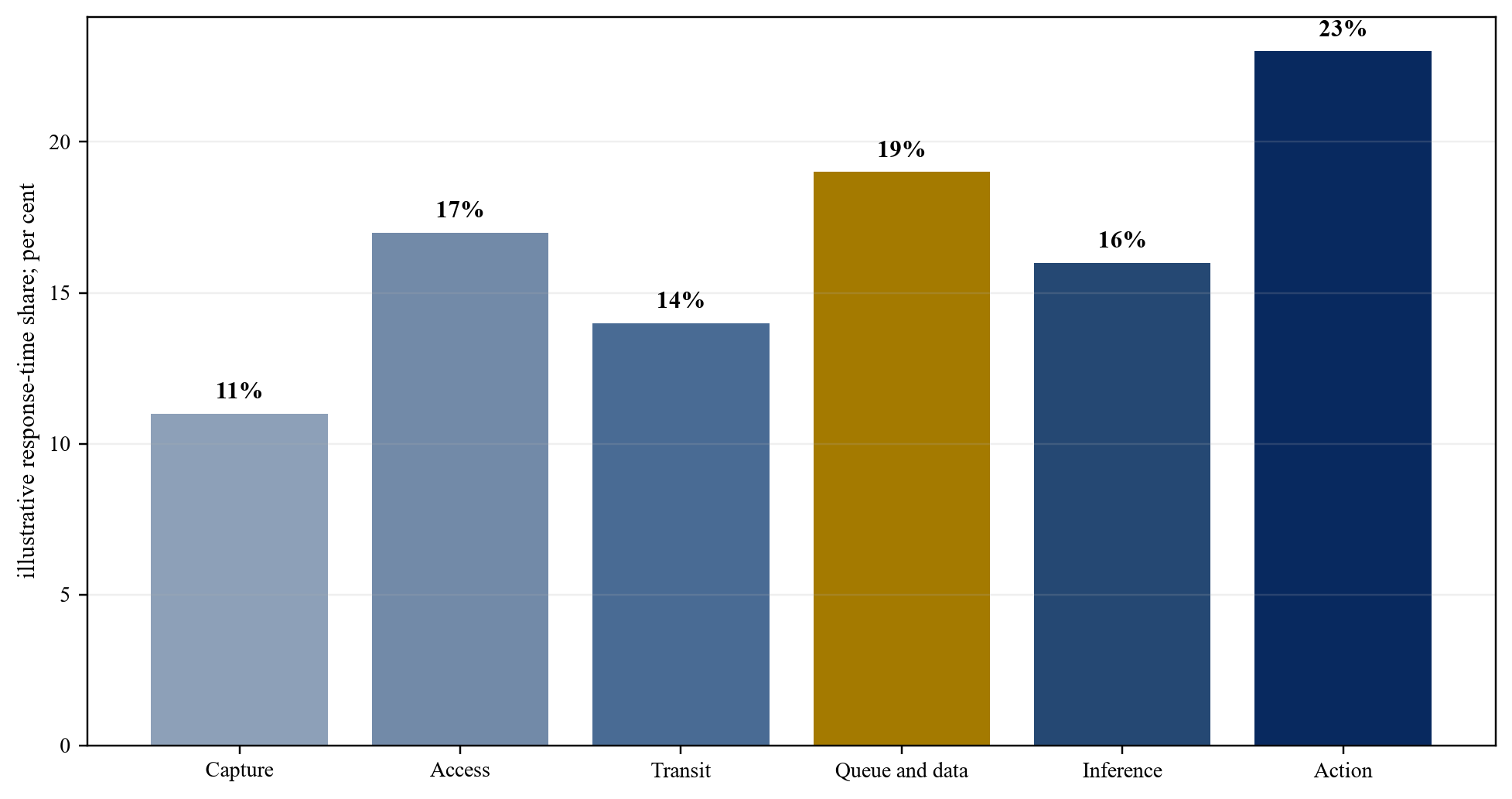
Wholly hypothetical; replace each share with traced application data.
8. Establish the operational baseline
Savings require a stable definition of current cost, delay, failure, throughput, energy or loss before intervention. Seasonality and process changes must be controlled. [11][18][22][23] The analysis should identify the asset owner, operating authority, service provider, customer, payer, financier and party bearing remediation or interruption cost.
The evidence file should begin with baseline period, data completeness, operating conditions, exclusions, measurement method, counterfactual, independent reviewer and refresh rule. Each item should state its scope, definition, effective date, expiry or refresh point, accountable owner and relationship to service acceptance and collected cash. Public policy, standards and company disclosures provide context. Project value requires site-level rights, executed contracts, measured performance, auditable financial records and reconciliation between technical output and the operating outcome claimed.
The principal failure is that a vendor estimate or before-and-after comparison attributes all change to the AI service. The practical response is to pre-agree the baseline, adjustment formula and dispute process with the payer. Management estimates should be clearly identified inside the model and replaced or refreshed when evidence changes. Downside analysis should combine related site, network, customer, safety, cyber, technology, delivery, financing and liquidity risks. Approval should record the evidence accepted, conditions outstanding, responsible owner and authority to defer, resize, redeploy or stop expenditure.
| Test | Required record | Failure response |
|---|---|---|
| stable baseline | defined period and exclusions | extend or restate |
| attribution | intervention and confounder log | hold value recognition |
| adoption | user and process evidence | retrain or redesign |
| persistence | repeated operating cycles | apply decay or reset |
| payment | accepted formula and audit right | exclude from debt sizing |
Proposed minimum evidence; independently review material value claims.
9. Prove causality and persistence
A measured change becomes financeable when the service contribution can be distinguished from traffic, staffing, equipment, policy and external changes and persists across operating cycles. [18][22][23][24] The analysis should identify the asset owner, operating authority, service provider, customer, payer, financier and party bearing remediation or interruption cost.
The evidence file should begin with control or matched comparison, intervention log, confounders, model drift, user adoption, repeat measurement and independent sign-off. Each item should state its scope, definition, effective date, expiry or refresh point, accountable owner and relationship to service acceptance and collected cash. Public policy, standards and company disclosures provide context. Project value requires site-level rights, executed contracts, measured performance, auditable financial records and reconciliation between technical output and the operating outcome claimed.
The principal failure is that early pilot improvement is annualised without causal testing, adoption evidence or degradation allowance. The practical response is to apply staged recognition and reset the value case when process, model or operating conditions change. Management estimates should be clearly identified inside the model and replaced or refreshed when evidence changes. Downside analysis should combine related site, network, customer, safety, cyber, technology, delivery, financing and liquidity risks. Approval should record the evidence accepted, conditions outstanding, responsible owner and authority to defer, resize, redeploy or stop expenditure.
10. Convert operational value into payment
The economic beneficiary, contracting customer and credit payer may be different entities. The contract must specify the service, acceptance, quantity, price, credits and termination. [4][6][25][26] The analysis should identify the asset owner, operating authority, service provider, customer, payer, financier and party bearing remediation or interruption cost.
The evidence file should begin with service schedule, payer approval, minimum payment, availability charge, savings-share formula, audit rights, invoicing, collection and termination. Each item should state its scope, definition, effective date, expiry or refresh point, accountable owner and relationship to service acceptance and collected cash. Public policy, standards and company disclosures provide context. Project value requires site-level rights, executed contracts, measured performance, auditable financial records and reconciliation between technical output and the operating outcome claimed.
The principal failure is that project economics rely on estimated customer savings that the customer has no obligation to pay. The practical response is to base debt on enforceable cash and keep uncontracted benefits outside the eligible revenue pool. Management estimates should be clearly identified inside the model and replaced or refreshed when evidence changes. Downside analysis should combine related site, network, customer, safety, cyber, technology, delivery, financing and liquidity risks. Approval should record the evidence accepted, conditions outstanding, responsible owner and authority to defer, resize, redeploy or stop expenditure.
11. Contract anchor demand
An anchor can support financing through capacity reservation, take-or-pay, availability payment, committed minimum spend or prepayment. Each form carries performance and credit conditions. [4][25][26][27] The analysis should identify the asset owner, operating authority, service provider, customer, payer, financier and party bearing remediation or interruption cost.
The evidence file should begin with signed contract, committed quantity, term, acceptance, service levels, credit support, termination, set-off, indexation and change control. Each item should state its scope, definition, effective date, expiry or refresh point, accountable owner and relationship to service acceptance and collected cash. Public policy, standards and company disclosures provide context. Project value requires site-level rights, executed contracts, measured performance, auditable financial records and reconciliation between technical output and the operating outcome claimed.
The principal failure is that a memorandum, pilot or non-binding forecast is described as contracted utilisation. The practical response is to assign value according to enforceability, conditions and payer credit rather than headline commitment. Management estimates should be clearly identified inside the model and replaced or refreshed when evidence changes. Downside analysis should combine related site, network, customer, safety, cyber, technology, delivery, financing and liquidity risks. Approval should record the evidence accepted, conditions outstanding, responsible owner and authority to defer, resize, redeploy or stop expenditure.
| Structure | Cash support | Core diligence issue |
|---|---|---|
| capacity reservation | fixed availability payment | termination and service conditions |
| minimum spend | usage with floor | eligible units and credit |
| take-or-pay | committed quantity | force majeure and performance |
| prepayment | upfront cash | refund and revenue recognition |
| savings share | contingent payment | baseline, attribution and audit |
Proposed comparison; governing contracts determine enforceability.
12. Gate site and operating control
A financeable node requires site tenure, permitted use, access, installation rights, operating authority, transferability and a clear boundary between public, regulated and commercial systems. [1][2][28][29] The analysis should identify the asset owner, operating authority, service provider, customer, payer, financier and party bearing remediation or interruption cost.
The evidence file should begin with lease or concession, permit, access protocol, equipment rights, data and network boundary, operator approval, assignment and step-in. Each item should state its scope, definition, effective date, expiry or refresh point, accountable owner and relationship to service acceptance and collected cash. Public policy, standards and company disclosures provide context. Project value requires site-level rights, executed contracts, measured performance, auditable financial records and reconciliation between technical output and the operating outcome claimed.
The principal failure is that a strategic location is assumed to be deployable because the sponsor has a relationship with the site owner. The practical response is to make control and approval conditions precedent to capital release. Management estimates should be clearly identified inside the model and replaced or refreshed when evidence changes. Downside analysis should combine related site, network, customer, safety, cyber, technology, delivery, financing and liquidity risks. Approval should record the evidence accepted, conditions outstanding, responsible owner and authority to defer, resize, redeploy or stop expenditure.
13. Gate power, cooling and physical resilience
Edge nodes require deliverable capacity, redundancy, metering, tariff clarity, cooling, environmental protection, fire controls and maintainable physical security. [5][7][30][31] The analysis should identify the asset owner, operating authority, service provider, customer, payer, financier and party bearing remediation or interruption cost.
The evidence file should begin with connection agreement, load profile, backup design, cooling test, meter, tariff, maintenance window, incident plan and commissioning certificate. Each item should state its scope, definition, effective date, expiry or refresh point, accountable owner and relationship to service acceptance and collected cash. Public policy, standards and company disclosures provide context. Project value requires site-level rights, executed contracts, measured performance, auditable financial records and reconciliation between technical output and the operating outcome claimed.
The principal failure is that nominal power, reserved capacity or design efficiency is treated as continuous usable service. The practical response is to size and finance only commissioned capacity with tested degraded-mode operation. Management estimates should be clearly identified inside the model and replaced or refreshed when evidence changes. Downside analysis should combine related site, network, customer, safety, cyber, technology, delivery, financing and liquidity risks. Approval should record the evidence accepted, conditions outstanding, responsible owner and authority to defer, resize, redeploy or stop expenditure.
| Gate | Evidence | Capital action |
|---|---|---|
| control and permits | transferable rights and approvals | condition precedent |
| power and cooling | commissioned capacity and test | size or defer |
| network | diverse routes and service test | procure or reject |
| safety and cyber | approved controls and recovery test | remediate before service |
| workload and payer | acceptance schedule and contract | release or hold |
Proposed minimum gate; local law and operating standards may add requirements.
14. Gate fibre and private-network readiness
Airports, ports and zones require diverse connectivity, local data paths, device identity, quality of service, mobility and controlled interconnection with public networks. [3][14][17][19] The analysis should identify the asset owner, operating authority, service provider, customer, payer, financier and party bearing remediation or interruption cost.
The evidence file should begin with route and carrier contracts, spectrum or network authority, architecture, device inventory, service levels, failover, interoperability and performance test. Each item should state its scope, definition, effective date, expiry or refresh point, accountable owner and relationship to service acceptance and collected cash. Public policy, standards and company disclosures provide context. Project value requires site-level rights, executed contracts, measured performance, auditable financial records and reconciliation between technical output and the operating outcome claimed.
The principal failure is that coverage or 5G branding substitutes for application-specific service assurance. The practical response is to select public, private, hybrid or multi-tenant architecture from workload and control requirements. Management estimates should be clearly identified inside the model and replaced or refreshed when evidence changes. Downside analysis should combine related site, network, customer, safety, cyber, technology, delivery, financing and liquidity risks. Approval should record the evidence accepted, conditions outstanding, responsible owner and authority to defer, resize, redeploy or stop expenditure.
15. Design safety and cybersecurity controls
Connected operational technology can create safety, security, continuity and cascading supply-chain risk. Controls must cover identity, segmentation, monitoring, incident response and recovery. [1][2][9][12] The analysis should identify the asset owner, operating authority, service provider, customer, payer, financier and party bearing remediation or interruption cost.
The evidence file should begin with risk assessment, asset inventory, trust boundaries, access controls, logging, incident playbook, recovery test, vendor access and accountable authority. Each item should state its scope, definition, effective date, expiry or refresh point, accountable owner and relationship to service acceptance and collected cash. Public policy, standards and company disclosures provide context. Project value requires site-level rights, executed contracts, measured performance, auditable financial records and reconciliation between technical output and the operating outcome claimed.
The principal failure is that cybersecurity is treated as a generic certification item after the operating architecture has been fixed. The practical response is to embed security and recovery in design, acceptance, service levels and financing covenants. Management estimates should be clearly identified inside the model and replaced or refreshed when evidence changes. Downside analysis should combine related site, network, customer, safety, cyber, technology, delivery, financing and liquidity risks. Approval should record the evidence accepted, conditions outstanding, responsible owner and authority to defer, resize, redeploy or stop expenditure.
16. Preserve interoperability and exit options
Equipment, models, data and orchestration should be replaceable where commercial value depends on competitive supply and future technology. [3][14][17][24] The analysis should identify the asset owner, operating authority, service provider, customer, payer, financier and party bearing remediation or interruption cost.
The evidence file should begin with interface specification, data format, model portability, licence terms, escrow, device compatibility, migration test and exit assistance. Each item should state its scope, definition, effective date, expiry or refresh point, accountable owner and relationship to service acceptance and collected cash. Public policy, standards and company disclosures provide context. Project value requires site-level rights, executed contracts, measured performance, auditable financial records and reconciliation between technical output and the operating outcome claimed.
The principal failure is that a proprietary stack creates switching cost that is absent from valuation and downside liquidity. The practical response is to price lock-in, require tested export and preserve redeployment or replacement routes. Management estimates should be clearly identified inside the model and replaced or refreshed when evidence changes. Downside analysis should combine related site, network, customer, safety, cyber, technology, delivery, financing and liquidity risks. Approval should record the evidence accepted, conditions outstanding, responsible owner and authority to defer, resize, redeploy or stop expenditure.
17. Define the commercial service product
The platform must sell a clear unit such as accepted workload, reserved capacity, monitored asset, processed event, availability outcome or verified saving. [4][18][25][26] The analysis should identify the asset owner, operating authority, service provider, customer, payer, financier and party bearing remediation or interruption cost.
The evidence file should begin with service catalogue, unit definition, inclusions, exclusions, measurement, price, support, acceptance and renewal. Each item should state its scope, definition, effective date, expiry or refresh point, accountable owner and relationship to service acceptance and collected cash. Public policy, standards and company disclosures provide context. Project value requires site-level rights, executed contracts, measured performance, auditable financial records and reconciliation between technical output and the operating outcome claimed.
The principal failure is that revenue combines infrastructure, software, integration and savings claims without a measurable delivery unit. The practical response is to standardise service modules while retaining workload-specific acceptance schedules. Management estimates should be clearly identified inside the model and replaced or refreshed when evidence changes. Downside analysis should combine related site, network, customer, safety, cyber, technology, delivery, financing and liquidity risks. Approval should record the evidence accepted, conditions outstanding, responsible owner and authority to defer, resize, redeploy or stop expenditure.
18. Build workload unit economics
Unit economics should include site and network allocation, compute utilisation, software, support, data handling, energy, maintenance, credits, refresh and customer acquisition. [5][6][7][26] The analysis should identify the asset owner, operating authority, service provider, customer, payer, financier and party bearing remediation or interruption cost.
The evidence file should begin with billable unit, utilisation, variable cost, allocated fixed cost, support burden, credit history, churn, refresh and cash conversion. Each item should state its scope, definition, effective date, expiry or refresh point, accountable owner and relationship to service acceptance and collected cash. Public policy, standards and company disclosures provide context. Project value requires site-level rights, executed contracts, measured performance, auditable financial records and reconciliation between technical output and the operating outcome claimed.
The principal failure is that gross revenue or gross margin omits idle capacity, integration labour, service credits and technology replacement. The practical response is to measure contribution by workload, customer and node before approving expansion. Management estimates should be clearly identified inside the model and replaced or refreshed when evidence changes. Downside analysis should combine related site, network, customer, safety, cyber, technology, delivery, financing and liquidity risks. Approval should record the evidence accepted, conditions outstanding, responsible owner and authority to defer, resize, redeploy or stop expenditure.
19. Separate capacity states
Identified, designed, permitted, installed, commissioned, accepted, reserved, billable and collected capacity carry different probabilities and financing value. [4][5][18][25] The analysis should identify the asset owner, operating authority, service provider, customer, payer, financier and party bearing remediation or interruption cost.
The evidence file should begin with state definition, effective date, evidence, expiry, owner, remaining conditions, cost to next state and customer link. Each item should state its scope, definition, effective date, expiry or refresh point, accountable owner and relationship to service acceptance and collected cash. Public policy, standards and company disclosures provide context. Project value requires site-level rights, executed contracts, measured performance, auditable financial records and reconciliation between technical output and the operating outcome claimed.
The principal failure is that announced or installed capacity is treated as utilised revenue-generating capacity. The practical response is to publish a capacity waterfall and prohibit movement without specified evidence. Management estimates should be clearly identified inside the model and replaced or refreshed when evidence changes. Downside analysis should combine related site, network, customer, safety, cyber, technology, delivery, financing and liquidity risks. Approval should record the evidence accepted, conditions outstanding, responsible owner and authority to defer, resize, redeploy or stop expenditure.
20. Stage the twelve-node network
The hypothetical platform starts with four airport, four port and four industrial-zone candidates and releases each node only after site, customer, security, integration and funding gates. [3][5][14][27] The analysis should identify the asset owner, operating authority, service provider, customer, payer, financier and party bearing remediation or interruption cost.
The evidence file should begin with node dossier, anchor workload, readiness score, cost, delivery schedule, acceptance, ramp, downside and stop authority. Each item should state its scope, definition, effective date, expiry or refresh point, accountable owner and relationship to service acceptance and collected cash. Public policy, standards and company disclosures provide context. Project value requires site-level rights, executed contracts, measured performance, auditable financial records and reconciliation between technical output and the operating outcome claimed.
The principal failure is that all twelve nodes are funded at once despite different customers, approvals and deployment risk. The practical response is to use modular facilities and sponsor capital to preserve deferral and redeployment. Management estimates should be clearly identified inside the model and replaced or refreshed when evidence changes. Downside analysis should combine related site, network, customer, safety, cyber, technology, delivery, financing and liquidity risks. Approval should record the evidence accepted, conditions outstanding, responsible owner and authority to defer, resize, redeploy or stop expenditure.
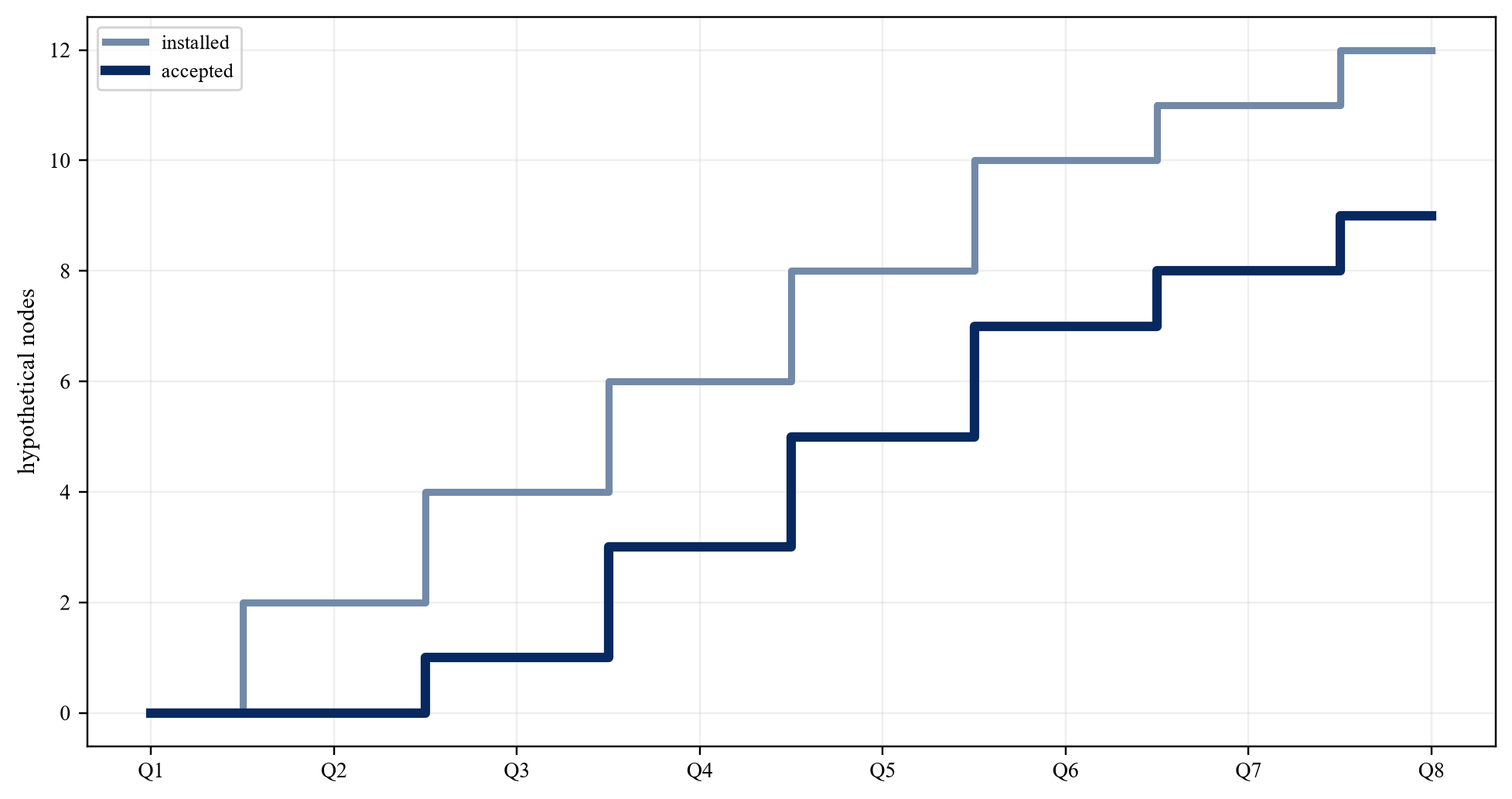
Wholly hypothetical; accepted nodes lag installed nodes until workload and customer acceptance.
21. Apply the hypothetical sources and uses
Initial uses of USD 420 million include powered sites and fibre, equipment and cooling, software and integration, customer onboarding, fees, reserves and contingency. [5][6][7][27] The analysis should identify the asset owner, operating authority, service provider, customer, payer, financier and party bearing remediation or interruption cost.
The evidence file should begin with wholly hypothetical sources and uses, draw conditions, amortisation, reserve policy, customer commitments, vendor support and sponsor cure. Each item should state its scope, definition, effective date, expiry or refresh point, accountable owner and relationship to service acceptance and collected cash. Public policy, standards and company disclosures provide context. Project value requires site-level rights, executed contracts, measured performance, auditable financial records and reconciliation between technical output and the operating outcome claimed.
The principal failure is that funding labels obscure which source absorbs construction, performance, technology and demand risk. The practical response is to allocate senior debt to eligible durable cash, equipment finance to movable assets and equity to uncertain development. Management estimates should be clearly identified inside the model and replaced or refreshed when evidence changes. Downside analysis should combine related site, network, customer, safety, cyber, technology, delivery, financing and liquidity risks. Approval should record the evidence accepted, conditions outstanding, responsible owner and authority to defer, resize, redeploy or stop expenditure.
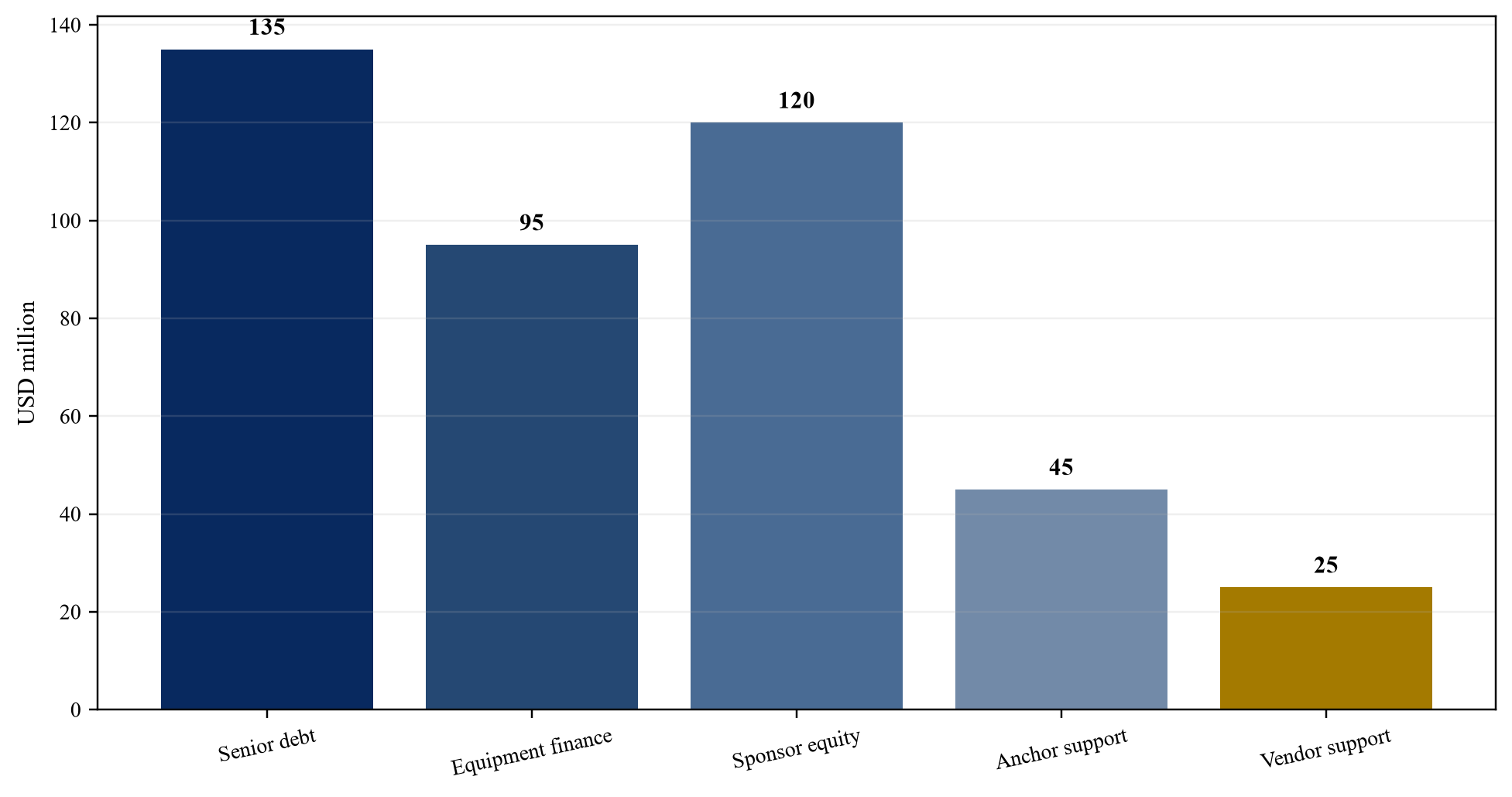
Wholly hypothetical; USD million.
| Metric | Central case | Combined downside |
|---|---|---|
| accepted nodes in year four | 9 | 6 |
| billable utilisation | 68% | 43% |
| recurring revenue | USD 56 million | USD 34 million |
| verified annual customer savings | USD 21 million | USD 9 million |
| deployment delay | none beyond plan | 6 months |
| integration-cost variance | base | +18% |
| debt-service coverage ratio | 1.55x | 0.86x |
Wholly hypothetical; figures do not describe an announced project.
22. Match capital to asset lives
Long-lived site and network assets, medium-lived cooling and electrical systems, shorter-lived compute and sensors, and continuously changing software should not share one terminal value. [5][6][7][30] The analysis should identify the asset owner, operating authority, service provider, customer, payer, financier and party bearing remediation or interruption cost.
The evidence file should begin with asset life, maintenance, residual value, replacement cycle, security, amortisation, cash sweep, refresh reserve and redeployment evidence. Each item should state its scope, definition, effective date, expiry or refresh point, accountable owner and relationship to service acceptance and collected cash. Public policy, standards and company disclosures provide context. Project value requires site-level rights, executed contracts, measured performance, auditable financial records and reconciliation between technical output and the operating outcome claimed.
The principal failure is that long-term debt or exit value depends on equipment and software beyond their economic life. The practical response is to separate borrowing bases and build funded refresh into coverage and valuation. Management estimates should be clearly identified inside the model and replaced or refreshed when evidence changes. Downside analysis should combine related site, network, customer, safety, cyber, technology, delivery, financing and liquidity risks. Approval should record the evidence accepted, conditions outstanding, responsible owner and authority to defer, resize, redeploy or stop expenditure.
23. Allocate delivery and performance risk
Site owner, network operator, equipment vendor, integrator, model provider, operating customer and sponsor control different risks. [1][2][12][27] The analysis should identify the asset owner, operating authority, service provider, customer, payer, financier and party bearing remediation or interruption cost.
The evidence file should begin with risk matrix, milestone, warranty, service credit, liquidated remedy, insurance, direct agreement, cap, relief and step-in. Each item should state its scope, definition, effective date, expiry or refresh point, accountable owner and relationship to service acceptance and collected cash. Public policy, standards and company disclosures provide context. Project value requires site-level rights, executed contracts, measured performance, auditable financial records and reconciliation between technical output and the operating outcome claimed.
The principal failure is that the project vehicle retains correlated risks without price, recourse, reserve or control. The practical response is to place each risk with the party able to prevent, measure or remedy it and fund residual exposure. Management estimates should be clearly identified inside the model and replaced or refreshed when evidence changes. Downside analysis should combine related site, network, customer, safety, cyber, technology, delivery, financing and liquidity risks. Approval should record the evidence accepted, conditions outstanding, responsible owner and authority to defer, resize, redeploy or stop expenditure.
| Risk | Primary controller | Core protection |
|---|---|---|
| site, permits and utility | site authority and project company | conditions and direct agreement |
| network performance | operator | SLA, diversity and credits |
| equipment and integration | vendor and integrator | milestone, warranty and remedy |
| workload adoption | customer and sponsor | minimum payment and staging |
| safety and cyber | operator and authority | controls, test and incident rights |
| technology refresh | project company and sponsor | reserve and redeployment |
Proposed framework; final contracts and applicable law govern.
24. Stress correlated downside
Delay, lower adoption, higher integration cost, power constraint, cyber interruption and early refresh can occur together and affect coverage before annual forecasts reveal the problem. [5][6][7][27] The analysis should identify the asset owner, operating authority, service provider, customer, payer, financier and party bearing remediation or interruption cost.
The evidence file should begin with combined scenarios, monthly liquidity, covenant headroom, module deferral, redeployment value, sponsor cure and termination cash. Each item should state its scope, definition, effective date, expiry or refresh point, accountable owner and relationship to service acceptance and collected cash. Public policy, standards and company disclosures provide context. Project value requires site-level rights, executed contracts, measured performance, auditable financial records and reconciliation between technical output and the operating outcome claimed.
The principal failure is that single-variable sensitivities understate the interaction between customer ramp, cost, service failure and financing. The practical response is to test the six-node, 43 per cent utilisation, six-month delay and 18 per cent cost-overrun case as one scenario. Management estimates should be clearly identified inside the model and replaced or refreshed when evidence changes. Downside analysis should combine related site, network, customer, safety, cyber, technology, delivery, financing and liquidity risks. Approval should record the evidence accepted, conditions outstanding, responsible owner and authority to defer, resize, redeploy or stop expenditure.
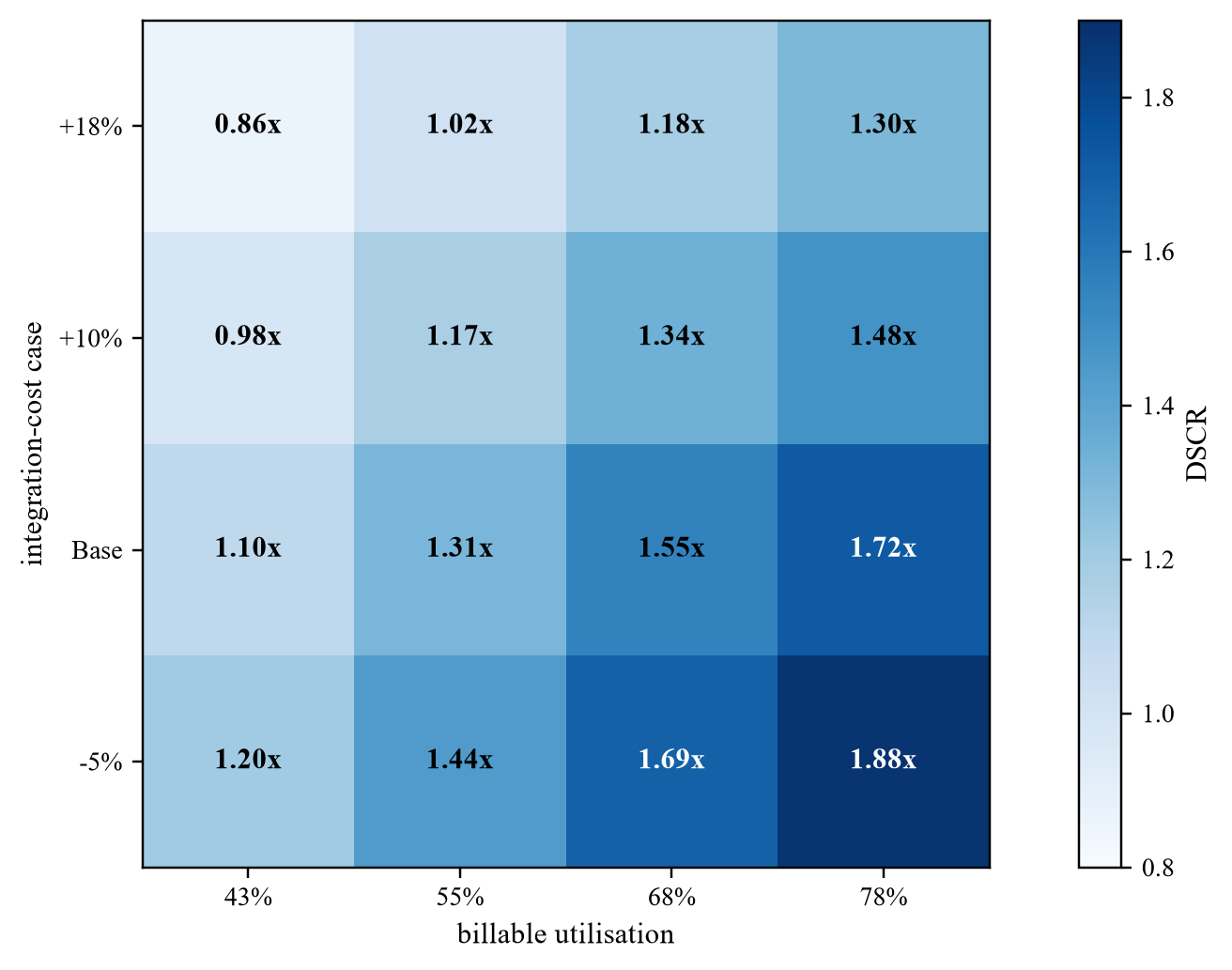
Wholly hypothetical; combined utilisation and integration-cost cases.
25. Monitor event to cash
A common control model should connect workload event, service telemetry, model version, operator action, accepted outcome, invoice, credit and collection. [18][22][25][26] The analysis should identify the asset owner, operating authority, service provider, customer, payer, financier and party bearing remediation or interruption cost.
The evidence file should begin with unique identifiers, time stamps, data lineage, access logs, exception workflow, invoice support, bank reconciliation and audit trail. Each item should state its scope, definition, effective date, expiry or refresh point, accountable owner and relationship to service acceptance and collected cash. Public policy, standards and company disclosures provide context. Project value requires site-level rights, executed contracts, measured performance, auditable financial records and reconciliation between technical output and the operating outcome claimed.
The principal failure is that technical, operational and finance dashboards report different favourable metrics that cannot be reconciled. The practical response is to make cash eligibility depend on a complete and reviewable evidence chain. Management estimates should be clearly identified inside the model and replaced or refreshed when evidence changes. Downside analysis should combine related site, network, customer, safety, cyber, technology, delivery, financing and liquidity risks. Approval should record the evidence accepted, conditions outstanding, responsible owner and authority to defer, resize, redeploy or stop expenditure.
26. Design step-in and redeployment routes
Financiers need practical remedies when a customer, vendor, node or workload fails. Equipment portability and service continuity determine recovery value. [6][7][12][27] The analysis should identify the asset owner, operating authority, service provider, customer, payer, financier and party bearing remediation or interruption cost.
The evidence file should begin with security package, direct agreements, replacement rights, data and licence continuity, spare capacity, relocation cost, alternate users and sale route. Each item should state its scope, definition, effective date, expiry or refresh point, accountable owner and relationship to service acceptance and collected cash. Public policy, standards and company disclosures provide context. Project value requires site-level rights, executed contracts, measured performance, auditable financial records and reconciliation between technical output and the operating outcome claimed.
The principal failure is that security is taken over assets that cannot operate, move, transfer or retain customer rights after enforcement. The practical response is to test every recovery route operationally and value it net of time, consent and reconfiguration cost. Management estimates should be clearly identified inside the model and replaced or refreshed when evidence changes. Downside analysis should combine related site, network, customer, safety, cyber, technology, delivery, financing and liquidity risks. Approval should record the evidence accepted, conditions outstanding, responsible owner and authority to defer, resize, redeploy or stop expenditure.
27. Apply accounting and impairment discipline
Revenue, leases, financial instruments, fair value, impairment and capitalisation judgements affect covenant data, reported performance and loss recognition. [6][7][25][32] The analysis should identify the asset owner, operating authority, service provider, customer, payer, financier and party bearing remediation or interruption cost.
The evidence file should begin with contract analysis, performance obligations, lease terms, borrowing conditions, asset components, useful lives, impairment indicators and disclosure controls. Each item should state its scope, definition, effective date, expiry or refresh point, accountable owner and relationship to service acceptance and collected cash. Public policy, standards and company disclosures provide context. Project value requires site-level rights, executed contracts, measured performance, auditable financial records and reconciliation between technical output and the operating outcome claimed.
The principal failure is that accounting treatment is decided after the commercial model and delays recognition of deteriorating workload or equipment value. The practical response is to align the financing model with IFRS analysis and define early impairment and reforecast triggers. Management estimates should be clearly identified inside the model and replaced or refreshed when evidence changes. Downside analysis should combine related site, network, customer, safety, cyber, technology, delivery, financing and liquidity risks. Approval should record the evidence accepted, conditions outstanding, responsible owner and authority to defer, resize, redeploy or stop expenditure.
28. Reach the financing decision
Approval requires controlled sites, accepted workloads, enforceable anchor cash, measured unit economics, funded refresh, allocated risk, combined downside liquidity and credible stop or redeployment rights. [1][2][4][27] The analysis should identify the asset owner, operating authority, service provider, customer, payer, financier and party bearing remediation or interruption cost.
The evidence file should begin with investment memorandum, evidence ledger, contracts, technical acceptance, baseline review, model, financing, security, risk allocation, scenarios and approval record. Each item should state its scope, definition, effective date, expiry or refresh point, accountable owner and relationship to service acceptance and collected cash. Public policy, standards and company disclosures provide context. Project value requires site-level rights, executed contracts, measured performance, auditable financial records and reconciliation between technical output and the operating outcome claimed.
The principal failure is that strategic urgency or a broad AI narrative replaces the evidence required to commit and service capital. The practical response is to approve one gated node and workload cohort at a time with named owners, expiry dates and stop authority. Management estimates should be clearly identified inside the model and replaced or refreshed when evidence changes. Downside analysis should combine related site, network, customer, safety, cyber, technology, delivery, financing and liquidity risks. Approval should record the evidence accepted, conditions outstanding, responsible owner and authority to defer, resize, redeploy or stop expenditure.
| Decision | Minimum evidence | Possible action |
|---|---|---|
| node release | site, power, network and permits | fund, resize or defer |
| workload release | baseline, acceptance and payer | launch, redesign or stop |
| debt draw | eligible contracted cash and coverage | draw, condition or reduce |
| equipment draw | delivery, title and redeployability | lease, finance or hold |
| next cohort | acceptance, cash and liquidity | expand, repurpose or stop |
Proposed governance; each approval records evidence, owner and expiry.
Sources
- International Civil Aviation Organization, *Aviation Cybersecurity Strategy*. Read the primary source
- International Maritime Organization, *Maritime cyber risk*. Read the primary source
- GSMA, *Private 5G Industrial Networks* (2023). Read the primary source
- IFRS Foundation, *IFRS 15 Revenue from Contracts with Customers*. Read the primary source
- International Energy Agency, *Energy and AI* (2025). Read the primary source
- IFRS Foundation, *IFRS 9 Financial Instruments*. Read the primary source
- IFRS Foundation, *IAS 36 Impairment of Assets*. Read the primary source
- International Civil Aviation Organization, *Artificial Intelligence in international civil aviation*. Read the primary source
- International Civil Aviation Organization, *Aviation Cybersecurity Guidance Material*. Read the primary source
- Airports Council International World, *Smart Data Hub Handbook preview* (2023). Read the primary source
- UN Trade and Development, *Review of Maritime Transport 2025*. Read the primary source
- International Association of Ports and Harbors, *Cybersecurity Guidelines for Ports and Port Facilities*. Read the primary source
- World Bank, *Container Port Performance Index 2023*. Read the primary source
- GSMA, *Public Networks for Connected Manufacturing*. Read the primary source
- International Electrotechnical Commission, *IEC 62443 industrial communication networks*. Read the primary source
- AD Ports Group, *Economic Cities and Free Zones*. Read the primary source
- ITU-T, *Network performance objectives for IP-based services*, Recommendation Y.1541. Read the primary source
- National Institute of Standards and Technology, *Artificial Intelligence Risk Management Framework*. Read the primary source
- ETSI, *Multi-access Edge Computing*. Read the primary source
- ITU, *IMT-2020 Network High Level Requirements*. Read the primary source
- GSMA, *5G IoT Private and Dedicated Networks for Industry 4.0*. Read the primary source
- National Institute of Standards and Technology, *Secure Software Development Framework*. Read the primary source
- International Organization for Standardization, *ISO 50001 Energy Management*. Read the primary source
- National Institute of Standards and Technology, *Cybersecurity Framework 2.0*. Read the primary source
- IFRS Foundation, *IFRS 13 Fair Value Measurement*. Read the primary source
- IFRS Foundation, *IFRS 16 Leases*. Read the primary source
- World Bank Group, *Guidance on PPP Contractual Provisions* (2019). Read the primary source
- International Civil Aviation Organization, *Strategic Plan 2026-2050*. Read the primary source
- International Maritime Organization, *Facilitation Committee tackles digitalization and autonomous shipping* (2024). Read the primary source
- International Energy Agency, *Data centres and data transmission networks*. Read the primary source
- ASHRAE, *Data Center Resources*. Read the primary source
- IFRS Foundation, *IAS 16 Property, Plant and Equipment*. Read the primary source
- AD Ports Group, *Integrated Annual Report and Accounts 2025*. Read the primary source
