

Introduction
Space-data businesses often describe government contracts as a source of credibility and visibility. That description can be accurate. A demanding mission customer can validate performance, support constellation utilisation and create a path to further programmes. The economic value still depends on the precise legal and procurement route through which cash is earned.
An indefinite-delivery vehicle, framework agreement or programme ceiling may permit future orders without obligating the customer to place them. A multi-year award may contain annual options, appropriations conditions or termination rights. A funded order may still require successful delivery and acceptance. A recognised receivable may create working-capital exposure until collected. Security, sovereignty, licensing and export controls can limit who may perform, where data may be processed and whether an acquirer can retain the contract after closing.
This paper follows the contract from authority to collected contribution. It treats concentration as a portfolio of correlated renewal and execution risks. It also recognises that diversification can dilute scarce technical focus when new customers require separate payloads, tasking rules, clearances or delivery environments. The valuation question is therefore whether the government revenue base can persist and convert into cash under the ownership, capital structure and operating plan proposed for the transaction.
1. Define the valuation decision
The decision question concerns the valuation date, transaction perimeter, buyer identity, capital structure and government-revenue dependency. The diligence team should define the legal customer, economic customer, contract identifier, programme, mission, jurisdiction, period and accountable owner. Evidence should begin with board materials, management accounts, customer and programme registers, financing terms and legal entity map. The record should reconcile contract language, procurement status, operational delivery, accounting and cash. Each exception needs a dated owner and a specified consequence for price, financing or closing.
The analytical output is one approved question with an evidence cut-off. Revenue should pass through the contract-to-cash sequence: available vehicle, funded authority, executable order, delivered output, customer acceptance, invoice and collection. A probability can be used for future states only when the event, evidence and time horizon are stated. For transaction purposes, the board should fix the decision before assigning value to awards or backlog. The model should include base, renewal, delay, termination and loss cases, together with capture, compliance, capacity, technical refresh, tax and working-capital costs.
2. Build the customer hierarchy
The decision question concerns customer concentration across sovereign, department, agency, programme office, prime contractor and end user. The diligence team should define the legal customer, economic customer, contract identifier, programme, mission, jurisdiction, period and accountable owner. Evidence should begin with executed contracts, invoices, collections, customer master data and programme records. The record should reconcile contract language, procurement status, operational delivery, accounting and cash. Each exception needs a dated owner and a specified consequence for price, financing or closing.
The analytical output is revenue and cash concentration at every relevant level. Revenue should pass through the contract-to-cash sequence: available vehicle, funded authority, executable order, delivered output, customer acceptance, invoice and collection. A probability can be used for future states only when the event, evidence and time horizon are stated. For transaction purposes, the board should avoid hiding a common sovereign behind several billing entities. The model should include base, renewal, delay, termination and loss cases, together with capture, compliance, capacity, technical refresh, tax and working-capital costs.
3. Separate contract vehicle from order
The decision question concerns the difference between access to a procurement vehicle and an enforceable funded purchase. The diligence team should define the legal customer, economic customer, contract identifier, programme, mission, jurisdiction, period and accountable owner. Evidence should begin with frameworks, IDIQ awards, blanket purchase agreements, task orders and funding notices. The record should reconcile contract language, procurement status, operational delivery, accounting and cash. Each exception needs a dated owner and a specified consequence for price, financing or closing.
The analytical output is value assigned only to supported order pathways. Revenue should pass through the contract-to-cash sequence: available vehicle, funded authority, executable order, delivered output, customer acceptance, invoice and collection. A probability can be used for future states only when the event, evidence and time horizon are stated. For transaction purposes, the board should exclude unused ceilings from contracted revenue. The model should include base, renewal, delay, termination and loss cases, together with capture, compliance, capacity, technical refresh, tax and working-capital costs.
4. Map appropriations and funding
The decision question concerns budget authority, period of availability, obligation, continuing resolution exposure and programme funding. The diligence team should define the legal customer, economic customer, contract identifier, programme, mission, jurisdiction, period and accountable owner. Evidence should begin with appropriation acts, agency budget documents, obligation records and contract modifications. The record should reconcile contract language, procurement status, operational delivery, accounting and cash. Each exception needs a dated owner and a specified consequence for price, financing or closing.
The analytical output is cash linked to available and committed funding. Revenue should pass through the contract-to-cash sequence: available vehicle, funded authority, executable order, delivered output, customer acceptance, invoice and collection. A probability can be used for future states only when the event, evidence and time horizon are stated. For transaction purposes, the board should apply a funding gate before renewal probability. The model should include base, renewal, delay, termination and loss cases, together with capture, compliance, capacity, technical refresh, tax and working-capital costs.
5. Reconcile backlog to performance obligations
The decision question concerns the relationship between reported backlog, remaining performance obligations and enforceable delivery. The diligence team should define the legal customer, economic customer, contract identifier, programme, mission, jurisdiction, period and accountable owner. Evidence should begin with backlog schedules, contracts, accounting papers, cancellation rights and delivery plans. The record should reconcile contract language, procurement status, operational delivery, accounting and cash. Each exception needs a dated owner and a specified consequence for price, financing or closing.
The analytical output is backlog segmented by legal enforceability and execution risk. Revenue should pass through the contract-to-cash sequence: available vehicle, funded authority, executable order, delivered output, customer acceptance, invoice and collection. A probability can be used for future states only when the event, evidence and time horizon are stated. For transaction purposes, the board should remove amounts supported only by management aspiration. The model should include base, renewal, delay, termination and loss cases, together with capture, compliance, capacity, technical refresh, tax and working-capital costs.
6. Classify contract type
The decision question concerns fixed-price, cost-reimbursement, time-and-materials, subscription, licence, capacity and service structures. The diligence team should define the legal customer, economic customer, contract identifier, programme, mission, jurisdiction, period and accountable owner. Evidence should begin with contract clauses, pricing schedules, cost records and performance obligations. The record should reconcile contract language, procurement status, operational delivery, accounting and cash. Each exception needs a dated owner and a specified consequence for price, financing or closing.
The analytical output is margin and cash behaviour by contract type. Revenue should pass through the contract-to-cash sequence: available vehicle, funded authority, executable order, delivered output, customer acceptance, invoice and collection. A probability can be used for future states only when the event, evidence and time horizon are stated. For transaction purposes, the board should use contract-specific economics instead of one blended multiple. The model should include base, renewal, delay, termination and loss cases, together with capture, compliance, capacity, technical refresh, tax and working-capital costs.
7. Test termination rights
The decision question concerns termination for convenience, cancellation, default, suspension, stop-work and partial-scope rights. The diligence team should define the legal customer, economic customer, contract identifier, programme, mission, jurisdiction, period and accountable owner. Evidence should begin with applicable clauses, legal review, notice history and settlement provisions. The record should reconcile contract language, procurement status, operational delivery, accounting and cash. Each exception needs a dated owner and a specified consequence for price, financing or closing.
The analytical output is recoverable cash under each termination state. Revenue should pass through the contract-to-cash sequence: available vehicle, funded authority, executable order, delivered output, customer acceptance, invoice and collection. A probability can be used for future states only when the event, evidence and time horizon are stated. For transaction purposes, the board should deduct future margin that the customer can lawfully remove. The model should include base, renewal, delay, termination and loss cases, together with capture, compliance, capacity, technical refresh, tax and working-capital costs.
8. Map option-year economics
The decision question concerns base periods, option years, exercise dates, notice windows, price resets and performance conditions. The diligence team should define the legal customer, economic customer, contract identifier, programme, mission, jurisdiction, period and accountable owner. Evidence should begin with award documents, option schedules, past exercises and contracting-officer correspondence. The record should reconcile contract language, procurement status, operational delivery, accounting and cash. Each exception needs a dated owner and a specified consequence for price, financing or closing.
The analytical output is renewal-weighted option cash. Revenue should pass through the contract-to-cash sequence: available vehicle, funded authority, executable order, delivered output, customer acceptance, invoice and collection. A probability can be used for future states only when the event, evidence and time horizon are stated. For transaction purposes, the board should value each option as a conditional decision rather than committed term. The model should include base, renewal, delay, termination and loss cases, together with capture, compliance, capacity, technical refresh, tax and working-capital costs.
9. Analyse task-order cadence
The decision question concerns the timing, size, mission purpose and conversion of orders under umbrella vehicles. The diligence team should define the legal customer, economic customer, contract identifier, programme, mission, jurisdiction, period and accountable owner. Evidence should begin with order history, pipeline, agency forecasts and delivery capacity. The record should reconcile contract language, procurement status, operational delivery, accounting and cash. Each exception needs a dated owner and a specified consequence for price, financing or closing.
The analytical output is a cohort-based order arrival model. Revenue should pass through the contract-to-cash sequence: available vehicle, funded authority, executable order, delivered output, customer acceptance, invoice and collection. A probability can be used for future states only when the event, evidence and time horizon are stated. For transaction purposes, the board should distinguish recurring operational demand from episodic missions. The model should include base, renewal, delay, termination and loss cases, together with capture, compliance, capacity, technical refresh, tax and working-capital costs.
10. Measure procurement-cycle duration
The decision question concerns elapsed time from requirement identification through solicitation, award, protest, obligation and delivery. The diligence team should define the legal customer, economic customer, contract identifier, programme, mission, jurisdiction, period and accountable owner. Evidence should begin with procurement records, pipeline timestamps, bid files and award notices. The record should reconcile contract language, procurement status, operational delivery, accounting and cash. Each exception needs a dated owner and a specified consequence for price, financing or closing.
The analytical output is cash timing and bid-cost burden. Revenue should pass through the contract-to-cash sequence: available vehicle, funded authority, executable order, delivered output, customer acceptance, invoice and collection. A probability can be used for future states only when the event, evidence and time horizon are stated. For transaction purposes, the board should fund liquidity through realistic procurement delays. The model should include base, renewal, delay, termination and loss cases, together with capture, compliance, capacity, technical refresh, tax and working-capital costs.
11. Test renewal evidence
The decision question concerns operational dependency, mission adoption, performance, budget sponsorship, switching cost and competitive alternatives. The diligence team should define the legal customer, economic customer, contract identifier, programme, mission, jurisdiction, period and accountable owner. Evidence should begin with usage, acceptance, service levels, renewal records, budget documents and customer feedback. The record should reconcile contract language, procurement status, operational delivery, accounting and cash. Each exception needs a dated owner and a specified consequence for price, financing or closing.
The analytical output is renewal probability supported by observed evidence. Revenue should pass through the contract-to-cash sequence: available vehicle, funded authority, executable order, delivered output, customer acceptance, invoice and collection. A probability can be used for future states only when the event, evidence and time horizon are stated. For transaction purposes, the board should replace management confidence with a documented score. The model should include base, renewal, delay, termination and loss cases, together with capture, compliance, capacity, technical refresh, tax and working-capital costs.
12. Measure mission criticality
The decision question concerns the consequence to the customer if data, tasking or analytics becomes unavailable. The diligence team should define the legal customer, economic customer, contract identifier, programme, mission, jurisdiction, period and accountable owner. Evidence should begin with mission descriptions, operational use, response times, redundancy plans and acceptance criteria. The record should reconcile contract language, procurement status, operational delivery, accounting and cash. Each exception needs a dated owner and a specified consequence for price, financing or closing.
The analytical output is durability linked to an identified decision. Revenue should pass through the contract-to-cash sequence: available vehicle, funded authority, executable order, delivered output, customer acceptance, invoice and collection. A probability can be used for future states only when the event, evidence and time horizon are stated. For transaction purposes, the board should separate indispensable service from convenient information. The model should include base, renewal, delay, termination and loss cases, together with capture, compliance, capacity, technical refresh, tax and working-capital costs.
13. Test utilisation and acceptance
The decision question concerns whether contracted capacity is actually tasked, delivered, accepted and used. The diligence team should define the legal customer, economic customer, contract identifier, programme, mission, jurisdiction, period and accountable owner. Evidence should begin with tasking logs, delivery receipts, rejection records, user activity and invoices. The record should reconcile contract language, procurement status, operational delivery, accounting and cash. Each exception needs a dated owner and a specified consequence for price, financing or closing.
The analytical output is accepted output and contribution by mission. Revenue should pass through the contract-to-cash sequence: available vehicle, funded authority, executable order, delivered output, customer acceptance, invoice and collection. A probability can be used for future states only when the event, evidence and time horizon are stated. For transaction purposes, the board should avoid capitalising idle capacity or undelivered entitlement. The model should include base, renewal, delay, termination and loss cases, together with capture, compliance, capacity, technical refresh, tax and working-capital costs.
14. Reconstruct service-level performance
The decision question concerns revisit, latency, availability, image quality, accuracy, resilience and support. The diligence team should define the legal customer, economic customer, contract identifier, programme, mission, jurisdiction, period and accountable owner. Evidence should begin with telemetry, customer reports, incident records, remedies and credits. The record should reconcile contract language, procurement status, operational delivery, accounting and cash. Each exception needs a dated owner and a specified consequence for price, financing or closing.
The analytical output is performance-adjusted renewal and margin. Revenue should pass through the contract-to-cash sequence: available vehicle, funded authority, executable order, delivered output, customer acceptance, invoice and collection. A probability can be used for future states only when the event, evidence and time horizon are stated. For transaction purposes, the board should link service failures to contractual and customer consequences. The model should include base, renewal, delay, termination and loss cases, together with capture, compliance, capacity, technical refresh, tax and working-capital costs.
15. Evaluate security-clearance dependency
The decision question concerns facility and personnel clearances, classified environments, key-person requirements and sponsorship. The diligence team should define the legal customer, economic customer, contract identifier, programme, mission, jurisdiction, period and accountable owner. Evidence should begin with clearance registers, contract clauses, staffing plans and access records. The record should reconcile contract language, procurement status, operational delivery, accounting and cash. Each exception needs a dated owner and a specified consequence for price, financing or closing.
The analytical output is revenue that survives ownership and personnel changes. Revenue should pass through the contract-to-cash sequence: available vehicle, funded authority, executable order, delivered output, customer acceptance, invoice and collection. A probability can be used for future states only when the event, evidence and time horizon are stated. For transaction purposes, the board should make required approvals a closing condition. The model should include base, renewal, delay, termination and loss cases, together with capture, compliance, capacity, technical refresh, tax and working-capital costs.
16. Evaluate data sovereignty
The decision question concerns where data may be collected, processed, stored, accessed and transferred. The diligence team should define the legal customer, economic customer, contract identifier, programme, mission, jurisdiction, period and accountable owner. Evidence should begin with contracts, national rules, architecture, hosting records and customer permissions. The record should reconcile contract language, procurement status, operational delivery, accounting and cash. Each exception needs a dated owner and a specified consequence for price, financing or closing.
The analytical output is cash available within each lawful operating perimeter. Revenue should pass through the contract-to-cash sequence: available vehicle, funded authority, executable order, delivered output, customer acceptance, invoice and collection. A probability can be used for future states only when the event, evidence and time horizon are stated. For transaction purposes, the board should fund sovereign delivery environments before terminal value. The model should include base, renewal, delay, termination and loss cases, together with capture, compliance, capacity, technical refresh, tax and working-capital costs.
17. Evaluate export controls
The decision question concerns remote-sensing licences, export classifications, sanctions, end-user restrictions and deemed exports. The diligence team should define the legal customer, economic customer, contract identifier, programme, mission, jurisdiction, period and accountable owner. Evidence should begin with licences, classifications, customer screening and legal opinions. The record should reconcile contract language, procurement status, operational delivery, accounting and cash. Each exception needs a dated owner and a specified consequence for price, financing or closing.
The analytical output is addressable revenue after legal constraints. Revenue should pass through the contract-to-cash sequence: available vehicle, funded authority, executable order, delivered output, customer acceptance, invoice and collection. A probability can be used for future states only when the event, evidence and time horizon are stated. For transaction purposes, the board should exclude markets or integration plans that require unavailable permissions. The model should include base, renewal, delay, termination and loss cases, together with capture, compliance, capacity, technical refresh, tax and working-capital costs.
18. Map dual-use constraints
The decision question concerns tension between defence, intelligence, civil and commercial uses of the same constellation, data or models. The diligence team should define the legal customer, economic customer, contract identifier, programme, mission, jurisdiction, period and accountable owner. Evidence should begin with priority rules, licences, ethical policies, customer terms and capacity plans. The record should reconcile contract language, procurement status, operational delivery, accounting and cash. Each exception needs a dated owner and a specified consequence for price, financing or closing.
The analytical output is capacity and margin by permitted use. Revenue should pass through the contract-to-cash sequence: available vehicle, funded authority, executable order, delivered output, customer acceptance, invoice and collection. A probability can be used for future states only when the event, evidence and time horizon are stated. For transaction purposes, the board should price the opportunity cost of priority and exclusivity. The model should include base, renewal, delay, termination and loss cases, together with capture, compliance, capacity, technical refresh, tax and working-capital costs.
19. Test ownership-change consents
The decision question concerns novation, assignment, foreign ownership review, control rights and customer approval. The diligence team should define the legal customer, economic customer, contract identifier, programme, mission, jurisdiction, period and accountable owner. Evidence should begin with change-of-control clauses, regulatory requirements, security agreements and consent plans. The record should reconcile contract language, procurement status, operational delivery, accounting and cash. Each exception needs a dated owner and a specified consequence for price, financing or closing.
The analytical output is revenue transferable to the proposed buyer. Revenue should pass through the contract-to-cash sequence: available vehicle, funded authority, executable order, delivered output, customer acceptance, invoice and collection. A probability can be used for future states only when the event, evidence and time horizon are stated. For transaction purposes, the board should condition closing and consideration on critical consents. The model should include base, renewal, delay, termination and loss cases, together with capture, compliance, capacity, technical refresh, tax and working-capital costs.
20. Identify prime and subcontractor risk
The decision question concerns dependency on a prime contractor for access, flow-down terms, payment and programme continuity. The diligence team should define the legal customer, economic customer, contract identifier, programme, mission, jurisdiction, period and accountable owner. Evidence should begin with subcontracts, teaming agreements, payment history and prime-customer correspondence. The record should reconcile contract language, procurement status, operational delivery, accounting and cash. Each exception needs a dated owner and a specified consequence for price, financing or closing.
The analytical output is cash net of intermediation and pass-through risk. Revenue should pass through the contract-to-cash sequence: available vehicle, funded authority, executable order, delivered output, customer acceptance, invoice and collection. A probability can be used for future states only when the event, evidence and time horizon are stated. For transaction purposes, the board should avoid treating end-user importance as direct contractual protection. The model should include base, renewal, delay, termination and loss cases, together with capture, compliance, capacity, technical refresh, tax and working-capital costs.
21. Reconstruct customer-level margin
The decision question concerns direct data acquisition, tasking, cloud, analyst, support, compliance and bid costs. The diligence team should define the legal customer, economic customer, contract identifier, programme, mission, jurisdiction, period and accountable owner. Evidence should begin with project accounts, cloud telemetry, staffing, invoices and collections. The record should reconcile contract language, procurement status, operational delivery, accounting and cash. Each exception needs a dated owner and a specified consequence for price, financing or closing.
The analytical output is collected contribution by customer and programme. Revenue should pass through the contract-to-cash sequence: available vehicle, funded authority, executable order, delivered output, customer acceptance, invoice and collection. A probability can be used for future states only when the event, evidence and time horizon are stated. For transaction purposes, the board should separate high revenue from high economic value. The model should include base, renewal, delay, termination and loss cases, together with capture, compliance, capacity, technical refresh, tax and working-capital costs.
22. Measure working-capital exposure
The decision question concerns billing milestones, acceptance, unbilled receivables, retainage, collection periods and prepayments. The diligence team should define the legal customer, economic customer, contract identifier, programme, mission, jurisdiction, period and accountable owner. Evidence should begin with contract assets, accounts receivable, invoices, cash receipts and dispute records. The record should reconcile contract language, procurement status, operational delivery, accounting and cash. Each exception needs a dated owner and a specified consequence for price, financing or closing.
The analytical output is cash conversion by cohort. Revenue should pass through the contract-to-cash sequence: available vehicle, funded authority, executable order, delivered output, customer acceptance, invoice and collection. A probability can be used for future states only when the event, evidence and time horizon are stated. For transaction purposes, the board should finance the actual collection cycle. The model should include base, renewal, delay, termination and loss cases, together with capture, compliance, capacity, technical refresh, tax and working-capital costs.
23. Test backlog capacity
The decision question concerns whether satellites, ground stations, networks, analysts and delivery systems can execute reported orders. The diligence team should define the legal customer, economic customer, contract identifier, programme, mission, jurisdiction, period and accountable owner. Evidence should begin with capacity models, tasking conflicts, staffing, maintenance and launch plans. The record should reconcile contract language, procurement status, operational delivery, accounting and cash. Each exception needs a dated owner and a specified consequence for price, financing or closing.
The analytical output is deliverable backlog after operational constraints. Revenue should pass through the contract-to-cash sequence: available vehicle, funded authority, executable order, delivered output, customer acceptance, invoice and collection. A probability can be used for future states only when the event, evidence and time horizon are stated. For transaction purposes, the board should deduct orders that exceed credible capacity. The model should include base, renewal, delay, termination and loss cases, together with capture, compliance, capacity, technical refresh, tax and working-capital costs.
24. Test technical refresh obligations
The decision question concerns replacement satellites, sensors, software, model updates, cybersecurity and ground infrastructure. The diligence team should define the legal customer, economic customer, contract identifier, programme, mission, jurisdiction, period and accountable owner. Evidence should begin with roadmaps, fleet age, capital budgets, incident history and customer requirements. The record should reconcile contract language, procurement status, operational delivery, accounting and cash. Each exception needs a dated owner and a specified consequence for price, financing or closing.
The analytical output is free cash flow after sustaining investment. Revenue should pass through the contract-to-cash sequence: available vehicle, funded authority, executable order, delivered output, customer acceptance, invoice and collection. A probability can be used for future states only when the event, evidence and time horizon are stated. For transaction purposes, the board should fund refresh before applying a terminal multiple. The model should include base, renewal, delay, termination and loss cases, together with capture, compliance, capacity, technical refresh, tax and working-capital costs.
25. Assess competitive recompete risk
The decision question concerns award expiry, qualification criteria, competitor capabilities, price pressure and multi-vendor policy. The diligence team should define the legal customer, economic customer, contract identifier, programme, mission, jurisdiction, period and accountable owner. Evidence should begin with solicitations, award history, bid evaluations and competitor evidence. The record should reconcile contract language, procurement status, operational delivery, accounting and cash. Each exception needs a dated owner and a specified consequence for price, financing or closing.
The analytical output is probability-weighted recompete cash. Revenue should pass through the contract-to-cash sequence: available vehicle, funded authority, executable order, delivered output, customer acceptance, invoice and collection. A probability can be used for future states only when the event, evidence and time horizon are stated. For transaction purposes, the board should cap renewal where a full competition resets economics. The model should include base, renewal, delay, termination and loss cases, together with capture, compliance, capacity, technical refresh, tax and working-capital costs.
26. Assess protest and challenge risk
The decision question concerns bid protests, corrective action, stay periods, schedule delay and recompetition. The diligence team should define the legal customer, economic customer, contract identifier, programme, mission, jurisdiction, period and accountable owner. Evidence should begin with procurement docket, counsel analysis and programme schedule. The record should reconcile contract language, procurement status, operational delivery, accounting and cash. Each exception needs a dated owner and a specified consequence for price, financing or closing.
The analytical output is cash timing under challenge scenarios. Revenue should pass through the contract-to-cash sequence: available vehicle, funded authority, executable order, delivered output, customer acceptance, invoice and collection. A probability can be used for future states only when the event, evidence and time horizon are stated. For transaction purposes, the board should include delay liquidity and bid-cost exposure. The model should include base, renewal, delay, termination and loss cases, together with capture, compliance, capacity, technical refresh, tax and working-capital costs.
27. Distinguish national from international government risk
The decision question concerns budget process, currency, sovereign payment, local content, data localisation and political relationships. The diligence team should define the legal customer, economic customer, contract identifier, programme, mission, jurisdiction, period and accountable owner. Evidence should begin with contracts, payment history, sovereign rules and hedging records. The record should reconcile contract language, procurement status, operational delivery, accounting and cash. Each exception needs a dated owner and a specified consequence for price, financing or closing.
The analytical output is country-specific cash and discount rates. Revenue should pass through the contract-to-cash sequence: available vehicle, funded authority, executable order, delivered output, customer acceptance, invoice and collection. A probability can be used for future states only when the event, evidence and time horizon are stated. For transaction purposes, the board should avoid pooling distinct sovereign risks. The model should include base, renewal, delay, termination and loss cases, together with capture, compliance, capacity, technical refresh, tax and working-capital costs.
28. Construct the renewal score
The decision question concerns mission need, funding, legal term, performance, adoption, sponsor strength, competition and switching cost. The diligence team should define the legal customer, economic customer, contract identifier, programme, mission, jurisdiction, period and accountable owner. Evidence should begin with the complete contract and operating evidence set. The record should reconcile contract language, procurement status, operational delivery, accounting and cash. Each exception needs a dated owner and a specified consequence for price, financing or closing.
The analytical output is a transparent probability for each period. Revenue should pass through the contract-to-cash sequence: available vehicle, funded authority, executable order, delivered output, customer acceptance, invoice and collection. A probability can be used for future states only when the event, evidence and time horizon are stated. For transaction purposes, the board should use score overrides only with documented evidence. The model should include base, renewal, delay, termination and loss cases, together with capture, compliance, capacity, technical refresh, tax and working-capital costs.
29. Construct the concentration stress
The decision question concerns simultaneous exposure to one sovereign, programme, budget line, mission and technical dependency. The diligence team should define the legal customer, economic customer, contract identifier, programme, mission, jurisdiction, period and accountable owner. Evidence should begin with customer hierarchy, correlation map and downside scenarios. The record should reconcile contract language, procurement status, operational delivery, accounting and cash. Each exception needs a dated owner and a specified consequence for price, financing or closing.
The analytical output is portfolio loss under correlated non-renewal. Revenue should pass through the contract-to-cash sequence: available vehicle, funded authority, executable order, delivered output, customer acceptance, invoice and collection. A probability can be used for future states only when the event, evidence and time horizon are stated. For transaction purposes, the board should stress the common cause rather than independent customer failures. The model should include base, renewal, delay, termination and loss cases, together with capture, compliance, capacity, technical refresh, tax and working-capital costs.
30. Build the hypothetical case
The decision question concerns USD 510 million of headline award and backlog claims. The diligence team should define the legal customer, economic customer, contract identifier, programme, mission, jurisdiction, period and accountable owner. Evidence should begin with illustrative inputs separated from public company evidence. The record should reconcile contract language, procurement status, operational delivery, accounting and cash. Each exception needs a dated owner and a specified consequence for price, financing or closing.
The analytical output is USD 326 million admitted before deductions. Revenue should pass through the contract-to-cash sequence: available vehicle, funded authority, executable order, delivered output, customer acceptance, invoice and collection. A probability can be used for future states only when the event, evidence and time horizon are stated. For transaction purposes, the board should demonstrate mechanics without representing an actual company. The model should include base, renewal, delay, termination and loss cases, together with capture, compliance, capacity, technical refresh, tax and working-capital costs.
31. Apply contract-quality deductions
The decision question concerns programme concentration, delay, termination, security, export, margin and working-capital execution. The diligence team should define the legal customer, economic customer, contract identifier, programme, mission, jurisdiction, period and accountable owner. Evidence should begin with transaction-specific legal, commercial, technical and cash evidence. The record should reconcile contract language, procurement status, operational delivery, accounting and cash. Each exception needs a dated owner and a specified consequence for price, financing or closing.
The analytical output is USD 151 million of deductions in the worked case. Revenue should pass through the contract-to-cash sequence: available vehicle, funded authority, executable order, delivered output, customer acceptance, invoice and collection. A probability can be used for future states only when the event, evidence and time horizon are stated. For transaction purposes, the board should retain deductions until their release evidence exists. The model should include base, renewal, delay, termination and loss cases, together with capture, compliance, capacity, technical refresh, tax and working-capital costs.
32. Set transaction protections
The decision question concerns price, holdbacks, earn-outs, escrows, representations, covenants and consent conditions. The diligence team should define the legal customer, economic customer, contract identifier, programme, mission, jurisdiction, period and accountable owner. Evidence should begin with risk register, valuation bridge, consent plan and financing. The record should reconcile contract language, procurement status, operational delivery, accounting and cash. Each exception needs a dated owner and a specified consequence for price, financing or closing.
The analytical output is consideration aligned with realised contract cash. Revenue should pass through the contract-to-cash sequence: available vehicle, funded authority, executable order, delivered output, customer acceptance, invoice and collection. A probability can be used for future states only when the event, evidence and time horizon are stated. For transaction purposes, the board should tie contingent payment to funded accepted and collected outcomes. The model should include base, renewal, delay, termination and loss cases, together with capture, compliance, capacity, technical refresh, tax and working-capital costs.
33. Set lender protections
The decision question concerns borrowing base, eligible backlog, concentration limits, cash dominion, liquidity and reporting. The diligence team should define the legal customer, economic customer, contract identifier, programme, mission, jurisdiction, period and accountable owner. Evidence should begin with financing documents, customer cash model and downside case. The record should reconcile contract language, procurement status, operational delivery, accounting and cash. Each exception needs a dated owner and a specified consequence for price, financing or closing.
The analytical output is debt capacity supported by resilient cash. Revenue should pass through the contract-to-cash sequence: available vehicle, funded authority, executable order, delivered output, customer acceptance, invoice and collection. A probability can be used for future states only when the event, evidence and time horizon are stated. For transaction purposes, the board should exclude unfunded options and cancellable ceilings from collateral. The model should include base, renewal, delay, termination and loss cases, together with capture, compliance, capacity, technical refresh, tax and working-capital costs.
34. Design post-close governance
The decision question concerns authority over bids, pricing, capacity, security, customer delivery, capital and integration. The diligence team should define the legal customer, economic customer, contract identifier, programme, mission, jurisdiction, period and accountable owner. Evidence should begin with board mandates, programme dashboards, assurance and escalation rules. The record should reconcile contract language, procurement status, operational delivery, accounting and cash. Each exception needs a dated owner and a specified consequence for price, financing or closing.
The analytical output is accountable renewal and cash delivery. Revenue should pass through the contract-to-cash sequence: available vehicle, funded authority, executable order, delivered output, customer acceptance, invoice and collection. A probability can be used for future states only when the event, evidence and time horizon are stated. For transaction purposes, the board should refresh valuation when contract evidence changes. The model should include base, renewal, delay, termination and loss cases, together with capture, compliance, capacity, technical refresh, tax and working-capital costs.
Conclusion
Government contracts can support durable value in a space-data business when operational need, funding, legal rights, performance, acceptance and collection reinforce one another. A contract title, multi-year period or large ceiling does not by itself establish that durability. The valuation must follow each programme through the procurement and delivery states that produce cash.
The framework separates customer and programme concentration, then applies renewal, delay, termination, transfer, security and execution tests. It retains value for options and follow-on demand only where the decision path and evidence are explicit. It also funds the constellation, data, people, compliance and working capital required to serve the customer.
For a board or investment committee, the resulting decision is whether the proposed price and capital structure remain supportable when the largest programme is delayed, reduced, re-competed or lost. That answer should govern valuation, financing, conditions, contingent consideration and the post-close operating plan.
Appendix A. Contract-to-cash evidence register
The minimum register records sovereign, agency, programme, contract, vehicle type, ceiling, funded obligation, task orders, base period, option periods, termination rights, appropriations dependency, deliverables, acceptance, invoices, collections, direct cost, contribution, clearances, licences, consent requirements, renewal evidence and accountable owner.
Appendix B. Renewal decision record
For each material contract, record mission need, budget line, sponsor, funding status, performance, operational adoption, switching alternatives, procurement route, competition, option dates, consent requirements, customer correspondence and downside action. Every probability should refer to this record.
Appendix C. Transaction approval checklist
The approval file should contain the customer hierarchy, contract inventory, funding and order evidence, acceptance and collection history, backlog reconciliation, concentration stress, capacity plan, security and export review, ownership-change consent plan, worked valuation bridge, downside liquidity, transaction protections and post-close governance.
Appendix D. Worked-case figures and tables
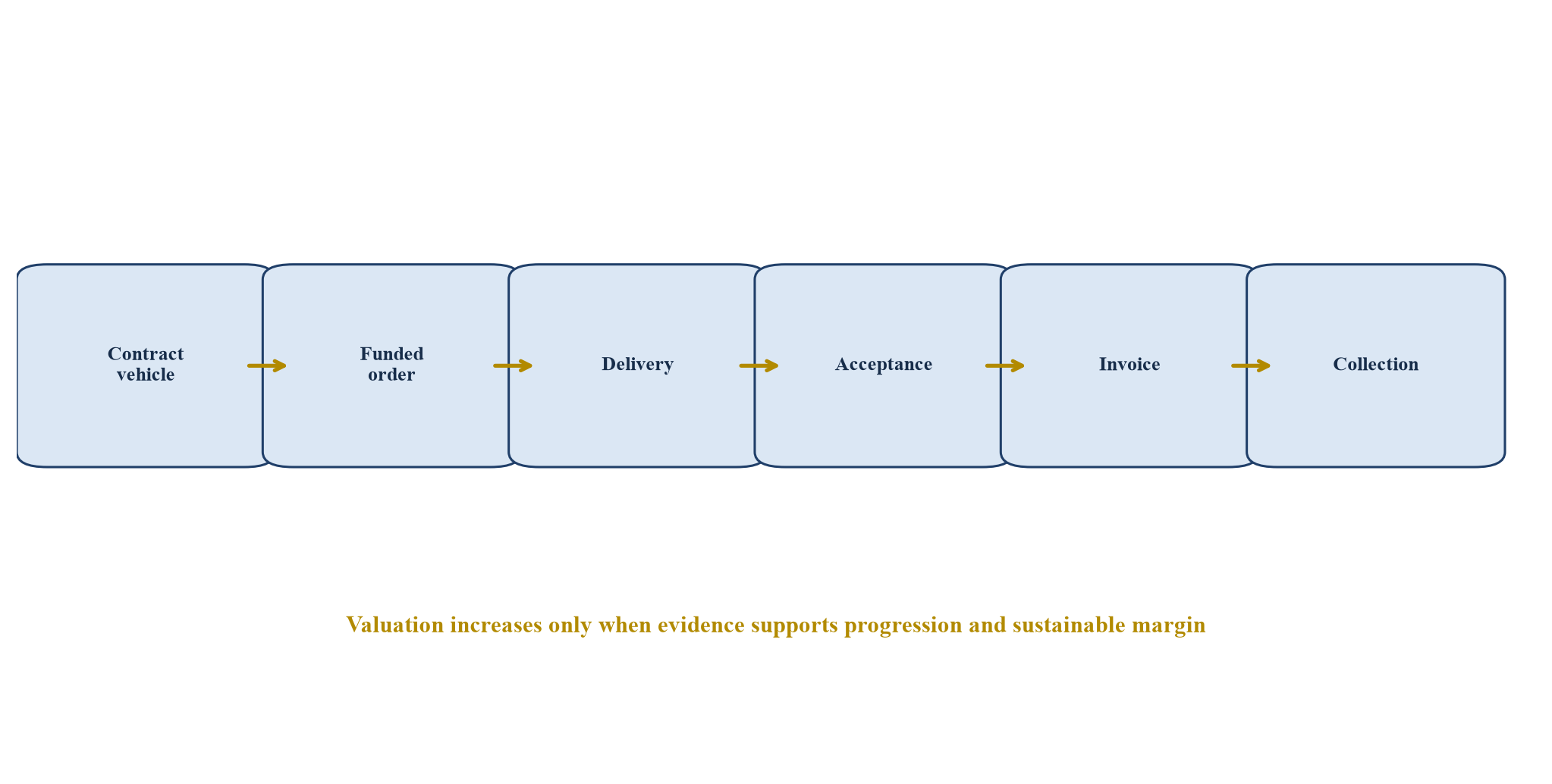
Proposed sequence separating procurement access from collected contribution.
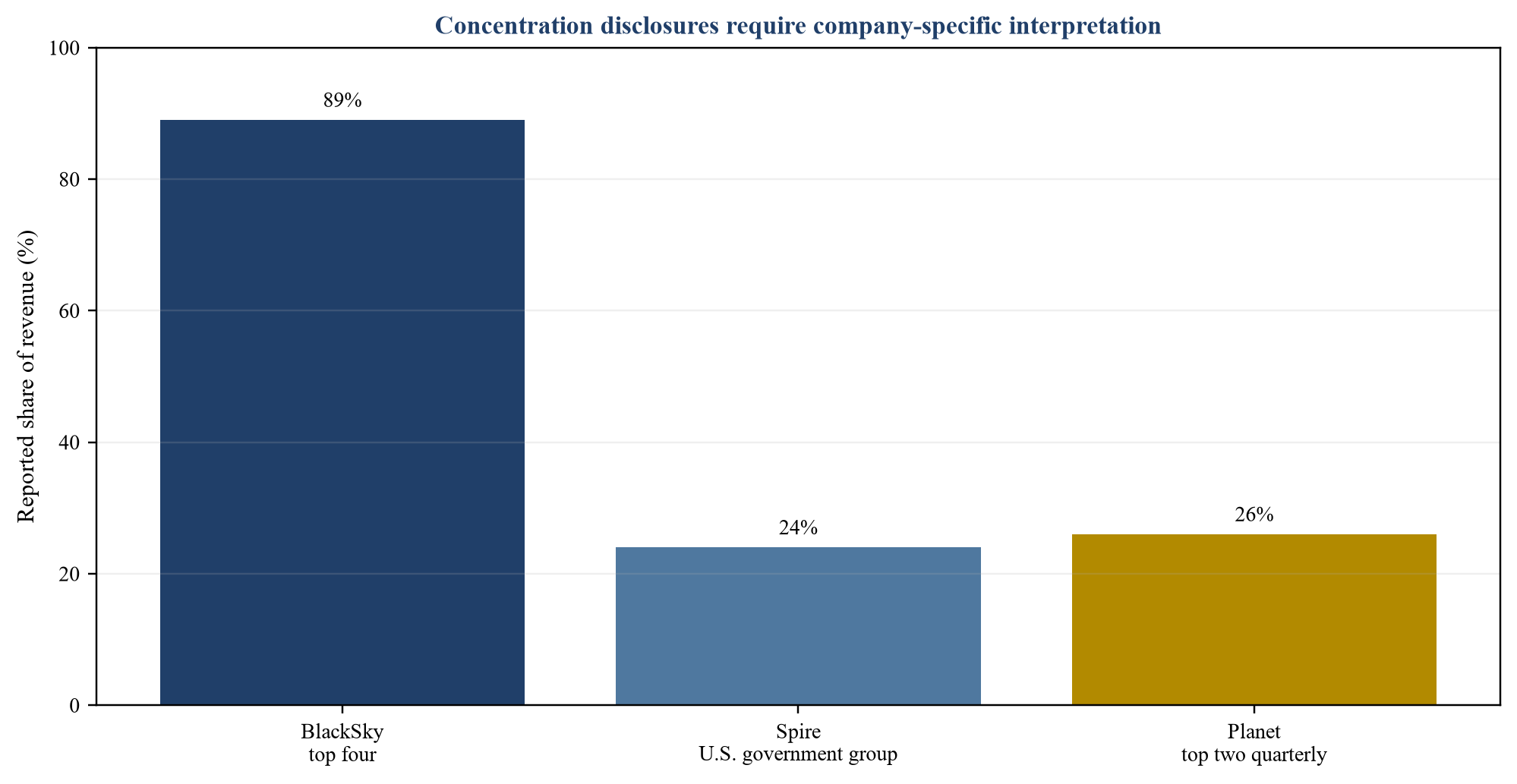
Publicly reported 2025 revenue concentration for BlackSky and Spire; Planet figures show its April 2026 quarter.
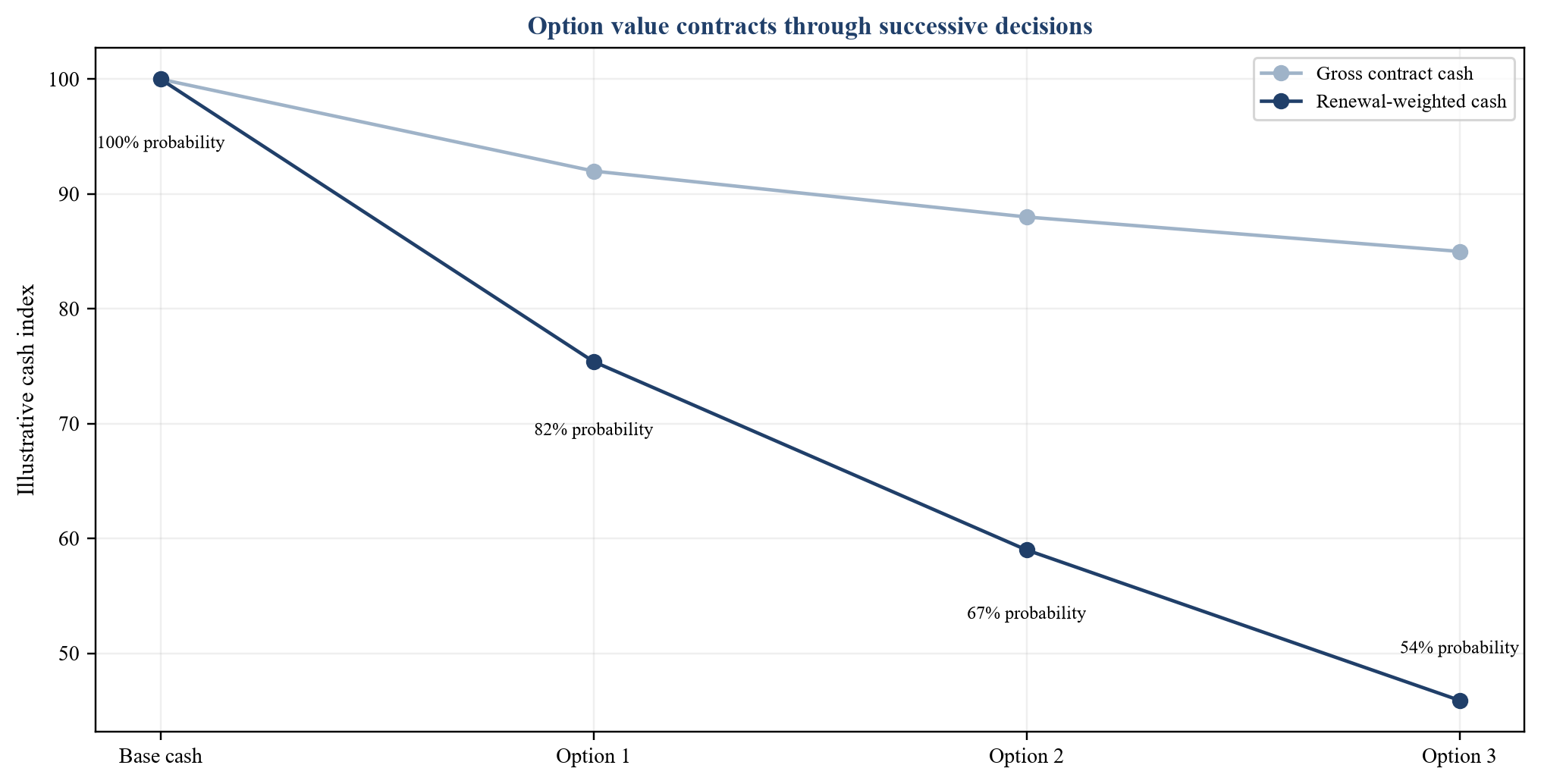
Illustrative conditional cash across three option decisions.
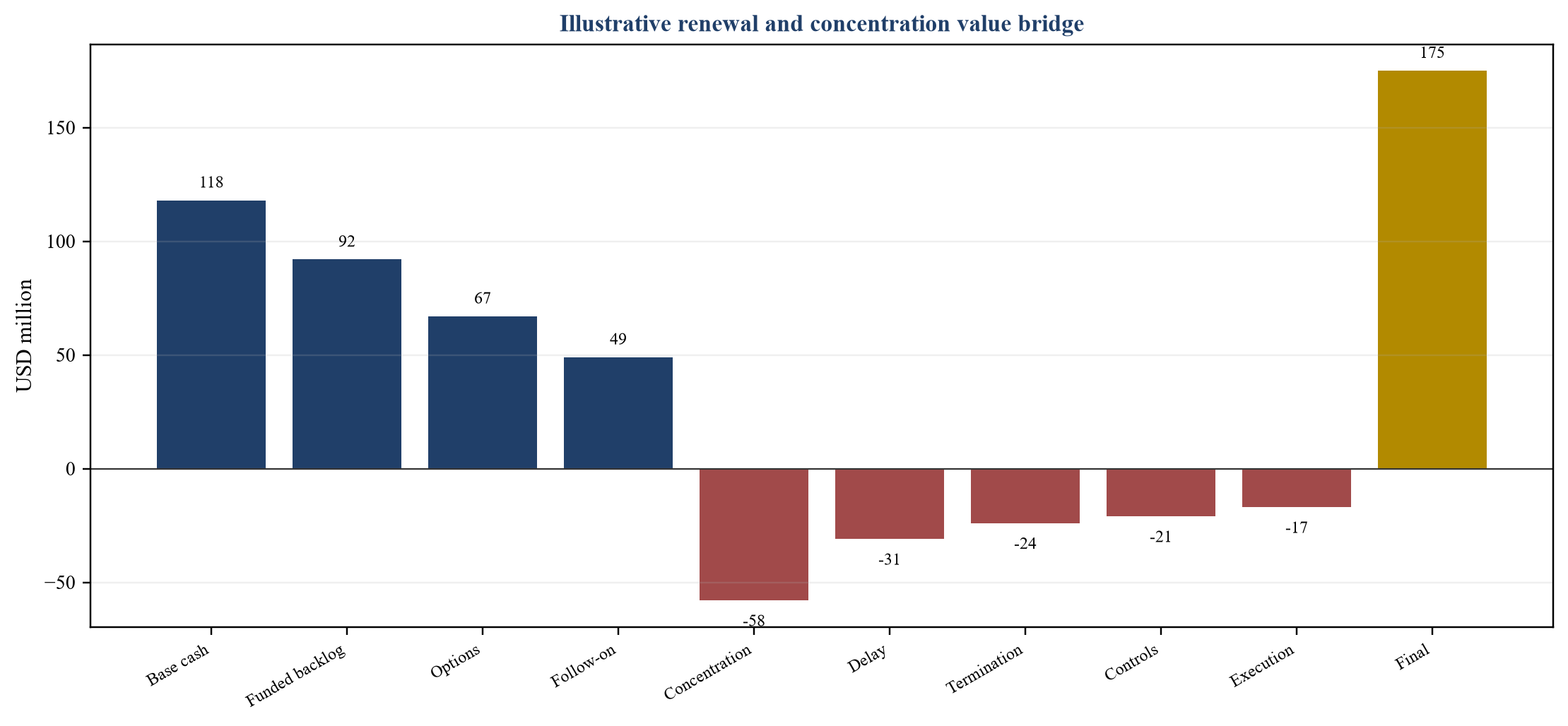
Illustrative bridge from admitted cash components to value after contract-quality deductions.
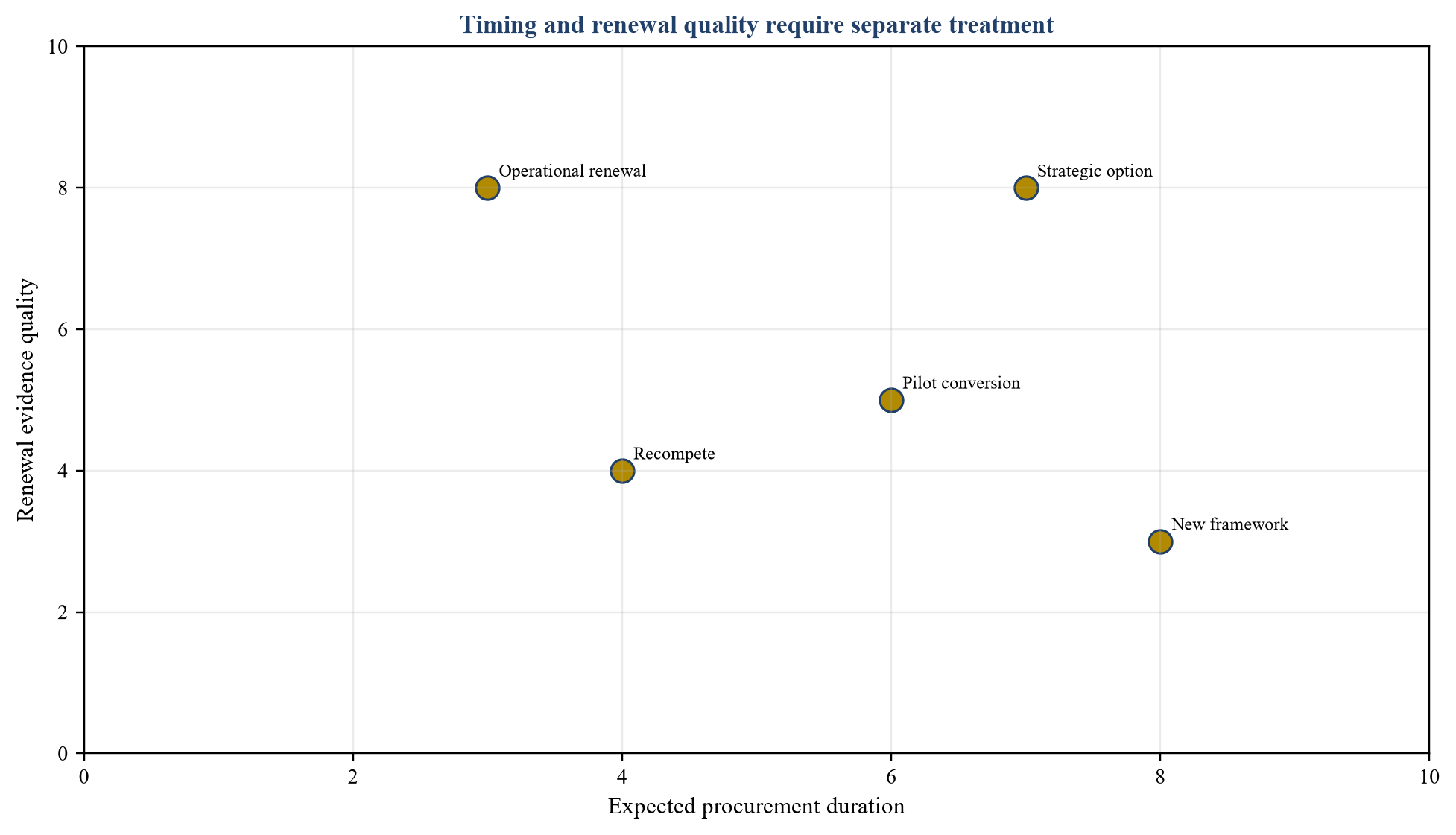
Proposed matrix linking cash timing and renewal evidence.
| State | Minimum evidence | Valuation treatment |
|---|---|---|
| Contract vehicle | executed access and eligible scope | no assumed orders |
| Funded authority | obligation or equivalent evidence | subject to order and performance |
| Order | executable scope, price and period | subject to delivery |
| Delivery | verified output and service level | subject to acceptance |
| Acceptance | customer confirmation or deemed acceptance | billable amount |
| Collection | cash receipt net of direct cost | realised contribution |
Proposed separation of headline awards from collected contribution.
| Company | Disclosed concentration | Period |
|---|---|---|
| BlackSky | four customers represented 89% of revenue | year ended 31 December 2025 |
| Spire | one U.S. government customer group represented 24% of revenue | year ended 31 December 2025 |
| Planet | two customers represented 15% and 11% of revenue | quarter ended 30 April 2026 |
| Planet | one customer represented 33% of accounts receivable | 30 April 2026 |
Company disclosures for stated reporting periods; comparisons require contract and accounting context.
| Level | Evidence | Treatment |
|---|---|---|
| Mission interest | stated need or pilot | pipeline only |
| Procurement access | eligible framework or vehicle | route to compete |
| Budget sponsorship | identified programme and funding path | conditional renewal |
| Funded order | executed and obligated order | backlog subject to performance |
| Accepted delivery | met contractual criteria | billable cash |
| Collected renewal | paid repeat order | observed renewal cohort |
Proposed hierarchy for option and follow-on value.
| Step | Amount | Required evidence |
|---|---|---|
| Collected and contracted base cash | 118 | contract, delivery and collection |
| Funded backlog | 92 | executable funded orders |
| Probability-weighted options | 67 | option schedule and renewal score |
| Qualified follow-on orders | 49 | programme and procurement evidence |
| Programme concentration | minus 58 | correlated loss stress |
| Procurement delay | minus 31 | cycle and liquidity model |
| Termination exposure | minus 24 | clause and recovery analysis |
| Security and export constraints | minus 21 | approvals and lawful perimeter |
| Margin and working-capital execution | minus 17 | customer contribution and cash cycle |
| Final illustrative value contribution | 175 | integrated evidence set |
All amounts are illustrative USD millions.
| Risk | Potential protection | Release evidence |
|---|---|---|
| Ownership consent | closing condition | written approval or completed novation |
| Option exercise | earn-out | funded exercised option |
| Customer retention | contingent consideration | collected retained contribution |
| Security clearance | holdback | required facility and personnel status |
| Backlog delivery | milestone payment | accepted deliverables and invoices |
| Concentration | price deduction | diversified collected cash |
Proposed allocation of unresolved government-contract risk.
| Asset | Potential eligibility | Core exclusion |
|---|---|---|
| Collected receivable | subject to ageing and offset | disputed or overdue amount |
| Accepted unbilled work | documented acceptance | performance still conditional |
| Funded backlog | advance rate after capacity test | termination or funding uncertainty |
| Option years | generally excluded | customer decision outstanding |
| Vehicle ceiling | excluded | no order or obligation |
| International sovereign cash | country-specific test | transfer, currency or sanctions restriction |
Proposed borrowing-base discipline.
| Dimension | Core measure | Trigger |
|---|---|---|
| Funding | obligated and available amount | reduction or lapse |
| Orders | value, timing and conversion | cadence below case |
| Performance | accepted delivery and service levels | breach or credit |
| Renewal | option and recompete evidence | score deterioration |
| Concentration | sovereign, agency and programme shares | limit breach |
| Cash | invoicing, collection and contribution | liquidity shortfall |
| Controls | clearances, licences and security | approval or incident |
Proposed monthly board record.
Sources
- BlackSky Technology Inc., Annual Report for the year ended 31 December 2025. Read the primary source
- Spire Global Inc., Annual Report for the year ended 31 December 2025. Read the primary source
- Planet Labs PBC, Quarterly Report for the quarter ended 30 April 2026. Read the primary source
- Planet Labs PBC, Annual Report for the year ended 31 January 2026. Read the primary source
- National Reconnaissance Office, Electro-Optical Commercial Layer awards, 25 May 2022. Read the primary source
- U.S. Government Accountability Office, National Security Space: Actions Needed to Better Use Commercial Satellite Imagery and Analytics, GAO-22-106106. Read the primary source
- U.S. Government Accountability Office, National Security Space: Overview of Contracts for Commercial Satellite Imagery, GAO-23-106042. Read the primary source
- U.S. Government Accountability Office, National Security Space: DOD Has Opportunities to Improve Its Use of Commercial Data and Related Services, GAO-26-107959. Read the primary source
- NASA, Commercial Satellite Data Acquisition Programme. Read the primary source
- U.S. Federal Acquisition Regulation, Part 49, Termination of Contracts. Read the primary source
- U.S. Federal Acquisition Regulation, Section 12.403, Termination. Read the primary source
- U.S. Federal Acquisition Regulation, Clause 52.249-2, Termination for Convenience of the Government. Read the primary source
- U.S. Federal Acquisition Regulation, Section 8.406-5, Termination for the Government's Convenience. Read the primary source
- U.S. Government Accountability Office, Satellite Acquisitions: Agencies May Recover a Limited Portion of Contract Value When Satellites Fail, GAO-17-490. Read the primary source
- U.S. National Institute of Standards and Technology, Cybersecurity Framework 2.0. Read the primary source
- U.S. National Institute of Standards and Technology, Artificial Intelligence Risk Management Framework 1.0. Read the primary source
- U.S. Department of Commerce, Bureau of Industry and Security, Export Administration Regulations. Read the primary source
- Office of Foreign Assets Control, Sanctions Programs and Country Information. Read the primary source
- Committee on Foreign Investment in the United States, CFIUS Overview. Read the primary source
- IFRS Foundation, IFRS 15 Revenue from Contracts with Customers. Read the primary source
- IFRS Foundation, IFRS 3 Business Combinations. Read the primary source
- IFRS Foundation, IAS 36 Impairment of Assets. Read the primary source
- IFRS Foundation, IFRS 13 Fair Value Measurement. Read the primary source
- International Valuation Standards Council, International Valuation Standards. Read the primary source
- European Union, Regulation (EU) 2024/1689 laying down harmonised rules on artificial intelligence. Read the primary source
