

1. Define the financing decision
State whether the analysis supports fleet deployment, maintenance planning, dry-dock scope, refinancing, acquisition, sale, lease or covenant review. Freeze the vessels, equipment, failure modes, period and accountable decision maker.
Controlled evidence includes approved mandate; fleet and equipment scope; financing purpose; valuation date; accountable committee. The immediate decision is to freeze the decision perimeter before reliability claims enter the model. Definitions should remain stable across technical records, maintenance systems, charter workpapers and financial models.
Evidence should remain vessel-, equipment-, failure-mode- and period-specific. The analysis should preserve false alarms, missed detections, overrides, repeat defects, unplanned failures and adverse outcomes.
Decision makers need both upside and downside. The analysis should state which party controls conversion, what investment remains, when cash appears, which risks survive and whether the result continues after a change of ownership. Unsupported precision should be replaced with bounded scenarios. The committee should record the decision consequence of each range, including price, structure, funding, covenant, integration and monitoring implications.
2. Use the asset event as the analytical unit
A traceable event links equipment, signal, model version, diagnosis, approval, work order, parts, downtime, return to service, charter consequence and cash.
Controlled evidence includes asset identifier; event time; signal; recommendation; work order; downtime; invoice; settlement. The immediate decision is to retain one identifier from sensor observation through financial outcome. Definitions should remain stable across technical records, maintenance systems, charter workpapers and financial models.
Finance should distinguish observed operation, engineering estimate, funded action, management forecast and buyer-specific opportunity. Every benefit needs timing, full cost, responsibility and a route to cash.
The analytical unit should remain stable from source record to valuation conclusion. Reviewers should see the population, exclusions, period, owner and reconciliation to finance. Where evidence is incomplete, the model should retain a range and identify the action needed to narrow it. Comparisons should preserve product, customer, site, complexity and market conditions; aggregation should not conceal adverse cohorts or delayed consequences.
3. Preserve safety and engineering authority
The chief engineer, master, shore technical team, class and original-equipment manufacturer can hold different decision rights. A model output should not displace approved safety responsibility.
Controlled evidence includes role matrix; Safety Management System; class condition; maker instruction; approval; override. The immediate decision is to require accountable engineering review for safety-critical action. Definitions should remain stable across technical records, maintenance systems, charter workpapers and financial models.
Engineering, marine operations, procurement, chartering and finance should use the same equipment and event identifiers. Representative cases should be traced from signal through settlement.
Evidence should distinguish observation, estimate, management plan and transaction judgement. A supported claim includes timing, full cost, dependency, transferability and a cash consequence. Sensitivity should show how the conclusion changes when adoption, demand, quality or persistence underperforms. Material assumptions need validation dates, accountable owners and explicit expiry conditions so that stale expectations do not survive into pricing or financing decisions.
4. Build the asset-criticality register
Criticality should reflect safety, propulsion, power, cargo, environmental, redundancy, charter and repair consequences. Purchase price alone is an incomplete measure.
Controlled evidence includes equipment hierarchy; redundancy; failure consequence; lead time; charter exposure; replacement cost. The immediate decision is to direct analytical effort and spares toward consequence-weighted assets. Definitions should remain stable across technical records, maintenance systems, charter workpapers and financial models.
Decision makers need bounded downside for sensor failure, model error, unsafe advice, part delay, cyber incident, class restriction, charter dispute, vendor exit and weak adoption.
The operating team and finance team should use the same definitions. Native records should support aggregate dashboards, and sample testing should follow representative cases from input through outcome and cash. Exceptions, failed cases and client concessions remain part of the population. Reconciliation should cover opening and closing balances, acquisitions, disposals, foreign exchange, allocation changes and manual adjustments that could otherwise mimic operating improvement.
5. Map failure modes and effects
Each model should address a defined failure mode, causal mechanism, detectable precursor and feasible intervention. Broad equipment-health scores can conceal different risks.
Controlled evidence includes failure-mode analysis; causal evidence; precursor; consequence; control; owner. The immediate decision is to connect every signal to a technically plausible failure path. Definitions should remain stable across technical records, maintenance systems, charter workpapers and financial models.
Evidence should remain vessel-, equipment-, failure-mode- and period-specific. The analysis should preserve false alarms, missed detections, overrides, repeat defects, unplanned failures and adverse outcomes.
Decision makers need both upside and downside. The analysis should state which party controls conversion, what investment remains, when cash appears, which risks survive and whether the result continues after a change of ownership. Unsupported precision should be replaced with bounded scenarios. The committee should record the decision consequence of each range, including price, structure, funding, covenant, integration and monitoring implications.
6. Design the signal-to-action loop
The loop should connect sensing, validation, diagnosis, prognosis, decision, planning, execution, verification and learning. Time and authority matter at every stage.
Controlled evidence includes sensor record; alert; diagnosis; approver; work order; completion; post-work test. The immediate decision is to measure whether an alert changes a controlled maintenance decision. Definitions should remain stable across technical records, maintenance systems, charter workpapers and financial models.
Finance should distinguish observed operation, engineering estimate, funded action, management forecast and buyer-specific opportunity. Every benefit needs timing, full cost, responsibility and a route to cash.
The analytical unit should remain stable from source record to valuation conclusion. Reviewers should see the population, exclusions, period, owner and reconciliation to finance. Where evidence is incomplete, the model should retain a range and identify the action needed to narrow it. Comparisons should preserve product, customer, site, complexity and market conditions; aggregation should not conceal adverse cohorts or delayed consequences.
Table 1. Signal-to-action loop
| Stage | Required evidence | Decision question |
|---|---|---|
| sense | calibrated signal and operating state | what was observed? |
| interpret | versioned alert, diagnosis and uncertainty | what did it mean? |
| decide | engineer approval or override | what action was authorised? |
| execute | work order, part and test | what changed? |
| outcome | availability, cost and cash | what value was protected? |
Replace illustrative classifications with company-specific evidence and approved transaction treatment.
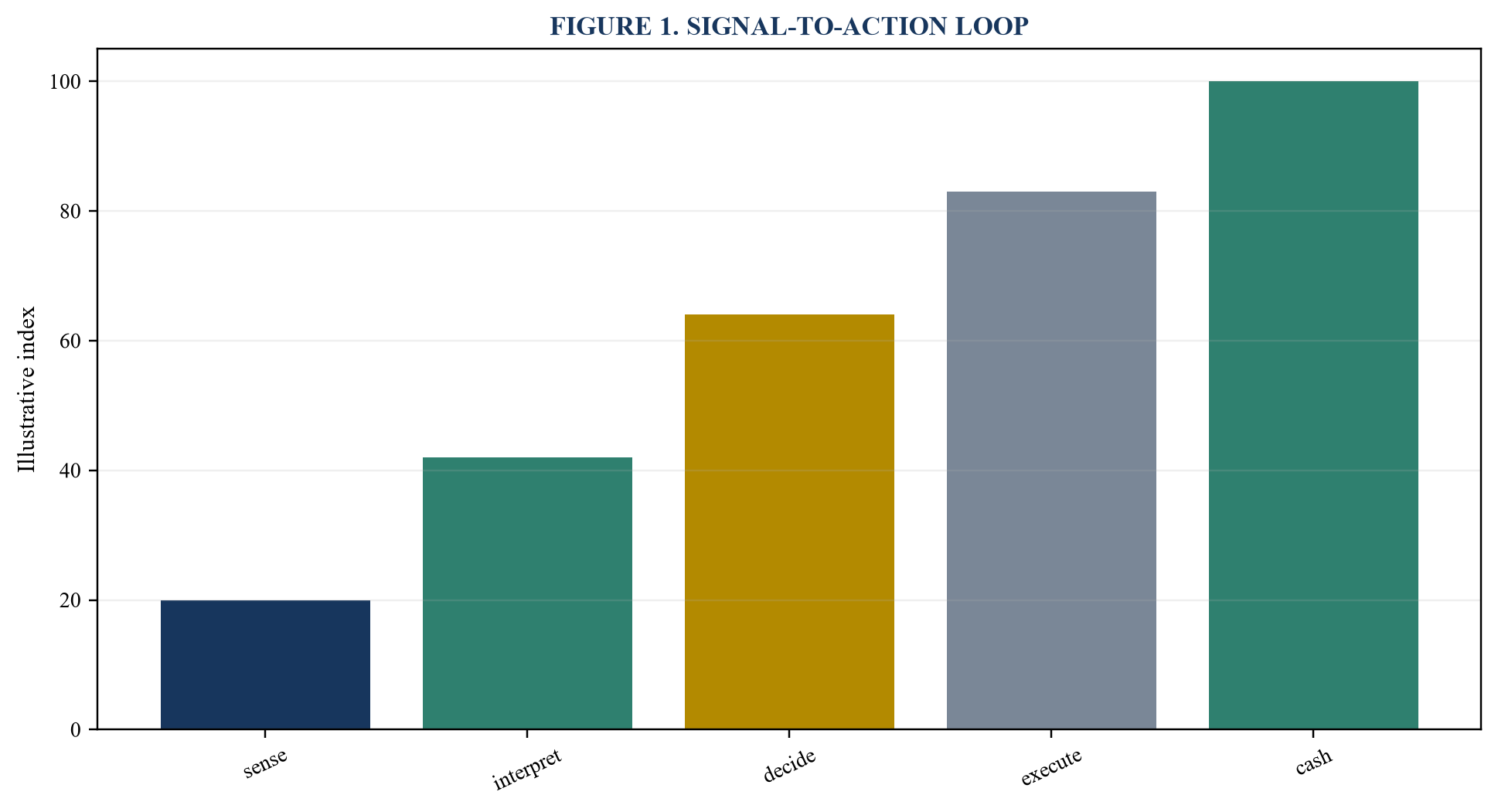
An alert creates value only through accountable intervention and verified outcome.
7. Establish the counterfactual baseline
Avoided failure cannot be directly observed. The baseline should estimate failure, downtime and cost without the intervention using comparable equipment and operating conditions.
Controlled evidence includes historical events; matched assets; duty cycle; age; environment; maintenance history. The immediate decision is to replace gross avoided-cost assertions with a bounded counterfactual. Definitions should remain stable across technical records, maintenance systems, charter workpapers and financial models.
Engineering, marine operations, procurement, chartering and finance should use the same equipment and event identifiers. Representative cases should be traced from signal through settlement.
Evidence should distinguish observation, estimate, management plan and transaction judgement. A supported claim includes timing, full cost, dependency, transferability and a cash consequence. Sensitivity should show how the conclusion changes when adoption, demand, quality or persistence underperforms. Material assumptions need validation dates, accountable owners and explicit expiry conditions so that stale expectations do not survive into pricing or financing decisions.
8. Control sensor fitness
Sampling rate, range, calibration, drift, installation, timestamp and data loss determine whether vibration, temperature, pressure, lubricant or electrical signals are decision-ready.
Controlled evidence includes sensor specification; calibration; clock; missingness; drift; installation; quality rule. The immediate decision is to exclude data outside an approved measurement envelope. Definitions should remain stable across technical records, maintenance systems, charter workpapers and financial models.
Decision makers need bounded downside for sensor failure, model error, unsafe advice, part delay, cyber incident, class restriction, charter dispute, vendor exit and weak adoption.
The operating team and finance team should use the same definitions. Native records should support aggregate dashboards, and sample testing should follow representative cases from input through outcome and cash. Exceptions, failed cases and client concessions remain part of the population. Reconciliation should cover opening and closing balances, acquisitions, disposals, foreign exchange, allocation changes and manual adjustments that could otherwise mimic operating improvement.
9. Create the equipment data lineage
Operational technology, historian, condition-monitoring platform, maintenance system, finance ledger and vendor cloud can transform the same event differently.
Controlled evidence includes source inventory; owner; units; transformations; retention; access; reconciliation. The immediate decision is to make each material maintenance claim reproducible from native records. Definitions should remain stable across technical records, maintenance systems, charter workpapers and financial models.
Evidence should remain vessel-, equipment-, failure-mode- and period-specific. The analysis should preserve false alarms, missed detections, overrides, repeat defects, unplanned failures and adverse outcomes.
Decision makers need both upside and downside. The analysis should state which party controls conversion, what investment remains, when cash appears, which risks survive and whether the result continues after a change of ownership. Unsupported precision should be replaced with bounded scenarios. The committee should record the decision consequence of each range, including price, structure, funding, covenant, integration and monitoring implications.
10. Separate detection, diagnosis and prognosis
Anomaly detection indicates difference; diagnosis identifies a likely fault; prognosis estimates future condition or remaining useful life. Each output needs its own validation.
Controlled evidence includes model objective; label; horizon; error measure; decision threshold; approved use. The immediate decision is to prevent an anomaly score from being treated as a failure date. Definitions should remain stable across technical records, maintenance systems, charter workpapers and financial models.
Finance should distinguish observed operation, engineering estimate, funded action, management forecast and buyer-specific opportunity. Every benefit needs timing, full cost, responsibility and a route to cash.
The analytical unit should remain stable from source record to valuation conclusion. Reviewers should see the population, exclusions, period, owner and reconciliation to finance. Where evidence is incomplete, the model should retain a range and identify the action needed to narrow it. Comparisons should preserve product, customer, site, complexity and market conditions; aggregation should not conceal adverse cohorts or delayed consequences.
11. Freeze thresholds before outcome review
Alert thresholds should reflect failure consequence, intervention lead time, false-alarm cost and missed-detection risk. Retrospective tuning can overstate performance.
Controlled evidence includes threshold version; approval date; operating domain; alert population; exceptions. The immediate decision is to test prospective performance under frozen decision rules. Definitions should remain stable across technical records, maintenance systems, charter workpapers and financial models.
Engineering, marine operations, procurement, chartering and finance should use the same equipment and event identifiers. Representative cases should be traced from signal through settlement.
Evidence should distinguish observation, estimate, management plan and transaction judgement. A supported claim includes timing, full cost, dependency, transferability and a cash consequence. Sensitivity should show how the conclusion changes when adoption, demand, quality or persistence underperforms. Material assumptions need validation dates, accountable owners and explicit expiry conditions so that stale expectations do not survive into pricing or financing decisions.
12. Manage false alarms and missed detections
False alarms consume labour, parts and availability; missed detections can cause casualty, off-hire and loss. Average accuracy can hide the economically material tail.
Controlled evidence includes confusion matrix; failure consequence; investigation cost; downtime; root cause. The immediate decision is to price both error types by equipment and operating context. Definitions should remain stable across technical records, maintenance systems, charter workpapers and financial models.
Decision makers need bounded downside for sensor failure, model error, unsafe advice, part delay, cyber incident, class restriction, charter dispute, vendor exit and weak adoption.
The operating team and finance team should use the same definitions. Native records should support aggregate dashboards, and sample testing should follow representative cases from input through outcome and cash. Exceptions, failed cases and client concessions remain part of the population. Reconciliation should cover opening and closing balances, acquisitions, disposals, foreign exchange, allocation changes and manual adjustments that could otherwise mimic operating improvement.
Table 2. Error economics
| Outcome | Operational effect | Financial treatment |
|---|---|---|
| true positive | planned intervention before failure | net realised protection |
| false positive | inspection or work without confirmed fault | investigation and outage cost |
| true negative | continued operation without event | monitoring evidence |
| false negative | unanticipated failure | full downside and control review |
Replace illustrative classifications with company-specific evidence and approved transaction treatment.
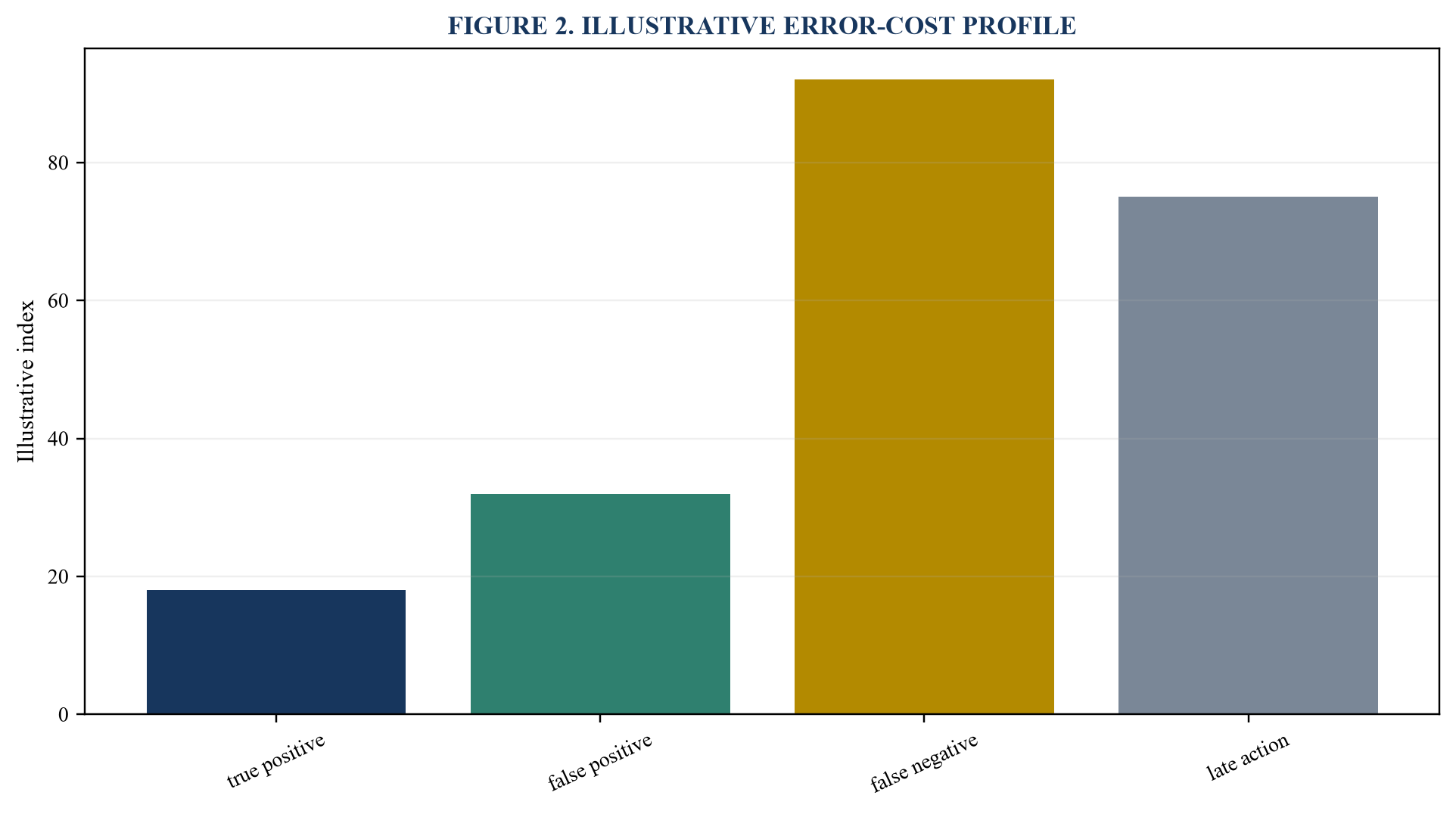
Replace indices with equipment- and failure-specific evidence.
13. Validate remaining useful life
Remaining-useful-life estimates require a stated degradation mechanism, uncertainty range and update rule. A precise point estimate can mislead maintenance and reserve decisions.
Controlled evidence includes degradation model; inspection; confidence range; validation cases; update history. The immediate decision is to use ranges tied to intervention windows and downside actions. Definitions should remain stable across technical records, maintenance systems, charter workpapers and financial models.
Evidence should remain vessel-, equipment-, failure-mode- and period-specific. The analysis should preserve false alarms, missed detections, overrides, repeat defects, unplanned failures and adverse outcomes.
Decision makers need both upside and downside. The analysis should state which party controls conversion, what investment remains, when cash appears, which risks survive and whether the result continues after a change of ownership. Unsupported precision should be replaced with bounded scenarios. The committee should record the decision consequence of each range, including price, structure, funding, covenant, integration and monitoring implications.
14. Account for operating context
Load, speed, fuel, weather, ambient conditions, maintenance, crew practice and voyage profile can alter sensor patterns without a developing fault.
Controlled evidence includes operating state; load; environment; voyage; maintenance date; configuration. The immediate decision is to control context before attributing a signal to degradation. Definitions should remain stable across technical records, maintenance systems, charter workpapers and financial models.
Finance should distinguish observed operation, engineering estimate, funded action, management forecast and buyer-specific opportunity. Every benefit needs timing, full cost, responsibility and a route to cash.
The analytical unit should remain stable from source record to valuation conclusion. Reviewers should see the population, exclusions, period, owner and reconciliation to finance. Where evidence is incomplete, the model should retain a range and identify the action needed to narrow it. Comparisons should preserve product, customer, site, complexity and market conditions; aggregation should not conceal adverse cohorts or delayed consequences.
15. Integrate planned maintenance
Condition-based recommendations should reconcile to planned tasks, statutory inspections, class surveys, maker requirements and dry-dock windows.
Controlled evidence includes maintenance programme; class status; survey window; maker interval; deferral approval. The immediate decision is to coordinate condition evidence with approved maintenance obligations. Definitions should remain stable across technical records, maintenance systems, charter workpapers and financial models.
Engineering, marine operations, procurement, chartering and finance should use the same equipment and event identifiers. Representative cases should be traced from signal through settlement.
Evidence should distinguish observation, estimate, management plan and transaction judgement. A supported claim includes timing, full cost, dependency, transferability and a cash consequence. Sensitivity should show how the conclusion changes when adoption, demand, quality or persistence underperforms. Material assumptions need validation dates, accountable owners and explicit expiry conditions so that stale expectations do not survive into pricing or financing decisions.
16. Govern maintenance deferral
A recommendation to defer work can create value only when safety, class, maker, warranty and failure-risk conditions support the decision.
Controlled evidence includes deferral request; technical basis; risk assessment; approval; expiry; monitoring. The immediate decision is to make deferral a dated accountable decision with stop conditions. Definitions should remain stable across technical records, maintenance systems, charter workpapers and financial models.
Decision makers need bounded downside for sensor failure, model error, unsafe advice, part delay, cyber incident, class restriction, charter dispute, vendor exit and weak adoption.
The operating team and finance team should use the same definitions. Native records should support aggregate dashboards, and sample testing should follow representative cases from input through outcome and cash. Exceptions, failed cases and client concessions remain part of the population. Reconciliation should cover opening and closing balances, acquisitions, disposals, foreign exchange, allocation changes and manual adjustments that could otherwise mimic operating improvement.
17. Optimise intervention timing
Early intervention can waste useful life and create outage; late intervention can convert a planned task into an emergency. Timing should minimise expected whole-life consequence.
Controlled evidence includes failure probability; lead time; repair duration; port access; charter window; cost. The immediate decision is to choose a feasible window using risk-adjusted total cost. Definitions should remain stable across technical records, maintenance systems, charter workpapers and financial models.
Evidence should remain vessel-, equipment-, failure-mode- and period-specific. The analysis should preserve false alarms, missed detections, overrides, repeat defects, unplanned failures and adverse outcomes.
Decision makers need both upside and downside. The analysis should state which party controls conversion, what investment remains, when cash appears, which risks survive and whether the result continues after a change of ownership. Unsupported precision should be replaced with bounded scenarios. The committee should record the decision consequence of each range, including price, structure, funding, covenant, integration and monitoring implications.
18. Plan spares and logistics
Predictive lead time has value when the correct part, technician, permit, berth and lifting capability can reach the vessel before deterioration crosses a limit.
Controlled evidence includes bill of materials; stock; lead time; supplier; transport; technician; port plan. The immediate decision is to convert warning time into executable maintenance readiness. Definitions should remain stable across technical records, maintenance systems, charter workpapers and financial models.
Finance should distinguish observed operation, engineering estimate, funded action, management forecast and buyer-specific opportunity. Every benefit needs timing, full cost, responsibility and a route to cash.
The analytical unit should remain stable from source record to valuation conclusion. Reviewers should see the population, exclusions, period, owner and reconciliation to finance. Where evidence is incomplete, the model should retain a range and identify the action needed to narrow it. Comparisons should preserve product, customer, site, complexity and market conditions; aggregation should not conceal adverse cohorts or delayed consequences.
19. Reconcile work-order execution
A closed work order does not prove fault removal. Scope, findings, parts, labour, test result, repeat alert and return-to-service evidence should agree.
Controlled evidence includes job plan; technician record; parts issue; finding; test; sign-off; recurrence. The immediate decision is to verify technical closure before recognising financial benefit. Definitions should remain stable across technical records, maintenance systems, charter workpapers and financial models.
Engineering, marine operations, procurement, chartering and finance should use the same equipment and event identifiers. Representative cases should be traced from signal through settlement.
Evidence should distinguish observation, estimate, management plan and transaction judgement. A supported claim includes timing, full cost, dependency, transferability and a cash consequence. Sensitivity should show how the conclusion changes when adoption, demand, quality or persistence underperforms. Material assumptions need validation dates, accountable owners and explicit expiry conditions so that stale expectations do not survive into pricing or financing decisions.
20. Measure off-hire exposure
Off-hire depends on the charter terms, causal event, service capability, notices, duration and evidence. Technical downtime and contractual off-hire can differ.
Controlled evidence includes charterparty; event log; notice; statements of fact; hire statement; settlement. The immediate decision is to bridge machinery unavailability to the actual contractual cash consequence. Definitions should remain stable across technical records, maintenance systems, charter workpapers and financial models.
Decision makers need bounded downside for sensor failure, model error, unsafe advice, part delay, cyber incident, class restriction, charter dispute, vendor exit and weak adoption.
The operating team and finance team should use the same definitions. Native records should support aggregate dashboards, and sample testing should follow representative cases from input through outcome and cash. Exceptions, failed cases and client concessions remain part of the population. Reconciliation should cover opening and closing balances, acquisitions, disposals, foreign exchange, allocation changes and manual adjustments that could otherwise mimic operating improvement.
Table 3. Off-hire evidence bridge
| Layer | Evidence | Reconciliation |
|---|---|---|
| technical | availability and repair event | equipment timeline |
| operational | service capability and delay | voyage record |
| contractual | off-hire clause and notices | hire statement |
| financial | settlement, invoice and collection | ledger and bank |
Replace illustrative classifications with company-specific evidence and approved transaction treatment.
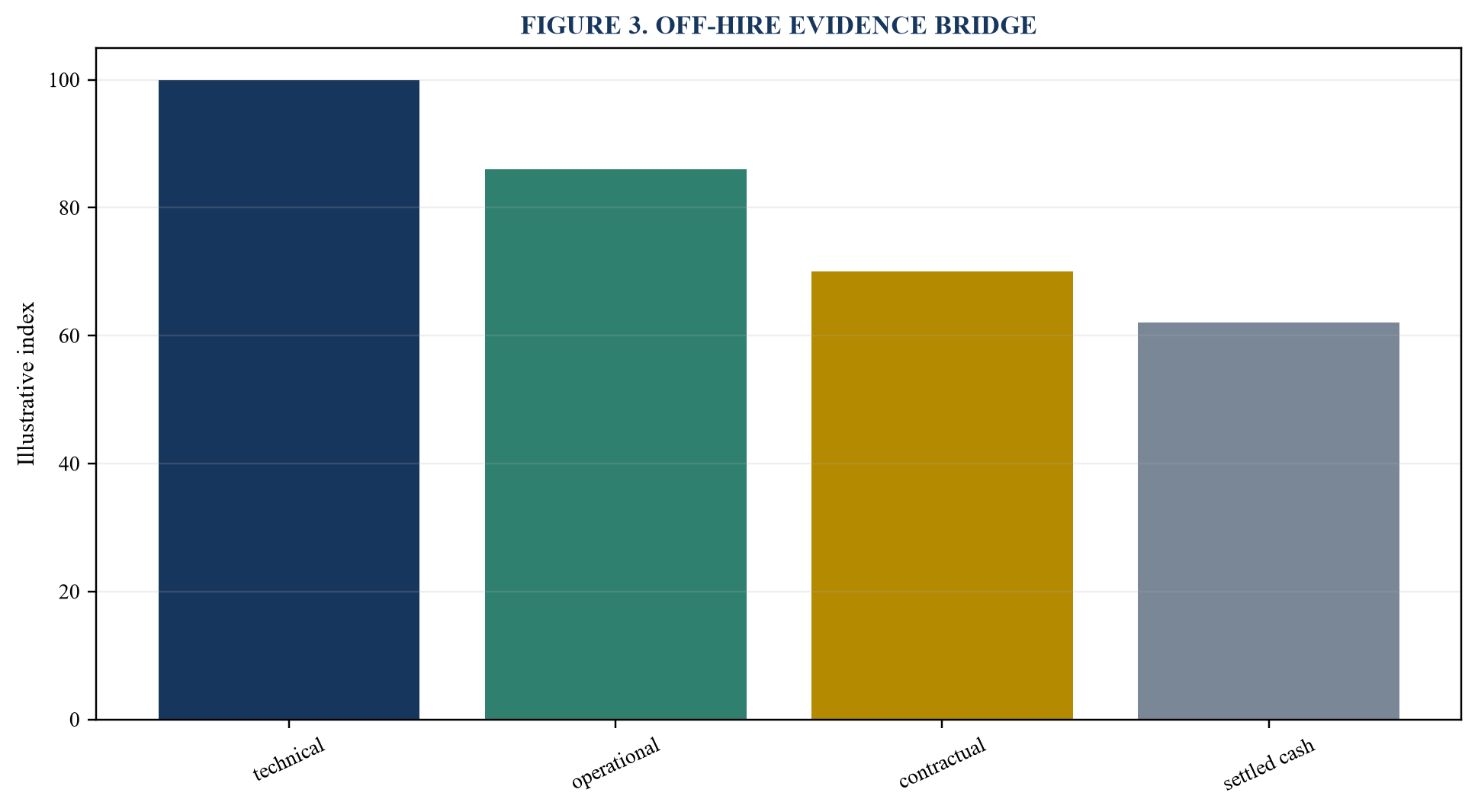
Technical downtime and contractual cash require separate proof.
21. Protect schedule and cargo service
A failure can create delay, port omission, transshipment, cargo damage, customer concession and network recovery cost beyond lost hire.
Controlled evidence includes schedule; cargo commitment; delay event; claim; recovery action; customer settlement. The immediate decision is to include service and cargo consequences in failure severity. Definitions should remain stable across technical records, maintenance systems, charter workpapers and financial models.
Evidence should remain vessel-, equipment-, failure-mode- and period-specific. The analysis should preserve false alarms, missed detections, overrides, repeat defects, unplanned failures and adverse outcomes.
Decision makers need both upside and downside. The analysis should state which party controls conversion, what investment remains, when cash appears, which risks survive and whether the result continues after a change of ownership. Unsupported precision should be replaced with bounded scenarios. The committee should record the decision consequence of each range, including price, structure, funding, covenant, integration and monitoring implications.
22. Distinguish planned and emergency cost
Emergency repair can include premium labour, expedited parts, towage, deviation, port, class, accommodation and consequential costs. Planned work has its own outage and mobilisation cost.
Controlled evidence includes repair scope; invoice; premium; port call; towage; travel; downtime. The immediate decision is to compare full intervention pathways rather than spare-part prices. Definitions should remain stable across technical records, maintenance systems, charter workpapers and financial models.
Finance should distinguish observed operation, engineering estimate, funded action, management forecast and buyer-specific opportunity. Every benefit needs timing, full cost, responsibility and a route to cash.
The analytical unit should remain stable from source record to valuation conclusion. Reviewers should see the population, exclusions, period, owner and reconciliation to finance. Where evidence is incomplete, the model should retain a range and identify the action needed to narrow it. Comparisons should preserve product, customer, site, complexity and market conditions; aggregation should not conceal adverse cohorts or delayed consequences.
23. Model dry-dock and capex consequences
Condition evidence can accelerate, defer or reshape dry-dock work. Capex treatment should preserve required class, safety and useful-life expenditure.
Controlled evidence includes dock plan; survey scope; steel and machinery finding; quotation; contingency; approval. The immediate decision is to connect predictive evidence to funded scope and remaining useful life. Definitions should remain stable across technical records, maintenance systems, charter workpapers and financial models.
Engineering, marine operations, procurement, chartering and finance should use the same equipment and event identifiers. Representative cases should be traced from signal through settlement.
Evidence should distinguish observation, estimate, management plan and transaction judgement. A supported claim includes timing, full cost, dependency, transferability and a cash consequence. Sensitivity should show how the conclusion changes when adoption, demand, quality or persistence underperforms. Material assumptions need validation dates, accountable owners and explicit expiry conditions so that stale expectations do not survive into pricing or financing decisions.
24. Control cannibalisation and deferred defects
Parts transfers and repeated deferrals can keep one vessel operating while moving risk elsewhere. Fleet availability should not conceal accumulated technical debt.
Controlled evidence includes defect register; cannibalisation record; donor asset; replacement date; recurrence. The immediate decision is to reconcile local recovery with fleet-wide risk and liability. Definitions should remain stable across technical records, maintenance systems, charter workpapers and financial models.
Decision makers need bounded downside for sensor failure, model error, unsafe advice, part delay, cyber incident, class restriction, charter dispute, vendor exit and weak adoption.
The operating team and finance team should use the same definitions. Native records should support aggregate dashboards, and sample testing should follow representative cases from input through outcome and cash. Exceptions, failed cases and client concessions remain part of the population. Reconciliation should cover opening and closing balances, acquisitions, disposals, foreign exchange, allocation changes and manual adjustments that could otherwise mimic operating improvement.
25. Integrate energy-efficiency consequences
Degraded hull, propeller, engine and auxiliary systems can increase fuel use and emissions. Maintenance effect should be separated from route, speed and market-price effects.
Controlled evidence includes performance curve; fuel record; maintenance date; operating context; CII evidence. The immediate decision is to bridge restored technical condition to measured energy outcome. Definitions should remain stable across technical records, maintenance systems, charter workpapers and financial models.
Evidence should remain vessel-, equipment-, failure-mode- and period-specific. The analysis should preserve false alarms, missed detections, overrides, repeat defects, unplanned failures and adverse outcomes.
Decision makers need both upside and downside. The analysis should state which party controls conversion, what investment remains, when cash appears, which risks survive and whether the result continues after a change of ownership. Unsupported precision should be replaced with bounded scenarios. The committee should record the decision consequence of each range, including price, structure, funding, covenant, integration and monitoring implications.
26. Manage class and survey evidence
Alternative survey or machinery reliability programmes depend on approved plans, records and surveyor access. Analytical outputs should support the evidence package.
Controlled evidence includes class approval; maintenance plan; annual report; condition record; survey finding. The immediate decision is to preserve class acceptance and auditability as deployment conditions. Definitions should remain stable across technical records, maintenance systems, charter workpapers and financial models.
Finance should distinguish observed operation, engineering estimate, funded action, management forecast and buyer-specific opportunity. Every benefit needs timing, full cost, responsibility and a route to cash.
The analytical unit should remain stable from source record to valuation conclusion. Reviewers should see the population, exclusions, period, owner and reconciliation to finance. Where evidence is incomplete, the model should retain a range and identify the action needed to narrow it. Comparisons should preserve product, customer, site, complexity and market conditions; aggregation should not conceal adverse cohorts or delayed consequences.
27. Secure connected maintenance systems
Sensors, gateways, vendor access, software updates and shore connections create operational-technology and data risks that can affect safety and evidence integrity.
Controlled evidence includes asset inventory; access; segmentation; update; log; backup; incident response. The immediate decision is to include cyber residual risk in system approval and financing. Definitions should remain stable across technical records, maintenance systems, charter workpapers and financial models.
Engineering, marine operations, procurement, chartering and finance should use the same equipment and event identifiers. Representative cases should be traced from signal through settlement.
Evidence should distinguish observation, estimate, management plan and transaction judgement. A supported claim includes timing, full cost, dependency, transferability and a cash consequence. Sensitivity should show how the conclusion changes when adoption, demand, quality or persistence underperforms. Material assumptions need validation dates, accountable owners and explicit expiry conditions so that stale expectations do not survive into pricing or financing decisions.
28. Validate the model by operating domain
Performance can vary by equipment maker, vessel class, age, sensor, load and environment. Validation should state where the model may be used and when review is required.
Controlled evidence includes training population; test population; domain; error; drift; limitation; approval. The immediate decision is to restrict use to evidenced equipment and conditions. Definitions should remain stable across technical records, maintenance systems, charter workpapers and financial models.
Decision makers need bounded downside for sensor failure, model error, unsafe advice, part delay, cyber incident, class restriction, charter dispute, vendor exit and weak adoption.
The operating team and finance team should use the same definitions. Native records should support aggregate dashboards, and sample testing should follow representative cases from input through outcome and cash. Exceptions, failed cases and client concessions remain part of the population. Reconciliation should cover opening and closing balances, acquisitions, disposals, foreign exchange, allocation changes and manual adjustments that could otherwise mimic operating improvement.
29. Keep accountable human review
Engineers need alert context, uncertainty, recommended action and escalation. Overrides should be recorded without discouraging justified professional judgement.
Controlled evidence includes role; competence; alert; review; override; reason; outcome. The immediate decision is to make human decisions traceable and suitable for learning. Definitions should remain stable across technical records, maintenance systems, charter workpapers and financial models.
Evidence should remain vessel-, equipment-, failure-mode- and period-specific. The analysis should preserve false alarms, missed detections, overrides, repeat defects, unplanned failures and adverse outcomes.
Decision makers need both upside and downside. The analysis should state which party controls conversion, what investment remains, when cash appears, which risks survive and whether the result continues after a change of ownership. Unsupported precision should be replaced with bounded scenarios. The committee should record the decision consequence of each range, including price, structure, funding, covenant, integration and monitoring implications.
30. Build adoption and workflow capability
Value depends on crews, technical managers, procurement, class, finance and chartering acting within the available warning window.
Controlled evidence includes workflow; response time; completion; training; rejected alert; backlog; owner. The immediate decision is to measure sustained execution rather than dashboard access. Definitions should remain stable across technical records, maintenance systems, charter workpapers and financial models.
Finance should distinguish observed operation, engineering estimate, funded action, management forecast and buyer-specific opportunity. Every benefit needs timing, full cost, responsibility and a route to cash.
The analytical unit should remain stable from source record to valuation conclusion. Reviewers should see the population, exclusions, period, owner and reconciliation to finance. Where evidence is incomplete, the model should retain a range and identify the action needed to narrow it. Comparisons should preserve product, customer, site, complexity and market conditions; aggregation should not conceal adverse cohorts or delayed consequences.
31. Create matched equipment cohorts
Cohorts should preserve maker, model, age, duty cycle, maintenance state, sensor configuration and operating environment. Matching rules should be fixed before reviewing outcomes.
Controlled evidence includes population; inclusion; exclusion; matching key; balance test; observation period. The immediate decision is to reduce selection bias while retaining failures and exceptions. Definitions should remain stable across technical records, maintenance systems, charter workpapers and financial models.
Engineering, marine operations, procurement, chartering and finance should use the same equipment and event identifiers. Representative cases should be traced from signal through settlement.
Evidence should distinguish observation, estimate, management plan and transaction judgement. A supported claim includes timing, full cost, dependency, transferability and a cash consequence. Sensitivity should show how the conclusion changes when adoption, demand, quality or persistence underperforms. Material assumptions need validation dates, accountable owners and explicit expiry conditions so that stale expectations do not survive into pricing or financing decisions.
32. Attribute avoided failure carefully
Changes in downtime and cost can result from maintenance, spares, crew, operating profile, fleet renewal, warranty or chance. Attribution needs reconciled cohorts and sensitivity.
Controlled evidence includes baseline; intervention; confounder; timing; calculation; reviewer; range. The immediate decision is to avoid crediting every favourable reliability variance to the model. Definitions should remain stable across technical records, maintenance systems, charter workpapers and financial models.
Decision makers need bounded downside for sensor failure, model error, unsafe advice, part delay, cyber incident, class restriction, charter dispute, vendor exit and weak adoption.
The operating team and finance team should use the same definitions. Native records should support aggregate dashboards, and sample testing should follow representative cases from input through outcome and cash. Exceptions, failed cases and client concessions remain part of the population. Reconciliation should cover opening and closing balances, acquisitions, disposals, foreign exchange, allocation changes and manual adjustments that could otherwise mimic operating improvement.
33. Build the cash-protection bridge
The bridge should reconcile avoided off-hire, service recovery, repair, spares, dry-dock, insurance, fuel, software, connectivity, people, working capital and tax.
Controlled evidence includes event ledger; charter settlement; invoice; inventory; capex register; cash; full cost. The immediate decision is to separate gross avoided cost from recurring free cash flow. Definitions should remain stable across technical records, maintenance systems, charter workpapers and financial models.
Evidence should remain vessel-, equipment-, failure-mode- and period-specific. The analysis should preserve false alarms, missed detections, overrides, repeat defects, unplanned failures and adverse outcomes.
Decision makers need both upside and downside. The analysis should state which party controls conversion, what investment remains, when cash appears, which risks survive and whether the result continues after a change of ownership. Unsupported precision should be replaced with bounded scenarios. The committee should record the decision consequence of each range, including price, structure, funding, covenant, integration and monitoring implications.
Table 4. Cash-protection bridge
| Line | Evidence | Primary risk |
|---|---|---|
| off-hire | settled charter consequence | contract attribution |
| repair | invoice and avoided scope range | counterfactual |
| spares | inventory and logistics | working capital |
| capex | approved dry-dock change | deferral risk |
| technology | software, sensors and people | omitted full cost |
| cash | ledger and bank reconciliation | timing and persistence |
Replace illustrative classifications with company-specific evidence and approved transaction treatment.
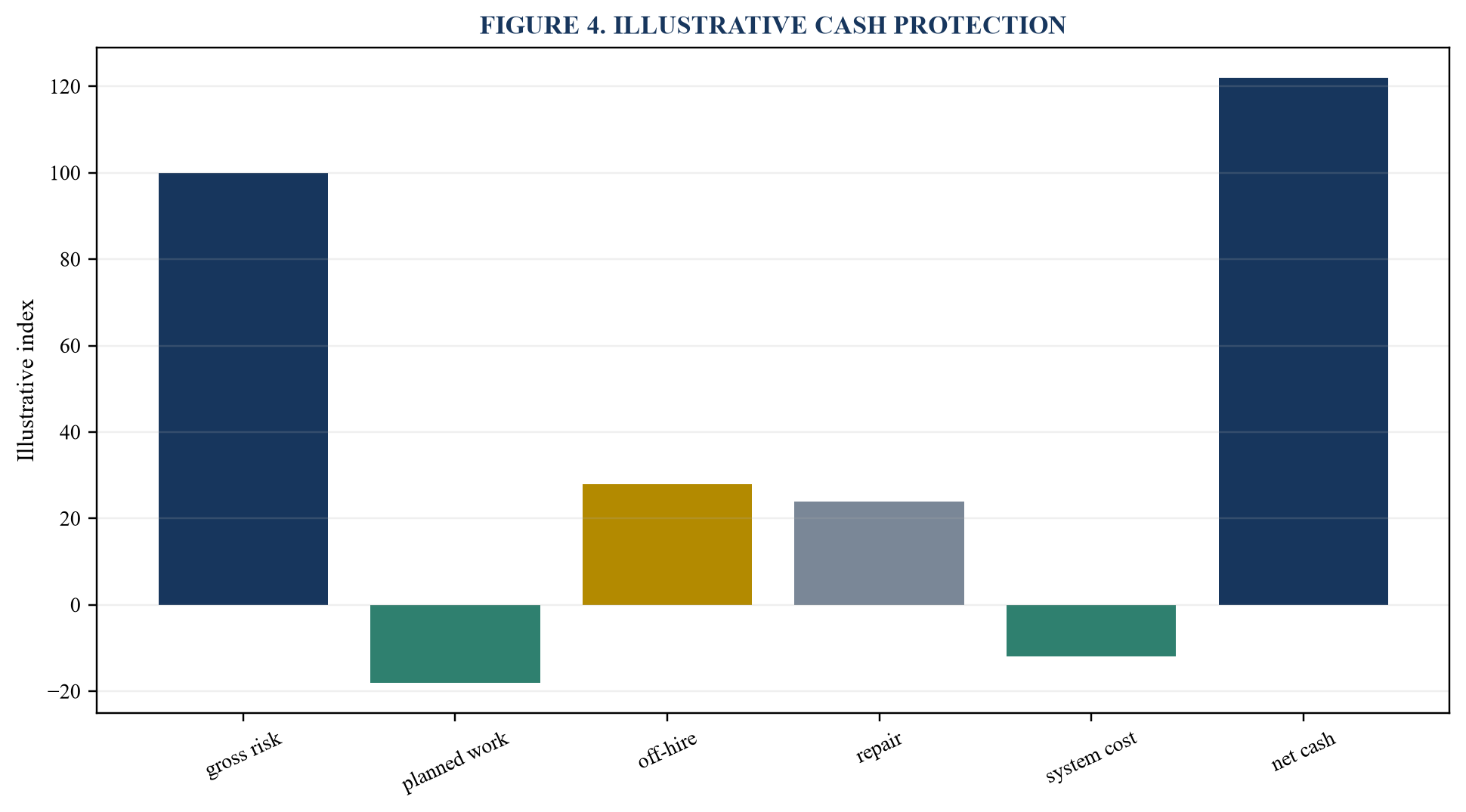
Benefits should be stated after intervention and full programme cost.
34. Set maintenance reserves
Reserve policy should reflect criticality, remaining useful life, dry-dock plan, repair inflation, lead times, deductibles and downside liquidity. Model output should inform ranges rather than erase prudence.
Controlled evidence includes asset forecast; dock budget; failure range; insurance; liquidity; governance. The immediate decision is to fund credible downside while releasing unsupported excess only through approval. Definitions should remain stable across technical records, maintenance systems, charter workpapers and financial models.
Finance should distinguish observed operation, engineering estimate, funded action, management forecast and buyer-specific opportunity. Every benefit needs timing, full cost, responsibility and a route to cash.
The analytical unit should remain stable from source record to valuation conclusion. Reviewers should see the population, exclusions, period, owner and reconciliation to finance. Where evidence is incomplete, the model should retain a range and identify the action needed to narrow it. Comparisons should preserve product, customer, site, complexity and market conditions; aggregation should not conceal adverse cohorts or delayed consequences.
35. Assess debt-service protection
Lenders may recognise lower volatility and stronger cash resilience when maintenance evidence, contracts, controls and monitoring are reviewable. Forecast avoided failures alone do not create debt capacity.
Controlled evidence includes debt service; charter cash; reserve; covenant; downside; monitoring; cure. The immediate decision is to link maintenance outcomes to repayment and covenant headroom. Definitions should remain stable across technical records, maintenance systems, charter workpapers and financial models.
Engineering, marine operations, procurement, chartering and finance should use the same equipment and event identifiers. Representative cases should be traced from signal through settlement.
Evidence should distinguish observation, estimate, management plan and transaction judgement. A supported claim includes timing, full cost, dependency, transferability and a cash consequence. Sensitivity should show how the conclusion changes when adoption, demand, quality or persistence underperforms. Material assumptions need validation dates, accountable owners and explicit expiry conditions so that stale expectations do not survive into pricing or financing decisions.
36. Design covenant and reporting treatment
Availability, minimum liquidity, reserve, capex and technical-status covenants need stable definitions, cure rights and evidence. A proprietary health score may be unsuitable as a sole covenant metric.
Controlled evidence includes facility agreement; definition; certificate; source; threshold; cure; audit right. The immediate decision is to use measures that lender and borrower can independently reproduce. Definitions should remain stable across technical records, maintenance systems, charter workpapers and financial models.
Decision makers need bounded downside for sensor failure, model error, unsafe advice, part delay, cyber incident, class restriction, charter dispute, vendor exit and weak adoption.
The operating team and finance team should use the same definitions. Native records should support aggregate dashboards, and sample testing should follow representative cases from input through outcome and cash. Exceptions, failed cases and client concessions remain part of the population. Reconciliation should cover opening and closing balances, acquisitions, disposals, foreign exchange, allocation changes and manual adjustments that could otherwise mimic operating improvement.
37. Address insurance and warranty
Maintenance data can support risk management while creating disclosure, warranty and causation questions. Policy, maker and broker treatment should be confirmed before relying on recovery.
Controlled evidence includes policy; warranty; notice; disclosure; exclusion; claim history; settlement. The immediate decision is to separate technical prevention from contractual risk transfer. Definitions should remain stable across technical records, maintenance systems, charter workpapers and financial models.
Evidence should remain vessel-, equipment-, failure-mode- and period-specific. The analysis should preserve false alarms, missed detections, overrides, repeat defects, unplanned failures and adverse outcomes.
Decision makers need both upside and downside. The analysis should state which party controls conversion, what investment remains, when cash appears, which risks survive and whether the result continues after a change of ownership. Unsupported precision should be replaced with bounded scenarios. The committee should record the decision consequence of each range, including price, structure, funding, covenant, integration and monitoring implications.
38. Translate protected cash into value
Valuation should distinguish observed performance, funded rollout, management forecast, buyer synergy and unresolved technical risk. The same benefit should not enter cash flow and multiple twice.
Controlled evidence includes valuation bridge; forecast; discount rate; comparable evidence; capex; downside. The immediate decision is to recognise transferable and persistent cash protection once. Definitions should remain stable across technical records, maintenance systems, charter workpapers and financial models.
Finance should distinguish observed operation, engineering estimate, funded action, management forecast and buyer-specific opportunity. Every benefit needs timing, full cost, responsibility and a route to cash.
The analytical unit should remain stable from source record to valuation conclusion. Reviewers should see the population, exclusions, period, owner and reconciliation to finance. Where evidence is incomplete, the model should retain a range and identify the action needed to narrow it. Comparisons should preserve product, customer, site, complexity and market conditions; aggregation should not conceal adverse cohorts or delayed consequences.
39. Build the transaction evidence room
The room should connect equipment hierarchy, models, data lineage, alerts, work orders, failures, class, charters, costs, cash, reserves, covenants and open findings.
Controlled evidence includes index; source; owner; date; version; finding; closure; access. The immediate decision is to support diligence with native and reconcilable evidence. Definitions should remain stable across technical records, maintenance systems, charter workpapers and financial models.
Engineering, marine operations, procurement, chartering and finance should use the same equipment and event identifiers. Representative cases should be traced from signal through settlement.
Evidence should distinguish observation, estimate, management plan and transaction judgement. A supported claim includes timing, full cost, dependency, transferability and a cash consequence. Sensitivity should show how the conclusion changes when adoption, demand, quality or persistence underperforms. Material assumptions need validation dates, accountable owners and explicit expiry conditions so that stale expectations do not survive into pricing or financing decisions.
Table 5. One-hundred-day programme
| Period | Primary work | Gate |
|---|---|---|
| days 1-30 | criticality, rights, data and baseline | approve evidence design |
| days 31-60 | validate models and controlled equipment | approve operating case |
| days 61-100 | reconcile charters, reserves and cash | approve scale decision |
Replace illustrative classifications with company-specific evidence and approved transaction treatment.
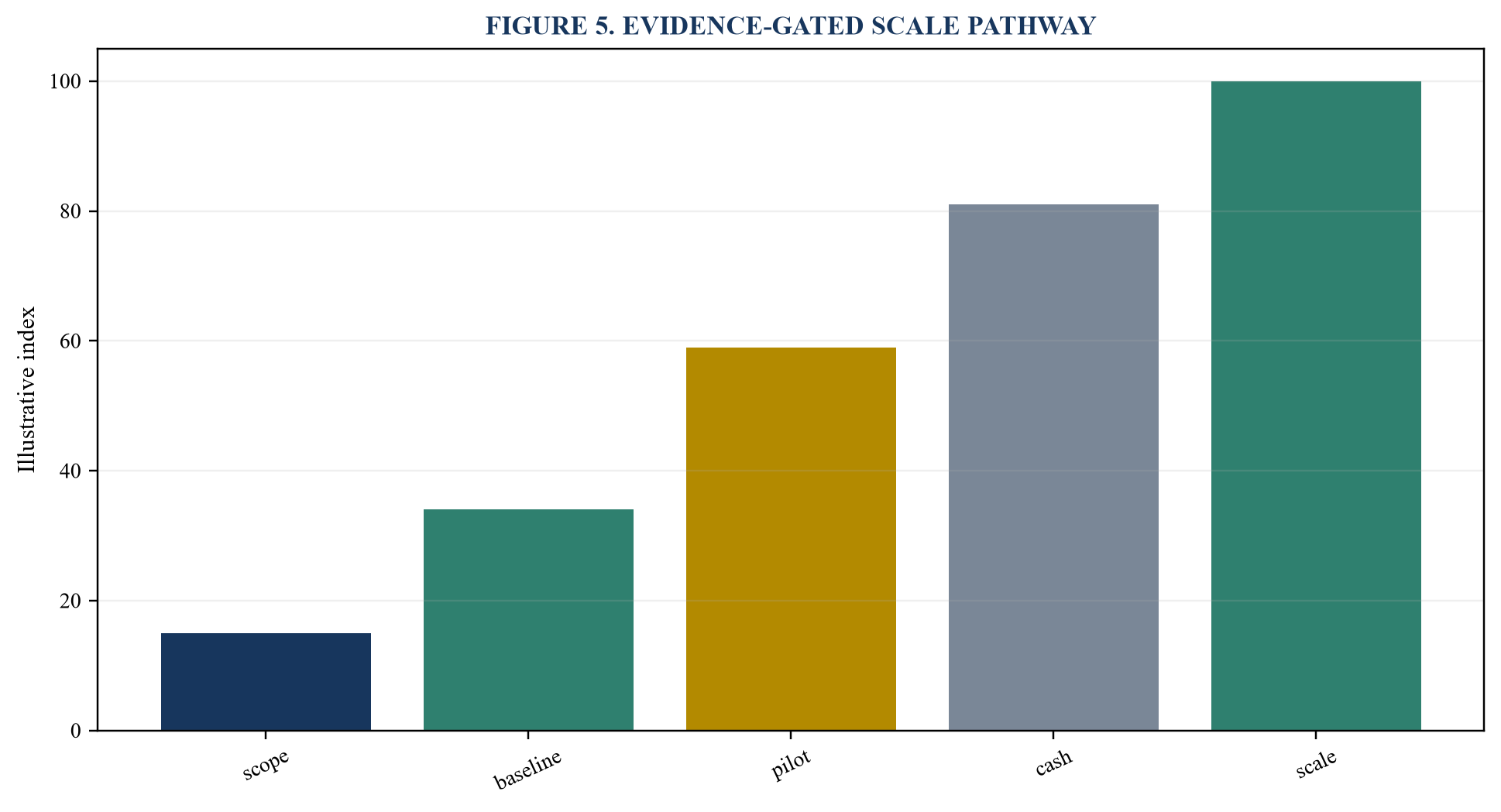
Fleet capital should follow technical, contractual and financial proof.
40. Conclusion
Predictive maintenance protects financeable value when reliable signals lead to safe, timely interventions and reproducible reductions in failure consequence, off-hire and cash volatility after full cost.
Controlled evidence includes asset event; model version; engineering decision; work record; charter outcome; cash; control. The immediate decision is to use one evidence chain across machinery, operations, contracts and finance. Definitions should remain stable across technical records, maintenance systems, charter workpapers and financial models.
Decision makers need bounded downside for sensor failure, model error, unsafe advice, part delay, cyber incident, class restriction, charter dispute, vendor exit and weak adoption.
The operating team and finance team should use the same definitions. Native records should support aggregate dashboards, and sample testing should follow representative cases from input through outcome and cash. Exceptions, failed cases and client concessions remain part of the population. Reconciliation should cover opening and closing balances, acquisitions, disposals, foreign exchange, allocation changes and manual adjustments that could otherwise mimic operating improvement.
References
- International Maritime Organization, The International Safety Management Code, https://www.imo.org/en/ourwork/humanelement/pages/ismcode.aspx
- International Maritime Organization, Maritime cyber risk, https://www.imo.org/en/ourwork/security/pages/cyber-security.aspx
- International Maritime Organization, Guidelines on Maritime Cyber Risk Management, MSC-FAL.1/Circ.3/Rev.3, https://wwwcdn.imo.org/localresources/en/OurWork/Security/Documents/MSC-FAL.1-Circ.3-Rev.3.pdf
- International Maritime Organization, 2023 IMO Strategy on Reduction of GHG Emissions from Ships, https://www.imo.org/en/OurWork/Environment/Pages/2023-IMO-Strategy-on-Reduction-of-GHG-Emissions-from-Ships.aspx
- International Maritime Organization, Improving the energy efficiency of ships, https://www.imo.org/en/OurWork/Environment/Pages/Improving%20the%20energy%20efficiency%20of%20ships.aspx
- International Maritime Organization, Ship Maintenance and Energy Efficiency, https://wwwcdn.imo.org/localresources/en/OurWork/Environment/Documents/Air%20pollution/M4%20energy%20management%20onboard%20final.pdf
- International Maritime Organization, Technology Matrix, https://wwwcdn.imo.org/localresources/en/MediaCentre/HotTopics/Documents/Technology%20Matrix.pdf
- American Bureau of Shipping, Guide for Surveys Based on Machinery Reliability and Maintenance Techniques, https://ww2.eagle.org/content/dam/eagle/rules-and-guides/current/survey_and_inspection/121-guide-for-surveys-based-on-machinery-reliability-and-maintenance-techniques/MRM_Guide_e-Jan23.pdf
- American Bureau of Shipping, Preparing for an ABS Condition Assessment Program Survey, https://absinfo.eagle.org/acton/media/16130/preparing-for-an-abs-condition-assessment-program-cap-survey
- American Bureau of Shipping, Enhancing Safety on FPSOs: Operations and Maintenance, https://absinfo.eagle.org/acton/media/16130/enhancing-safety-on-fpsos-operations-and-maintenance
- International Association of Classification Societies, Unified Requirements, https://iacs.org.uk/resolutions/unified-requirements
- International Association of Classification Societies, Unified Requirements E26 and E27, https://iacs.org.uk/resolutions/unified-requirements/ur-e
- DNV, Beyond condition monitoring in the maritime industry, https://www.dnv.com/news/2014/dnv-gl-beyond-condition-monitoring-in-the-maritime-industry-7685/
- BIMCO, CII Operations Clause for Time Charter Parties 2022, https://www.bimco.org/contractual-affairs/bimco-clauses/current-clauses/cii-operations-clause-2022/
- BIMCO, Force Majeure Clause 2022 commentary on on-hire and off-hire treatment, https://www.bimco.org/contractual-affairs/bimco-clauses/current-clauses/force-majeure-clause-2022/
- Poseidon Principles for Financial Institutions, Assessment, Accountability, Enforcement and Transparency, https://www.poseidonprinciples.org/finance/
- OECD, Arrangement and Sector Understandings, https://www.oecd.org/en/topics/arrangement-and-sector-understandings.html
- OECD, Financing Terms and Conditions for Officially Supported Export Credits, https://www.oecd.org/en/topics/sub-issues/financing-terms-and-conditions.html
- United Nations Conference on Trade and Development, Review of Maritime Transport 2025, https://unctad.org/publication/review-maritime-transport-2025
- International Organization for Standardization, ISO 13374 Condition Monitoring and Diagnostics of Machines, https://www.iso.org/standard/21832.html
- International Organization for Standardization, ISO 13381 Prognostics, https://www.iso.org/standard/51451.html
- International Organization for Standardization, ISO 17359 Condition Monitoring and Diagnostics of Machines, https://www.iso.org/standard/71194.html
- International Organization for Standardization, ISO 19847 Shipboard Data Servers, https://www.iso.org/standard/71995.html
- International Organization for Standardization, ISO 19848 Shipboard Machinery and Equipment Data, https://www.iso.org/standard/71996.html
- International Valuation Standards Council, International Valuation Standards, https://ivsc.org/standards/
- IFRS Foundation, IFRS Accounting Standards, https://www.ifrs.org/issued-standards/list-of-standards/
