

Introduction
Tokenisation, the representation of ownership in an asset as digital tokens recorded on a ledger, has been heralded as a transformation of how real estate and private assets are owned and traded. Its proponents promise that tokenisation will fractionalise ownership, allowing many investors to own small shares of large assets; provide liquidity for illiquid assets, allowing the tokens to be traded; and widen investor access, opening previously exclusive assets to a broader pool. It has also attracted considerable hype, with claims that often outrun the reality. This paper separates the hype from the reality and sizes the genuine opportunity for the GCC.
The paper approach is deliberately balanced, neither dismissing tokenisation as mere hype nor accepting the transformational claims at face value, but assessing where it adds genuine value today, where its promise depends on developments that remain nascent, and what constrains its realisation. This balanced assessment is intended to help investors, issuers and policymakers in the region understand what tokenisation can realistically offer now, what it may offer in time, and how to approach the opportunity sensibly rather than being swept up in the hype or dismissing it prematurely.
The central argument is that tokenisation offers genuine value in fractional ownership and wider access today, that its much-touted promise of liquidity for illiquid assets depends on the development of secondary markets that remains nascent, and that the binding constraints are regulatory clarity and market adoption rather than the technology, which is largely ready. The GCC, with its progressive regulation and its appetite for innovation, is well-positioned to develop the opportunity, but realistically and incrementally rather than transformationally in the near term. The paper develops the framework for assessing where tokenisation adds value and how to approach it.
The figures and assessments used throughout are indicative, calibrated to observable conditions in early 2026 but not drawn from any specific project. The paper proceeds from the architecture of tokenisation (Section 2), through its use-cases (Section 3), the readiness assessment (Section 4), the liquidity question (Section 5), the framework for where it adds value (Section 6), the constraints (Section 7), the GCC position (Section 8), the risks (Section 9), three use-cases (Section 10), sensitivity analysis (Section 11), an international comparison (Section 12), common errors (Section 13), an implementation roadmap (Section 14), a strategic perspective (Section 15), a conclusion (Section 16) and limitations (Section 17).
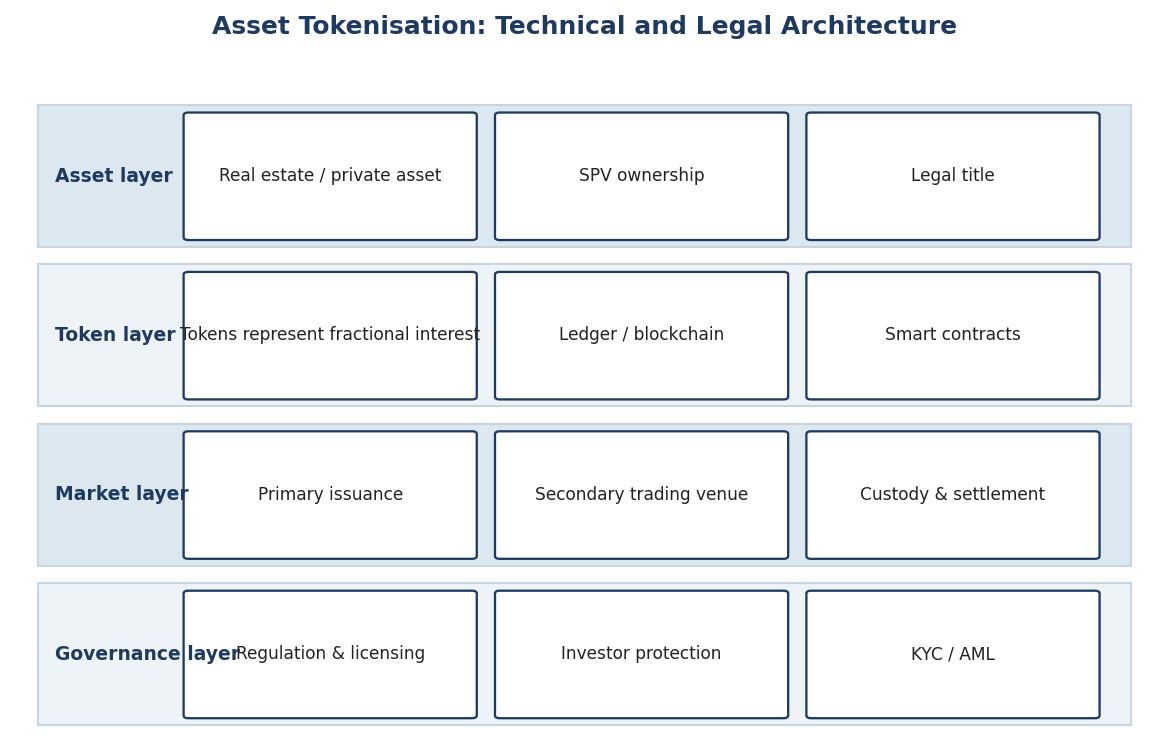
The Use-Cases
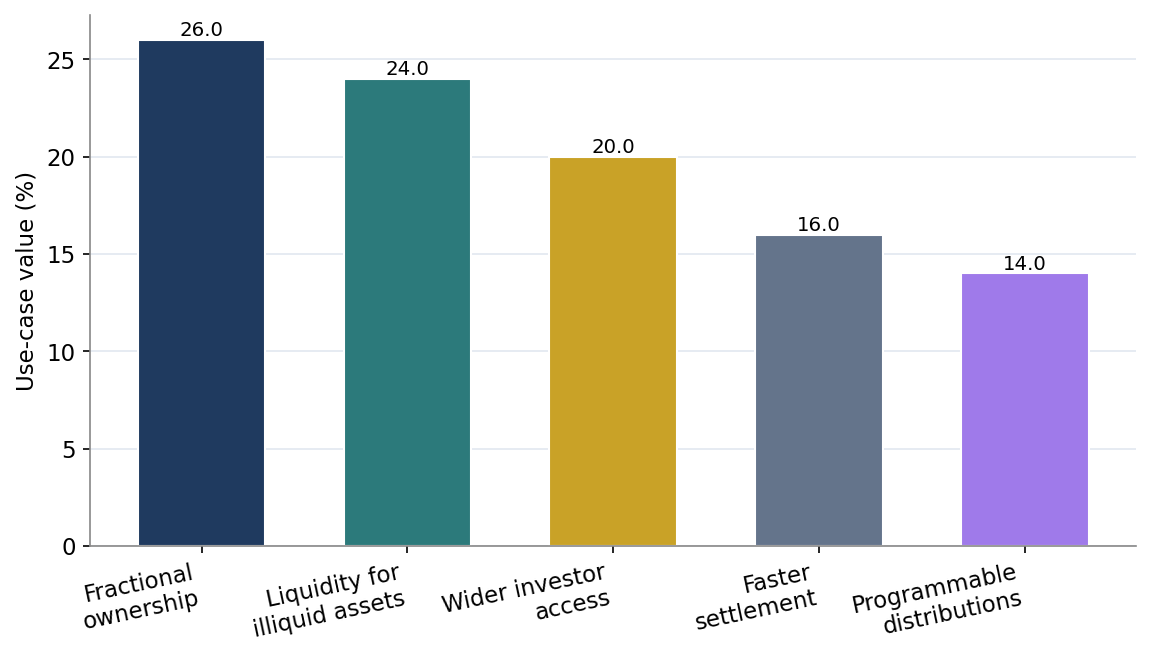
Tokenisation has several use-cases, illustrated in Figure 2, of varying value and maturity. The foremost is fractional ownership, allowing an asset to be divided into many small interests that many investors can own, which is genuinely valuable for large, indivisible assets such as real estate, opening them to investors who could not own them whole. The second is liquidity for illiquid assets, allowing the tokens to be traded, which is the most touted use-case but, as the liquidity section explores, depends on secondary markets that remain nascent. The third is wider investor access, opening previously exclusive assets to a broader pool.
Figure 2. Tokenisation Use-Cases by Value (Indicative Weights)
The fourth use-case is faster, cheaper settlement, as the tokens can be transferred and settled more quickly and cheaply than traditional ownership transfers, and the fifth is programmable distributions, as smart contracts can automate the distribution of income to token holders. These use-cases offer genuine, if incremental, value, improving the efficiency and the accessibility of asset ownership. The use-cases vary in their value and their maturity, and an assessment of tokenisation must distinguish the genuinely valuable and mature use-cases from the more speculative and nascent ones.
The distinction between the genuinely valuable use-cases available today and the more speculative ones that depend on future developments is central to separating the hype from the reality. Fractional ownership and wider access are genuinely valuable today, opening large assets to broader pools of investors, and they do not depend on nascent secondary markets. The liquidity use-case, the most touted, depends on the development of secondary markets that remain nascent, and so its value is more promise than reality today. An assessment of tokenisation should value the genuine, available use-cases while recognising that the most touted use-case, liquidity, remains largely a promise.
The Readiness Assessment
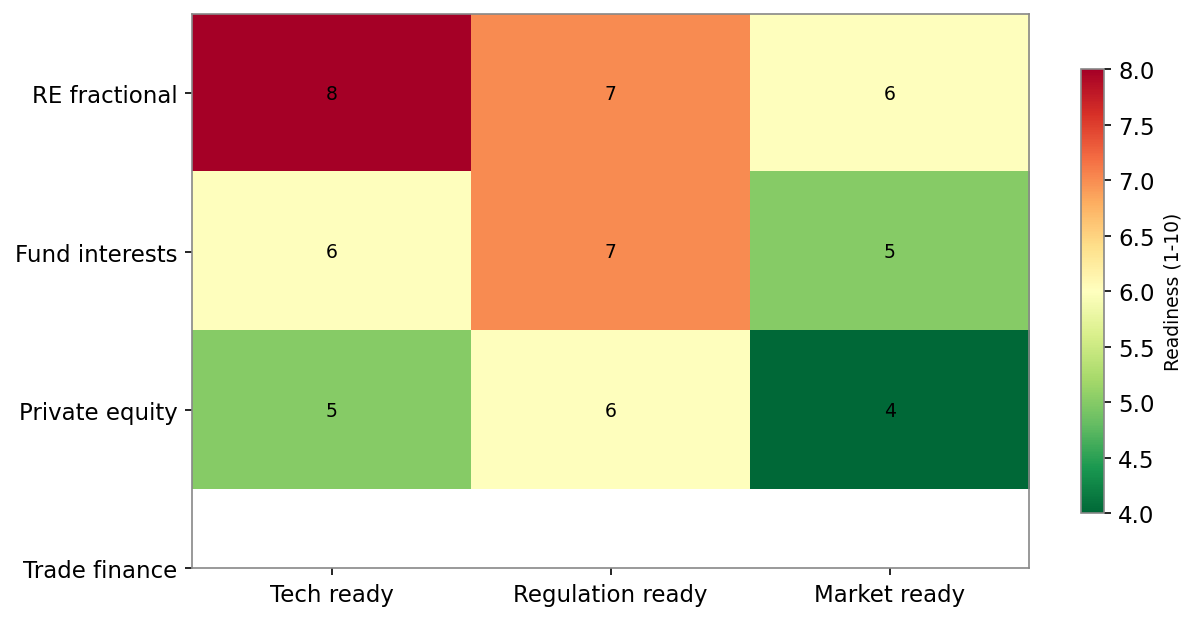
Assessing the readiness of tokenisation requires examining the technology, the regulation and the market separately, as illustrated in Figure 3, because they are at different stages. The technology is largely ready: the ledgers, the tokens and the smart contracts work, and the technical capacity to tokenise assets exists. The regulation is developing: some jurisdictions, including in the GCC, have developed frameworks for tokenised assets, but the regulation varies and is still maturing. The market is the least ready: the secondary trading venues, the custody, and the investor adoption that would make tokenised assets genuinely liquid remain nascent.
Figure 3. Readiness of Tokenisation by Asset and Dimension
Indicative readiness across technology, regulation and market. Not a forecast.
The readiness assessment shows that the binding constraint is not the technology, which is ready, but the market and, to a lesser extent, the regulation. The technology can tokenise an asset today, but the absence of developed secondary markets means the tokens cannot be traded liquidly, and the developing regulation means the legal and investor-protection framework is still maturing. This means that tokenisation initiatives today are constrained not by what the technology can do but by what the market and the regulation can support, and that the development of tokenisation depends on the development of the market and the regulation rather than further technology.
The readiness also varies by asset type. Real estate fractional ownership is relatively ready, as the asset is well-understood and the fractional-ownership use-case does not depend on nascent secondary markets; fund interests and private equity are less ready, as their tokenisation is more complex; and trade finance tokenisation is developing. An assessment of a specific tokenisation initiative must consider the readiness for that asset type and use-case, recognising that some, such as real estate fractional ownership, are more ready than others. The readiness assessment, by asset and dimension, guides where tokenisation can add value today and where it remains a future prospect.
Where Tokenisation Adds Value Today
The framework for where tokenisation adds value today distinguishes the genuine, available value from the future promise. Today, tokenisation adds genuine value in fractional ownership and wider access, allowing large, indivisible assets to be divided into small interests owned by a broad pool of investors, which is valuable for opening real estate and other large assets to investors who could not own them whole. This value does not depend on secondary markets or liquidity, and it is available today, making fractional ownership the principal near-term use-case.
Tokenisation also adds incremental value today in faster, cheaper settlement and programmable distributions, improving the efficiency of asset ownership and administration. These are genuine, if incremental, benefits available today, reducing the cost and friction of owning and administering fractional interests. They are not transformational, but they are real, and they add to the case for tokenisation in the use-cases where it is applied. The near-term value of tokenisation lies in these available benefits, fractional ownership, wider access, and efficiency, rather than in the future promise of liquidity.
The framework therefore directs an issuer or investor to value tokenisation for its available benefits, fractional ownership, wider access, and efficiency, rather than for the unrealised liquidity promise, and to apply it where these available benefits are valuable. A real estate owner seeking to open its asset to a broad pool of fractional investors can use tokenisation today to do so, capturing the genuine fractional-ownership value; an investor seeking liquidity should not expect it from tokenisation today. The framework, valuing the available benefits and discounting the unrealised promise, guides a realistic approach to tokenisation that captures its genuine value without being misled by the hype.
Risk Considerations
Tokenisation carries risks that an issuer or investor must consider. The regulatory risk is that the regulation, still developing, may change or may not provide the certainty and protection required, leaving tokenisation initiatives exposed to legal uncertainty. The technology and custody risk is that the technology, while largely ready, carries risks of error, hacking, or loss of the tokens, and that the custody of digital tokens raises distinctive security challenges. These risks, the regulatory and the technological, must be managed for tokenisation to be safe.
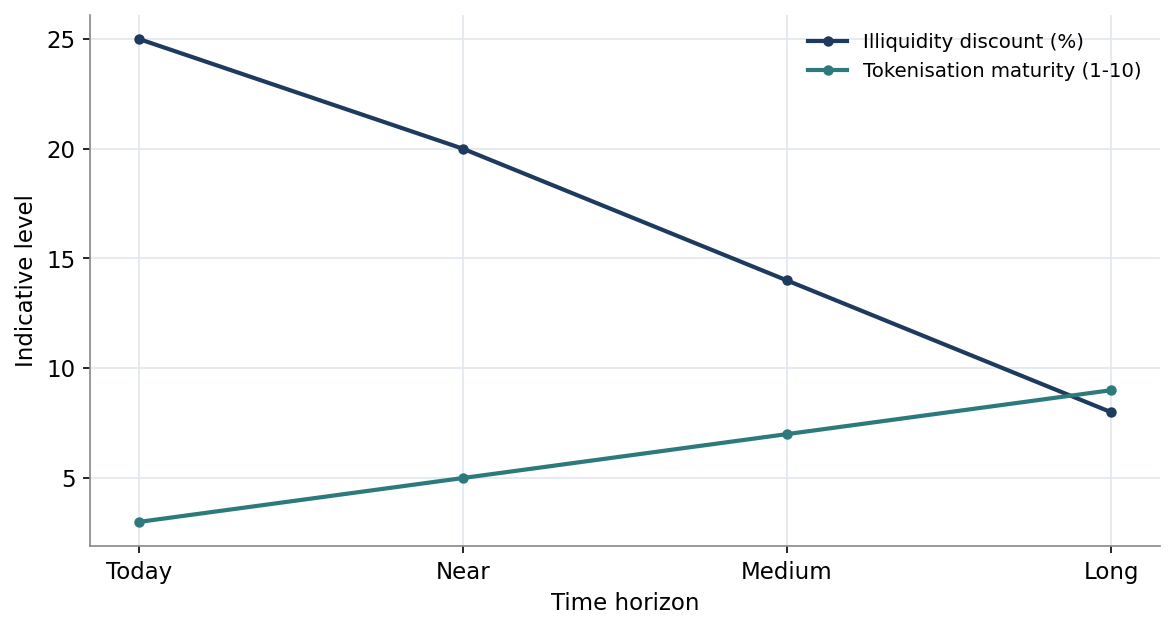
The liquidity risk is the gap between the promise and the reality: an investor that buys tokens expecting liquidity may find that the nascent secondary markets do not provide it, leaving the investor unable to sell at a fair price. This gap between the expected and the actual liquidity is a genuine risk for investors misled by the liquidity promise, and it underlines the importance of valuing tokenisation for its available benefits rather than the unrealised liquidity. An investor should not pay a premium for an expected liquidity that may not materialise, and should value the tokens on the underlying asset and the available benefits.
A broader risk is the hype risk, the risk that the transformational claims for tokenisation lead to over-investment, mispricing, or disappointment when the reality falls short of the promise. The history of financial technology includes episodes where hype outran reality, leading to over-investment and subsequent disappointment, and tokenisation carries this risk. An issuer or investor should approach tokenisation realistically, valuing its genuine, available benefits and discounting the hype, to avoid the over-investment and disappointment that the hype risk represents. A realistic, measured approach, capturing the genuine value while avoiding the hype, manages this risk.
Indicative Use-Cases
Three indicative use-cases show tokenisation in practice. The assessments are indicative and constructed for analytical clarity, not drawn from any specific project.
Use-case A: real estate fractional ownership
Use-case A is the tokenisation of a real estate asset to open it to a broad pool of fractional investors, dividing the ownership into small token interests that many investors can own. This use-case captures the genuine, available fractional-ownership value, opening a large asset to investors who could not own it whole, and it does not depend on secondary liquidity, deriving its value from the fractional access itself. The use-case illustrates the principal near-term value of tokenisation, fractional ownership of real estate, available today.
Use-case B: fund interest tokens
Use-case B is the tokenisation of interests in a fund, representing the limited-partner interests as tokens, which can ease the administration and potentially the transfer of the interests. This use-case is less mature than real estate fractional ownership, as the tokenisation of fund interests is more complex, but it offers value in the administration and potential transferability of the interests. The use-case illustrates a developing application of tokenisation to private fund interests, with genuine but more nascent value.
Use-case C: trade finance tokens
Use-case C is the tokenisation of trade finance assets, representing the receivables or trade instruments as tokens, which can ease their transfer and financing. This use-case applies tokenisation to the trade finance assets examined in a companion paper, potentially easing their transfer and the access of investors to them. The use-case illustrates a developing application of tokenisation to trade finance, with value in the transferability and access it can provide, though it remains nascent.
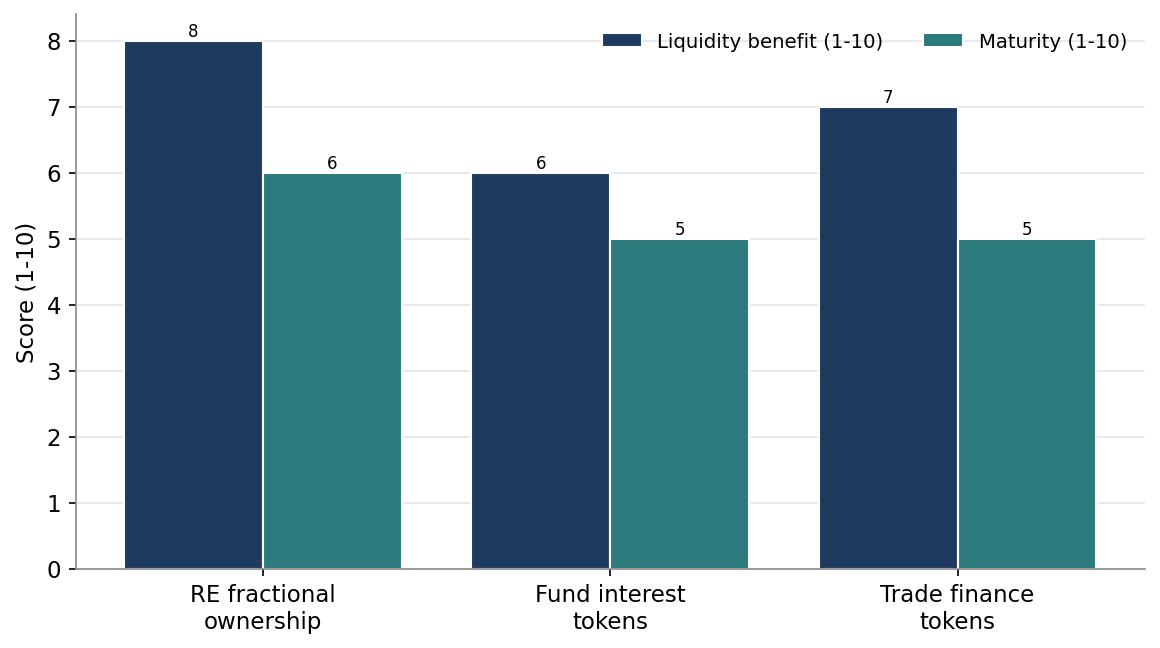
Figure 5. Liquidity Benefit and Maturity by Use-Case
Synthetic assessment for analytical comparison. Not a forecast.
Figure 5 compares the three use-cases on the liquidity benefit and the maturity. Real estate fractional ownership offers the most genuine, mature value; fund interest and trade finance tokens are less mature, with value that is more developing. The comparison illustrates that the genuine, available value of tokenisation today is concentrated in the more mature use-cases, particularly real estate fractional ownership, while the others are developing, and that an assessment should focus on the mature use-cases for near-term value while watching the developing ones for future value.
International Comparison
Tokenisation is being developed globally, with initiatives in many jurisdictions and growing institutional interest, but it has developed more slowly than the early hype predicted, constrained by the same regulatory and market factors that constrain it in the region. The international experience confirms the balanced assessment: tokenisation offers genuine value in fractional ownership and efficiency, its liquidity promise depends on developing markets, and the binding constraints are the regulation and the market rather than the technology. The global development is incremental, building the regulation and the market over time.
The international experience also shows that the jurisdictions that develop clear, supportive regulation and the market infrastructure are advancing fastest, which is relevant to the region progressive stance. The jurisdictions that have provided regulatory clarity and fostered the market infrastructure have seen more tokenisation activity, while those with unclear regulation have seen less, confirming that the regulation and the market are the enablers. The region, with its progressive regulation, is among the advancing jurisdictions, and it can learn from the international experience to develop the opportunity sensibly, capturing the genuine value incrementally while building toward the longer-term promise.
Implementation Roadmap
Assess tokenisation realistically, distinguishing the genuine, available value from the unrealised future promise.
Focus on the mature use-cases, particularly real estate fractional ownership, that add genuine value today without depending on secondary liquidity.
Build on a sound regulatory and legal foundation, ensuring the token is soundly connected to the asset and the regulation supports the initiative.
Value the available benefits, fractional ownership, wider access, and efficiency, rather than the unrealised liquidity promise.
Manage the regulatory, technology, custody and liquidity risks, and approach the opportunity measuredly.
In the GCC, leverage the progressive regulation and the asset and investor base to develop the genuine use-cases incrementally.
Watch the development of the regulation and the secondary market, which will determine when the longer-term promise can be realised.
Conclusion
Tokenisation has been heralded as a transformation of asset ownership and trading, and it has attracted considerable hype, but the reality is more incremental. This paper has argued that tokenisation offers genuine value today in fractional ownership and wider access, that its much-touted liquidity promise depends on secondary markets that remain nascent, and that the binding constraints are the regulation and the market rather than the technology, which is ready. The genuine near-term value is in fractional ownership and efficiency, while the transformational liquidity promise is a longer-term prospect that depends on the development of the market.
The GCC, with its progressive regulation and its asset and investor base, is well-positioned to develop the opportunity, but realistically and incrementally, capturing the genuine fractional-ownership value today while building toward the longer-term promise. The sensible approach, for the region and for participants generally, is to separate the genuine value from the hype, capture the genuine value, and build toward the future, neither over-investing in the transformational claims nor dismissing the genuine opportunity. The frameworks in this paper are intended to help participants approach tokenisation realistically, capturing its genuine, incremental value while understanding the gap between its present reality and its future promise.
Limitations and Directions for Further Research
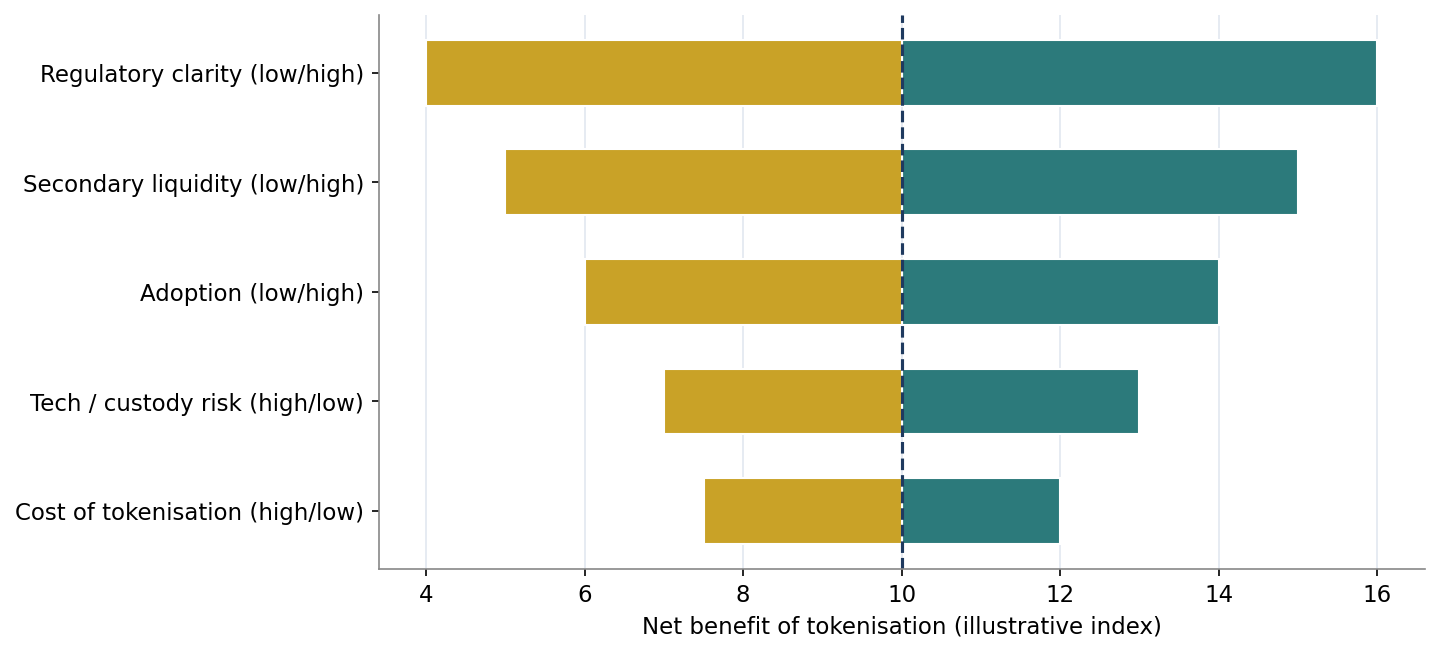
This paper is assessment-oriented and relies on indicative judgements, and its conclusions are directional rather than precise. The readiness and benefit assessments are calibrated to observable conditions but are not empirical estimates, and the rapidly evolving regulatory and market landscape makes them particularly uncertain. The pace of development of the regulation and the market, central to the opportunity, is inherently difficult to predict.
Several extensions would strengthen the analysis. An empirical study of tokenisation initiatives and their outcomes in the GCC and internationally would replace the indicative assessments with evidence. An analysis of the developing regulatory frameworks for tokenised assets in the region would sharpen the regulatory assessment. And a study of the development of secondary markets for tokenised assets would illuminate the liquidity question that is central to the opportunity. Each is a natural subject for a later paper in this series.
| Scenario | Regulation | Secondary market | Net benefit |
|---|---|---|---|
| Mature | Clear | Developed | Transformational |
| Base | Developing | Nascent | Incremental |
| Constrained | Unclear | Absent | Limited |
| Today | Developing | Nascent | Fractional only |
