
Introduction
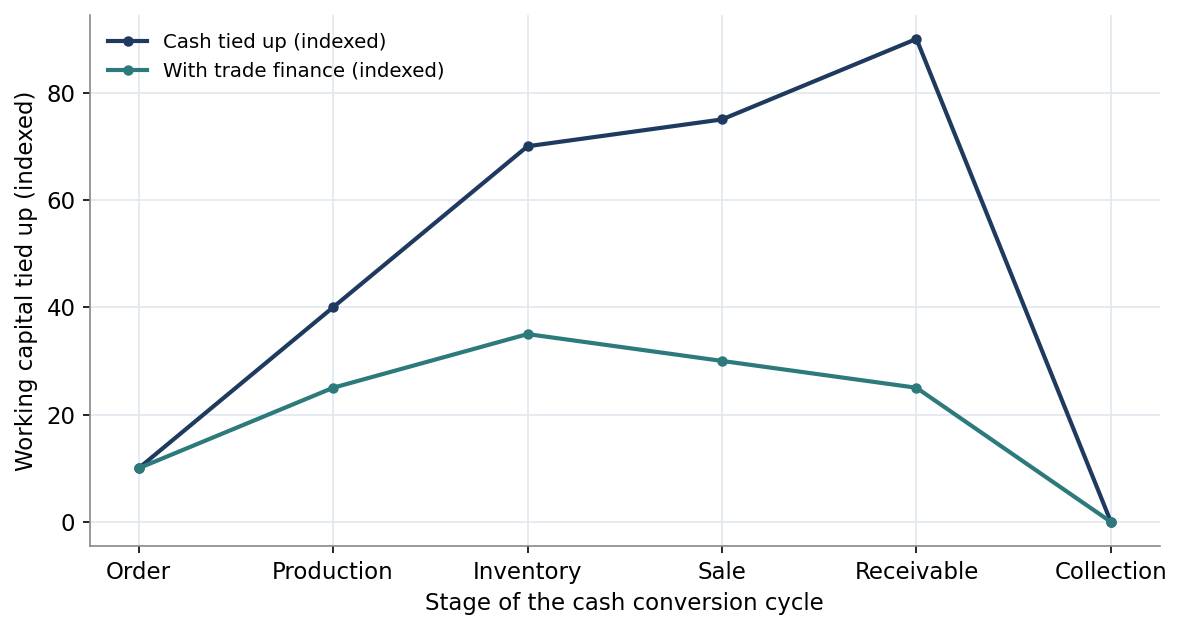
An industrial or trading company lives and dies by its working capital. Between buying or making its product and being paid for it, the company must fund the gap, the cash tied up in inventory awaiting sale and in receivables awaiting collection, less the credit its suppliers extend. This working-capital gap is a permanent claim on the company capital, growing with its sales, and it constrains the company growth and depresses its return on capital. Yet much of this trapped capital can be released through trade and supplier finance, and how a company manages its working capital is a central determinant of its financial performance.
This paper sets out a working-capital optimisation framework for GCC industrial and trading companies. It treats the working-capital cycle as something to be actively managed and financed, rather than a passive consequence of operations, and it shows how the trade finance toolkit can release the capital trapped in the cycle, improving the return on capital and funding growth without dilutive equity. For a mid-market industrial or trading company in the region, this optimisation is frequently the most accessible and least dilutive source of capital available, and it is too often neglected.
The central argument is that trade finance can release a substantial share of the trapped working capital at a modest cost, materially improving the return on capital employed and funding growth, and that the right instrument depends on where in the cycle the cash is trapped, in receivables, in supplier payments, or in inventory. A company that understands its cash conversion cycle and matches the right instrument to where the cash is trapped can optimise its working capital, while one that ignores it leaves capital locked unproductively in the cycle. The paper develops the framework for this optimisation.
The figures used throughout are indicative, calibrated to observable GCC conditions in early 2026 but not drawn from any specific transaction. The paper proceeds from the cash conversion cycle (Section 2), through the trade finance toolkit (Section 3), the optimisation framework (Section 4), the liquidity released and its effect on returns (Section 5), structuring (Section 6), the provider perspective (Section 7), risk (Section 8), GCC-specific considerations (Section 9), three case studies (Section 10), sensitivity analysis (Section 11), an international comparison (Section 12), common errors (Section 13), an implementation roadmap (Section 14), a strategic perspective (Section 15), a conclusion (Section 16) and limitations (Section 17).
The Working-Capital Optimisation Framework
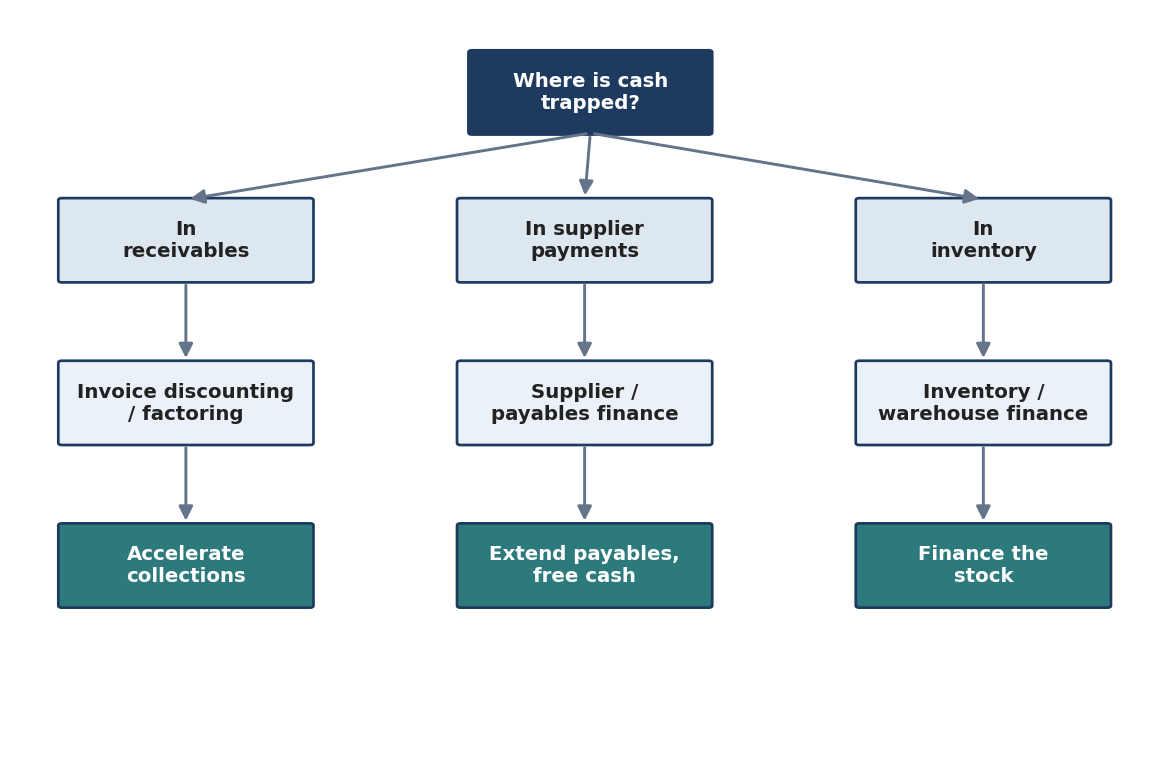
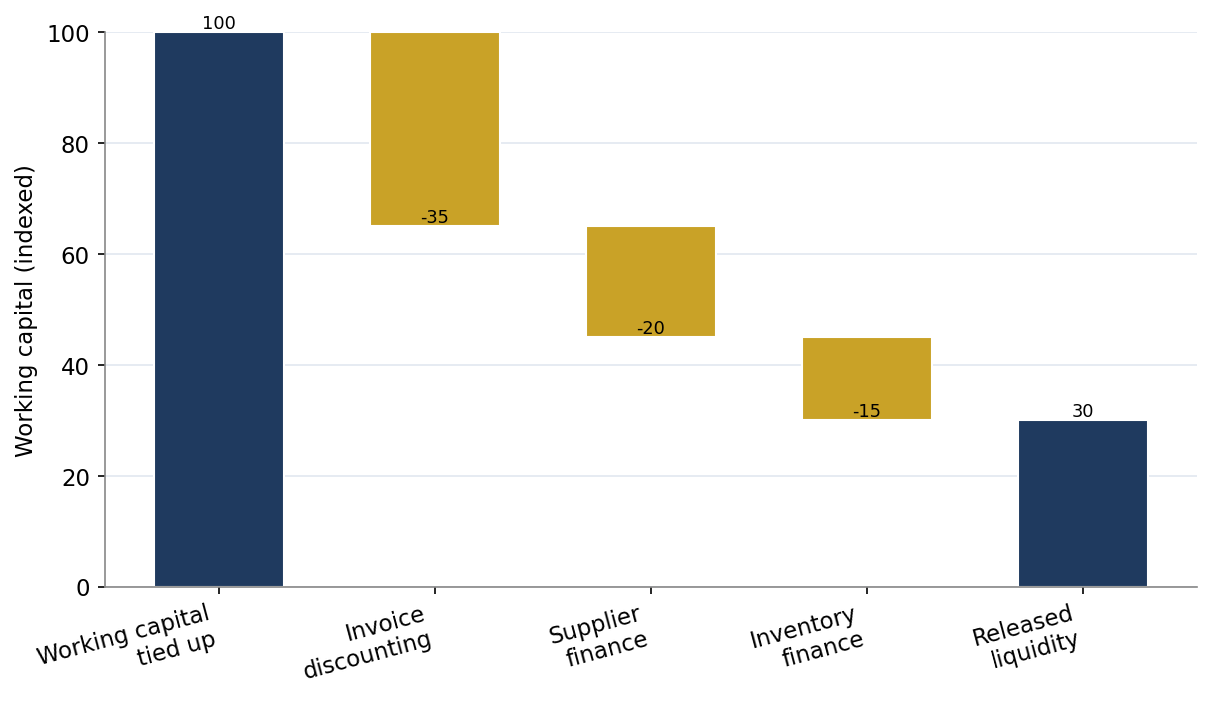
The optimisation framework matches the instrument to where the cash is trapped, illustrated in Figure 3. A company whose cash is trapped in slow-paying receivables should use invoice discounting or factoring to accelerate the collection. A company whose cash is trapped because its suppliers demand quick payment while its customers pay slowly should use supplier finance to extend its effective payment terms. A company whose cash is trapped in inventory should use inventory finance to release it. The framework directs the company to the instrument that addresses its specific trapped pool.
Figure 3. Working-Capital Optimisation by Where Cash Is Trapped
Indicative framework. The location of the trapped cash determines the instrument.
Applying the framework requires the company to diagnose where its cash is trapped, which the cash conversion cycle analysis reveals. A company that measures the days its cash spends in inventory, in receivables, and the days of credit its suppliers extend, can see where the largest trapped pool is and target it. The diagnosis is the prerequisite to the optimisation, and a company that has not measured its cycle cannot know which instrument will release the most cash. The framework, in essence, is to measure the cycle, find the largest trapped pool, and apply the instrument that releases it.
The framework also weighs the cost of the finance against the value of the released capital. Trade finance has a cost, and releasing capital is worthwhile only if the company can deploy the released capital at a return exceeding that cost, or if the released capital relieves a genuine constraint on the company growth. For a growing company constrained by working capital, the released capital funds growth that earns well above the finance cost, making the optimisation clearly worthwhile; for a company with no use for the released capital, the optimisation may not justify its cost. The framework therefore considers not only where the cash is trapped but what the company will do with the cash once released.
Structuring Trade Finance
Trade finance is structured around the underlying trade flows and the assets they create, the receivables, the payables, the inventory, and the structuring determines the cost, the risk transfer and the operational burden. Invoice discounting may be structured with or without recourse, with recourse leaving the company liable if the customer does not pay and non-recourse transferring the risk to the financier at a higher cost. Supplier finance is structured around the company payment obligations, with the financier paying the supplier early and the company paying the financier on extended terms. Inventory finance is secured against the stock, often with the financier taking control of the inventory.
The structuring also addresses the operational integration, because trade finance, unlike a term loan, is integrated into the company trading operations, advancing against invoices as they are raised, paying suppliers as they are due, and financing inventory as it is held. This integration requires the company systems and processes to support the finance, providing the financier with the data on the receivables, payables and inventory that it finances, and a company optimising its working capital must ensure its systems can support the trade finance programme. The operational integration is part of the structuring, and a poorly integrated programme creates friction that a well-integrated one avoids.
The structuring can be bilateral, with a single financier, or programmatic, with a facility that finances the trade flows on an ongoing, revolving basis. A programmatic structure, in which the financier finances the receivables, payables or inventory as they arise on a committed, revolving basis, suits a company seeking ongoing working-capital support, and it turns trade finance from a series of transactions into a continuous source of liquidity. The programmatic approach is the most effective for a company seriously optimising its working capital, and it is increasingly available as the regional trade finance market develops.
Risk Considerations
Trade finance carries risks that the company must manage. The principal risk in receivables finance is the customer default risk, where a customer does not pay the financed receivable, which falls on the company in a recourse structure and on the financier in a non-recourse one. A company using recourse invoice discounting retains the customer credit risk and must manage it through its credit control, while a company seeking to transfer the risk can use non-recourse finance at a higher cost. The choice depends on the company appetite to retain the credit risk against the cost of transferring it.
A second risk is the dilution risk in inventory finance, where the inventory financed may decline in value or prove unsaleable, leaving the financier under-secured and the company exposed. Marketable, non-perishable inventory carries less of this risk than specialised or perishable stock, and the financier assesses the inventory marketability in setting its advance and its terms. A third risk is the concentration risk, where a company dependent on trade finance from a single provider is exposed if that provider withdraws, which a company can manage by maintaining relationships with multiple providers.
A broader risk is over-reliance on trade finance to mask an underlying working-capital problem. Trade finance releases trapped capital, but it does not address the underlying cycle length, and a company that uses trade finance to fund an inefficient, over-long cycle is treating the symptom rather than the cause. The most effective optimisation combines trade finance with genuine improvement of the cycle itself, reducing the inventory days, accelerating the collections, and negotiating better supplier terms, so that the company both finances and shortens its cycle. Trade finance is a tool for releasing trapped capital, not a substitute for managing the cycle that traps it.
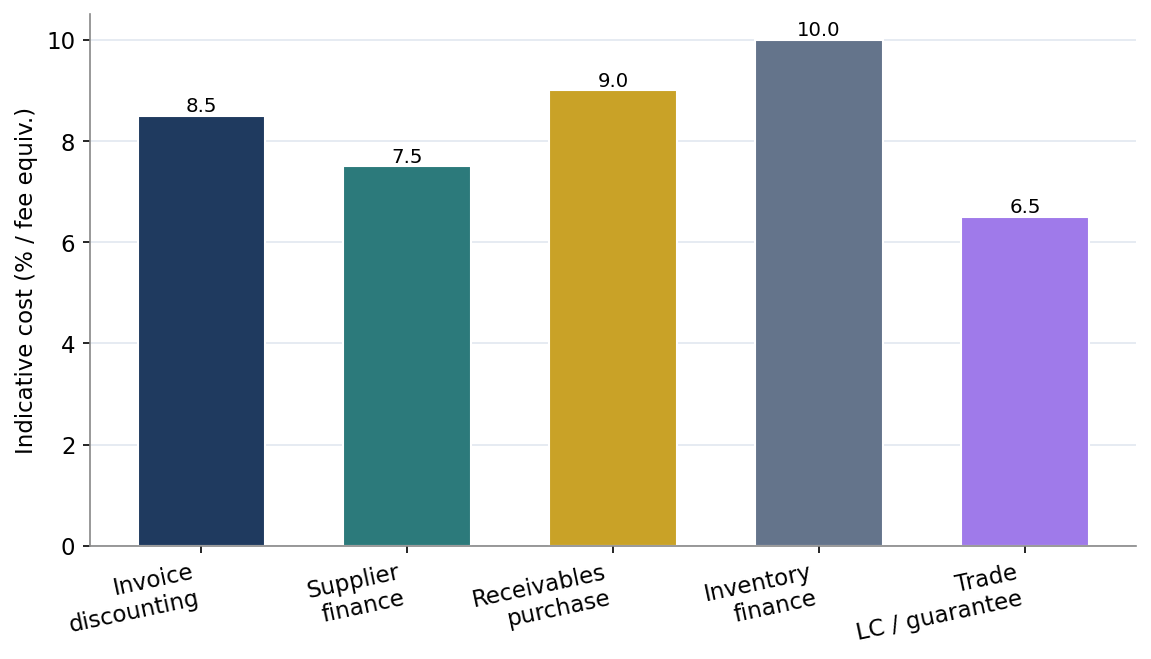
| Instrument | Targets | Effect | Indicative cost |
|---|---|---|---|
| Invoice discounting | Receivables | Accelerates collection | ~8.5% |
| Supplier finance | Payables gap | Extends terms, supplier paid | ~7.5% |
| Receivables purchase | Receivables | Sells, transfers risk | ~9.0% |
| Inventory finance | Stock | Finances inventory | ~10.0% |
| Trade LC / guarantee | Trade transaction | Payment assurance | ~6.5% equiv. |
Considerations Specific to the GCC
The GCC has a developed trade finance market, reflecting the region role as a trading hub, with banks and specialist providers active in financing the trade flows that pass through the region. This depth is an advantage for GCC industrials and traders, which can access a competitive trade finance market for their working-capital needs. The region trading orientation, with substantial import, export and re-export activity, makes trade finance a core part of the regional financial system, and a company in the region can draw on this developed market.
The compliant dimension applies to trade finance as elsewhere, and Shariah-compliant trade finance, based on structures such as Murabaha, is well developed in the region, serving the compliant companies and capital that conventional structures cannot. A company seeking compliant trade finance can access a developed compliant market, and a provider able to offer compliant structures serves the compliant demand. The availability of both conventional and compliant trade finance is a feature of the developed regional market, and it ensures that the full range of companies can access working-capital finance.
The regional payment culture and the creditworthiness of regional customers shape the receivables finance market, since the willingness of financiers to advance against receivables depends on the reliability of payment. A company with creditworthy customers and reliable payment can access receivables finance readily, while one with weak customers or unreliable payment finds it harder. The development of credit information and the improvement of payment culture in the region are supporting the receivables finance market, and a company that trades with creditworthy customers and documents its receivables well can access the finance on good terms.
Indicative Case Studies
Three indicative cases show trade finance in action. The figures are synthetic and constructed for analytical clarity, not drawn from any specific transaction.
Case A: manufacturer receivables
Case A is a manufacturer whose cash is trapped in slow-paying receivables from its customers, which uses invoice discounting to accelerate the collection, advancing cash against the receivables as they are raised. The released capital funds the manufacturer growth, breaking the working-capital constraint that had limited it, and the cost of the discounting is well below the return the manufacturer earns on its growth. The case illustrates receivables finance releasing the cash trapped in slow collections and funding growth.
Case B: distributor inventory
Case B is a distributor whose cash is trapped in the inventory it must hold to serve its customers, which uses inventory finance to release the capital tied up in stock, advancing cash against the inventory it holds. The released capital allows the distributor to hold the inventory its business requires without tying up its own capital, improving its return on capital and funding its growth. The case illustrates inventory finance releasing the cash trapped in stock for a distribution business.
Case C: exporter letter of credit
Case C is an exporter that uses trade letters of credit to facilitate its export trade, providing its customers with payment assurance and itself with the confidence to ship, while financing the gap between shipment and payment. The letters of credit enable the export trade and finance the working-capital gap it creates, supporting the exporter growth in its international markets. The case illustrates trade letters of credit facilitating and financing international trade for an exporter.
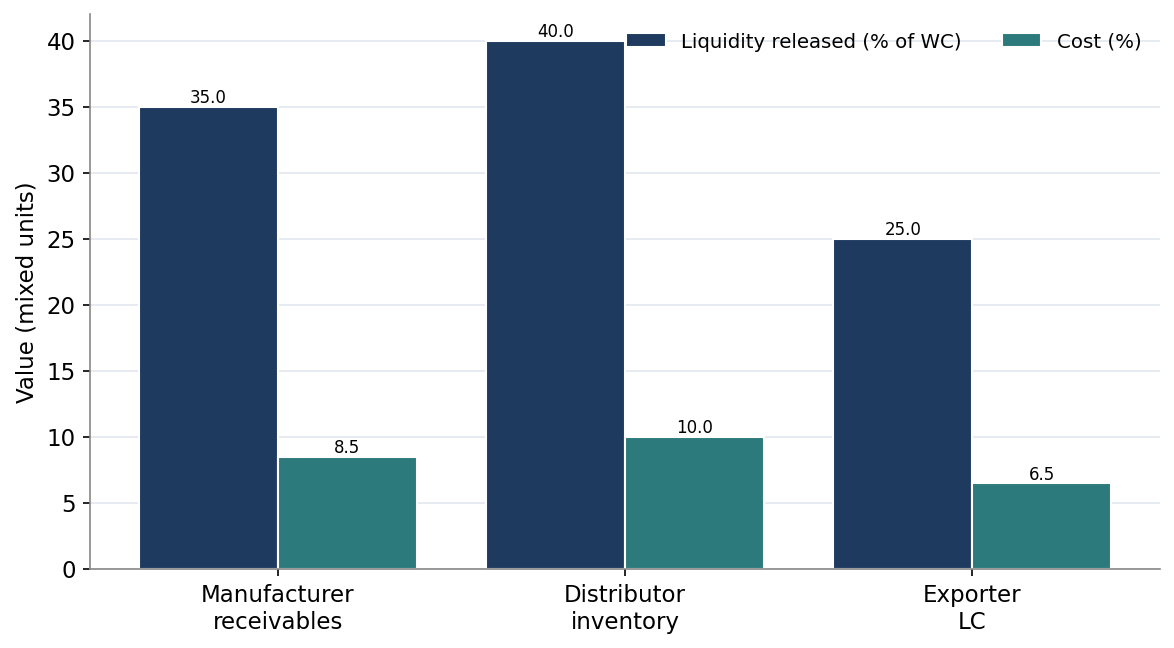
Figure 5. Liquidity Released and Cost by Case
Synthetic figures for analytical comparison. Not a forecast.
Figure 5 compares the three cases on the liquidity released and the cost. Each releases a substantial share of the working capital at a modest cost, funding growth and improving the return on capital, and each targets the specific part of the cycle, receivables, inventory, the trade gap, where the company cash is trapped. The cases illustrate the framework in action, matching the instrument to where the cash is trapped and releasing it at a cost well below the return the company earns on the released capital.
International Comparison
Trade and supplier finance is a large, mature, global market, central to the financing of international and domestic trade, with well-developed instruments, deep provider markets, and increasing digitisation that is reducing costs and improving access. The GCC market, reflecting the region trading role, is well developed within this global market, and it is benefiting from the global trends toward digitisation and the entry of specialist and technology-enabled providers that are making trade finance more accessible and efficient.
The international experience offers lessons for GCC industrials and traders. It shows that trade finance is a core, durable tool for working-capital optimisation, that the combination of instruments into integrated programmes releases the most capital, and that digitisation is reducing the cost and operational burden, making the tools accessible to smaller companies. As the GCC market absorbs these trends, trade finance is becoming more accessible and efficient for regional companies, and a company that embraces the digital, programmatic approach to trade finance can optimise its working capital more effectively than one relying on traditional, transactional finance. The global trend toward accessible, digital trade finance is a tailwind for regional companies.
Implementation Roadmap
Measure the cash conversion cycle, identifying the days the company cash spends in inventory and receivables and the credit its suppliers extend.
Identify where the largest pools of cash are trapped, in receivables, in inventory, or in the supplier gap.
Match the trade finance instrument to where the cash is trapped, using invoice discounting, inventory finance or supplier finance accordingly.
Combine the instruments into an integrated, programmatic working-capital facility that addresses the whole cycle.
Combine the trade finance with genuine operational improvement of the cycle, reducing inventory days, accelerating collections, and negotiating supplier terms.
Maintain good-quality, well-documented trade assets and supporting systems to access the finance on good terms, and diversify providers.
Deploy the released capital into growth or returns, ensuring it earns above the finance cost.
Conclusion
The working-capital cycle traps substantial capital in the inventory and receivables of GCC industrial and trading companies, constraining their growth and depressing their return on capital, and this paper has argued that trade and supplier finance can release this trapped capital at a modest cost, materially improving the return on capital and funding growth without dilution. The right instrument depends on where the cash is trapped, in receivables, in inventory, or in the supplier gap, and a company that measures its cycle and matches the instrument to the trapped pool can optimise its working capital effectively.
The deeper insight is that the working-capital cycle is itself a source of capital, frequently the largest and least-used available to a mid-market company, and that treating it as such, actively managing and financing it, is a strategic capability that releases capital, funds growth and improves returns. The company that builds this capability, combining trade finance with operational improvement of the cycle, gains a source of capital and a return advantage that the company that neglects its working capital lacks. In the capital-intensive industrial and trading sectors of the GCC, working-capital optimisation is one of the most accessible and least dilutive sources of capital, and the framework in this paper is intended to help companies capture it.
Limitations and Directions for Further Research
This paper is framework-oriented and relies on indicative data, and its conclusions are directional rather than precise. The cycle lengths, costs and returns are calibrated to observable conditions but are not empirical estimates, and they vary by industry and company. The trade finance market is digitising rapidly, which is changing the cost and accessibility of the instruments.
Several extensions would strengthen the analysis. An empirical study of cash conversion cycles and trade finance use across GCC industrial and trading sectors would replace the indicative figures with data. An analysis of the effect of digitisation on the cost and accessibility of trade finance in the region would sharpen the analysis. And a study of how trade finance availability behaves through a downturn, when provider appetite may contract, would illuminate the concentration and reliance risks. Each is a natural subject for a later paper in this series.
| Scenario | Cash cycle | Trade finance | Return on capital |
|---|---|---|---|
| Optimised | Short | Comprehensive | ~20% |
| Base | Moderate | Partial | ~14% |
| Unoptimised | Long | None | ~9% |
| Constrained | Long, growing | None | ~6% |
