

Introduction
Demand for accelerated computing has turned GPU-cloud capacity into an acquisition target for infrastructure investors, technology companies, private capital and strategic buyers. The asset can appear to combine long-dated customer commitments, scarce power and high-growth AI demand. The same asset can contain correlated exposures: one customer may account for most revenue; one data-centre operator may control delivery; one GPU supplier may determine refresh economics; and one grid connection may govern the timing of all three. The acquisition decision requires evidence at contract, asset, site and cash-flow level.
UK conditions add specific questions. Grid-connection timing can determine when contracted service begins. Planning, critical-national-infrastructure and cyber-resilience requirements can influence the operating perimeter. Competition rules affect customer portability and platform dependency. National Security and Investment Act screening may apply to specified data-infrastructure activities. Accounting policies distinguish backlog from enforceable performance obligations, while acquisition accounting and impairment testing require identifiable assets, liabilities and supportable forecasts. [1][4][5][6][7]
The framework below is designed for investment committees, boards, lenders and transaction teams. It begins with the acquisition perimeter and contract evidence, moves through concentration, power, data-centre and GPU-cohort diligence, and ends with valuation, transaction protections and a one-hundred-day control plan. Public disclosures provide context only. The target's contracts, invoices, telemetry, title documents, utility agreements, leases and financing records remain the controlling evidence.
1. Define the acquisition decision
State whether the proposed transaction is a share purchase, asset purchase, carve-out, minority investment or staged acquisition. Fix the valuation date, currency, ownership perimeter, assumed debt treatment, required return and decision rights. A GPU-cloud brand can sit above several operating companies, equipment special-purpose vehicles, site leases and customer contracts. The buyer should identify which entities own GPUs, employ staff, contract for power, lease space, invoice customers and grant security.
The diligence register should name every material legal entity, contract, asset pool, licence, guarantee, lease, bank account and intercompany balance. The valuation should distinguish enterprise value from equity value and show the treatment of leases, equipment finance, customer prepayments, restricted cash and unfunded commitments. The transaction committee should approve the perimeter before financial modelling begins.
A common failure is to value consolidated management metrics while acquiring a narrower legal perimeter. The remedy is a sources-and-uses schedule tied to the legal-entity chart and the draft purchase agreement. [6][7][8]
2. Reconcile the contract states
Customer pipeline, signed orders, reservations, backlog, remaining performance obligations, accepted capacity, invoices and cash receipts are different evidence states. Each carries different delivery, cancellation, performance and accounting conditions. The buyer should construct a contract-state waterfall from the target's headline metric to collected cash.
For each order, capture the legal customer, parent group, executed documents, minimum commitment, duration, capacity, hardware, location, delivery date, acceptance test, service level, price, indexation, remedies, termination rights, renewal and payment terms. Reconcile the schedule to revenue ledgers, invoices, receivables and bank receipts. Differences require a named owner and resolution date.
The valuation should include enforceable minimums according to their conditions and place optional consumption in a separately identified scenario. A signed number should not enter the model as an unconditional receivable. [7][9][10]
| State | Minimum evidence | Valuation treatment |
|---|---|---|
| Pipeline | qualified customer record | excluded from contracted case |
| Signed order | executed terms and conditions | condition-adjusted schedule |
| Accepted service | acceptance and availability evidence | billing and credit test |
| Collected cash | reconciled bank receipt | cash-flow evidence |
Proposed framework unless stated otherwise.
3. Measure customer concentration
Concentration should be measured by current revenue, contracted revenue, remaining term, gross margin, receivables, prepayments, installed GPUs, site load and renewal timing. Parent-group aggregation matters because multiple contracting entities can represent one economic exposure. Workload concentration also matters: several customers can depend on the same training cycle, model sponsor or end market.
The buyer should calculate top-one, top-three and top-five shares and show their movement by quarter. It should identify overlapping termination dates, price reopeners and capacity expansions. Customer credit analysis should cover the contracting entity, parent support, cash resources, financing dependence and the operational consequence of replacement.
An anchor contract can support debt and capacity investment. It can also transfer bargaining power to the customer. The model should assume a realistic replacement period, reconfiguration cost and utilisation ramp if a major customer leaves. [9][10][11]
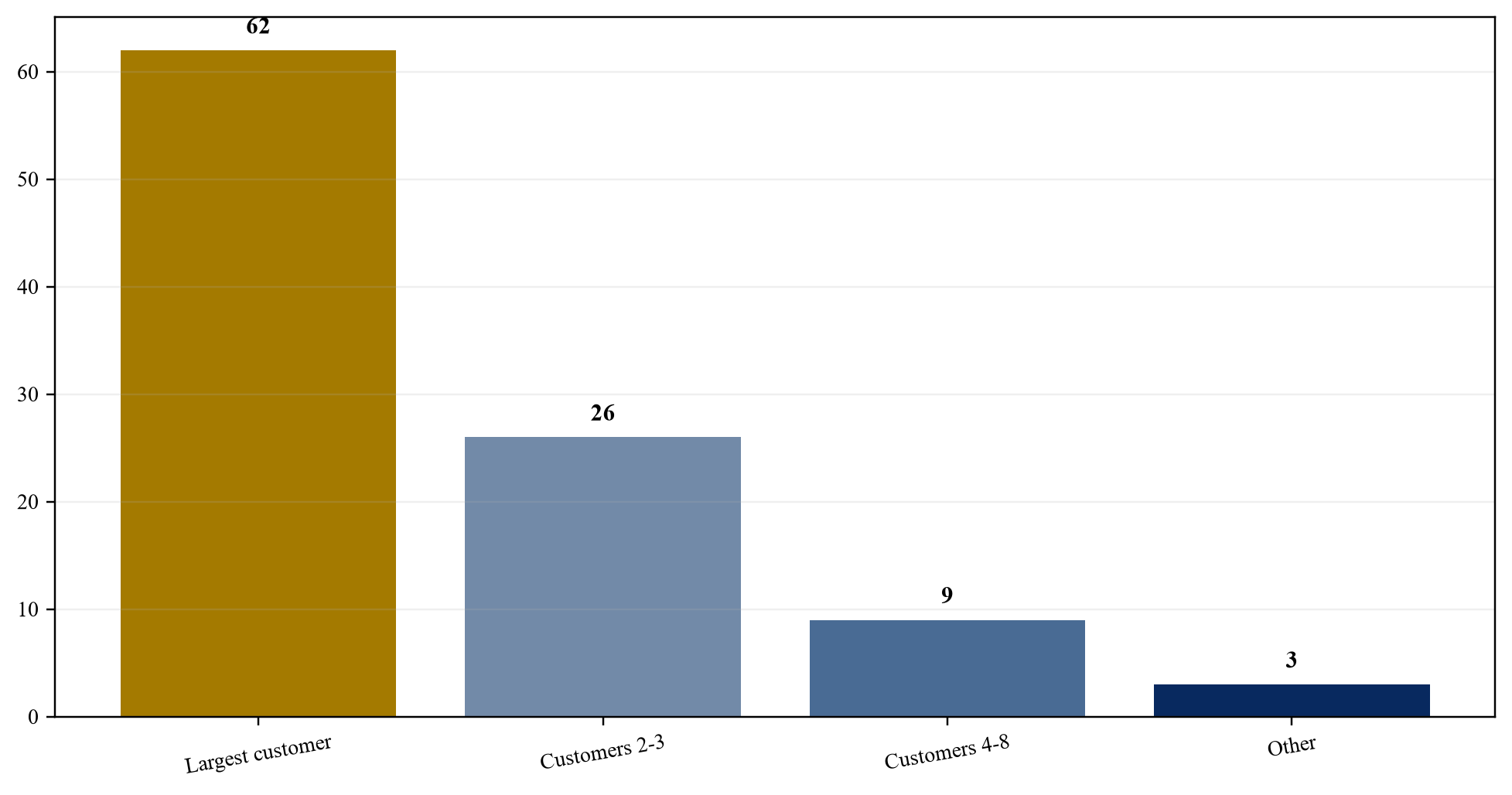
Wholly hypothetical; percentage of stated contracted value.
| Dimension | Measure | Diligence response |
|---|---|---|
| Legal customer | revenue, contract and receivable share | aggregate to parent group |
| Renewal window | value expiring by quarter | model bargaining and replacement |
| Site and workload | common-cause exposure | test portability and outage |
| Credit support | guarantee, deposit or prepayment | verify scope and expiry |
Proposed framework unless stated otherwise.
4. Test termination, remedies and renewal
Contract tenor has value only when termination rights, service remedies and renewal mechanics support the expected cash flow. Termination for convenience, chronic service failure, delayed delivery, change of control, regulatory events or repeated price increases can shorten effective duration. Credits and liquidated damages can reduce margin before termination occurs.
Abstract each trigger, cure period, liability cap, credit formula, force-majeure treatment and customer step-in right. Review historic service incidents and compare credits issued with contractual calculations. Confirm whether change of control needs consent and whether a failed consent releases capacity or creates a payment claim.
Renewal should be modelled at the contract's actual pricing and notice mechanics. A broad expectation of continuing AI demand is insufficient evidence for target-specific renewal. [7][9][10]
5. Assess customer credit and support
Long-dated service commitments expose the operator to customer default as well as operating risk. Credit quality can differ from brand recognition when the contracting party is a thinly capitalised affiliate, project company or venture-backed customer. Parent guarantees, letters of credit, deposits and prepayments require document-level review.
The buyer should reconcile customer exposure to billing frequency, collateral, disputed invoices and days sales outstanding. Prepayments should be linked to the delivery obligations they finance and tested for refund rights or restricted use. Customer-support instruments should be valued after expiry dates, caps and governing-law enforceability are reviewed.
Credit protection belongs in the cash model. It should affect loss timing, replacement liquidity and debt headroom rather than appearing as a qualitative score alone. [9][10][11]
6. Build the power-cost ledger
Electricity cost must be decomposed into components that match the operator's contracts and meters. Commodity, transmission, distribution, balancing, capacity, demand, renewable-certificate, tax, loss and supplier-margin charges can move differently. Cooling and power-usage effectiveness translate IT load into facility demand.
For every site, record the supplier, product, delivery point, contracted volume, shape, price formula, hedge, collateral, settlement interval, imbalance allocation, maximum import capacity and expiry. Reconcile invoices to meter data and general-ledger expense. Separate facility landlord charges from direct supply and identify mark-ups embedded in pass-through statements.
The base case should use auditable unit costs and volume assumptions. Headline electricity prices or average facility costs can conceal peak charges and contract mismatches. [1][2][3][12]
7. Read power pass-through clauses
A clause described as pass-through may recover only part of the cost. It can exclude network charges, use a lagged index, recover changes above a threshold, cap annual increases, apply after notice or permit the customer to terminate. It can also pass a standard tariff while the operator bears actual hedging or imbalance cost.
Create a clause matrix matching each recoverable component with the operator's corresponding cost. Capture baselines, indices, floors, caps, lags, audit rights, dispute mechanisms, taxes, foreign-exchange treatment and termination consequences. Test the clause against twelve months of invoices and customer bills.
Margin protection should be measured as recovered cost divided by incurred cost, with timing and bad debt included. Legal wording and realised recovery both matter. [9][10][12]
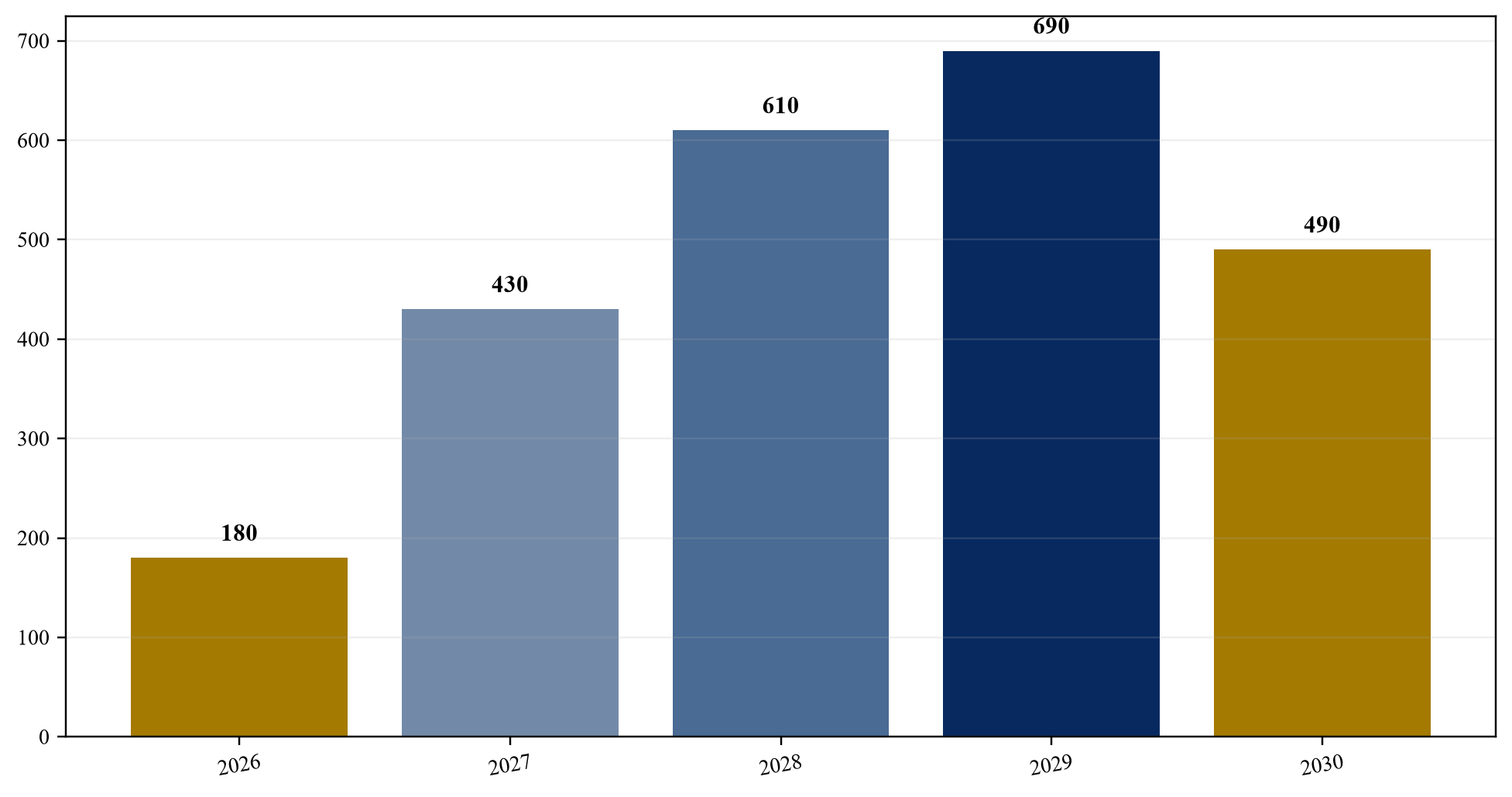
Wholly hypothetical; GBP million of contracted schedule by calendar year.
| Cost component | Clause test | Model treatment |
|---|---|---|
| Commodity | index, hedge and lag | realised recovery |
| Network | included charges and resets | site-specific schedule |
| Balancing | allocation and cap | shape sensitivity |
| Capacity and certificates | definition and tax | separate recovery line |
| Demand and peak | meter and threshold | volume downside |
Proposed framework unless stated otherwise.
8. Model price and volume basis risk
Power risk arises from price and volume. A fixed-price customer contract paired with variable supply creates price basis risk. A take-or-pay supply agreement paired with uncertain GPU utilisation creates volume risk. Hourly workload shape can create imbalance and peak-demand exposure even when annual volumes match.
The model should calculate energy use from billable GPU hours, non-billable operation, redundancy, cooling and other facility load. It should test lower utilisation, higher power-usage effectiveness, delayed customer start, extreme prices and hedge expiry. Each scenario should identify the amount and timing of unrecovered cost.
The acquisition case should distinguish contractual recovery, expected negotiation and unsupported management assumption. [2][3][12][13]
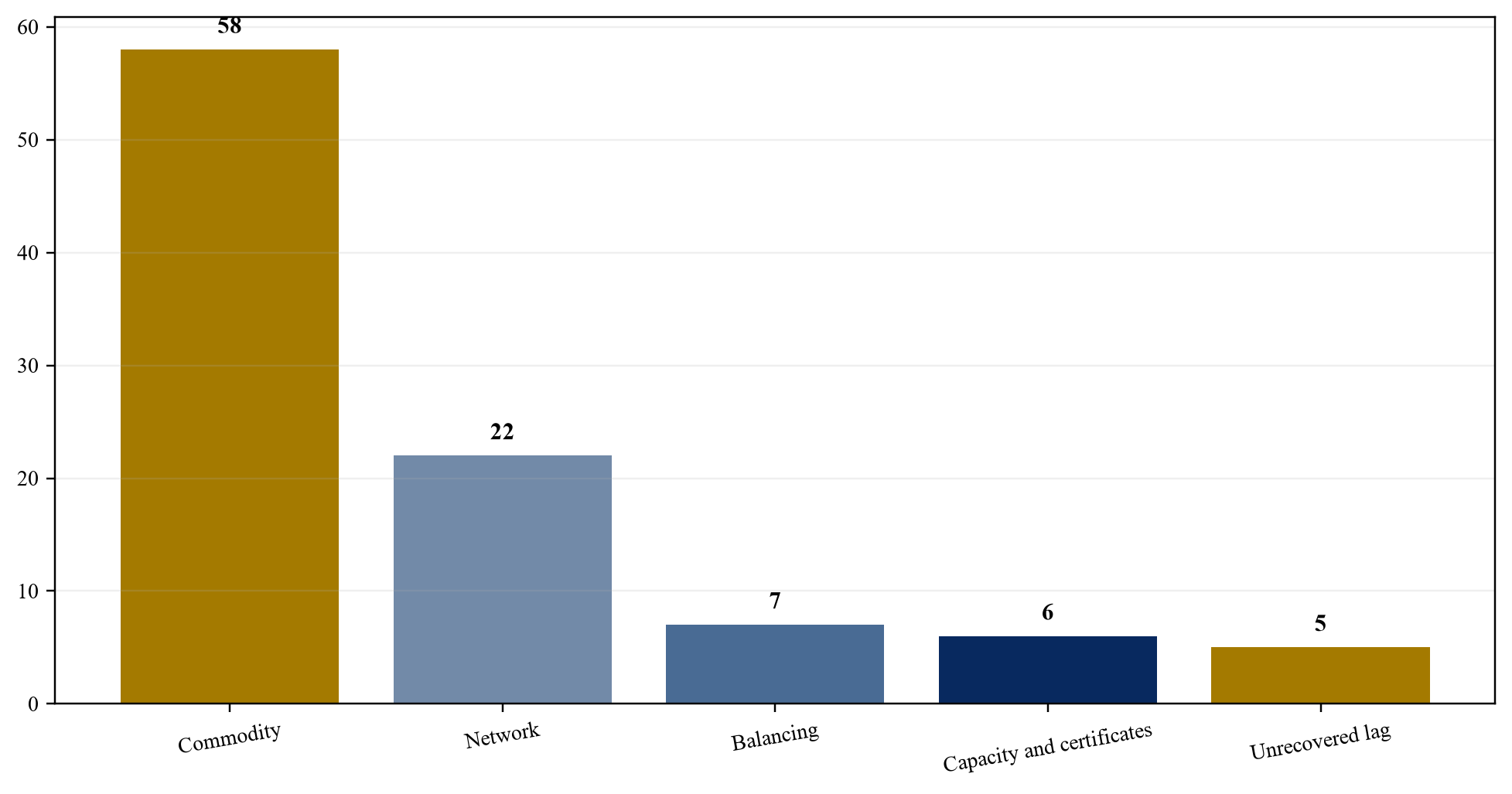
Wholly hypothetical; GBP per MWh.
9. Verify grid rights and delivery
Announced capacity, requested capacity, contracted connection, energised capacity and firm operational rights are different states. Ofgem and government evidence show the scale of the connection queue and the policy focus on strategic demand. A buyer needs the target's executed documents and construction evidence.
Review connection offers, milestones, securities, queue position, network works, land rights, consents, energisation tests, curtailment provisions and reinforcement dependencies. Identify whether capacity is firm, interruptible or conditional and whether change of control requires approval. Link each customer start date to the relevant grid milestone.
A capacity plan should receive value according to its evidence state, remaining capital and probability of timely delivery. [1][2][14][15]
10. Reconcile data-centre arrangements
GPU clouds can own facilities, lease wholesale capacity, use colocation or combine these models. Contract structure determines control of power, cooling, security, maintenance and expansion. A customer commitment can outlast the underlying facility term or depend on an extension that is not yet executed.
Capture rent, power billing, escalators, service levels, expansion options, deposits, parent guarantees, restoration, termination, casualty and change-of-control terms. Confirm rack density, cooling design, reserved power, redundancy and the division of maintenance responsibility. Reconcile contracted capacity to installed and accepted capacity.
Facility obligations should enter adjusted net debt and cash flow according to their economic substance. The model should expose term mismatches between site, customer, equipment and financing. [5][9][10][16]
11. Build the GPU cohort ledger
Each material GPU cohort has a generation, configuration, acquisition cost, delivery date, commissioning date, workload fit, software support, financing claim, warranty, useful life, refresh plan and residual route. Average equipment statistics can hide a large older cohort or assets that cannot be moved between customers.
Reconcile purchase orders, serial records, title, liens, location, telemetry, maintenance, benchmark performance and customer assignment. Record idle, failed, reserved and billable units separately. Test whether networking, storage and cooling constrain usable performance before the nominal GPU count does.
Valuation should use cohort-specific cash flows and refresh requirements. Accounting carrying amount and economic recoverability should remain separate schedules. [7][10][17][18]
| Field | Evidence | Valuation effect |
|---|---|---|
| Generation and configuration | serial and bill of materials | workload fit |
| Commissioning and utilisation | telemetry and scheduler | revenue timing |
| Title and lien | invoice and security filing | equity recovery |
| Refresh and residual | approved plan and market evidence | free cash flow |
Proposed framework unless stated otherwise.
12. Test procurement and refresh
Future performance can depend on chip allocations, system integration and delivery slots. A target may have purchase commitments before corresponding customers or customers before confirmed equipment. A new architecture can improve performance while reducing the competitiveness and residual value of older cohorts.
Review supplier agreements, deposits, cancellation, price protection, export controls, delivery schedules, warranties and software dependencies. Link procurement to funding and customer milestones. Model maintenance and refresh capital required to sustain contracted performance through the final service period.
The downside should combine delayed delivery, higher capex, lower residual and customer remedies because these outcomes can occur together. [17][18][19]
13. Measure utilisation by contract and workload
Billable utilisation is a cash-flow measure, not simply powered-on time. Reserved capacity, testing, failed jobs, maintenance, redundancy and non-billable internal use affect the conversion from installed equipment to invoices. Training, fine-tuning and inference can have different cluster and network requirements.
Use scheduler, telemetry, customer and billing records to calculate available, reserved, delivered and billable GPU hours by cohort. Reconcile contracted minimums to actual invoices and service credits. Analyse utilisation by customer, workload, site and time of day, including capacity stranded by network or cooling constraints.
The forecast should show utilisation ramp, steady state, renewal and redeployment. It should prevent the same spare capacity from supporting multiple independent cases. [9][10][17]
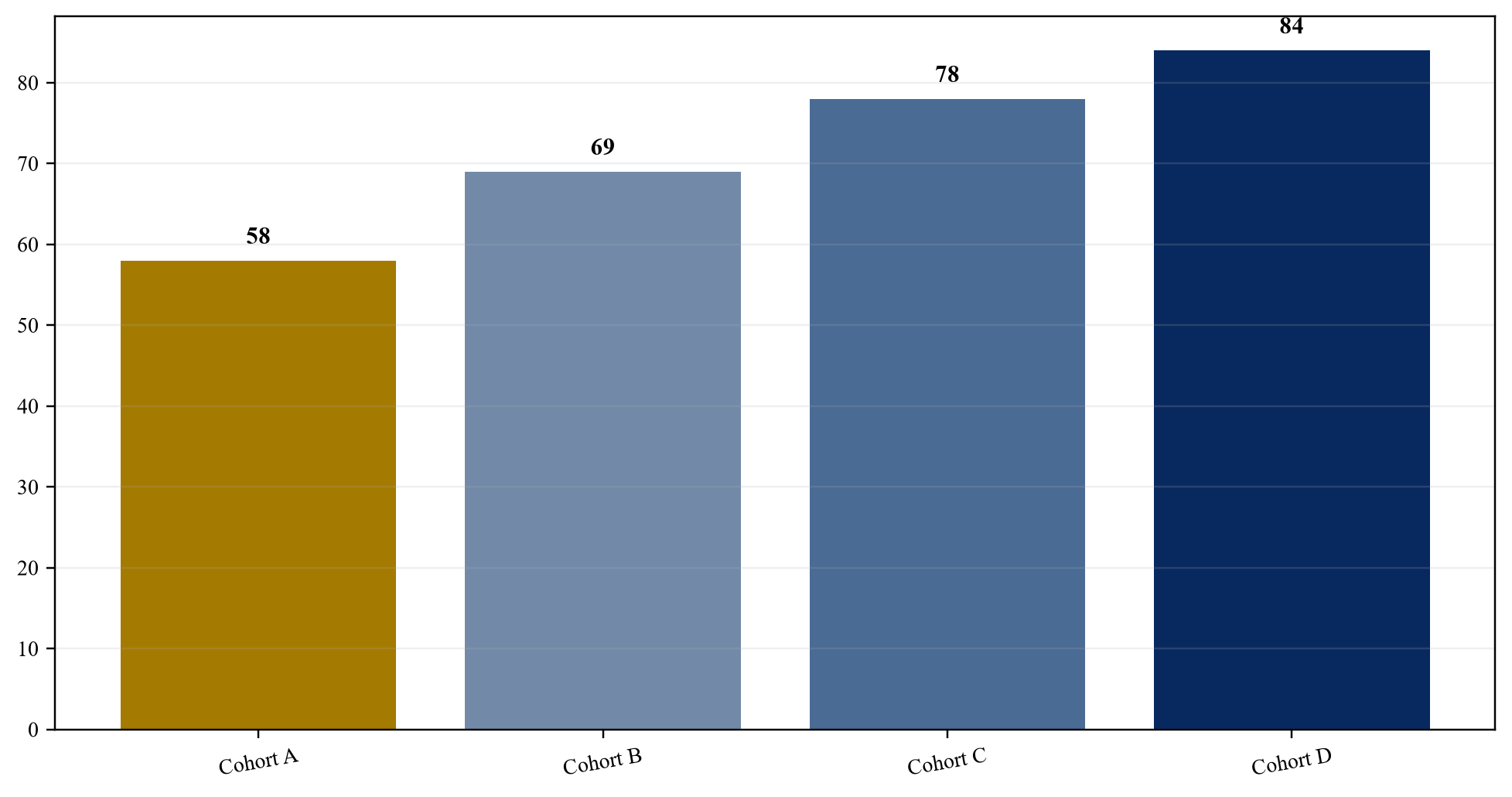
Wholly hypothetical; per cent billable utilisation by cohort.
14. Forecast revenue conversion
The revenue forecast should start with contract tranches rather than a single growth rate. Each tranche needs delivery, acceptance, price, minimum volume, expected variable use, credits, billing and collection. Pipeline and renewal can be layered after the existing book is reconciled.
Construct a monthly contract-to-cash schedule and compare it with historical conversion. A customer expansion should require signed evidence or remain a separately identified scenario. Foreign-exchange exposure, rebates and usage tiers should follow the contract.
The forecast should explain the bridge from stated GBP 2.40 billion contract value to the hypothetical GBP 1.72 billion risk-adjusted schedule. The deductions represent scenario assumptions, not observed facts about an identified company. [7][9][10]
15. Model gross margin by contract
Consolidated gross margin can conceal loss-making anchor contracts or temporary benefits from unallocated power and depreciation. Customer-level margin should include electricity, data-centre charges, network, software, support, service credits, spares, maintenance and equipment consumption.
Match revenue and cost at the same site, cohort and period. Allocate shared costs using operational drivers and reconcile the result to filed or audited accounts. Test whether power recovery begins when costs are incurred and whether escalation covers every relevant component.
The acquisition case should identify contracts that create strategic scale while destroying cash. Price renegotiation, migration, refresh or exit options should be part of the value plan. [7][8][12]
16. Build contract-to-cash controls
A contract can produce recognised revenue before cash and can consume capital long before either. The buyer needs a control chain from executed order through delivery evidence, acceptance, usage, invoice, receivable and bank receipt.
Sample high-value transactions and trace every state. Review disputed invoices, credits, deferred revenue, contract assets, bad-debt provisions and cut-off. Link prepayments to restricted accounts and delivery obligations. Confirm that management metrics reconcile to the general ledger.
The model should use dated cash receipts for liquidity and debt-service analysis. Revenue and EBITDA should not substitute for cash. [7][9][10]
17. Build asset-to-cash controls
The asset schedule should connect procurement, construction, commissioning, depreciation, maintenance, financing, refresh and disposal. Equipment installed before customer acceptance creates negative carry. Customer demand secured before equipment delivery creates remedy and reputation risk.
For each cohort, record capital payments, placed-in-service date, productive hours, revenue, operating cost, debt service, maintenance, refresh and recovery. Link facility infrastructure and network assets where they are required for service. Reconcile capital expenditure to fixed-asset additions and cash payments.
The schedule should identify the first month in which the asset becomes cash positive and the point at which further operation falls below refresh or redeployment alternatives. [7][17][18]
18. Map debt, leases and prepayments
GPU-cloud financing can include equipment loans, project facilities, leases, vendor credit, customer prepayments and corporate debt. Claims may sit in different entities and be secured by specific equipment, contracts, accounts or shares.
Review principal, accrued interest, fees, make-wholes, mandatory amortisation, covenants, reserves, cash sweeps, guarantees and change-of-control provisions. Map each security interest and restriction. Treat customer prepayments together with their performance and refund obligations.
The enterprise-to-equity bridge should include adjusted net debt and debt-like claims according to the transaction documents. It should show refinancing needs created by closing. [8][9][10][16]
| Claim | Linkage | Closing question |
|---|---|---|
| Equipment debt | specific GPU cohort | amortisation versus useful life |
| Project facility | site and customer cash | delivery and concentration |
| Facility lease | data-centre capacity | term and unavoidable payment |
| Customer prepayment | delivery obligation | refund and restricted use |
Proposed framework unless stated otherwise.
19. Apply accounting and impairment tests
Acquisition accounting requires identifiable assets and liabilities, fair-value judgments and supportable useful lives. Revenue recognition depends on performance obligations and contract terms. Leases, customer relationships, technology and deferred tax can materially affect reported outcomes after closing.
Reconcile the diligence forecast with IFRS 3, IFRS 15, IAS 16, IAS 36 and IFRS 16 as applicable. Test whether equipment lives reflect usage and obsolescence, whether cash-generating units are defined consistently and whether impairment scenarios incorporate delivery, concentration and power risk.
Accounting does not determine purchase price, but unexplained differences can reveal incomplete economic modelling. [6][7][8][20][21][22][23]
20. Screen competition and portability
The CMA's cloud-services work highlights concentrated supply and barriers that can affect switching and multi-cloud use. A GPU-cloud target may depend on hyperscaler connectivity, proprietary software, data-egress terms or customer architectures that influence portability and bargaining power.
Review customer switching rights, data export, software licences, interoperability, committed-spend arrangements and third-party dependencies. Test whether an acquirer can migrate workloads or consolidate sites without customer consent or service interruption. Identify merger-control filings and information restrictions early.
Portability affects retention, replacement cost and terminal value. The model should reflect the time and capital needed to move a customer or cohort. [4][24]
21. Screen national security and resilience
Specified data-infrastructure activities can fall within the UK's National Security and Investment Act mandatory-notification regime. Data centres were designated critical national infrastructure in 2024, and proposed cyber-resilience reforms address data-centre services and supporting infrastructure.
The buyer should map qualifying activities, control thresholds, customers, sensitive workloads, site access, supply chain, security accreditation and change-of-control obligations. Legal analysis should determine notification needs; operational diligence should test cyber, physical, power and cooling resilience.
Timing and conditions should enter the transaction plan. A regulatory filing, mitigation measure or delayed clearance can affect financing, long-stop dates and integration. [5][25][26]
22. Triangulate enterprise value
Discounted cash flow, active-capacity references and market references should use the same operating facts. DCF should include contract timing, power recovery, maintenance, refresh, taxes, working capital and terminal assets. Capacity references should distinguish announced, contracted, energised, customer-usable and billable megawatts.
Market references require consistent enterprise value, revenue, EBITDA, growth, leverage, leases, customer concentration and asset ownership. Multiples based on contracted revenue should be reconciled to conditions and timing. The hypothetical central case weights the methods after their assumptions are aligned.
A valuation range should explain method divergence. Mechanical averaging can conceal inconsistent definitions. [7][9][10][27]
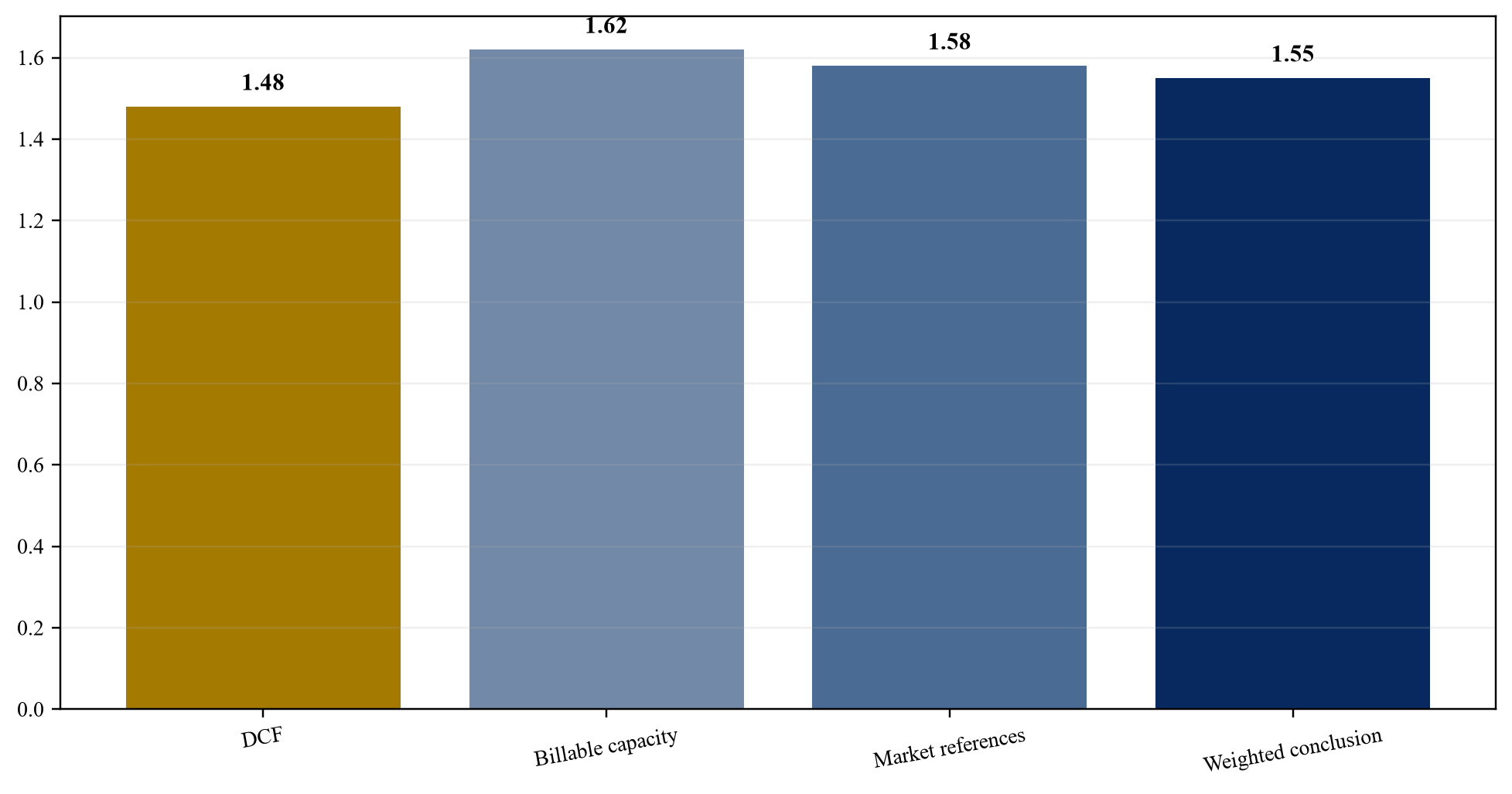
Wholly hypothetical; GBP billion.
23. Build the combined downside
Single-variable sensitivities understate correlated risk. A grid delay can postpone customer acceptance, increase capitalised interest, extend facility cost, trigger service remedies and shorten the period before equipment refresh. Lower utilisation can weaken power recovery and debt coverage simultaneously.
The combined downside assumes a twelve-month energisation delay, 58 per cent billable utilisation, incomplete power pass-through, a 15 per cent renewal-price reduction and accelerated refresh. These are hypothetical assumptions. The model should calculate cash, covenant headroom, refinancing need and equity value monthly.
The committee should identify the first failure point and the capital required to cure it. This turns downside analysis into an executable decision. [1][2][14][15]
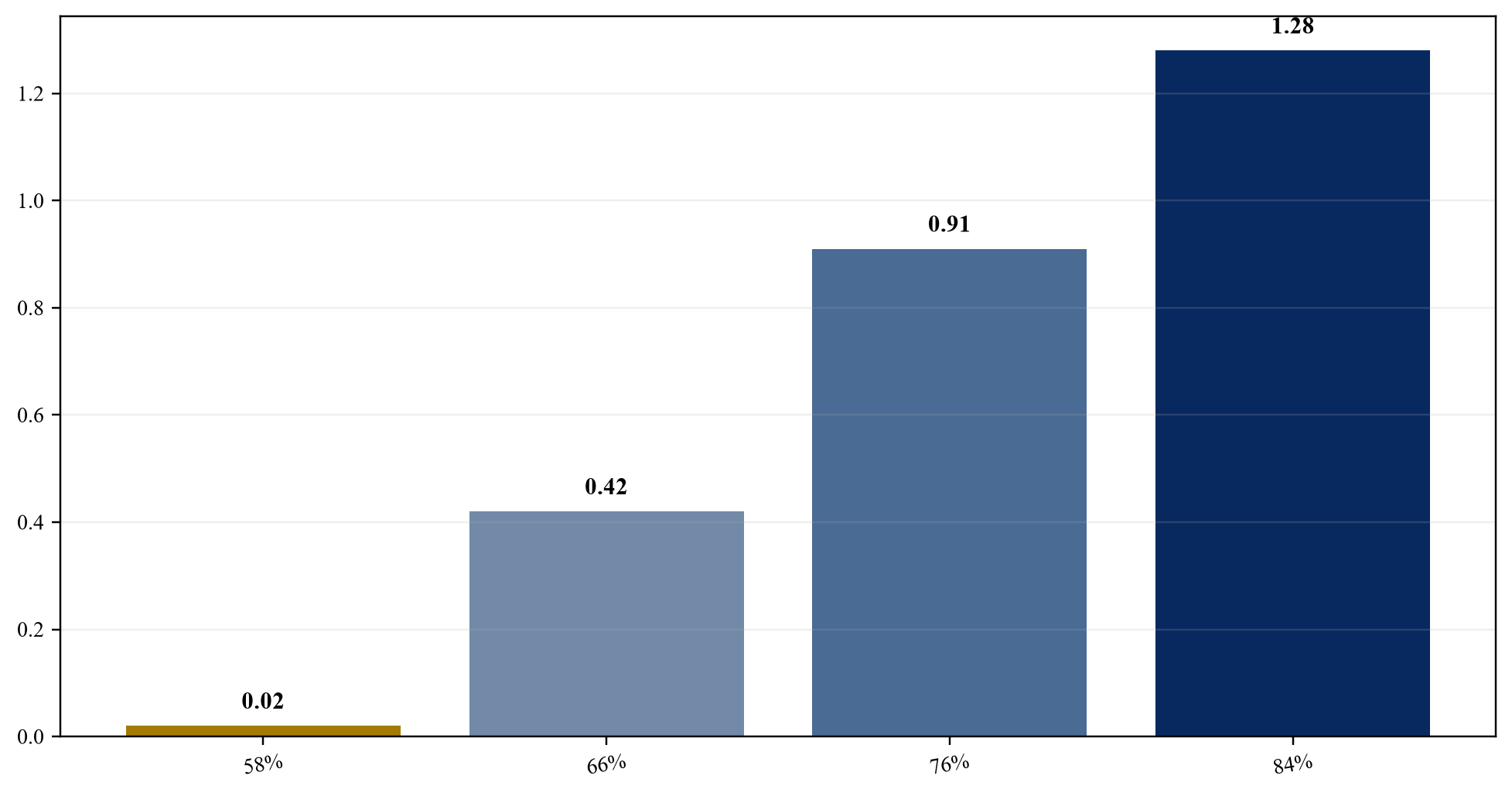
Wholly hypothetical; GBP billion across utilisation cases.
24. Bridge enterprise value to equity
Equity value follows debt, leases, accrued interest, make-wholes, restricted cash, customer obligations, unfunded capex and other closing adjustments. Claims must be mapped by legal entity and priority.
The hypothetical central case starts with GBP 1.55 billion of enterprise value and deducts GBP 0.64 billion of adjusted net debt and lease-like claims, producing GBP 0.91 billion of equity value. The combined downside produces GBP 0.72 billion of enterprise value and GBP 0.02 billion of equity value after GBP 0.70 billion of claims. These figures describe no identified transaction.
The purchase agreement should define every adjustment and avoid double counting between enterprise value, working capital and debt-like items. [8][16][27]
| Item | Central case | Combined downside |
|---|---|---|
| Enterprise value | GBP 1.55bn | GBP 0.72bn |
| Adjusted net debt and claims | GBP 0.64bn | GBP 0.70bn |
| Illustrative equity value | GBP 0.91bn | GBP 0.02bn |
Proposed framework unless stated otherwise.
25. Convert diligence into transaction terms
Unresolved risks can be allocated through price, conditions, escrow, earn-out, retention, indemnity, customer consent, debt paydown, committed capex and termination rights. The instrument should match the evidence gap and remain objectively measurable.
Examples include a price reduction for unfunded grid works, an earn-out tied to accepted billable capacity, escrow for disputed power recovery, a closing condition for anchor-customer consent and a capex covenant for GPU refresh. Metrics should be defined from controlled records and protected from discretionary accounting changes.
Transaction terms cannot repair an operating model that lacks liquidity. The buyer should preserve a walk-away criterion where risk cannot be priced or controlled. [27][28]
26. Design the diligence control room
A fast process still requires source control. Each material assumption should have a definition, source, owner, date, evidence grade, model location, reviewer and expiry. Contract, asset, power and financing ledgers should use consistent identifiers.
Set daily exception reviews during confirmatory diligence. Changes to customer terms, grid timing, equipment delivery, power cost or financing should flow through the integrated model and valuation bridge. Maintain a decision log for accepted, mitigated and unresolved matters.
The investment committee should receive a short list of value-moving exceptions rather than an uncontrolled volume of documents. [28][29]
27. Plan the first one hundred days
Post-close priorities should preserve service while converting diligence findings into control. Day one requires customer ownership, site and grid escalation, cash visibility, cyber authority and covenant monitoring. Early integration should avoid disrupting scheduler, network, cooling or support systems.
Within thirty days, validate contract, asset and meter ledgers. Within sixty days, complete customer renewal and power-recovery plans. Within one hundred days, approve cohort refresh, financing, capacity expansion and risk limits. Each workstream should have a quantified value target and evidence owner.
The plan should protect the acquisition thesis and provide early warning where conversion differs from the model. [25][26][29]
28. Reach the acquisition conclusion
A supportable recommendation reconciles customer contracts, concentration, power, grid delivery, facilities, GPU cohorts, utilisation, financing and regulatory conditions. It states which inputs are verified, which remain conditional and what would change the decision.
The committee record should include the central and combined-downside cases, enterprise-to-equity bridge, liquidity and covenant tests, required consents, transaction protections and first-one-hundred-day actions. Update triggers should be assigned before signing.
The final question is whether the buyer receives cash-generating capacity with controllable risks at the proposed price. Evidence should answer that question at customer, site, cohort and legal-entity level. [1][4][5][27][29]
| Decision | Minimum evidence | Update trigger |
|---|---|---|
| Contract value | executed terms and acceptance | amendment or cancellation |
| Power recovery | supplier and customer invoices | index or volume change |
| Capacity value | energised and accepted evidence | delay or curtailment |
| Equity value | reconciled claims and downside | material operating variance |
Proposed framework unless stated otherwise.
Appendix A. Integrated monthly diligence model
The integrated model should operate monthly until delivery, customer acceptance, utilisation and financing have stabilised. Each contract tranche receives a customer-group identifier, site, GPU cohort, committed quantity, optional quantity, price, escalation, power mechanism, delivery condition, acceptance test, credit formula, invoice date and expected cash date. The model preserves the distinction between an enforceable minimum, expected variable use and management opportunity. A change in one field does not automatically move later dates without checking the governing contract.
The infrastructure schedule connects every tranche to grid rights, facility capacity, cooling, network and equipment. It records requested, contracted, energised, customer-usable and accepted megawatts separately. Remaining construction capital, connection securities, curtailment and facility payments follow the corresponding evidence state. Each GPU cohort records acquisition cost, commissioning, useful life, financing, warranty, maintenance, refresh and expected recovery. Total scheduled use cannot exceed tested capacity after redundancy and operating headroom.
The power schedule converts billable GPU hours into IT load and facility consumption. It separates commodity, network, balancing, capacity, certificate, tax and demand charges. Supplier cost and customer recovery use their own index, lag, floor, cap and volume. The model calculates realised pass-through after timing, bad debt and service credits. The downside changes power price, workload shape, utilisation, facility efficiency and hedge expiry together.
The cash schedule begins with customer receipts and deducts operating cost, taxes, working capital, maintenance, refresh, leases, interest, amortisation and restricted-reserve movements. It identifies the first month in which minimum liquidity or covenant headroom fails. Valuation methods use this same operating model. The enterprise-to-equity bridge deducts debt and debt-like claims by legal entity and security priority.
The investment committee receives the central case, combined downside, sensitivity ranges and a list of unresolved evidence. The record states the price effect, transaction protection and update trigger for each unresolved matter. This creates a repeatable link between diligence findings and the acquisition decision.
Appendix B. Minimum confirmatory-diligence evidence
The contract room should contain executed master agreements, order forms, amendments, acceptance records, service reports, invoices, credits, receivables and customer cash. The power room should contain utility and supplier agreements, connection documents, meter data, invoices, hedges, collateral and customer-recovery calculations. The asset room should contain purchase orders, serial records, title, liens, commissioning, telemetry, warranties, maintenance and refresh approvals. The financing room should contain debt, lease, guarantee, reserve and security documents.
Evidence should be linked using stable identifiers for customer group, contract, site, meter, GPU cohort, financing facility and legal entity. Sample testing should follow high-value items across all ledgers. Exceptions should state financial consequence, responsible owner, proposed remedy and decision deadline. Confirmatory diligence is complete only when value-moving differences are resolved, priced, protected in transaction terms or accepted explicitly by the investment committee.
Appendix C. Hypothetical worked acquisition case
The worked case begins with GBP 2.40 billion of stated contracted revenue. The largest customer represents GBP 1.49 billion and the next two customers represent GBP 0.62 billion. The remaining customers represent GBP 0.29 billion. The schedule covers executed orders with different conditions; it is not assumed to be a receivable. The model removes GBP 0.21 billion associated with capacity that is not expected to be ready by the required delivery date, GBP 0.16 billion for acceptance and service-performance exposure, GBP 0.19 billion for concentration and credit scenarios, and GBP 0.12 billion for price, credit and collection leakage. The resulting GBP 1.72 billion is the risk-adjusted schedule used for the central cash-flow case.
Capacity is reconciled separately. The target describes 148 MW of announced capacity. Executed documents support 112 MW of power rights; 86 MW is energised; 74 MW is customer-usable after cooling, network, redundancy and commissioning; and 58 MW has achieved customer acceptance and billing. The remaining stages retain value only after remaining capital, timing and probability are recognised. The model prevents planned or merely contracted megawatts from receiving the value applied to accepted billable service.
The customer schedule connects every billing period to a site and GPU cohort. The largest customer uses two sites and three cohorts. Its minimum commitment covers a substantial share of installed capacity, while a portion of expected use remains variable. The base case includes only the executed minimum and evidence-supported variable use. A renewal scenario begins after the contractual notice date and uses the expected market price for the relevant equipment generation. It includes reconfiguration and idle time if the customer does not renew.
The power schedule begins with interval meter data and supplier invoices. Commodity cost averages a hypothetical GBP 58 per MWh, network charges GBP 22, balancing GBP 7, and capacity, certificates and other charges GBP 6. Timing and contract differences leave GBP 5 per MWh unrecovered during the modelled period. Customer clauses recover different components and use different reset dates. The central case measures realised recovery using customer invoices. The downside increases commodity and network cost while delaying recovery and reducing billable load.
The equipment schedule divides GPUs and supporting systems into four cohorts. Cohort A has the lowest expected utilisation and residual value; Cohort D has the highest expected utilisation but also the largest remaining supplier payment. The central case funds refresh before performance falls below customer requirements. It removes old equipment according to observed workload suitability and scenario recovery values. The downside accelerates refresh, lowers recovery and assumes a longer customer acceptance period for replacement systems.
The central case reaches 76 per cent billable utilisation and a 34 per cent steady-state EBITDA margin. Free cash flow remains below EBITDA because the model deducts working capital, lease payments, maintenance and refresh capital. Discounted cash flow, billable-capacity references and market references produce a reconciled GBP 1.55 billion enterprise-value conclusion. The methods use the same accepted capacity, contract schedule and capital requirements. Differences are retained as a range and explained in the committee paper.
Adjusted net debt and lease-like claims are GBP 0.64 billion in the central case. The schedule includes equipment and project borrowing, lease obligations and restricted amounts, net of unrestricted cash available at closing. This produces GBP 0.91 billion of illustrative equity value. The bridge is a transaction assumption and requires confirmation through facility, lease, bank and security documents. Working-capital and debt-like definitions should be agreed in the purchase agreement.
The combined downside delays energisation by twelve months, reduces billable utilisation to 58 per cent, leaves a larger share of power cost unrecovered, reduces renewal price by 15 per cent and accelerates refresh. Enterprise value falls to GBP 0.72 billion. Adjusted net debt and lease-like claims increase to GBP 0.70 billion because cash absorption and financing costs rise. Illustrative equity value becomes GBP 0.02 billion. The result shows how a moderate enterprise-value buffer can disappear when delivery, concentration, power and equipment risks occur together.
The hypothetical buyer responds with five proposed protections. Anchor-customer consent becomes a closing condition. A portion of consideration depends on accepted billable capacity. Escrow covers disputed historical power recovery. The seller funds identified pre-closing grid and refresh commitments. The buyer retains a termination right if committed financing or the principal grid milestone fails before the long-stop date. Each protection uses a controlled measurement and a defined verification process.
This worked case provides a decision structure rather than a forecast. The amounts are assumptions and describe no identified company, security or transaction. A real acquisition requires target-specific contracts, legal analysis, accounting records, meter and telemetry data, equipment evidence, financing documents and qualified professional advice.
Sources
- UK Government, UK Compute Roadmap, updated 23 April 2026. Read the primary source
- Ofgem, Ofgem acts to free up grid capacity by tackling speculative data centre projects, 2026. Read the primary source
- Office for National Statistics, Data centres and the UK National Accounts, 2026. Read the primary source
- Competition and Markets Authority, Cloud services market investigation: final decision, 31 July 2025. Read the primary source
- UK Government, National Security and Investment Act guidance on notifiable acquisitions. Read the primary source
- IFRS Foundation, IFRS 3 Business Combinations. Read the primary source
- CoreWeave, Inc., Annual Report on Form 10-K for the year ended 31 December 2025. Read the primary source
- CoreWeave, Inc., 2025 Annual Report. Read the primary source
- Core Scientific, Inc., Annual Report on Form 10-K for the year ended 31 December 2025. Read the primary source
- Core Scientific, Inc., Fourth Quarter and Full Year 2025 Earnings Presentation. Read the primary source
- Competition and Markets Authority, Summary of final decision in cloud services market investigation. Read the primary source
- UK Government, Quarterly Energy Prices. Read the primary source
- International Energy Agency, Energy and AI. Read the primary source
- UK Government, Accelerating electricity network connections for strategic demand. Read the primary source
- UK Government, Government to tackle speculative demand grid connection requests. Read the primary source
- IFRS Foundation, IFRS 16 Leases. Read the primary source
- NVIDIA Corporation, Annual Report for fiscal 2026. Read the primary source
- NVIDIA Corporation, Quarterly Report for the quarter ended 26 July 2026. Read the primary source
- UK Government, UK AI Hardware Plan, 8 June 2026. Read the primary source
- IFRS Foundation, IFRS 15 Revenue from Contracts with Customers. Read the primary source
- IFRS Foundation, IAS 16 Property, Plant and Equipment. Read the primary source
- IFRS Foundation, IAS 36 Impairment of Assets. Read the primary source
- IFRS Foundation, IFRS 13 Fair Value Measurement. Read the primary source
- Competition and Markets Authority, Cloud services market investigation final report. Read the primary source
- UK Government, Data centres factsheet. Read the primary source
- UK Government, National Security and Investment Act 2021 annual report 2024 to 2025. Read the primary source
- International Valuation Standards Council, International Valuation Standards. Read the primary source
- UK Takeover Panel, The Takeover Code. Read the primary source
- National Institute of Standards and Technology, Cybersecurity Framework 2.0. Read the primary source
