

Introduction
Industrial electrification adds large controllable loads to power systems. Electric boilers, heat pumps, furnaces, electrolysers and thermal stores can increase, reduce or shift electricity demand when their production process allows it. A factory can use this capability to obtain lower tariffs, direct flexibility payments or market revenue.
The International Energy Agency estimates that industry already provides most of the demand response used worldwide, while a much larger technical and economic potential remains untapped.[1] It identifies industrial heat, batch processes, cold storage and compressor systems as loads that can often shift with limited production impact when controls and storage are available. The Agency also recommends electricity-market and network-tariff reform to reward flexible industrial demand.[2]
An interruptible-boiler proposition joins two contracts. The factory needs useful heat at a stated quality and availability. The power system needs a dependable change in electrical demand during defined conditions. This paper develops an underwriting framework that connects those contracts and protects production, liquidity and debt service.
1. Define the useful heat service
Start at the thermal delivery boundary. Record steam pressure, temperature, flow, water quality, hot-water temperature, ramp rate, availability and control tolerance. Electricity consumption has value to the factory only because it produces a required heat service.
Map hourly and sub-hourly demand by production line, shift, season, product and maintenance state. Reconcile electricity input with metered steam or hot-water output. The resulting heat balance should distinguish normal operation, startup, cleaning, sterilisation and exceptional production.
Specify the consequence of insufficient heat. Product loss, delayed batches, safety events and lost contribution margin create different limits. The flexibility product must sit inside those limits. A megawatt of curtailable electrical load is available only when the plant can continue safely and economically.
2. Establish the interruption envelope
Define the maximum reduction, notice period, ramp time, duration, recovery time and number of calls that production can absorb. Test weekday, weekend, seasonal and maintenance conditions. Separate a complete shutdown from a partial turn-down.
State the heat reserve available during each interruption. Reserve may come from thermal storage, gas backup, dual-fuel equipment, production inventory or temporary process rescheduling. Each source has capacity, response and cost constraints.
Use a time-varying envelope. A factory may offer 8 MW for thirty minutes in one operating state and 3 MW for two hours in another. Contracting one fixed number can overstate availability or leave value unused. Automated nominations can communicate the current envelope before the market gate closes.
3. Map the complete service chain
Map the electricity supplier, network operator, system operator, aggregator, meter operator, boiler owner, heat user and backup provider. Assign data, dispatch, payment and remedy obligations to each party.
Align physical and contractual boundaries. The grid meter records electricity, the boiler meter records input, and the steam meter records useful heat. A market settlement based on grid reduction can differ from a service payment based on steam availability.
Create one control hierarchy. Production safety and equipment protection must override an external dispatch signal. The operating protocol should define who can call an event, who can reject it, how the reason is logged and when a rejected call creates a payment adjustment.
4. Choose the flexibility product
Price-based demand response exposes the factory to time-varying energy or network prices and lets it decide when to change consumption. Incentive-based demand response pays for availability, activation or measured performance. Some structures combine both.
An interruptible tariff can exchange a lower fixed or volumetric charge for a right to curtail load during stated conditions. A capacity programme can pay for committed reduction. Energy and ancillary-service markets can pay for dispatch or response. Local networks may procure constraint relief.
Select products that fit the boiler's physical capability and the factory's governance. Fast ancillary services can require telemetry and automated control. Capacity products can impose seasonal tests and penalties. A tariff discount can be operationally simpler while embedding broad interruption rights.
5. Separate energy and flexibility prices
Split the bill into energy, network, capacity, taxes, levies and flexibility payments. Each component has its own driver. Wholesale prices can fall while capacity or network charges rise.
Define the energy price during normal use, preheating, interruption and rebound. An event can move consumption into a later high-price hour. Gross curtailment revenue should be reduced by the cost of restoring heat and production.
Price flexibility through distinct availability, activation and performance elements. Availability pays for reserved capability and fixed enabling cost. Activation pays for delivered response. Performance adjustments align settlement with measured delivery. This separation makes the cash flow easier to forecast and finance.
6. Design the availability payment
Availability should compensate the factory for keeping equipment, controls, reserves and operating procedures ready. State the eligible capacity, availability window, testing standard and exclusions.
Use a monthly or seasonal payment linked to verified capability. Apply a conservative derating until operating evidence supports the nominated capacity. Planned outages and agreed production changes should follow a notice process.
Define payment reduction proportionately. A minor telemetry defect should carry a different consequence from unavailable heat backup. Repeated failures can reduce nomination or terminate the product. The contract should preserve incentives to cure rather than create an immediate cliff in project cash flow.
7. Design the activation payment
Activation payment can reflect reduced megawatts, delivered megawatt-hours, event duration, market price or an agreed strike. State the settlement interval and whether ramp periods qualify.
Include incremental operating cost. Switching to gas, drawing stored heat, delaying a batch and running overtime can each create cost. A factory should dispatch when the payment covers the relevant cost and risk.
Avoid double counting. A tariff discount, capacity payment and market revenue may compensate the same response. Market rules can restrict stacking. The commercial model should identify which party owns each revenue stream and which services can be delivered simultaneously.
8. Define event rights
Specify trigger, notice, maximum duration, annual hours, consecutive calls, recovery interval and seasonal window. Distinguish emergency events from economic dispatch and local network constraints.
Set a clear hierarchy among system operator, network operator, supplier and aggregator instructions. Ofgem's 2026 approval of updated Demand Flexibility Service terms addressed primacy arrangements because local and transmission actions can conflict.[3] An industrial contract requires the same discipline.
Allow rejection for defined safety, product-quality or equipment conditions. Require prompt evidence and event logs. Broad discretionary rejection weakens the product, while an absolute dispatch right can expose the factory to unacceptable production loss.
9. Cap annual interruption exposure
Annual call limits protect maintenance, labour planning and production commitments. Define hours, events, starts and cumulative energy separately. Ten one-hour calls can affect a plant differently from one ten-hour event.
Use escalating prices or opt-out rights beyond the contracted band. The system buyer can obtain additional flexibility without treating the original payment as unlimited access. The factory receives compensation that reflects increasing production disruption.
Review caps after a measured operating season. Higher demonstrated resilience may support a larger product and payment. Evidence can also justify a lower nomination. Changes should require documented operational approval and financing consent where the cash flow supports debt.
10. Establish the consumption baseline
Demand response measures a change against an estimate of consumption without the event. This counterfactual cannot be observed directly. Baseline design therefore affects payment, penalties and credibility.
Choose a method suited to continuous, batch or weather-sensitive production. Options include recent comparable days, regression, production-normalised models and nominated schedules. Lawrence Berkeley National Laboratory distinguishes settlement measurement from programme impact evaluation and explains why methods must fit the programme context.[4]
Preserve raw interval data, production variables, exclusions and adjustment rules. Apply the method before examining event results. A baseline that can be altered after an event creates disputes and weakens financeability.
11. Prevent baseline gaming
Rules should remove incentives to increase consumption before an event or manipulate production schedules to inflate the apparent reduction. Compare pre-event load, thermal inventory and production output.
Use caps on same-day adjustment and require a credible operating explanation for material variance. Random tests can reveal whether nominated response exists under normal conditions. Repeated deviation should reduce accredited capacity.
Protect legitimate production changes. A factory should not be penalised for a documented order, shutdown or product mix change. Independent data review can separate normal commercial variation from strategic baseline inflation.
12. Meter electricity and useful heat
Use revenue-quality interval metering at the grid connection and submeter the electric boiler. Meter useful heat at the agreed process boundary where practical. Synchronise clocks and preserve time zones.
Record boiler status, power, steam flow, pressure, temperature, thermal-store state and backup operation. Event settlement can then distinguish a real load reduction from a meter outage or production shutdown.
Define ownership, access, retention and audit. Data should support market settlement, heat-service performance, warranty and lender reporting. One validated data set reduces reconciliation risk among multiple contracts.
13. Specify telemetry and control
Define sampling frequency, latency, availability, command acknowledgement and fallback. A capacity product may tolerate interval data after the event. Fast balancing services can require real-time telemetry and automated response.
Separate monitoring from control. An aggregator can receive status without holding unrestricted access to the boiler. Use role-based permissions, authenticated commands and an approved control boundary.
Test communication loss, stale data and conflicting commands. The boiler should return to a safe state. Event logs should record instruction, acceptance, equipment response, operator override and restoration.
14. Protect production continuity
Create a heat-continuity plan for every event class. State which boiler remains online, how thermal storage is reserved and when production will slow. Include cold-start and restart limits.
Quantify contribution margin at risk by line and product. A small energy payment cannot justify a batch loss. Use the quantified exposure to set rejection rights, reserves and liability caps.
Require representative operating trials. A control-system test without live production proves limited value. Commissioning should demonstrate heat quality, load reduction, recovery and product acceptance together.
15. Model rebound consumption
After interruption, the boiler may consume additional electricity to restore steam pressure, thermal inventory or delayed production. The rebound can occur during an expensive or constrained period.
Measure net event energy across curtailment and recovery. Distinguish a temporary shift from permanent reduction. Settlement rules can pay for capacity while recognising that energy returns later.
Optimise the restoration ramp. Thermal storage, staged restart and production scheduling can reduce the rebound peak. The financial model should include energy cost, network demand and equipment stress during recovery.
16. Align the network tariff
Network tariffs can reward or penalise flexible operation. Peak-demand charges, contracted capacity, coincident peaks, time-of-use rates and locational charges create different incentives.
ACER's 2025 monitoring work identified network-tariff design as a material barrier to demand response and recommended stronger dynamic and time-of-use signals.[5] The European Commission's 2026 guidance also supports granular charges that reflect time and location.[6]
Model the complete tariff for every dispatch case. Curtailment during one system peak can reduce a charge, while rebound in another interval can create a new maximum. Obtain written treatment from the network or supplier before assigning value.
17. Integrate wholesale price exposure
Dynamic pricing can direct electric heat into low-cost hours. It also transfers volatility to the factory. Set caps, hedges or operating rules that protect production economics.
Use day-ahead, intraday and balancing prices at the relevant node or zone. Include supplier margin, imbalance, losses and collateral. Public wholesale prices can differ materially from the delivered factory price.
Preserve optionality in procurement. A portion of expected load can be fixed while the flexible block remains indexed. The proportion should reflect debt protection, working capital and the proven dispatch envelope.
18. Coordinate power purchase agreements
A corporate power purchase agreement can hedge renewable electricity volume and attributes. Its generation profile may not match boiler demand. Shape, basis, imbalance and sleeving costs remain.
Use the boiler and thermal storage to absorb generation where economically and operationally possible. Keep the heat reserve available for production and contracted flexibility. One asset cannot promise the same capacity to every contract at the same time.
Define curtailment and negative-price treatment. Some agreements require continued payment when market prices are negative. The tariff and dispatch model should use the actual settlement terms rather than a headline PPA price.
19. Preserve backup economics
Gas or another boiler can protect heat service during interruption, maintenance and grid outage. Record its minimum load, startup time, fuel contract, emissions and fixed charges.
Calculate the incremental cost of switching. Include fuel, carbon, water, chemicals, labour and maintenance. The flexibility payment should cover this cost where backup enables the response.
Avoid claiming full fuel displacement while relying on backup. The model should show residual consumption and connection charges. A hybrid configuration can still create material value through lower annual gas use and dependable response.
20. Compare electric-boiler configurations
Electrode, resistance and other electric-boiler arrangements differ in voltage, water quality, ramp, turndown, maintenance and scale. Select equipment for the heat service and grid connection.
Compare direct steam production with charging thermal storage. Direct production provides efficient conversion and fast response. Storage decouples electrical demand from heat delivery and expands the interruption envelope.
Use vendor evidence at relevant pressure, load and cycling. Frequent dispatch can increase wear. Warranty terms should reflect the expected starts, ramps and operating range.
21. Value thermal storage as a contract enabler
Thermal storage can maintain process heat while electrical demand falls. Its value includes additional response duration, faster dispatch and reduced backup use.
Size storage against the contracted event rather than annual heat. Include charge power, standing loss, discharge capacity and recovery. A nominal energy capacity can be unavailable because of minimum temperature or retained reserve.
Allocate the storage cost across heat, energy arbitrage and flexibility. Revenue stacking is valid only when services are compatible. The financial model should show the binding constraint in every hour.
22. Use an aggregator carefully
An aggregator can combine multiple industrial sites, access markets, manage nominations and settle performance. Scale can reduce transaction cost and diversify availability.
Review licence, market access, credit, data security and termination. Define gross market revenue, fees, pass-through costs and timing. Require transparent event and settlement records.
Preserve factory control over safety and production. The aggregator's portfolio obligation should not override site limits. A replacement or step-in mechanism can protect market access if the aggregator fails.
23. Compare programme precedents
The IEA reports around 100 GW of demand response in use globally in 2024, with industry providing about 75 GW.[1] The numbers indicate an operating market and substantial unused potential. They do not establish value for a specific factory.
Australia's Wholesale Demand Response Mechanism allows eligible demand response to bid into the National Electricity Market. The AEMC's 2025 review estimated dispatch-efficiency benefits above the mechanism's operating cost and recommended continuation.[7]
PJM permits demand response participation across energy, ancillary-service and capacity arrangements, subject to registration, testing, metering and settlement rules.[8] These precedents show recurring design requirements: a defined product, qualified provider, baseline, telemetry, testing and performance consequence.
24. Calculate gross flexibility margin
Gross flexibility margin equals availability and activation revenue plus tariff and energy savings, less backup fuel, rebound electricity, aggregator fees, incremental maintenance, labour and expected penalties.
Calculate by event and year. Preserve timing because capacity revenue can be stable while activation varies. Exclude speculative value from the debt case until the market, eligibility and operating evidence are established.
Reconcile the margin to the electricity bill and production accounts. A lower average tariff can coexist with higher absolute cost if electrification increases consumption. The investment decision should compare complete heat-service economics.
25. Build the complete capital budget
Include electric boiler, transformer, switchgear, cables, protection, power-quality equipment, steam integration, thermal storage, controls, meters, telemetry, civil works, engineering, permits, commissioning and contingency.
Add production shutdown, temporary boiler, operator training, spares and owner costs. Brownfield interfaces can dominate capital and schedule. Separate vendor scope from site works.
Record quotation date, currency, tax, escalation and exclusions. Apply contingency according to engineering maturity and interface complexity. Equipment price should never be presented as total installed cost.
26. Build sources and uses
Separate development, construction, contingency, financing cost, reserve accounts and working capital. Match each use with committed equity, grants, vendor support, corporate debt or project debt.
Fund early metering, grid study and pilot work with risk capital. Long-term debt should enter after technical, contractual and completion risks are defined. Grants can reduce capital while introducing milestone and clawback conditions.
Maintain a liquidity reserve for tariff collateral, delayed support and commissioning. The project can perform technically and still fail financially if cash is unavailable during ramp.
27. Choose the financing perimeter
A factory can finance the equipment on balance sheet. A special-purpose vehicle can own the asset and sell heat or availability. A utility or service provider can include the system in a broader programme.
Select the perimeter that aligns cash flow, security and operating control. Project finance requires separable assets, contracts and accounts. Corporate finance can absorb variable savings but competes with other capital needs.
Avoid structural complexity without a financing benefit. A special-purpose vehicle adds legal, tax, accounting and interface cost. Use it when long-term contracts and risk allocation create a credible standalone cash flow.
28. Contract the heat service
Define useful heat, availability, quality, meter boundary and price. State who supplies electricity, controls dispatch and bears network and imbalance costs. Include minimum use only where the factory can support it.
Coordinate the heat-service agreement with the flexibility contract. The boiler provider should not owe heat during an externally called interruption unless backup or storage covers the duty. Each contract should recognise the other's priority.
Address site access, maintenance, insurance, change control, termination and removal. Termination compensation should reflect debt and unavoidable cost while requiring mitigation.
29. Size debt against dependable cash flow
Calculate cash available for debt service after electricity, network, backup, operations, maintenance, taxes, working capital and sustaining capital. Use the lender definition consistently.
Give contracted availability payments the strongest weight when counterparty credit, performance standards and tenor are adequate. Apply conservative assumptions to activation, merchant savings and unproven tariff benefits.
Shape amortisation to commissioning and contract life. Preserve minimum debt-service coverage under event shortfall, higher energy price, lower production, delayed support and equipment outage.
30. Model debt-service sensitivities
Test availability payment, accredited capacity, capital cost, interest, operating margin and commissioning delay. Include correlated downside. A production decline can reduce heat demand, response capability and energy savings together.
Separate cureable timing variance from structural underperformance. Reserve accounts can absorb temporary settlement delay. A permanently lower interruption envelope requires resized debt or additional support.
Present breakeven values. Lenders and sponsors should know the minimum contracted payment, maximum capital and lowest performance that preserve required coverage. The hypothetical sensitivity exhibit in this paper illustrates the approach without representing a specific transaction.
31. Allocate completion risk
Define completion through grid energisation, boiler output, heat quality, response capability, telemetry, baseline acceptance and production qualification. Mechanical completion alone leaves material commercial risk.
Use fixed-price scope where design permits, supported by contingency and interface management. Hold retention or security through performance testing. Allocate delay to the party able to manage the cause.
Keep sponsor support until completion tests and operating reserves are satisfied. First-of-a-kind integration can require a longer ramp. Debt draw and conversion should follow objective evidence.
32. Allocate performance risk
Separate boiler efficiency, heat output, electrical response, availability and production performance. Each has a different measurement boundary and responsible party.
Use liquidated damages only where loss and causation can be defined. Service credits can address recurring availability shortfall. Product loss and wider factory interruption require tailored liability and insurance.
Coordinate warranties with dispatch. A contract requiring frequent cycling should not invalidate the equipment warranty. Record approved operating envelope, maintenance and data obligations.
33. Allocate electricity-price risk
The factory, supplier, aggregator or heat-service provider can bear energy-price and imbalance risk. Allocate it to the party controlling procurement and dispatch, subject to agreed limits.
Use indices that match actual settlement. A wholesale index without node, loss and supplier adjustment creates basis risk. Define negative prices, scarcity prices and market suspension.
Allow reopener or collar mechanisms for extreme structural change. A reopener should preserve service continuity and debt protection while requiring transparent evidence.
34. Allocate volume and production risk
Lower production reduces heat use and can reduce the response baseline. A minimum payment can support fixed cost while transferring volume risk to the factory.
Set minimums against credible production plans and site life. Include relief for prolonged outage, force majeure and agreed closure. A parent guarantee or termination payment can support financing where the asset has limited alternative use.
For multi-site portfolios, diversify volume across facilities and sectors. Use separate site performance records so one plant does not conceal another's underperformance.
35. Allocate regulatory and market risk
Market rules can change eligibility, baselines, penalties, dispatch priority and revenue stacking. Tariff reform can alter network savings. Define change-in-law and market-discontinuation treatment.
Avoid debt sizing on an assumed permanent programme. Use contract tenor, floor payments or sponsor support. Merchant upside can remain with equity.
Monitor consultations and compliance. ACER, FERC, Ofgem, AEMC and system operators continue to refine participation rules. Governance should assign responsibility for reviewing changes before bids and renewals.
36. Manage credit and collateral
Identify who owes availability, activation and tariff value. A regulated utility, supplier, aggregator and market operator present different credit and settlement structures.
Model payment delay, dispute holdback and collateral. Wholesale participation can require guarantees or cash margin. Supplier failure can interrupt both procurement and flexibility revenue.
Use credit thresholds, replacement rights and direct agreements where proportionate. A lender may require notice and cure before contract termination. Counterparty concentration should be visible at project and portfolio levels.
37. Design penalties and cure
Penalties should reflect the product and avoid disproportionate factory exposure. Define failed test, short response, late response, event rejection and data failure separately.
Cap aggregate liability except for agreed exclusions. Use rolling performance scores and remediation. A single operational anomaly should prompt analysis, while repeated non-delivery should reduce accredited capacity.
Preserve production safety. A penalty structure should never encourage an operator to accept an unsafe event. Document protected conditions and independent review.
38. Build cyber and data controls
Map every external connection to boiler, meter and plant control systems. Use segmentation, least privilege, authentication, logging and tested incident response.
Define data purpose and retention. Market settlement may need interval consumption, while production recipes and customer information should remain outside the shared data set.
Test remote-command failure and recovery. Maintain manual operation and local override. Cyber obligations should cover the aggregator, vendor, meter provider and subcontractors.
39. Procure through a common specification
Issue one specification covering heat, electrical, flexibility, data and finance requirements. Ask bidders to state inclusions, exclusions, performance boundary and programme eligibility.
Compare installed capital, operating cost, contract payment, risk allocation and lifecycle support. A low boiler price can be offset by grid works, weak warranties or expensive controls.
Require references at comparable voltage, steam conditions, cycling and market participation. Verify them independently. Evaluate vendor balance sheet, service network and spare-parts strategy.
40. Run a measured pilot
Begin with interval metering and shadow dispatch. Calculate how the boiler would have responded without interrupting production. This tests baseline, price and control logic.
Proceed to limited live events with retained backup. Measure load change, useful heat, rebound, product impact and operator workload. Review every event before expanding duration or frequency.
Use the pilot to set accredited capacity and contract terms. A successful engineering test should not automatically trigger full financing. Operating history should cover relevant seasons and production states.
41. Establish investment gates
Gate one confirms heat and electrical baselines. Gate two confirms grid, equipment and tariff concept. Gate three completes engineering, contracts, permits and financing. Final approval follows committed funding and completion protection.
Set a maximum cumulative capital at risk for each gate. Early development spend should preserve the option to stop. Long-lead commitments require defined cancellation exposure.
After commissioning, release support only after heat, response, data and product tests pass. Portfolio replication should require an operating review and updated economics.
42. Govern ongoing performance
Create a monthly dashboard for heat output, electricity, events, response, rebound, availability, penalties, margin and debt-service coverage. Reconcile market settlement to meters and accounts.
Assign ownership across operations, energy procurement, finance, IT, safety and production. Define approval for nominations, contract changes and model updates.
Reforecast when production, tariff, market rules or equipment performance changes materially. Preserve assumptions, approvals and data lineage. Independent review supports lenders and boards.
43. Scale through a portfolio
Standardise data, metering, controls, contracts and acceptance while preserving site-specific heat and production limits. A common framework can reduce diligence and procurement cost.
Aggregate sites to diversify event availability and reach market thresholds. Avoid assuming perfect diversification. Weather, production cycles, tariffs and shared suppliers can create correlated risk.
Finance portfolios after site evidence exists. Use eligibility tests, concentration limits, replacement criteria and cash reserves. Performance should be visible by asset and contract.
44. Decide when the structure is investable
An investable project has a measured heat service, credible interruption envelope, accepted baseline, metering, control hierarchy, compatible tariff, completed capital budget and defined backup.
Contracts should provide sufficient availability cash flow, pass through controllable costs and allocate production, performance, market and credit risks. Debt should survive conservative response and price cases.
Management should defer full commitment when grid access, event rights, rebound cost, programme eligibility or production protection remains unresolved. A staged pilot can resolve these questions before irreversible capital.
45. Test value under stressed market conditions
Model events during scarcity prices, constrained grid conditions and reduced production. The contract can become most valuable to the system when the factory faces its highest opportunity cost. Apply the actual price cap, penalty and backup terms to those hours.
Test prolonged calls, short-notice sequences and rebound into a continuing constraint. Verify that heat reserves, staff and equipment can deliver the contracted response repeatedly. Include the effect of a concurrent gas-price increase or backup outage.
Use reverse stress testing. Identify the combination of availability shortfall, energy price, capital cost and production decline that breaches minimum liquidity or debt-service coverage. Assign an early-warning indicator and management action to each driver. Reapproval should occur before the structure reaches the breach point.
46. Prepare the transaction evidence pack
Assemble interval electricity and heat data, production reconciliation, grid correspondence, equipment bids, tariff terms, market rules, baseline method, control architecture, backup plan, commissioning protocol and financial model. Date every item and identify the approving party.
Reconcile key numbers across the investment memorandum, technical report, contracts and lender model. Accredited capacity, annual availability, installed cost, completion date and cash waterfall should have one controlled definition. Record unresolved qualifications and their financial treatment.
Maintain evidence after closing. Event files, meter records, invoices, settlement statements, maintenance, product-quality results and covenant calculations should support annual review and refinancing. A portfolio owner can use the same evidence standard to compare sites, identify operating variance and decide whether to expand, redesign or retire an asset.
Conclusion
An electric boiler can become a flexible power-system resource when its heat service and interruption envelope are measured together. The tariff or market contract then buys a defined electrical response that the factory can deliver without unacceptable production loss.
The commercial structure should separate availability, activation, energy and network value. Baseline, metering, rebound, backup and dispatch rights determine realised cash. The financing case should rely on contracted availability and conservative operating savings, with merchant revenue retained as equity upside.
A staged programme can move from interval data to shadow dispatch, live trials and portfolio scale. The framework allows industrial users, utilities, aggregators and lenders to price flexibility while preserving safe heat supply and disciplined capital allocation.
Decision exhibits
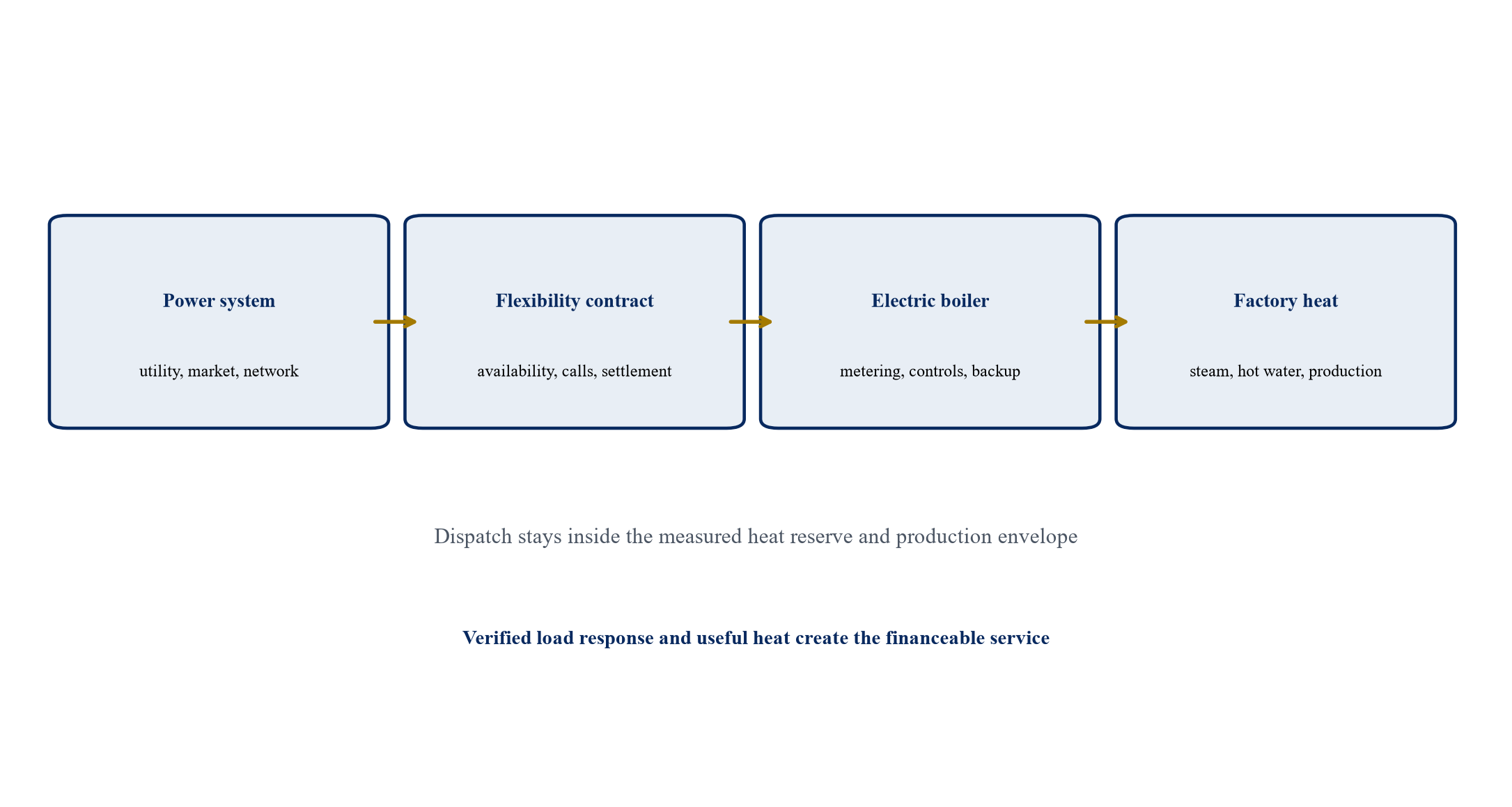
Proposed decision architecture based on the sources and analysis in this paper.
Table 1. Flexibility contract benchmark
| Structure | Principal payment | Factory obligation | Principal underwriting issue |
|---|---|---|---|
| Interruptible tariff | bill discount or reduced charge | curtail within stated emergency rights | breadth of utility call and production protection |
| Capacity programme | availability payment | maintain and test accredited reduction | qualification, seasonal obligation and penalty |
| Energy demand response | activation payment | reduce against an accepted baseline | price, baseline accuracy and rebound cost |
| Ancillary service | availability and performance | respond rapidly with telemetry | control speed, precision and equipment cycling |
| Local network service | availability or event payment | relieve a defined constraint | location, dispatch frequency and contract tenor |
Proposed qualitative benchmark; applicable tariff and market rules control.
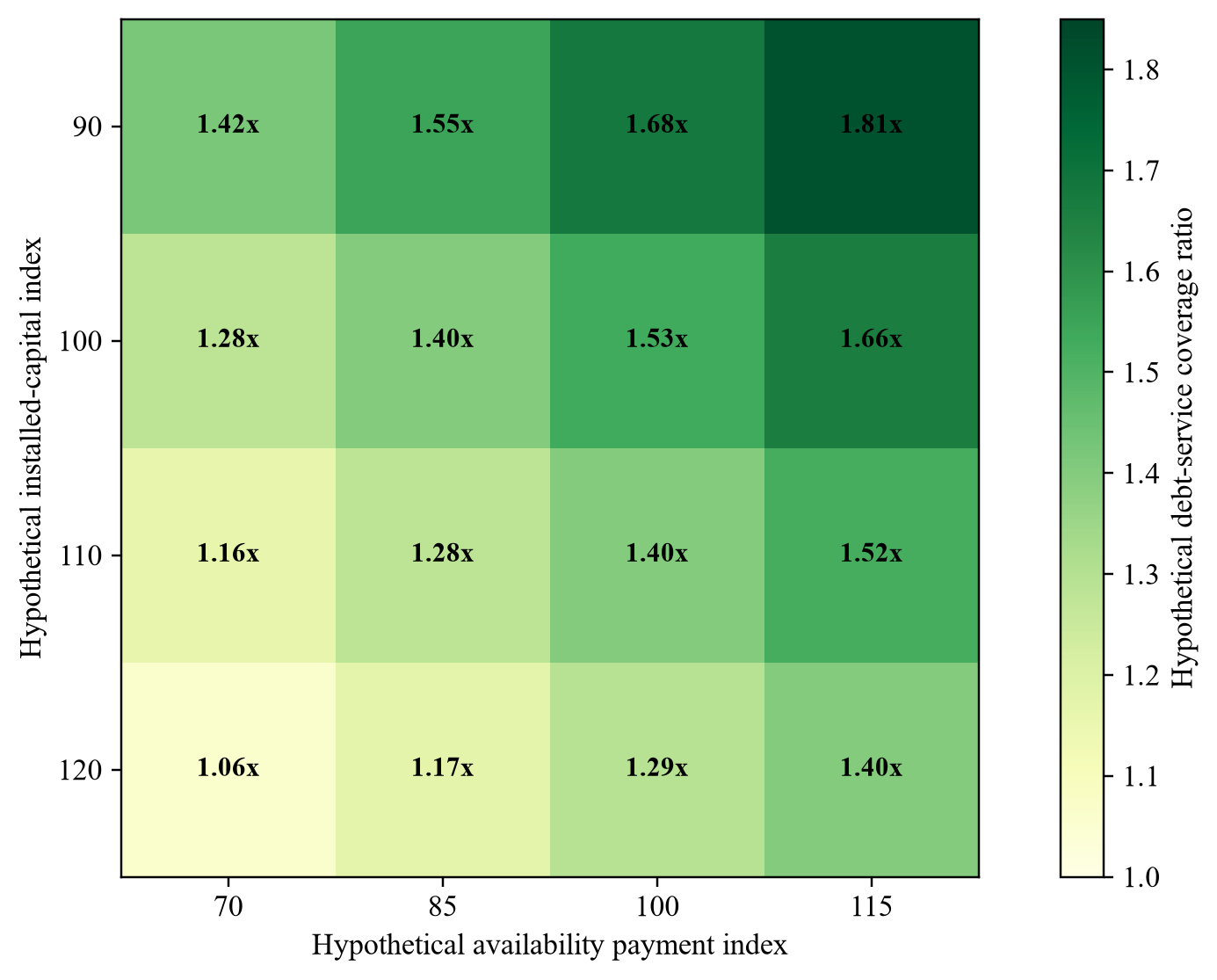
Wholly hypothetical; the values describe no identified company, tariff or project.
Table 2. Hypothetical sources and uses framework
| Uses | Share of total uses | Sources | Share of total sources |
|---|---|---|---|
| Boiler and electrical equipment | 38% | Sponsor equity | 35% |
| Grid and site integration | 24% | Senior debt | 45% |
| Thermal storage and controls | 16% | Grant or programme support | 10% |
| Engineering and commissioning | 9% | Vendor or subordinated support | 10% |
| Contingency and reserves | 13% | Total sources | 100% |
| Total uses | 100% |
Illustrative percentages only; transaction-specific commitments and costs are required.
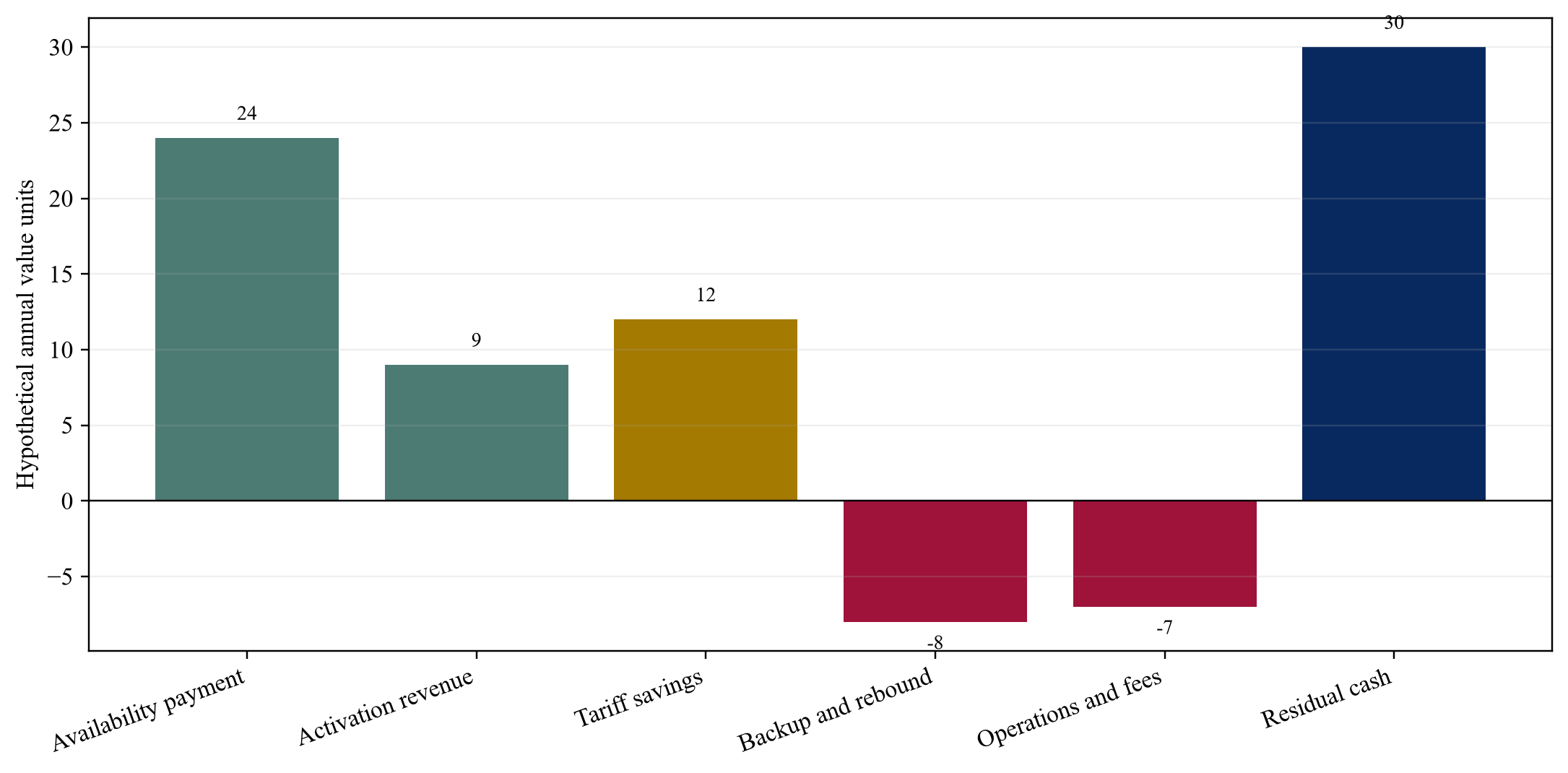
Wholly hypothetical; values describe no identified company, tariff or project.
Table 3. Risk allocation and investment gates
| Gate | Minimum evidence | Primary risk owner | Maximum cumulative capital at risk |
|---|---|---|---|
| Heat and load baseline | interval electricity, useful heat and production data | factory | 0.2% |
| Contract concept | tariff, event rights, baseline and backup design | factory and programme buyer | 1.5% |
| Bankable definition | engineering, grid, contracts, permits and financing model | allocated by contract | 5% |
| Final investment | committed funding, completion security and reserves | sponsors and lenders | 100% |
| Acceptance | verified heat, response, data and product quality | vendors and factory | retained capital |
| Portfolio scale | operating history, concentration limits and updated economics | portfolio owner | next programme budget |
Proposed governance framework; percentages are hypothetical caps on cumulative capital at risk.
Appendix A Questions for the investment committee
1. Which useful heat service and electrical load are being contracted?
2. What interruption magnitude, notice, duration and annual call limit can production support?
3. Which backup or thermal reserve protects heat during an event?
4. Which baseline, meter boundary and adjustment rules determine settlement?
5. How do rebound electricity, backup fuel and production changes affect net value?
6. Which tariff, network and market rules permit the proposed revenue stack?
7. Which party controls dispatch, data, nominations and operator override?
8. Which availability payment and accredited capacity support fixed cost and debt?
9. Which penalties, liability caps and cure rights protect production and lenders?
10. What capital, grid, completion and commissioning risks remain?
11. Which regulatory, counterparty and programme changes could remove revenue?
12. What evidence triggers final investment, support release and portfolio replication?
References
- International Energy Agency, Electricity 2026: Flexibility, 2026. https://www.iea.org/reports/electricity-2026/flexibility
- International Energy Agency, Renewables for Industry: Executive summary, 2025. https://www.iea.org/reports/renewables-for-industry/executive-summary
- Office of Gas and Electricity Markets, Decision to approve amendments to the Terms and Conditions related to Balancing for Demand Flexibility Service, March 2026. https://www.ofgem.gov.uk/sites/default/files/2026-03/DFS-A18-Decision-2026.pdf
- Lawrence Berkeley National Laboratory, Measurement and Verification for Demand Response, 2013. https://eta.lbl.gov/publications/measurement-and-verification-demand
- European Union Agency for the Cooperation of Energy Regulators, Unlocking flexibility: No-regret actions to remove barriers to demand response, 2025. https://www.acer.europa.eu/monitoring/MMR/barriers-demand-response-2025
- European Commission, Actions supporting affordable energy, updated 17 July 2026. https://energy.ec.europa.eu/strategy/affordable-energy/actions-supporting-affordable-energy_en
- Australian Energy Market Commission, Review of the Wholesale Demand Response Mechanism, 23 October 2025. https://www.aemc.gov.au/market-reviews-advice/review-wholesale-demand-response-mechanism
- PJM Interconnection, Demand Response and 2026 training resources, accessed 2 October 2026. https://www.pjm.com/markets-and-operations/demand-response.aspx
- International Energy Agency, The Value of Demand Flexibility, 23 December 2025. https://www.iea.org/reports/the-value-of-demand-flexibility
- International Renewable Energy Agency, Demand-side flexibility for power sector transformation, 2019. https://www.irena.org/Publications/2019/Dec/Demand-side-flexibility-for-power-sector-transformation
- European Union Agency for the Cooperation of Energy Regulators, Recommendation 01-2026 on reporting barriers to non-fossil flexibility, 2026. https://www.acer.europa.eu/sites/default/files/documents/Recommendations/ACER-Recommendation-01-2026-NRAs-reporting-barriers-to-flexibility.pdf
- International Valuation Standards Council, International Valuation Standards, effective 31 January 2025. https://www.ivsc.org/standards/
About the Author
Authored by Chennakeshav Adya Independent Researcher
Chennakeshav (CK) is a corporate finance and investment banking executive with 25+ years of global experience in deal origination, structuring and execution across M&A, growth capital and corporate strategy. He has led value-creation mandates for founders, corporates and funds — bridging the boardroom view to hands-on execution and close.
His career spans Morgan Stanley, HSBC, Lloyds Banking Group, EWEC, ADQ portfolio companies and Emirates Growth Fund, across TMT, real estate, fintech, deeptech, cleantech, infrastructure and energy. He has partnered with C-suite leaders, private equity and venture funds, sovereign wealth funds and family offices to finance complex fund raises and scale-up ventures, and has led M&A due diligence, post-merger integration and business-transformation initiatives to create value.
At Matchpoint Partners he is Managing Partner, leading the firm's corporate finance, M&A and capital-raising practice. He holds an MBA from London Business School, an engineering degree from VTU and a Master of Laws (LLM, in progress) from UCL London.
An active start-up mentor, CK mentors at Techstars, DIFC FinTech Hive, Startup Grind, Founder Institute and IN5, serves as Entrepreneur Mentor in Residence (EMiR) at London Business School, and judges the Entrepreneurship World Cup.
Matchpoint profile: https://www.matchpoint-partners.com/team/ck-adya.html LinkedIn: https://www.linkedin.com/in/ckadya/
