
Introduction
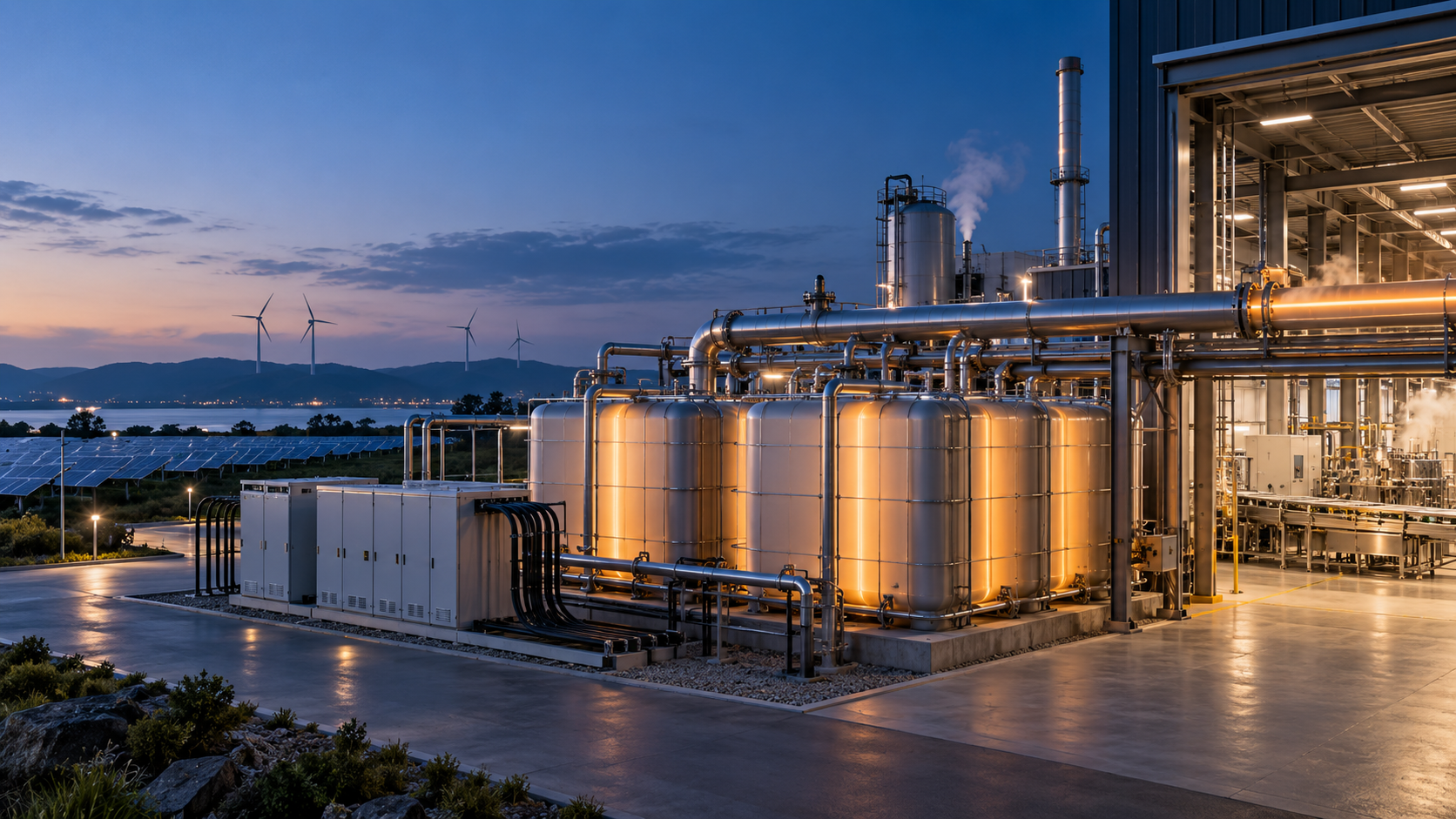
Factories need heat when production requires it. Renewable electricity is available when weather, generation and the power system provide it. Thermal batteries connect those time profiles by converting electricity into heat, storing the heat in a material and releasing it later as steam, hot air, hot water or direct process heat.
The International Energy Agency describes thermal storage as an enabling technology that can connect low-cost variable renewable electricity with continuous industrial demand. It notes that storage media such as sand, cement and bricks can reach high temperatures and can be materially cheaper per unit of stored energy than electrochemical batteries, while the industrial market remains developing.[1]
The investment decision is therefore wider than the storage vessel. It includes electric charging, grid access, power procurement, controls, heat exchange, factory integration, performance guarantees and backup. This paper develops a framework for underwriting that complete service.
1. Define the heat service
Specify the process boundary at which useful heat is delivered. Record temperature, pressure, flow, medium, purity, ramp, availability and control tolerance. The boundary may be a steam header, hot-air duct, thermal-oil loop, dryer inlet, furnace zone or hot-water network.
Define the production consequence of interruption or deviation. A food process, chemical reactor, paper dryer, kiln and curing oven have different tolerance. The investment case should use useful heat and product requirements rather than storage capacity alone.
Set the counterfactual. The thermal battery may replace an ageing boiler, displace marginal gas use, avoid new capacity, provide resilience or enable renewable generation. Each case has different cash flow. Avoided capital belongs in the model only when the conventional asset would otherwise be purchased.
2. Draw the complete system map
Map electricity supply, grid connection, transformer, rectifier or resistance heater, storage medium, insulation, heat exchanger, steam generator, ducting, controls, process sink and backup. Include cooling, water and treatment where required.
Assign capacity, losses, ownership and interface to every component. Storage energy capacity does not prove charging power or discharge capability. A system can hold sufficient heat while failing to deliver the required ramp or pressure.
Map physical and contractual boundaries together. The power supplier, equipment vendor, engineering contractor, factory and heat-service provider can measure performance at different points. One agreed meter boundary is required for operating control, warranty, payment and financing.
3. Build the hourly heat baseline
Record heat demand by hour or representative operating period. Capture batches, shifts, weekends, maintenance, seasons, product mix and expansion. Annual gas consumption cannot reveal peak heat, storage duration or charging opportunity.
Reconcile fuel purchase to useful heat. Apply boiler efficiency, standby, blowdown, distribution loss, condensate return and auxiliary electricity. Separate high-temperature and low-temperature duties. The thermal battery should be compared against the portion of the system it can actually serve.
Normalise for production. A temporary volume decline should not become an efficiency assumption. Preserve the raw data, adjustment method and uncertainty. The investment model should trace every heat unit from energy purchase to production service.
4. Reduce avoidable heat demand first
Improve insulation, steam traps, condensate recovery, leak control, process scheduling, exchanger performance and temperature set points before sizing storage. Lower demand reduces charging power, storage volume and grid capacity.
Coordinate heat recovery. Direct use of waste heat usually avoids conversion and storage losses. Thermal storage can then serve residual demand or shift recovered heat. The International Energy Agency recommends plant-level optimisation before major electrification.[2]
Recalculate the hourly profile after efficiency measures. Some measures reduce peak demand, while others change timing. Use the post-improvement baseline for procurement. Avoid locking an inefficient heat system into a long-lived electrical asset.
5. Select the temperature class
Temperature determines storage material, containment, insulation, exchanger, charging method and applications. Water tanks can serve lower-temperature duties. Solid media, molten salts, phase-change systems and thermochemical approaches can support other ranges.
Use the lowest temperature that reliably meets process and hygiene requirements. Lower delivery temperature can improve equipment choice and reduce loss. Review whether an existing steam pressure exceeds process need.
Classify each application as commercially proven, engineered or developmental at the required temperature and scale. Apply different contingency, schedule and financing. A familiar hot-water store and a high-temperature direct-process system carry different completion risk.
6. Choose the storage mechanism
Sensible-heat storage raises the temperature of a material such as water, rock, brick, sand, concrete or molten salt. Latent-heat storage uses a phase change. Thermochemical storage uses a reversible reaction. Each differs in energy density, temperature, loss, cycling and complexity.
Compare complete systems. Include charging, containment, heat delivery, controls, foundations, safety and maintenance. High energy density can be offset by expensive media or heat exchange.
Require evidence at relevant temperature, duration and cycle frequency. Laboratory capacity does not prove factory integration. Review material degradation, corrosion, thermal expansion, insulation and end-of-life. Record which components are replaceable and which require major outage.
7. Define charging equipment
Electric resistance heaters, electric boilers, heat pumps, induction, infrared and other technologies can charge or directly serve heat. Selection depends on temperature, efficiency, power quality, control, storage medium and process.
Size charging power against available low-price hours and required stored energy. A small charger can have high utilisation but fail to replenish storage. A large charger can increase connection capital and demand charges.
Model conversion performance across load. Include auxiliaries, transformer loss, standby and control. Define the test boundary. A vendor's heater efficiency can exclude grid, power electronics and storage loss. Project economics require the complete charge-to-useful-heat result.
8. Define storage duration
Storage duration is useful energy capacity divided by deliverable thermal output under stated conditions. The required duration can cover intraday price peaks, renewable variability, weekend charging, grid curtailment or backup.
Use hourly optimisation rather than a generic number. More duration adds capital and thermal loss while increasing price-shifting opportunity. Charging constraints can make nominal capacity unusable.
Test multiple operating years and extreme periods. A design optimised to average solar output may fail during a cloudy production week. Define whether backup gas, grid charging or production flexibility covers the gap. Finance should recognise the residual exposure.
9. Specify discharge and heat delivery
Discharge must meet heat rate, temperature, pressure and response. The system may create steam through a heat exchanger, heat air directly, circulate thermal oil or feed a process vessel. Each adds pressure drop and control.
Build a discharge-performance map across state of charge and load. Temperature can decline as storage empties. Available output may be lower than nameplate near the end of discharge.
Define redundancy, bypass and safe shutdown. A continuous process can require parallel trains or retained boiler capacity. Include pumps, fans, water treatment, condensate and controls. Acceptance should measure useful heat at the process boundary.
10. Measure round-trip thermal efficiency
Thermal efficiency is useful heat discharged divided by electricity or heat charged over the same cycle and boundary. It depends on conversion, standing loss, discharge loss, auxiliaries and unused residual heat.
Separate efficiency from utilisation. A well-insulated store can have high cycle efficiency while delivering little annual heat if price spreads or production schedules limit dispatch. Low utilisation raises the capital cost per useful unit.
Use performance guarantees for defined charge, hold and discharge profiles. Test at relevant ambient, temperature and part load. Record degradation over time. The finance model should use expected annual performance and a downside case rather than a single laboratory value.
11. Secure grid capacity
Calculate maximum charging demand, annual electricity, ramp, harmonics, power factor and resilience. Compare with contracted capacity, transformer, switchgear, protection and utility limits. Include other planned site electrification.
Request a utility study early. Connection scope and lead time can determine feasibility. The IEA identifies grid planning and flexible-demand treatment as priorities for industrial heat electrification.[1]
Value existing spare capacity carefully. Physical transformer margin does not prove contractual capacity. Efficiency, onsite generation or production changes can create headroom, subject to confirmation. Include grid upgrade, owner works, deposits and delay.
12. Model the electricity tariff
Apply the hourly charging schedule to energy, network, demand, capacity, losses, taxes, levies and penalties. Wholesale prices alone are insufficient. Some tariffs reduce the value of shifting because network charges remain.
Model negative and low-price hours, peaks and seasonal structure with dated evidence. Avoid assuming historical spreads persist. Renewable growth, interconnection and tariff reform can change them.
Test fixed, indexed and dynamic procurement. A fixed price reduces volatility but can remove arbitrage. Wholesale exposure preserves opportunity and downside. Use a portfolio that aligns debt protection with operating flexibility.
13. Integrate onsite renewable power
Onsite or dedicated solar and wind can supply charging, subject to generation profile, land, connection and curtailment. Direct use can reduce some network charges while increasing integration capital.
Co-optimise generation, charger and storage. Oversized generation can create cheap energy but low asset utilisation. Storage can capture output that would otherwise be curtailed. Record whether renewable attributes remain with the factory.
Include backup and grid interaction. Onsite generation does not guarantee continuous charging. Model maintenance and extreme weather. The IEA notes that renewable power combined with thermal storage can improve heat-electrification economics in suitable markets.[1]
14. Compare thermal and electrochemical storage
Thermal storage serves a heat load directly. Electrochemical batteries store electricity that can later power heating or other loads. The correct comparison depends on the service and value streams.
Compare delivered useful heat, not nameplate energy. Include power electronics, round-trip losses, duration, degradation, fire protection, replacement and grid services. Thermal systems can use abundant storage materials, while electrochemical systems can provide broader electrical flexibility.
Hybrid systems may be appropriate. A small electrical battery can manage fast power or microgrid functions while thermal storage carries bulk heat. Avoid charging both technologies with the same flexibility revenue in the model.
15. Compare direct electrification
An electric boiler or resistance heater can deliver heat without storage. A heat pump can provide more useful heat per unit of electricity in suitable temperature ranges. Thermal storage adds time shifting and capacity.
Evaluate direct electric, heat pump, storage and hybrid configurations against the same process boundary. Include grid capacity, operating hours, tariff and retained backup. The IEA finds that storage can improve electric-boiler economics under variable prices, while heat-pump results depend on equipment size and application.[3]
Choose the smallest system that meets operating and economic requirements. Storage should have a defined purpose: price shifting, grid flexibility, renewable integration, resilience or capacity deferral.
16. Compare the gas counterfactual
Use delivered gas cost including commodity, network, capacity, taxes, carbon and minimum charges. Apply measured boiler efficiency and residual fixed costs. A retained gas connection can continue to incur expense after displacement.
Include conventional capital, maintenance, water, emissions control and compliance. Preserve the value of proven reliability and fuel storage where relevant. Avoid comparing a complete thermal-battery system with only the gas commodity price.
Model gas and electricity scenarios together. Thermal storage changes exposure rather than removing energy risk. The value of diversification should be shown through cash-flow distribution and contract terms.
17. Define the operating strategy
Dispatch should satisfy heat demand at minimum risk-adjusted cost within equipment, tariff, emissions and production constraints. Controls need forecasts of demand, prices, renewable output and state of charge.
Set reserve margins and priorities. The battery may charge during low-price periods, maintain a minimum state for resilience, and discharge during peaks. Manual override and safe fallback are required.
Use rolling optimisation with approved boundaries. AI-enabled forecasting can support decisions, subject to validation and cyber controls. Preserve logs, overrides and model versions. Operators should understand why dispatch changes.
18. Value demand flexibility
Flexible charging can avoid peak prices, reduce renewable curtailment and support the power system. Potential revenue can include demand response, interruptible tariffs or ancillary services where market rules allow.
Separate energy savings from grid-service revenue. Confirm eligibility, metering, minimum capacity, response time, penalties and aggregator terms. Avoid assuming that a thermal load can provide every battery service.
Protect production first. A demand-response event should not exhaust heat needed by the factory. Define the available flexible envelope after reserves. Debt sizing should use contracted or demonstrated revenue and conservative availability.
19. Select industrial applications
Food and beverage processes can use steam, hot water, drying and clean-in-place heat. Paper uses steam and drying. Chemicals, textiles, minerals, engineering and consumer goods have distinct temperature and control needs.
Screen applications by temperature, hours, variability, product criticality, space, grid and existing equipment. Stable base load can support high utilisation, while batch processes can align with storage dispatch.
Prioritise services with clear metering and manageable integration. One site can contain several candidate duties. A portfolio should rank them rather than assuming one central battery serves every process efficiently.
20. Integrate with steam systems
Define steam pressure, quality, flow, condensate and ramp. A thermal battery can generate steam directly or through an exchanger. Existing headers, traps, treatment and condensate systems remain part of the service.
Review whether multiple pressure levels can be rationalised. Lower pressure can improve system choice while preserving process performance. Separate high-pressure duties that require another solution.
Plan tie-ins and control. Parallel operation with boilers can support commissioning and peaks. Include blowdown, water chemistry and startup. Acceptance should measure steam delivered and electricity consumed over a representative cycle.
21. Integrate with direct process heat
Some systems deliver hot air, radiant heat or contact heat without producing steam. Direct integration can reduce exchanger loss while increasing process-specific engineering.
Define temperature uniformity, atmosphere, contamination, response and safety. A dryer, furnace or kiln can be sensitive to heat quality and flow. Pilot representative material and product.
Preserve production isolation and rollback. Process qualification can take longer than mechanical commissioning. Include trials, inventory and contribution margin at risk. Contract remedies should address product consequence as well as heat output.
22. Build the complete capital budget
Include storage modules, heaters, heat exchange, steam generation, power electronics, transformer, switchgear, grid works, piping, ducting, civil works, fire and safety systems, controls, metering, engineering, permits, commissioning and contingency.
Add site preparation and production impact. Brownfield access, foundations and tie-ins can dominate cost. Include owner engineering, training, spare parts and inventory build.
Separate committed quotations from allowances. Record currency, escalation, tax and schedule. Use stage-appropriate contingency based on technology maturity, site data and interface. Avoid presenting equipment price as total installed cost.
23. Forecast operating cost
Operating cost includes electricity, network and capacity charges, water, treatment, auxiliaries, maintenance, inspections, software, service agreements and component replacement. Deduct gas and boiler cost only where avoided.
Model charging losses, standing losses and unused heat. Apply availability and degradation. Include periodic insulation, heater, fan, pump, valve and control work.
Define staffing and specialist support. A service contract can transfer performance risk while adding indexation and counterparty exposure. Compare ownership and heat-as-a-service on the same life-cycle boundary.
24. Calculate levelised cost of heat
Levelised cost divides present-value capital and operating cost by present-value useful heat delivered. State horizon, discount rate, tax, degradation, replacement, residual value and heat boundary.
Show electricity, network, capital, maintenance and integration separately. Compare with gas, direct electric and other alternatives. Include retained backup and fixed connection costs.
Test electricity spread, charge hours, utilisation, efficiency, storage duration, grid capital and outage. Present breakeven values. NREL's industrial heat tools use levelised heat, net present value and capital as core decision metrics.[4]
25. Build the discounted-cash-flow case
Translate thermal performance into after-tax cash. Include capital tranches, depreciation, tax, working capital, grants, electricity, gas savings, maintenance, flexibility revenue, production effects and residual value.
Apply construction and commissioning ramp. Separate contracted, indexed and merchant value. Power savings can vary by year and hour. Demand-response revenue can require performance.
Reconcile project cash to enterprise cash and budgets. Avoid counting avoided gas in both operating savings and product margin. Preserve model versions and sources. Update valuation as metering, engineering and contracts replace assumptions.
26. Structure ownership
The factory can own the system, lease it, form a joint venture or buy heat as a service. Each choice affects capital, control, accounting, tax, security and termination.
Direct ownership captures operating value and requires technical capability. A service model can reduce upfront capital while creating a long-term fixed payment and provider-credit risk. A lease may separate equipment from integration.
Define site access, utility supply, operation, maintenance, metering, change control, insurance and removal. The contract should survive ownership changes and protect production. Obtain accounting, tax and legal advice for the specific structure.
27. Design the heat-service agreement
Specify useful heat, temperature, pressure, volume, availability and measurement boundary. Set price, indexation, minimum payment, performance adjustment and payment during outages. Define who supplies electricity and bears tariff risk.
Allocate charging and dispatch authority. The provider may optimise power while the factory controls production. Preserve minimum state of charge and emergency use. Define data access and cyber requirements.
Address change in law, grid curtailment, force majeure, termination and asset removal. Termination compensation should reflect debt and unavoidable cost while encouraging mitigation. Align service tenor with financing and site life.
28. Finance the asset
Development equity funds metering, engineering, grid studies, permits and procurement. Construction capital can combine sponsor equity, vendor support, grants, equipment finance, corporate debt or project debt.
Financing depends on technology, completion, host credit and cash-flow structure. A behind-the-meter owner project can use corporate capacity. A heat-service company may use contracted payments and equipment security. First-of-a-kind systems can require sponsor support.
Stage commitments. Early works should have caps and exit points. Full investment approval should follow grid, contracts, engineering, contingency and operating plans. Preserve liquidity for ramp.
29. Size debt
Debt capacity follows cash available for debt service after electricity, operations, maintenance, sustaining capital, tax, working capital and reserves. Use the lender definition consistently.
Build base, downside and severe cases. Test electricity price shape, utilisation, efficiency, production, gas price, flexibility revenue, outage, capital and delay. Preserve correlations. A production slowdown can reduce heat use and energy savings together.
Shape amortisation to commissioning and contracts. A grace period supports ramp while increasing later burden. Tenor should not exceed credible site, service and power-contract life without a tested renewal case.
30. Procure performance evidence
Issue a common request for proposal with heat profile, temperature, site, tariff, grid and acceptance requirements. Ask for references at comparable temperature, duration, output and application.
Require a complete schedule of energy capacity, charge power, discharge power, efficiency, loss, availability, degradation, auxiliaries, footprint, safety, maintenance and exclusions. Reconcile bids to the same installed boundary.
Evaluate vendor balance sheet, service coverage, spares and warranty security. A lower equipment price can carry greater completion and lifecycle risk. Use independent technical review.
31. Allocate completion risk
Create an interface matrix across storage vendor, electrical contractor, utility, process engineer, factory and operator. One party should own integrated performance or the contracts should define resolution.
Set acceptance tests for energy capacity, charging, discharge, temperature, pressure, efficiency, availability, controls, safety and product quality. Test representative operation over multiple cycles.
Define delay, retest, cure and damages. Vendor damages may not cover lost production. Use contingency, insurance and sponsor capacity. Lenders can require support until sustained completion is certified.
32. Fund commissioning and ramp
Plan energisation, heating, drying, thermal cycling, control tuning, steam or process qualification and operator training. Initial cycles can differ from steady performance.
Fund electricity, temporary heat, technical support, product trials, maintenance and lost output. Maintain reserve beyond the expected date. Grid or production delays can create fixed cost before savings.
Use milestone payments with retention. Release final amounts after integrated tests and operating evidence. Preserve data for warranty and future sites. Update portfolio assumptions from measured ramp.
33. Protect production continuity
Prepare tie-in, bypass and rollback plans. Schedule work during planned outages where possible. Retain boiler or temporary heat during commissioning and evidence gathering.
Model lost contribution margin and customer impact. A short outage can exceed annual energy savings in a high-value process. Apply probability supported by engineering and construction plans.
Integrate the system into business continuity. Define response to power outage, control failure, depleted storage, grid curtailment, fire, water issue and cyber incident. Test manual fallback.
34. Manage safety and permitting
Thermal batteries contain high-temperature materials and substantial stored energy. Hazards can include burns, pressure, fire, electrical fault, thermal expansion, material release and confined spaces.
Complete hazard analysis, zoning, fire protection, isolation, relief, ventilation and emergency planning. Apply relevant electrical, pressure, building, environmental and occupational requirements. Obtain specialist advice.
Design inspection and maintenance access. Train operators and emergency services. Record residual risks and insurance conditions. Safety systems belong in the capital, schedule and acceptance plan.
35. Build the data and controls layer
Meter electricity, charge energy, state of charge, thermal loss, discharge, useful heat, backup fuel and production. Capture temperature, pressure, flow and availability. Reconcile to invoices and the financial model.
Define ownership, cybersecurity, retention, calibration and audit. A service provider and factory can need different access. Preserve raw data and control history.
Use forecasting and optimisation within safe bounds. Detect degradation and anomalies. Human operators should understand recommendations and override. Data quality should support warranty, payment, carbon reporting and continuous improvement.
36. Measure emissions
Calculate displaced gas and incremental electricity using stated factors and boundaries. Distinguish location-based, market-based and marginal electricity methods where relevant. Include backup and losses.
Avoid describing contracted renewable attributes as physical zero-emissions supply without the accounting method. Customer and regulatory claims should follow applicable standards and assurance.
Run future-grid and dispatch scenarios. Charging during low-price hours can coincide with low or high marginal emissions depending on the system. Preserve cash and emissions cases separately. A project may deliver energy security or flexibility before it delivers the claimed emissions outcome.
37. Apply market benchmarks carefully
Benchmark temperature, capacity, duration, charge power, efficiency, utilisation, installed cost and service model. Compare like boundaries. Vendor announcements can exclude grid, integration or operating evidence.
The IEA identifies emerging projects across food, beverages and other industries, including multi-megawatt-hour thermal-storage systems.[3] The United States Department of Energy supports demonstrations that combine thermal batteries, electric boilers and renewable power.[5] Selection or demonstration status is not proof of general commercial economics.
Use benchmarks to challenge assumptions, then rely on site engineering, tariffs and contracts. Label project announcements and estimates according to their evidence status.
38. Apply scenario analysis
Create central, downside and severe cases. Change electricity spreads, network charges, charge hours, utilisation, efficiency, duration, grid capital, gas price, production, flexibility revenue, schedule and support.
Calculate breakeven average charging price, minimum utilisation, maximum grid capital and required gas displacement. Present annual liquidity, debt coverage and covenant headroom. A project can have positive present value and weak early cash.
Use reverse stress testing. Identify the combination that exhausts contingency or reserves. Define management actions and lead time, including hybrid operation, revised dispatch, temporary gas or additional capital. Avoid assuming every action is available at once.
39. Establish governance
Assign owners for heat data, production, electrical, grid, procurement, finance, safety, controls and reporting. Define authority over dispatch, reserve, contingency, contracts and shutdown.
Maintain an assumption register with source, date, owner and range. Link the model to meter data, tariffs, studies and quotations. Preserve prior versions.
Require reapproval after material changes in heat load, temperature, electricity, grid, capital, duration, efficiency, production, support or financing. Record conflicts between energy optimisation and production authority.
40. Use staged investment gates
Gate one should establish the measured heat profile, counterfactual and initial technology screen. Gate two should complete concept design, grid assessment, tariff modelling, site layout and supplier engagement. Gate three should deliver front-end engineering, permits, binding bids, contracts and finance.
Final approval should require committed funding, cost and schedule confidence, completion tests, production-continuity plan, contingency and governance. Early works should be capped.
Post-commissioning gates should require measured heat, electricity, availability, product and cash. Release retention and approve replication only after evidence. Each gate should state decision owner and maximum new capital at risk.
41. Build the implementation roadmap
Start with metering and efficiency. Select one heat service with clear data and manageable production risk. Complete grid, tariff, technology and site work before procurement.
Use a pilot or first site to validate integration, controls, dispatch and commercial terms. Preserve backup and measure full-year performance where season matters. Standardise data and contracts for replication.
Sequence portfolio sites by heat fit, price spread, grid readiness, gas exposure and operating evidence. Avoid deploying identical capacity where profiles differ. Update the roadmap after each gate.
42. Decide when thermal batteries beat gas
Thermal batteries are attractive where usable low-cost electricity can be captured, heat demand is predictable, charging and discharge fit the process, grid access is available and capital is utilised. They can also provide resilience, emissions reduction and gas-risk diversification.
Gas can remain competitive where it is inexpensive, grid capacity is constrained, electricity spreads are weak, heat is highly variable or required temperature and reliability are not supported. Hybrid operation can manage transition and peaks.
The decision should follow hourly delivered-heat economics and production risk. Management should show the counterfactual, system boundary, contract terms, downside and evidence. That converts a technology proposal into an investable factory-heat decision.
43. Prepare portfolio replication
A successful first installation should create evidence that can be reused without assuming that every site is identical. Record the heat-demand profile, electricity prices, grid conditions, civil design, control logic, commissioning sequence, operating interventions and measured performance. Separate features that can be standardised from those that remain process-specific.
Create a common screening model for additional sites. Inputs should include heat temperature, annual and peak demand, interval load, gas and electricity tariffs, grid capacity, renewable access, footprint, production criticality, asset age and planned shutdowns. Use the model to identify sites that justify detailed engineering. A portfolio ranking should preserve the underlying values rather than reduce every decision to one score.
Standardise procurement where it supports value. Common technical schedules, metering, cybersecurity, warranties, spare parts and service arrangements can reduce cost and operating complexity. Retain site-specific heat exchangers, civil works, permits and qualification. Volume purchasing should follow verified demand and should not force equipment into unsuitable processes.
Coordinate deployment with energy procurement and grid planning. A portfolio can aggregate electricity demand and negotiate supply, while simultaneous charging can create new peaks. Model correlated production and renewable conditions across sites. The network or utility may require staged connections.
Govern replication through measured thresholds. Approve the next tranche only after the first site demonstrates useful heat, availability, efficiency, dispatch value, product quality and cash performance over a representative period. Update capital, schedule and operating assumptions using actual results. Preserve a stop, redesign or alternative-technology decision at every tranche.
Plan portfolio funding as a series of evidence-linked commitments. The first site may require more equity, contingency and vendor support because technology and integration evidence remain limited. Later sites can use standard contracts, measured performance and established operating procedures to support longer tenor or lower financing cost, subject to site-specific diligence. Keep project cash flows and security identifiable where lenders finance individual assets.
Aggregate procurement and financing only after checking concentration. A common vendor, control platform or electricity supplier can reduce cost and accelerate training, while exposing every site to the same defect, cyber event or counterparty failure. Preserve alternative supply, spare strategy and contractual step-in where the consequence is material. Portfolio governance should compare scale benefit with correlated risk before approving a framework agreement.
Use the portfolio to improve market evidence. Consolidated heat demand can support renewable-power procurement or grid discussions, and measured flexibility can support demand-response negotiation. Recognise revenue only when market eligibility and contracts are documented. Continue reporting useful heat, production and cash at site level so underperformance is visible rather than hidden by portfolio averages.
Conclusion
Industrial thermal batteries combine electrification, storage and process integration. Their value comes from converting electricity at favourable times into reliable heat at the factory's required time and quality. Storage capacity alone cannot establish the case.
Management should begin with measured heat, reduce avoidable demand, secure grid and power terms, compare full alternatives and retain backup during ramp. Contracts should align power, performance, heat service and debt. The financial model should use hourly dispatch and complete installed cost.
A staged programme can produce operating evidence before portfolio scale. The resulting framework allows owners, investors and lenders to identify where stored renewable heat can replace gas while protecting production, liquidity and long-term value.
Decision exhibits
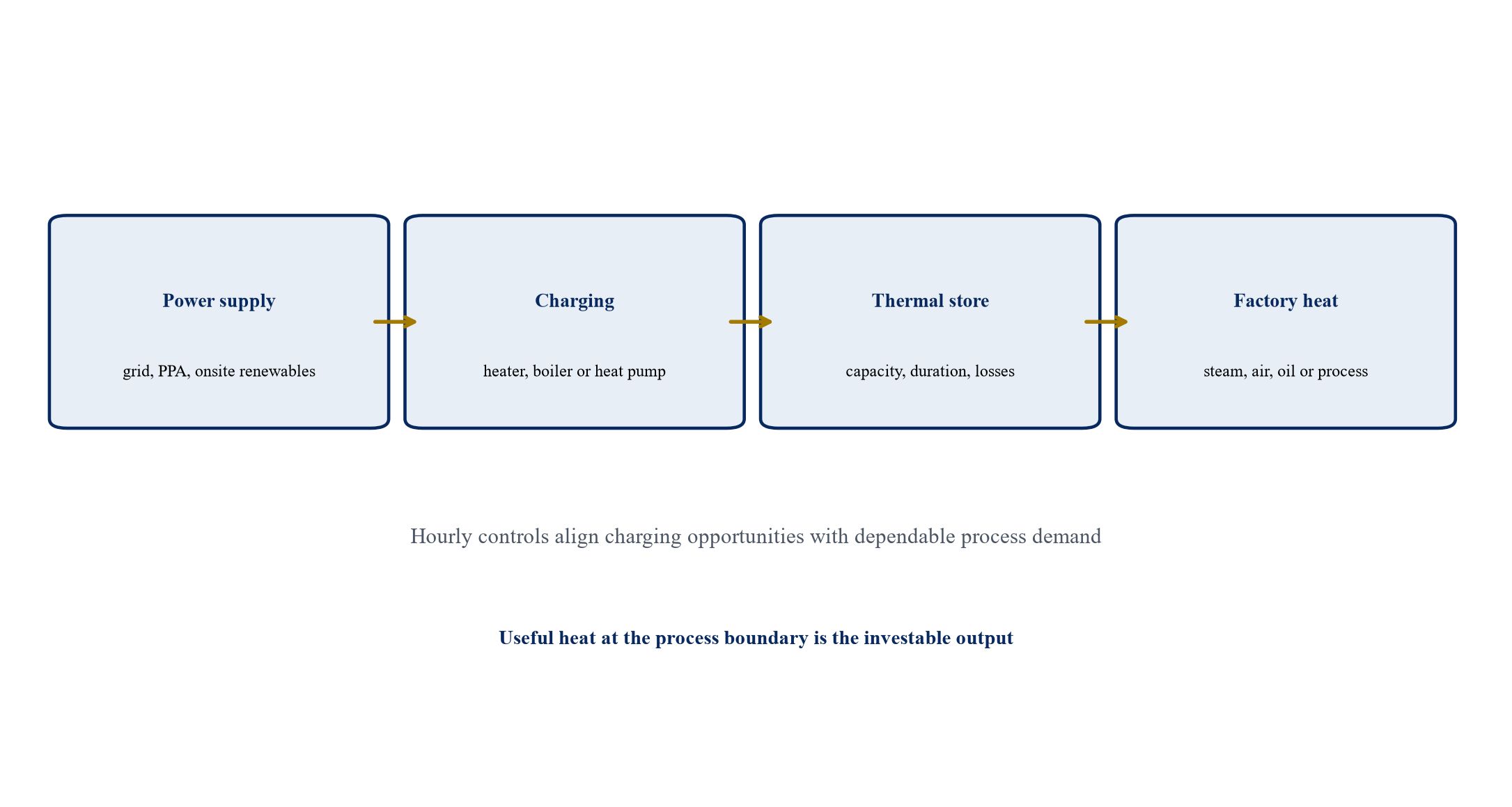
Proposed decision architecture based on the sources and analysis in this paper.
Table 1. Industrial thermal-storage market benchmark
| System | Typical service | Principal strength | Principal constraint |
|---|---|---|---|
| Hot-water storage | low-temperature water and cleaning | mature, simple and efficient | low temperature and large volume |
| Solid sensible heat | steam, hot air and higher-temperature duties | abundant media and long duration | heat exchange and footprint |
| Molten-salt storage | medium- to high-temperature heat | proven thermal practice in adjacent uses | freezing, corrosion and materials handling |
| Phase-change storage | narrow temperature applications | higher energy density and stable temperature | media cost and cycling evidence |
| Thermochemical storage | specialised high-density or long-duration service | low standing loss potential | maturity and process complexity |
Proposed qualitative benchmark; site engineering and supplier evidence control.
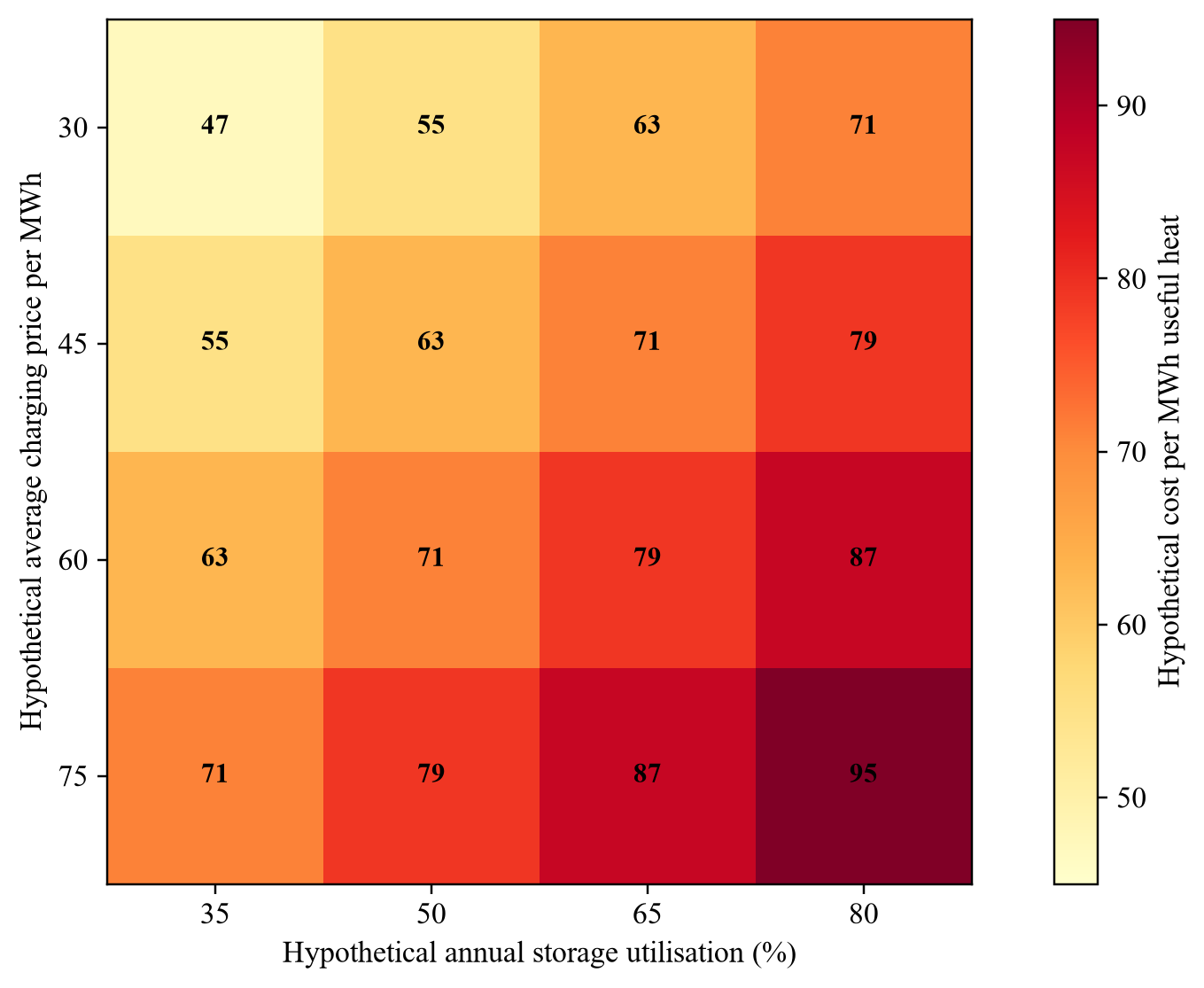
Wholly hypothetical; the values describe no identified company or project.
Table 2. Capital and operating sensitivity matrix
| Exposure | Valuation effect | Evidence | Response |
|---|---|---|---|
| Electricity price shape | determines charging cost and dispatch | interval tariff, PPA and market history | portfolio procurement and control |
| Grid and charging power | determines capital, delay and refill rate | utility study and site electrical audit | secure capacity before final commitment |
| Storage utilisation | spreads fixed capital across delivered heat | hourly heat profile and production plan | size base service and stage modules |
| Thermal efficiency and loss | changes electricity per useful heat | guaranteed cycle and annual performance | meter boundary, retention and remedies |
| Production integration | creates completion and lost-margin risk | tie-in, bypass and qualification plan | retain backup and test representative cycles |
| Gas counterfactual | determines avoided cost and resilience value | delivered tariff and measured boiler performance | transparent scenarios and residual costs |
Proposed framework; transaction-specific technical and commercial evidence is required.
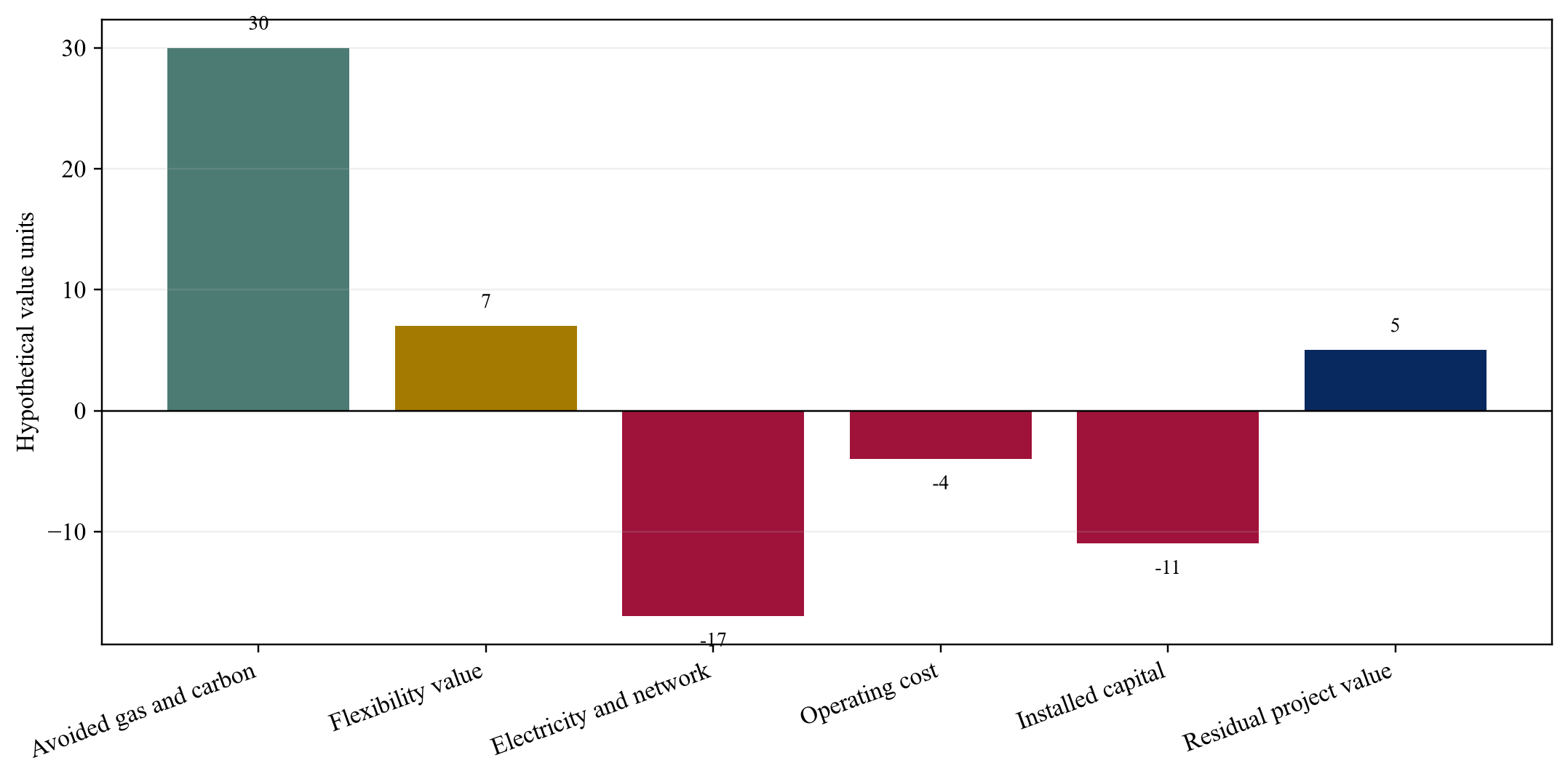
Wholly hypothetical; values describe no identified company or project.
Table 3. Implementation roadmap and investment gates
| Gate | Minimum evidence | Maximum cumulative capital at risk | Decision |
|---|---|---|---|
| Heat baseline | reconciled hourly heat, counterfactual and production boundary | 0.2% | select candidate service |
| Integrated concept | technology, grid, tariff, site and dispatch model | 1.5% | approve front-end work |
| Bankable definition | engineering, permits, bids, contracts and finance model | 5% | approve conditional commitments |
| Final investment | funding, grid, contingency, completion and continuity plan | 100% | issue notice to proceed |
| Acceptance | measured heat, electricity, availability and product quality | retained capital | release support or require cure |
| Portfolio scale | operating history and updated site economics | next programme budget | replicate, redesign or stop |
Proposed governance framework; percentages are hypothetical caps on cumulative capital at risk.
Appendix A Questions for the investment committee
1. Which useful heat service and process boundary are being valued?
2. Which hourly heat profile supports energy, charge-power and duration sizing?
3. Which electricity prices, network charges and contract terms support charging?
4. Which grid capacity and connection schedule are confirmed?
5. Which storage mechanism has evidence at the required temperature, duration and scale?
6. How do charge, hold and discharge losses affect annual useful heat?
7. Which backup remains, and which fixed gas costs continue?
8. How are production continuity, qualification and lost margin protected?
9. Which flexibility revenues are contracted and compatible with heat reserves?
10. What minimum utilisation and maximum charging price protect debt service?
11. Which party controls dispatch, performance data and remedies?
12. What evidence triggers each capital commitment and reapproval?
References
- International Energy Agency, Renewables for Industry: Executive summary, 2025. https://www.iea.org/reports/renewables-for-industry/executive-summary
- International Energy Agency, Energy Efficiency 2025: Industry, 2025. https://www.iea.org/reports/energy-efficiency-2025/industry
- International Energy Agency, Can low-temperature heat in factories be electrified competitively?, 9 December 2025. https://www.iea.org/commentaries/can-low-temperature-heat-in-factories-be-electrified-competitively
- National Renewable Energy Laboratory and Sandia National Laboratories, Solar Thermal Energy Planner, updated 20 August 2025. https://step1.nrel.gov/
- United States Department of Energy, Industrial Demonstrations Program: Heat, accessed 2 October 2026. https://www.energy.gov/cmei/oced/industrial-demonstrations-program-selections-award-negotiations-heat
- International Renewable Energy Agency, Innovation Outlook: Thermal Energy Storage, 2020. https://www.irena.org/publications/2020/Nov/Innovation-outlook-Thermal-energy-storage
- National Renewable Energy Laboratory, Industrial Energy Storage Review, 2025. https://www.nrel.gov/docs/fy25osti/85634.pdf
- International Renewable Energy Agency, Thermal Energy Storage: Technology Brief, 2013. https://www.irena.org/publications/2013/Jan/Thermal-energy-storage
- United States Department of Energy, Heat Batteries for Deep Decarbonization of the Beverage Industry, 2024. https://www.energy.gov/nepa/articles/cx-032611-heat-batteries-deep-decarbonization-beverage-industry-phase-1
- IFRS Foundation, IAS 36 Impairment of Assets, accessed 2 October 2026. https://www.ifrs.org/issued-standards/list-of-standards/ias-36-impairment-of-assets/
- International Valuation Standards Council, International Valuation Standards, effective 31 January 2025. https://www.ivsc.org/standards/
About the Author
Authored by Chennakeshav Adya Independent Researcher
Chennakeshav (CK) is a corporate finance and investment banking executive with 25+ years of global experience in deal origination, structuring and execution across M&A, growth capital and corporate strategy. He has led value-creation mandates for founders, corporates and funds — bridging the boardroom view to hands-on execution and close.
His career spans Morgan Stanley, HSBC, Lloyds Banking Group, EWEC, ADQ portfolio companies and Emirates Growth Fund, across TMT, real estate, fintech, deeptech, cleantech, infrastructure and energy. He has partnered with C-suite leaders, private equity and venture funds, sovereign wealth funds and family offices to finance complex fund raises and scale-up ventures, and has led M&A due diligence, post-merger integration and business-transformation initiatives to create value.
At Matchpoint Partners he is Managing Partner, leading the firm's corporate finance, M&A and capital-raising practice. He holds an MBA from London Business School, an engineering degree from VTU and a Master of Laws (LLM, in progress) from UCL London.
An active start-up mentor, CK mentors at Techstars, DIFC FinTech Hive, Startup Grind, Founder Institute and IN5, serves as Entrepreneur Mentor in Residence (EMiR) at London Business School, and judges the Entrepreneurship World Cup.
Matchpoint profile: https://www.matchpoint-partners.com/team/ck-adya.html LinkedIn: https://www.linkedin.com/in/ckadya/
