

1. Establish the board mandate
The board and its advisers should record the decision to be made, delegated authorities, conflicts, professional advice and the dates on which liquidity or legal duties may change. The work starts with board minutes, constitutional documents, delegations, conflict registers and current advice. The decision question is whether the board has lawful authority and a documented process for each available route. The record should identify the responsible entity, evidence date, owner, assumptions, open issues and the next irreversible deadline [1][18][19].
The controlled output is a decision mandate and reserved-matters schedule. It should connect financial analysis to legal authority, operational dependencies and the transaction timetable. Each conclusion should be traceable to current evidence or qualified advice, with disagreements and missing information recorded rather than averaged away.
The principal risk is that unclear authority can delay funding, invalidate approvals or weaken later scrutiny. The team should test the effect on runway, net outcome value, stakeholder recoveries and delivery certainty. A material change should feed the option model and route-switch register on the day it becomes known.
2. Define the legal and operating perimeter
This stage requires the company to identify every borrower, guarantor, asset owner, regulated entity, material contract and cash-holding account. Evidence should come from entity charts, statutory registers, financing documents, licences, bank mandates and operating records. The practical test is which entity owns value, owes liabilities and controls the resources required to keep trading. The analysis needs one valuation date and explicit links to the cash forecast, stakeholder map and approval calendar [3][4][36].
Management should maintain an entity and obligation map. The schedule should show source documents, calculation logic, conditions, dependencies and the person able to resolve each exception. Legal, tax, insolvency, valuation and regulatory judgements should remain attributed to the relevant qualified adviser.
A common failure is that group-level analysis can conceal trapped cash, structural subordination and assets outside the security package. Review the route against both the base case and a combined downside. If the decision cannot survive a realistic delay or missing consent, it should not be described as executable.
3. Fix the decision date and clock
The transaction team should translate payroll, tax, debt service, supplier, covenant, filing and consent dates into one critical calendar, using the thirteen-week forecast, payment runs, notices, facility terms, court timetables and regulatory guidance. Its central question is the last practical date for funding, signing, completion or a protected process. The answer matters only if it is current enough to guide the next payment, waiver, funding, bid or filing decision [1][6][32].
The required deliverable is a dated decision clock. It should state what has been verified, what remains dependent on third parties and which conditions must be satisfied before money or control changes hands. The board pack should show the effect of each unresolved item on value and timing.
The execution threat is that teams may compare routes on value while overlooking that one route cannot complete before the next cash or enforcement event. Owners should define a control, evidence threshold, escalation route and switch date. Scenario values are management tools; they require continuing reconciliation to cash, offers, lender terms and professional advice.
4. Build the opening liquidity position
The company should reconcile bank cash, blocked or restricted balances, undrawn facilities, collections, payment obligations and minimum operating cash. The evidence base includes bank statements, account controls, facility certificates, receivables evidence and payment files. The decisive test asks how much cash is legally and operationally available to each entity on each day. Conclusions should be recorded at entity level because cash, claims, collateral, licences and approvals may sit in different parts of the group [10][48][65].
The board should receive a reconciled opening-cash certificate. It should distinguish committed terms from indications, observed performance from scenarios and contractual rights from commercial expectations. This makes the comparison reproducible when facts change or another stakeholder challenges it.
The material downside is that reported cash can overstate runway when balances are pledged, trapped, swept or needed to protect essential operations. The response is to connect this risk to minimum cash, completion milestones and the counterfactual. The route remains preferred only while those controls show that it can complete before the relevant deadline.
5. Create the thirteen-week cash bridge
The board and its advisers should forecast receipts and payments at transaction-level detail and reconcile weekly actuals to forecast. The work starts with customer schedules, purchase orders, payroll, taxes, financing terms, capex commitments and historical timing. The decision question is when cash falls below the operating minimum under base, downside and severe scenarios. The record should identify the responsible entity, evidence date, owner, assumptions, open issues and the next irreversible deadline [1][14][48].
The controlled output is a controlled cash forecast and variance log. It should connect financial analysis to legal authority, operational dependencies and the transaction timetable. Each conclusion should be traceable to current evidence or qualified advice, with disagreements and missing information recorded rather than averaged away.
The principal risk is that an option can appear feasible because monthly reporting hides a short intra-month liquidity breach. The team should test the effect on runway, net outcome value, stakeholder recoveries and delivery certainty. A material change should feed the option model and route-switch register on the day it becomes known.
6. Protect minimum viable operations
This stage requires the company to identify the people, systems, licences, suppliers, premises, insurance and customer commitments required to preserve going-concern value. Evidence should come from continuity plans, workforce rosters, service contracts, permits, insurance schedules and customer obligations. The practical test is which payments and actions prevent irreversible loss while alternatives are tested. The analysis needs one valuation date and explicit links to the cash forecast, stakeholder map and approval calendar [1][23][33].
Management should maintain a continuity payment and action schedule. The schedule should show source documents, calculation logic, conditions, dependencies and the person able to resolve each exception. Legal, tax, insolvency, valuation and regulatory judgements should remain attributed to the relevant qualified adviser.
A common failure is that indiscriminate payment cuts can save cash briefly while destroying sale value, collections or regulatory permission. Review the route against both the base case and a combined downside. If the decision cannot survive a realistic delay or missing consent, it should not be described as executable.
7. Define the full option set
The transaction team should state the credible rescue, amend-and-extend, refinancing, liability-management, equity, strategic sale, asset sale, formal plan and wind-down routes, using market soundings, financing capacity, shareholder positions, legal advice and buyer evidence. Its central question is which routes merit diligence and which should be excluded with recorded reasons. The answer matters only if it is current enough to guide the next payment, waiver, funding, bid or filing decision [6][7][8].
The required deliverable is an option register with entry tests. It should state what has been verified, what remains dependent on third parties and which conditions must be satisfied before money or control changes hands. The board pack should show the effect of each unresolved item on value and timing.
The execution threat is that anchoring on the first adviser proposal can suppress a route that better protects enterprise value or creditor outcomes. Owners should define a control, evidence threshold, escalation route and switch date. Scenario values are management tools; they require continuing reconciliation to cash, offers, lender terms and professional advice.
Table 1. Option entry screen
| Route | Minimum entry evidence | Early stop condition |
|---|---|---|
| rescue | viability and committed runway | funding gap remains |
| refinance | sustainable debt capacity | no executable lender path |
| sale | transferable perimeter and buyers | completion exceeds runway |
| wind-down | controlled cessation plan | avoidable value loss |
Statutory periods are stated where labelled; other entries are analytical controls.
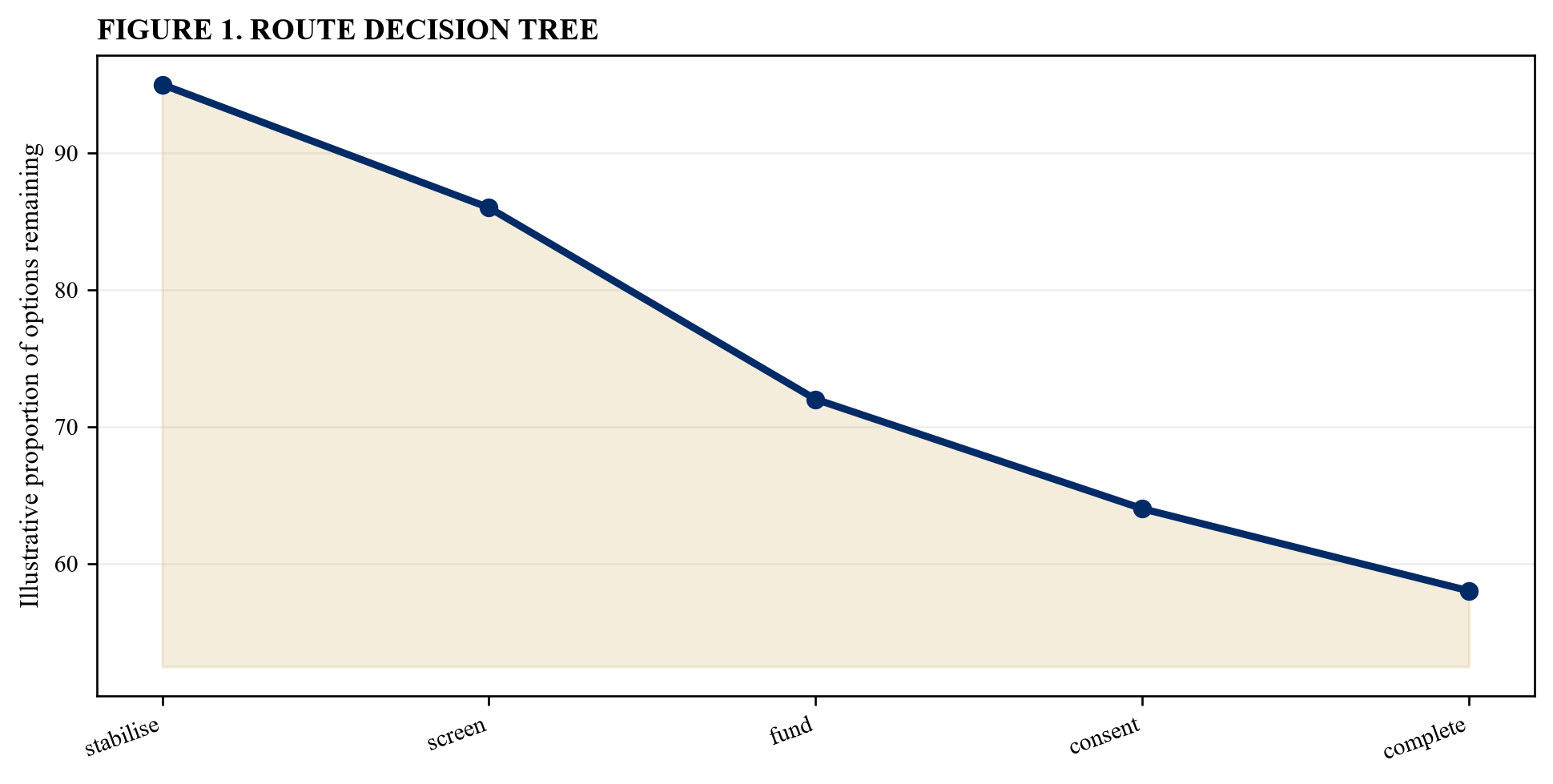
Illustrative analytical scenario; transaction evidence should replace model values.
8. Set the counterfactual
The company should describe the most likely outcome if no consensual solution is completed by the decision deadline. The evidence base includes cash runway, creditor rights, insolvency advice, operating dependencies and asset-sale evidence. The decisive test asks the relevant liquidation, administration, enforcement or disorderly cessation baseline. Conclusions should be recorded at entity level because cash, claims, collateral, licences and approvals may sit in different parts of the group [3][6][7].
The board should receive a dated counterfactual case. It should distinguish committed terms from indications, observed performance from scenarios and contractual rights from commercial expectations. This makes the comparison reproducible when facts change or another stakeholder challenges it.
The material downside is that using an unrealistic status quo can make every proposed transaction look value-accretive. The response is to connect this risk to minimum cash, completion milestones and the counterfactual. The route remains preferred only while those controls show that it can complete before the relevant deadline.
9. Test underlying viability
The board and its advisers should separate temporary liquidity pressure from a business model that cannot earn adequate cash returns after restructuring. The work starts with cohort economics, customer retention, gross margin, fixed costs, capex, working capital and credible management actions. The decision question is whether the business can service a sustainable capital structure without repeated emergency funding. The record should identify the responsible entity, evidence date, owner, assumptions, open issues and the next irreversible deadline [7][15][17].
The controlled output is a viability memorandum with sensitivities. It should connect financial analysis to legal authority, operational dependencies and the transaction timetable. Each conclusion should be traceable to current evidence or qualified advice, with disagreements and missing information recorded rather than averaged away.
The principal risk is that new money can postpone failure when commercial economics or operational capability remain unresolved. The team should test the effect on runway, net outcome value, stakeholder recoveries and delivery certainty. A material change should feed the option model and route-switch register on the day it becomes known.
10. Quantify the rescue requirement
This stage requires the company to bridge opening liquidity through operating losses, restructuring costs, transaction fees, contingency and minimum cash to the peak funding need. Evidence should come from the controlled cash forecast, downside cases, cost estimates and milestone calendar. The practical test is the amount, timing and draw conditions required to preserve value until the selected solution completes. The analysis needs one valuation date and explicit links to the cash forecast, stakeholder map and approval calendar [4][10][11].
Management should maintain a rescue-funding schedule. The schedule should show source documents, calculation logic, conditions, dependencies and the person able to resolve each exception. Legal, tax, insolvency, valuation and regulatory judgements should remain attributed to the relevant qualified adviser.
A common failure is that an apparently sufficient facility may arrive late, exclude required uses or run out before completion. Review the route against both the base case and a combined downside. If the decision cannot survive a realistic delay or missing consent, it should not be described as executable.
11. Design rescue-finance terms
The transaction team should test pricing, maturity, security, priority, covenants, controls, milestones, information rights and exit mechanics, using term sheets, intercreditor agreements, constitutional authorities and applicable restructuring law. Its central question is whether new money is available on terms the company can perform and stakeholders can approve. The answer matters only if it is current enough to guide the next payment, waiver, funding, bid or filing decision [4][6][10].
The required deliverable is a rescue-finance term and consent matrix. It should state what has been verified, what remains dependent on third parties and which conditions must be satisfied before money or control changes hands. The board pack should show the effect of each unresolved item on value and timing.
The execution threat is that funding certainty can be overstated when priority, collateral or consent conditions remain unresolved. Owners should define a control, evidence threshold, escalation route and switch date. Scenario values are management tools; they require continuing reconciliation to cash, offers, lender terms and professional advice.
12. Test sponsor and shareholder capacity
The company should verify source of funds, decision authority, concentration limits, follow-on capacity and willingness to fund downside. The evidence base includes fund statements, approvals, capital-call mechanics, shareholder agreements and binding commitments. The decisive test asks whether proposed equity is fully funded, timely and sufficient through the next durable financing point. Conclusions should be recorded at entity level because cash, claims, collateral, licences and approvals may sit in different parts of the group [18][20][64].
The board should receive a sponsor-capacity certificate. It should distinguish committed terms from indications, observed performance from scenarios and contractual rights from commercial expectations. This makes the comparison reproducible when facts change or another stakeholder challenges it.
The material downside is that soft support letters and conditional indications may be mistaken for cash available to the company. The response is to connect this risk to minimum cash, completion milestones and the counterfactual. The route remains preferred only while those controls show that it can complete before the relevant deadline.
13. Calculate sustainable debt capacity
The board and its advisers should size debt from downside cash flow, fixed-charge coverage, maintenance investment, working capital and minimum liquidity. The work starts with integrated forecasts, debt schedules, covenant definitions, capex evidence and market terms. The decision question is how much principal and cash interest the reorganised business can service through a credible downside. The record should identify the responsible entity, evidence date, owner, assumptions, open issues and the next irreversible deadline [13][17][37].
The controlled output is a debt-capacity model. It should connect financial analysis to legal authority, operational dependencies and the transaction timetable. Each conclusion should be traceable to current evidence or qualified advice, with disagreements and missing information recorded rather than averaged away.
The principal risk is that refinancing can reproduce distress when leverage is set by the amount due rather than sustainable cash generation. The team should test the effect on runway, net outcome value, stakeholder recoveries and delivery certainty. A material change should feed the option model and route-switch register on the day it becomes known.
Table 2. Decision evidence map
| Evidence domain | Controlled output | Decision affected |
|---|---|---|
| liquidity | thirteen-week cash forecast | last action date |
| capital | debt and equity capacity | funding route |
| sale | buyer and net-proceeds evidence | transaction choice |
| rights | consent and priority map | executability |
Statutory periods are stated where labelled; other entries are analytical controls.
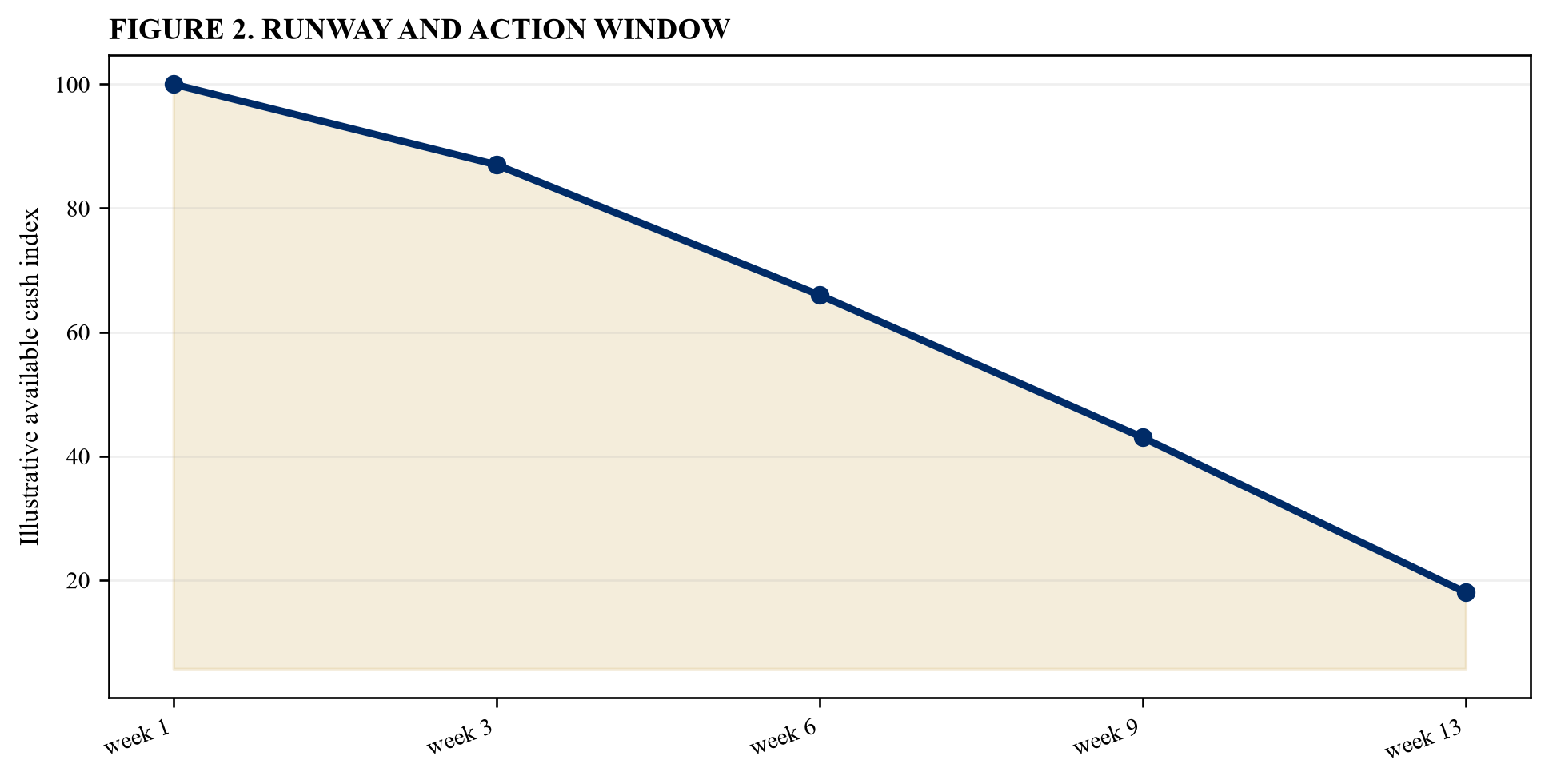
Illustrative analytical scenario; transaction evidence should replace model values.
14. Map existing lender controls
This stage requires the company to extract defaults, cures, acceleration, security enforcement, payment blockage, voting, releases, transfers and information duties. Evidence should come from facility, security, intercreditor and hedging documents, waivers and notices. The practical test is which lenders or agents can permit, delay, condition or prevent each route. The analysis needs one valuation date and explicit links to the cash forecast, stakeholder map and approval calendar [3][37][41].
Management should maintain a lender control and waiver matrix. The schedule should show source documents, calculation logic, conditions, dependencies and the person able to resolve each exception. Legal, tax, insolvency, valuation and regulatory judgements should remain attributed to the relevant qualified adviser.
A common failure is that commercial agreement with one lender may not satisfy collective thresholds, agent instructions or hedge-provider rights. Review the route against both the base case and a combined downside. If the decision cannot survive a realistic delay or missing consent, it should not be described as executable.
15. Compare amendment and replacement debt
The transaction team should model amend-and-extend, covenant reset, payment holiday, PIK, maturity extension, partial paydown, new senior debt and full refinancing, using existing documentation, lender proposals, market soundings, hedging costs and legal advice. Its central question is which structure restores adequate runway and headroom at the lowest credible all-in cost and execution risk. The answer matters only if it is current enough to guide the next payment, waiver, funding, bid or filing decision [17][37][48].
The required deliverable is a refinancing comparison schedule. It should state what has been verified, what remains dependent on third parties and which conditions must be satisfied before money or control changes hands. The board pack should show the effect of each unresolved item on value and timing.
The execution threat is that lower headline pricing can conceal tighter cash controls, fees, call protection, hedging or refinancing risk. Owners should define a control, evidence threshold, escalation route and switch date. Scenario values are management tools; they require continuing reconciliation to cash, offers, lender terms and professional advice.
16. Test collateral and priority
The company should reconcile ownership, perfection, valuation, proceeds, guarantees, intercompany claims and priority by legal entity. The evidence base includes security instruments, public filings, title records, legal opinions and valuation reports. The decisive test asks the collateral available to existing and new money and the recoveries affected by priming or releases. Conclusions should be recorded at entity level because cash, claims, collateral, licences and approvals may sit in different parts of the group [6][38][42].
The board should receive a collateral and priority waterfall. It should distinguish committed terms from indications, observed performance from scenarios and contractual rights from commercial expectations. This makes the comparison reproducible when facts change or another stakeholder challenges it.
The material downside is that double counting assets or assuming unverified security can distort both funding capacity and stakeholder leverage. The response is to connect this risk to minimum cash, completion milestones and the counterfactual. The route remains preferred only while those controls show that it can complete before the relevant deadline.
17. Prepare the sale perimeter
The board and its advisers should define whether the executable transaction is a share sale, business sale, asset sale, division sale, licence transfer or staged disposal. The work starts with entity records, asset registers, contracts, licences, tax analysis and buyer feedback. The decision question is which perimeter transfers value with acceptable liabilities, consents, stranded costs and execution time. The record should identify the responsible entity, evidence date, owner, assumptions, open issues and the next irreversible deadline [3][21][40].
The controlled output is a sale-perimeter memorandum. It should connect financial analysis to legal authority, operational dependencies and the transaction timetable. Each conclusion should be traceable to current evidence or qualified advice, with disagreements and missing information recorded rather than averaged away.
The principal risk is that a high offer for an incomplete perimeter can yield less distributable value than a lower executable proposal. The team should test the effect on runway, net outcome value, stakeholder recoveries and delivery certainty. A material change should feed the option model and route-switch register on the day it becomes known.
18. Build the accelerated sale process
This stage requires the company to sequence confidentiality, buyer screening, information release, management access, indicative offers, diligence, contracts and completion readiness. Evidence should come from a controlled data room, buyer credentials, financing evidence, timetable and legal documents. The practical test is how much competitive tension can be created before liquidity or information leakage damages the business. The analysis needs one valuation date and explicit links to the cash forecast, stakeholder map and approval calendar [1][20][21].
Management should maintain an accelerated M&A plan. The schedule should show source documents, calculation logic, conditions, dependencies and the person able to resolve each exception. Legal, tax, insolvency, valuation and regulatory judgements should remain attributed to the relevant qualified adviser.
A common failure is that a process can be too broad for confidentiality or too narrow to establish market value and transaction certainty. Review the route against both the base case and a combined downside. If the decision cannot survive a realistic delay or missing consent, it should not be described as executable.
19. Assess buyer funding certainty
The transaction team should verify equity commitments, debt terms, internal approvals, regulatory capacity, conditions and sources-and-uses, using commitment papers, approval evidence, lender materials, bidder financial information and funds-flow drafts. Its central question is whether the bidder can fund the stated consideration and assumed obligations at completion. The answer matters only if it is current enough to guide the next payment, waiver, funding, bid or filing decision [9][11][20].
The required deliverable is a buyer certainty score. It should state what has been verified, what remains dependent on third parties and which conditions must be satisfied before money or control changes hands. The board pack should show the effect of each unresolved item on value and timing.
The execution threat is that headline price may have little decision value when financing, approval or conditionality remains open. Owners should define a control, evidence threshold, escalation route and switch date. Scenario values are management tools; they require continuing reconciliation to cash, offers, lender terms and professional advice.
20. Model sale leakage and net proceeds
The company should deduct working-capital adjustments, assumed debt, transaction costs, cure payments, retention measures, taxes, separation costs and time-dependent deterioration. The evidence base includes draft transaction terms, cash forecast, claims ledger, tax advice and operational plans. The decisive test asks the cash and other value distributable to each stakeholder under each credible bid. Conclusions should be recorded at entity level because cash, claims, collateral, licences and approvals may sit in different parts of the group [13][14][16].
The board should receive a net-proceeds bridge. It should distinguish committed terms from indications, observed performance from scenarios and contractual rights from commercial expectations. This makes the comparison reproducible when facts change or another stakeholder challenges it.
The material downside is that boards can compare enterprise values while ignoring large differences in timing, leakage and liability transfer. The response is to connect this risk to minimum cash, completion milestones and the counterfactual. The route remains preferred only while those controls show that it can complete before the relevant deadline.
Table 3. Illustrative common-date scenario model
| Measure | Rescue | Refinance | Sale |
|---|---|---|---|
| completion weeks | 8 | 10 | 12 |
| peak new money | 18 | 11 | 7 |
| net outcome value | 74 | 78 | 83 |
| certainty score | 62% | 71% | 76% |
Statutory periods are stated where labelled; other entries are analytical controls.
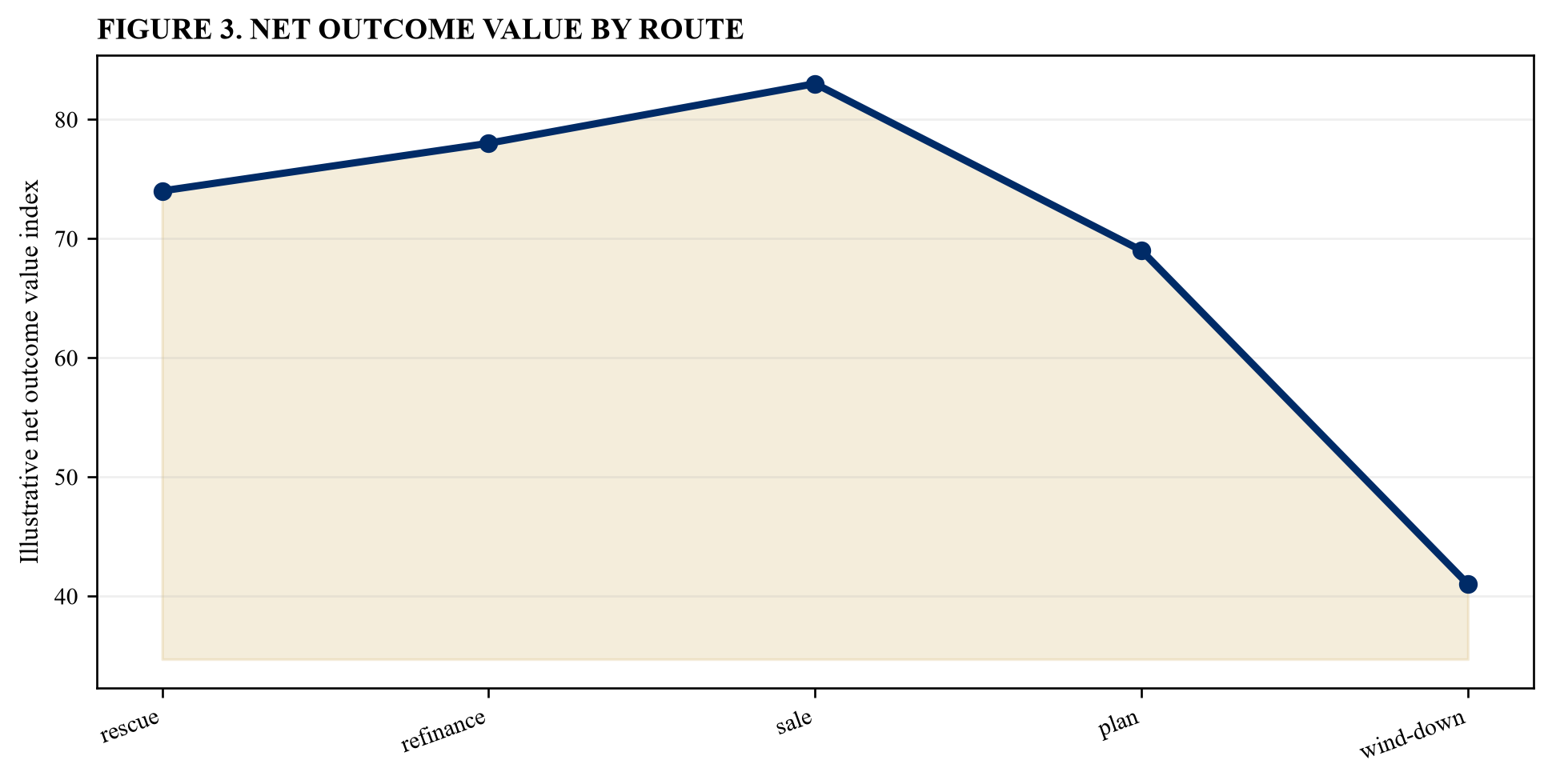
Illustrative analytical scenario; transaction evidence should replace model values.
21. Test regulatory and public-interest gates
The board and its advisers should identify merger control, foreign-investment, sector approval, licence, sanctions, employment, pension and environmental requirements. The work starts with official guidance, licences, ownership data, workforce plans, regulator correspondence and specialist advice. The decision question is whether an approval, remedy, standstill or consultation period fits within runway and transaction design. The record should identify the responsible entity, evidence date, owner, assumptions, open issues and the next irreversible deadline [23][26][27].
The controlled output is a regulatory critical path. It should connect financial analysis to legal authority, operational dependencies and the transaction timetable. Each conclusion should be traceable to current evidence or qualified advice, with disagreements and missing information recorded rather than averaged away.
The principal risk is that an economically attractive route may be unavailable within the decision period or may require costly remedies. The team should test the effect on runway, net outcome value, stakeholder recoveries and delivery certainty. A material change should feed the option model and route-switch register on the day it becomes known.
22. Map stakeholder rights and incentives
This stage requires the company to connect each creditor, shareholder, employee group, landlord, supplier, customer and authority to claims, controls, consents and recoveries. Evidence should come from the stakeholder map, contracts, claims evidence, voting rules and operational dependencies. The practical test is which parties must consent, can block, should be protected or require a managed communication sequence. The analysis needs one valuation date and explicit links to the cash forecast, stakeholder map and approval calendar [6][7][66].
Management should maintain a stakeholder action map. The schedule should show source documents, calculation logic, conditions, dependencies and the person able to resolve each exception. Legal, tax, insolvency, valuation and regulatory judgements should remain attributed to the relevant qualified adviser.
A common failure is that economic exposure and process control can diverge, leaving a small stakeholder with decisive leverage. Review the route against both the base case and a combined downside. If the decision cannot survive a realistic delay or missing consent, it should not be described as executable.
23. Value each option on a common date
The transaction team should calculate enterprise value, funding need, transaction costs, execution leakage, time value and residual stakeholder outcomes under consistent assumptions, using current forecasts, valuation inputs, bid evidence, debt terms, claims and scenario dates. Its central question is the risk-adjusted net outcome value of each executable route at the same valuation date. The answer matters only if it is current enough to guide the next payment, waiver, funding, bid or filing decision [13][14][15].
The required deliverable is a common-date option valuation. It should state what has been verified, what remains dependent on third parties and which conditions must be satisfied before money or control changes hands. The board pack should show the effect of each unresolved item on value and timing.
The execution threat is that mixing optimistic rescue forecasts with current sale bids and stale liquidation estimates produces a false ranking. Owners should define a control, evidence threshold, escalation route and switch date. Scenario values are management tools; they require continuing reconciliation to cash, offers, lender terms and professional advice.
24. Model recoveries and distribution
The company should apply security, priority, costs, set-off, guarantees, intercompany positions and plan treatment to the value available in each scenario. The evidence base includes the claims ledger, legal priority analysis, collateral values and transaction proceeds. The decisive test asks the amount, timing and form of recovery for each affected class. Conclusions should be recorded at entity level because cash, claims, collateral, licences and approvals may sit in different parts of the group [6][10][42].
The board should receive a scenario recovery waterfall. It should distinguish committed terms from indications, observed performance from scenarios and contractual rights from commercial expectations. This makes the comparison reproducible when facts change or another stakeholder challenges it.
The material downside is that negotiations can focus on headline value while overlooking which stakeholders receive that value and when. The response is to connect this risk to minimum cash, completion milestones and the counterfactual. The route remains preferred only while those controls show that it can complete before the relevant deadline.
25. Score execution certainty
The board and its advisers should assess evidence completeness, funding, consents, documentation, regulation, operational readiness, bidder reliability and time to close. The work starts with verified workstreams, open-issue logs, adviser assessments and milestone evidence. The decision question is the probability that each route reaches its required outcome before the relevant deadline. The record should identify the responsible entity, evidence date, owner, assumptions, open issues and the next irreversible deadline [32][34][35].
The controlled output is an execution-certainty scorecard. It should connect financial analysis to legal authority, operational dependencies and the transaction timetable. Each conclusion should be traceable to current evidence or qualified advice, with disagreements and missing information recorded rather than averaged away.
The principal risk is that a precise probability can create false confidence unless its evidence, date and owner are visible. The team should test the effect on runway, net outcome value, stakeholder recoveries and delivery certainty. A material change should feed the option model and route-switch register on the day it becomes known.
26. Run combined downside scenarios
This stage requires the company to stress collections, margin, working capital, funding delay, bidder withdrawal, covenant breach, regulatory extension and value deterioration together. Evidence should come from the integrated cash, valuation, funding and transaction models. The practical test is which routes remain solvent and value-preserving when correlated adverse events occur. The analysis needs one valuation date and explicit links to the cash forecast, stakeholder map and approval calendar [14][15][17].
Management should maintain a combined downside matrix. The schedule should show source documents, calculation logic, conditions, dependencies and the person able to resolve each exception. Legal, tax, insolvency, valuation and regulatory judgements should remain attributed to the relevant qualified adviser.
A common failure is that single-variable sensitivities can miss the way delay, liquidity and value erosion reinforce one another. Review the route against both the base case and a combined downside. If the decision cannot survive a realistic delay or missing consent, it should not be described as executable.
Table 4. Risk-control matrix
| Risk | Leading indicator | Control |
|---|---|---|
| runway failure | minimum cash breach | daily cash gate |
| funding failure | open condition precedent | commitment tracker |
| buyer failure | approval or financing gap | certainty score |
| value erosion | weekly forecast variance | switch trigger |
Statutory periods are stated where labelled; other entries are analytical controls.
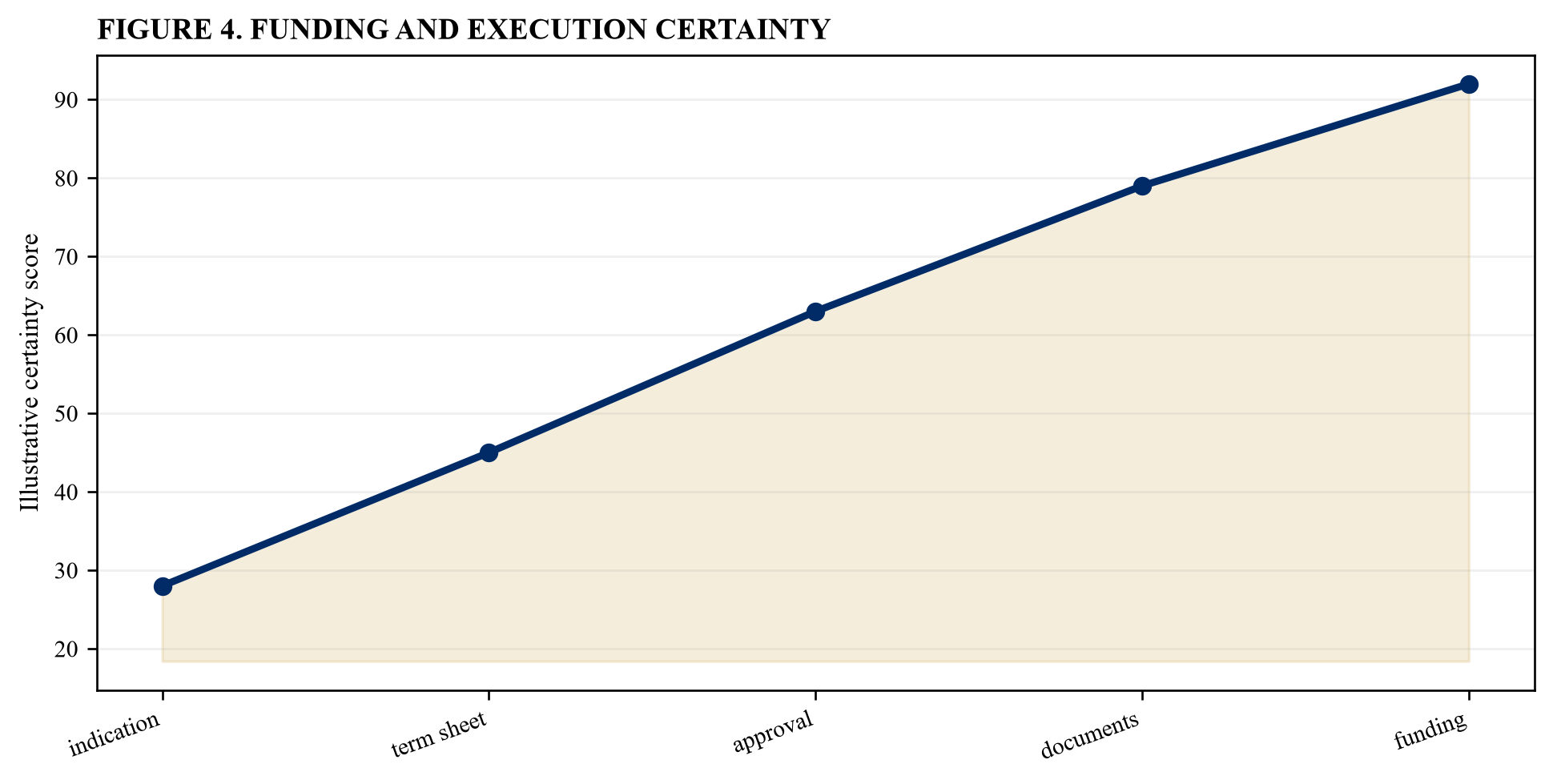
Illustrative analytical scenario; transaction evidence should replace model values.
27. Define route switch triggers
The transaction team should set objective events that start, pause, accelerate or terminate rescue, refinancing, sale and formal-process workstreams, using cash thresholds, bid milestones, waiver dates, funding conditions, approvals and board decisions. Its central question is when evidence requires the board to change route rather than defend an outdated preference. The answer matters only if it is current enough to guide the next payment, waiver, funding, bid or filing decision [1][32][34].
The required deliverable is a trigger register with owners and dates. It should state what has been verified, what remains dependent on third parties and which conditions must be satisfied before money or control changes hands. The board pack should show the effect of each unresolved item on value and timing.
The execution threat is that teams can continue an eroding option because sunk effort, optimism or stakeholder pressure delays escalation. Owners should define a control, evidence threshold, escalation route and switch date. Scenario values are management tools; they require continuing reconciliation to cash, offers, lender terms and professional advice.
28. Design the parallel process
The company should allocate people, information barriers, adviser roles and decision gates so compatible routes can be tested concurrently. The evidence base includes workstream plans, confidentiality protocols, data-room permissions and governance calendars. The decisive test asks which activities preserve option value without confusing stakeholders or exhausting management capacity. Conclusions should be recorded at entity level because cash, claims, collateral, licences and approvals may sit in different parts of the group [29][30][56].
The board should receive a parallel-process operating plan. It should distinguish committed terms from indications, observed performance from scenarios and contractual rights from commercial expectations. This makes the comparison reproducible when facts change or another stakeholder challenges it.
The material downside is that poor coordination can leak information, create inconsistent forecasts or leave every route underprepared. The response is to connect this risk to minimum cash, completion milestones and the counterfactual. The route remains preferred only while those controls show that it can complete before the relevant deadline.
29. Control communications and market conduct
The board and its advisers should approve the timing, audience, evidence and owner for lender, employee, supplier, customer, regulator, bidder and public communications. The work starts with legal advice, listing or disclosure rules, NDAs, stakeholder plans and version-controlled materials. The decision question is what can be communicated without prejudicing negotiations, privilege, confidentiality or continuity. The record should identify the responsible entity, evidence date, owner, assumptions, open issues and the next irreversible deadline [29][30][31].
The controlled output is a controlled communications plan. It should connect financial analysis to legal authority, operational dependencies and the transaction timetable. Each conclusion should be traceable to current evidence or qualified advice, with disagreements and missing information recorded rather than averaged away.
The principal risk is that premature disclosure can accelerate enforcement, trigger departures or reduce competitive tension. The team should test the effect on runway, net outcome value, stakeholder recoveries and delivery certainty. A material change should feed the option model and route-switch register on the day it becomes known.
30. Prepare execution-ready documents
This stage requires the company to maintain current term sheets, transaction documents, board papers, funds flows, approval trackers and closing conditions for the leading routes. Evidence should come from controlled drafts, issue lists, evidence owners and professional advice. The practical test is whether the company can move from decision to binding implementation without rebuilding the evidence set. The analysis needs one valuation date and explicit links to the cash forecast, stakeholder map and approval calendar [3][4][12].
Management should maintain an execution-readiness pack. The schedule should show source documents, calculation logic, conditions, dependencies and the person able to resolve each exception. Legal, tax, insolvency, valuation and regulatory judgements should remain attributed to the relevant qualified adviser.
A common failure is that a board decision may arrive too late if documentation and approvals begin only after route selection. Review the route against both the base case and a combined downside. If the decision cannot survive a realistic delay or missing consent, it should not be described as executable.
31. Govern daily and weekly decisions
The transaction team should run daily liquidity and milestone control with a weekly board-level option review and recorded decisions, using bank actuals, variance analysis, issue logs, bidder and lender updates, advice and stakeholder actions. Its central question is whether new evidence changes solvency, value, route ranking or the required escalation. The answer matters only if it is current enough to guide the next payment, waiver, funding, bid or filing decision [1][18][32].
The required deliverable is a governed decision cadence. It should state what has been verified, what remains dependent on third parties and which conditions must be satisfied before money or control changes hands. The board pack should show the effect of each unresolved item on value and timing.
The execution threat is that fast-moving facts can invalidate a recommendation that remains formally approved but operationally stale. Owners should define a control, evidence threshold, escalation route and switch date. Scenario values are management tools; they require continuing reconciliation to cash, offers, lender terms and professional advice.
32. Issue the option certificate
The company should summarise authority, liquidity, viability, funding, valuation, recoveries, consents, execution certainty, switch triggers and professional advice. The evidence base includes signed-off models, reconciliations, term sheets, bids, legal memoranda and board records. The decisive test asks whether the recommended route is executable, funded and superior to the relevant counterfactual on the decision date. Conclusions should be recorded at entity level because cash, claims, collateral, licences and approvals may sit in different parts of the group [13][18][34].
The board should receive a rescue-refinance-sale decision certificate. It should distinguish committed terms from indications, observed performance from scenarios and contractual rights from commercial expectations. This makes the comparison reproducible when facts change or another stakeholder challenges it.
The material downside is that decision-makers can mistake a persuasive narrative for an evidence-backed choice. The response is to connect this risk to minimum cash, completion milestones and the counterfactual. The route remains preferred only while those controls show that it can complete before the relevant deadline.
Table 5. Implementation roadmap
| Horizon | Required decision | Evidence |
|---|---|---|
| 0-48 hours | stabilise authority and cash | mandate and bank reconciliation |
| days 3-10 | screen credible routes | viability, funding and sale evidence |
| weeks 2-6 | secure binding pathway | terms, consents and documents |
| to completion | protect value and close | daily controls and final certificate |
Statutory periods are stated where labelled; other entries are analytical controls.
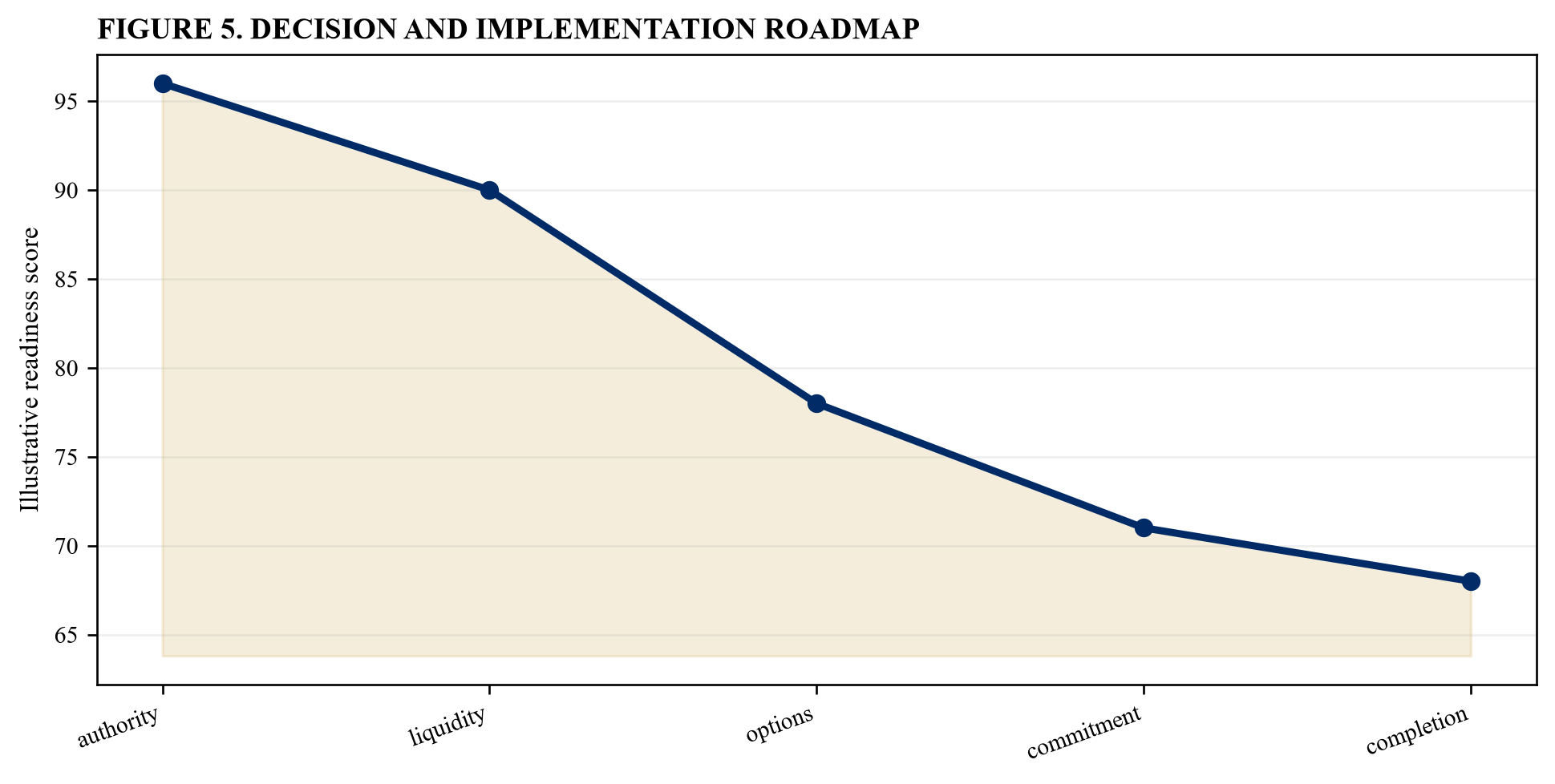
Illustrative analytical scenario; transaction evidence should replace model values.
References
- UK Government, Corporate Financial Distress Guidance Note, updated 15 June 2026, https://www.gov.uk/government/publications/the-sourcing-and-consultancy-playbooks/corporate-financial-distress-guidance-note-html
- Insolvency Service, Company Insolvencies March 2026, https://www.gov.uk/government/statistics/company-insolvencies-march-2026
- Insolvency Act 1986, https://www.legislation.gov.uk/ukpga/1986/45/contents
- Corporate Insolvency and Governance Act 2020, https://www.legislation.gov.uk/ukpga/2020/12/contents
- Companies Act 2006, Part 26A, https://www.legislation.gov.uk/ukpga/2006/46/part/26A
- UNCITRAL, Legislative Guide on Insolvency Law, https://uncitral.un.org/en/texts/insolvency/legislativeguides/insolvency_law
- European Union, Directive 2019/1023 on Restructuring and Insolvency, https://eur-lex.europa.eu/legal-content/EN/TXT/?uri=CELEX:32019L1023
- World Bank, Principles for Effective Insolvency and Creditor-Debtor Regimes, https://www.worldbank.org/en/topic/financialsector/brief/the-world-bank-principles-for-effective-insolvency-and-creditor-rights
- United States Bankruptcy Code, Section 363, https://uscode.house.gov/view.xhtml?req=granuleid:USC-prelim-title11-section363
- United States Bankruptcy Code, Section 364, https://uscode.house.gov/view.xhtml?req=granuleid:USC-prelim-title11-section364
- US Trustee Program, Role in Chapter 11 Cases, https://www.justice.gov/ust/bankruptcy-fact-sheets/us-trustees-role-chapter-11-bankruptcy-cases
- US Trustee Program, Chapter 11 Case Administration Manual, February 2026, https://www.justice.gov/ust/united-states-trustee-program-policy-and-practices-manual
- International Valuation Standards Council, International Valuation Standards, https://ivsc.org/standards/
- IFRS Foundation, IFRS 13 Fair Value Measurement, https://www.ifrs.org/issued-standards/list-of-standards/ifrs-13-fair-value-measurement/
- IFRS Foundation, IAS 36 Impairment of Assets, https://www.ifrs.org/issued-standards/list-of-standards/ias-36-impairment-of-assets/
- IFRS Foundation, IAS 37 Provisions Contingent Liabilities and Contingent Assets, https://www.ifrs.org/issued-standards/list-of-standards/ias-37-provisions-contingent-liabilities-and-contingent-assets/
- IFRS Foundation, IFRS 9 Financial Instruments, https://www.ifrs.org/issued-standards/list-of-standards/ifrs-9-financial-instruments/
- Financial Reporting Council, UK Corporate Governance Code, https://www.frc.org.uk/library/standards-codes-policy/corporate-governance/uk-corporate-governance-code/
- UK Supreme Court, BTI 2014 LLC v Sequana SA, https://www.supremecourt.uk/cases/uksc-2019-0046
- UK Government, Pre-pack Sales in Administration Report, https://www.gov.uk/government/publications/pre-pack-sales-in-administration/pre-pack-sales-in-administration-report
- Administration Restrictions on Disposal to Connected Persons Regulations 2021, https://www.legislation.gov.uk/uksi/2021/427/contents
- Insolvency Rules 2016, https://www.legislation.gov.uk/uksi/2016/1024/contents
- UK Government, Employee Rights on Insolvency, https://www.gov.uk/your-rights-if-your-employer-is-insolvent
- Transfer of Undertakings Protection of Employment Regulations 2006, https://www.legislation.gov.uk/uksi/2006/246/contents
- Pension Protection Fund, Insolvency Practitioners Guidance, https://www.ppf.co.uk/insolvency-practitioners
- HMRC, HMRC as a Preferential Creditor, https://www.gov.uk/government/publications/hmrc-as-a-preferential-creditor/hmrc-as-a-preferential-creditor
- Financial Conduct Authority, Change in Control, https://www.fca.org.uk/firms/change-control
- Competition and Markets Authority, Mergers Guidance, https://www.gov.uk/topic/competition/mergers
- UK Government, National Security and Investment Act Guidance, https://www.gov.uk/government/collections/national-security-and-investment-act
- Information Commissioner's Office, Data Sharing, https://ico.org.uk/for-organisations/uk-gdpr-guidance-and-resources/data-sharing/
- Information Commissioner's Office, Data Security, https://ico.org.uk/for-organisations/uk-gdpr-guidance-and-resources/security/
- ISO, ISO 31000 Risk Management, https://www.iso.org/iso-31000-risk-management.html
- ISO, ISO 22301 Business Continuity Management, https://www.iso.org/standard/75106.html
- COSO, Internal Control Integrated Framework, https://www.coso.org/internal-control
- Institute of Internal Auditors, Three Lines Model, https://www.theiia.org/en/content/position-papers/2020/the-iias-three-lines-model-an-update-of-the-three-lines-of-defense/
- Companies House, Register a Charge, https://www.gov.uk/guidance/register-a-charge-mortgage-for-a-limited-company
- Loan Market Association, Documents and Guidelines, https://www.lma.eu.com/documents-guidelines
- UNCITRAL, Secured Transactions Resources, https://uncitral.un.org/en/texts/securityinterests
- Companies Act 2006, https://www.legislation.gov.uk/ukpga/2006/46/contents
- Sale of Goods Act 1979, https://www.legislation.gov.uk/ukpga/1979/54/contents
- International Swaps and Derivatives Association, Documentation, https://www.isda.org/book/
- United States Bankruptcy Code, Sections 506, 507 and 510, https://uscode.house.gov/view.xhtml?req=granuleid:USC-prelim-title11-chapter5
- United States Bankruptcy Code, Section 362, https://uscode.house.gov/view.xhtml?req=granuleid:USC-prelim-title11-section362
- United States Bankruptcy Code, Section 365, https://uscode.house.gov/view.xhtml?req=granuleid:USC-prelim-title11-section365
- United States Bankruptcy Code, Chapter 11, https://uscode.house.gov/view.xhtml?req=granuleid:USC-prelim-title11-chapter11
- United States Courts, Chapter 11 Bankruptcy Basics, https://www.uscourts.gov/court-programs/bankruptcy/bankruptcy-basics/chapter-11-bankruptcy-basics
- European Commission, EU Merger Control, https://competition-policy.ec.europa.eu/mergers/overview_en
- IFRS Foundation, IFRS 7 Financial Instruments Disclosures, https://www.ifrs.org/issued-standards/list-of-standards/ifrs-7-financial-instruments-disclosures/
- IFRS Foundation, IAS 1 Presentation of Financial Statements, https://www.ifrs.org/issued-standards/list-of-standards/ias-1-presentation-of-financial-statements/
- IFRS Foundation, IAS 10 Events after the Reporting Period, https://www.ifrs.org/issued-standards/list-of-standards/ias-10-events-after-the-reporting-period/
- UK Government, Commercial Property Guidance, https://www.gov.uk/government/collections/commercial-property
- Law of Property Act 1925, https://www.legislation.gov.uk/ukpga/Geo5/15-16/20/contents
- Environment Agency, https://www.gov.uk/government/organisations/environment-agency
- UK Government, UK Sanctions, https://www.gov.uk/government/collections/uk-sanctions
- US Treasury OFAC, Sanctions Programs and Country Information, https://ofac.treasury.gov/sanctions-programs-and-country-information
- ISO, ISO 15489 Records Management, https://www.iso.org/standard/62542.html
- ISO, ISO 37000 Governance of Organizations, https://www.iso.org/standard/65036.html
- UK Insolvency Service, Creditors and Liabilities Guidance, https://www.gov.uk/guidance/technical-guidance-for-official-receivers/43-creditors-and-liabilities
- UK Insolvency Service, Technical Guidance for Official Receivers, https://www.gov.uk/government/collections/insolvency-service-technical-guidance-for-official-receivers
- Financial Conduct Authority, Client Assets, https://www.fca.org.uk/firms/client-assets
- Pension Regulator, Clearance, https://www.thepensionsregulator.gov.uk/en/document-library/regulatory-guidance/clearance-guidance
- UK Government, Licence Finder, https://www.gov.uk/licence-finder
- UNIDROIT, Principles of International Commercial Contracts, https://www.unidroit.org/instruments/commercial-contracts/unidroit-principles-2016/
- Companies Act 2006, Section 172, https://www.legislation.gov.uk/ukpga/2006/46/section/172
- Matchpoint Partners, Thirteen-Week Cash Flow as Transaction Infrastructure, https://www.matchpoint-partners.com/our-insights/thirteen-week-cash-flow-transaction-infrastructure.html
- Matchpoint Partners, The Distress Stakeholder Map, https://www.matchpoint-partners.com/our-insights/distress-stakeholder-map-claims-security-control-blocking-rights.html
- Matchpoint Partners, The Zone of Insolvency Deal Protocol, https://www.matchpoint-partners.com/our-insights/zone-of-insolvency-deal-protocol-governance-conflicts-decision-evidence.html
- International Valuation Standards Council, 2025 International Valuation Standards Update, https://ivsc.org/new-edition-of-the-international-valuation-standards-ivs-published/
