
Introduction
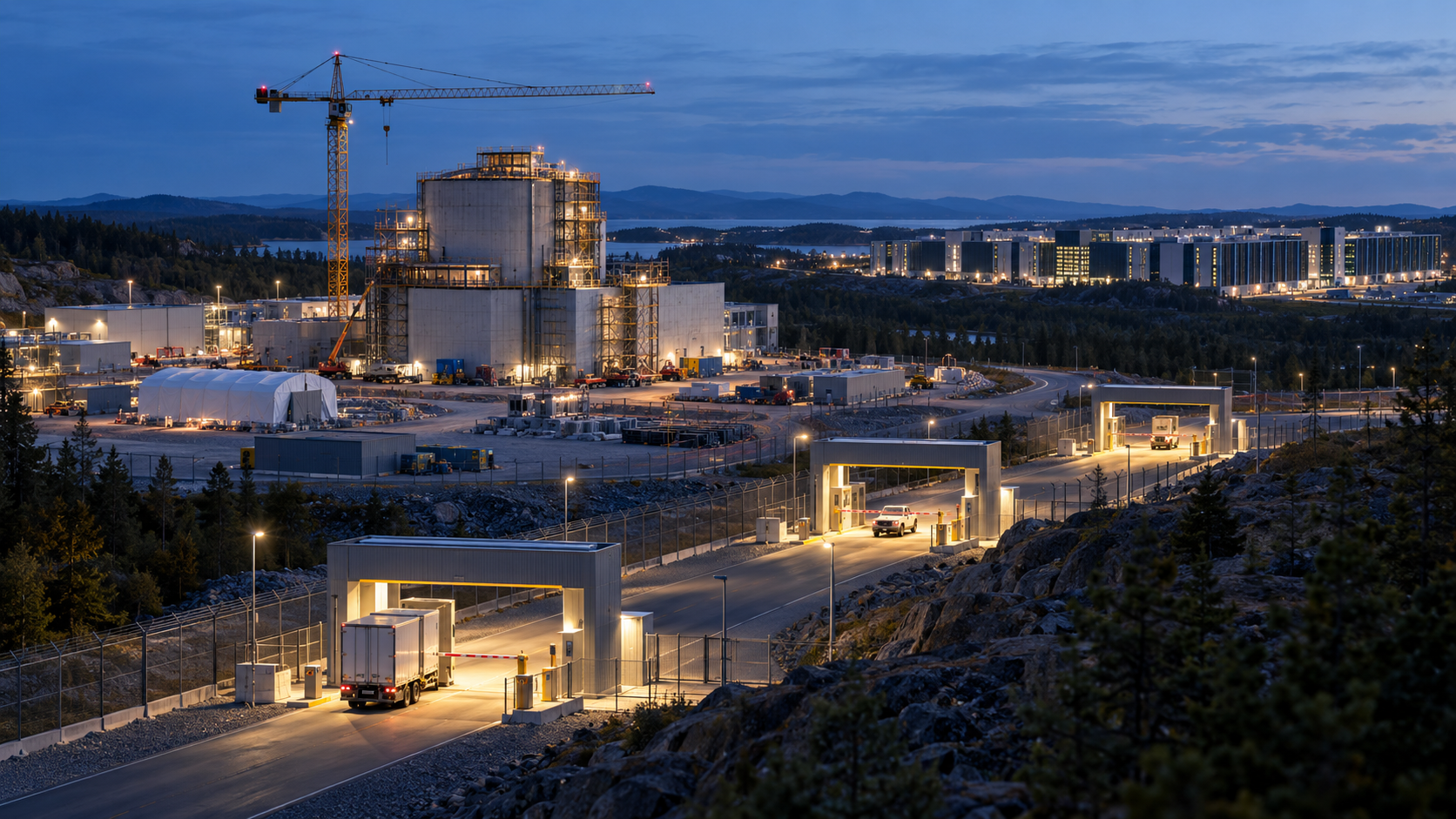
Advanced nuclear power can align with the long operating life, concentrated electricity demand and carbon objectives of a large data-centre campus. The reactor and the compute campus still develop on different clocks. A data centre may reach a location decision, equipment order or customer commitment years before a first reactor completes licensing, construction and commissioning. The resulting contract begins as a development instrument and later becomes a construction-support and operating-revenue instrument.
The board therefore needs to decide what it is buying before electricity exists. Early payments may purchase design work, site exclusivity, a place in a deployment fleet, access to capacity, clean-energy attributes or a right to negotiate a later power contract. Each right has a different evidential standard and a different recovery profile if the project stops. A headline megawatt figure can obscure these distinctions.
Recent disclosed arrangements show several pathways. Google described a three-party structure in which Tennessee Valley Authority will buy output from a Kairos Power project while Google procures the associated clean-energy attributes through the utility.[1] Amazon has combined equity investment in X-energy with support for a utility-led deployment programme.[2] Meta disclosed agreements that fund early procurement and development activity and provide rights to capacity from multiple advanced-reactor projects.[3] The public disclosures establish strategic participation. They do not reveal every commercial term, credit instrument or allocation of loss.
This paper develops a decision framework for sponsors, investors and lenders evaluating such commitments. It concentrates on the period before commercial operation, when contractual credit substitutes for operating evidence.
1. Define the commercial decision
State whether the data-centre sponsor is securing a development option, supporting a demonstration unit, reserving capacity in a fleet, purchasing future energy, procuring environmental attributes, investing in the developer or combining several roles. Each role creates different governance, accounting, risk and exit questions.
Define the required electricity product. Record location, capacity, ramp profile, firmness, service date, duration, grid node, balancing responsibility, backup standard, carbon attributes and expansion rights. A contract for 320 MW of annual attributes is economically different from physical supply to a campus with a 320 MW peak and strict availability requirements.
The decision record should name the amount at risk at each stage. Development funding can be capped. Long-lead equipment support can be ring-fenced. Construction support can become available only after permits, design maturity, supply-chain evidence and a financeable delivery plan. Operating payment should begin only after defined completion and availability tests.
2. Separate four contractual layers
The development agreement governs studies, design, licensing preparation, site work, data access, exclusivity and early procurement. The construction-support agreement governs notice to proceed, milestone funding, delay, cost change, performance security and completion. The operating agreement governs energy, capacity, availability, attributes, metering, outages and price. The credit-support package governs guarantees, collateral, letters of credit, reserves, step-in rights and termination payments.
These layers can sit in one document or several coordinated documents. The economic model should still separate them. A payment made during design should not be described as an electricity price. A refundable deposit should not be treated as development equity. An operating PPA should not imply construction support unless the documents create that obligation.
The interface schedule should identify precedence, conditions, cross-defaults and survival. A development agreement may terminate without ending confidentiality or intellectual-property rights. A construction default may trigger replacement or step-in rather than immediate abandonment. An operating agreement may survive a refinancing while preserving the offtaker's credit protections.
3. Build the development-gate architecture
Use gates that correspond to decisions and evidence. An initial feasibility gate can cover site screening, grid pathway, reactor configuration and data-centre load. A concept gate can establish design basis, licensing route, commercial structure and indicative cost. A development gate can authorise detailed engineering, application work and long-lead procurement. A final investment gate can authorise full construction. A completion gate can begin operating payment.
Each gate should contain entry evidence, work scope, budget, schedule, decision owner and exit rights. Gate approval releases only the next defined amount. The parties should document which work product the offtaker receives if the programme ends. Useful work product can include site data, engineering deliverables, licence submissions, supplier reservations and transferable studies, subject to regulatory and intellectual-property limits.
The United Kingdom's 2026 technology-partner structure provides a public example of staged contracting. Stage One covers site-specific design, while Stage Two would cover construction, supply, installation and commissioning after a positive final investment decision and further approval.[4] A private contract can use a comparable separation without copying the public programme's allocation of risk.
4. Translate regulatory progress into commercial milestones
Nuclear licensing is an independent public-law process. A commercial party cannot contract a regulator into granting an approval. The contract can define objective milestones based on submissions, acceptance, requests for additional information, permits, findings and licence decisions.
The United States Nuclear Regulatory Commission identifies construction permits, operating licences, combined licences, design certifications, early site permits and other approvals within its licensing framework.[5] Advanced reactors can follow different pathways depending on design, site and application. The contract should cite the actual pathway and responsible applicant rather than a generic licensing label.
Milestones should distinguish submission from acceptance and acceptance from approval. A completed application can demonstrate work performed. It does not establish regulatory outcome. Payments tied to regulator action should account for review periods outside the developer's direct control while preserving incentives for complete, timely and responsive submissions.
5. Define what the offtaker funds
Development funding should map to a budget and deliverable schedule. Categories may include design, licensing, environmental review, site control, grid studies, fuel work, supply-chain qualification, quality assurance, project controls and commercial documentation. General corporate expenditure should remain outside the project budget unless expressly approved.
The offtaker should receive periodic cost reports that reconcile opening budget, commitments, cash paid, accruals, forecast to complete and variance. Related-party spending should be disclosed. Material changes should require approval under a defined threshold. Unused funds should be returned or applied to the next approved stage.
Early procurement needs additional controls because equipment may be customised, difficult to resell or regulated. The agreement should identify title, custody, insurance, storage, inspection, cancellation rights, supplier warranties and the disposition of equipment after termination. DOE's 2026 nuclear supply-chain financing announcement illustrates how long-lead procurement can become a separate financing package with upfront equity conditions and staged purchasing.[6]
6. Design the capacity-reservation right
A reservation right should identify technology, project or fleet, location or delivery region, quantity, service window, term, priority and substitution rights. It should state whether the right is exclusive, transferable or expandable and what happens when the initial project changes site, design or schedule.
Fleet rights can reduce dependence on one unit. They can also weaken certainty if the developer retains broad discretion to allocate capacity among customers. The contract should define the allocation rule and evidence of reserved capacity. An offtaker paying early should receive a measurable position rather than a general promise of future cooperation.
The data-centre sponsor should test whether the reserved product fits the compute plan. A reactor may supply grid energy while the campus remains exposed to transmission, congestion, balancing and local connection constraints. Capacity reservation at the generator therefore needs a corresponding path to deliverable campus power.
7. Assess the developer as a credit exposure
Before operation, the offtaker depends on the developer's ability to perform work, retain licences, manage suppliers, raise capital and survive delay. The assessment should examine liquidity, committed equity, ownership, governance, key personnel, intellectual property, regulatory standing, quality systems, insurance and contingent obligations.
Development-stage financial statements often provide limited evidence of project completion capacity. The review should therefore reconcile corporate liquidity with project budget and future funding need. Identify cash that is unrestricted, committed investor funding, government support, customer payments and financing subject to future conditions.
The contract should include reporting triggers that show deterioration before insolvency. Examples include missed equity contributions, supplier non-payment, loss of site control, material licence delay, failure to maintain insurance or departure of critical personnel without replacement. Remedies can include cure plans, additional security, suspension of funding, transfer of project rights and termination.
8. Assess the data-centre offtaker as project credit
The developer and its lenders need confidence that the customer will honour development, construction and operating obligations. Review the contracting entity, parent support, liquidity, credit rating where available, data-centre ownership structure, customer commitments and authority to enter the agreement.
A special-purpose data-centre entity may have limited assets during development. Parent guarantees, letters of credit, cash collateral or funded reserves can support obligations until the campus reaches operation. Credit support should follow maximum exposure and decline as obligations are performed.
The project should also test concentration. A single hyperscaler can provide strong credit and create binary exposure to one strategy, location and load plan. Contract term, assignment rights, replacement-customer rights and termination compensation determine whether the reactor can survive a customer change.
9. Match credit support to each stage
Development obligations can be supported by prefunded accounts, parent guarantees or reimbursement rights. Long-lead procurement can use escrow, title transfer, supplier guarantees and cancellation proceeds. Construction obligations can use performance security, contingency funding and completion support. Operating obligations can use payment security and termination compensation.
The amount should equal an evidenced exposure rather than a round percentage. Calculate unpaid approved work, committed supplier cancellation cost, demobilisation, debt breakage, preservation cost and the time required to secure a replacement. Apply caps and exclusions clearly.
Security should be accessible when needed. A guarantee from an entity without liquidity provides limited protection. A letter of credit with a short renewal period can expire before the project resolves. Cash collateral can protect payment and reduce available corporate capital. The committee should compare cost, duration, draw conditions and enforceability.
10. Make milestones observable
Milestones should be specific, measurable and supported by named evidence. Examples include completion of a site investigation, issue of a design package, acceptance of a licence application, execution of a fuel agreement, placement of a qualified purchase order and completion of a defined construction package.
Avoid milestones based solely on percentage completion without an agreed measurement method. Earned-value reporting can support progress assessment when the work breakdown, baseline and change process are controlled. Independent engineering review can confirm technical completion while the contract administrator confirms documentary conditions.
Payment should follow acceptance of evidence. The review period, comment cycle, deemed acceptance and dispute procedure should prevent both arbitrary withholding and automatic payment for incomplete work. Critical milestones may require approval from engineering, legal, regulatory and finance functions.
11. Allocate design-maturity risk
First deployments can progress while design work continues. That creates exposure to rework, supplier change, regulatory requirements and interface growth. The contract should define the design baseline and the process for controlled evolution.
The developer should identify design maturity at each gate using an agreed deliverable list. The owner should record open items, safety-significant interfaces, commodity quantities, supplier assumptions and expected changes. A contingency should reflect remaining uncertainty rather than a generic optimism factor.
Changes arising from developer error, owner scope, regulatory action, site condition and force majeure should follow separate rules. The parties should avoid a single broad change clause that transfers every immature-design cost to the customer. The allocation should follow control, information and ability to mitigate.
12. Allocate licensing risk
The applicant should own the integrity, completeness and responsiveness of its licence work. The offtaker should provide information under its control, including load, site interface and grid assumptions. Regulatory outcome remains conditional until granted.
The agreement should define the consequences of delayed submission, rejected application, material design change and licence conditions that impair output, cost or schedule. Remedies can include revised milestones, additional developer funding, substitution to another project or termination.
Part 53 and other regulatory developments may change available pathways over time. The commercial model should use the law and guidance applicable to the project at each decision date. A policy objective or reform announcement should remain outside the base schedule until it creates an applicable, evidenced process.
13. Allocate supply-chain risk
Advanced nuclear delivery depends on qualified components, specialist engineering, fuel and regulated quality systems. The contract should identify critical suppliers, qualification status, capacity reservation, lead time, currency, escalation, warranties and substitution rights.
The offtaker may support a long-lead order where delay threatens service date. It should first confirm that the order belongs to the project, complies with quality requirements and has a defined termination value. Supplier deposits and cancellation charges should be visible.
Fleet procurement can create scale benefits and allocation disputes. The developer should disclose how common equipment, factory slots and engineering resources are assigned across projects. The funded project should not subsidise another customer's delivery without an agreed portfolio rule and corresponding rights.
14. Allocate fuel risk
Fuel availability can affect design, licensing, commissioning and operation. Record fuel form, enrichment, supplier pathway, qualification, fabrication capacity, delivery schedule, transport, storage and inventory policy. Alternative suppliers may require technical and regulatory approval.
The contract should state whether the developer, utility or offtaker bears fuel price and delay exposure. A data-centre sponsor generally lacks control over nuclear fuel procurement. It can require a credible plan, evidence of contracted supply and consequences for failure.
Fuel commitments can precede operating revenue. The financing plan should show who funds initial core inventory, how that cost is recovered and what happens to the fuel or associated rights after project termination. Legal and regulatory advice is required for the actual transaction.
15. Define construction-support obligations
Construction support can take several forms: milestone prepayments, subordinated development capital, equity, a completion reserve, contingent purchase obligations or a minimum revenue commitment. Each form has different ranking, recovery and accounting treatment.
The offtaker should preserve a separation between payment for delivered work and capital at risk. Equity participates in project value and loss. Prepayment purchases future energy or capacity and needs refund or credit rules. A reserve supports defined overruns or delays. A guarantee creates contingent exposure without immediate cash payment.
The board should approve a maximum exposure schedule. It should show funded cash, contingent obligations, security held, expected recovery and residual loss at every gate. The schedule should reconcile to the data-centre programme's alternative power and location options.
16. Set the cost baseline
The baseline should identify scope, quantities, schedule, escalation basis, contingency, financing cost, owner cost, grid work, fuel, testing and reserves. Distinguish overnight cost, nominal cash cost and financed project cost.
Cost reporting should reconcile approved baseline, changes, commitments, paid amounts and estimate at completion. Changes should state cause, responsibility, mitigation and schedule effect. A shared-savings or pain-share mechanism requires a verified baseline and clear exclusions.
First-of-a-kind uncertainty can make a fixed total price expensive or unavailable. A target-cost structure can align parties when open-book reporting, incentives, caps and governance are credible. The selection should reflect design maturity, supplier competition and each party's ability to absorb variance.
17. Set the schedule baseline
The schedule should integrate licensing, design, supply chain, site work, grid connection, construction, testing and data-centre readiness. Identify the critical path and interfaces controlled by each party.
Milestone dates should carry a confidence range during early development. The contract can narrow that range as evidence improves. A single fixed commercial-operation date at concept stage can create a false sense of certainty and later disputes.
Delay relief should distinguish developer-caused delay, customer delay, regulatory review, grid delay, force majeure and concurrent delay. Notice, mitigation and schedule analysis requirements should be defined. Financial remedies should reflect actual exposure and agreed caps.
18. Price delay to the compute programme
The data-centre sponsor should value delay through lost or deferred capacity, temporary power, alternate-site cost, equipment storage, customer commitments and capital carrying cost. This value can exceed the reactor project's monthly construction cost.
The contract does not need to transfer the entire compute value to the developer. It should use the delay analysis to set support, caps and decision rights. Liquidated damages may cover a defined portion of expected loss where legally valid and commercially accepted.
The sponsor should preserve alternatives before critical dates. Grid supply, modular generation, demand flexibility, staged campus delivery and another site can reduce dependency. Alternative capacity has a cost and should appear in the investment case.
19. Define completion
Completion should require the regulatory authority to permit operation, the plant to pass defined tests, the grid interface to operate, metering to function and required documentation to be delivered. Mechanical completion alone does not establish a financeable electricity product.
Performance tests should cover net output, availability, ramping where relevant, auxiliary load, heat rate or efficiency measures appropriate to the technology, emissions and environmental conditions, and sustained operation. Test procedures, correction curves, retest rights and independent verification should be agreed before construction is substantially complete.
Provisional acceptance can begin limited payments while retaining security for open items. Final acceptance should close the punch list and release defined support. Persistent underperformance should trigger price adjustment, capacity reduction, cure or termination under agreed thresholds.
20. Define the operating revenue contract
The operating contract should identify energy, capacity, attributes and other products separately. State delivery point, settlement interval, metering, losses, imbalance, outages, curtailment, change in law, taxes and assignment.
Availability payment can support fixed costs when output varies for reasons within agreed limits. Energy payment compensates delivered volume. Capacity or reservation payment can preserve dedicated output. Environmental attributes need clear ownership and retirement rules.
The term should support financing and major maintenance. Price escalation should match actual cost drivers where possible. Reopeners can address specified events while preserving lender certainty. The contract should avoid a broad discretionary reopener that undermines the revenue base.
21. Resolve the grid and co-location interface
A reactor and data centre can connect through the grid, a utility arrangement or a co-located configuration. The commercial contract should reflect the actual transmission service, backup and cost allocation.
FERC's December 2025 order directed PJM to establish clearer rules and service options for co-located large loads, including data centres.[7] The order illustrates that grid treatment can change the cost and schedule of a structure even when generation and load are physically close.
The project should identify network upgrades, interconnection rights, transmission charges, backup supply, curtailment and responsibility for regulatory change. A private power agreement cannot by itself confer grid rights.
22. Create a termination taxonomy
Use separate regimes for convenience, developer default, offtaker default, prolonged force majeure, licensing failure, grid failure and failure to reach final investment decision. Each event has a different economic cause and appropriate payment.
The termination schedule should reconcile approved development cost, work completed, equipment, cancellation charges, debt breakage, demobilisation, preservation and security proceeds. Future profit should be treated according to the negotiated risk allocation and applicable law.
The contract should state which assets and rights transfer after payment. Transfer can include site interests, engineering, supplier contracts, equipment, licences where legally transferable, data and warranties. Nuclear licences and regulated responsibilities require specific legal analysis and cannot be assumed transferable.
23. Measure termination exposure at each gate
The parties should maintain a monthly termination-cost schedule. It should show cash paid, committed cost, cancellable cost, transferable value, security, estimated resale and residual loss.
Exposure often rises sharply when long-lead orders and site construction begin. The board should see this cliff before authorising the relevant gate. A termination cap that remains constant across development can underprotect early stages or overcharge later stages.
The schedule should reconcile to supplier contracts and financing. Lender breakage, hedge close-out and reserve release can change termination cost. The finance model should distinguish immediate cash payment from expected recovery over time.
24. Protect intellectual property and project continuity
The developer needs to protect reactor technology, safety information and supplier rights. The offtaker needs enough information to monitor funded work, assess progress and preserve options after failure.
Define ownership of background intellectual property, project-specific deliverables, data and improvements. Licence rights can expand after payment or default. Escrow can hold selected design material subject to release conditions, while export controls and nuclear-security rules remain applicable.
Continuity rights should identify replacement personnel, supplier novation, access to project records and cooperation after default. The offtaker should not assume it can operate or license the technology. The objective is preservation of economic options within legal and technical limits.
25. Structure lender entry
Development capital can come from sponsors, strategic customers, public programmes and technology investors. Limited-recourse debt generally requires a more mature revenue, construction and completion package.
Lenders will examine contracted revenue, offtaker credit, construction risk, equity, contingency, licences, site rights, fuel, suppliers, insurance, completion tests and downside coverage. DOE explains that a conditional commitment remains subject to legal, technical, commercial, contractual and financial conditions before closing and disbursement.[8]
The offtake agreement should anticipate lender requirements without granting uncontrolled rights. Direct agreements can provide notice, cure, step-in and assignment. The data-centre sponsor should retain consent over material changes that affect its power product or credit exposure.
26. Avoid double counting public support
Government grants, loans, guarantees, tax benefits and revenue support can reduce project risk. The investment case should record each instrument, conditions, timing, clawback and interaction with customer payments.
A public announcement or conditional commitment should not be modelled as funded cash until conditions are satisfied. DOE states that a conditional commitment is followed by due diligence, definitive documents and conditions to disbursement.[8] The project model should follow the actual status.
Customer support should purchase incremental rights or reduce a defined financing gap. It should not compensate the developer twice for the same cost. Open-book sources-and-uses reporting can identify overlap among grants, strategic equity, development payments and debt.
27. Use portfolio and fleet structures carefully
Fleet deployment can spread design cost, create manufacturing learning and offer substitution among sites. It can also move risk between projects and customers.
The contract should define which costs are common, how they are allocated and which project owns shared work product. Early customers may fund capability later customers use. The commercial model can recognise that contribution through price, priority, warrants, credits or other negotiated value.
Substitution rights should preserve technology, region, capacity, service date and credit quality within agreed tolerances. A developer should not satisfy a firm reservation with a materially weaker project. The offtaker should not block reasonable substitution that improves deliverability.
28. Test the data-centre location option
The compute campus may need to move if power delivery slips. The investment case should compare staying with the nuclear project, using interim supply, shifting load to another campus and terminating the commitment.
The model should include network, land, cooling, data-residency, latency, customer and construction effects. An alternative site is valuable only when it can serve the same workload and commercial product.
Preserve decision dates before major data-centre commitments. A land option, modular building plan or transferable equipment order can reduce stranded cost. Nuclear contract gates should align with these dates where possible.
29. Construct the financial model
Build separate development, construction and operating periods. Development cash flow includes staged payments, developer equity, public funding, studies and early procurement. Construction cash flow includes major works, contingency, financing and support. Operating cash flow includes energy, capacity, attributes, maintenance, fuel, grid cost, taxes and reserves.
Model delay, cost increase, lower output, lower availability, licence conditions, grid charges, credit downgrade and termination. Keep scenario assumptions visible. Do not present a single expected case as an observed forecast.
The data-centre sponsor should calculate the value of secured capacity against alternative power and location costs. The developer should calculate project coverage and funding need. The integrated model should reconcile obligations between them.
30. Hypothetical 320 MW staged case
Consider a hypothetical programme of four 80 MW modules associated with a regional data-centre portfolio. The parties contemplate a development agreement, future construction support and a 25-year operating contract. All figures are illustrative and describe no identified project.
At Gate One the customer funds AED 30 million of site, grid and design work. At Gate Two it can fund a further AED 85 million for detailed development and selected long-lead reservations after defined licensing and supplier evidence. At Gate Three it may commit AED 240 million to a completion reserve after final investment decision, financing commitments and a controlled cost baseline.
The operating contract begins payment only after each module passes completion tests. A separate capacity-reservation payment starts when a module is available. Energy and attributes settle on delivered quantities. The model caps customer construction exposure and preserves replacement rights if the project misses long-stop dates.
31. Model the credit-support ladder
Assume the developer provides a parent guarantee during early work, supplier security for long-lead orders and a funded contingency at construction. The customer provides a parent guarantee for approved payments and a letter of credit after final investment decision. Support declines after obligations are performed.
The structure should be tested under developer default, customer cancellation and prolonged delay. The hypothetical base case assumes AED 70 million of transferable work product and equipment after Gate Two. The downside assumes AED 30 million. The residual loss depends on security, cancellation charges and replacement value.
The model should state that these amounts are management scenarios for decision testing. They are not estimates of an actual reactor, contract or company.
32. Model delay and replacement
Assume the first 80 MW module has a target service window and a 24-month long-stop extension. The customer retains interim grid supply for part of its load and a reserve site for the remainder.
The delay case includes additional data-centre power cost, equipment storage and deferred revenue. The contract provides schedule reporting, mitigation, a capped delay credit and a replacement right after the long-stop date. The customer chooses between continued support, substitution to another module and termination.
This decision should be refreshed at each gate using current evidence. A rational choice at concept stage can become uneconomic after cost escalation or a changed compute plan. Staged rights preserve the ability to respond.
33. Apply the financeability test
The project passes the first test when approved development work is fully funded and governed. It passes the second when licences, design, site, grid, fuel and suppliers support a credible construction baseline. It passes the third when committed equity, contingency, construction support and revenue contracts support completion and repayment.
The operating revenue should remain adequate under lower availability, delay, higher cost and grid-charge cases. The offtaker's credit support should cover its contractual exposure. The developer's completion support should cover obligations within its risk allocation.
Failure at a gate should lead to a defined response: cure, revised scope, additional support, substitution, pause or termination. Automatic progression converts uncertainty into sunk cost.
34. Establish governance and decision rights
Create a joint steering committee for programme coordination and separate reserved matters for each party. The developer retains nuclear safety, licensing and technical accountability. The customer controls its load, campus and approved financial exposure.
Reserved matters can include budget increase, material design change, site change, supplier replacement, financing, assignment, schedule reset and settlement of significant claims. Deadlock procedures should preserve safety and regulatory independence.
Monthly reporting should cover licence status, engineering, supply chain, schedule, cost, funding, risks, claims and decisions. Independent advisers should report within defined scopes. The board should receive a concise gate paper that reconciles physical progress to contractual rights and cash at risk.
35. Run diligence before signature
Technical diligence should assess design maturity, site, grid, fuel, suppliers, construction plan, quality assurance, testing and operating model. Regulatory diligence should confirm applicant, pathway, submissions, dependencies and public-law constraints. Commercial diligence should map product, customers, alternatives and fleet allocation.
Financial diligence should reconcile historic funding, committed capital, budget, forecast, public support, customer payments and financing conditions. Legal diligence should cover corporate authority, licences, site rights, intellectual property, contracts, security, liability, insurance, export controls and termination.
The deliverable should be an evidence register and a list of conditions for each gate. Open matters should remain visible in the model. A diligence finding becomes a valuation or contractual adjustment only through an approved method.
36. Record limitations
Public disclosures describe selected commercial features and strategic objectives. They rarely disclose complete contracts, pricing, guarantees, termination schedules or lender terms. This paper therefore uses disclosed facts only for the features expressly reported.
Nuclear regulation, electricity-market rules, tax, accounting and enforceability vary by jurisdiction and project. The framework requires transaction-specific advice. It does not state that any described structure is available or financeable in a particular market.
The hypothetical case demonstrates mechanics. Its figures are arbitrary scenario inputs. They should be replaced with verified project data before use in an investment decision.
37. Conclusion
Small and advanced nuclear projects require commercial credit before they produce electricity. The contract should convert that exposure into staged, observable and capped commitments. Development funding purchases defined work and rights. Construction support follows evidence and a controlled baseline. Operating payment follows tested delivery.
A financeable package coordinates the developer, offtaker, utility, regulator, suppliers, public funders and lenders without blurring their responsibilities. It measures loss at each gate, preserves alternatives and provides a controlled route from concept to operation.
The board should approve the next evidenced commitment, maximum capital at risk and remedies available if the evidence fails. That discipline allows a data-centre sponsor to support long-duration power infrastructure while protecting its location, schedule and balance sheet.
Decision exhibits
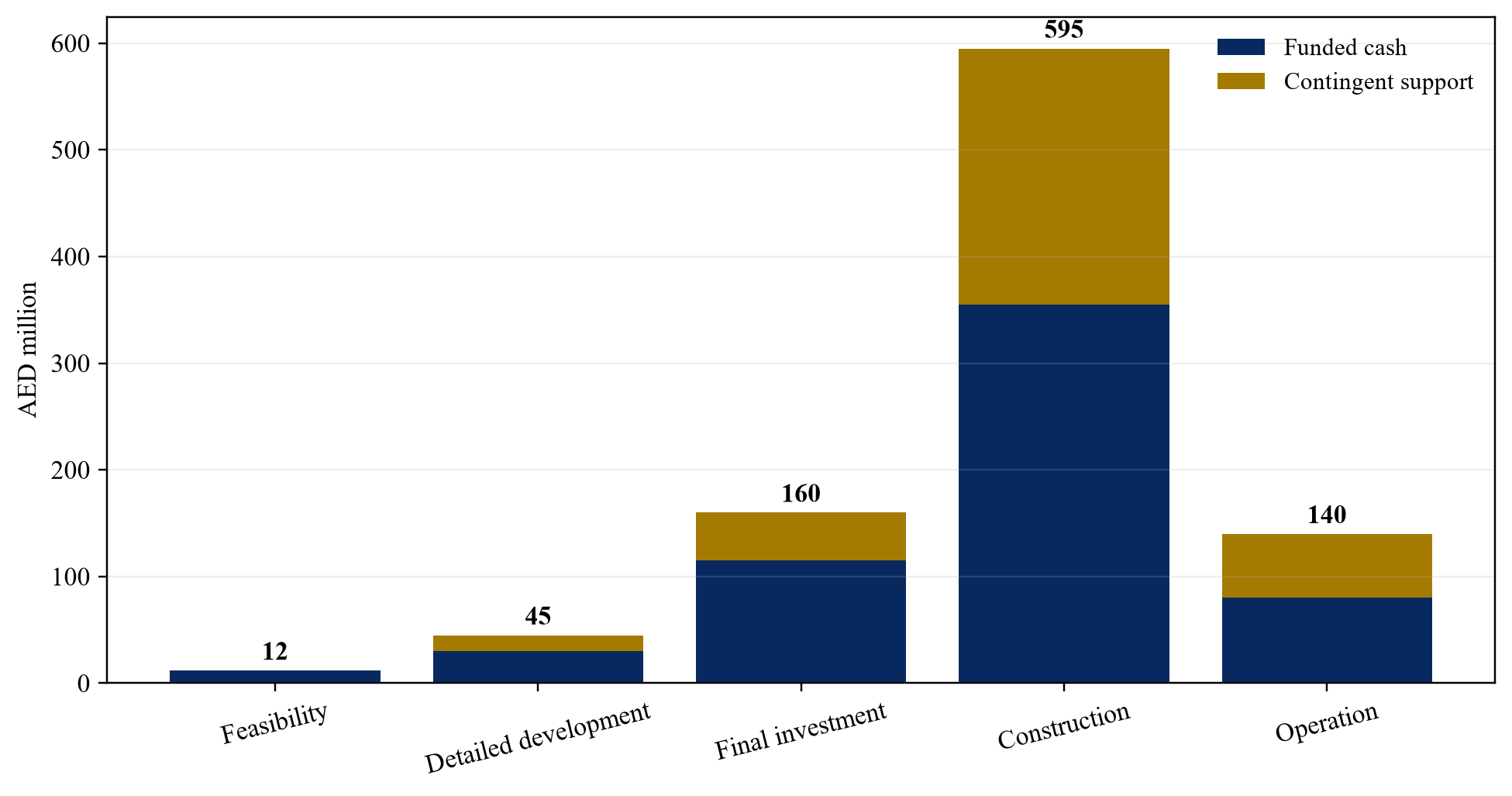
Wholly hypothetical; Matchpoint Partners analysis.
Table 1. Development-gate evidence and commitment
| Gate | Minimum evidence | Customer commitment | Principal exit right |
|---|---|---|---|
| Feasibility | site, grid and technology screen | capped study budget | terminate after deliverables |
| Detailed development | accepted work plan, licensing route, supplier map | approved development funding | pause, cure or substitute |
| Final investment | controlled baseline, permits pathway, committed finance | construction support within cap | long-stop and replacement rights |
| Completion | regulatory permission and performance tests | operating payment | cure, price adjustment or termination |
Proposed framework unless stated otherwise.
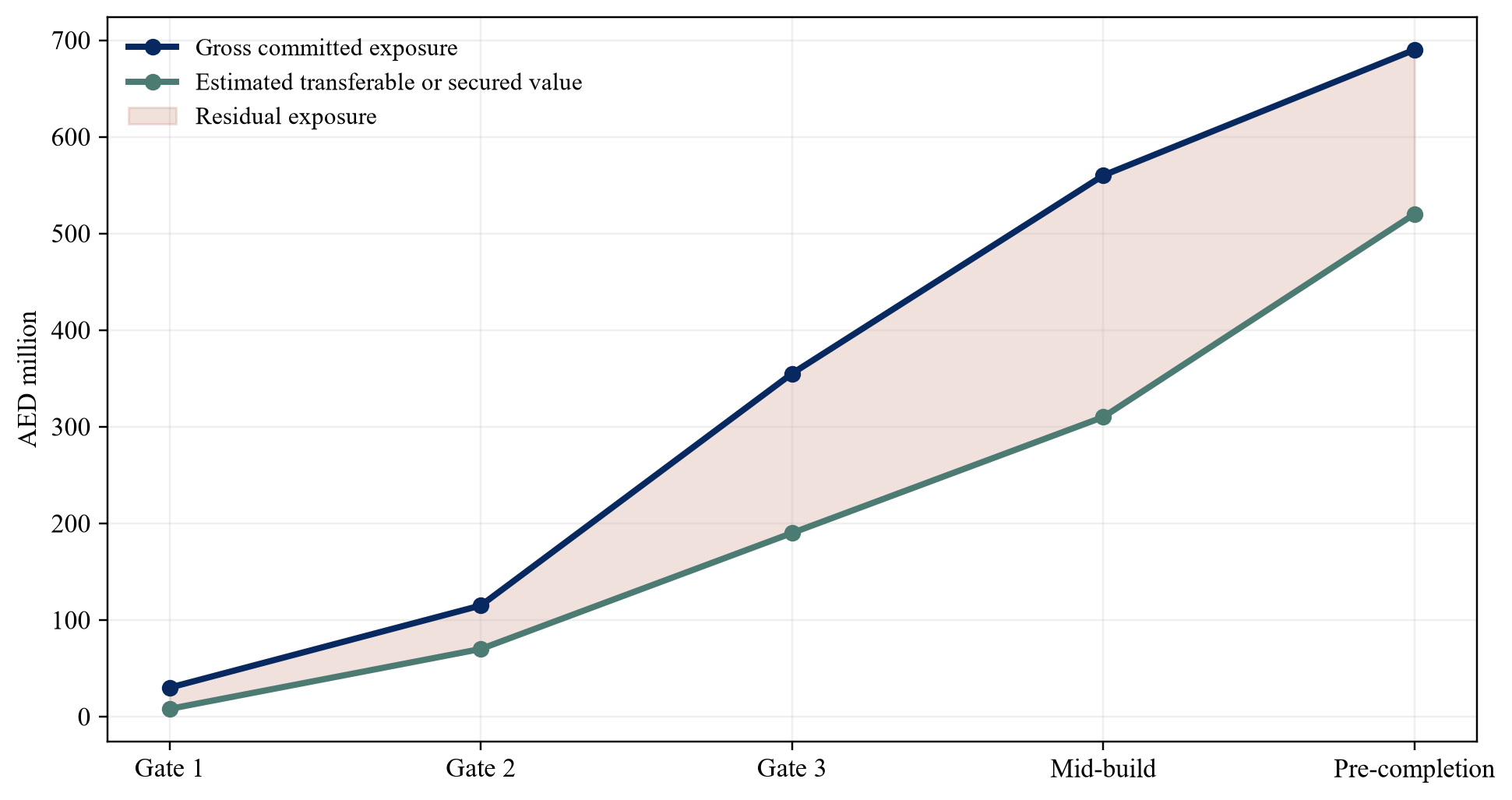
Wholly hypothetical; Matchpoint Partners analysis.
Table 2. Credit-support ladder
| Exposure | Developer support | Offtaker support | Release condition |
|---|---|---|---|
| Development work | parent guarantee and controlled account | prefunded approved budget | accepted deliverables |
| Long-lead equipment | title, supplier security and insurance | escrow or capped prepayment | delivery or transferable equipment |
| Construction | contingency and completion support | capped reserve or guarantee | tested completion |
| Operation | performance security and outage remedies | payment security | performance and payment history |
Proposed framework unless stated otherwise.
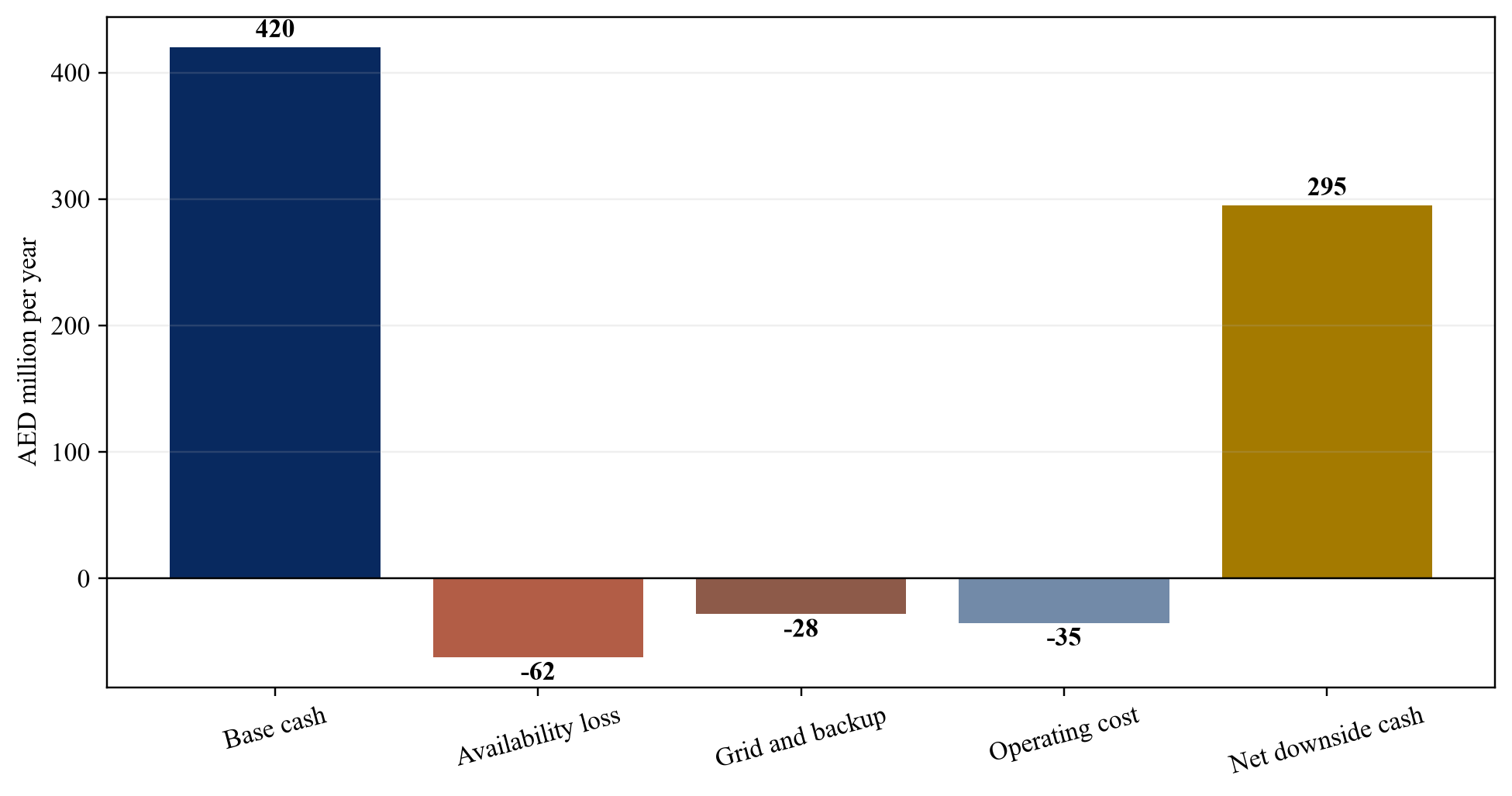
Wholly hypothetical; Matchpoint Partners analysis.
Table 3. Hypothetical 320 MW programme commitment schedule
| Commitment | Hypothetical amount | Evidence required | Maximum customer remedy |
|---|---|---|---|
| Gate One development | AED 30m | site, grid and initial design package | delivery of work product and unused cash |
| Gate Two development and procurement | AED 85m | licensing evidence and qualified supplier orders | transfer, resale proceeds and security |
| Completion reserve | AED 240m | final investment decision and committed financing | draw only for defined completion events |
| Operating credit support | AED 60m | completed module and effective operating contract | declining security after payment history |
Figures describe no identified project.
Appendix A Questions for the investment committee
1. What electricity product does the data-centre portfolio require?
2. Which project, fleet or region supports the reserved capacity?
3. What evidence is required before each payment or guarantee?
4. Which party controls licensing, design, supply chain, grid and construction?
5. What is the maximum funded and contingent exposure at every gate?
6. Which assets, rights and work products survive termination?
7. What credit support is available and when can it be drawn?
8. How are cost changes classified, approved and capped?
9. How are delay, long-stop dates and replacement capacity handled?
10. Which completion tests begin operating payment?
11. How does the revenue contract support debt under downside conditions?
12. What alternative power or location remains available to the compute programme?
References
- Google, Our first advanced nuclear reactor project with Kairos Power and Tennessee Valley Authority, 18 August 2025. https://blog.google/company-news/outreach-and-initiatives/sustainability/google-first-advanced-nuclear-reactor-project-with-kairos-power-and-tennessee-valley-authority/
- Amazon, What are SMRs? See what one of the first SMR facilities in the U.S. could look like, 2025. https://www.aboutamazon.com/news/sustainability/amazon-smr-nuclear-energy
- Meta, Meta Announces Nuclear Energy Projects, Unlocking Up to 6.6 GW to Power American Leadership in AI Innovation, 9 January 2026. https://about.fb.com/news/2026/01/meta-nuclear-energy-projects-power-american-ai-leadership/
- UK Department for Energy Security and Net Zero, Small Modular Reactor Programme Technology Partner Contract: Accounting Officer Assessment 2026, 17 August 2026. https://www.gov.uk/government/publications/department-for-energy-security-and-net-zero-major-projects-accounting-officer-assessments/small-modular-reactor-programme-technology-partner-contract-accounting-officer-assessment-2026
- United States Nuclear Regulatory Commission, Licensing and Advanced Reactors, accessed 2 October 2026. https://www.nrc.gov/regulations-legislation/how-we-regulate/licensing and https://www.nrc.gov/facilities-safety/new-reactors/advanced-reactors
- United States Department of Energy, Department of Energy Announces American Nuclear Supply Chain Loans, 23 June 2026. https://www.energy.gov/articles/department-energy-announces-american-nuclear-supply-chain-loans
- United States Federal Energy Regulatory Commission, Fact Sheet: FERC Directs Nation's Largest Grid Operator to Create New Rules to Embrace Innovation and Protect Consumers, 18 December 2025. https://ferc.gov/news-events/news/fact-sheet-ferc-directs-nations-largest-grid-operator-create-new-rules-embrace
- United States Department of Energy, What is a Conditional Commitment and How is it Different from a Loan or Loan Guarantee?, updated 17 March 2025. https://www.energy.gov/edf/articles/getting-know-lpo-what-conditional-commitment-and-how-it-different-loan-or-loan
- International Atomic Energy Agency, Nuclear Contracting Toolkit: Decide on Contracting Approach, accessed 2 October 2026. https://nucleus.iaea.org/sites/connect/MSNpublic/Pages/nct/site/strategy/approach.html
- OECD Nuclear Energy Agency, The NEA Small Modular Reactor Dashboard Second Edition, 2024. https://www.oecd-nea.org/upload/docs/application/pdf/2025-07/7671_the_nea_smr_dashboard_-_second_edition.pdf
- International Atomic Energy Agency, Climate Change and Nuclear Power 2024, considerations for small modular reactors. https://www-pub.iaea.org/MTCD/Publications/PDF/PUB9048_web.pdf
- Great British Energy Nuclear, Great British Energy Nuclear and Rolls-Royce SMR sign contract, 13 April 2026. https://www.gov.uk/government/news/great-british-energy-nuclear-and-rolls-royce-smr-sign-contract
- Constellation Energy, Constellation to Launch Crane Clean Energy Center, Restoring Jobs and Carbon-Free Power to the Grid, 20 September 2024. https://investors.constellationenergy.com/static-files/1494e73f-429b-42ff-b275-0b61892cdcfc
- International Valuation Standards Council, International Valuation Standards, accessed 2 October 2026. https://www.ivsc.org/standards/
- IFRS Foundation, IFRS 13 Fair Value Measurement, accessed 2 October 2026. https://www.ifrs.org/issued-standards/list-of-standards/ifrs-13-fair-value-measurement/
About the Author
Authored by Chennakeshav Adya
Independent Researcher
Chennakeshav (CK) is a corporate finance and investment banking executive with 25+ years of global experience in deal origination, structuring and execution across M&A, growth capital and corporate strategy. He has led value-creation mandates for founders, corporates and funds — bridging the boardroom view to hands-on execution and close.
His career spans Morgan Stanley, HSBC, Lloyds Banking Group, EWEC, ADQ portfolio companies and Emirates Growth Fund, across TMT, real estate, fintech, deeptech, cleantech, infrastructure and energy. He has partnered with C-suite leaders, private equity and venture funds, sovereign wealth funds and family offices to finance complex fund raises and scale-up ventures, and has led M&A due diligence, post-merger integration and business-transformation initiatives to create value.
At Matchpoint Partners he is Managing Partner, leading the firm's corporate finance, M&A and capital-raising practice. He holds an MBA from London Business School, an engineering degree from VTU and a Master of Laws (LLM, in progress) from UCL London.
An active start-up mentor, CK mentors at Techstars, DIFC FinTech Hive, Startup Grind, Founder Institute and IN5, serves as Entrepreneur Mentor in Residence (EMiR) at London Business School, and judges the Entrepreneurship World Cup.
Matchpoint profile: https://www.matchpoint-partners.com/team/ck-adya.html
LinkedIn: https://www.linkedin.com/in/ckadya/
